Free Printable Winston Churchill Worksheets for Grade 10
Explore comprehensive Grade 10 Winston Churchill worksheets and printables that help students analyze the legendary British leader's impact on World History through engaging practice problems, free PDF resources, and detailed answer keys.
Explore printable Winston Churchill worksheets for Grade 10
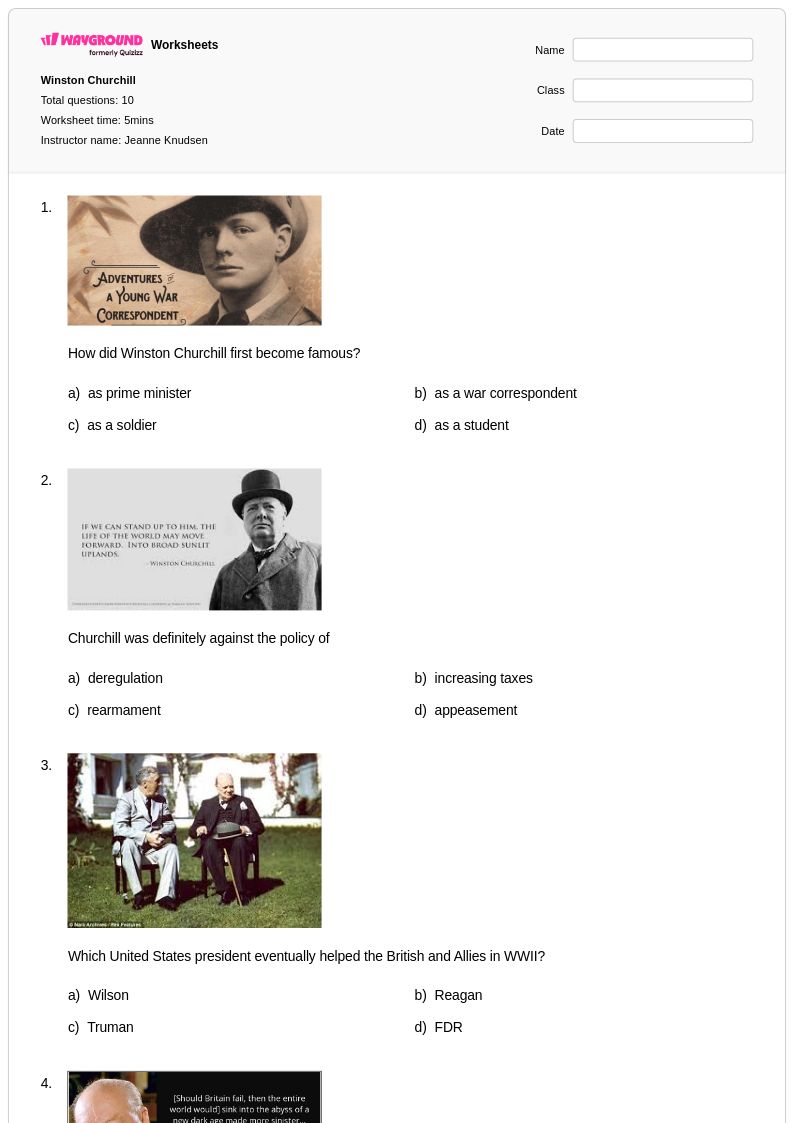
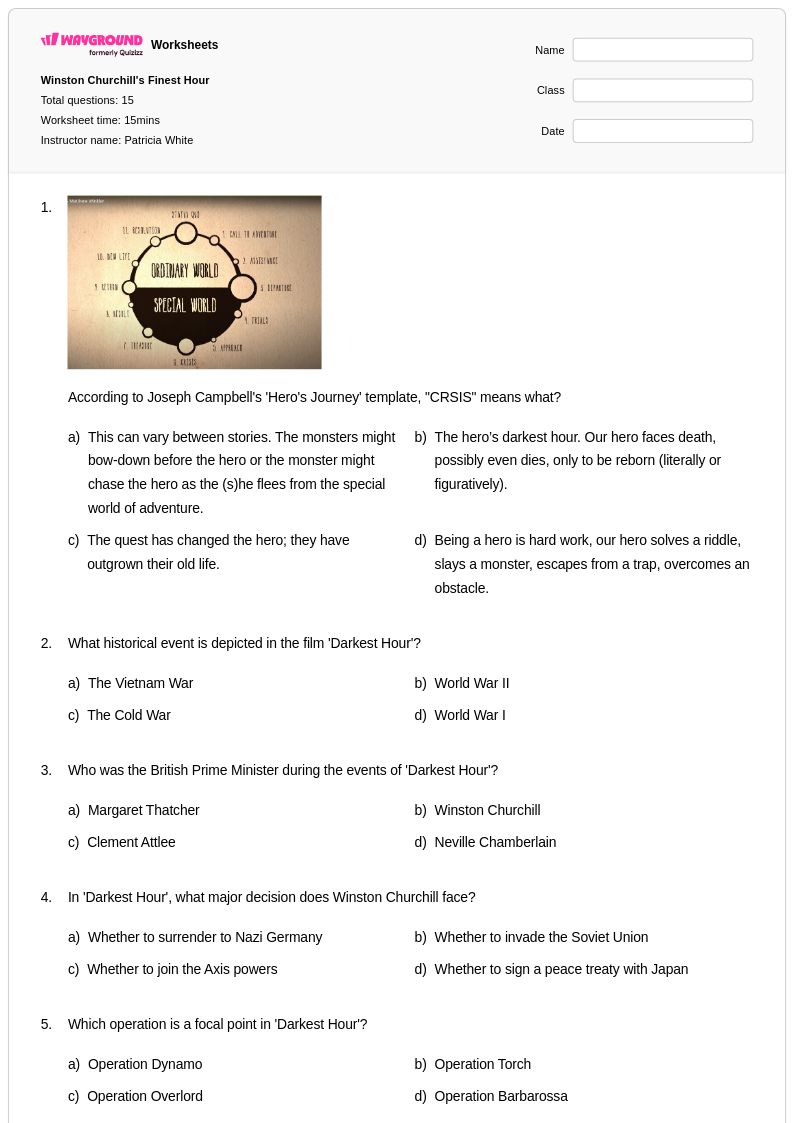
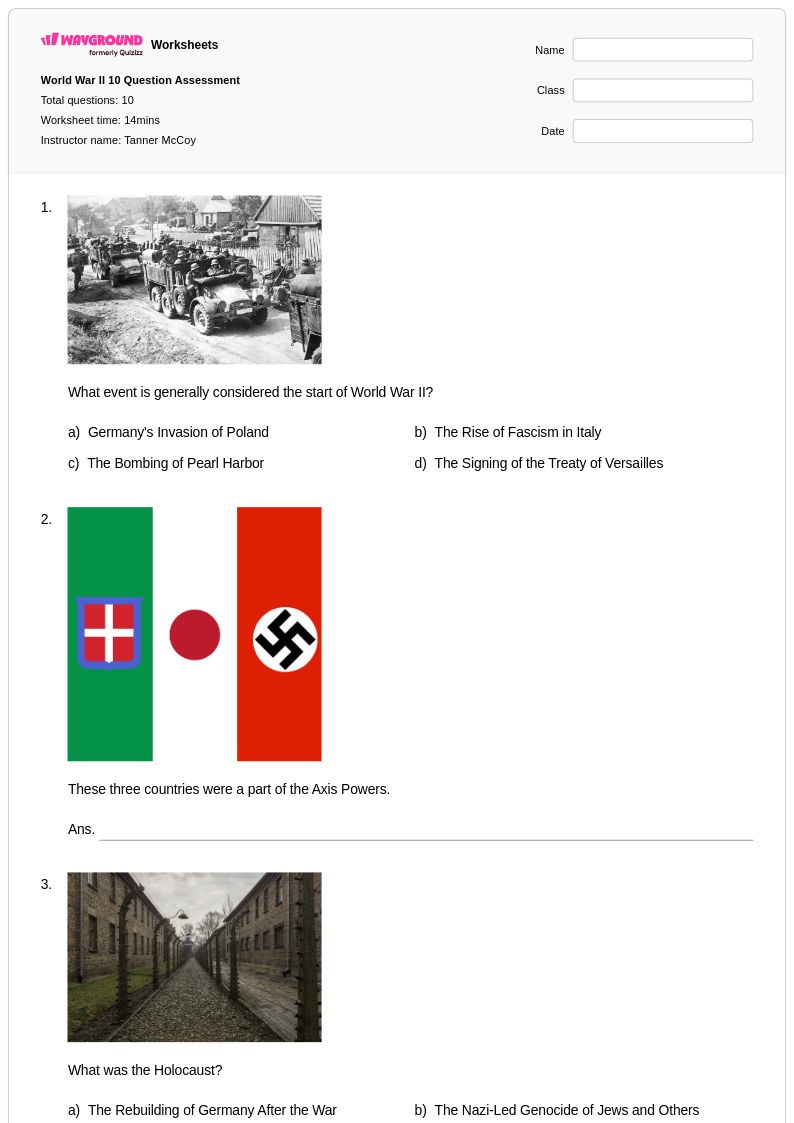
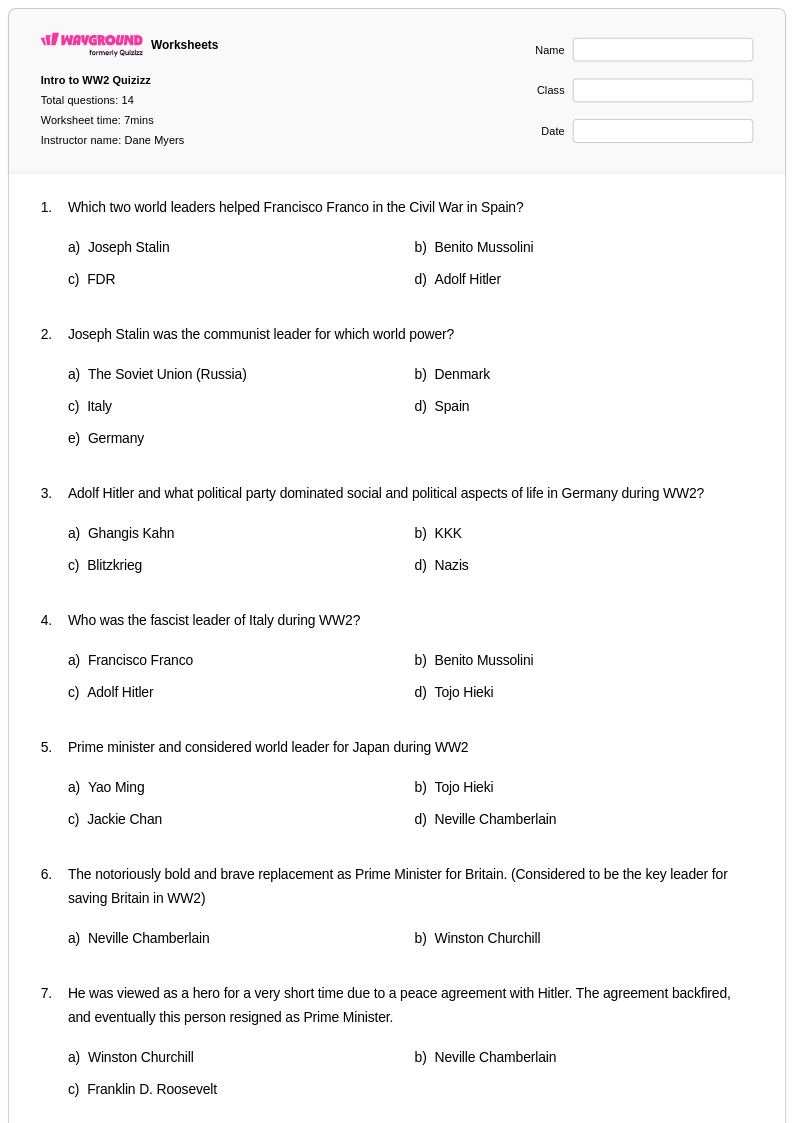
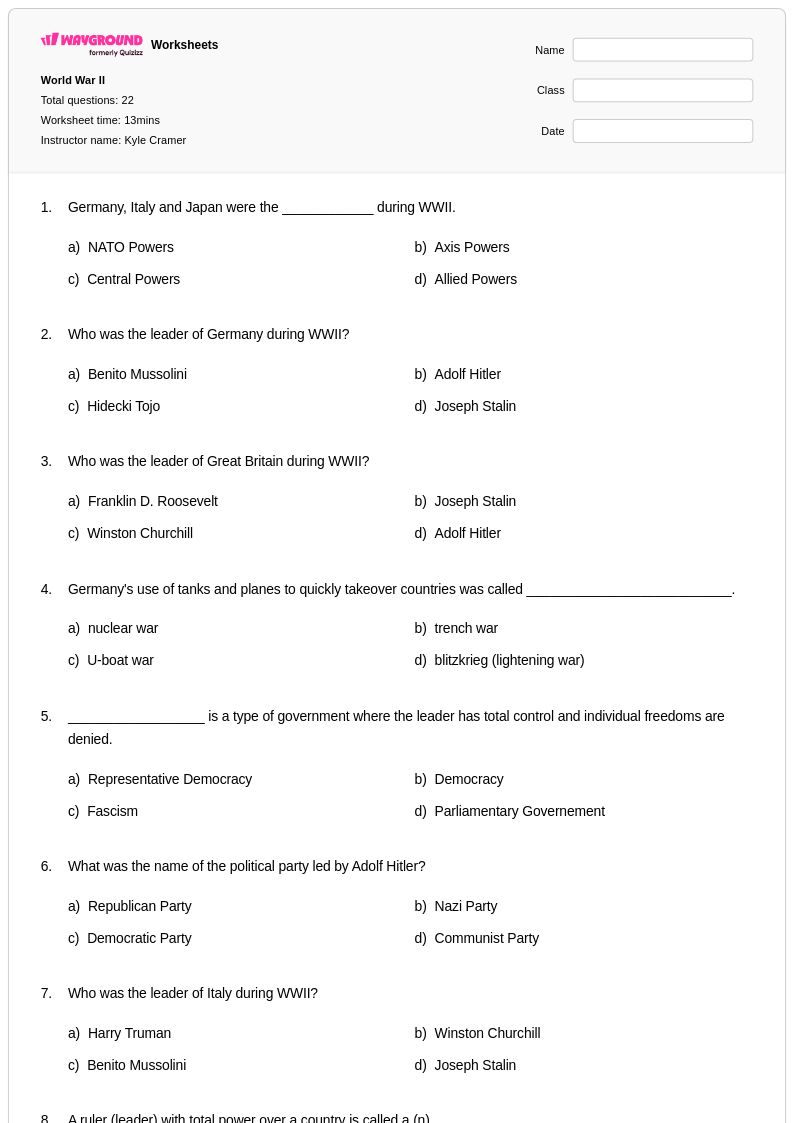
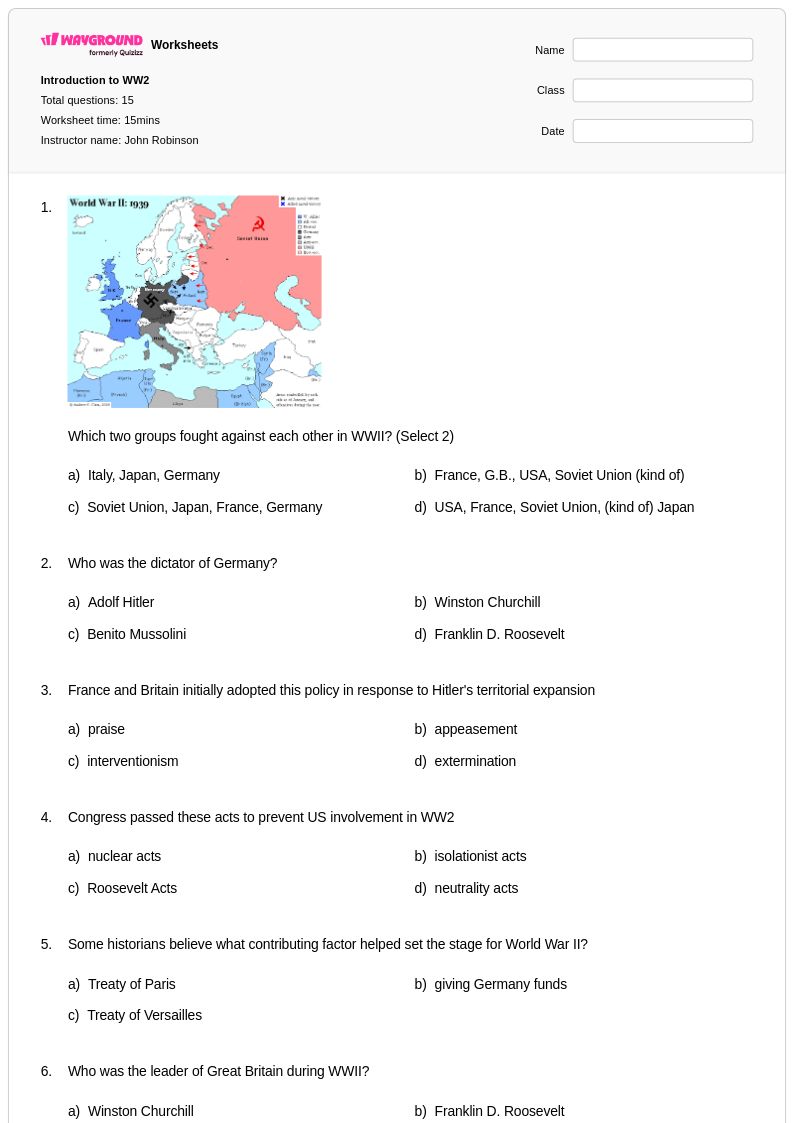
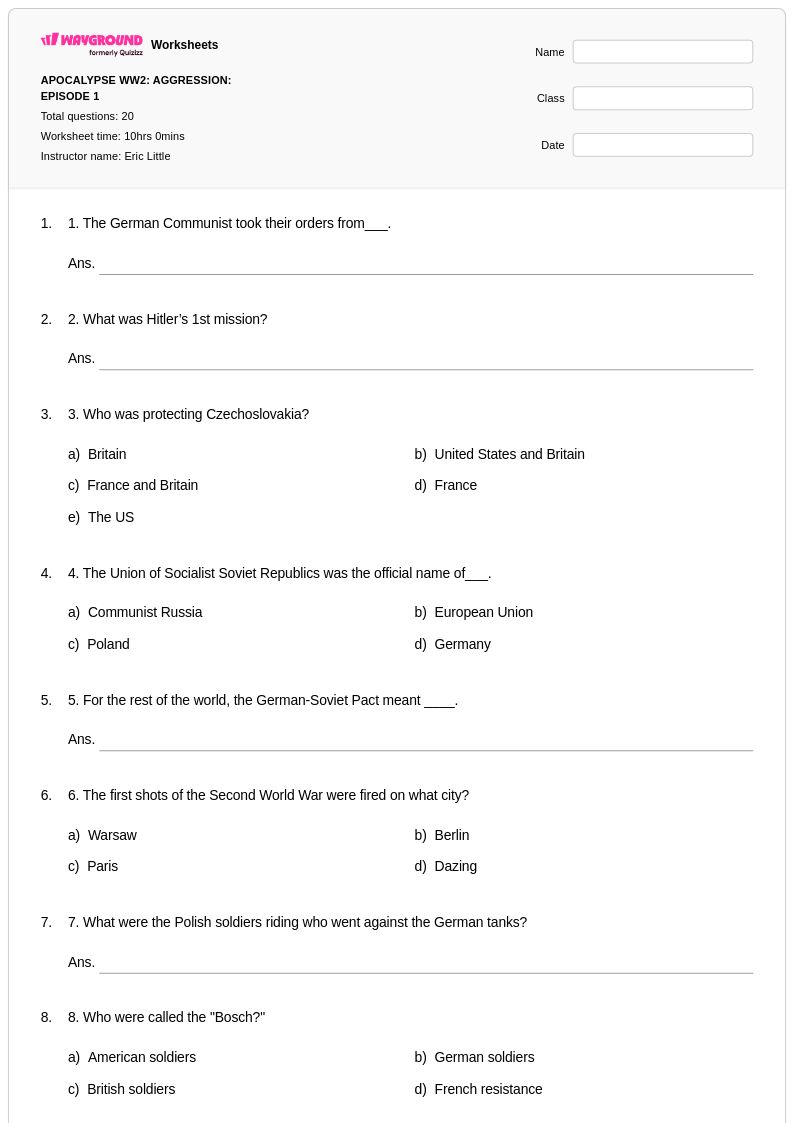
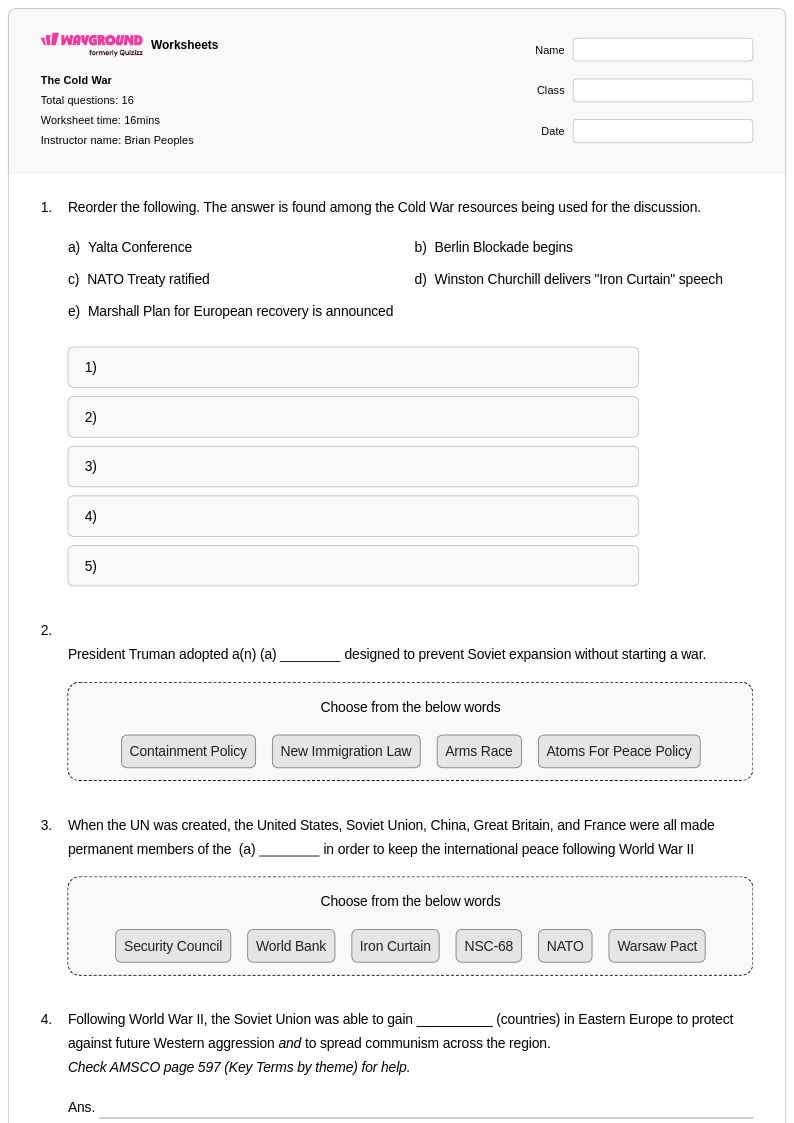
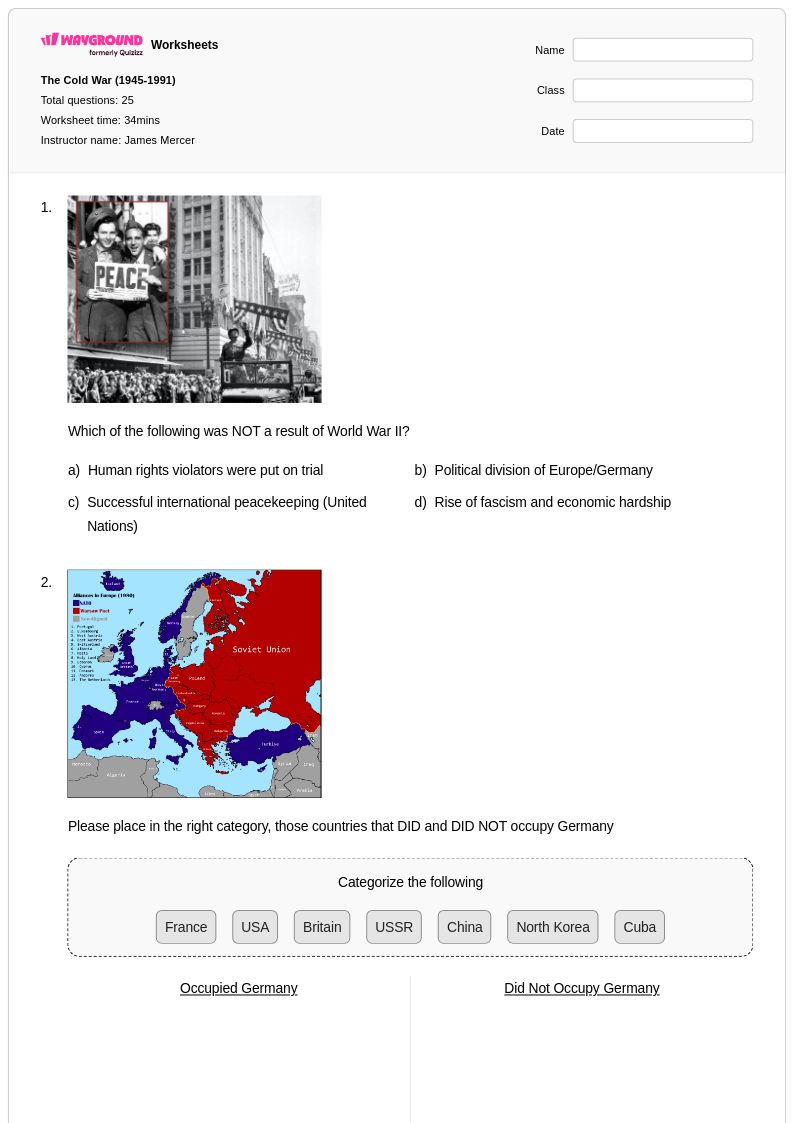
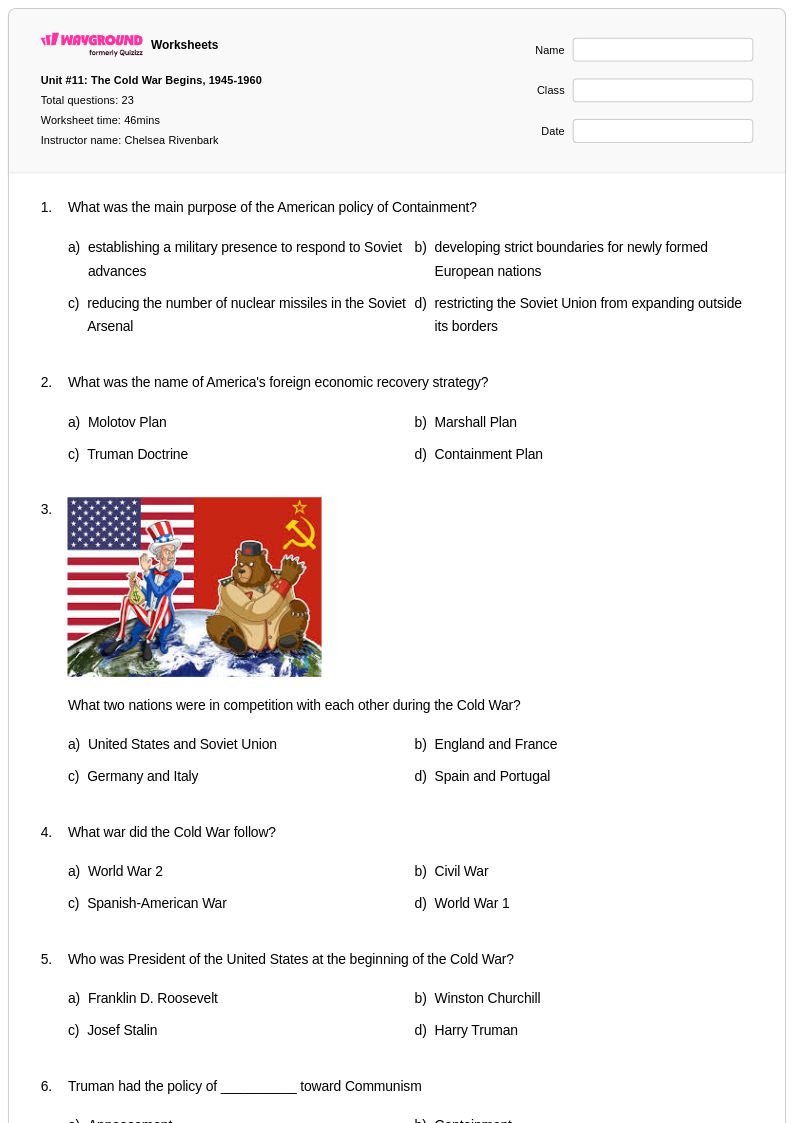
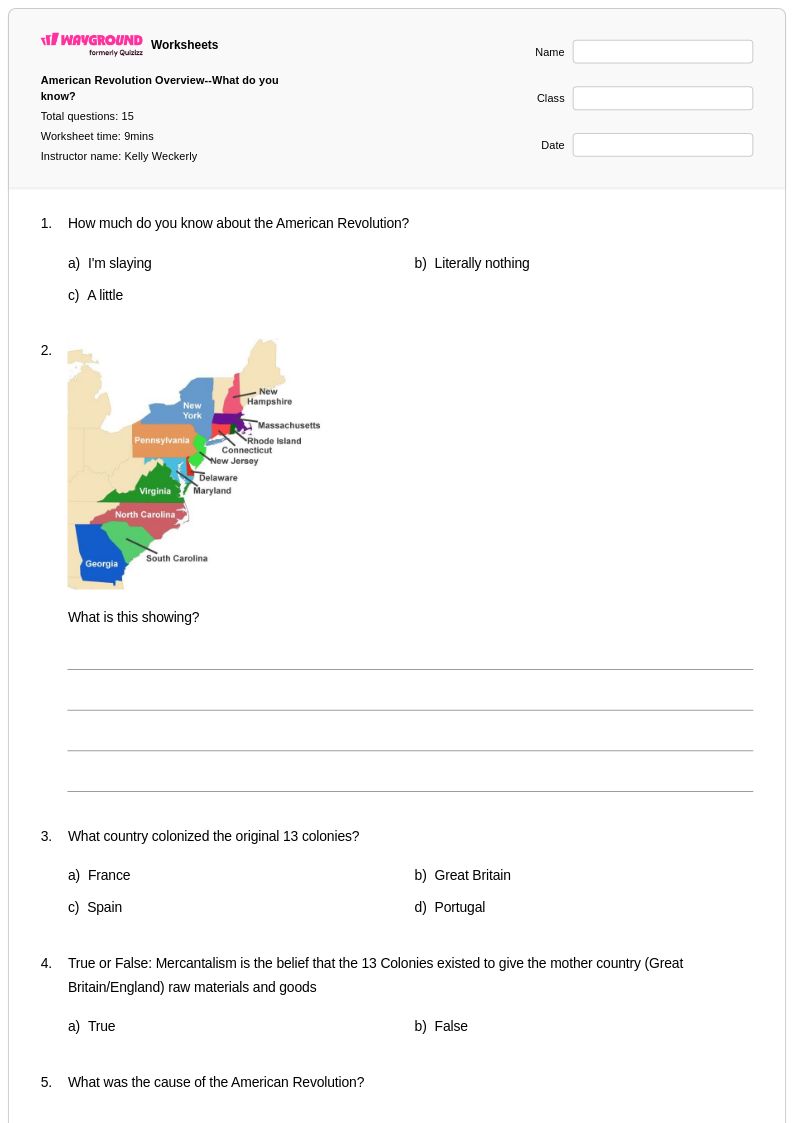
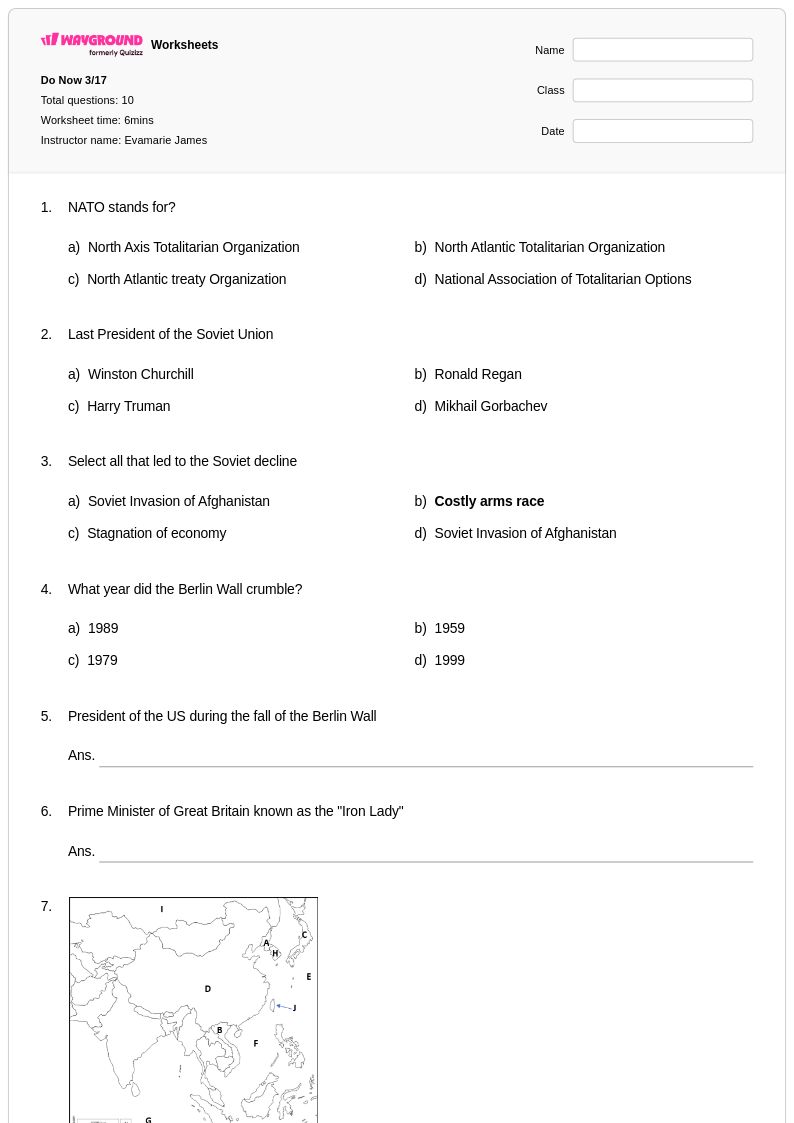
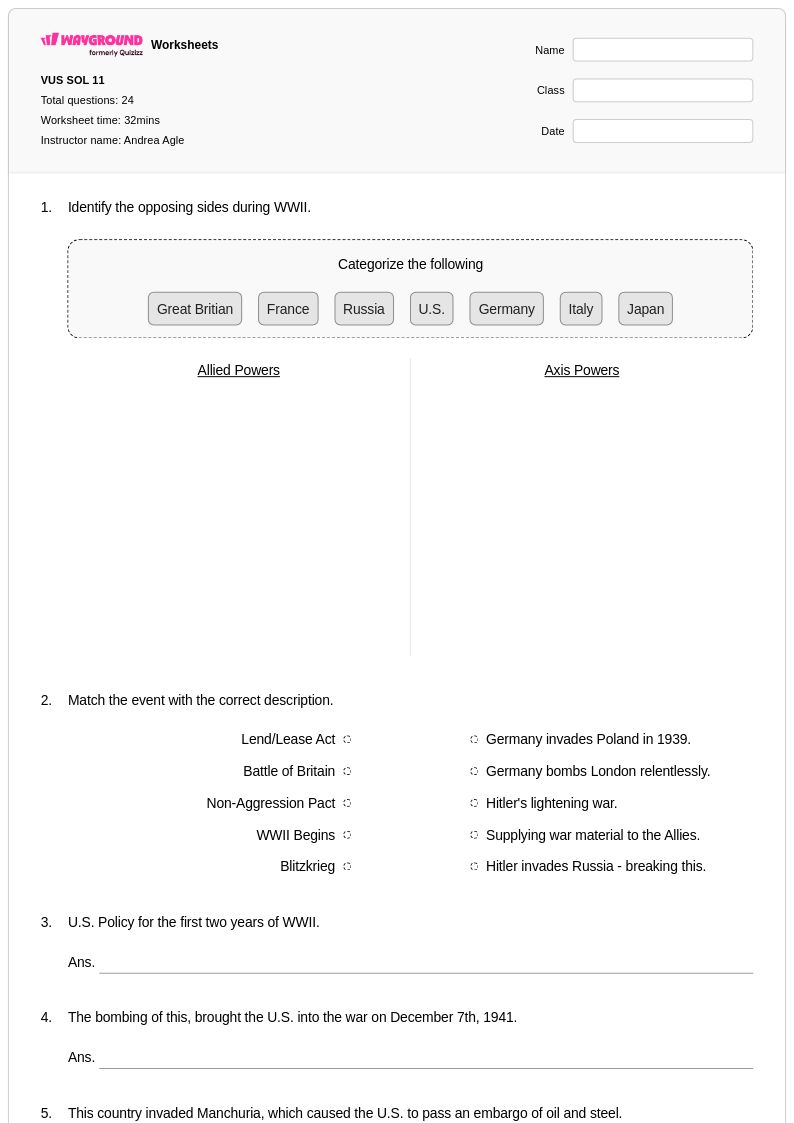
Winston Churchill worksheets for Grade 10 students provide comprehensive exploration of one of the most influential leaders in modern world history. These educational resources through Wayground (formerly Quizizz) focus on Churchill's multifaceted role as a wartime prime minister, his strategic leadership during World War II, and his impact on British and global politics throughout the 20th century. The worksheets strengthen critical thinking skills by examining primary source documents, analyzing Churchill's speeches and policies, and evaluating his controversial decisions during pivotal moments in history. Students engage with practice problems that require them to assess Churchill's leadership style, his relationship with Allied powers, and his influence on post-war reconstruction. These free printables include comprehensive answer keys and are available as downloadable pdf resources, enabling students to develop analytical skills while mastering essential knowledge about this complex historical figure.
Wayground (formerly Quizizz) supports educators with an extensive collection of teacher-created Winston Churchill resources, drawing from millions of high-quality worksheets and activities specifically designed for Grade 10 world history instruction. The platform's robust search and filtering capabilities allow teachers to locate materials that align with curriculum standards and specific learning objectives, whether focusing on Churchill's early political career, his wartime leadership, or his post-war contributions. Differentiation tools enable educators to customize worksheets for varying skill levels, supporting both remediation for struggling students and enrichment opportunities for advanced learners. Available in both printable and digital formats including pdf downloads, these resources facilitate flexible lesson planning and provide teachers with ready-to-use materials for skill practice, formative assessment, and in-depth historical analysis that brings Churchill's era to life in the Grade 10 classroom.
FAQs
How do I teach Winston Churchill's role in World War II to students?
Teaching Churchill's role in World War II is most effective when organized around key decision points: his appointment as Prime Minister in 1940, the Battle of Britain, and his alliances with Roosevelt and Stalin. Primary source analysis works especially well here because Churchill's speeches, particularly 'We Shall Fight on the Beaches' and 'Their Finest Hour,' give students direct access to his rhetorical strategy and war leadership philosophy. Pairing speech analysis with timeline activities helps students connect individual decisions to broader wartime outcomes.
What exercises help students practice analyzing Churchill's speeches?
Close-reading exercises that ask students to identify rhetorical devices, intended audience, and historical context are the most effective for Churchill's speeches. Structured worksheets that prompt students to annotate for tone, word choice, and purpose help build both historical thinking and literacy skills simultaneously. Comparing two speeches from different phases of the war, such as one from 1940 and one from 1945, can deepen students' understanding of how Churchill adapted his message to shifting circumstances.
What common mistakes do students make when evaluating Churchill's historical legacy?
The most frequent misconception is that students treat Churchill as an uncomplicated hero, focusing exclusively on his wartime leadership while ignoring his controversial views on empire, colonialism, and domestic policy. This leads to surface-level historical analysis that conflates leadership skill with moral consistency. Prompting students to evaluate primary sources alongside critical historical perspectives helps them develop a more nuanced, evidence-based assessment of his legacy.
How can I use Winston Churchill worksheets to support different learning levels in my classroom?
Winston Churchill worksheets can be differentiated by adjusting the complexity of source materials and the scaffolding provided in questions, for example, pairing struggling readers with shorter excerpts and sentence-stem prompts while offering advanced learners full speech transcripts and open-ended analytical tasks. On Wayground, teachers can enable accommodations such as Read Aloud for students who need audio support, reduced answer choices to lower cognitive load, and extended time on digital versions of these worksheets. These settings can be applied to individual students without disrupting the rest of the class.
How do I use Winston Churchill worksheets from Wayground in my classroom?
Winston Churchill worksheets on Wayground are available as printable PDFs for traditional classroom use and in digital formats for technology-integrated learning environments, including the option to host them as a quiz directly on the platform. Teachers can use them for direct instruction support, independent practice, primary source analysis activities, or assessment of historical thinking skills. Each worksheet includes a complete answer key, making them practical for both in-class use and homework assignments.
How do I connect Churchill's leadership to broader themes my students are already studying?
Churchill's wartime leadership connects naturally to recurring curriculum themes including democratic resistance to authoritarianism, the role of individual agency in history, and the relationship between rhetoric and political power. His decisions during 1940 to 1945 offer concrete case studies for abstract concepts like coalition-building, wartime strategy, and the moral complexity of leadership. Framing Churchill within these broader themes helps students transfer their learning to other historical figures and periods rather than treating him as an isolated subject.