Free Printable Word Analysis Worksheets for Grade 4
Enhance Grade 4 students' word analysis skills with Wayground's comprehensive collection of free worksheets and printables that provide engaging practice problems and answer keys to strengthen vocabulary development through systematic word study.
Explore printable Word Analysis worksheets for Grade 4
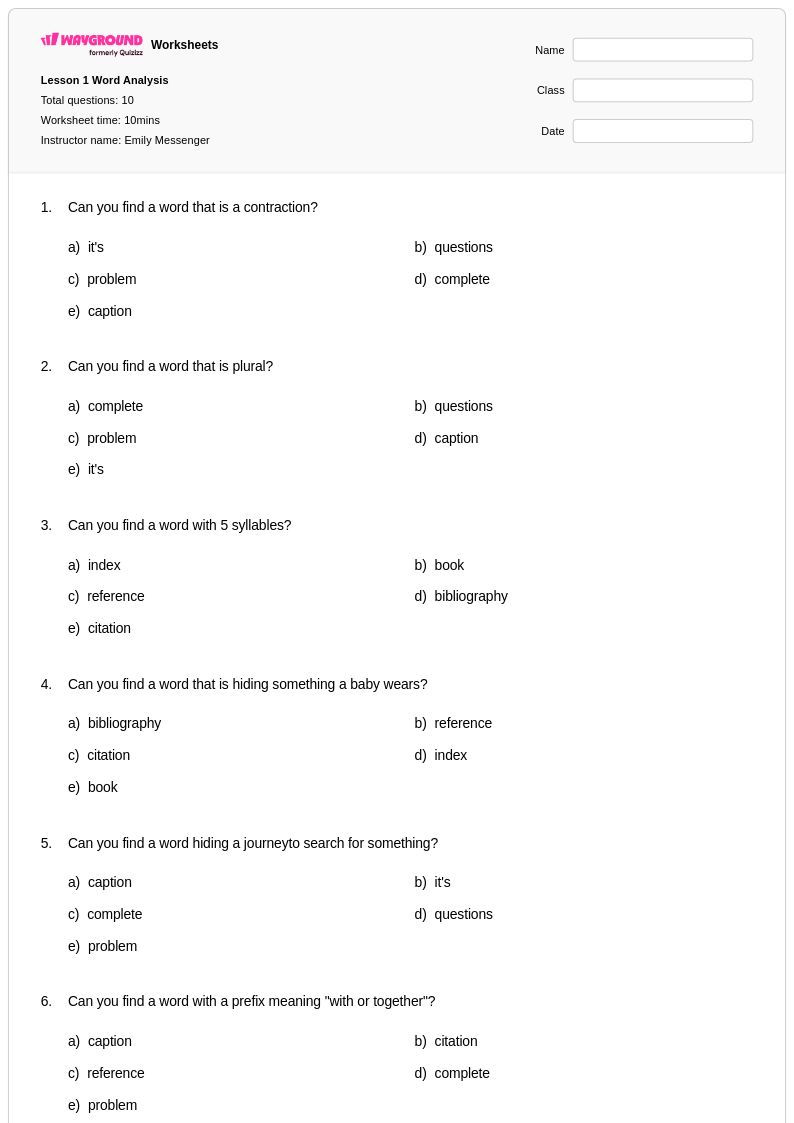
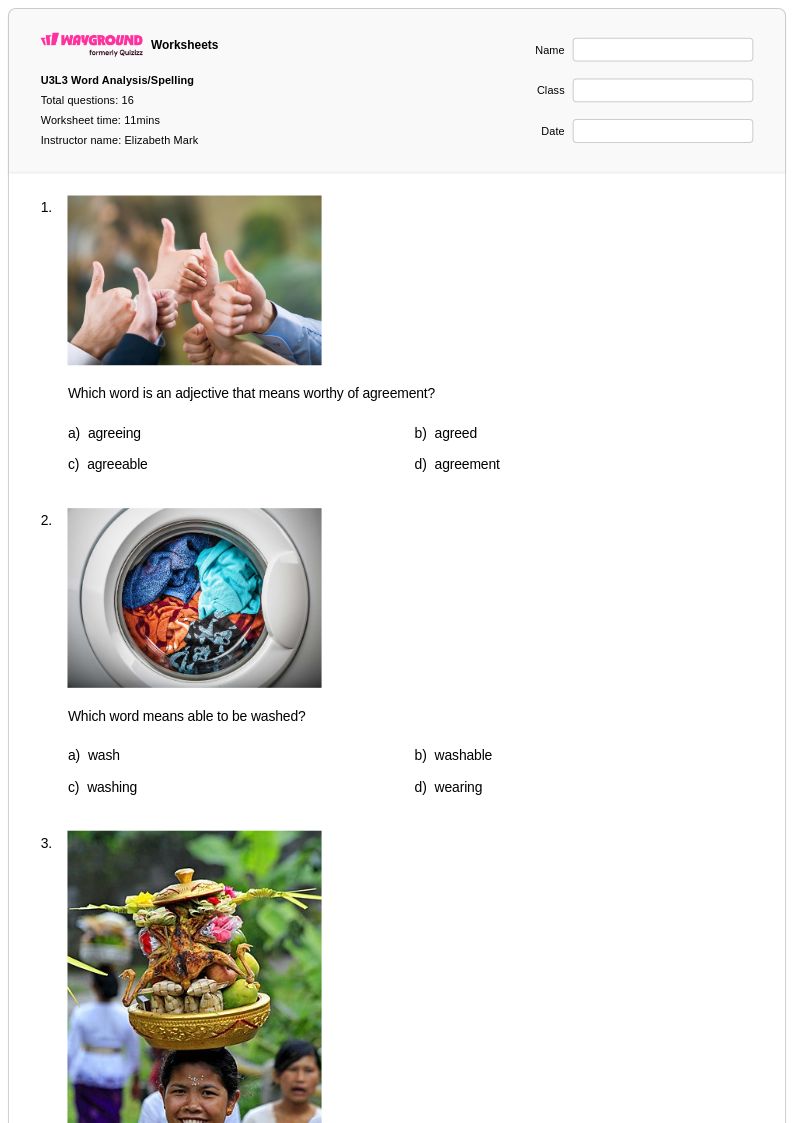
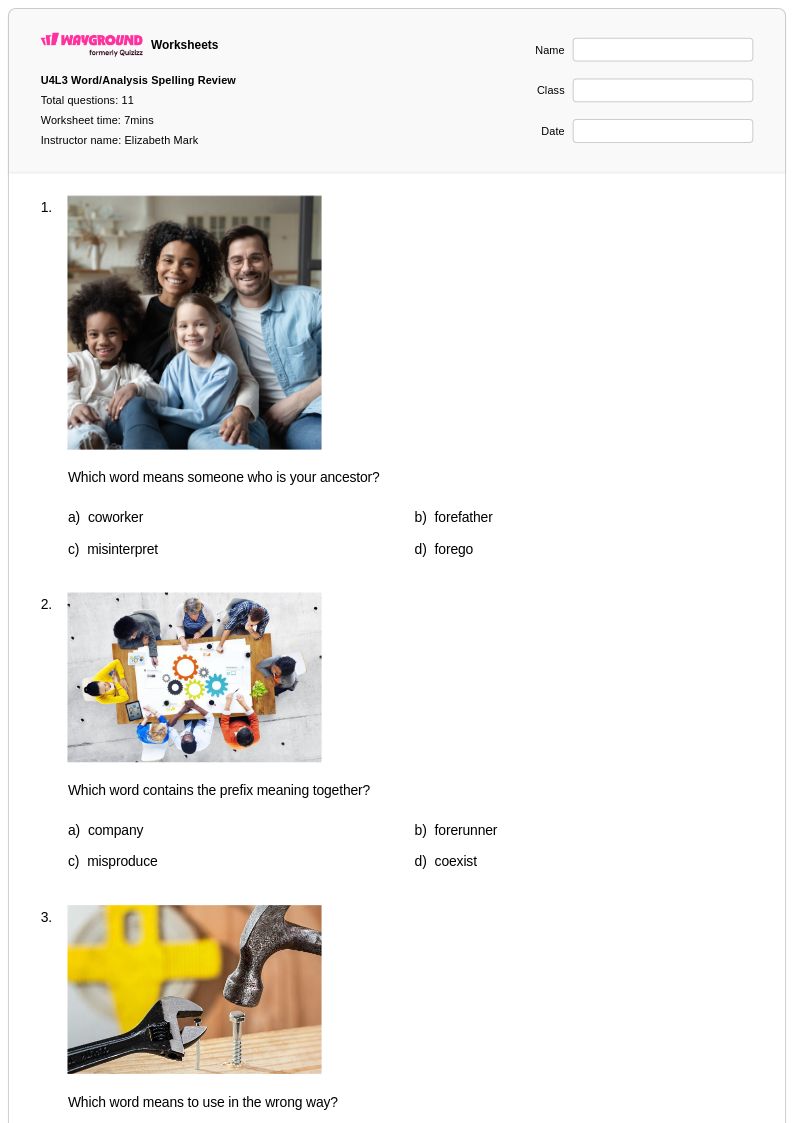
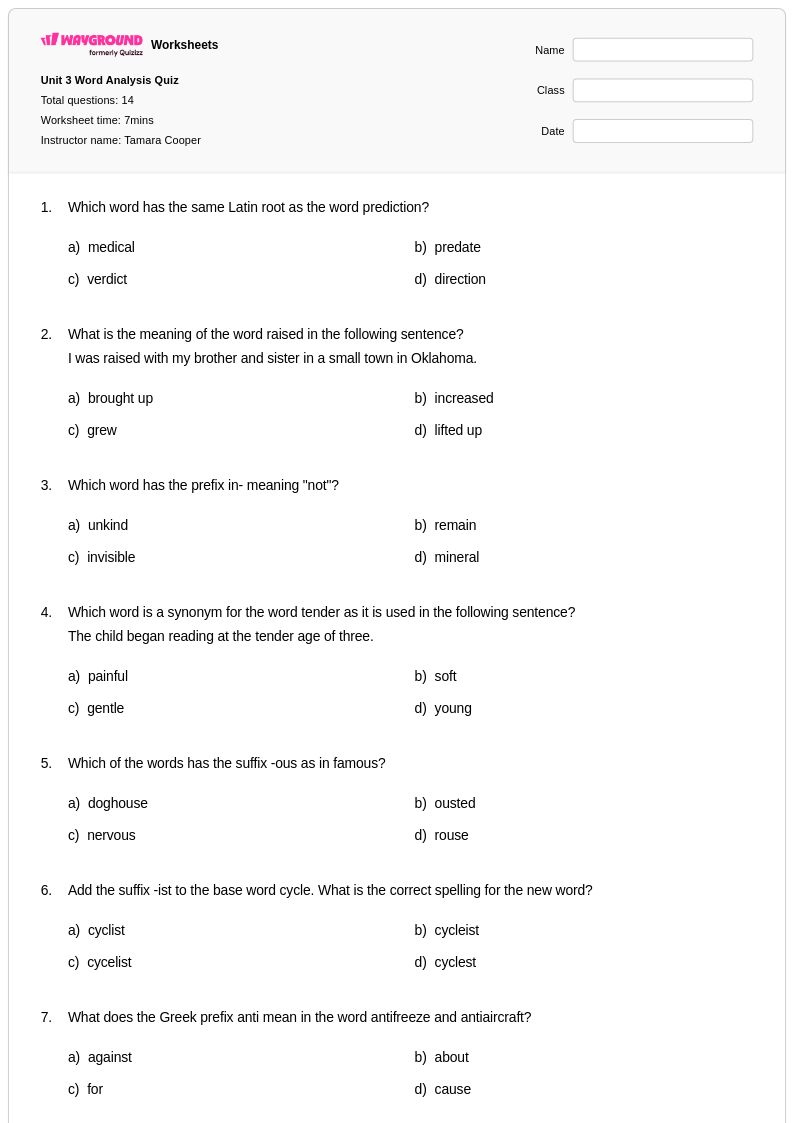
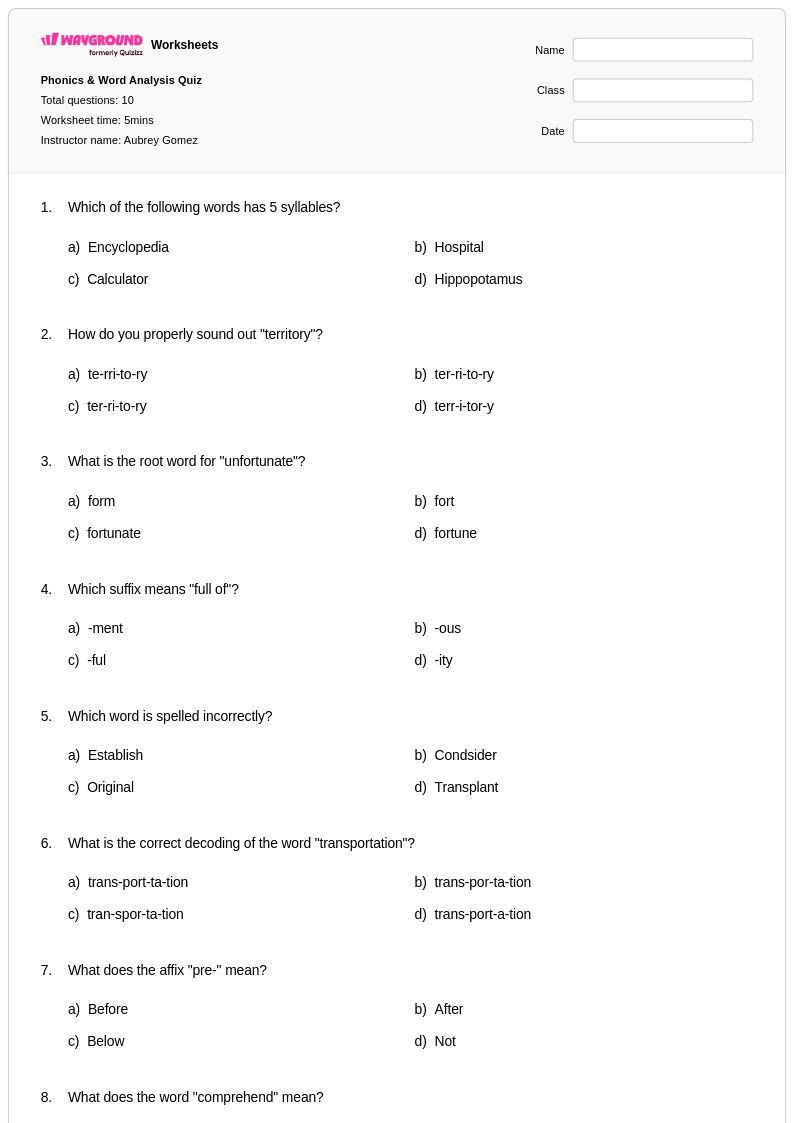
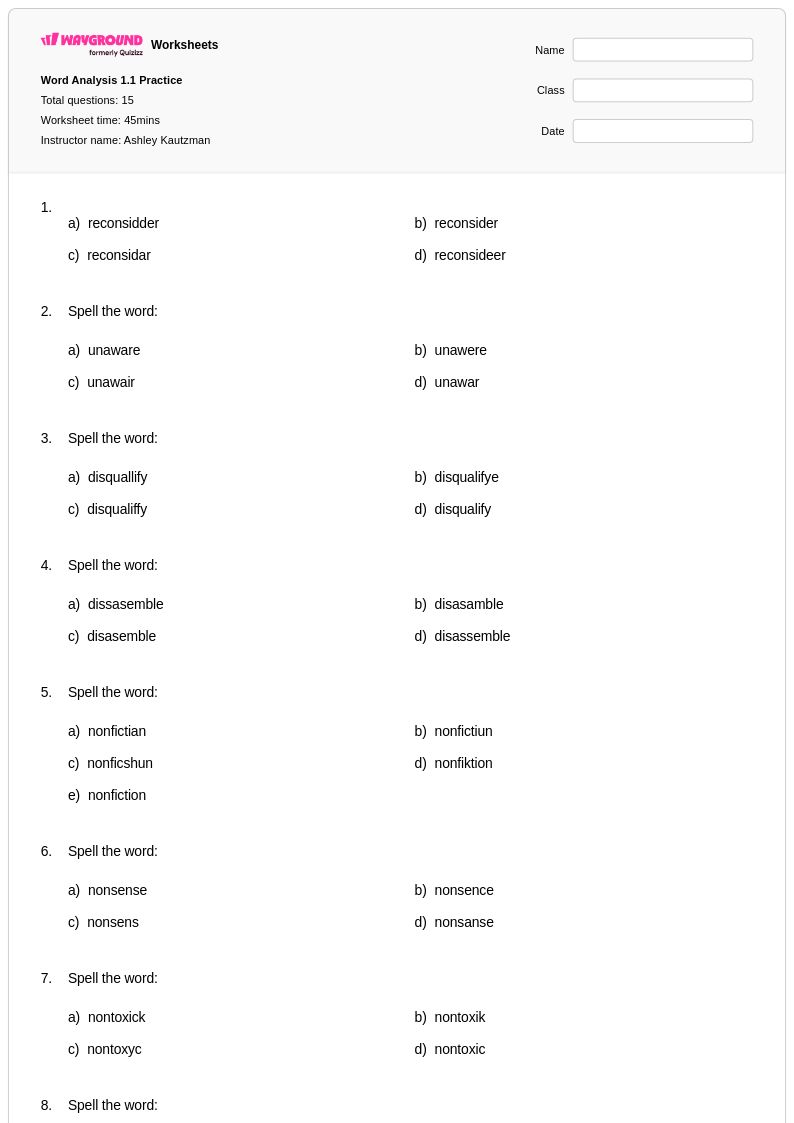
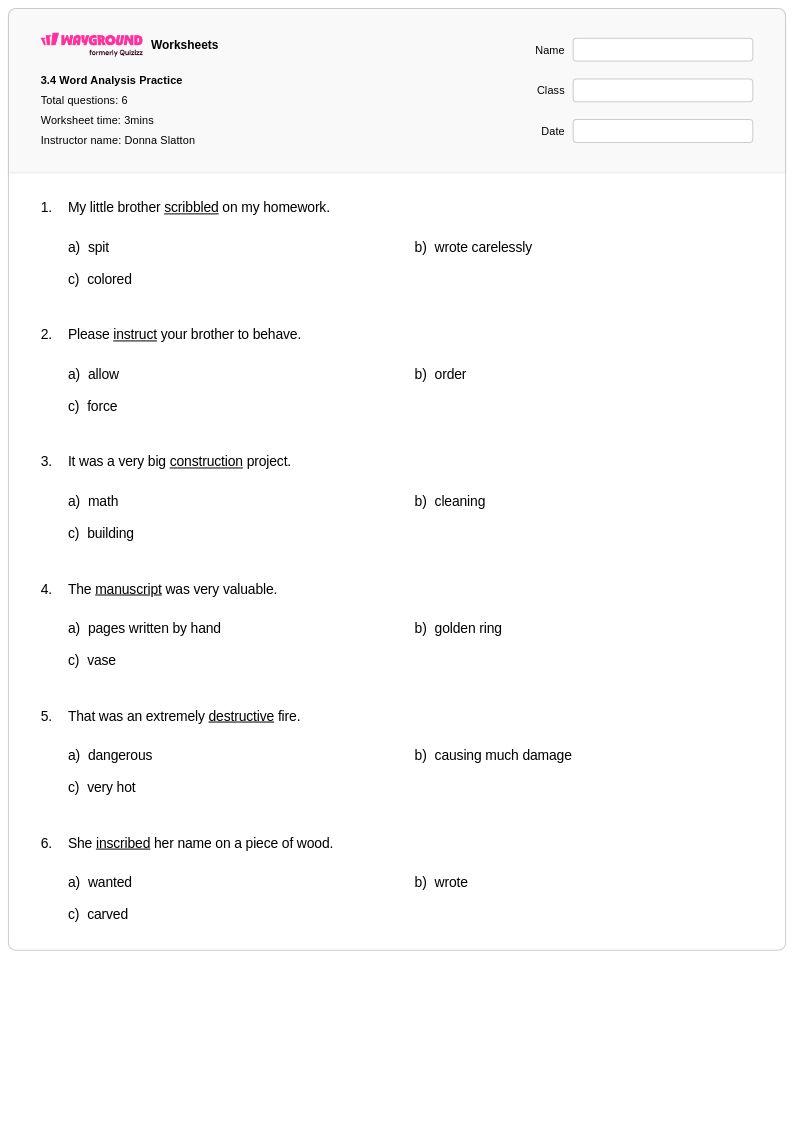
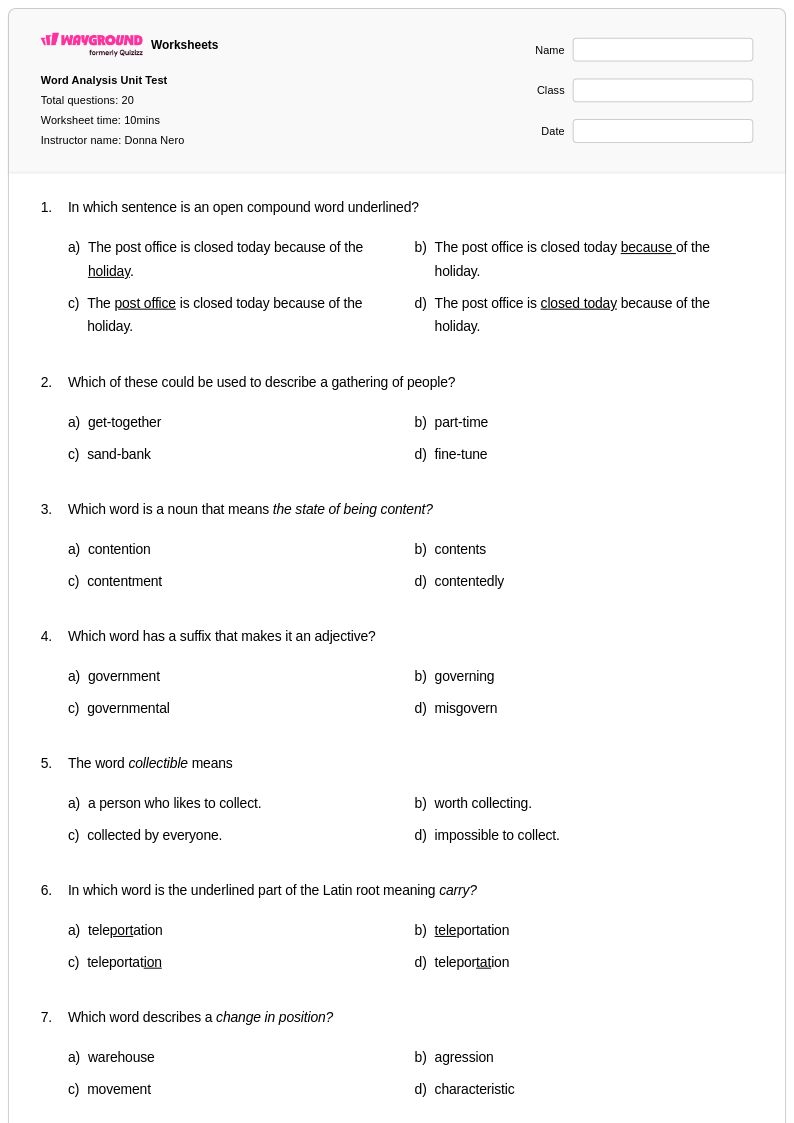
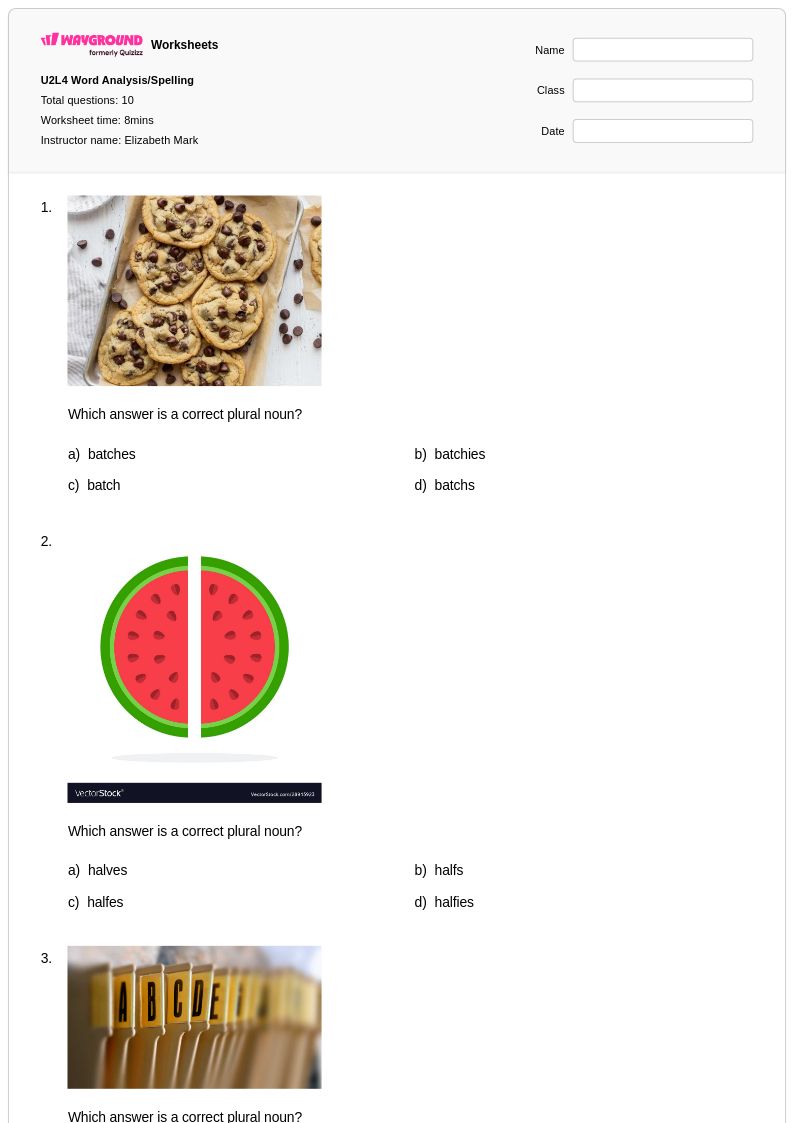
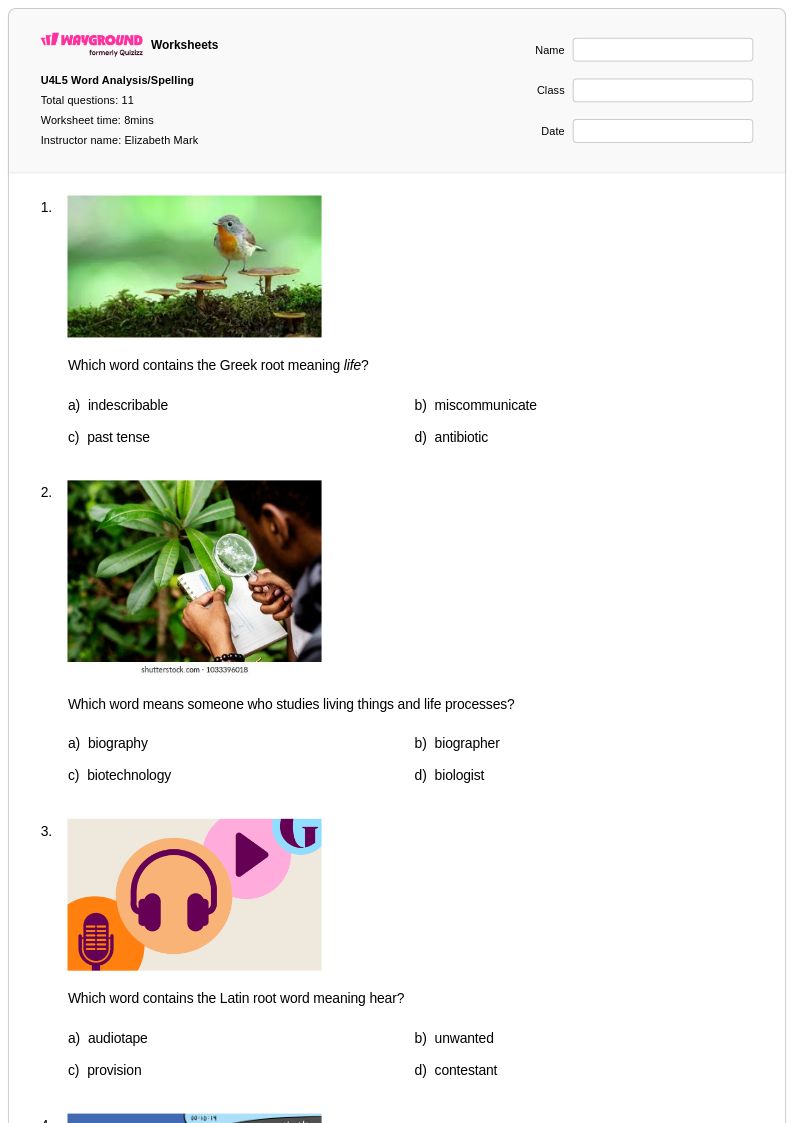
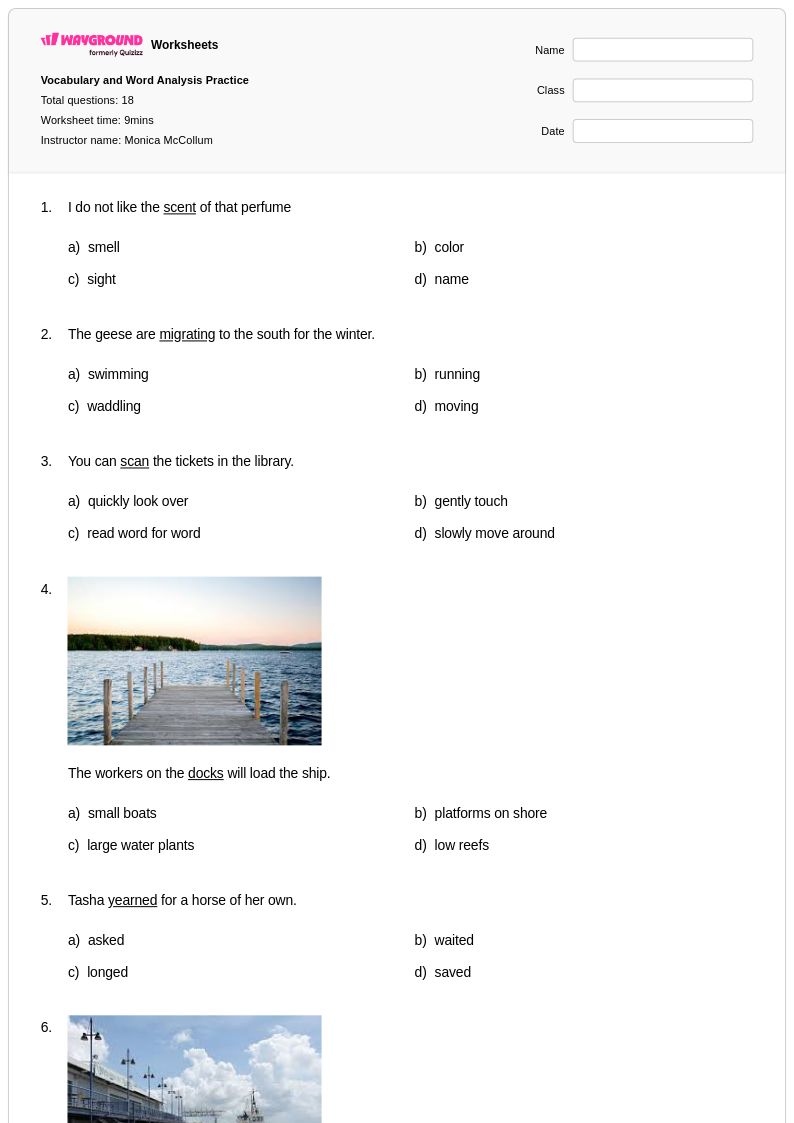
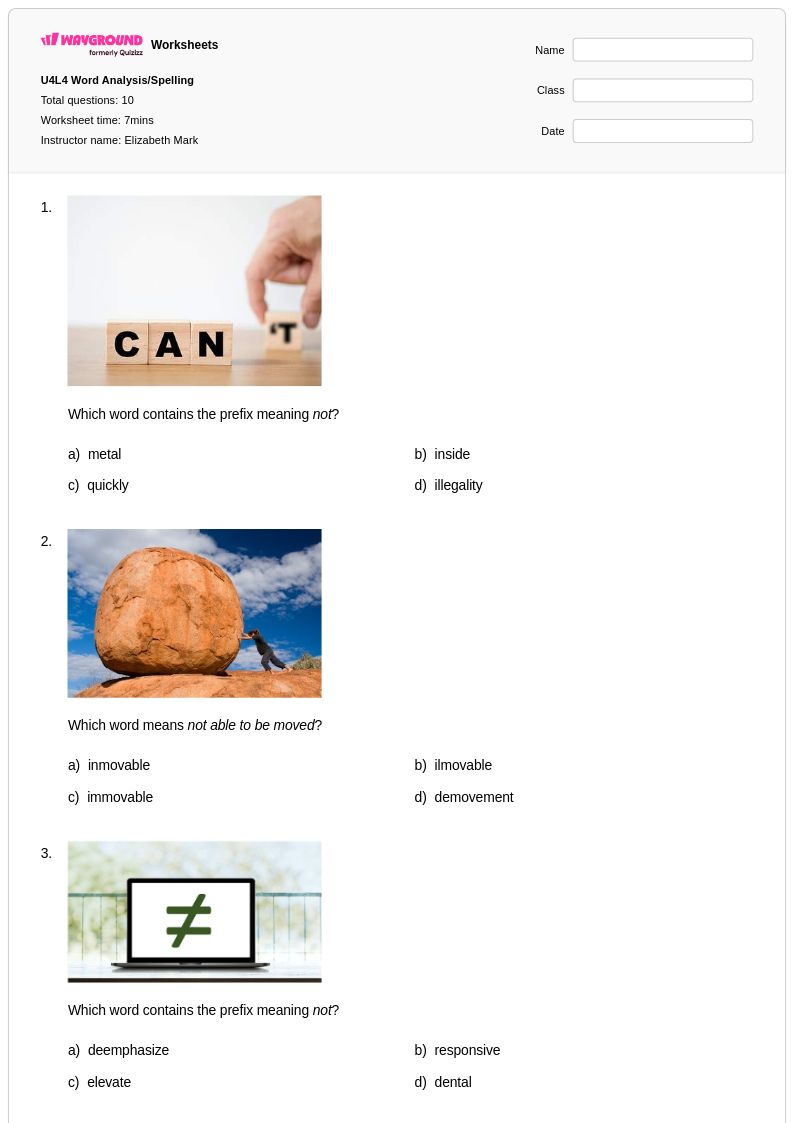
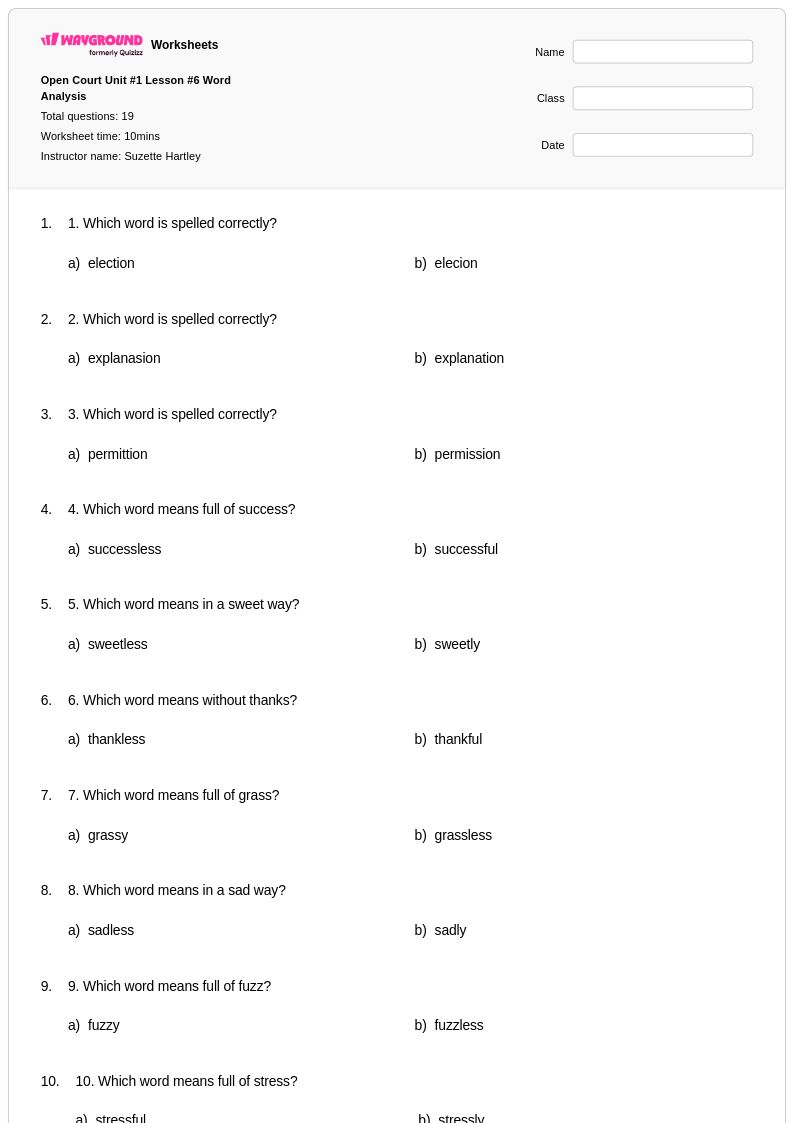
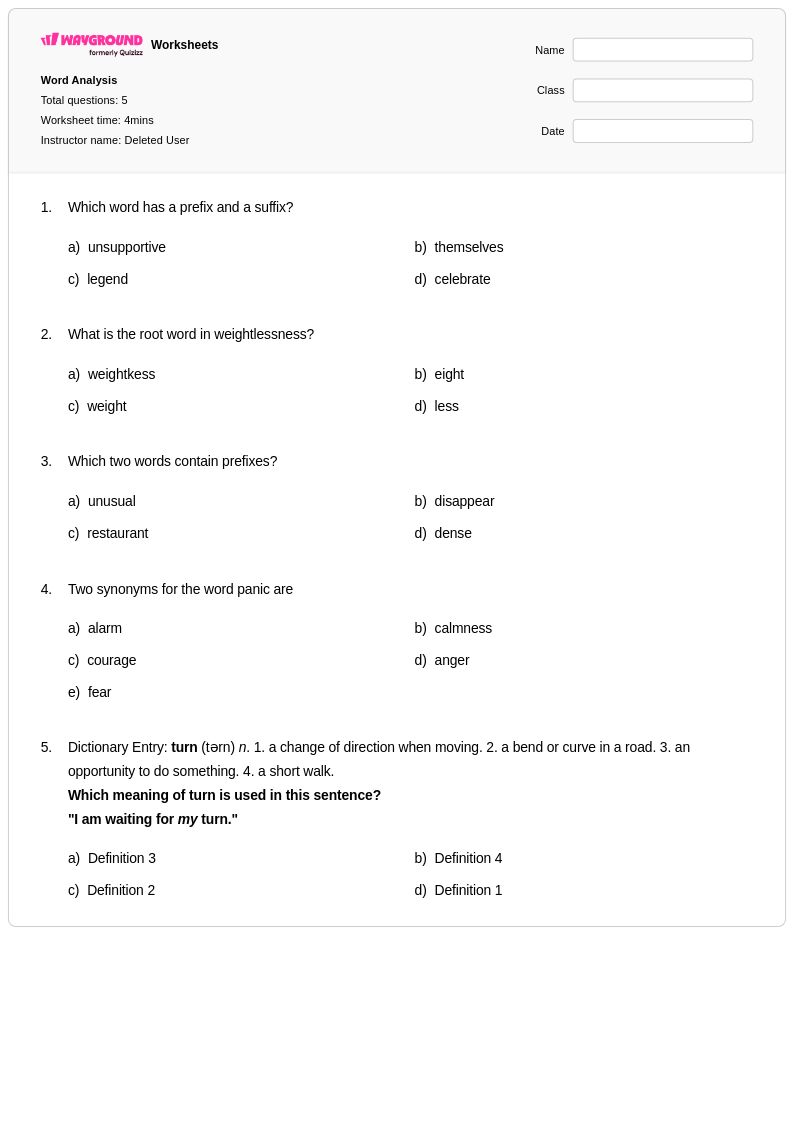
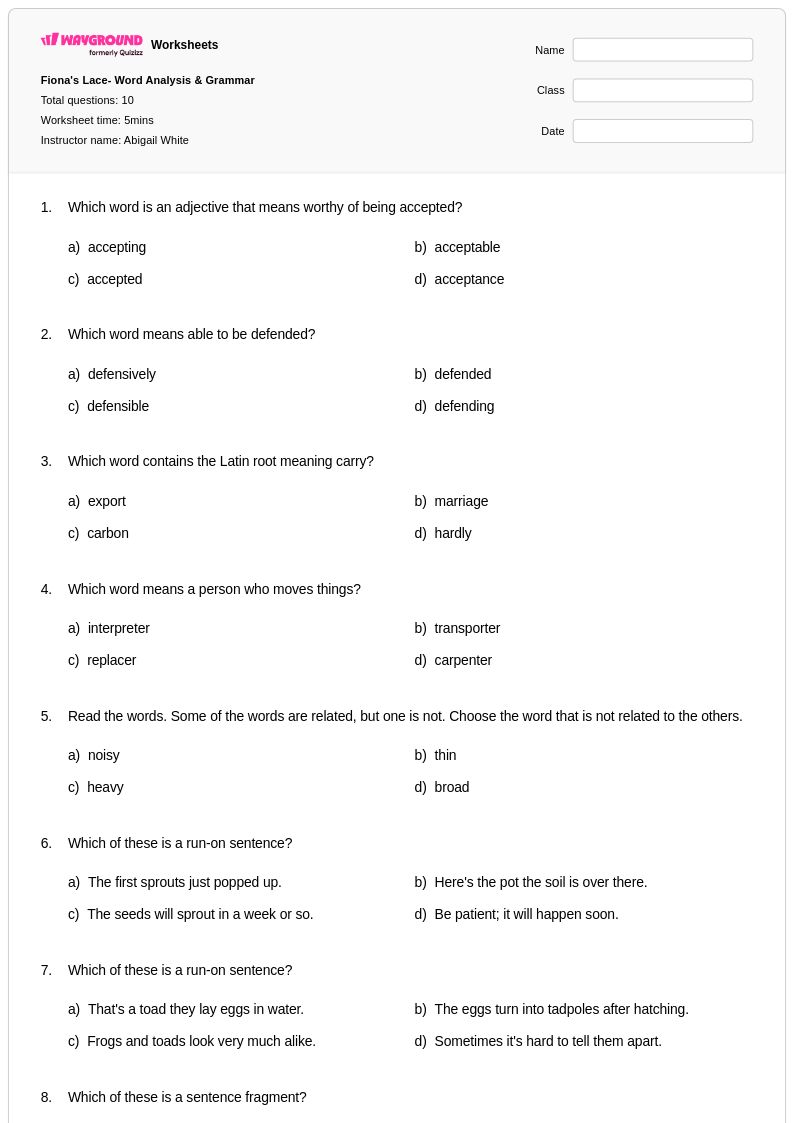
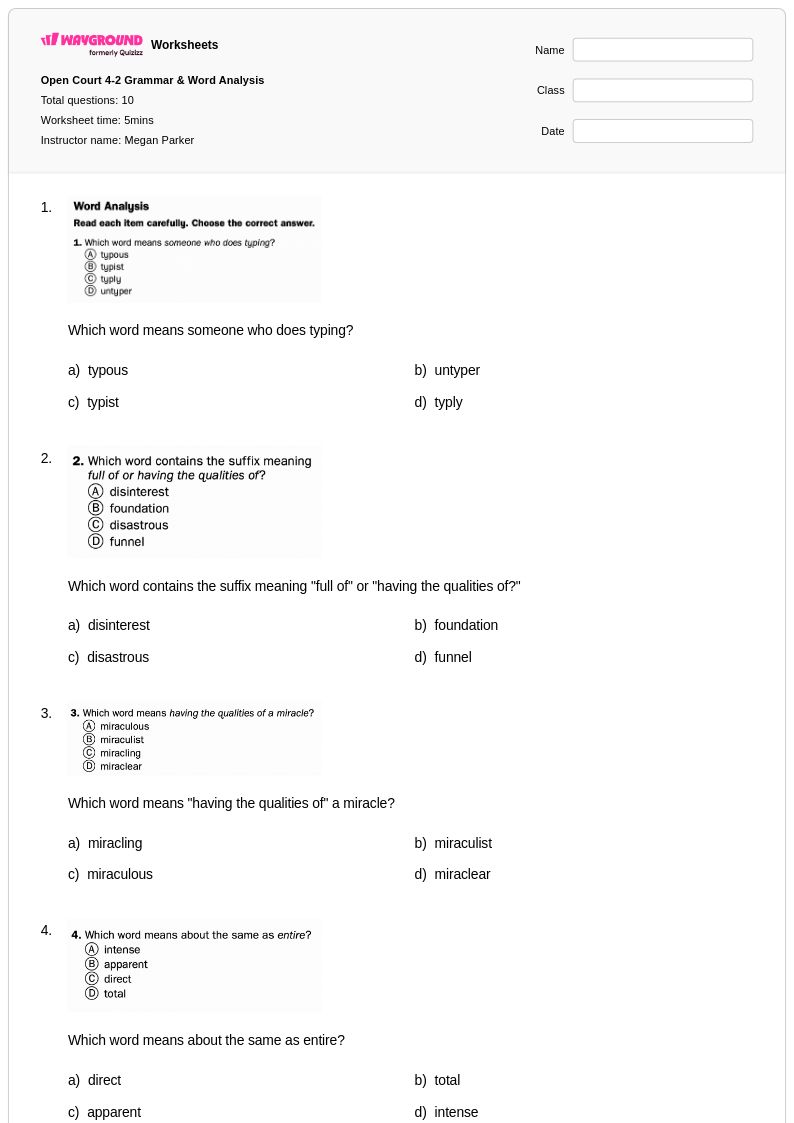
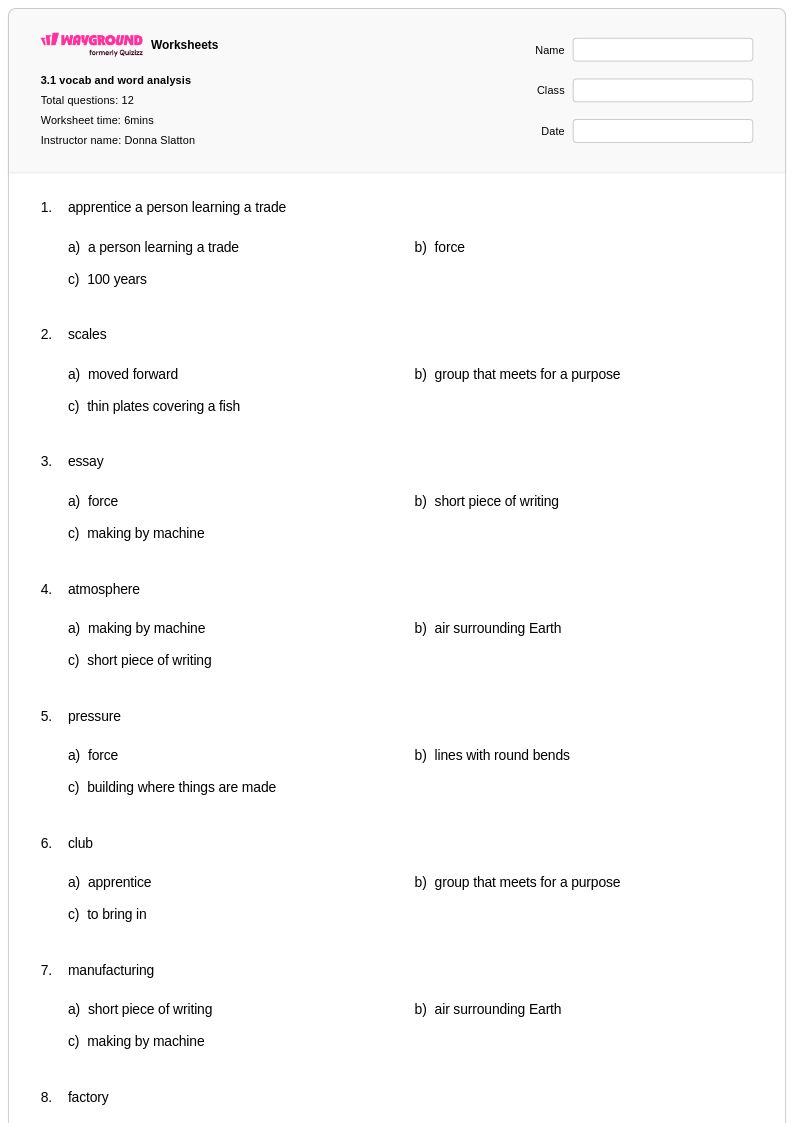
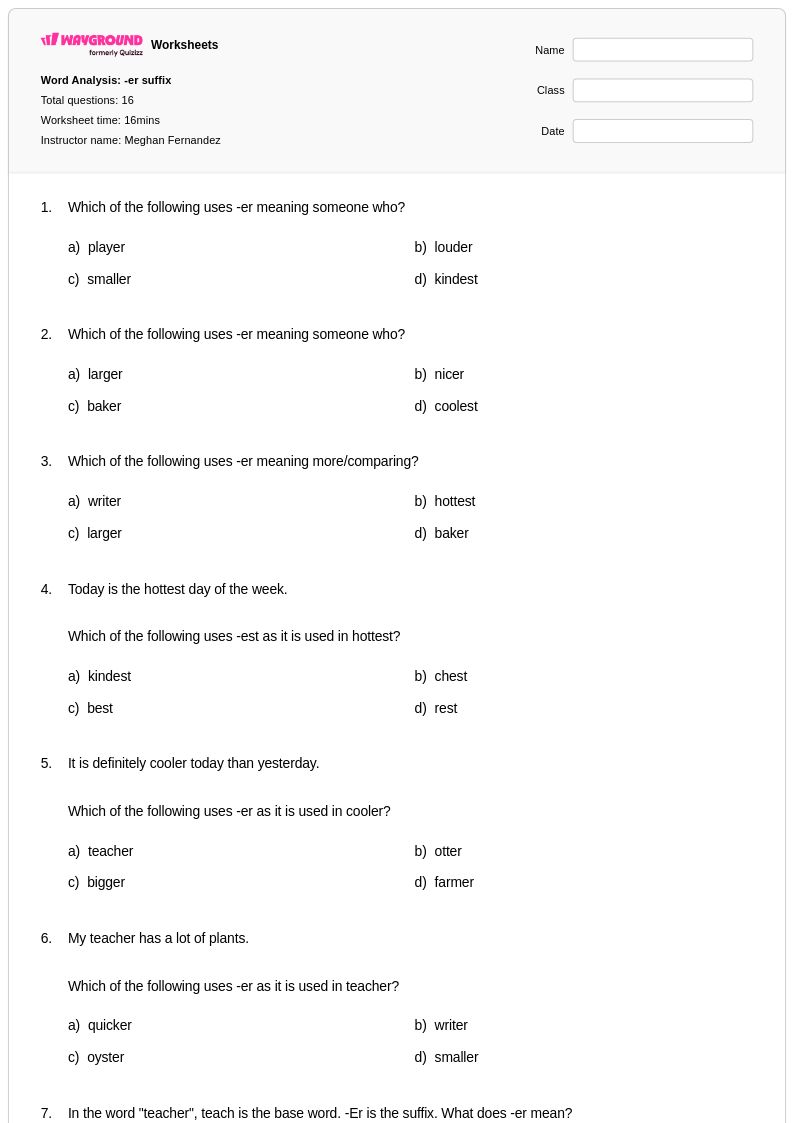
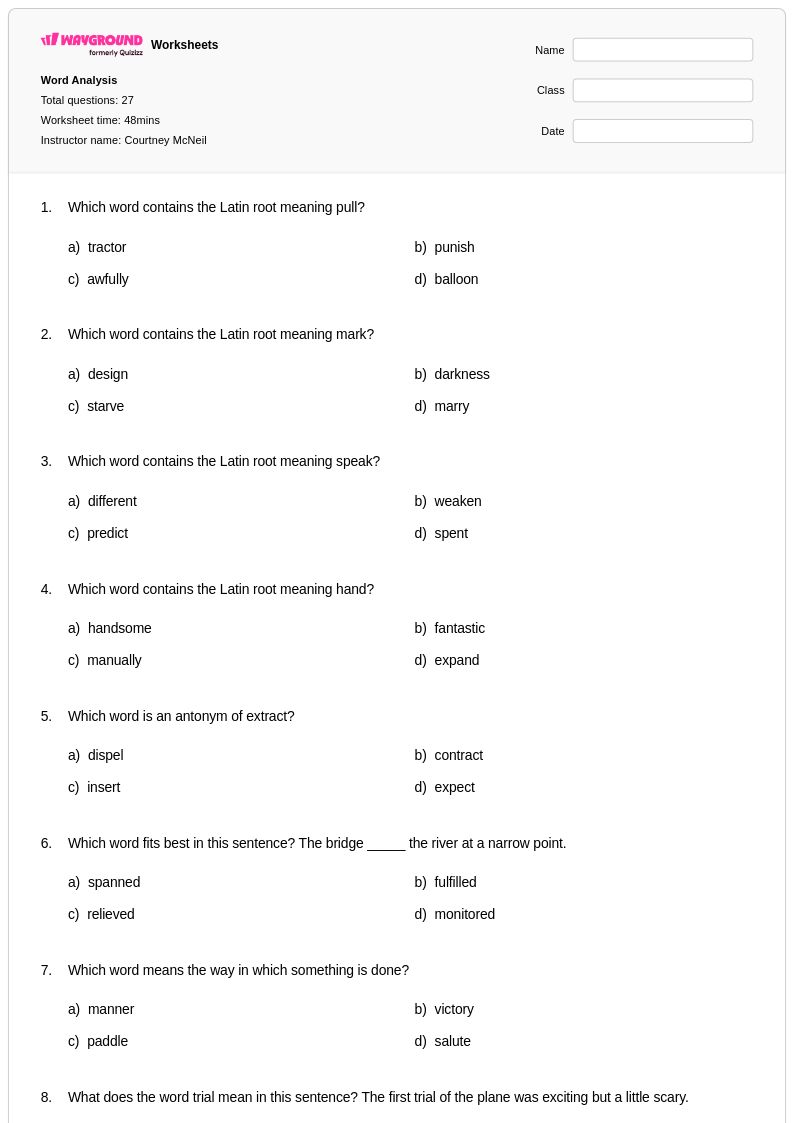
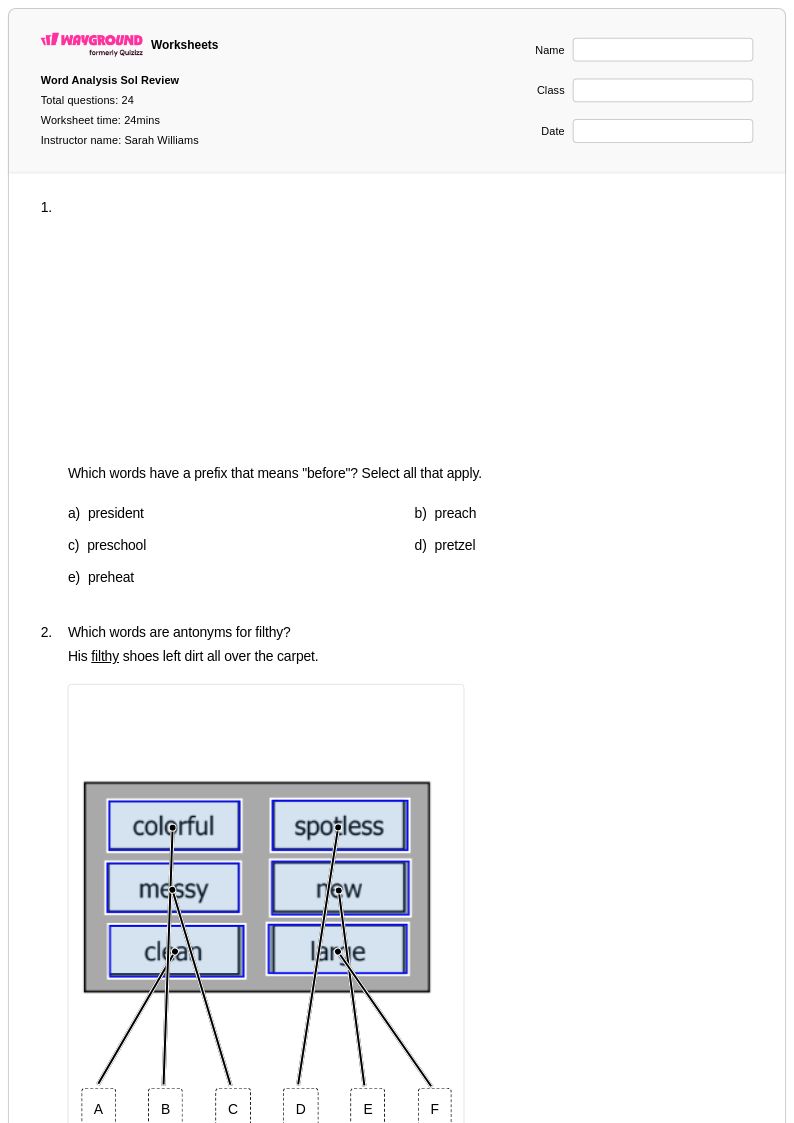
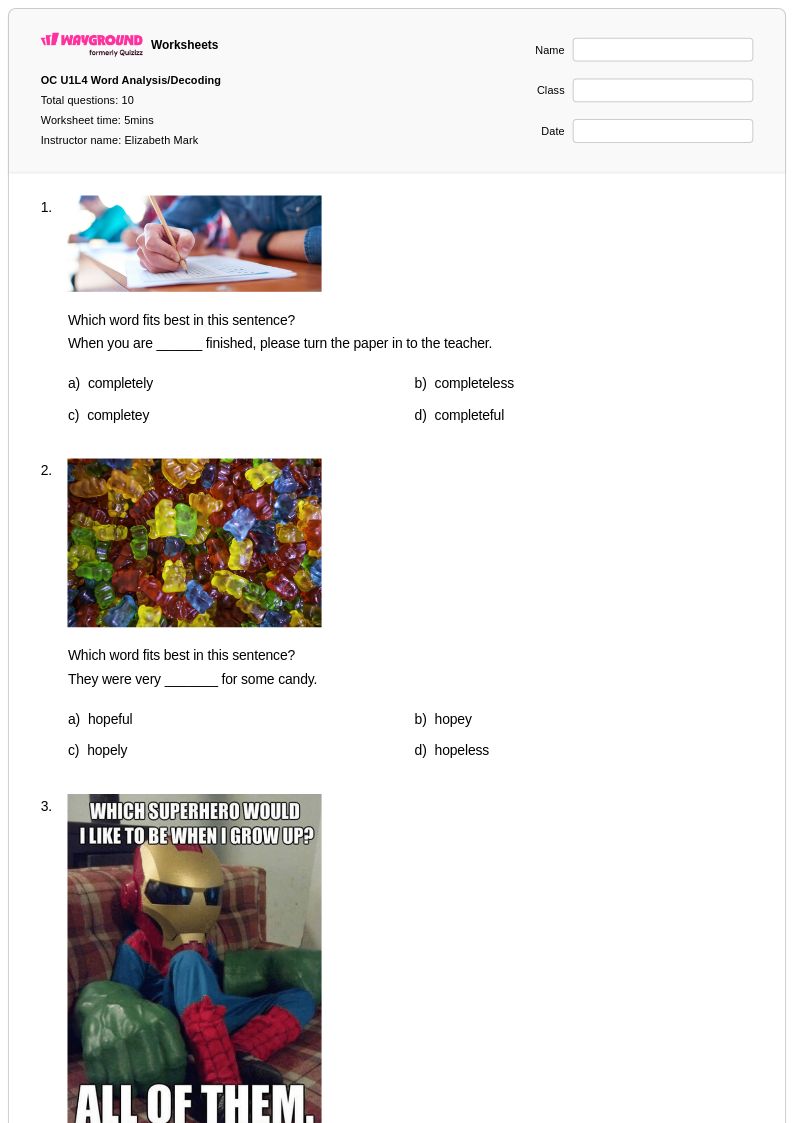
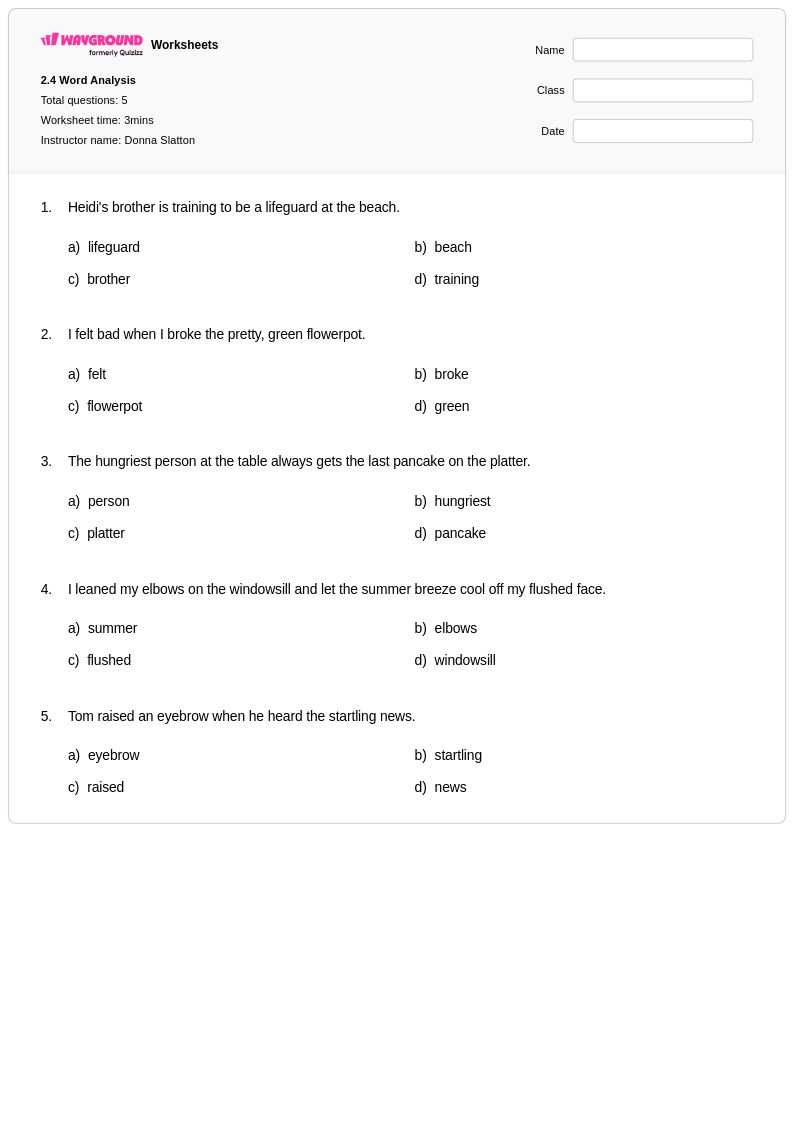
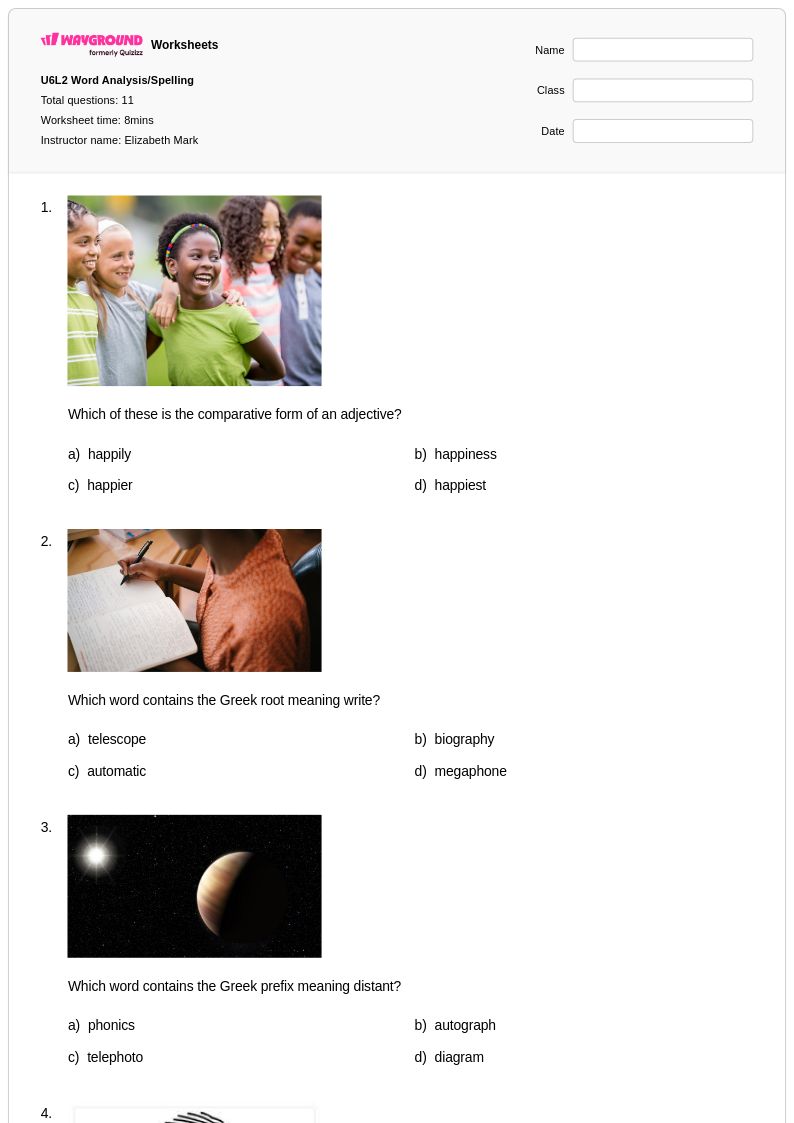
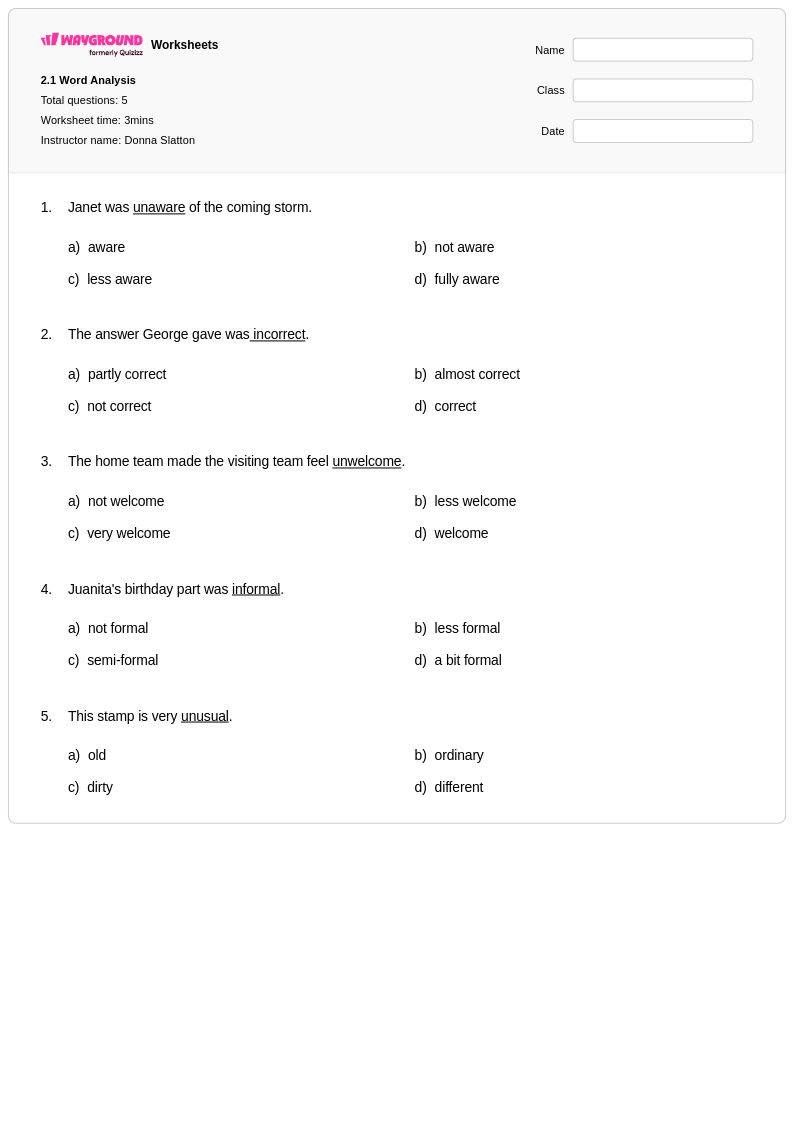
Word analysis worksheets for Grade 4 students through Wayground (formerly Quizizz) provide comprehensive practice in breaking down and understanding word structures, meanings, and relationships. These educational resources focus on essential skills including identifying root words, prefixes, and suffixes, recognizing word patterns, understanding syllable division, and exploring how word parts contribute to meaning. Students engage with practice problems that strengthen their ability to decode unfamiliar vocabulary, analyze compound words, and apply morphological knowledge to expand their reading comprehension. Each worksheet comes with a detailed answer key to support independent learning and self-assessment, while the free printables offer educators convenient access to high-quality materials in pdf format for both classroom instruction and homework assignments.
Wayground (formerly Quizizz) empowers teachers with millions of teacher-created word analysis resources specifically designed for Grade 4 vocabulary development, featuring robust search and filtering capabilities that align with curriculum standards and learning objectives. The platform's differentiation tools allow educators to customize worksheets based on individual student needs, whether providing remediation for struggling learners or enrichment opportunities for advanced students. Teachers can access materials in both printable and digital formats, including downloadable pdf versions that facilitate flexible lesson planning and seamless integration into existing curriculum frameworks. This extensive collection supports systematic skill practice through varied question types and progressive difficulty levels, enabling educators to target specific word analysis concepts while building students' confidence in tackling complex vocabulary across all subject areas.
FAQs
How do I teach word analysis skills in the classroom?
Effective word analysis instruction begins with explicit teaching of morphemes — prefixes, suffixes, and root words — before moving to decoding unfamiliar vocabulary in context. Teachers should model the process of breaking a word into its components and connecting each part to its meaning, then gradually release responsibility to students through guided and independent practice. Repeated exposure across multiple texts and content areas reinforces retention and transfer.
What exercises help students practice word analysis?
High-value word analysis practice includes exercises where students identify and label prefixes, suffixes, and root words within a set of vocabulary terms, then infer the meaning of each component. Activities that ask students to generate new words from a common root — such as 'bio' or 'port' — build morphological flexibility. Matching exercises that connect word parts to definitions and fill-in-the-blank sentences using derived forms are also effective for reinforcing structural patterns.
What mistakes do students commonly make when analyzing word structure?
A frequent error is misidentifying letter strings as prefixes or suffixes when they are not morphologically meaningful — for example, treating 'un' in 'uncle' as the prefix meaning 'not.' Students also struggle to distinguish between words that look related but aren't, such as 'pineapple' and 'pine.' Overtly modeling the difference between visual patterns and true morphological relationships is essential to correcting these misconceptions early.
How can I use word analysis worksheets to support struggling readers?
Word analysis worksheets are particularly effective for struggling readers because they provide a systematic, rule-based approach to decoding unfamiliar vocabulary rather than relying on memorization alone. Breaking words into manageable parts reduces cognitive load and gives students a replicable strategy. On Wayground, teachers can apply accommodations such as read aloud support and reduced answer choices for individual students, ensuring that foundational morphology practice remains accessible without lowering academic expectations.
How do I use Wayground's word analysis worksheets in my classroom?
Wayground's word analysis worksheets are available as both printable PDFs and in digital formats, making them practical for whole-class instruction, independent practice stations, homework, and remediation sessions. Teachers can assign them digitally and host them as a quiz directly on Wayground, or download and print them for traditional classroom use. Each worksheet includes a complete answer key, so teachers can efficiently review work and provide targeted feedback without additional preparation.
How does word analysis connect to vocabulary development across content areas?
Word analysis skills transfer directly to content-area vocabulary because academic language across science, social studies, and mathematics is heavily morphologically structured — terms like 'photosynthesis,' 'democracy,' and 'circumference' all contain identifiable roots and affixes. Teaching students to recognize these components means they can make educated inferences about unfamiliar terms rather than treating each new word as isolated information. This approach accelerates vocabulary acquisition across all subjects, not just language arts.