Free Printable World War 2 Worksheets for Grade 10
Explore Wayground's comprehensive Grade 10 World War 2 worksheets featuring free printables, practice problems, and answer keys to help students master key historical events, causes, and consequences of the global conflict.
Explore printable World War 2 worksheets for Grade 10
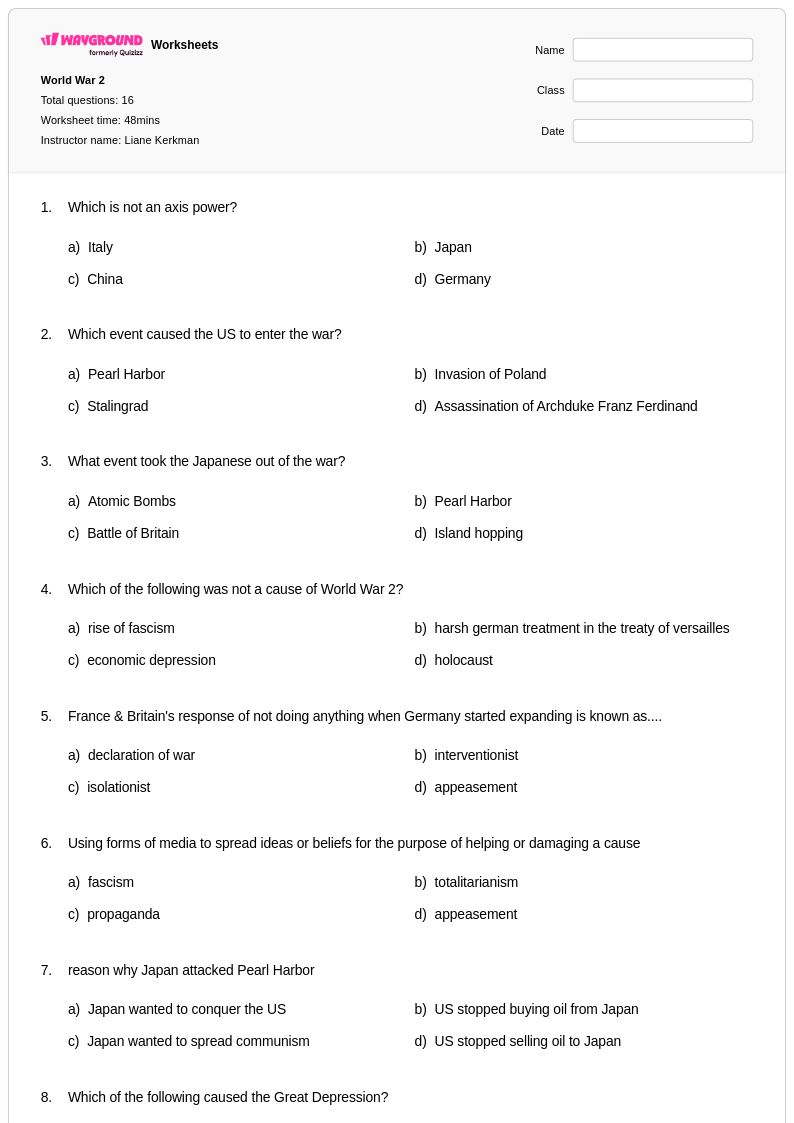
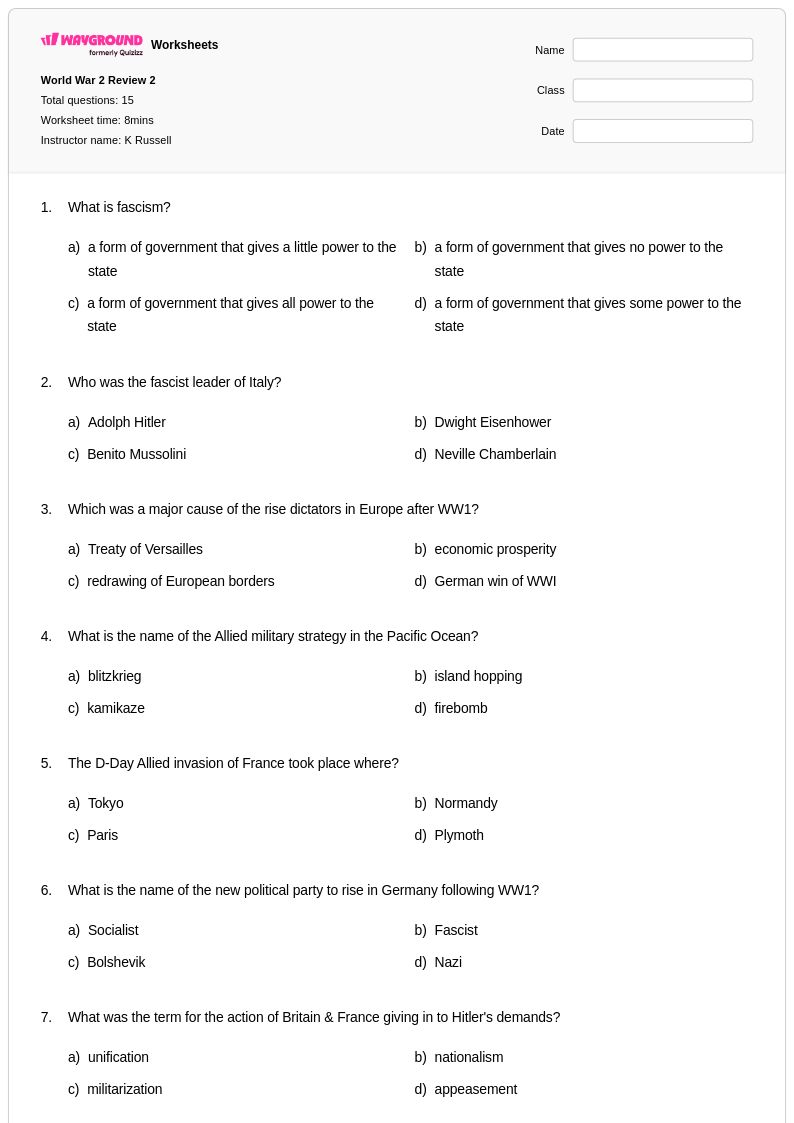
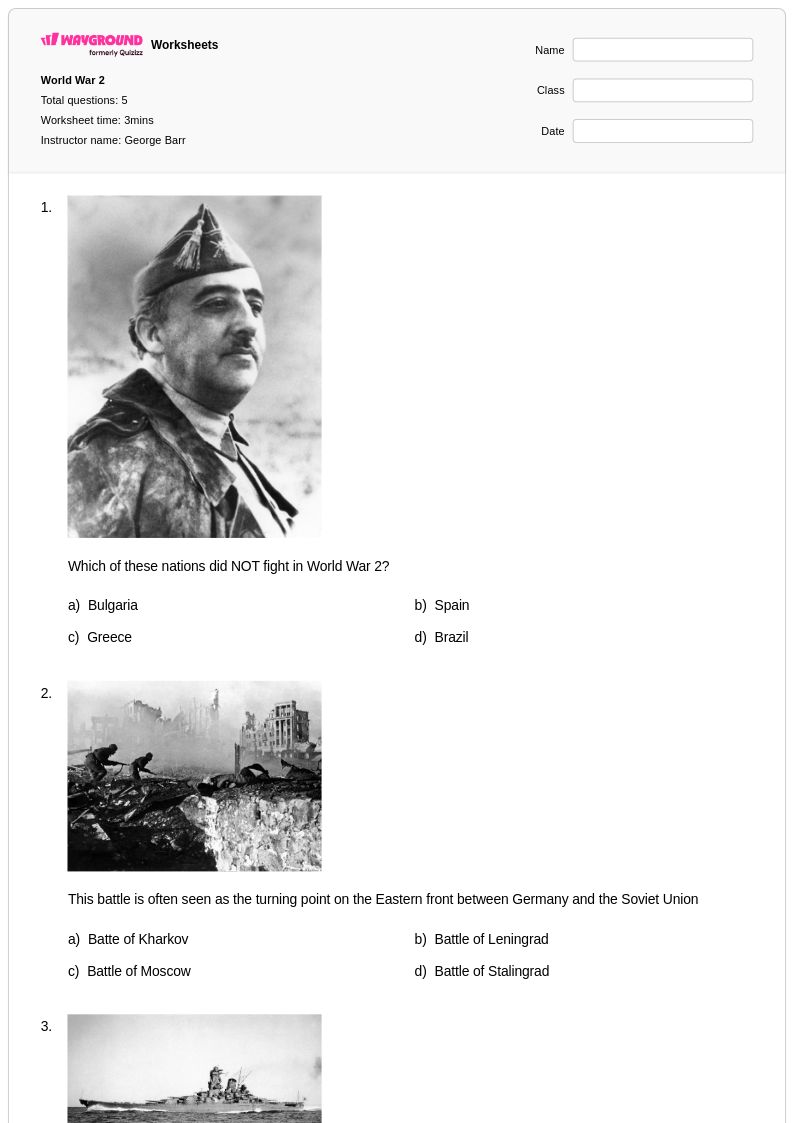
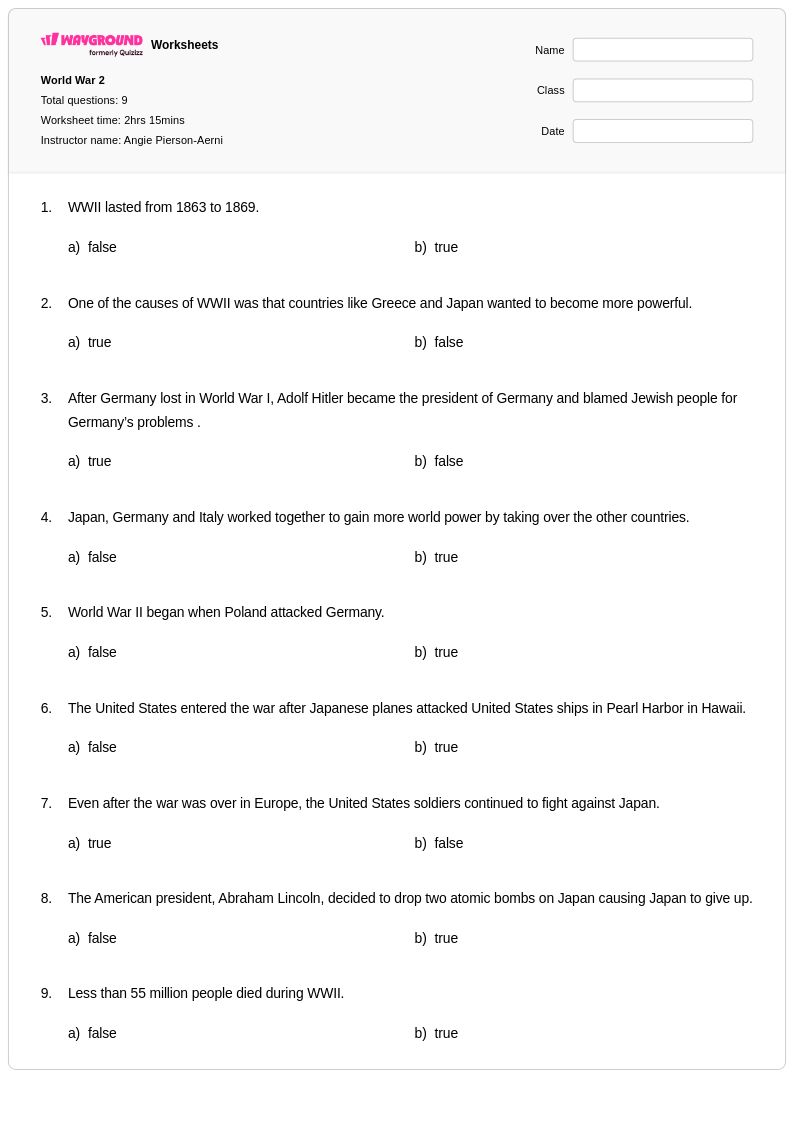
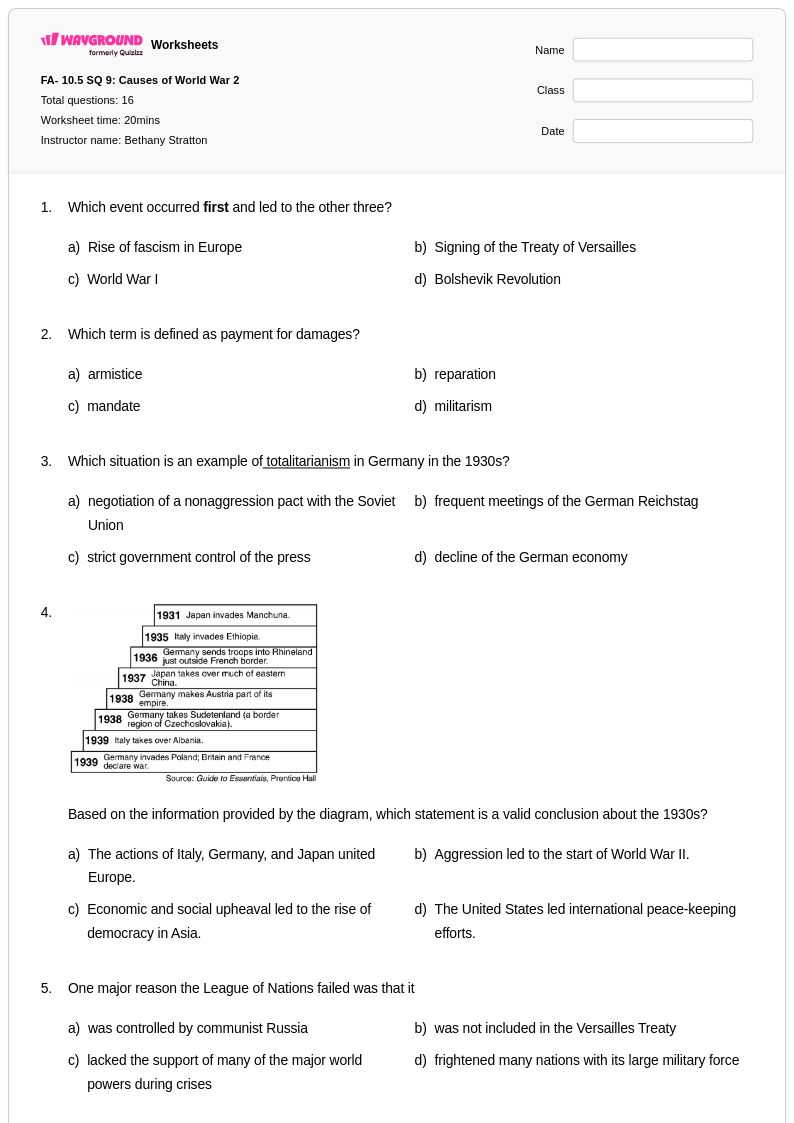
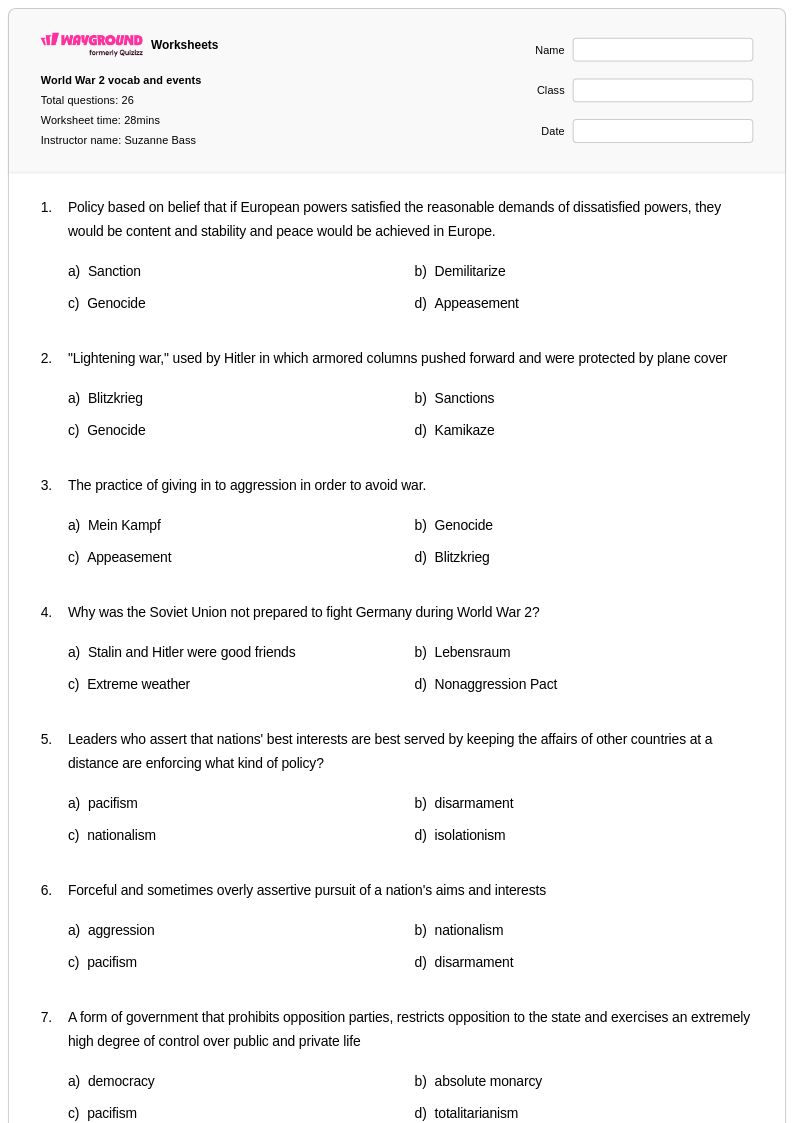
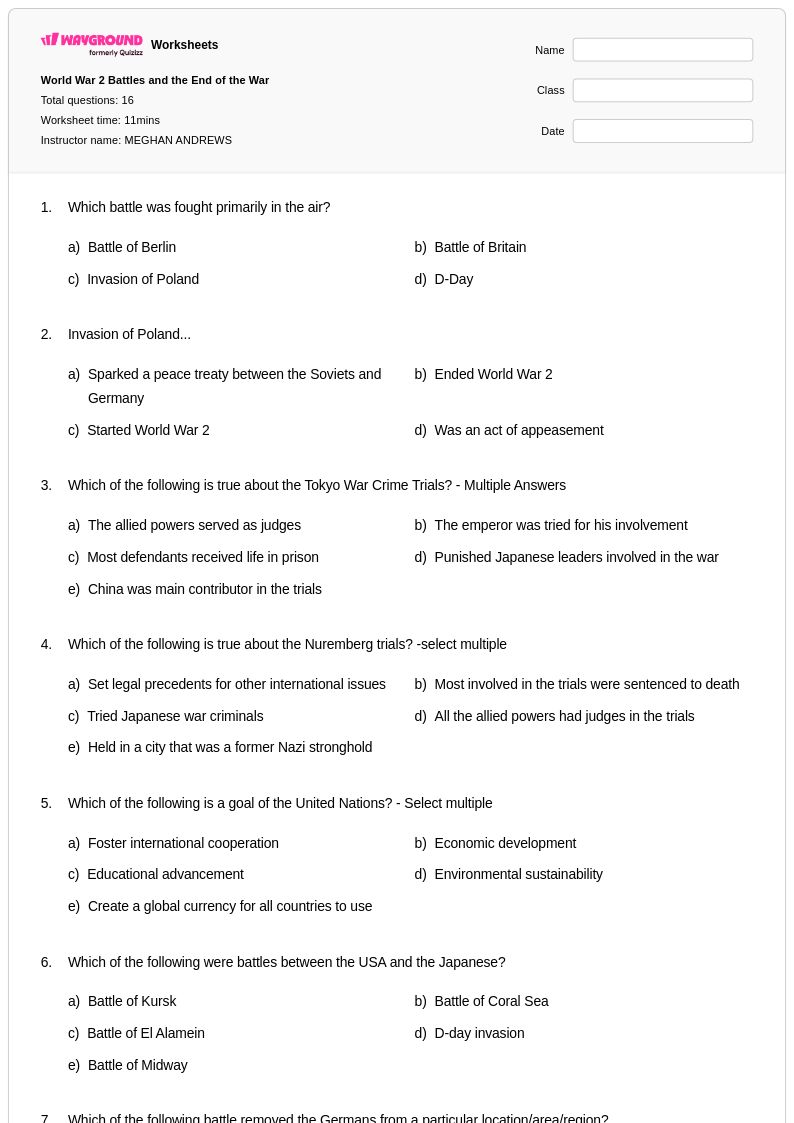
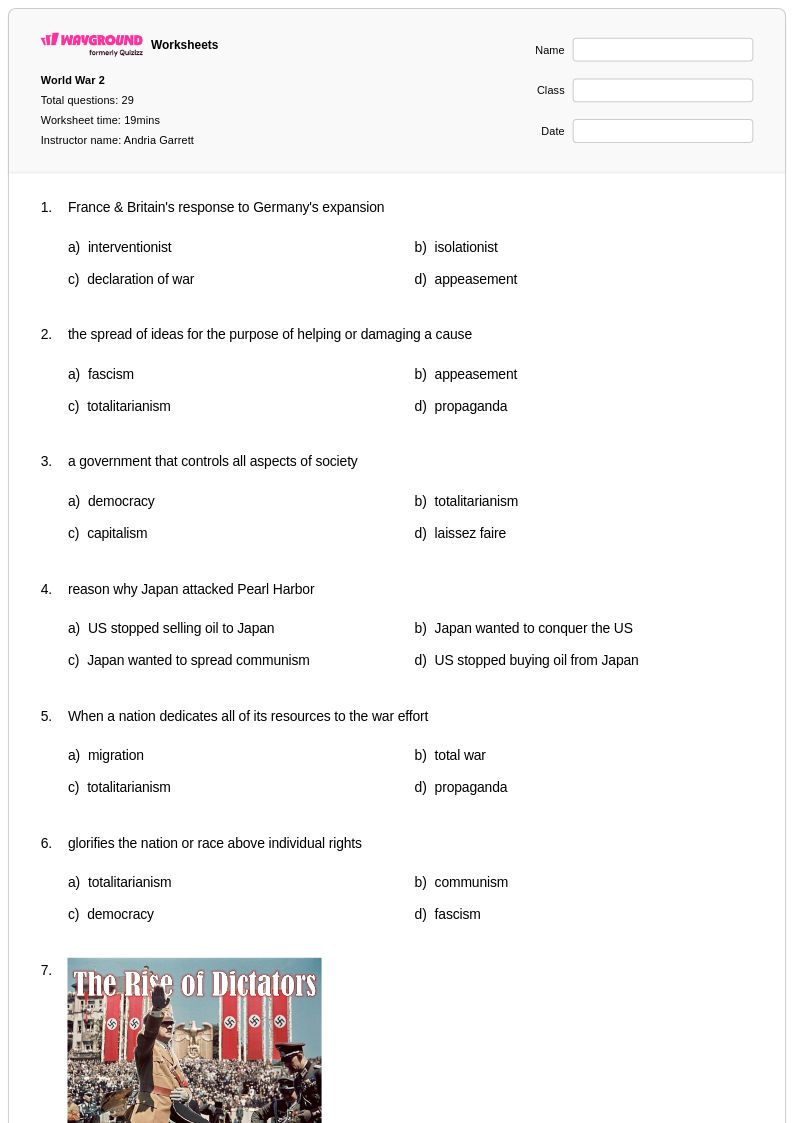
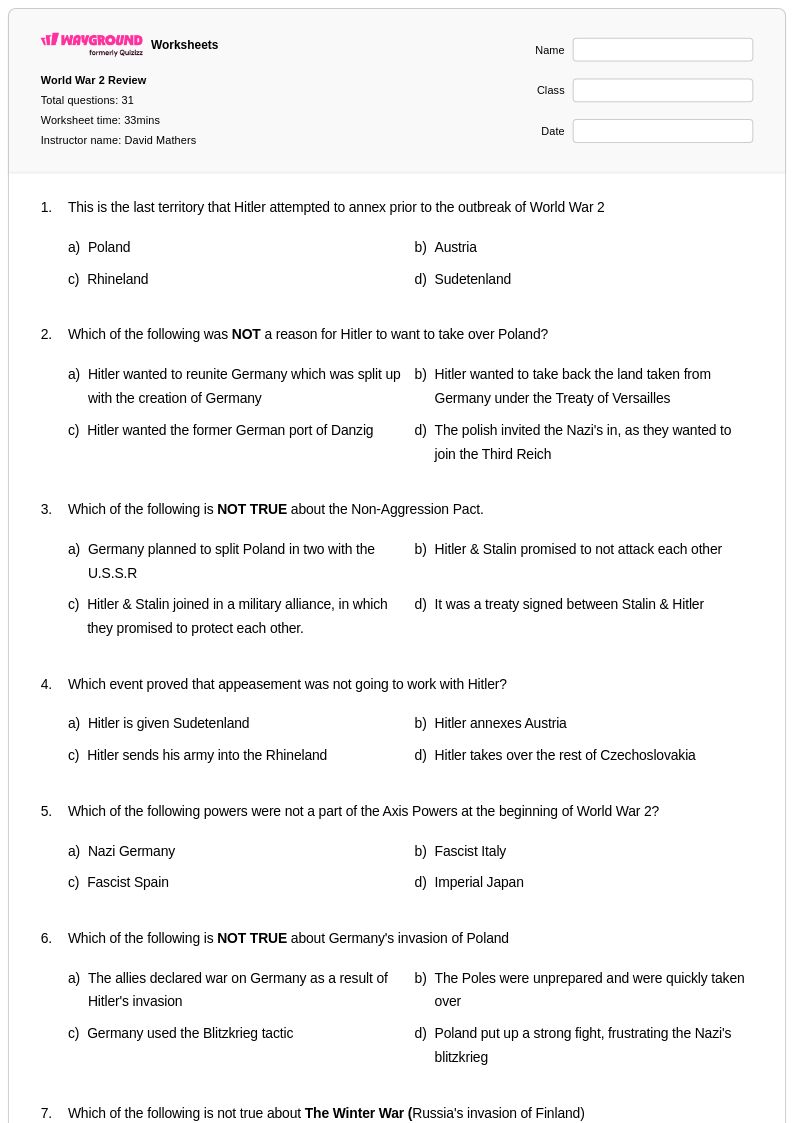
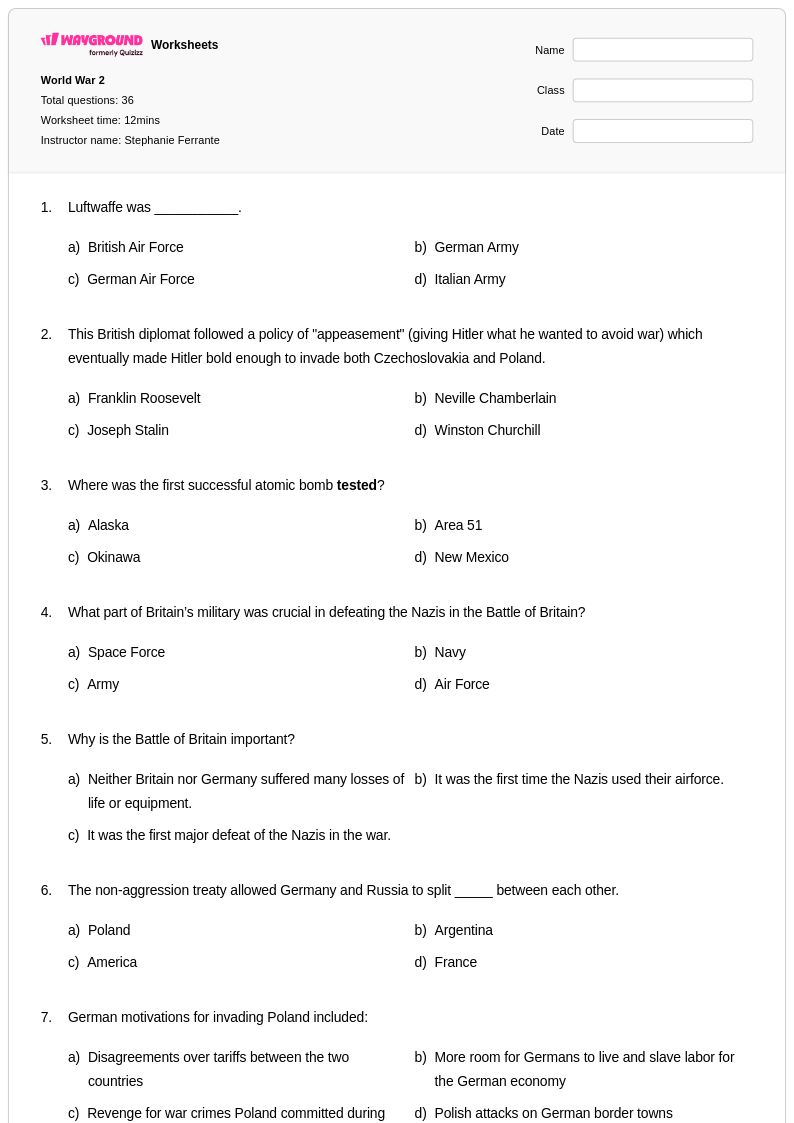
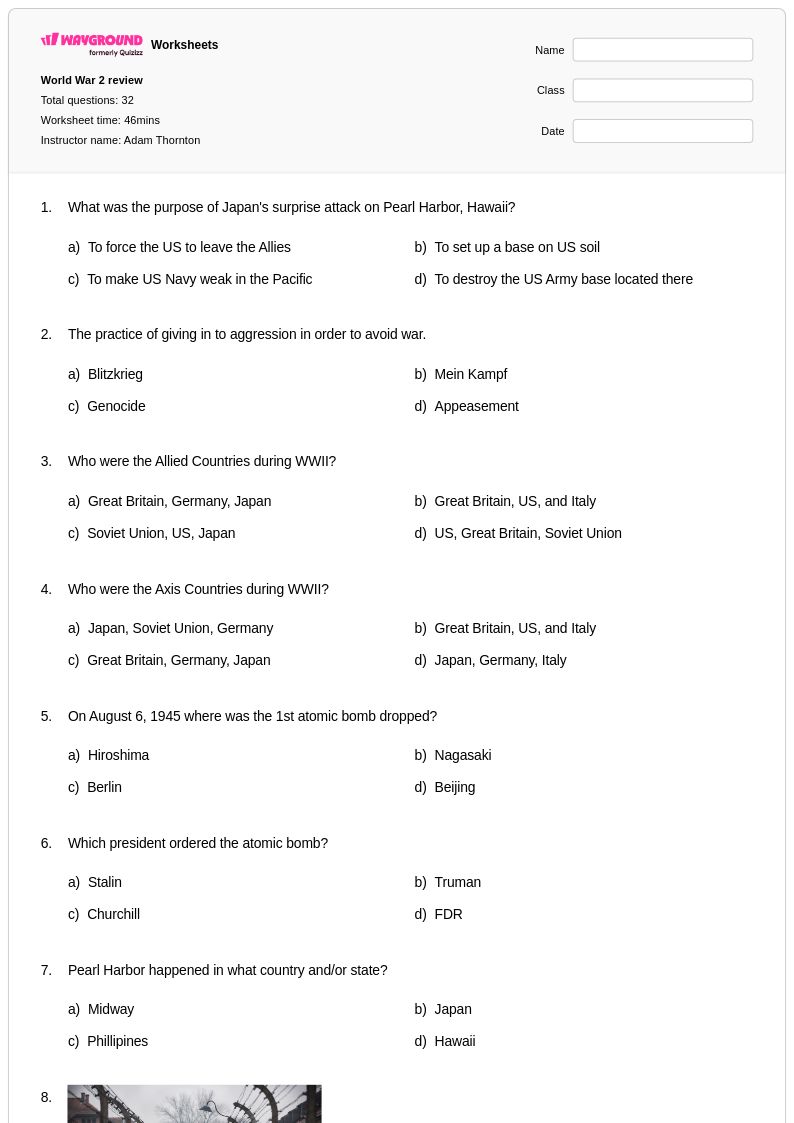
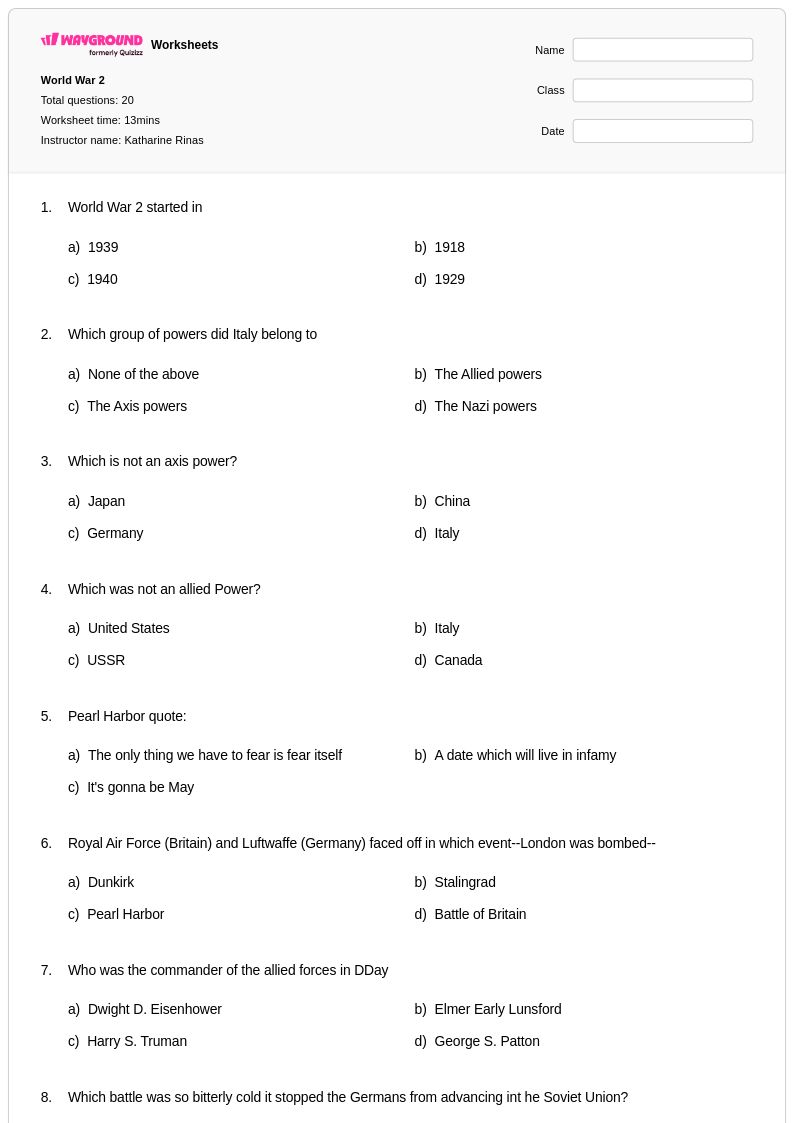
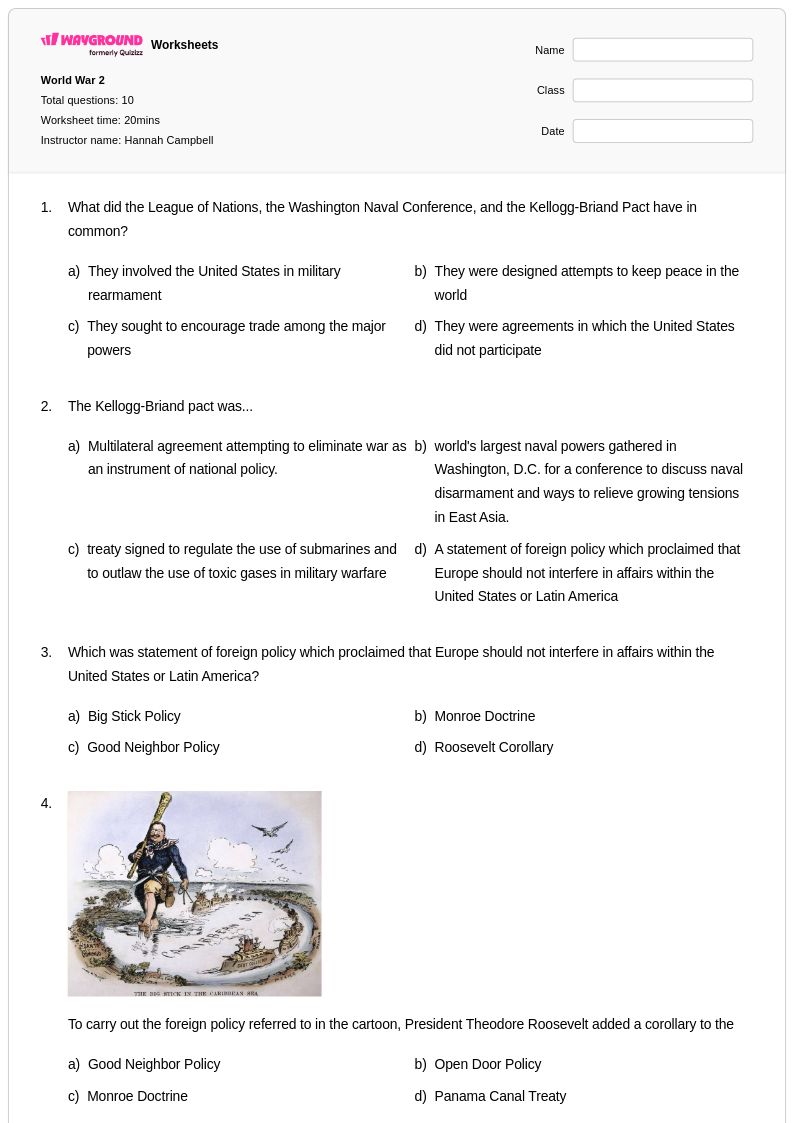
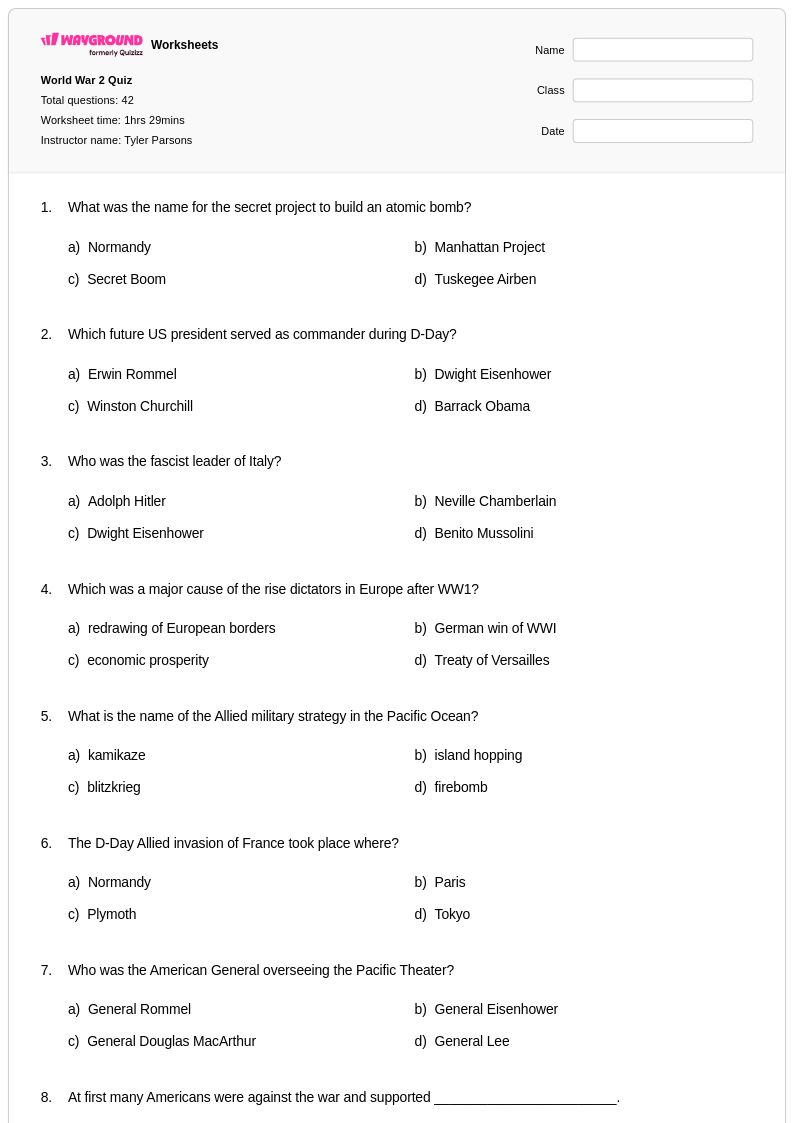
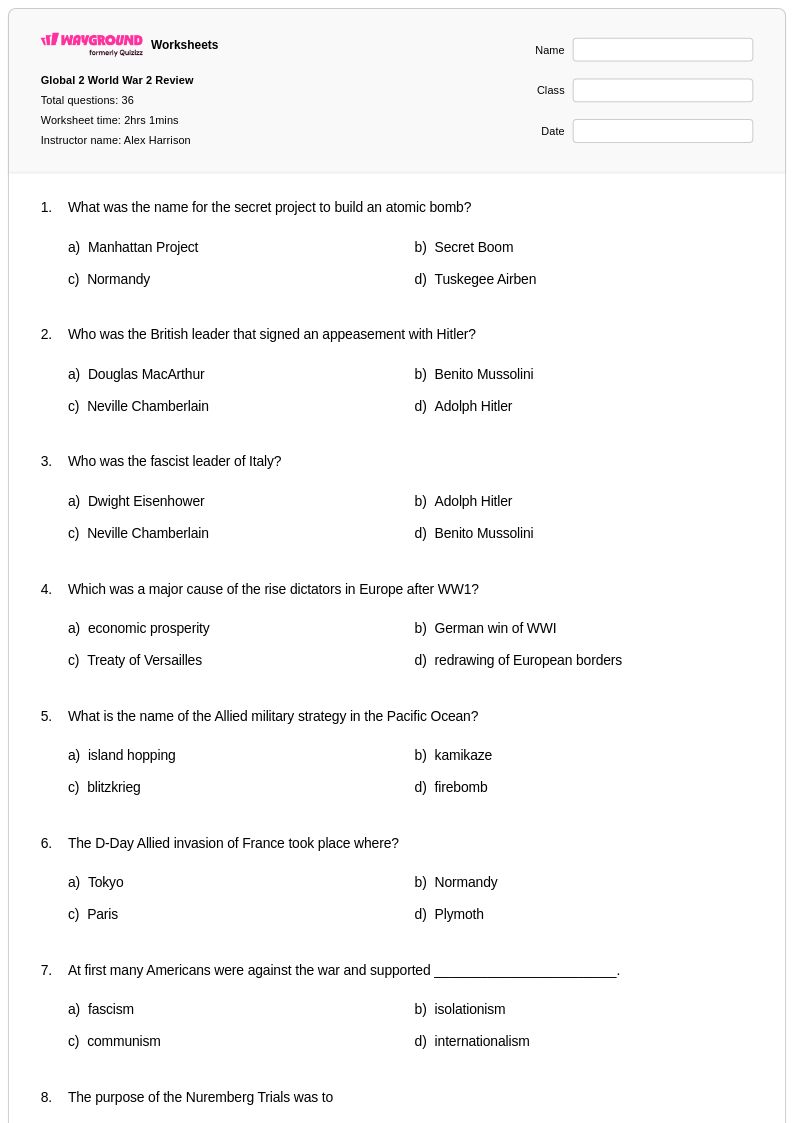
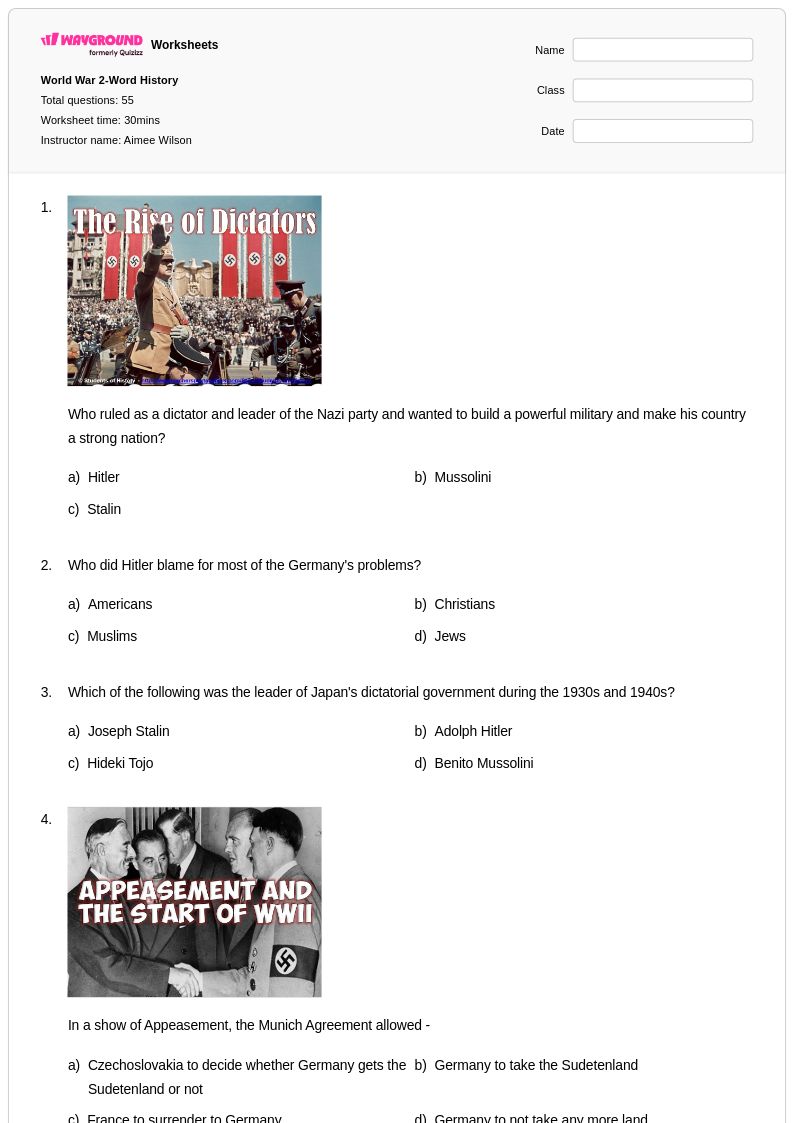
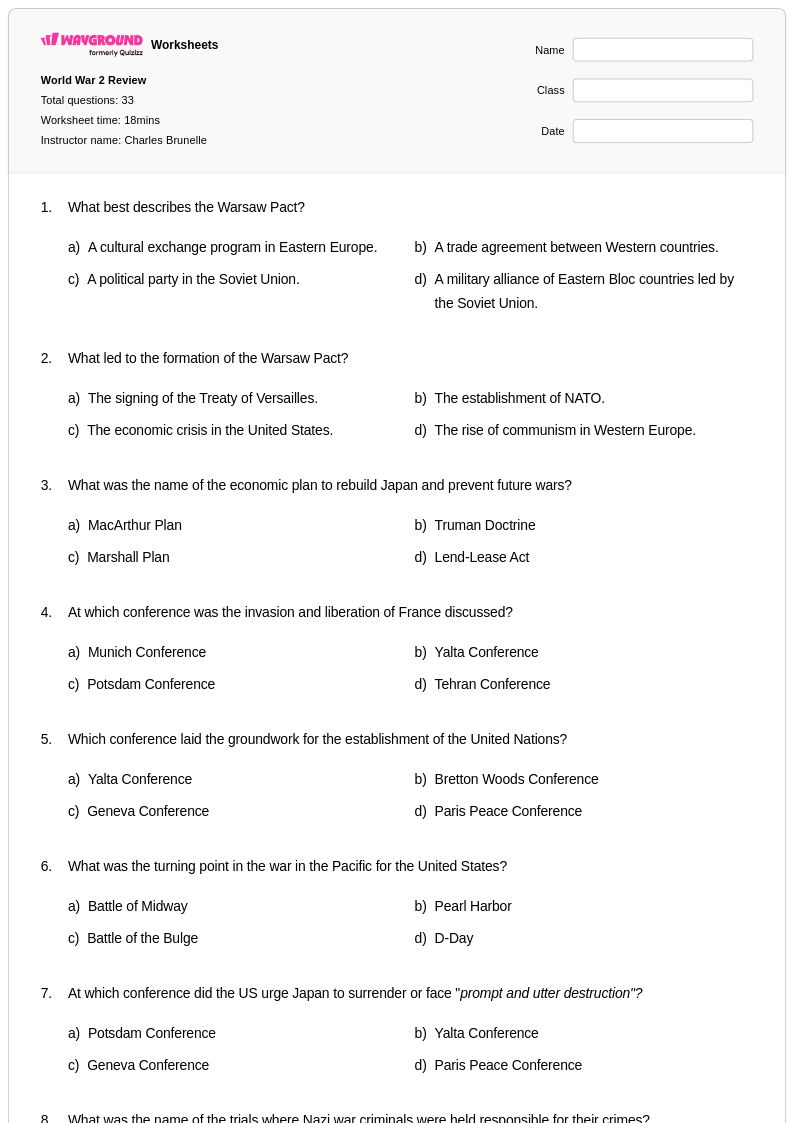
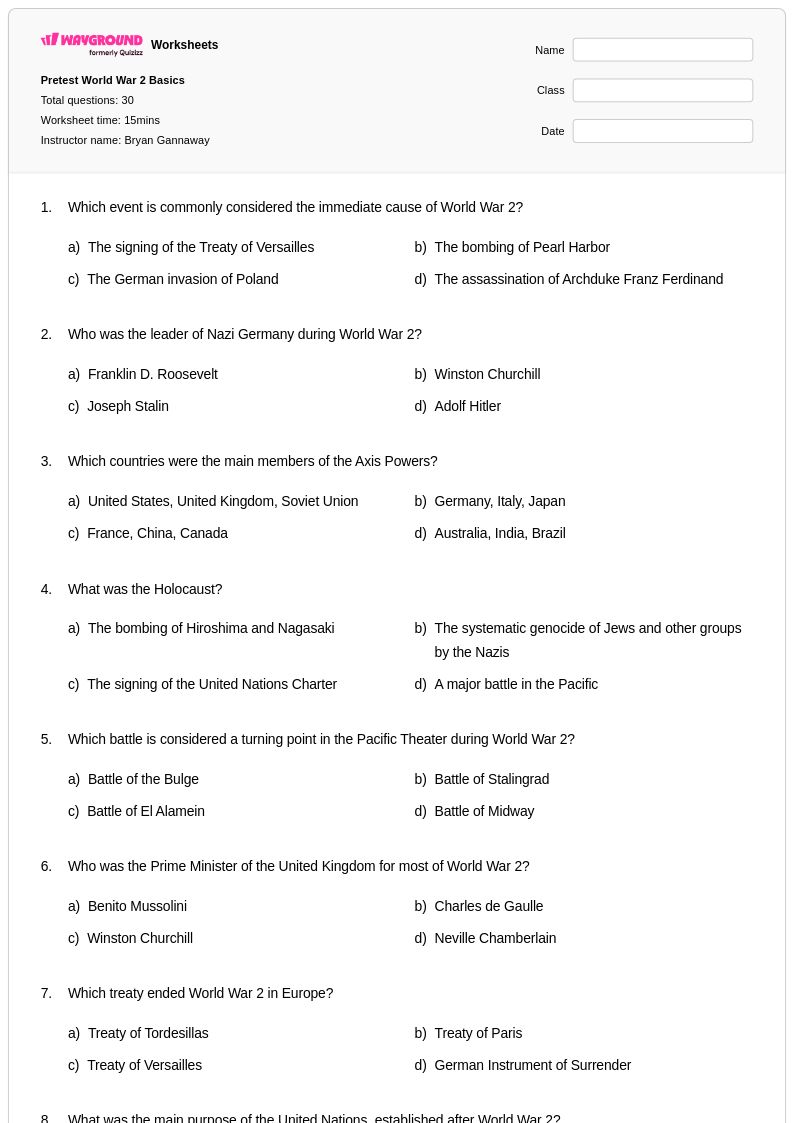
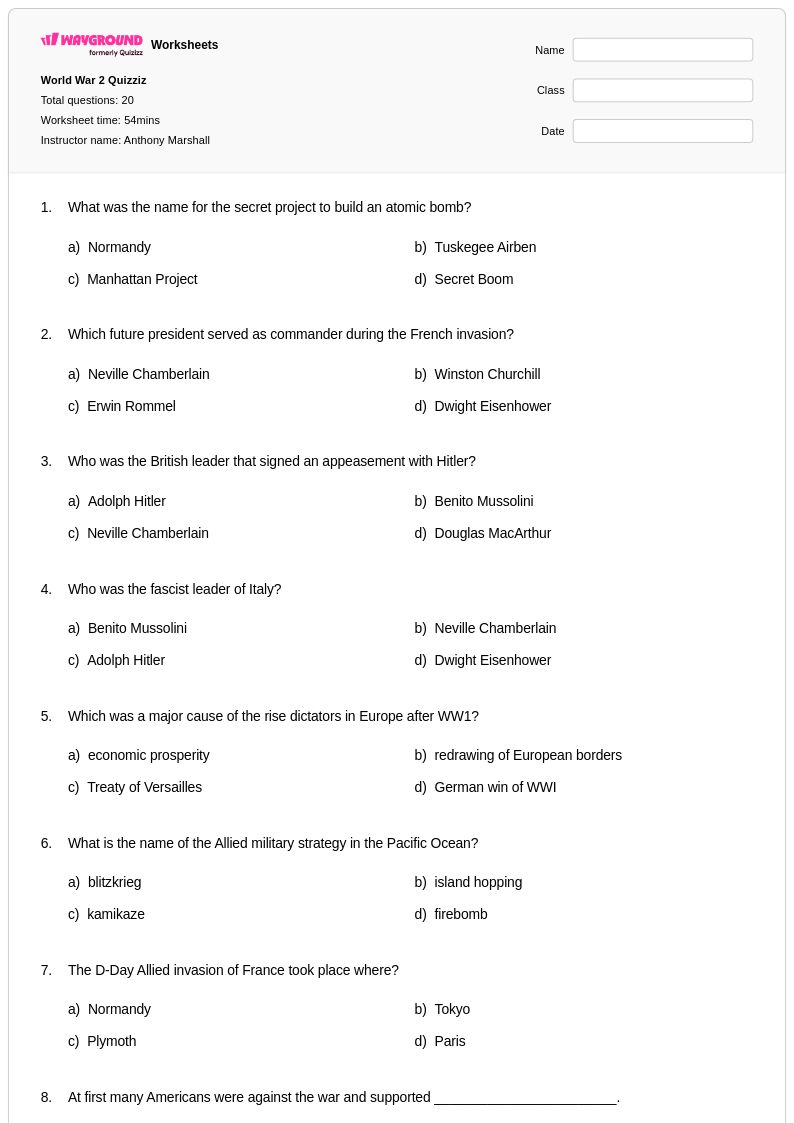
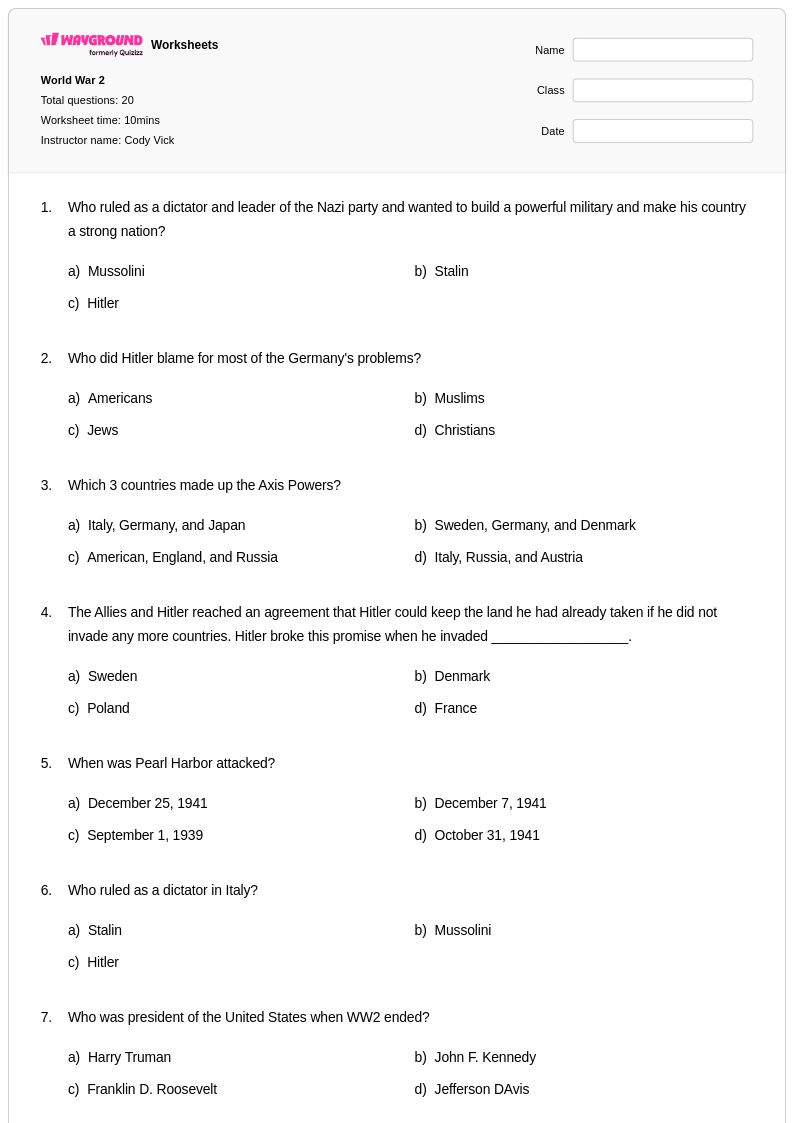
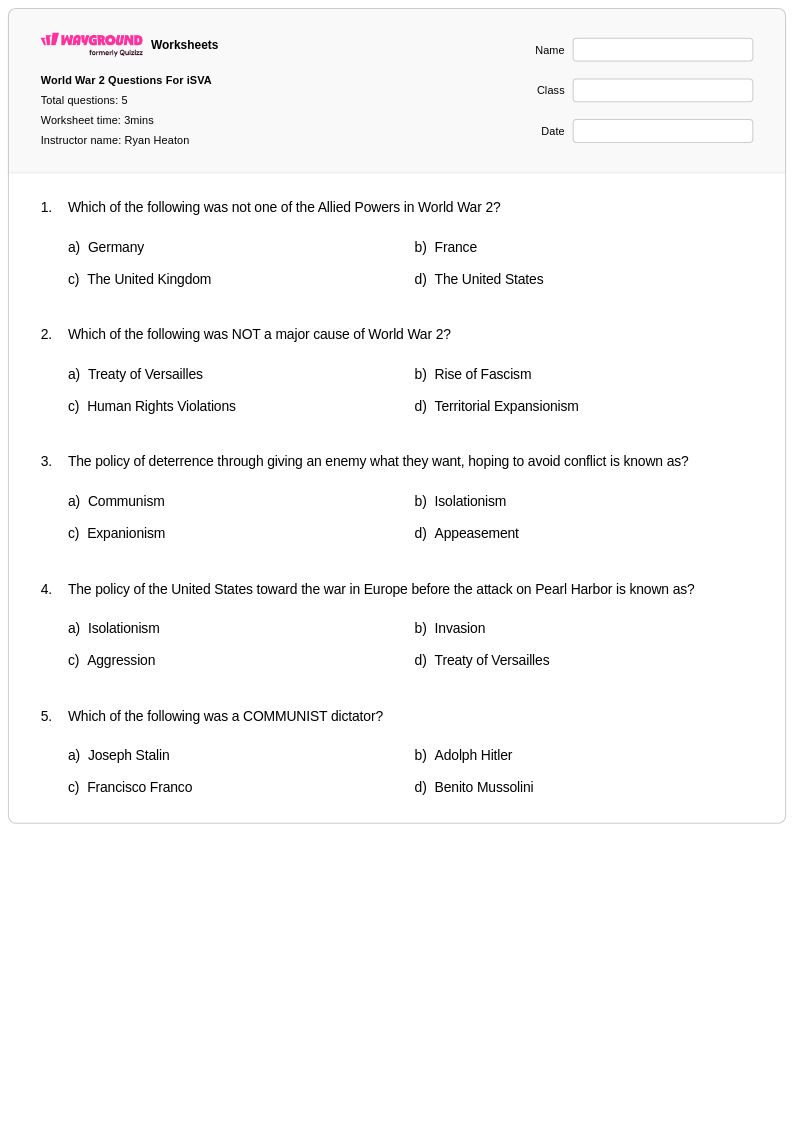
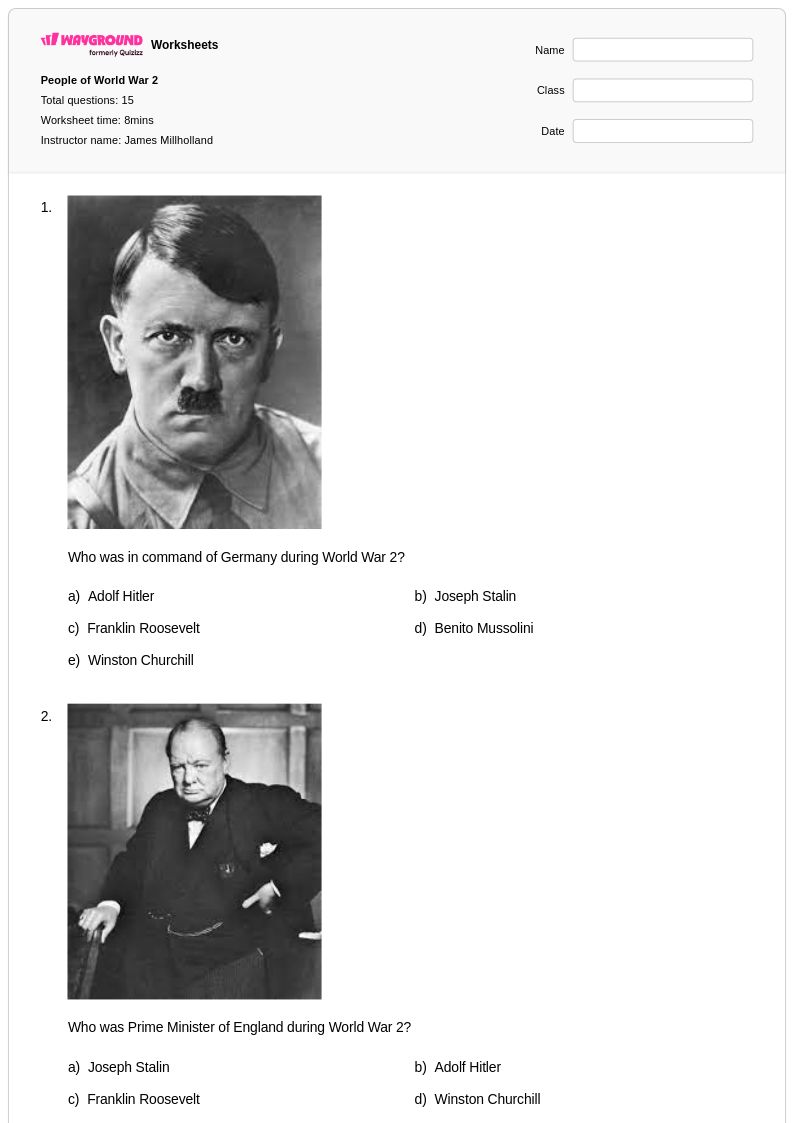
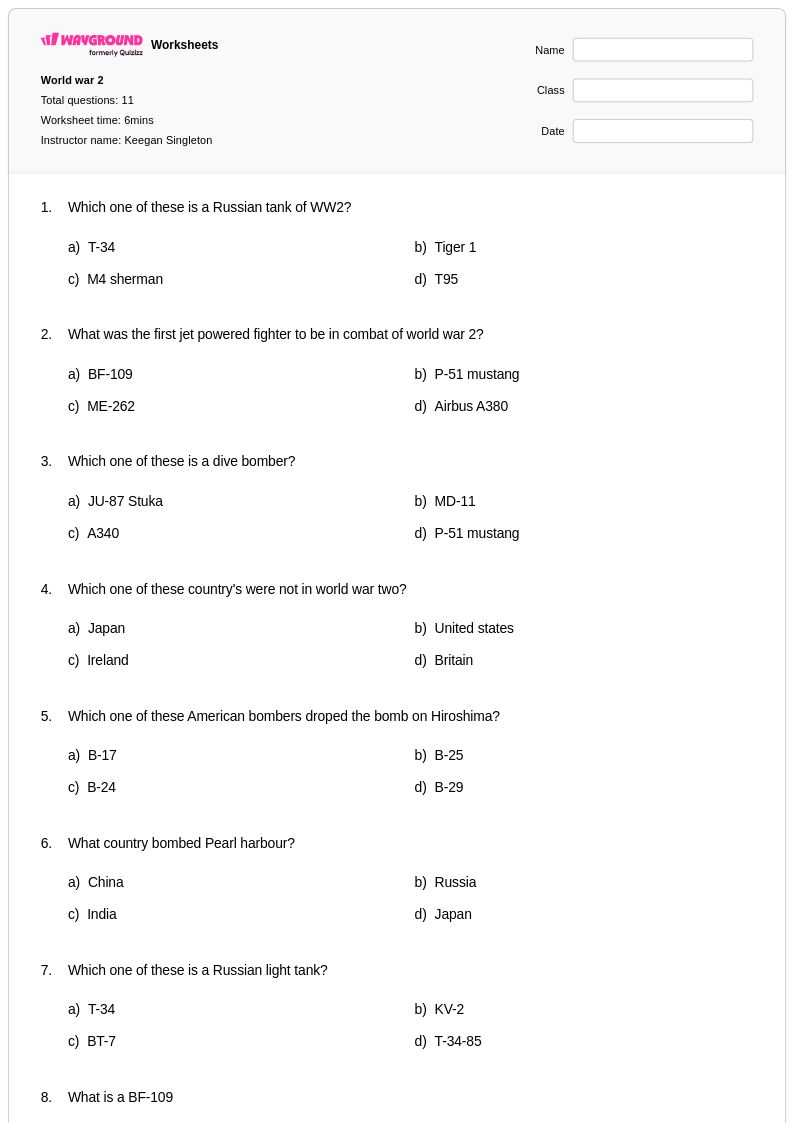
World War 2 worksheets for Grade 10 students available through Wayground (formerly Quizizz) provide comprehensive coverage of this pivotal period in global history, examining the complex causes, major battles, political alliances, and far-reaching consequences of the war. These educational resources strengthen critical thinking skills by challenging students to analyze primary sources, evaluate military strategies, and assess the social and economic impacts of the conflict on different nations and populations. The worksheet collection includes diverse practice problems that explore topics such as the rise of totalitarian regimes, the Holocaust, major theater operations in Europe and the Pacific, and the war's role in reshaping the post-war world order. Each printable resource comes with a detailed answer key to support independent learning and self-assessment, while the free pdf format ensures easy classroom distribution and homework assignments.
Wayground (formerly Quizizz) empowers educators with millions of teacher-created World War 2 resources that align with social studies standards and accommodate diverse learning needs in Grade 10 classrooms. The platform's robust search and filtering capabilities allow teachers to quickly locate materials targeting specific aspects of the war, from the Blitzkrieg tactics and D-Day operations to the Manhattan Project and Nuremberg Trials. Flexible customization tools enable instructors to modify existing worksheets or create differentiated versions that support both remediation for struggling learners and enrichment activities for advanced students. Available in both printable and digital formats including downloadable pdfs, these resources seamlessly integrate into lesson planning while providing teachers with reliable materials for skill practice, formative assessment, and reinforcement of key historical concepts essential for understanding this transformative period in world history.
FAQs
How do I teach World War 2 to middle and high school students?
Teaching World War 2 effectively requires moving beyond dates and battles to help students understand causation, ideology, and consequence. Start with the conditions created by World War 1 and the Treaty of Versailles before introducing the rise of fascism and the political climate of the 1930s. Incorporating primary source analysis, maps of theater operations, and case studies on key events like D-Day, Pearl Harbor, and the Holocaust helps students build a layered understanding of how and why the war unfolded the way it did.
What exercises help students practice analyzing World War 2 events and causes?
Structured practice exercises such as cause-and-effect graphic organizers, document-based questions, and timeline sequencing activities are especially effective for World War 2. Students benefit from comparing the perspectives of Allied and Axis leaders, analyzing the strategic significance of specific battles like the Battle of Midway or the Blitzkrieg campaigns, and synthesizing information across multiple sources. These activities develop critical thinking skills while reinforcing content knowledge about the war's major turning points.
What are common misconceptions students have about World War 2?
One of the most common misconceptions is that the United States entered World War 2 immediately after Hitler's rise to power, when in fact the U.S. maintained a policy of isolationism until the attack on Pearl Harbor in 1941. Students also frequently misunderstand the scale and deliberateness of the Holocaust, sometimes treating it as a byproduct of war rather than a systematic, state-sponsored genocide. Another common error is conflating the European and Pacific theaters, which had distinct causes, strategies, and key actors.
How do I help students understand the significance of the atomic bomb in World War 2?
Teach the atomic bomb not just as a military event but as a moral and geopolitical turning point that reshaped international relations and launched the nuclear age. Students should examine the Manhattan Project, the decision-making process leading to Hiroshima and Nagasaki, and the immediate versus long-term consequences for both Japan and the post-war world order. Structured debates and document analysis asking students to weigh the justification for use versus alternatives are particularly effective for developing historical argumentation skills.
How should I use World War 2 worksheets in my classroom?
World War 2 worksheets work well as pre-reading warm-ups, guided note-taking tools during instruction, or independent review activities before assessments. They can be assigned individually or used in small groups for collaborative analysis of events like D-Day, Pearl Harbor, or post-war Europe. Wayground's World War 2 worksheets are available as printable PDFs for traditional classroom distribution and in digital formats for technology-integrated or hybrid environments, and teachers can also host them as a quiz directly on Wayground.
How do I differentiate World War 2 instruction for students with different reading levels?
Differentiation for World War 2 content can include tiered readings, scaffolded graphic organizers, and modified primary source excerpts that reduce complexity without sacrificing historical accuracy. For students who need additional support, Wayground offers built-in accommodation settings including Read Aloud for audio delivery of questions, reduced answer choices to lower cognitive load, and adjustable font sizes and themes through Reading Mode. These settings can be applied to individual students while the rest of the class receives the standard experience, making it easy to meet diverse needs within the same assignment.