Free Printable World War I Vocabulary Worksheets for Grade 6
Enhance Grade 6 students' understanding of World War I vocabulary with Wayground's comprehensive collection of free worksheets, printables, and practice problems featuring detailed answer keys to reinforce historical terminology and concepts.
Explore printable World War I Vocabulary worksheets for Grade 6
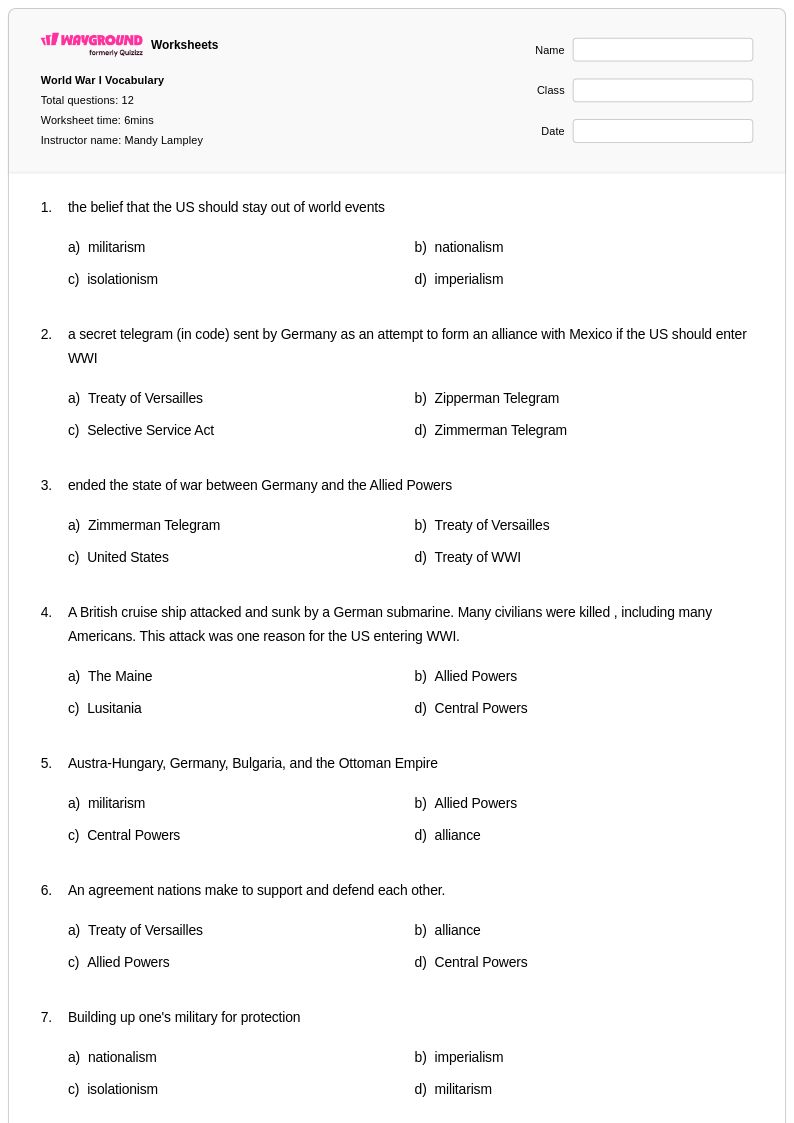
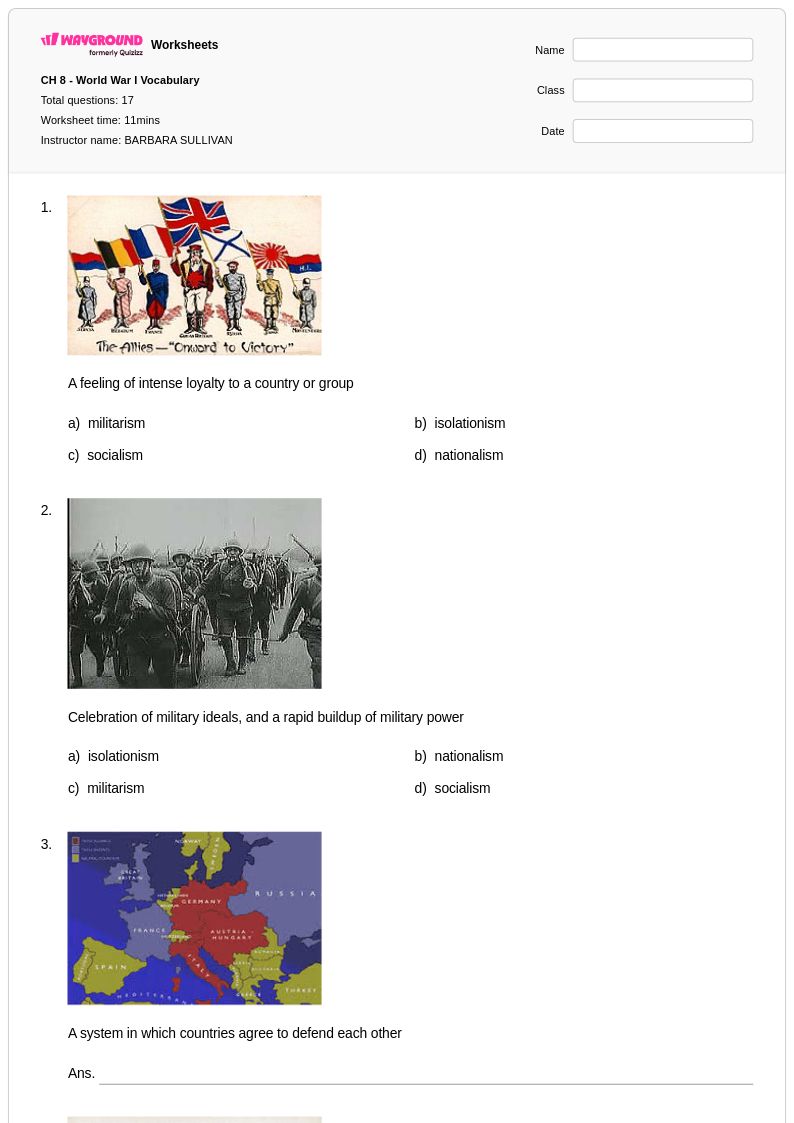
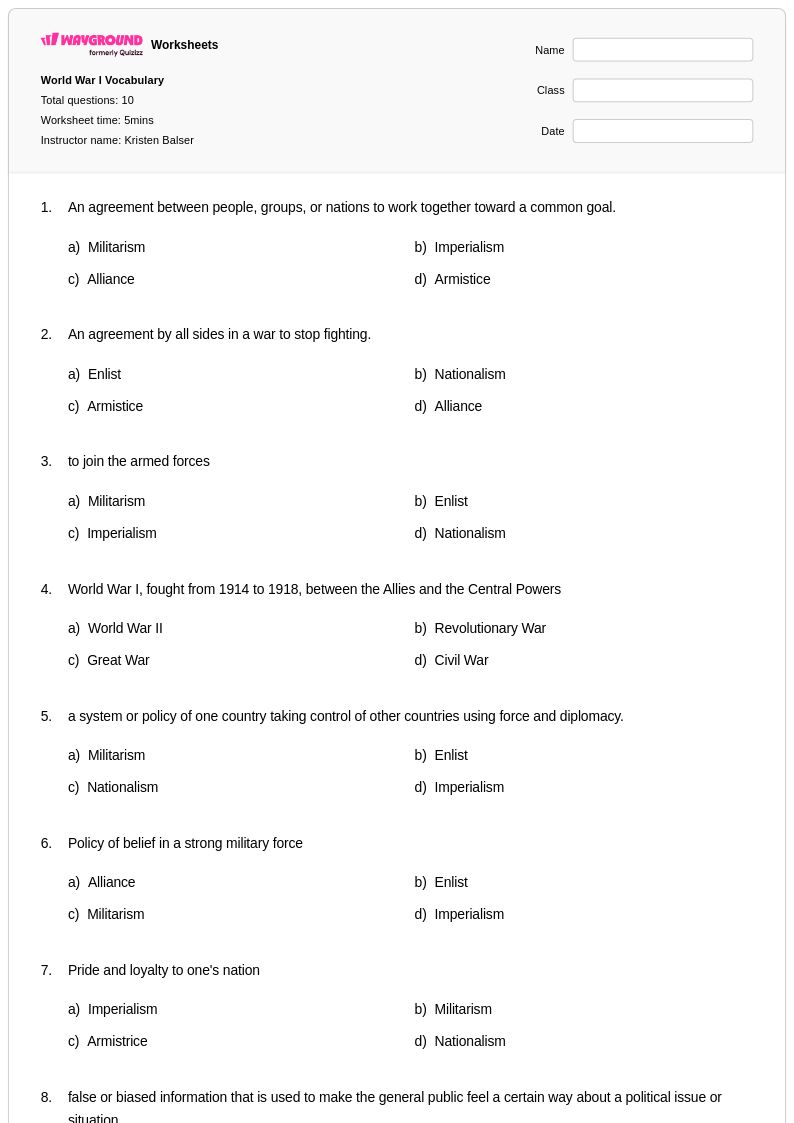
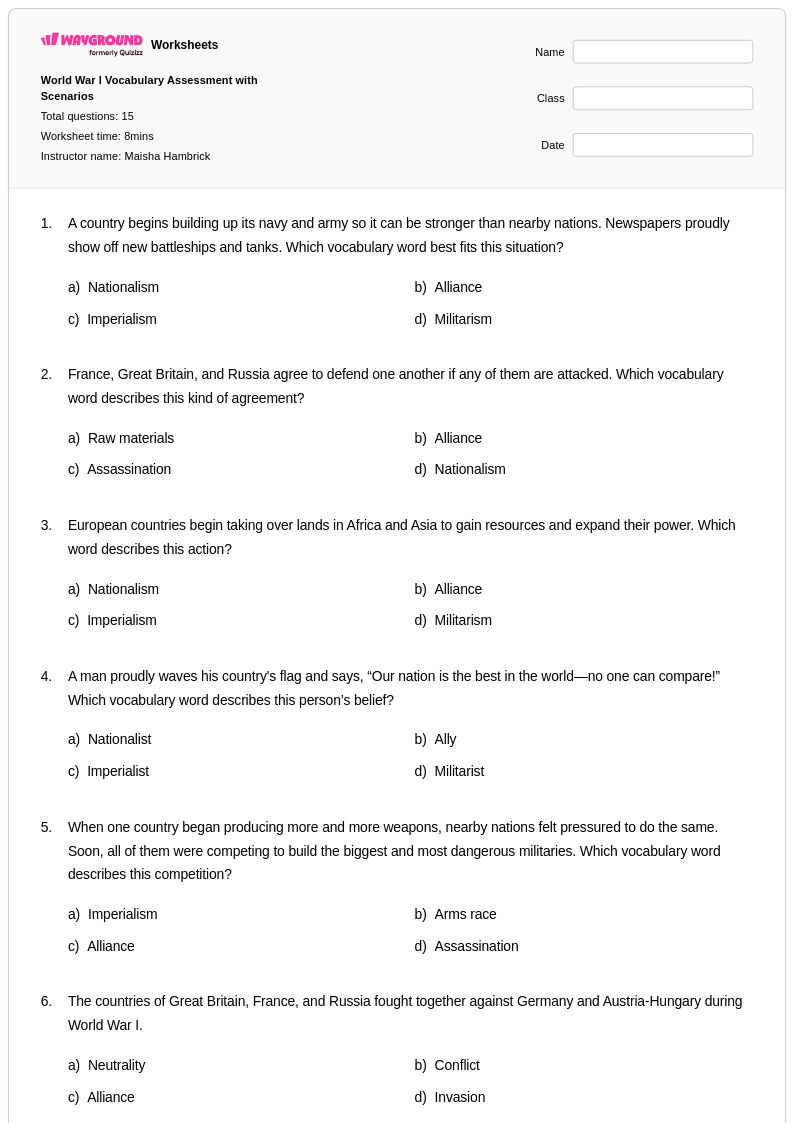
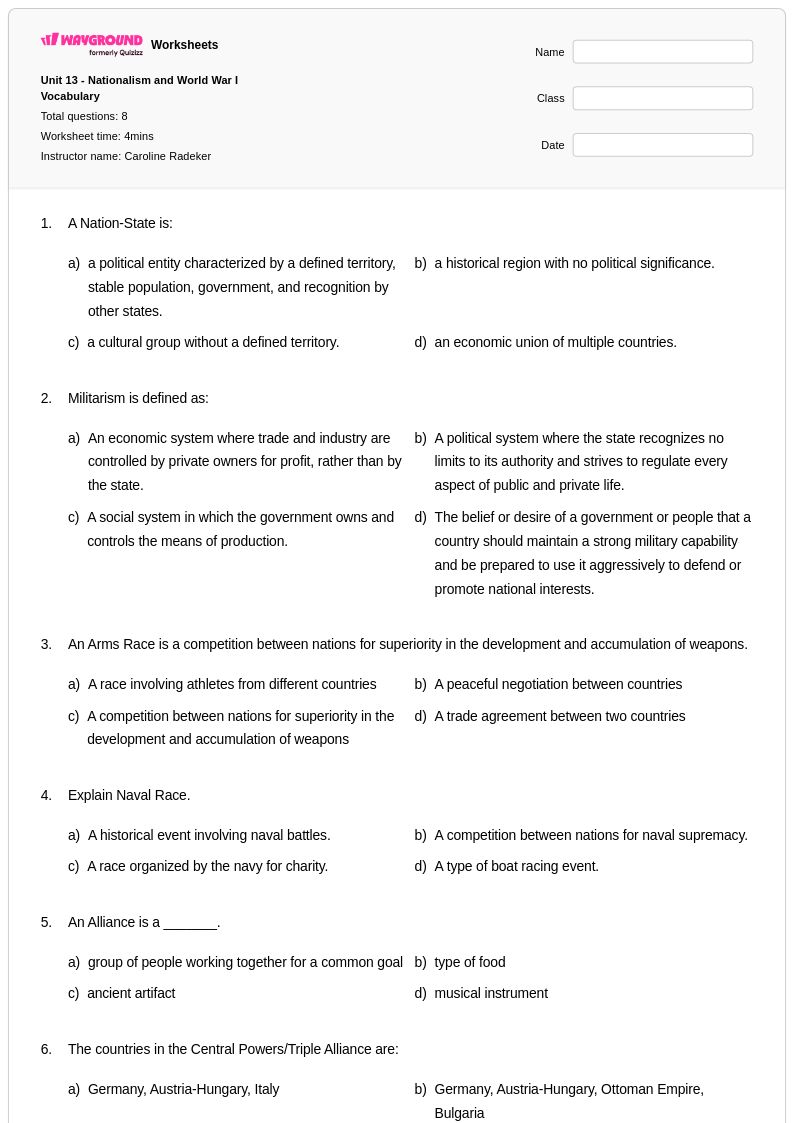
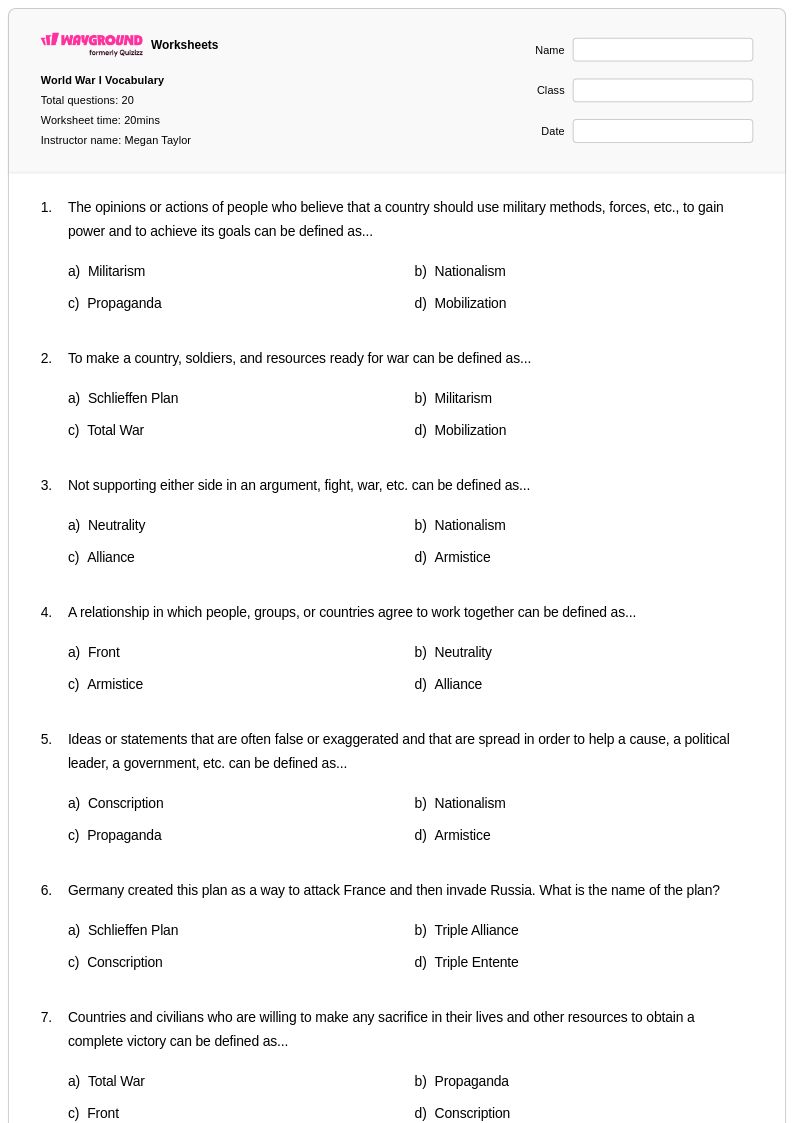
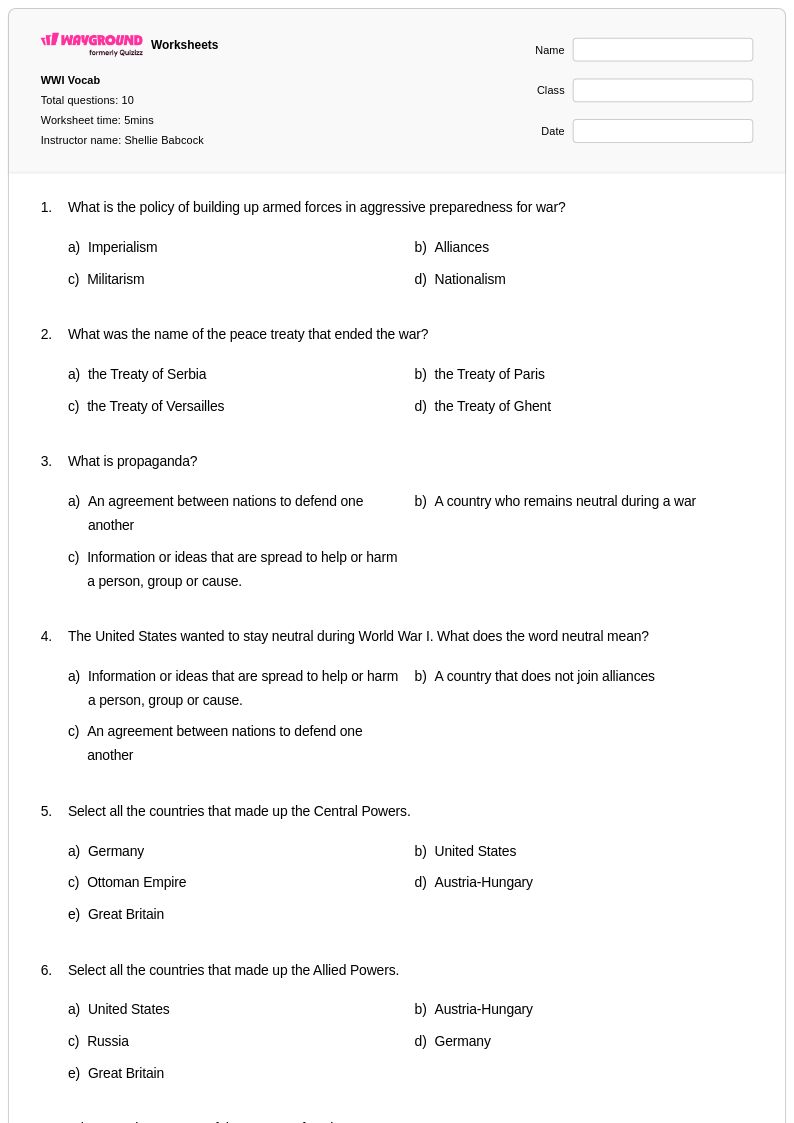
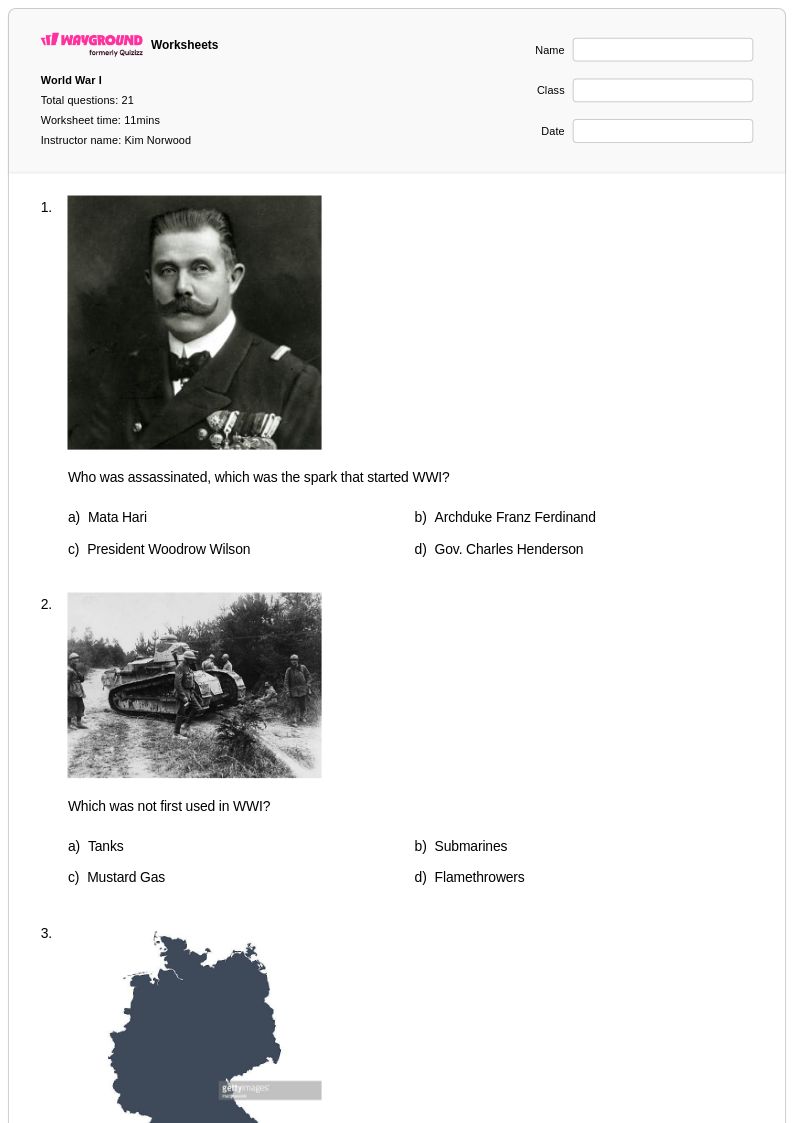
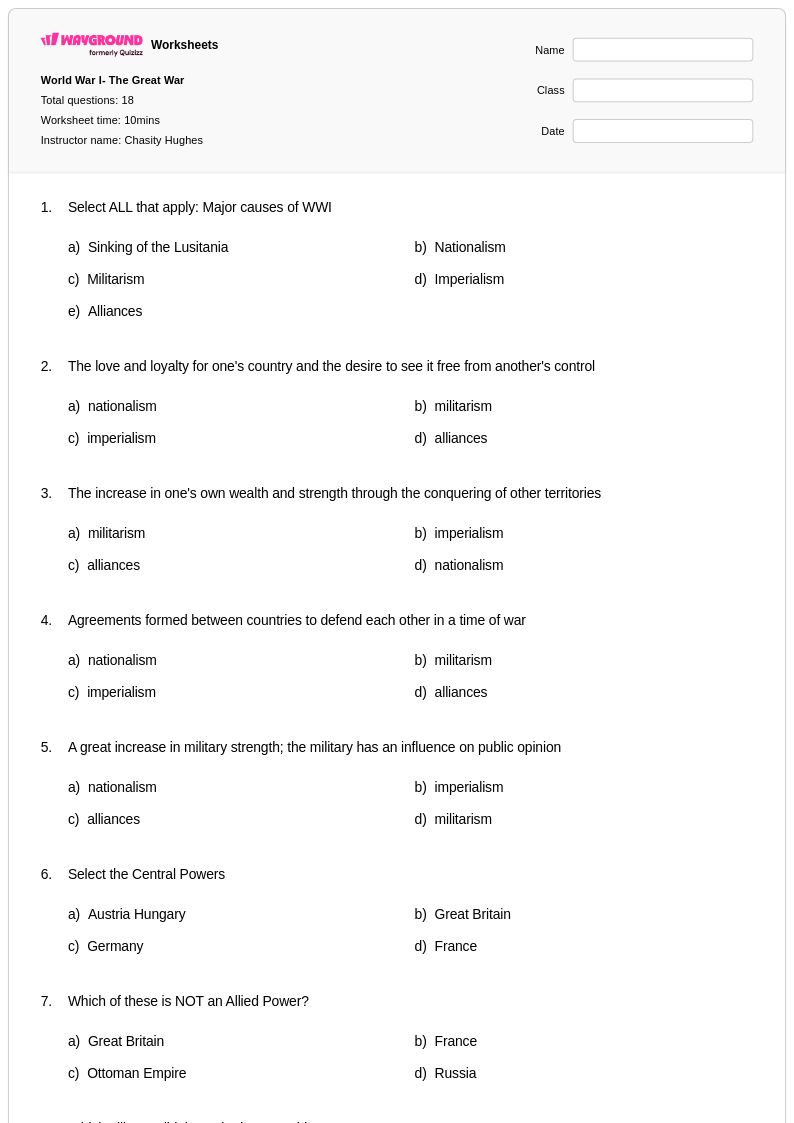
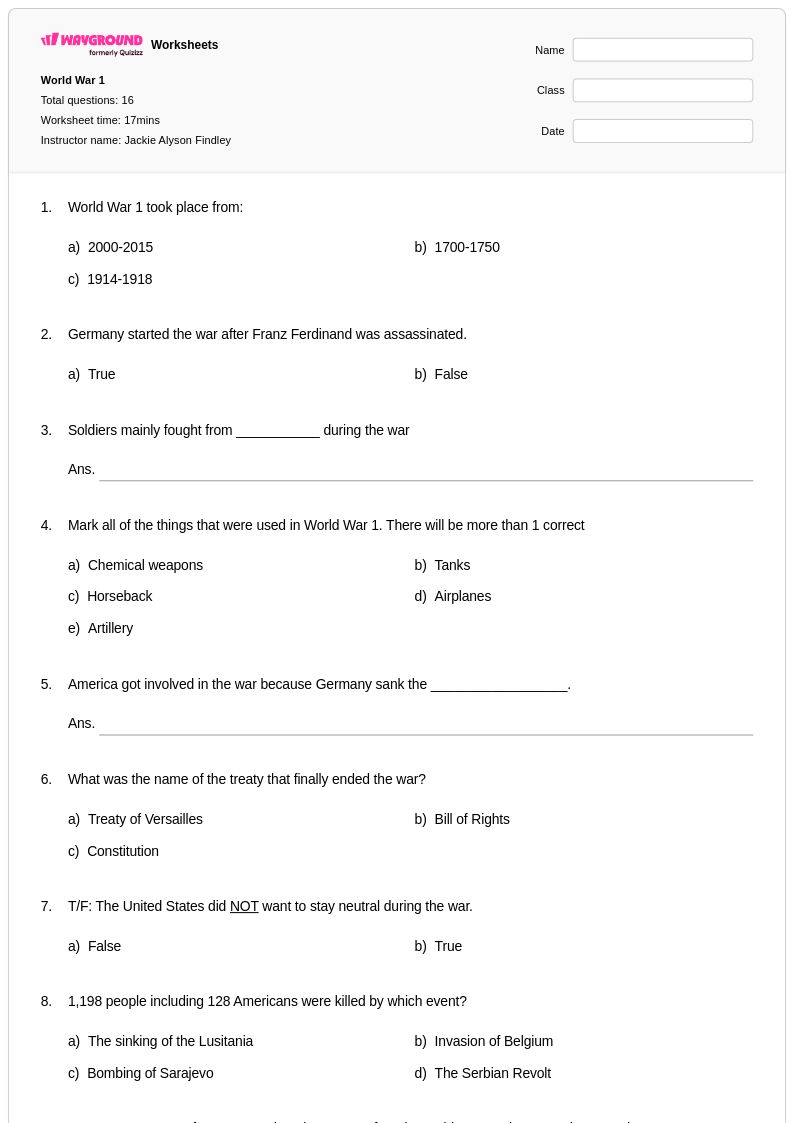
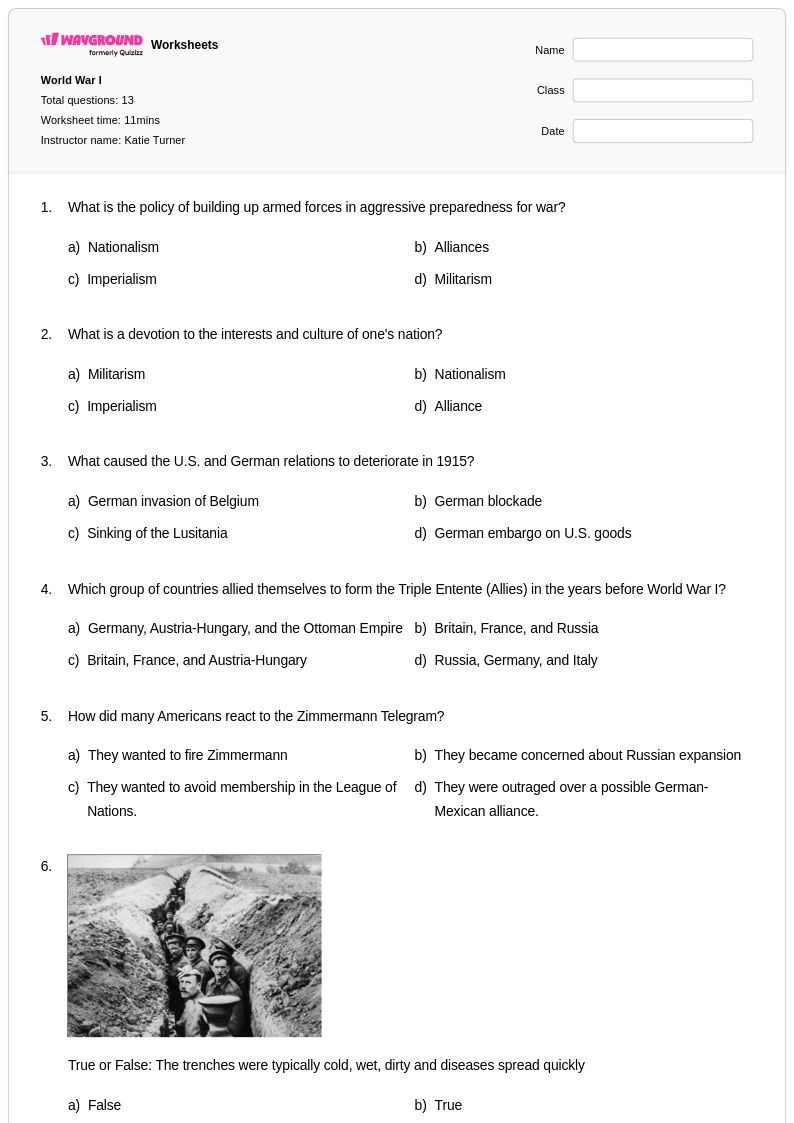
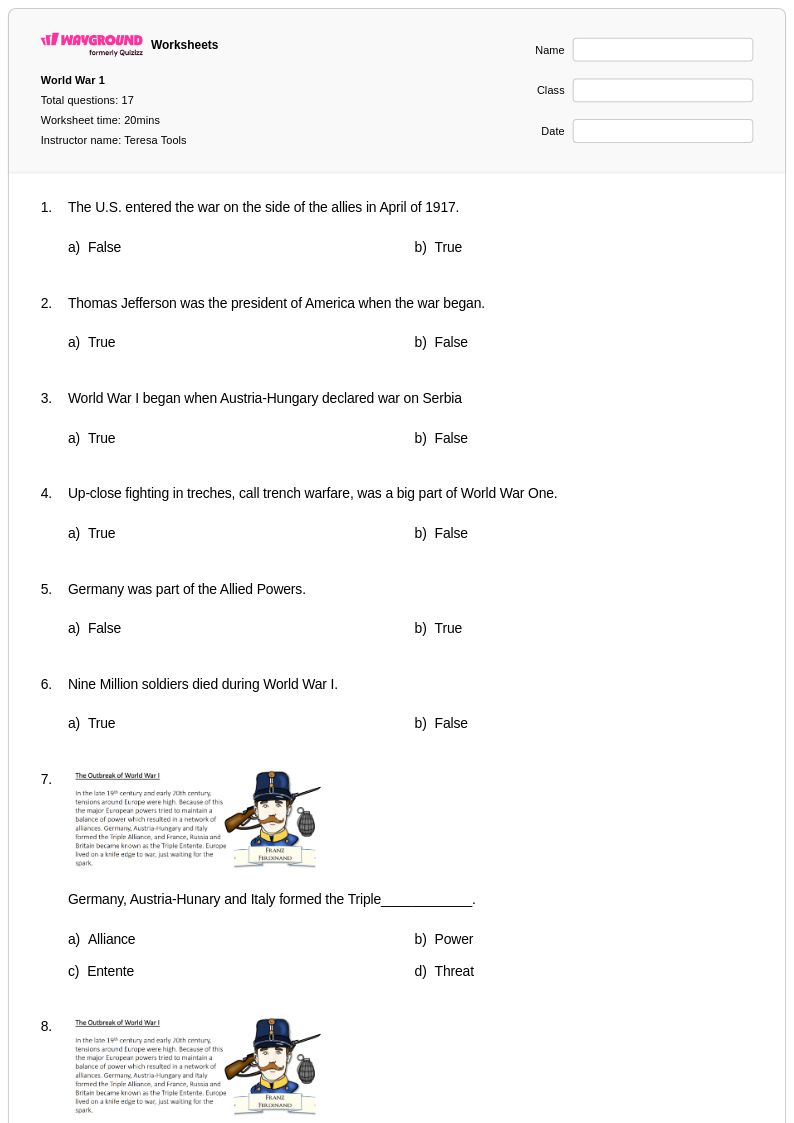
World War I vocabulary worksheets for Grade 6 students provide essential foundation-building exercises that help young learners master the complex terminology associated with this pivotal period in world history. These comprehensive worksheets focus on key terms such as alliance systems, trench warfare, propaganda, armistice, and nationalism, enabling students to develop both historical understanding and critical thinking skills. Each worksheet includes carefully crafted practice problems that reinforce vocabulary retention through contextual usage, matching exercises, and definition applications, while accompanying answer keys allow for immediate feedback and self-assessment. Available as free printables in convenient pdf format, these resources support classroom instruction by breaking down sophisticated historical concepts into age-appropriate learning segments that sixth-grade students can effectively comprehend and retain.
Wayground, formerly Quizizz, empowers educators with an extensive collection of teacher-created World War I vocabulary resources that streamline lesson planning and enhance student engagement. The platform's millions of educational materials include standards-aligned worksheets that can be easily customized to meet diverse classroom needs, supporting both remediation for struggling learners and enrichment opportunities for advanced students. Teachers benefit from robust search and filtering capabilities that quickly locate grade-appropriate content, while flexible formatting options provide seamless transitions between digital classroom activities and traditional printable worksheets. This comprehensive approach to vocabulary instruction enables educators to implement differentiated learning strategies, conduct targeted skill practice sessions, and assess student progress through varied assessment formats that accommodate different learning styles and classroom environments.
FAQs
How do I teach World War I vocabulary to my students?
Effective World War I vocabulary instruction builds conceptual understanding before students encounter the terms in primary sources or narrative text. Start by grouping terms thematically — for example, military terms like trench warfare and armistice, political terms like alliance systems and imperialism, and economic terms like reparations and war bonds. Connecting each term to a specific event or turning point in the war gives students a meaningful anchor rather than an isolated definition to memorize.
What exercises help students practice World War I vocabulary?
Definition matching, contextual fill-in-the-blank sentences, and analytical short-answer questions are among the most effective exercises for reinforcing World War I vocabulary. Contextual usage exercises are especially valuable because they require students to demonstrate understanding rather than simple recall — for instance, explaining how propaganda influenced public opinion or why the alliance system contributed to the war's rapid escalation. Wayground's World War I vocabulary worksheets include a variety of these practice problem types so students can engage with terms at multiple levels of complexity.
What vocabulary words should students know for World War I?
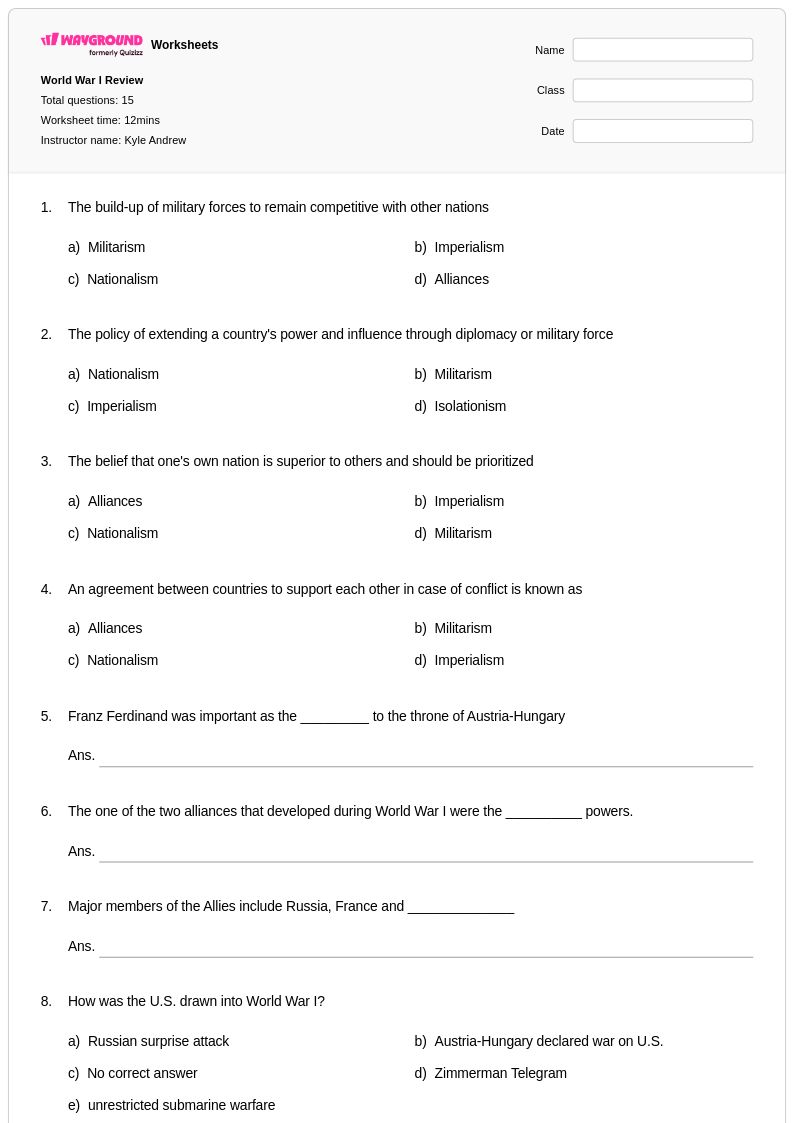
Core World War I vocabulary includes terms across military, political, and diplomatic categories. Essential terms include trench warfare, propaganda, armistice, reparations, alliance systems, imperialism, militarism, nationalism, the Western Front, and the Treaty of Versailles. Students who can define and apply these terms in context are better prepared to analyze causes, turning points, and consequences of the war in both written and discussion-based assessments.
What mistakes do students commonly make when learning World War I vocabulary?
One of the most common errors is confusing reparations with general war consequences — students often understand it as 'punishment' without grasping its specific economic mechanism and the long-term instability it caused in Germany. Students also frequently conflate the Triple Alliance and Triple Entente, especially when the alliance memberships shifted during the war. Another persistent misconception is treating the armistice as a peace treaty, when in fact it was only a ceasefire — the formal settlement came later with the Treaty of Versailles.
How do I use Wayground's World War I vocabulary worksheets in my classroom?
Wayground's World War I vocabulary worksheets are available as printable PDFs for traditional classroom use and in digital formats for technology-integrated learning environments, giving teachers flexibility regardless of their classroom setup. Teachers can also host the worksheets as a quiz directly on Wayground, which allows for streamlined digital delivery and instant student feedback. For teachers supporting diverse learners, Wayground offers built-in accommodations including read aloud, extended time, and reduced answer choices, which can be assigned to individual students without disrupting the rest of the class.
How can I differentiate World War I vocabulary instruction for students at different skill levels?
Differentiation for World War I vocabulary can involve tiering the complexity of the task rather than changing the terms entirely — advanced students analyze how a term like nationalism contributed to multiple causes of the war, while struggling students focus on accurate definition and one concrete example. On Wayground, teachers can assign individual accommodations such as reduced answer choices or read aloud to students who need additional support, while the rest of the class works through the standard worksheet, with no visible distinction made between versions.