Free Printable Adjective Clauses Worksheets for Class 9
Class 9 adjective clauses worksheets from Wayground offer comprehensive printables and practice problems to help students master dependent clauses that modify nouns, complete with answer keys and free PDF downloads.
Explore printable Adjective Clauses worksheets for Class 9
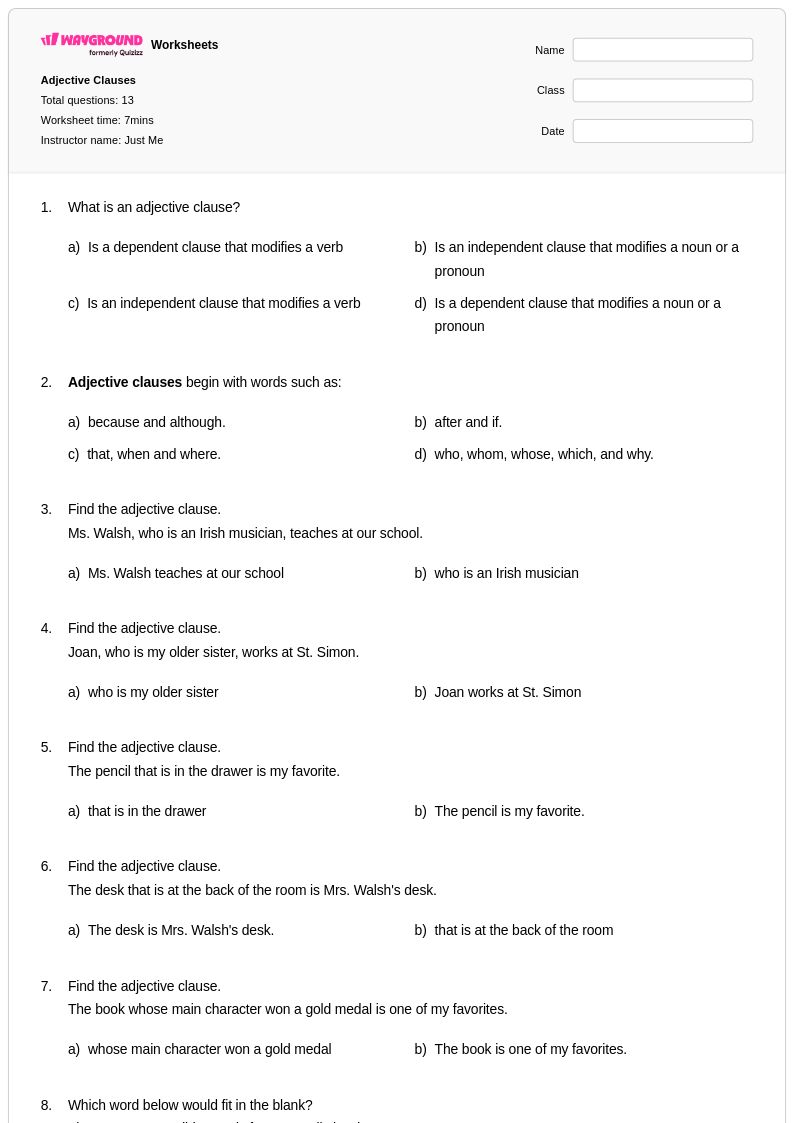
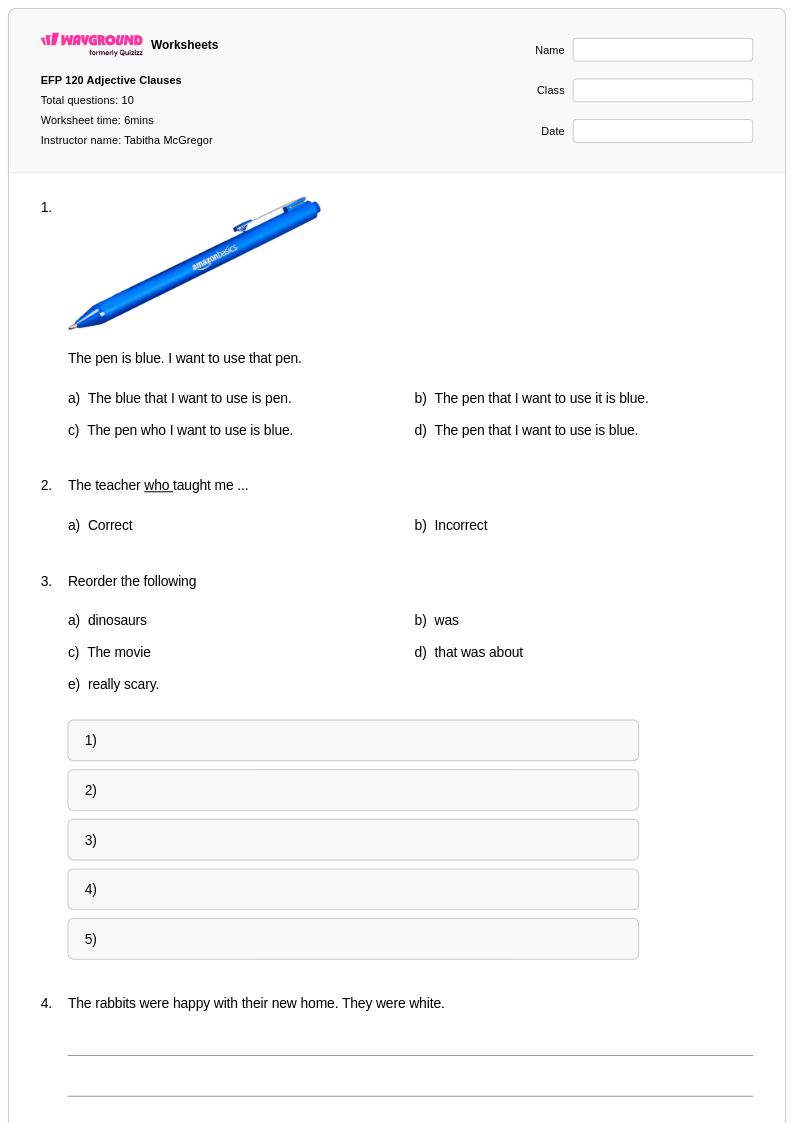
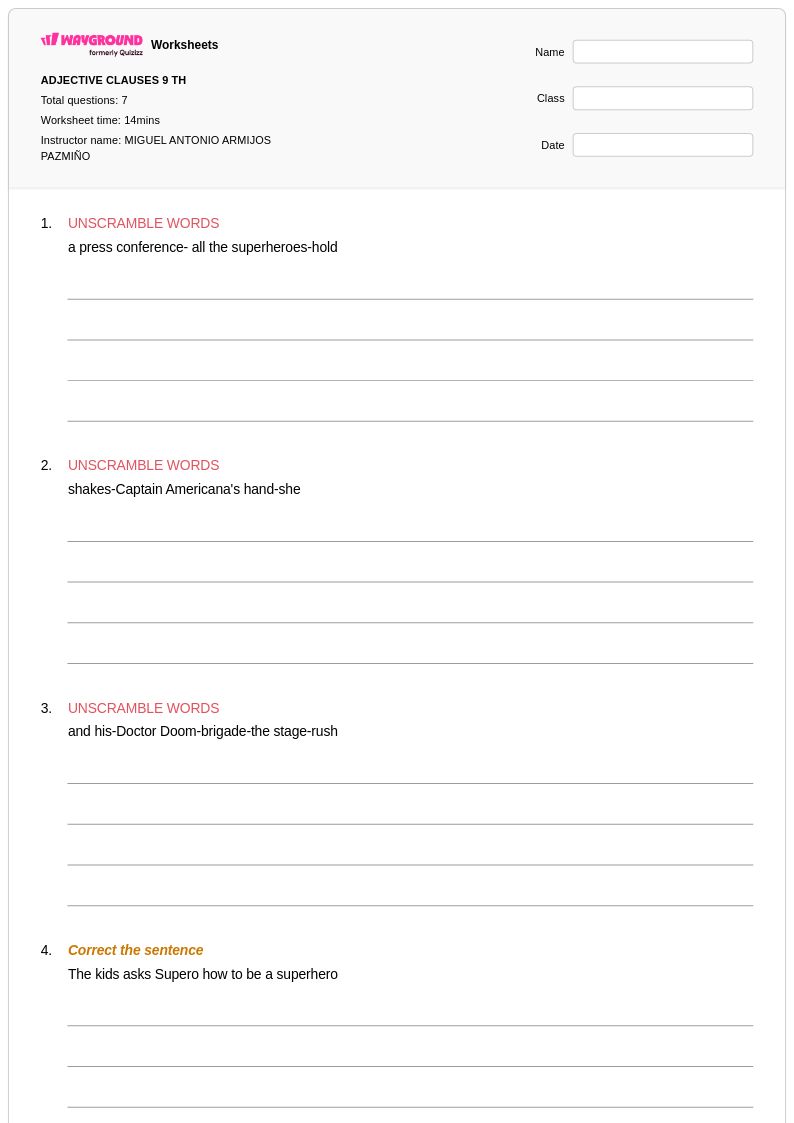
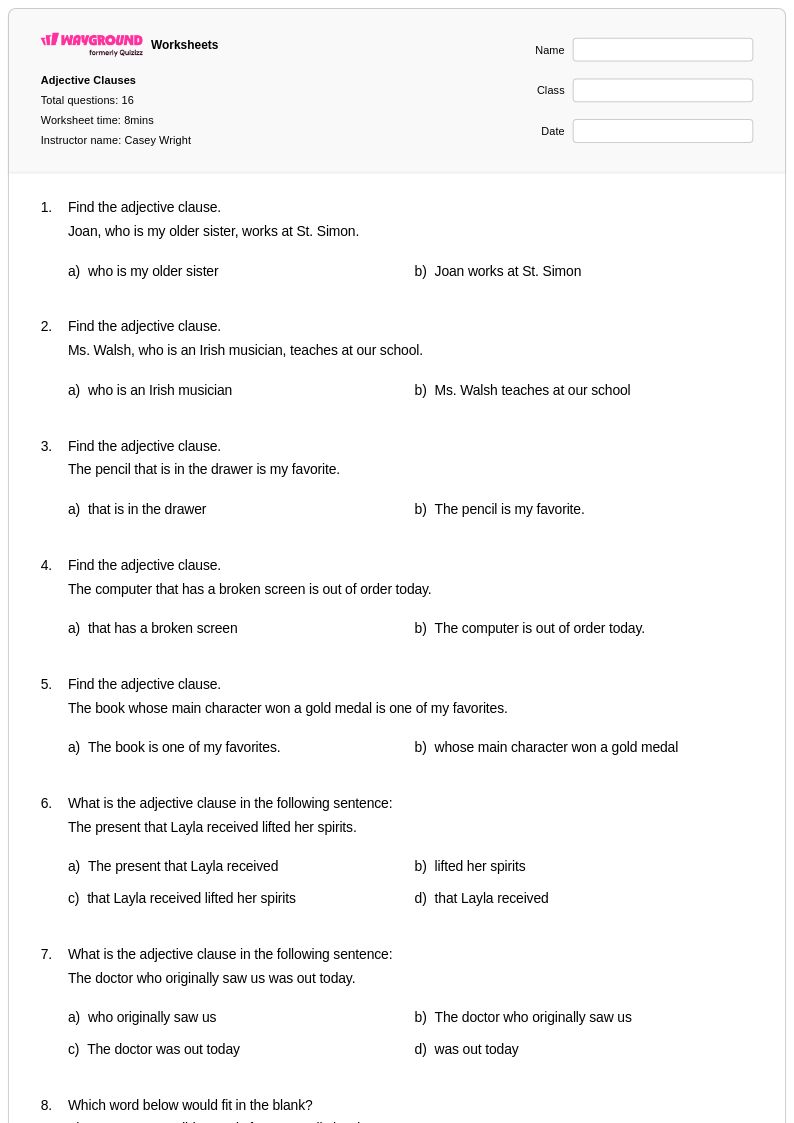
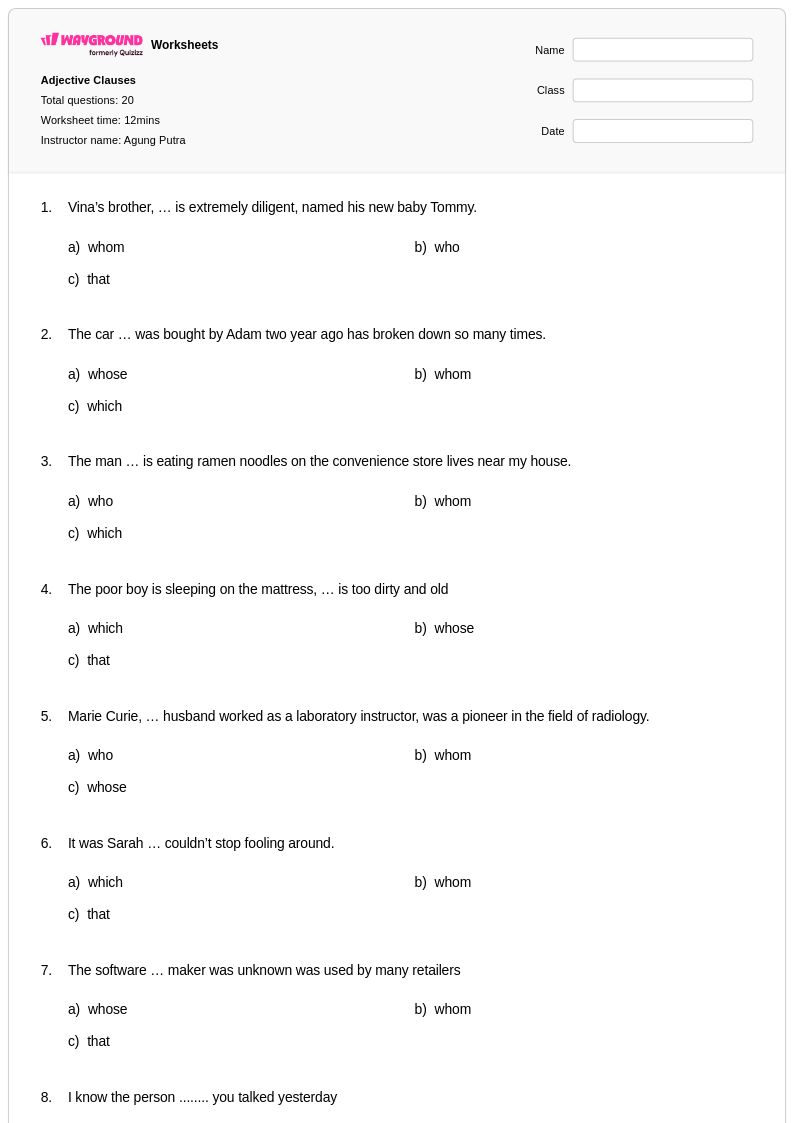
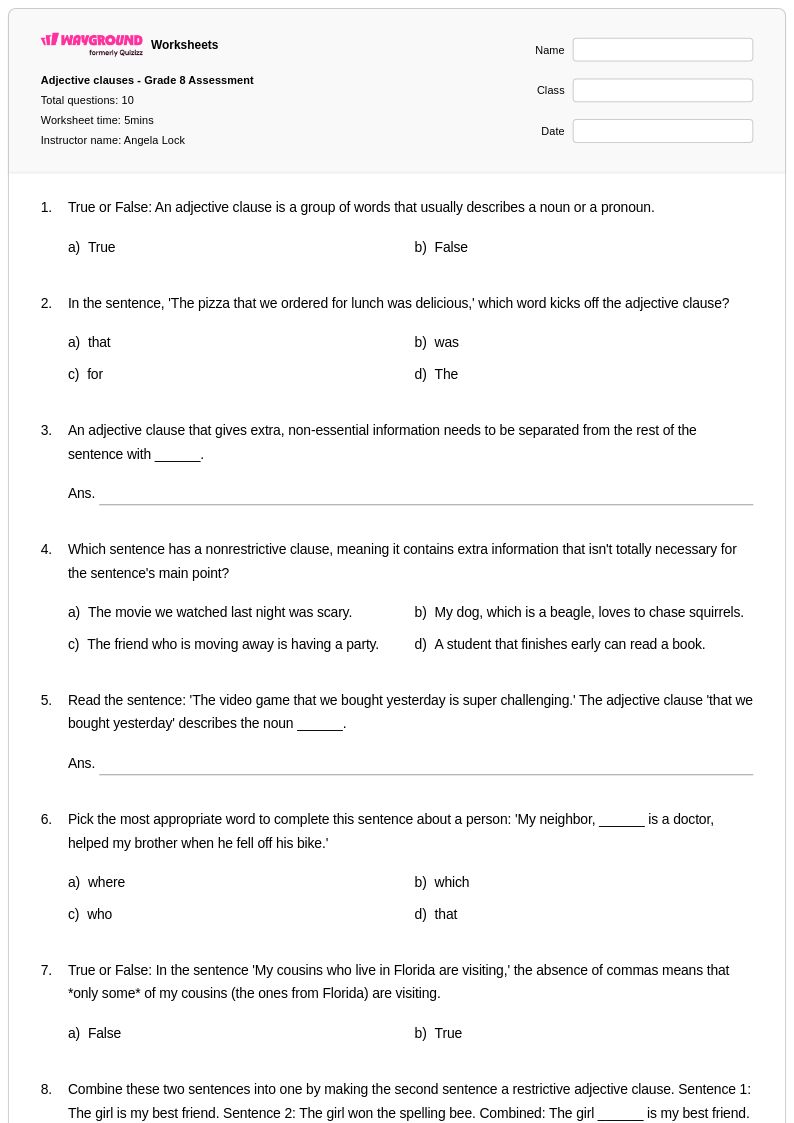
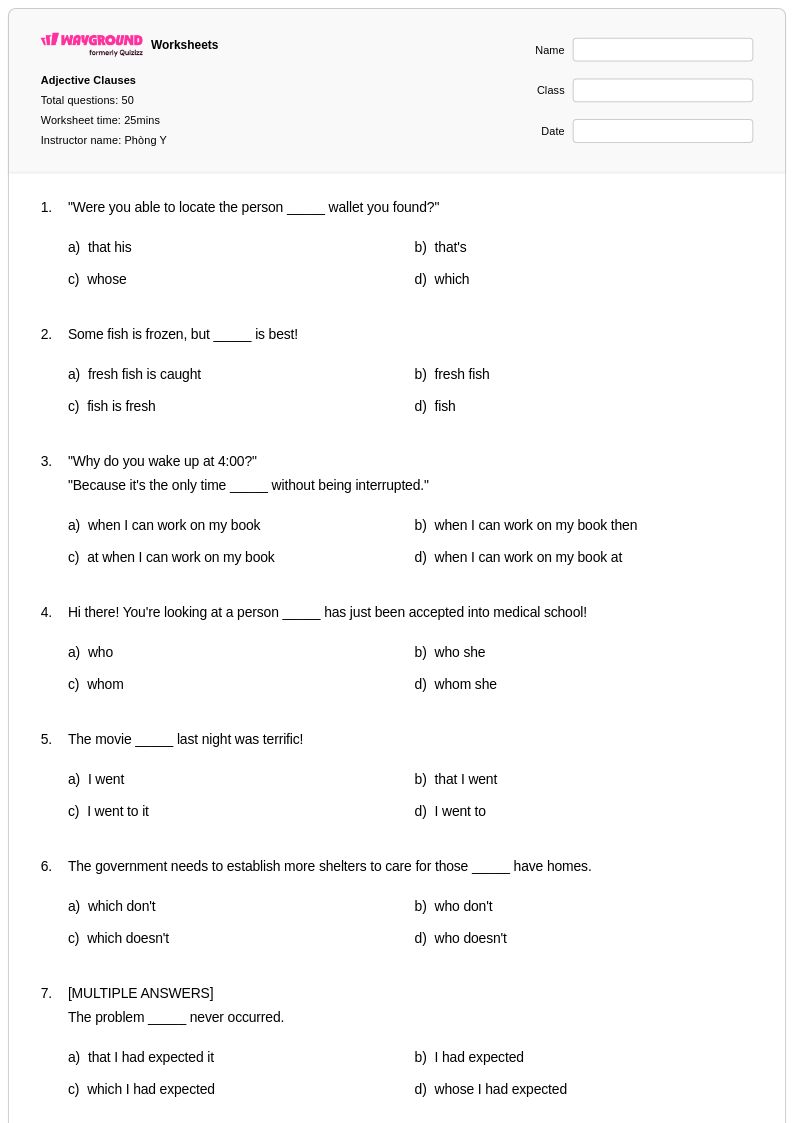
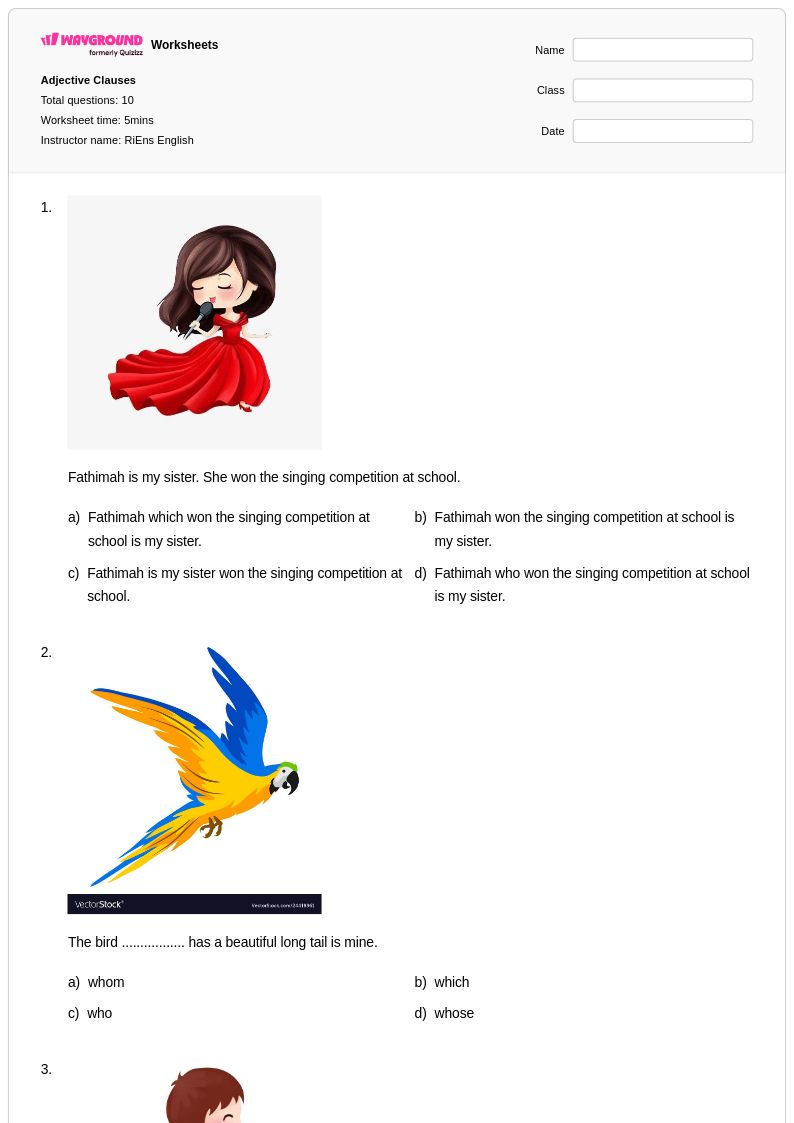
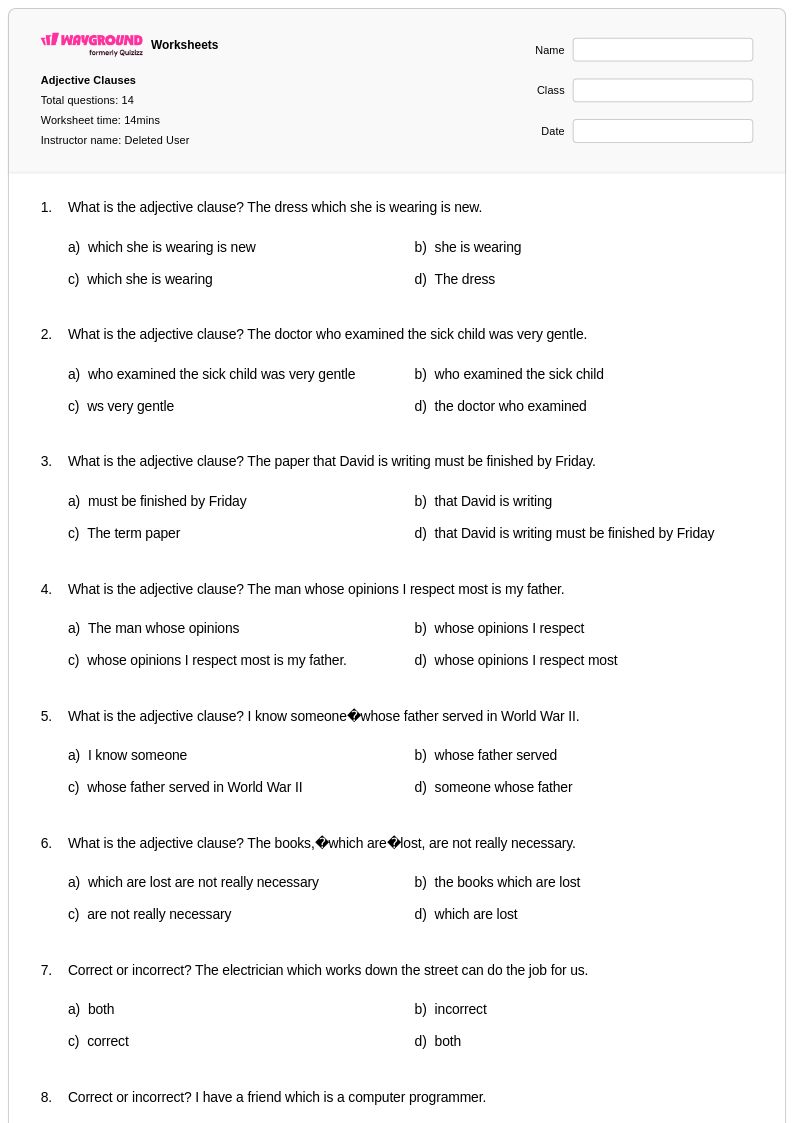
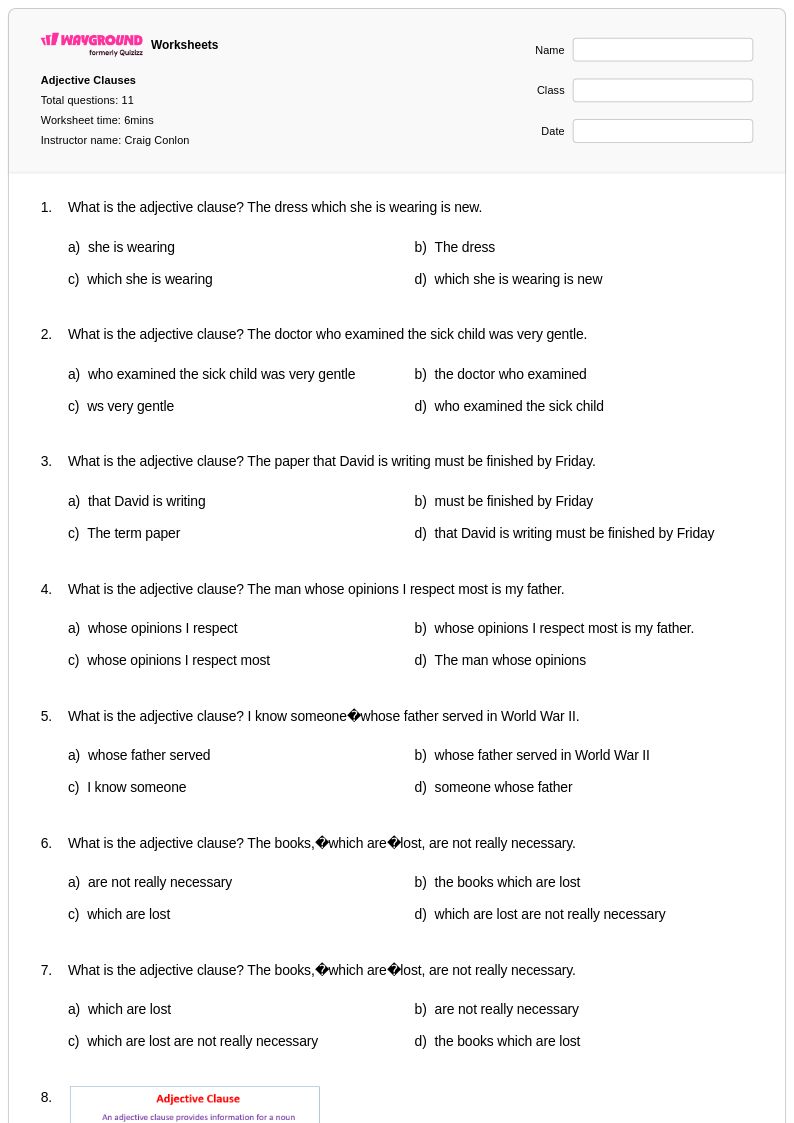
Adjective clauses represent a critical component of advanced grammar instruction for Class 9 students, requiring comprehensive practice to master their proper identification, construction, and usage within complex sentence structures. Wayground's extensive collection of adjective clause worksheets provides educators with expertly designed materials that systematically develop students' understanding of relative pronouns, restrictive and non-restrictive clauses, and proper punctuation patterns. These printables offer structured practice problems that guide students through recognizing how adjective clauses modify nouns and pronouns while maintaining sentence clarity and coherence. Each worksheet includes detailed answer key materials, enabling both independent study and teacher-guided instruction, with free pdf formats ensuring accessibility for diverse classroom environments and varied learning preferences.
Wayground's comprehensive platform supports English teachers with millions of teacher-created resources specifically targeting adjective clause instruction and related grammar mechanics concepts for ninth-grade learners. The platform's robust search and filtering capabilities allow educators to locate materials aligned with specific standards requirements while accessing differentiation tools that accommodate varying student proficiency levels within the same classroom. Teachers benefit from flexible customization options that enable modification of existing worksheets to match particular curriculum demands, whether for initial skill introduction, targeted remediation, or advanced enrichment activities. The availability of both printable and digital formats, including downloadable pdf versions, streamlines lesson planning while providing multiple delivery methods for comprehensive adjective clause practice that strengthens students' overall writing sophistication and grammatical accuracy.
FAQs
How do I teach adjective clauses to students who are new to dependent clauses?
Start by ensuring students can identify the noun or pronoun being modified before introducing the clause itself. Use mentor sentences from texts students already know, and have them underline the noun, then bracket the adjective clause that follows it. Explicitly teach the relative pronouns (who, whom, whose, which, that) as signal words that introduce adjective clauses, since recognizing these pronouns is the fastest entry point for most learners.
What exercises help students practice identifying and writing adjective clauses?
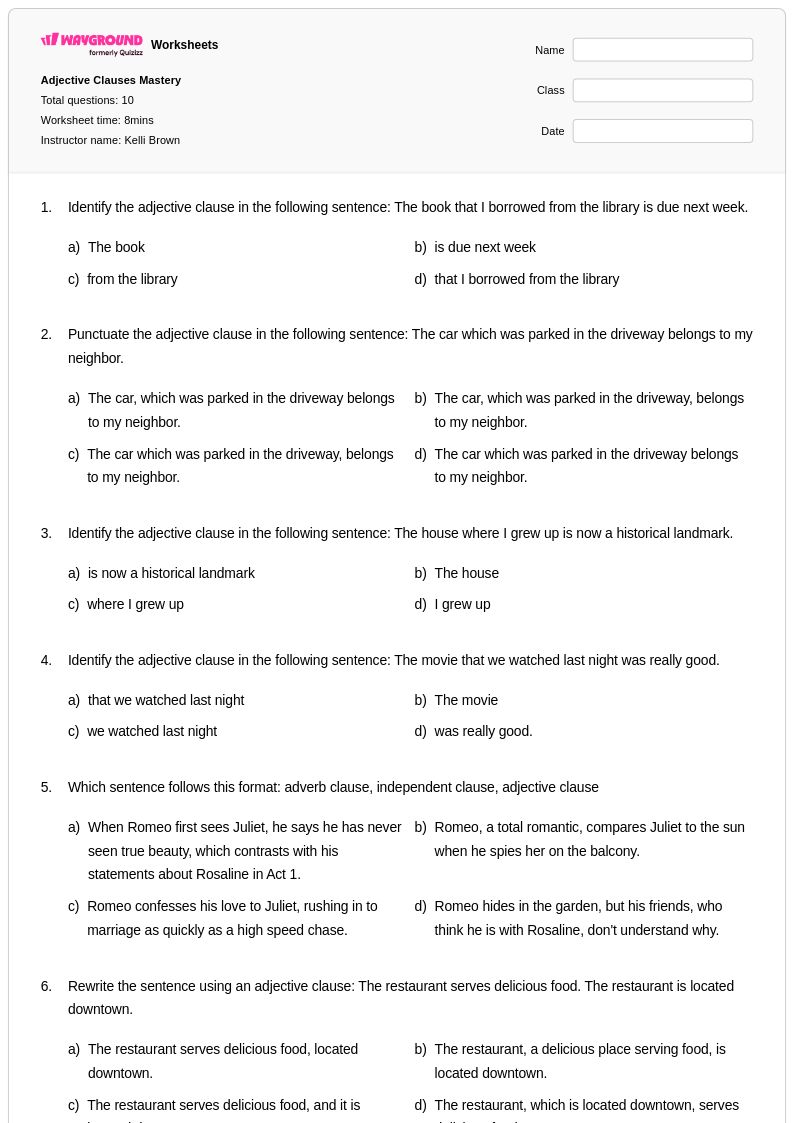
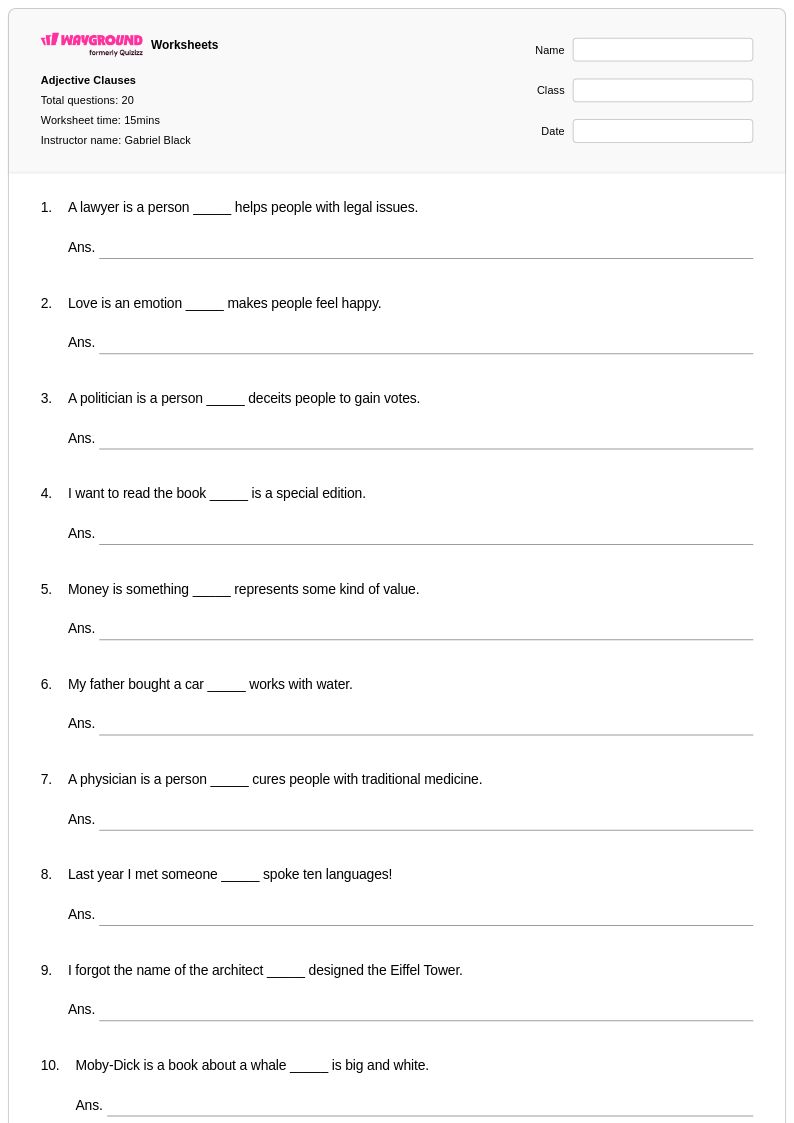
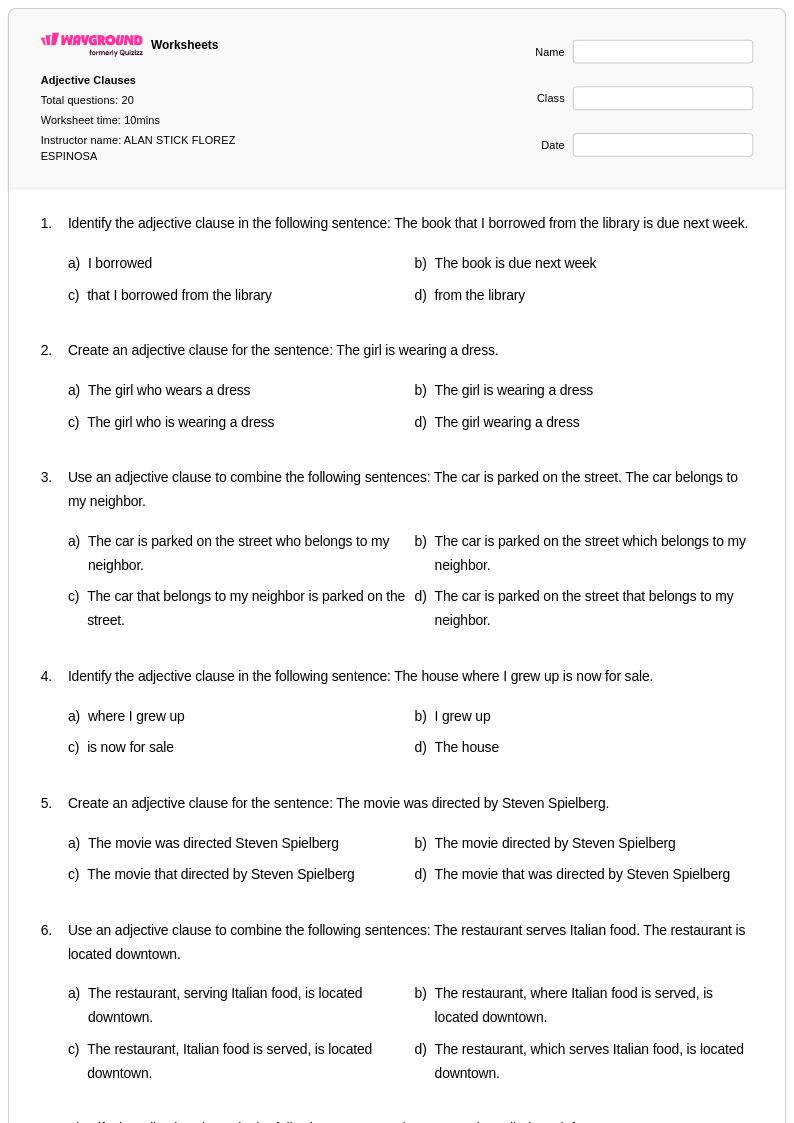
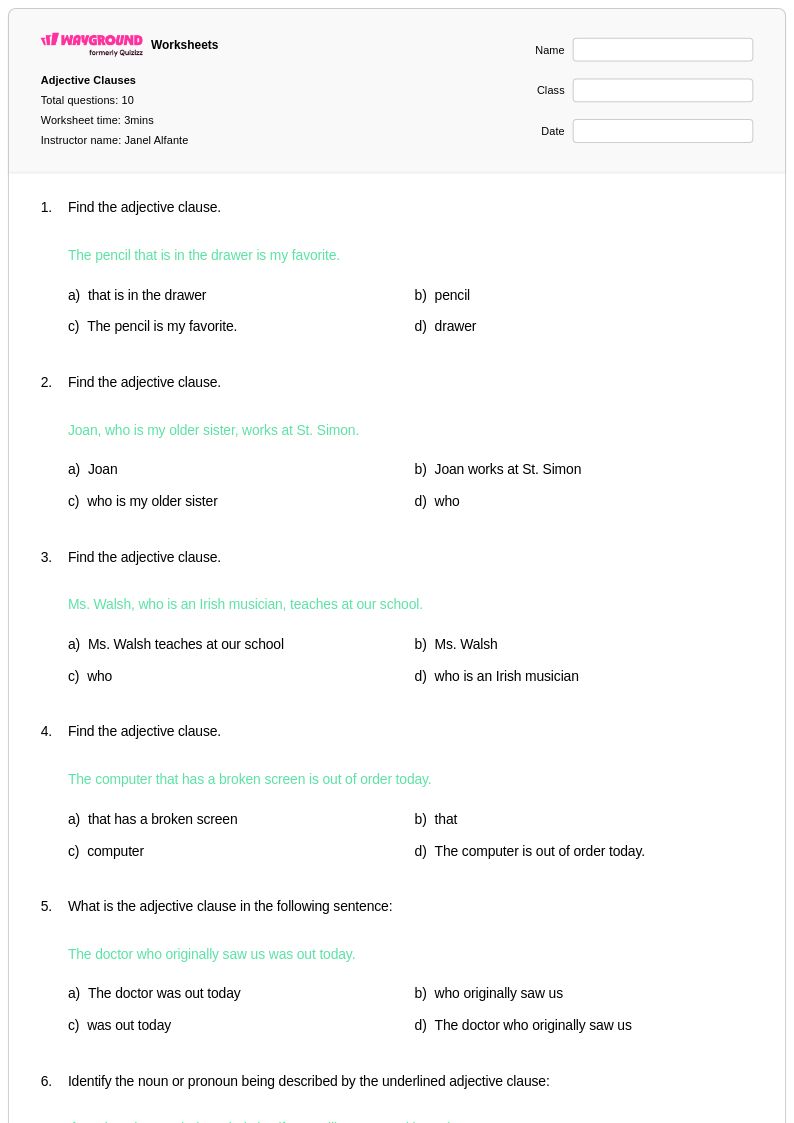
Effective practice exercises include sentence-combining tasks where students merge two simple sentences into one using an adjective clause, as well as identification drills where students bracket the adjective clause and draw an arrow to the noun it modifies. Sentence-transformation exercises, where students convert participial phrases into full adjective clauses or vice versa, build deeper structural awareness. Adjective clause worksheets that sequence from identification to construction to punctuation give students a clear progression to follow.
What is the difference between a restrictive and a non-restrictive adjective clause?
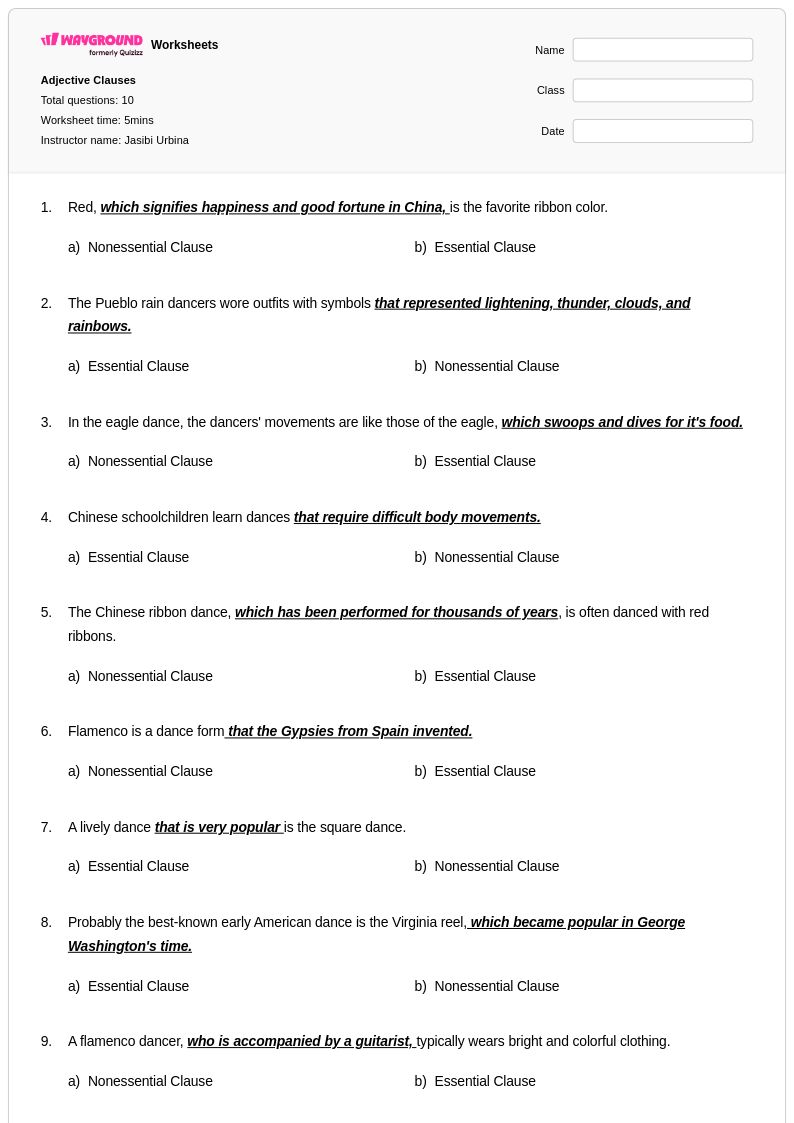
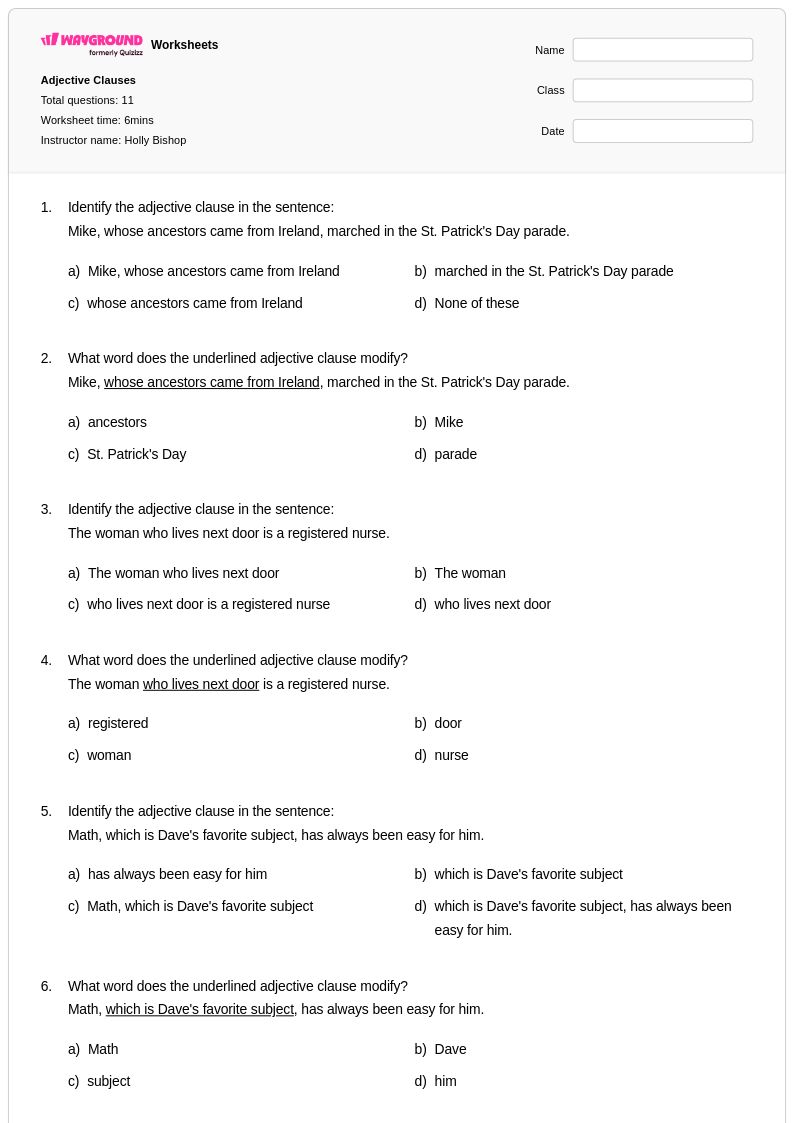
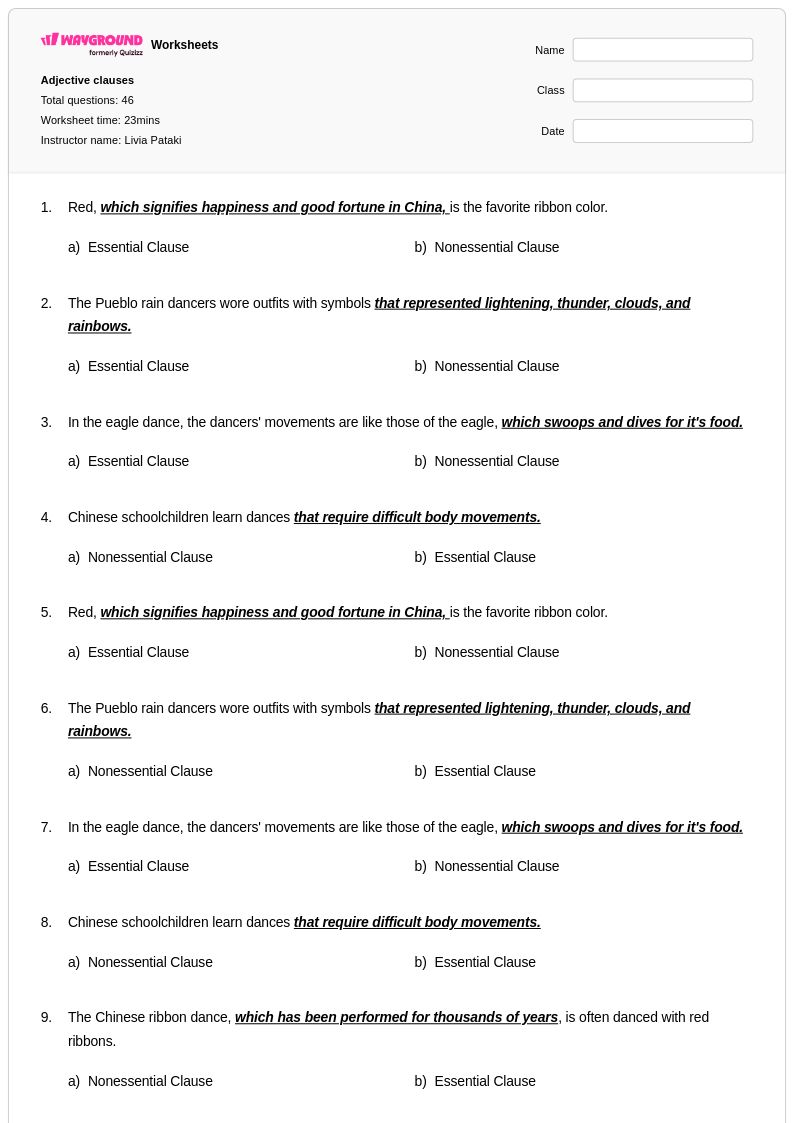
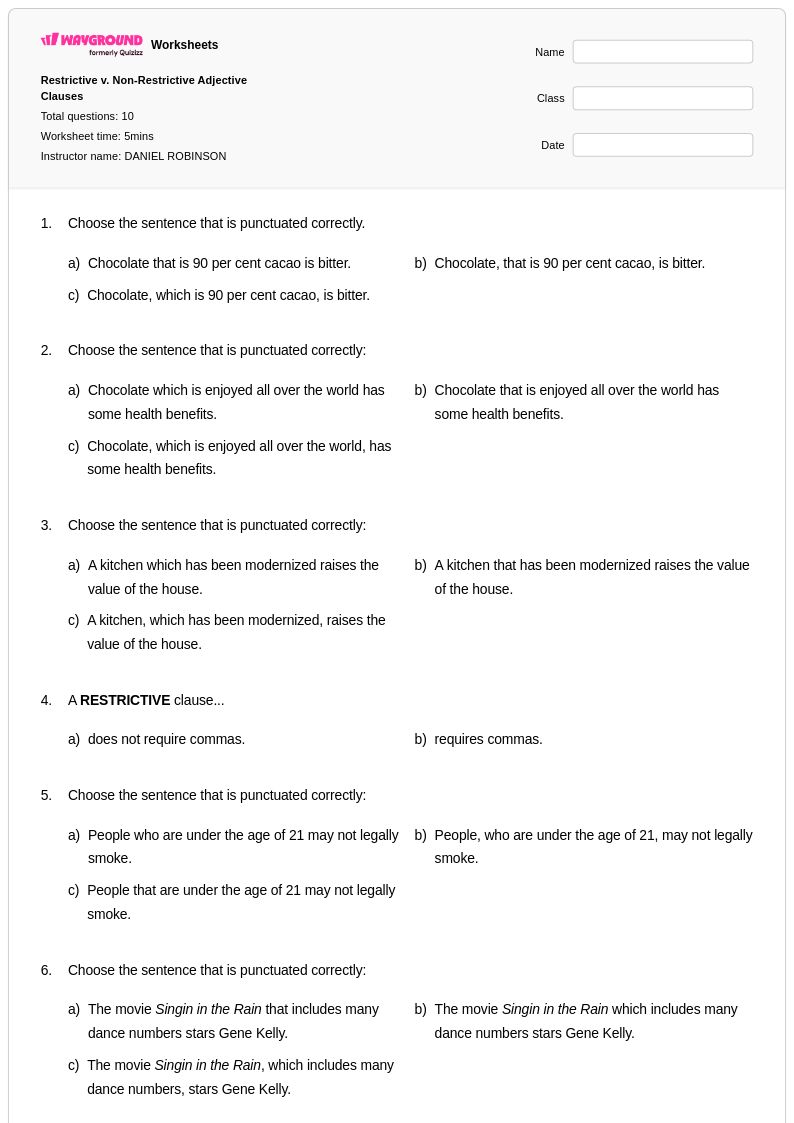
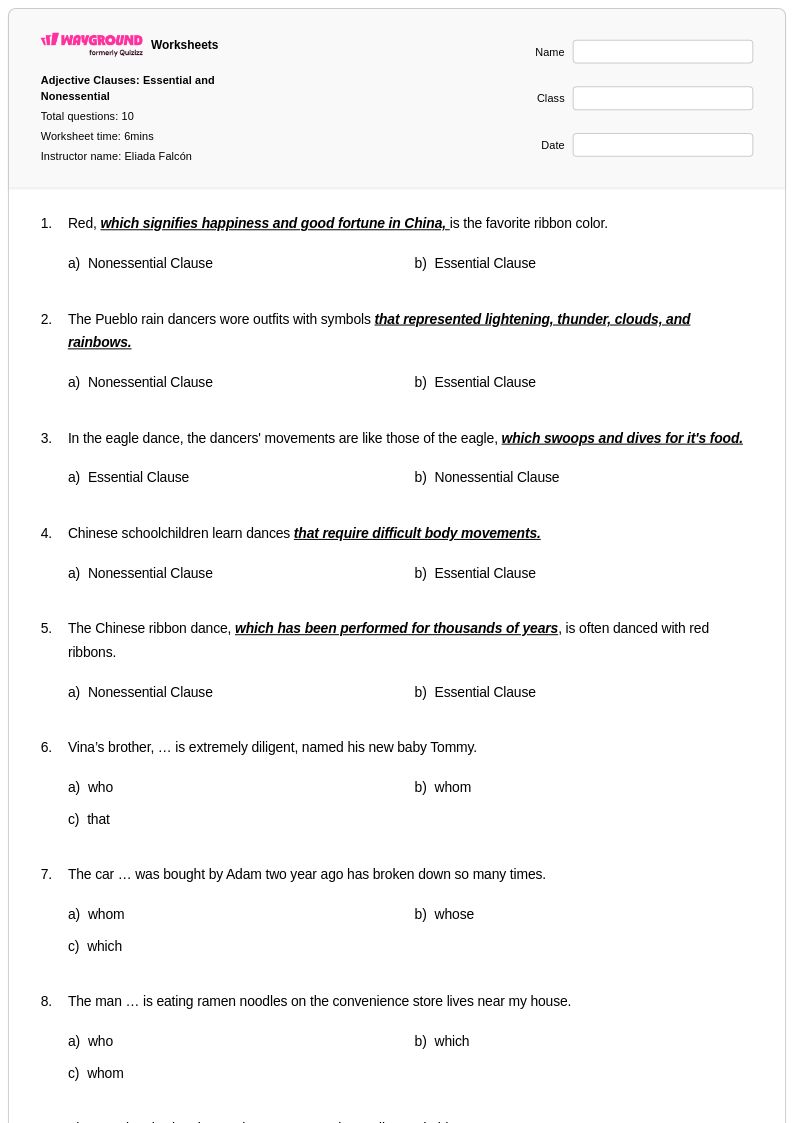
A restrictive adjective clause is essential to the meaning of the sentence because it identifies which specific noun is being referenced, and it is not set off by commas. A non-restrictive adjective clause adds extra information about a noun that is already clearly identified, and it is enclosed in commas. For example, 'The student who sits in the front row won the award' uses a restrictive clause, while 'Maria, who sits in the front row, won the award' uses a non-restrictive one.
What mistakes do students commonly make with adjective clauses?
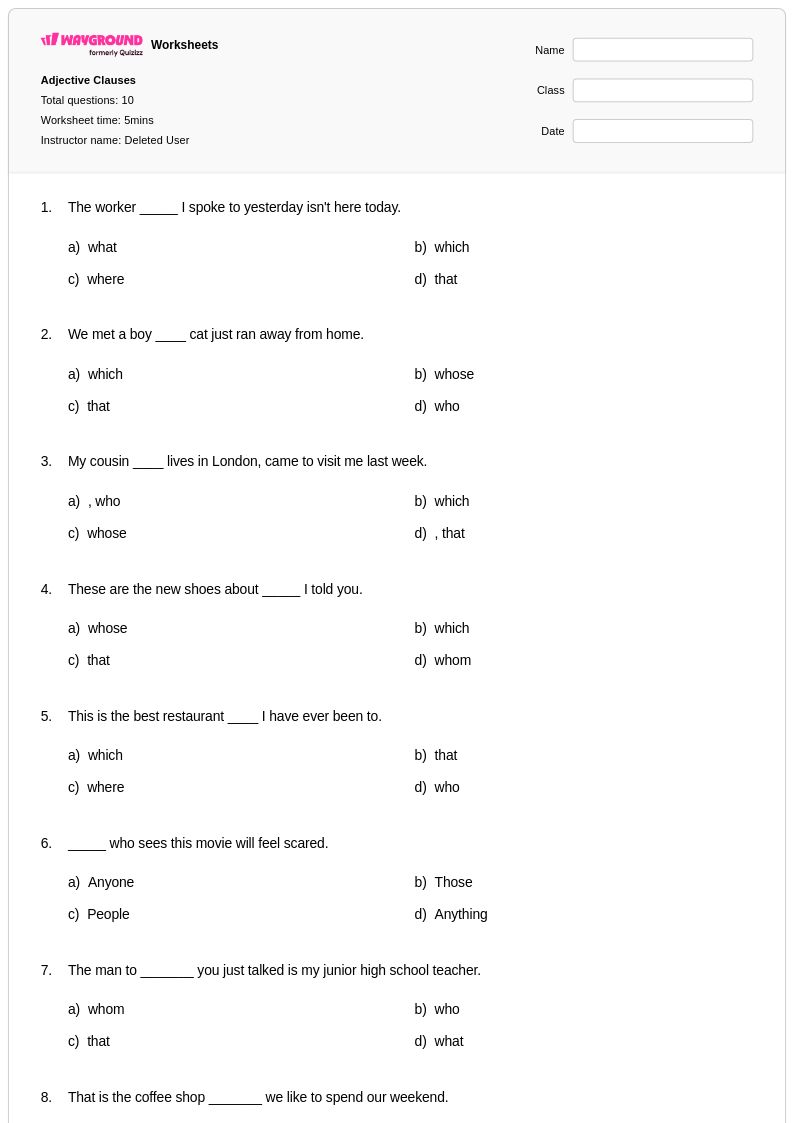
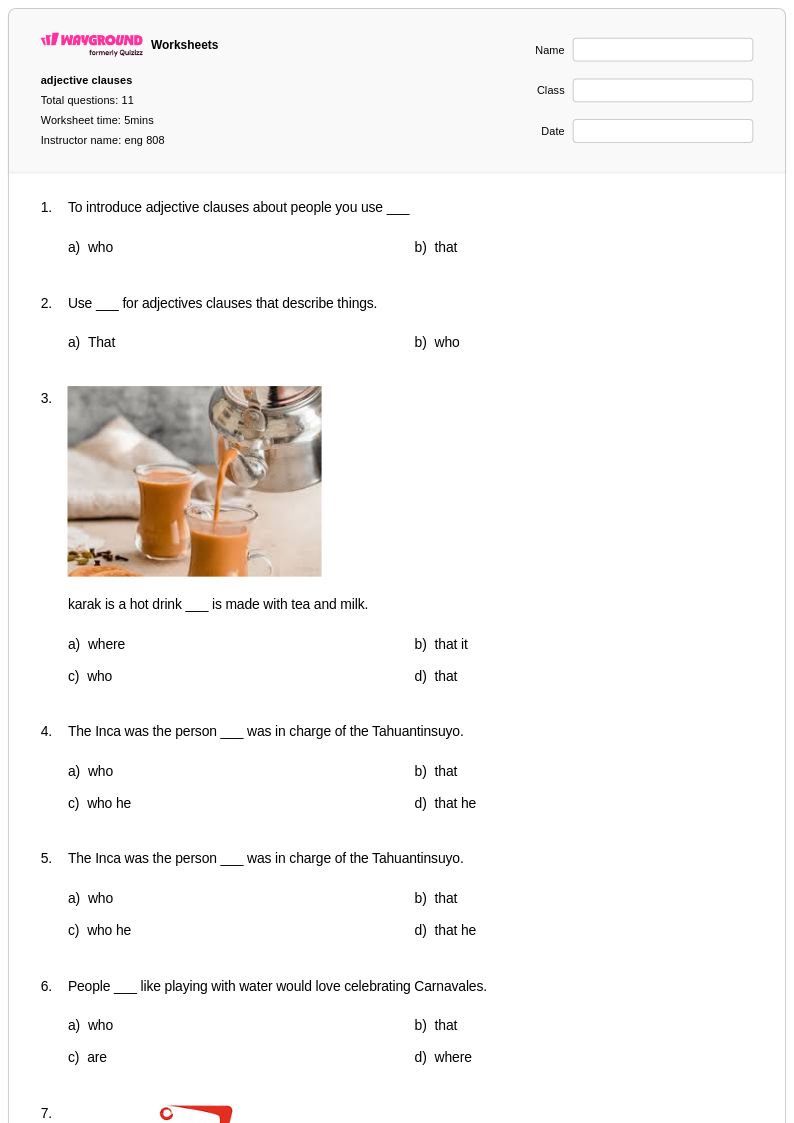
The most common errors are comma misuse with restrictive versus non-restrictive clauses, and incorrect relative pronoun selection, particularly confusing 'who' with 'that' or 'which.' Students frequently omit the relative pronoun when it serves as the object of the clause, and they sometimes misplace the adjective clause so it modifies the wrong noun. Another persistent error is using 'that' with non-restrictive clauses, which is grammatically incorrect in standard edited English.
How do I use adjective clause worksheets from Wayground in my classroom?
Wayground's adjective clause worksheets are available as free printable PDFs for traditional classroom use and in digital formats for technology-integrated environments, so they work whether students are in-person or working independently online. Teachers can also host the worksheets as a quiz directly on Wayground, making it straightforward to assign, collect, and review student responses in one place. Each worksheet includes a complete answer key, which allows for efficient self-correction, peer review, or teacher-led discussion of common errors.
How can I differentiate adjective clause instruction for students at different proficiency levels?
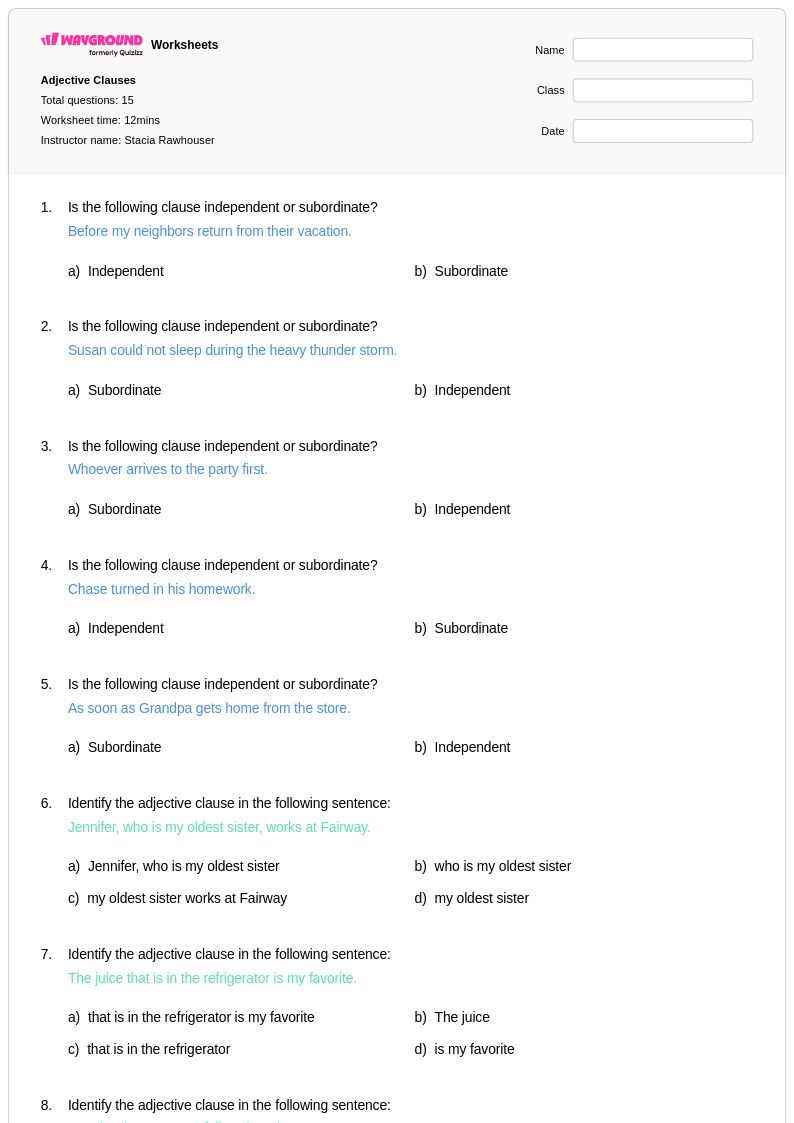
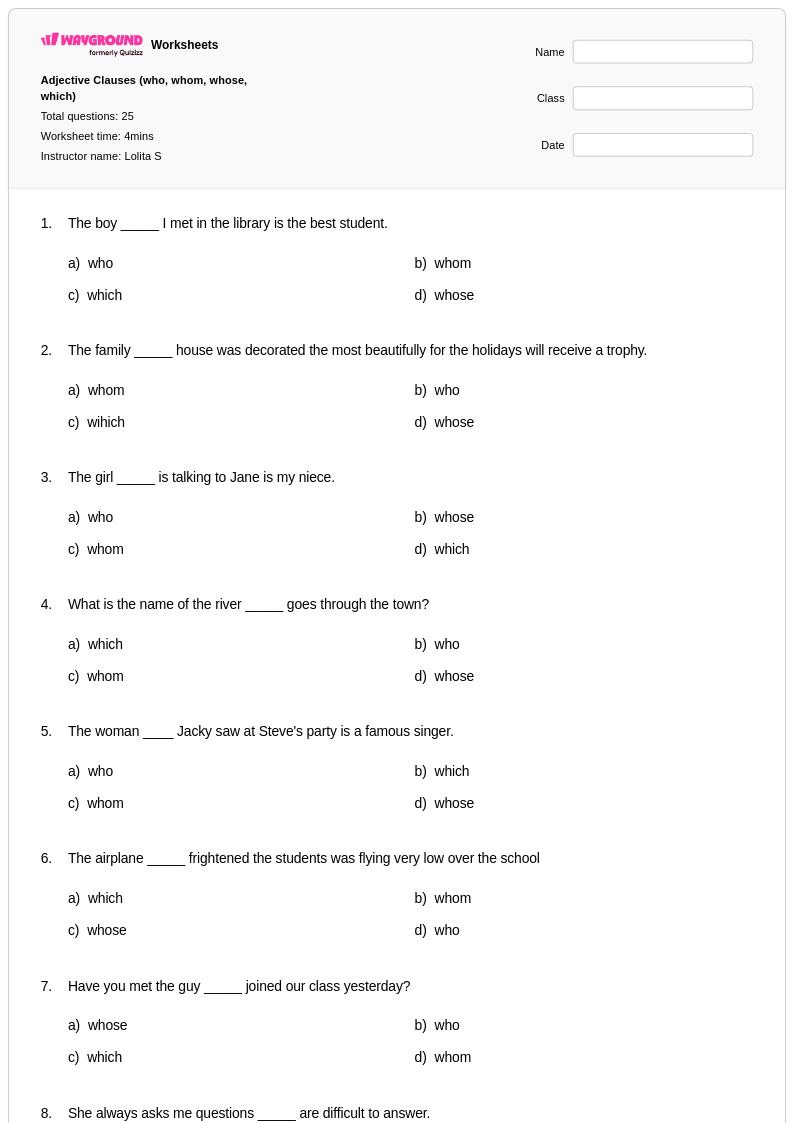
For students who are struggling, begin with identification-only tasks using sentences with clearly marked relative pronouns before moving to production. More advanced students can work on choosing between 'who,' 'whom,' and 'whose' in formal contexts, or on punctuating non-restrictive clauses accurately. On Wayground, teachers can apply accommodations such as read aloud support or reduced answer choices for individual students, ensuring that differentiation happens at the student level without disrupting the rest of the class.