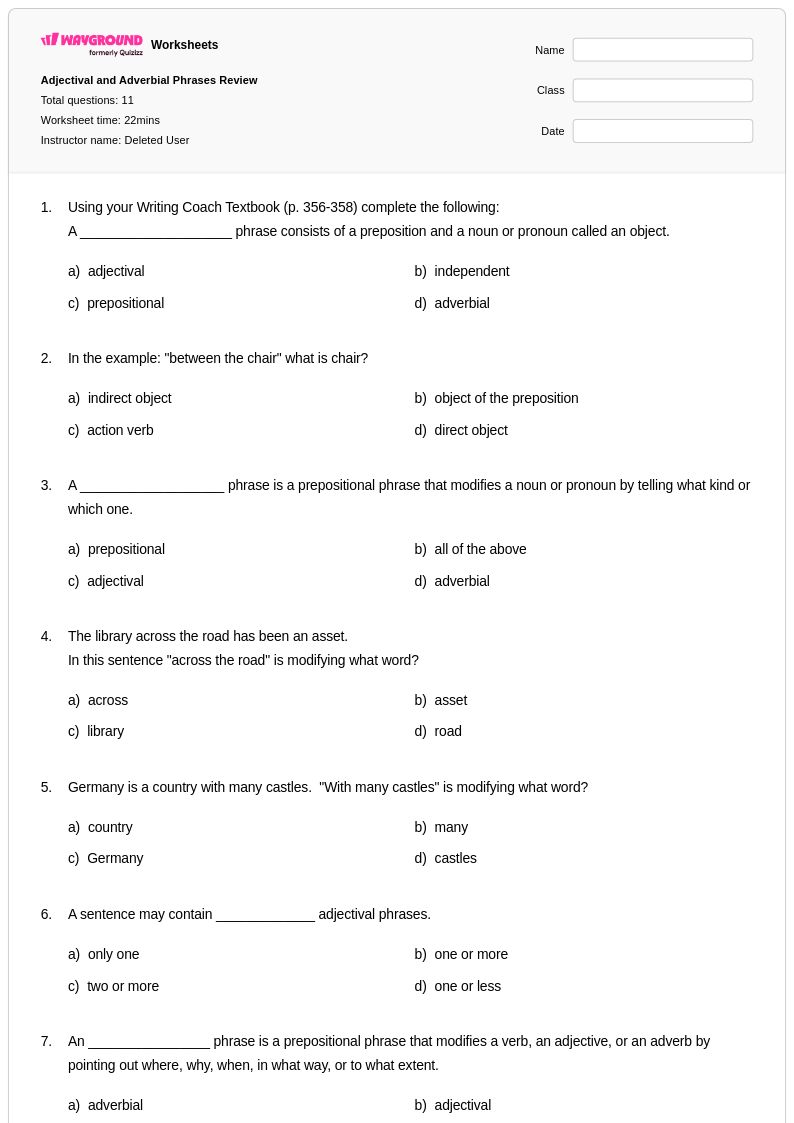
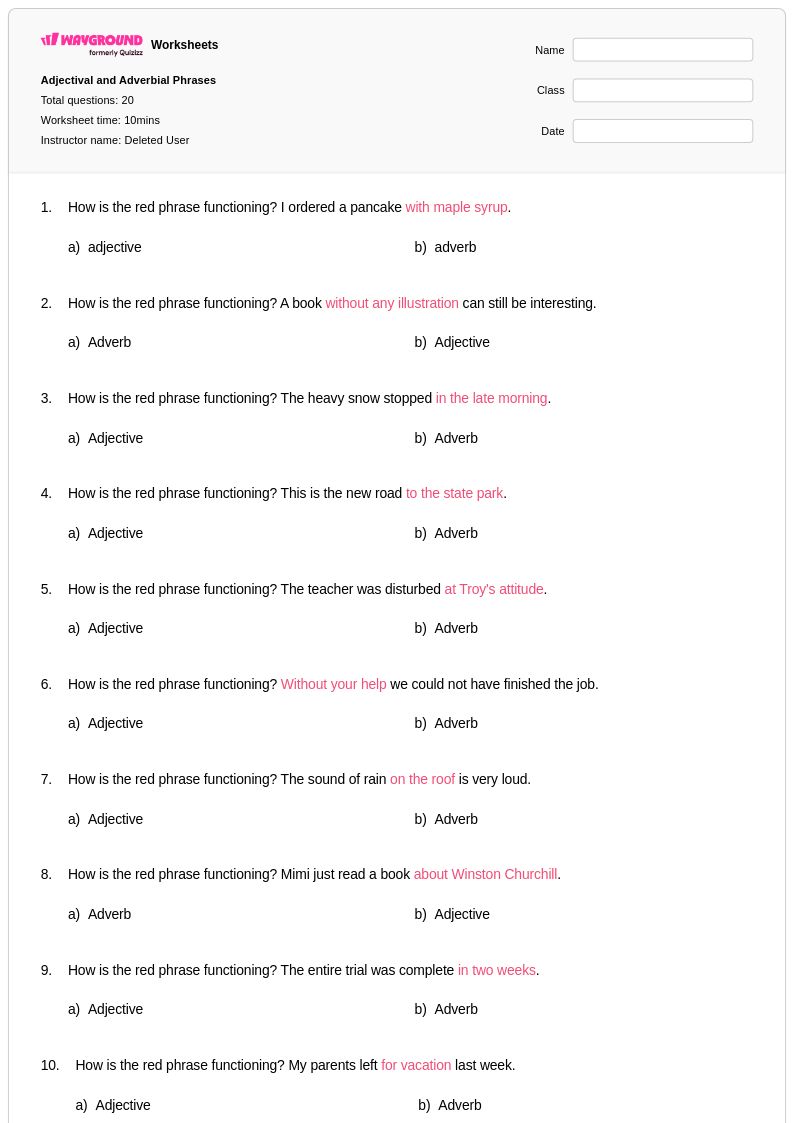
Free Printable Adverbial Phrases Worksheets for Class 11
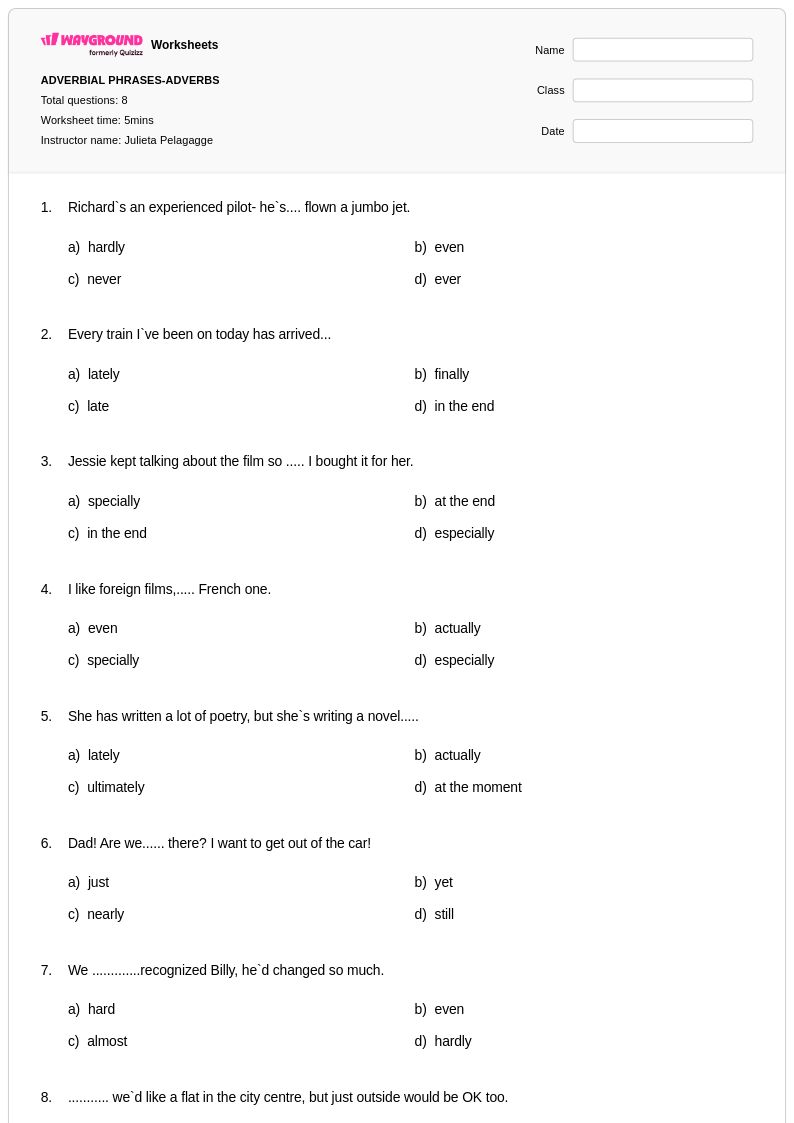
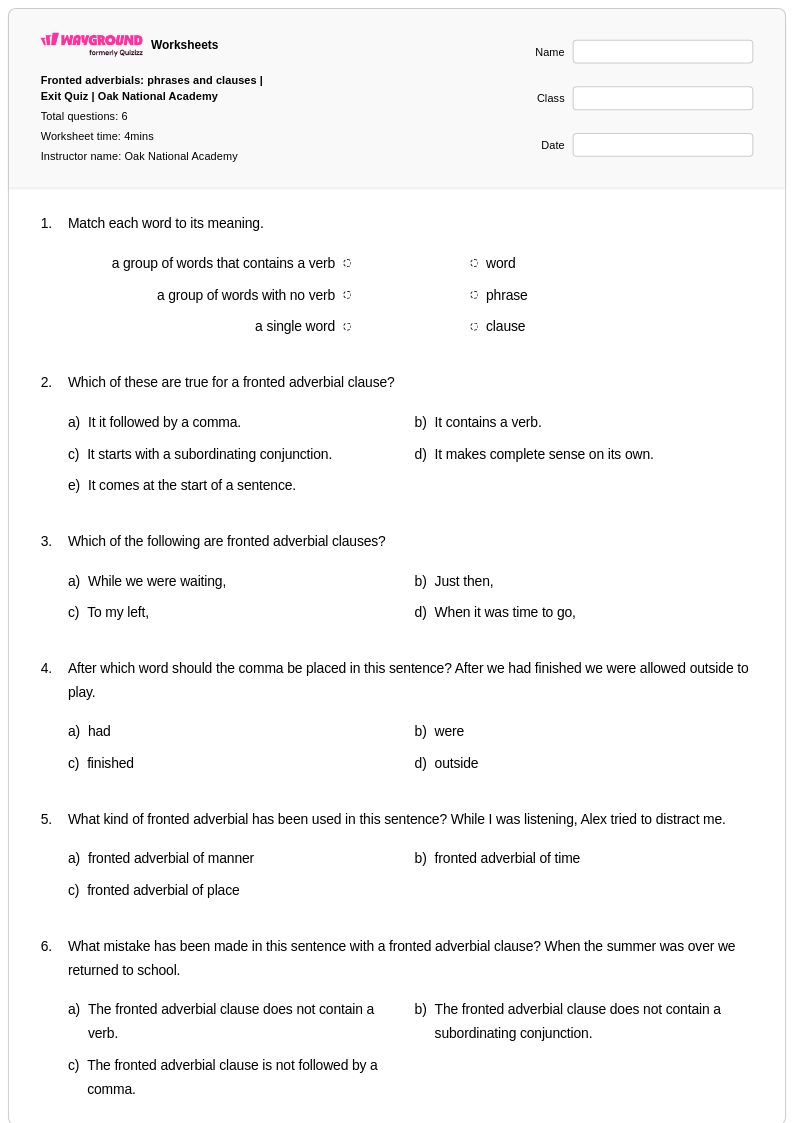
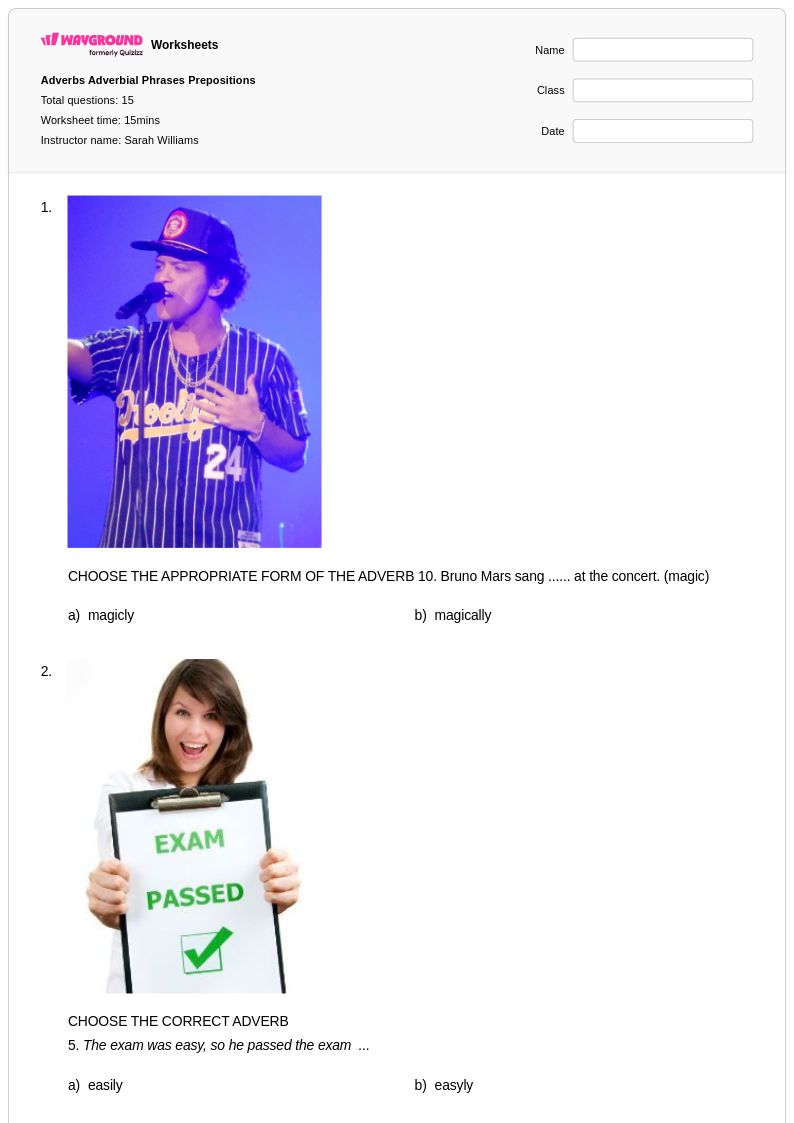
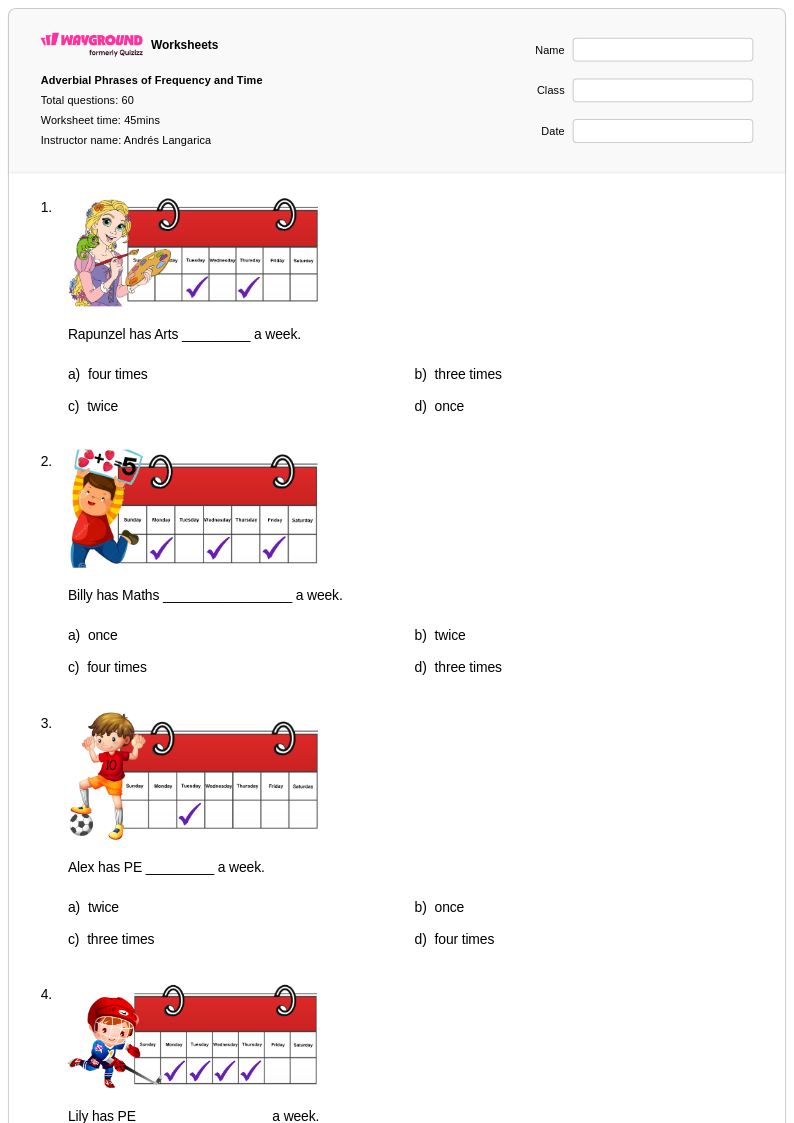
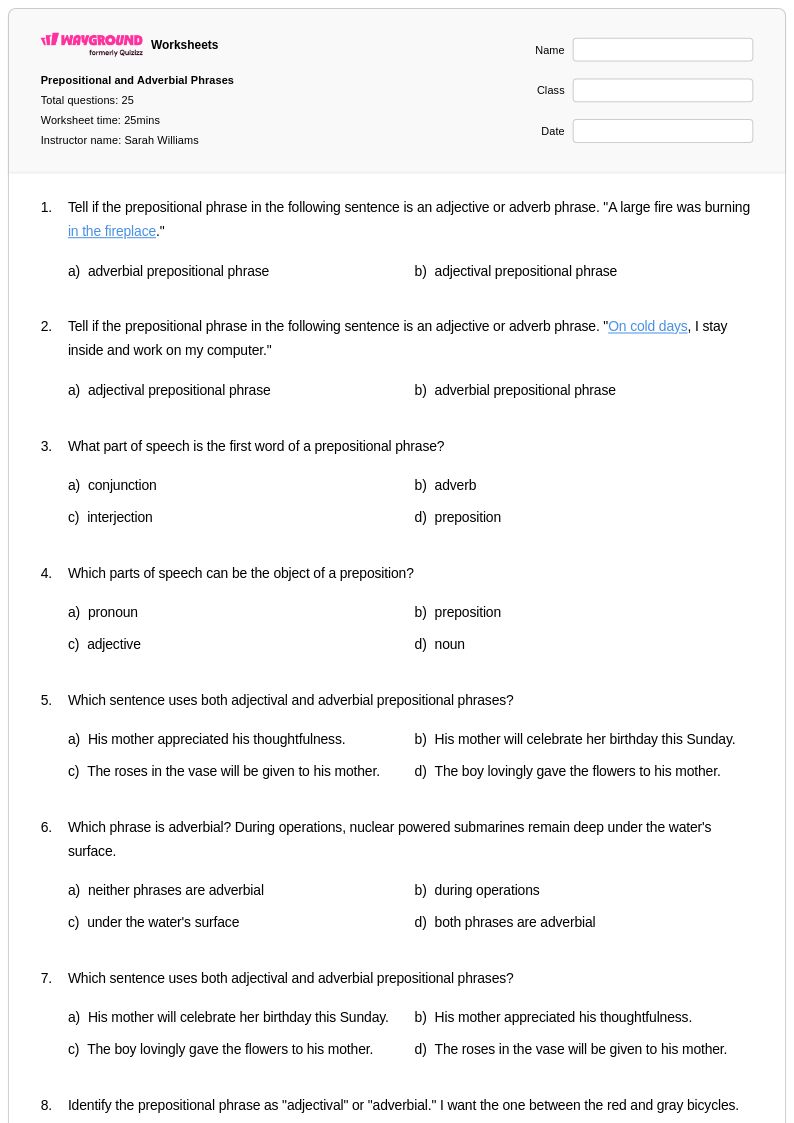
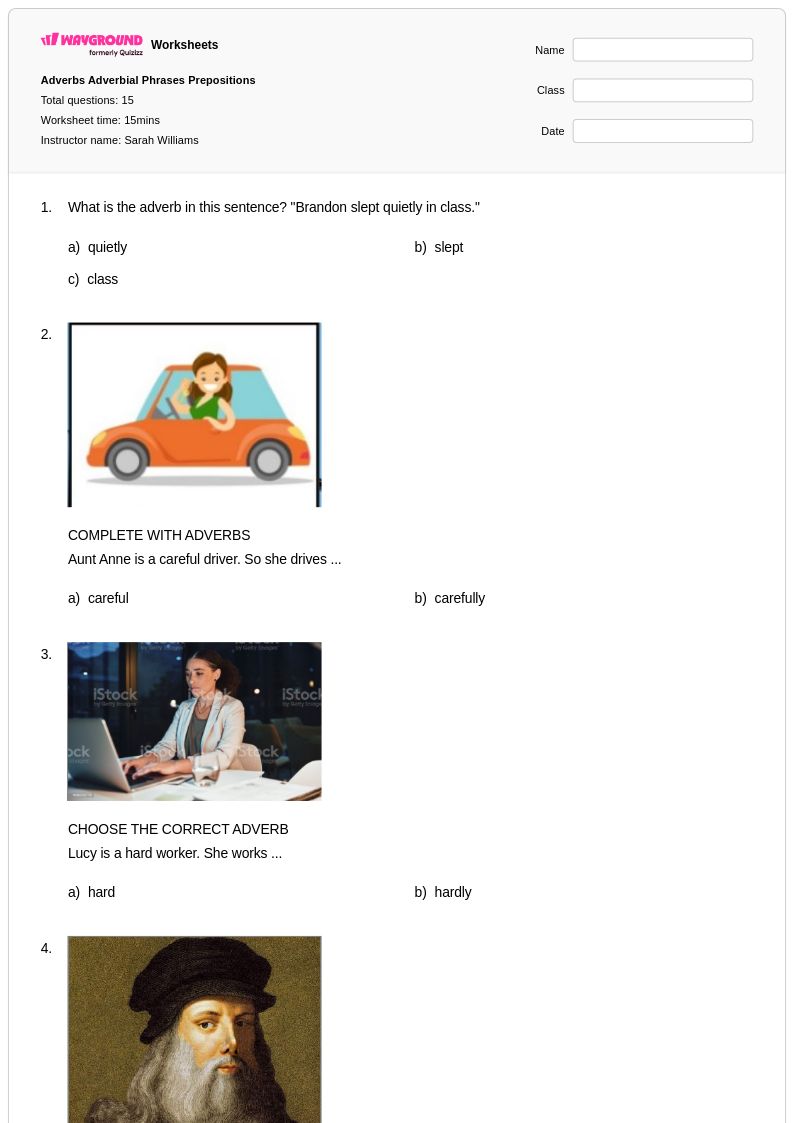
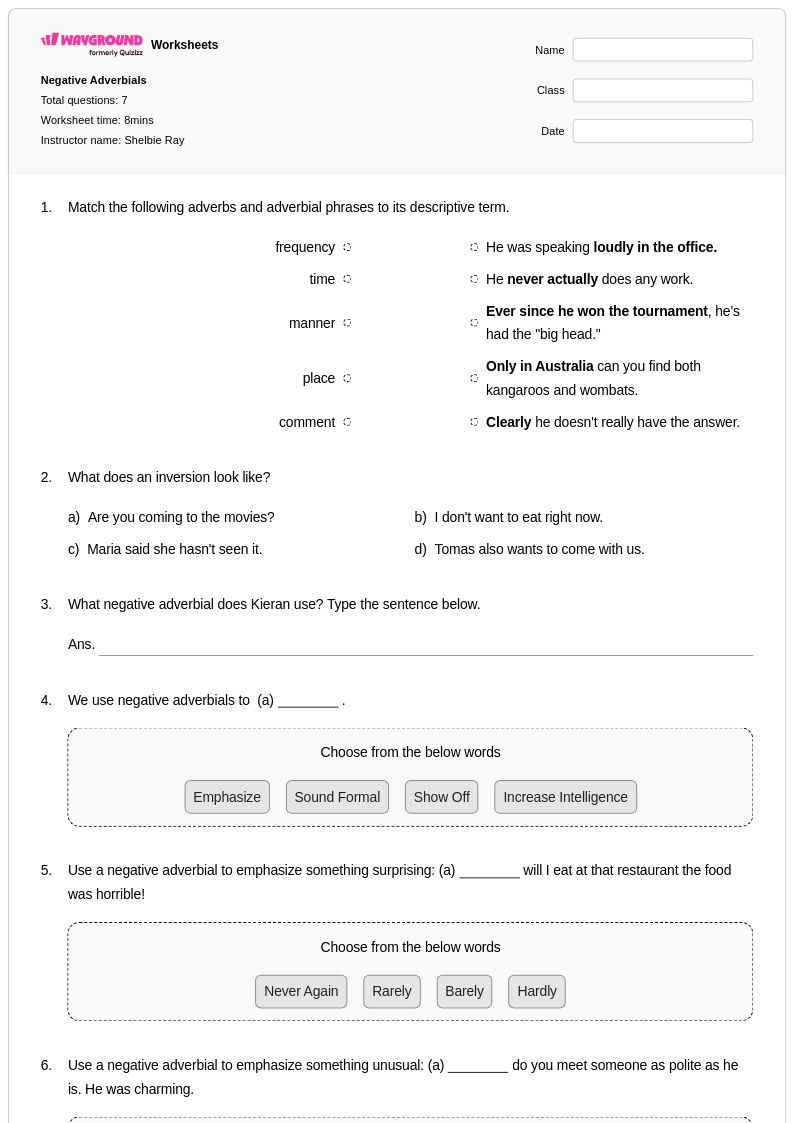
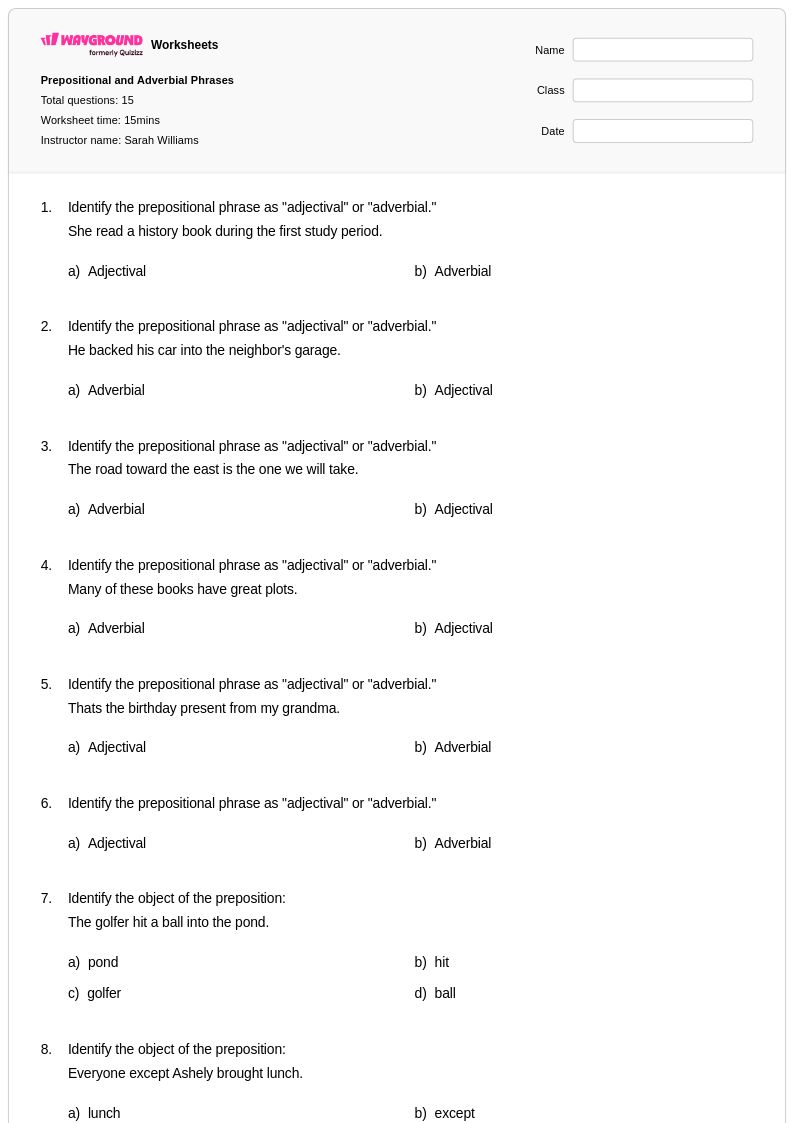
Class 11 adverbial phrases free worksheets and printables help students master identifying and using descriptive phrase structures through targeted practice problems with comprehensive answer keys.
Explore printable Adverbial Phrases worksheets for Class 11
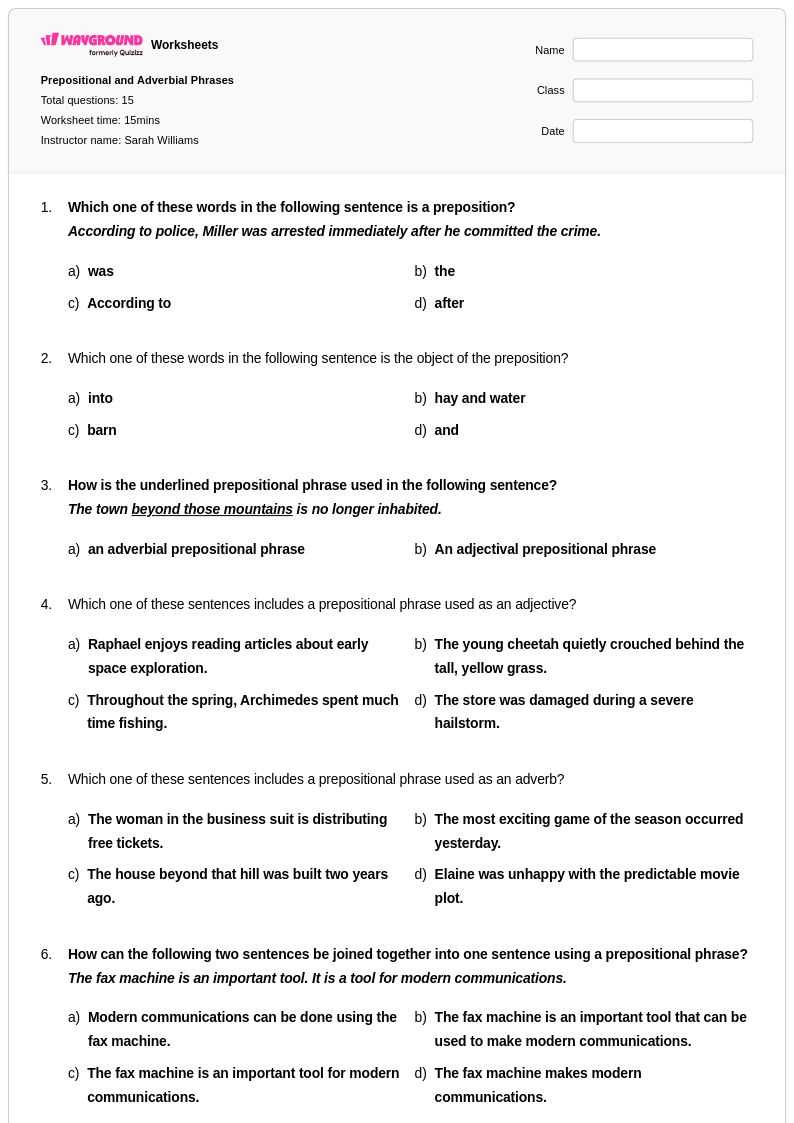
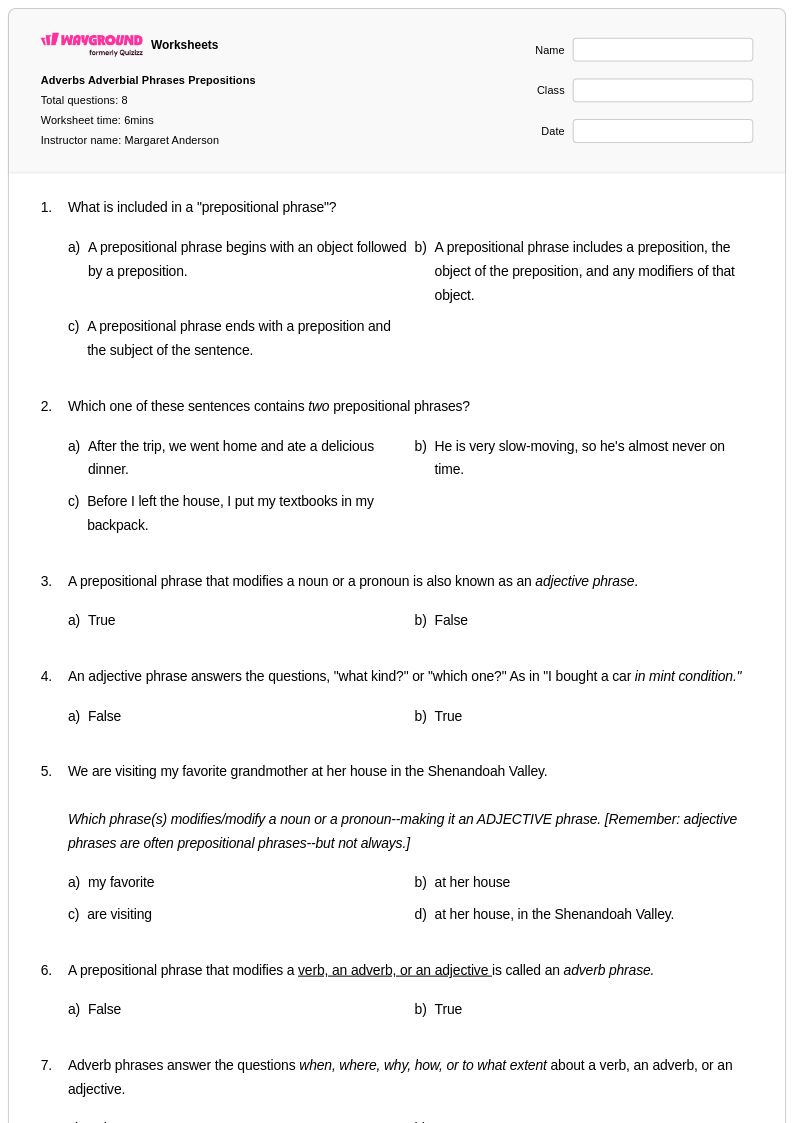
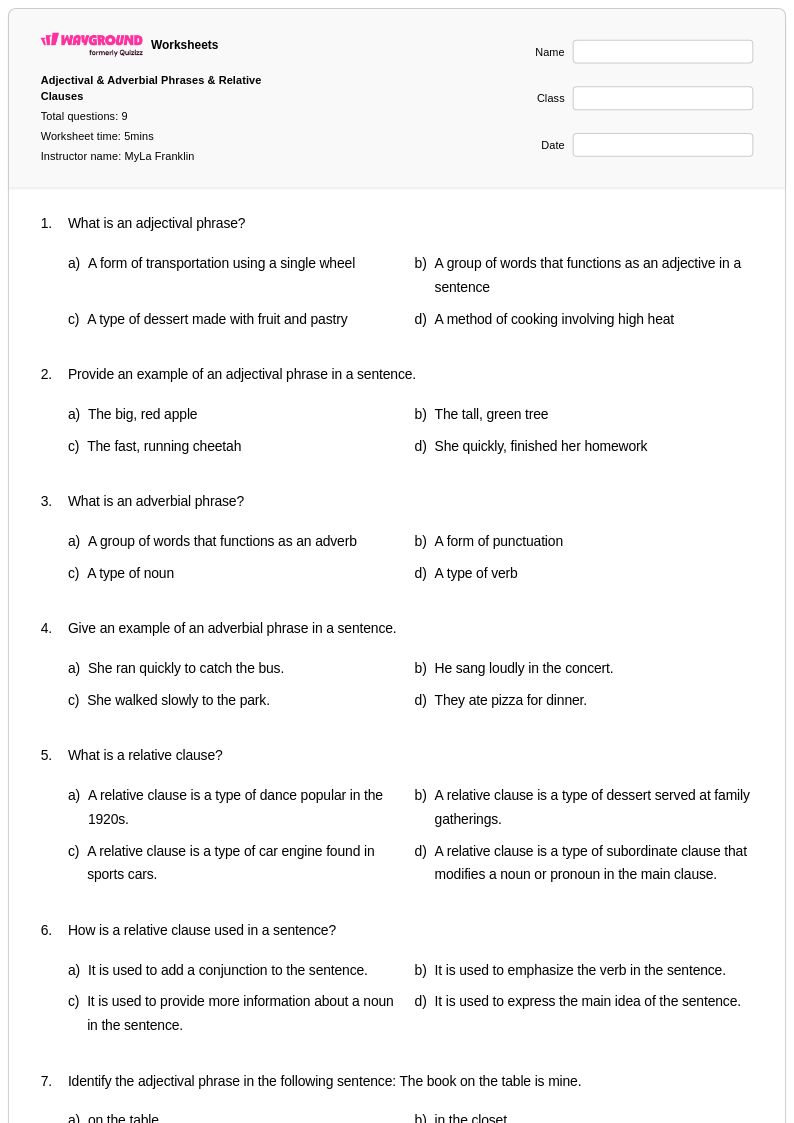
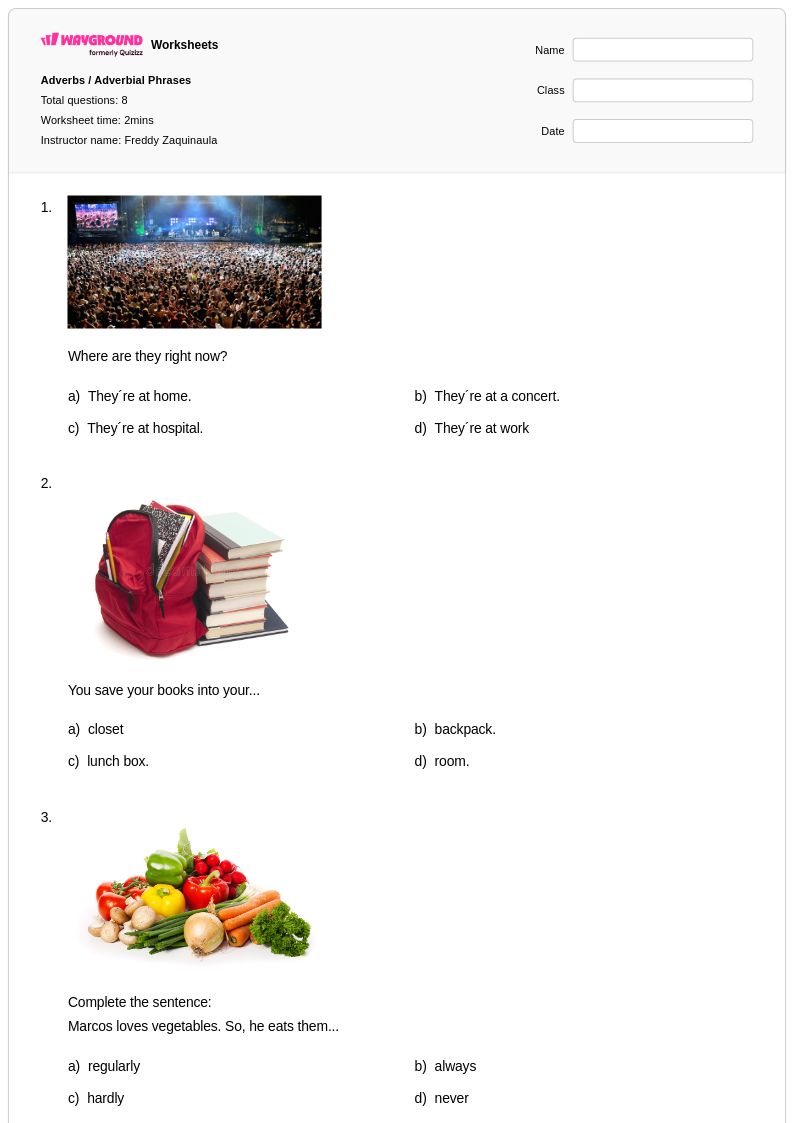
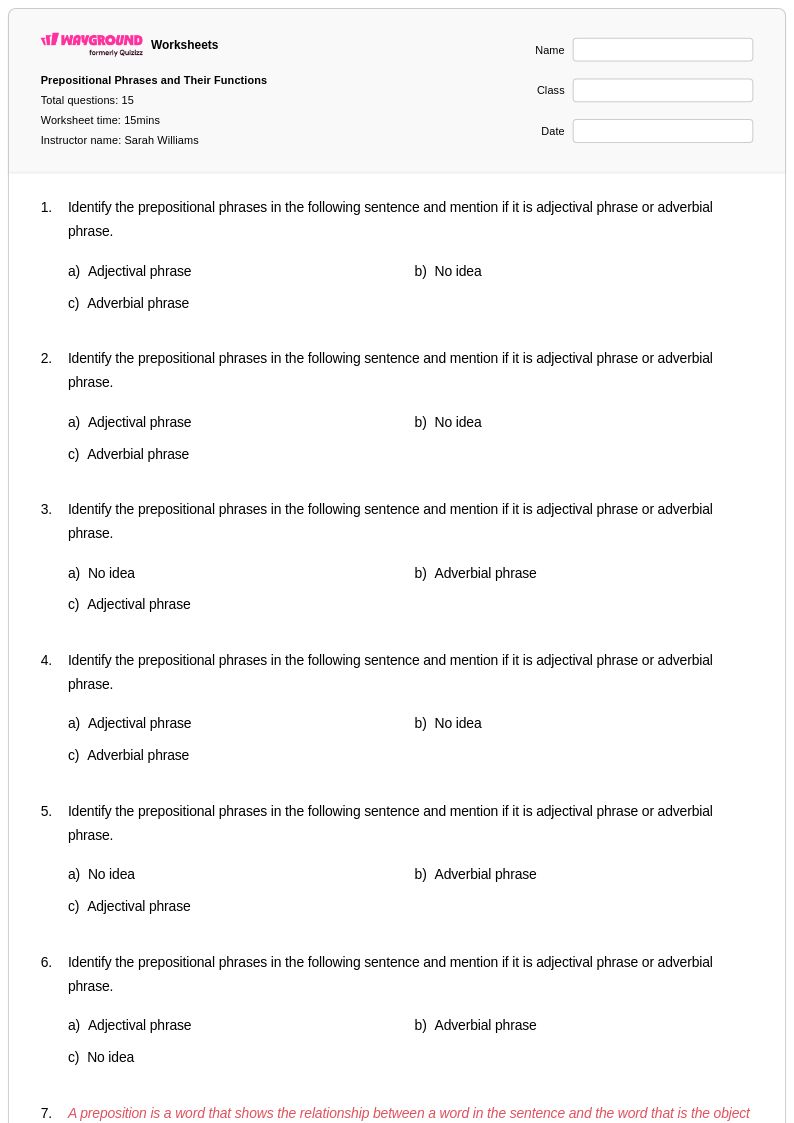
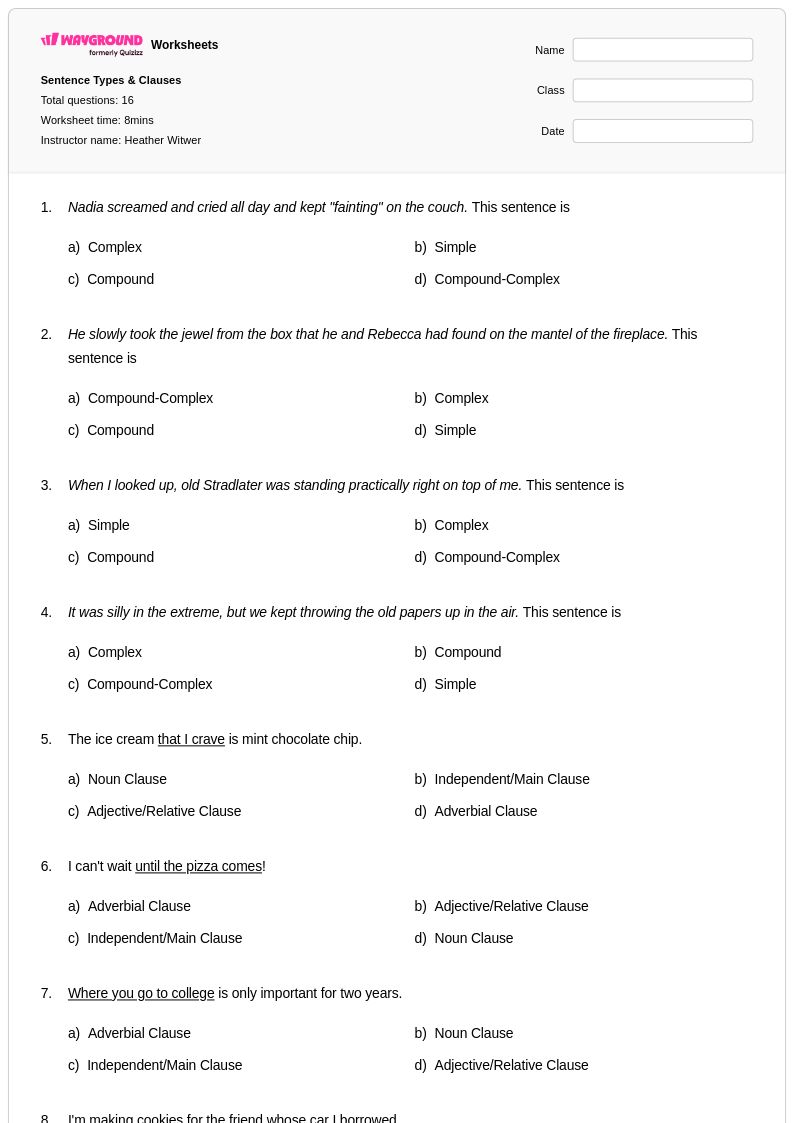
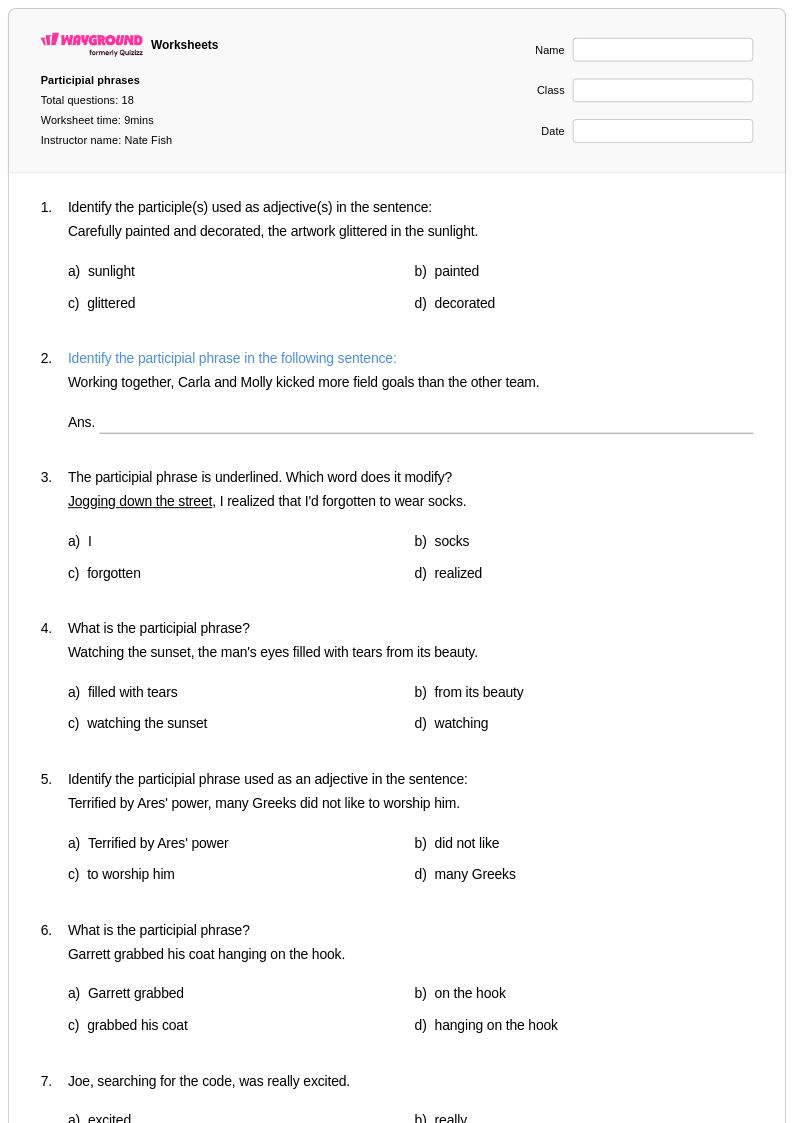
Adverbial phrases represent a crucial component of advanced grammar study for Class 11 students, serving as sophisticated tools that add depth, precision, and complexity to written expression. Wayground's comprehensive collection of adverbial phrase worksheets provides students with targeted practice in identifying, constructing, and effectively implementing these grammatical structures across various sentence types and contexts. These carefully crafted resources strengthen students' ability to recognize prepositional phrases, infinitive phrases, and participial phrases functioning as adverbs, while developing their skills in sentence analysis and sophisticated writing techniques. The worksheets include detailed answer keys and are available as free printable PDFs, featuring practice problems that range from basic identification exercises to complex sentence revision tasks that challenge students to manipulate adverbial phrases for enhanced clarity and style.
Wayground's extensive platform, formerly known as Quizizz, empowers educators with millions of teacher-created adverbial phrase resources that support comprehensive grammar instruction at the Class 11 level. The platform's robust search and filtering capabilities allow teachers to quickly locate materials aligned with specific curriculum standards, while differentiation tools enable customization for varied learning needs and abilities. These versatile worksheet collections are available in both printable and digital formats, including downloadable PDFs, making them ideal for classroom instruction, homework assignments, remediation sessions, and enrichment activities. Teachers can seamlessly integrate these resources into their lesson planning to provide systematic skill practice, assess student understanding of complex grammatical concepts, and support students in developing the sophisticated writing abilities essential for college-level academic success.
FAQs
How do I teach adverbial phrases to students?
Start by grounding students in the concept that adverbial phrases function like single adverbs, answering questions such as when, where, how, why, or to what extent. Introduce each phrase type separately: prepositional phrases first, then infinitive and participial phrases that function adverbially, since students tend to encounter prepositional phrases most frequently. Use sentence-level examples before moving to paragraph-level analysis so students can isolate the phrase's role before encountering it in richer context. Anchor instruction in authentic writing tasks so students practice not just identifying adverbial phrases but constructing and using them deliberately.
What exercises help students practice identifying and using adverbial phrases?
Identification exercises that ask students to underline adverbial phrases and label what question they answer (when, where, how, why) build foundational recognition skills. Sentence construction tasks that require students to expand a bare clause by adding an adverbial phrase push practice from passive recognition to active application. Sentence combining and sentence revision activities are particularly effective because they show students how adverbial phrases change the meaning and specificity of a sentence. Progressing from these structured exercises to editing their own writing helps transfer the skill to authentic contexts.
What mistakes do students commonly make with adverbial phrases?
The most common error is confusing adverbial phrases with adjectival phrases, especially prepositional phrases that follow a noun — students often misread these as modifying the action rather than the noun. Students also frequently misplace adverbial phrases, attaching them to the wrong clause and creating ambiguity or unintended meaning. With infinitive phrases, students sometimes mistake the infinitive phrase for the sentence's main verb rather than recognizing it as a modifier. Explicitly teaching placement rules and having students test phrase placement in multiple positions in a sentence helps address both confusion types.
How can I differentiate adverbial phrase instruction for students at different skill levels?
For foundational learners, limit initial practice to prepositional phrases functioning adverbially before introducing infinitive and participial phrase types, and use shorter, simpler sentences so the grammatical structure is easier to isolate. For advanced students, assign tasks that require them to analyze how adverbial phrase placement shifts emphasis or changes sentence rhythm. On Wayground, teachers can apply reduced answer choices for students who need less cognitive load and adjust extended time settings per student, so all learners engage with the same core material at an appropriate challenge level.
How do I use Wayground's adverbial phrase worksheets in my classroom?
Wayground's adverbial phrase worksheets are available as printable PDFs for traditional classroom use and in digital formats for technology-integrated or remote learning environments. Each worksheet includes a complete answer key, so teachers can assign identification and sentence construction exercises as independent practice, homework, or small-group work without additional preparation. Teachers can also host worksheets as a quiz directly on Wayground, making it straightforward to assign digital assessments and review student responses in one place.
How do adverbial phrases differ from adverbs, and why does the distinction matter for writing instruction?
A single adverb modifies a verb, adjective, or another adverb with one word, while an adverbial phrase accomplishes the same modification using a group of words without a subject-verb pair. The distinction matters in writing instruction because adverbial phrases give students a far greater range of specificity and nuance than single adverbs allow — compare 'she spoke quietly' with 'she spoke in a voice barely above a whisper.' Teaching students to recognize and use adverbial phrases moves their writing from functional to precise, which is why grammar standards at the middle and high school level explicitly address phrase-level modification.