Enhance Class 7 students' understanding of allusions with our comprehensive collection of free worksheets, printables, and practice problems that include detailed answer keys to strengthen literary analysis skills.
Explore printable Allusions worksheets for Class 7
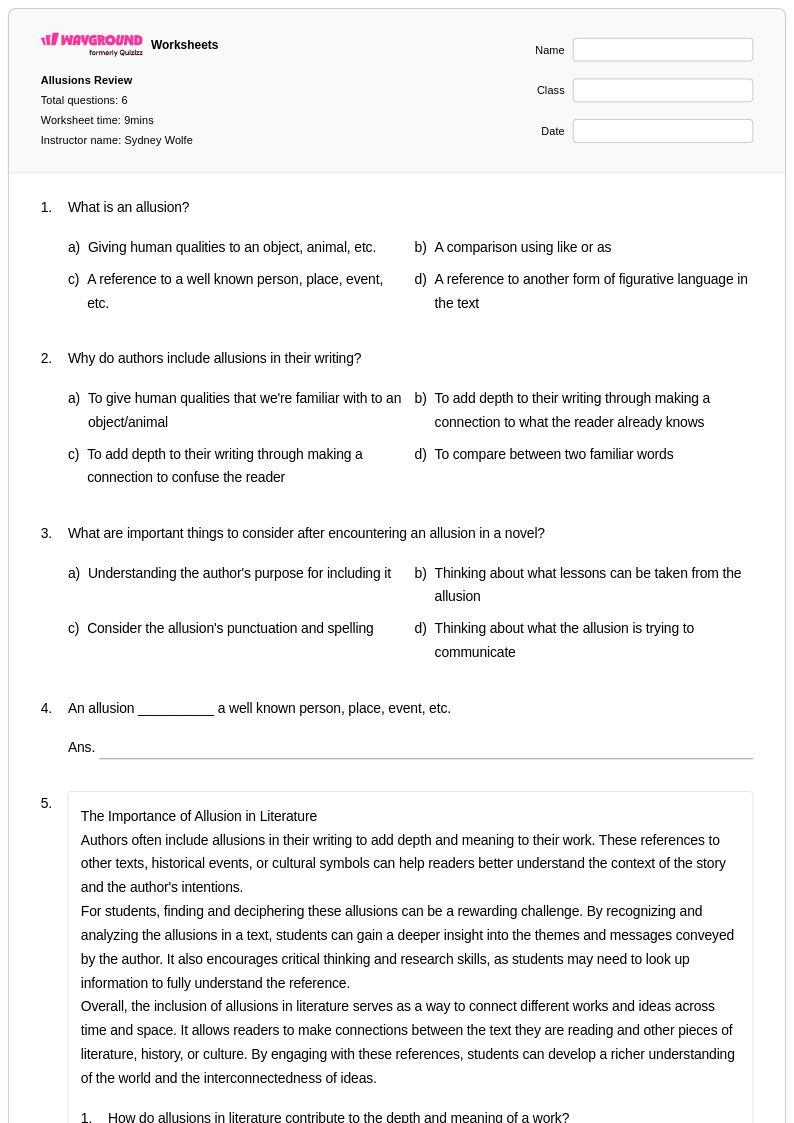
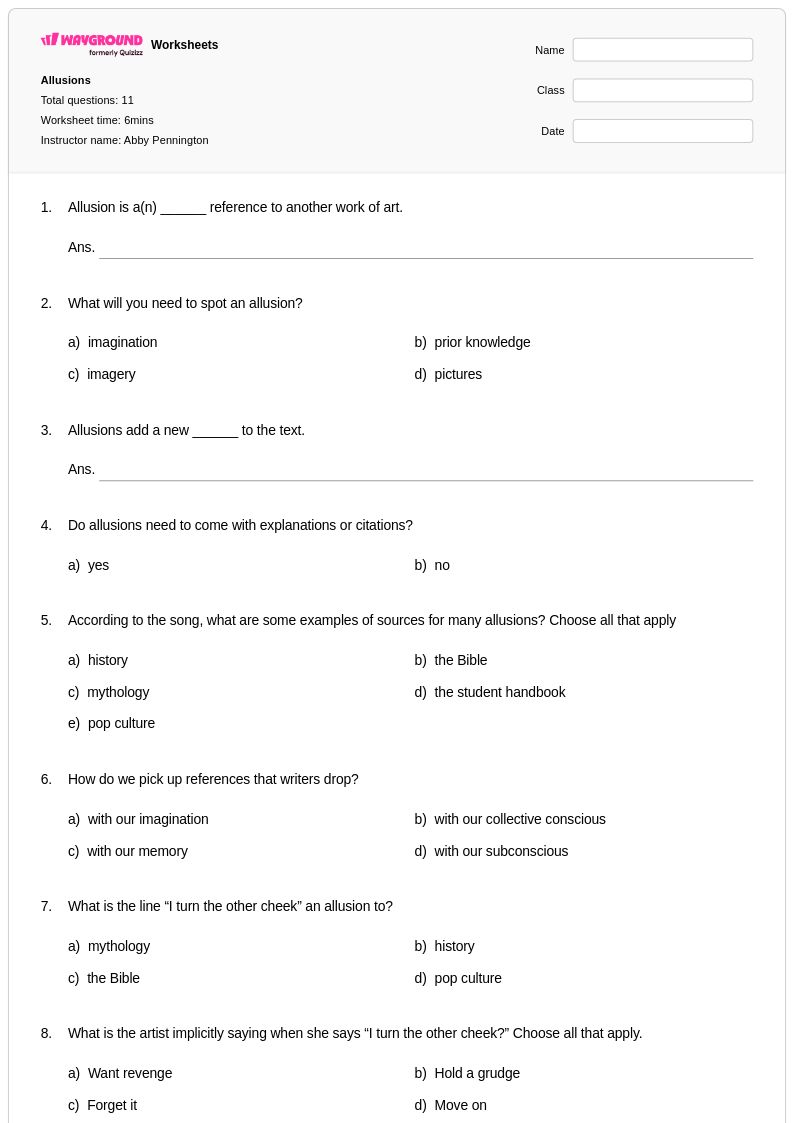
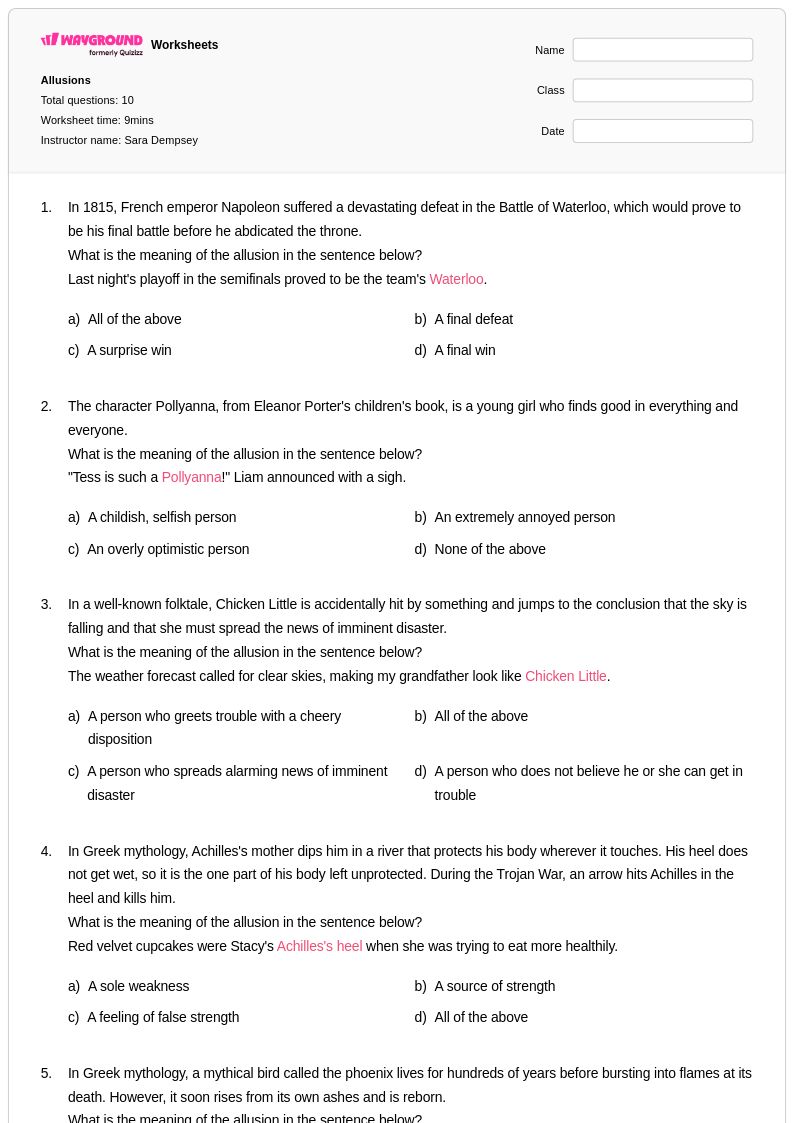
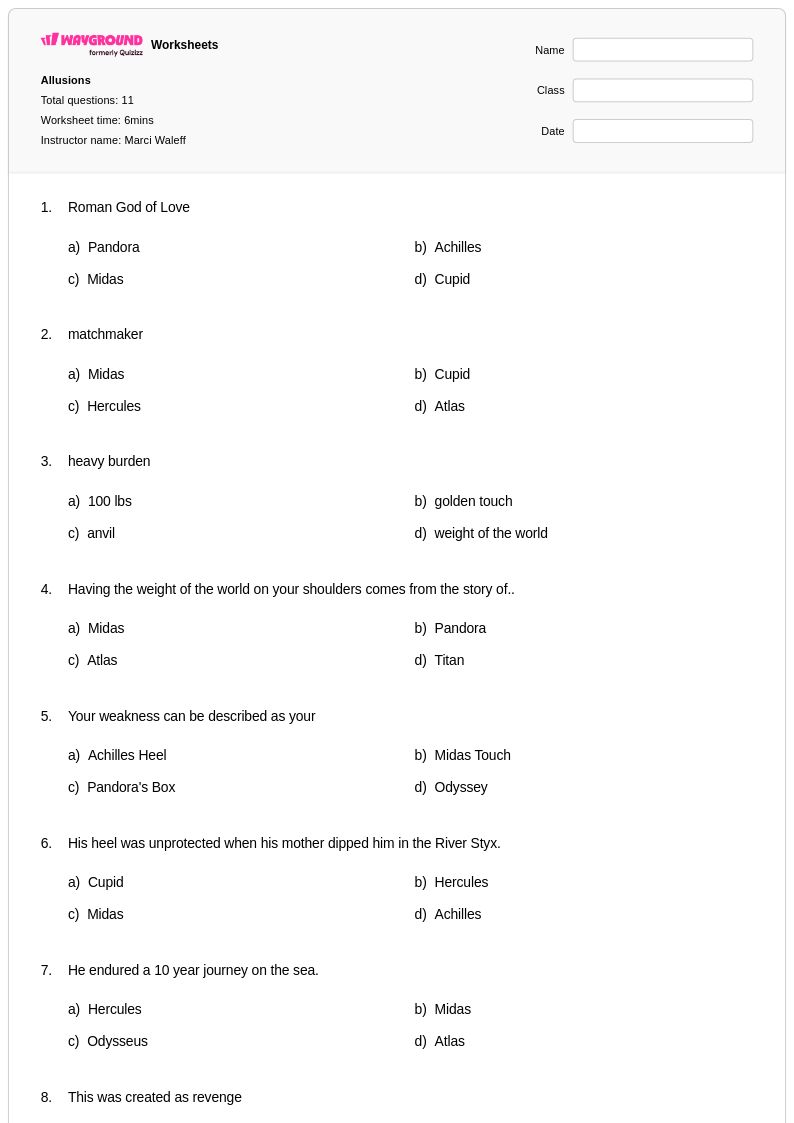
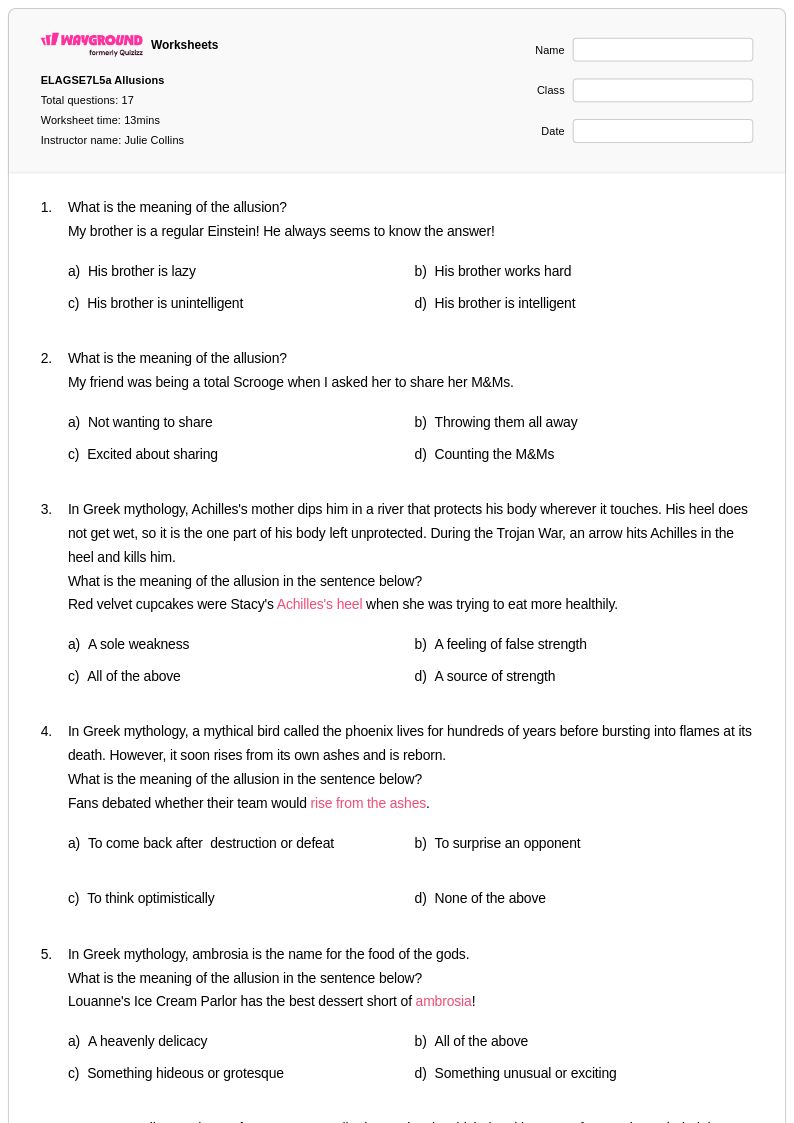
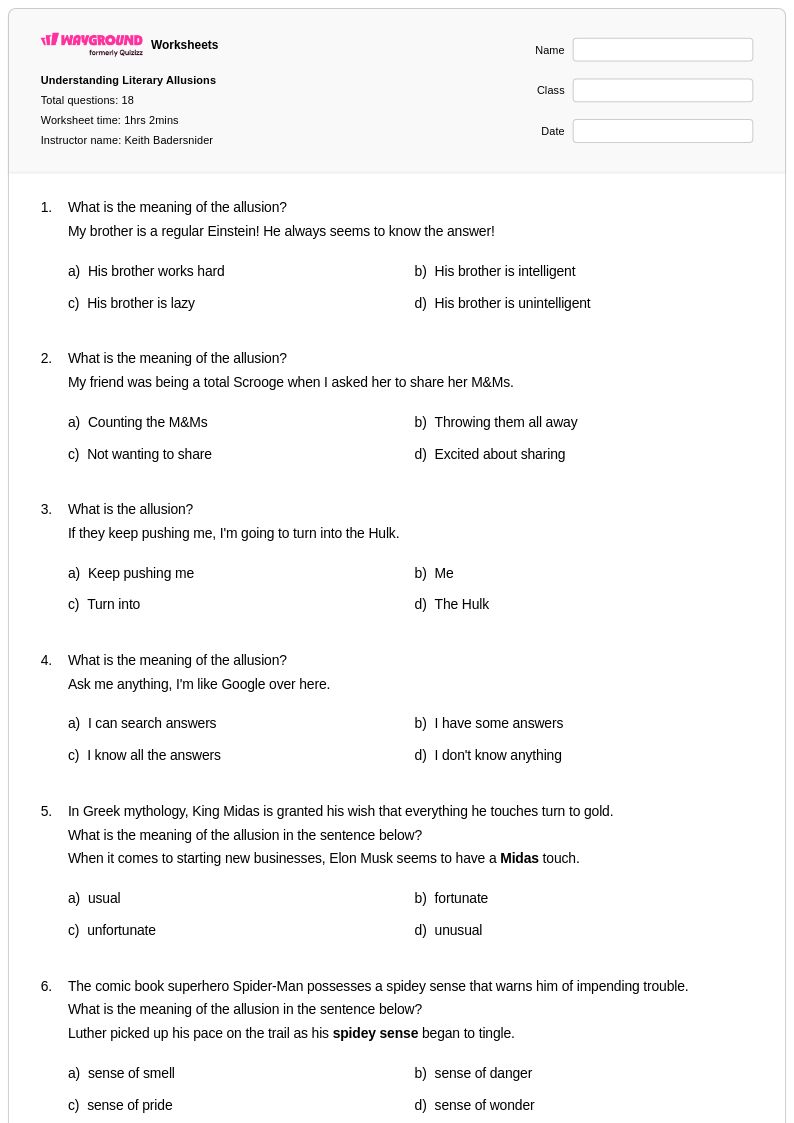
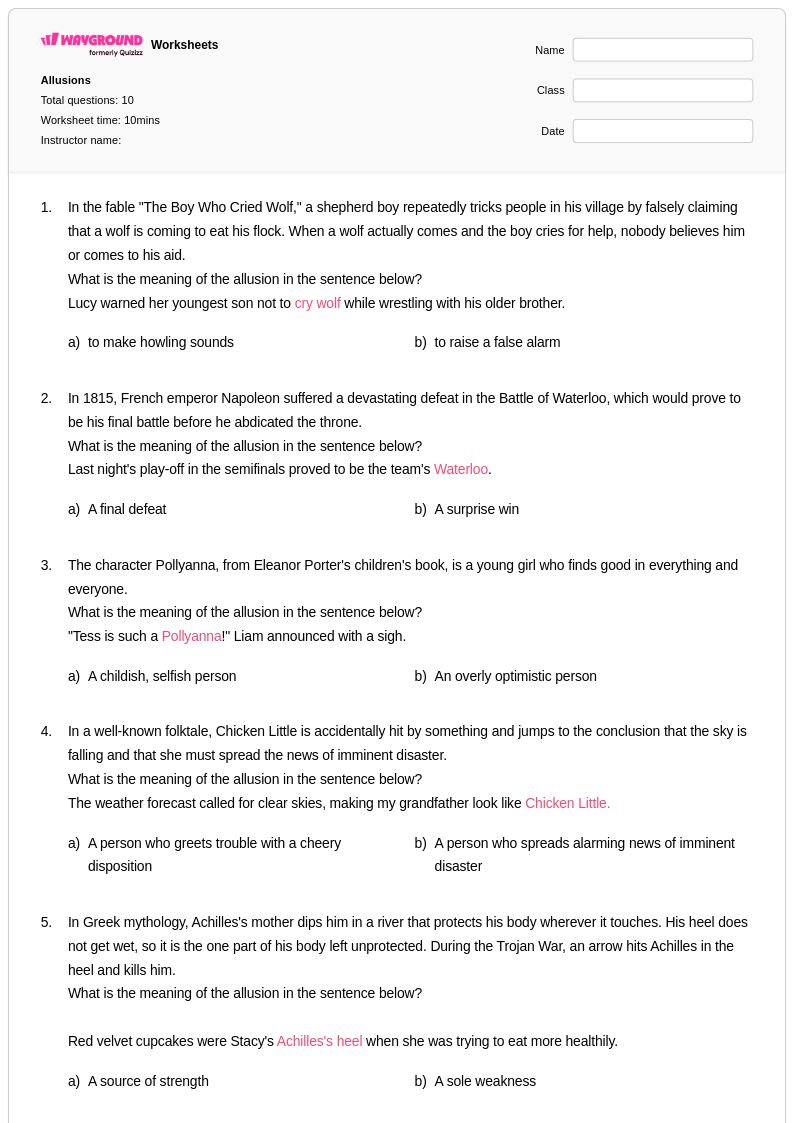
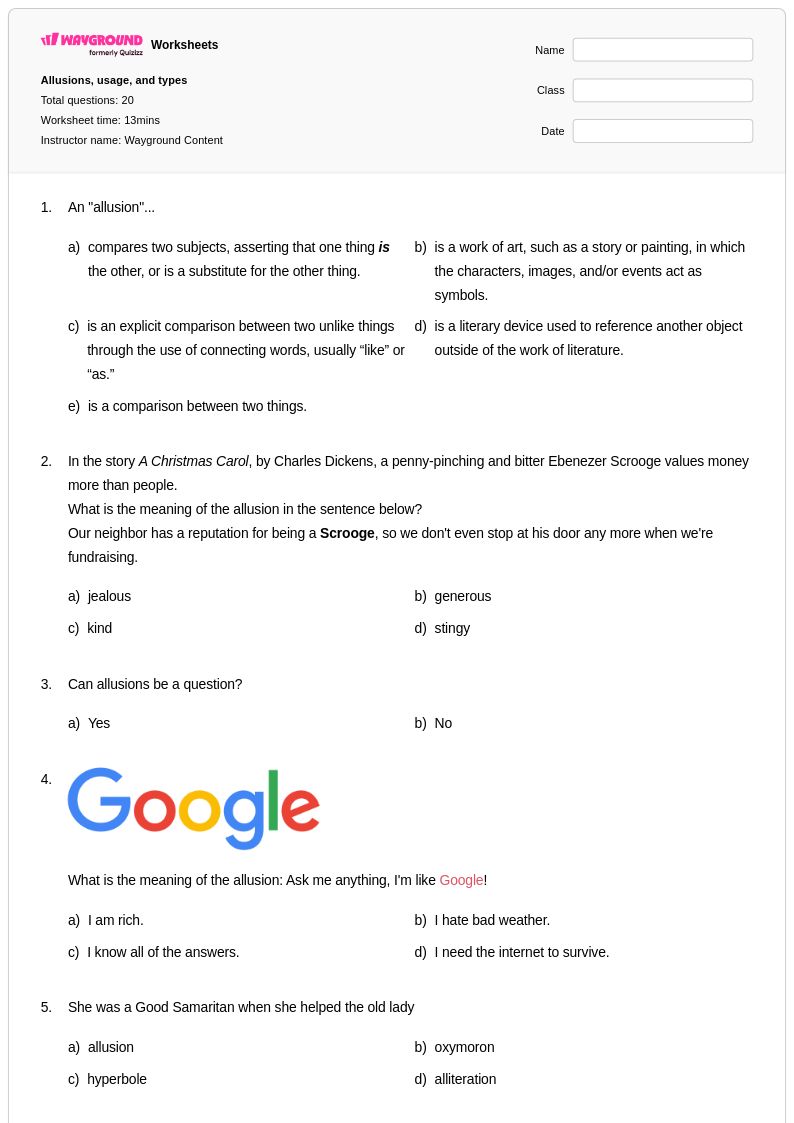
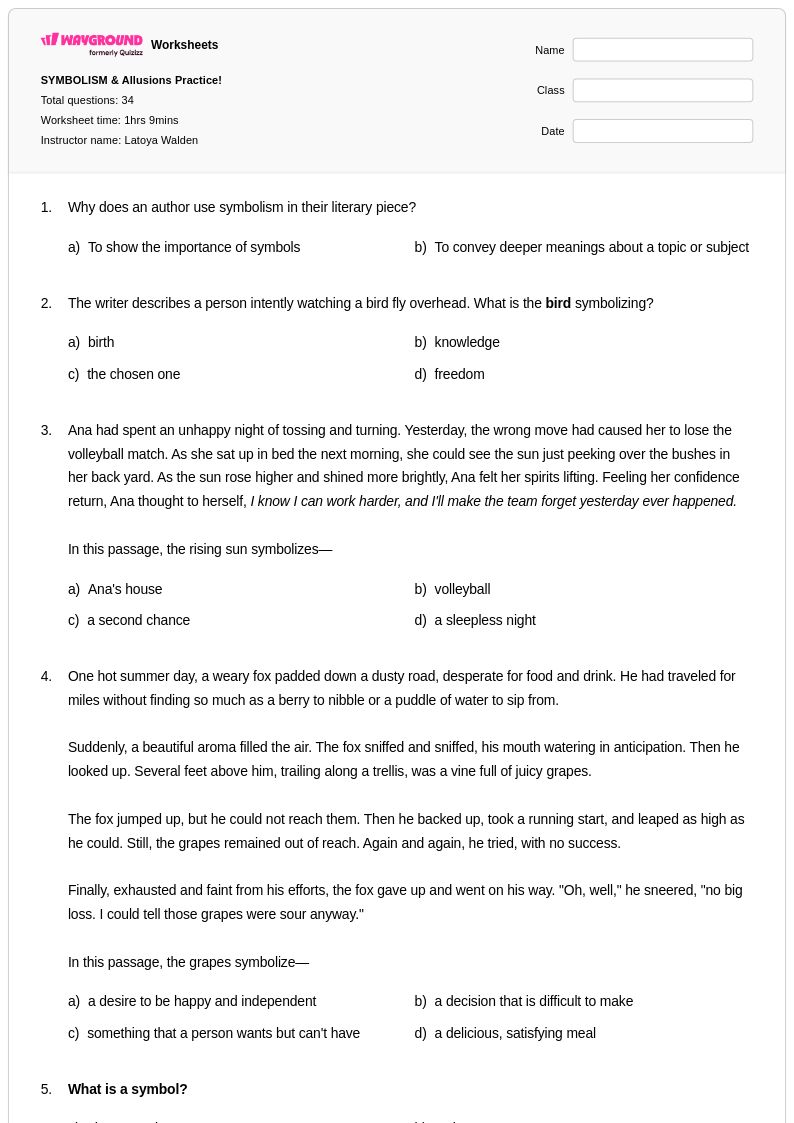
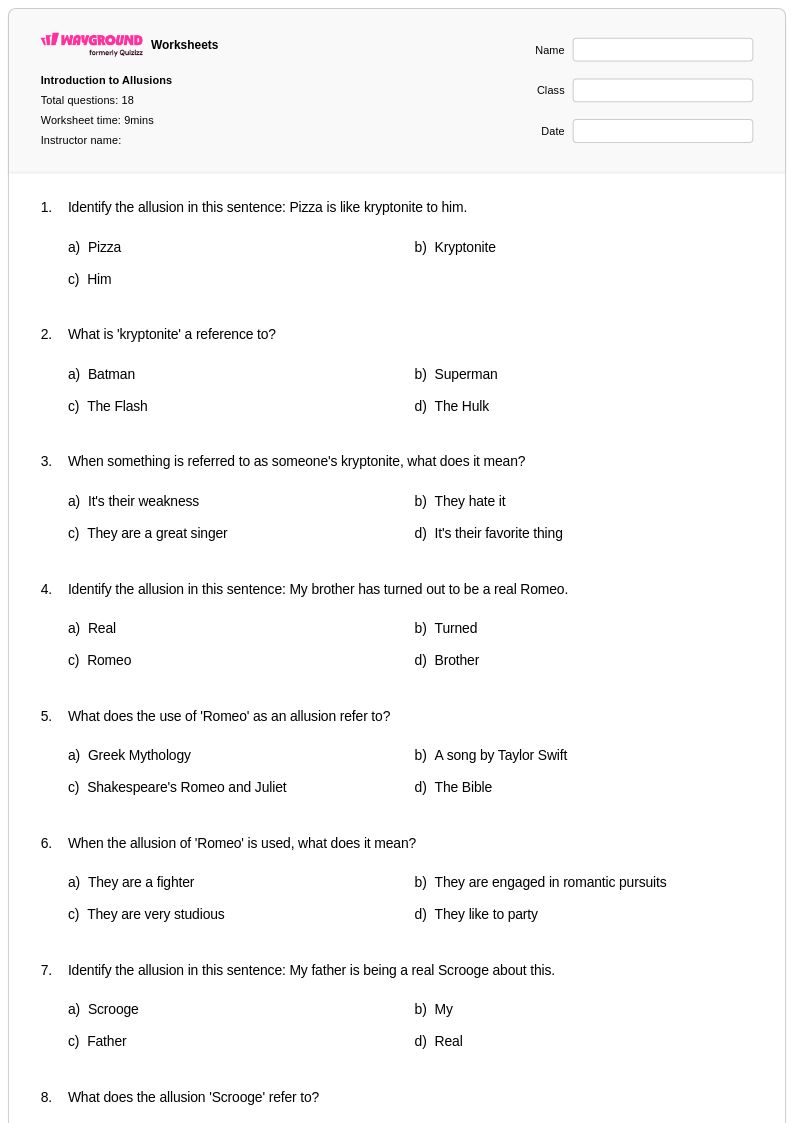
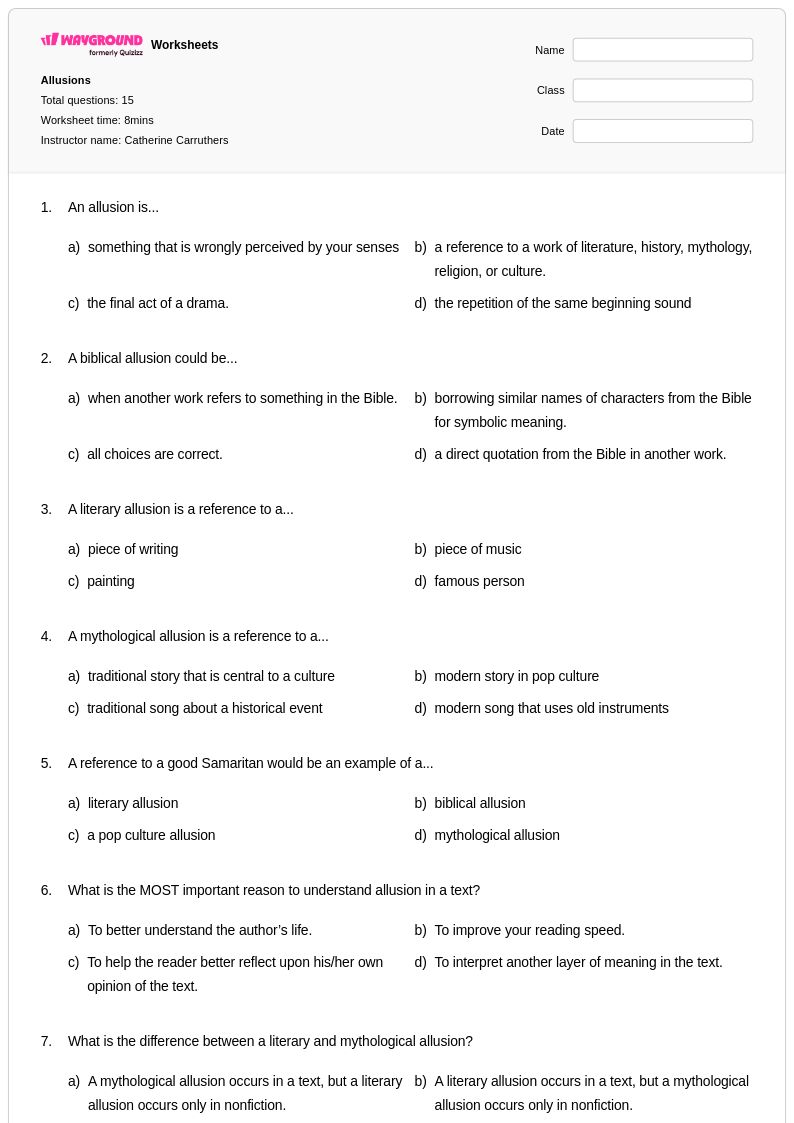
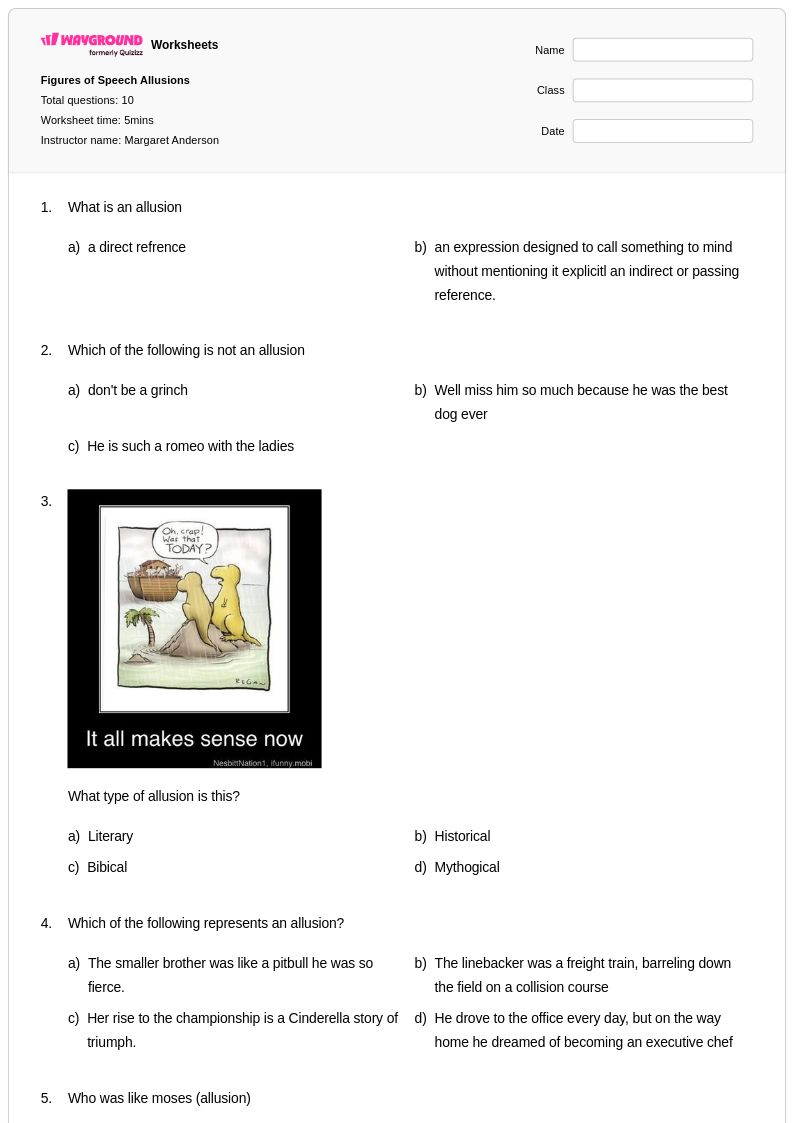
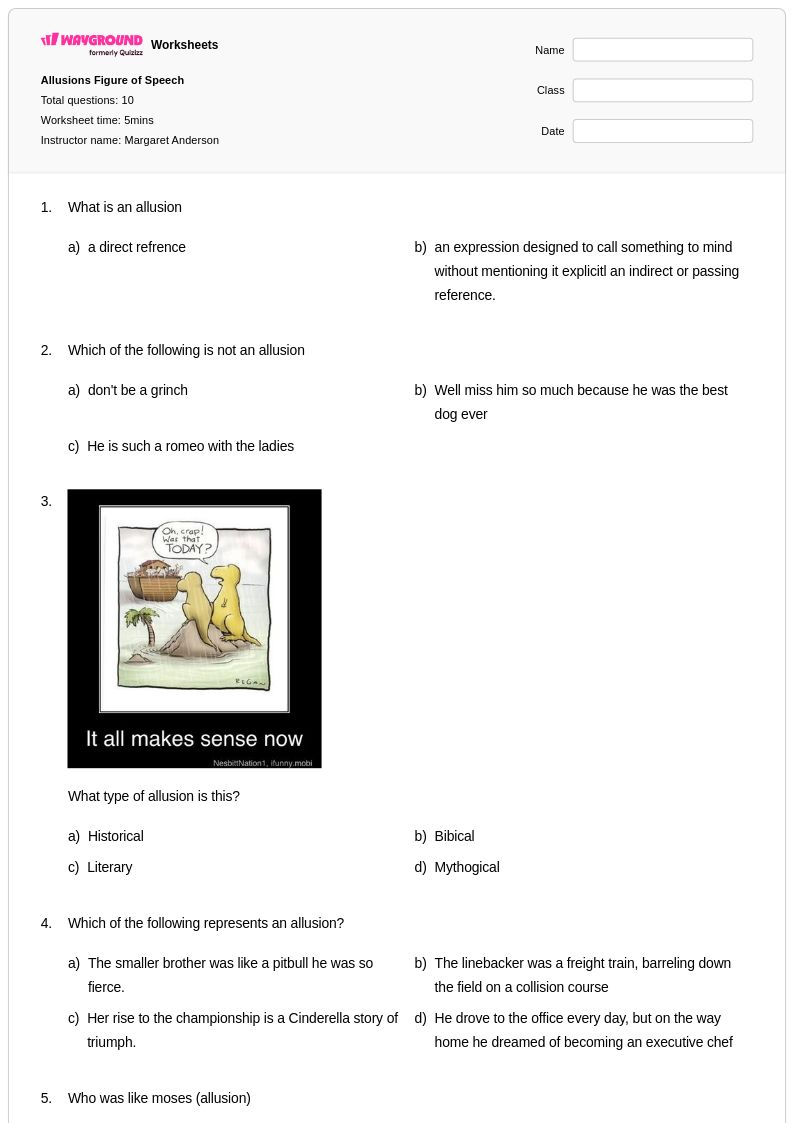
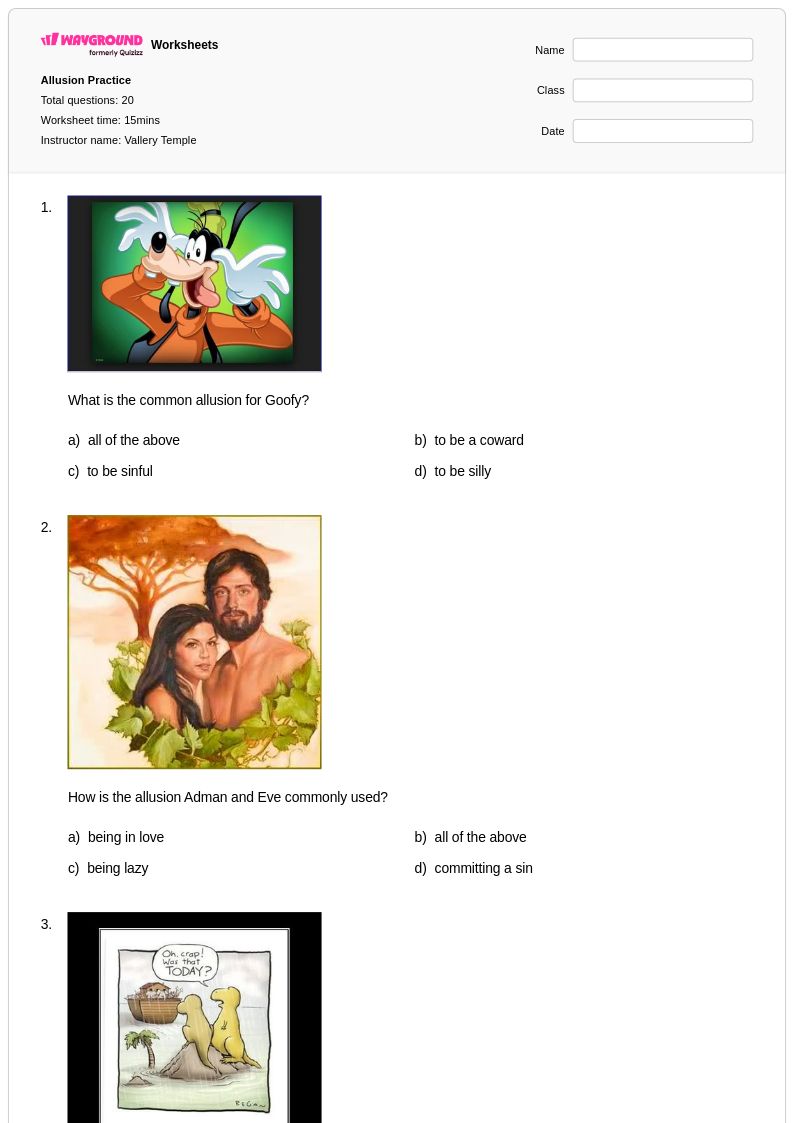
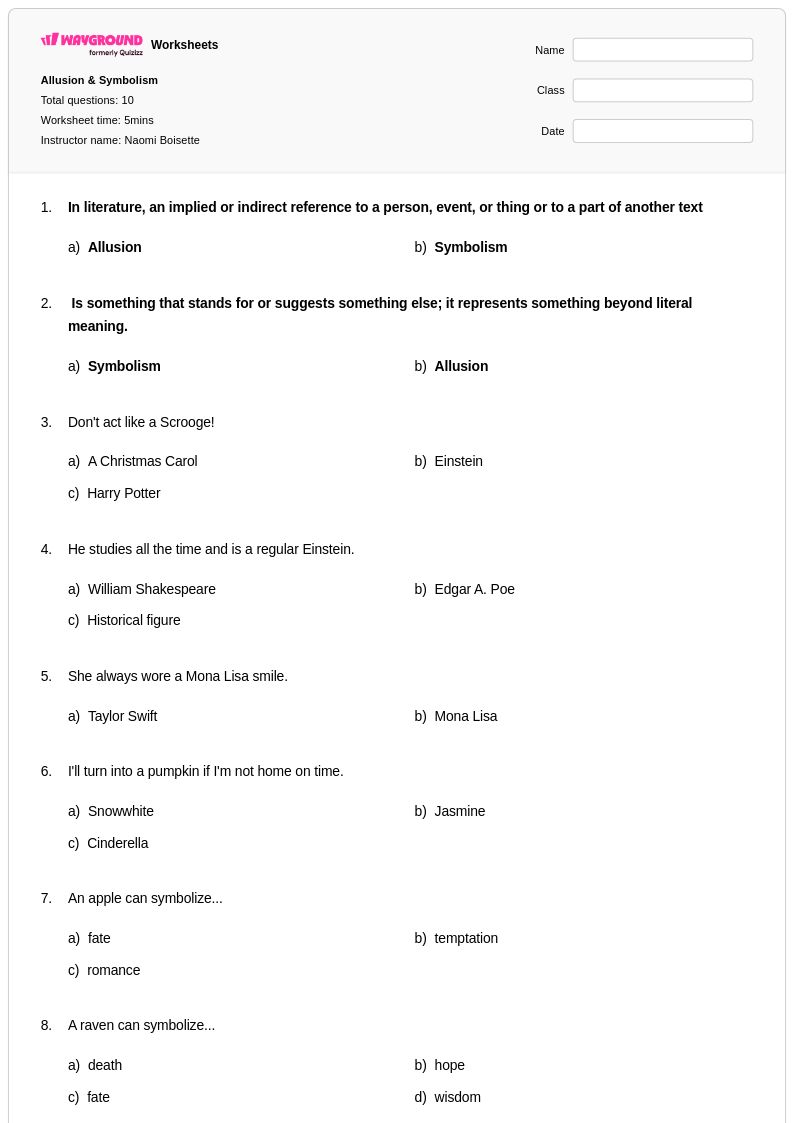
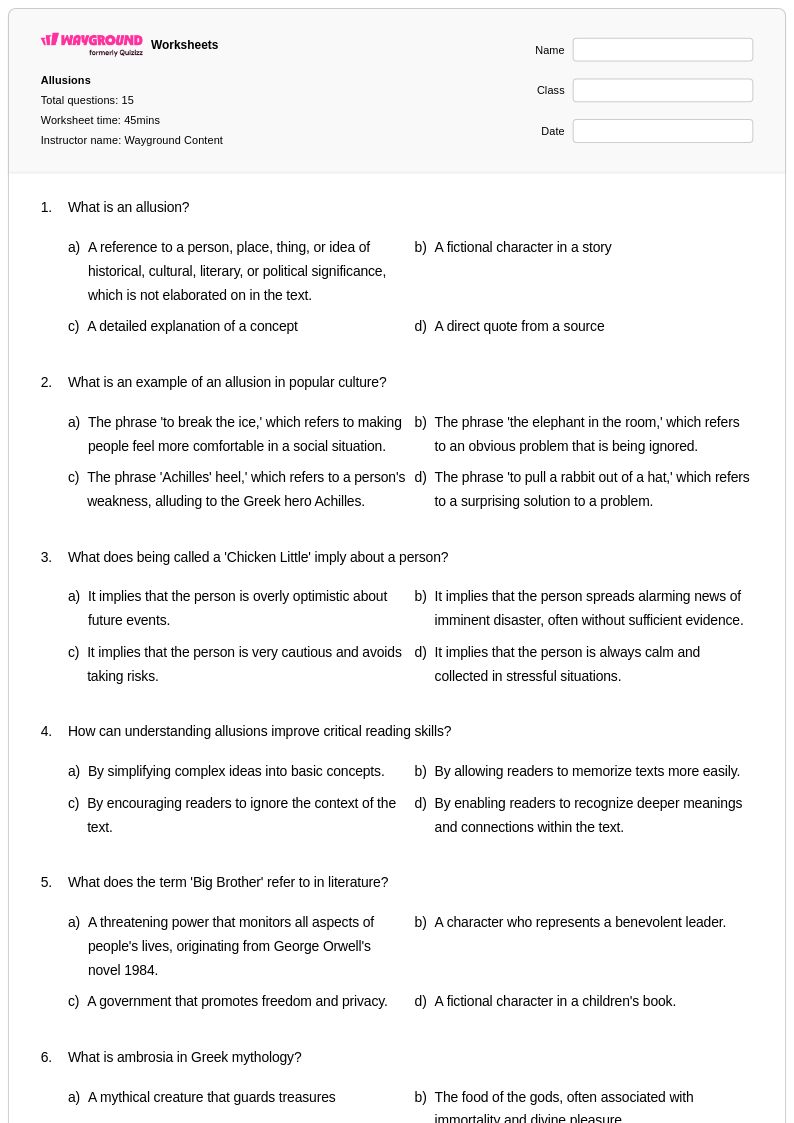
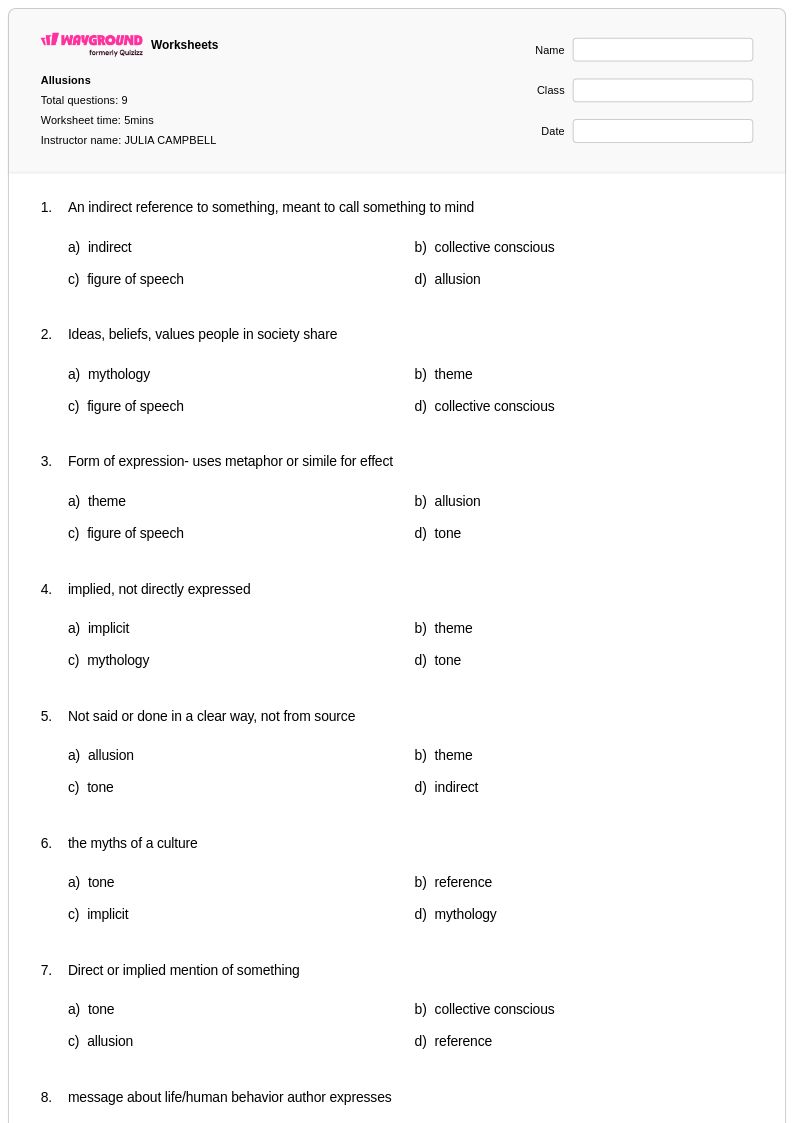
Allusions worksheets for Class 7 students through Wayground (formerly Quizizz) provide comprehensive practice in identifying, analyzing, and interpreting literary references that authors use to enhance meaning in their texts. These expertly crafted resources help seventh-grade students develop critical reading skills by teaching them to recognize references to mythology, history, literature, religion, and popular culture within various texts. Students work through engaging practice problems that challenge them to decode allusive language, understand how authors use these literary devices to create deeper connections with readers, and analyze the impact of allusions on a text's overall meaning. Each worksheet includes detailed answer keys that guide students through the reasoning process, while the free printable format ensures easy classroom distribution and individual study sessions.
Wayground's extensive collection of allusions worksheets draws from millions of teacher-created resources, offering educators powerful search and filtering capabilities to locate materials perfectly suited to their Class 7 curriculum needs and standards alignment requirements. Teachers can customize these digital and printable pdf resources to match diverse learning styles and ability levels, using built-in differentiation tools to provide appropriate challenge levels for all students. The platform's flexible format options support various instructional approaches, from whole-class lessons to targeted remediation sessions, while comprehensive filtering systems help educators quickly identify worksheets that address specific aspects of allusion recognition and analysis. This robust resource library enables teachers to seamlessly integrate allusion practice into their lesson planning, providing consistent skill-building opportunities that prepare students for more advanced literary analysis in higher grade levels.
FAQs
How do I teach allusions to middle and high school students?
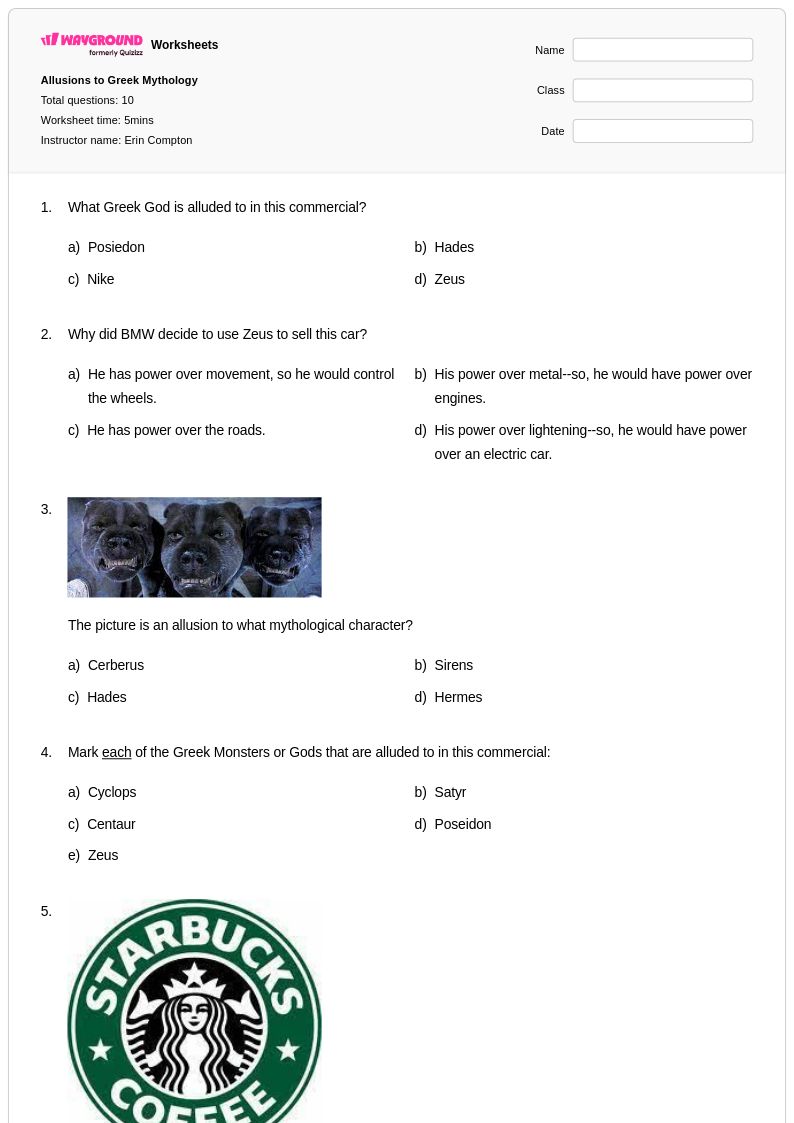
Start by building students' background knowledge base, since recognizing an allusion requires familiarity with the source material being referenced. Introduce common allusion categories — biblical, mythological, historical, and literary — with explicit examples before asking students to identify them independently in texts. A gradual release model works well: model identification with a shared text, then have students practice with guided and independent reading passages. Pairing allusion practice with brief context-building lessons on Greek mythology or key biblical stories gives students the reference points they need to decode unfamiliar allusions on their own.
What exercises help students practice identifying allusions in literature?
Effective practice exercises include close reading passages that embed several allusions from different categories, followed by questions asking students to identify the reference, name the source, and explain how the allusion adds meaning to the text. Sentence-level exercises where students match underlined phrases to their source works build recognition skills before moving to longer passages. Allusion worksheets that provide detailed answer keys explaining the cultural or literary significance of each reference are especially useful, because students learn not just what the correct answer is but why the allusion was used.
What mistakes do students commonly make when analyzing allusions?
The most common error is confusing an allusion with a direct quote or explicit reference — students often miss indirect allusions because they expect an author to name the source outright. A related misconception is treating an allusion as decorative rather than meaningful, leading students to identify it correctly but fail to explain why it deepens the text. Students also frequently misidentify figurative language like metaphors or similes as allusions if they haven't internalized the definition. Targeted practice with passages that require students to both identify and interpret the allusion's purpose helps correct these patterns.
What are the different types of allusions students need to know?
The four main allusion categories tested in K-12 literary analysis are biblical allusions, mythological allusions (most commonly Greco-Roman), historical allusions, and literary allusions to canonical texts. Popular culture allusions also appear frequently in contemporary writing and are increasingly included in ELA curricula. Students need exposure to examples across all categories because the ability to recognize an allusion depends entirely on whether they have prior knowledge of the source, making varied practice across types essential.
How can I use allusion worksheets to support both struggling readers and advanced students?
For struggling readers, allusion worksheets with built-in context clues or brief source summaries reduce the background knowledge barrier and allow students to focus on the analytical skill itself. Advanced students benefit from worksheets that require them to evaluate why a specific allusion was chosen and how it shapes tone, theme, or characterization. On Wayground, teachers can use differentiation tools to customize worksheet difficulty and modify content for diverse learners, and the platform's accommodation settings — including read aloud and reduced answer choices — can be assigned to individual students without disrupting the rest of the class.
How do I use allusion worksheets from Wayground in my classroom?
Wayground allusion worksheets are available as printable PDFs for traditional classroom use and in digital formats for technology-integrated environments, giving teachers flexibility regardless of their classroom setup. Teachers can also host worksheets as a quiz directly on Wayground, which enables real-time tracking of student responses. Each worksheet includes a detailed answer key explaining both the correct responses and the cultural or literary significance behind each allusion, reducing teacher prep time and supporting student self-correction.