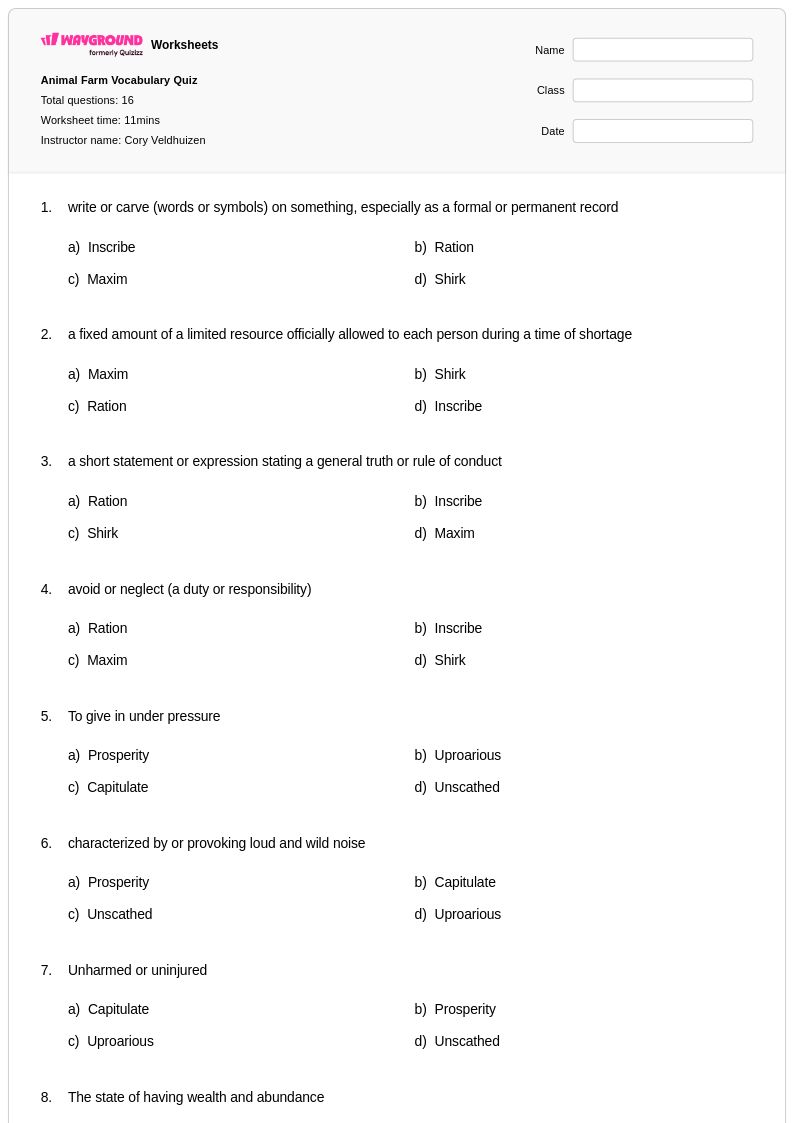
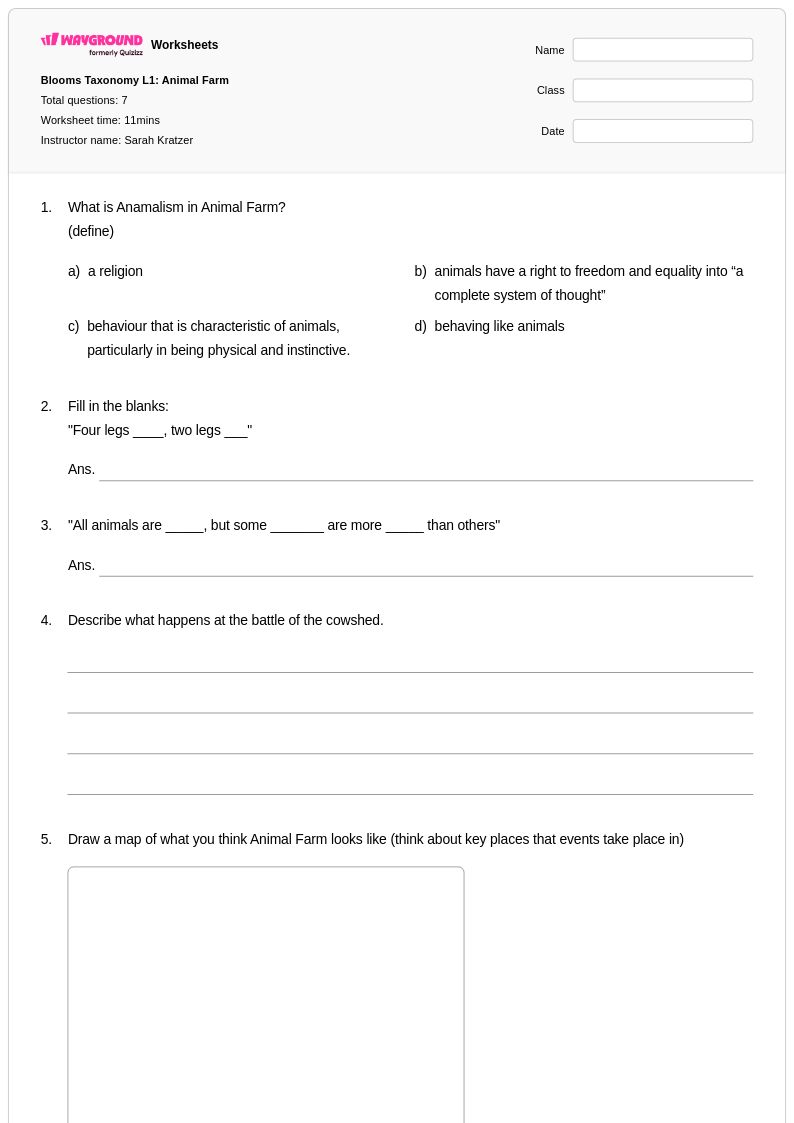
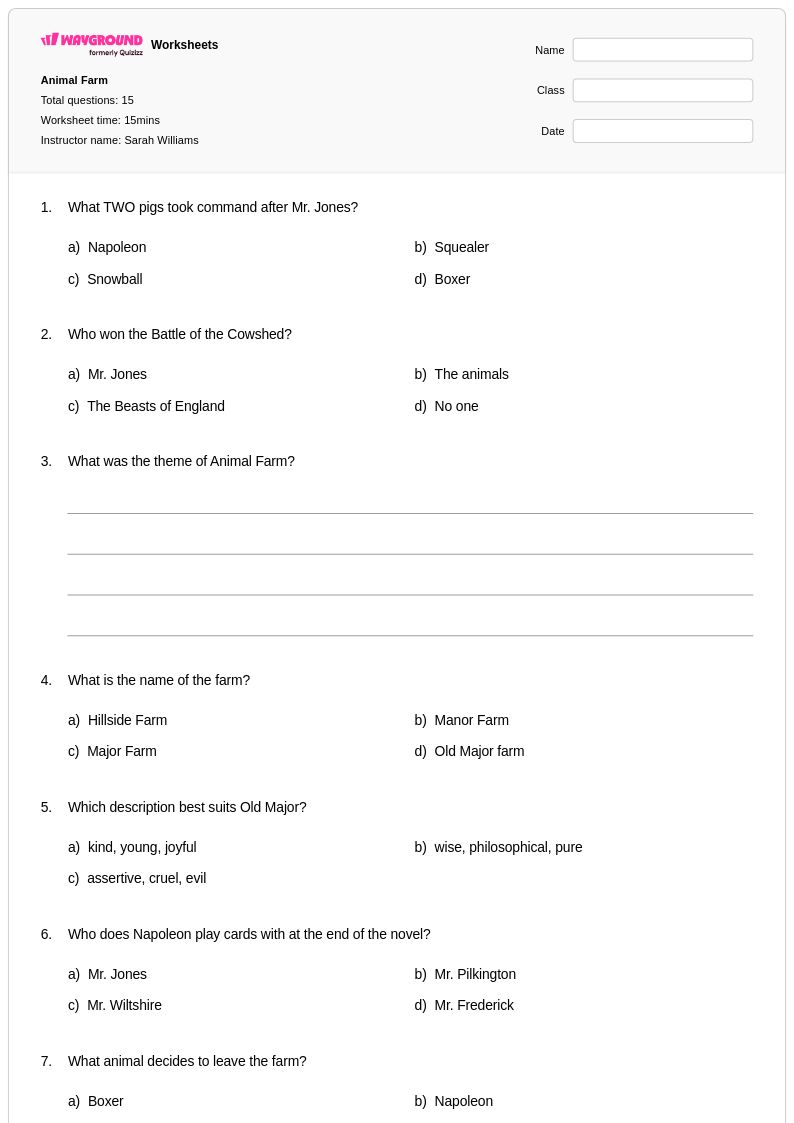
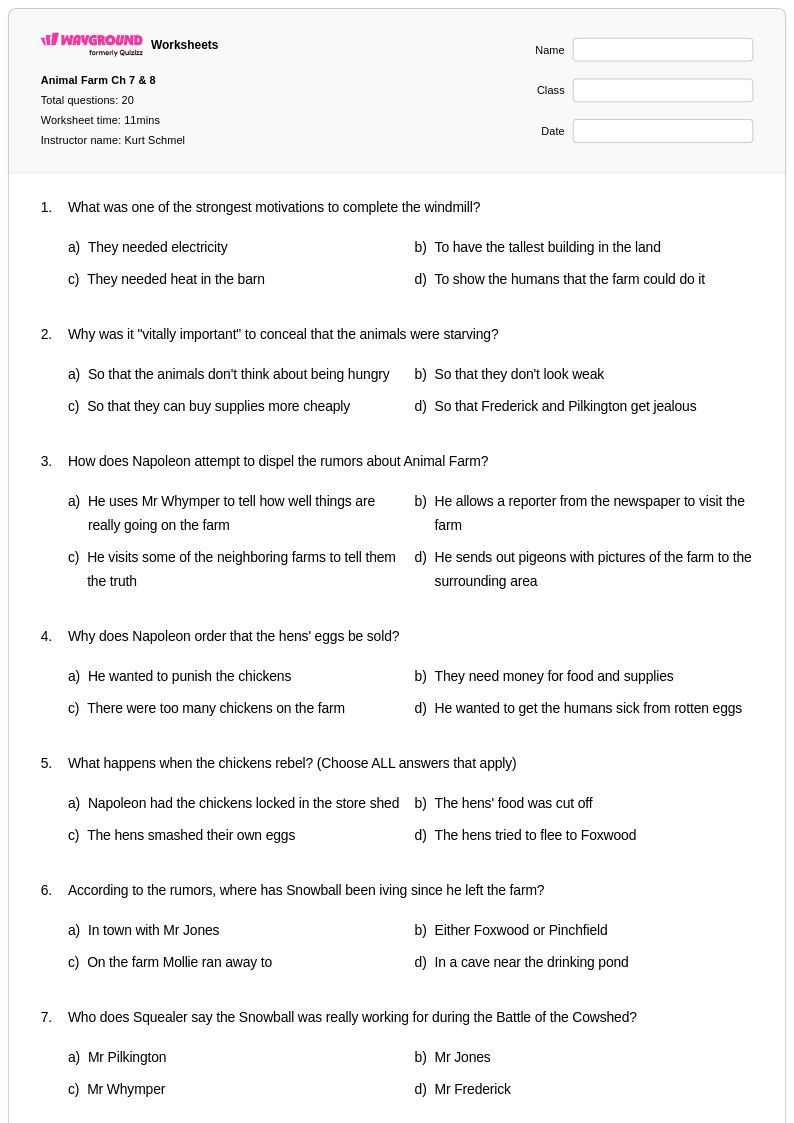
Free Printable Animal Farm Worksheets for Class 10
Explore Class 10 Animal Farm worksheets and printables from Wayground that help students analyze Orwell's classic allegory through engaging practice problems, free PDF activities, and comprehensive answer keys.
Explore printable Animal Farm worksheets for Class 10
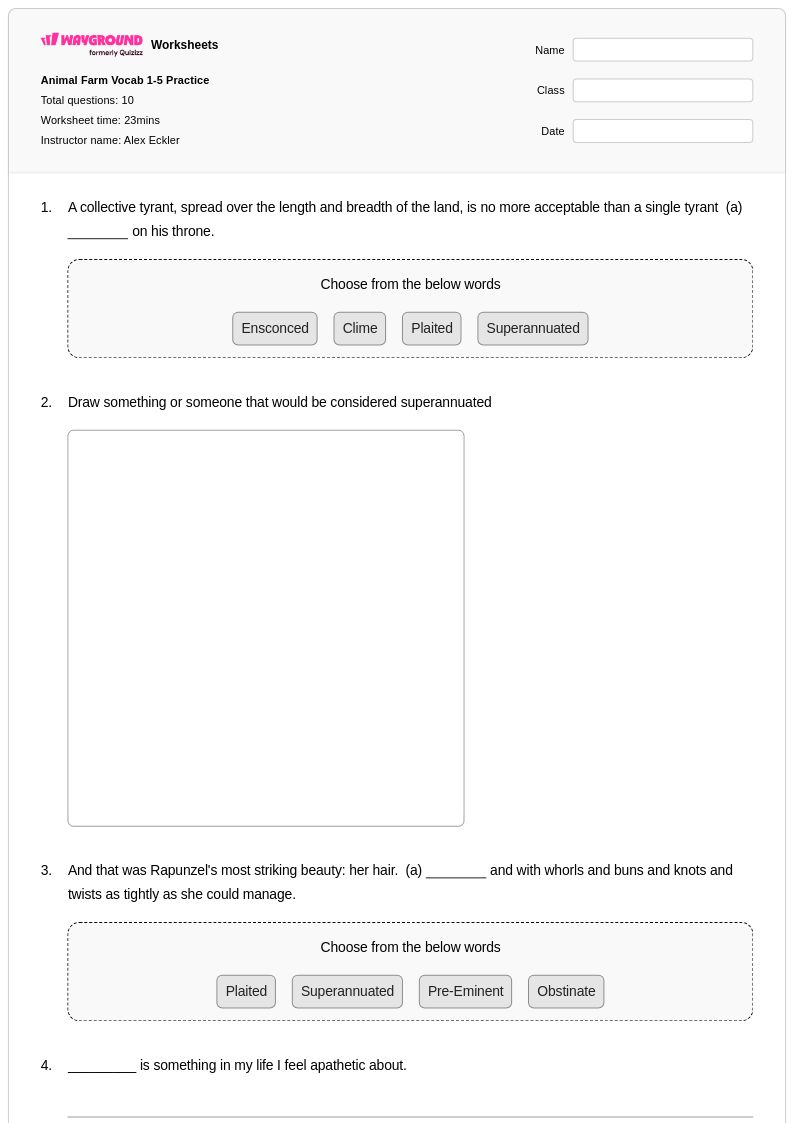
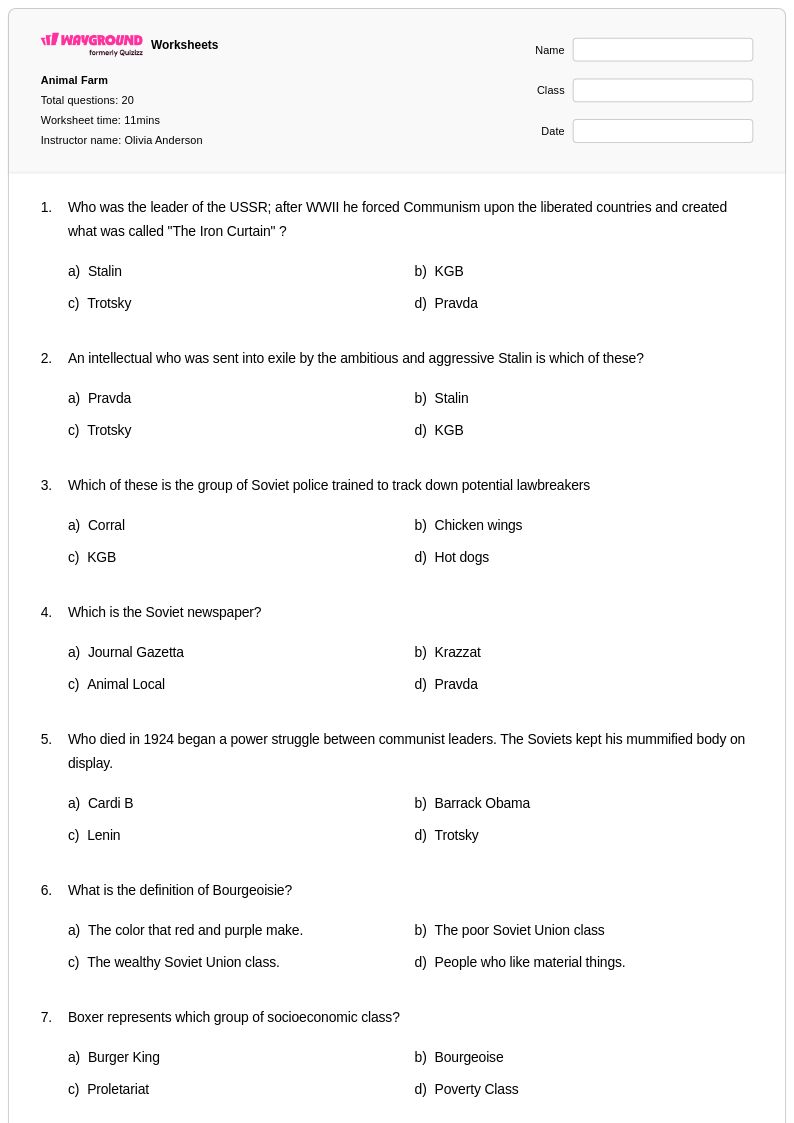
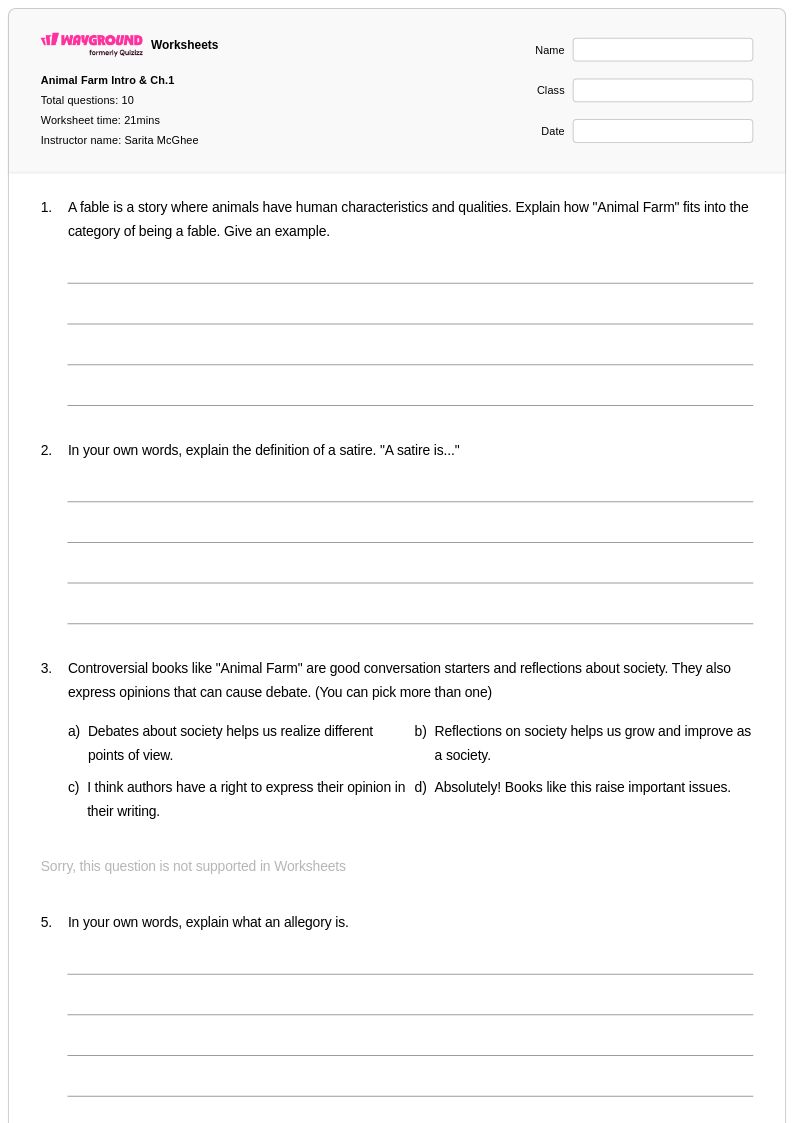
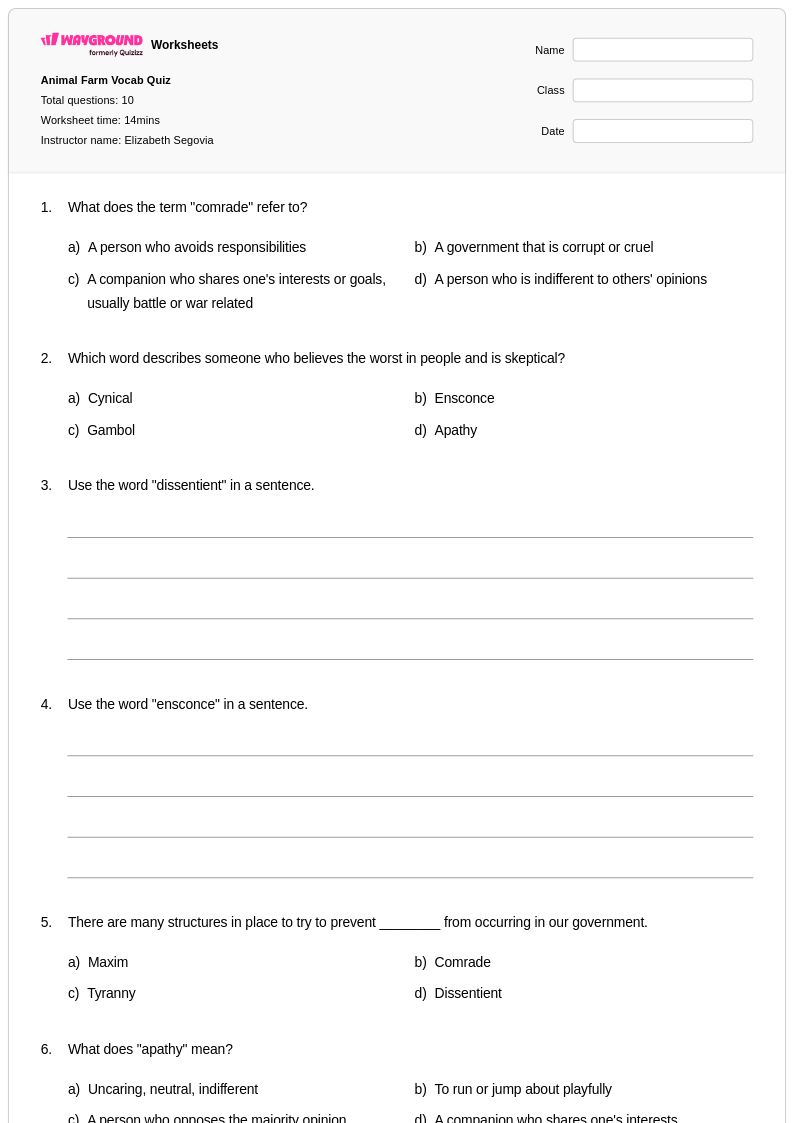
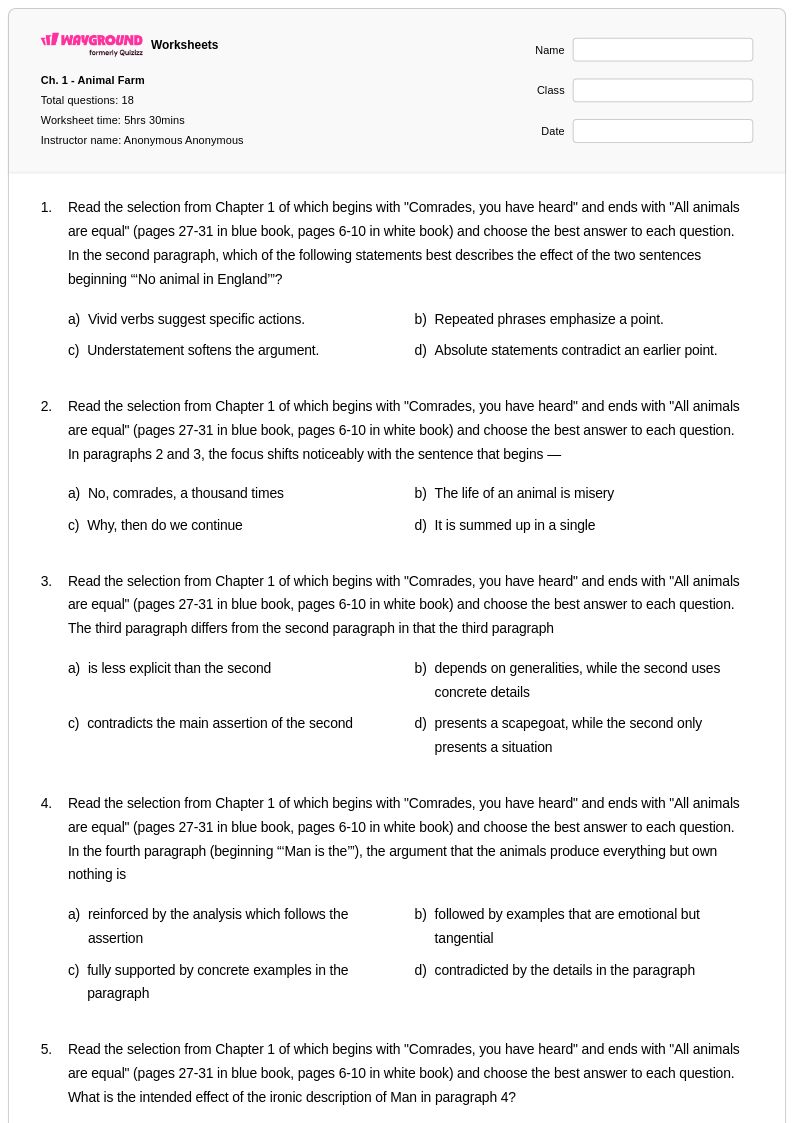
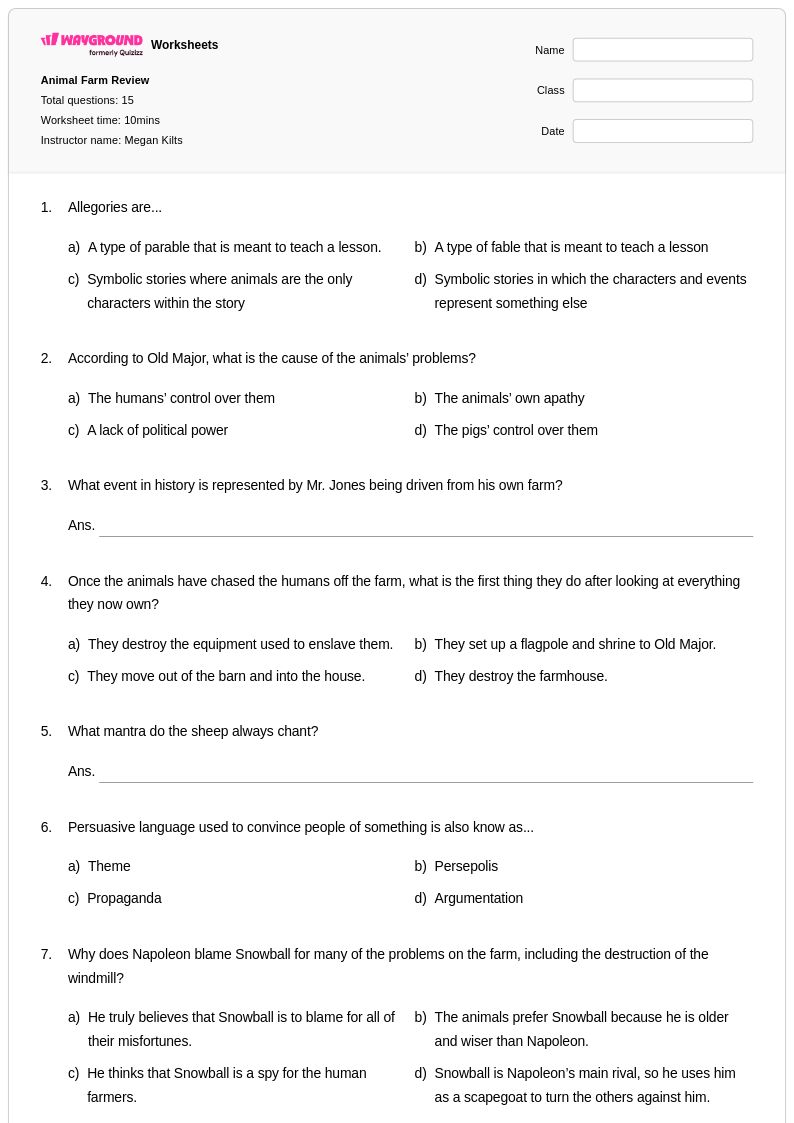
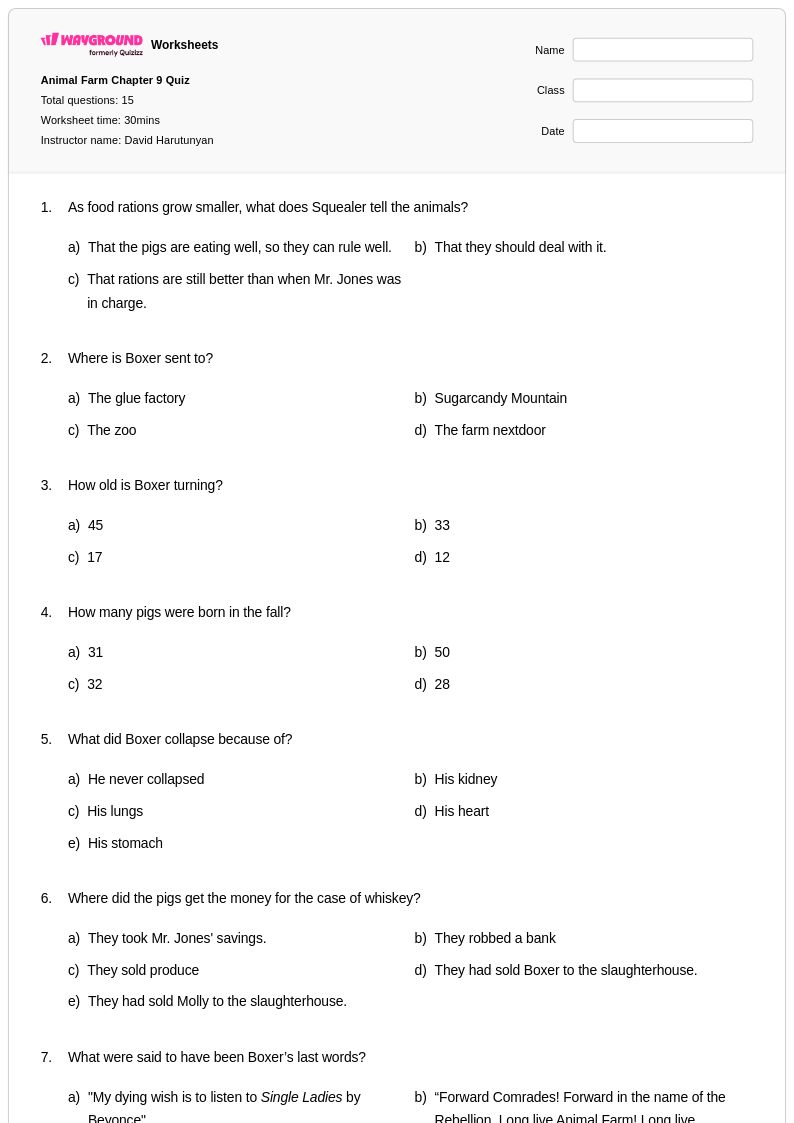
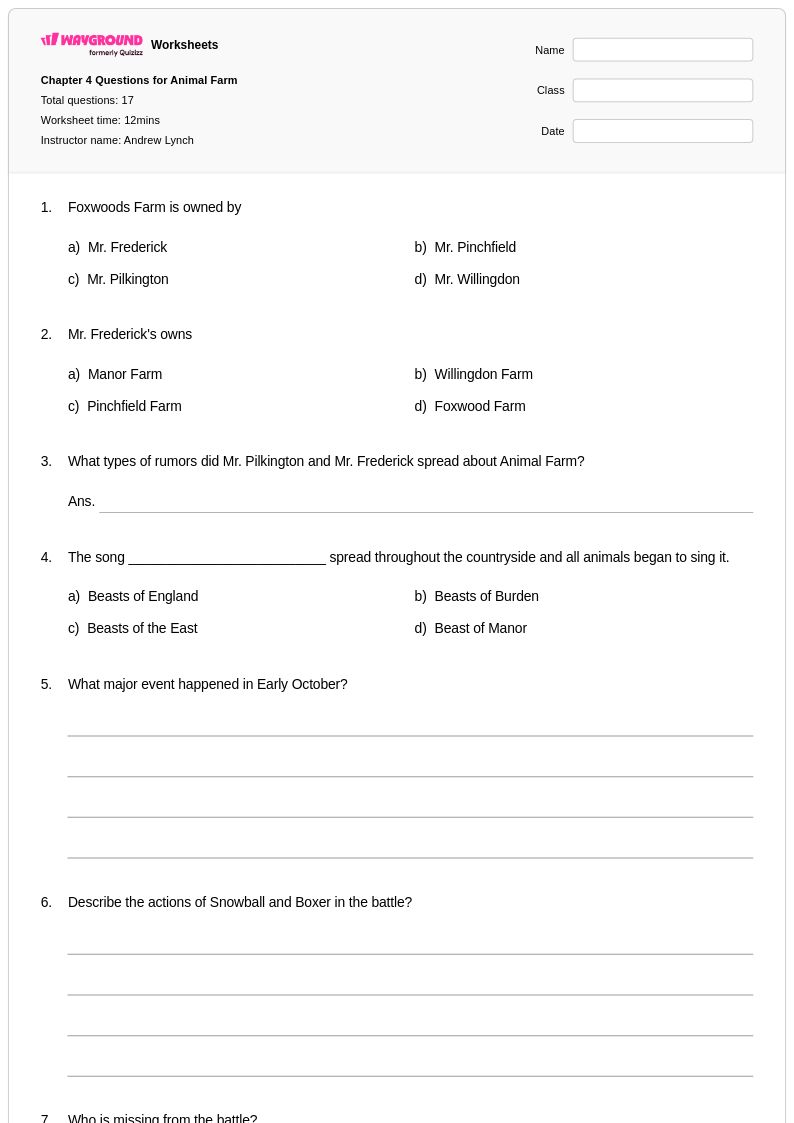
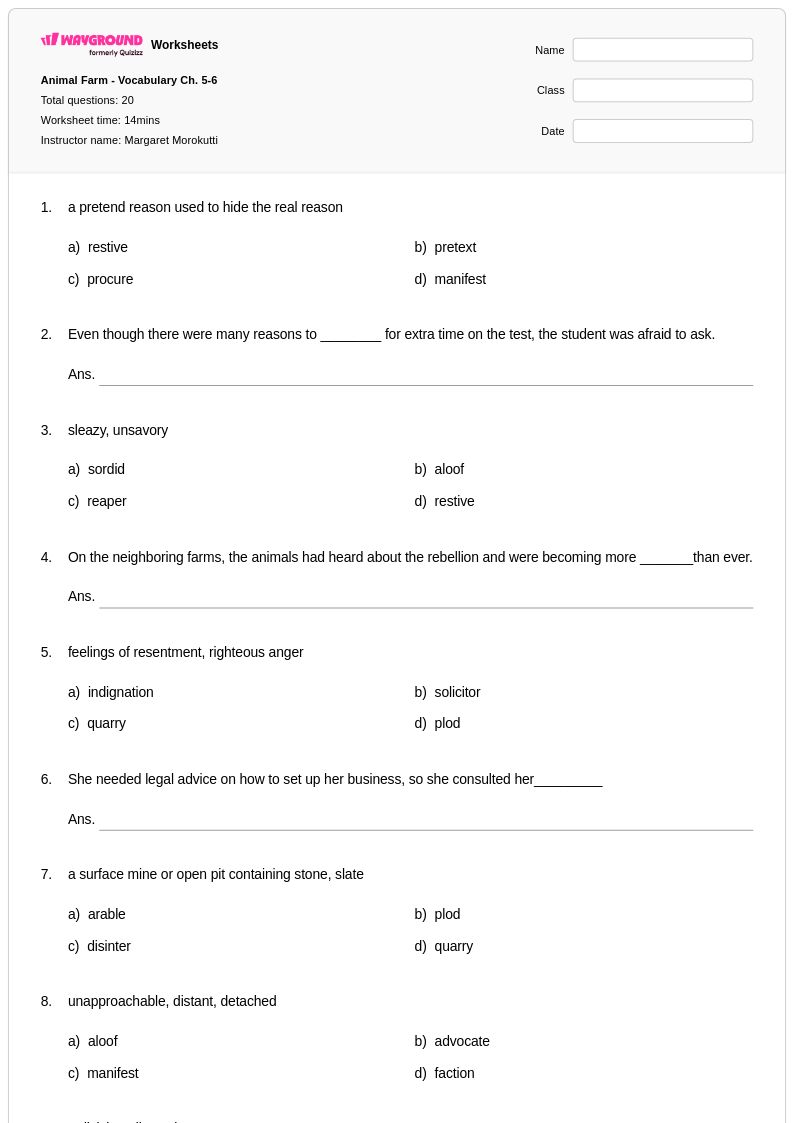
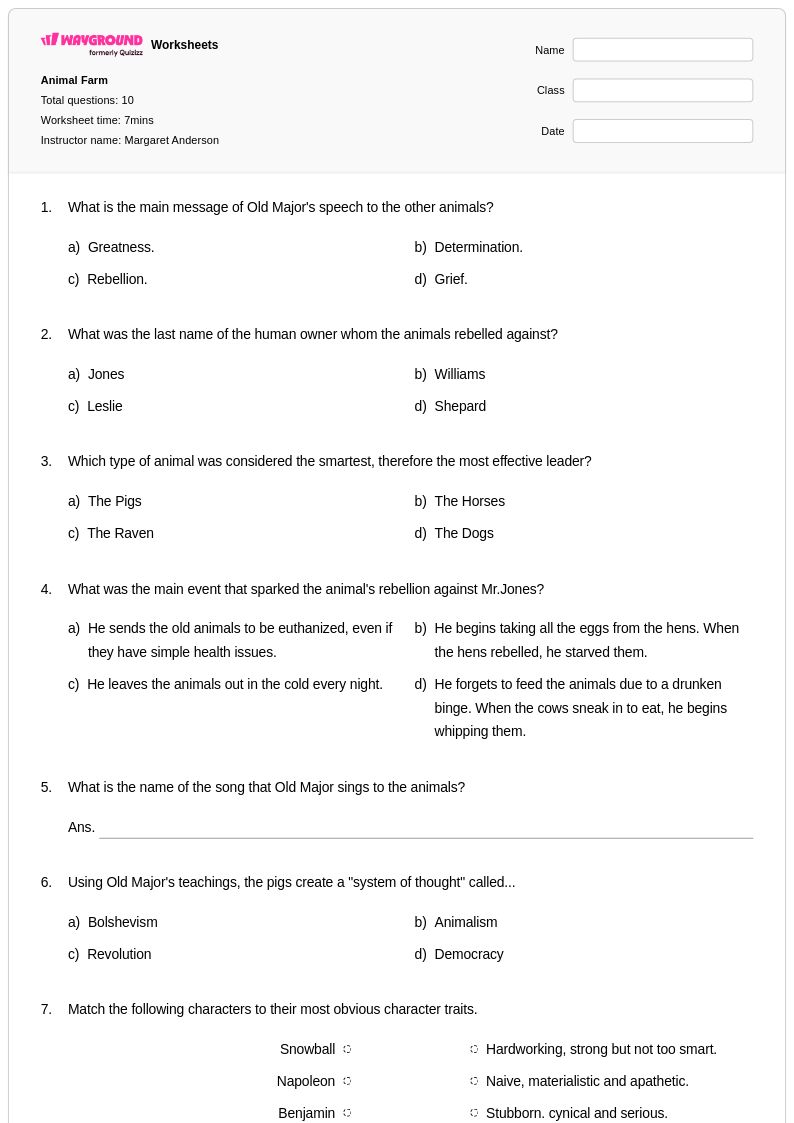
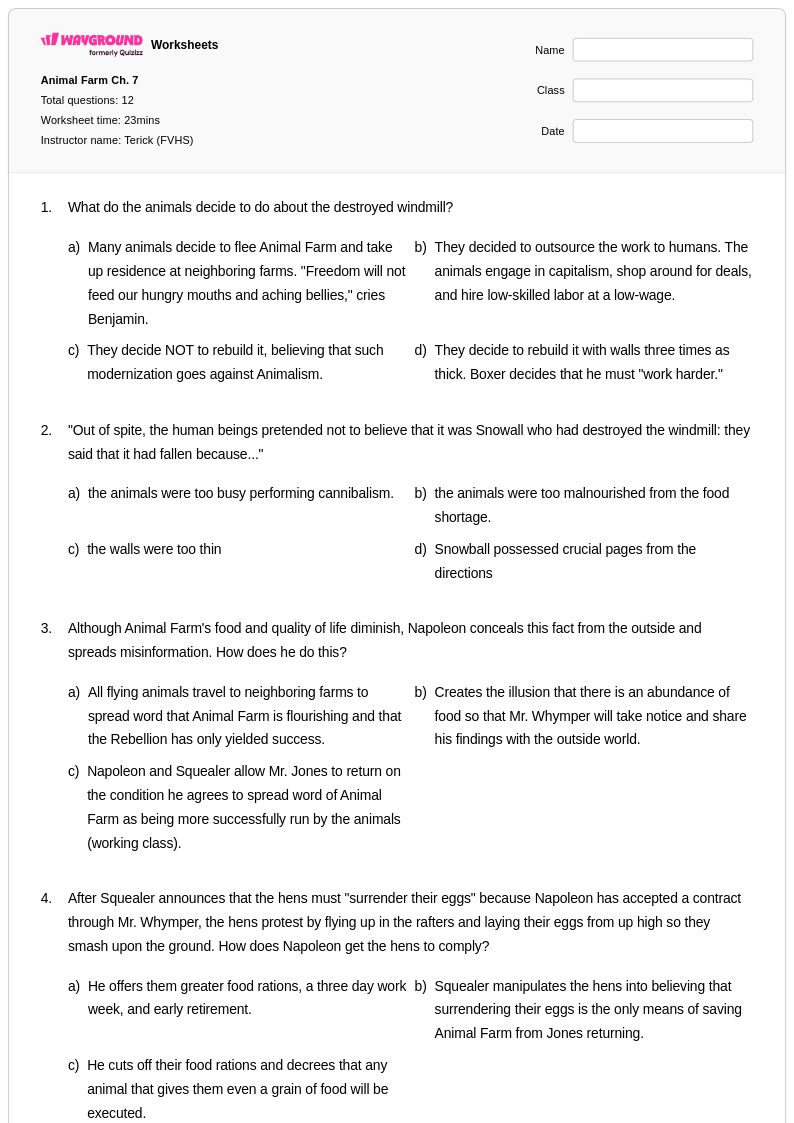
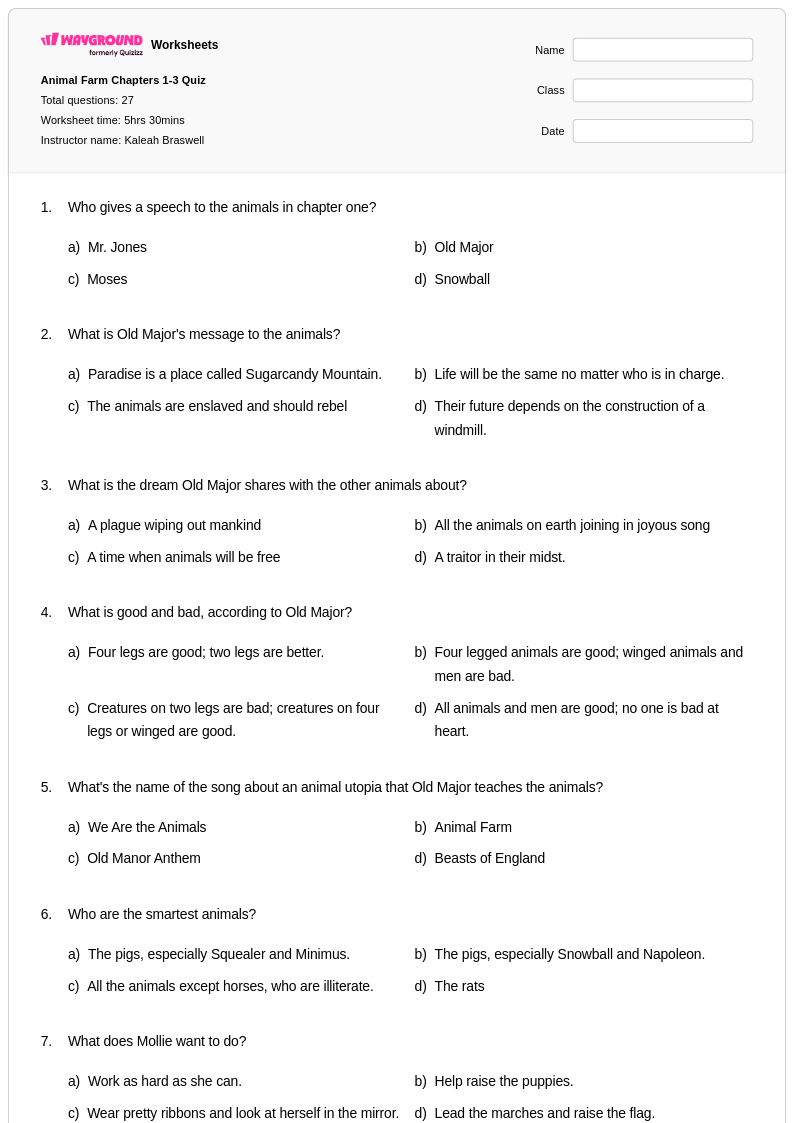
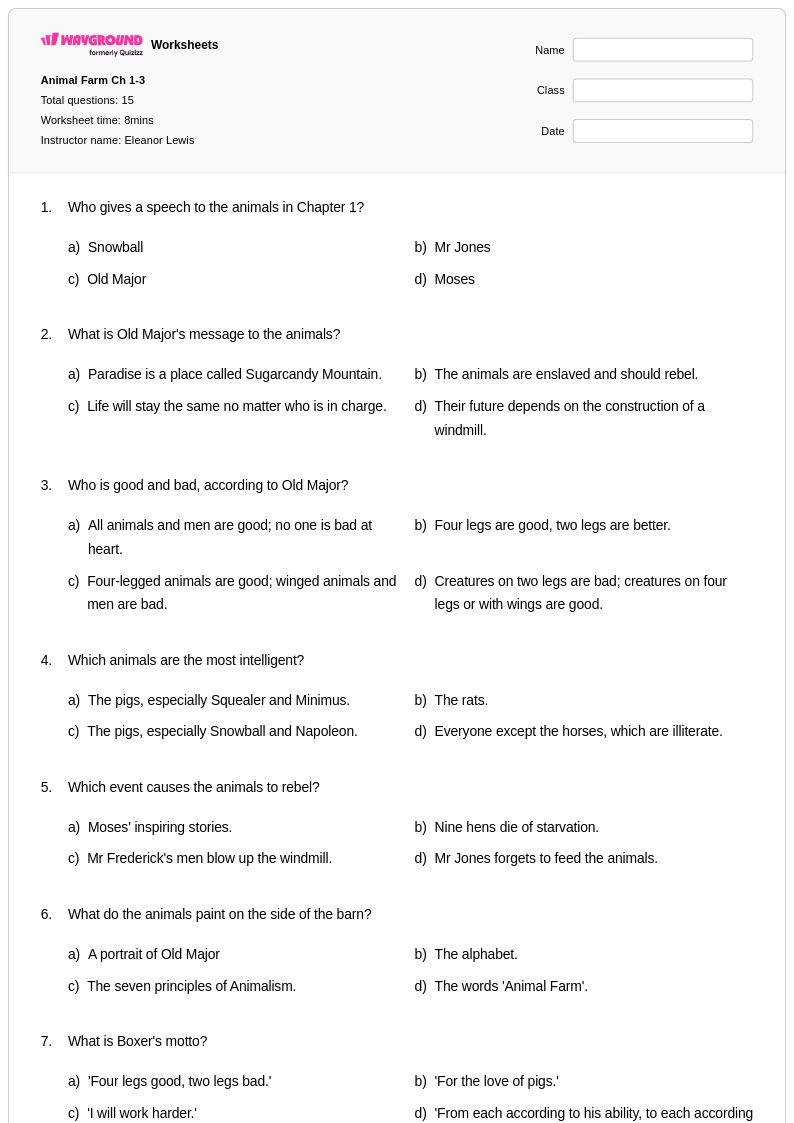
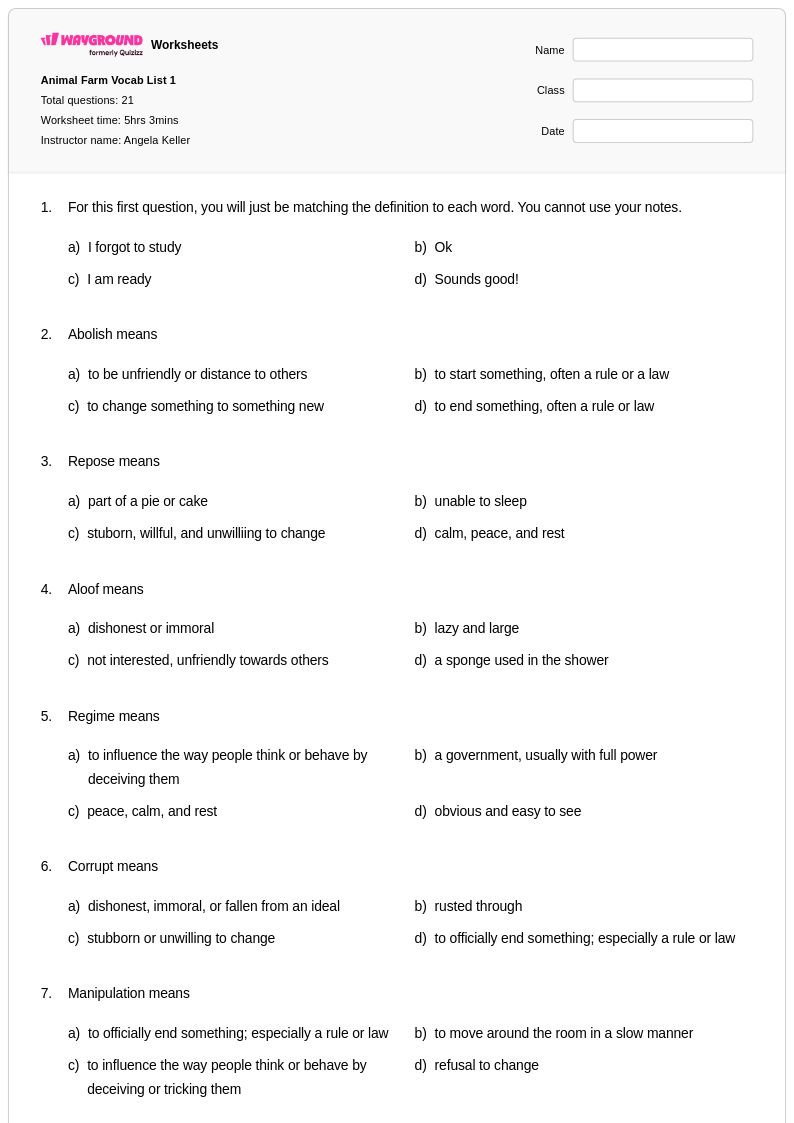
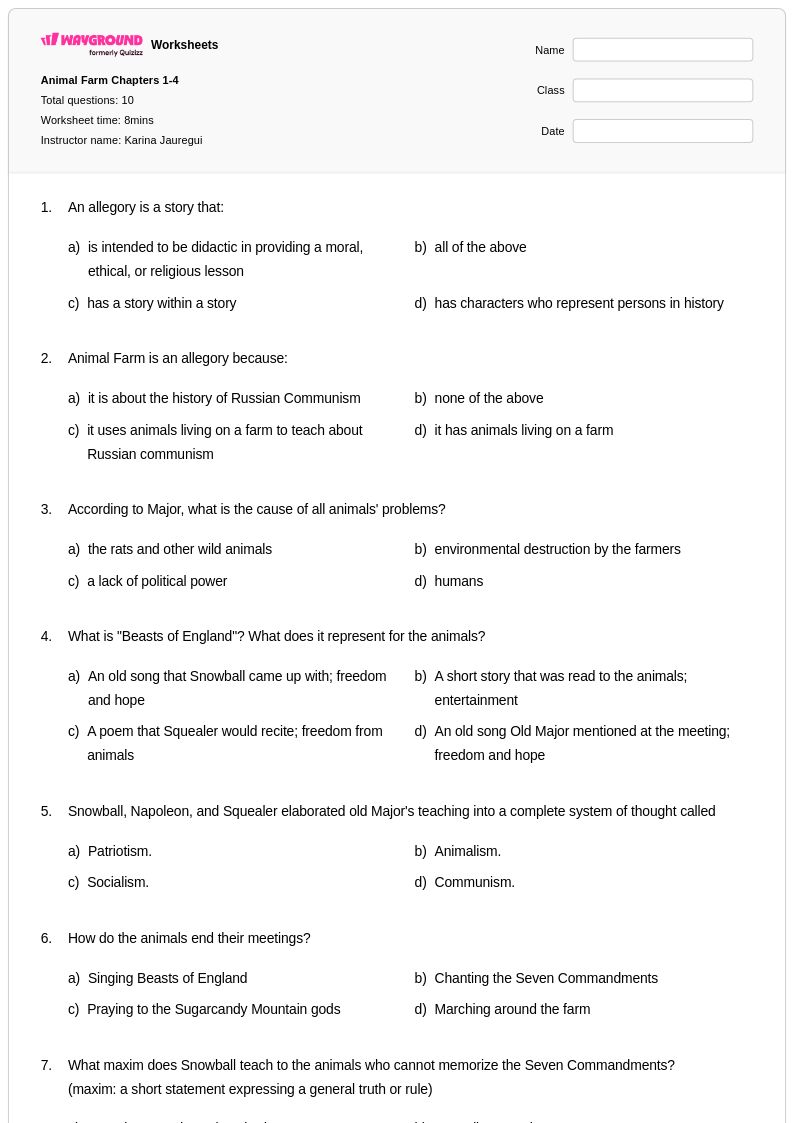
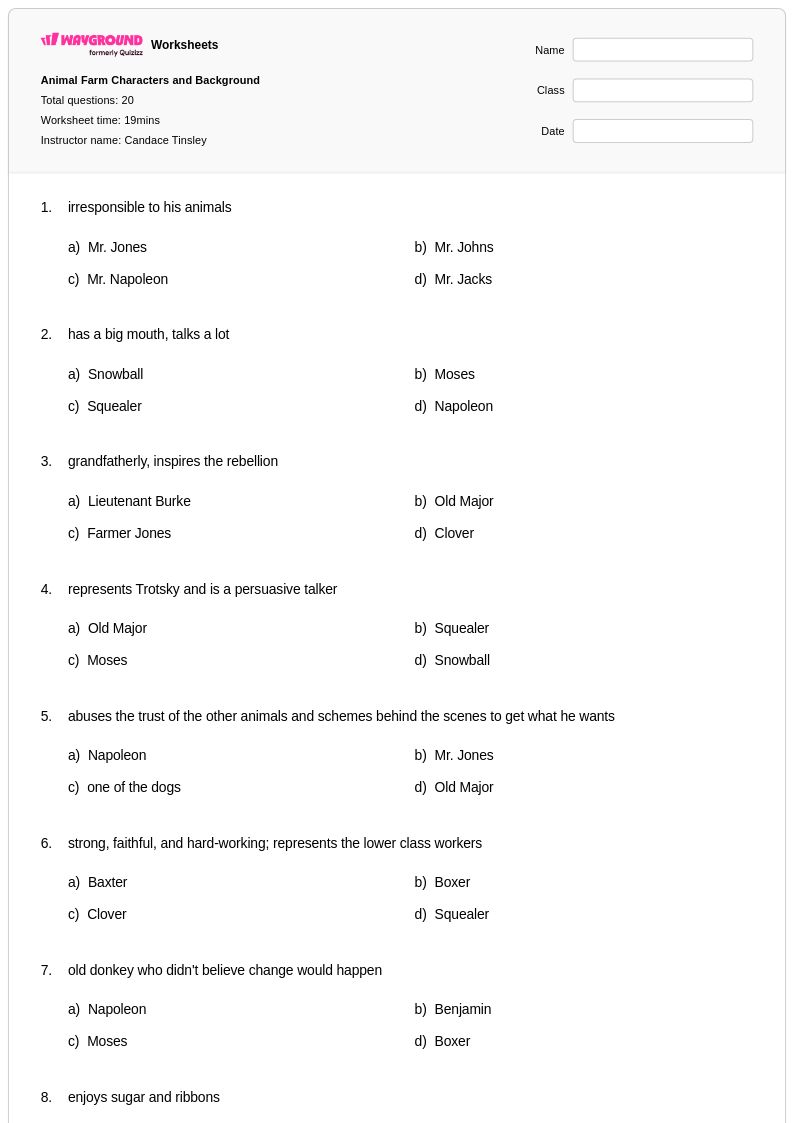
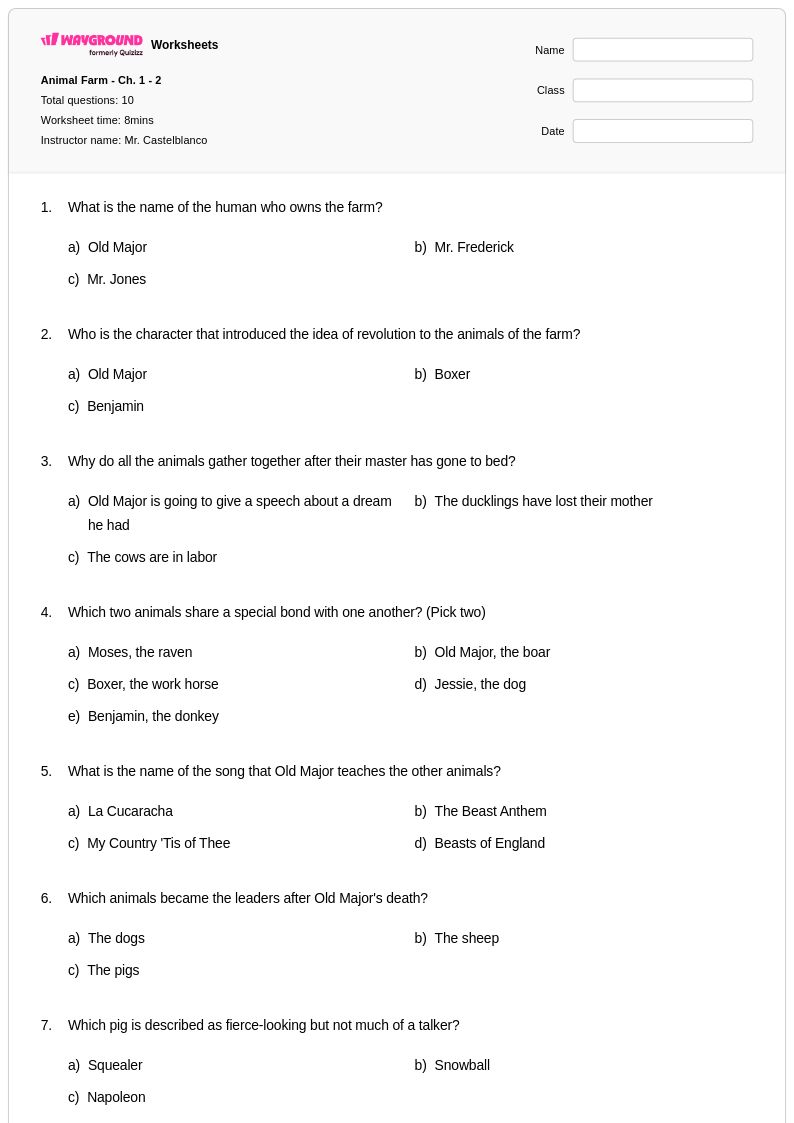
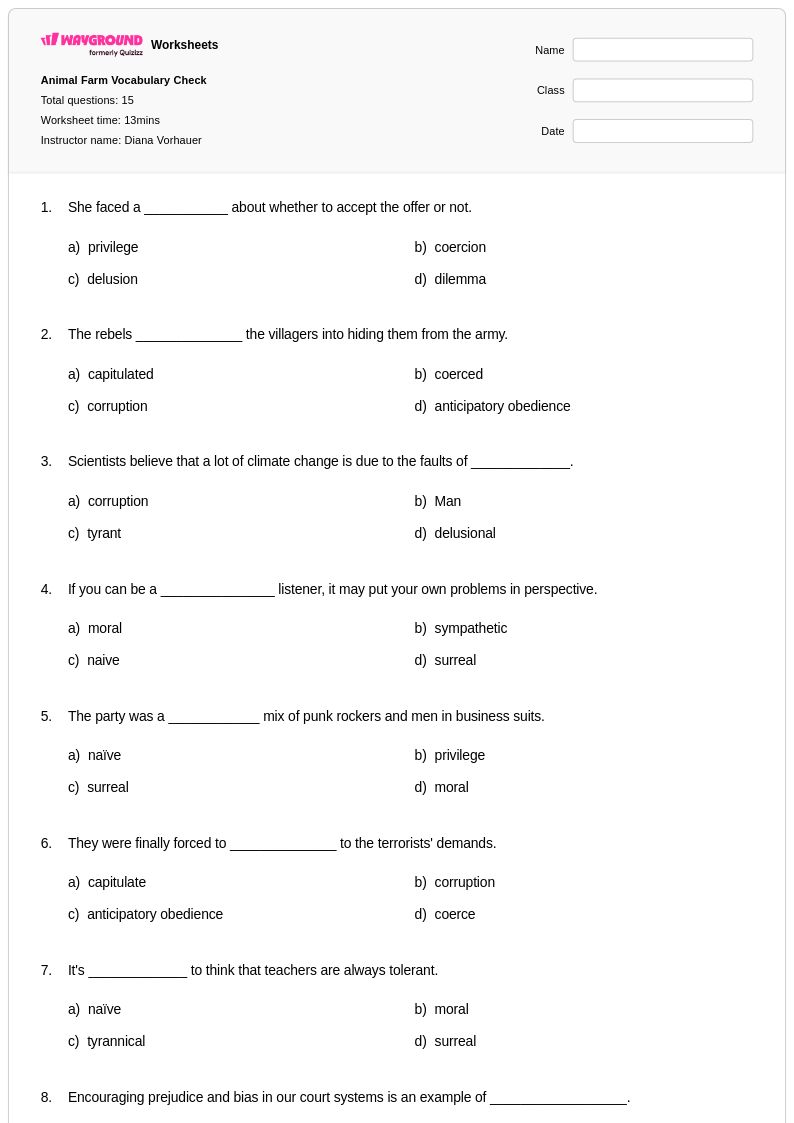
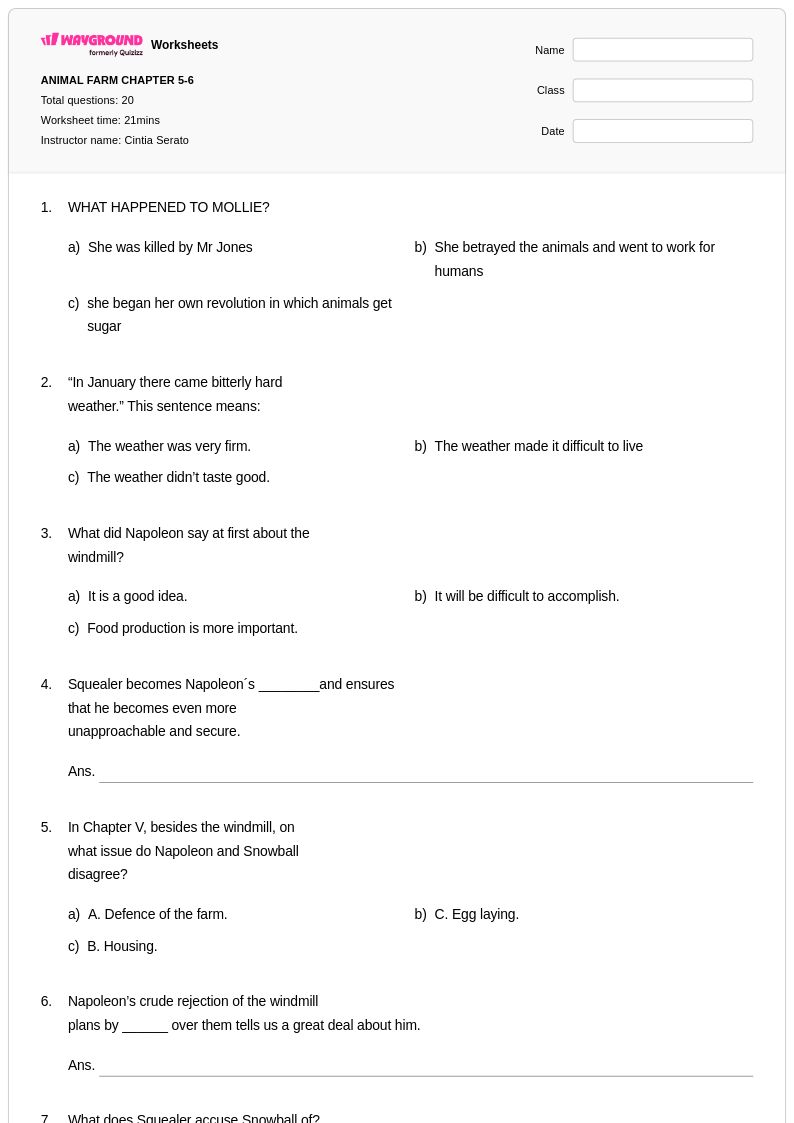
Animal Farm worksheets for Class 10 students available through Wayground (formerly Quizizz) provide comprehensive resources for analyzing George Orwell's powerful allegorical novel. These expertly crafted materials strengthen critical reading skills by guiding students through character development, thematic analysis, symbolism, and historical connections to the Russian Revolution. The worksheet collection includes free printables that examine the transformation of characters like Napoleon and Snowball, explore themes of power corruption and propaganda, and analyze Orwell's use of allegory to critique totalitarian regimes. Students engage with practice problems that require textual evidence to support their interpretations, while answer keys in pdf format help teachers efficiently assess comprehension and provide targeted feedback on literary analysis skills.
Wayground (formerly Quizizz) empowers educators with millions of teacher-created Animal Farm resources that streamline lesson planning and differentiate instruction for Class 10 literature classes. The platform's robust search and filtering capabilities allow teachers to quickly locate worksheets aligned with specific learning standards, whether focusing on character analysis, thematic exploration, or historical context. These customizable materials are available in both printable and digital formats, including downloadable pdf versions that accommodate diverse classroom needs and remote learning environments. Teachers can modify worksheets to provide remediation for struggling readers, offer enrichment activities for advanced students, and create targeted skill practice that builds students' ability to analyze complex literary works, making Animal Farm accessible and engaging for learners at all levels.
FAQs
How do I teach Animal Farm to middle or high school students?
Teaching Animal Farm effectively means anchoring the novel's allegorical layer to concrete historical events before students begin reading, so they can track parallels as they encounter them. Introduce the Russian Revolution and key figures like Stalin, Trotsky, and Lenin early, then map each character to their real-world counterpart as the story unfolds. Structured close-reading activities that focus on Orwell's use of language, particularly how the pigs manipulate the commandments, help students see how propaganda operates at the sentence level. Building in regular check-ins for theme development, such as the corruption of revolutionary ideals and the abuse of power, keeps students oriented within the novel's larger argument.
What are good exercises for helping students analyze symbolism and allegory in Animal Farm?
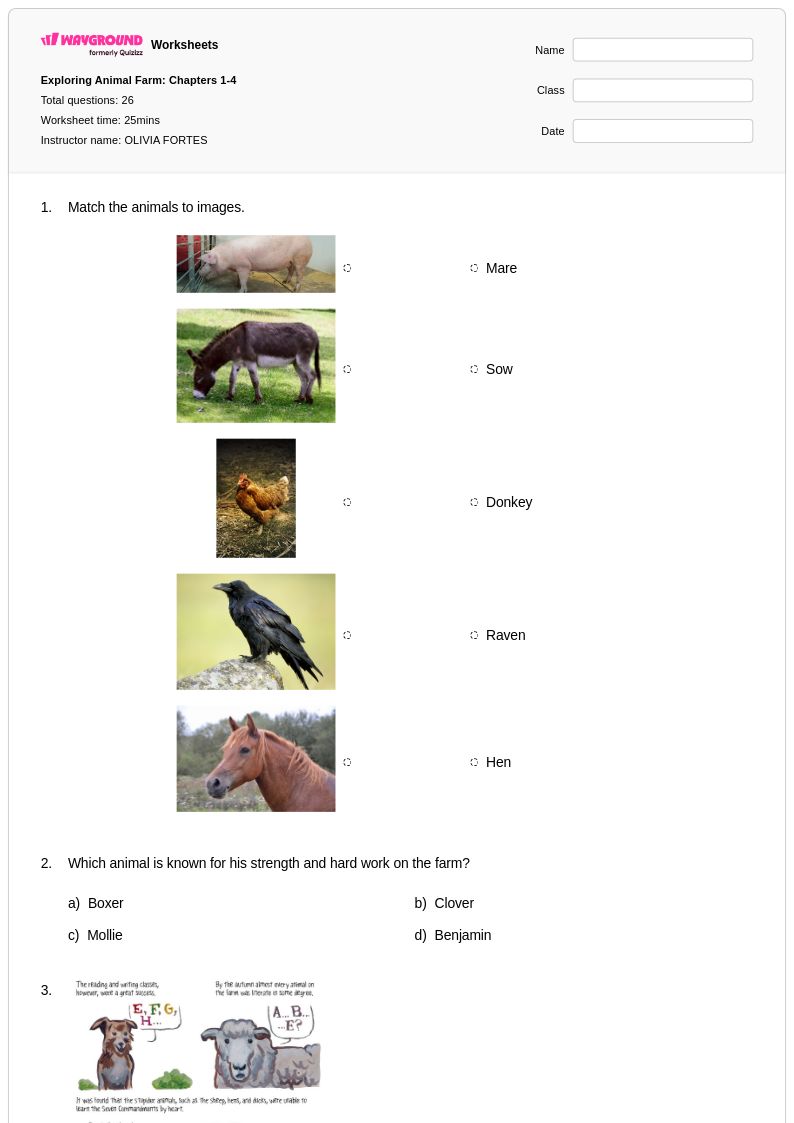
Character-mapping exercises that ask students to match each animal to a historical figure and justify their reasoning with textual evidence are among the most effective tools for teaching allegory in Animal Farm. Having students track the changes to the Seven Commandments across chapters, annotating what each revision reveals about power and corruption, builds close-reading skills alongside thematic analysis. Satire-analysis tasks that ask students to explain what Orwell is criticizing through a specific scene or character push beyond plot comprehension into genuine interpretive reasoning. Worksheets that sequence these exercises progressively, from identification to analysis to evaluation, give students the scaffolding they need to handle complex literary concepts.
What mistakes do students commonly make when analyzing Animal Farm?
The most common error students make is reading Animal Farm as a straightforward animal story rather than a political allegory, which causes them to miss Orwell's critique entirely. A related misconception is treating the pigs as simply villainous rather than understanding how their corruption develops gradually and is enabled by the other animals' passivity, which is central to Orwell's argument about totalitarianism. Students also frequently struggle to distinguish between what characters say and what Orwell means, particularly with Squealer's speeches, where the gap between stated justification and actual manipulation is the point. Directing students to analyze rhetorical strategies rather than accept character dialogue at face value helps correct this pattern.
How can I use Animal Farm worksheets to support students who struggle with complex allegory?
For students who struggle with allegory, scaffolded worksheets that separate the literal plot from the symbolic layer are essential, allowing students to build comprehension at one level before connecting it to the other. Graphic organizers that visually align Animal Farm characters with their historical counterparts, alongside sentence starters for analytical writing, reduce cognitive load while maintaining the rigor of the task. On Wayground, teachers can apply individual accommodations such as Read Aloud, which supports students with decoding difficulties, reduced answer choices to decrease overwhelm, and extended time, all configurable per student without disrupting the rest of the class.
How do I use Animal Farm worksheets from Wayground in my classroom?
Wayground's Animal Farm worksheets are available as printable PDF documents for traditional classroom distribution and in digital formats for technology-integrated learning environments, giving teachers flexibility based on their setup. Teachers can also host worksheets as a quiz directly on Wayground, which allows for real-time student responses and built-in answer key grading. The platform includes differentiation tools and accommodation settings that let teachers customize the experience for individual students, whether they need guided comprehension support or more advanced thematic analysis prompts. This makes the same resource usable across a range of learners within a single class period.
How do I connect Animal Farm to broader historical and political contexts in my lessons?
Connecting Animal Farm to its historical context requires students to understand the Russian Revolution not just as background knowledge but as a key interpretive lens for every major event in the novel. Comparative activities that ask students to place scenes from the novel alongside primary source descriptions of Soviet-era events, such as the show trials or collectivization, make the allegory tangible rather than abstract. Extending that analysis to other historical or contemporary examples of propaganda and political manipulation helps students see why Orwell's critique remains relevant, which is an essential step for higher-order literary engagement.