Free Printable Apostrophes in Plural Possessive Nouns Worksheets for Class 7
Class 7 students can master apostrophes in plural possessive nouns with Wayground's comprehensive collection of free worksheets, printables, and practice problems featuring detailed answer keys.
Explore printable Apostrophes in Plural Possessive Nouns worksheets for Class 7
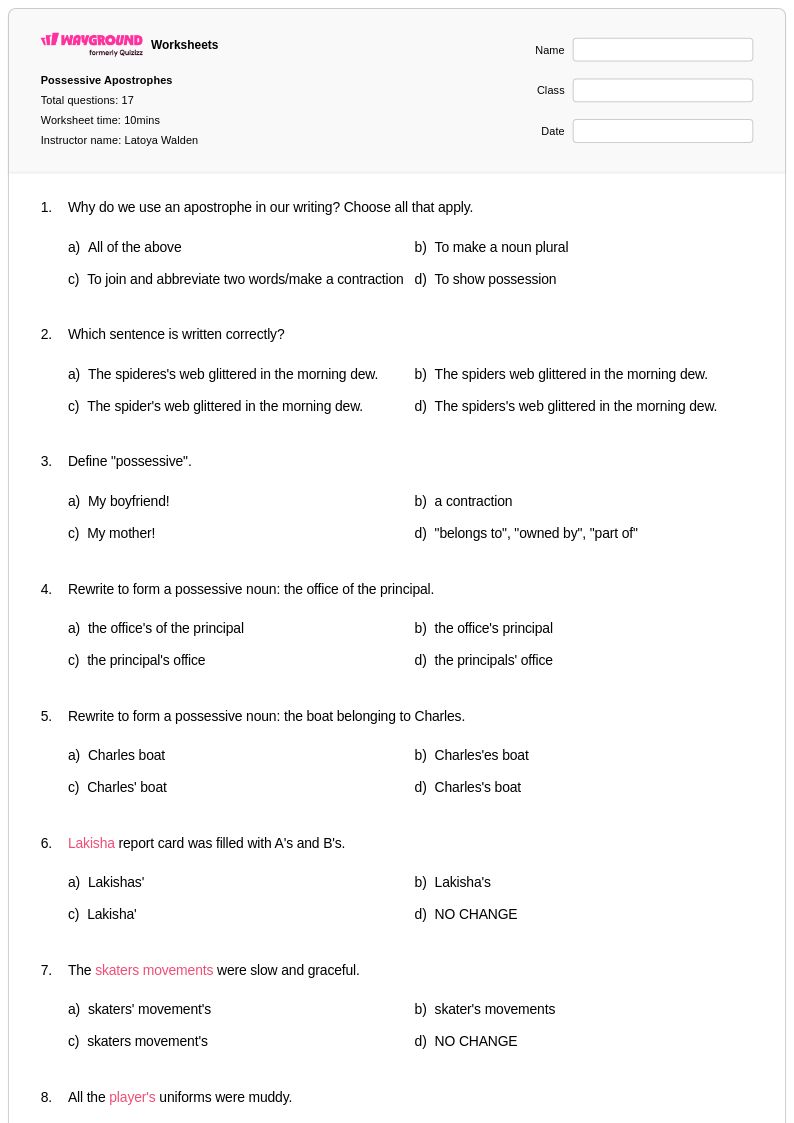
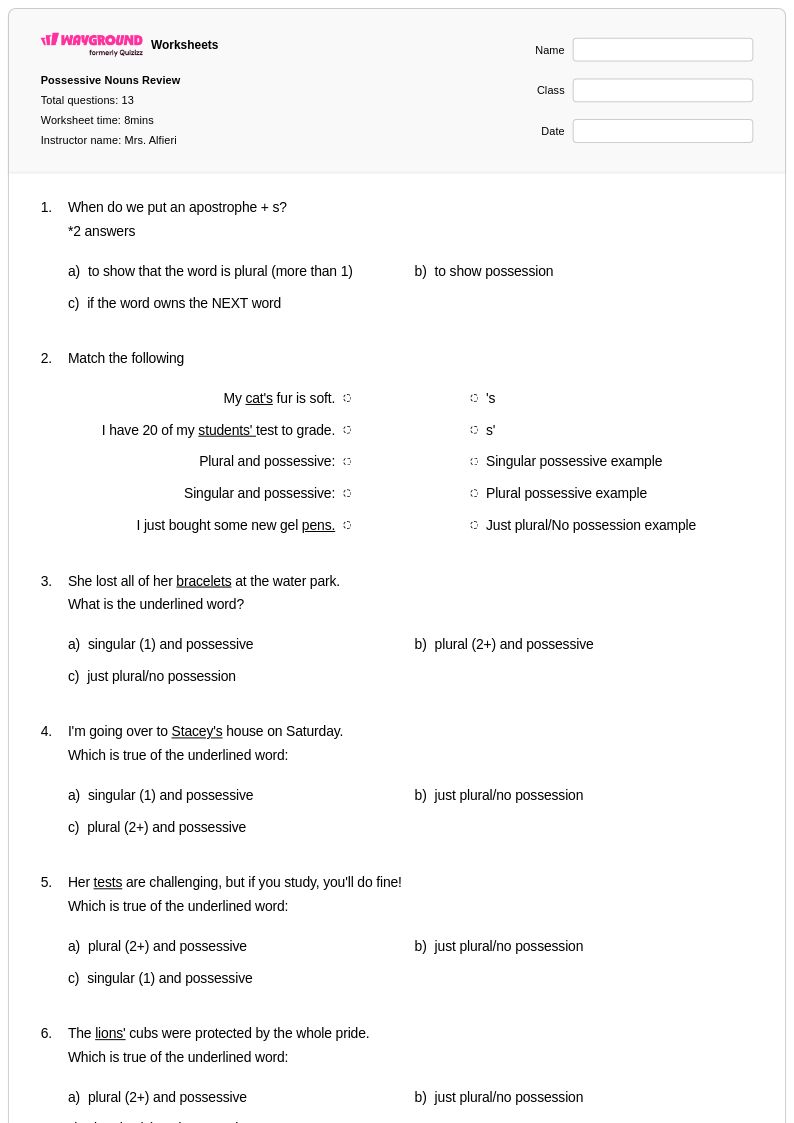
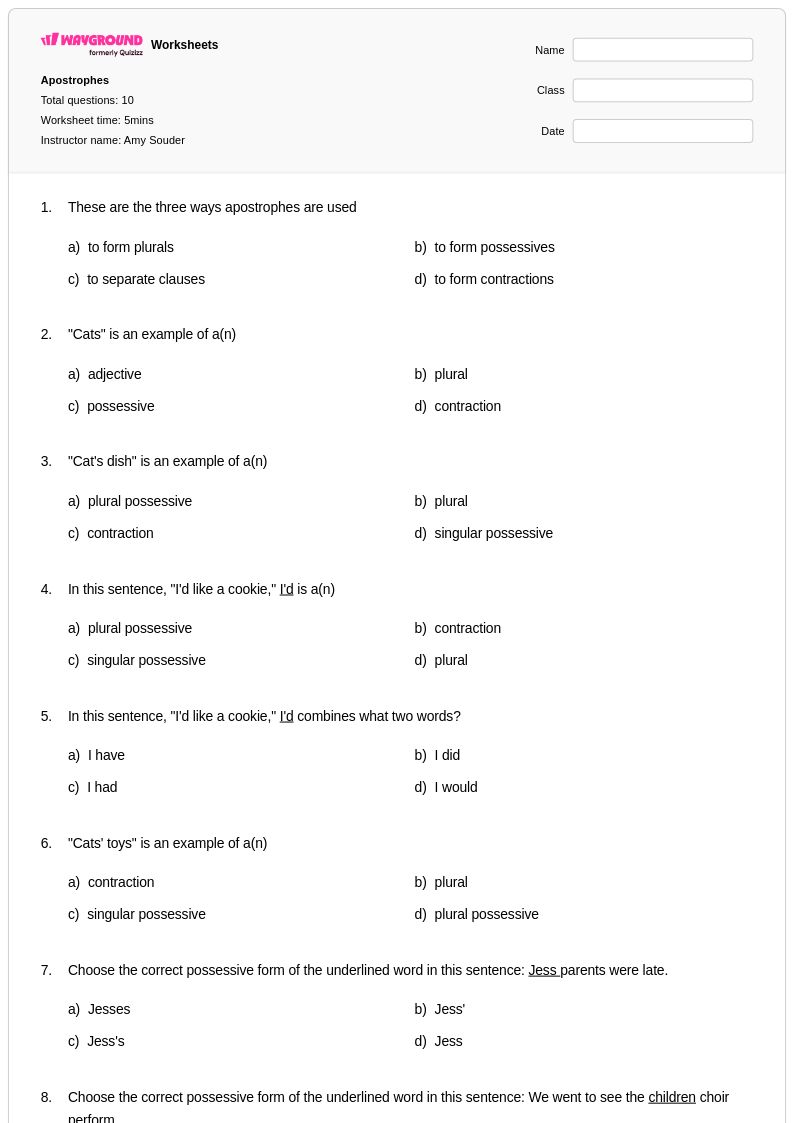
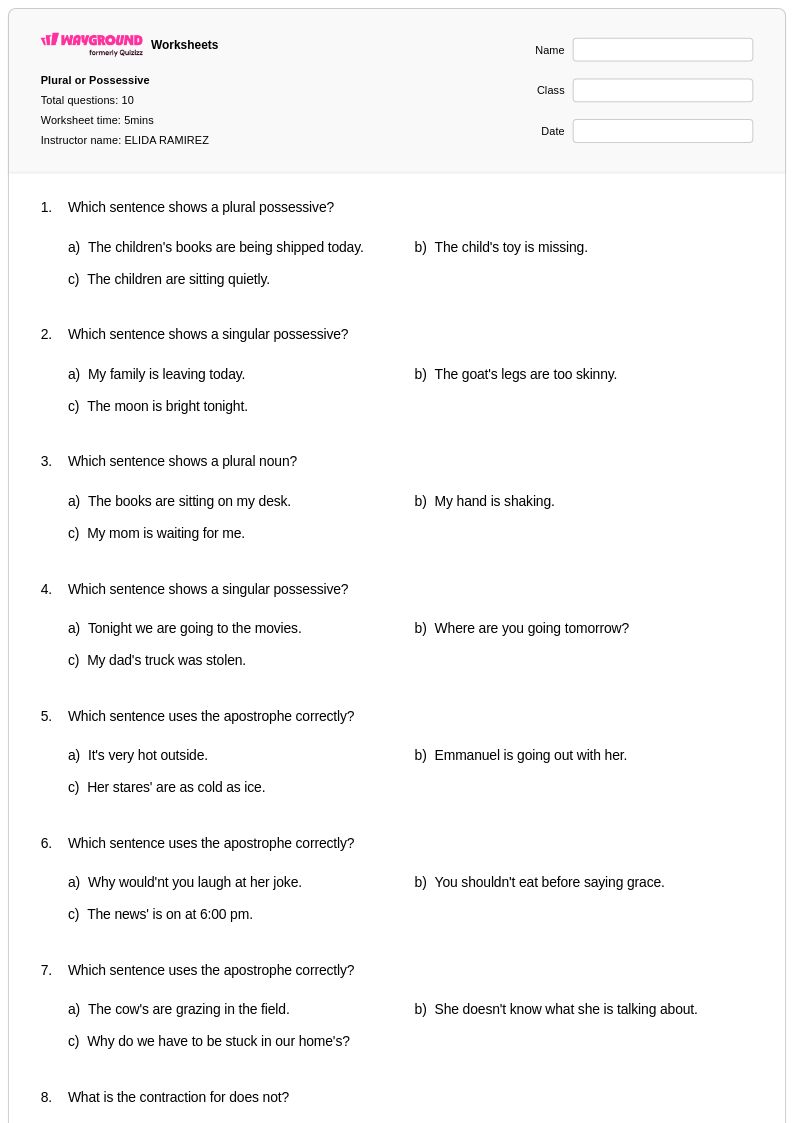
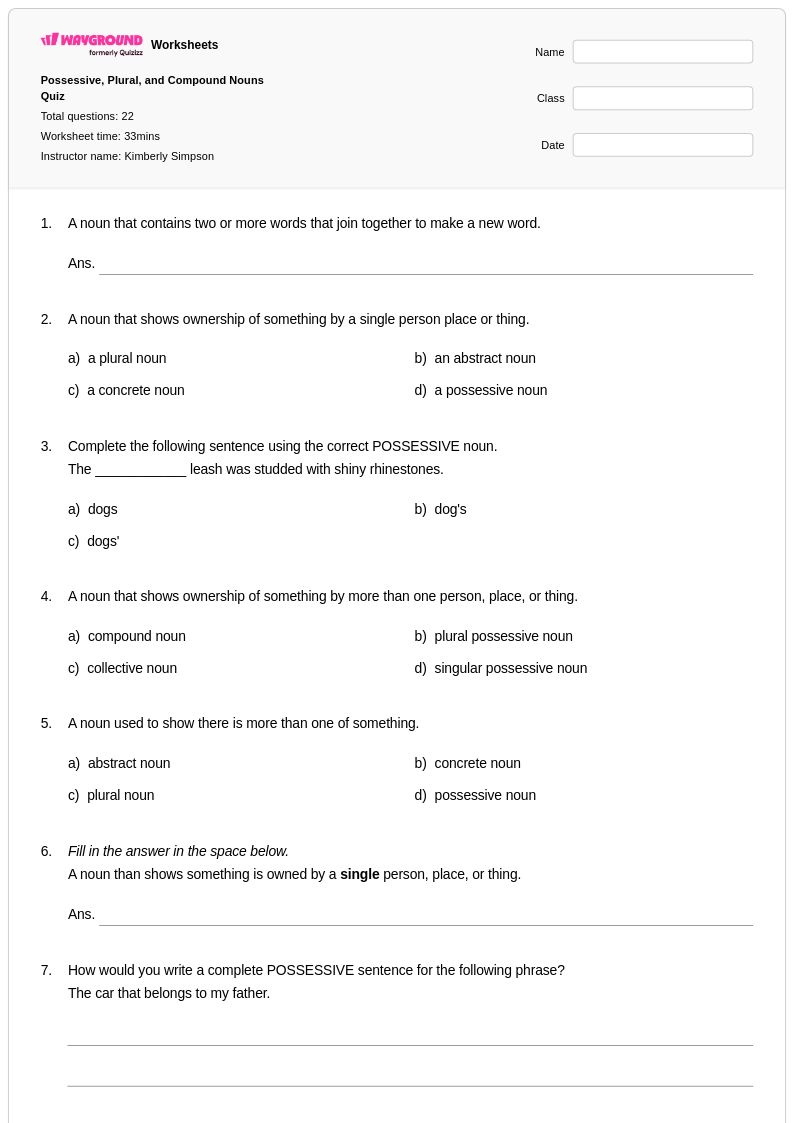
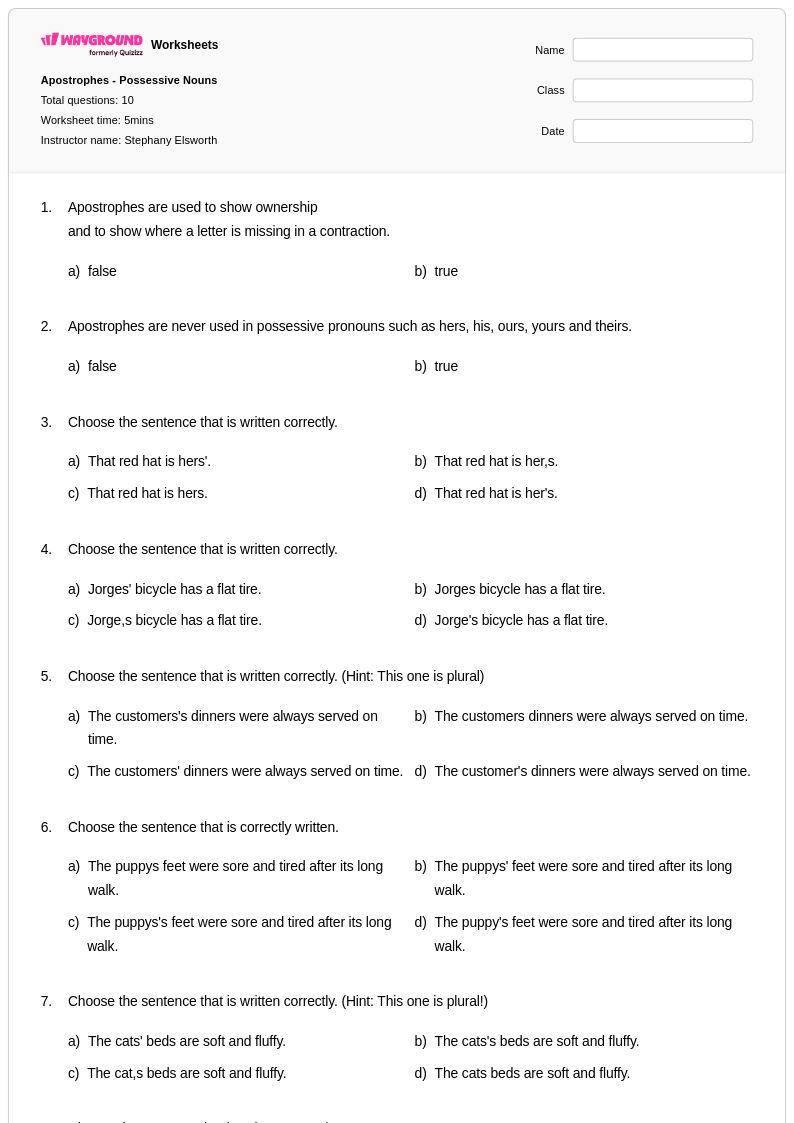
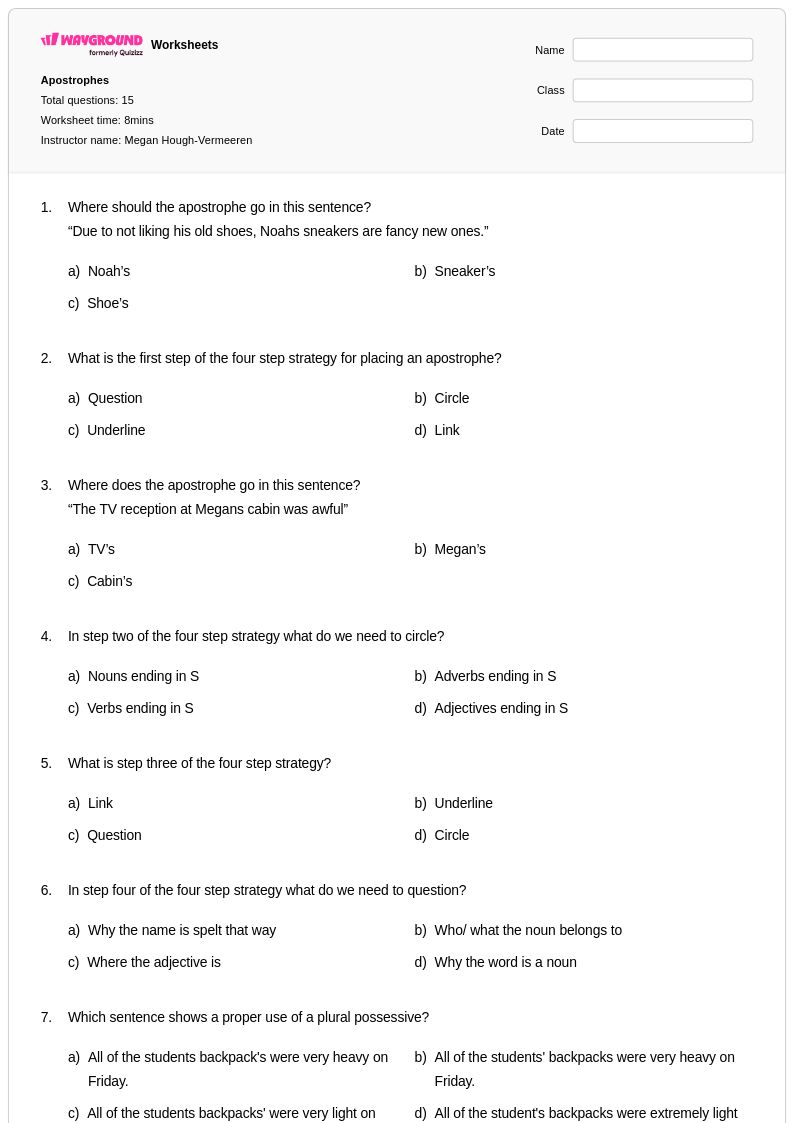
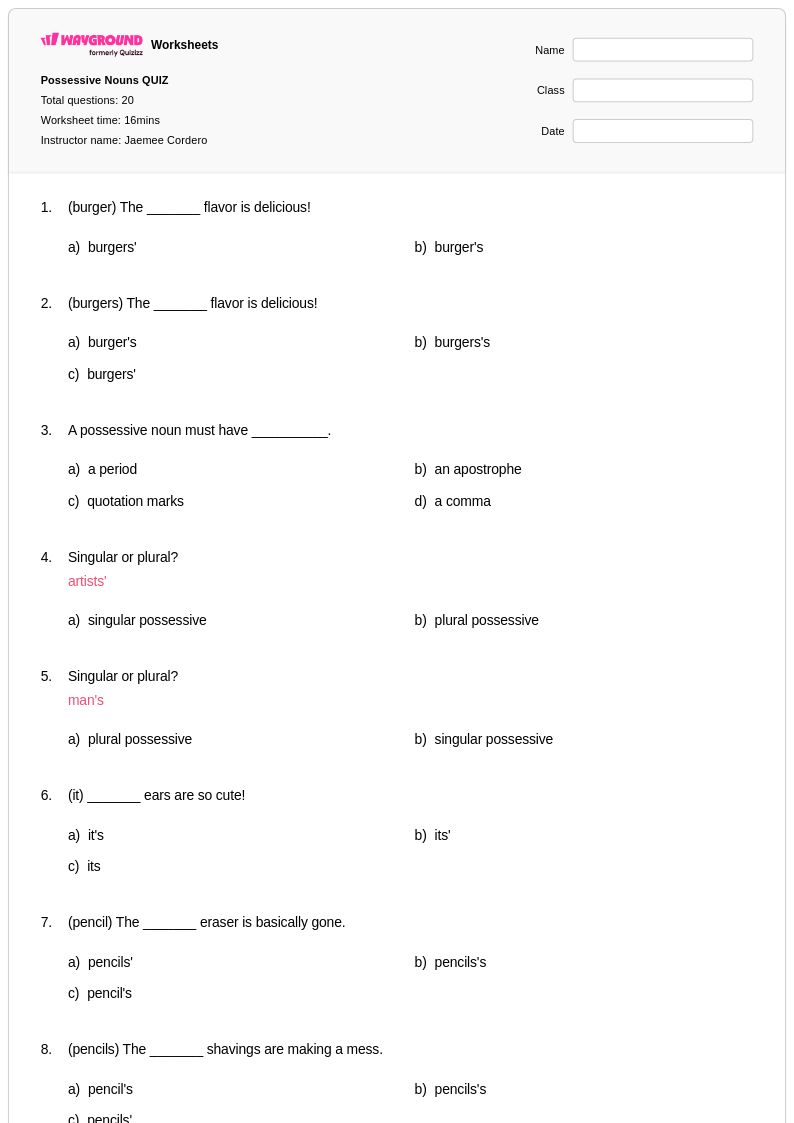
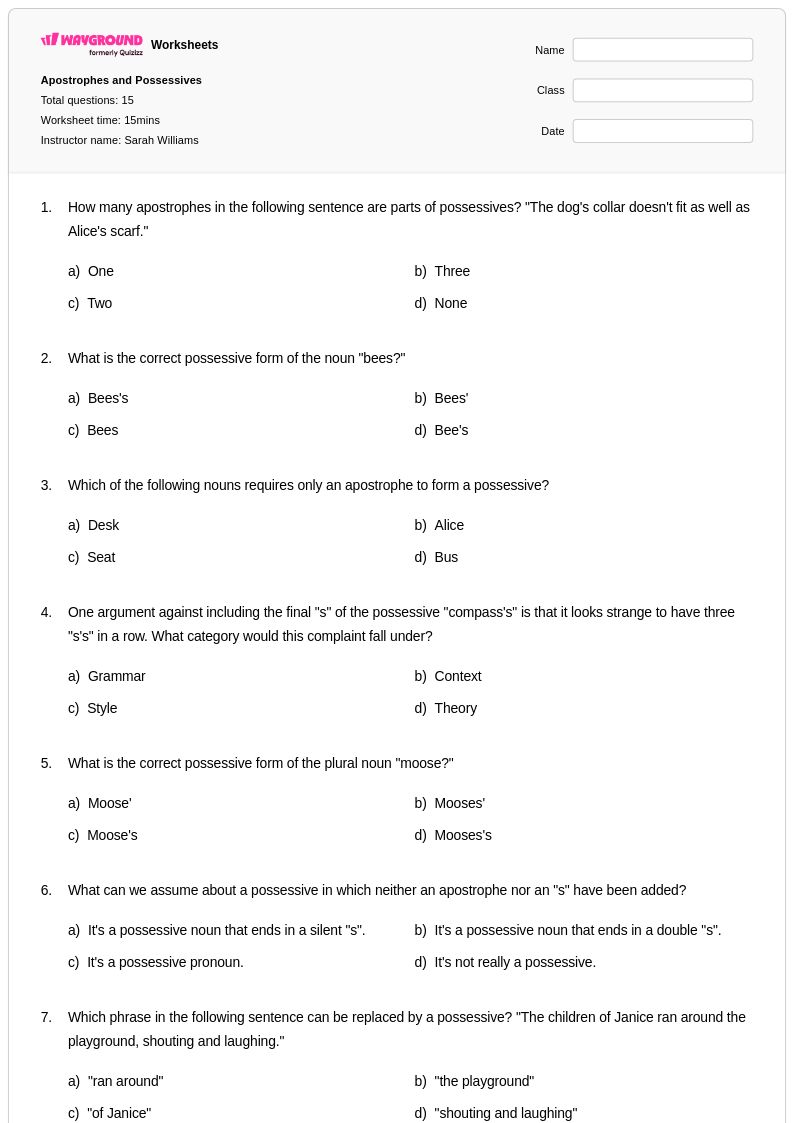
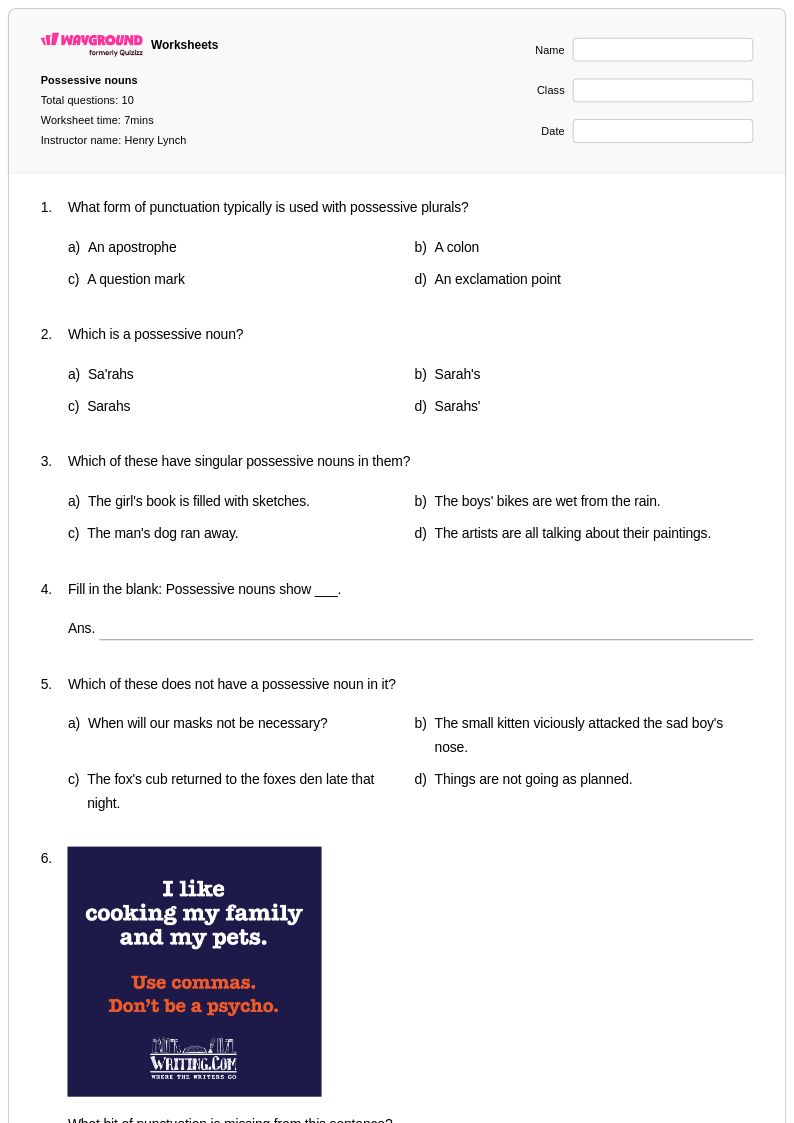
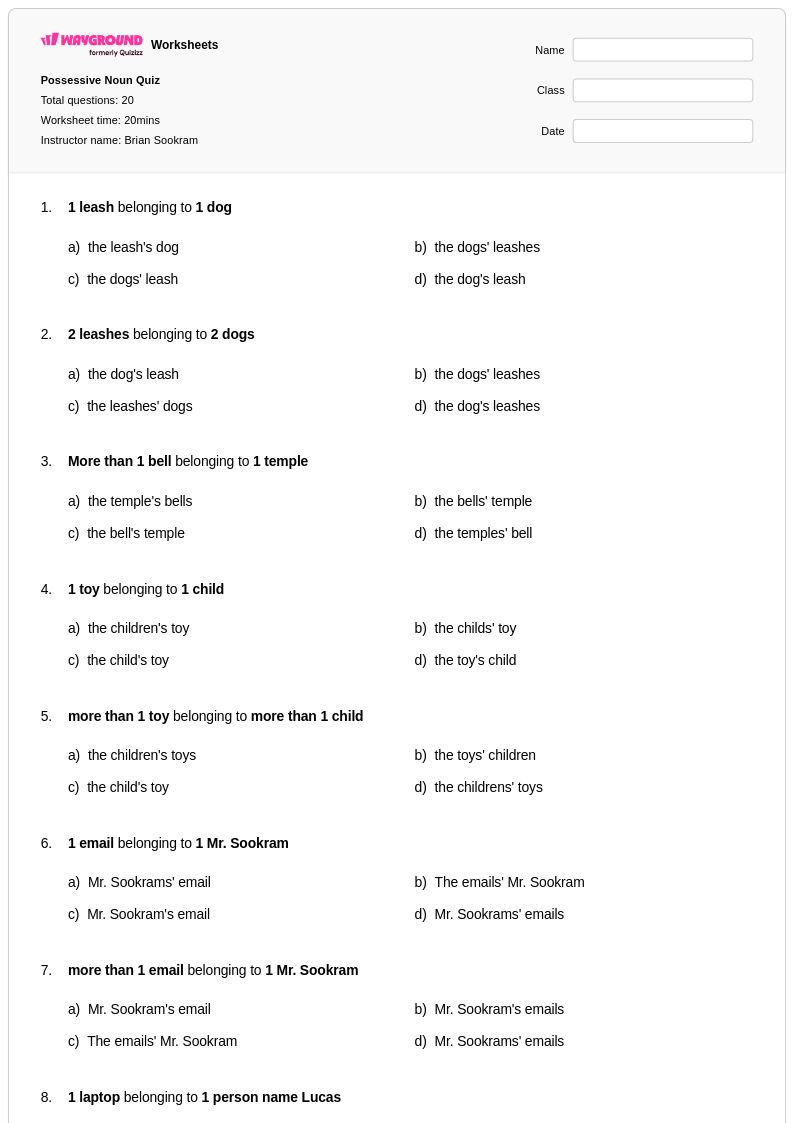
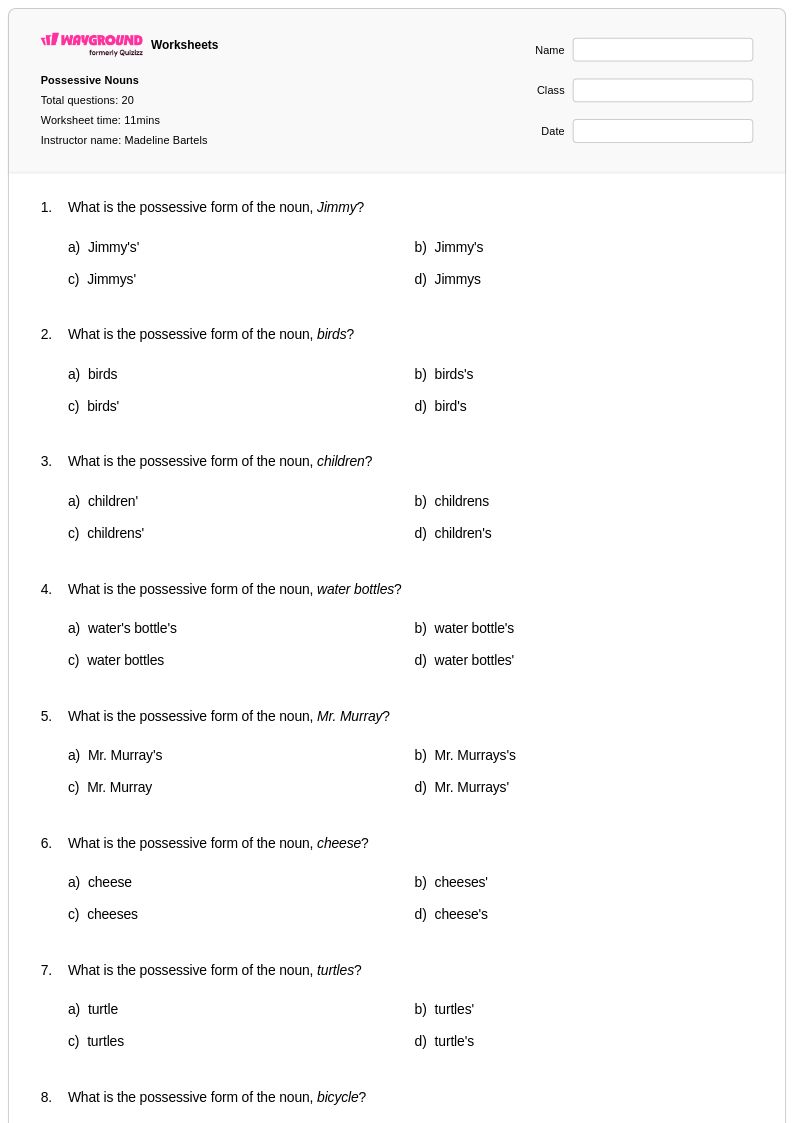
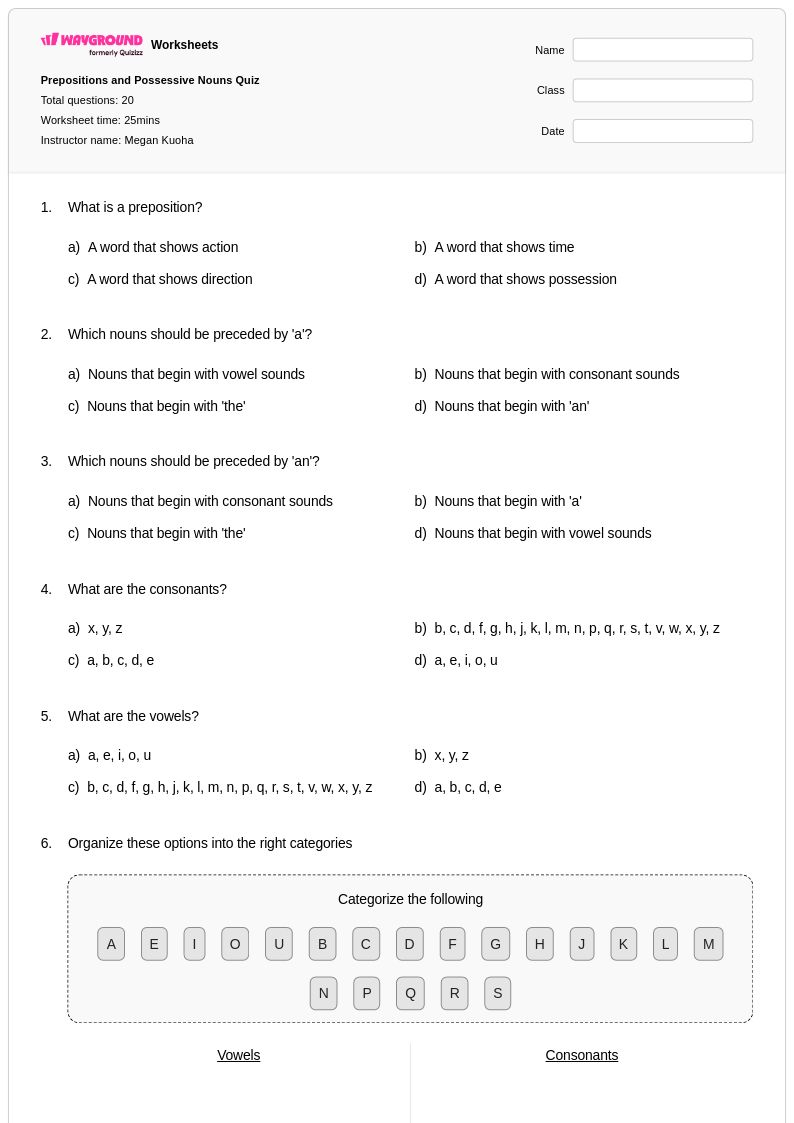
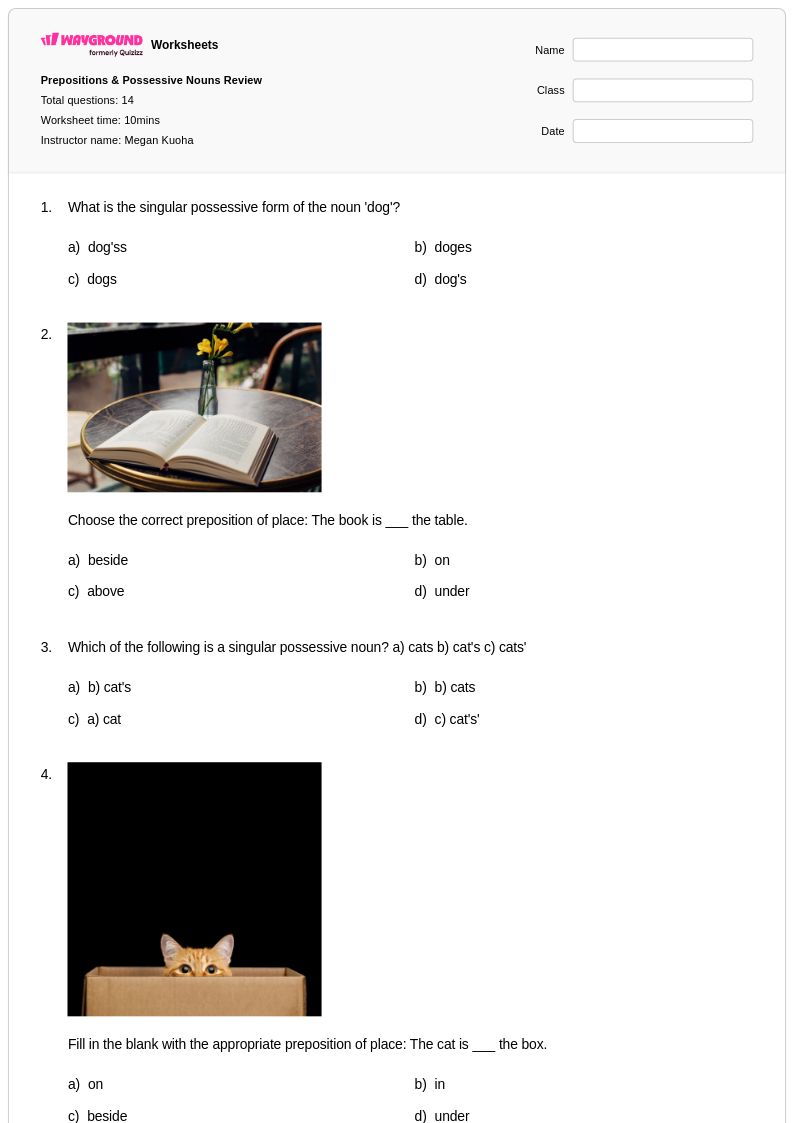
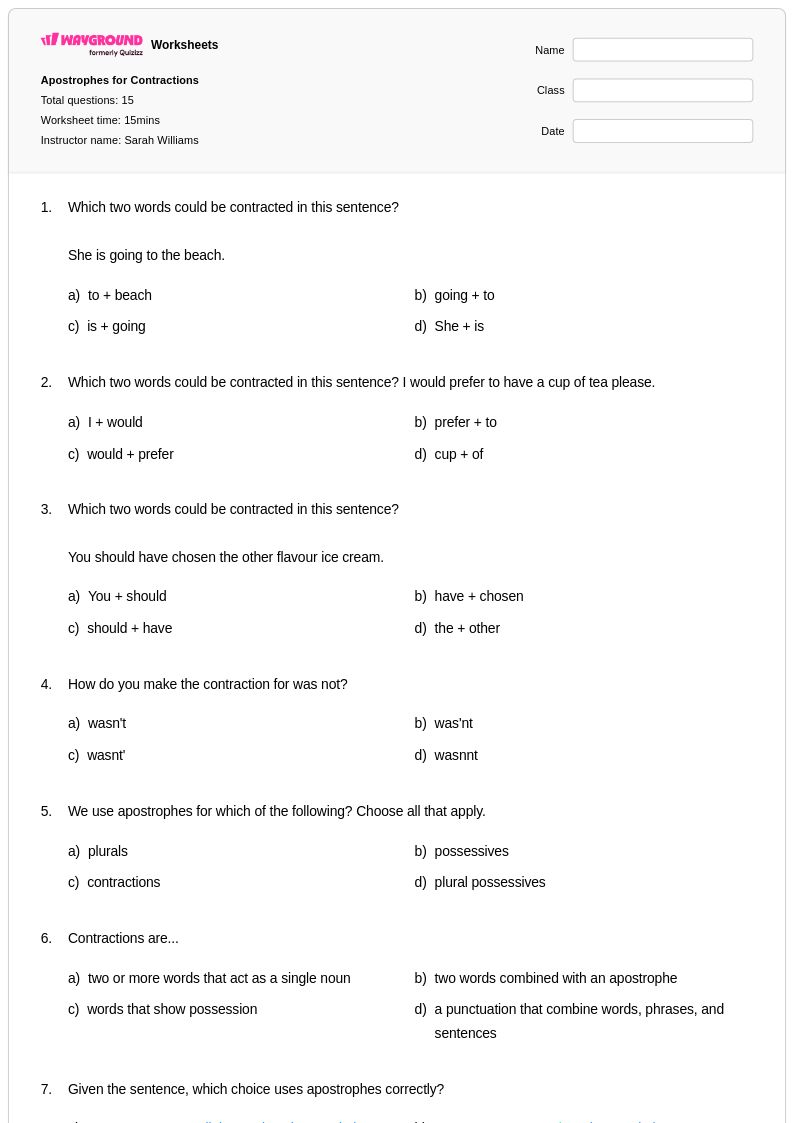
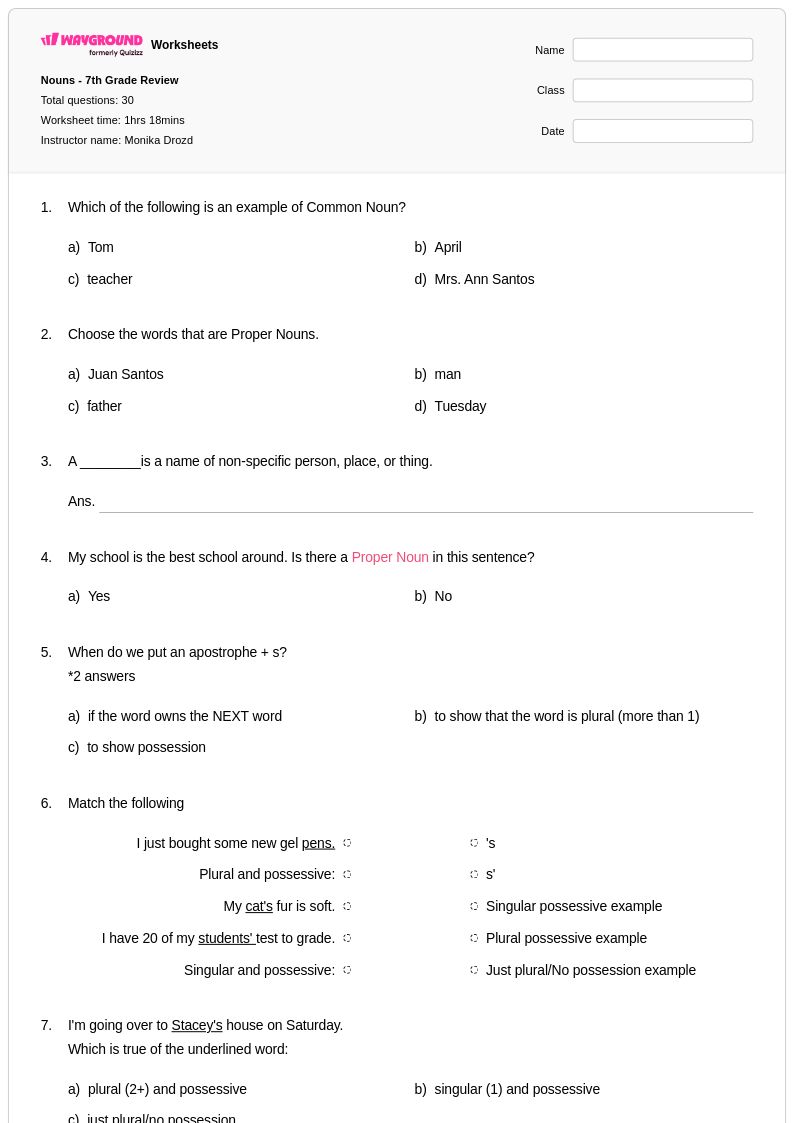
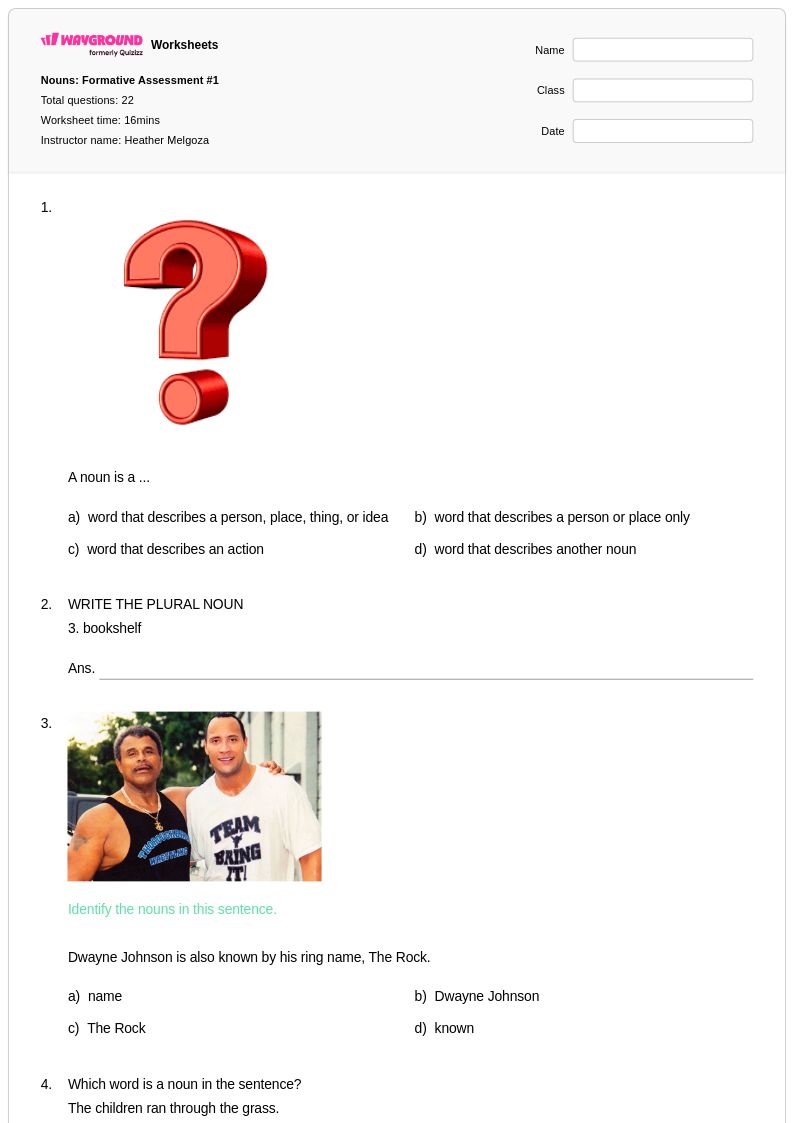
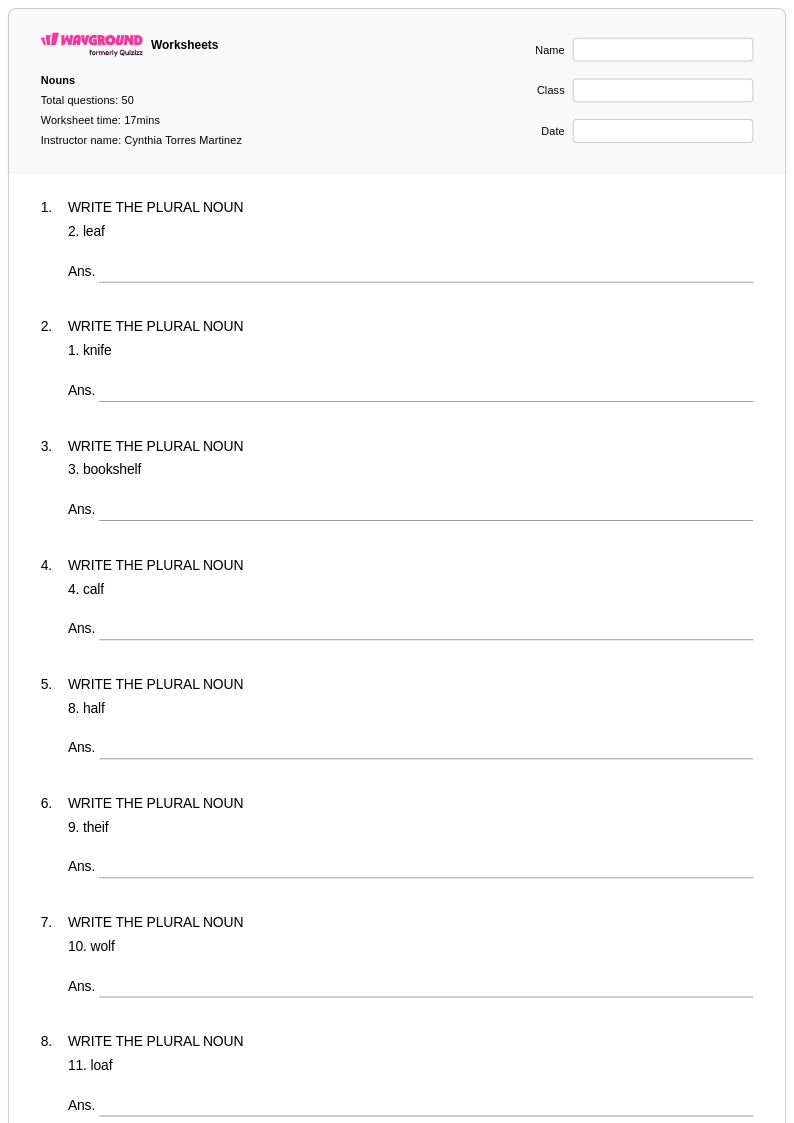
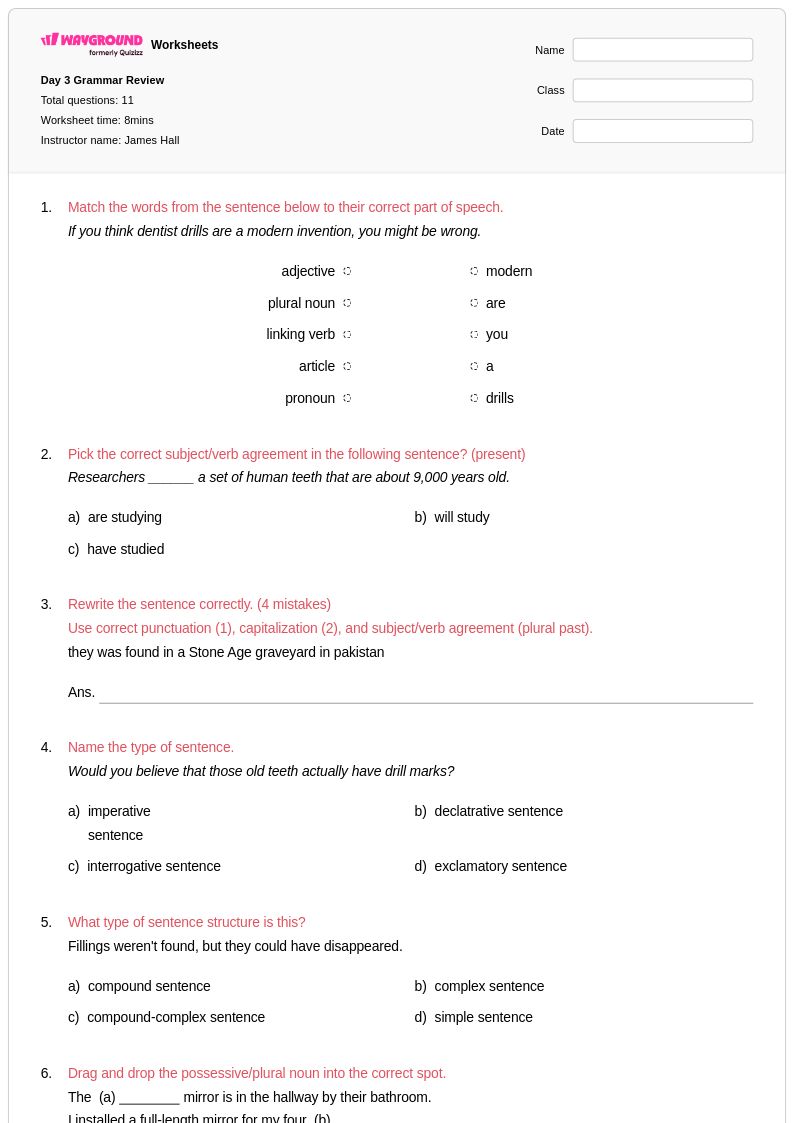
Apostrophes in plural possessive nouns represent a critical grammar concept for Class 7 students, requiring careful attention to the placement of apostrophes when multiple owners possess something. Wayground's comprehensive worksheet collection focuses specifically on this challenging aspect of punctuation, providing students with targeted practice in distinguishing between regular plurals, singular possessives, and plural possessives. These educational resources strengthen students' understanding of when to place apostrophes after the 's' in words like "teachers' lounge" or "students' backpacks," while reinforcing the fundamental rule that plural possessive nouns typically require the apostrophe after the final 's'. Each worksheet includes diverse practice problems that challenge students to identify correct usage in sentences, rewrite phrases using proper apostrophe placement, and demonstrate mastery through varied exercises. The materials come complete with detailed answer keys and are available as free printable pdf resources that teachers can easily distribute for classroom instruction or homework assignments.
Wayground, formerly Quizizz, empowers educators with an extensive library of millions of teacher-created resources specifically designed to support grammar instruction and apostrophe usage mastery. The platform's robust search and filtering capabilities allow teachers to quickly locate worksheets that align with specific curriculum standards while providing differentiation tools to meet diverse learning needs within Class 7 classrooms. Teachers can customize existing materials or access ready-to-use printable and digital formats, including downloadable pdf versions that work seamlessly in both traditional and technology-enhanced learning environments. These flexible resources support comprehensive lesson planning by offering multiple practice opportunities for remediation when students struggle with apostrophe placement rules, enrichment activities for advanced learners ready for more complex possessive constructions, and ongoing skill practice that reinforces proper punctuation habits throughout the academic year.
FAQs
How do I teach apostrophes in plural possessive nouns?
Start by ensuring students have a firm grasp of the difference between regular plurals (dogs) and irregular plurals (children, mice) before introducing possession. For regular plural possessives, teach the rule: add an apostrophe after the existing 's' (the teachers' lounge). For irregular plural possessives that don't end in 's', teach students to add apostrophe + s (the children's playground). Using side-by-side comparison charts and sentence sorting activities helps students see the pattern rather than memorize isolated rules.
What exercises help students practice plural possessive apostrophes?
Effective practice moves from recognition to production. Begin with identification exercises where students locate and correct apostrophe errors in sentences, then progress to rewriting exercises that convert phrases like 'the books belonging to the students' into 'the students' books.' Authentic writing tasks, such as describing a school scene using plural possessive nouns, help students apply the rule in context rather than in isolation.
What mistakes do students commonly make with apostrophes in plural possessive nouns?
The most frequent error is placing the apostrophe before the 's' in regular plural possessives, writing 'student's books' when the intended meaning is plural ownership ('students' books'). Students also confuse plural possessives with simple plurals, adding apostrophes to non-possessive plurals such as 'apple's' instead of 'apples.' A third common mistake involves irregular plurals: students often write 'childrens'' instead of the correct 'children's' because they try to apply the regular plural rule where it doesn't apply.
How do I use Wayground's apostrophes in plural possessive nouns worksheets in my classroom?
Wayground's apostrophes in plural possessive nouns worksheets are available as printable PDFs for traditional classroom use and in digital formats for technology-integrated learning environments, giving teachers flexibility for in-class instruction, homework, or independent practice. You can also host the worksheets as a quiz directly on Wayground, enabling real-time student responses and automatic grading. Each worksheet includes a complete answer key, so teachers can use them for guided practice, peer correction, or self-assessment with minimal preparation time.
How do I differentiate apostrophe instruction for students at different skill levels?
For struggling students, isolate the two sub-rules — regular plural possessives and irregular plural possessives — and address them in separate lessons rather than simultaneously. Wayground supports additional accommodations such as read-aloud, reduced answer choices, and extended time, which can be assigned to individual students while the rest of the class works with standard settings. Advanced learners benefit from tasks that require them to produce plural possessive constructions in their own writing, such as descriptive paragraphs or editing passages with multiple intentional errors.
What is the difference between a plural possessive noun and a singular possessive noun?
A singular possessive noun shows ownership by one person or thing and is formed by adding apostrophe + s to the base noun, regardless of whether it ends in 's' (the dog's leash, the boss's office). A plural possessive noun shows ownership by more than one person or thing: for regular plurals ending in 's', only an apostrophe is added (the dogs' leashes), while irregular plurals that don't end in 's' take apostrophe + s (the geese's migration path). Teaching students to identify singular versus plural first is the most reliable way to eliminate apostrophe confusion.