
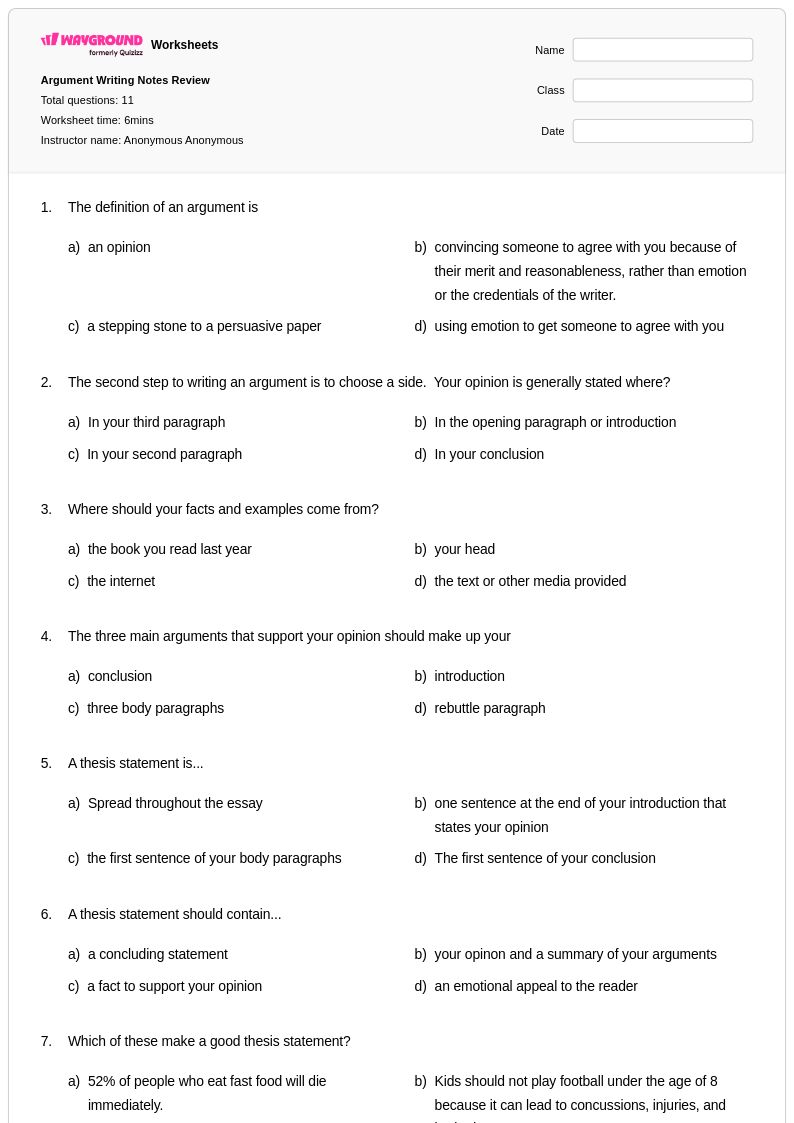
11 P
7th - 8th
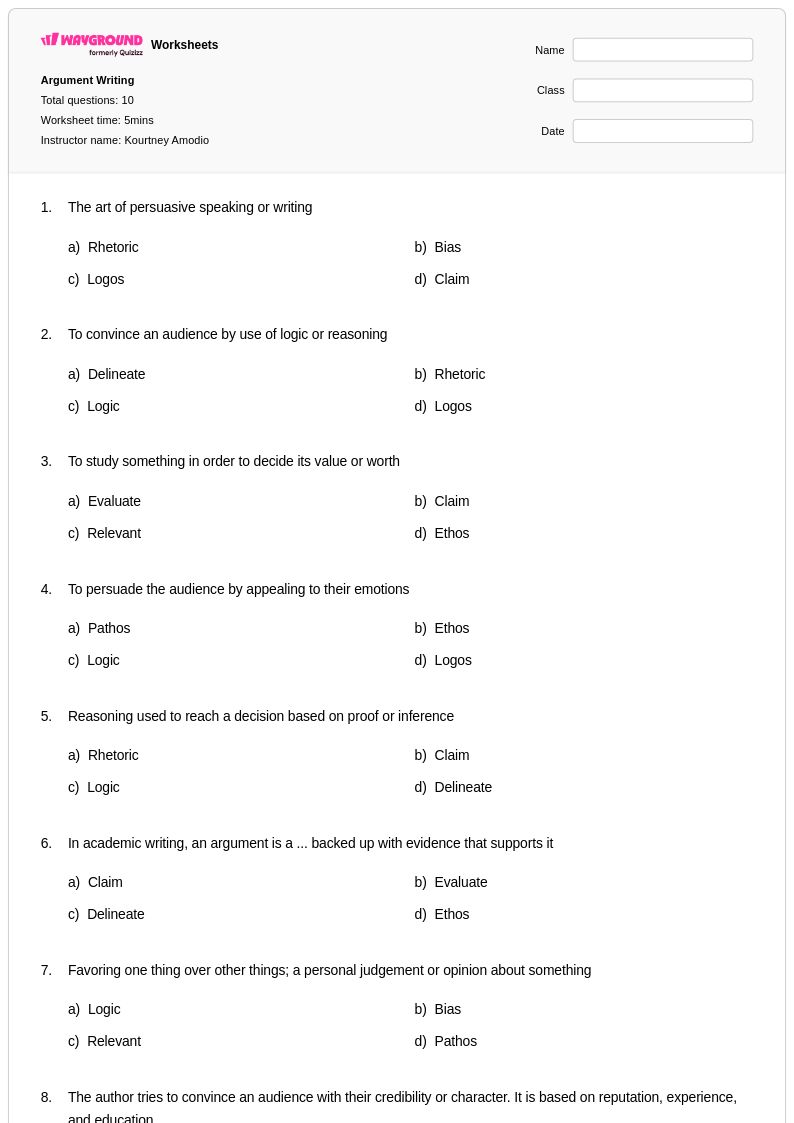
10 P
7th - 9th
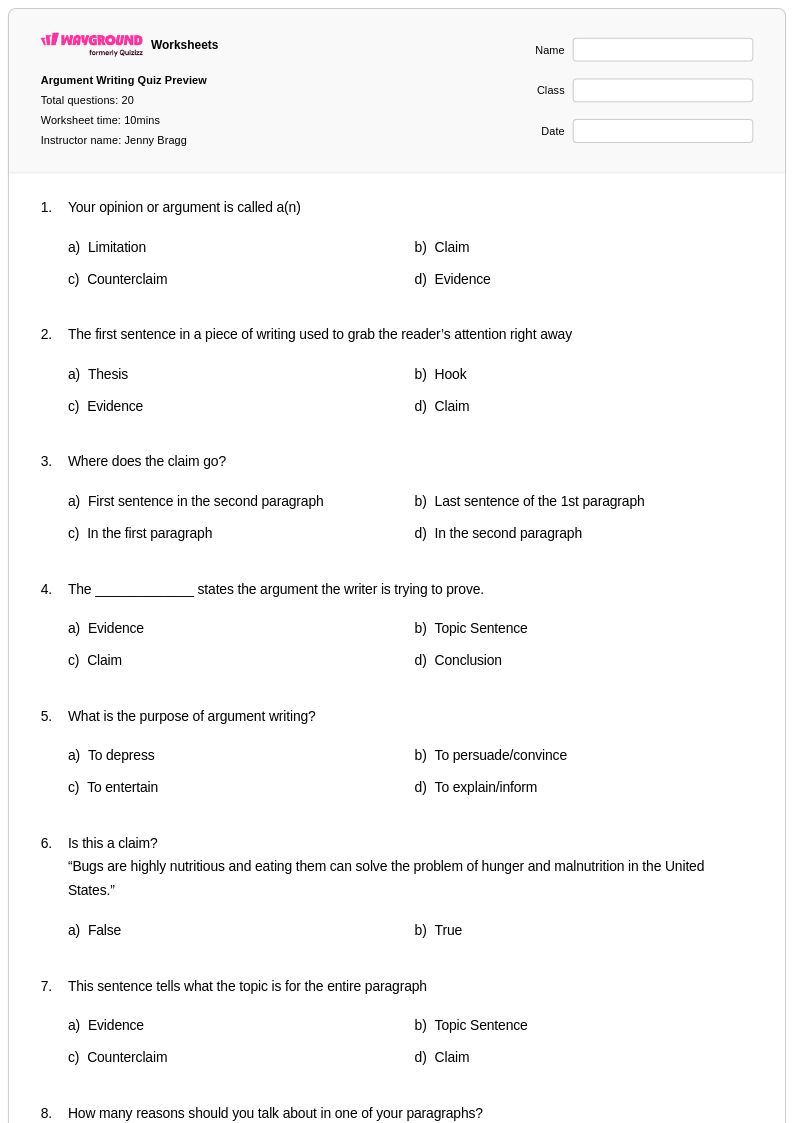
20 P
7th - 8th
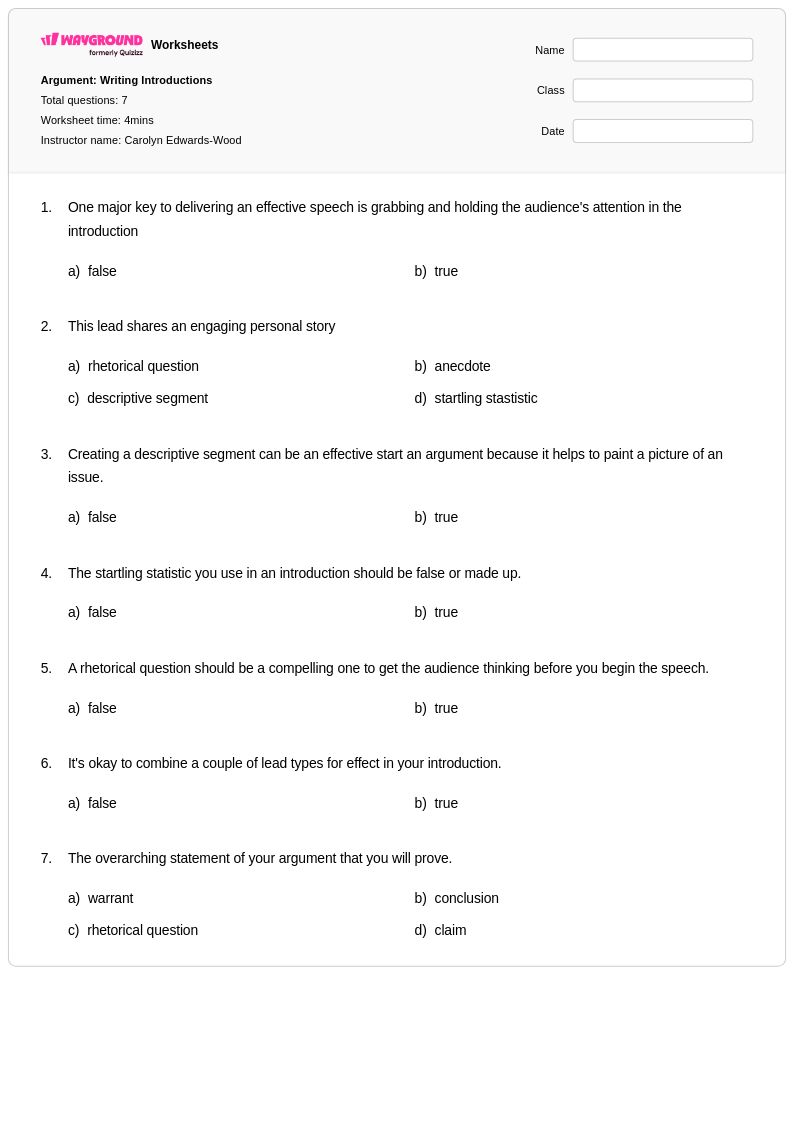
7 P
7th
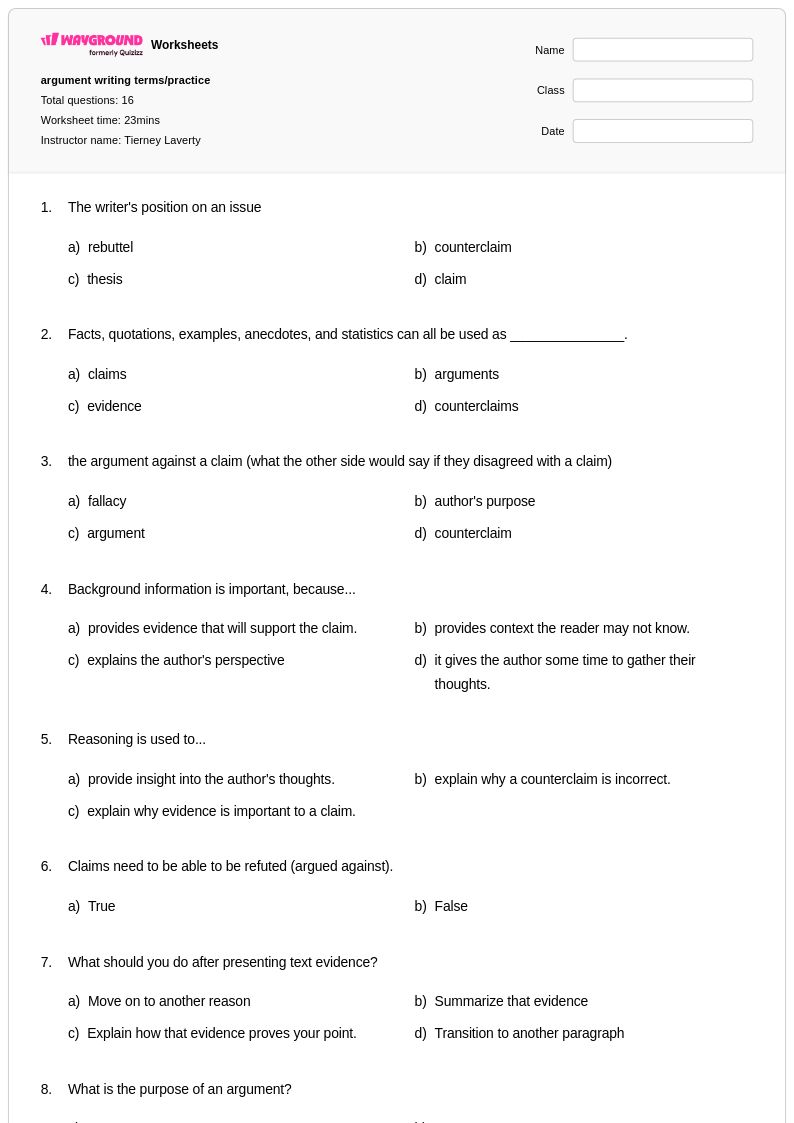
16 P
7th - 9th
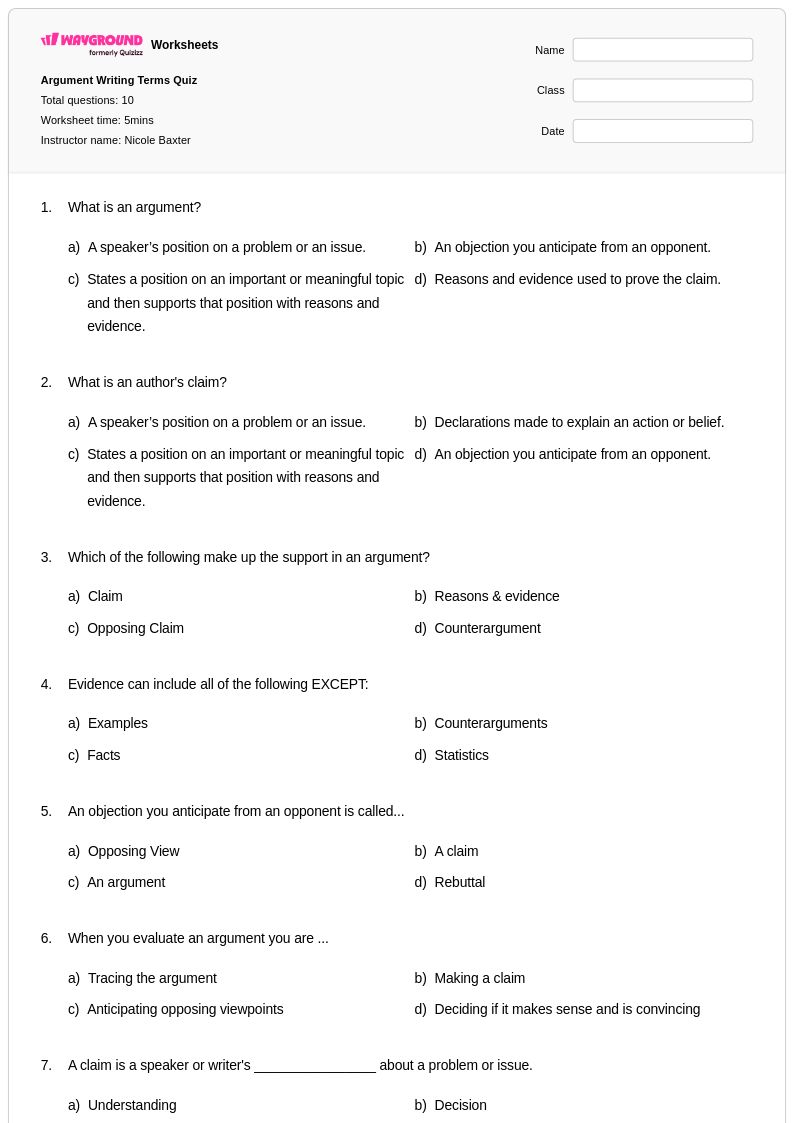
10 P
7th
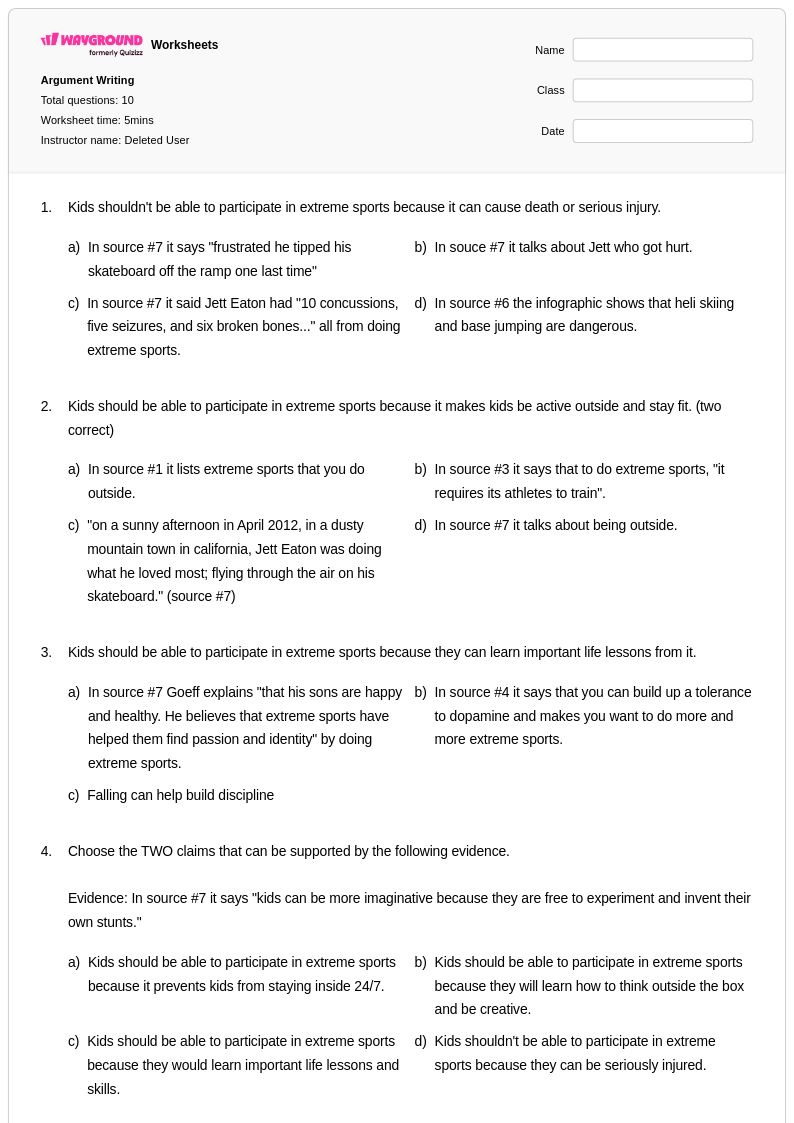
10 P
7th - 8th
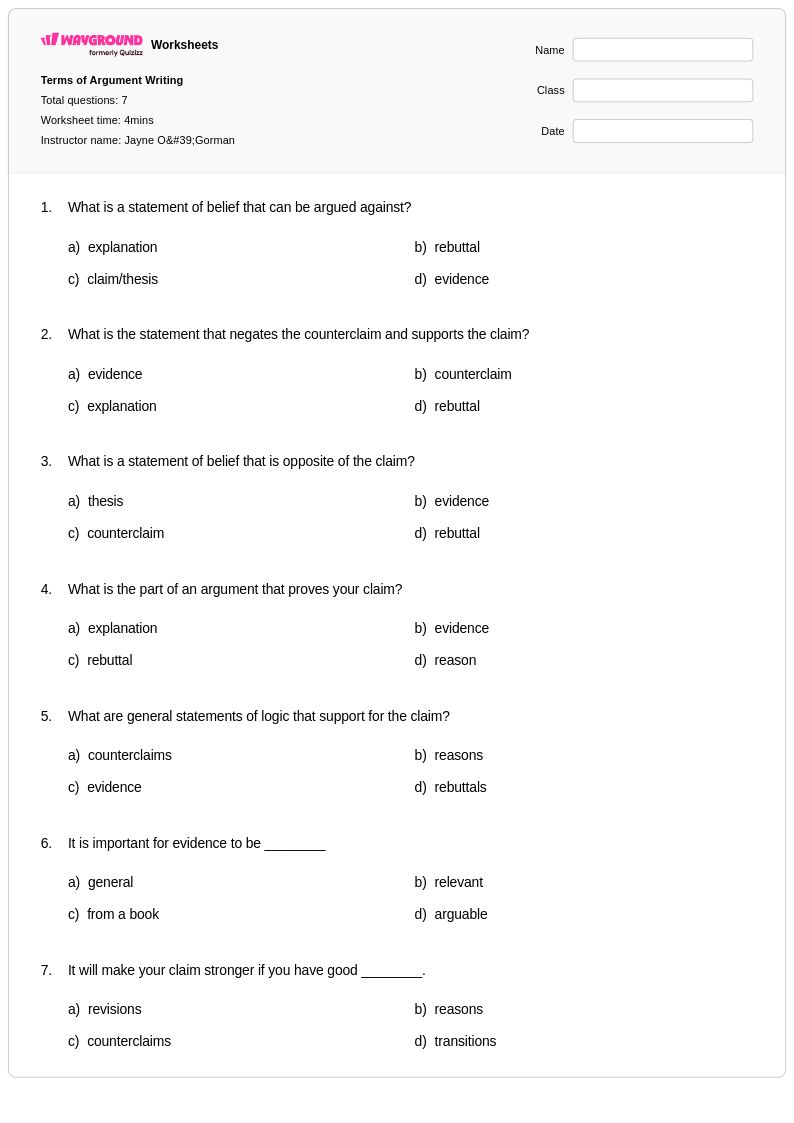
7 P
7th
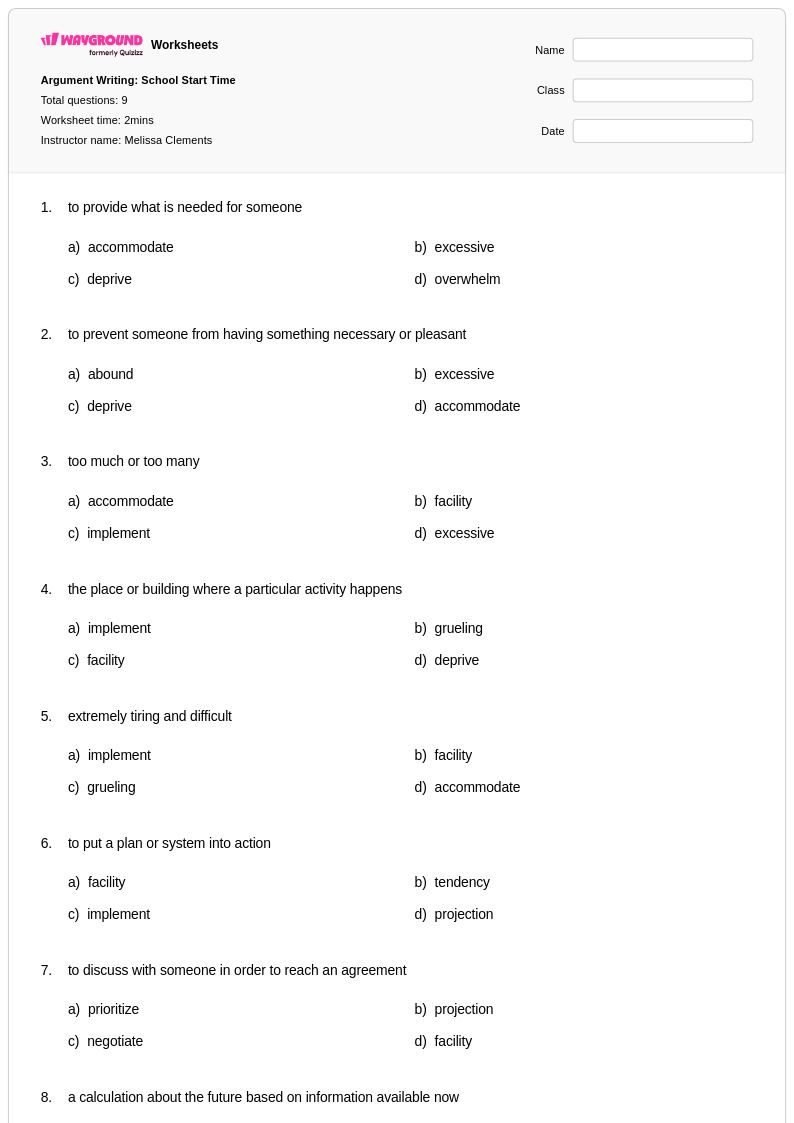
9 P
7th
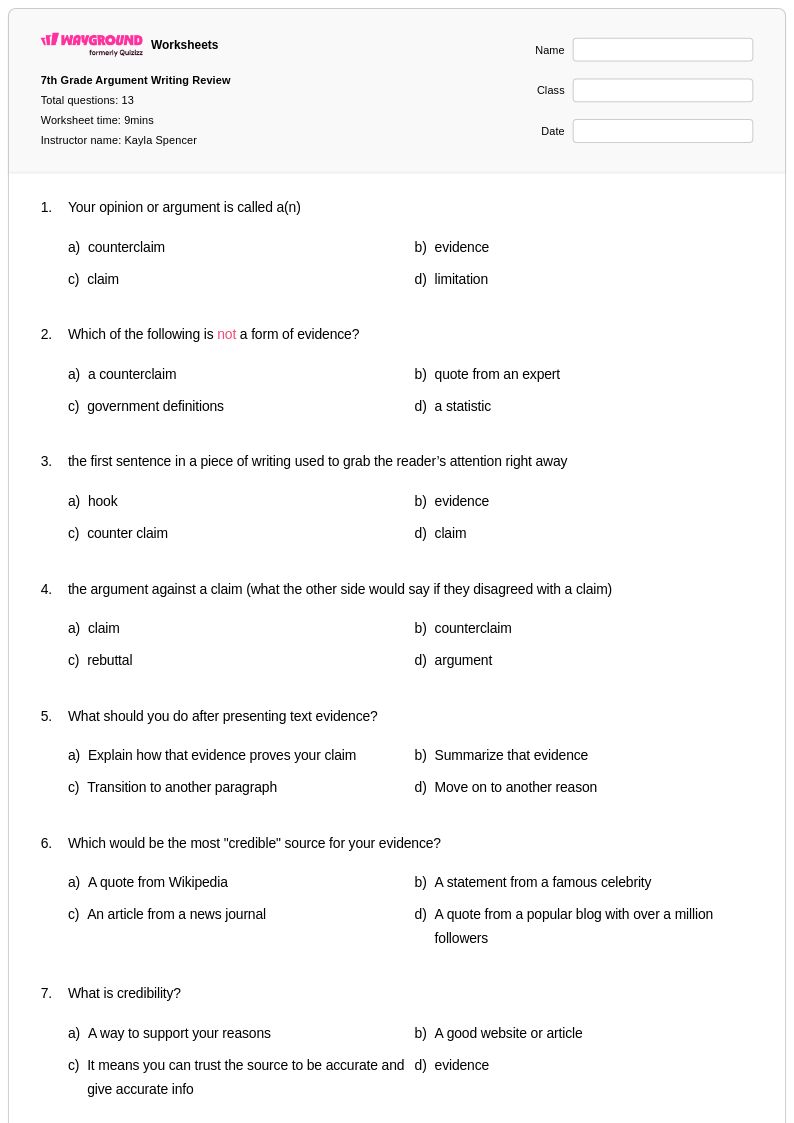
23 P
7th
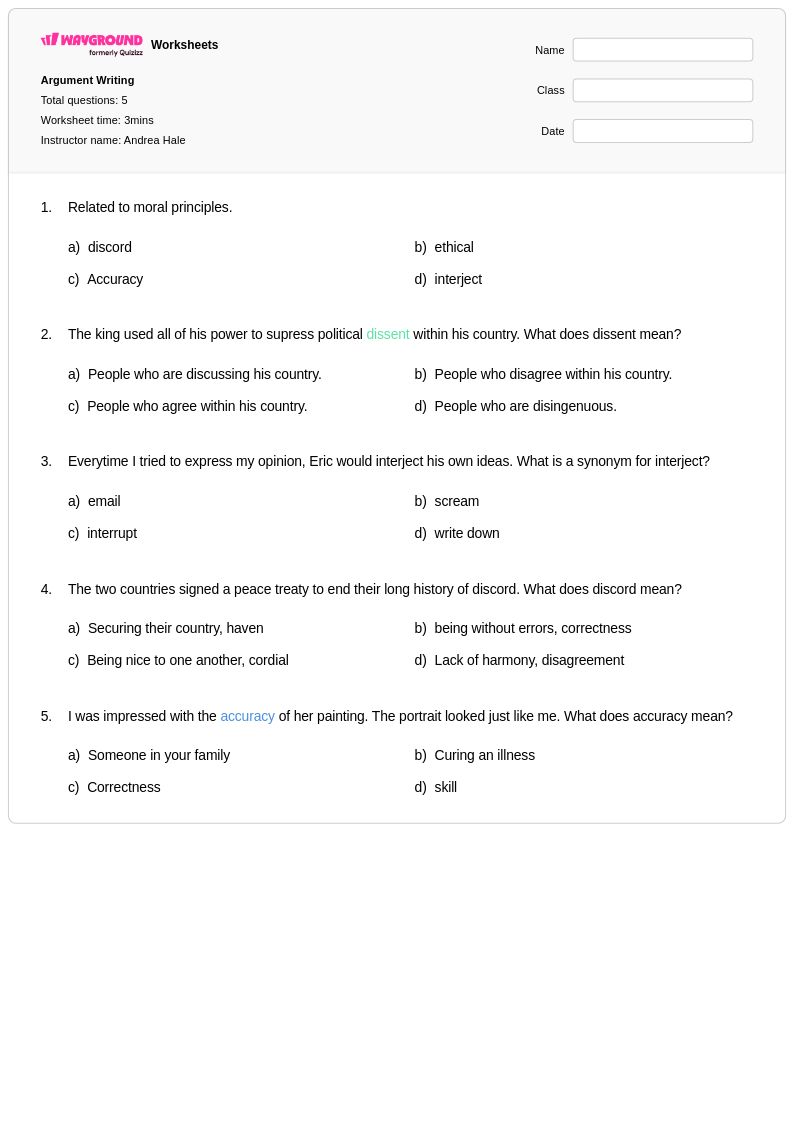
5 P
7th
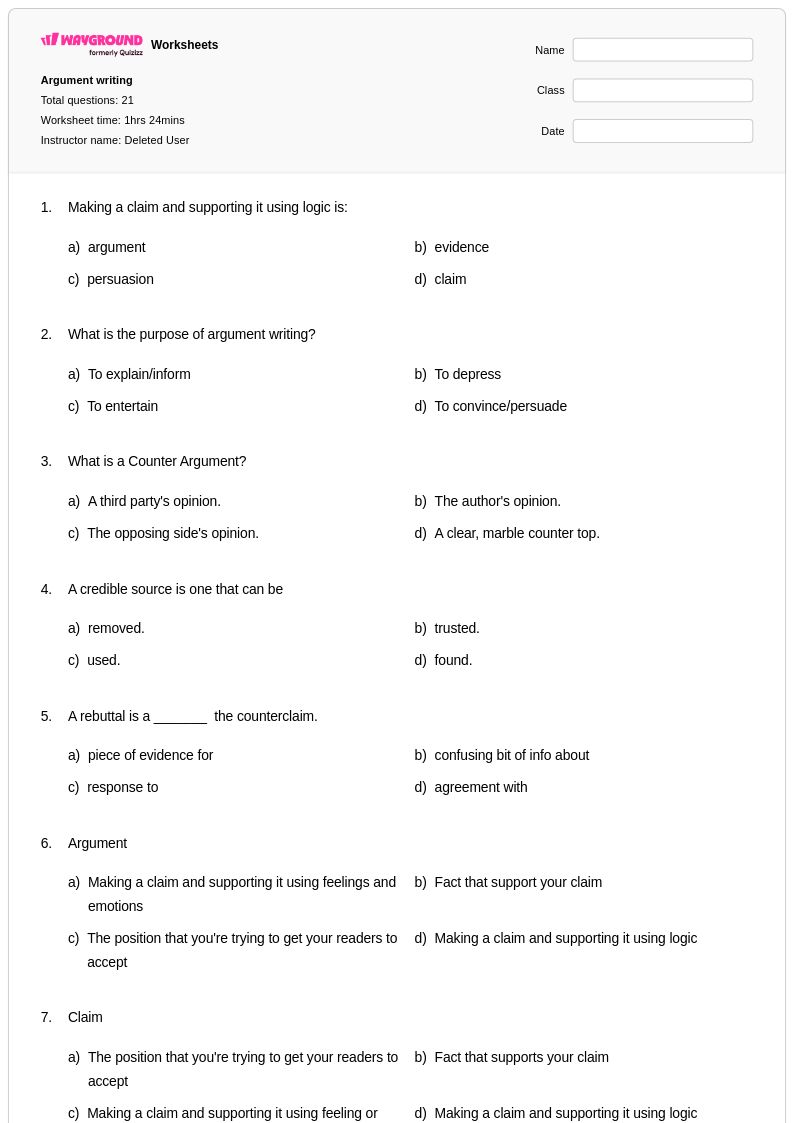
21 P
6th - 7th
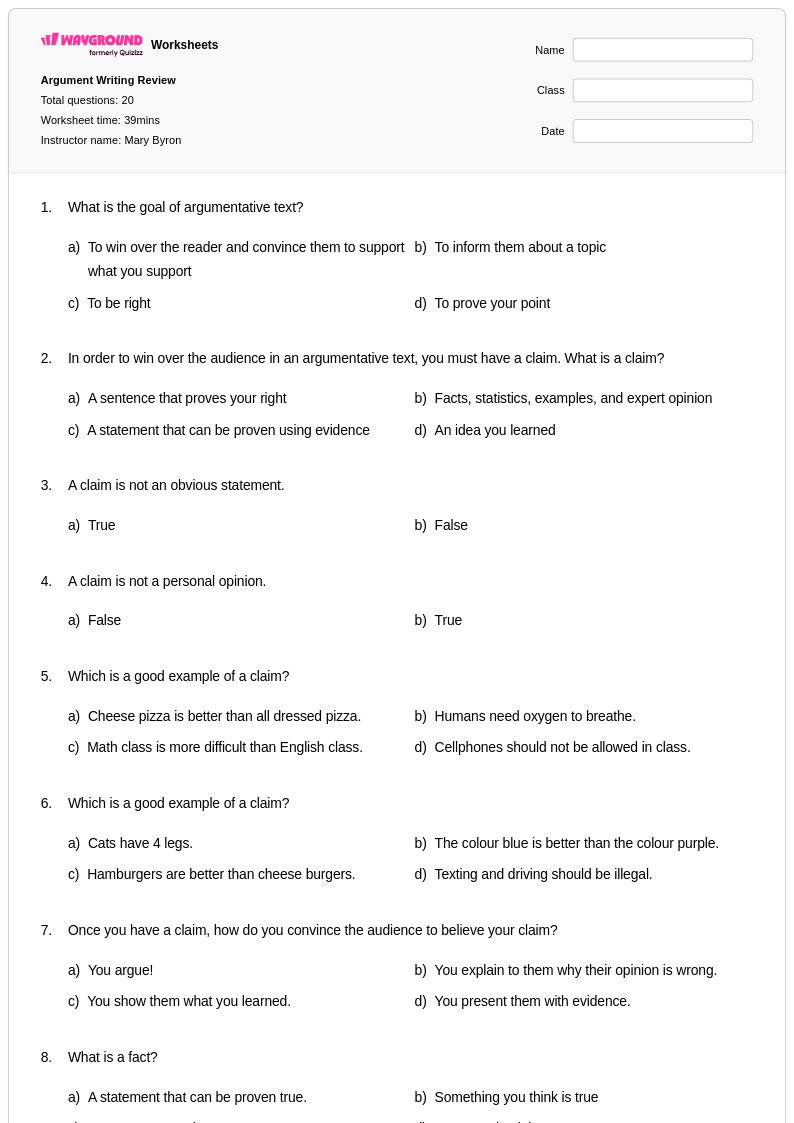
20 P
7th
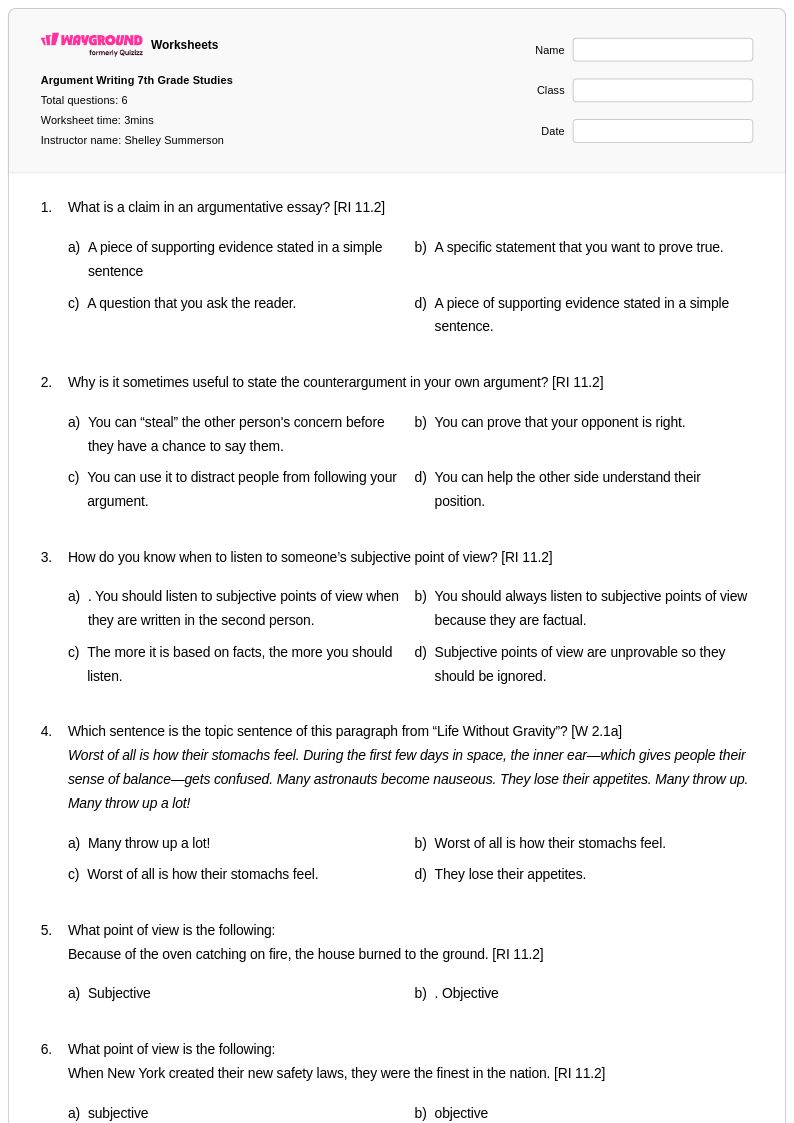
6 P
7th
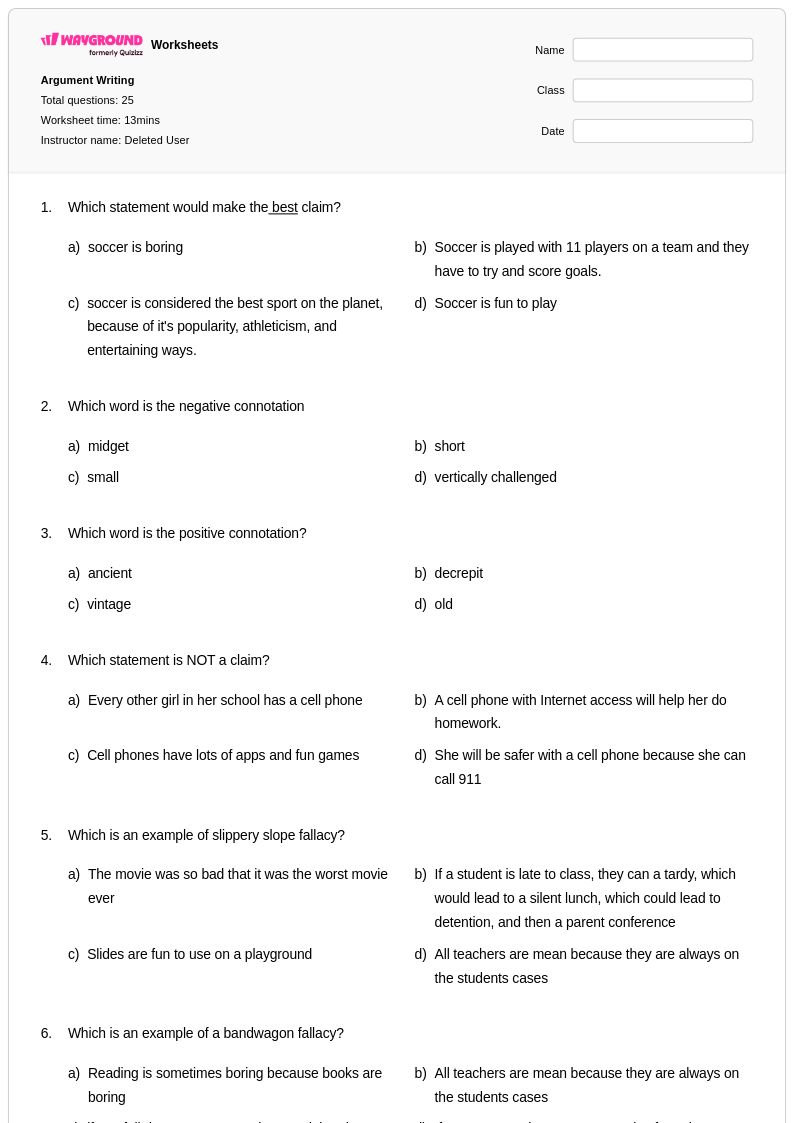
25 P
7th
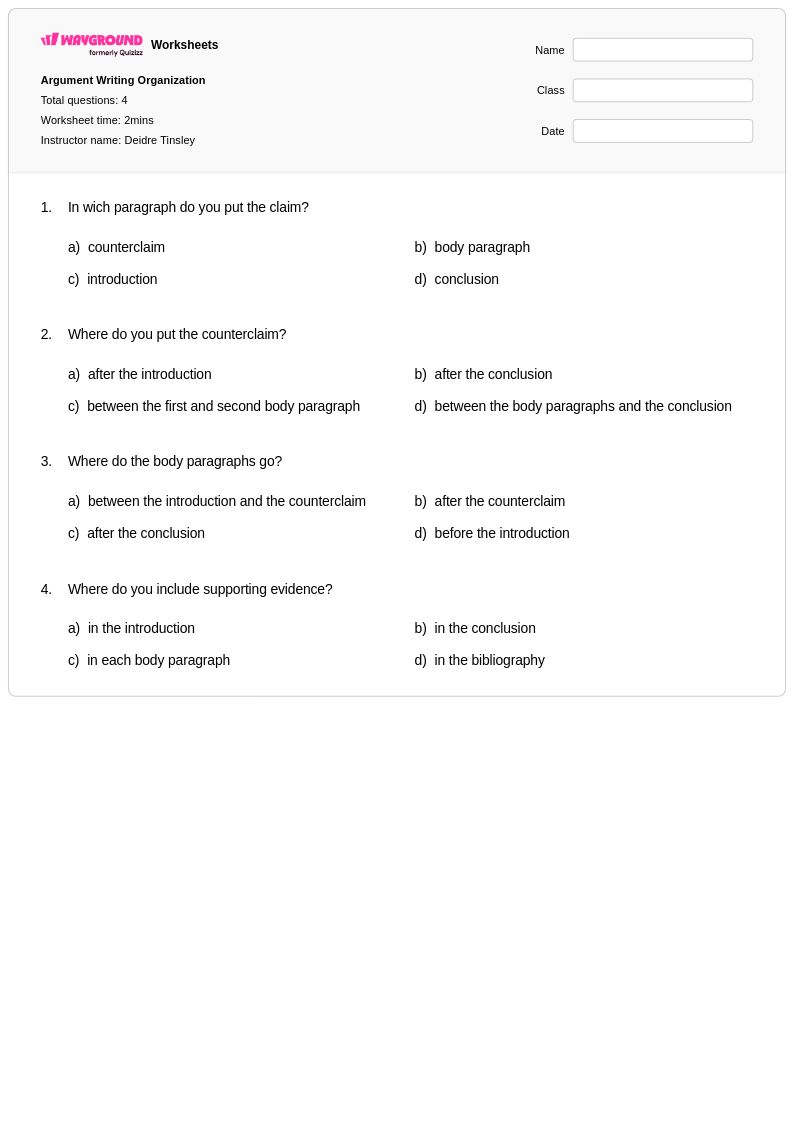
4 P
6th - 7th
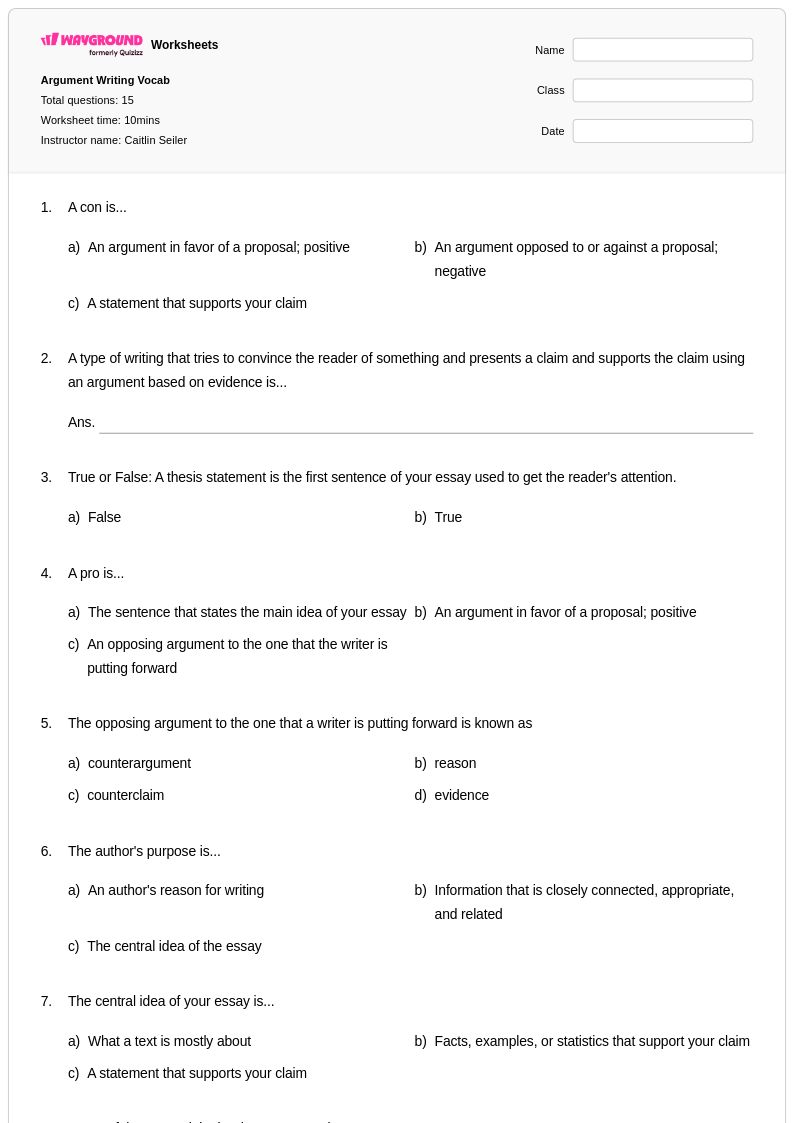
15 P
7th
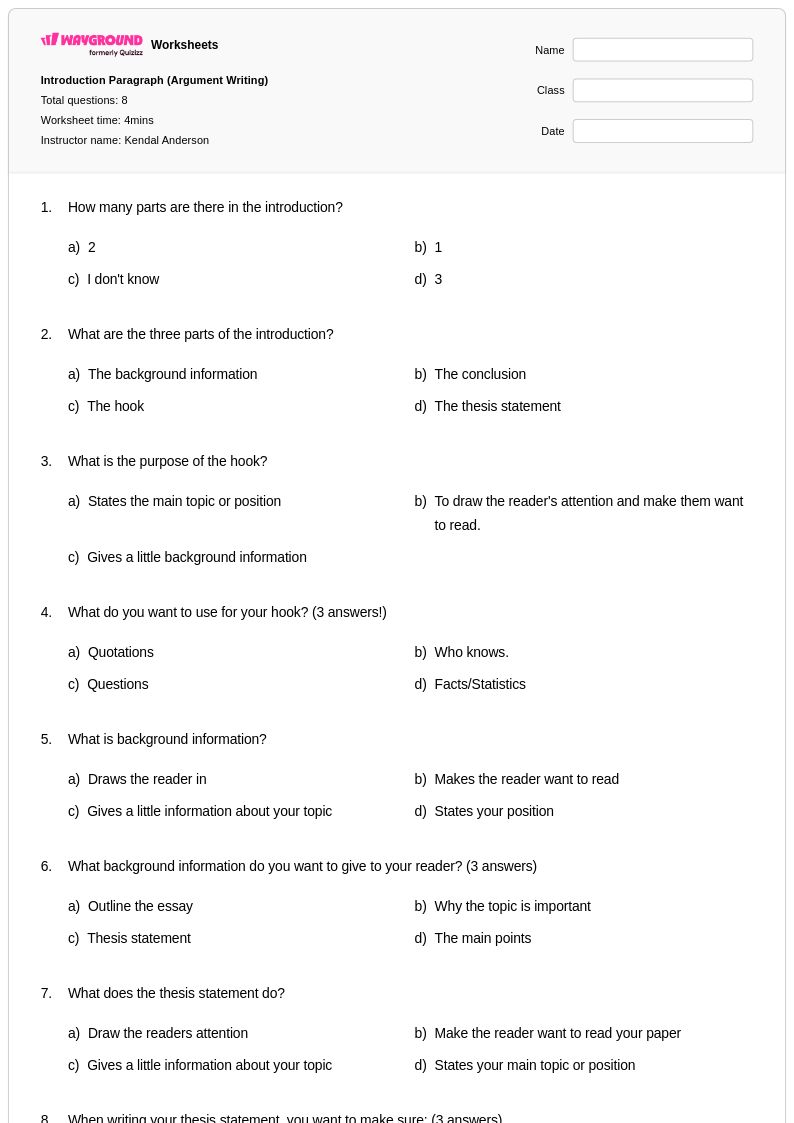
8 P
7th
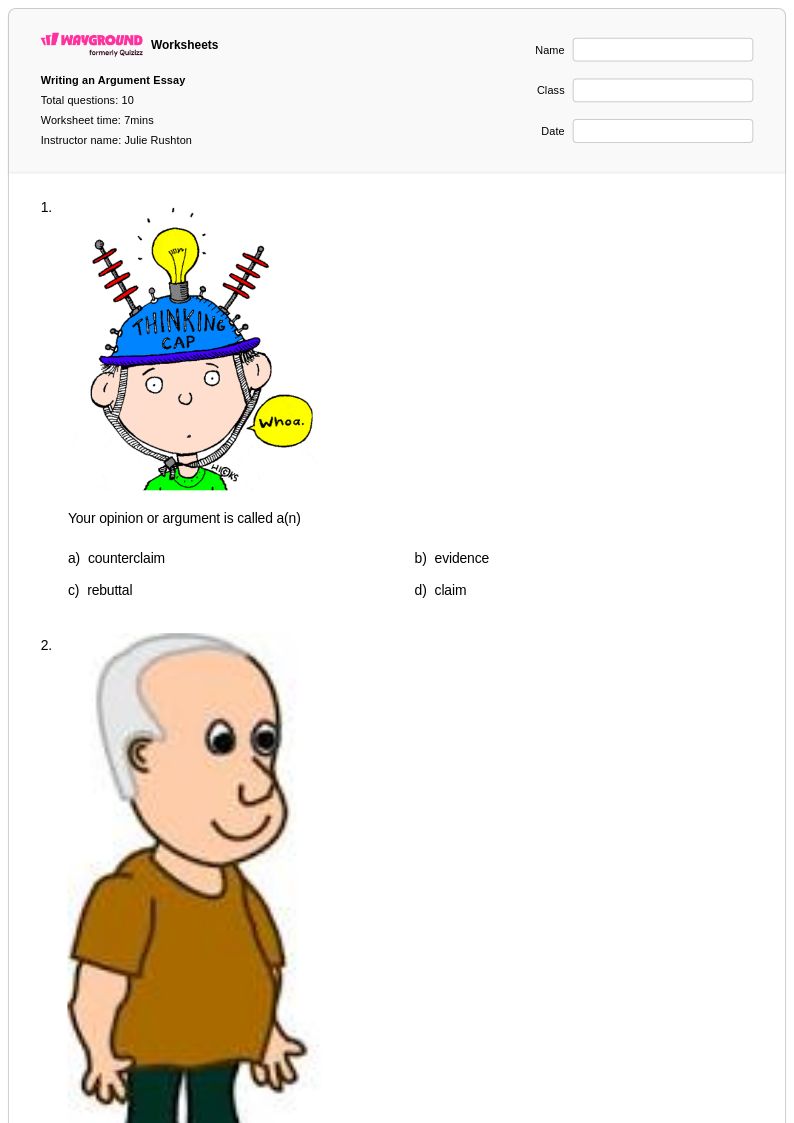
10 P
7th
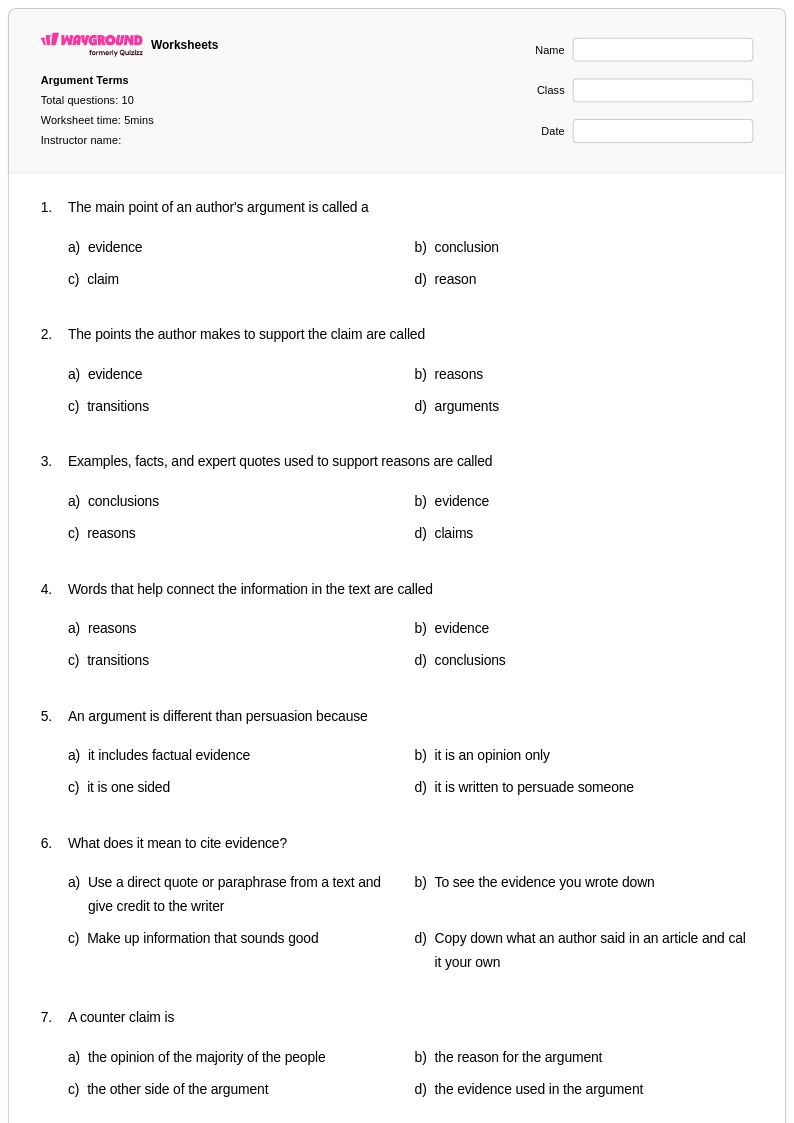
10 P
6th - 7th
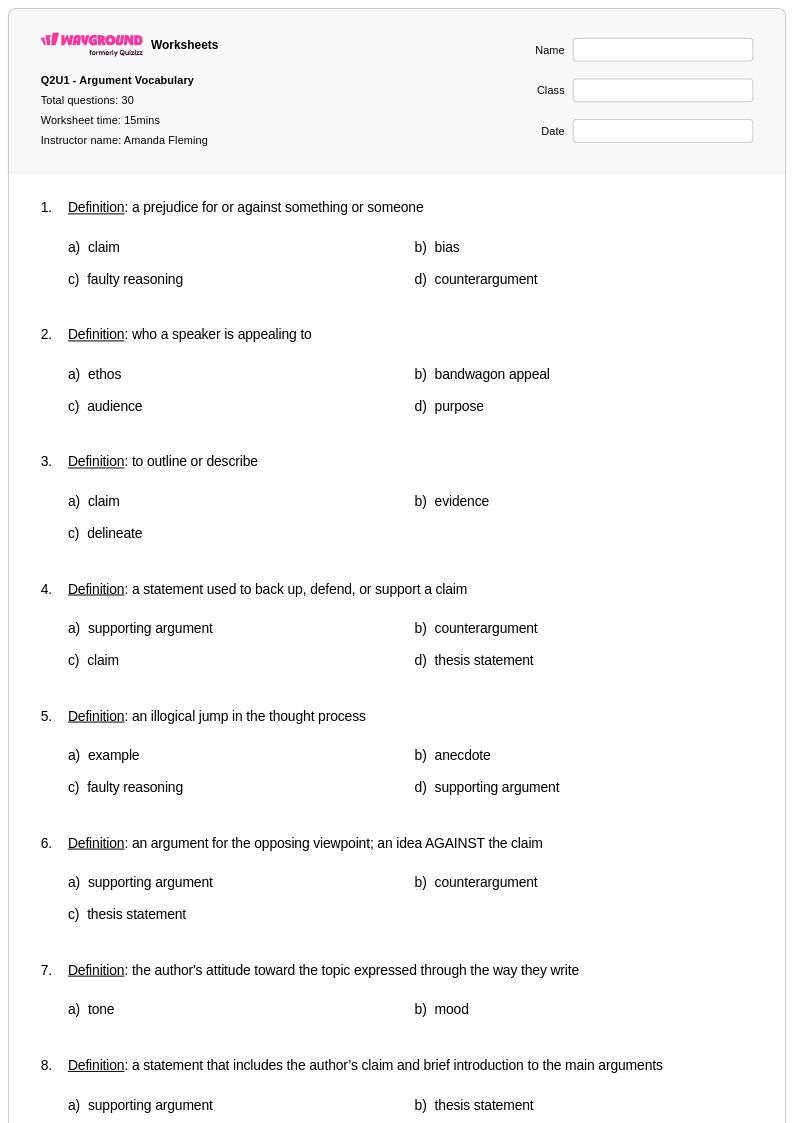
30 P
7th - 8th
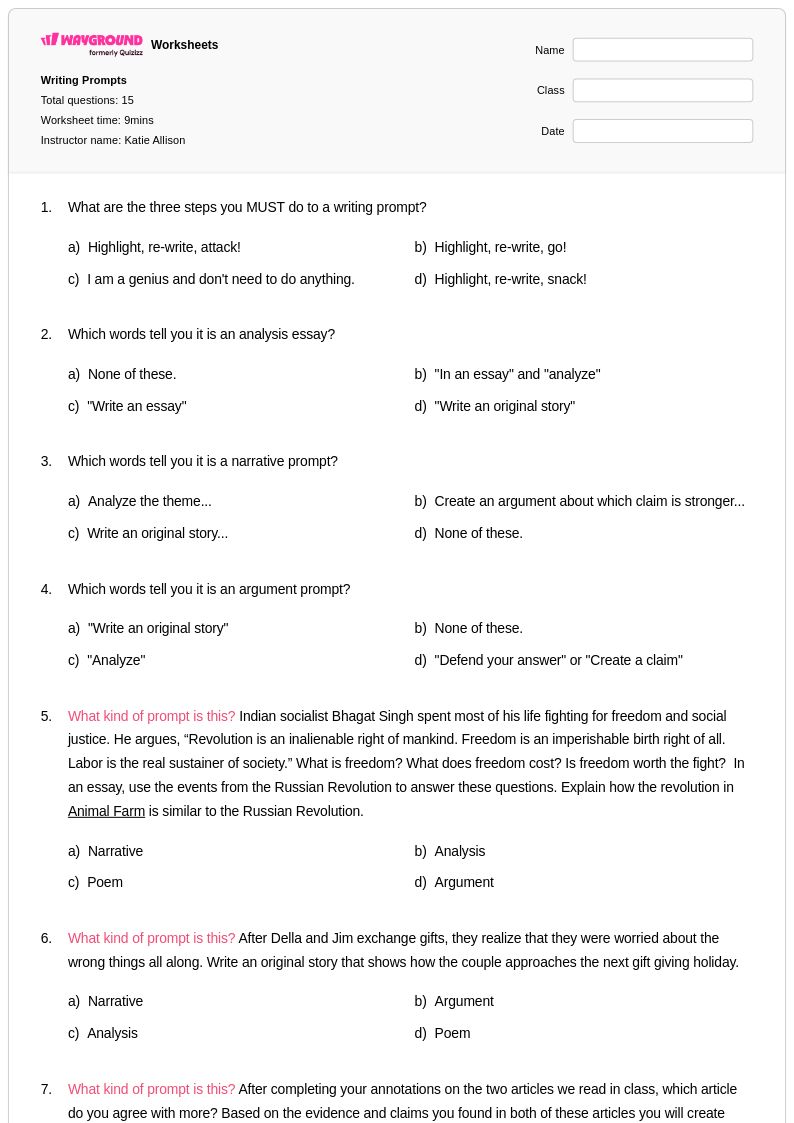
15 P
7th
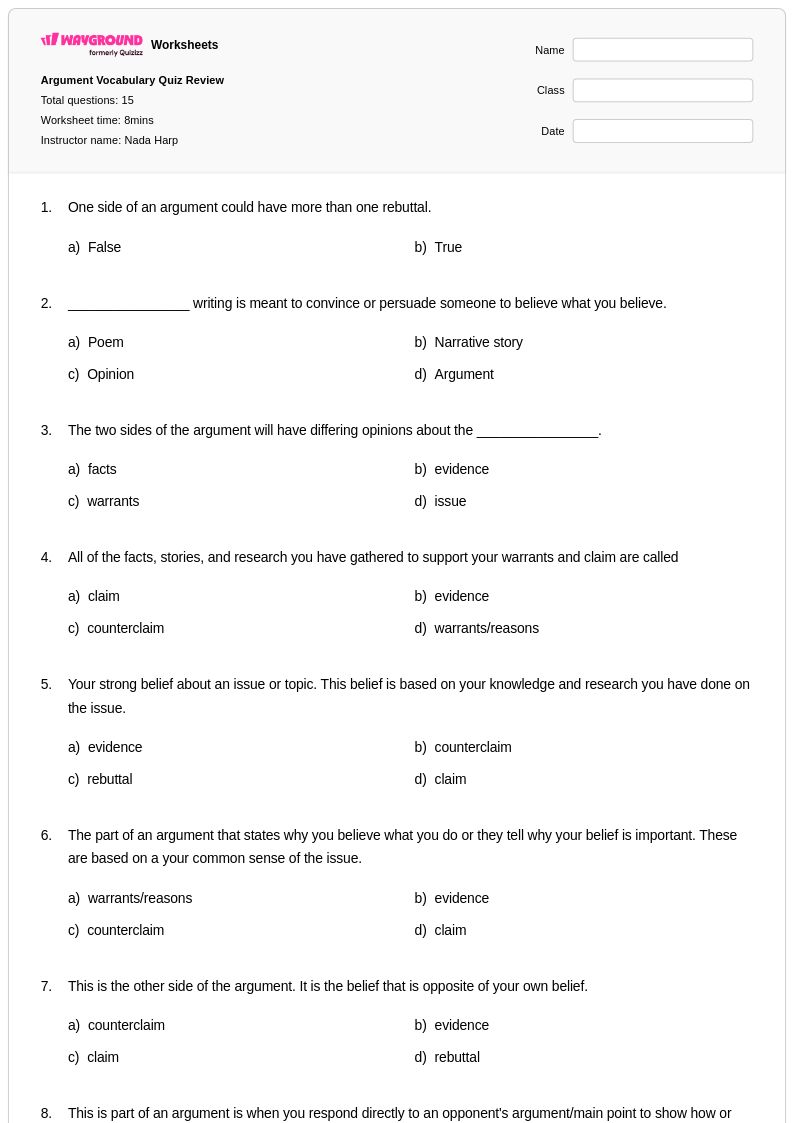
15 P
7th
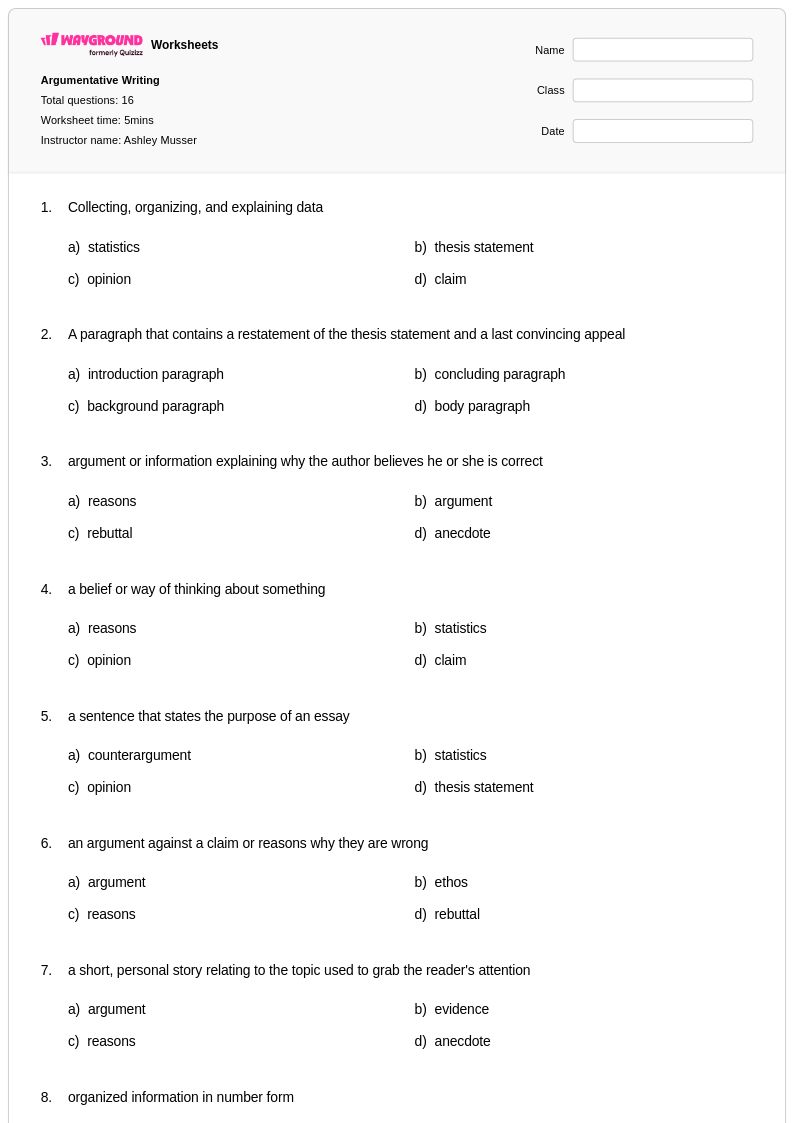
16 P
7th
Przeglądaj Argument Writing arkusze ćwiczeń według ocen
Przeglądaj inne arkusze tematyczne dla class 7
Explore printable Argument Writing worksheets for Class 7
Class 7 argument writing worksheets available through Wayground (formerly Quizizz) provide comprehensive practice in crafting persuasive essays and developing critical thinking skills essential for academic success. These carefully designed resources strengthen students' ability to construct logical arguments, evaluate evidence, identify counterarguments, and use rhetorical devices effectively. The worksheets focus on teaching seventh graders how to establish clear thesis statements, organize supporting evidence in coherent body paragraphs, and create compelling conclusions that reinforce their central claims. Each printable resource includes structured practice problems that guide students through the argument writing process, from initial brainstorming to final revision, with accompanying answer keys that help teachers provide targeted feedback. These free educational materials cover essential components such as claim development, source evaluation, citation practices, and the integration of opposing viewpoints to create more nuanced and persuasive arguments.
Wayground (formerly Quizizz) empowers educators with access to millions of teacher-created argument writing resources specifically designed for Class 7 students, featuring robust search and filtering capabilities that allow instructors to locate materials aligned with specific curriculum standards and learning objectives. The platform's differentiation tools enable teachers to customize worksheets based on individual student needs, offering both remediation support for struggling writers and enrichment opportunities for advanced learners. These versatile resources are available in both printable PDF format and interactive digital versions, providing flexibility for various classroom environments and teaching preferences. Teachers can efficiently plan comprehensive argument writing units by selecting from pre-made materials or adapting existing worksheets to target specific skills such as evidence analysis, logical reasoning, or persuasive language techniques, making it easier to provide consistent skill practice and support student growth in nonfiction writing proficiency.
FAQs
How do I teach argument writing to students who struggle with organizing their ideas?
What exercises help students practice building a strong argument with evidence?
What are the most common mistakes students make in argument writing?
How do I teach students to write a strong thesis statement for an argumentative essay?
How can I use argument writing worksheets to differentiate instruction for students at different skill levels?
How do I use Wayground's argument writing worksheets in my classroom?