Free Printable Atoms and Molecules Worksheets for Class 4
Class 4 atoms and molecules worksheets from Wayground help students explore the basic building blocks of matter through engaging printables, free practice problems, and comprehensive answer keys in PDF format.
Explore printable Atoms and Molecules worksheets for Class 4
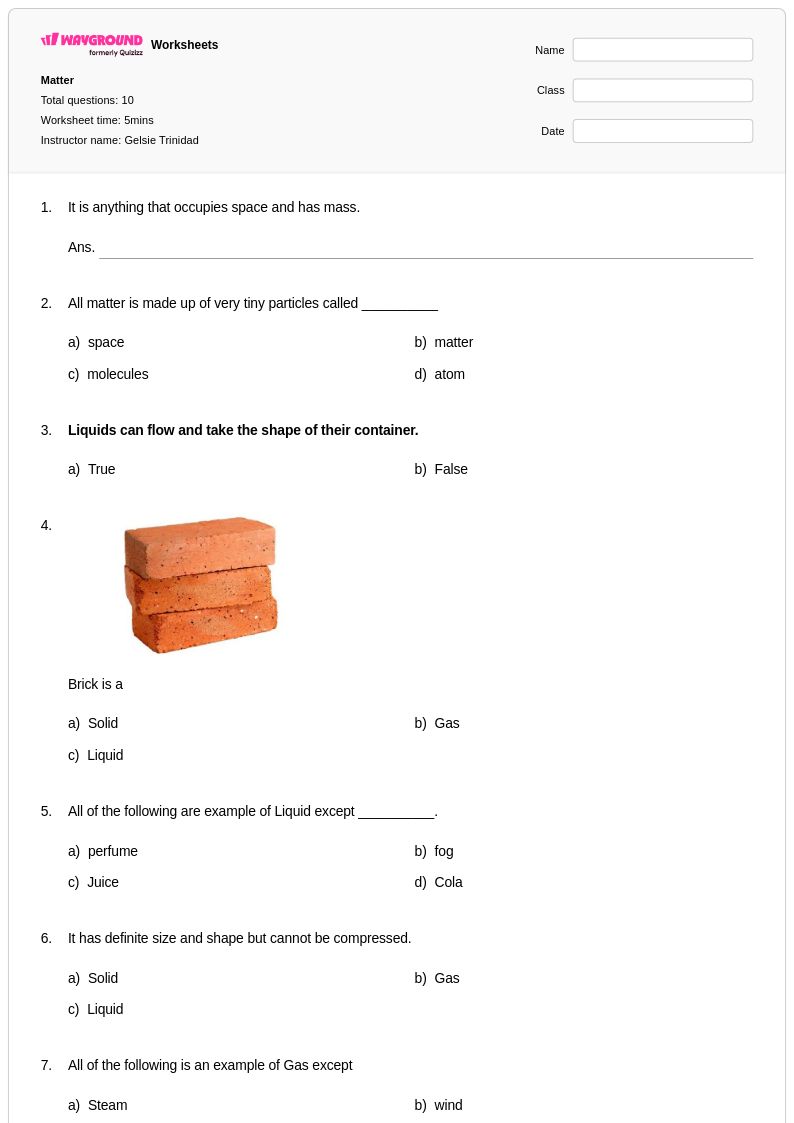
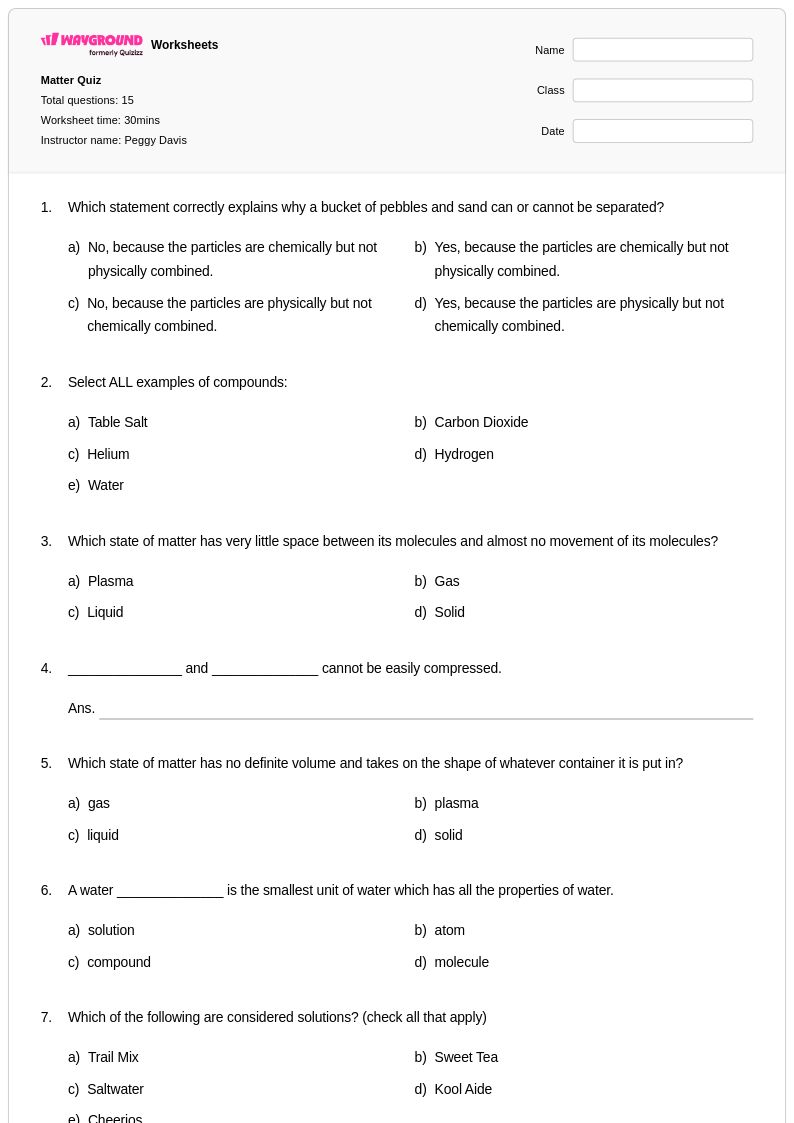
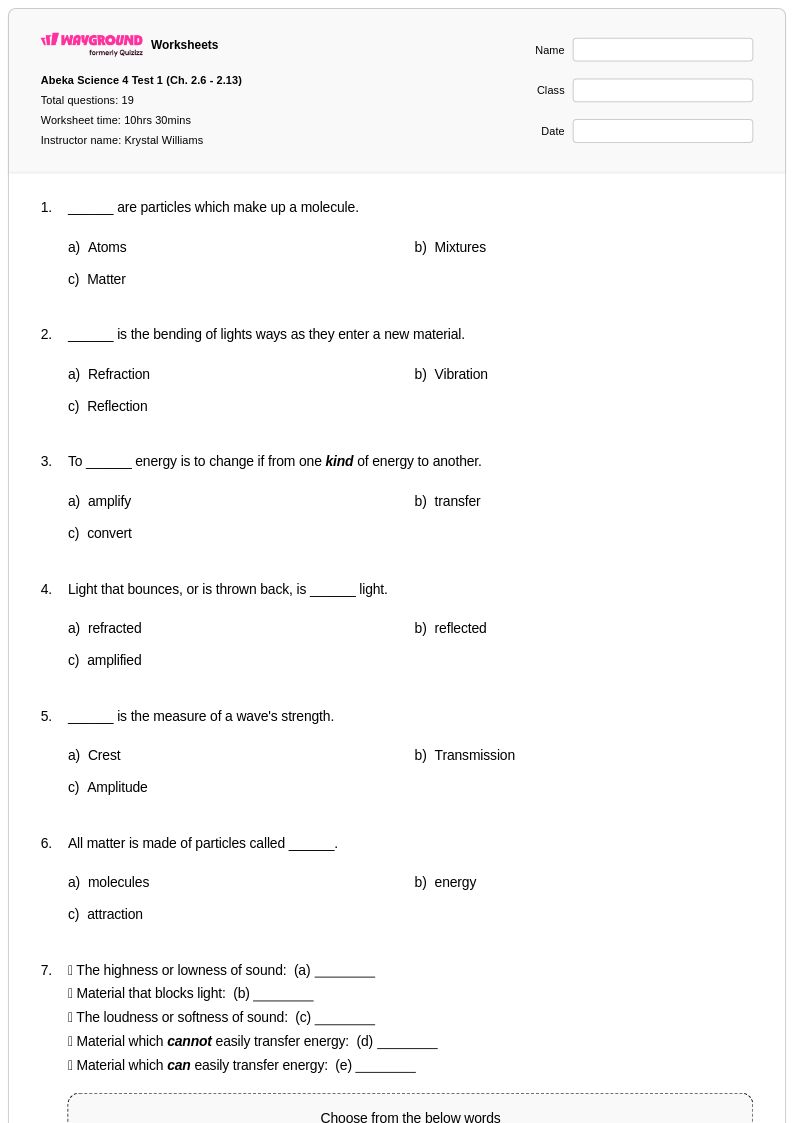
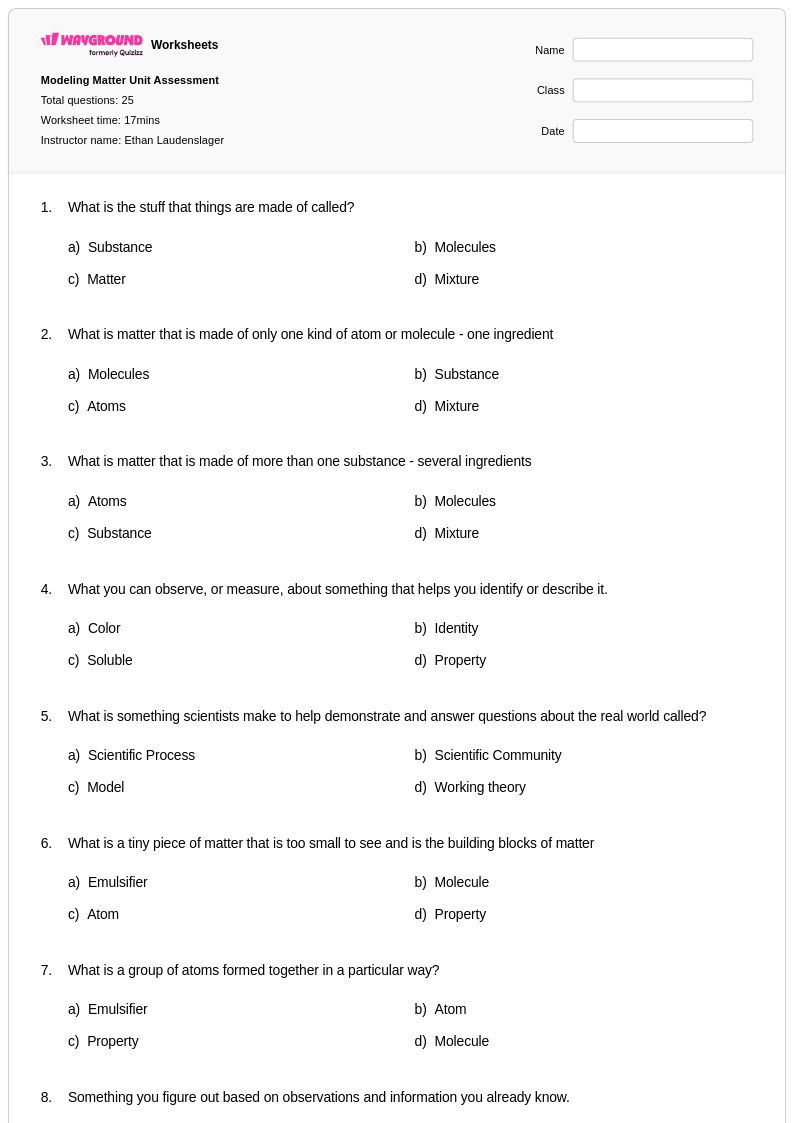
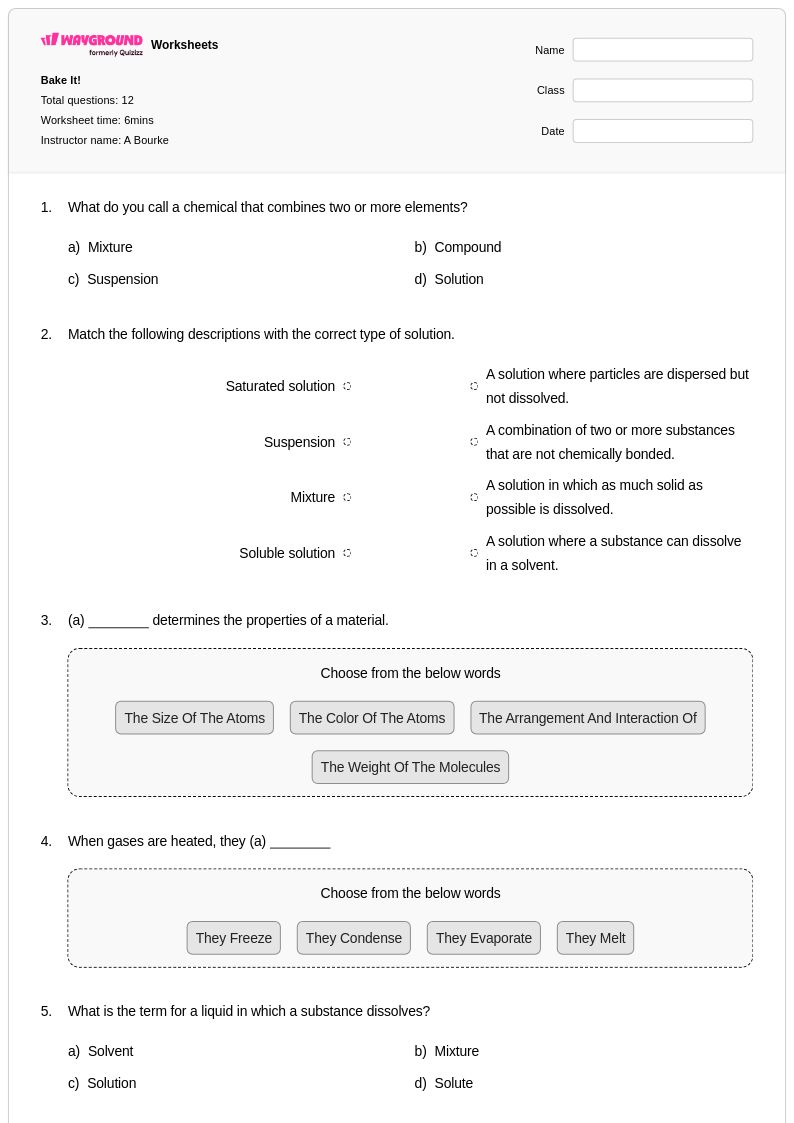
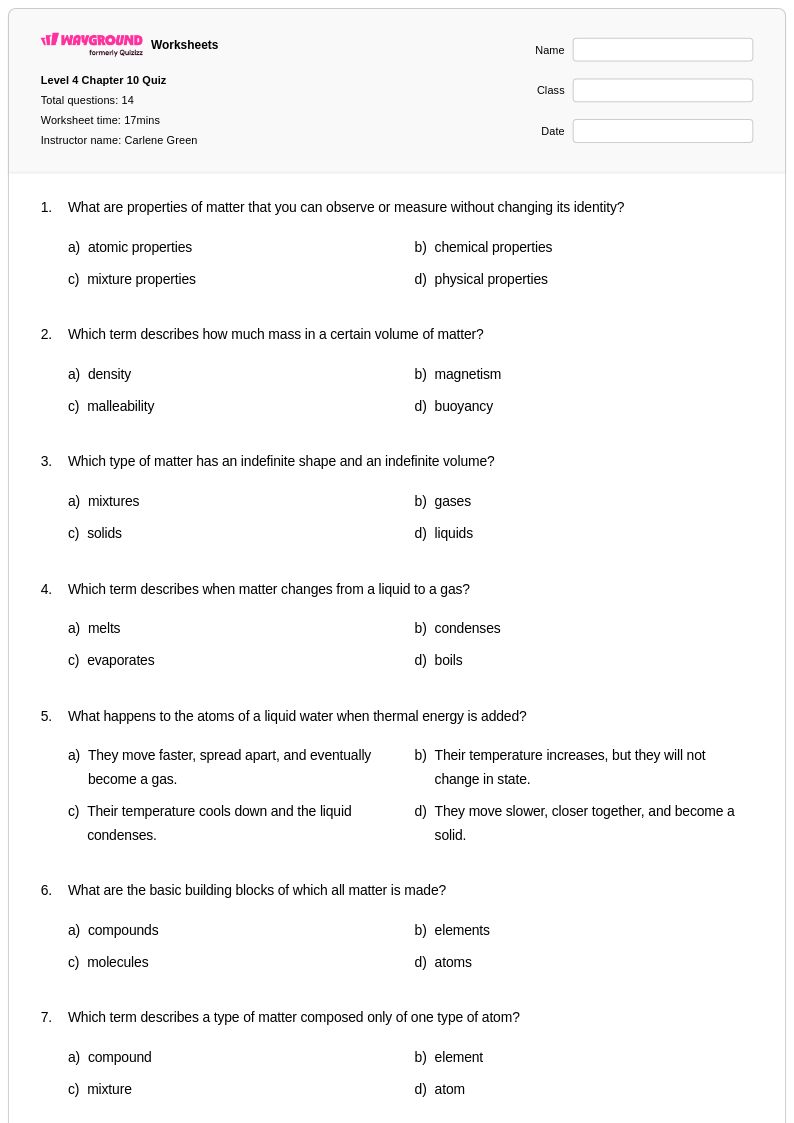
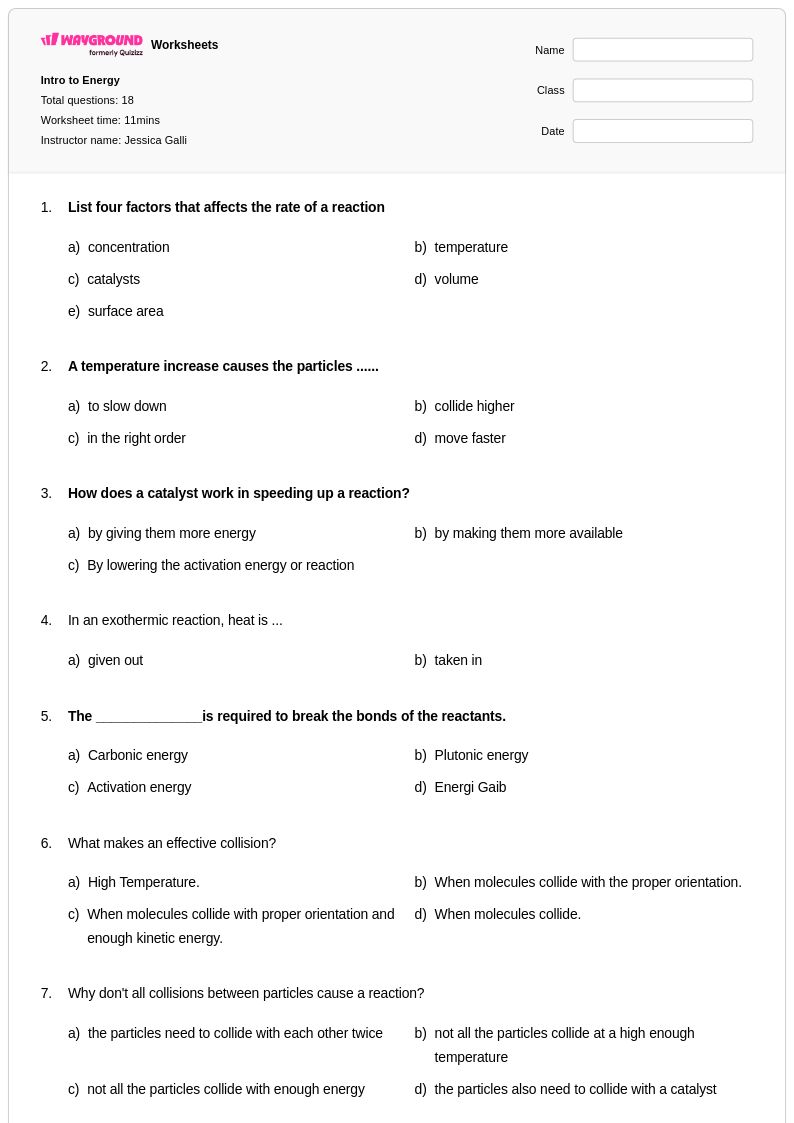
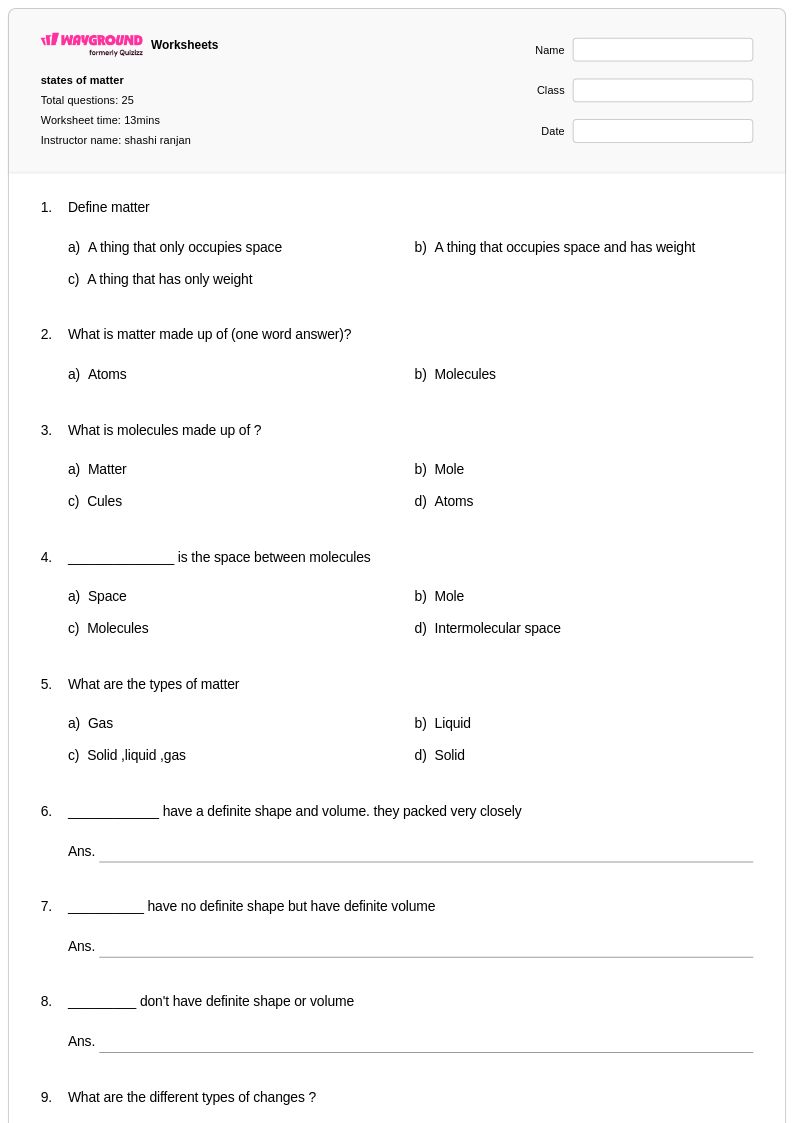
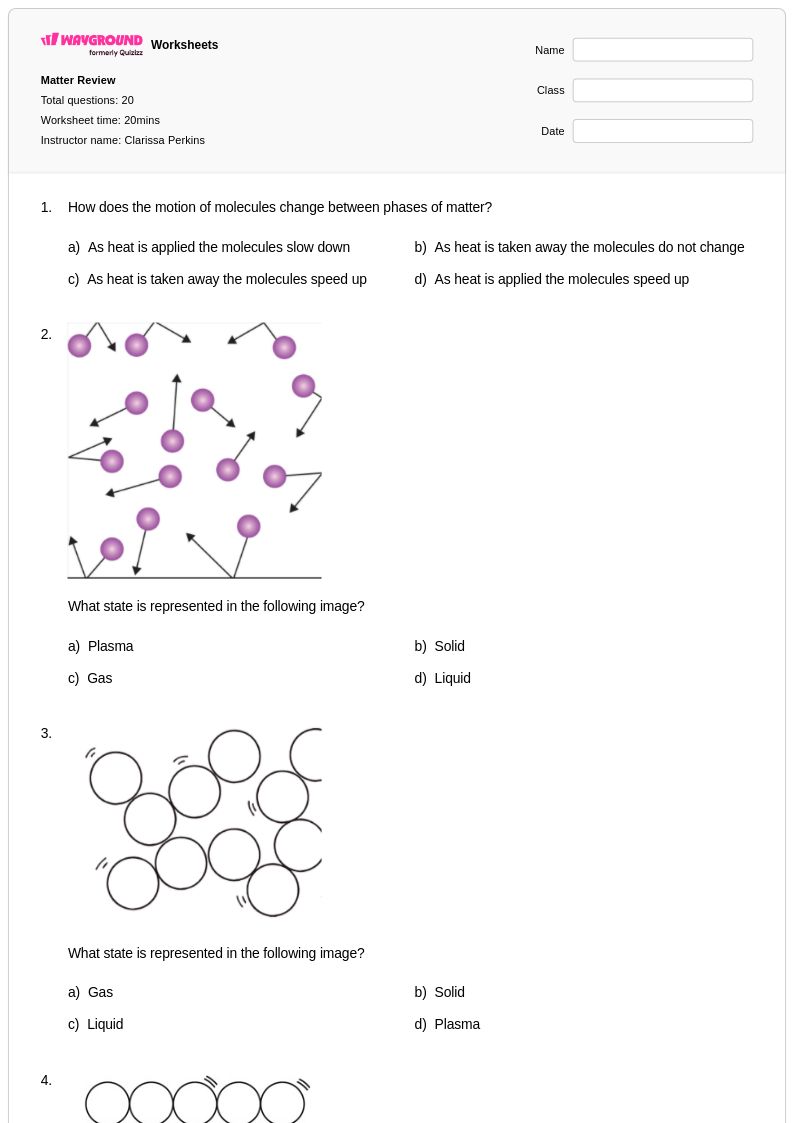
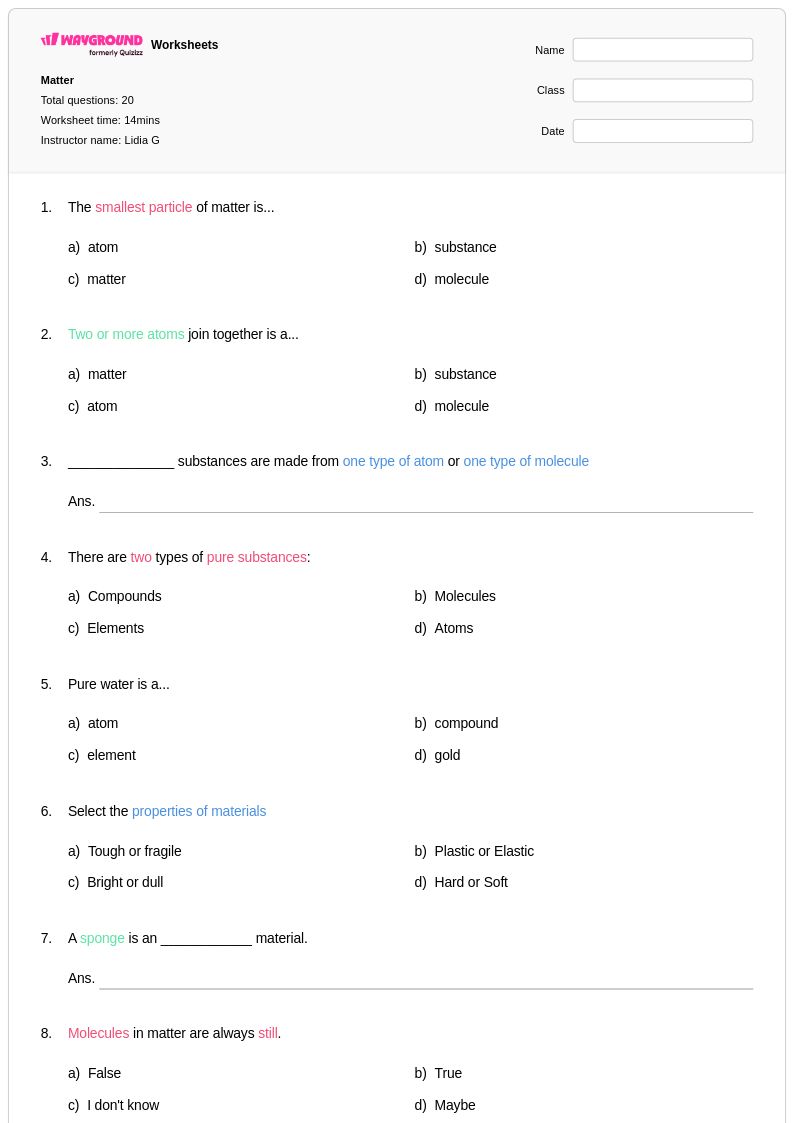
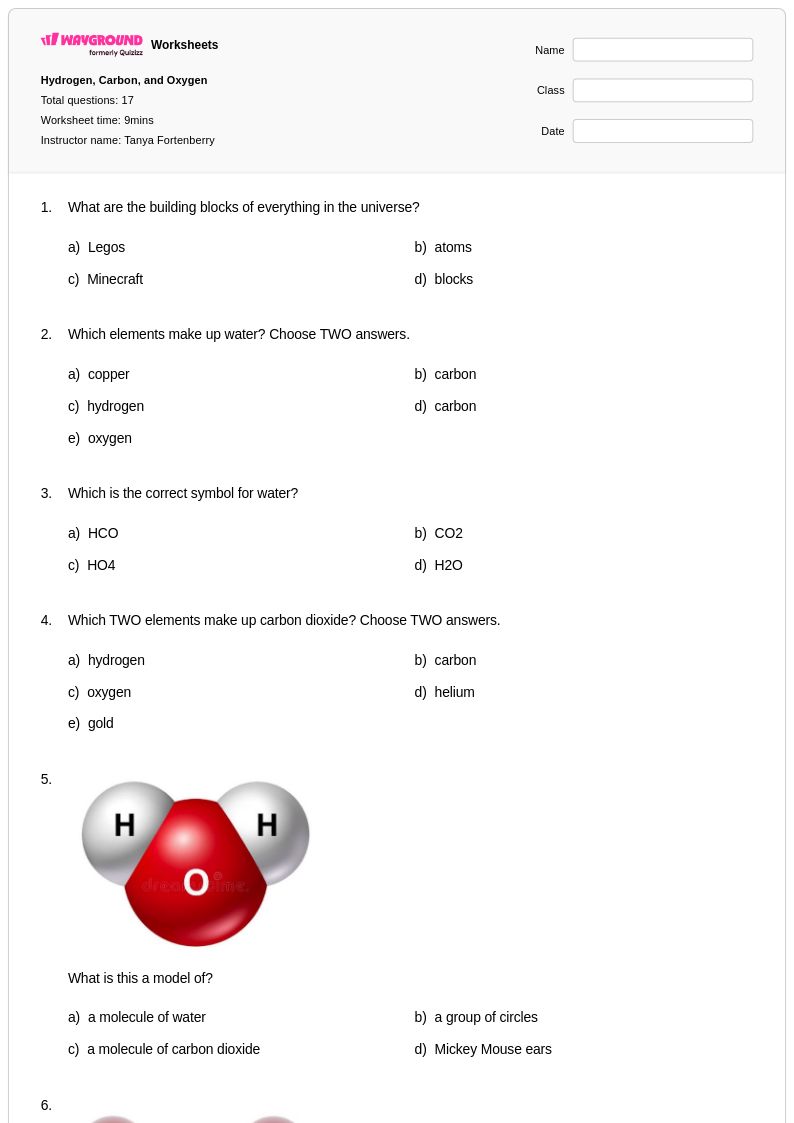
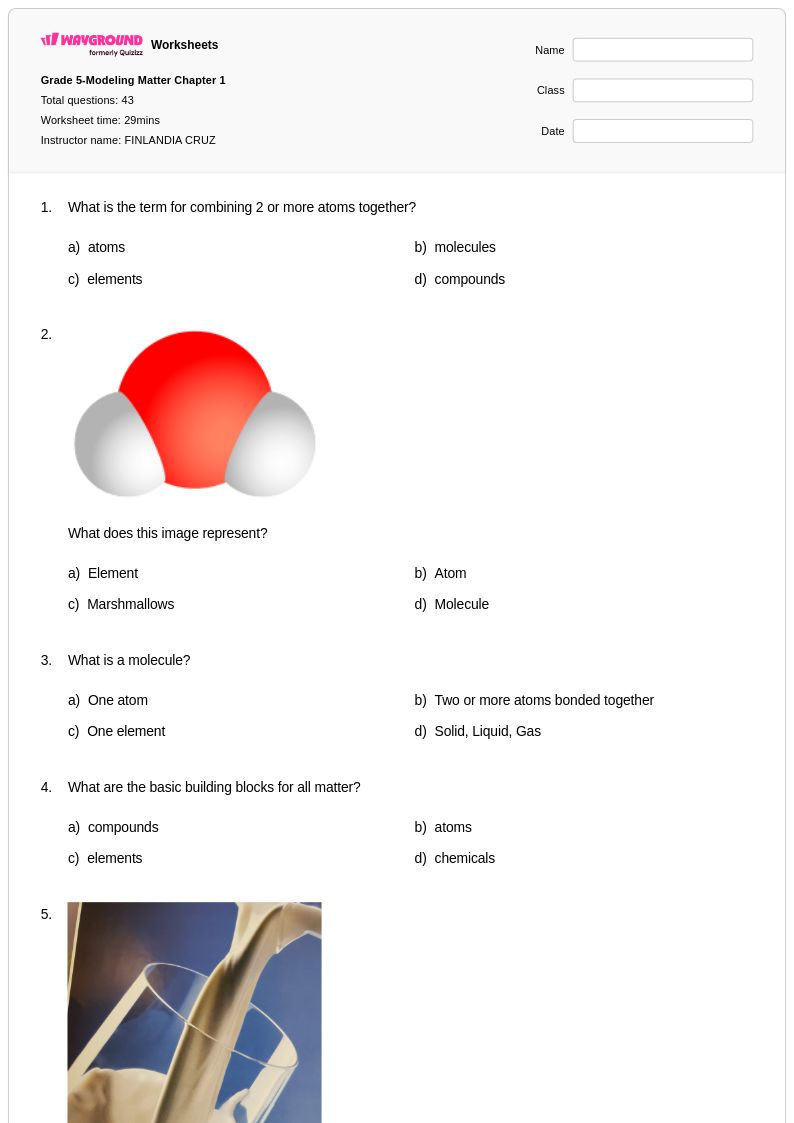
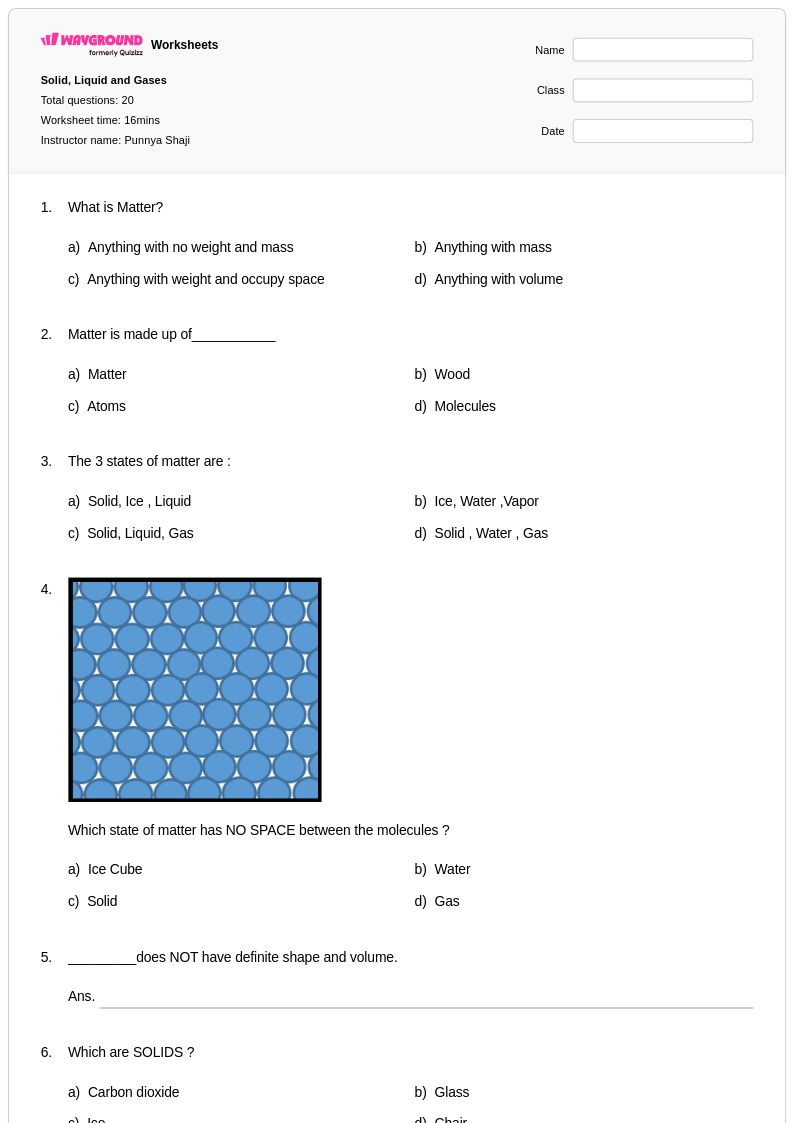
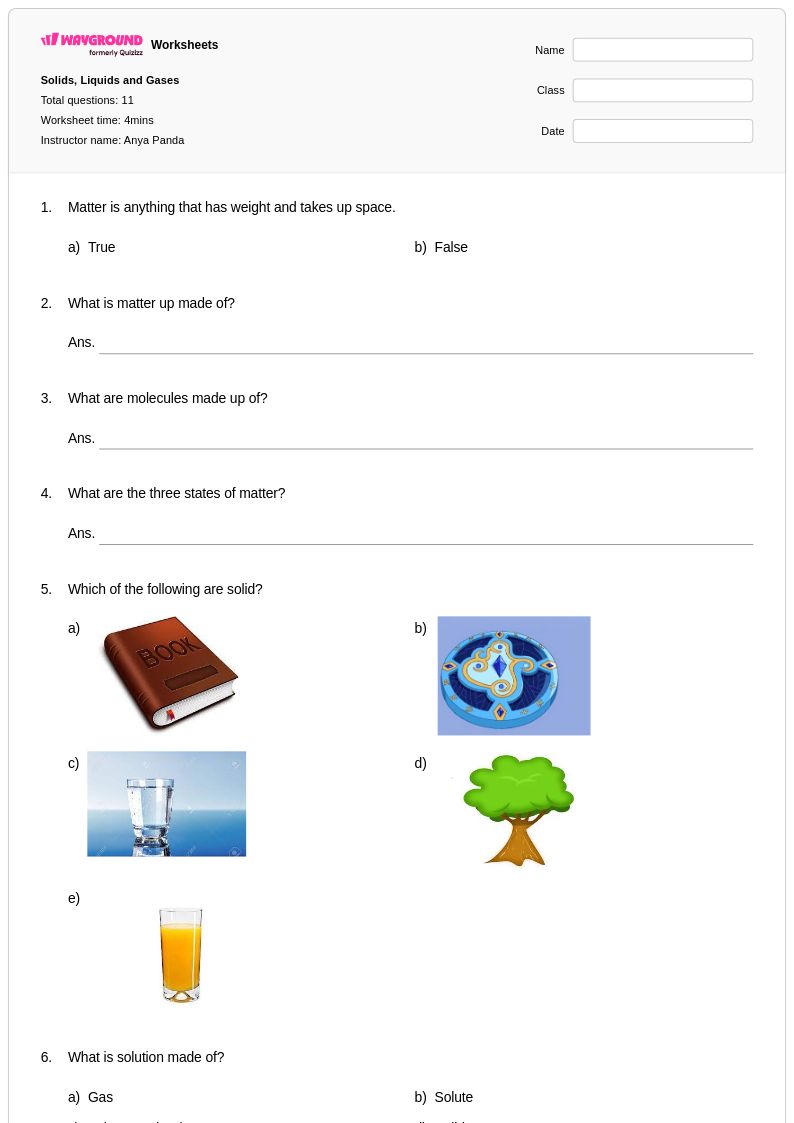
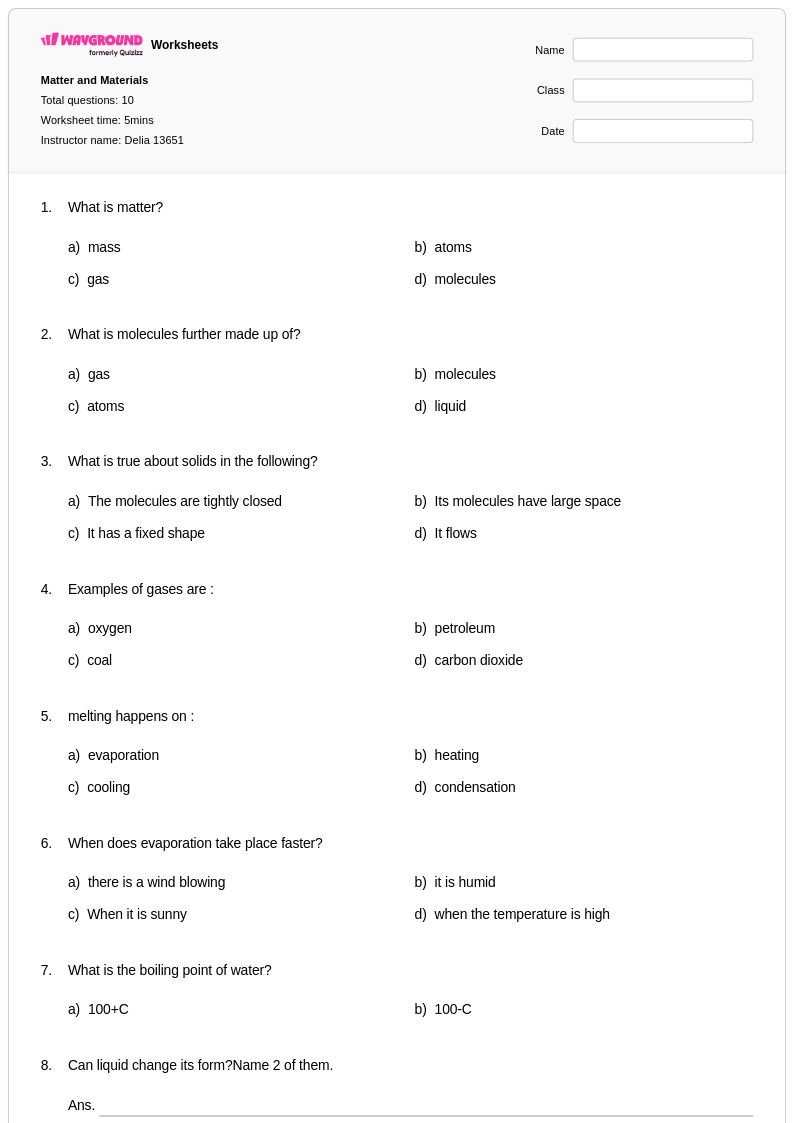
Atoms and molecules worksheets for Class 4 provide young scientists with foundational knowledge about the building blocks of matter through engaging, hands-on activities designed to make abstract concepts concrete and understandable. These carefully crafted educational resources help students develop essential scientific thinking skills by exploring how atoms combine to form molecules, understanding the difference between elements and compounds, and recognizing that all matter is composed of tiny particles too small to see. Each worksheet collection includes comprehensive answer keys and detailed explanations that support both independent learning and guided instruction, while printable pdf formats ensure easy classroom distribution and home practice. Free practice problems range from simple atom identification exercises to more complex molecular modeling activities that challenge students to visualize and represent chemical structures using age-appropriate diagrams and illustrations.
Wayground, formerly Quizizz, empowers educators with access to millions of teacher-created atoms and molecules worksheets specifically designed for Class 4 science instruction, featuring robust search and filtering capabilities that allow teachers to quickly locate resources aligned with specific learning standards and curriculum requirements. The platform's comprehensive collection supports differentiated instruction through customizable worksheets that can be modified to meet diverse learning needs, from remediation activities for struggling students to enrichment challenges for advanced learners. Teachers benefit from flexible formatting options that include both printable and digital versions, enabling seamless integration into traditional classroom settings or remote learning environments. These carefully curated resources streamline lesson planning by providing ready-to-use materials for skill practice, formative assessment, and reinforcement activities that help students master fundamental chemistry concepts while building confidence in scientific reasoning and problem-solving abilities.
FAQs
How do I teach atoms and molecules to middle or high school students?
Start by grounding students in the structure of the atom — protons, neutrons, and electrons — before moving into how atoms bond to form molecules. Use visual models to reinforce electron configurations and valence shells, since students need to see why atoms bond before they can understand how. Connecting atomic structure to real compounds students recognize (water, oxygen, table salt) builds conceptual relevance before introducing ionic and covalent bonding terminology.
What exercises help students practice atomic structure and molecular bonding?
Effective practice includes labeling atomic diagrams, completing electron configuration tables, and identifying the number of valence electrons for different elements. Students also benefit from exercises that ask them to classify bonds as ionic or covalent based on electronegativity differences and to draw simple molecular geometry using VSEPR principles. Worksheets that combine identification, short-answer, and diagramming tasks build both recall and applied understanding of how atoms combine into compounds.
What mistakes do students commonly make when learning about atoms and molecules?
A common misconception is confusing the number of protons with the mass number, leading to errors when calculating neutrons. Students also frequently conflate ionic and covalent bonding, applying the wrong rules when predicting whether a compound is formed by electron transfer or sharing. Another persistent error is misreading molecular formulas — for example, assuming CO2 and CO are the same type of compound simply because they share elements.
How can I use atoms and molecules worksheets to support students with different learning needs?
Wayground's accommodation tools let teachers assign extended time, read-aloud support, and reduced answer choices to individual students without disrupting the rest of the class. For students who struggle with dense chemistry vocabulary, the read-aloud feature ensures questions are accessible, while reduced answer choices lower cognitive load on foundational identification tasks. These settings are saved per student and carry across future sessions, making differentiation sustainable rather than one-off.
How do I use Wayground's atoms and molecules worksheets in my classroom?
Wayground's atoms and molecules worksheets are available as printable PDFs for traditional classroom use and in digital formats for technology-integrated environments, giving teachers flexibility across in-person, hybrid, and remote settings. Teachers can also host worksheets directly as a quiz on Wayground, enabling real-time student responses and instant feedback. All worksheets include answer keys, making them practical for independent practice, homework, and lab preparation without requiring additional grading setup.
How do I align atoms and molecules worksheets to my curriculum standards?
Wayground supports standards alignment so teachers can filter and identify materials that meet specific curriculum requirements at the state or national level. This is particularly useful for chemistry units that span multiple standards, such as those covering atomic theory, chemical bonding, and molecular geometry in sequence. Teachers can also modify worksheets to adjust complexity, making it straightforward to align practice materials to the exact depth required by their course.