Free Printable Author's Purpose in Fiction Worksheets for Class 2
Enhance Class 2 students' reading comprehension with free printable worksheets that teach author's purpose in fiction, featuring engaging practice problems and complete answer keys to help young learners identify why authors write stories.
Explore printable Author's Purpose in Fiction worksheets for Class 2
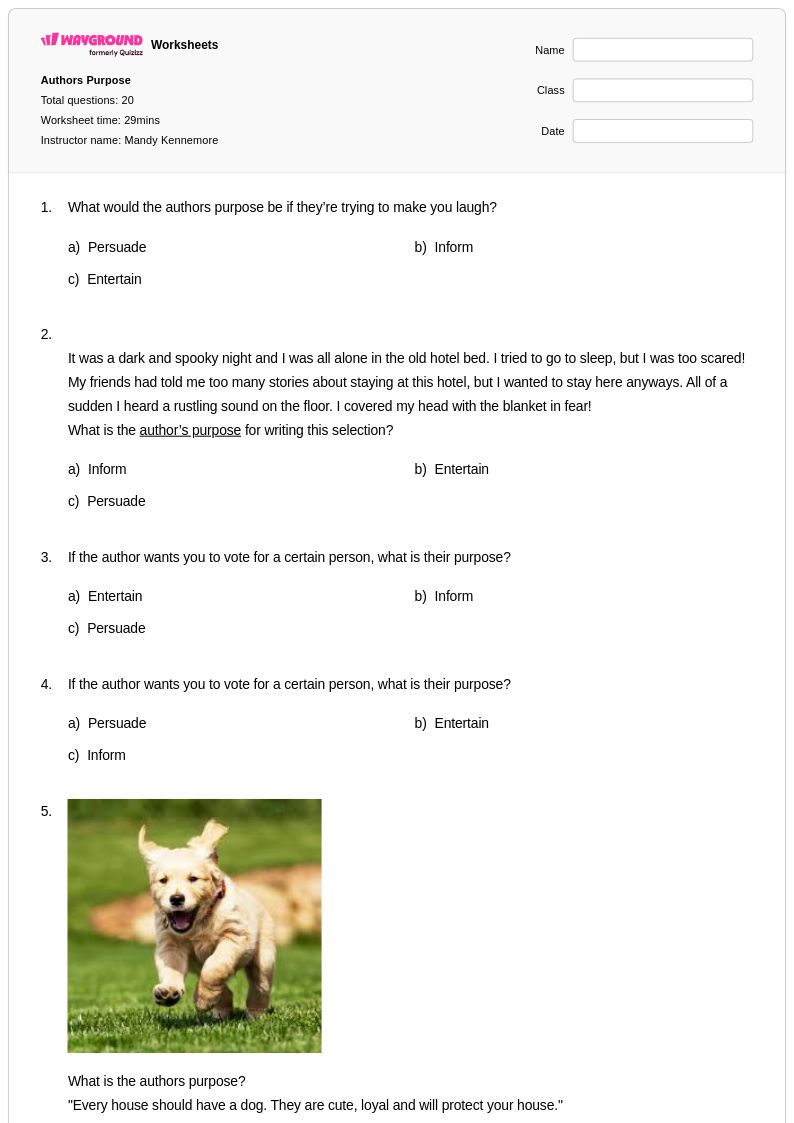
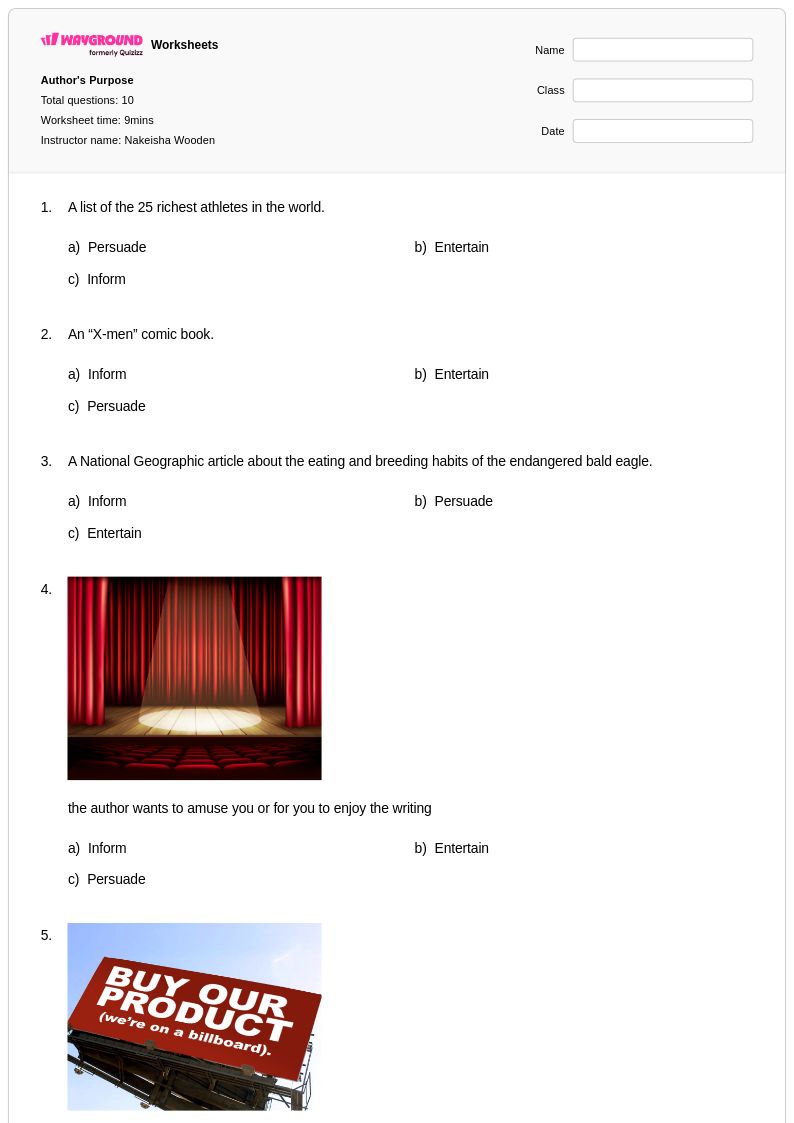
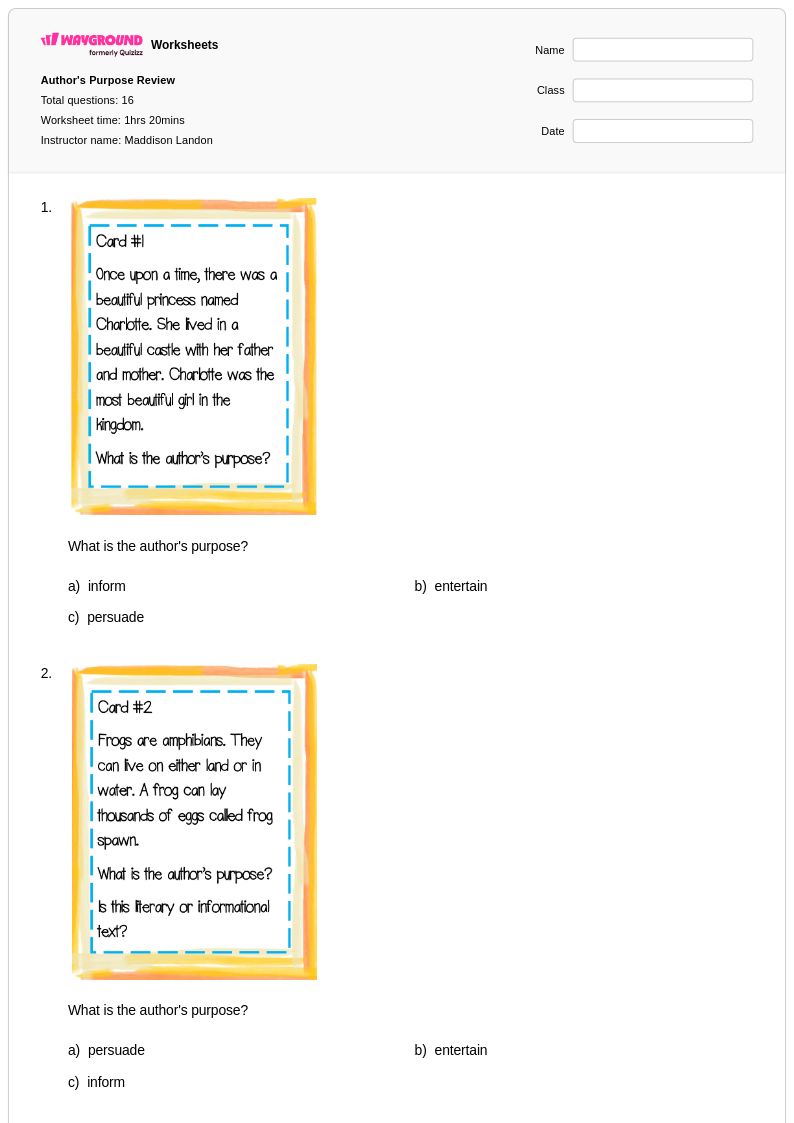
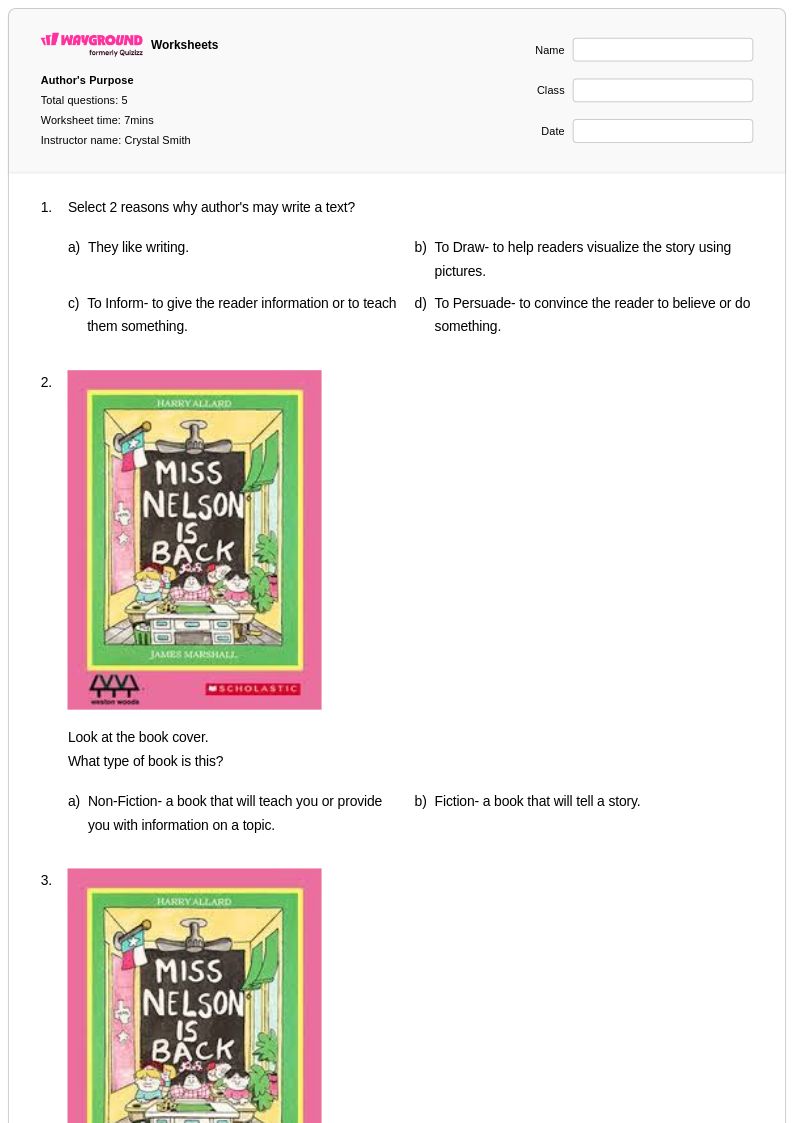
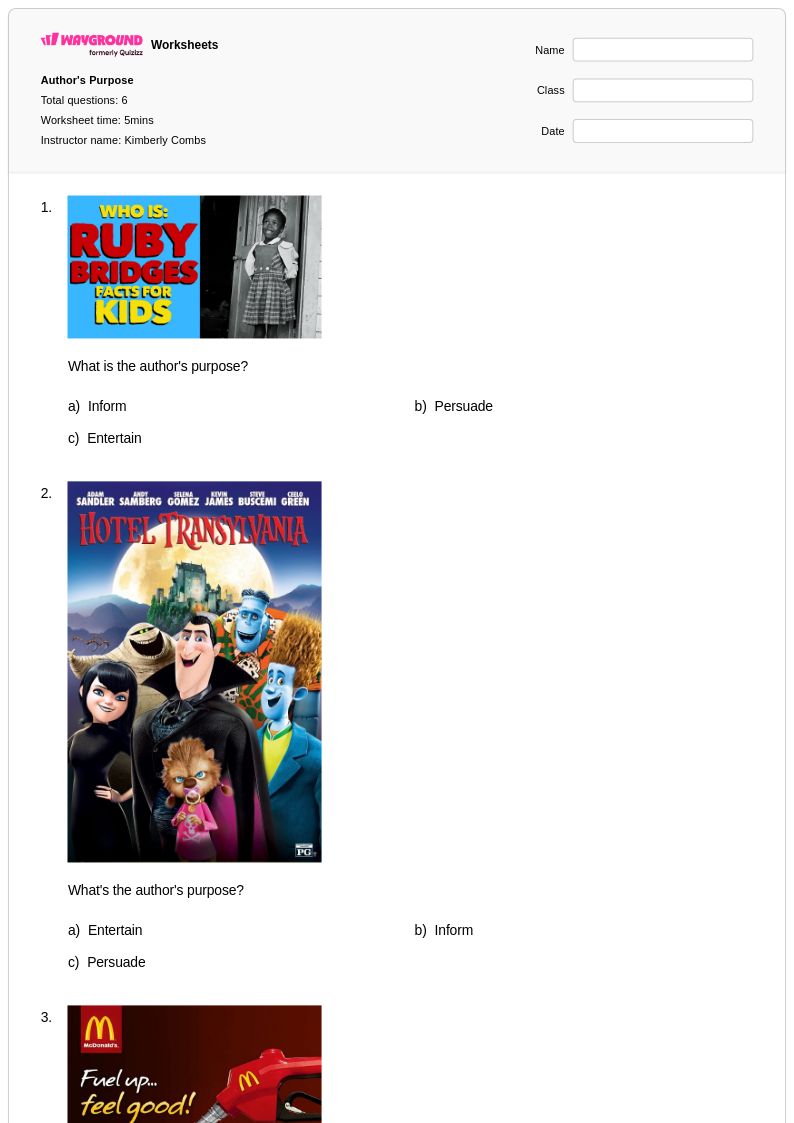
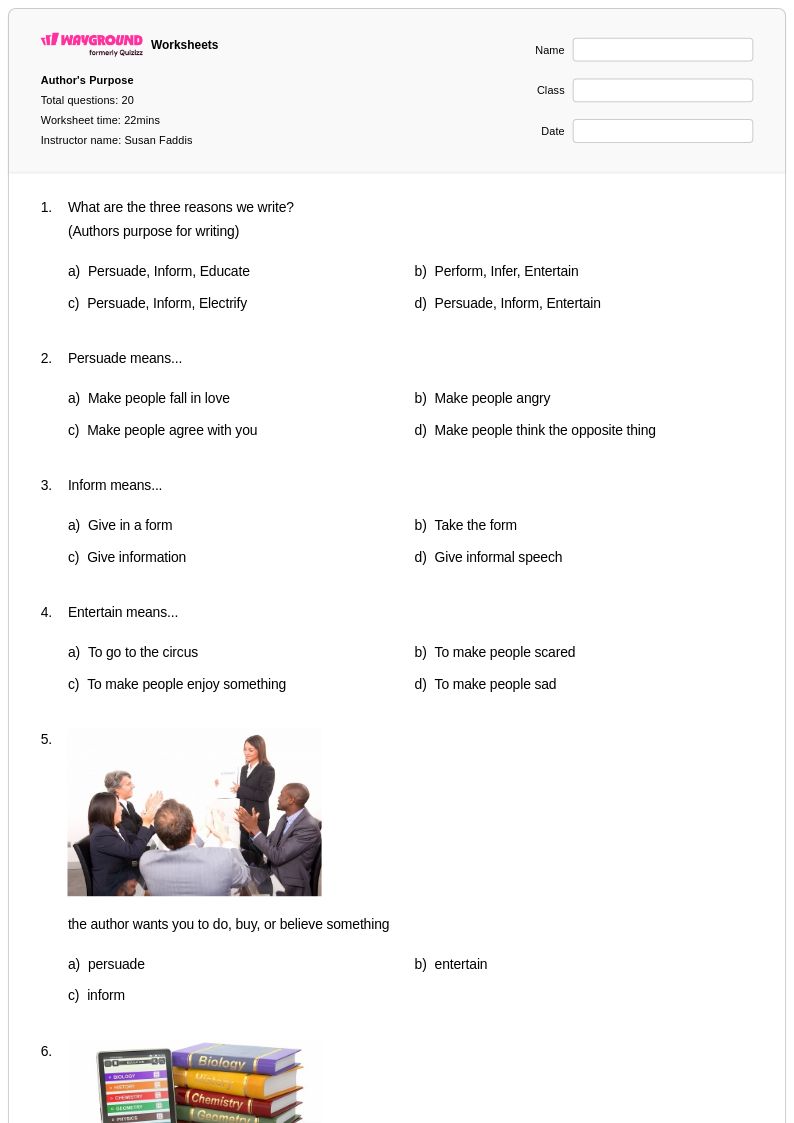
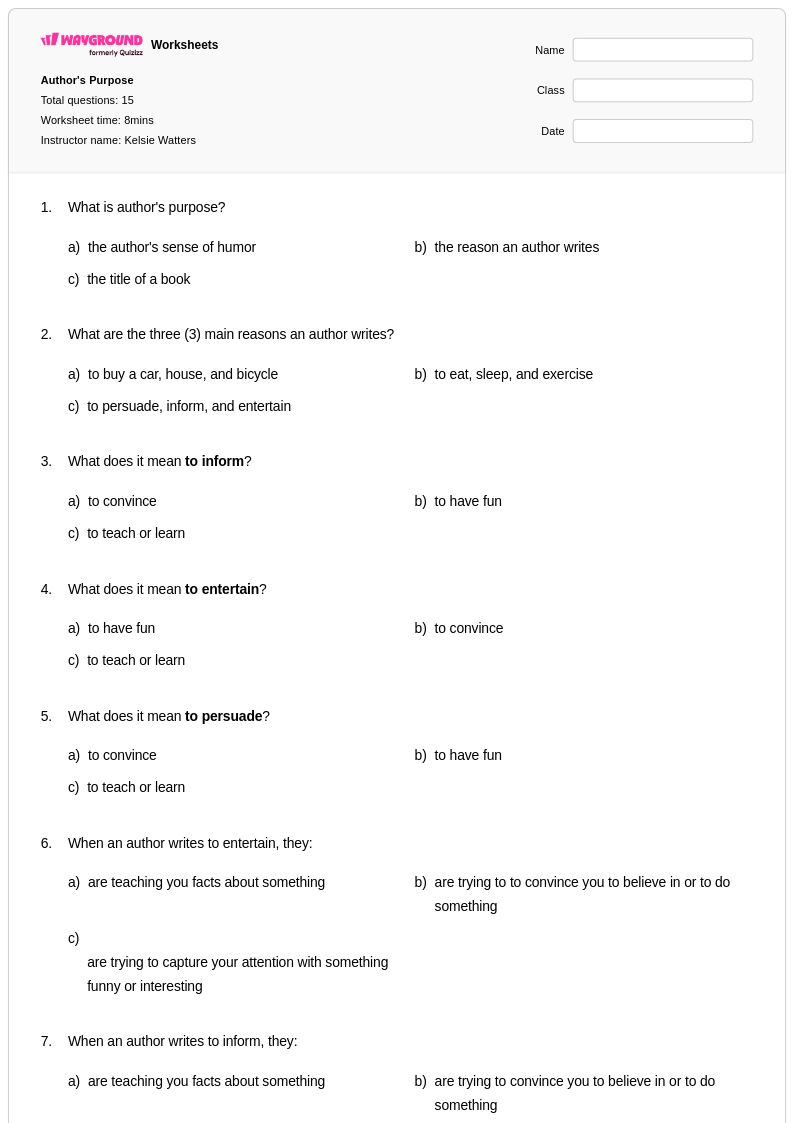
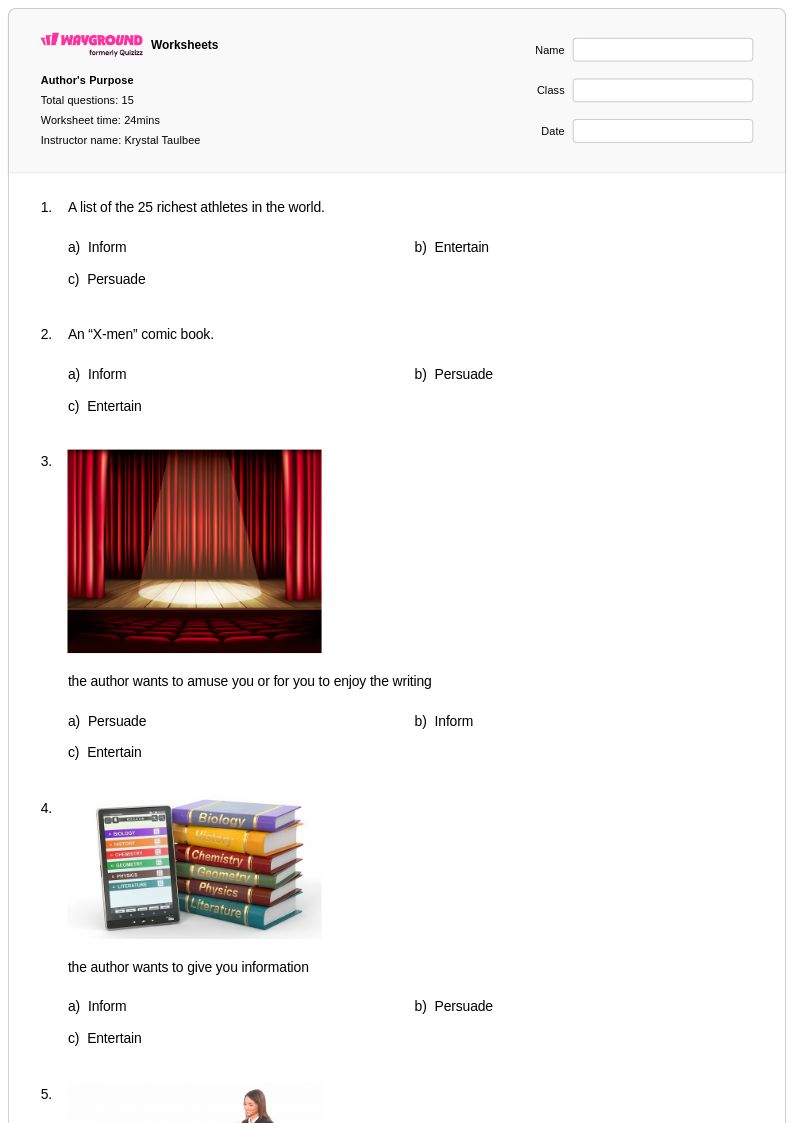
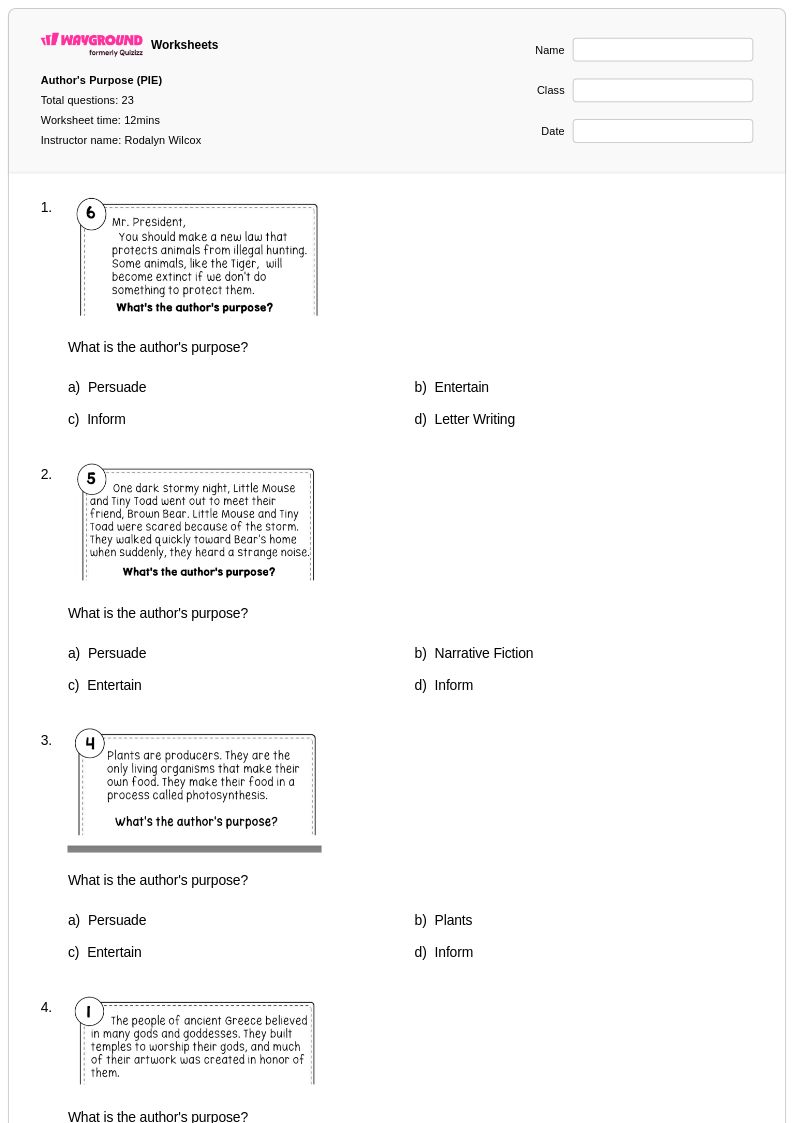
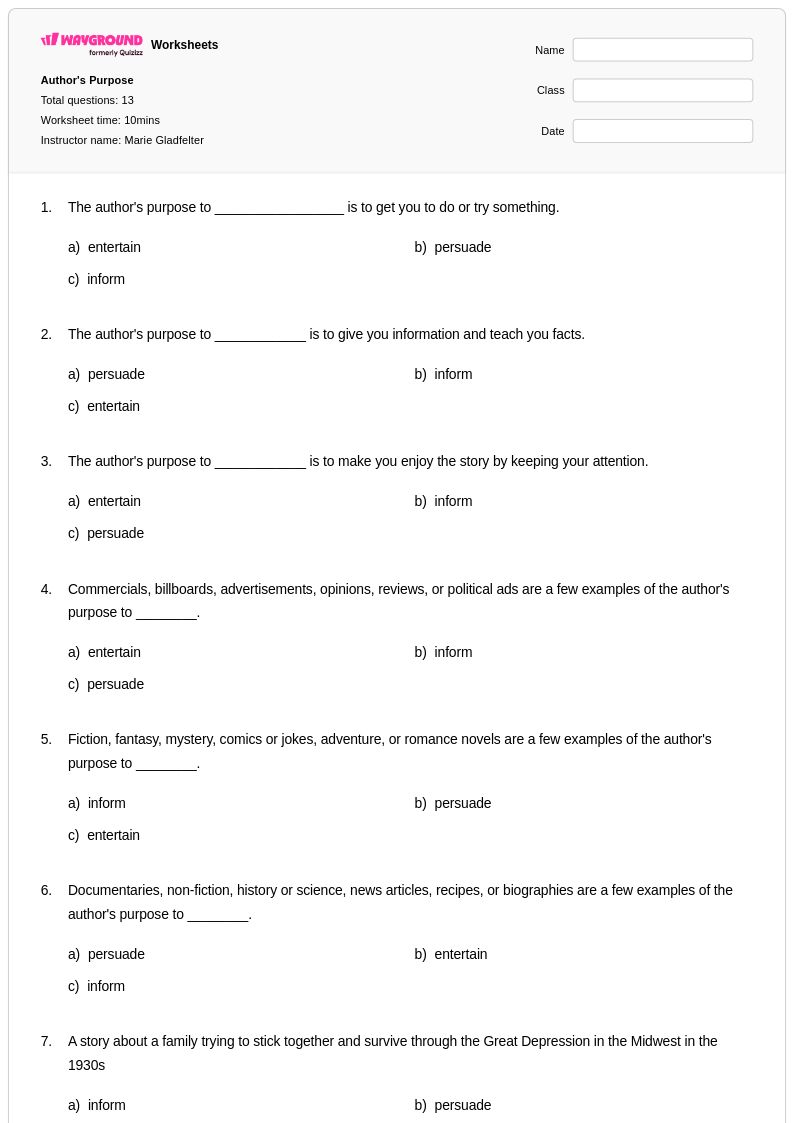
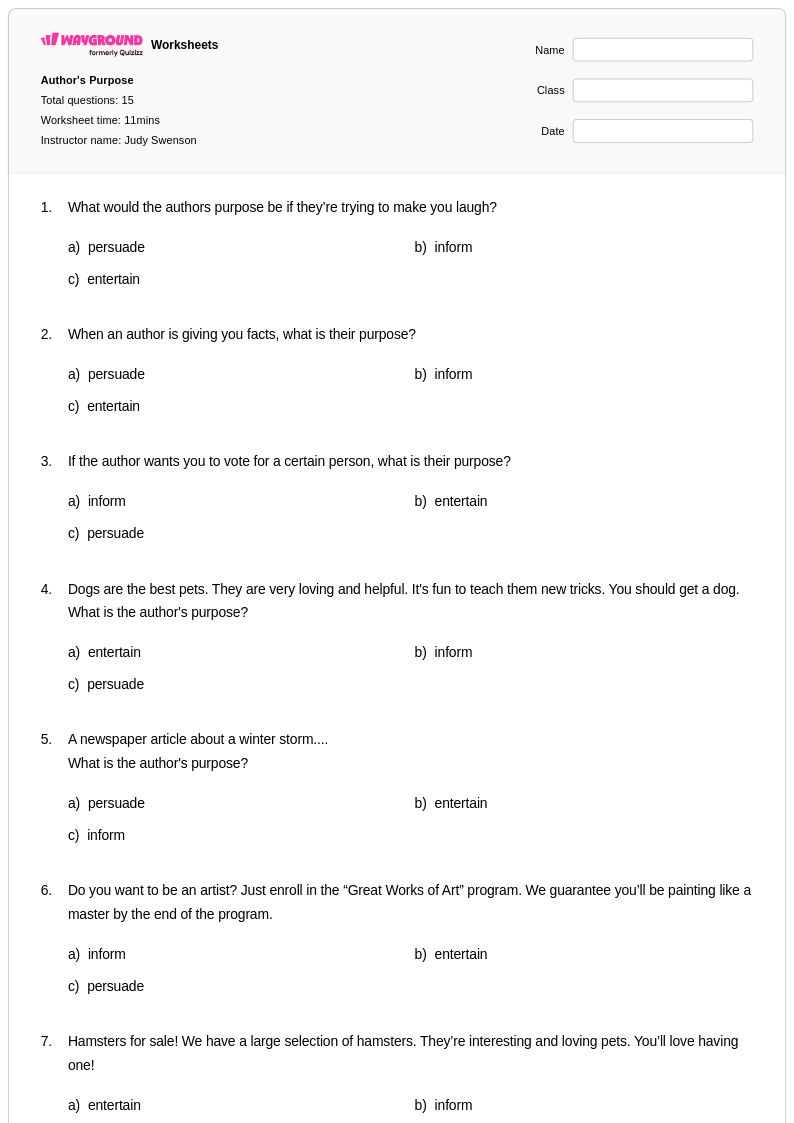
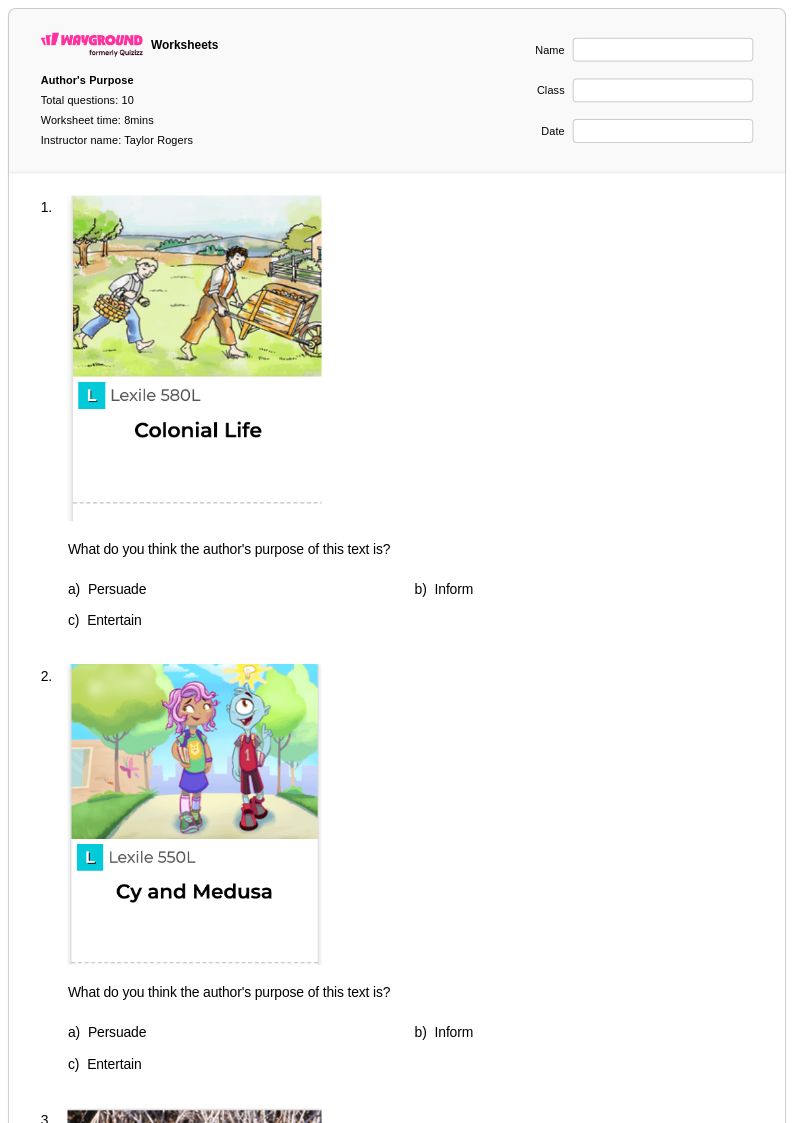
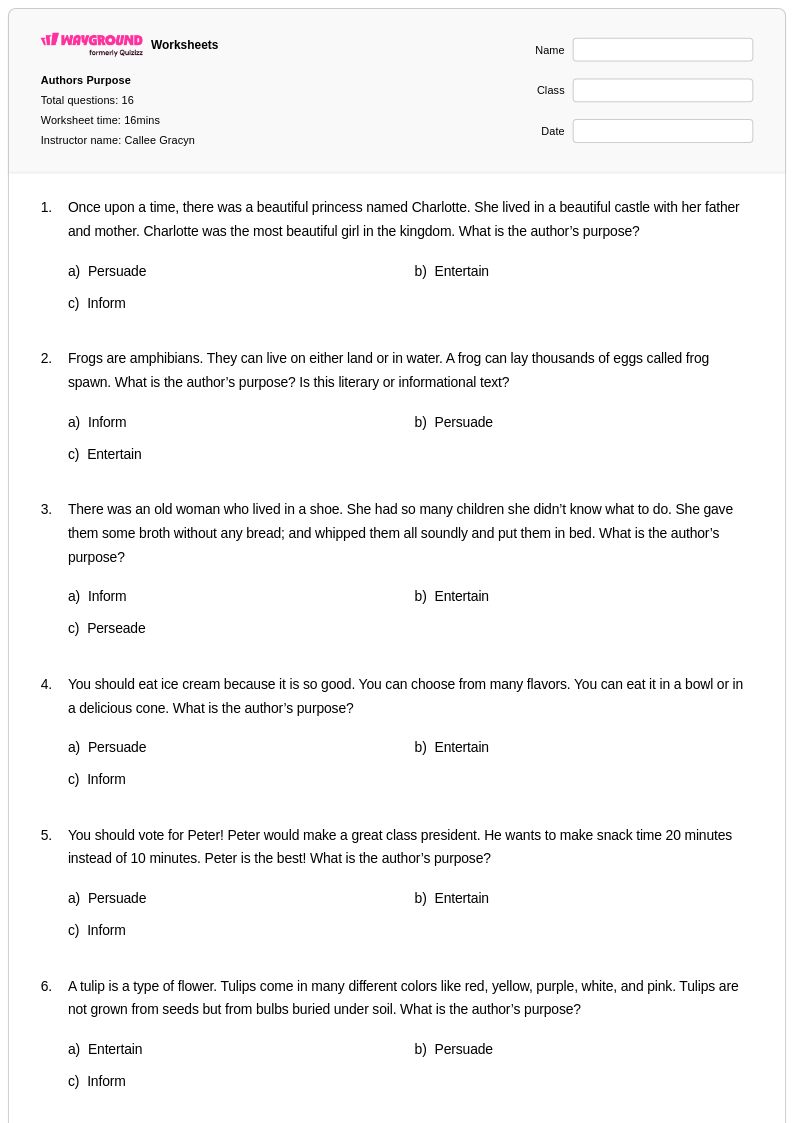
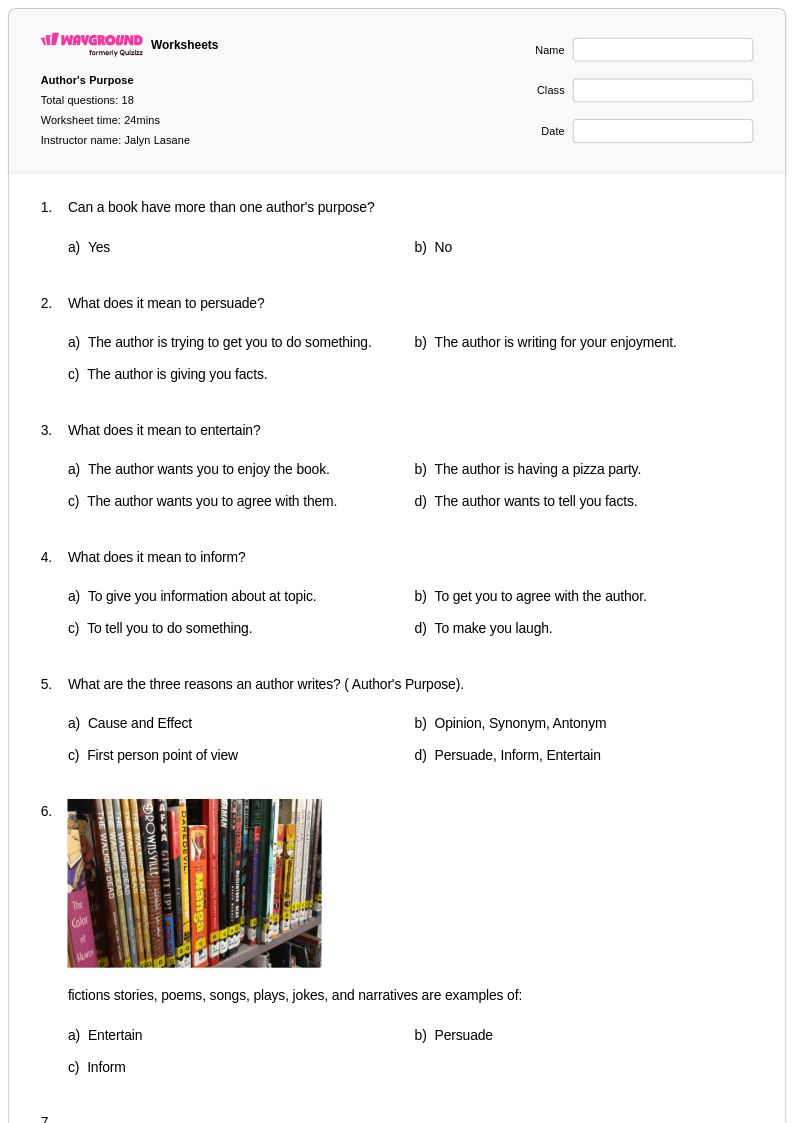
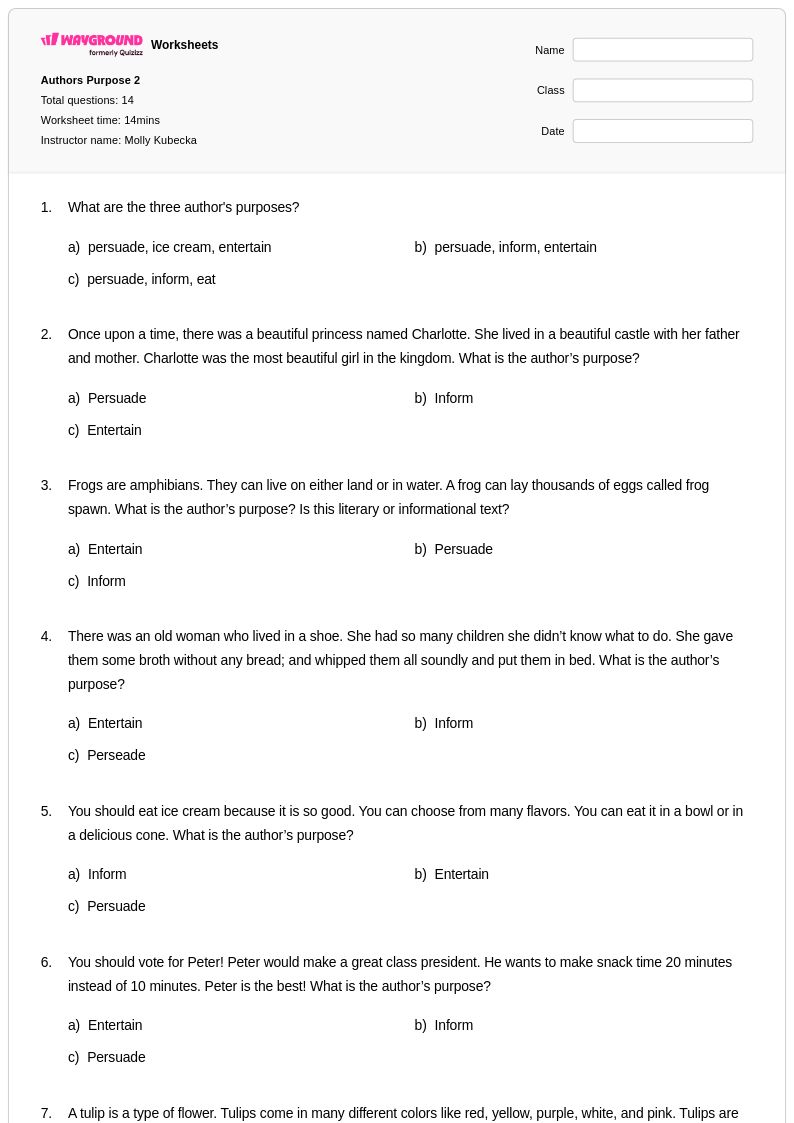
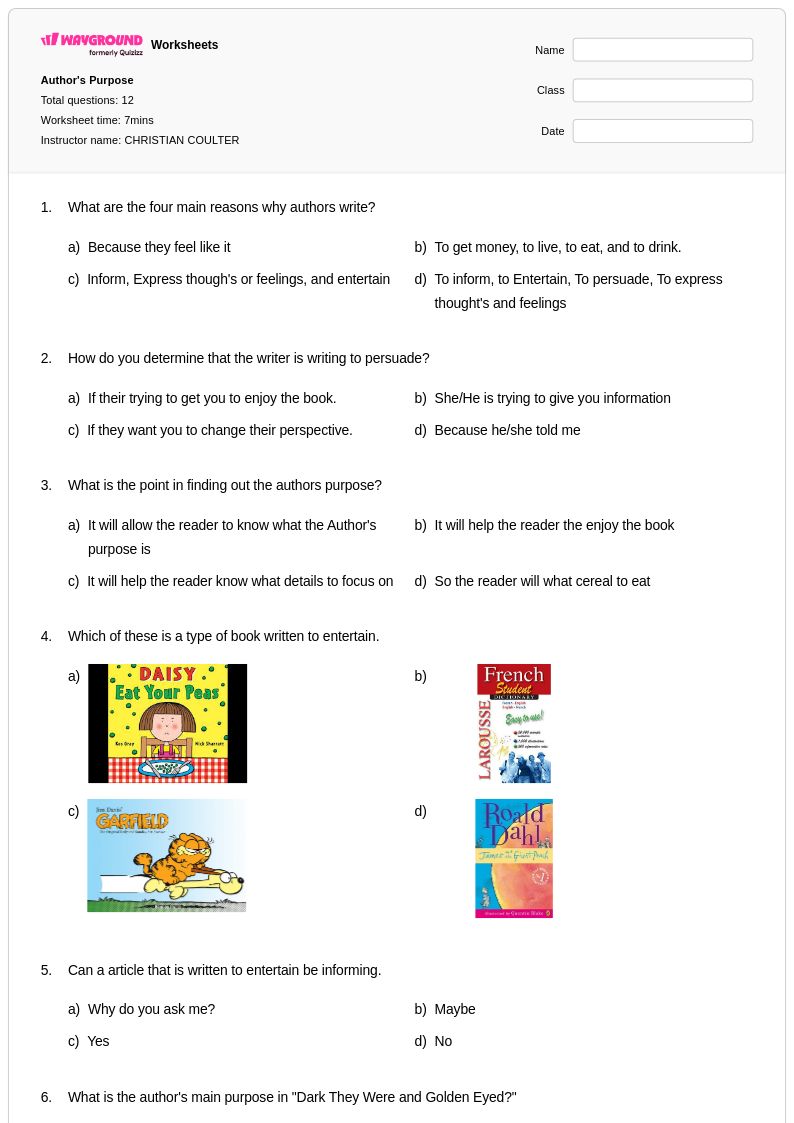
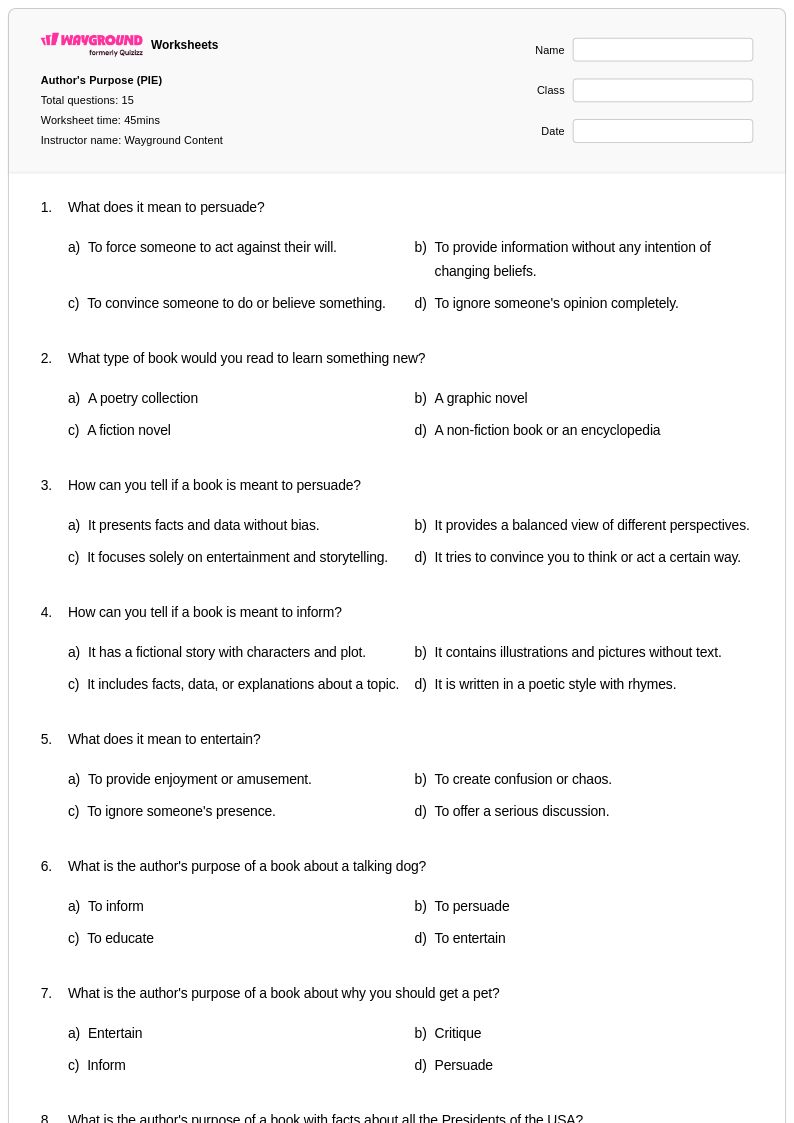
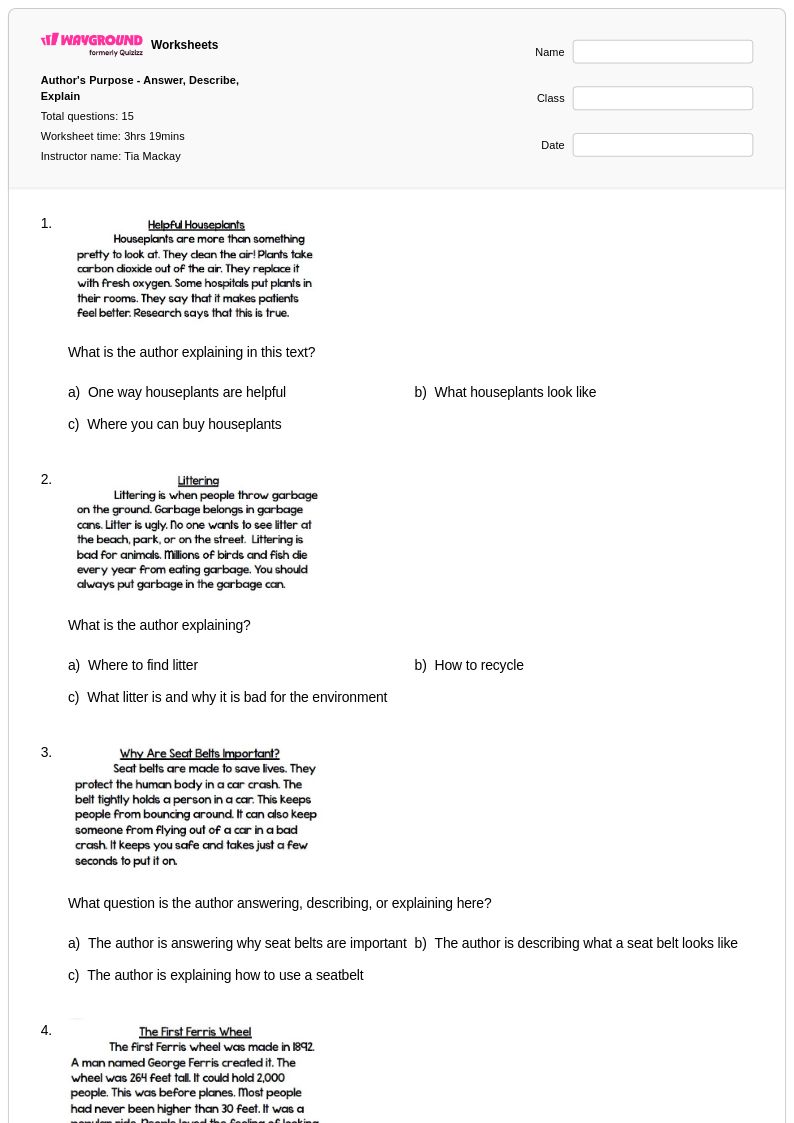
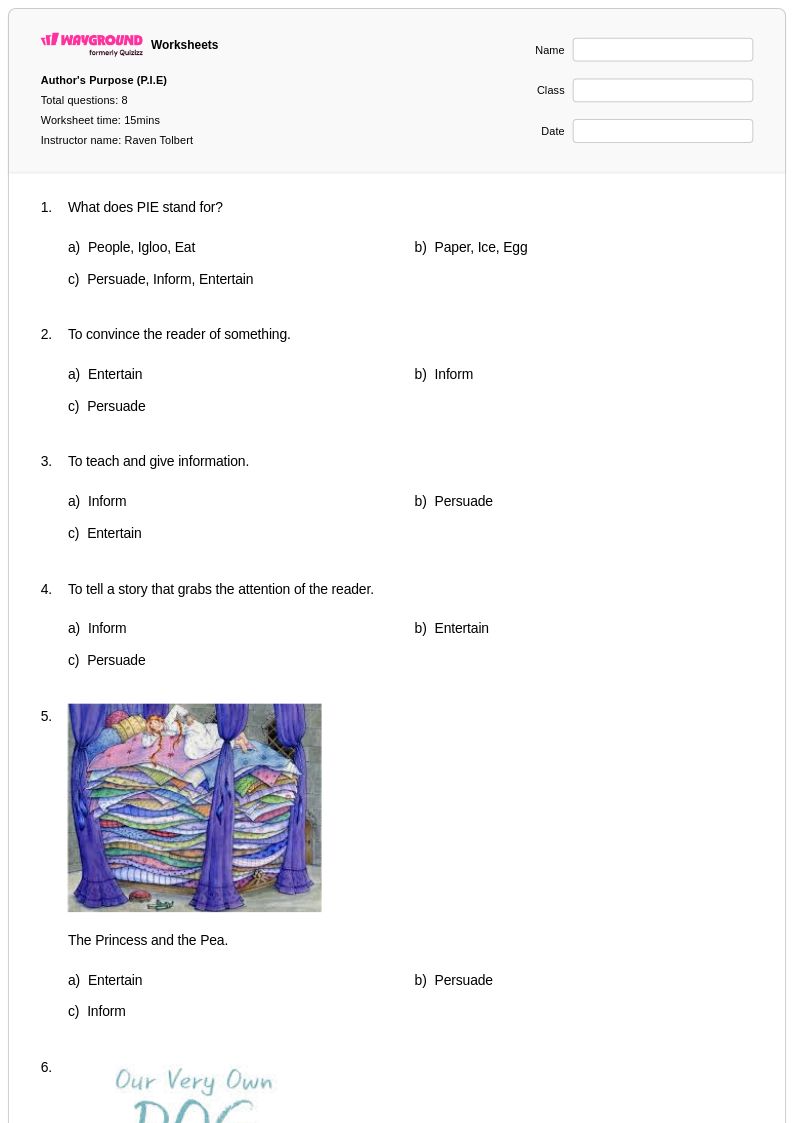
Author's purpose in fiction worksheets for Class 2 students available through Wayground (formerly Quizizz) provide essential foundation skills for young readers learning to understand why authors write stories. These carefully designed printables help second graders identify the three main purposes authors have when crafting fictional works: to entertain, to teach a lesson, or to share feelings and experiences. Each worksheet includes age-appropriate fiction passages followed by practice problems that guide students through recognizing clues about the author's intent, such as whether a story makes them laugh, teaches them something new, or helps them understand different emotions. The collection features comprehensive answer keys and free pdf downloads that make it simple for educators to assess student comprehension while building critical thinking skills that form the cornerstone of literary analysis.
Wayground (formerly Quizizz) supports teachers with an extensive collection of author's purpose in fiction resources created by millions of educators who understand the unique needs of Class 2 learners. The platform's robust search and filtering capabilities allow teachers to quickly locate worksheets that align with specific learning standards and match their students' reading levels, while differentiation tools enable customization for both remediation and enrichment activities. These versatile materials are available in both printable and digital formats, including downloadable pdf versions that seamlessly integrate into lesson planning whether for whole-class instruction, small group work, or independent practice. The comprehensive nature of these resources empowers teachers to provide consistent skill practice opportunities that help students master the fundamental concept of identifying why authors choose to tell their stories, building confidence in literary comprehension that will serve students throughout their academic journey.
FAQs
How do I teach author's purpose in fiction to my students?
Start by introducing the core purposes — to entertain, persuade, inform, or express — using short, familiar fiction excerpts students already know. Then model the thinking process aloud: walk students through how specific word choices, character decisions, or narrative tone signal the author's intent. Gradually release responsibility by having students annotate passages independently, justifying their purpose identification with textual evidence rather than guessing.
What exercises help students practice identifying author's purpose in fiction?
Effective practice exercises include reading short fiction passages and selecting the author's primary purpose with evidence-based justification, comparing two excerpts that share a theme but differ in purpose, and analyzing how specific literary elements like dialogue or descriptive language reveal authorial intent. Worksheets that isolate one element at a time — such as character development or plot structure — help students build analytical skills incrementally before applying them to full texts.
What mistakes do students commonly make when identifying author's purpose in fiction?
The most common error is confusing the topic of a story with its purpose — students often describe what a story is about rather than why the author wrote it. Another frequent mistake is defaulting to 'to entertain' for all fiction without examining whether the author also intended to persuade or express a personal viewpoint. Students also struggle when a text serves multiple purposes, so explicit instruction on identifying the primary purpose is essential.
How can I differentiate author's purpose instruction for struggling readers?
For struggling readers, simplify the task by using shorter passages with more obvious purpose signals before moving to complex or layered texts. Graphic organizers that prompt students to list specific evidence for each possible purpose can reduce cognitive load and make the analysis process more concrete. On Wayground, teachers can also enable accommodations such as Read Aloud so students can hear passages read to them, and Reduced Answer Choices to limit the number of purpose options displayed, making the task more accessible without lowering expectations.
How do I use Wayground's author's purpose in fiction worksheets in my classroom?
Wayground's author's purpose in fiction worksheets are available as printable PDFs for traditional classroom use and in digital formats for technology-integrated or remote learning environments. Teachers can also host worksheets directly as a quiz on Wayground, allowing students to complete activities digitally with results tracked automatically. Each worksheet includes a complete answer key, making them efficient tools for independent practice, homework, or formative assessment without additional prep time.
How do I help students distinguish between author's purpose and theme in fiction?
Theme is the central message or insight a story conveys, while author's purpose is the reason the author chose to write the story in the first place. Help students see the distinction by asking two separate questions: 'What is this story saying about life or people?' (theme) and 'Why did the author create this story?' (purpose). Using side-by-side analysis of two texts with the same theme but different purposes — one written to entertain, another to persuade — makes this distinction concrete and memorable.