
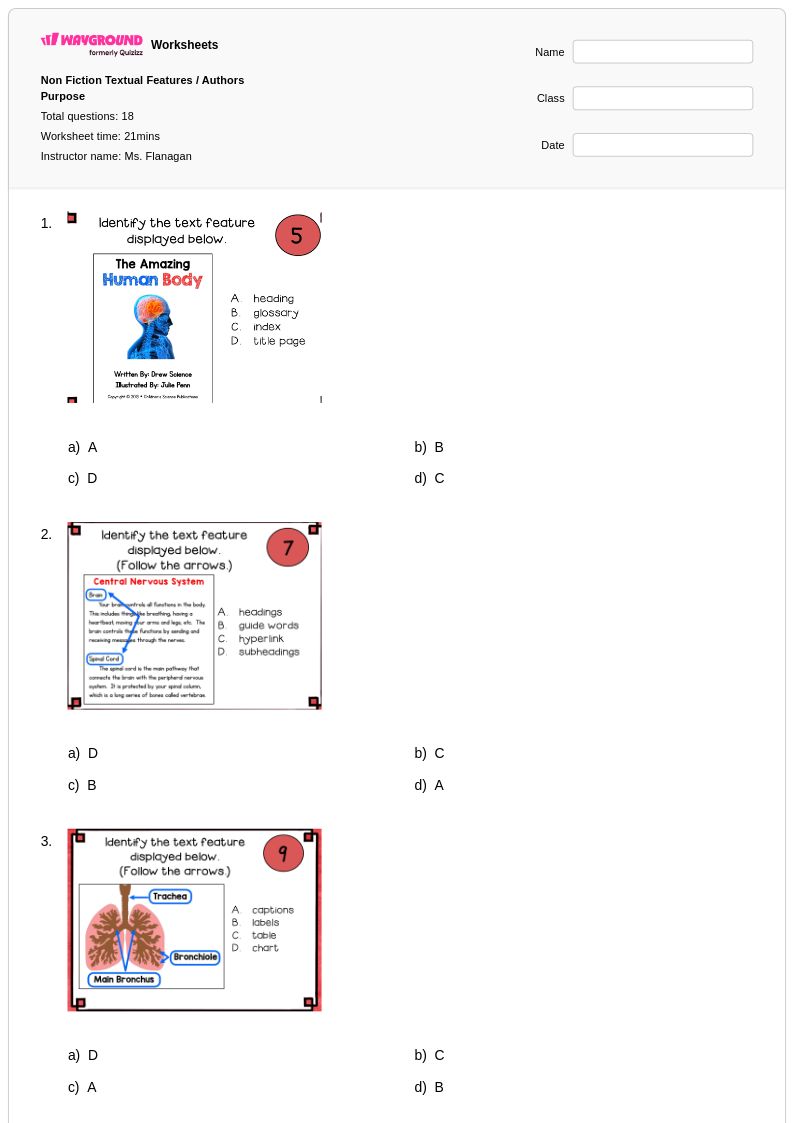
18Q
6th - 7th
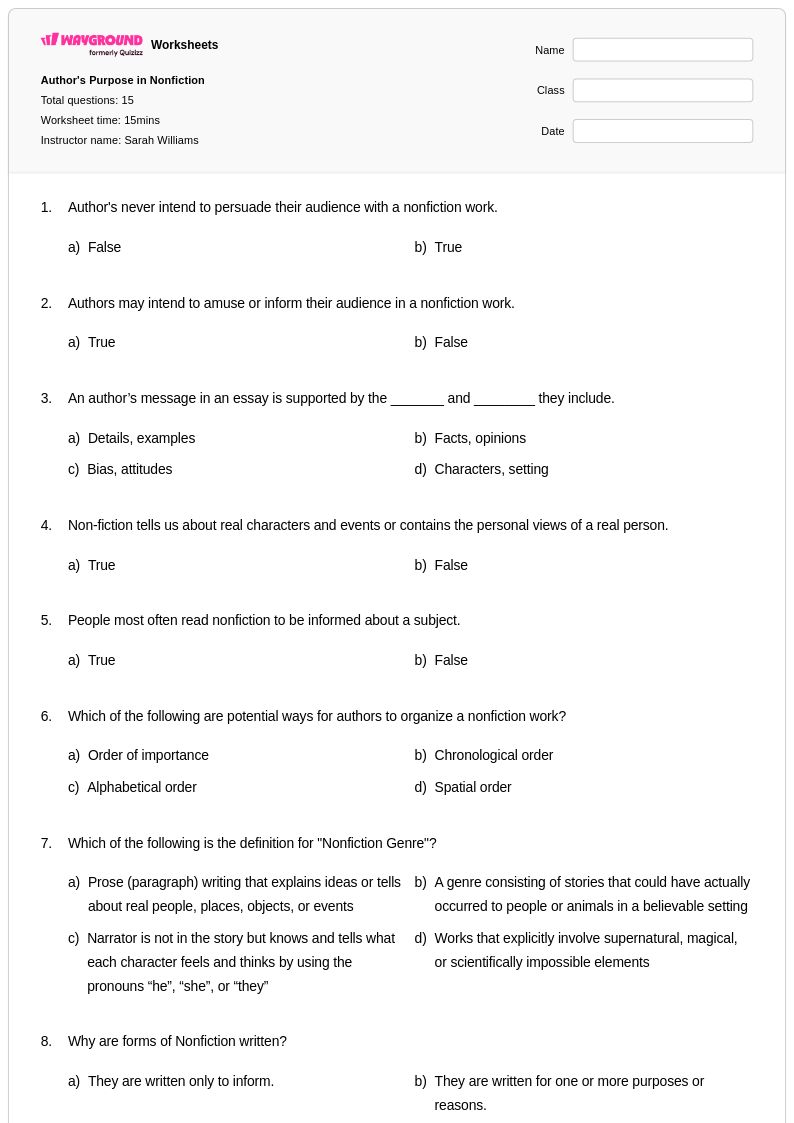
15Q
6th - Uni
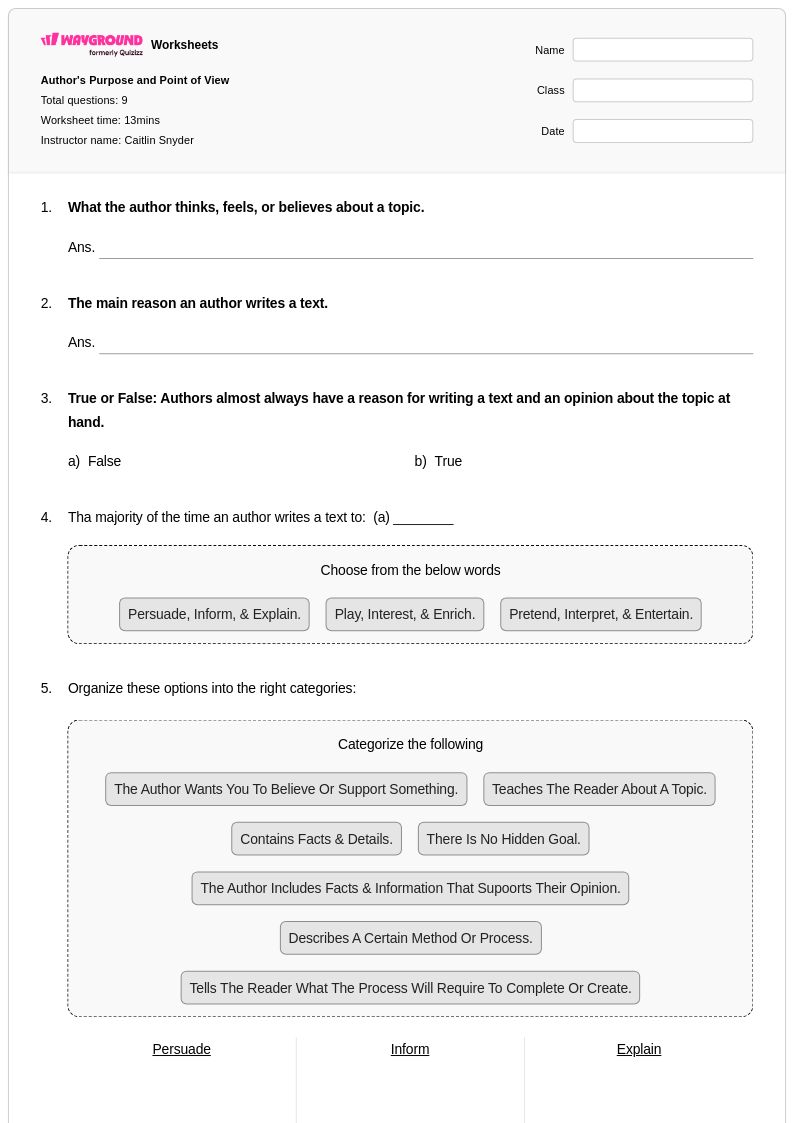
9Q
8th
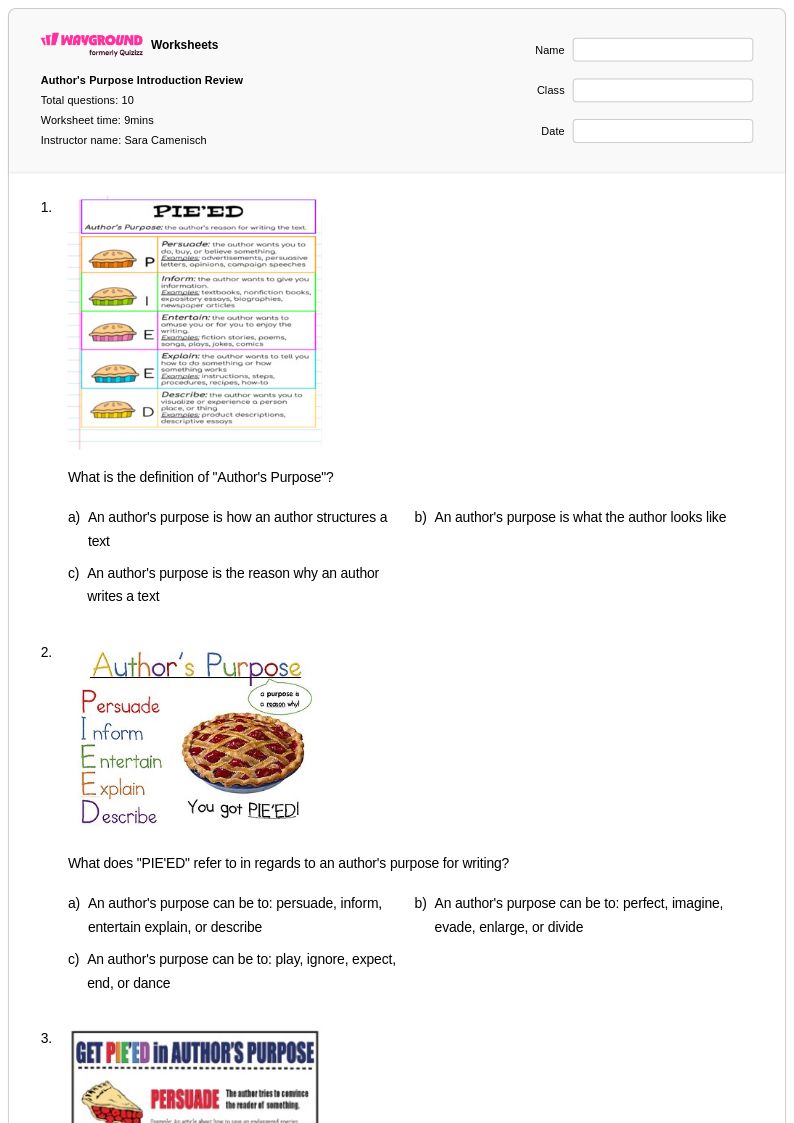
10Q
6th
20Q
6th - 8th
22Q
10th
16Q
4th
9Q
8th
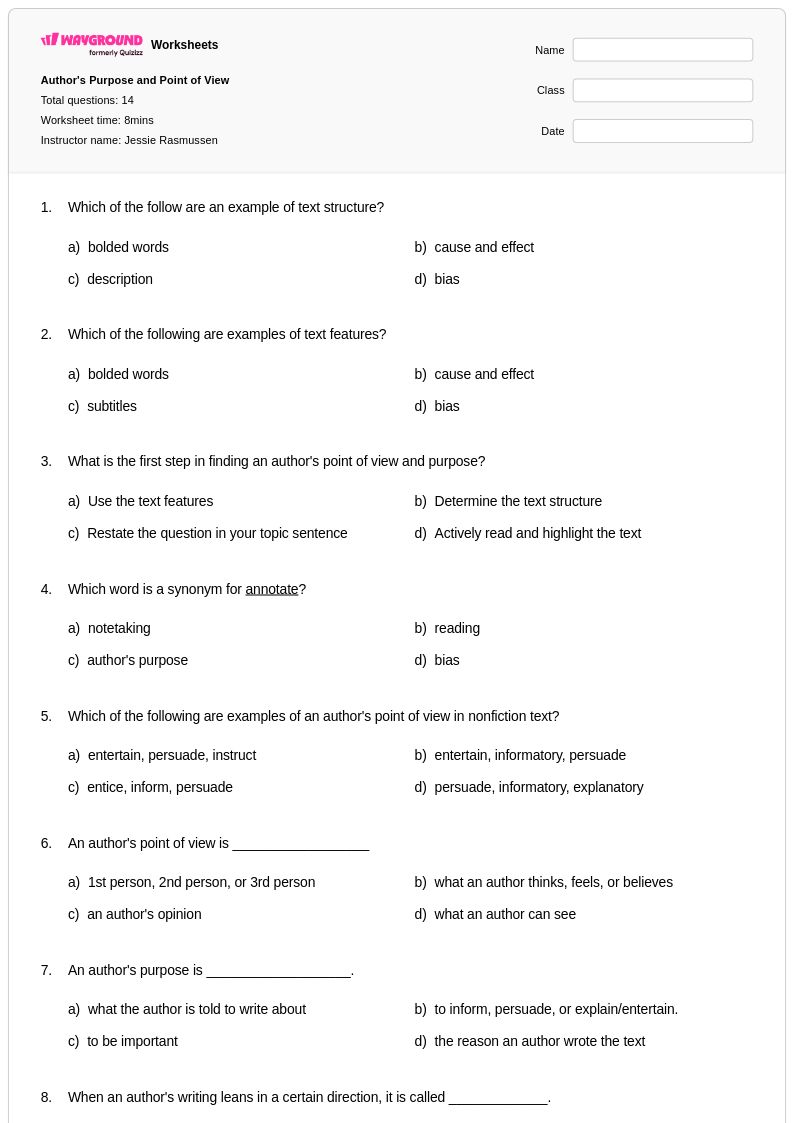
14Q
6th - 8th
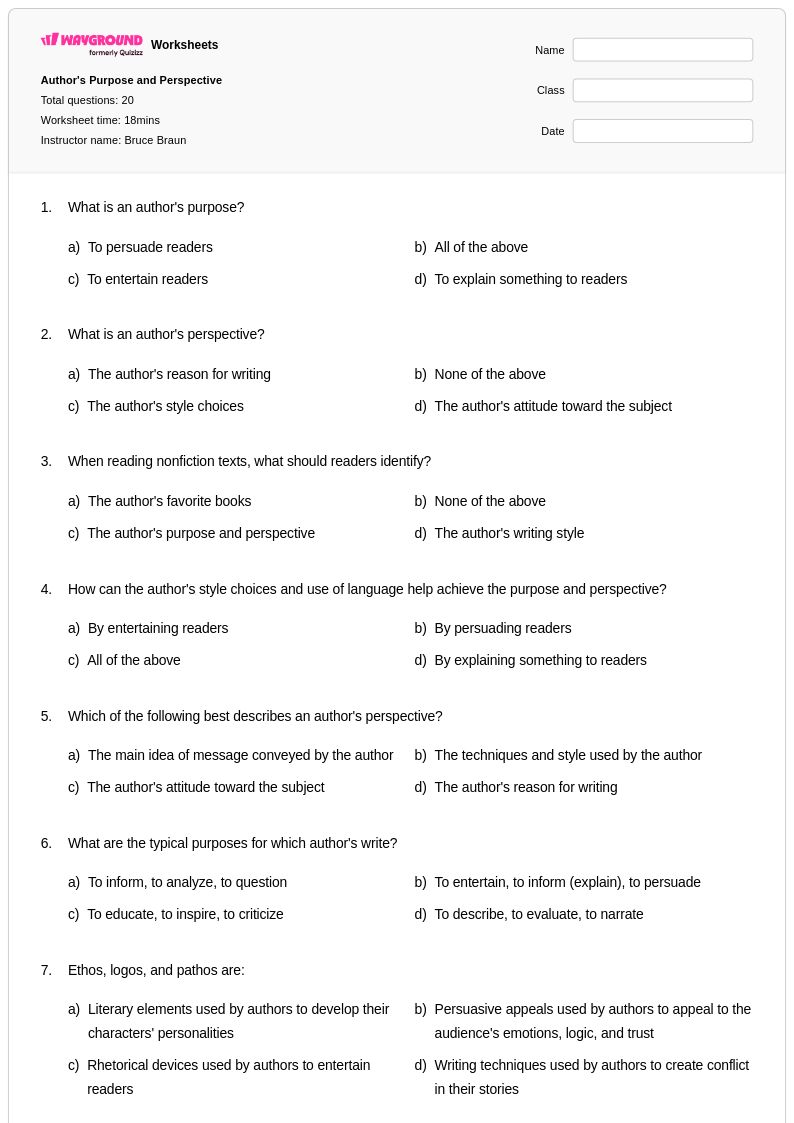
20Q
8th
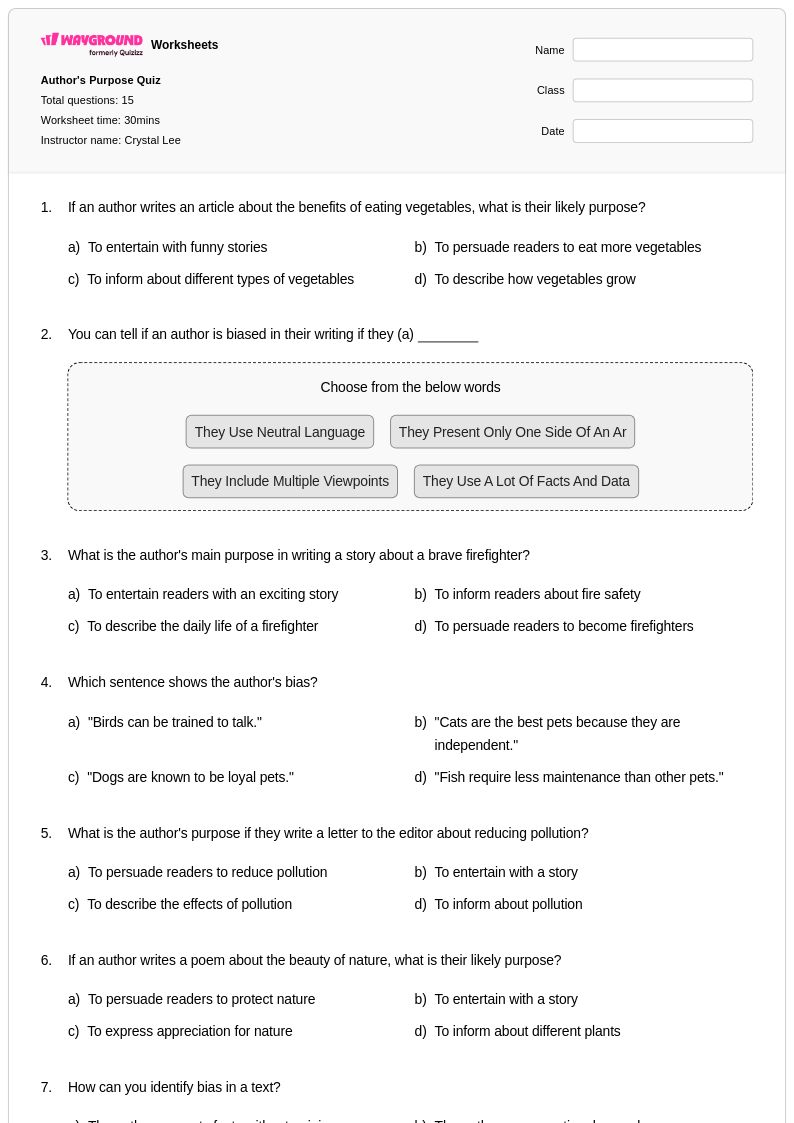
15Q
3rd
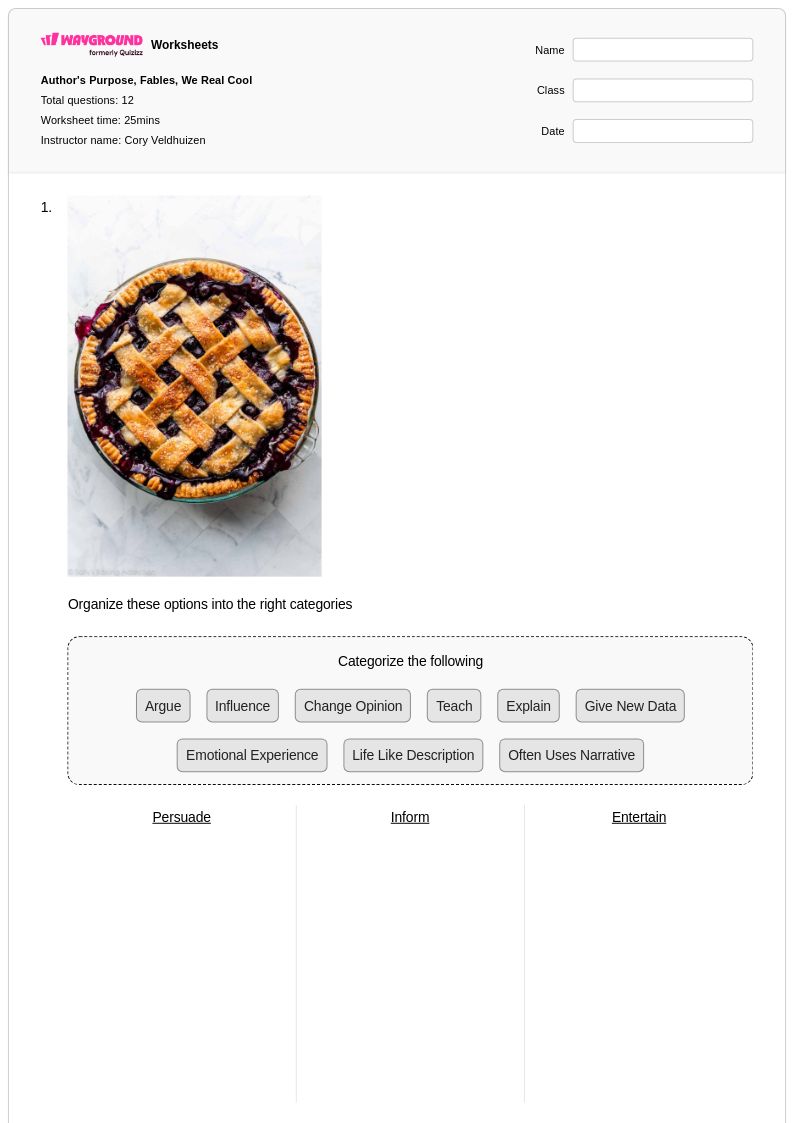
12Q
10th
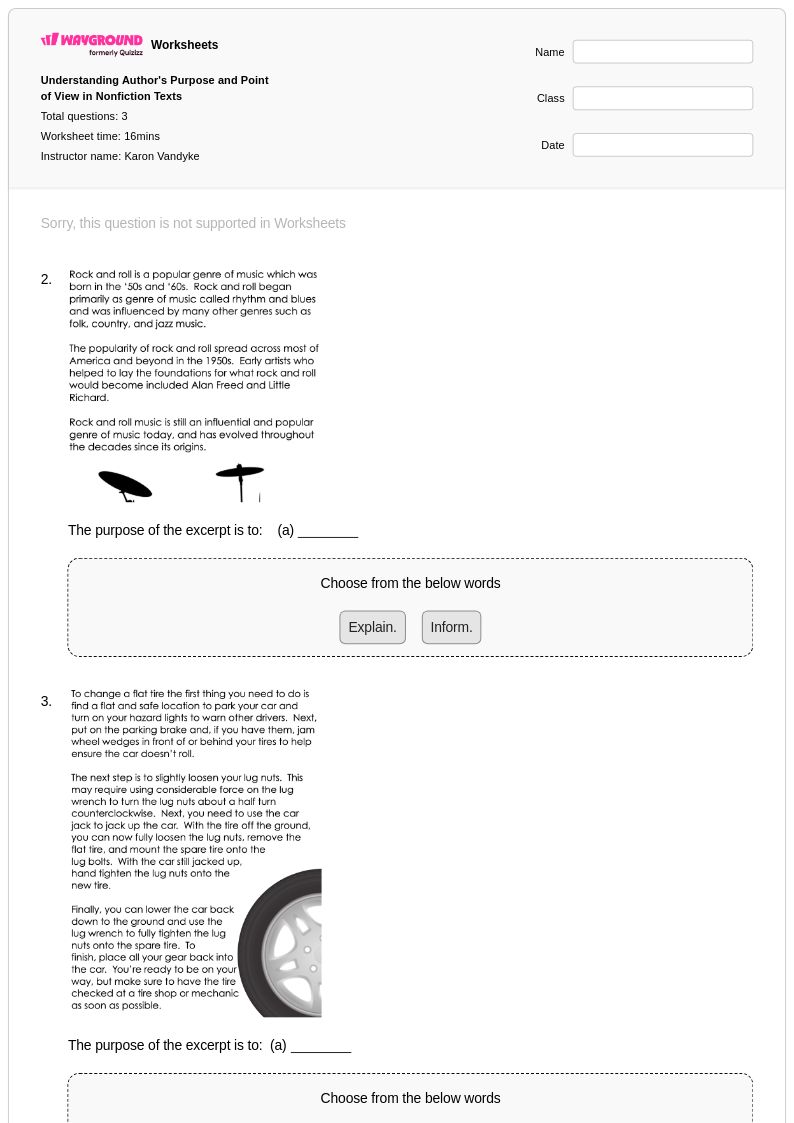
9Q
11th
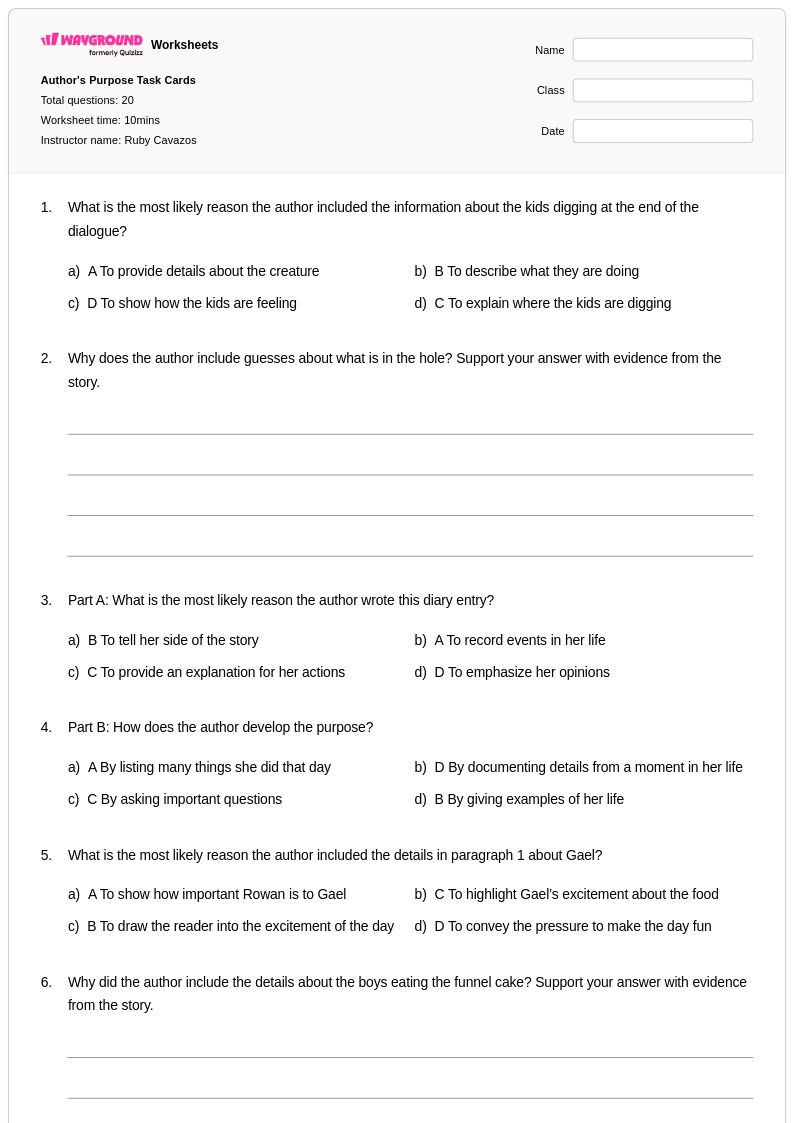
20Q
6th - 8th
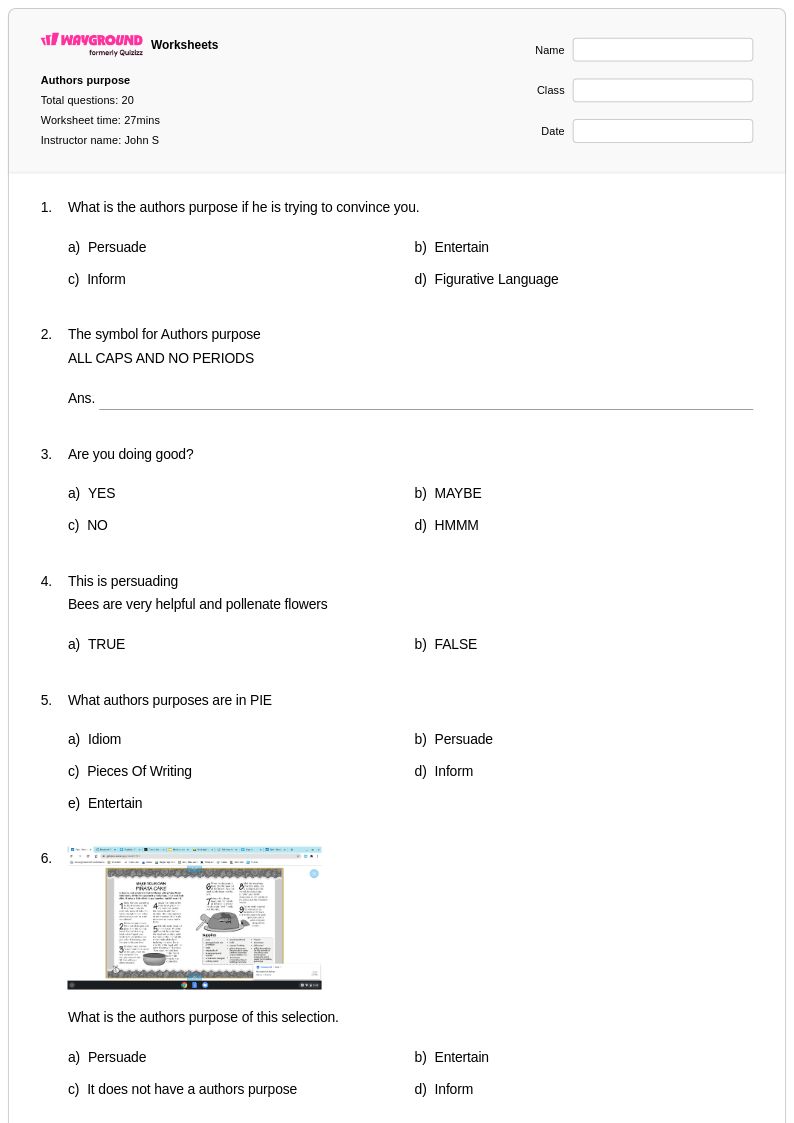
20Q
4th
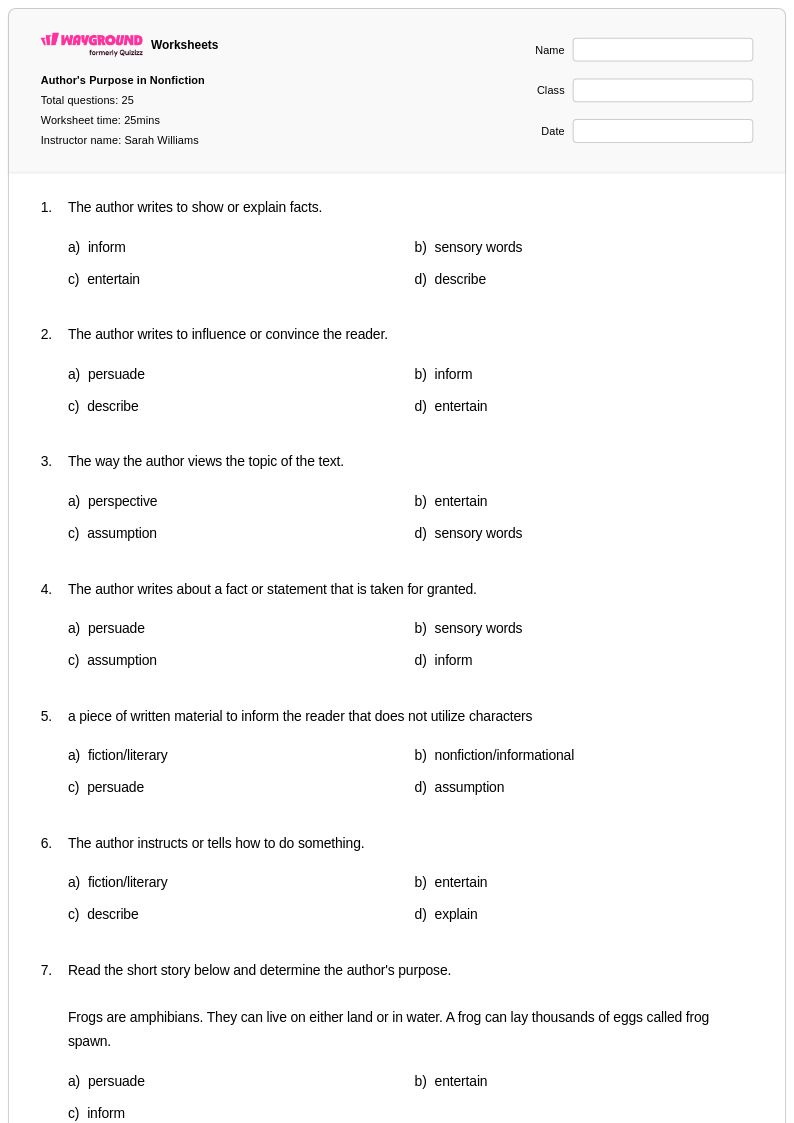
25Q
6th - Uni
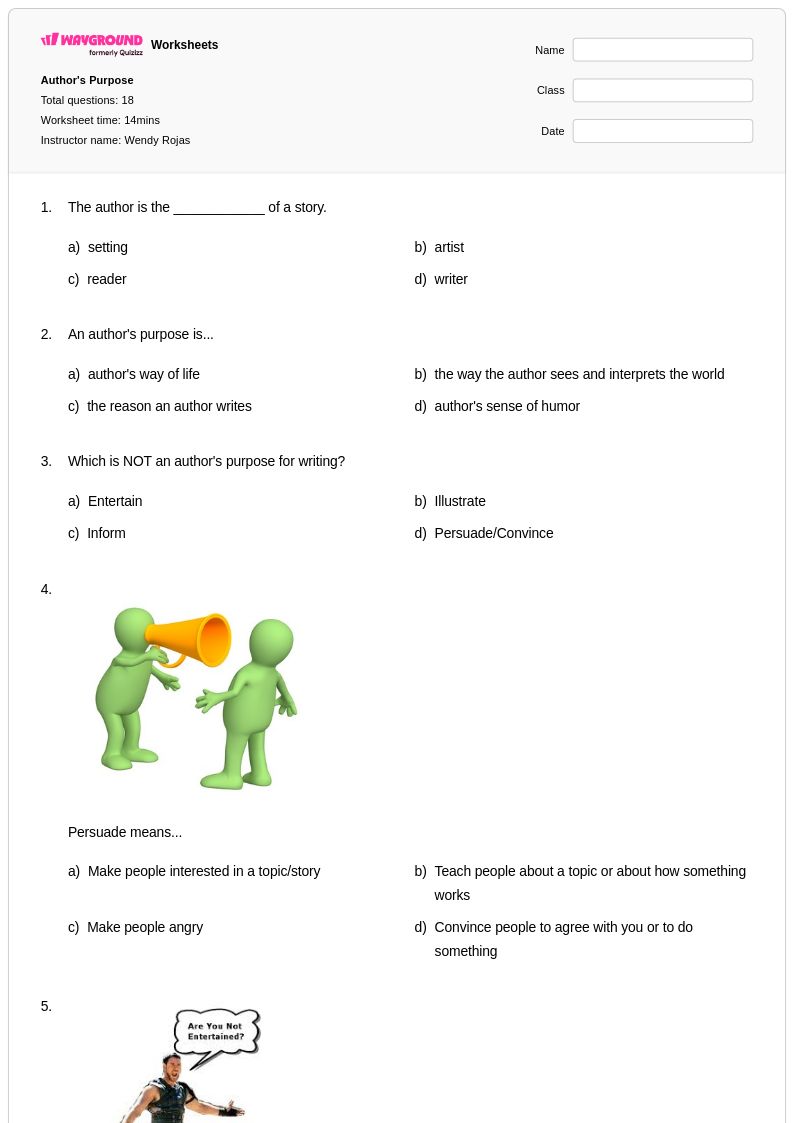
18Q
7th
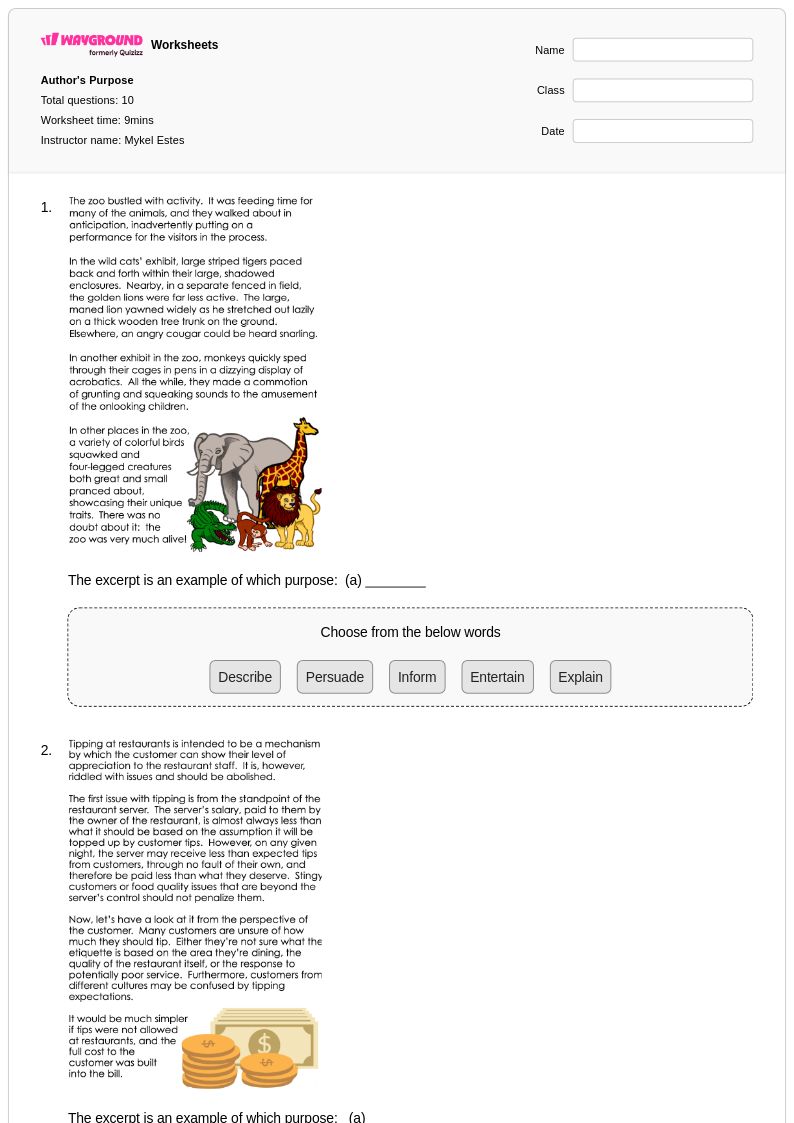
10Q
8th
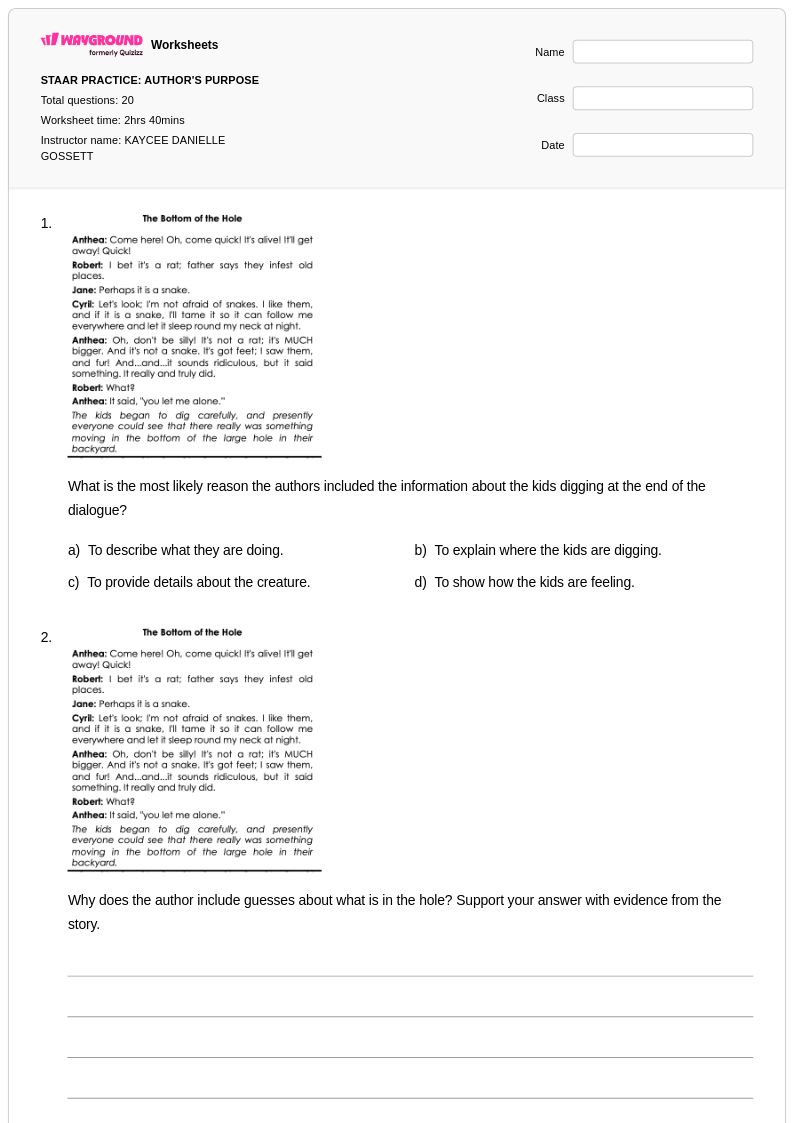
20Q
8th
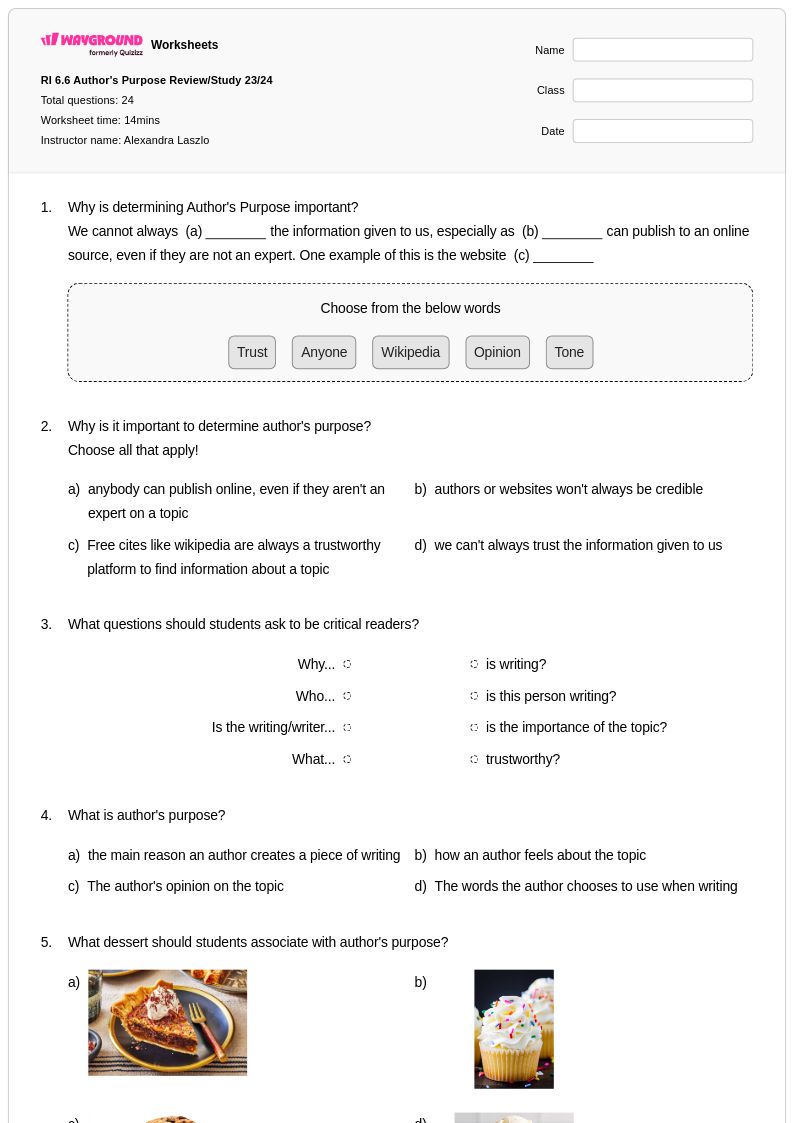
24Q
6th - 8th
10Q
3rd - 4th
10Q
8th
6Q
3rd
14Q
8th - Uni
Explorar hojas de trabajo por materias
Explore printable Author's Purpose in Nonfiction worksheets
Author's purpose in nonfiction worksheets available through Wayground (formerly Quizizz) provide students with targeted practice in analyzing why authors write informational texts, whether to inform, persuade, or entertain their readers. These comprehensive worksheets strengthen critical reading skills by guiding students through systematic examination of nonfiction passages, helping them identify textual evidence that reveals the author's underlying intentions and motivations. Each worksheet includes carefully selected nonfiction excerpts paired with practice problems that require students to distinguish between factual information and persuasive language, recognize organizational patterns that signal purpose, and analyze word choice and tone. The collection offers printable pdf formats with complete answer keys, making it easy for educators to implement immediate feedback and assessment while providing free access to high-quality instructional materials that develop essential analytical reading skills.
Wayground (formerly Quizizz) supports teachers with millions of teacher-created resources specifically designed for author's purpose instruction in nonfiction contexts, featuring robust search and filtering capabilities that allow educators to quickly locate worksheets aligned with specific standards and learning objectives. The platform's differentiation tools enable teachers to customize worksheet difficulty levels and content focus areas, ensuring appropriate challenge levels for diverse student needs while maintaining consistent skill development across varying ability ranges. These resources are available in both printable and digital pdf formats, providing flexibility for classroom instruction, remote learning, and hybrid teaching environments. Teachers can efficiently plan comprehensive lesson sequences, design targeted remediation activities for struggling readers, create enrichment opportunities for advanced students, and implement regular skill practice sessions that build students' confidence in analyzing nonfiction texts and understanding author intentions across various informational genres.