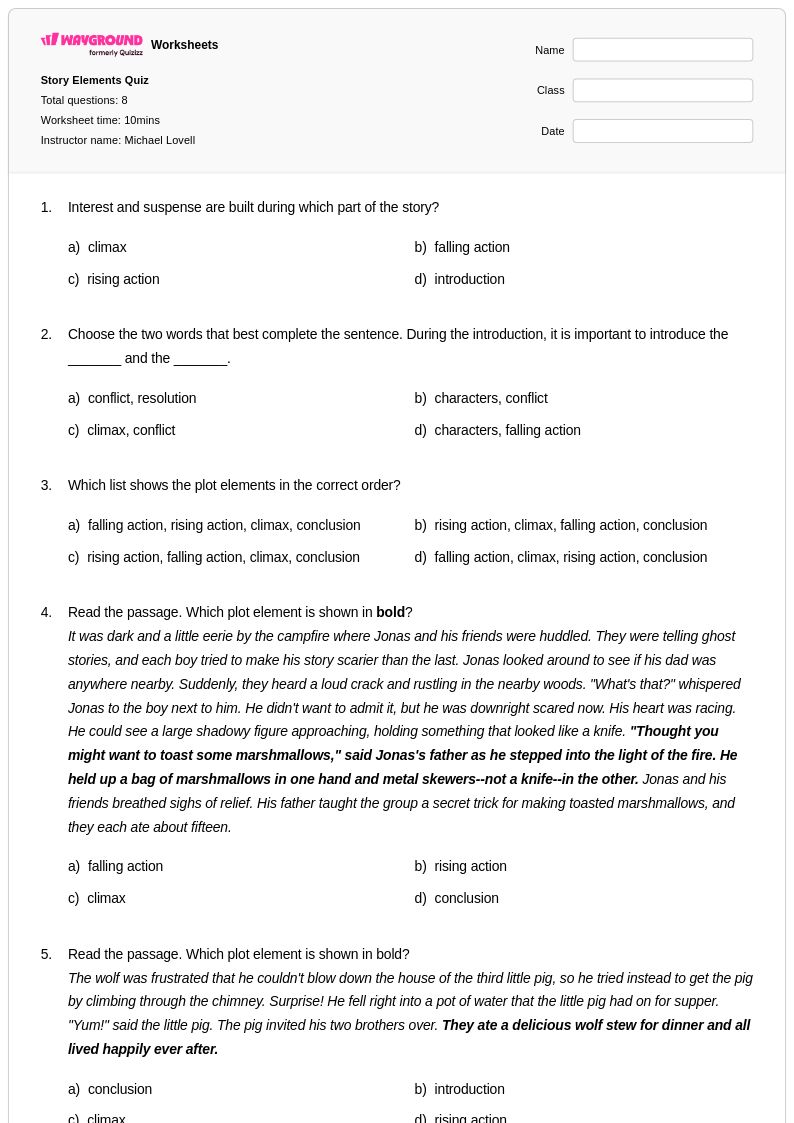
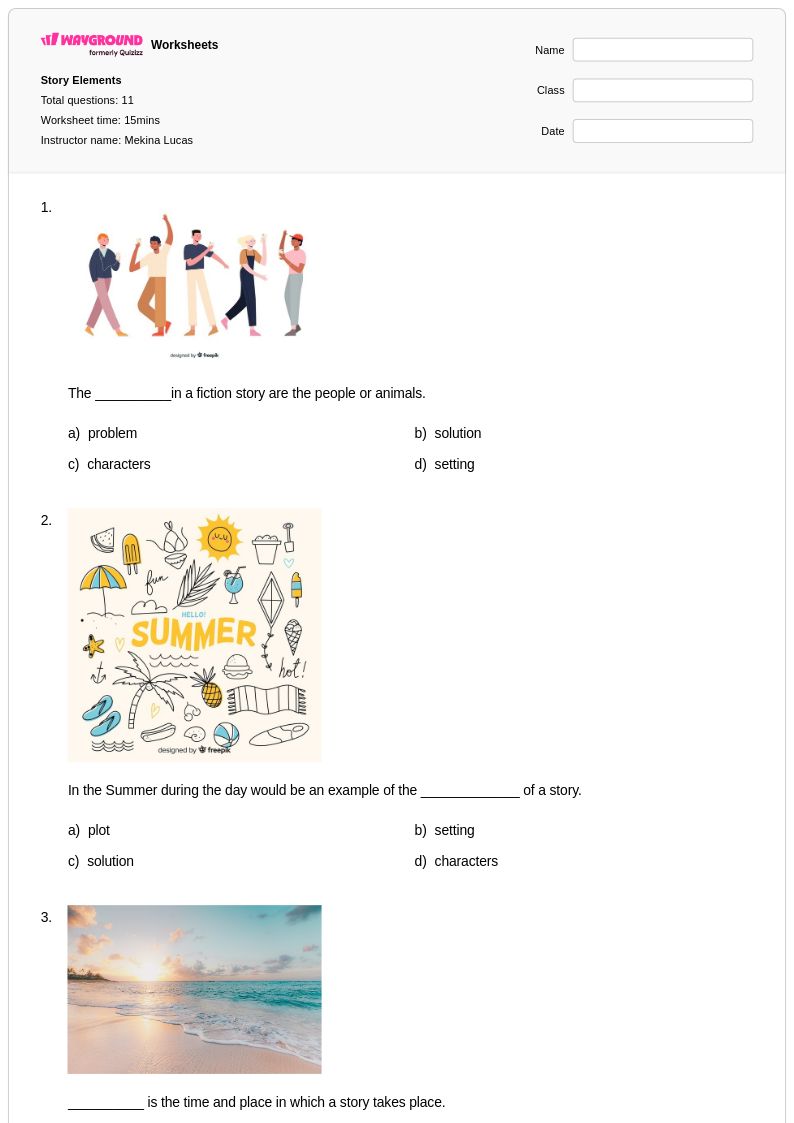
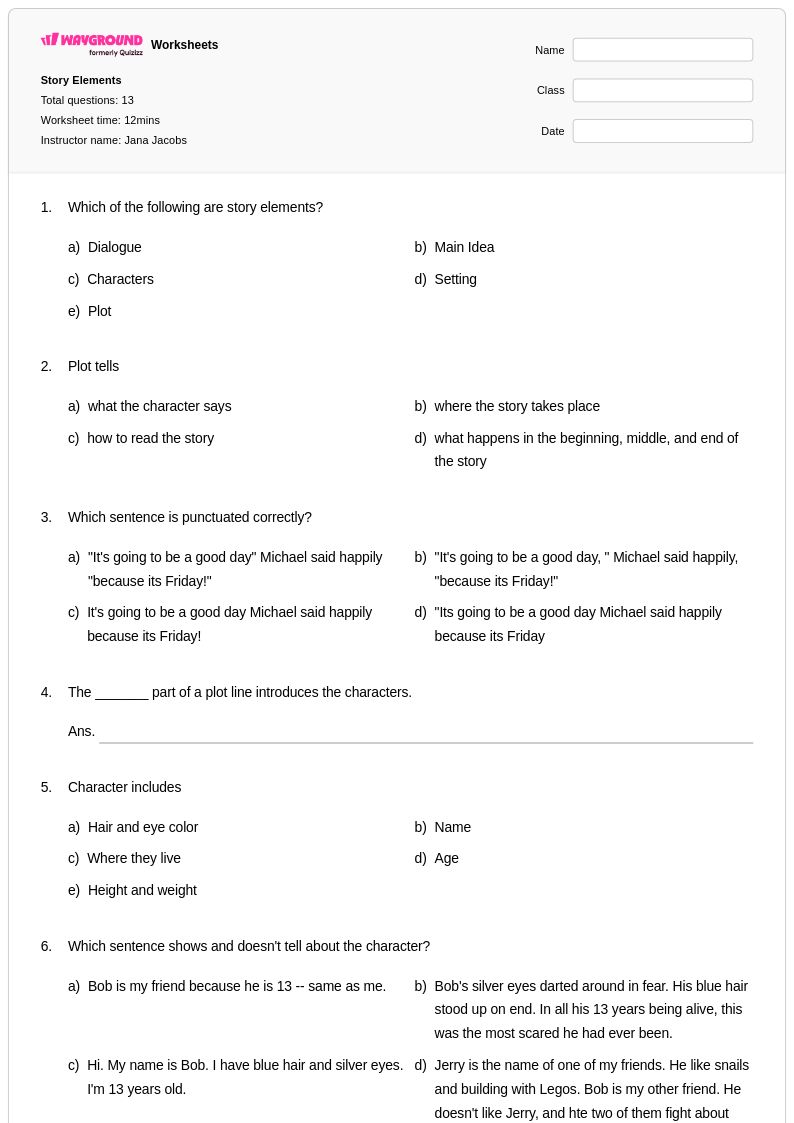
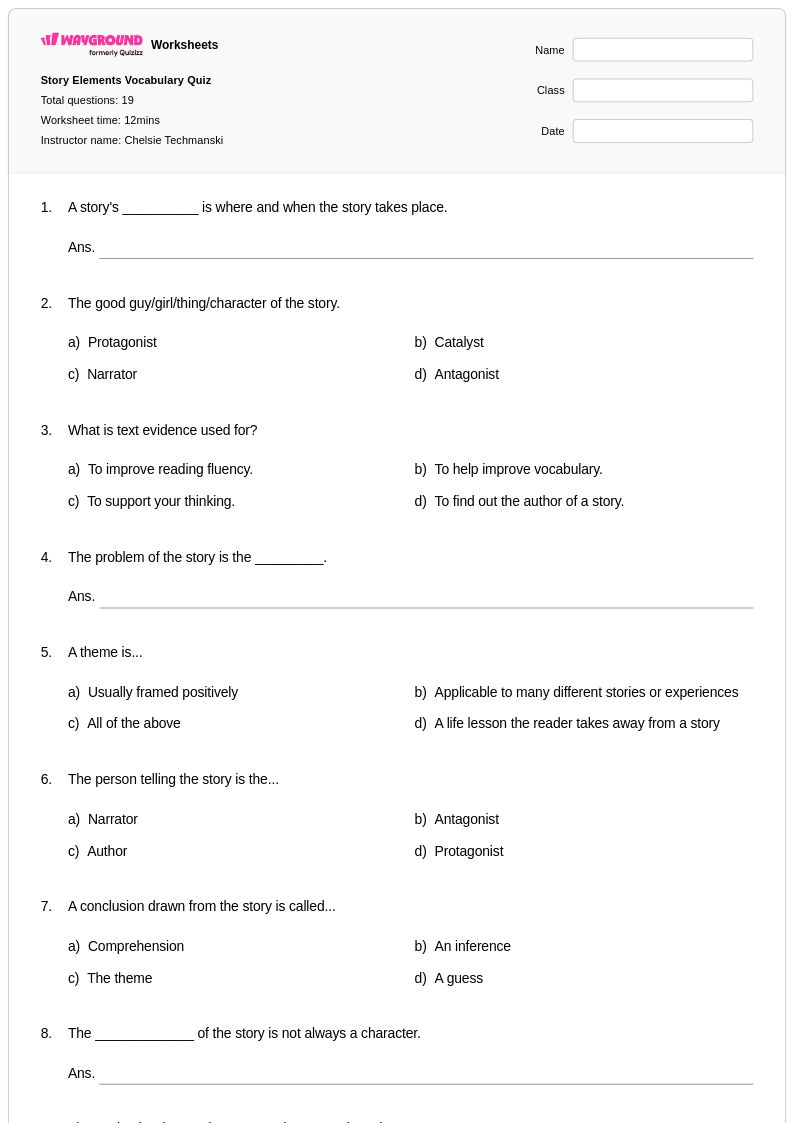
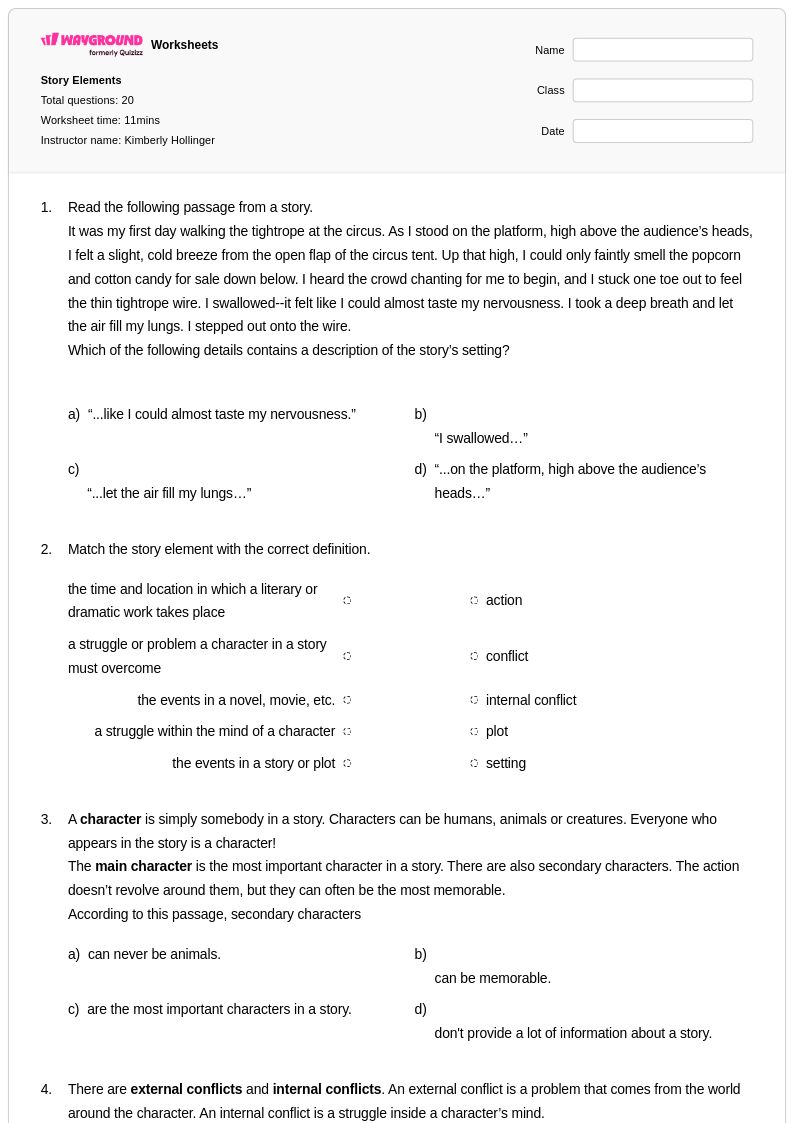
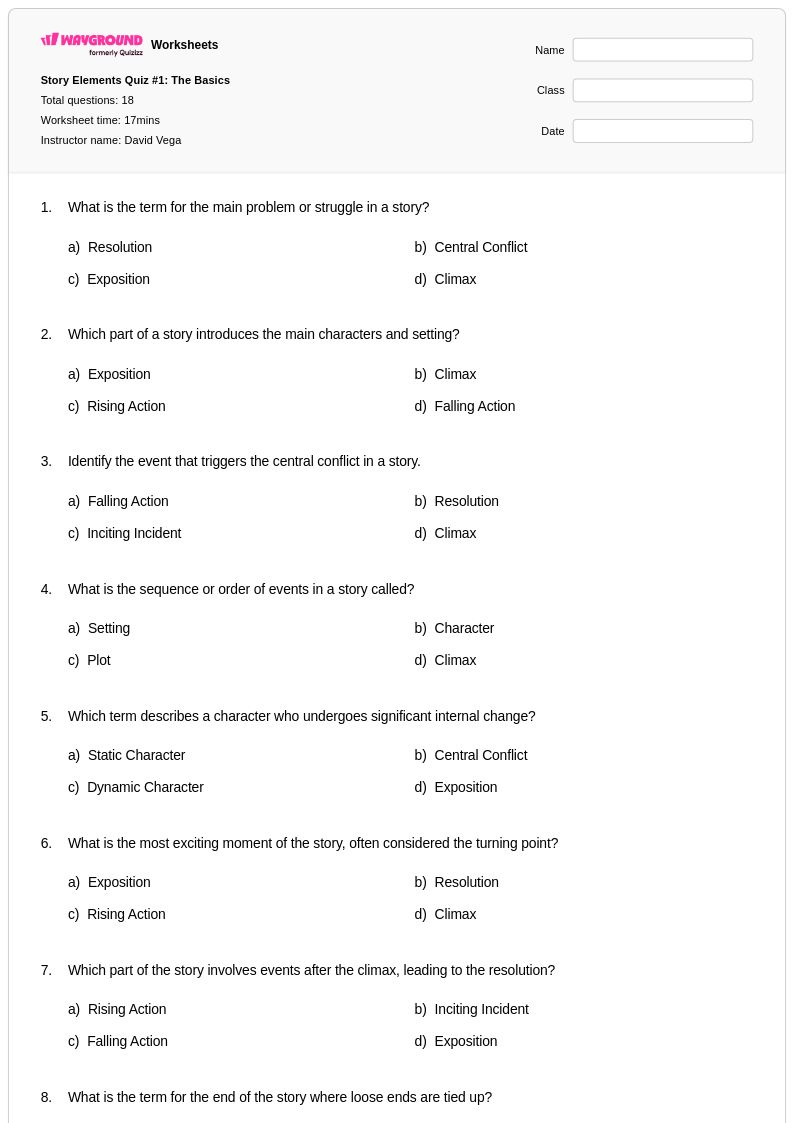
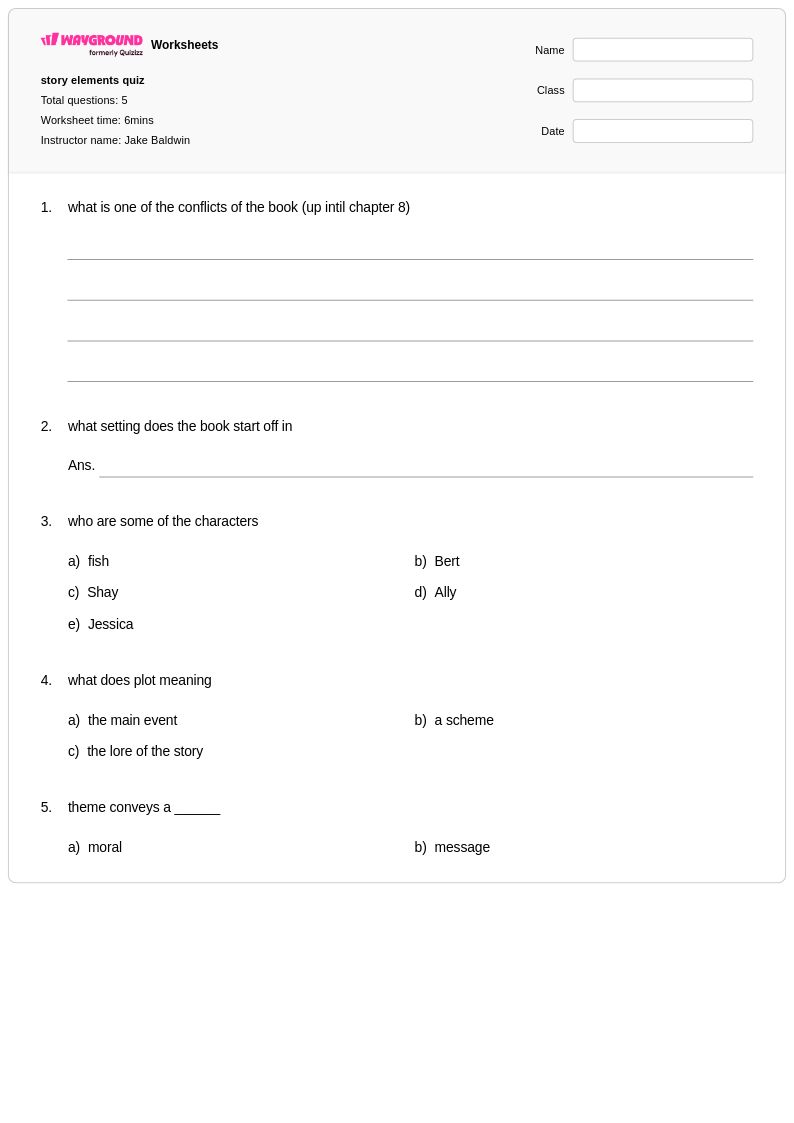
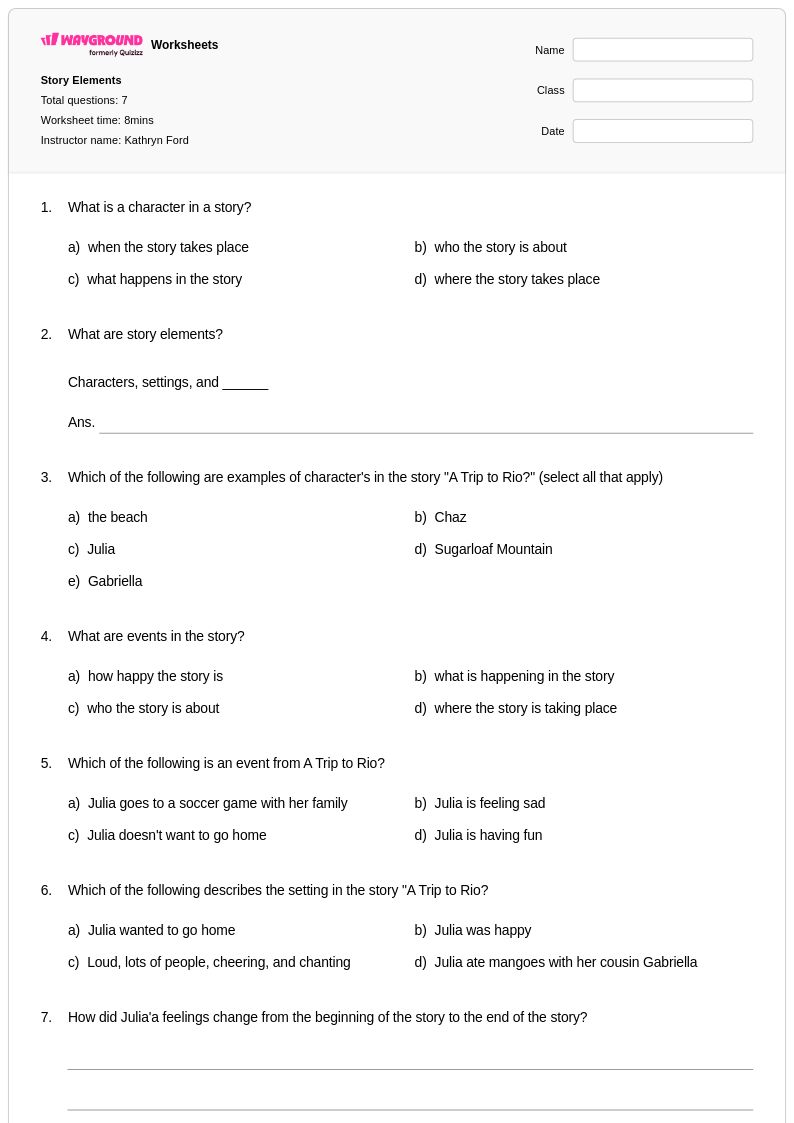
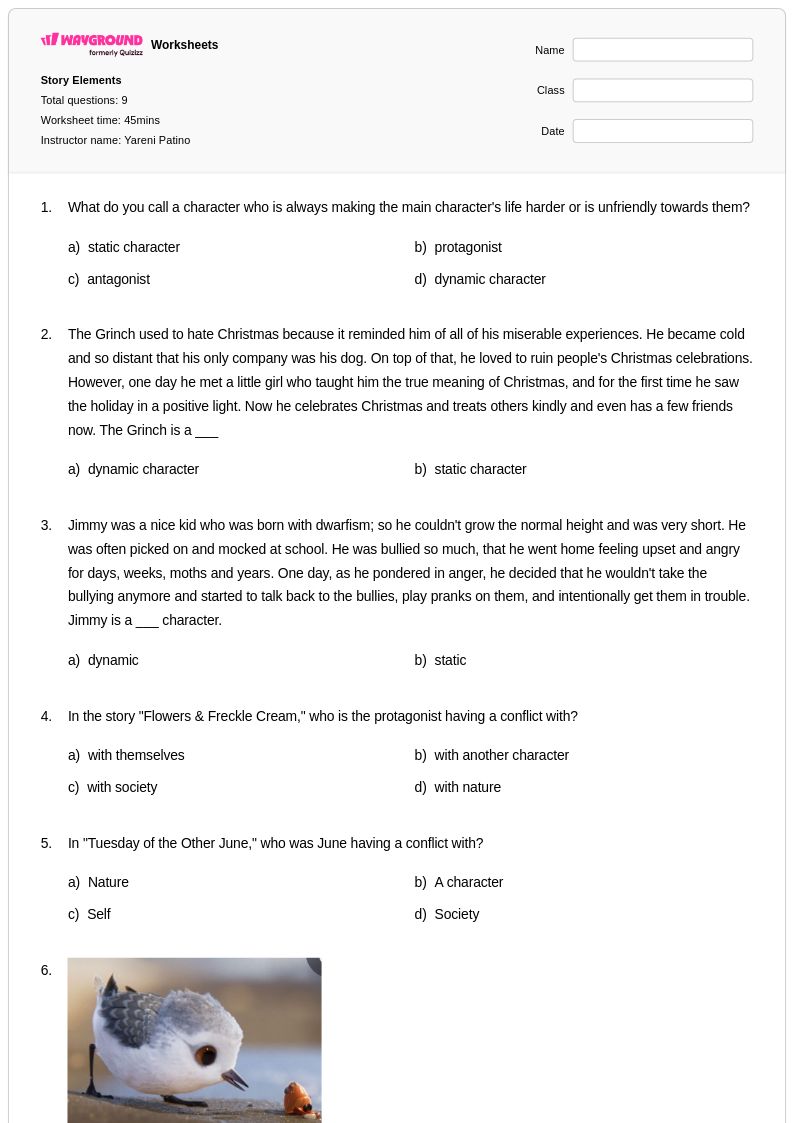
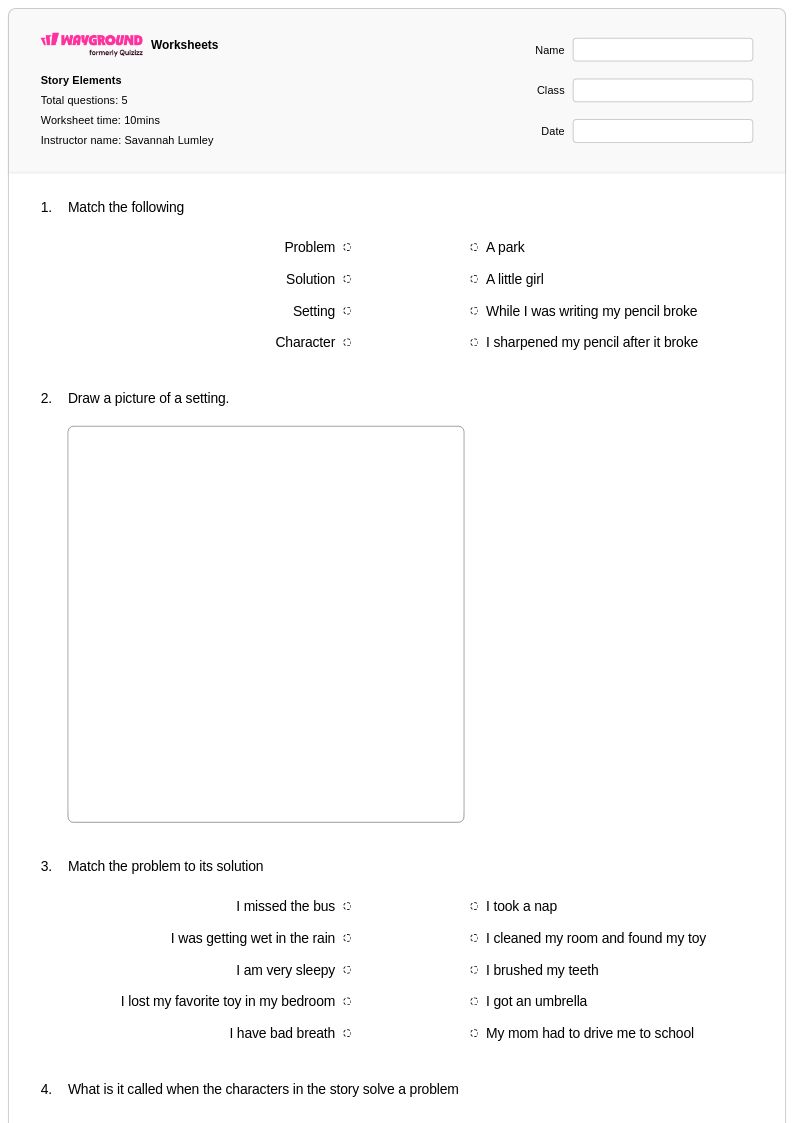
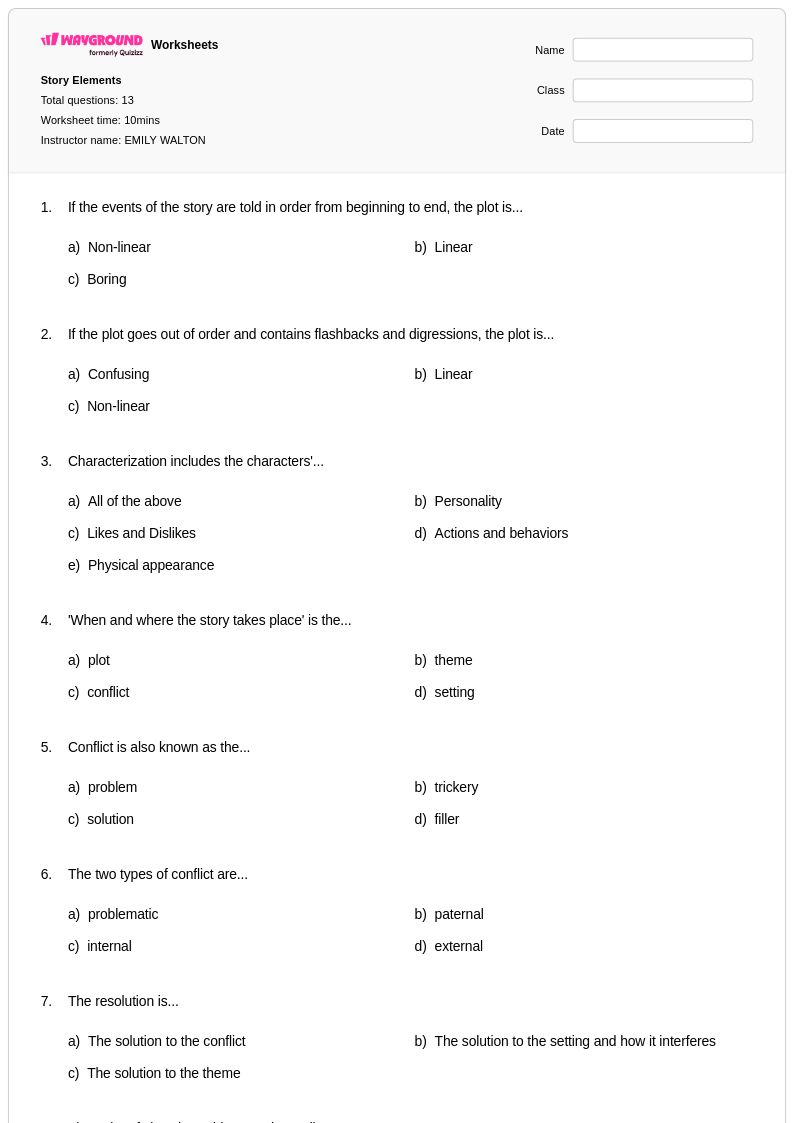
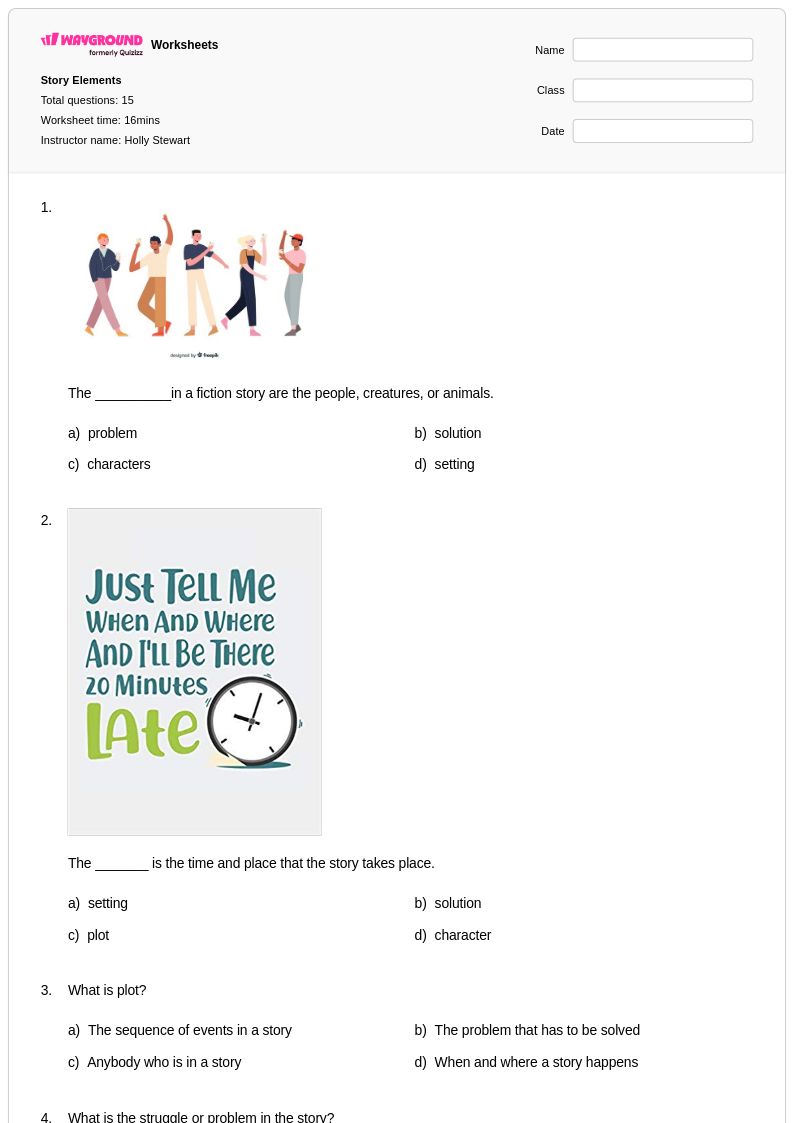
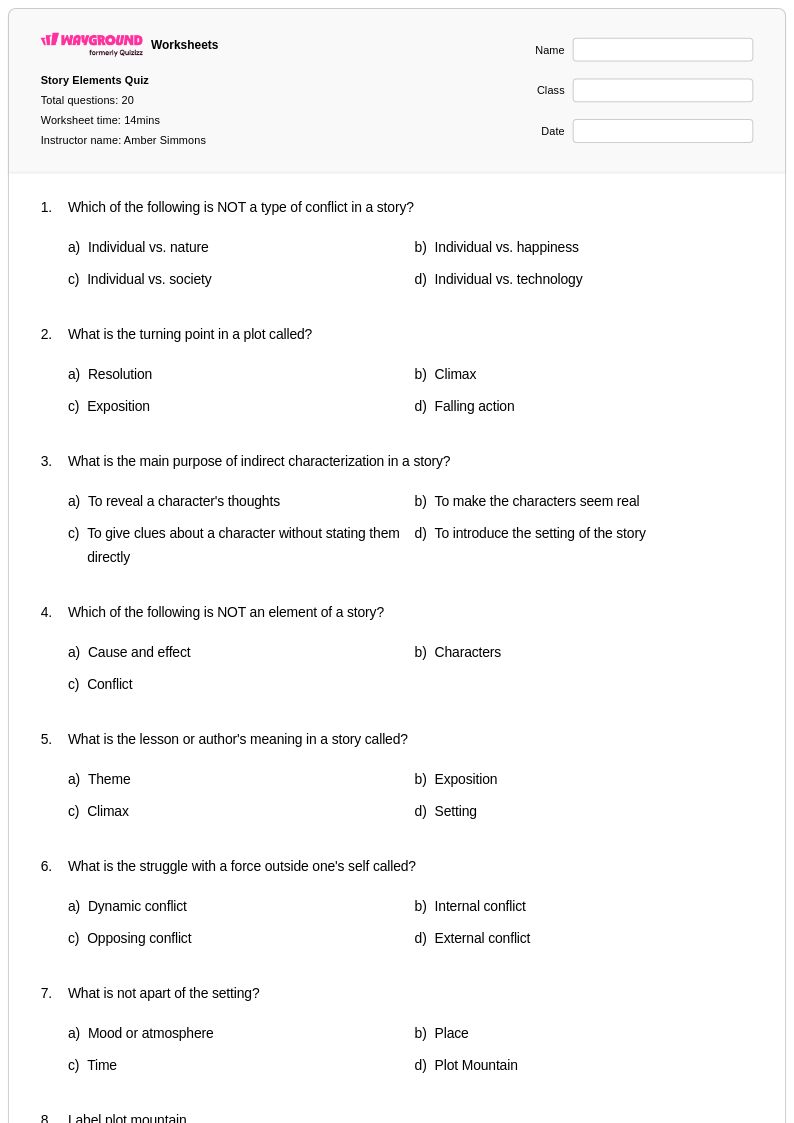
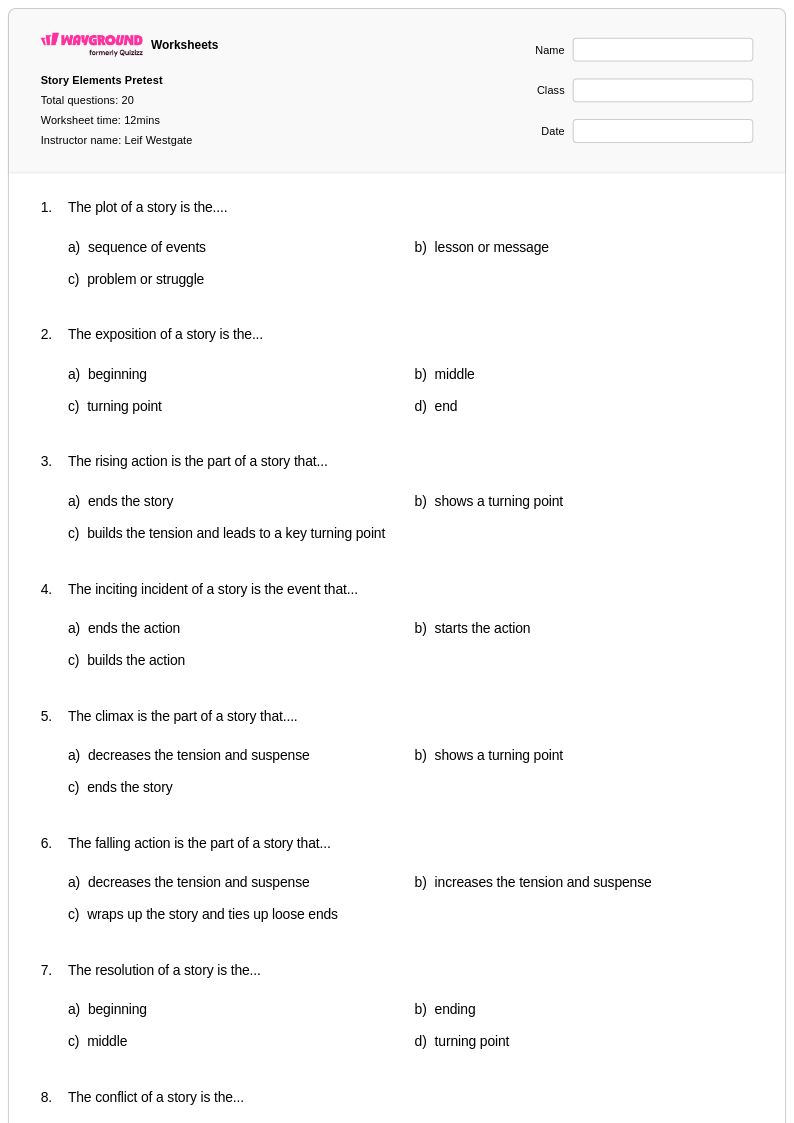
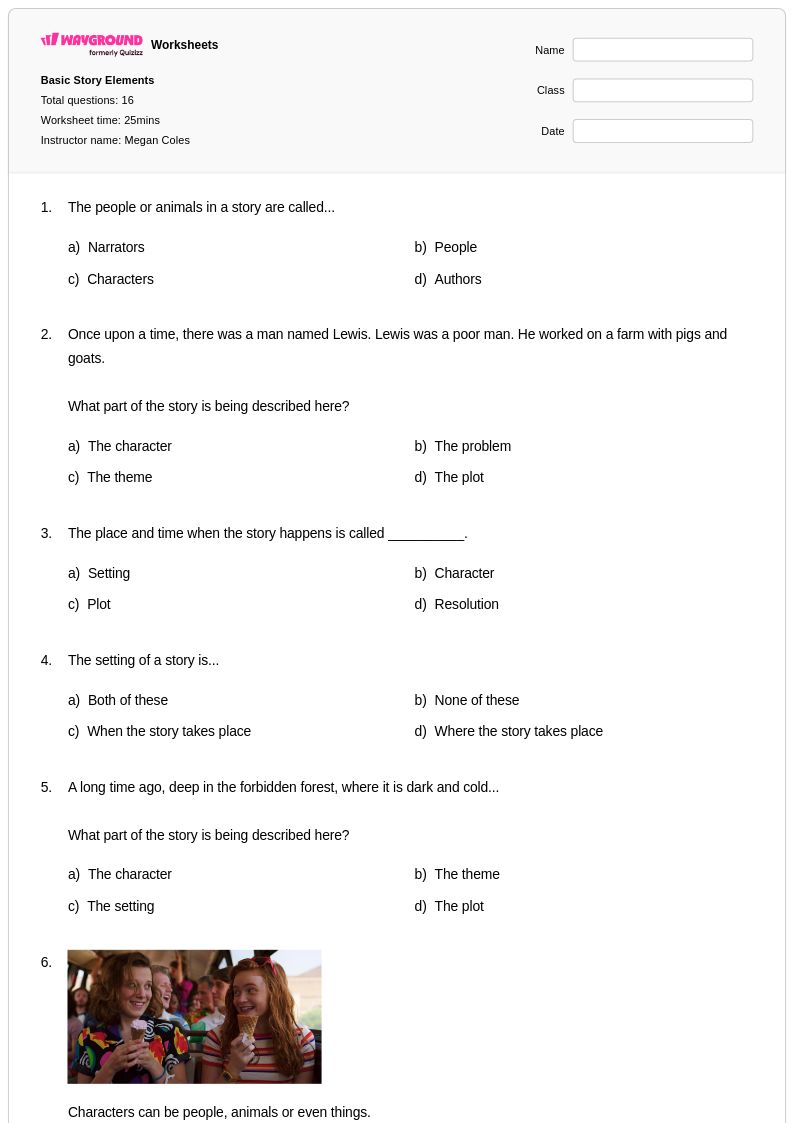
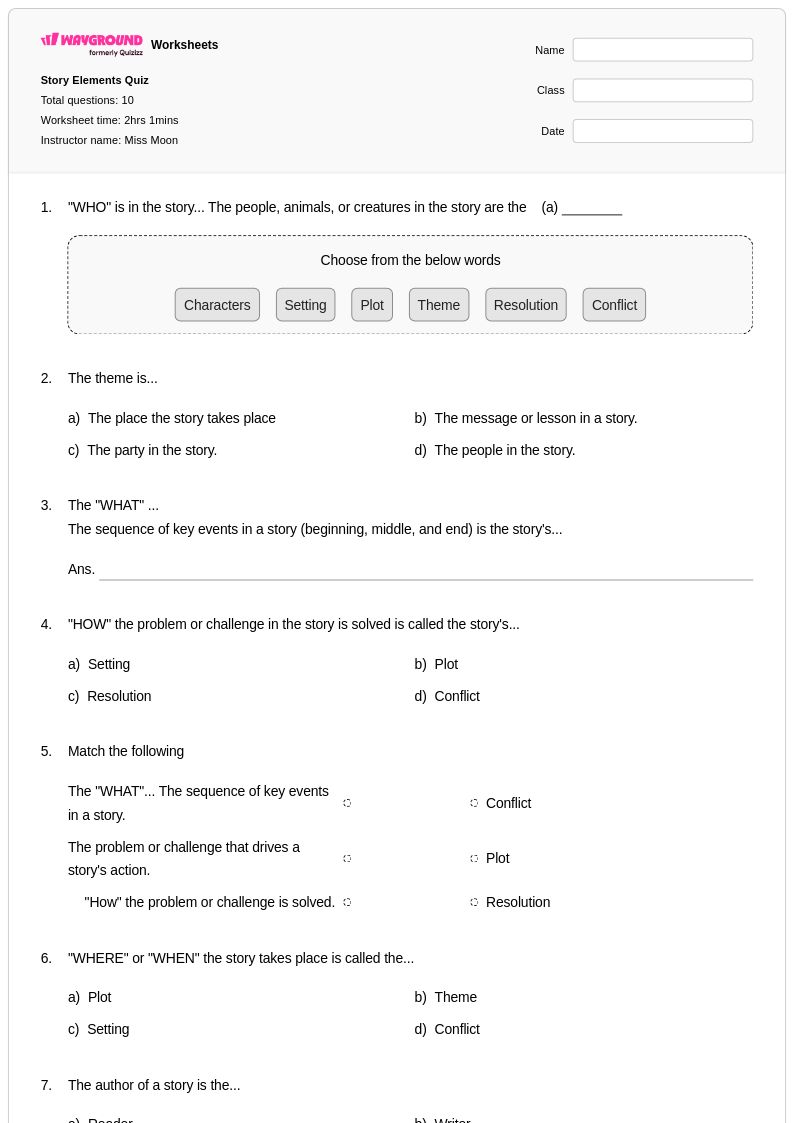
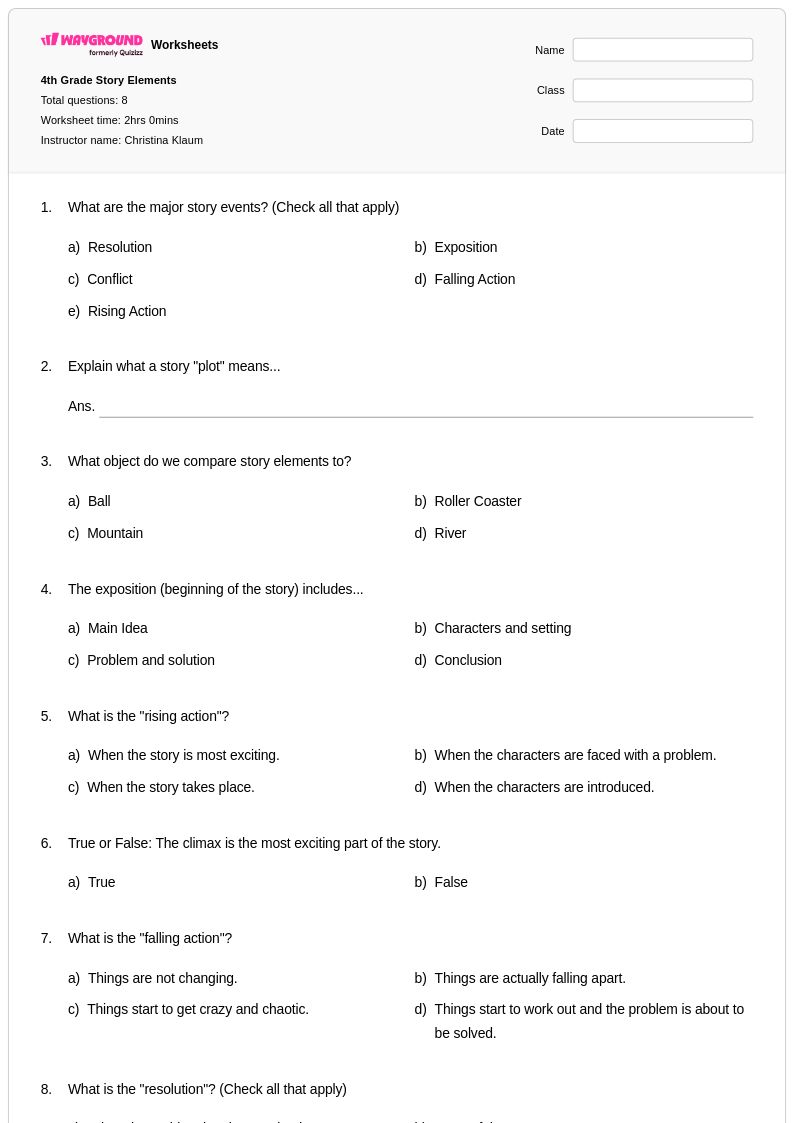
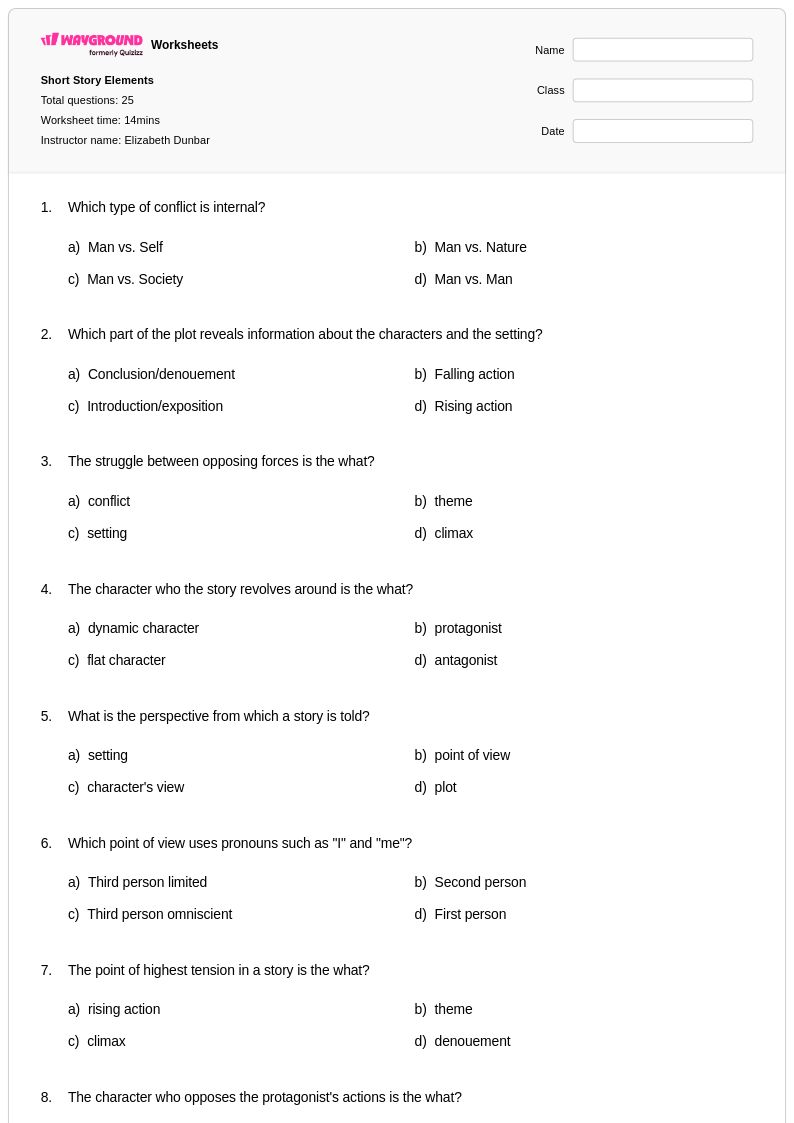
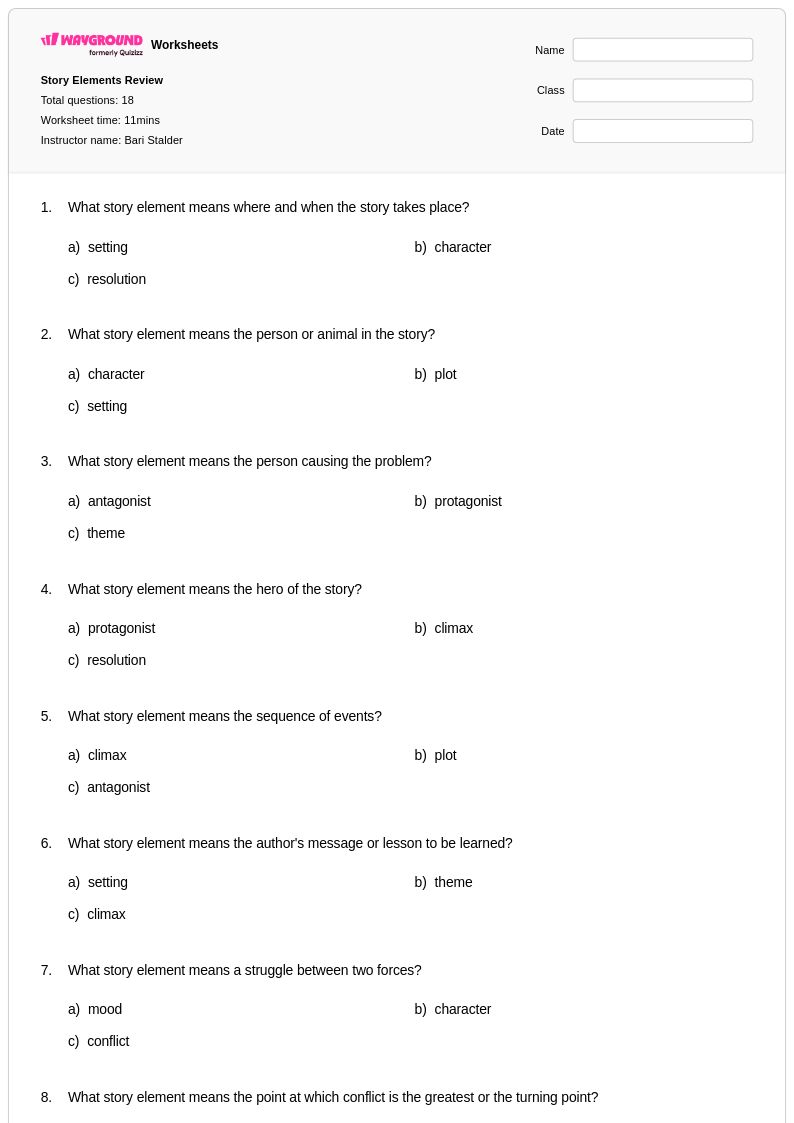
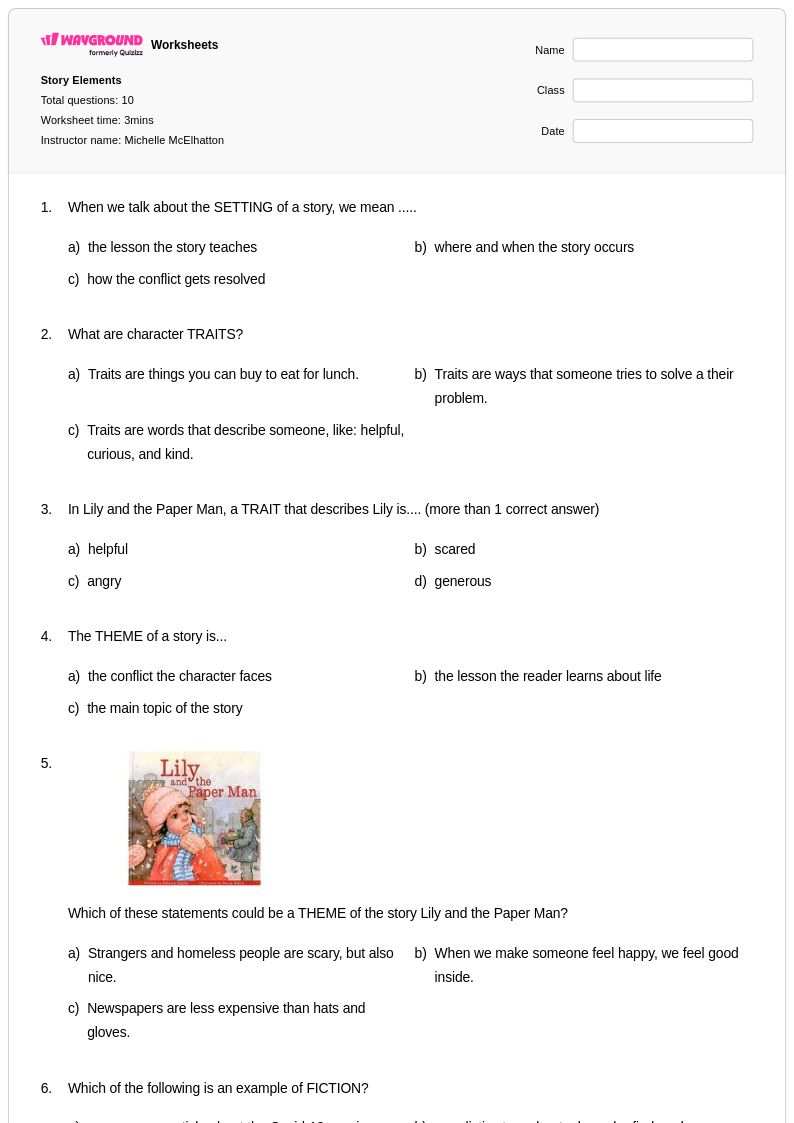
Enhance reading comprehension with Wayground's free story elements worksheets and printables that help students identify characters, setting, plot, and theme through engaging practice problems with complete answer keys.
Story elements worksheets available through Wayground (formerly Quizizz) provide comprehensive practice for students to identify, analyze, and understand the fundamental components that make stories compelling and meaningful. These carefully crafted worksheets strengthen critical reading comprehension skills by guiding students through systematic examination of character development, plot structure, setting details, theme identification, and point of view analysis. Each worksheet includes detailed answer keys and is designed as printable PDF resources that offer structured practice problems, allowing students to work methodically through various story types while building their analytical thinking abilities. The free printables cover essential literary concepts through engaging exercises that help students recognize how authors craft narratives and develop the vocabulary needed to discuss literature effectively.
Wayground (formerly Quizizz) supports educators with an extensive collection of teacher-created story elements resources, drawing from millions of expertly developed materials that can be easily located through robust search and filtering capabilities. These worksheets align with reading comprehension standards and include differentiation tools that allow teachers to customize content for diverse learning needs, whether providing remediation for struggling readers or enrichment opportunities for advanced students. The platform offers flexible access to both printable and digital formats, including downloadable PDFs, making lesson planning efficient and adaptable to various classroom environments. Teachers can seamlessly integrate these story elements worksheets into their curriculum for targeted skill practice, assessment preparation, or independent study assignments that reinforce students' ability to analyze literary components across different genres and complexity levels.
FAQs
How do I teach story elements to elementary students?
Start by introducing one element at a time using familiar, short texts — picture books work well for characters and setting before moving to plot and theme. Anchor charts that define each element with examples from shared reading help students build a consistent vocabulary. Once students can identify elements in guided practice, move to independent reading tasks where they apply the same framework across different genres.
What exercises help students practice identifying story elements?
Structured practice that asks students to locate and explain specific evidence for each element — character traits, setting details, plot events, and theme statements — builds both comprehension and analytical writing skills. Graphic organizers that map story structure (exposition, rising action, climax, falling action, resolution) give students a repeatable framework they can apply across texts. Repeated practice across different genres, such as realistic fiction, folktales, and myths, reinforces that the same elements appear in all narrative writing.
What mistakes do students commonly make when identifying story elements?
Students frequently confuse topic with theme, stating a topic word like 'friendship' instead of a complete thematic statement such as 'True friendship requires honesty.' They also tend to conflate plot summary with plot structure analysis, listing events without distinguishing conflict, rising action, or resolution. With setting, students often identify only the physical location and overlook the time period or the role setting plays in shaping character behavior and mood.
How can I differentiate story elements instruction for struggling readers?
Use shorter, less complex texts so students can focus cognitive effort on identifying elements rather than decoding. Breaking the task into single-element practice before combining all elements reduces overwhelm. On Wayground, teachers can enable accommodations such as Read Aloud so questions and content are audio-supported, and Reduced Answer Choices to lower cognitive load for selected students, while the rest of the class works under standard settings without any notification.
How do I use Wayground's story elements worksheets in my classroom?
Wayground's story elements worksheets are available as printable PDFs for traditional classroom use and in digital formats for technology-integrated environments, so they work whether students are at desks or on devices. Teachers can also host the worksheets as a quiz directly on Wayground, making it easy to assign them for independent practice, formative assessment, or homework. Each worksheet includes a complete answer key, which streamlines grading and lets teachers spend more time on instruction and feedback.
How do I assess whether students understand story elements beyond surface identification?
Move assessment beyond labeling by asking students to explain how one element influences another — for example, how the setting creates conflict or how a character's motivation drives the plot. Tasks that require textual evidence force students to demonstrate comprehension rather than guess. Common assessment errors include theme statements that are too broad or character analyses that describe behavior without connecting it to motivation or change across the story.