Free Printable Balance of Power in World War I Worksheets for Class 10
Free Class 10 printable worksheets and practice problems help students master the Balance of Power in World War I through engaging social studies activities with comprehensive answer keys and downloadable PDFs.
Explore printable Balance of Power in World War I worksheets for Class 10
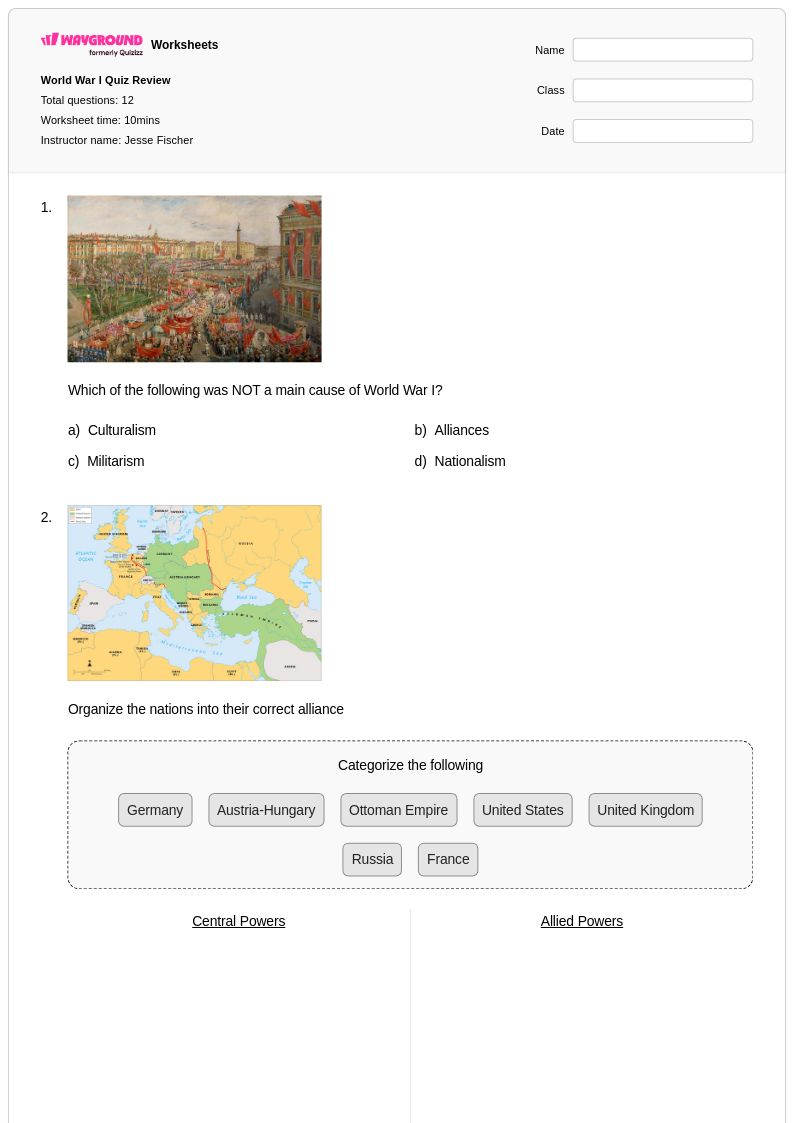
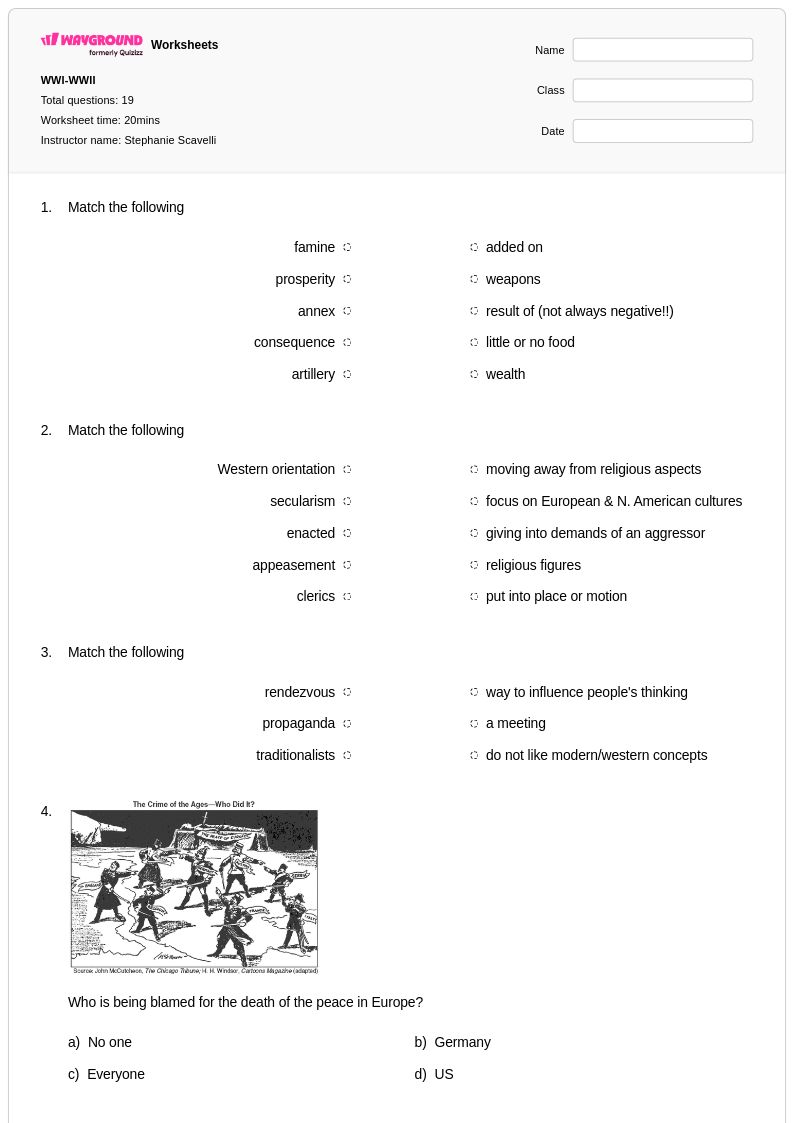
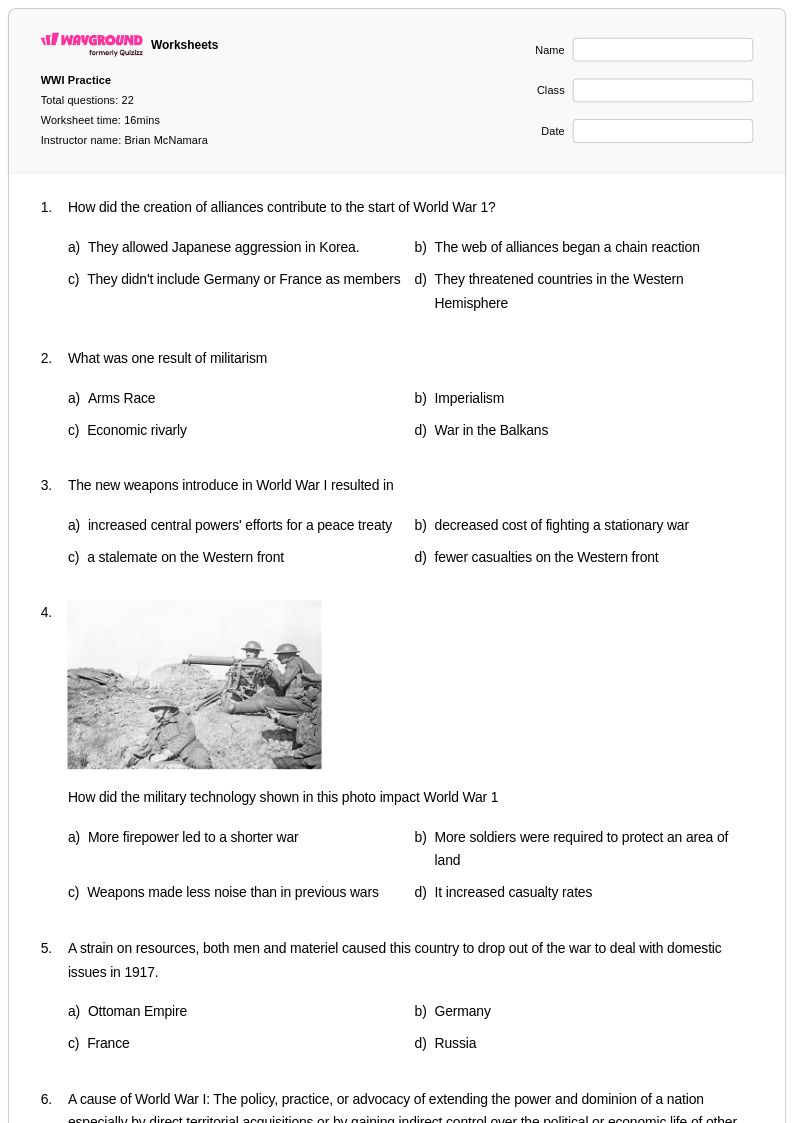
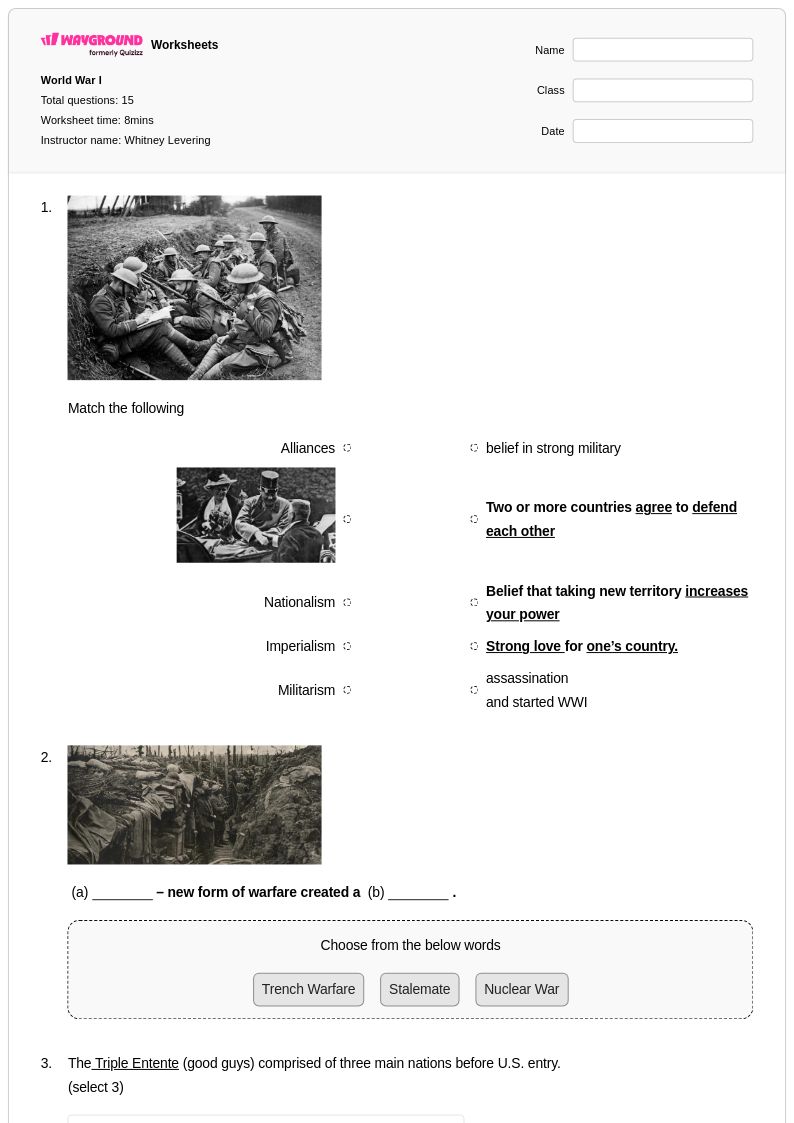
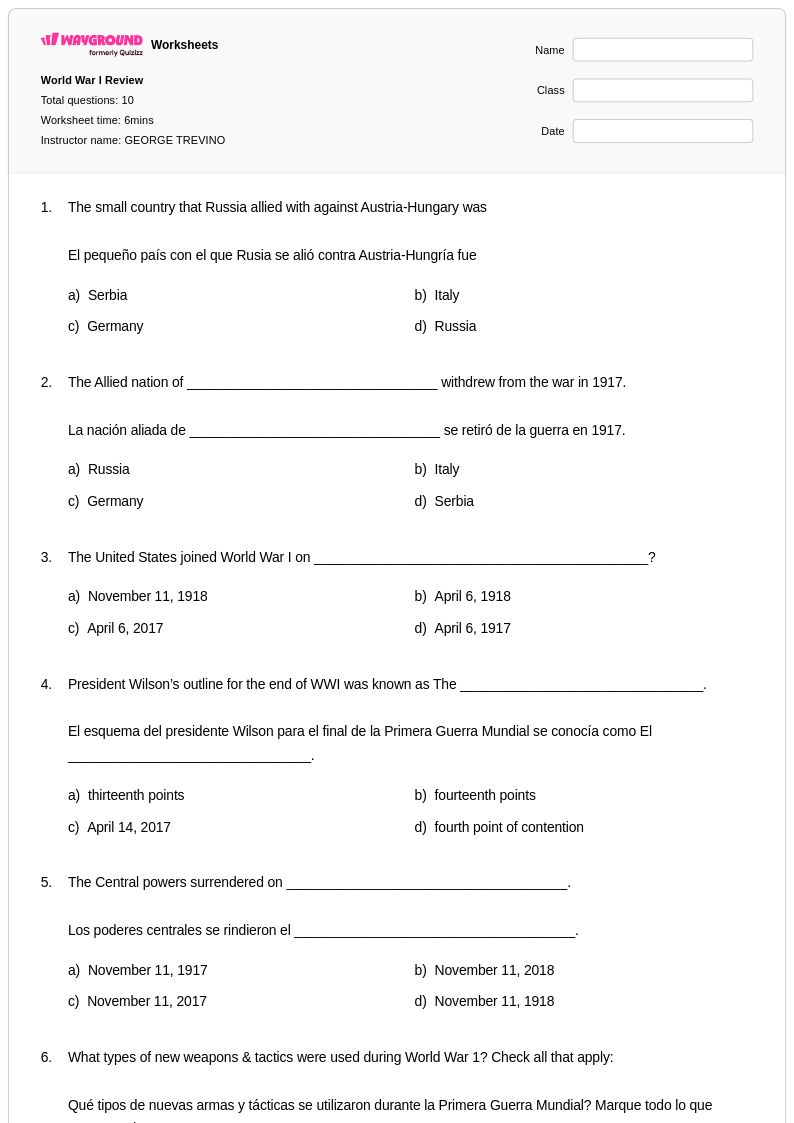
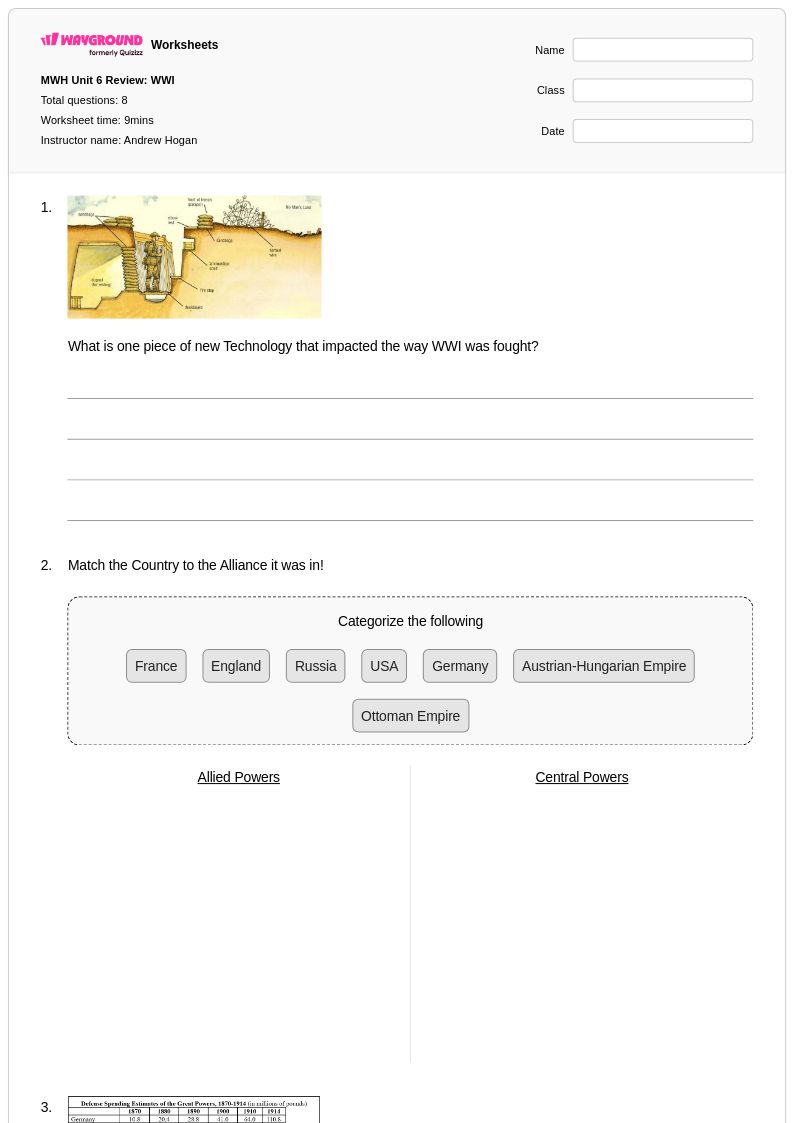
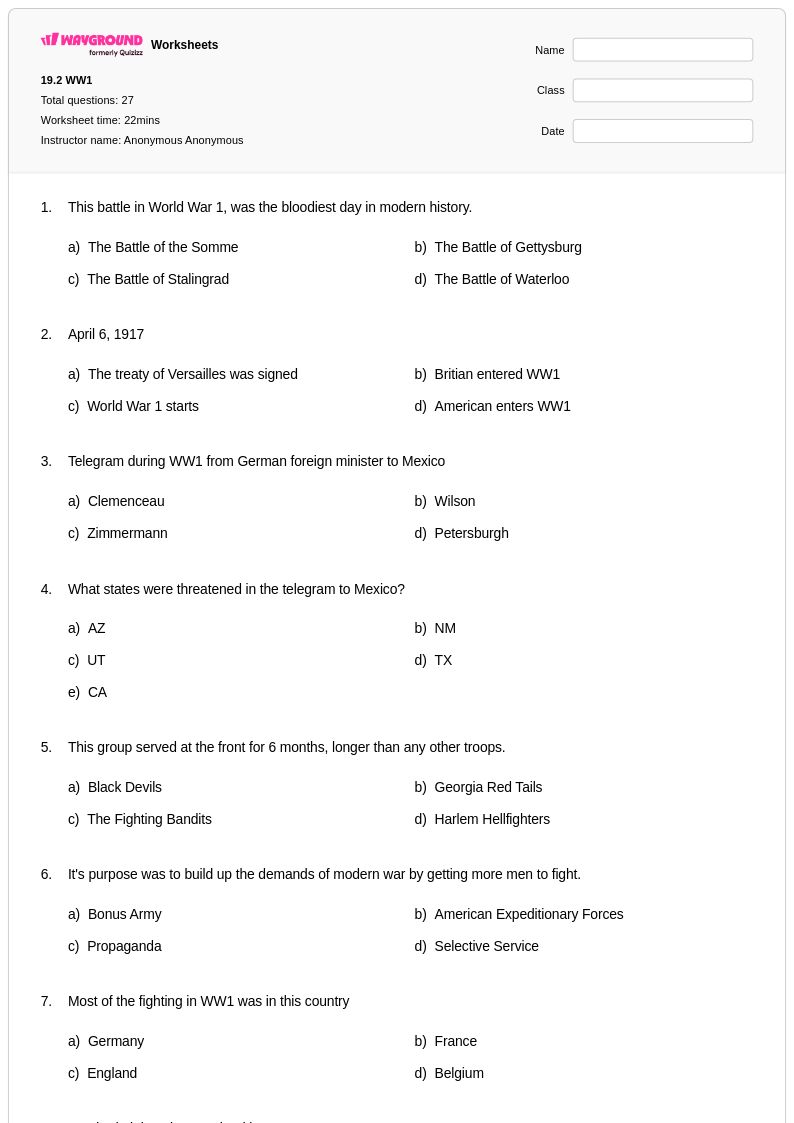
Balance of Power in World War I worksheets for Class 10 students through Wayground (formerly Quizizz) provide comprehensive practice materials that explore the intricate diplomatic and military alliances that shaped the Great War. These expertly crafted worksheets help students analyze the complex web of relationships between major European powers, examining how the alliance system of the Triple Alliance and Triple Entente created a precarious equilibrium that ultimately contributed to the war's outbreak and progression. Students strengthen critical thinking skills by evaluating primary source documents, interpreting political maps, and analyzing the strategic decisions that maintained or disrupted the balance of power throughout the conflict. Each worksheet includes detailed answer keys and is available as free printable PDFs, featuring practice problems that challenge students to connect cause-and-effect relationships between diplomatic tensions, military strategies, and shifting alliances during this pivotal period in world history.
Wayground (formerly Quizizz) supports Class 10 Social Studies teachers with an extensive collection of millions of teacher-created resources focused on World War I's balance of power dynamics, offering robust search and filtering capabilities that align with national and state history standards. Teachers can easily differentiate instruction by accessing worksheets at varying complexity levels, from foundational alliance identification exercises to advanced analytical tasks examining the war's geopolitical implications. The platform's flexible customization tools allow educators to modify existing materials or create targeted assessments that address specific learning objectives, while the availability of both printable and digital PDF formats ensures seamless integration into any classroom environment. These comprehensive resources streamline lesson planning by providing ready-to-use materials for skill practice, targeted remediation for struggling learners, and enrichment activities that challenge advanced students to develop deeper understanding of how power dynamics influenced one of history's most significant conflicts.
FAQs
How do I teach the balance of power in World War I to my students?
Start by establishing what the balance of power theory means in international relations before applying it to the specific alliances of 1914. Use alliance maps to show students how the Triple Alliance and Triple Entente formed two opposing blocs, then guide them through how a single event, the assassination of Archduke Franz Ferdinand, triggered a chain reaction across those alliances. Primary source documents such as treaty excerpts and diplomatic cables help students see how binding these agreements were in practice, making the outbreak of war feel less inevitable and more the result of deliberate political choices.
What exercises help students practice analyzing the alliance system in World War I?
Effective practice exercises include timeline construction tasks that map the sequence of alliance formations from the 1870s through 1914, as well as comparative analysis activities where students evaluate the obligations and limitations of each alliance bloc. Asking students to interpret historical maps showing territorial claims and alliance boundaries reinforces how geography shaped strategic decisions. Worksheets that present competing power blocs side by side and ask students to assess each side's strengths and vulnerabilities build the analytical skills needed to understand why no single power could act in isolation.
What common mistakes do students make when learning about the balance of power in World War I?
A frequent misconception is that the alliance system made war inevitable, when in reality many leaders believed the alliances would deter conflict rather than escalate it. Students also tend to treat the Triple Alliance and Triple Entente as monolithic, overlooking the internal tensions, such as Italy's eventual defection from the Triple Alliance, that complicated each bloc's cohesion. Another common error is conflating the balance of power as a cause of the war with it being a cause of the war's scale and duration, which are distinct historical arguments that require separate evidence.
How do I use Balance of Power in World War I worksheets in my classroom?
These worksheets are available as printable PDFs for traditional classroom use and in digital formats for technology-integrated or hybrid learning environments, so they can be deployed as in-class activities, homework assignments, or group discussion prompts. Teachers can also host them as a quiz directly on Wayground, which makes it easy to collect student responses and identify where misconceptions are forming. Each worksheet includes a complete answer key, supporting both independent student work and teacher-led review sessions.
How do I differentiate instruction when teaching the balance of power in World War I?
Differentiation works well when you vary the complexity of source materials — struggling students benefit from scaffolded documents with glossaries or guided annotation prompts, while advanced learners can engage with unabridged primary sources and open-ended synthesis questions. On Wayground, teachers can apply individual student accommodations such as extended time, read-aloud support, or reduced answer choices, which is particularly useful for students with IEPs or language barriers who need access adjustments without altering the core historical content. Grouping students for collaborative analysis of different alliance documents and then sharing findings whole-class also naturally differentiates the cognitive load.
How does the balance of power theory connect to the causes of World War I?
The balance of power theory held that peace depended on no single nation or bloc becoming dominant enough to impose its will on others, which drove European powers to form the interlocking alliance system of the late 19th and early 20th centuries. In practice, this system meant that a localized conflict between Austria-Hungary and Serbia could not remain contained, because each alliance partner's security was tied to the others'. Teaching this connection helps students understand the war not as a random catastrophe but as the structural consequence of a diplomatic order that prioritized deterrence over de-escalation mechanisms.