
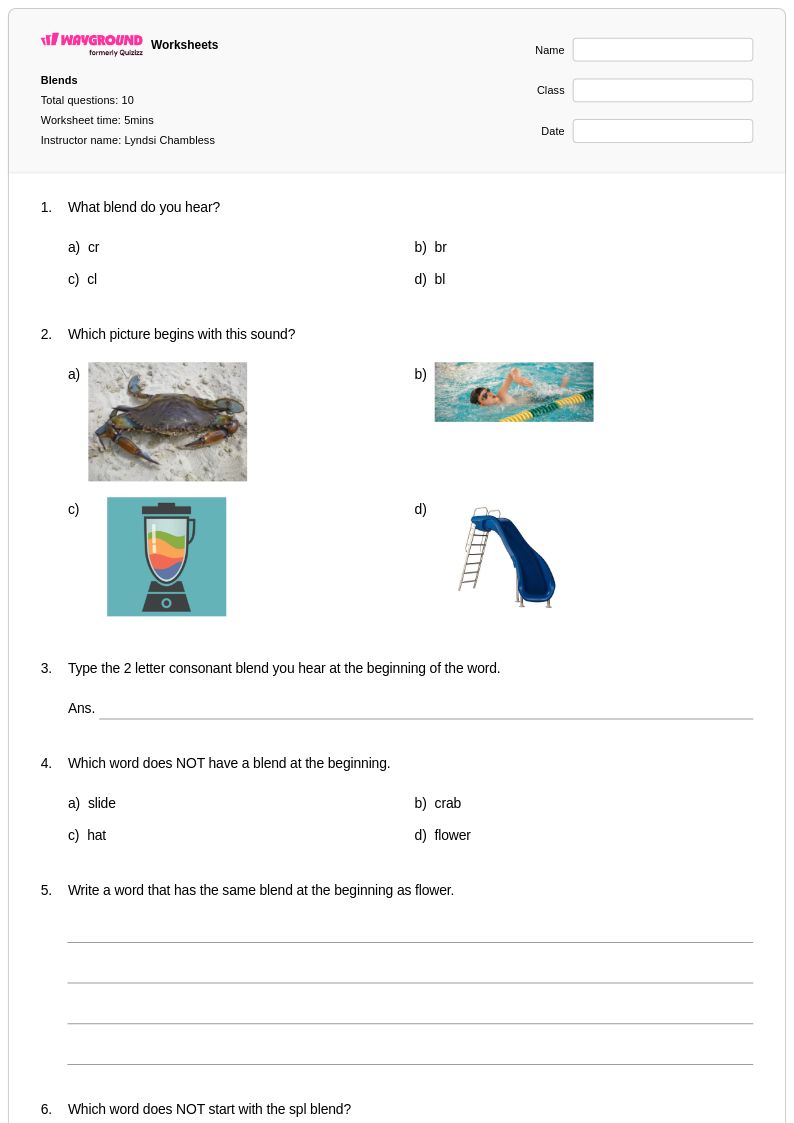
10 Q
1st
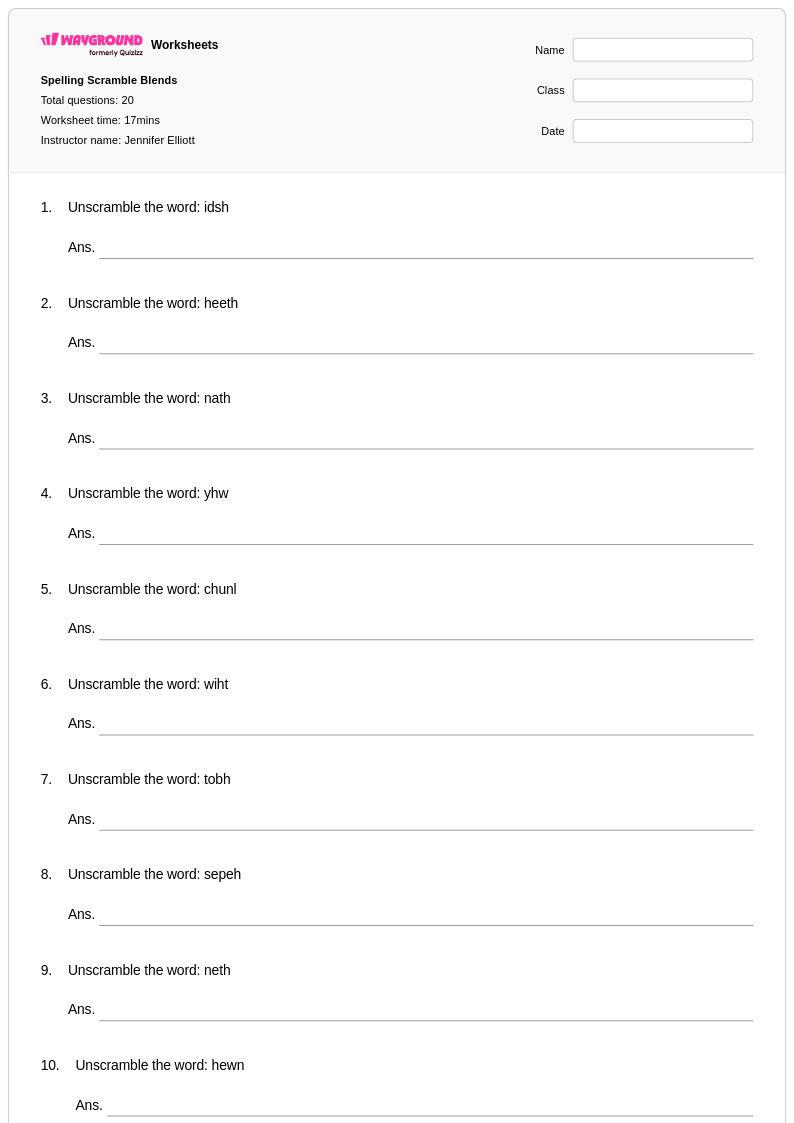
20 Q
2nd
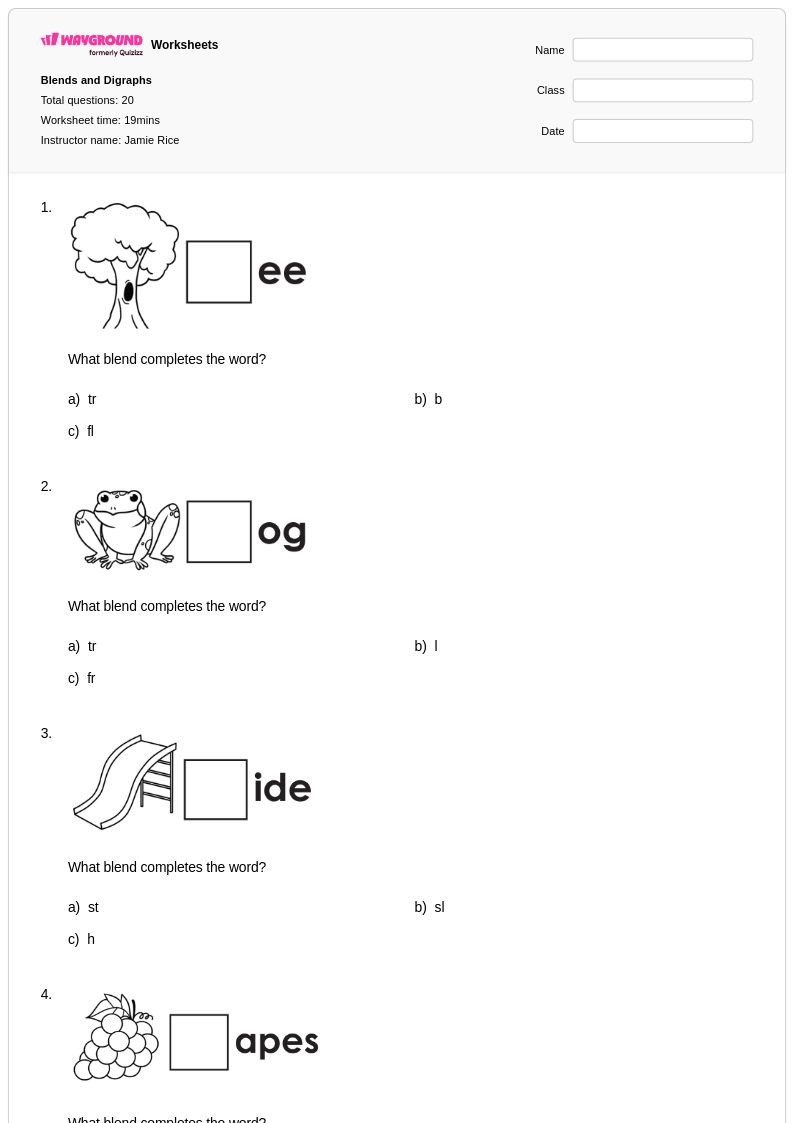
20 Q
KG - 3rd
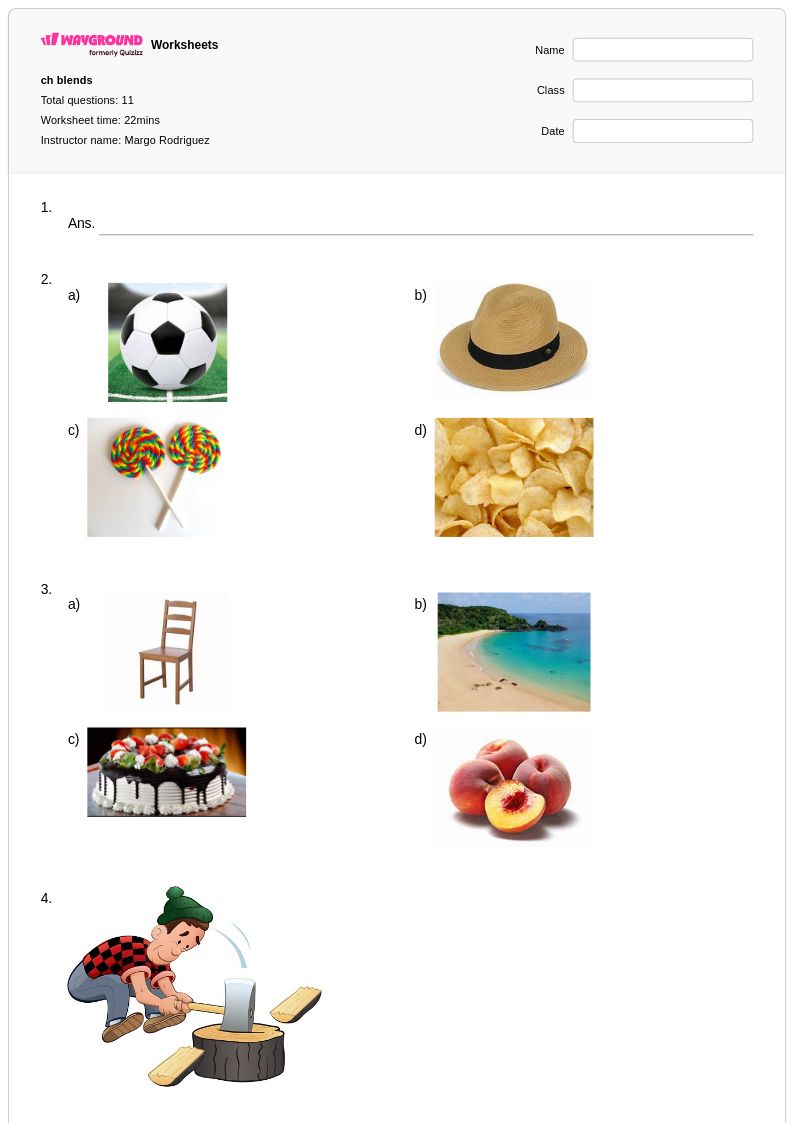
11 Q
1st
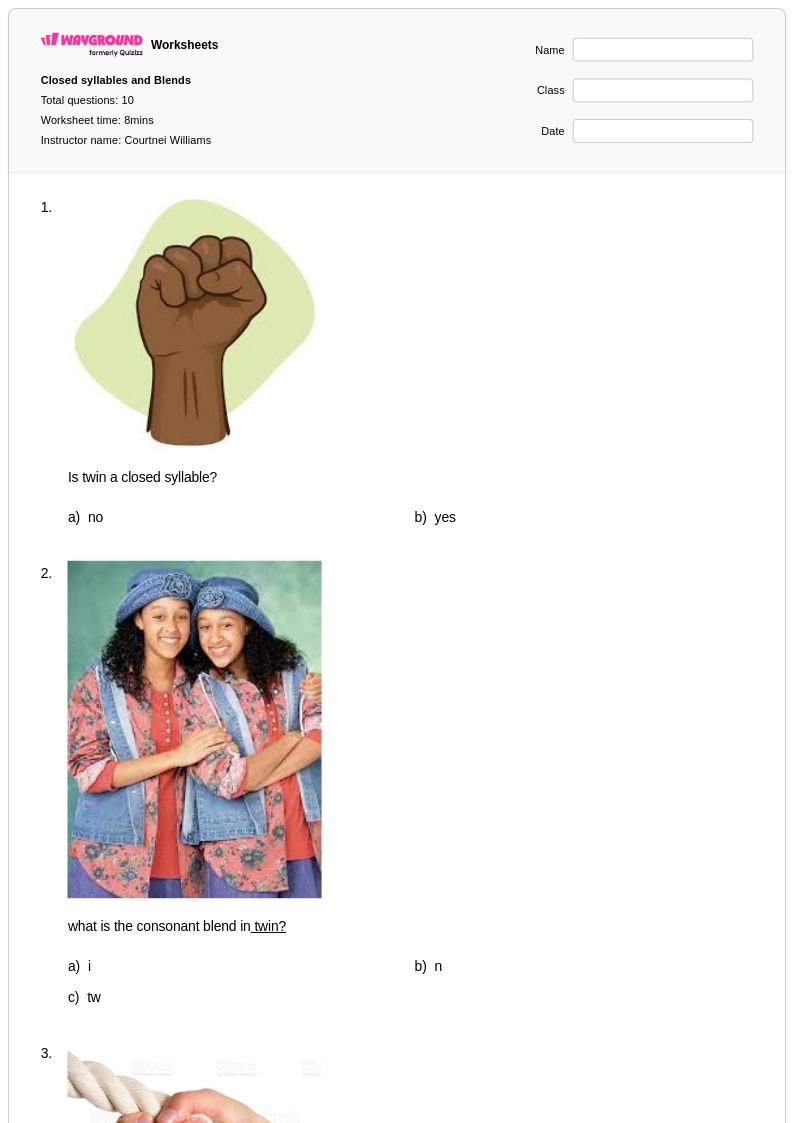
10 Q
2nd - 4th
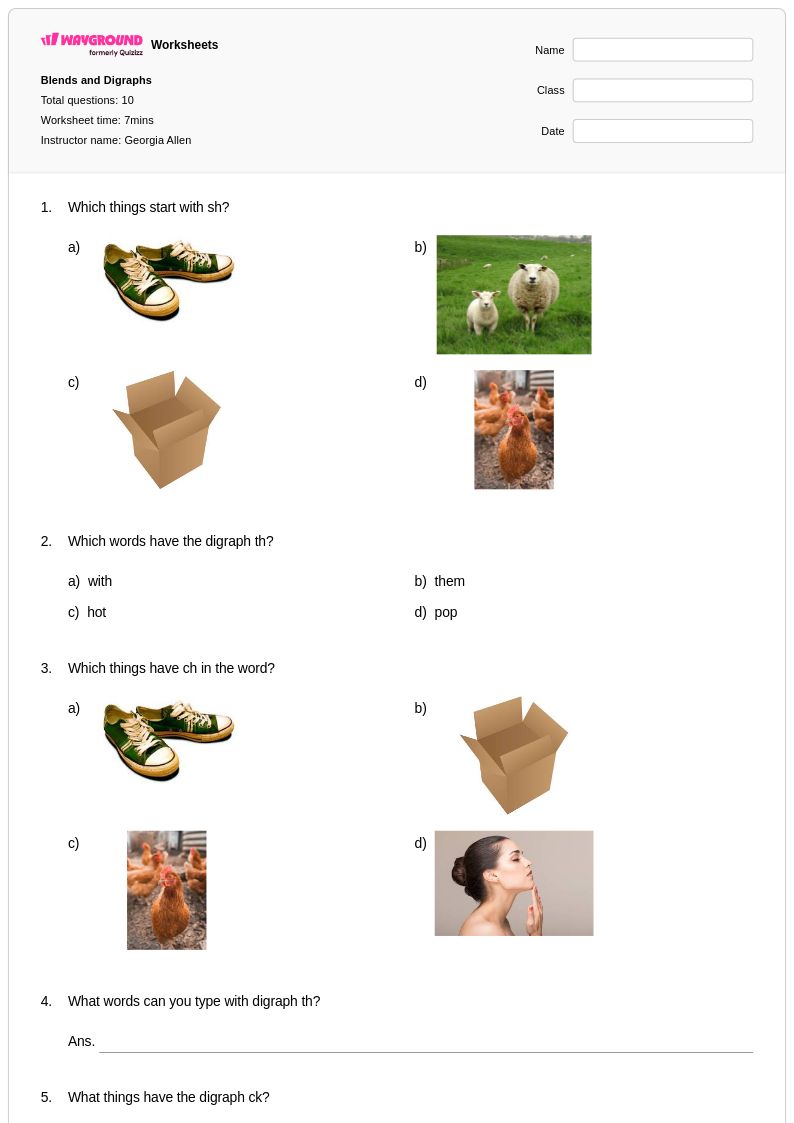
10 Q
KG - 2nd
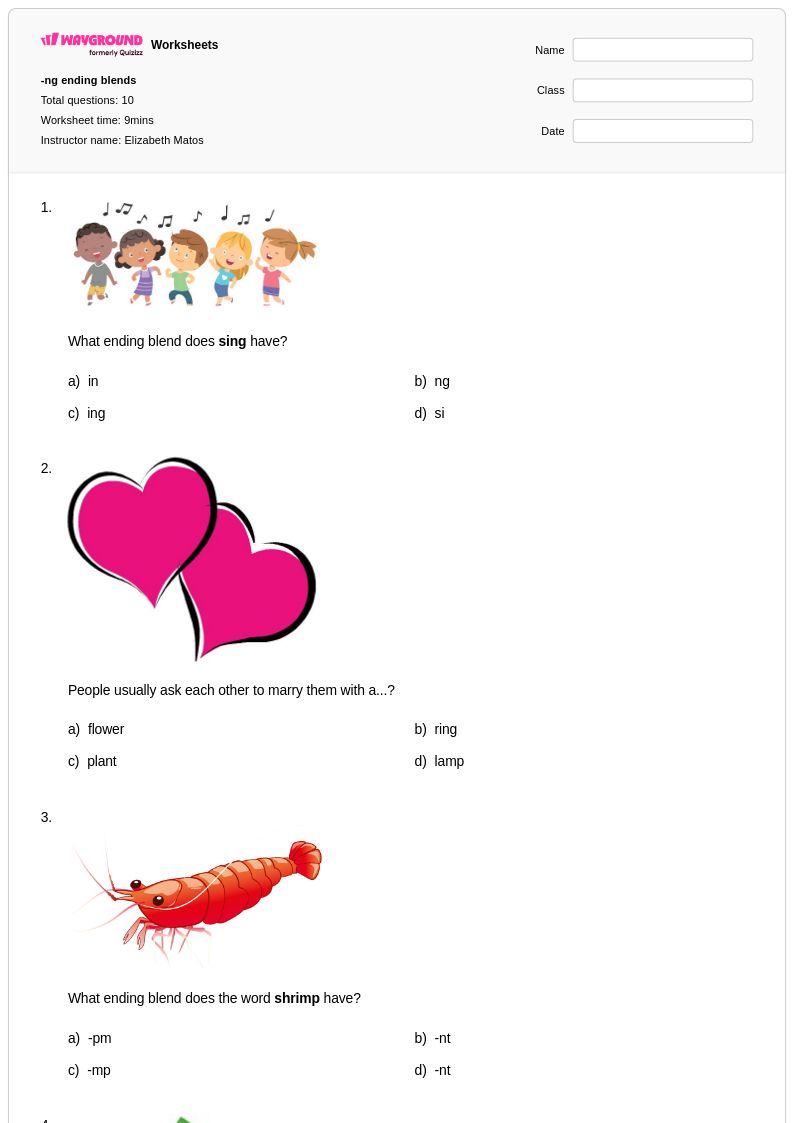
10 Q
2nd
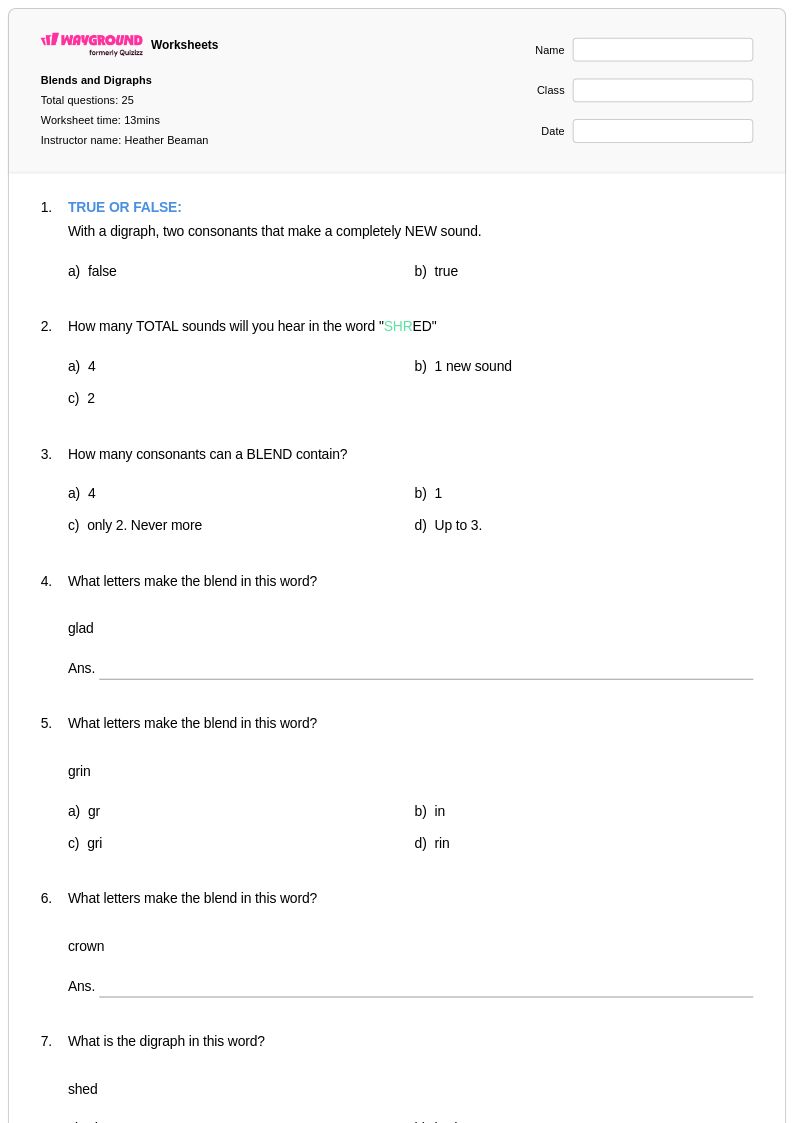
25 Q
6th - 8th
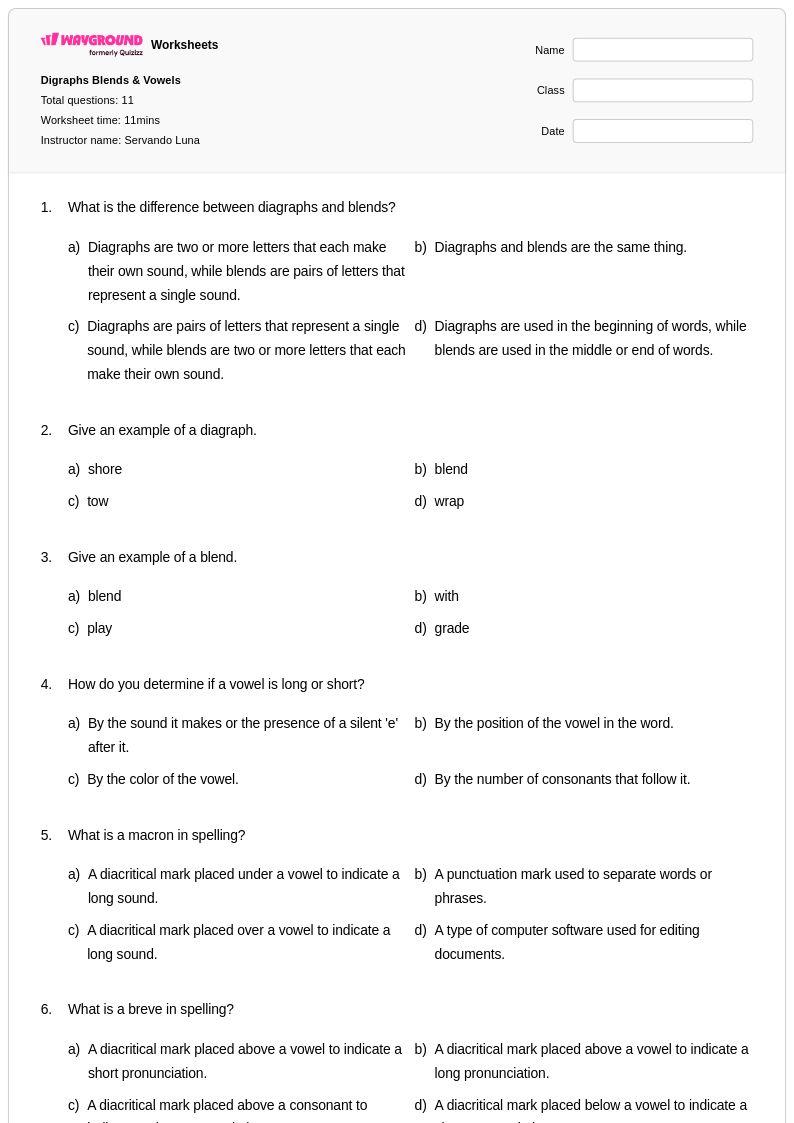
11 Q
8th
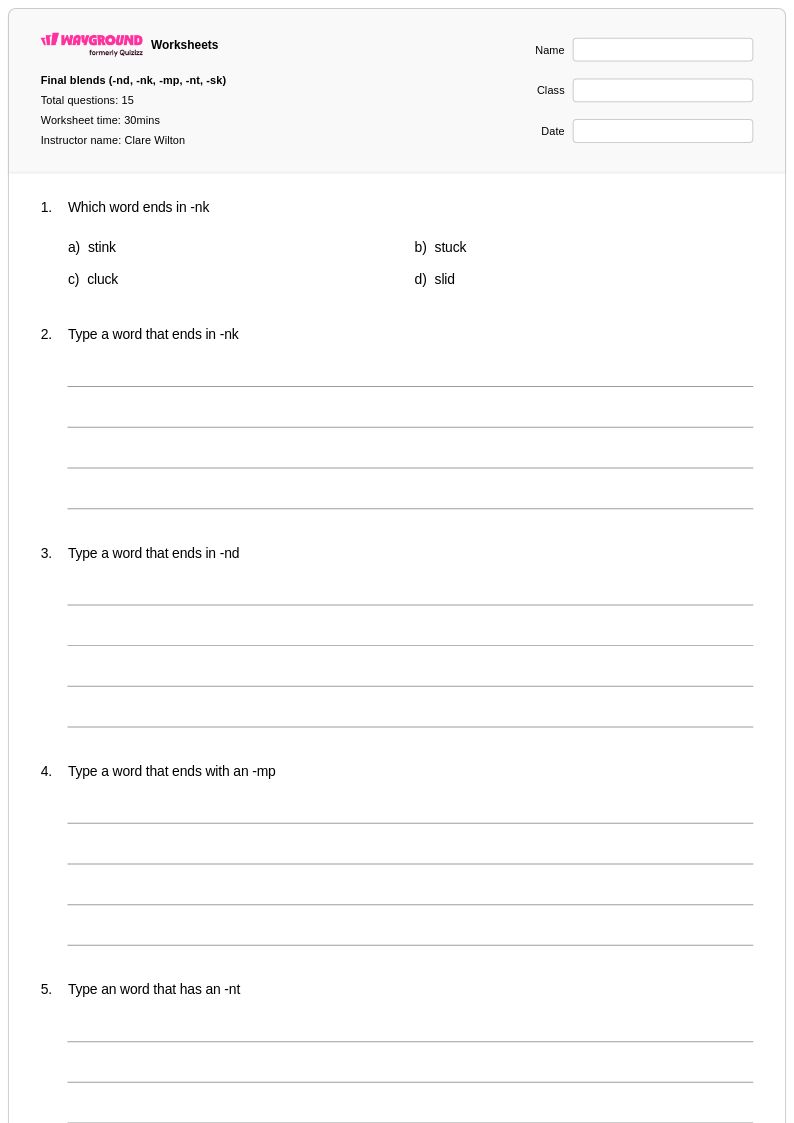
15 Q
KG - 2nd
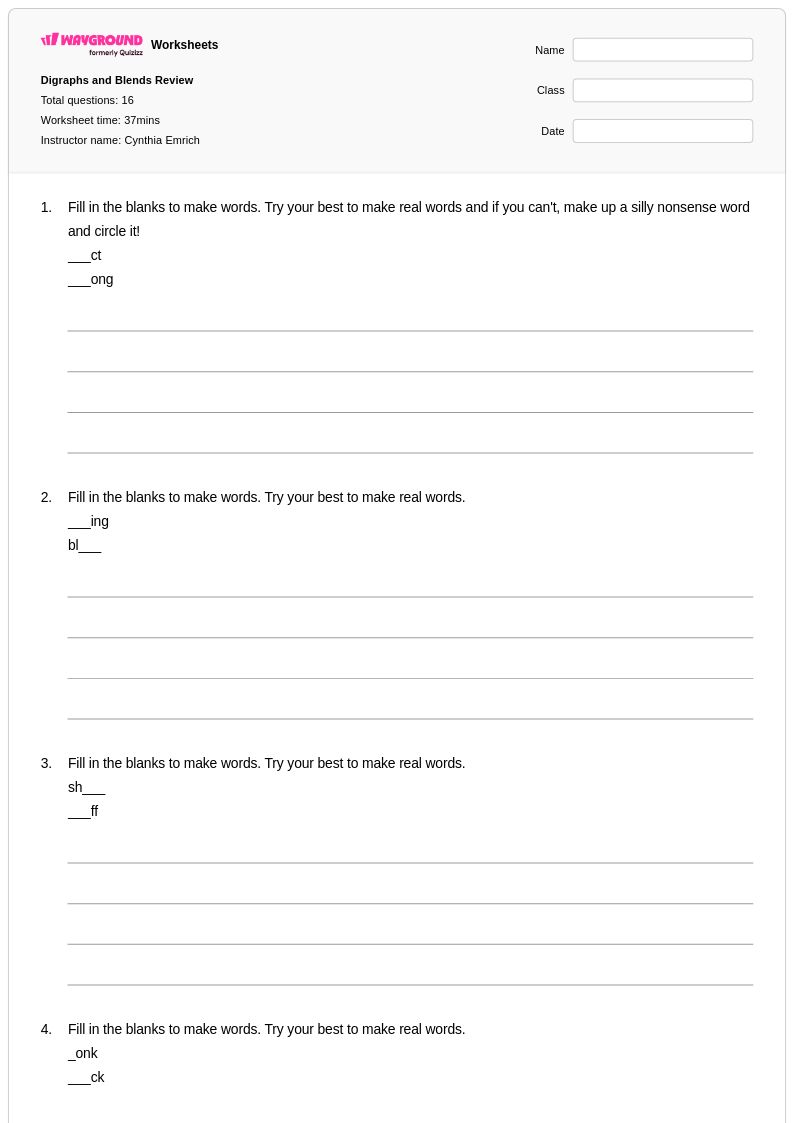
16 Q
1st - 5th
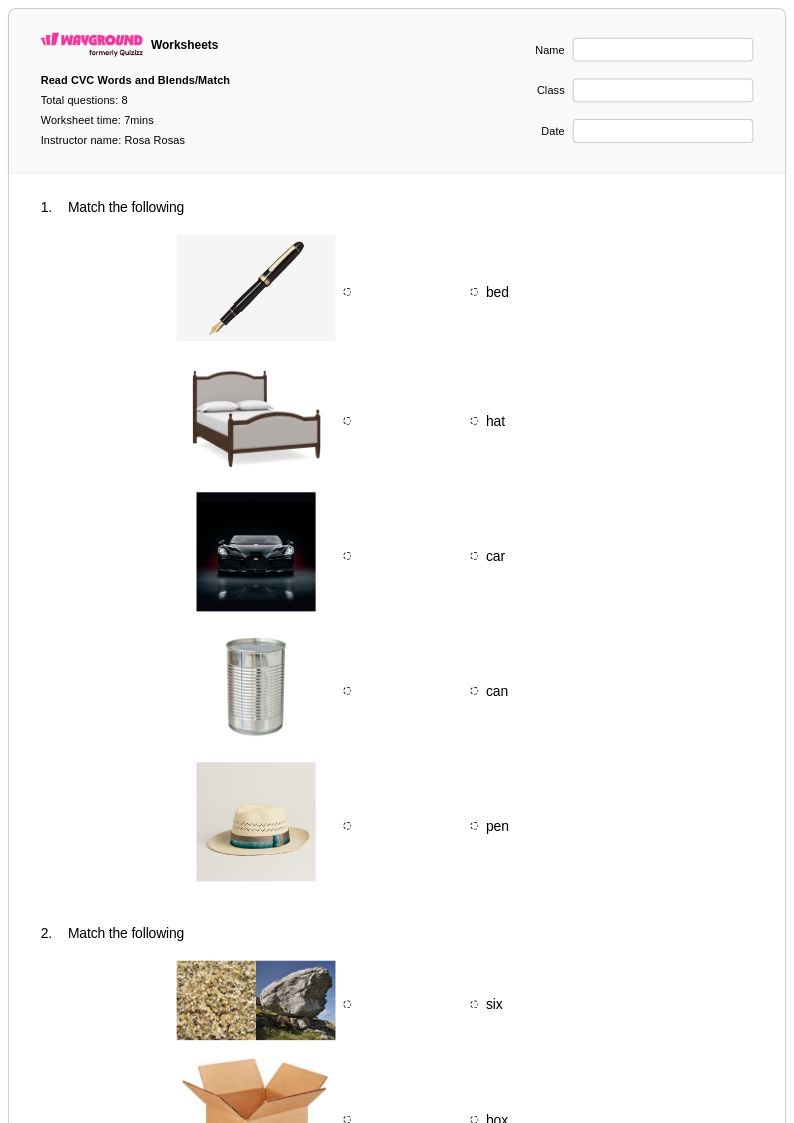
8 Q
1st
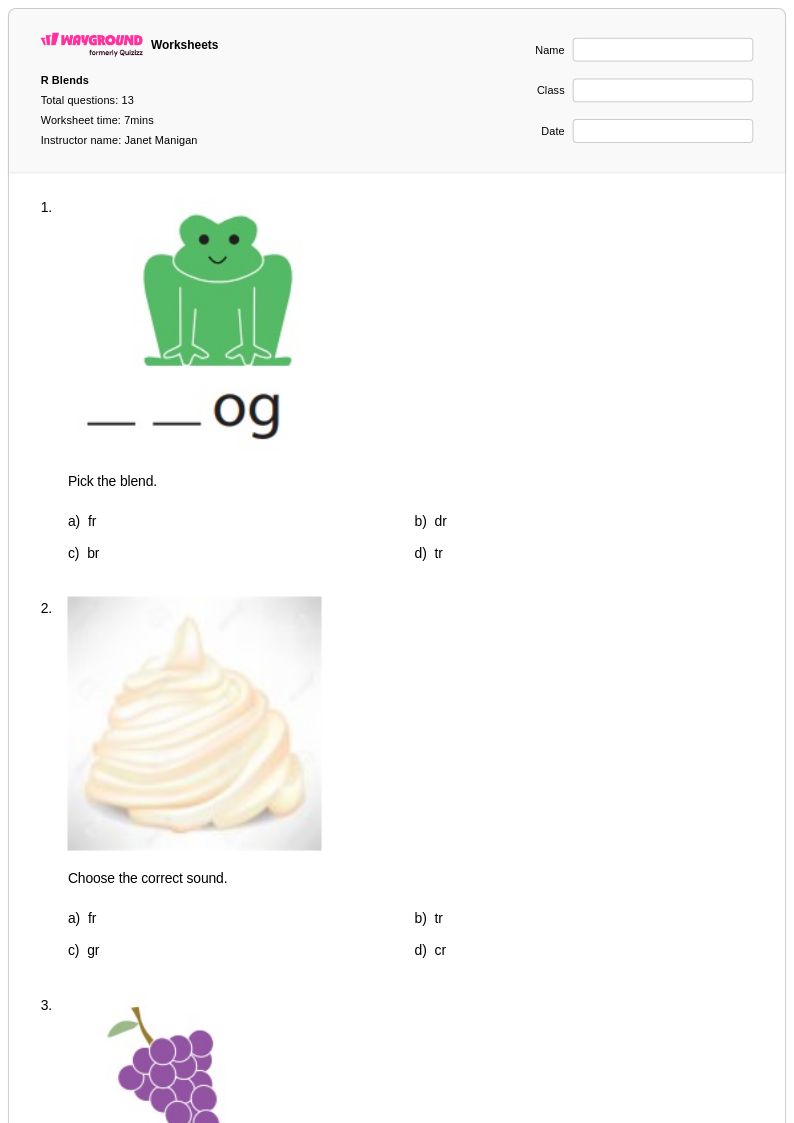
13 Q
1st - 2nd
10 Q
1st - 3rd
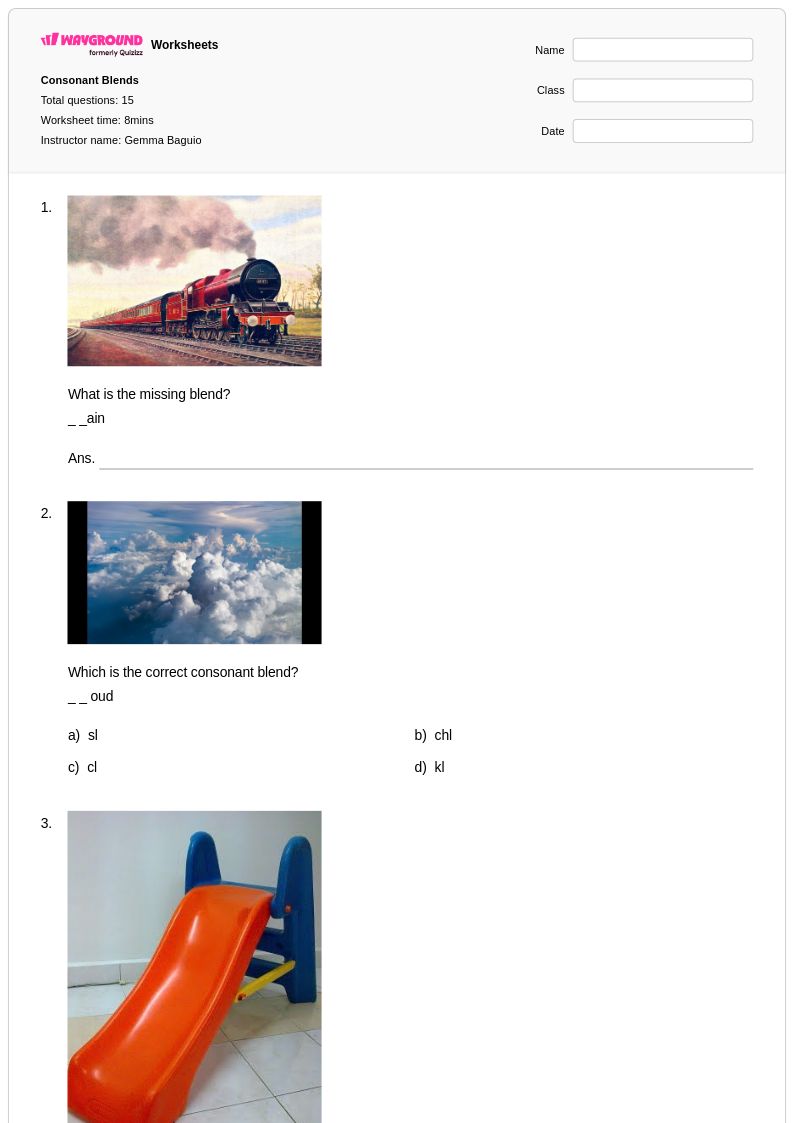
15 Q
1st
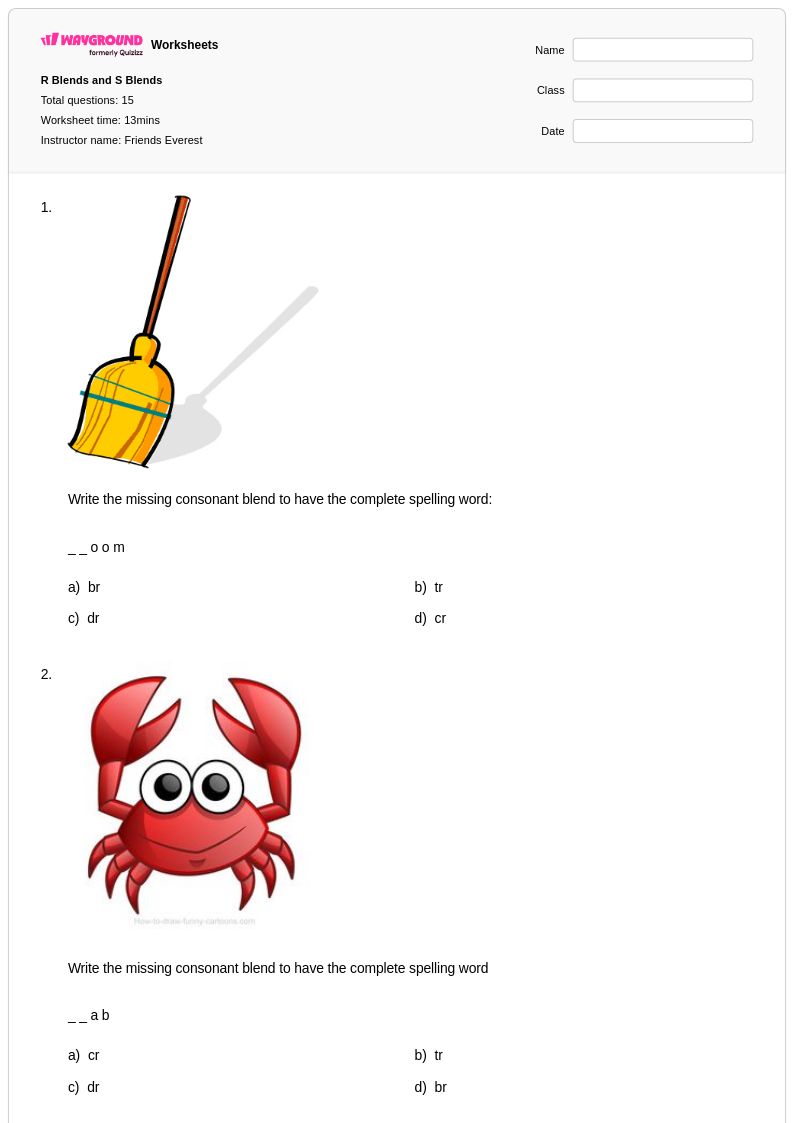
15 Q
KG - 1st
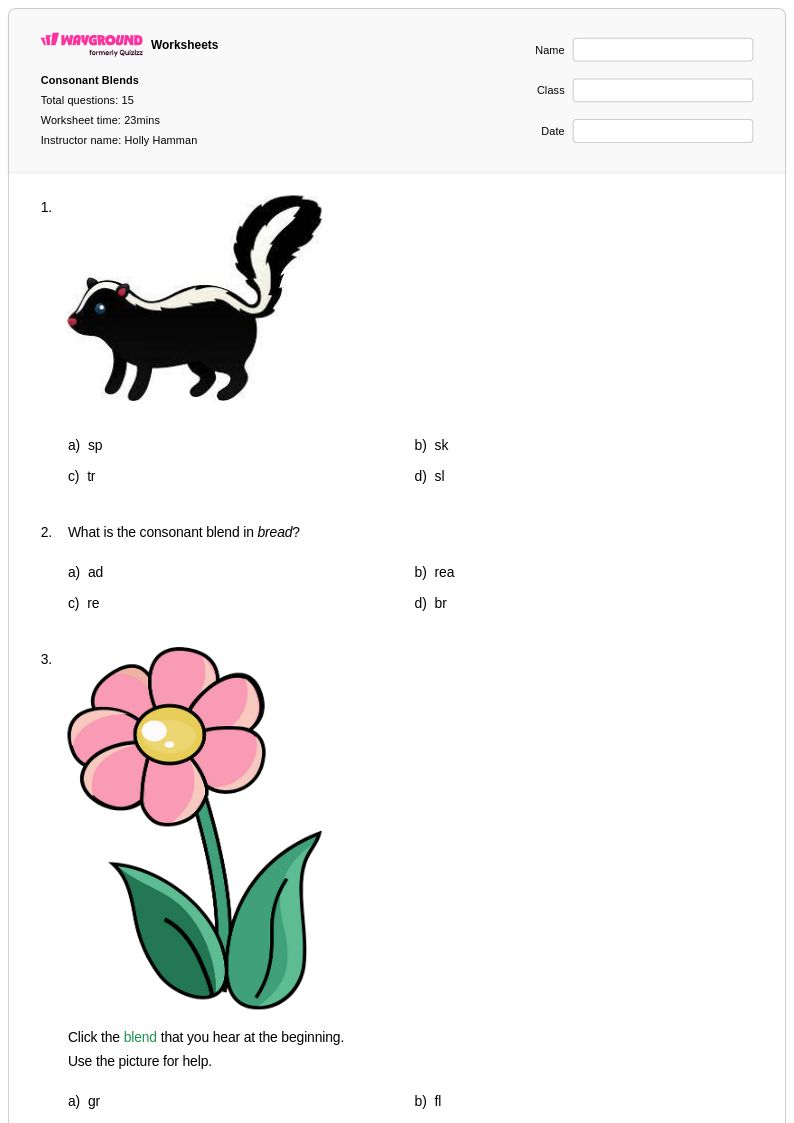
15 Q
1st
10 Q
1st
28 Q
1st - 2nd
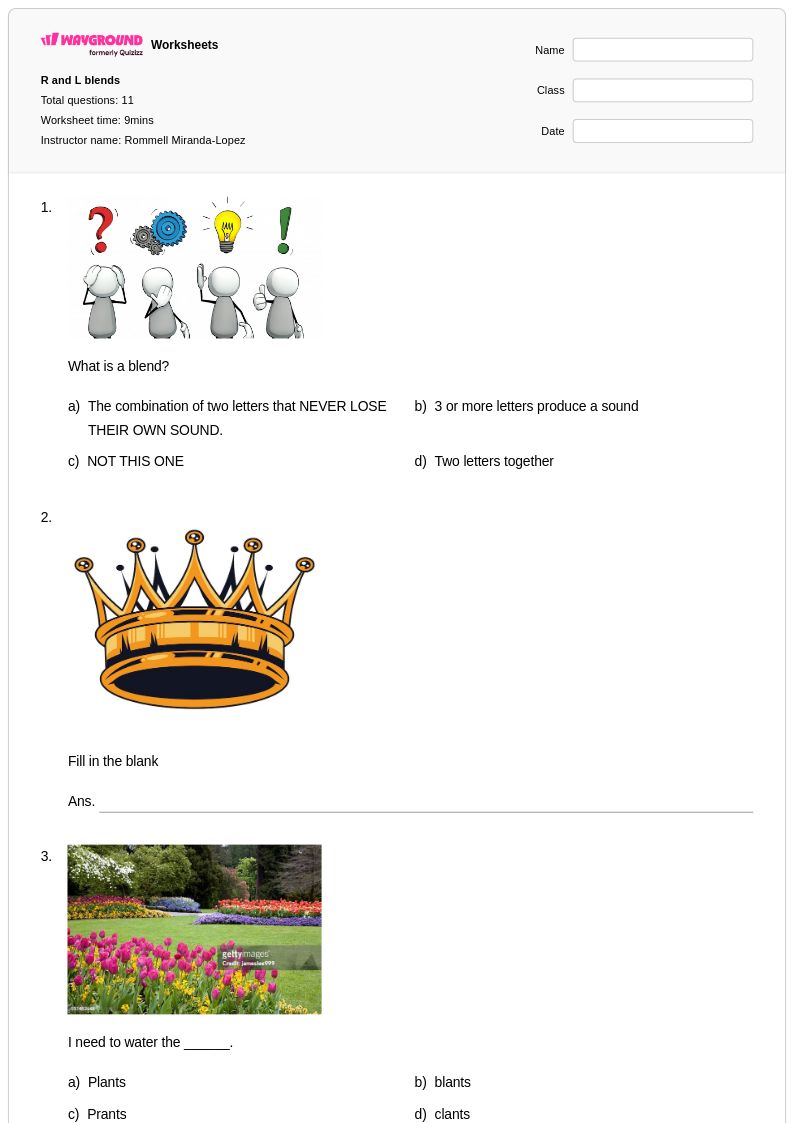
13 Q
1st - 5th
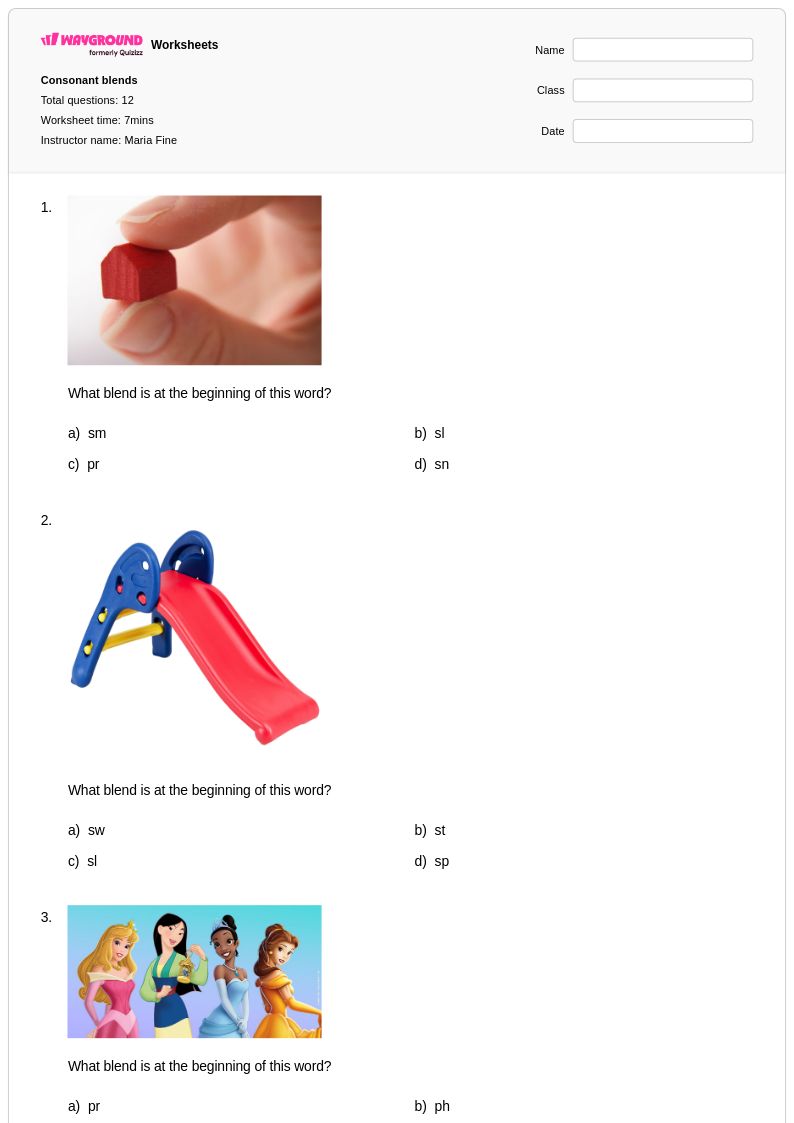
12 Q
KG - 1st
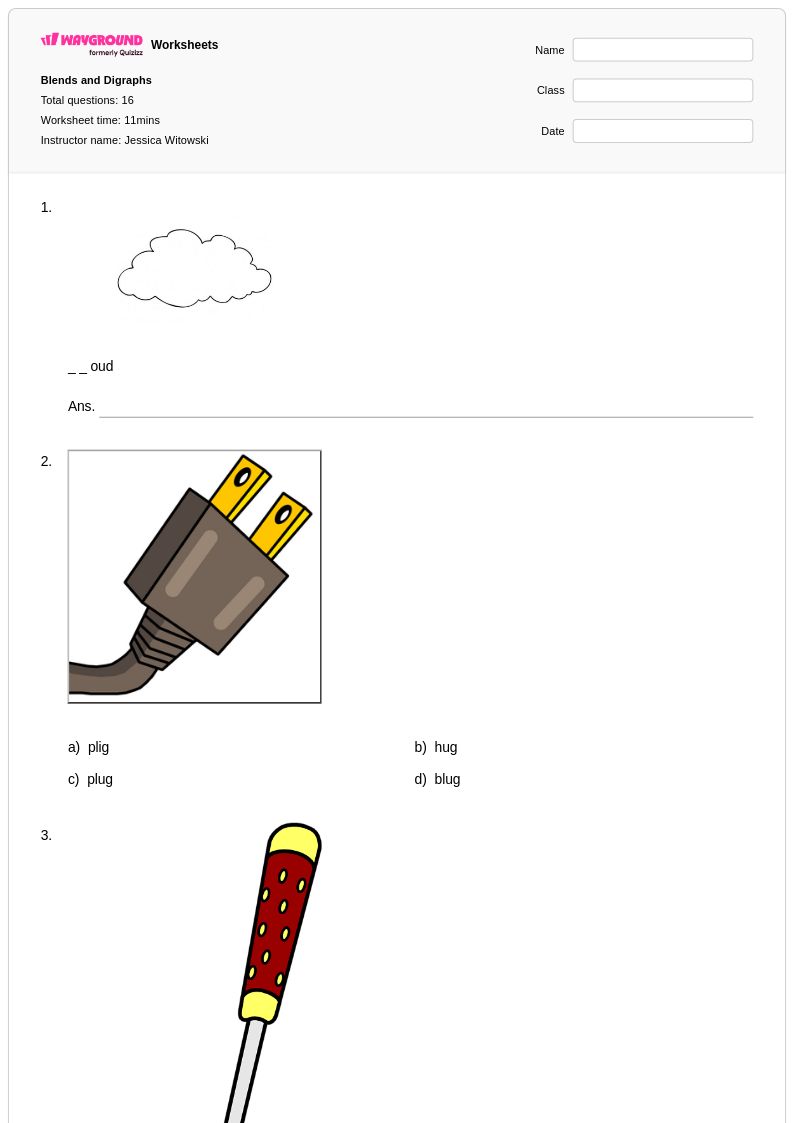
16 Q
KG - 1st
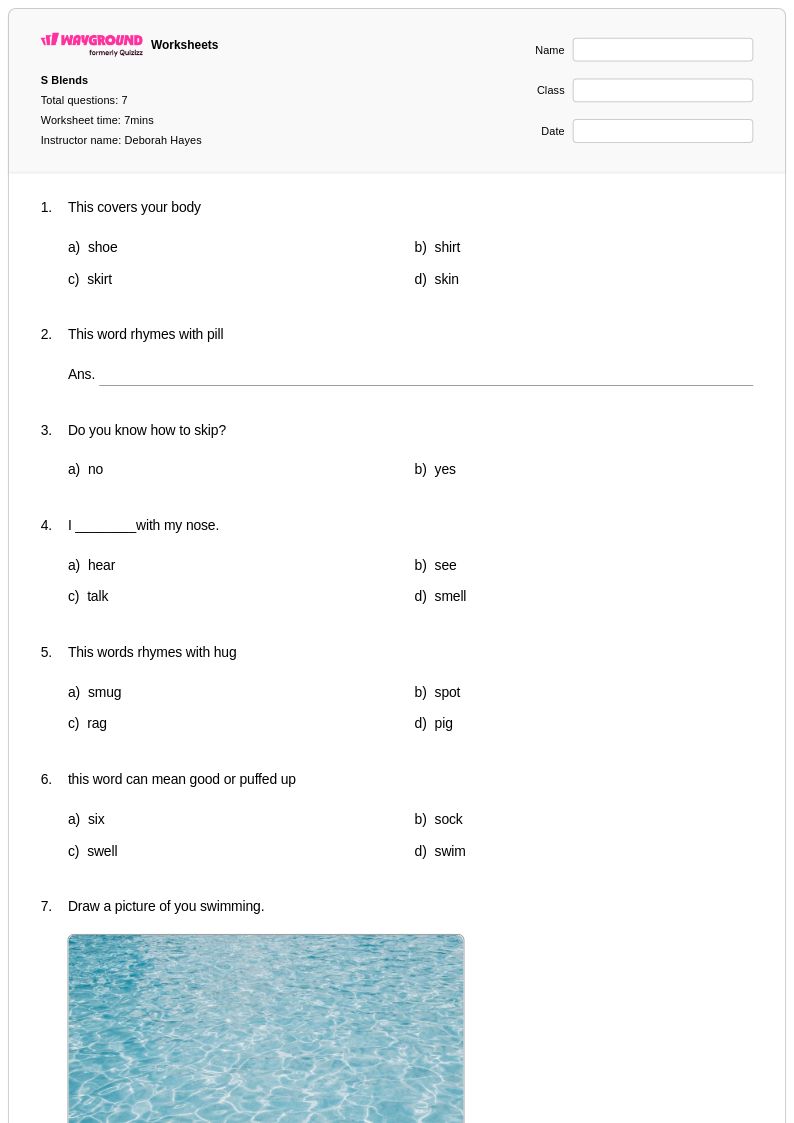
7 Q
1st - 3rd
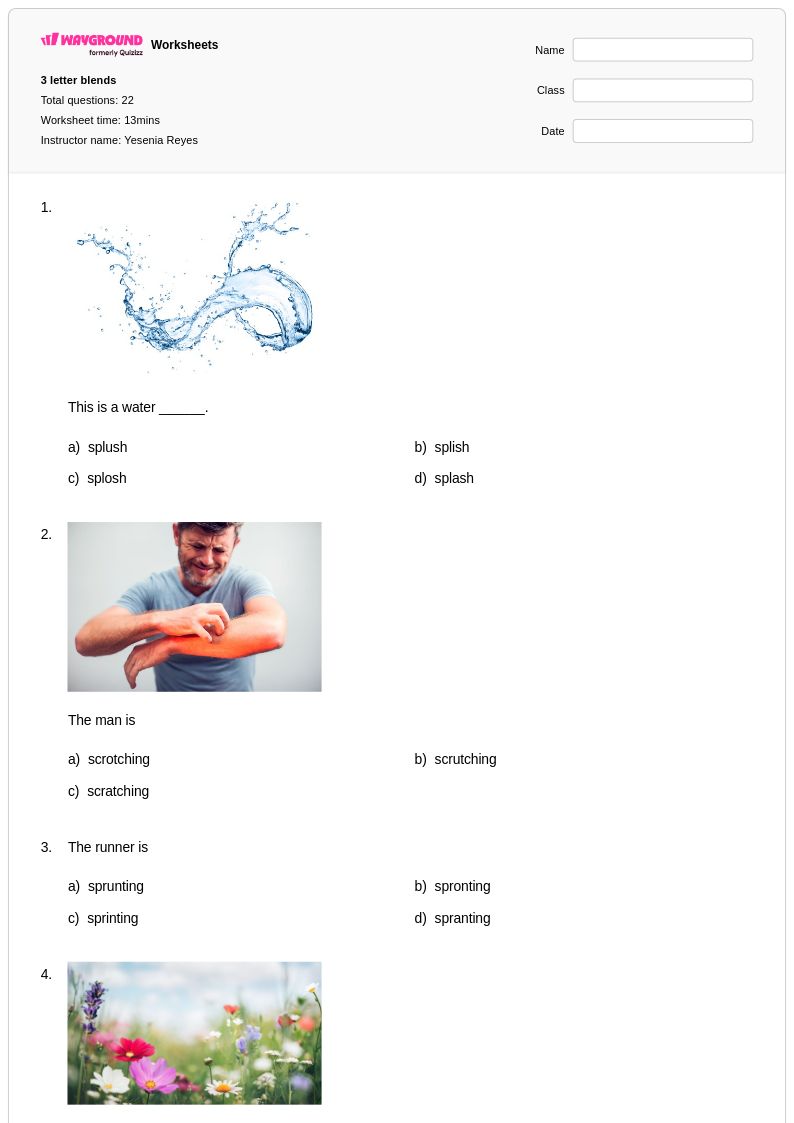
22 Q
1st - 4th
Explore Other Subject Worksheets for kindergarten
Explore printable Blends worksheets for Kindergarten
Kindergarten blends worksheets available through Wayground (formerly Quizizz) provide essential phonics instruction that helps young learners master the foundational skill of combining consonants with vowels to form smooth, connected sounds. These carefully crafted practice problems focus on common beginning blends such as bl-, cr-, st-, and tr-, enabling students to develop fluency in recognizing and pronouncing letter combinations that appear frequently in early reading materials. Each worksheet includes systematic exercises that progress from simple blend identification to more complex word building activities, with comprehensive answer keys that allow teachers and parents to provide immediate feedback. The free printables offer varied formats including picture matching, fill-in-the-blank exercises, and word completion tasks that reinforce blend patterns through multiple learning modalities while building phonemic awareness and decoding skills essential for reading success.
Wayground (formerly Quizizz) supports educators with an extensive collection of teacher-created blend worksheets that can be easily accessed through robust search and filtering capabilities, allowing instructors to locate materials that align with specific learning objectives and curriculum standards. The platform's millions of educational resources include differentiation tools that enable teachers to customize worksheets for varying ability levels within their kindergarten classrooms, ensuring that both struggling learners and advanced students receive appropriate challenge levels. These versatile materials are available in both printable pdf formats for traditional paper-based instruction and digital formats for interactive learning experiences, making them ideal for lesson planning, targeted remediation sessions, enrichment activities, and regular skill practice. The comprehensive collection streamlines preparation time while providing educators with research-based phonics materials that support systematic instruction in consonant blend recognition and application.
FAQs
How do I teach consonant blends to early readers?
What activities help students practice consonant blends?
What mistakes do students commonly make when learning consonant blends?
How can I differentiate blend instruction for struggling readers?
How do I use Wayground's blends worksheets in my classroom?
At what grade level should students learn consonant blends?