Free Printable Consonant Sounds Worksheets for Kindergarten
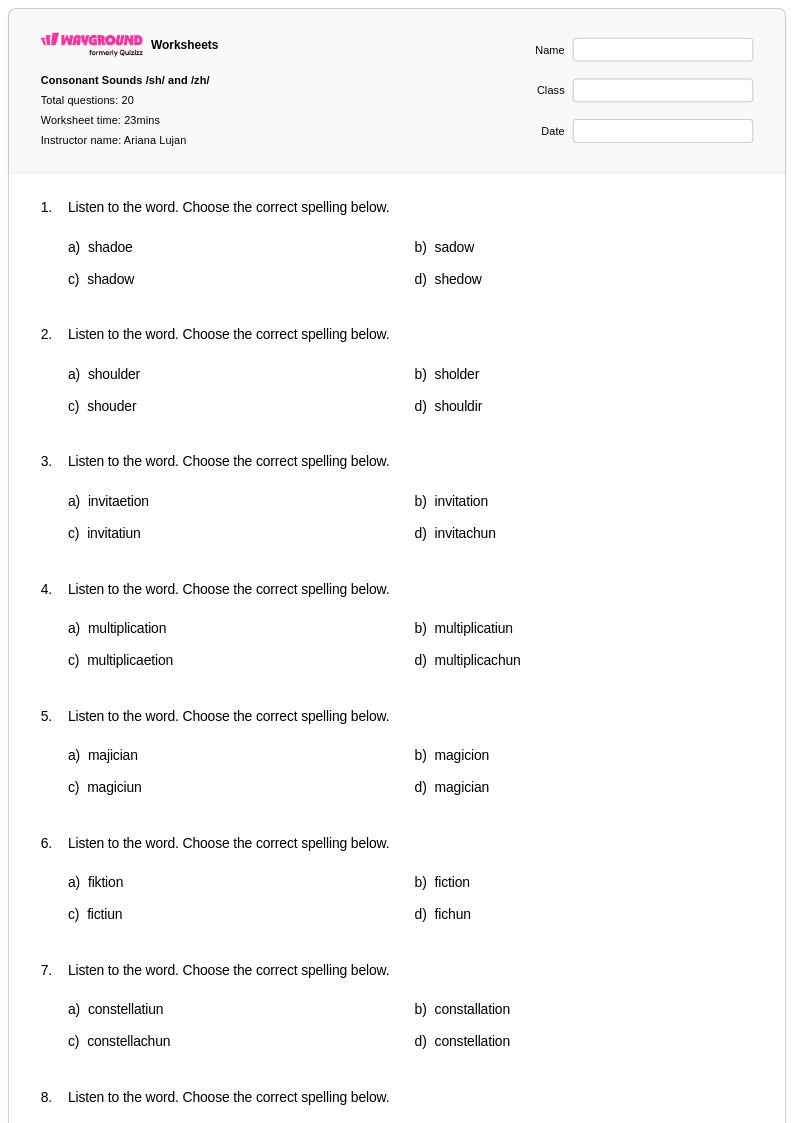
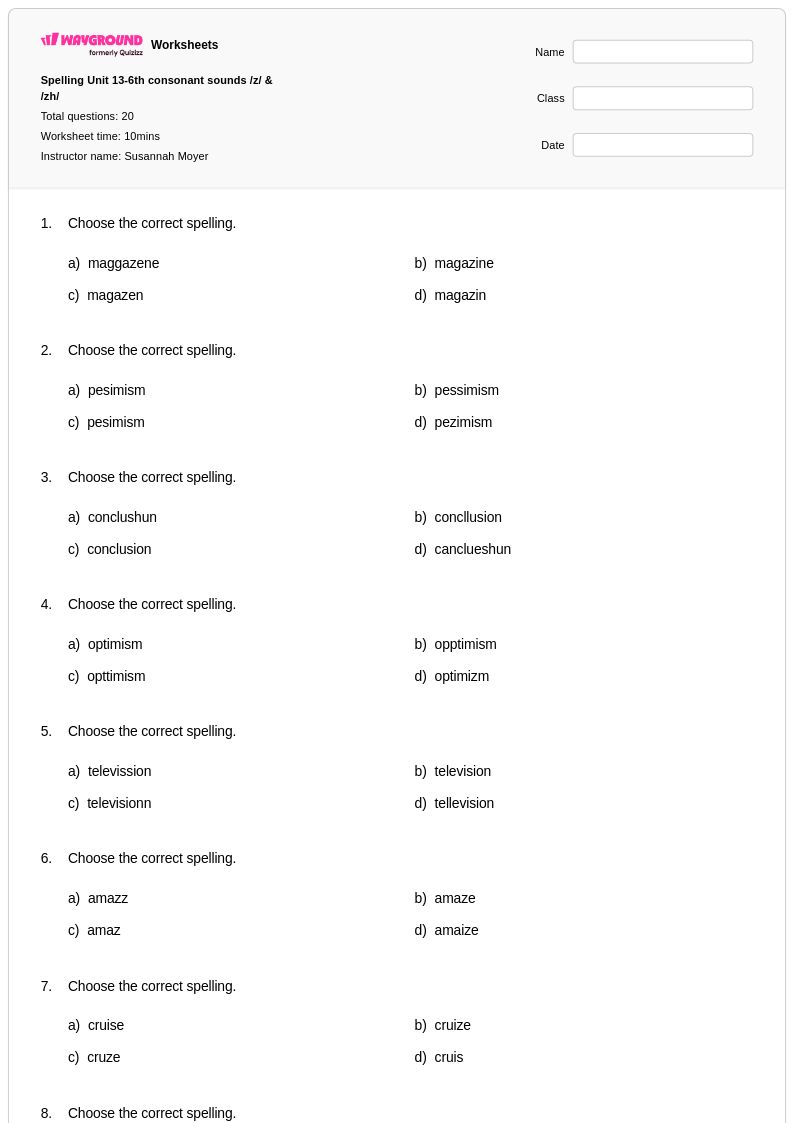
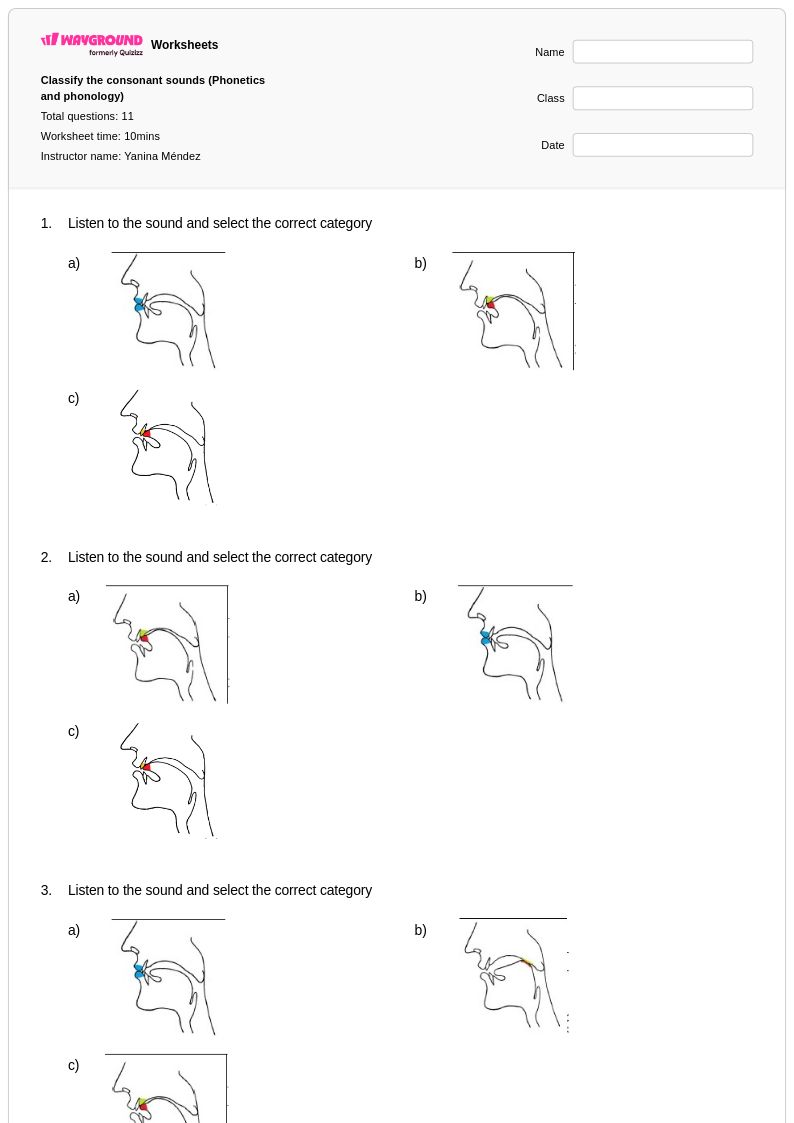
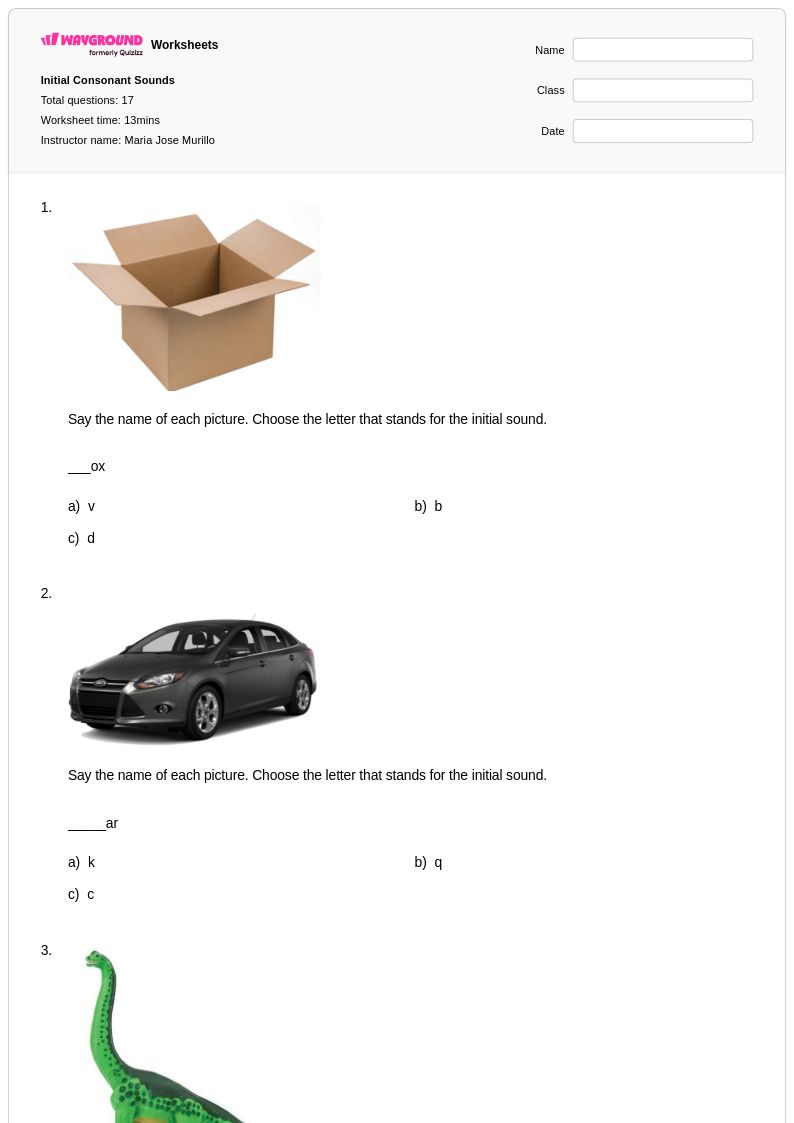
Wayground's free kindergarten consonant sounds worksheets provide engaging printables and practice problems with answer keys to help young learners master phonics fundamentals through interactive PDF activities.
Explore printable Consonant Sounds worksheets for Kindergarten
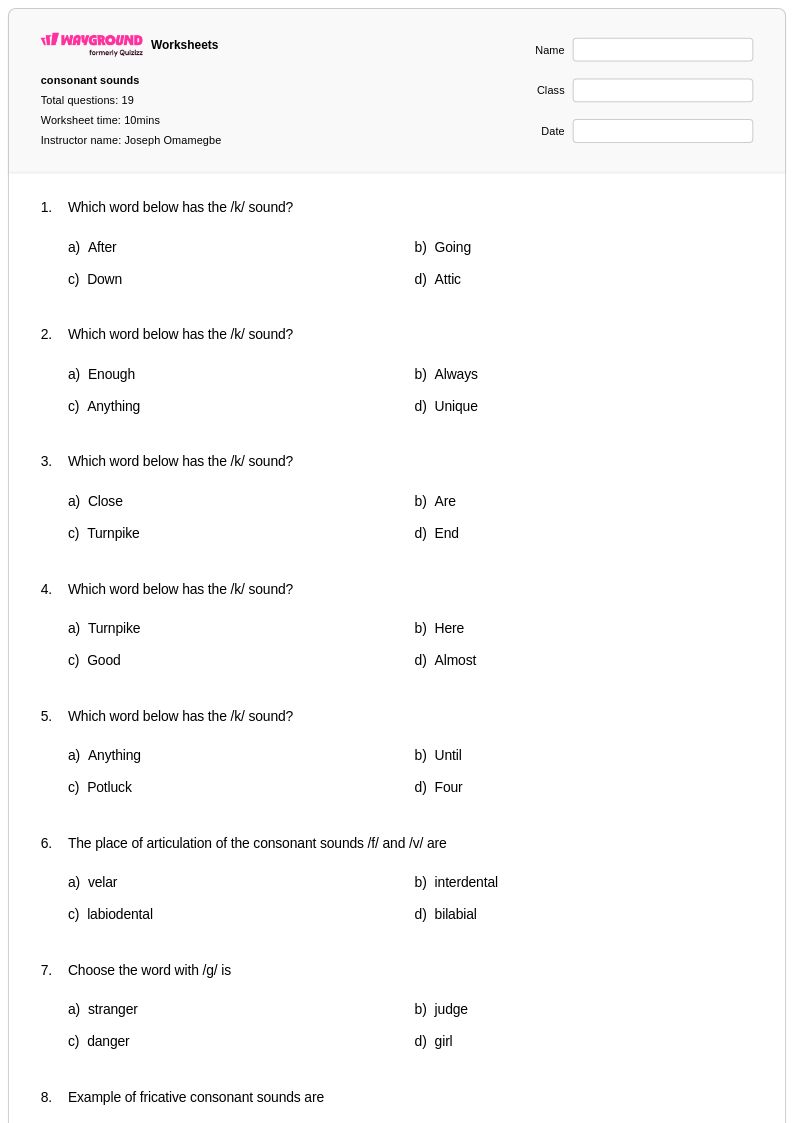
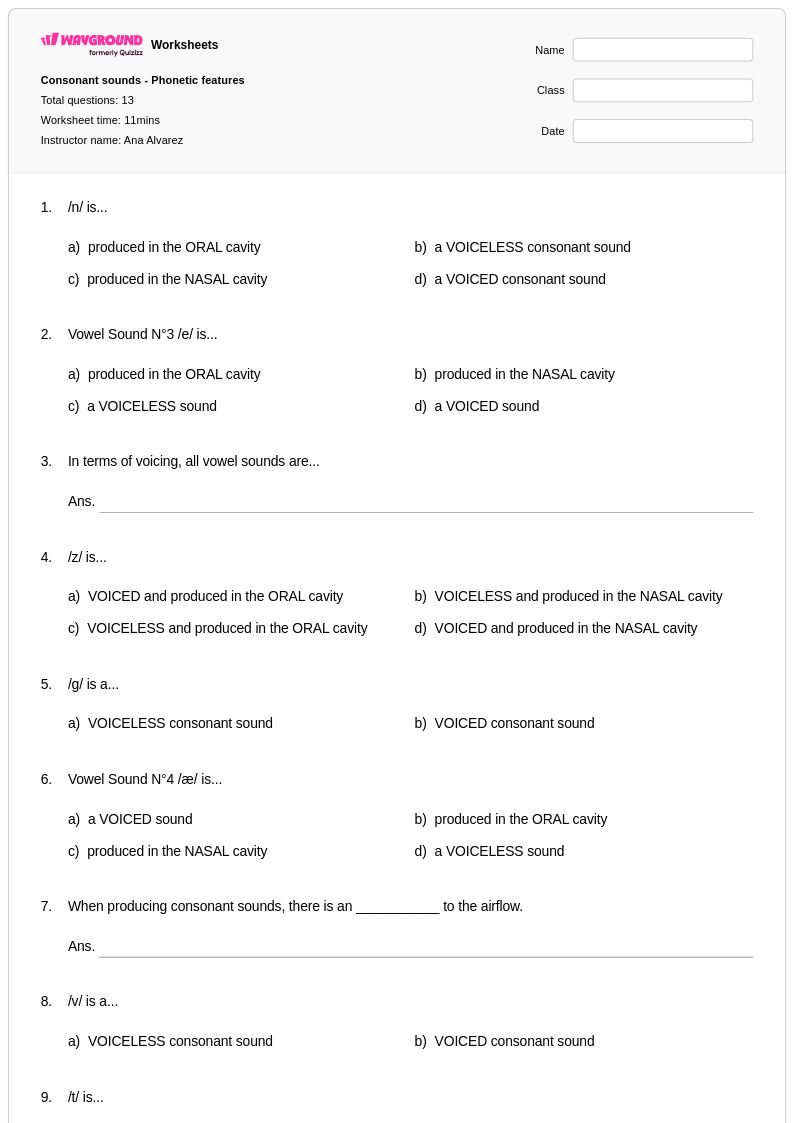
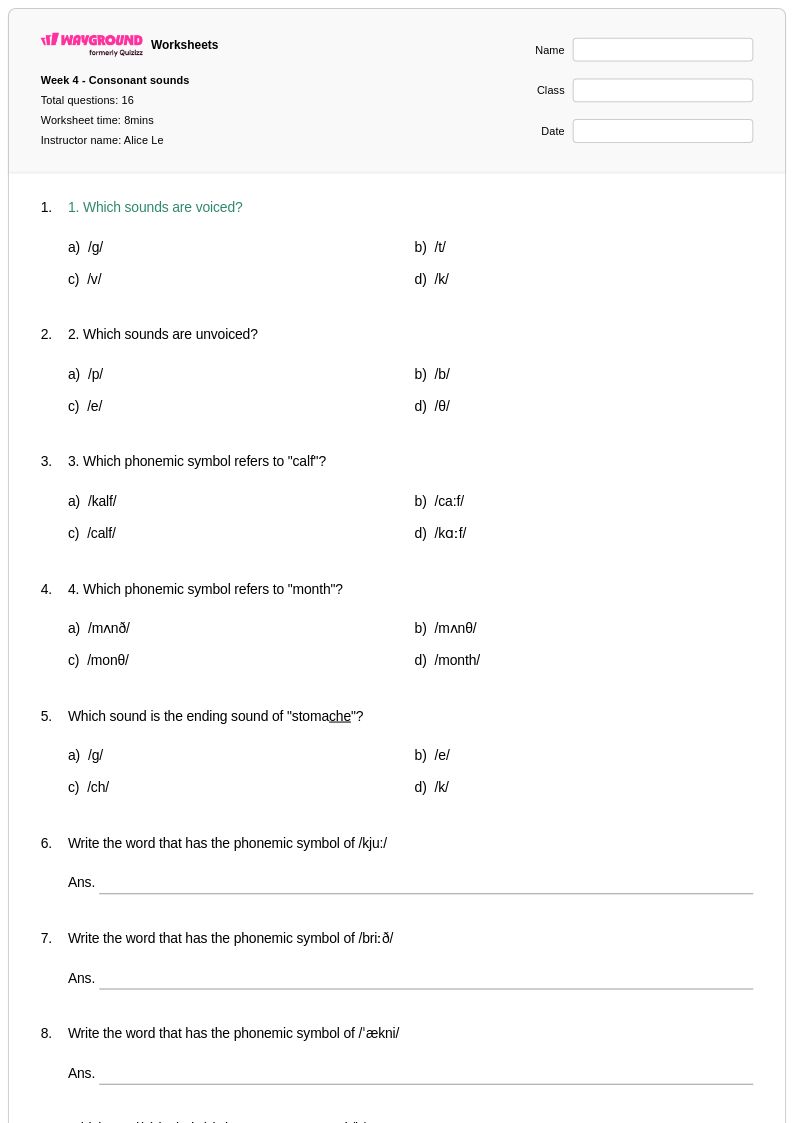
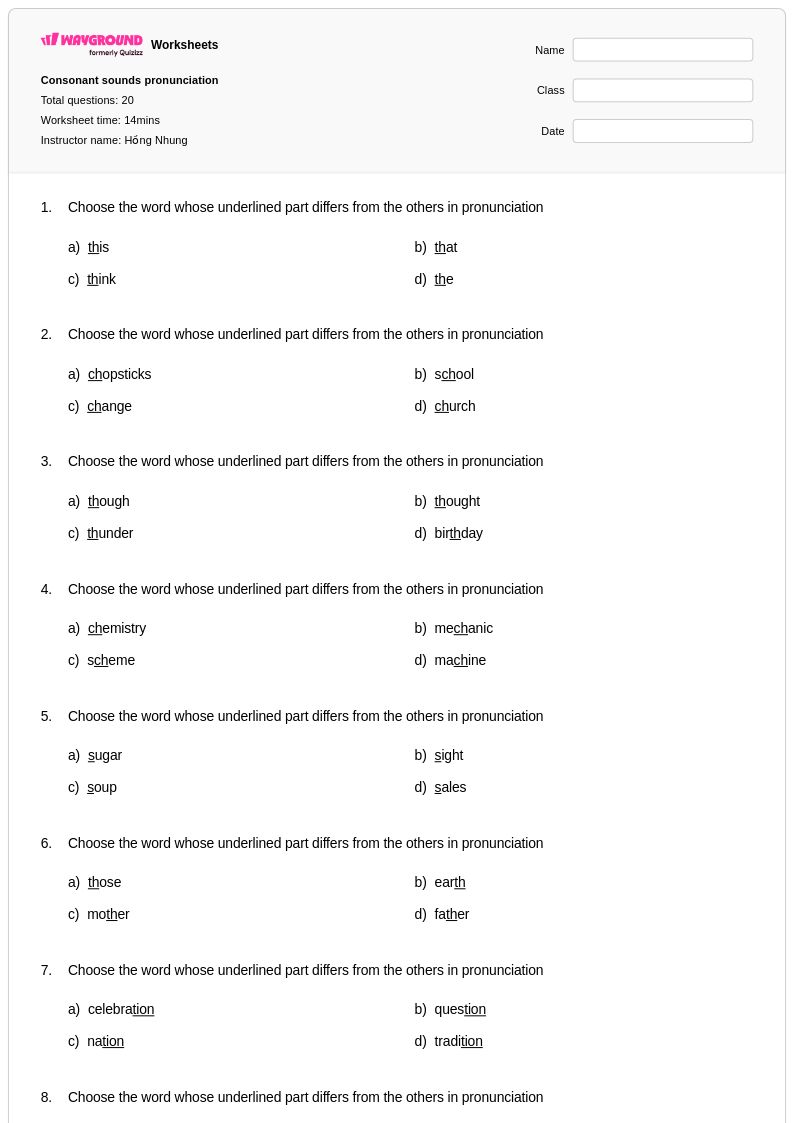
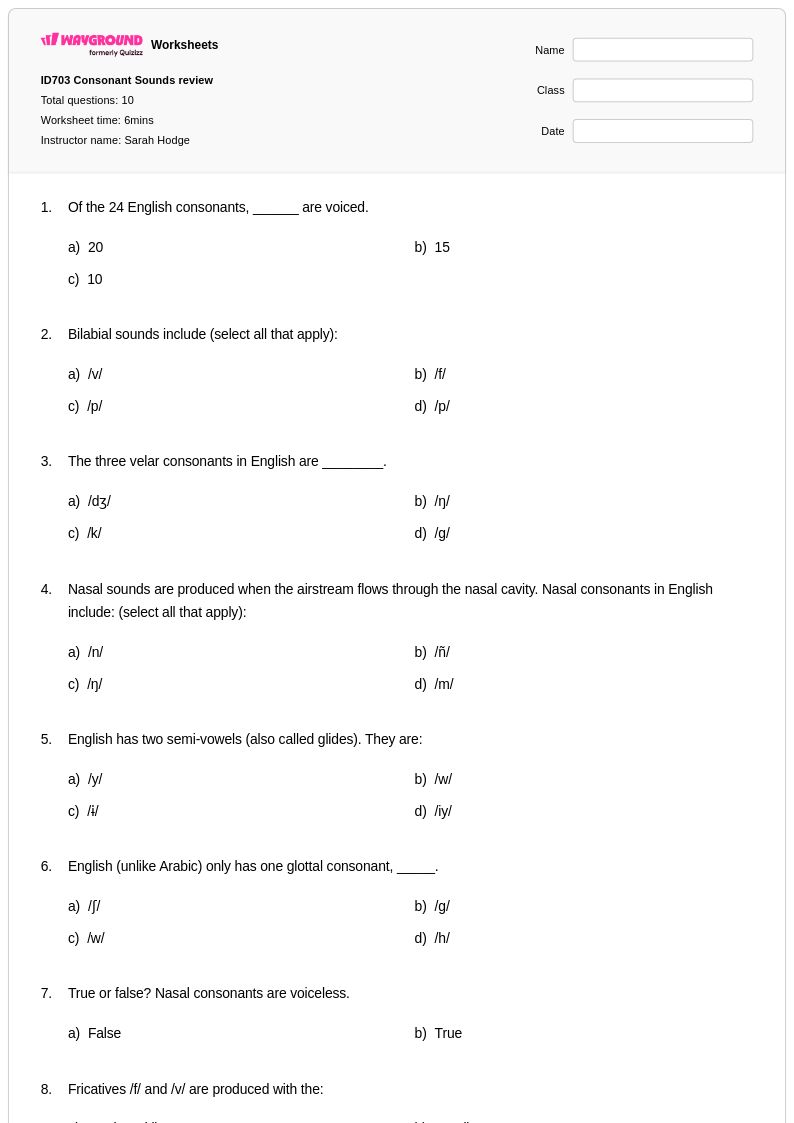
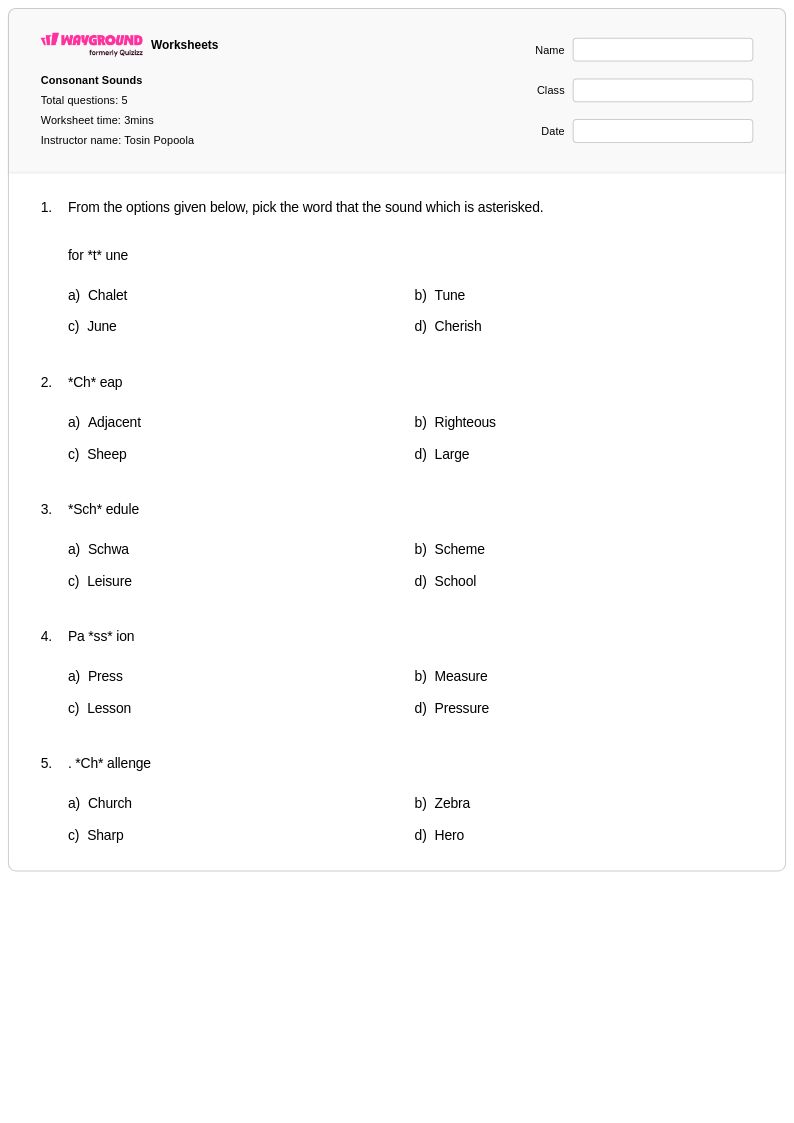
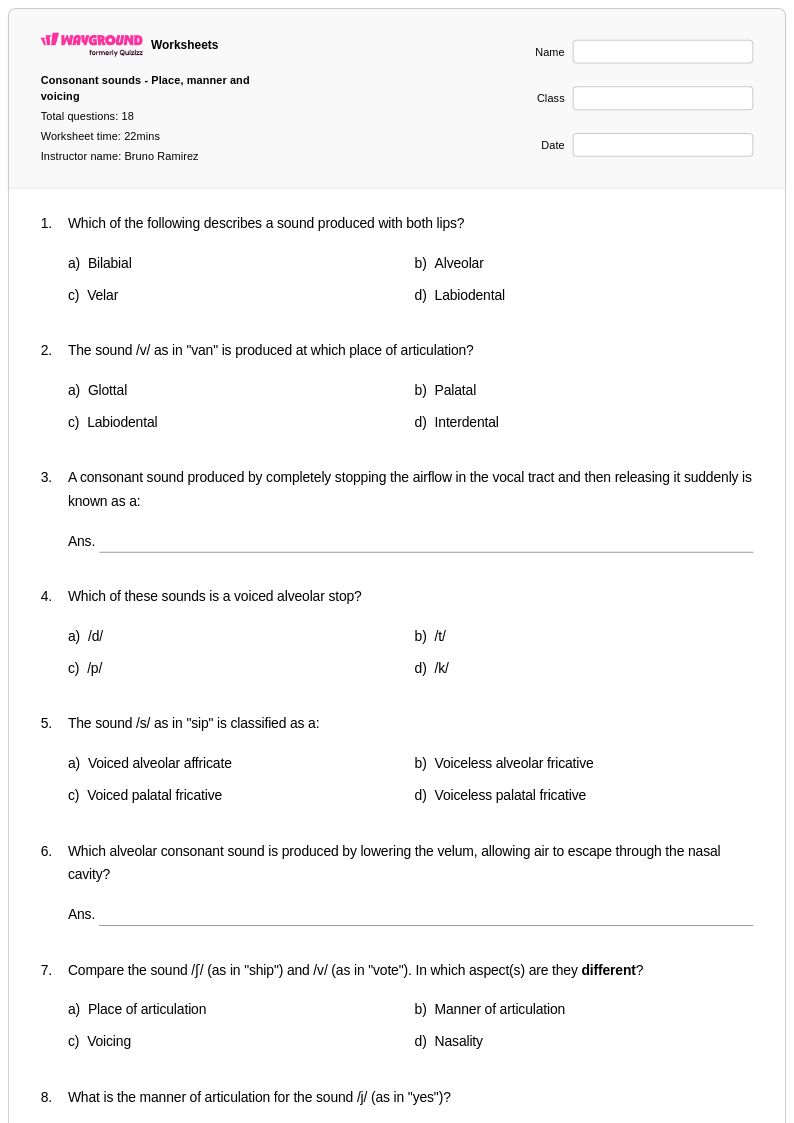
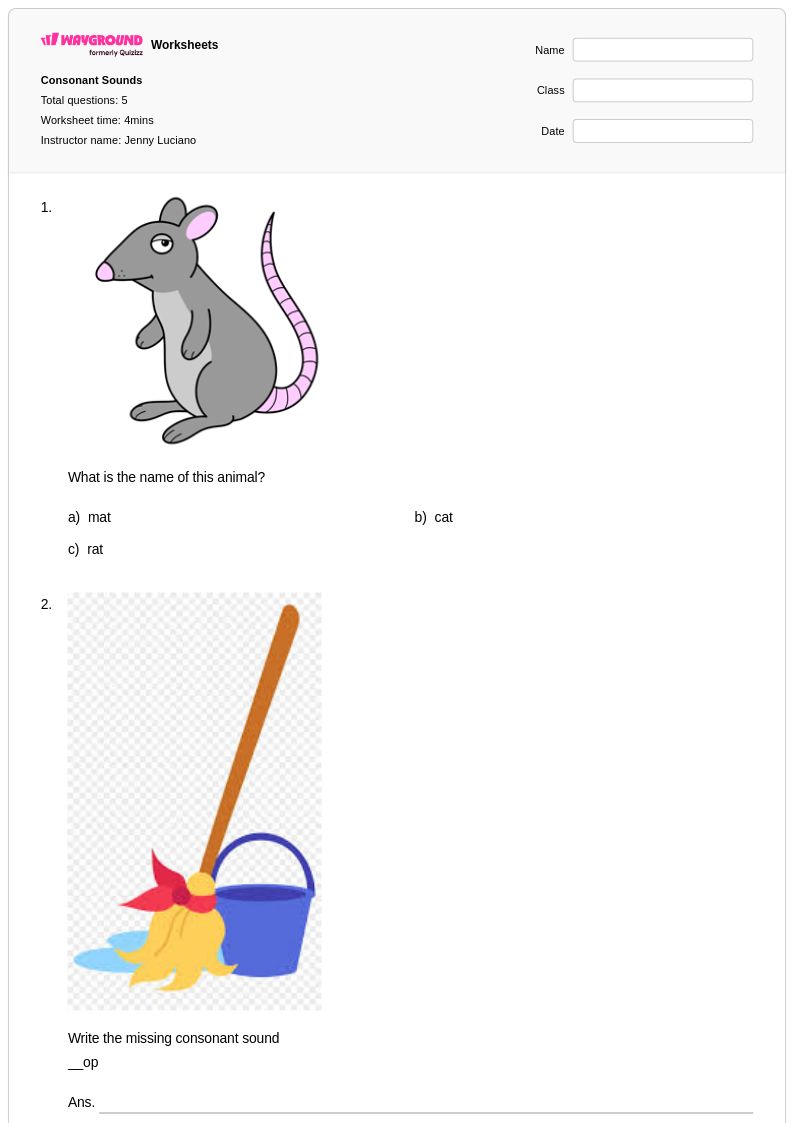
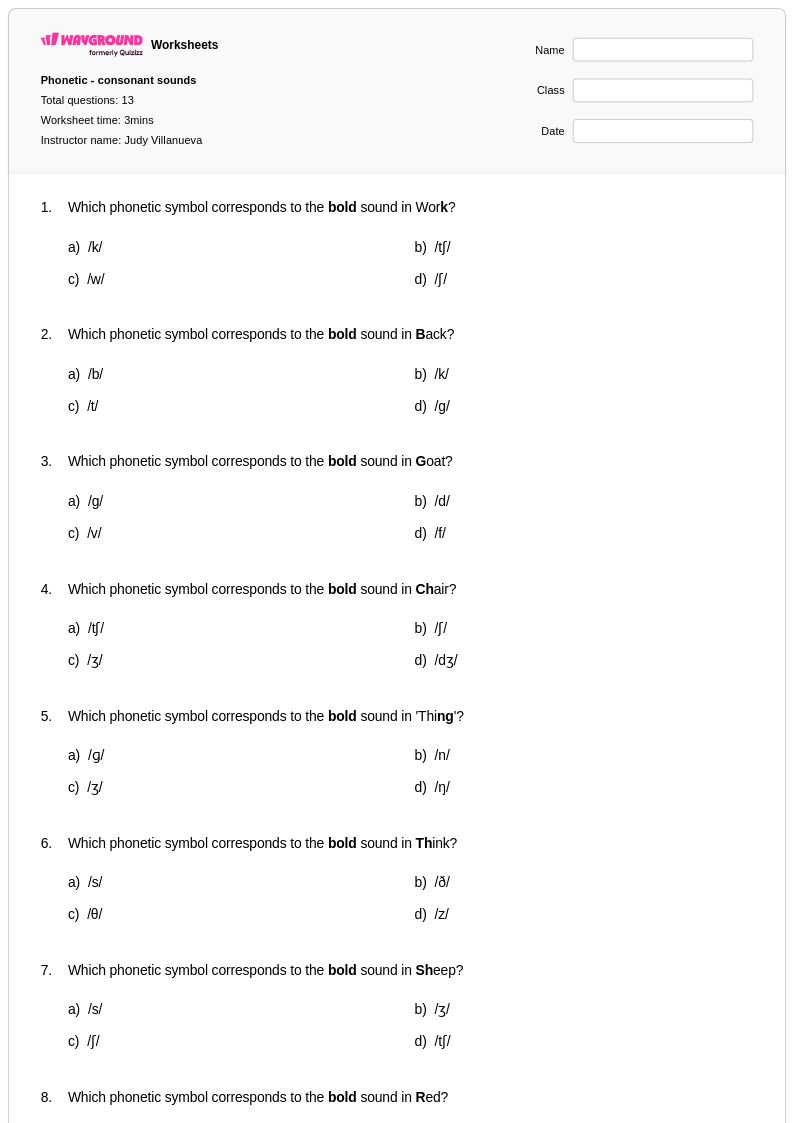
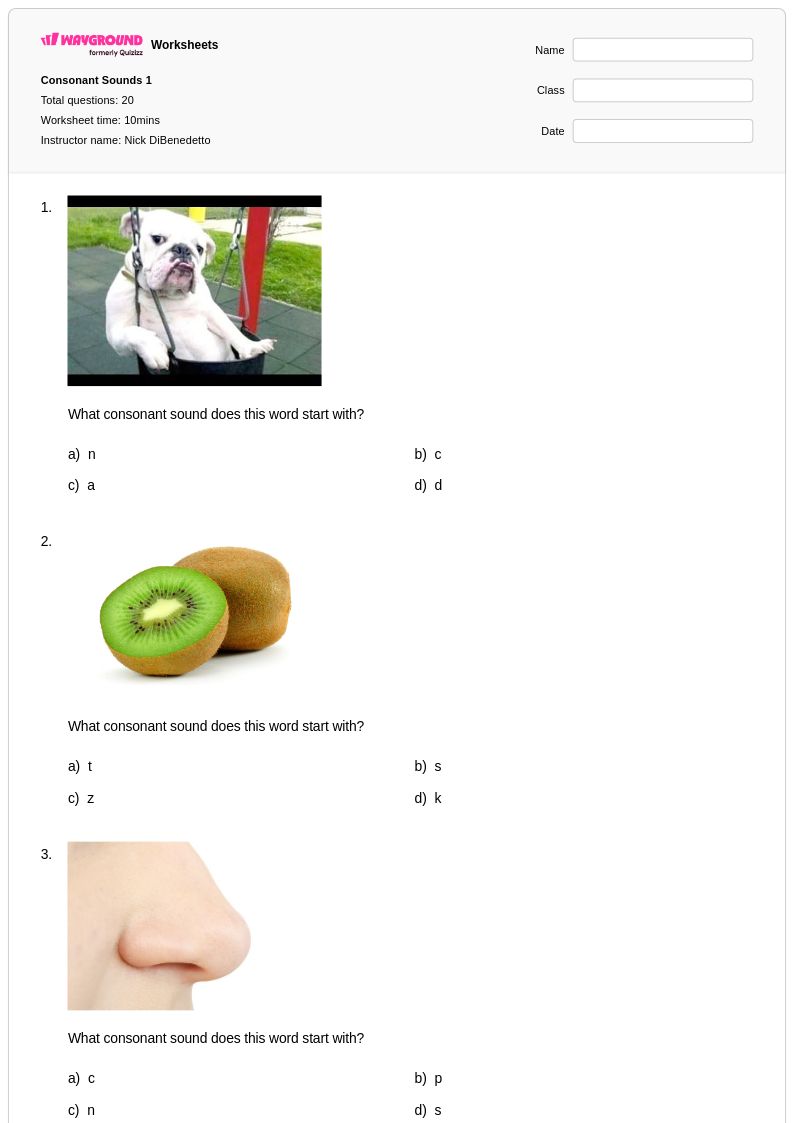
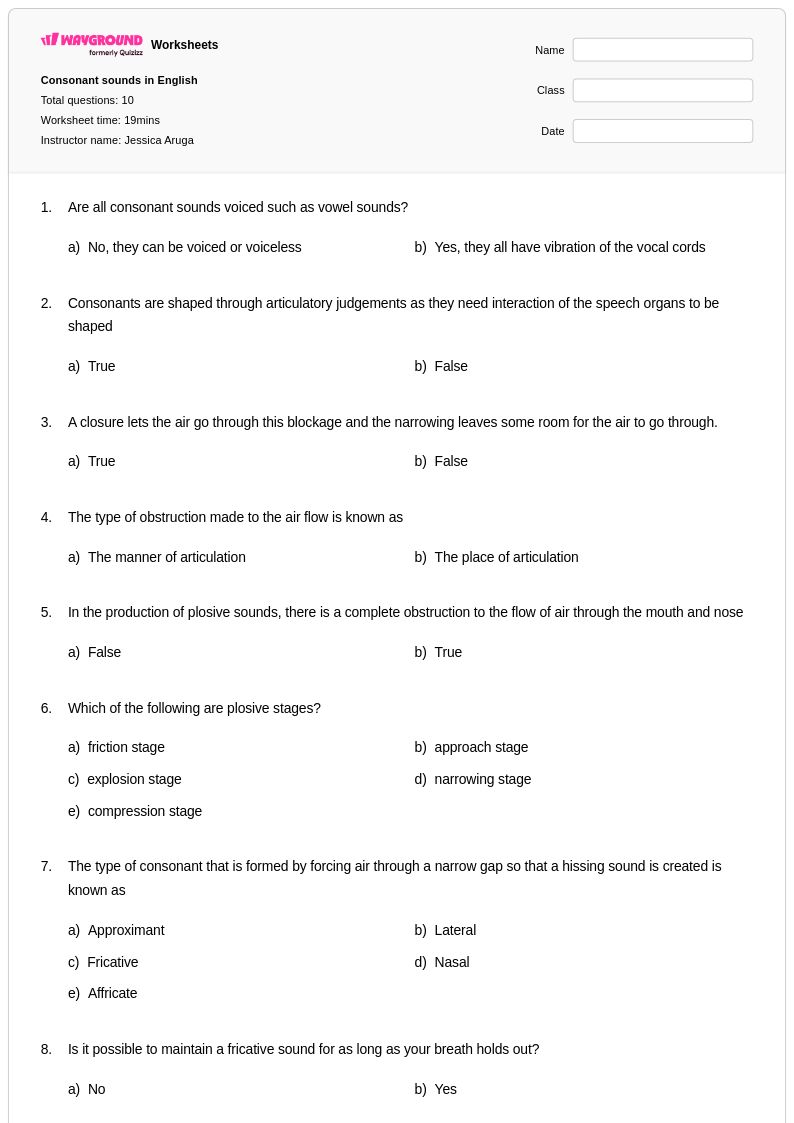
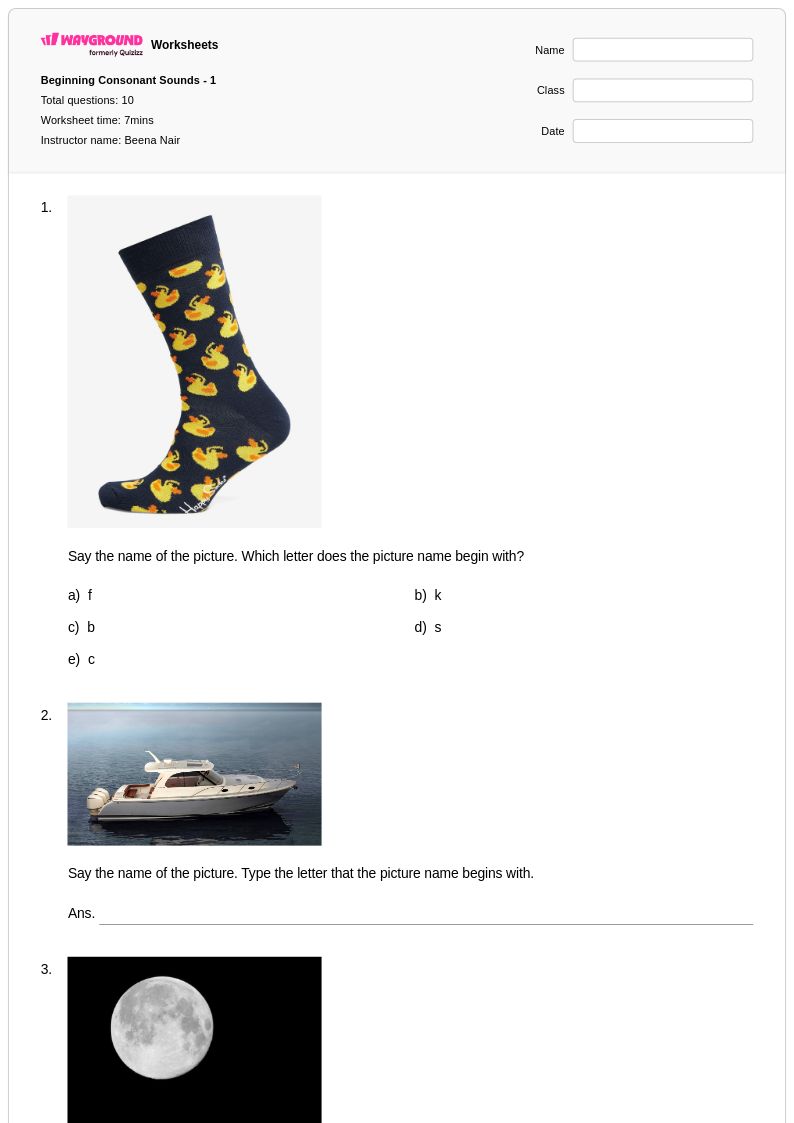
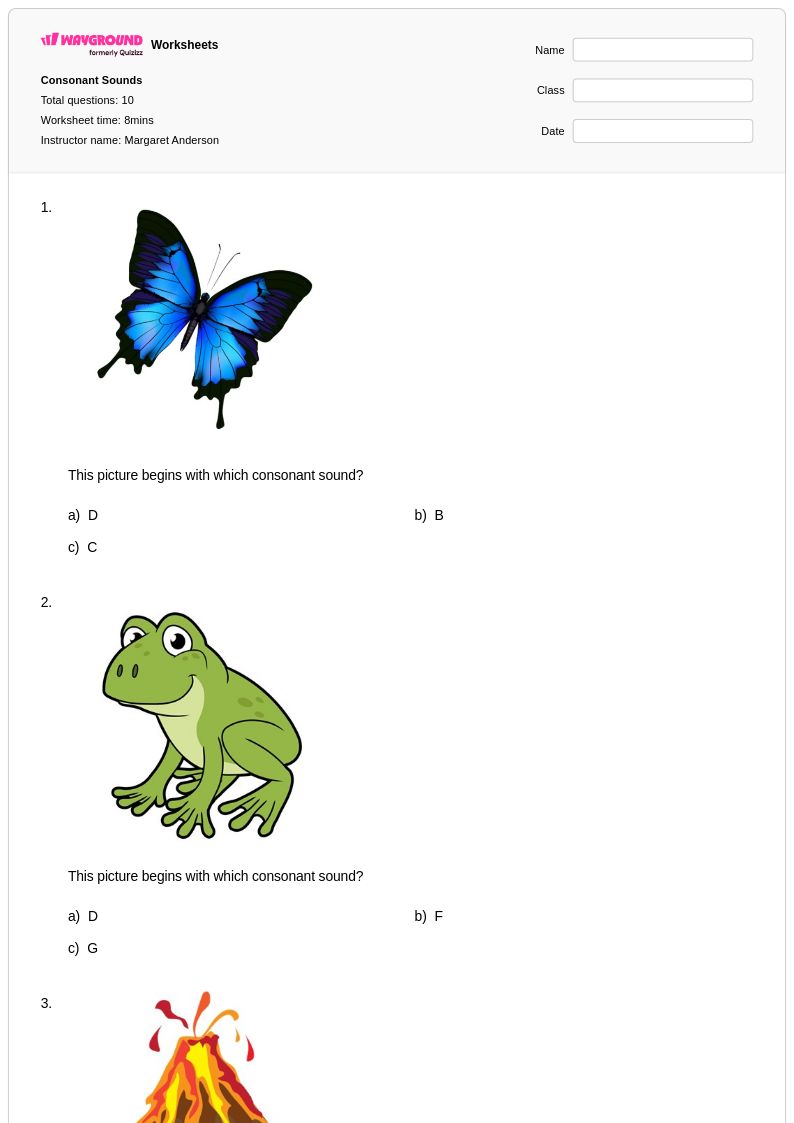
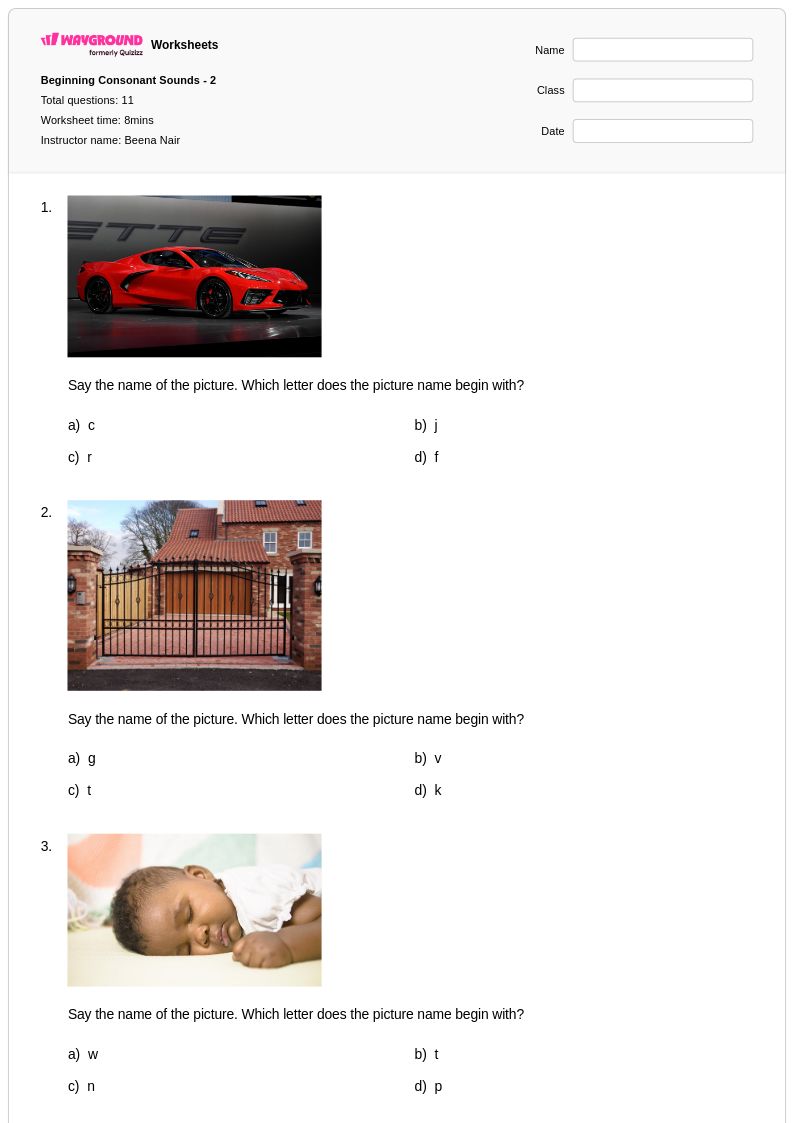
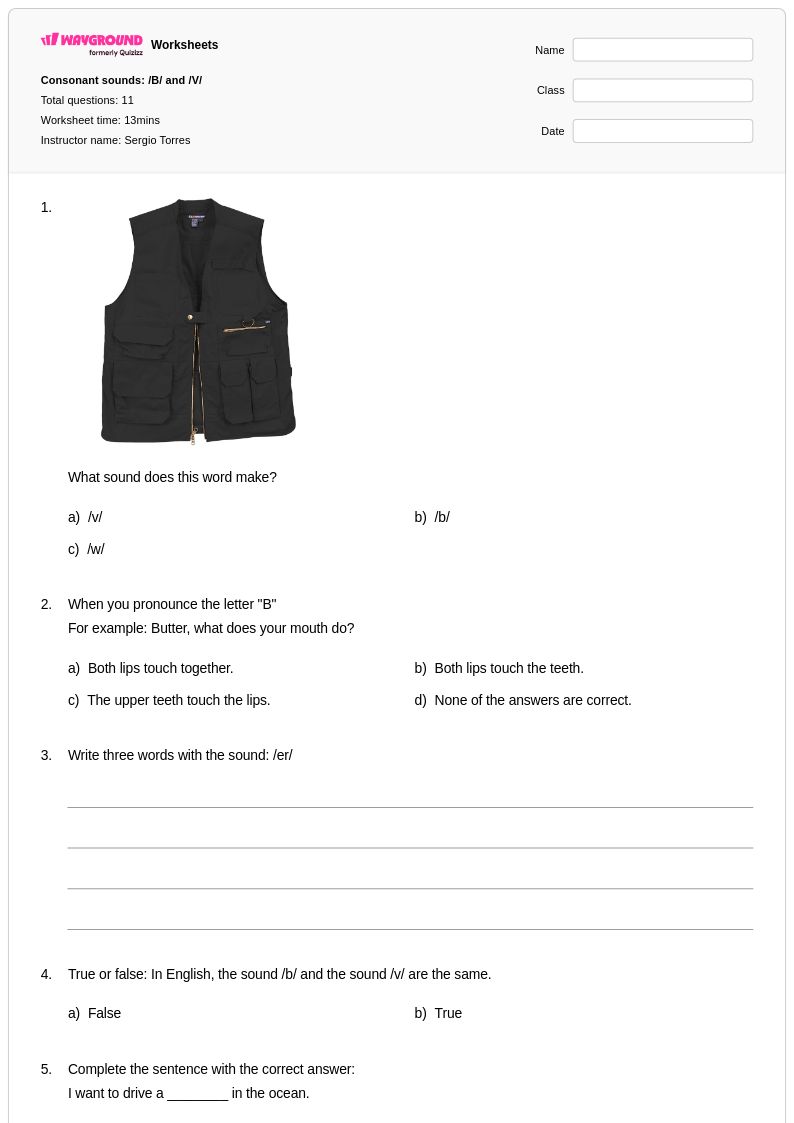
Consonant sounds form the foundation of reading success for kindergarten students, and Wayground's comprehensive worksheet collection provides targeted practice to help young learners master these essential phonetic elements. These carefully designed worksheets focus on individual consonant sounds, helping kindergarteners recognize, identify, and produce the distinct sounds that letters like b, c, d, f, and others make in words. Through engaging practice problems that include letter-sound matching, initial consonant identification, and sound discrimination activities, students develop the phonemic awareness crucial for decoding skills. Each worksheet comes with a complete answer key and is available as a free printable pdf, making it simple for educators to implement consistent consonant sound practice that builds confident readers.
Wayground, formerly Quizizz, empowers teachers with millions of educator-created resources specifically designed for kindergarten consonant sound instruction, featuring robust search and filtering capabilities that help locate precisely the right materials for any lesson objective. The platform's standards-aligned worksheet collections support differentiated instruction through customizable difficulty levels and varied activity types, ensuring every student receives appropriate consonant sound practice whether for initial skill building, remediation, or enrichment. Teachers can seamlessly integrate these resources into their phonics curriculum using both printable and digital formats, with pdf options that maintain formatting consistency across devices. This flexibility streamlines lesson planning while providing the systematic practice kindergarten students need to internalize consonant sounds and progress confidently toward reading fluency.
FAQs
How do I teach consonant sounds to early readers?
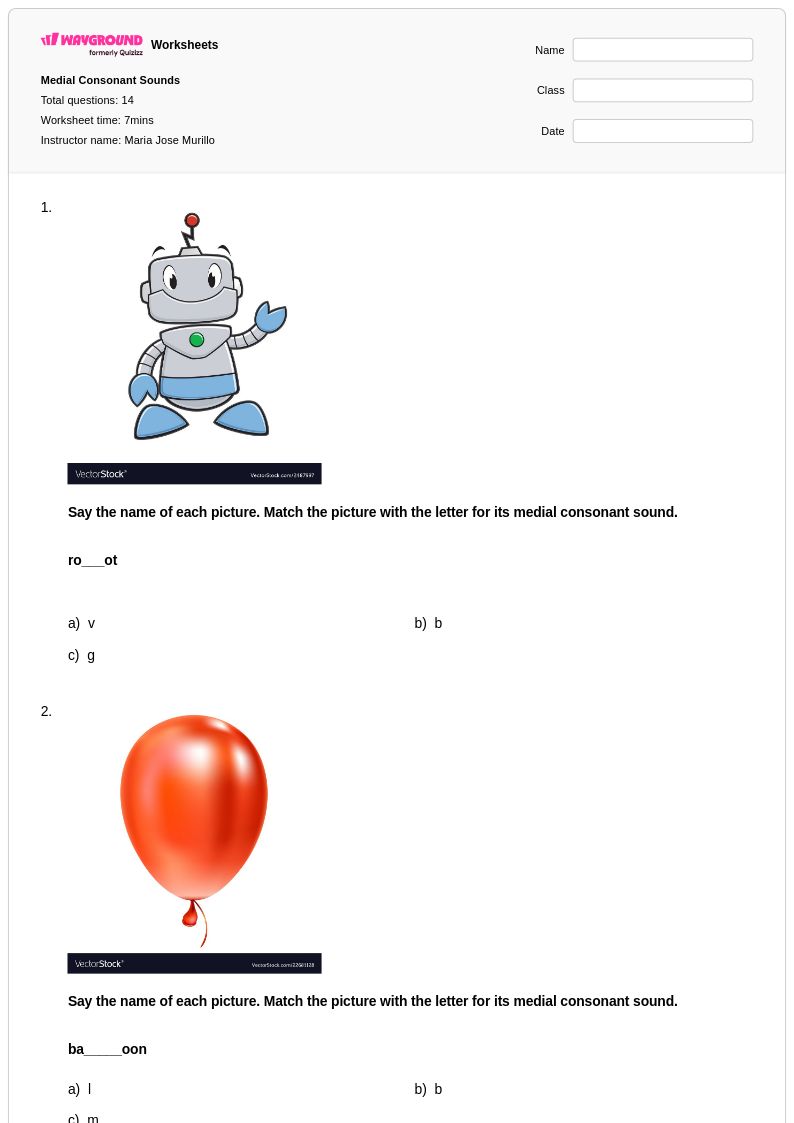
Effective consonant instruction begins with explicit, systematic phonics teaching that introduces one sound-letter correspondence at a time before moving to blends and digraphs. Teachers should model the articulation of each consonant sound, then give students repeated practice identifying that sound in the initial, medial, and final positions of words. Pairing auditory practice with written tasks, such as matching letters to pictures or sorting words by their consonant sounds, helps students build durable phonemic awareness alongside decoding skills.
What exercises help students practice consonant sounds?
Targeted exercises for consonant sound practice include sound isolation tasks (identifying the first, middle, or last consonant in a word), letter-sound matching activities, word-sorting by consonant position, and fill-in-the-blank problems where students supply the missing consonant. Worksheets that move students through initial, medial, and final consonant positions in a structured sequence are especially effective because they build awareness of how the same phoneme can appear across different parts of a word.
What mistakes do students commonly make with consonant sounds?
One of the most common errors is confusing consonants that have similar articulation points, such as /b/ and /p/ or /d/ and /t/, because these pairs differ only in voicing. Students also frequently struggle to hear medial and final consonants, as early phonemic awareness tends to develop first at the initial position. Mixing up consonant digraphs like /sh/, /ch/, and /th/ with their individual component letters is another persistent misconception, because students may attempt to apply two separate sounds rather than recognizing the digraph as a single phoneme.
How can I differentiate consonant sounds practice for students at different skill levels?
For students who are still building foundational awareness, focus practice on initial consonant sounds with picture-supported activities before introducing medial and final positions. More advanced students can work on consonant blends, digraphs, and word recognition tasks that require applying consonant knowledge in connected text. On Wayground, teachers can further support diverse learners through built-in accommodations such as Read Aloud, which audio-reads questions for students who need it, and reduced answer choices, which lowers cognitive load for students who need additional scaffolding.
How do I use Wayground's consonant sounds worksheets in my classroom?
Wayground's consonant sounds worksheets are available as printable PDFs for traditional classroom use and in digital formats for technology-integrated instruction, making them flexible enough to use as whole-class lessons, small-group phonics rotations, or independent practice. Teachers can also host the worksheets as a live quiz on Wayground, allowing them to monitor student responses in real time and identify which consonant phonemes need reteaching. Answer keys are included with every worksheet, so scoring and formative assessment are straightforward.
How do I assess whether students have mastered consonant sounds?
Consonant sound mastery is best assessed through a combination of oral tasks, such as having students produce the sound in isolation or identify it in spoken words, and written tasks, such as selecting the correct letter for a given sound or completing words with missing consonants. Look specifically for accuracy across all three positions, initial, medial, and final, since a student may have solidified initial consonants while still struggling with the same sound in the middle or end of a word. Tracking errors by position and by specific phoneme helps teachers plan targeted reteaching rather than re-covering material students have already mastered.