Free Printable Central Idea and Supporting Details Worksheets for Class 12
Class 12 students can master central idea and supporting details with Wayground's comprehensive collection of free reading comprehension worksheets, featuring engaging printables, practice problems, and detailed answer keys in convenient PDF format.
Explore printable Central Idea and Supporting Details worksheets for Class 12
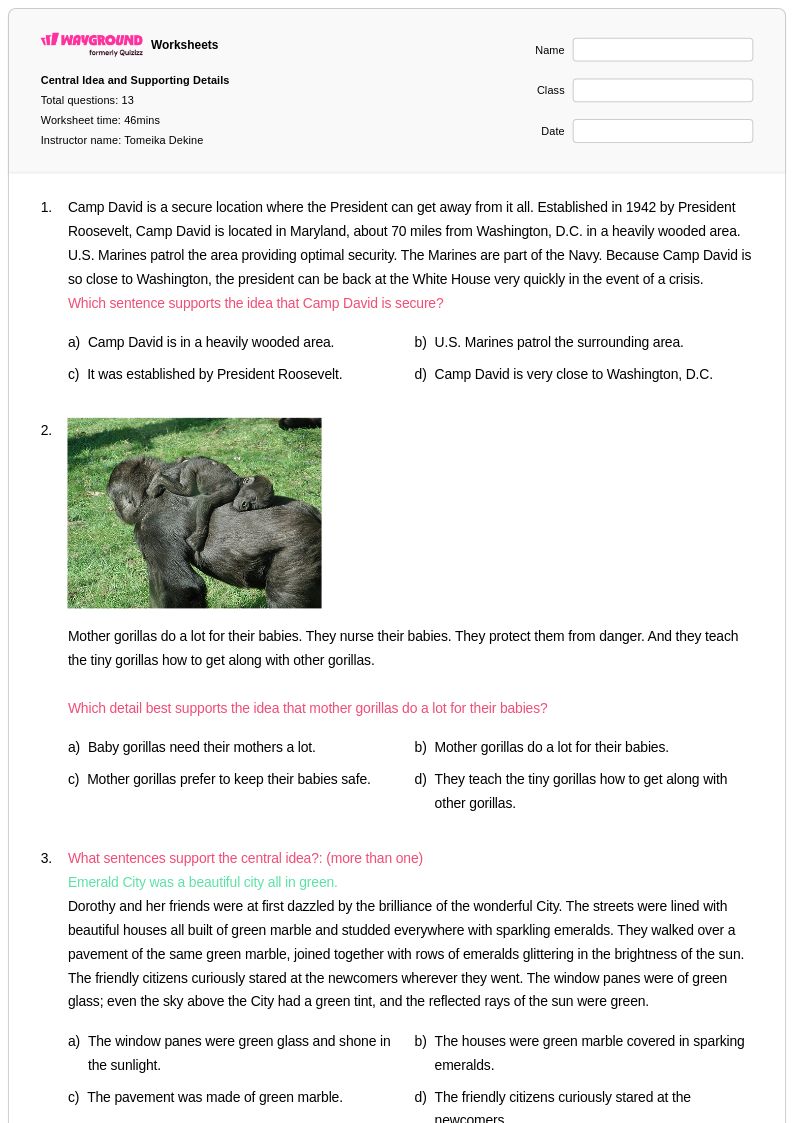
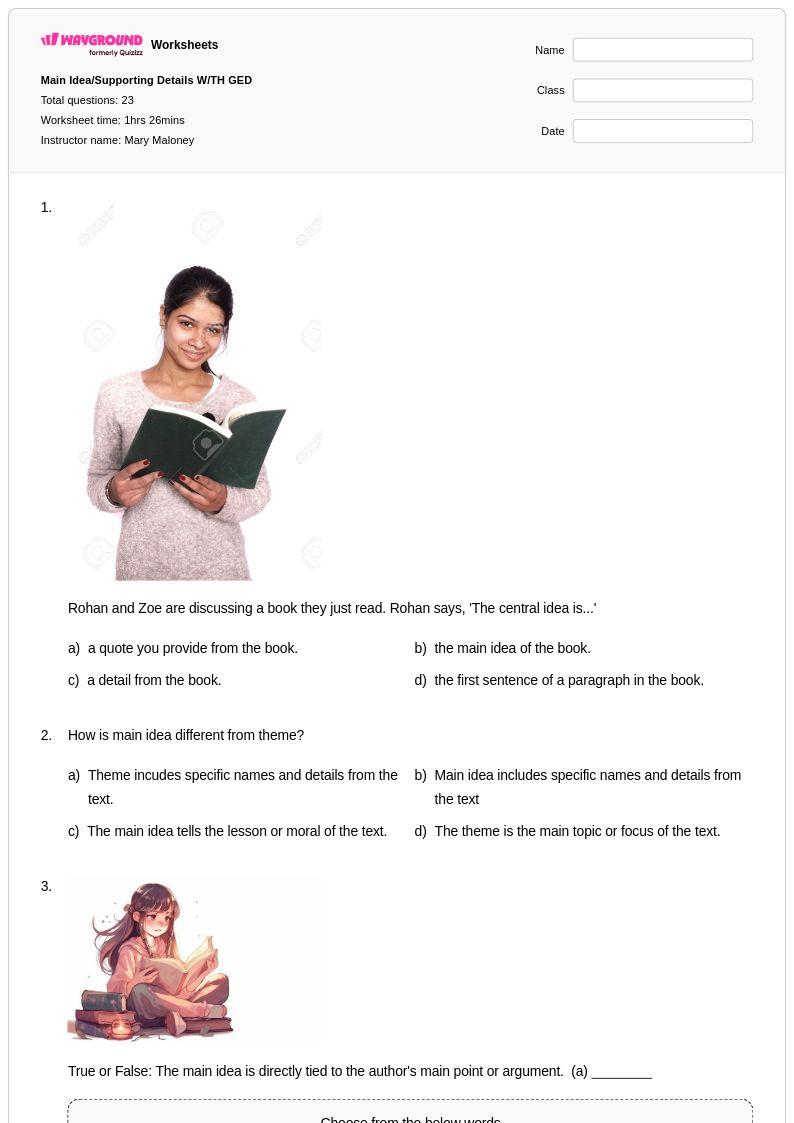
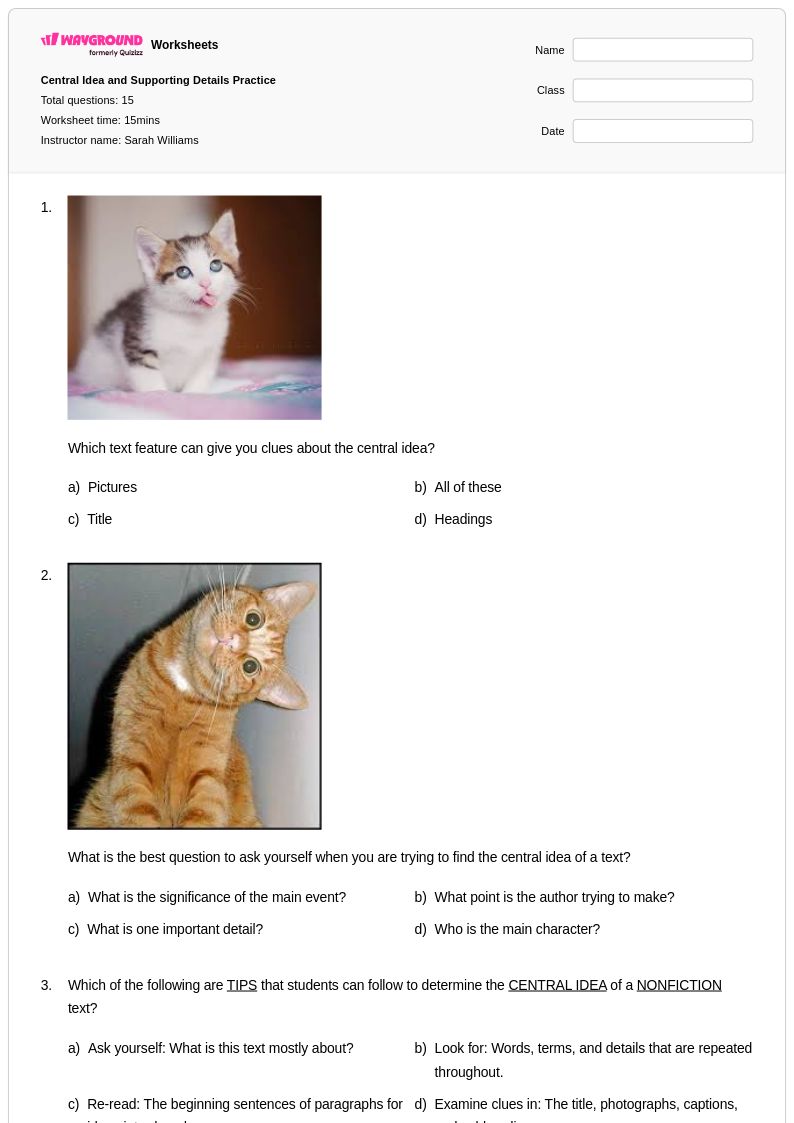
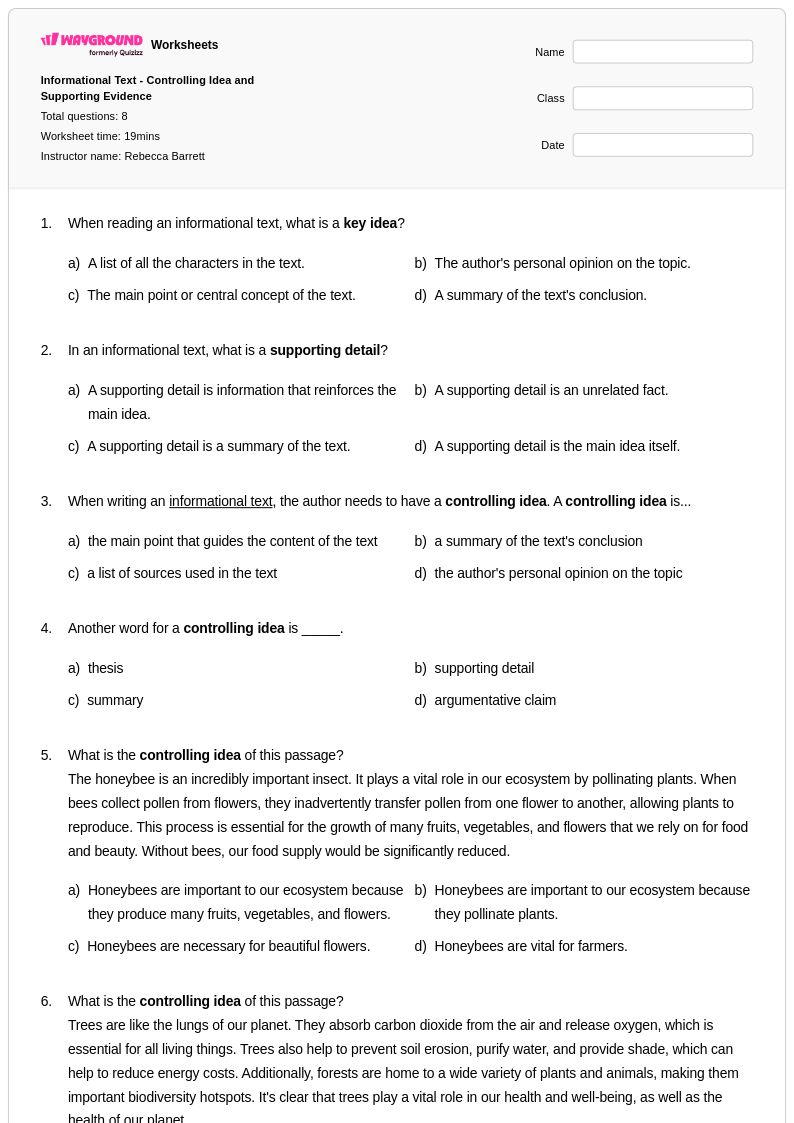
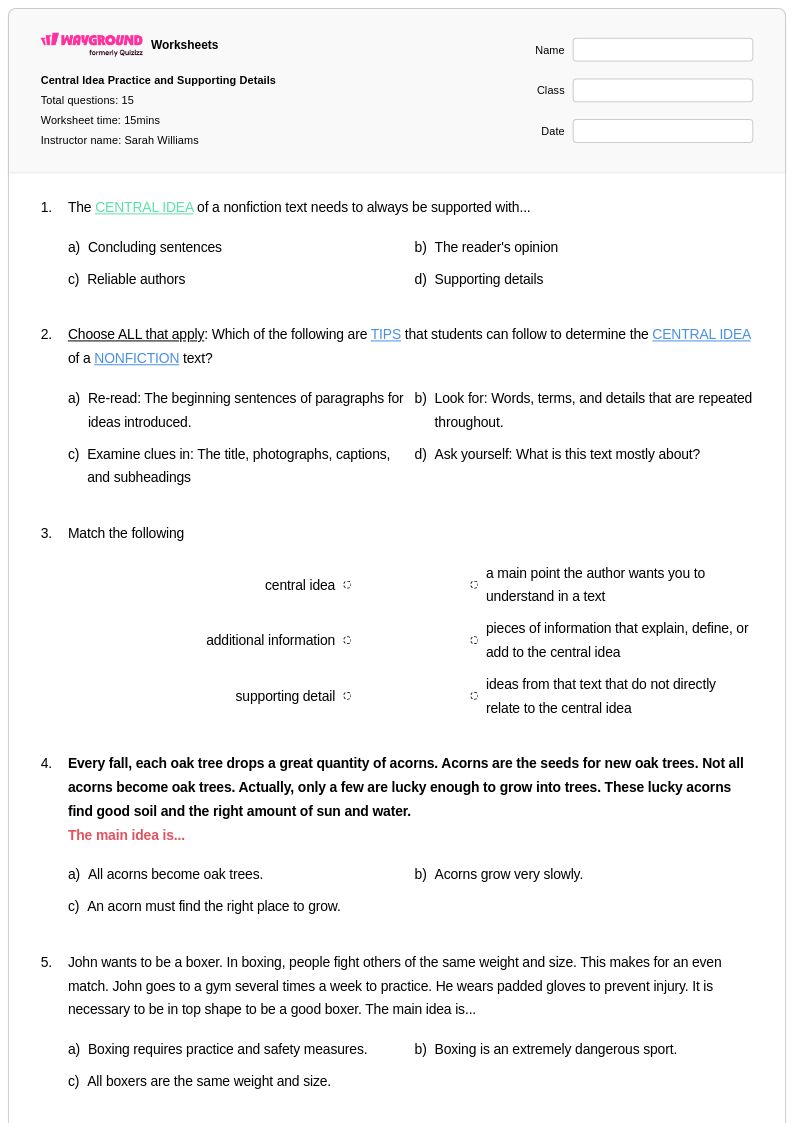
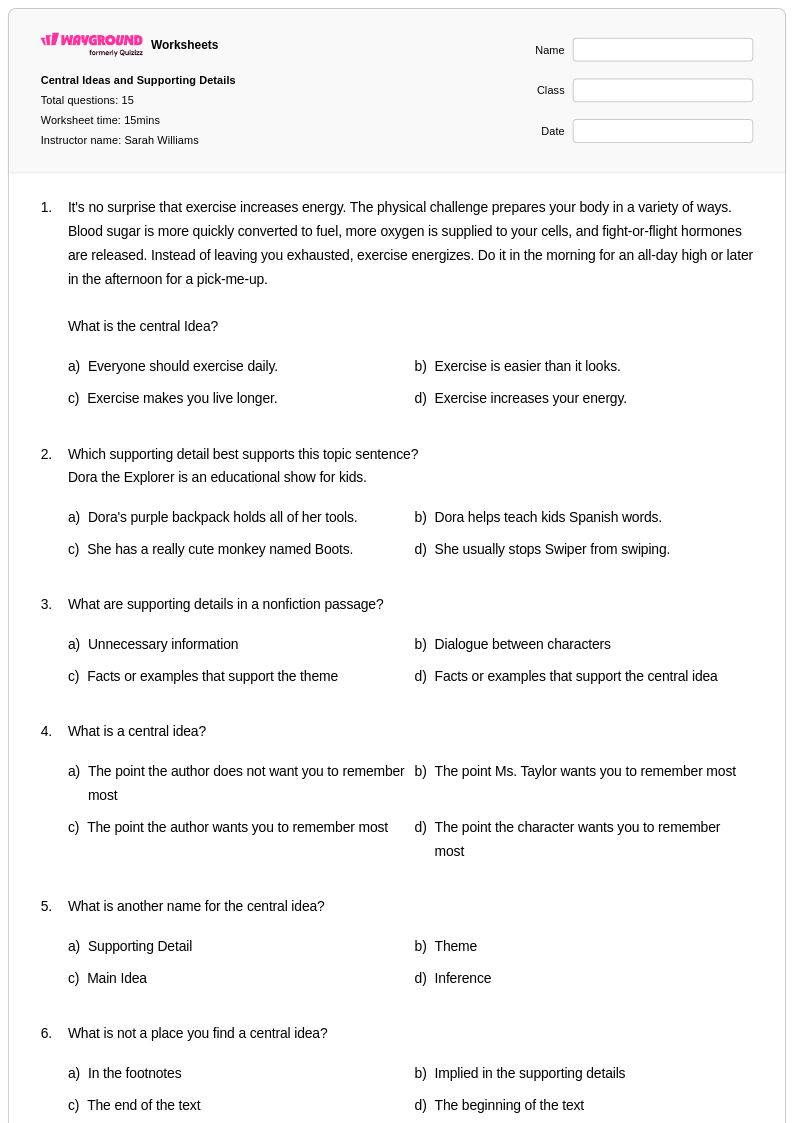
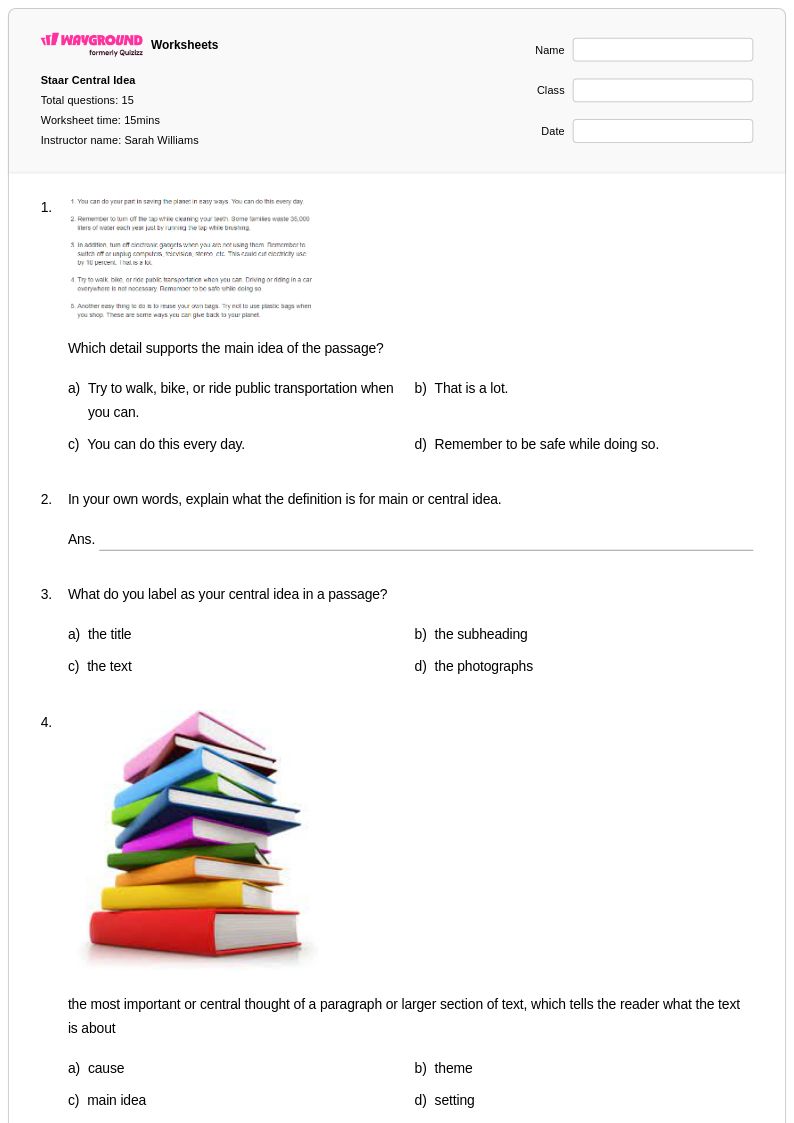
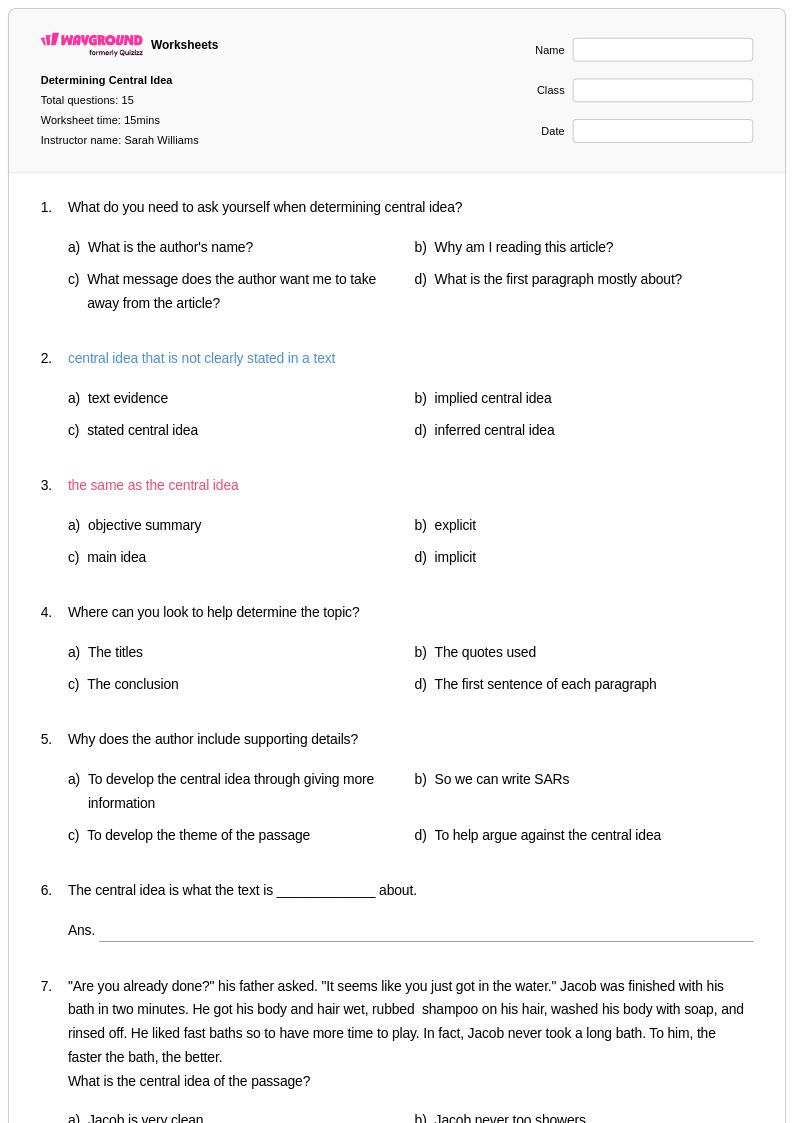
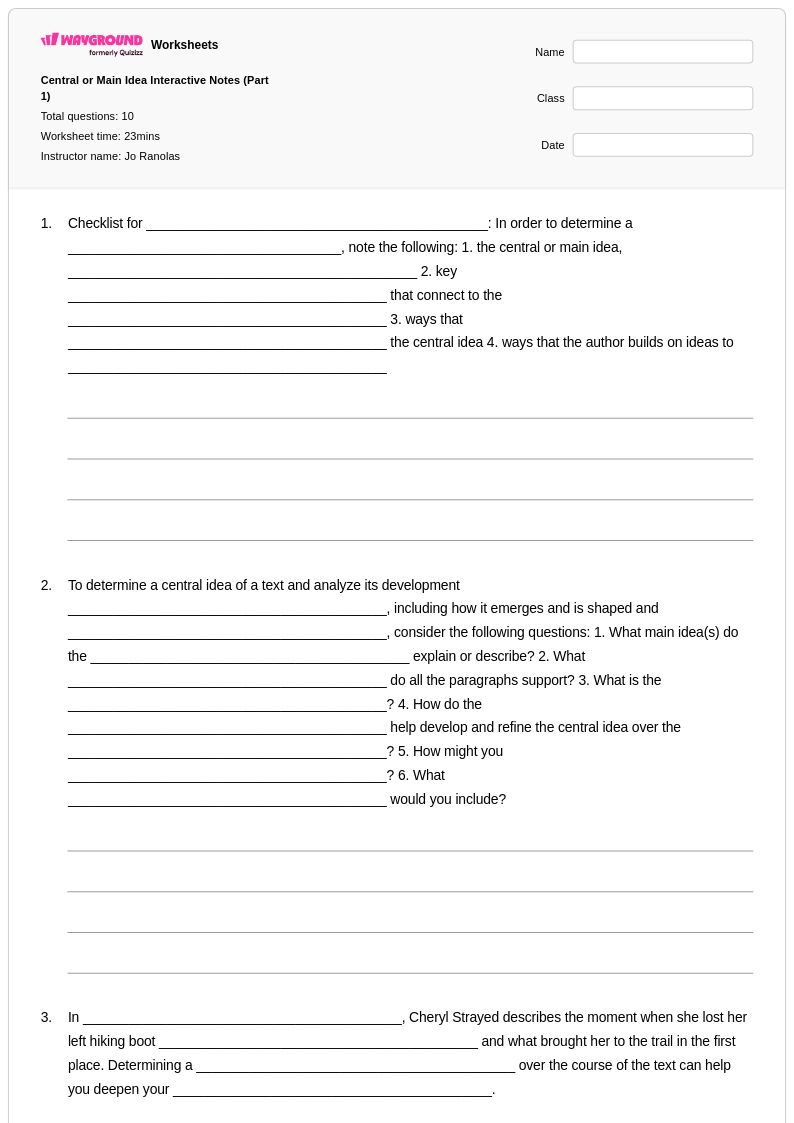
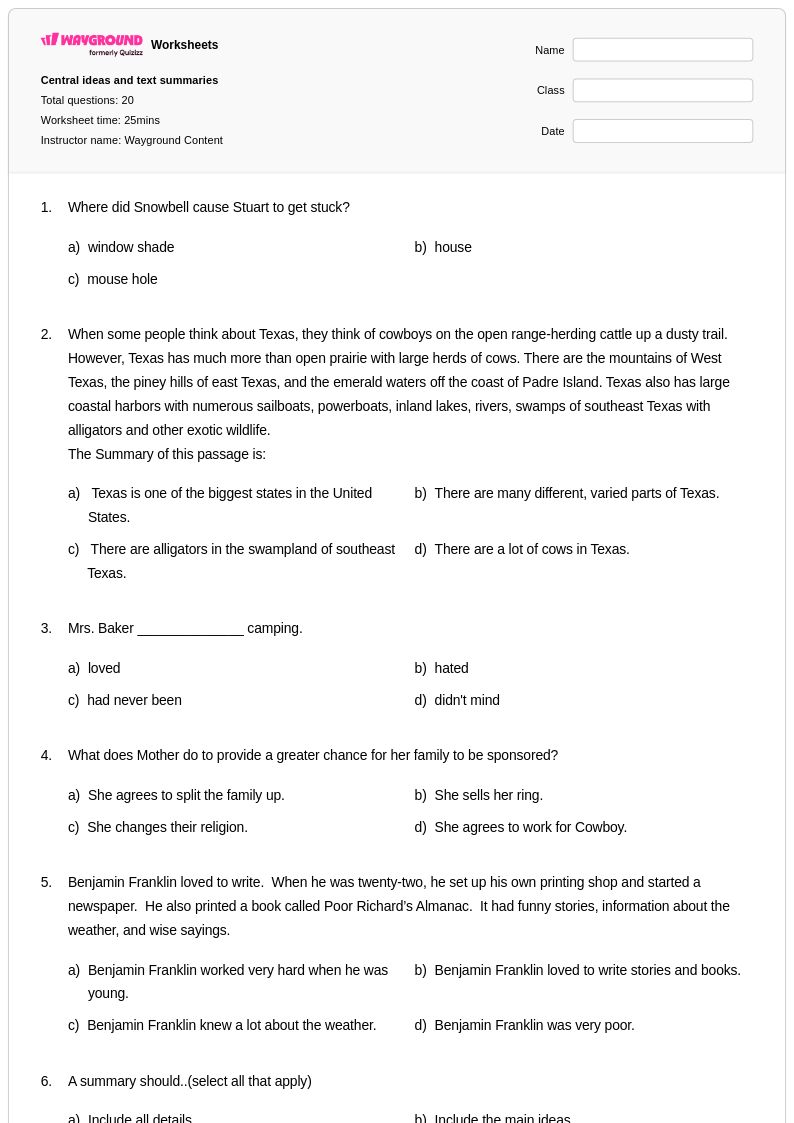
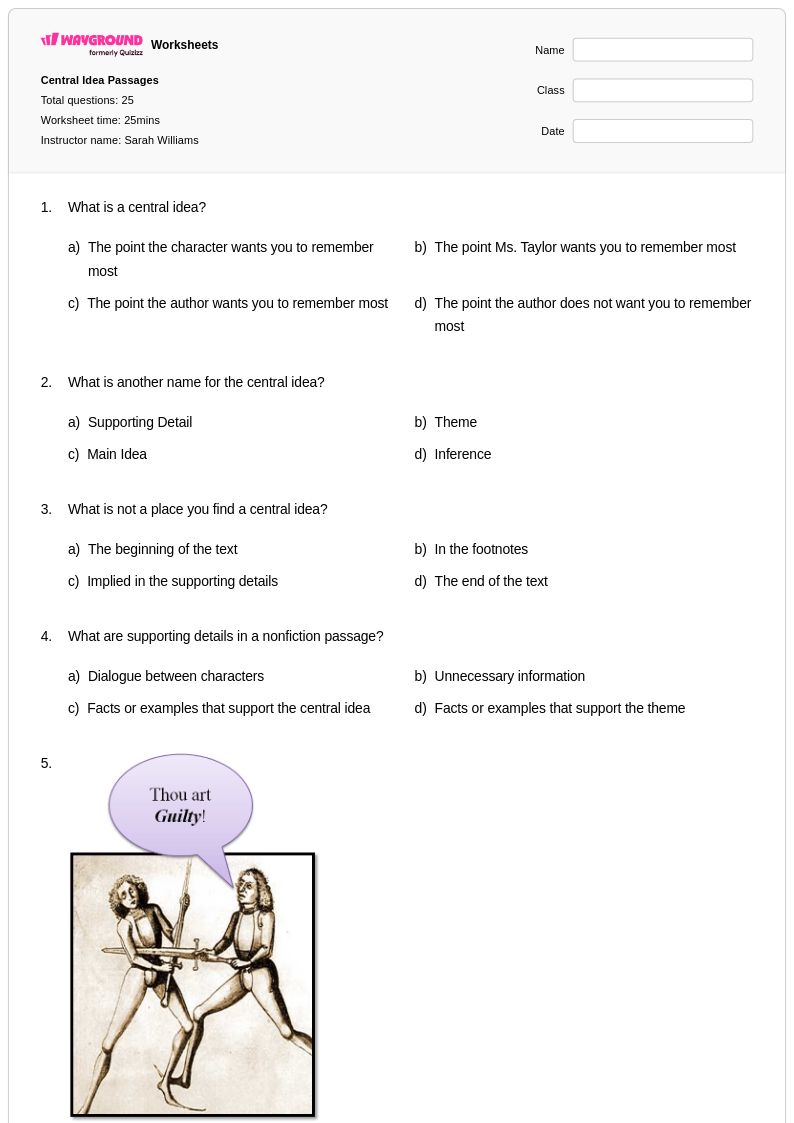
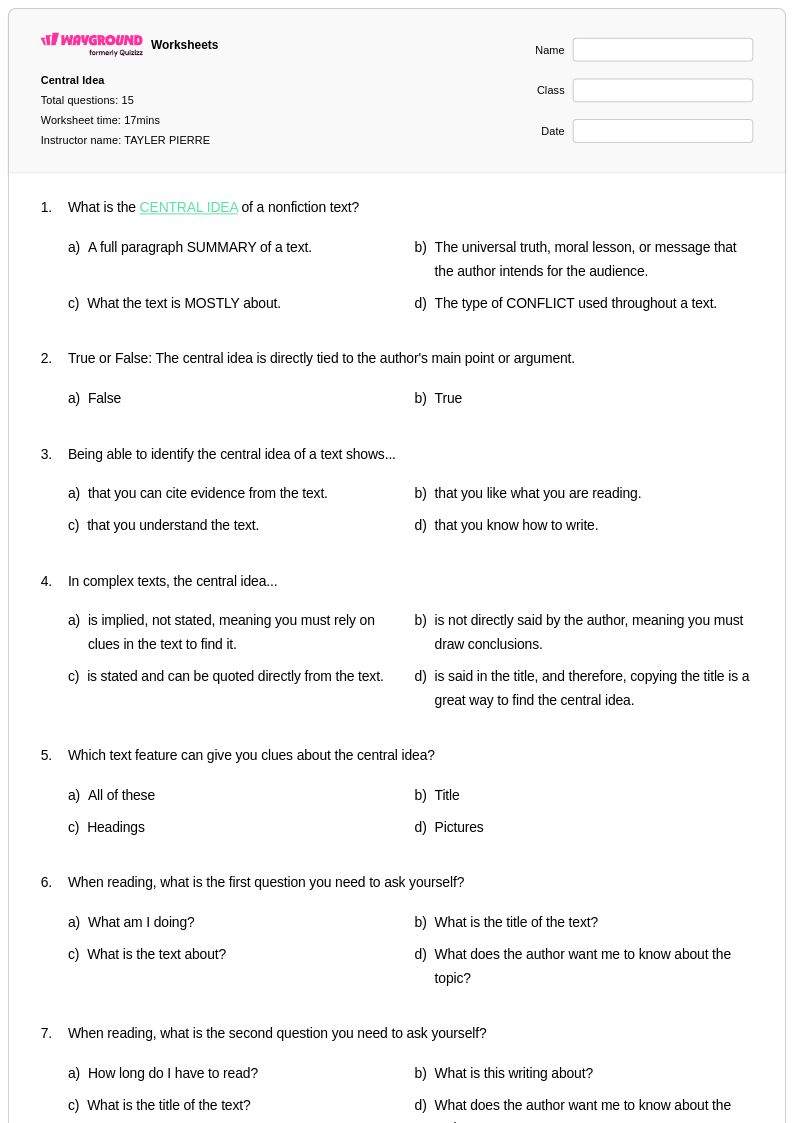
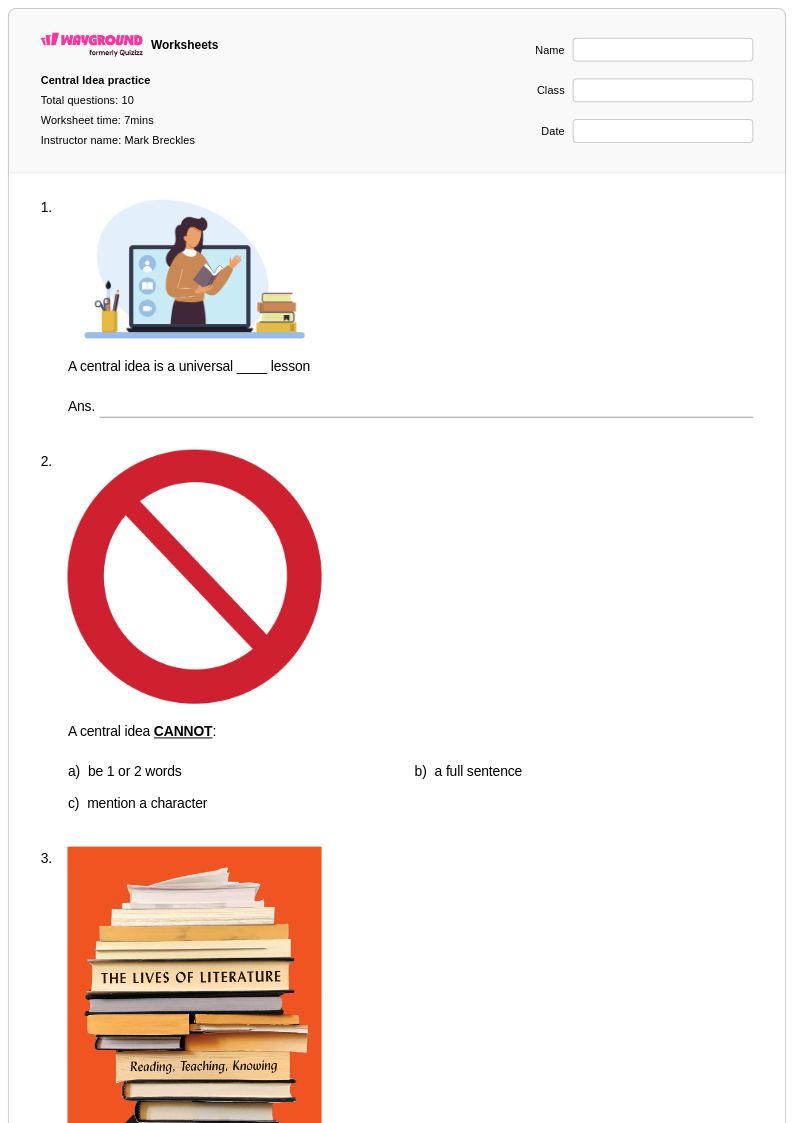
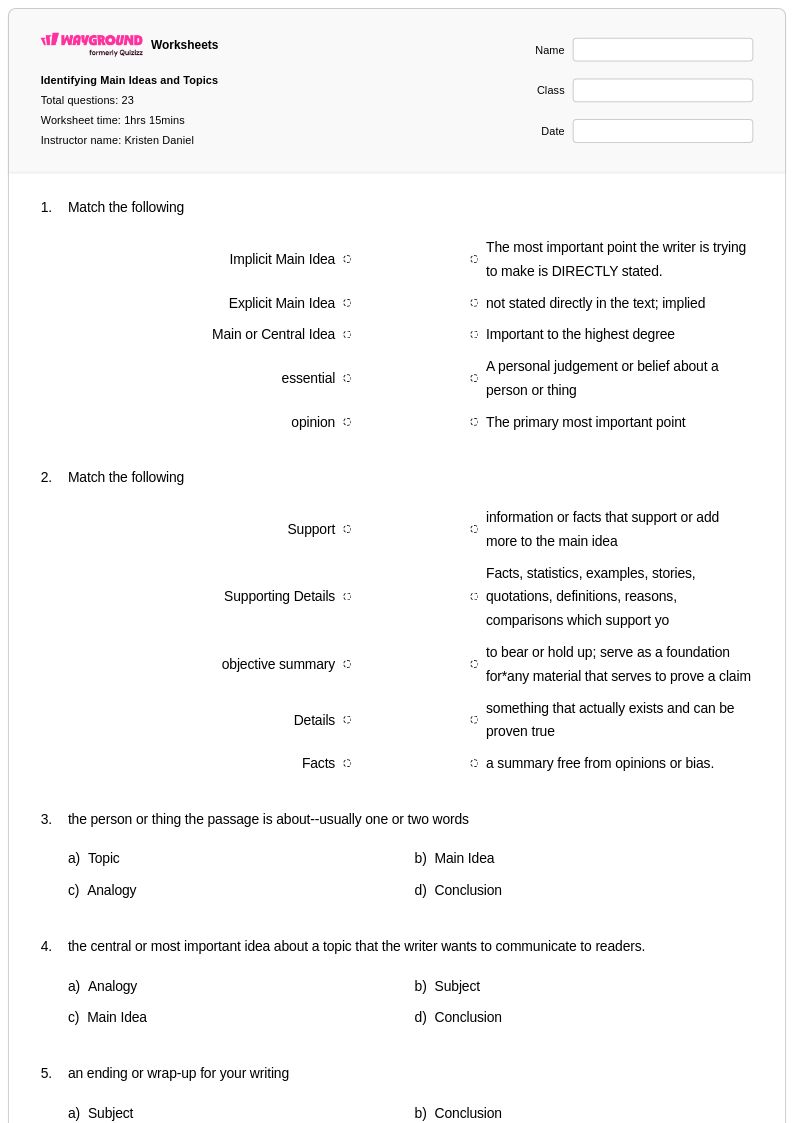
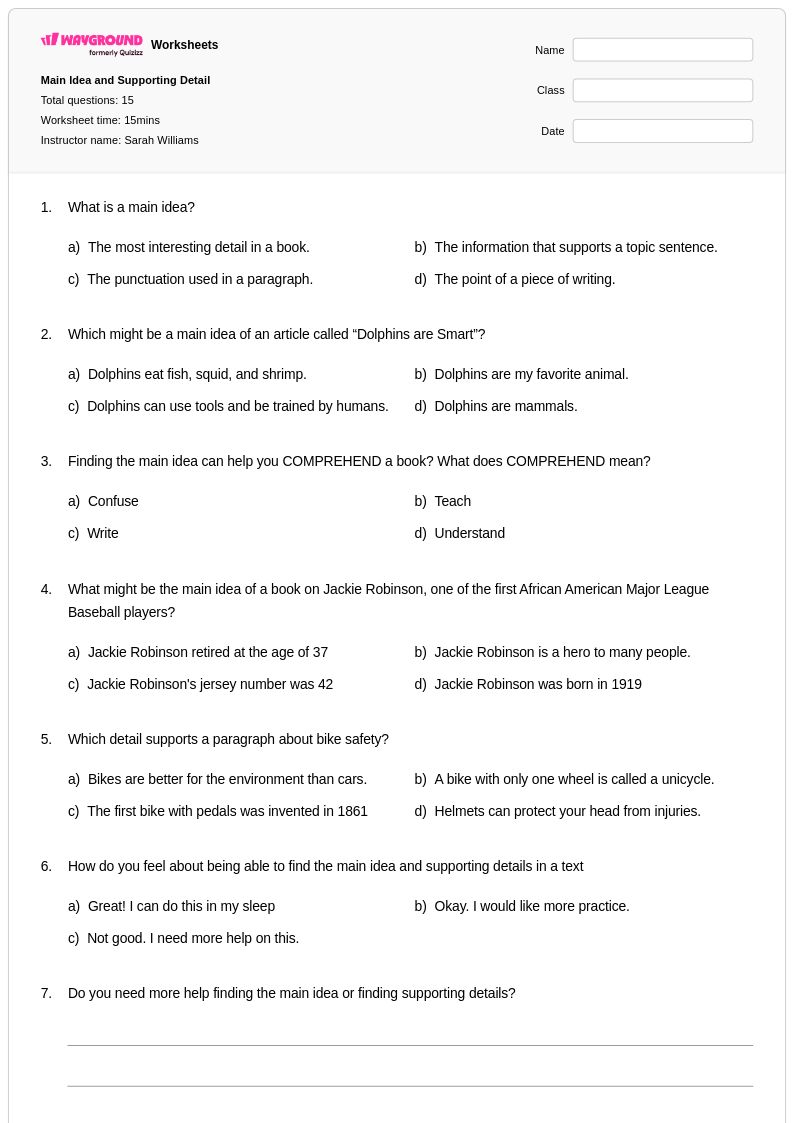
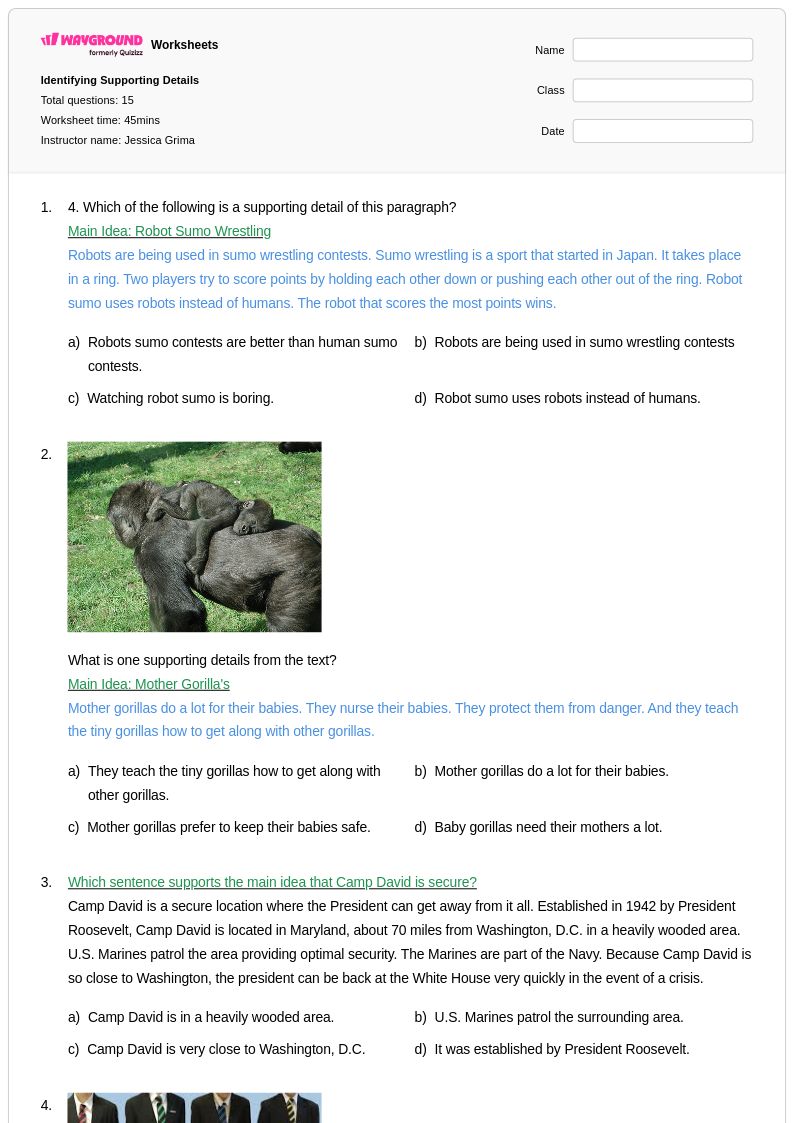
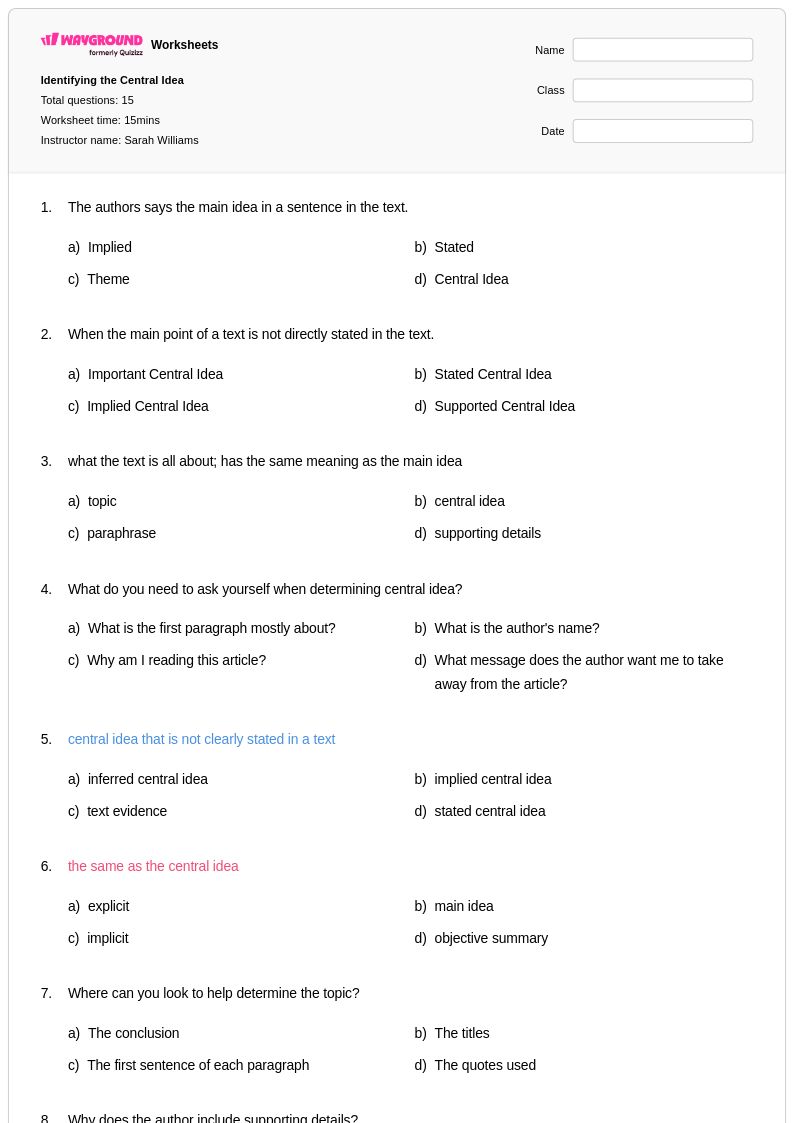
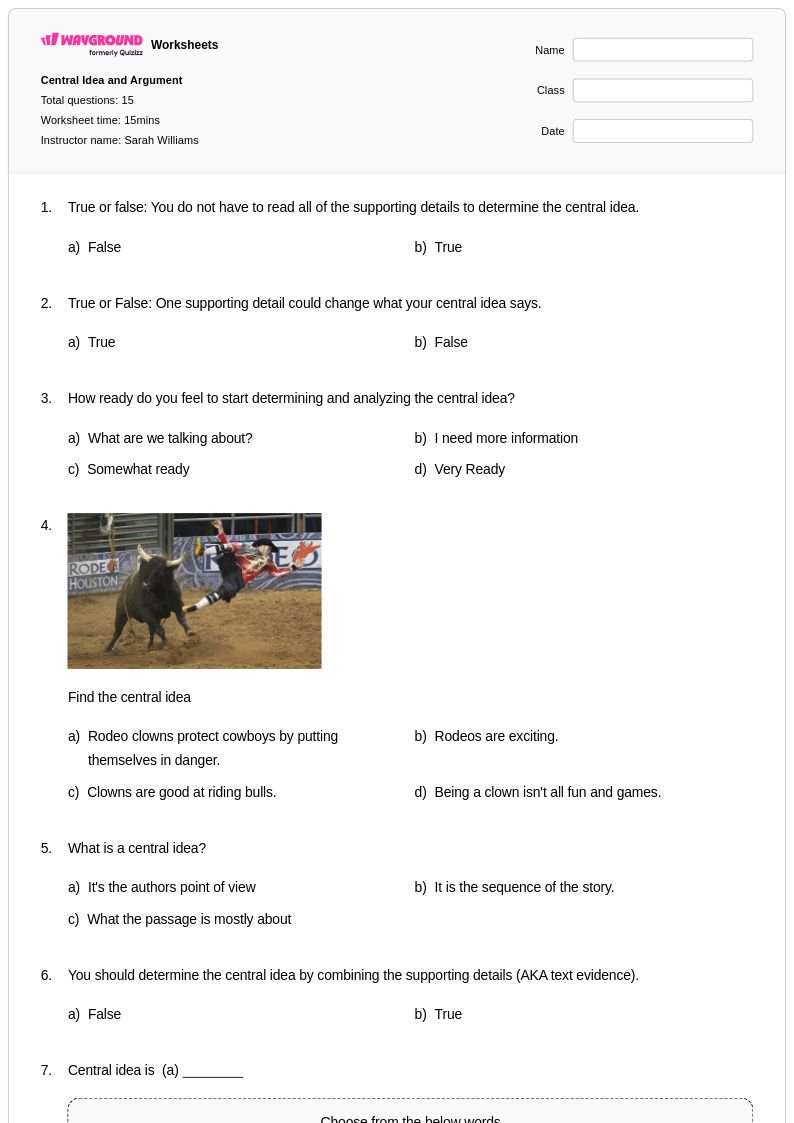
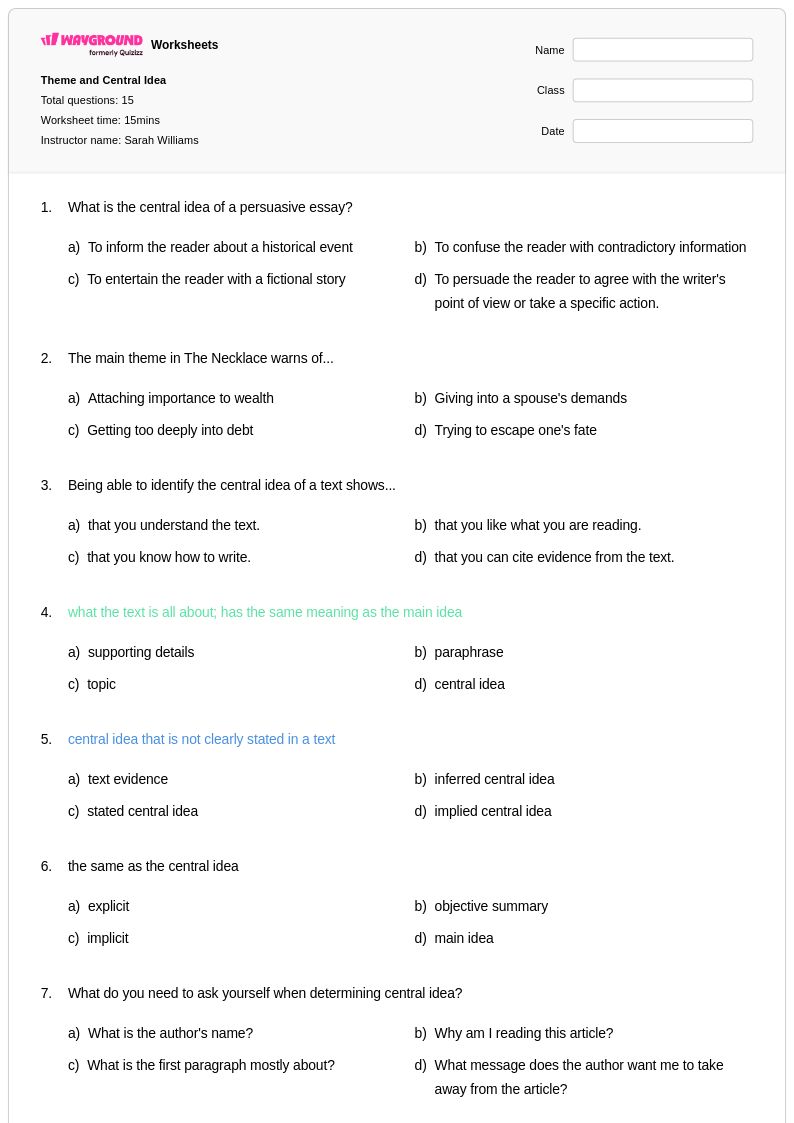
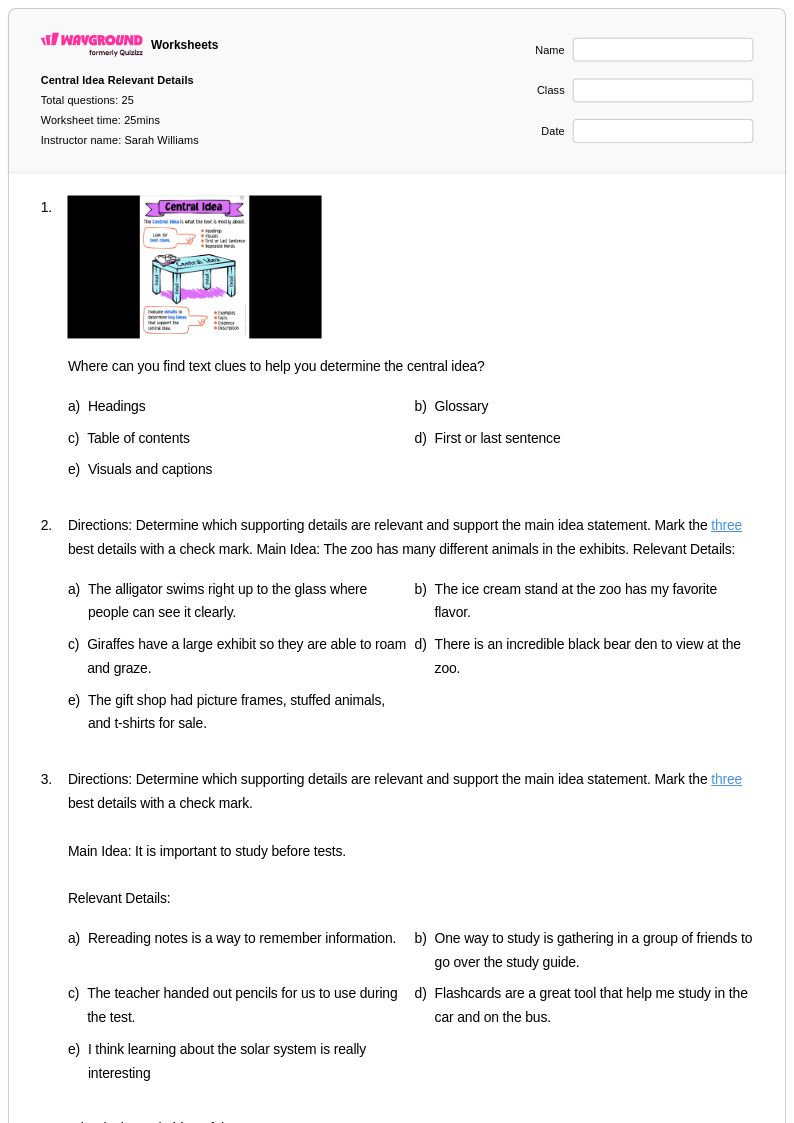
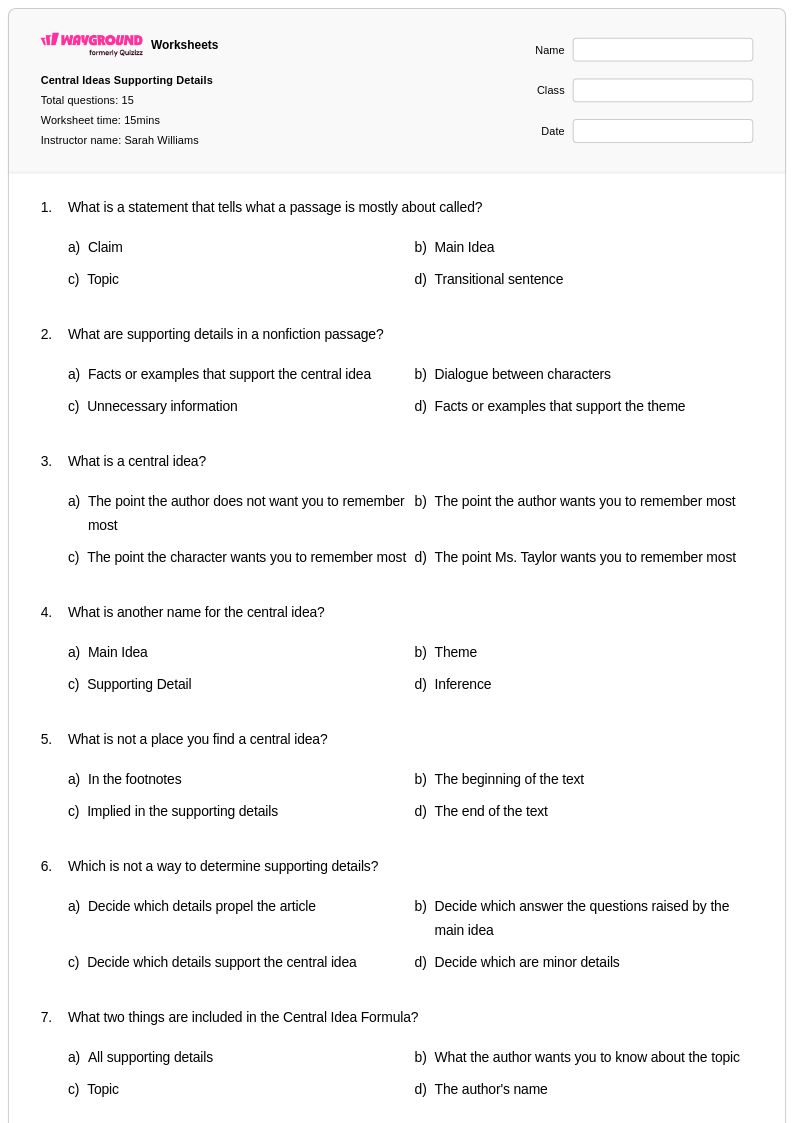
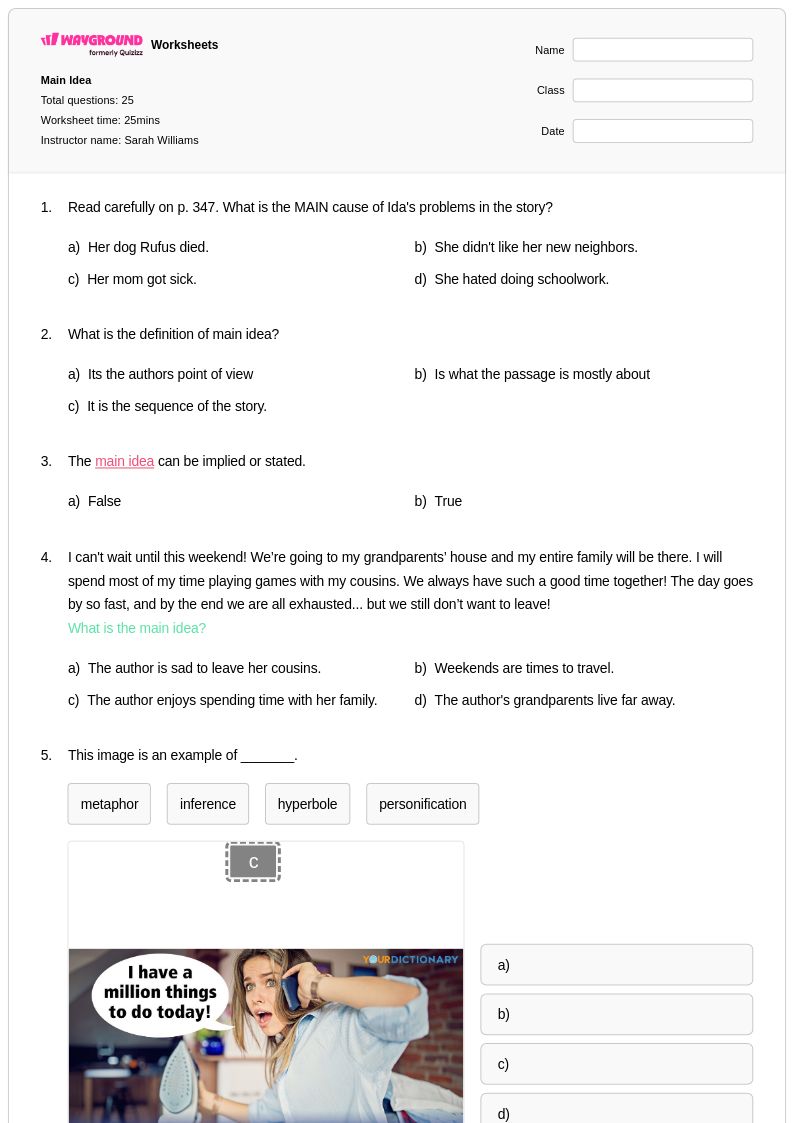
Central idea and supporting details worksheets available through Wayground (formerly Quizizz) provide Class 12 students with sophisticated practice in identifying and analyzing the core concepts and evidence within complex texts. These comprehensive worksheets strengthen critical reading skills by challenging students to distinguish between main ideas and subordinate information, evaluate the relevance and credibility of supporting evidence, and understand how authors structure arguments to reinforce central themes. Each worksheet includes carefully crafted practice problems that guide students through the analytical process, from recognizing topic sentences and thesis statements to mapping the logical flow of supporting details throughout extended passages. The accompanying answer key allows for immediate feedback and self-assessment, while the free printable format ensures accessibility for both classroom instruction and independent study. These pdf resources expose students to diverse text types including academic essays, literary excerpts, scientific articles, and historical documents, preparing them for the rigorous reading demands of college-level coursework.
Wayground (formerly Quizizz) supports educators with an extensive collection of teacher-created resources specifically designed for Class 12 central idea and supporting details instruction, drawing from millions of worksheets that have been classroom-tested and refined. The platform's robust search and filtering capabilities enable teachers to locate materials aligned with specific standards and tailored to their students' reading levels, while differentiation tools allow for seamless customization of content complexity and question formats. Teachers can access these resources in both printable and digital formats, including downloadable pdf versions that facilitate flexible lesson planning and accommodate diverse learning environments. This comprehensive worksheet collection serves multiple instructional purposes, from targeted skill practice and diagnostic assessment to remediation support for struggling readers and enrichment activities for advanced students, ensuring that educators have the tools necessary to develop sophisticated textual analysis skills across all ability levels.
FAQs
How do I teach students to identify the central idea of a text?
Start by helping students distinguish between topic and central idea: the topic is what a text is about, while the central idea is the most important point the author makes about that topic. A reliable classroom strategy is to have students read a short passage, identify the topic in one word, and then ask 'What is the most important thing this text says about that topic?' From there, students can locate supporting details that reinforce that central claim. Repeated exposure to varied text types, including informational articles and literary nonfiction, builds the automaticity students need to apply this skill independently.
What exercises help students practice identifying supporting details?
Effective practice exercises ask students to do more than just underline details — they should also explain how each detail connects back to the central idea. Graphic organizers with a central idea box linked to detail branches help students visualize the relationship between claims and evidence. Structured worksheets that present short passages alongside multiple-choice or written-response questions give students repeated, scaffolded exposure to this skill across different text types.
What mistakes do students commonly make when identifying central ideas and supporting details?
The most common error is confusing the topic with the central idea — students often write a single word or phrase instead of a complete statement that captures the author's main point. Another frequent mistake is selecting the first sentence of a paragraph as the central idea by default, even when it functions as a transition rather than a topic sentence. Students also commonly identify details that are interesting or surprising rather than those that directly support the central idea, which means they may miss the logical structure the author has built.
How can I differentiate central idea instruction for struggling readers?
For struggling readers, begin with very short, single-paragraph texts before moving to multi-paragraph passages, so students can focus on the skill without being overwhelmed by length. Sentence frames such as 'The author's main point is...' and 'One detail that supports this is...' provide the scaffolding students need to articulate their thinking. On Wayground, teachers can enable the Read Aloud accommodation so questions and passage text are read to students who need it, and the Reduced Answer Choices feature can lower cognitive load for students who find multiple-choice formats difficult.
How do I use Wayground's central idea and supporting details worksheets in my classroom?
Wayground's central idea and supporting details worksheets are available as printable PDFs for traditional classroom use and in digital formats for technology-integrated environments, including the option to host them as an interactive quiz on the Wayground platform. Teachers can assign worksheets for independent practice, use them as guided reading activities, or deploy them as formative assessments. Each worksheet includes a complete answer key, so teachers can quickly check student work or distribute answer keys for self-assessment.
How does identifying central idea and supporting details help students across subject areas?
The ability to identify a central idea and its supporting details is a transferable reading comprehension strategy that applies directly to science texts, social studies articles, and literary nonfiction, not just English language arts. When students can locate the main argument of an informational text and evaluate the evidence the author uses to support it, they become more effective readers of any discipline-specific content. This skill also underpins strong academic writing, because students who understand how details support claims are better equipped to structure their own arguments.