Free Printable Changes of State Worksheets for Class 1
Class 1 changes of state worksheets help young students explore how matter transforms between solid, liquid, and gas through engaging printables and practice problems with answer keys.
Explore printable Changes of State worksheets for Class 1
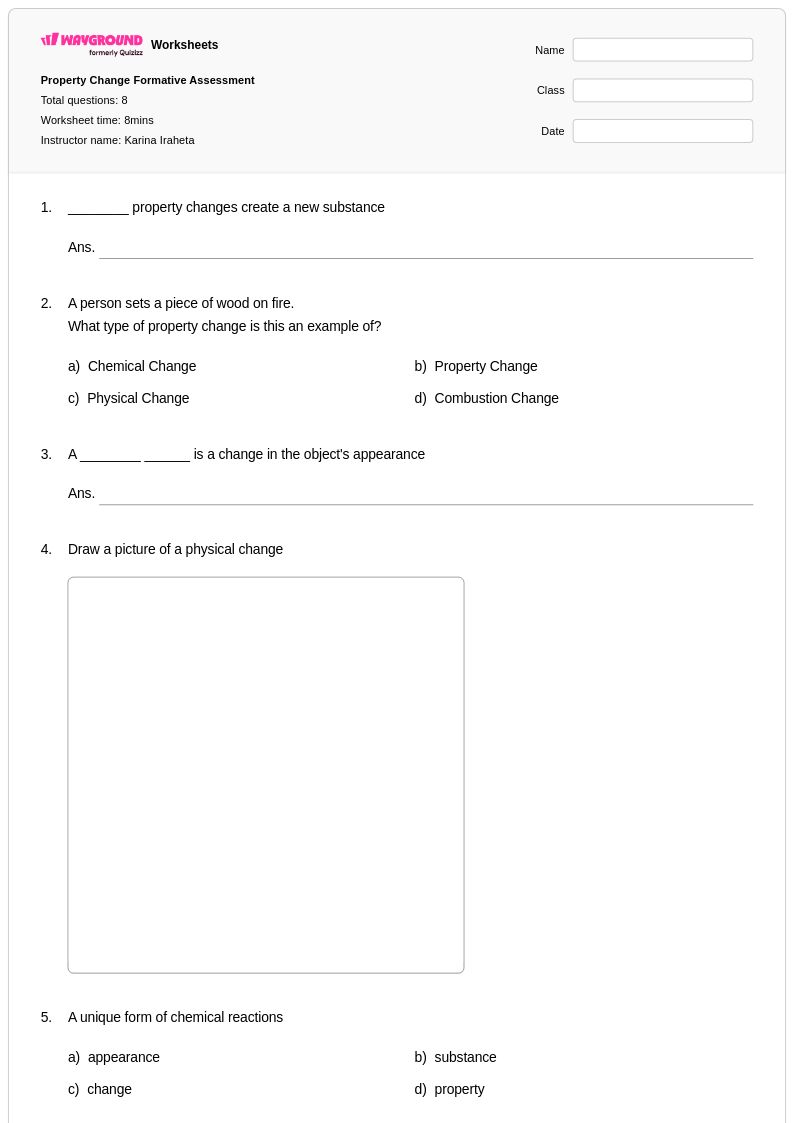
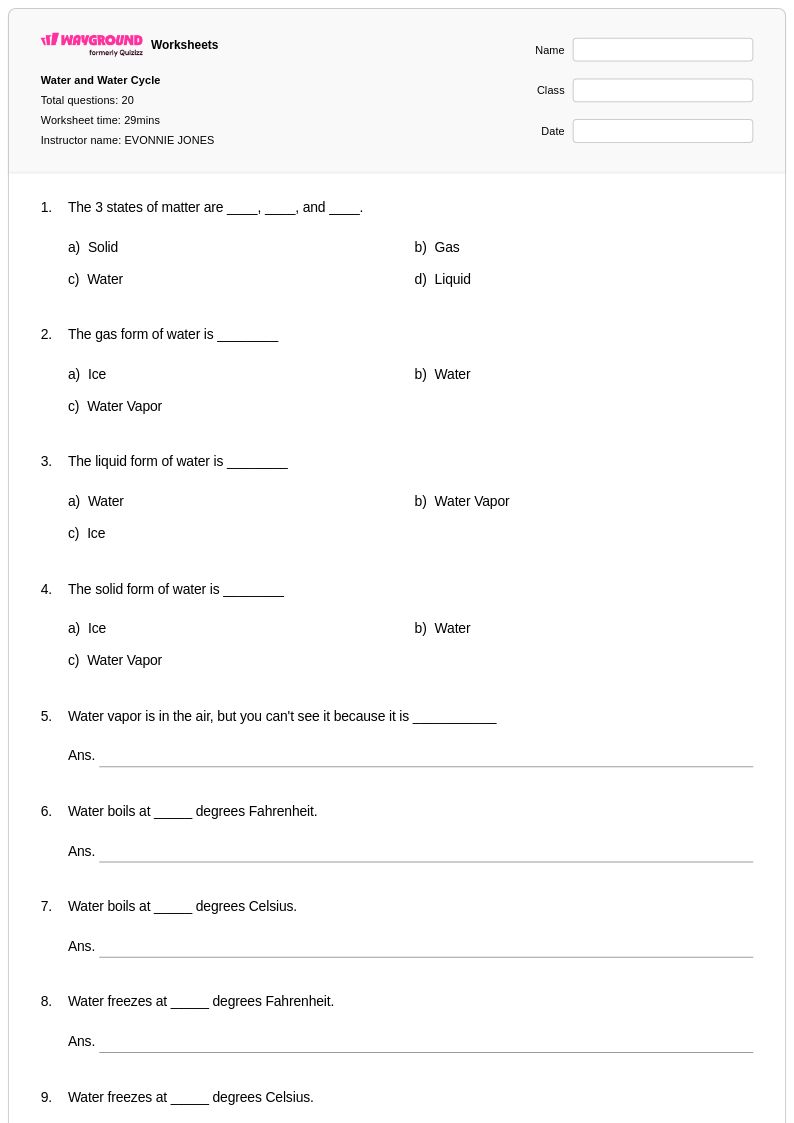
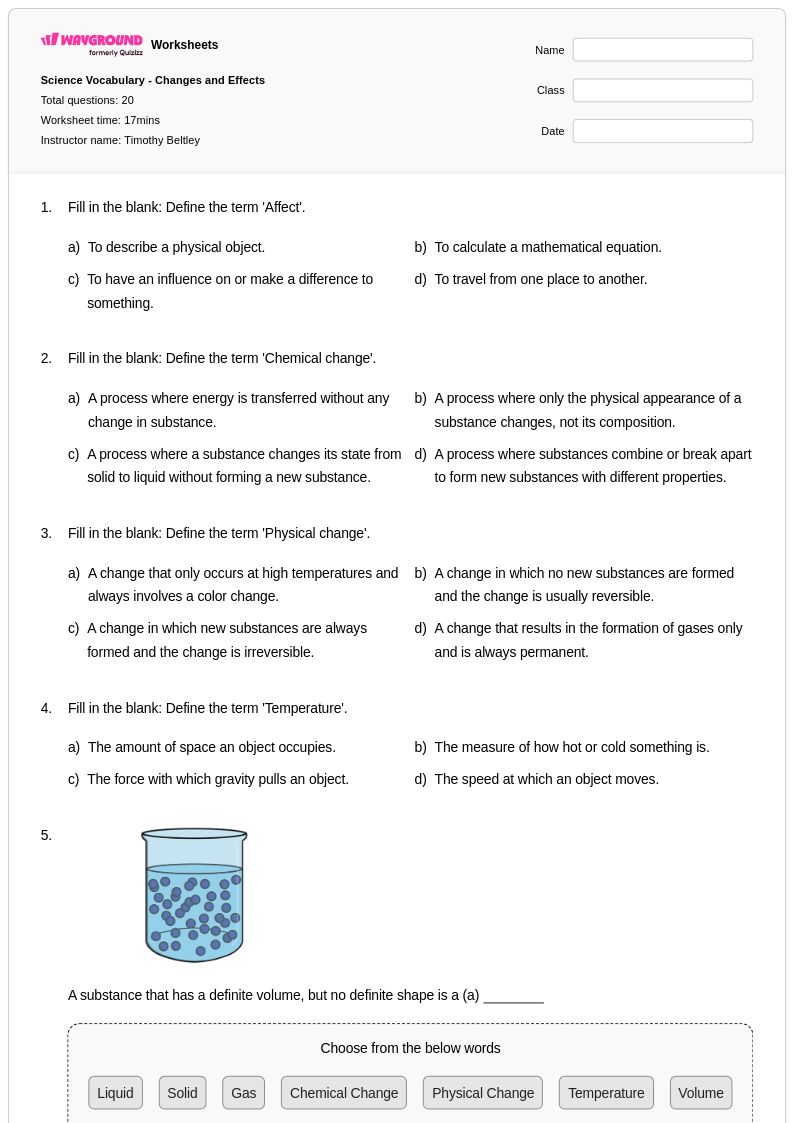
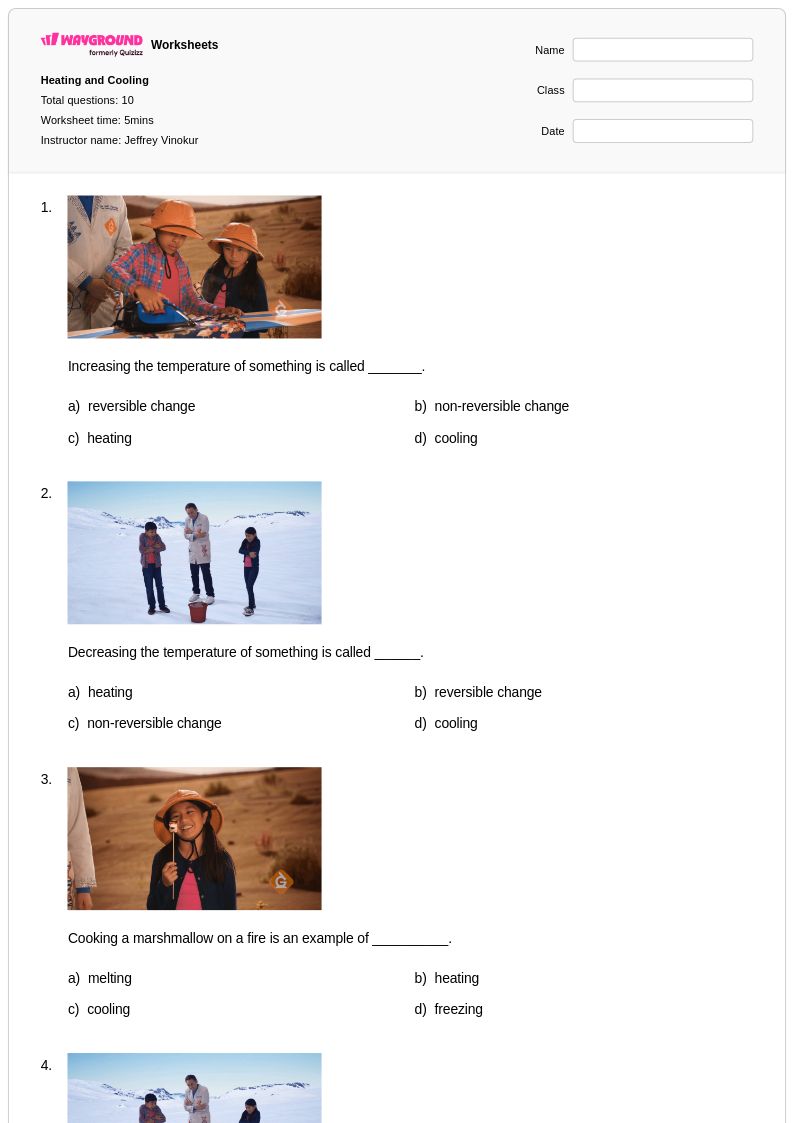
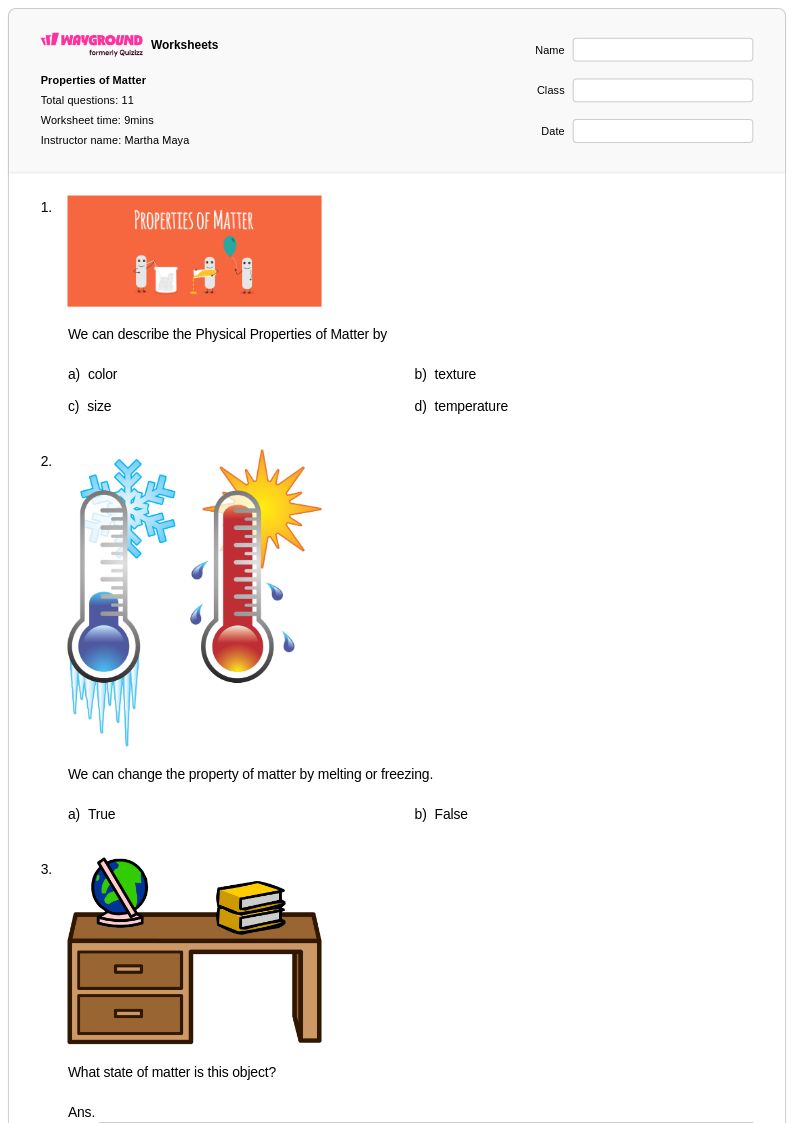
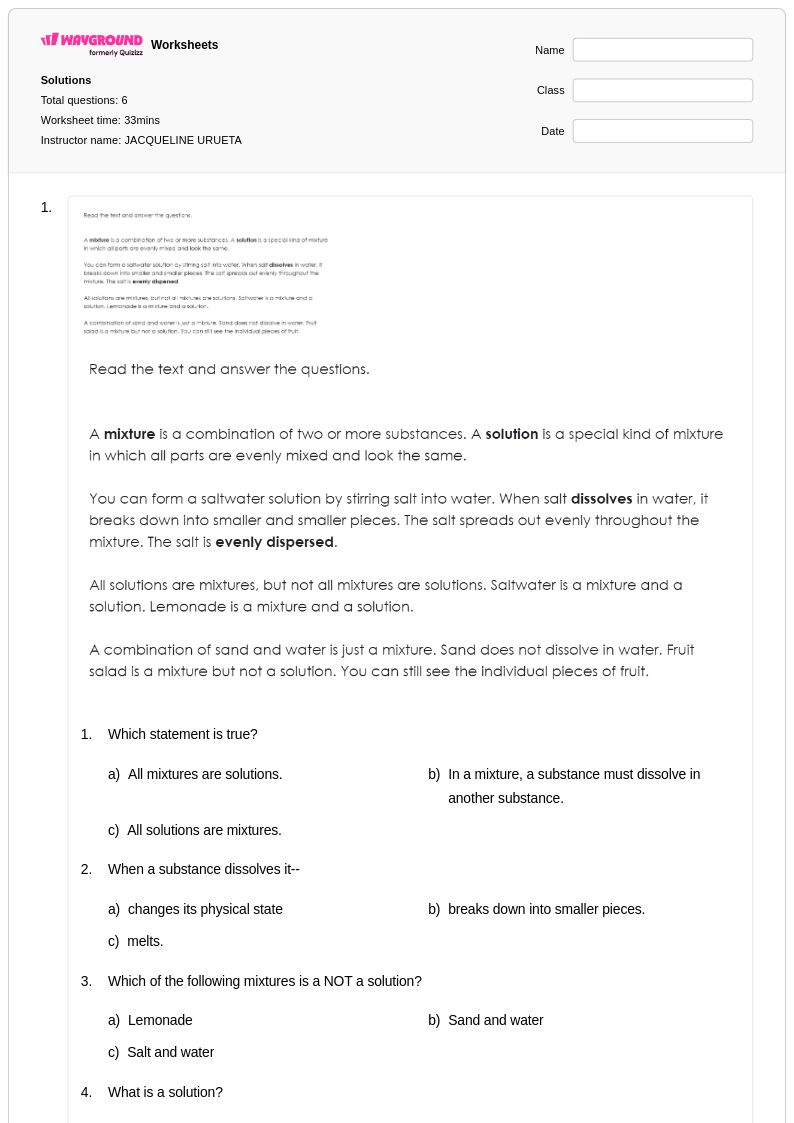
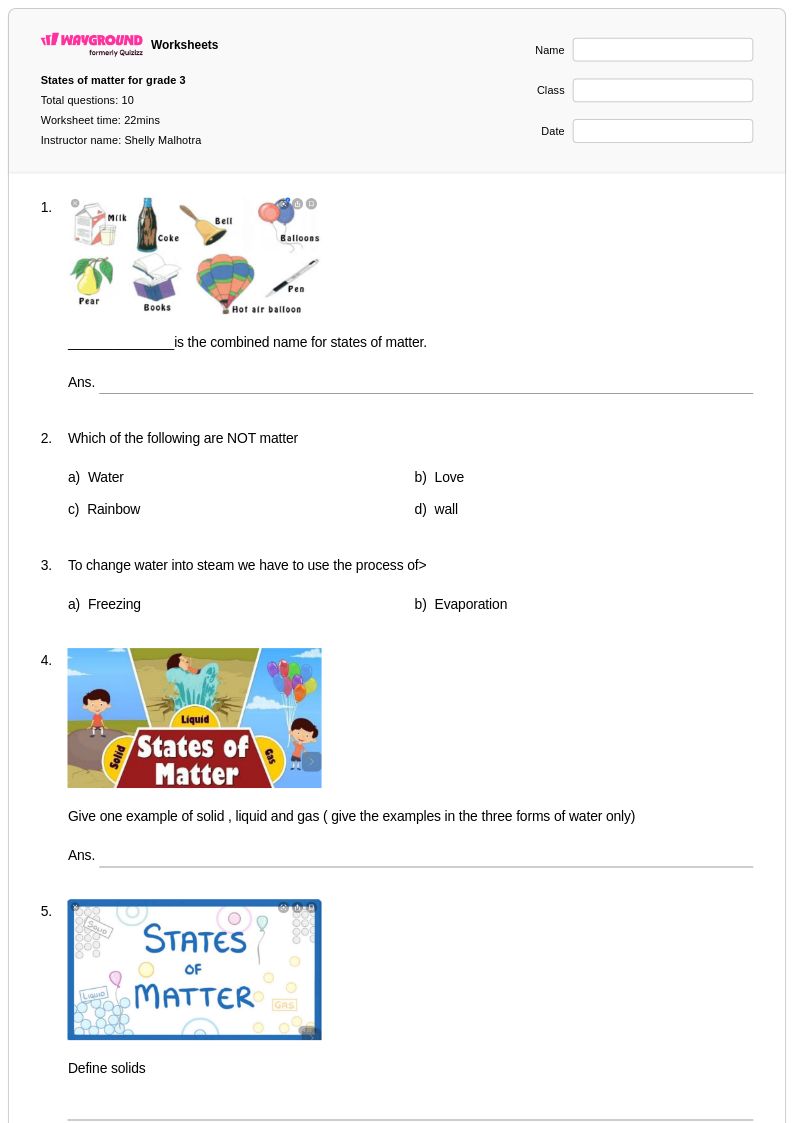
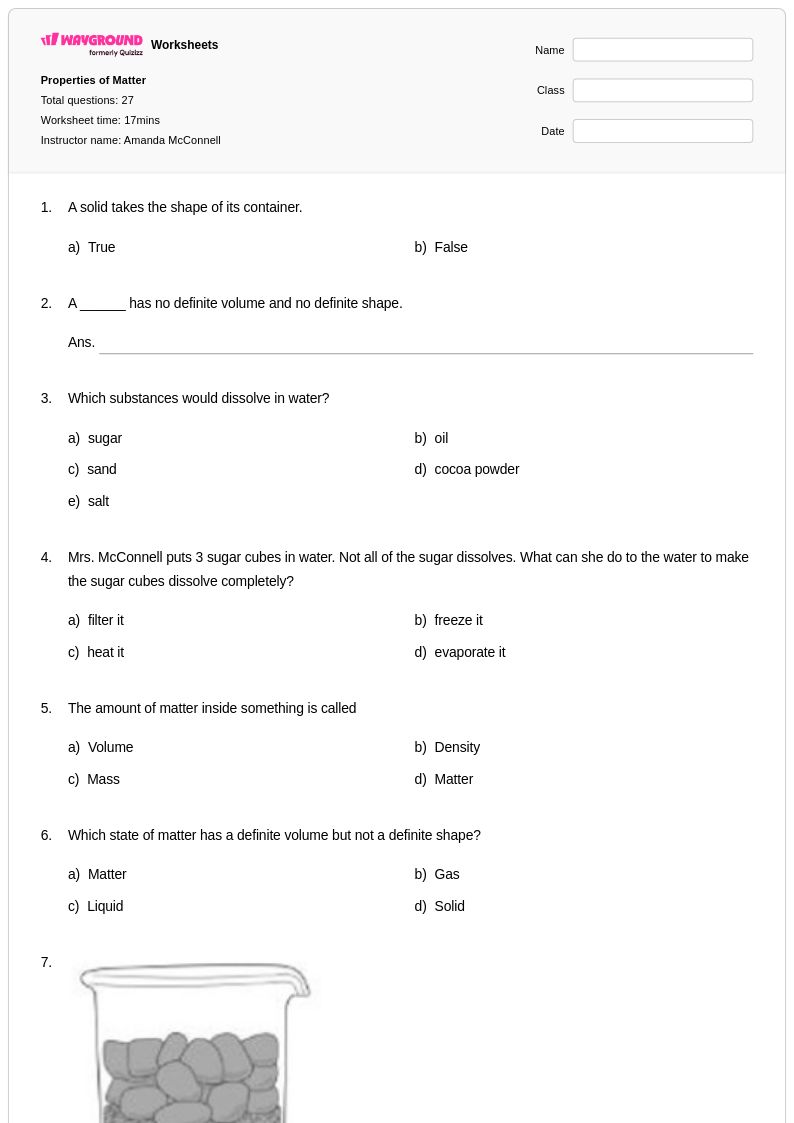
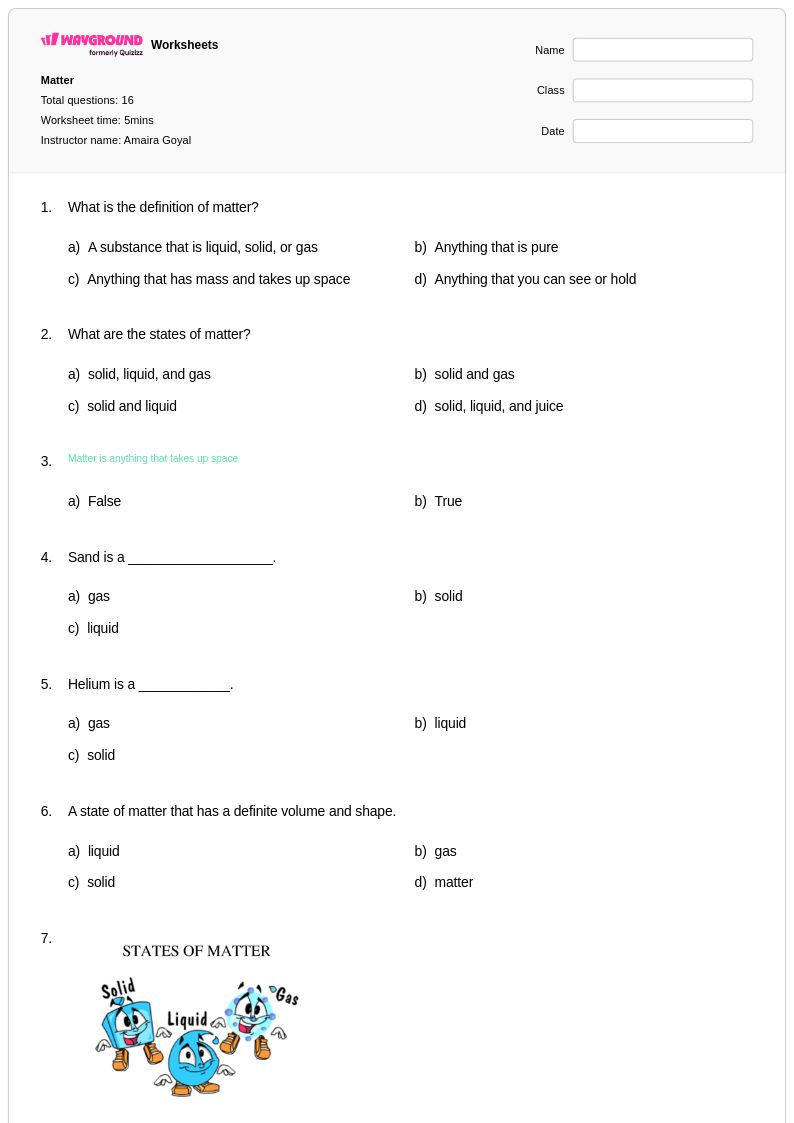
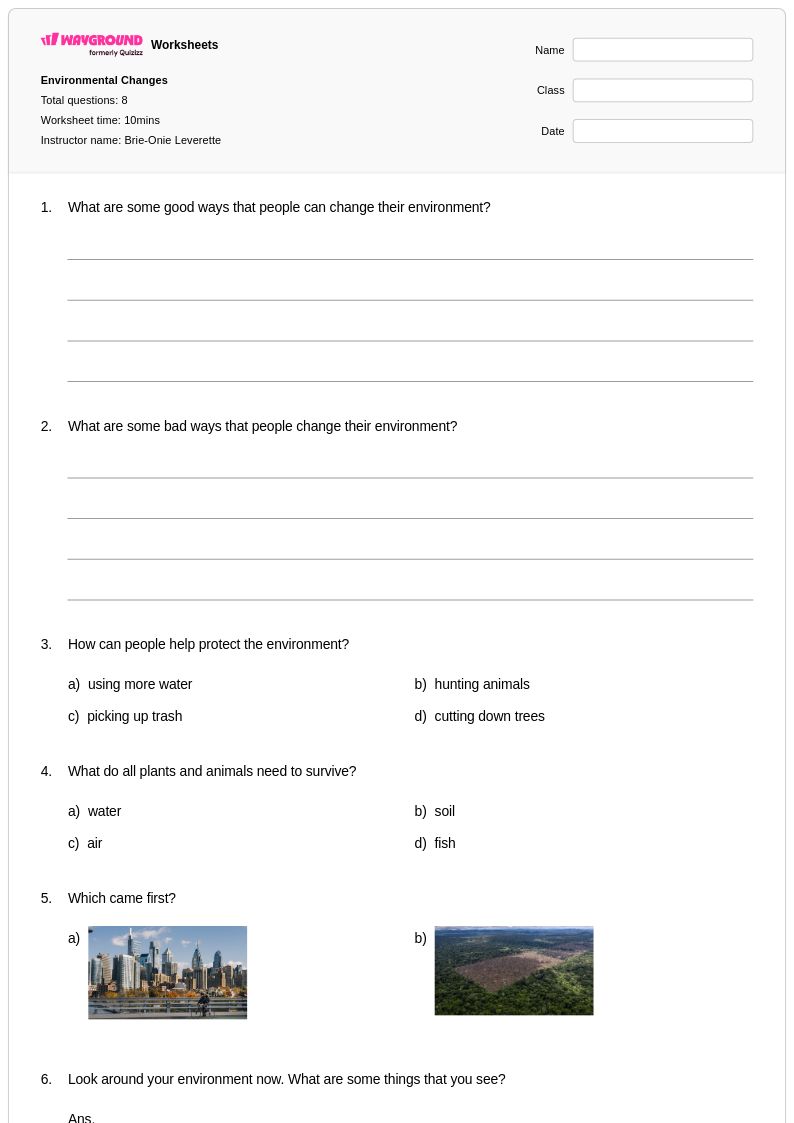
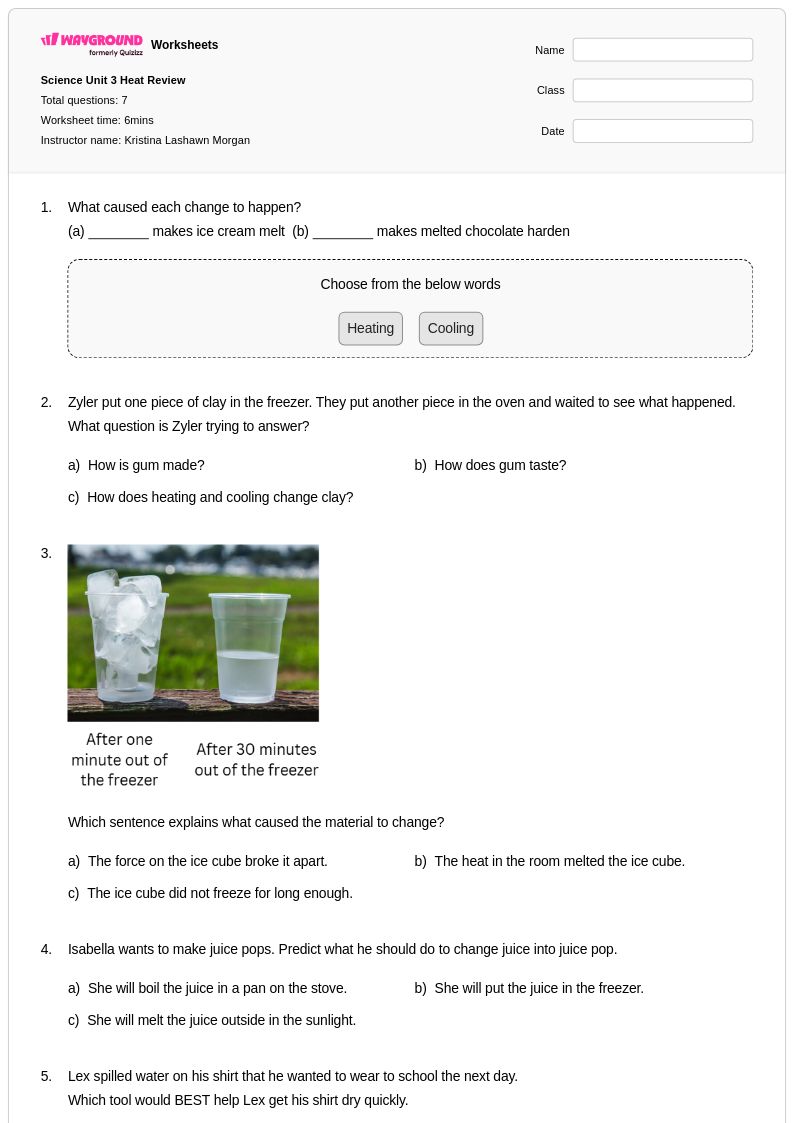
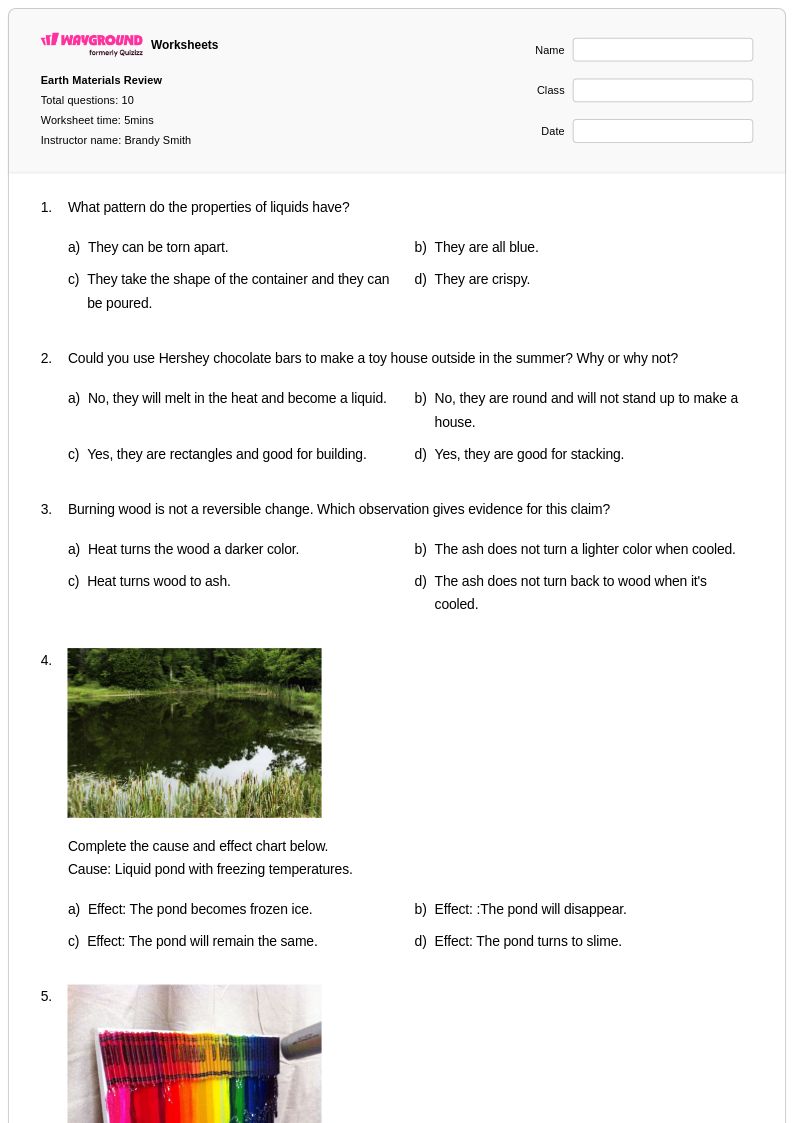
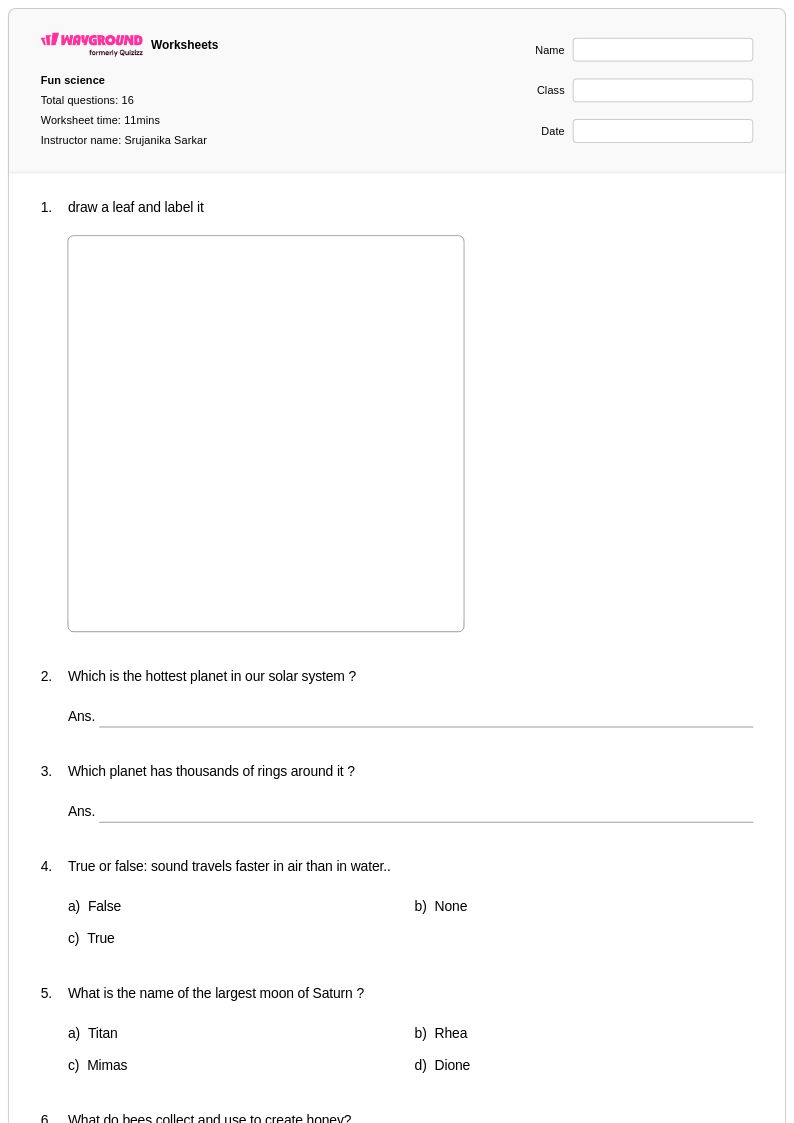
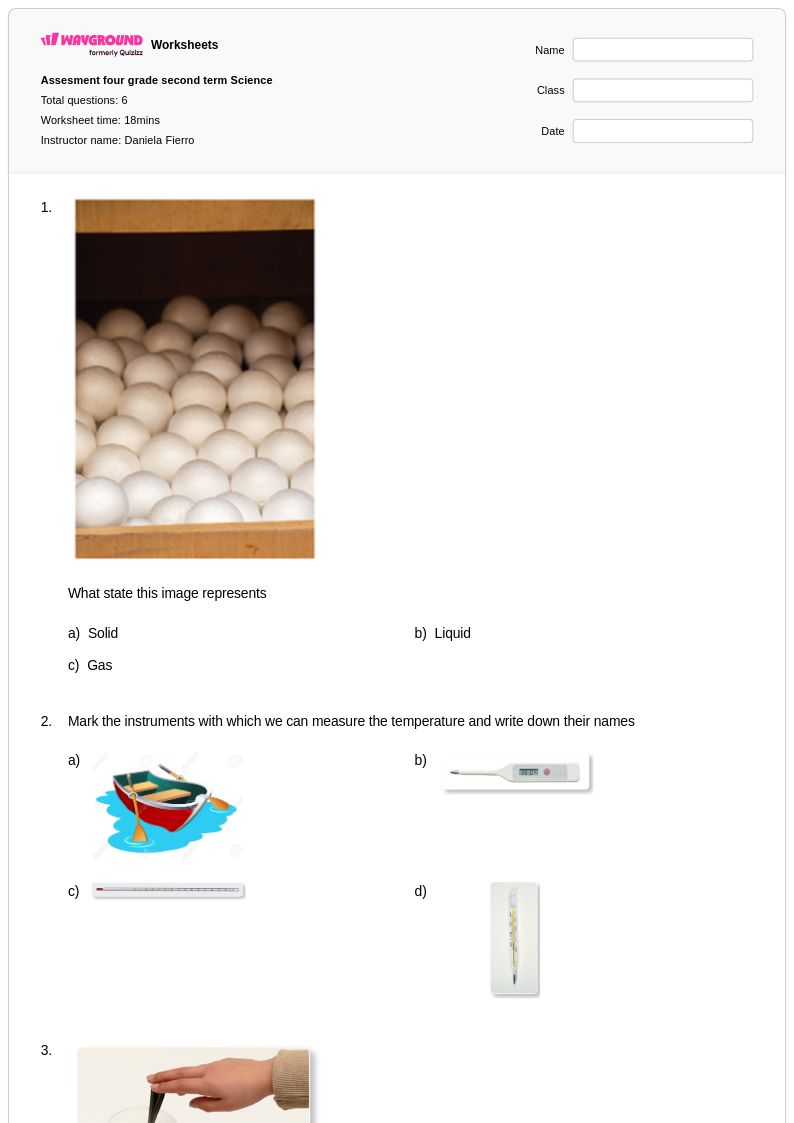
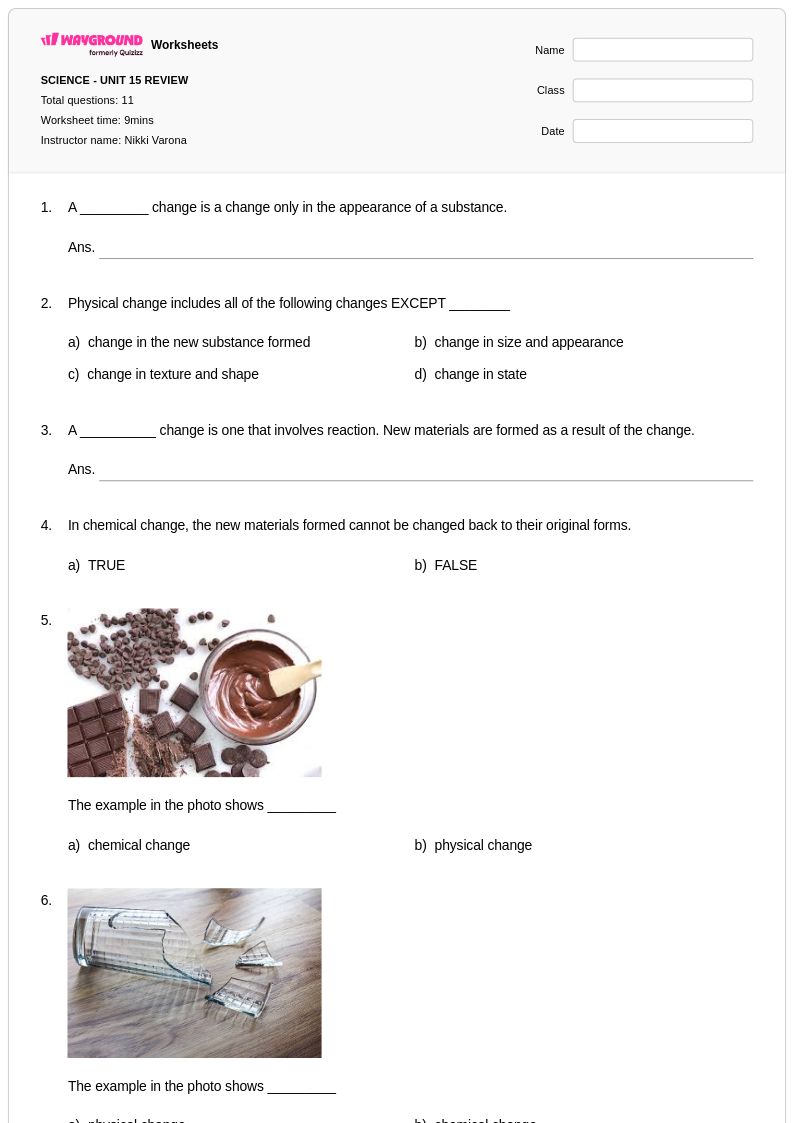
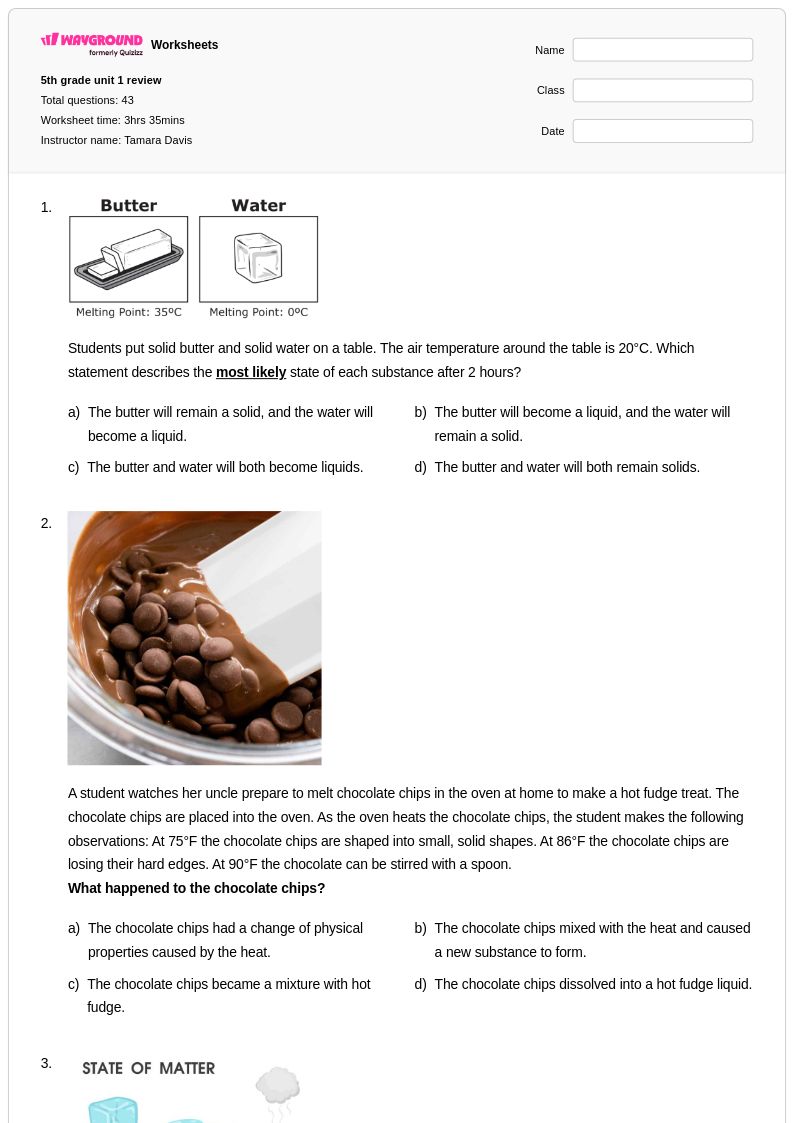
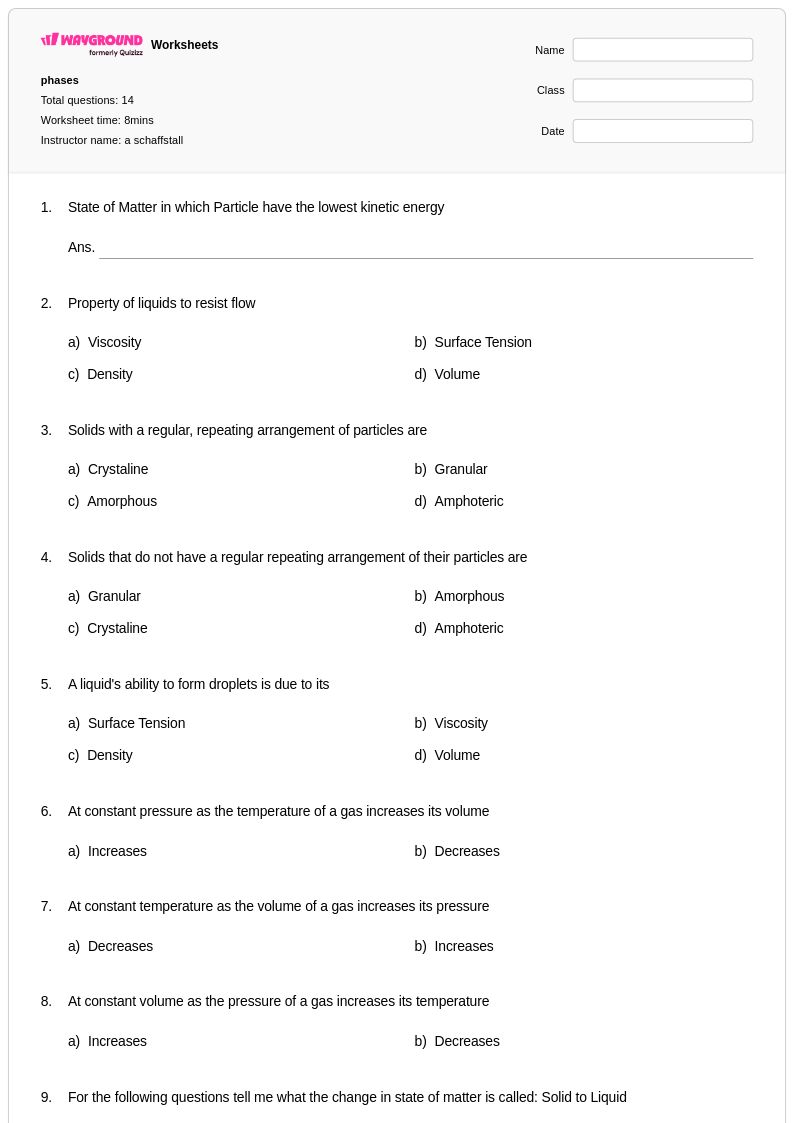
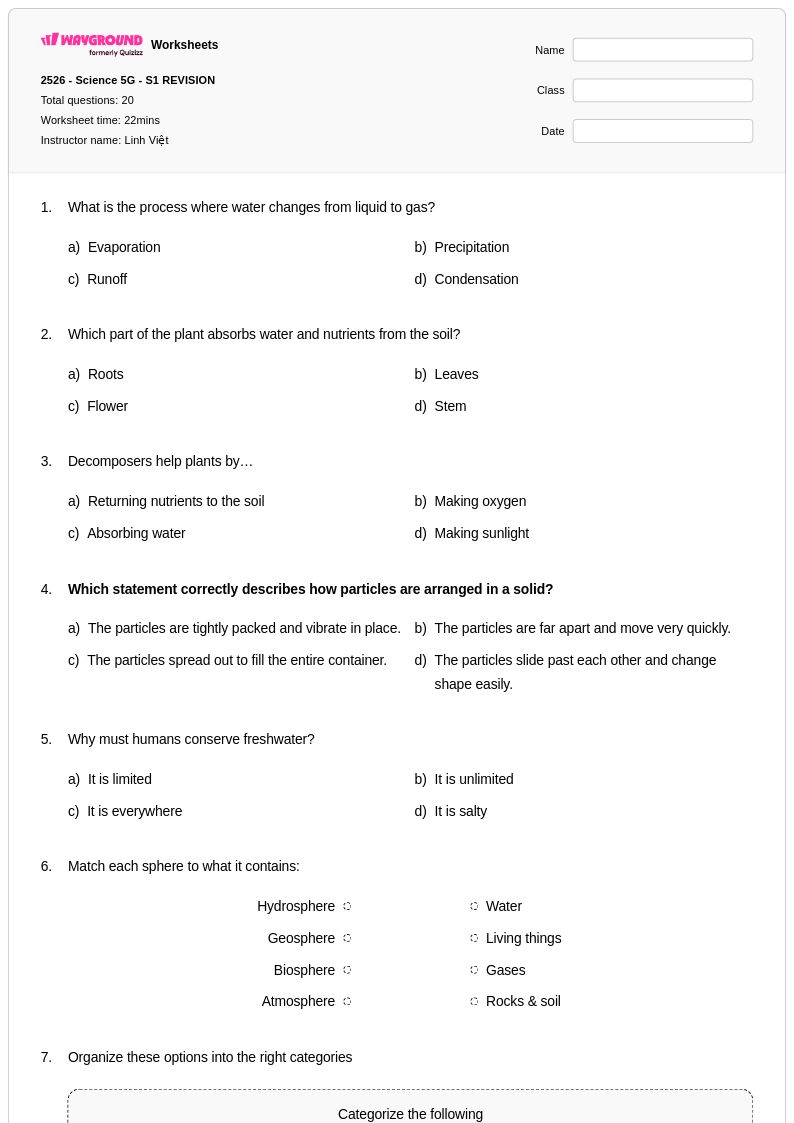
Changes of state worksheets for Class 1 students available through Wayground (formerly Quizizz) introduce young learners to the fundamental concept that matter can transform between solid, liquid, and gas phases. These carefully designed educational materials help first-grade students develop observational skills and scientific thinking as they explore how everyday substances like water, ice, and steam demonstrate different states of matter. The worksheets strengthen foundational science vocabulary, encourage hands-on learning through illustrated examples, and provide structured practice problems that guide students through identifying and describing basic changes of state. Teachers can access comprehensive answer keys and free printable resources that support classroom instruction while making complex scientific concepts accessible to early elementary learners.
Wayground (formerly Quizizz) empowers educators with millions of teacher-created worksheet collections specifically designed for Class 1 changes of state instruction, featuring robust search and filtering capabilities that help teachers locate age-appropriate materials aligned with early elementary science standards. The platform's differentiation tools enable instructors to customize worksheets for diverse learning needs, while flexible formatting options provide both printable pdf versions for traditional classroom use and digital formats for interactive learning experiences. These comprehensive resources support teachers in planning engaging science lessons, providing targeted remediation for students who need additional practice with state changes concepts, offering enrichment activities for advanced learners, and delivering consistent skill practice that reinforces understanding of how matter behaves differently as solids, liquids, and gases in the world around them.
FAQs
How do I teach changes of state to chemistry students?
Start by grounding students in the particle model of matter before introducing phase transitions, so they understand that state changes involve energy transfer rather than chemical reactions. Use heating and cooling curves as a visual anchor — they make the relationship between temperature, energy, and phase transitions concrete and interpretable. Reinforce concepts by connecting each transition (melting, freezing, evaporation, condensation, sublimation, deposition) to real-world examples students can observe, such as ice melting or water evaporating from a puddle.
What exercises help students practice phase transitions and changes of state?
The most effective practice exercises for changes of state include interpreting heating and cooling curves, calculating the energy required for specific phase changes using latent heat values, and predicting how temperature and pressure changes affect state. Labeling phase transition diagrams and matching vocabulary terms to definitions also solidify foundational understanding. Practice problems that require students to explain molecular behavior during transitions develop the analytical thinking needed for higher-level chemistry.
What common mistakes do students make when learning about changes of state?
One of the most persistent misconceptions is that temperature continues to rise during a phase change — students often do not grasp that energy input goes toward breaking intermolecular forces rather than increasing kinetic energy, which is why temperature plateaus on a heating curve. Students also frequently confuse evaporation with boiling, not recognizing that evaporation occurs at the surface at any temperature. Conflating physical changes with chemical changes is another common error that needs direct instructional correction.
How do I differentiate changes of state instruction for students at different levels?
For struggling students, focus on the six named transitions with visual diagrams and concrete analogies before introducing energy calculations. Advanced learners can be extended into thermodynamics applications, such as calculating enthalpy of fusion or vaporization, and exploring how industrial processes like distillation or freeze-drying rely on controlled phase transitions. On Wayground, teachers can apply accommodations such as read aloud, reduced answer choices, and extended time to individual students, allowing the same worksheet to serve a range of learners without disrupting the class.
How can I use Wayground's changes of state worksheets in my classroom?
Wayground's changes of state worksheets are available as free printable PDFs, making them straightforward to distribute in a traditional classroom setting, and in digital formats for technology-integrated or remote learning environments. Teachers can also host worksheets as interactive quizzes directly on Wayground, enabling real-time student responses and immediate feedback. The included answer keys make it easy to assess student understanding and identify gaps in knowledge around phase transitions.
How do I help students read and interpret a heating or cooling curve?
Teach students to identify the flat regions of the curve first — these plateaus represent phase changes where energy is absorbed or released without a temperature change, corresponding to melting, freezing, boiling, or condensation. Once students can locate these plateaus, guide them to read the sloped sections as periods of temperature increase or decrease within a single state. Practice problems that require students to label each section of the curve with the correct phase and process are highly effective for building this skill.