Free Printable Character Description Worksheets for Class 4
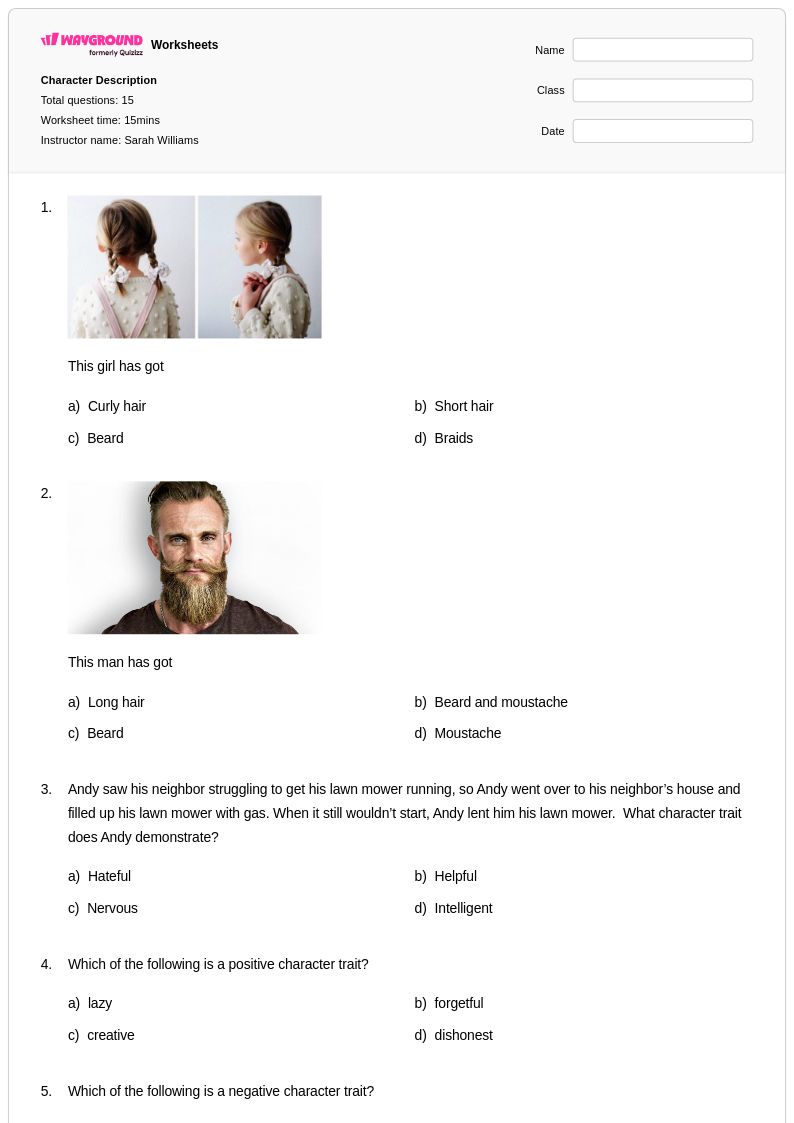
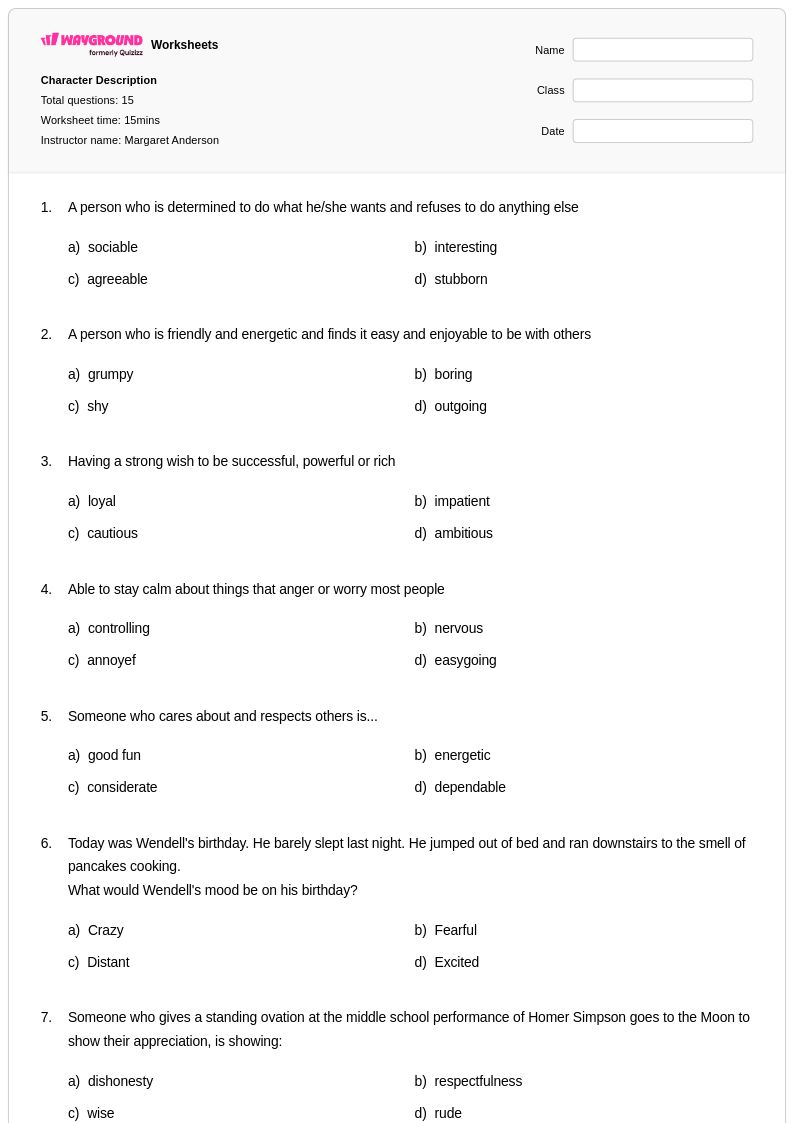
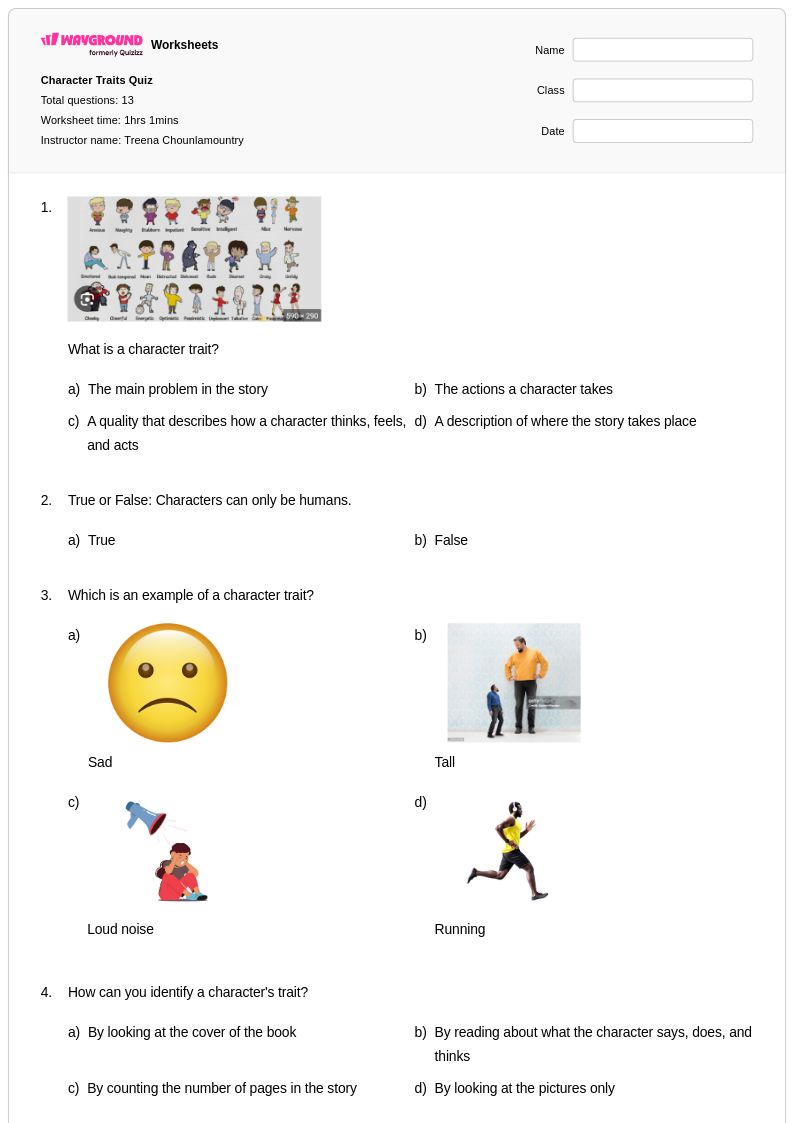
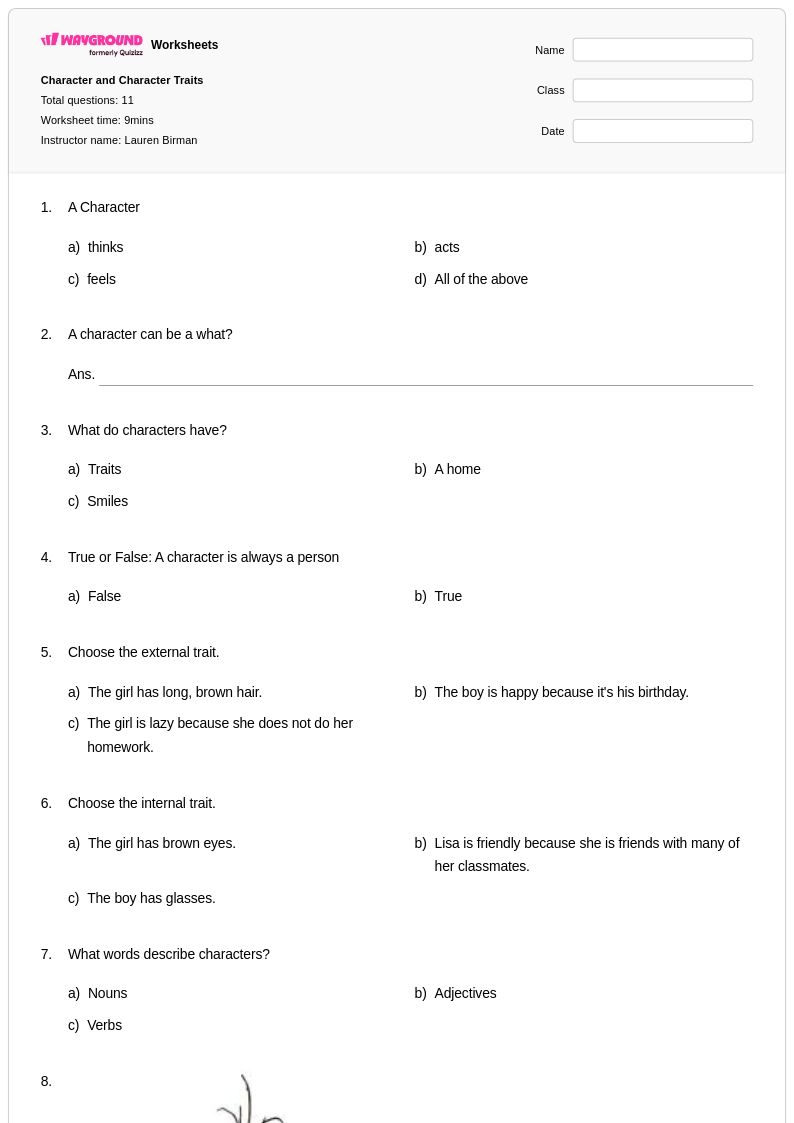
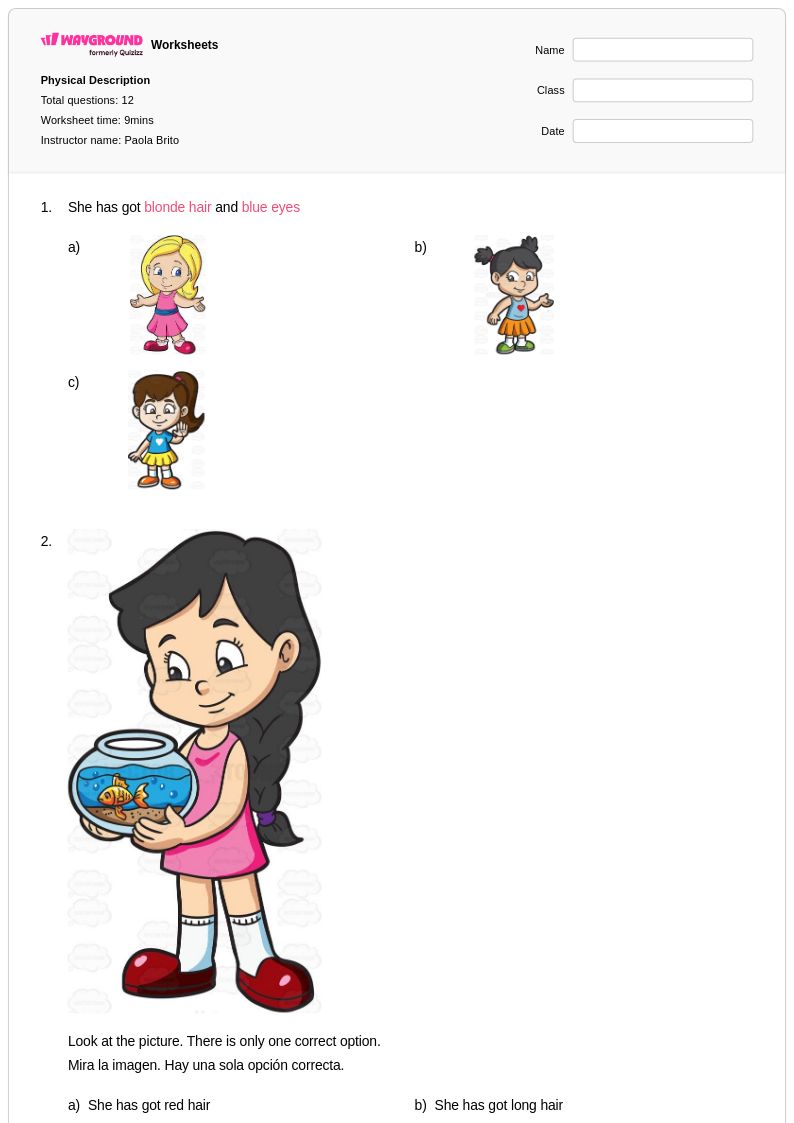
Class 4 character description worksheets help students develop storytelling skills through engaging printables that teach how to create vivid, detailed characters using descriptive language, complete with practice problems and answer keys.
Explore printable Character Description worksheets for Class 4
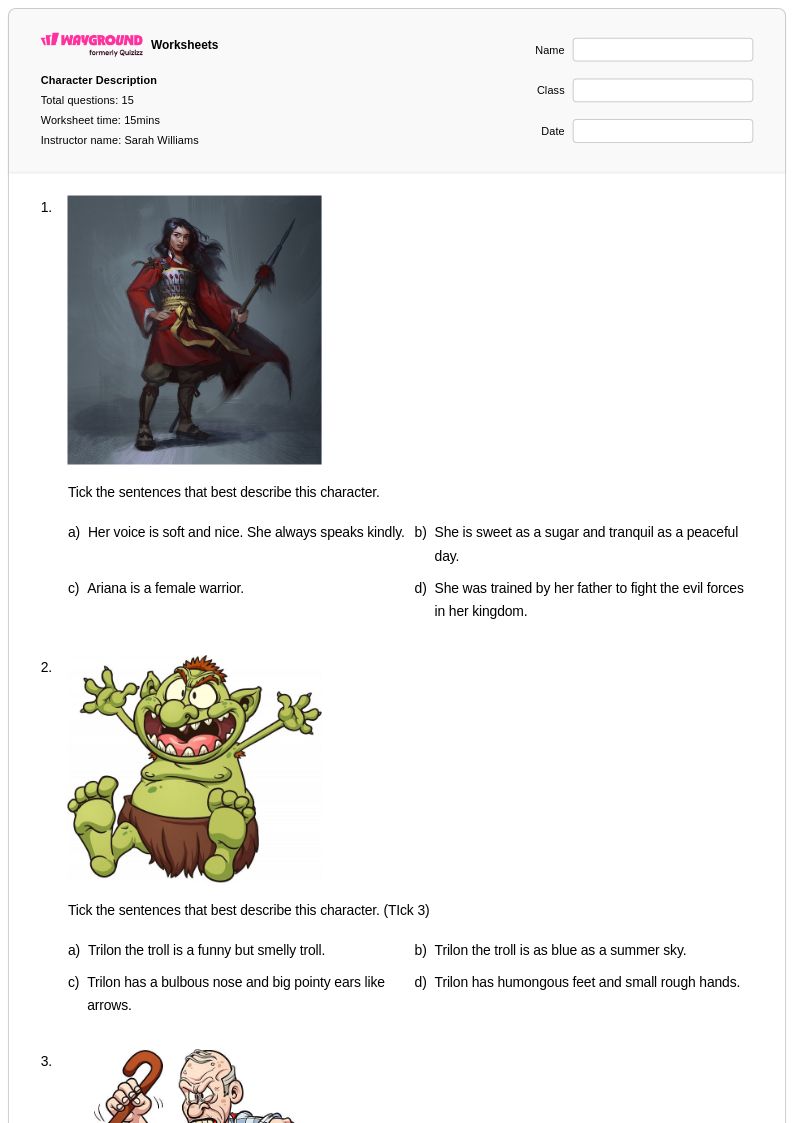
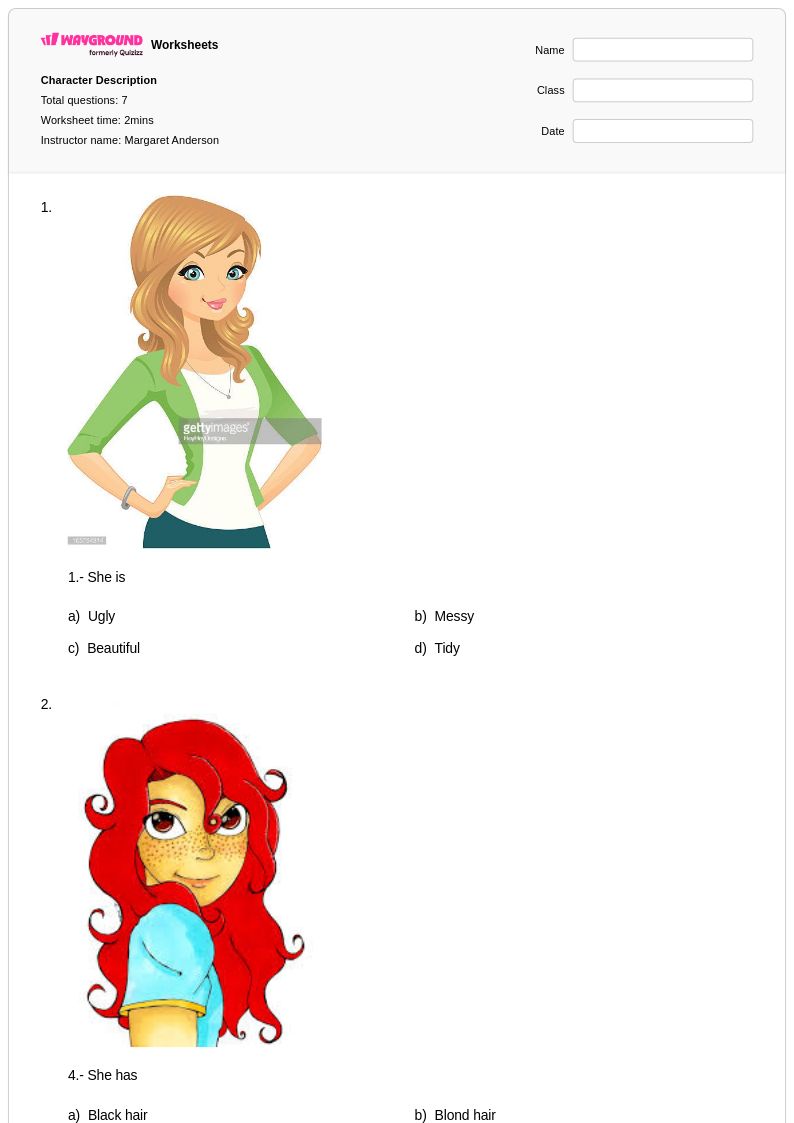
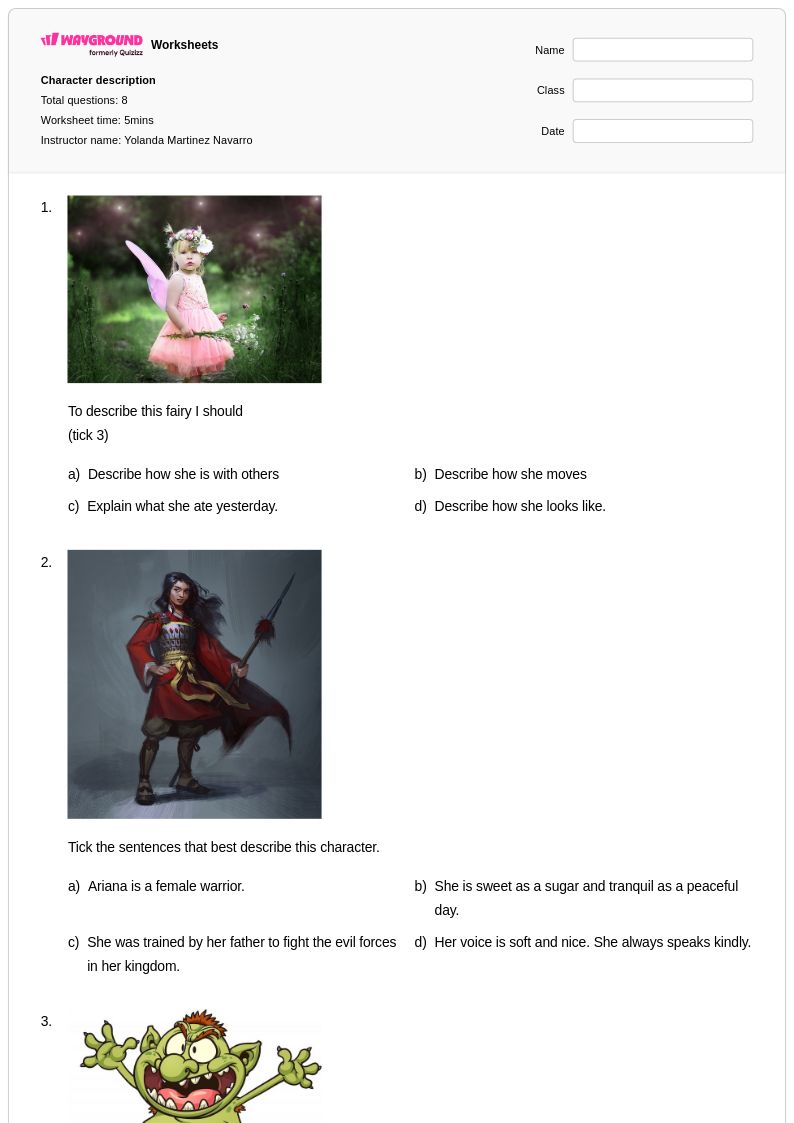
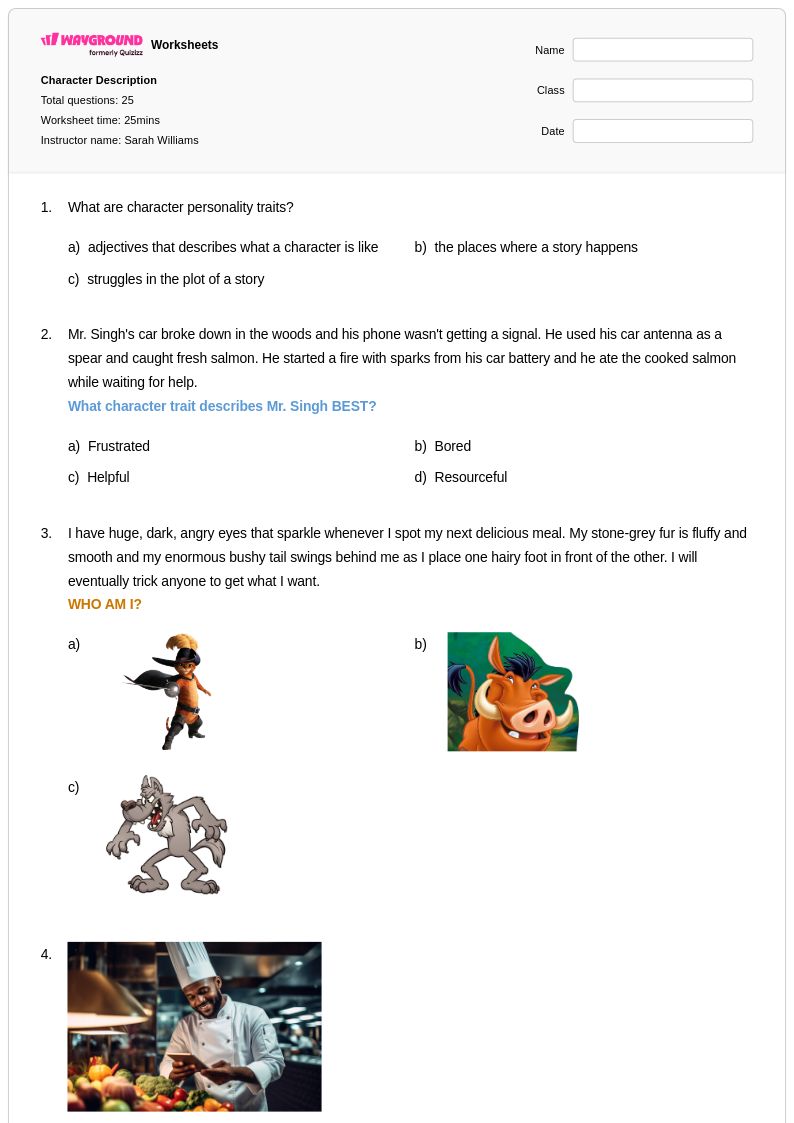
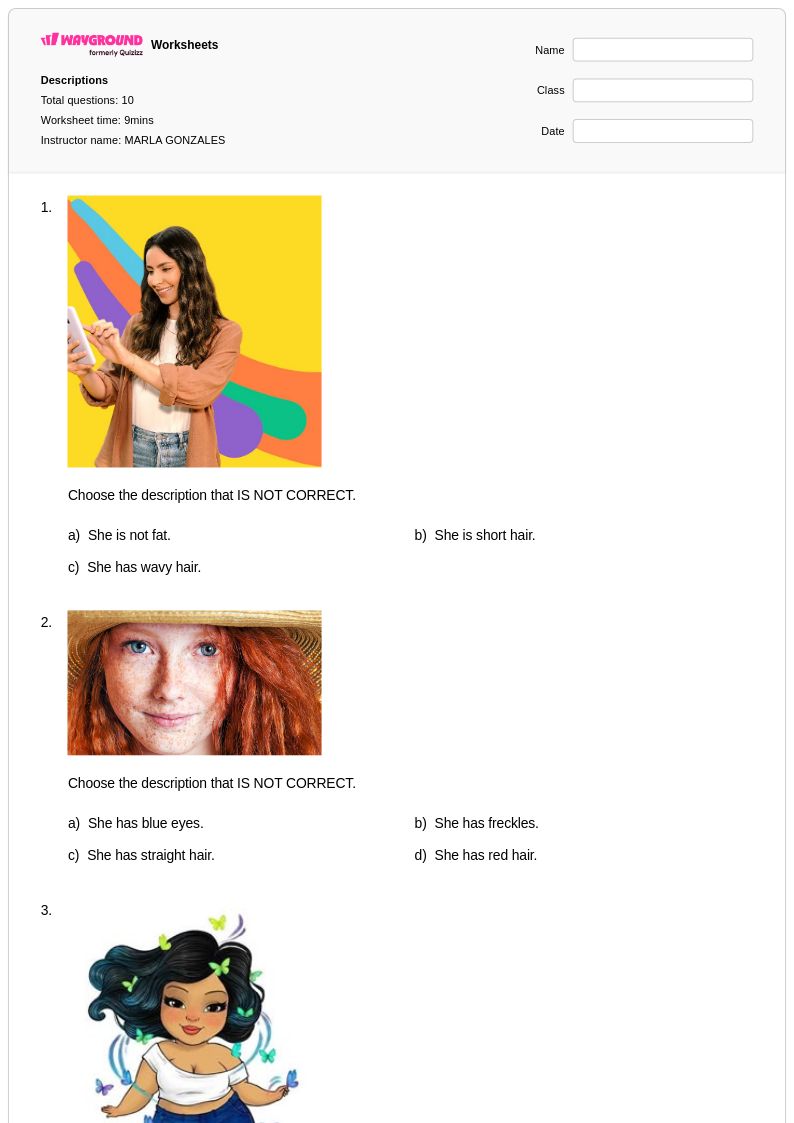
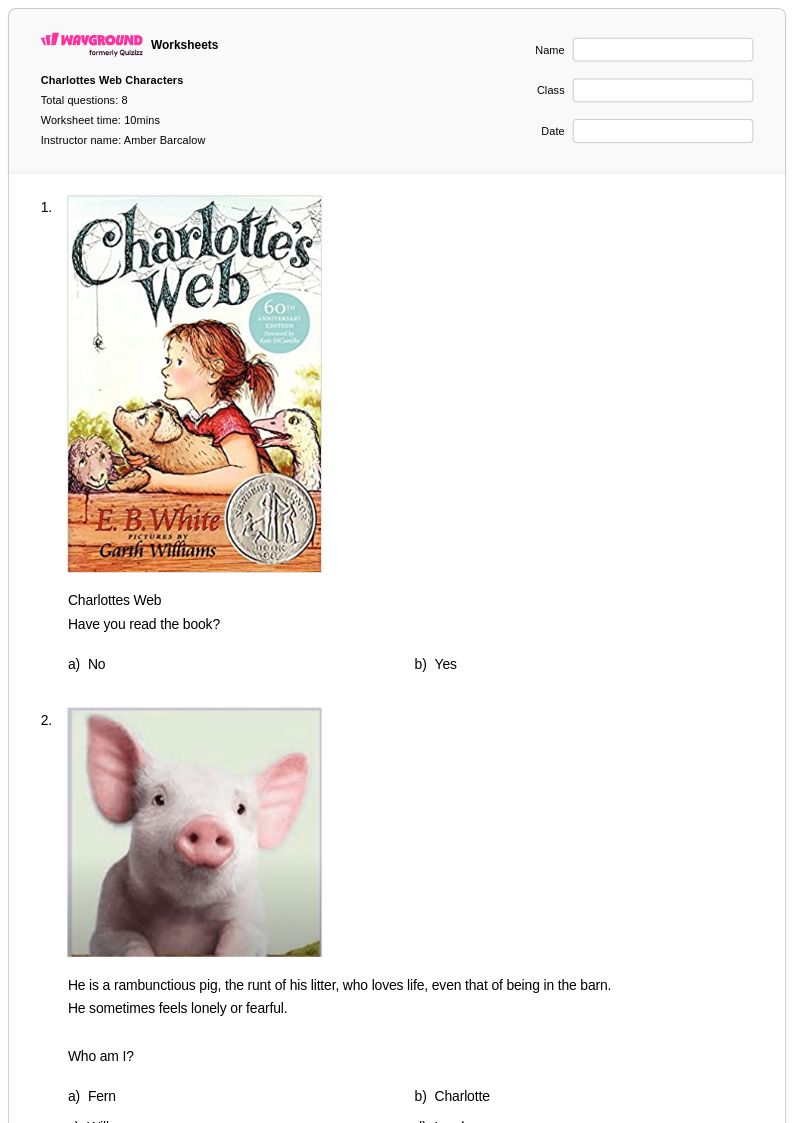
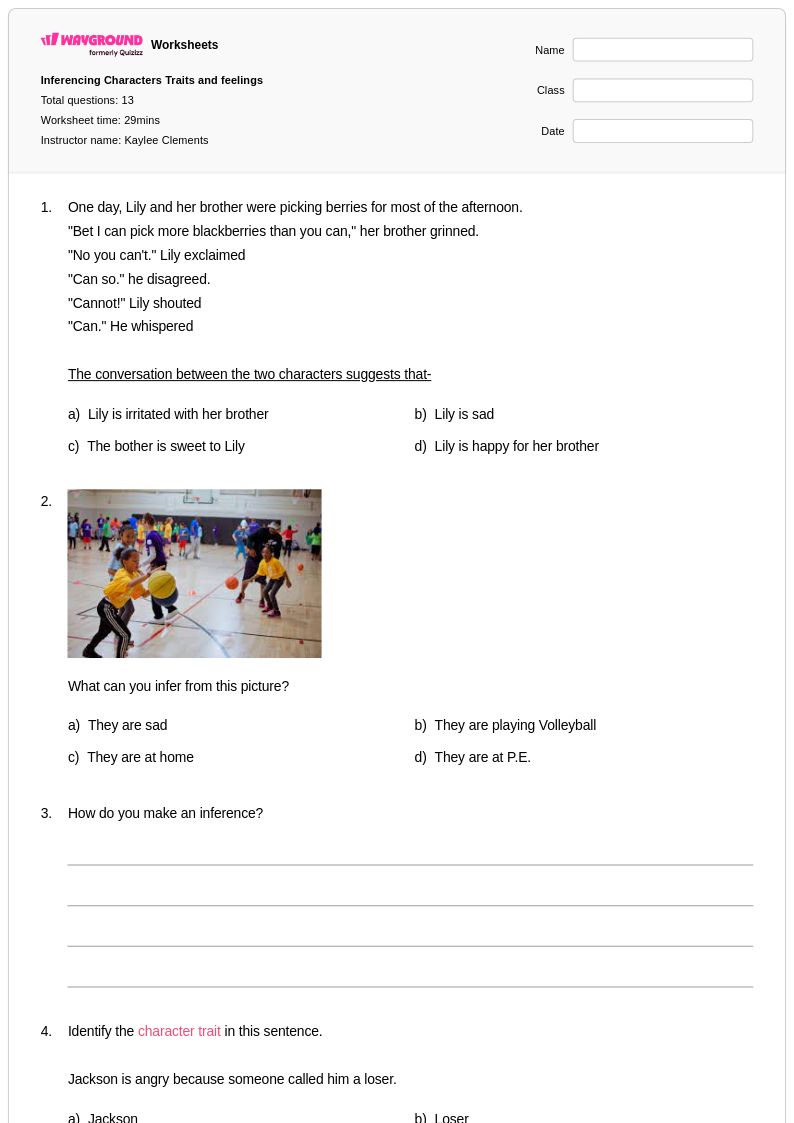
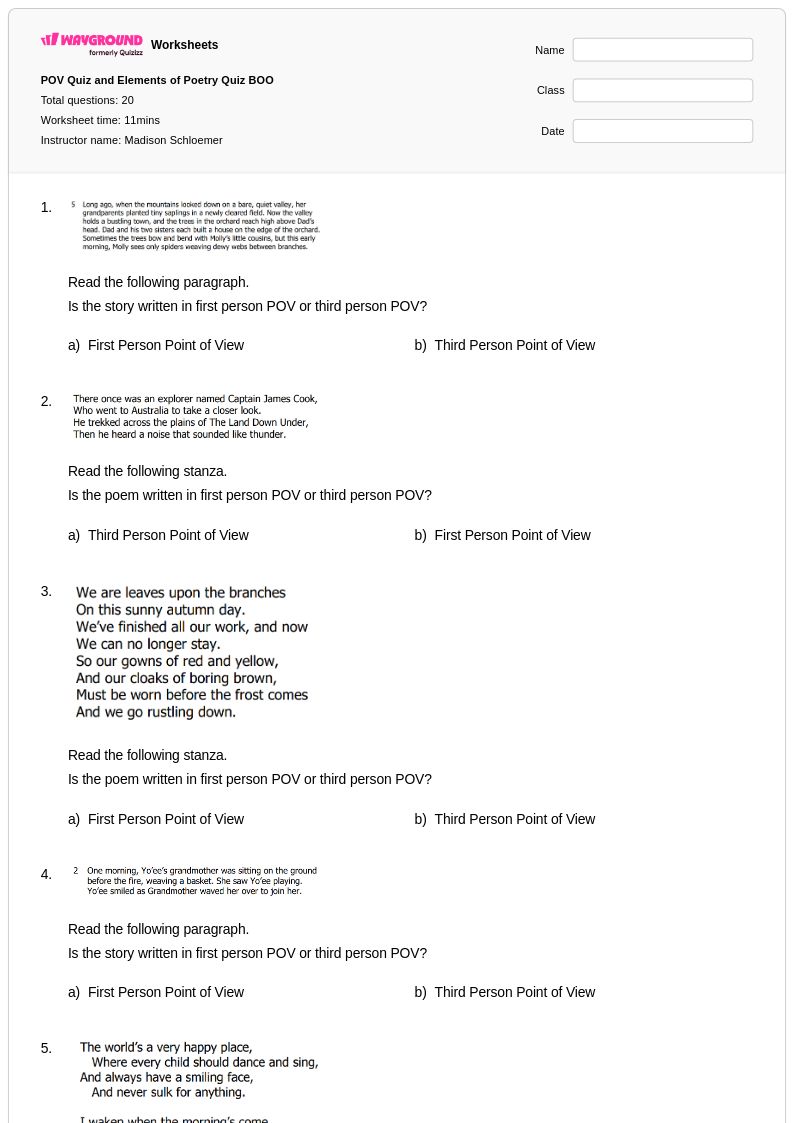
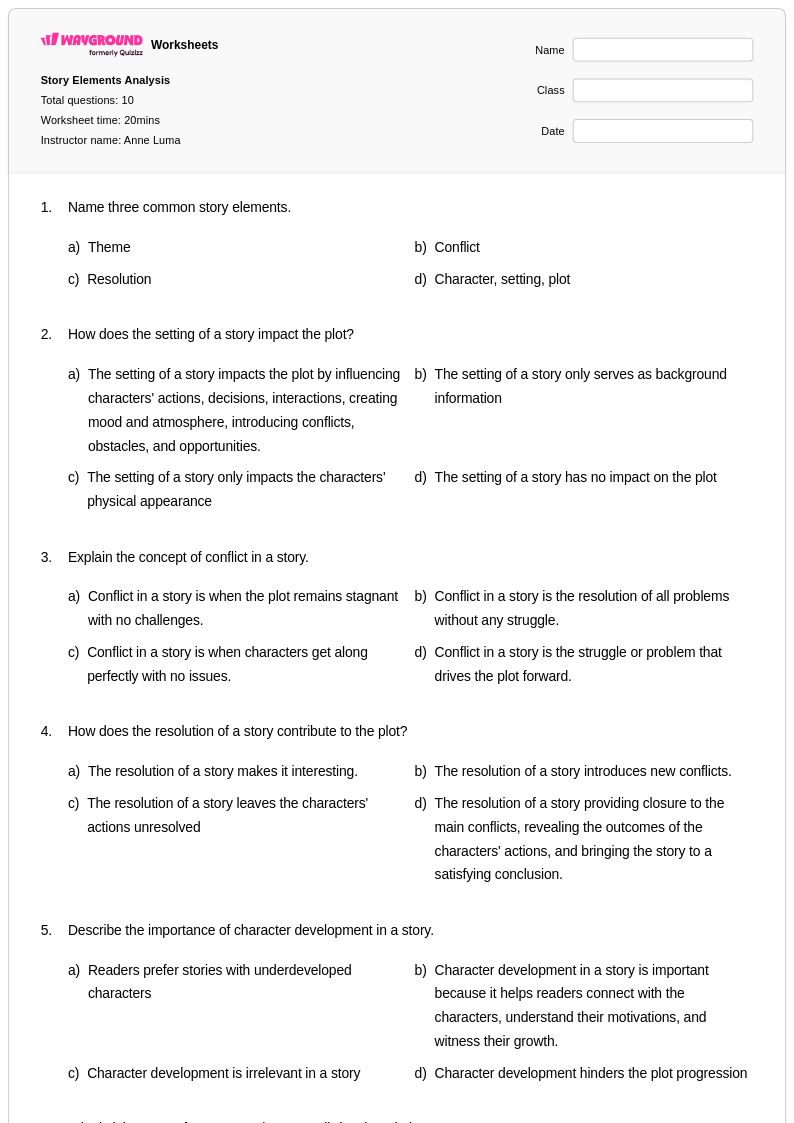
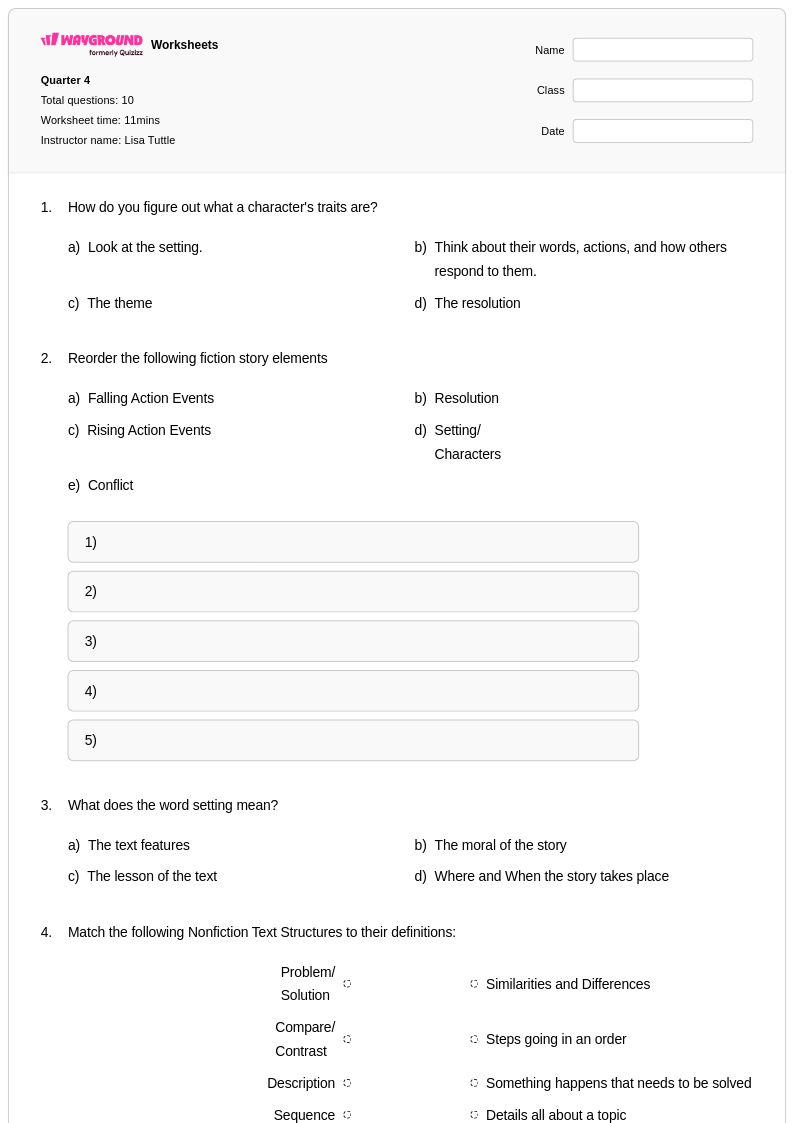
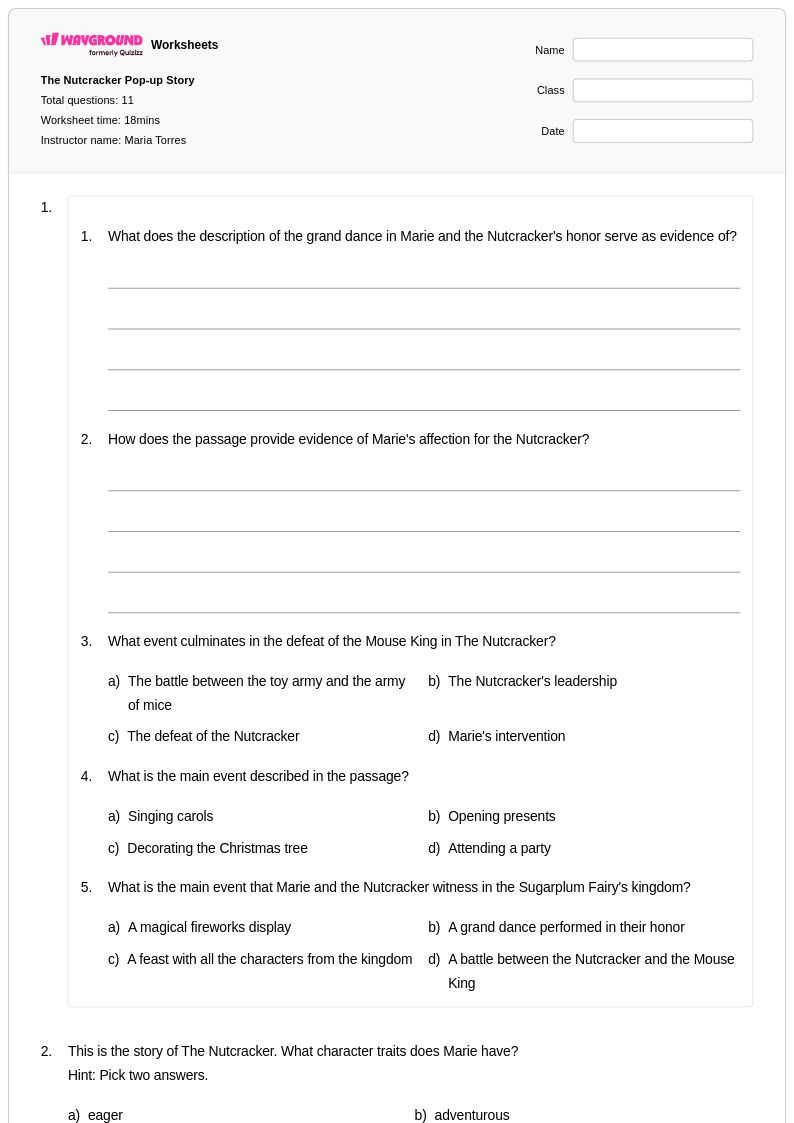
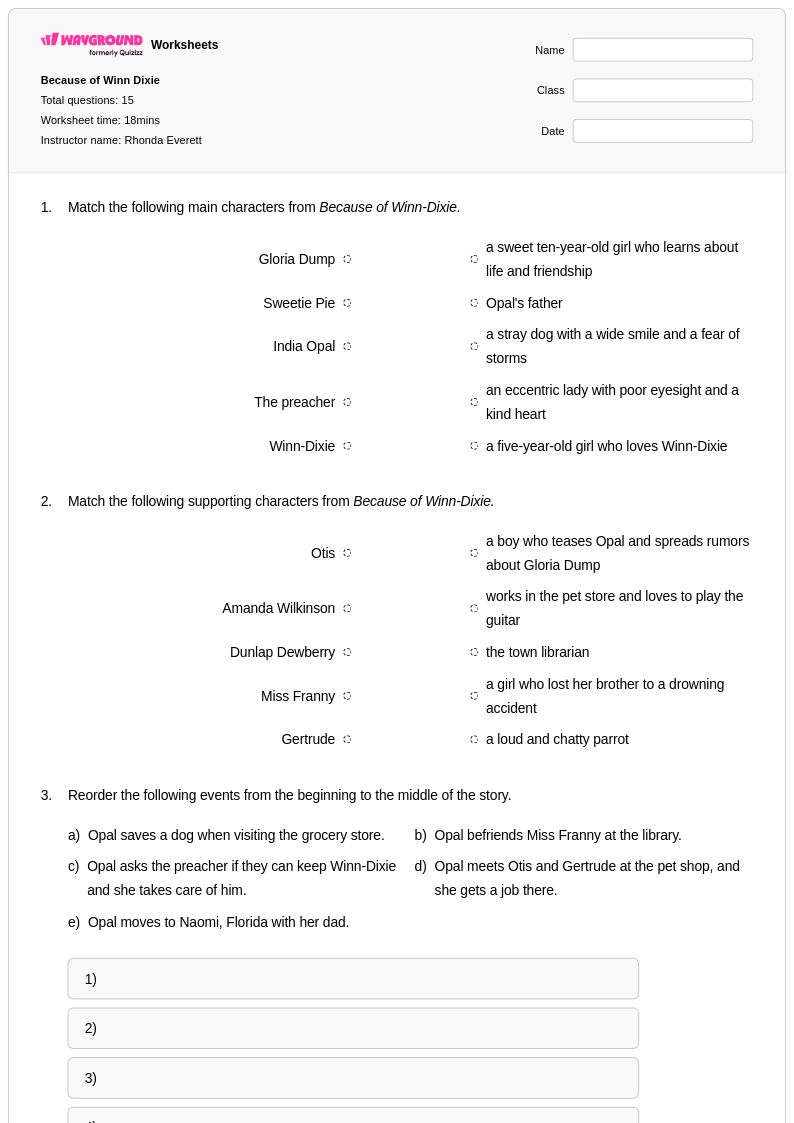
Character description worksheets for Class 4 students available through Wayground provide essential practice in developing rich, detailed characters for creative writing projects. These comprehensive printables focus on helping fourth-grade writers move beyond basic physical descriptions to explore character traits, motivations, emotions, and relationships that bring fictional personas to life. Students work through structured practice problems that guide them in creating multi-dimensional characters using vivid adjectives, sensory details, and specific examples that show rather than tell. Each worksheet collection includes answer keys and exemplar responses that demonstrate effective character development techniques, while free pdf formats ensure accessibility for both classroom instruction and independent practice at home.
Wayground's extensive library supports teachers with millions of educator-created character description resources specifically designed for Class 4 genre writing instruction. The platform's robust search and filtering capabilities allow teachers to quickly locate worksheets aligned with specific writing standards and differentiate instruction based on individual student needs. Customization tools enable educators to modify existing printables or create personalized practice materials, while both digital and pdf formats provide flexibility for various learning environments. These comprehensive worksheet collections facilitate targeted skill practice, support remediation for struggling writers, offer enrichment opportunities for advanced students, and streamline lesson planning by providing ready-to-use materials that systematically build character development expertise throughout the school year.
FAQs
How do I teach character description in a creative writing class?
Effective character description instruction moves students beyond listing physical traits toward revealing character through specific, purposeful detail. Start by analyzing how published authors use appearance, behavior, and dialogue to signal personality and motivation. Then scaffold students through writing their own descriptions, beginning with physical traits, then layering in backstory, internal conflict, and voice. Connecting character choices to narrative function — why this character, in this genre, with these traits — builds the analytical awareness students need to write with intention.
What exercises help students practice writing character descriptions?
Strong practice exercises ask students to describe the same character across different contexts — a mystery, a fantasy, a realistic fiction story — to show how genre shapes character presentation. Other effective tasks include rewriting a flat character description to add depth, inferring personality from physical details, or writing a character's internal monologue based on a brief external description. These approaches push students from surface-level observation to nuanced character construction, which is the core skill in character description writing.
What mistakes do students commonly make when writing character descriptions?
The most common error is listing traits rather than dramatizing them — writing 'she was shy' instead of showing the character hesitating at a doorway or speaking in half-finished sentences. Students also tend to front-load physical description without connecting it to personality or narrative purpose, resulting in characters that feel decorative rather than functional. A related issue is inconsistency: students introduce a trait early and then forget it as the writing progresses. Teaching students to treat every descriptive choice as a narrative decision helps correct all three of these patterns.
How do I differentiate character description instruction for students at different skill levels?
For students who struggle, reduce the scope by focusing on one dimension of character at a time — physical appearance first, then personality, then motivation — before asking them to synthesize. More advanced students benefit from genre-switching tasks that require them to adapt the same character to different conventions, or from analyzing how literary authors subvert expected character tropes. On Wayground, teachers can apply accommodations such as read aloud support, reduced answer choices, and extended time to individual students without disrupting the rest of the class, making differentiation manageable even in mixed-ability writing classrooms.
How do I use Wayground's character description worksheets in my classroom?
Wayground's character description worksheets are available as printable PDFs for traditional classroom use and in digital formats for technology-integrated environments, so they work whether students are working on paper or on a device. Teachers can assign them as guided practice during a writing unit, use them for targeted remediation with students who struggle with character depth, or host them as a quiz directly on Wayground for a more interactive experience. Each worksheet includes an answer key, giving teachers a clear reference point for feedback and making independent or small-group work easier to manage.
How do I help students write character descriptions that serve the story rather than just describe a person?
The key shift is helping students understand that character description is always in service of the narrative — every detail should do work. Teach students to ask, for each descriptive choice: what does this tell the reader about who this character is, what they want, or what will happen to them? A character's chipped nail polish or precise handwriting can reveal backstory, tension, or theme. This reframe turns description from a static portrait into a dynamic storytelling tool, which is the difference between competent and compelling character writing.