Free Printable Chemical Vs Physical Properties Worksheets for Class 3
Free Class 3 chemical vs physical properties worksheets and printables help students distinguish between changes that alter matter's composition versus appearance through engaging practice problems and comprehensive answer keys.
Explore printable Chemical Vs Physical Properties worksheets for Class 3
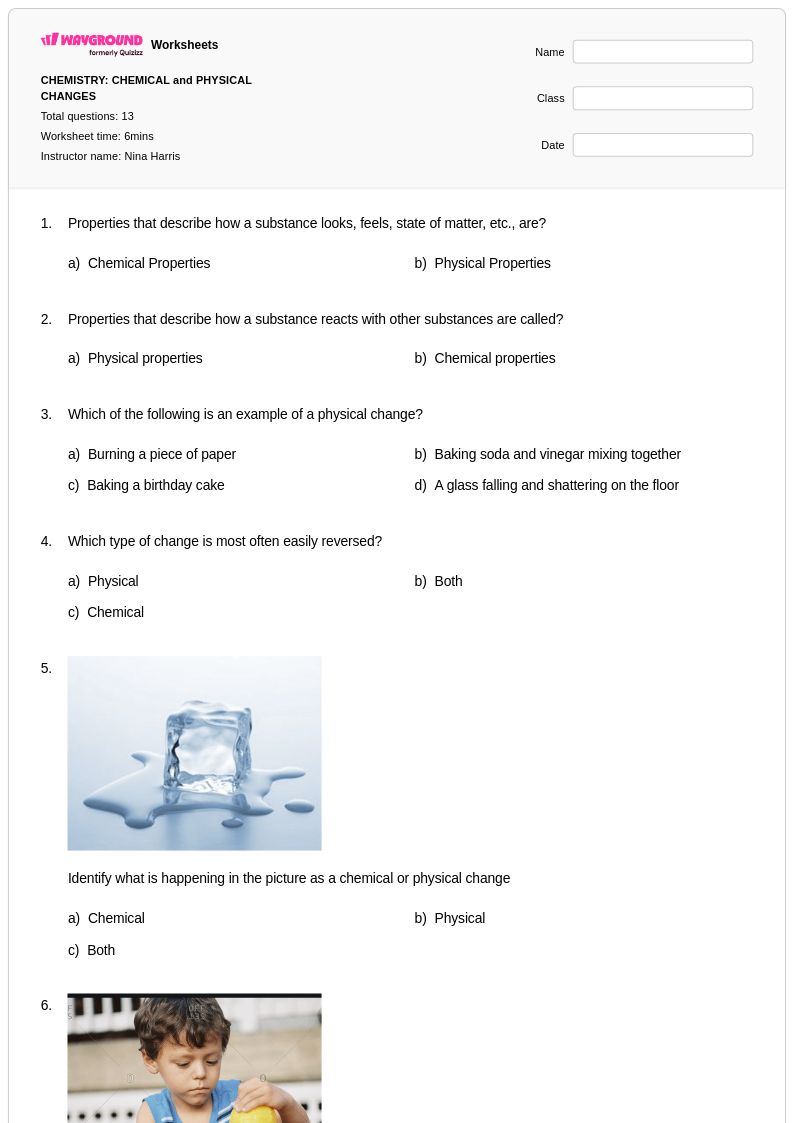
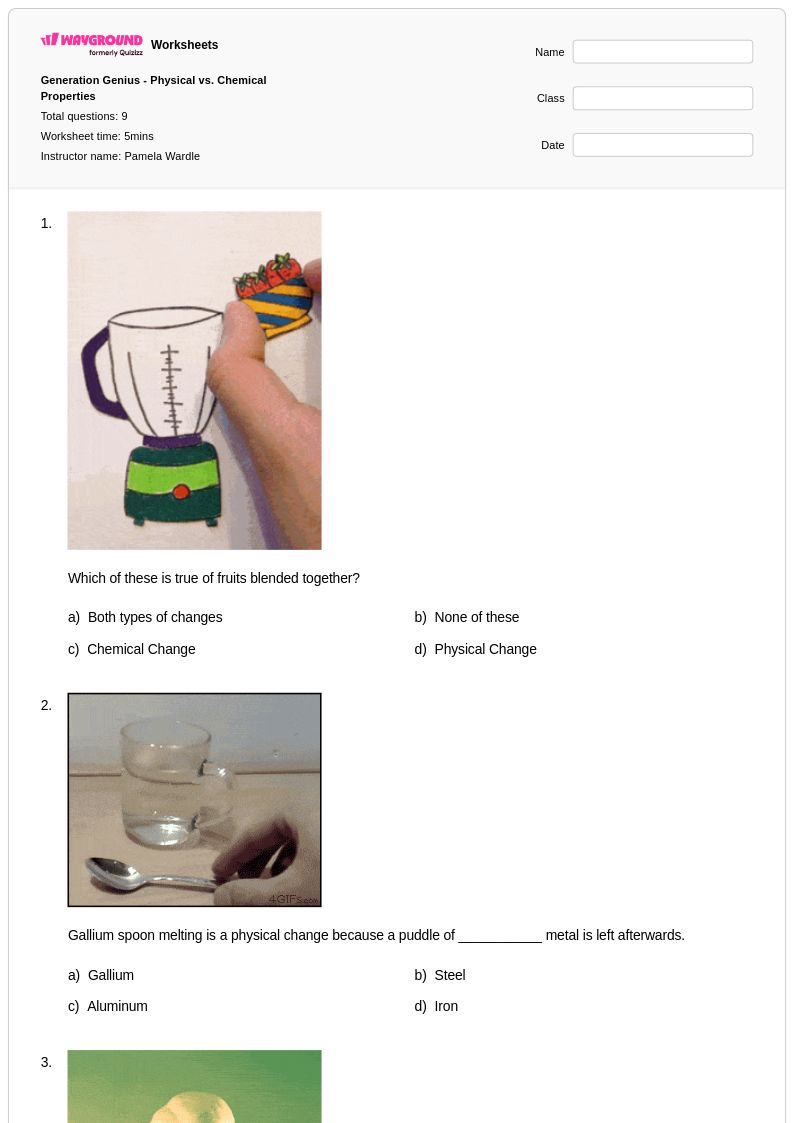
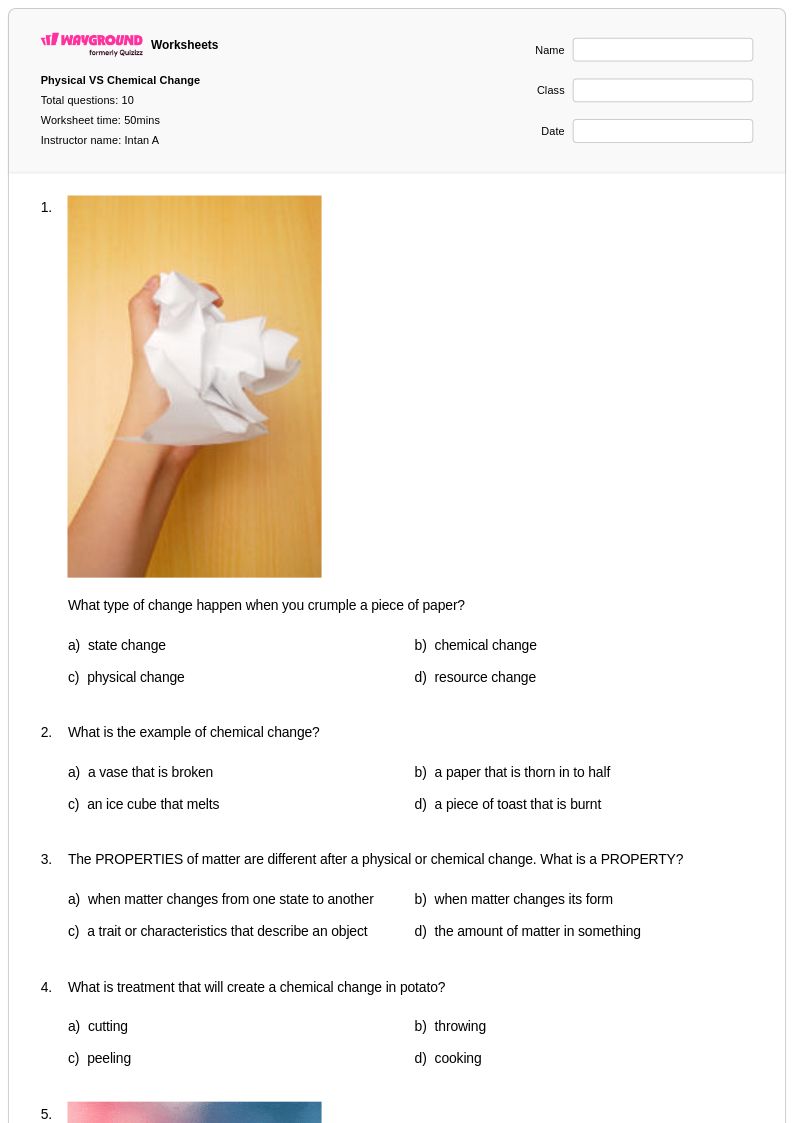
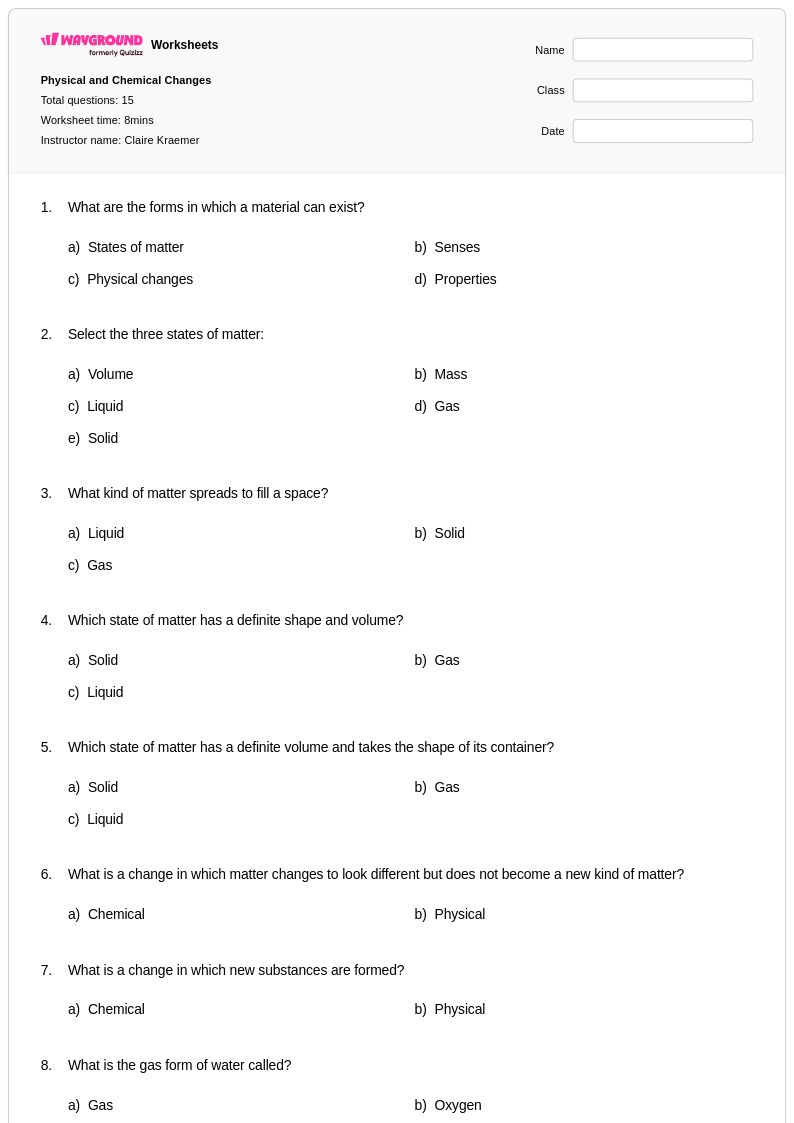
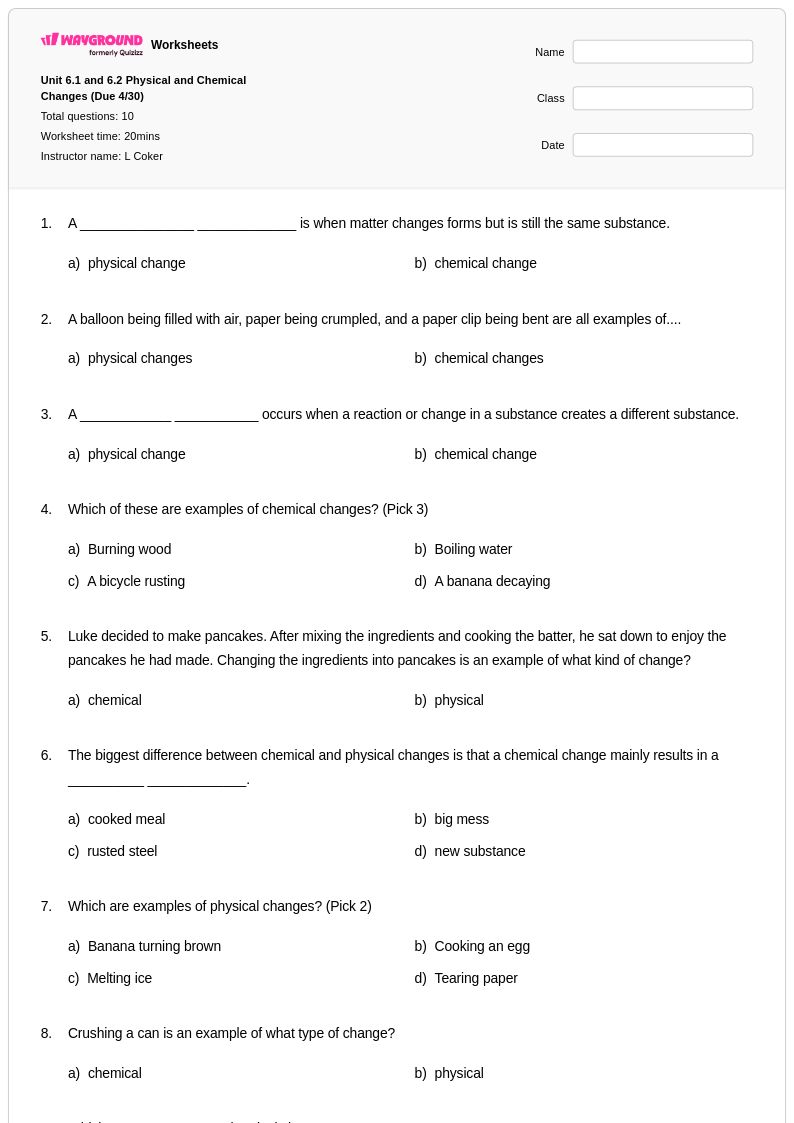
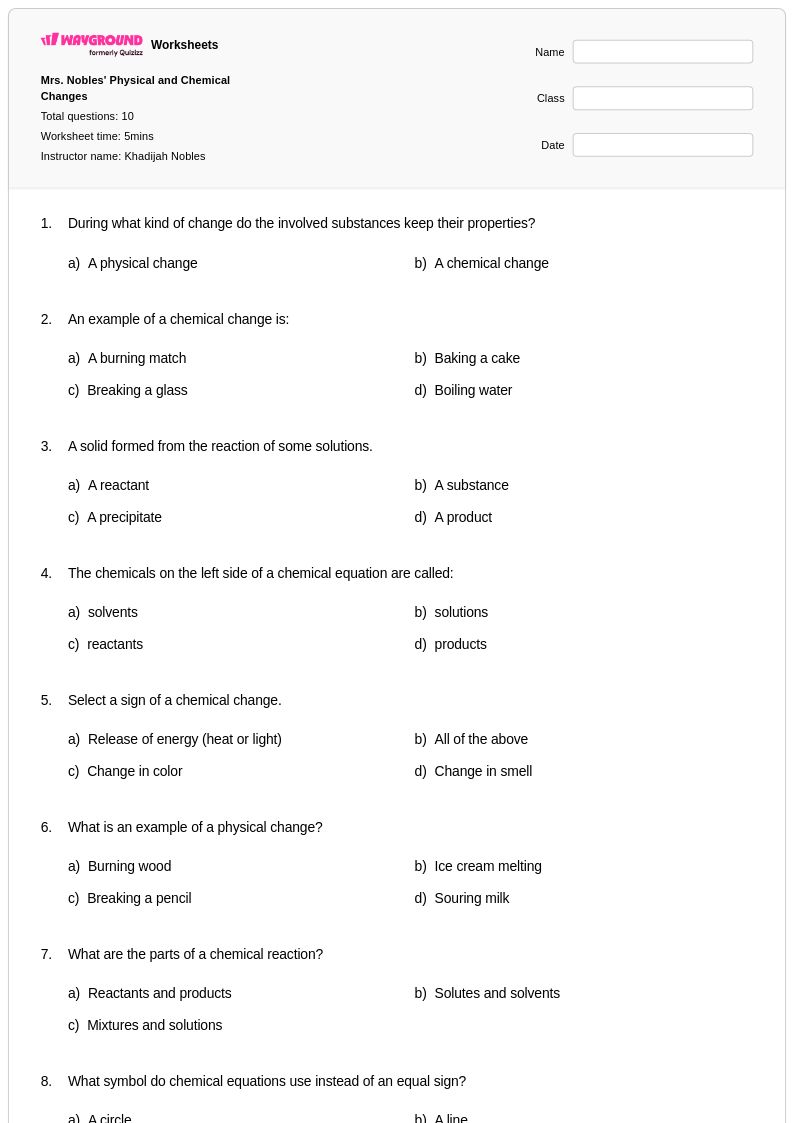
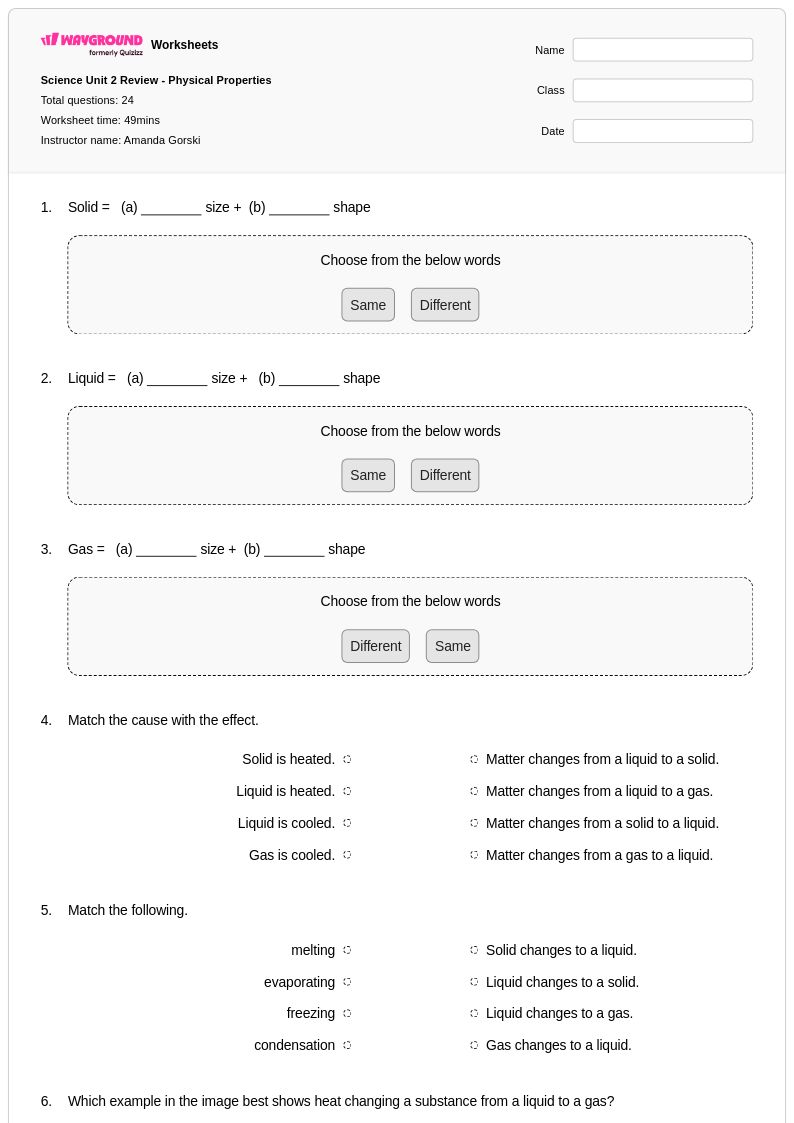
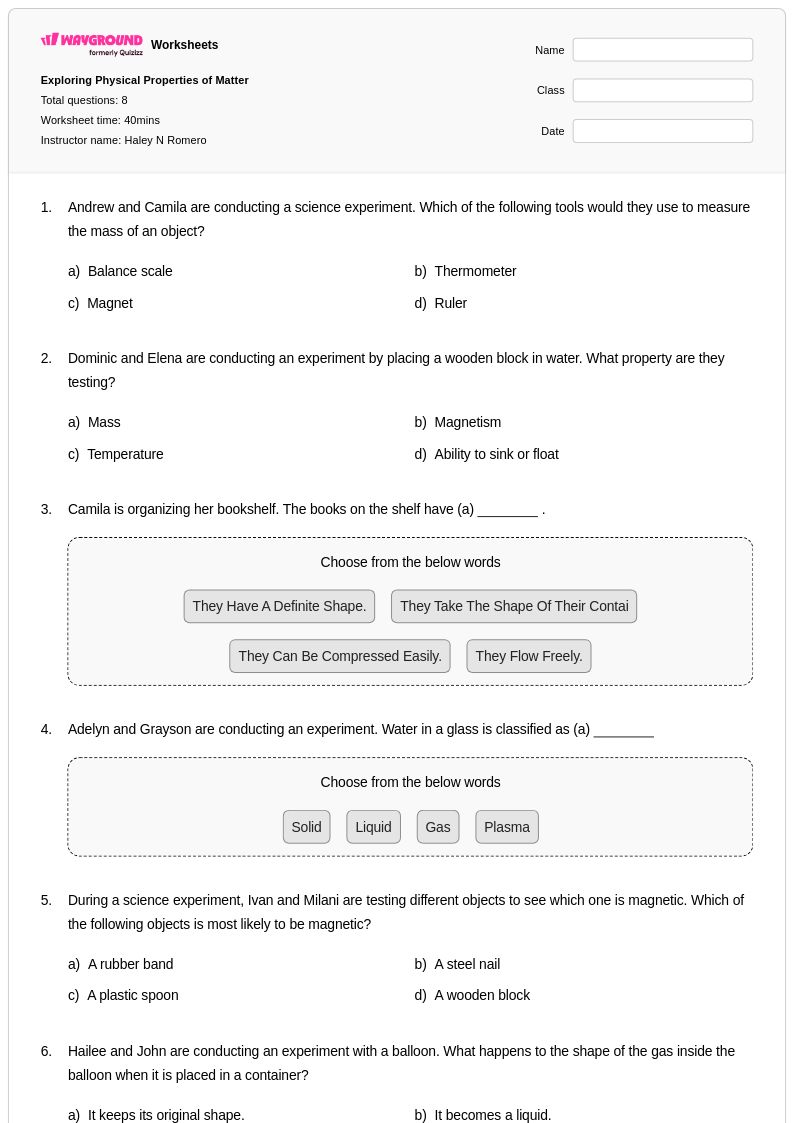
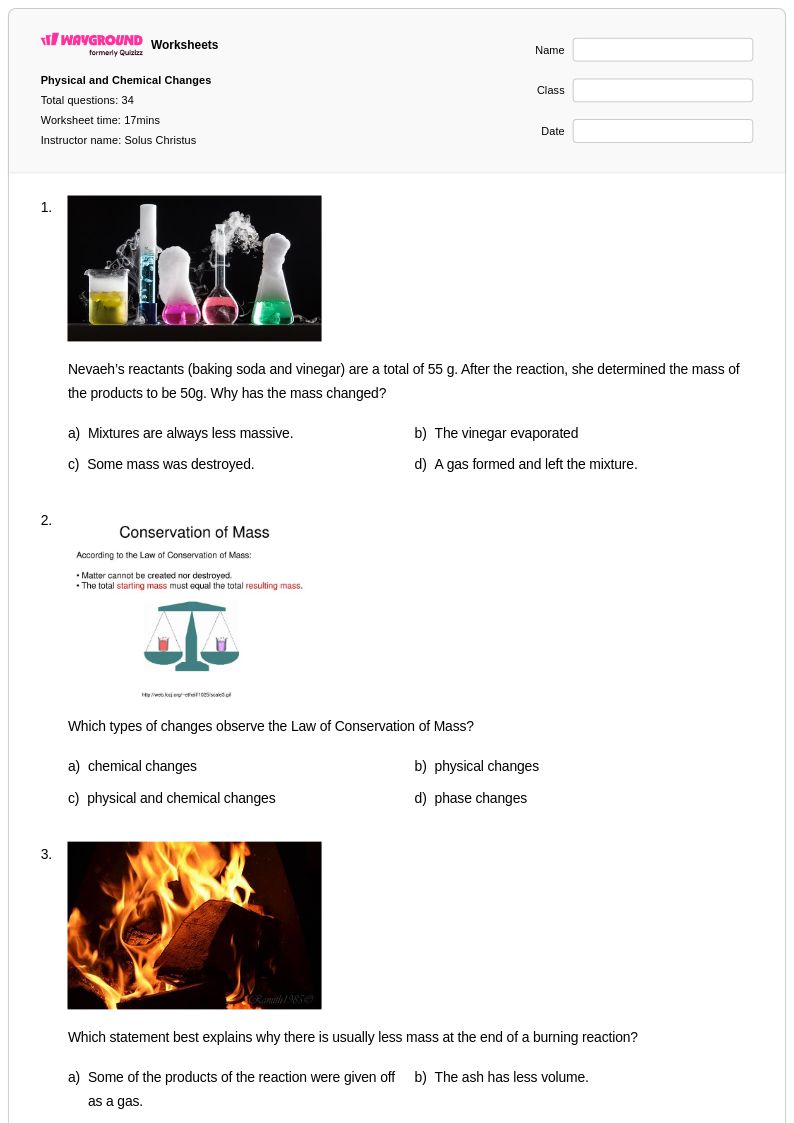
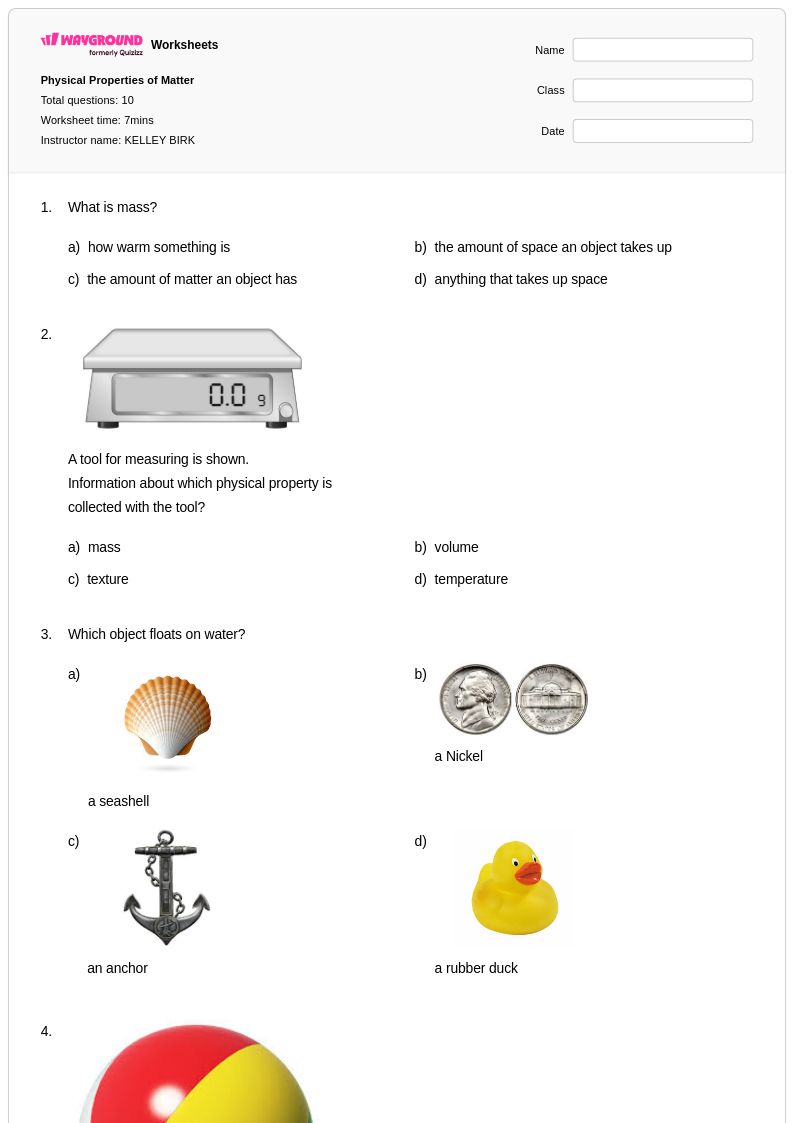
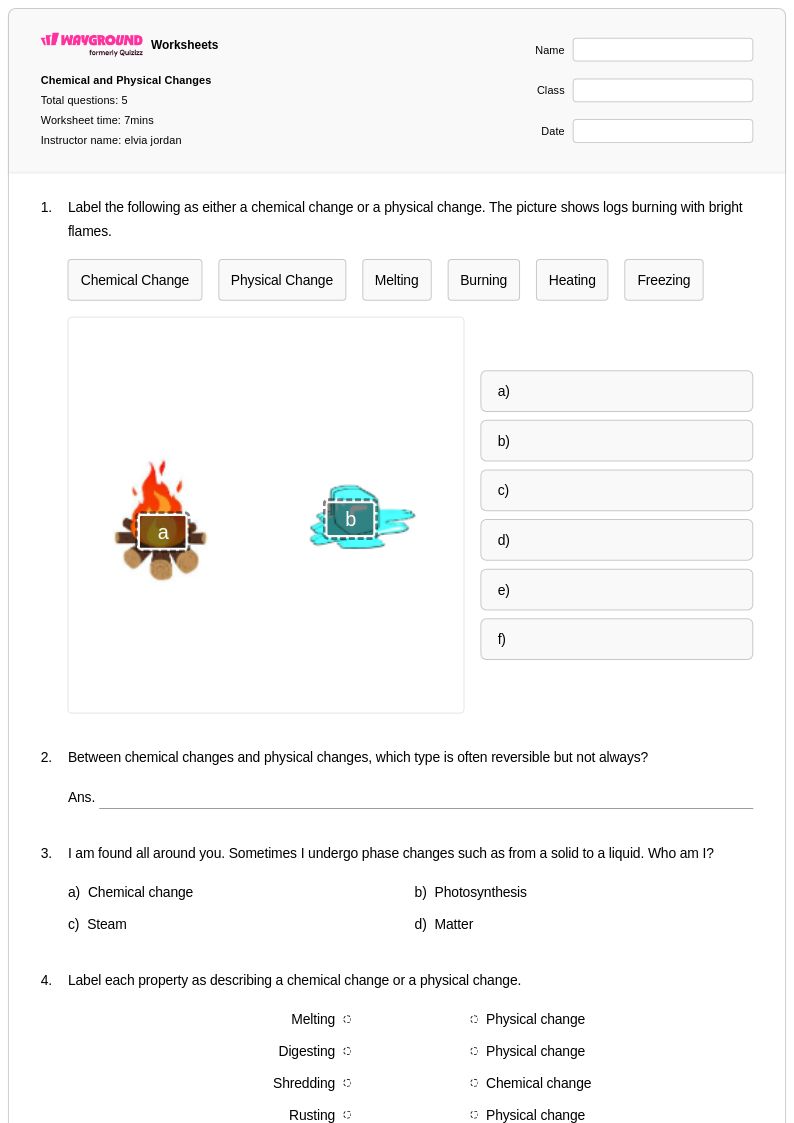
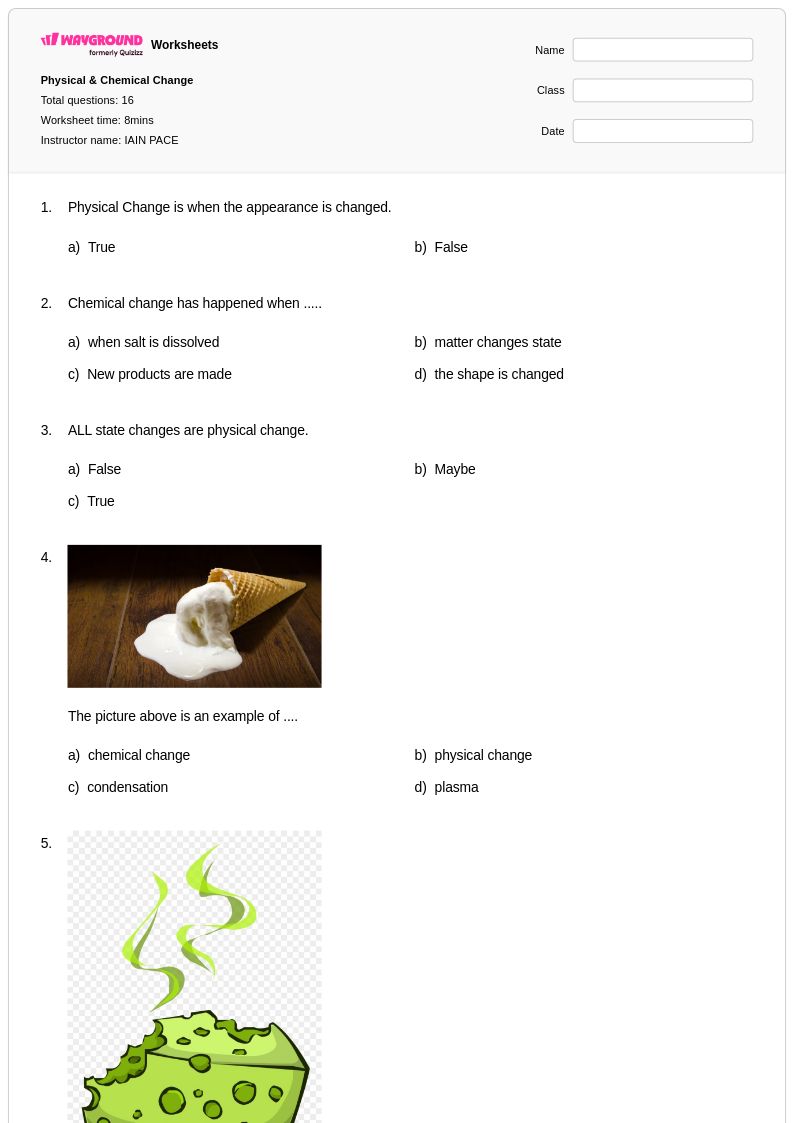
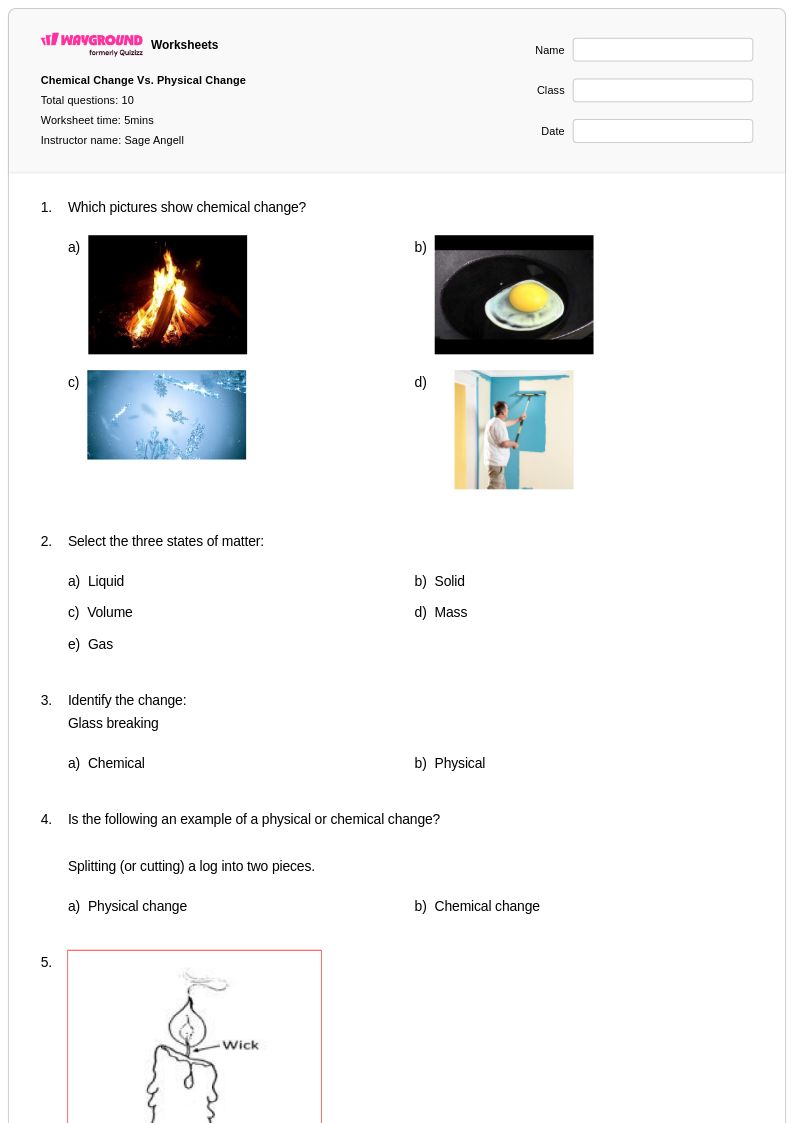
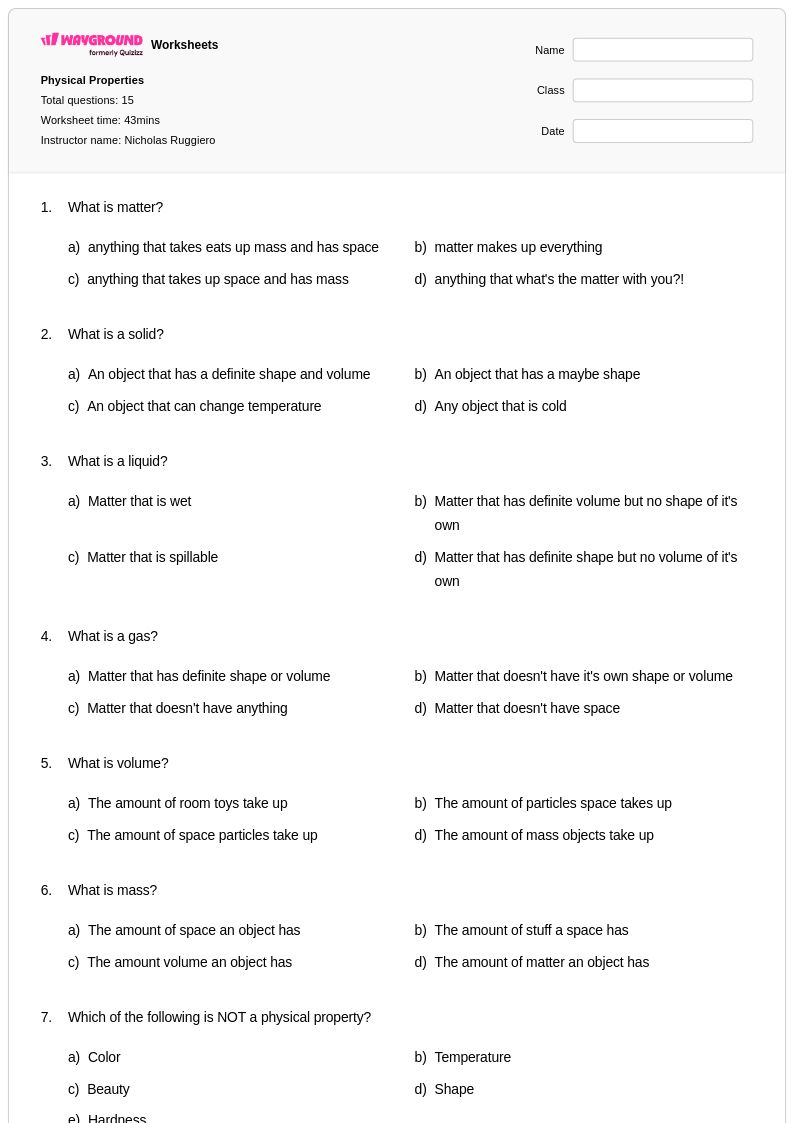
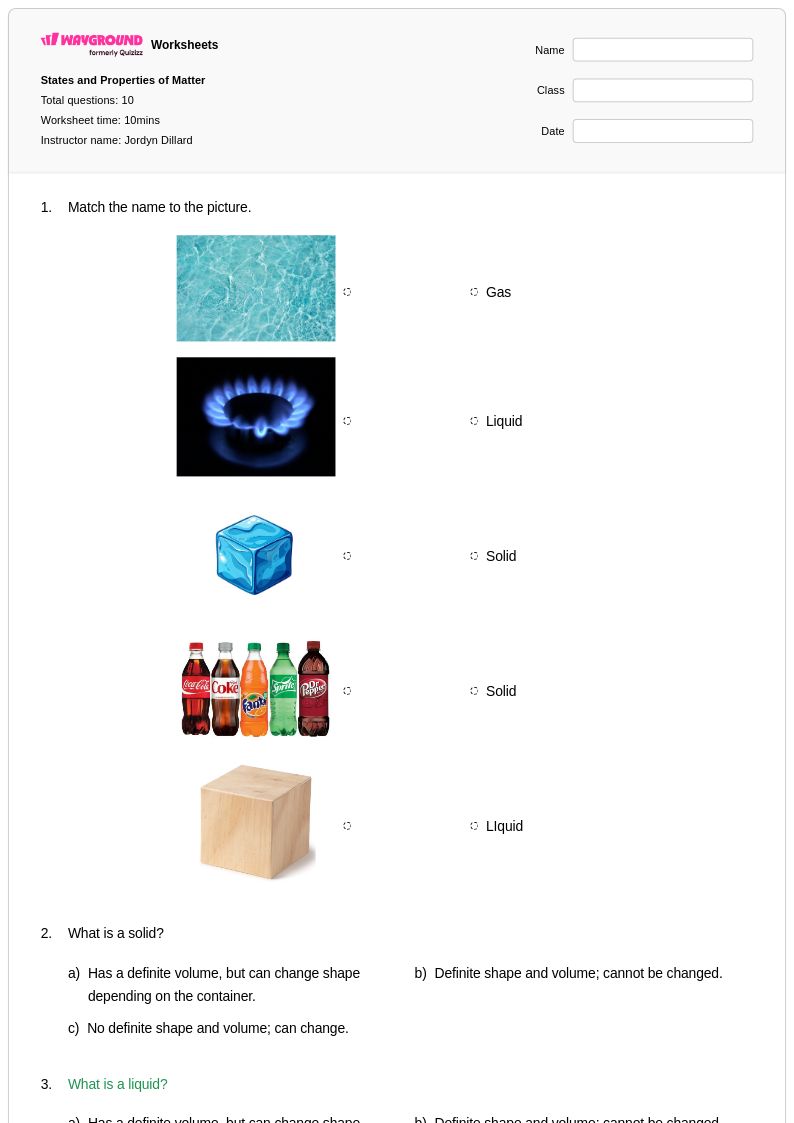
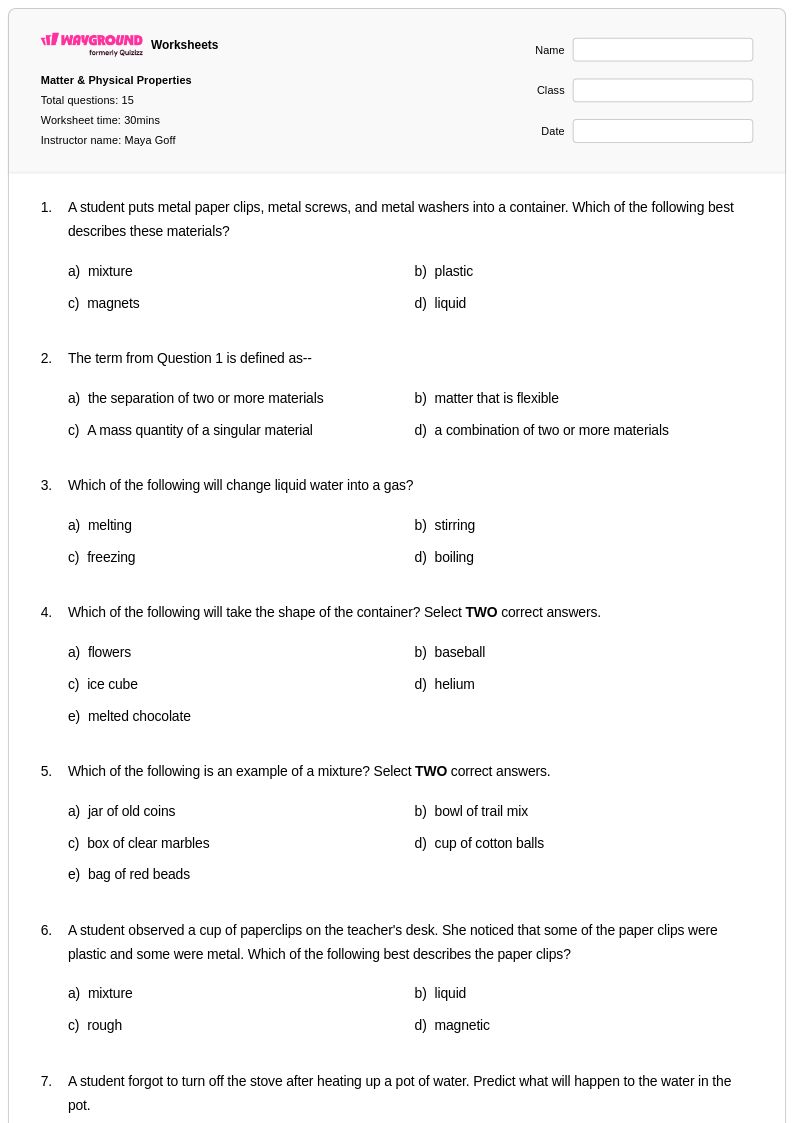
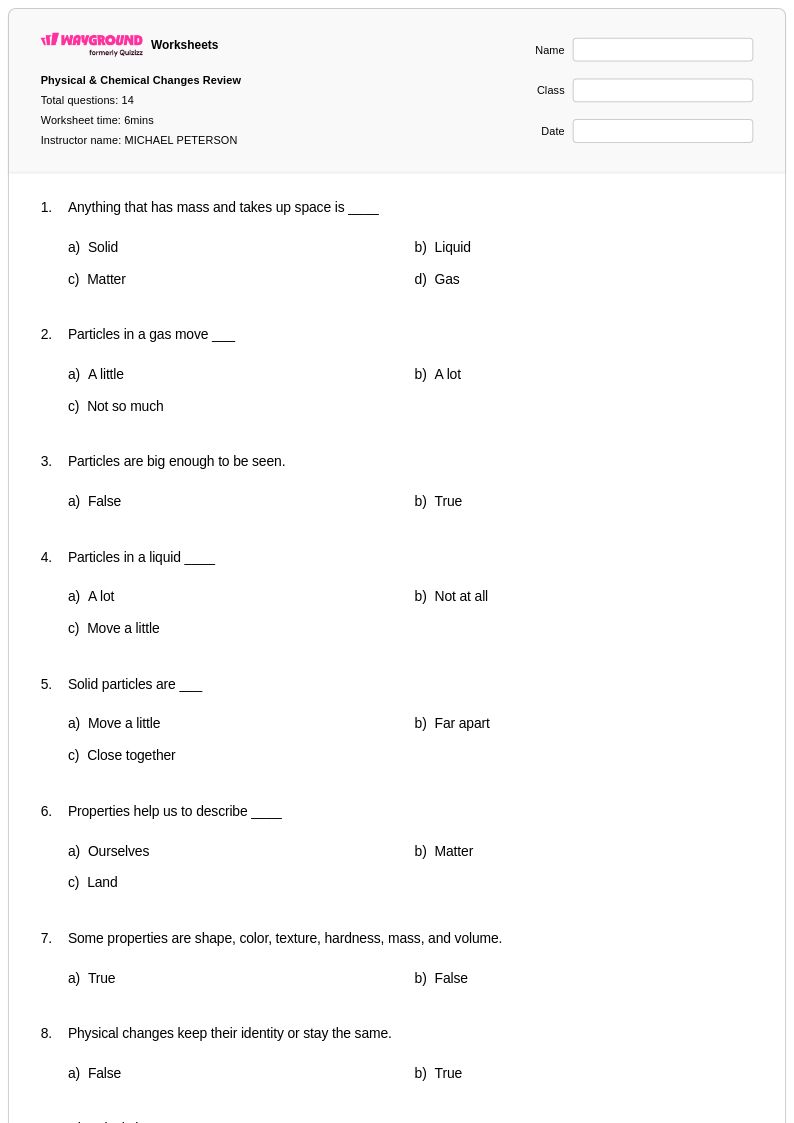
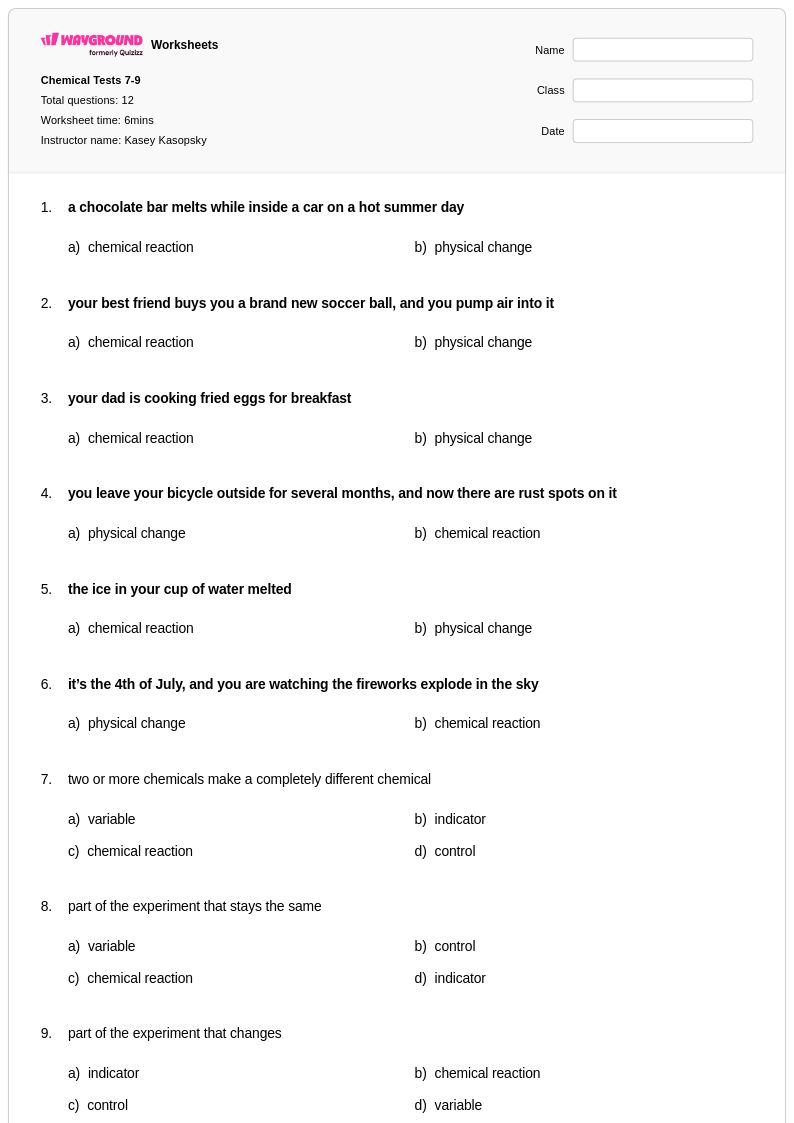
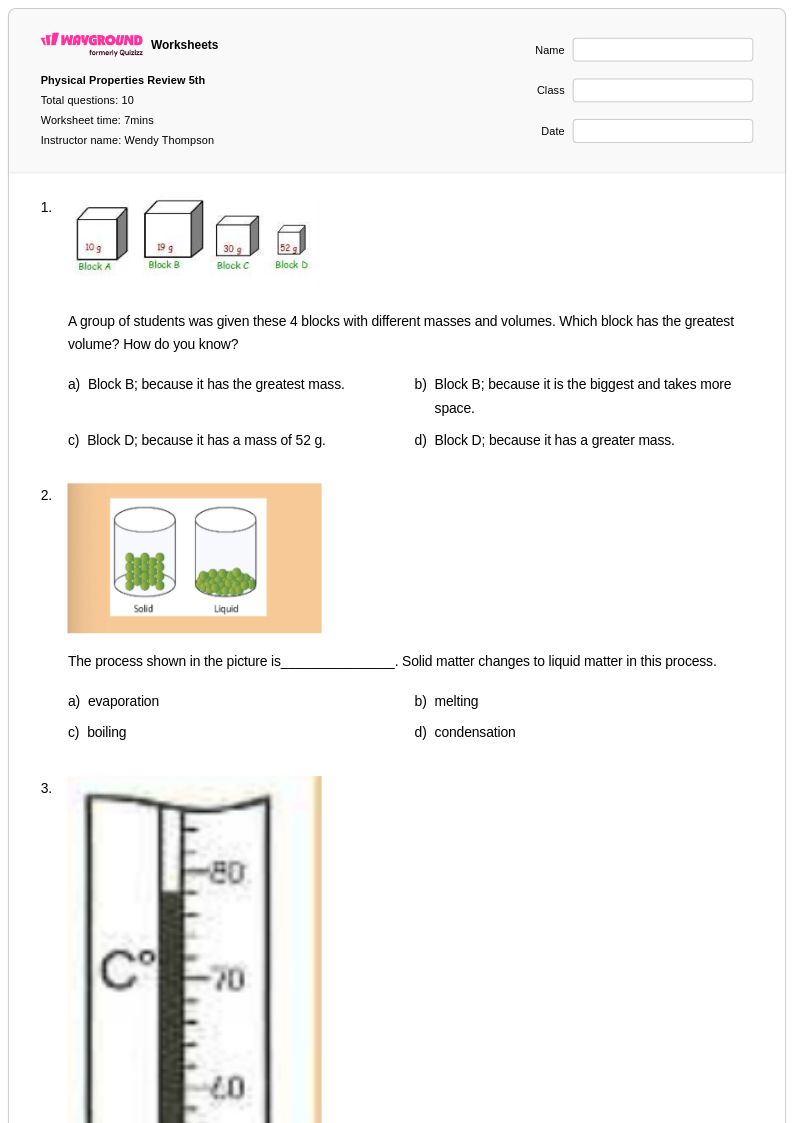
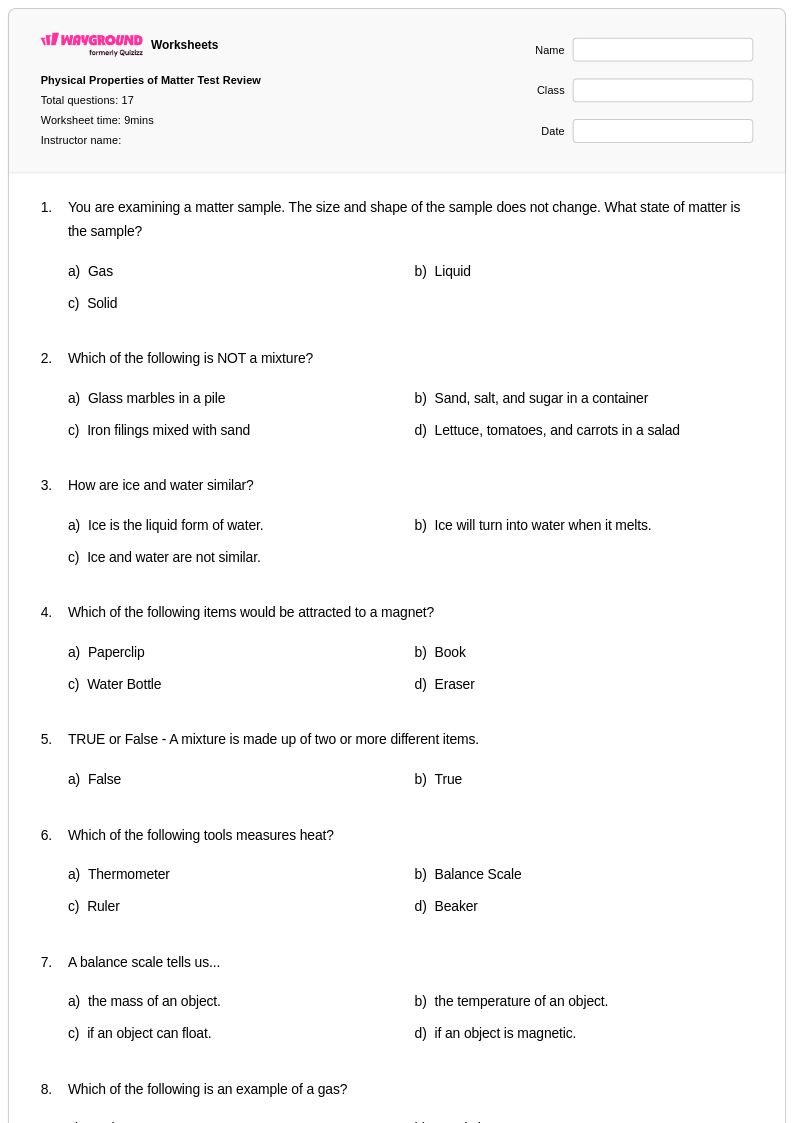
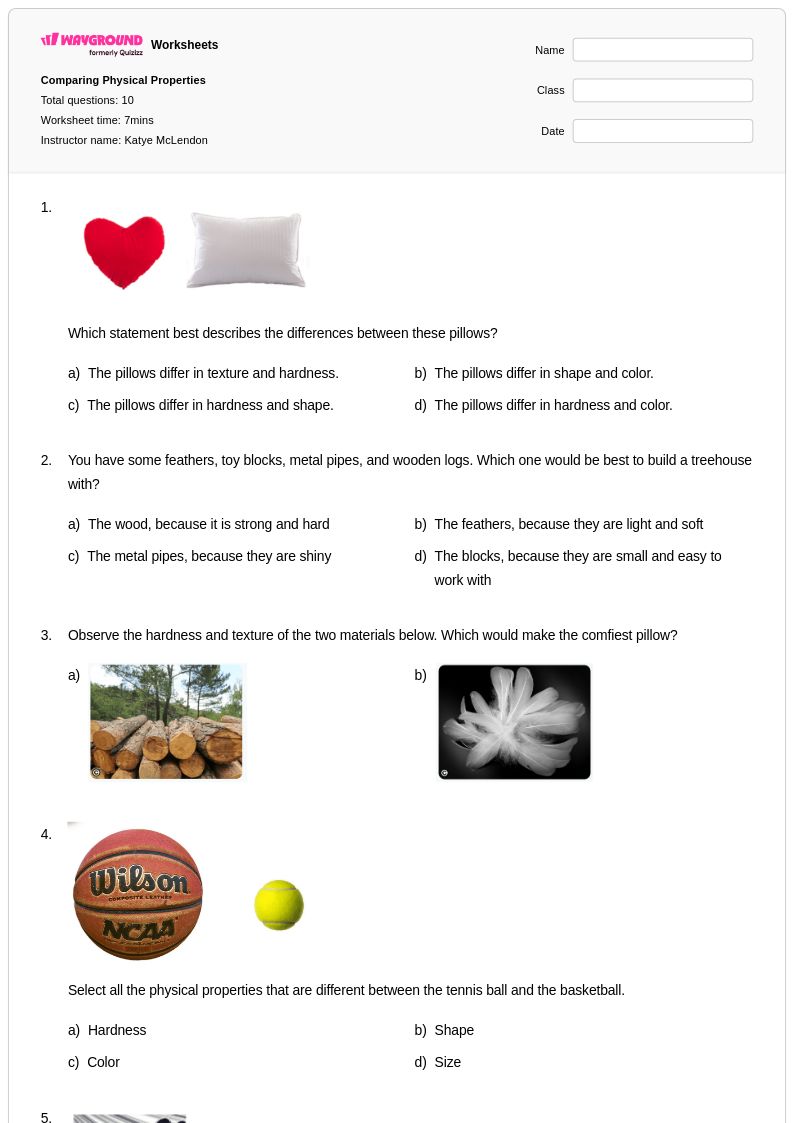
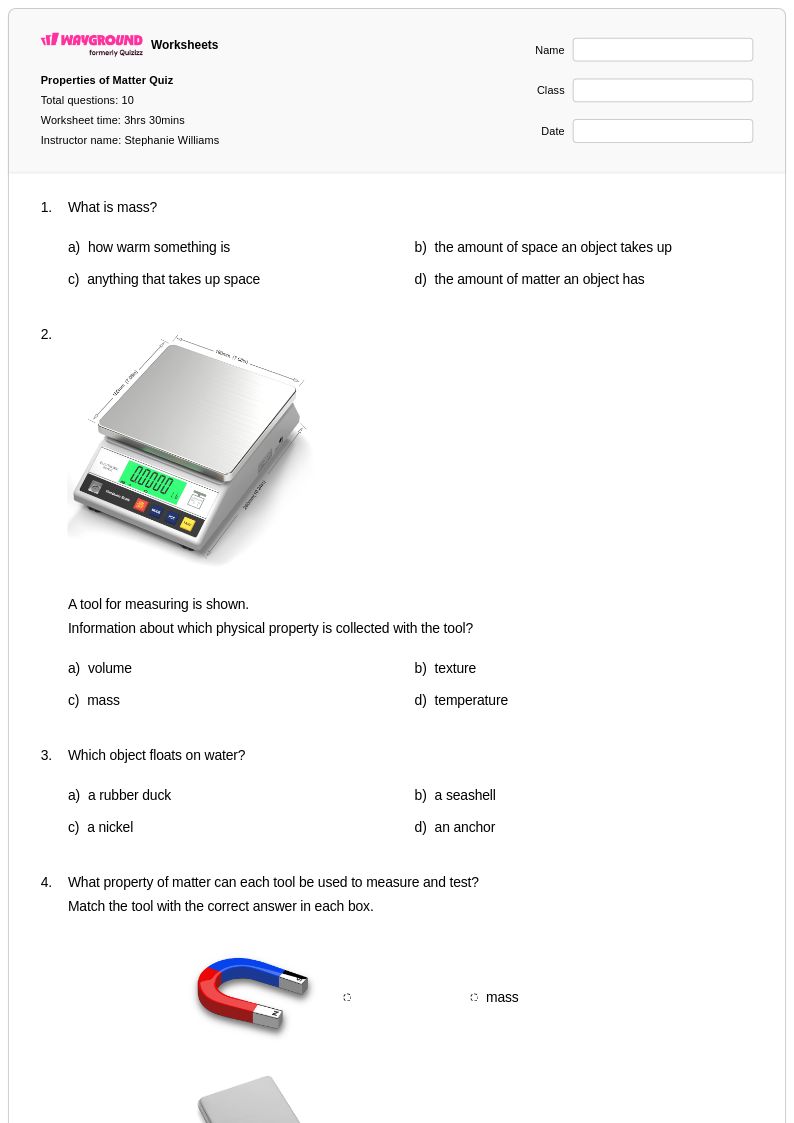
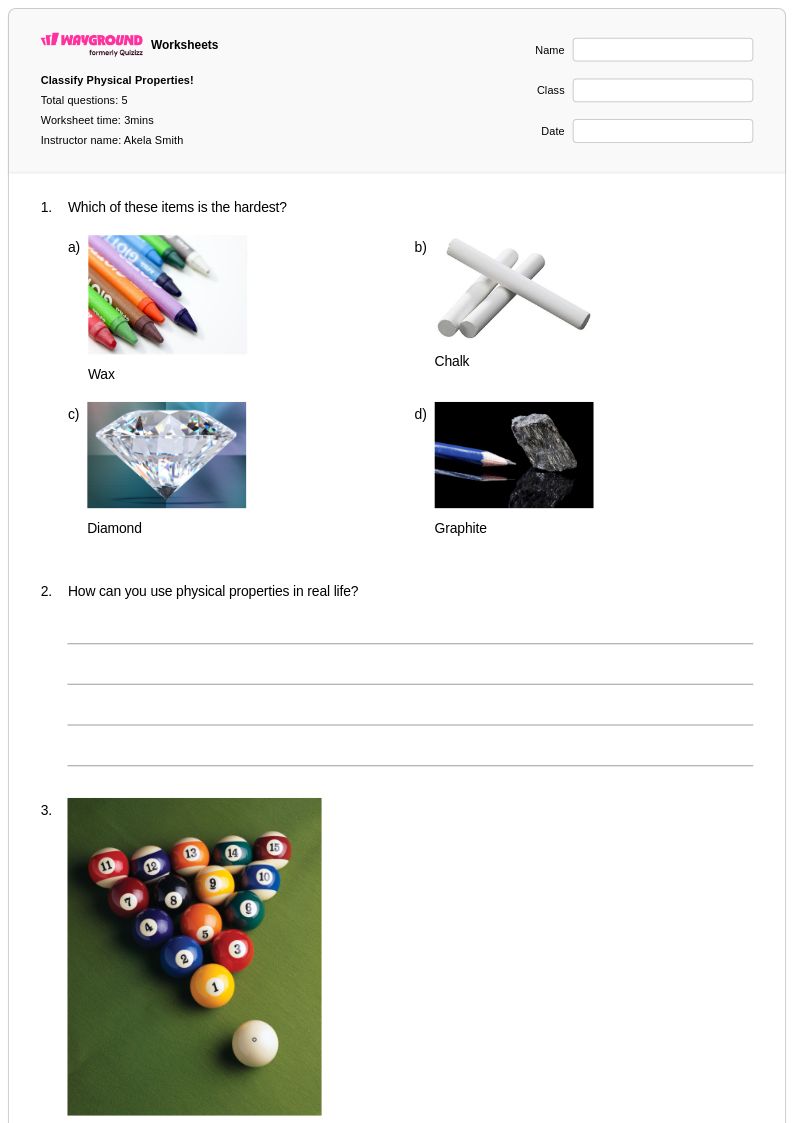
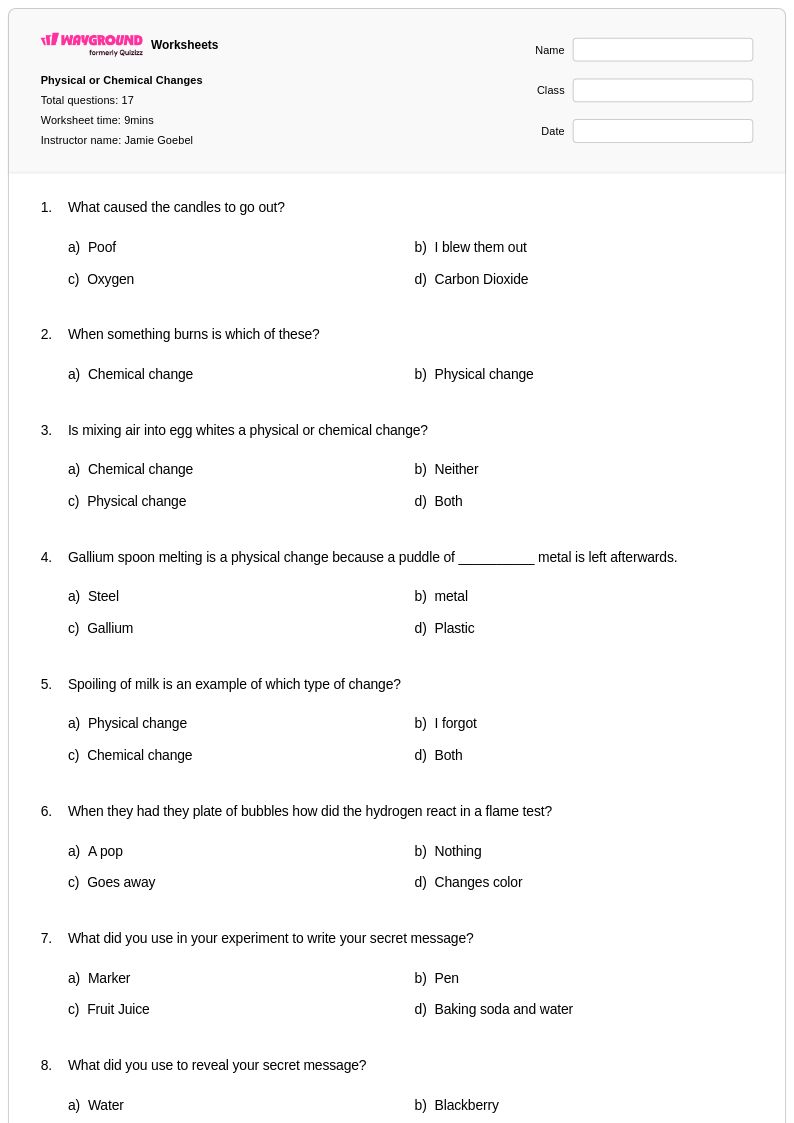
Chemical vs physical properties worksheets for Class 3 students through Wayground (formerly Quizizz) provide essential foundational practice in distinguishing between properties that can be observed without changing a substance and those that describe how substances react or change. These carefully designed worksheets strengthen critical thinking skills as young learners identify observable characteristics like color, texture, and shape as physical properties, while exploring concepts such as flammability and reactivity as chemical properties. The comprehensive collection includes engaging practice problems that guide students through real-world examples, supported by detailed answer keys that help educators assess understanding and provide targeted feedback. Available as free printables in convenient pdf format, these resources make abstract scientific concepts accessible through hands-on activities and visual learning opportunities.
Wayground (formerly Quizizz) empowers educators with millions of teacher-created resources specifically focused on chemical vs physical properties, featuring robust search and filtering capabilities that align with science education standards for elementary learners. The platform's differentiation tools enable teachers to customize worksheets based on individual student needs, supporting both remediation for struggling learners and enrichment opportunities for advanced students. These versatile resources are available in both printable and digital formats, including downloadable pdf versions that facilitate seamless lesson planning and implementation. Teachers can efficiently organize skill practice sessions, create targeted interventions, and develop comprehensive assessment strategies using the platform's flexible customization options, ensuring that every Class 3 student develops a solid understanding of how to categorize and analyze the fundamental properties of matter.
FAQs
How do I teach students the difference between chemical and physical properties?
Start by anchoring the distinction in a clear rule: physical properties describe matter's appearance, state, or behavior without changing its chemical composition, while chemical properties only become observable when a substance undergoes a chemical reaction. Use concrete examples side by side — density and color as physical properties, flammability and reactivity as chemical ones. Sorting activities where students classify real-world scenarios reinforce this distinction before moving to more abstract applications.
What exercises help students practice identifying chemical vs physical properties?
Classification exercises are the most effective practice format for this topic — students read descriptions of matter and decide whether the property observed is physical or chemical. Scenarios involving melting points, density, flammability, and reactivity give students repeated exposure to the most commonly tested indicators. Practice problems that use real-world contexts, such as iron rusting versus iron bending, help students internalize the distinction rather than memorize definitions.
What mistakes do students commonly make when distinguishing chemical from physical properties?
The most common misconception is confusing a physical change with a chemical property — for example, students often misclassify flammability as a physical property because they associate it with a visible change rather than recognizing it involves a chemical reaction. Students also struggle with properties like color change, incorrectly assuming any observable change must be chemical. Targeted practice with counterexamples and immediate answer key feedback helps students correct these patterns before they become ingrained.
How can I use chemical vs physical properties worksheets in my classroom?
These worksheets are available as printable PDFs for traditional classroom use and in digital formats for technology-integrated learning environments, making them flexible for both in-person and remote instruction. Teachers can also host them as a quiz on Wayground for real-time student feedback. Use them as introductory scaffolding during direct instruction, as independent practice following a lab activity, or as targeted remediation for students who confuse the two property types.
How do I differentiate chemical vs physical properties instruction for students at different skill levels?
For struggling learners, reduce cognitive load by starting with clearly contrasting examples — one unambiguously physical, one unambiguously chemical — before introducing edge cases. Advanced students benefit from open-ended scenarios where they must justify their classification with evidence rather than simply selecting an answer. On Wayground, teachers can apply accommodations such as reduced answer choices for individual students, extended time, and read-aloud support, all configurable per student without disrupting the rest of the class.
How do chemical vs physical properties fit into broader science curriculum standards?
Distinguishing between chemical and physical properties is a foundational skill in physical science and chemistry, aligning with state and national science standards at the middle and high school levels. Mastery of this concept supports later learning in chemical reactions, the periodic table, and matter classification. Worksheet collections aligned to these standards allow teachers to integrate practice directly into standards-based lesson planning without additional alignment work.