Free Printable Claim and Evidence Worksheets for Class 9
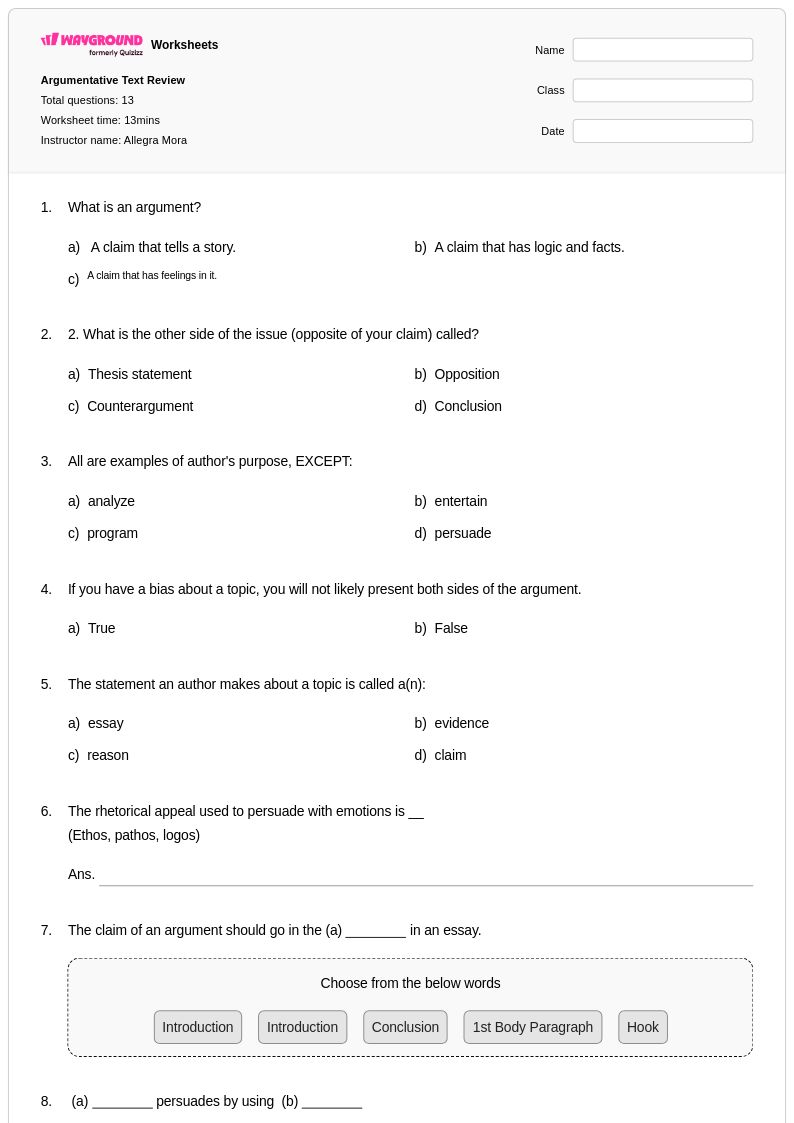
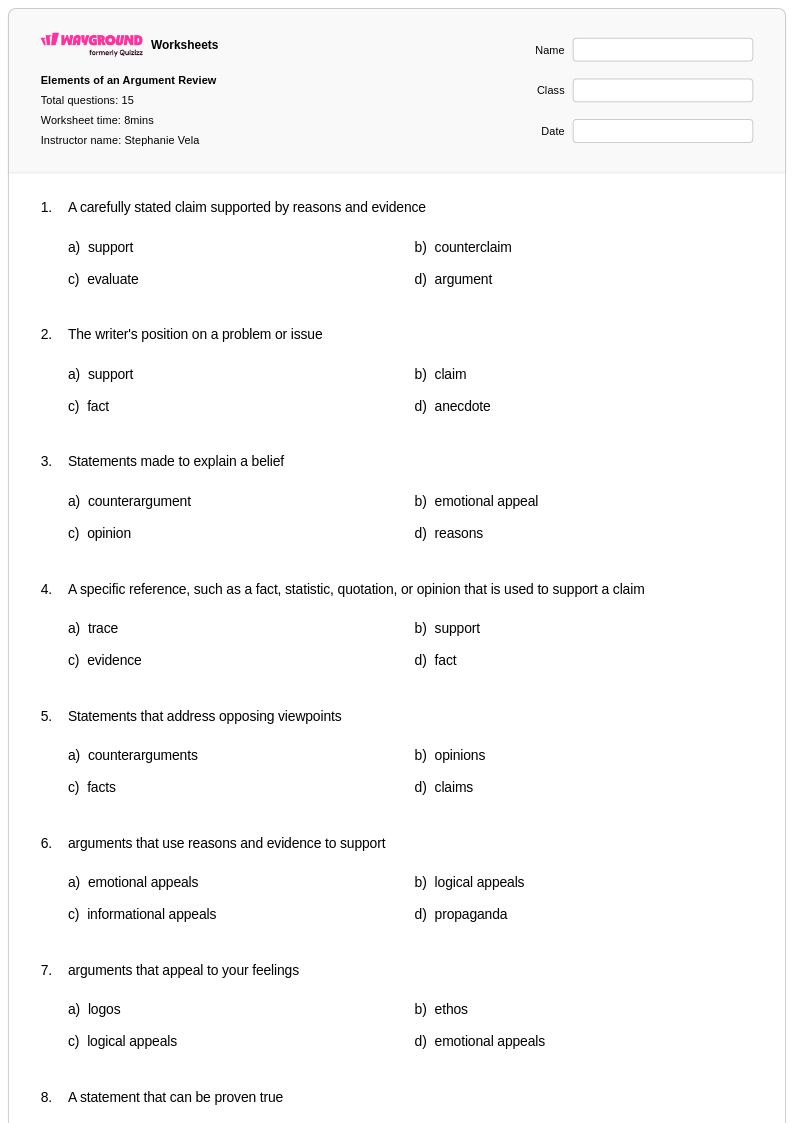
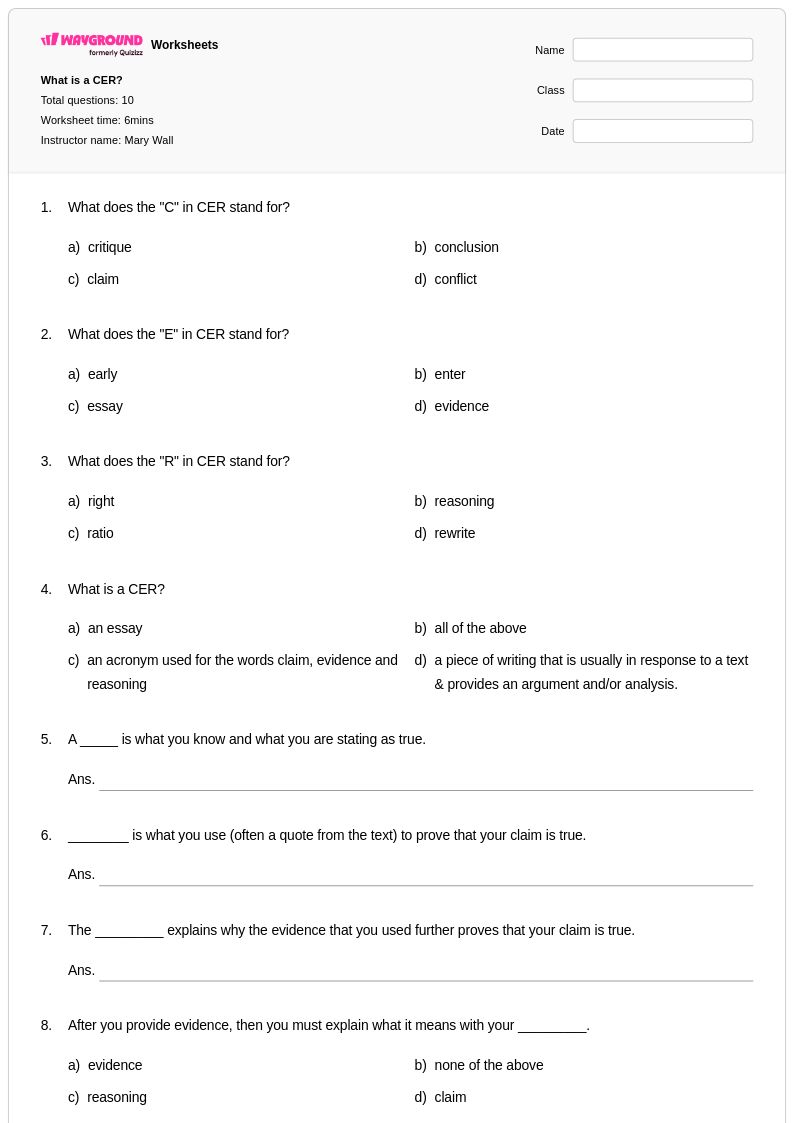
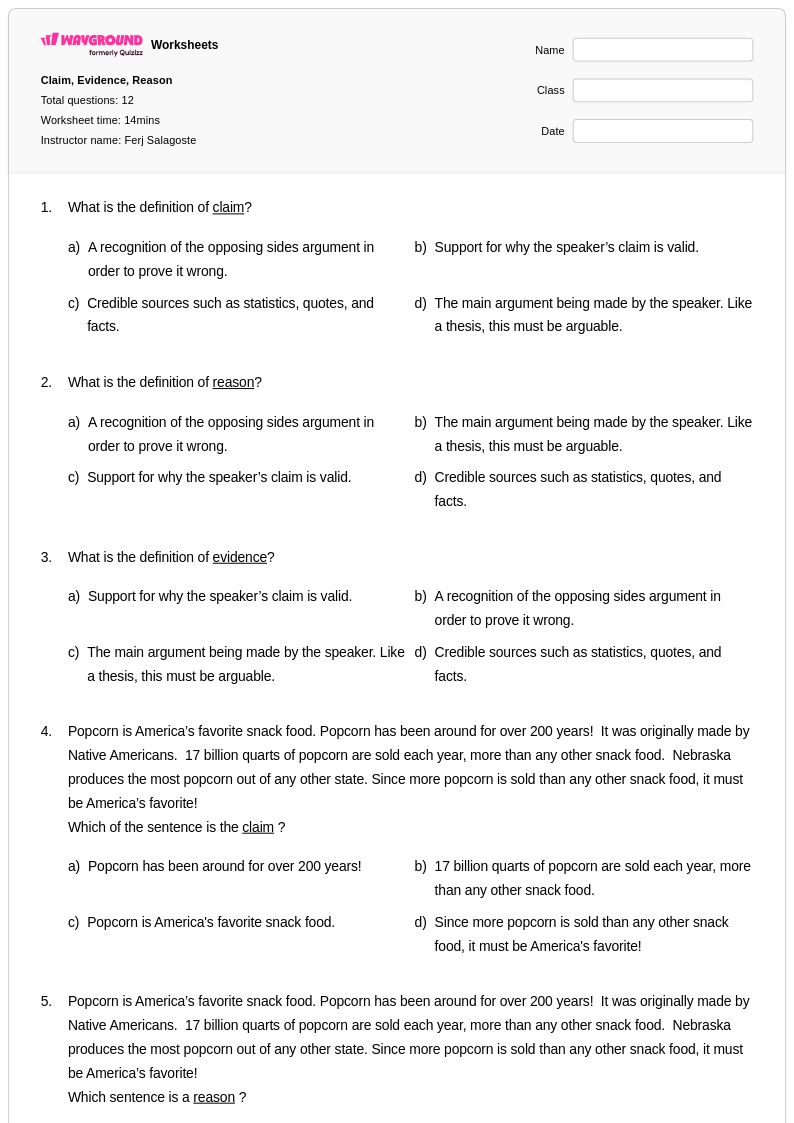
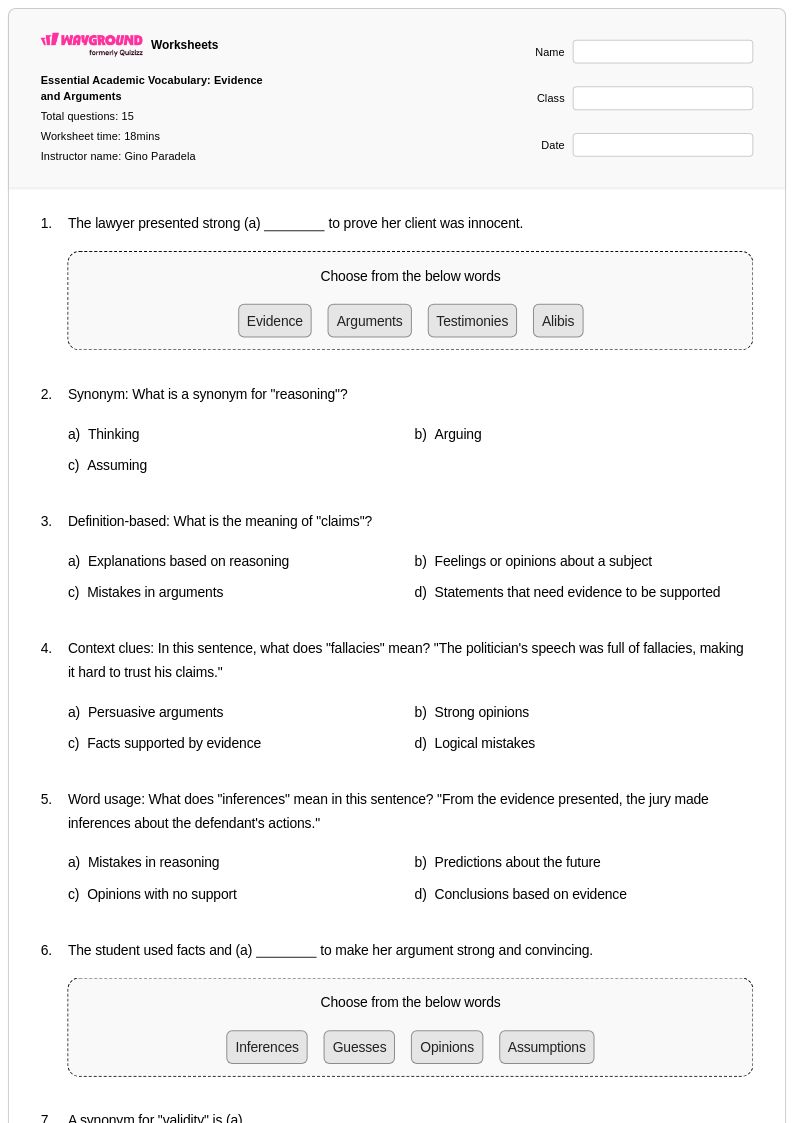
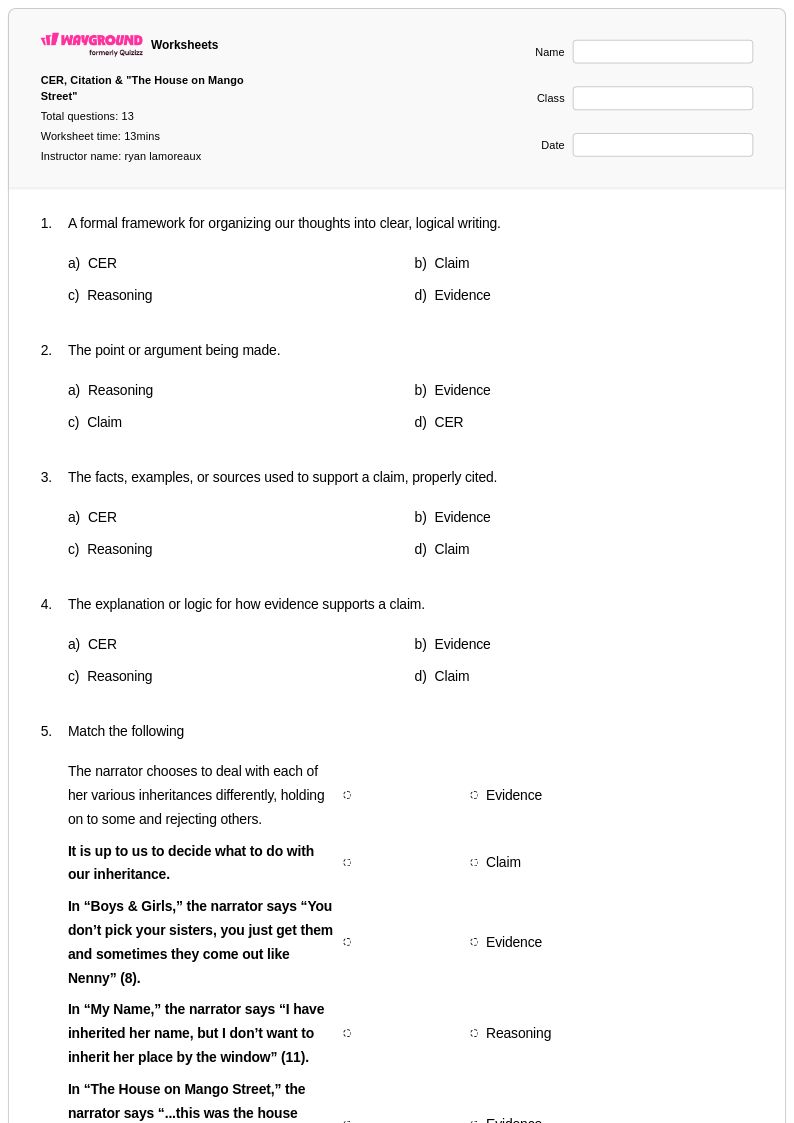
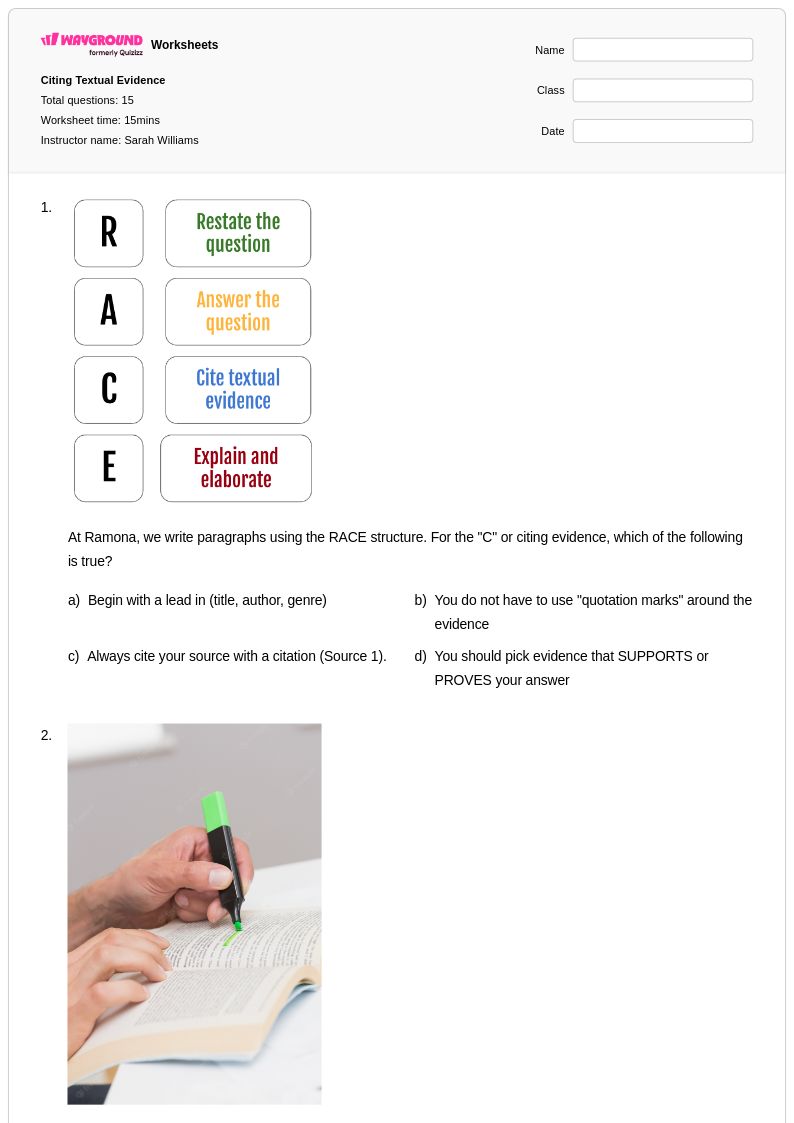
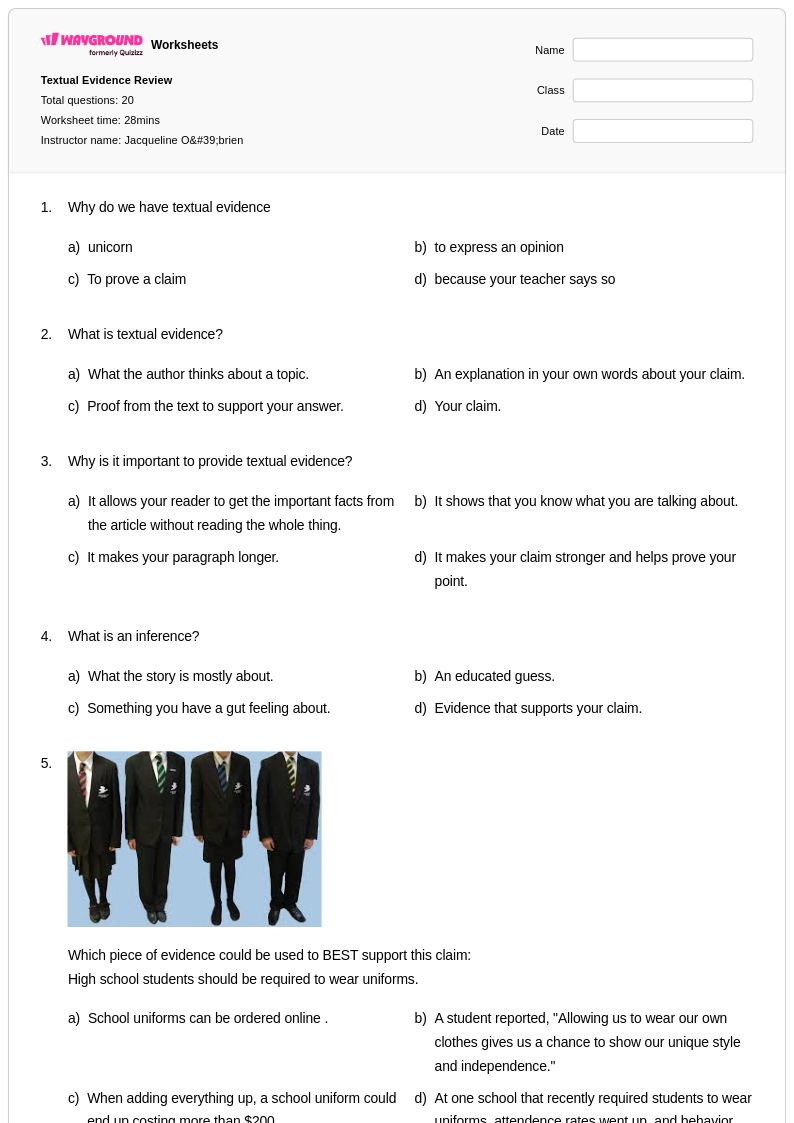
Class 9 claim and evidence worksheets provide free printables and practice problems to help students master identifying, evaluating, and supporting arguments in nonfiction writing with comprehensive answer keys.
Explore printable Claim and Evidence worksheets for Class 9
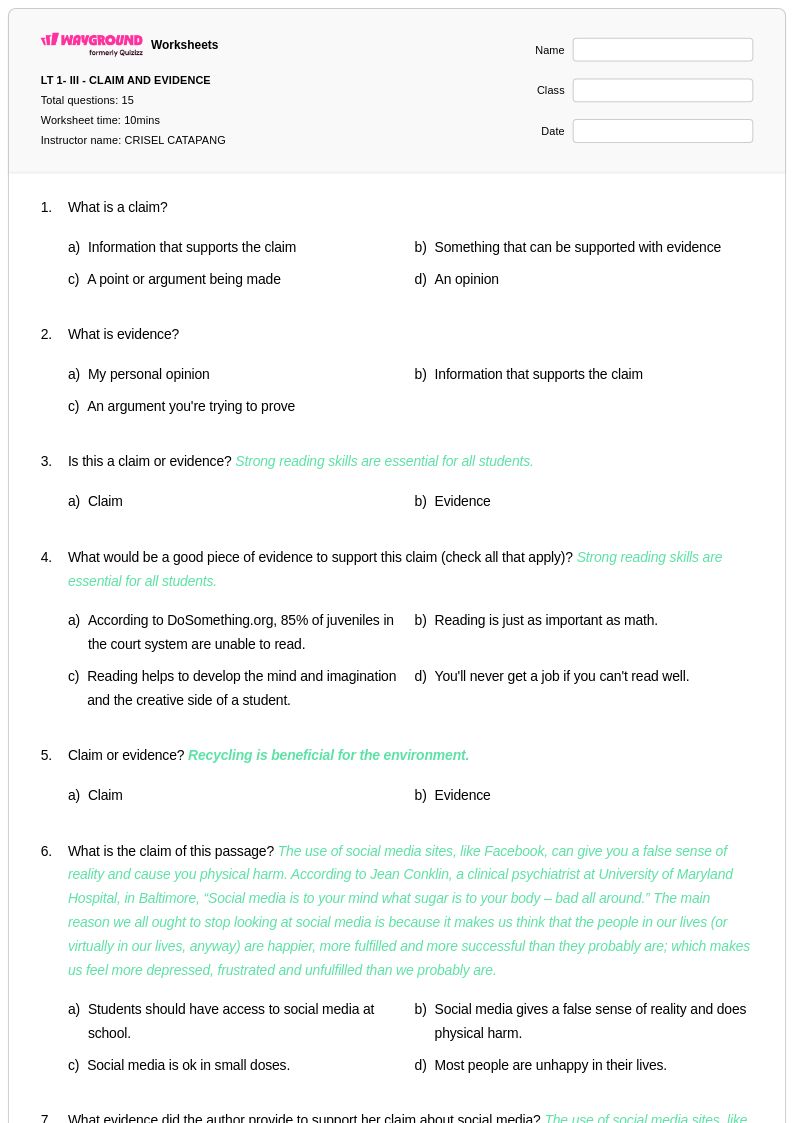
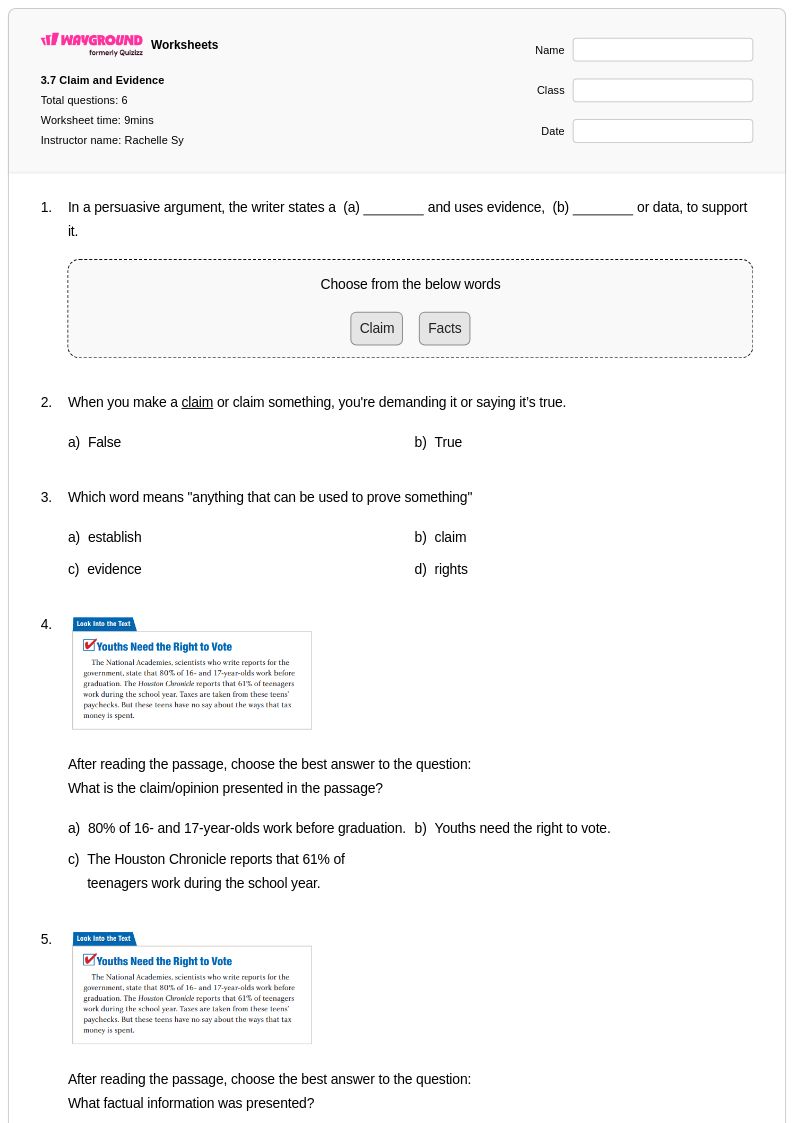
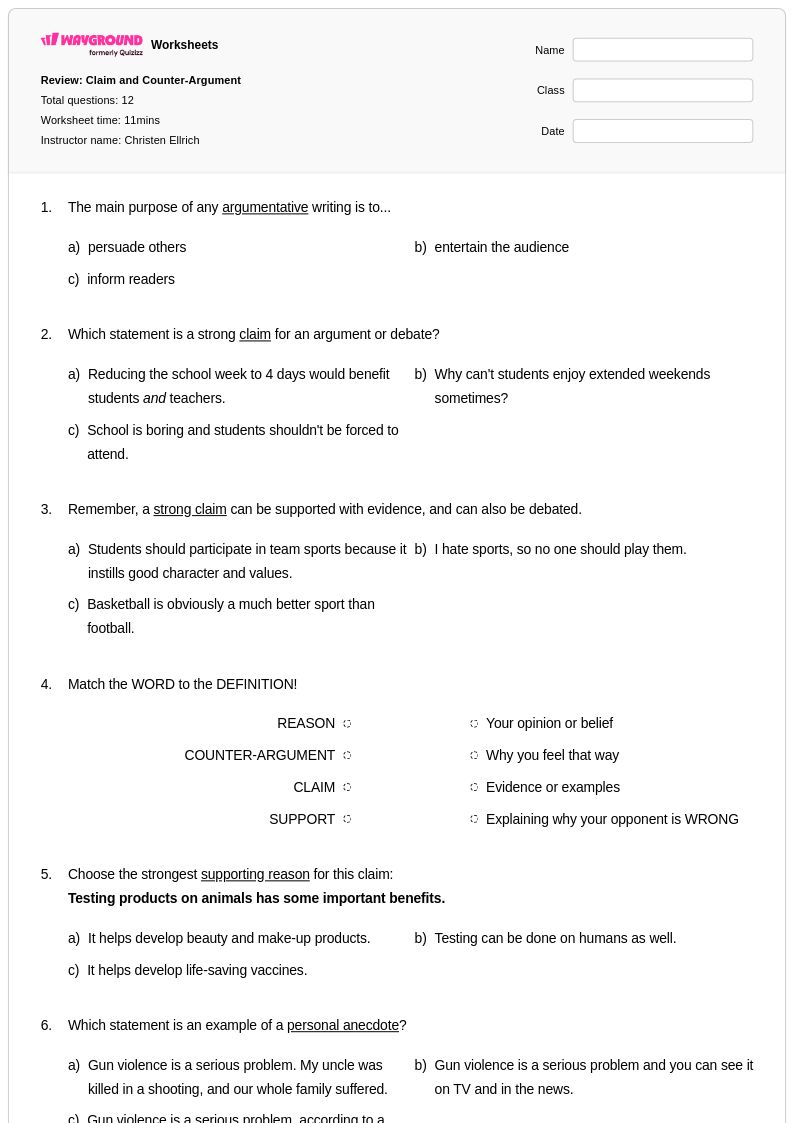
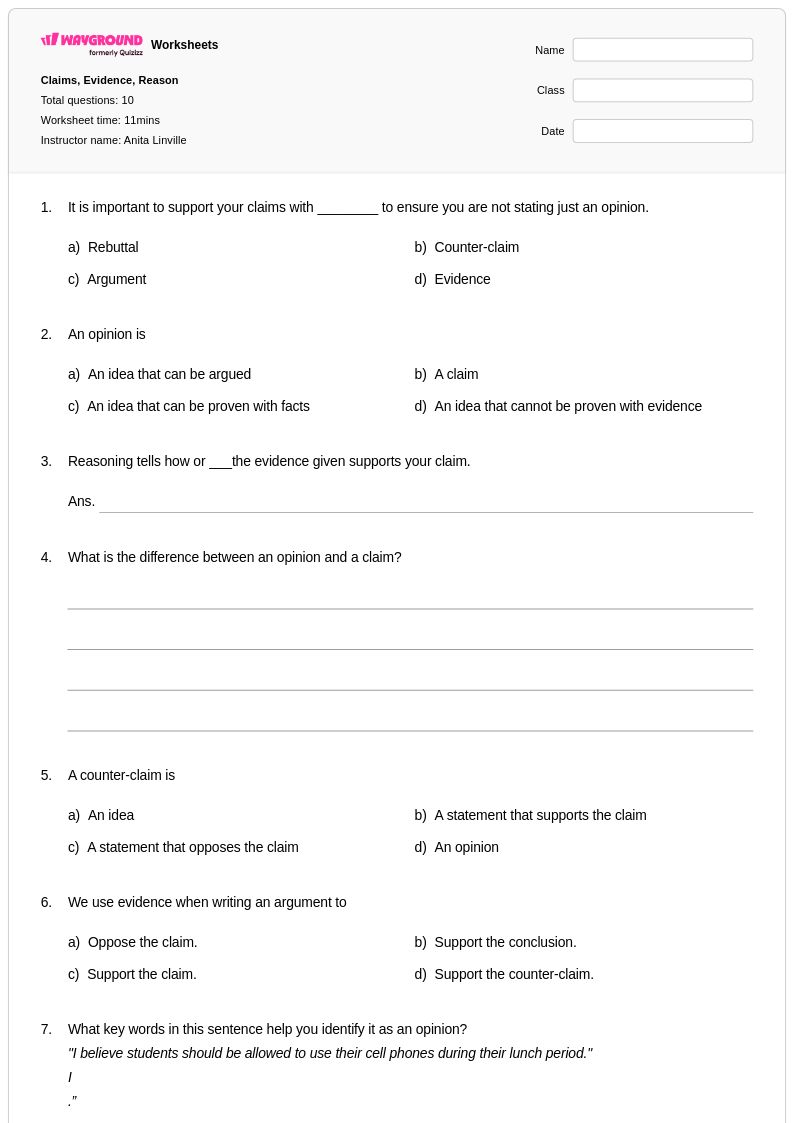
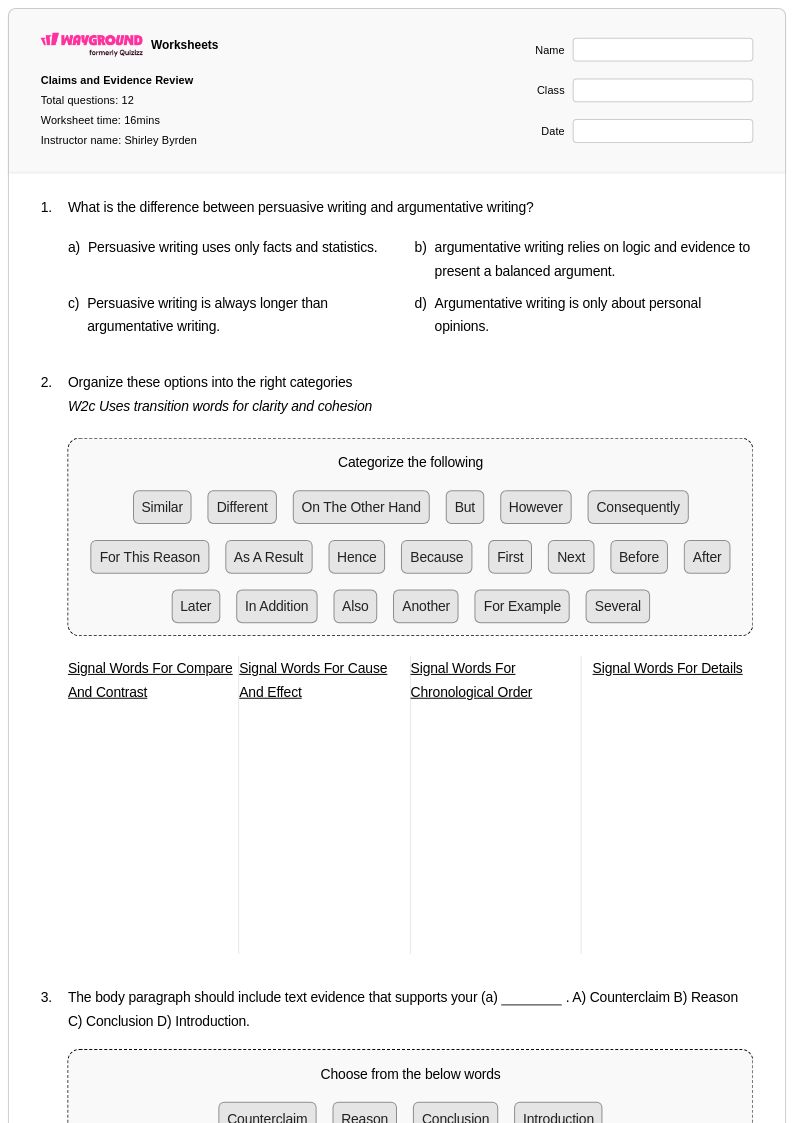
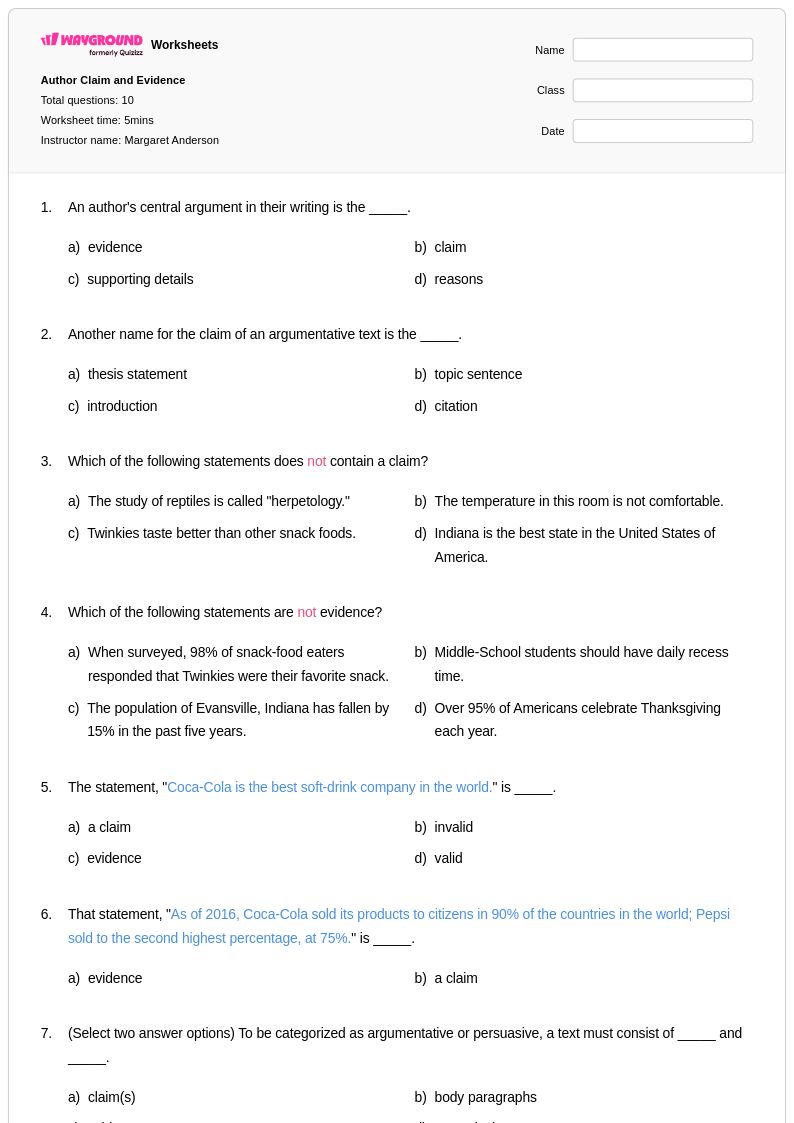
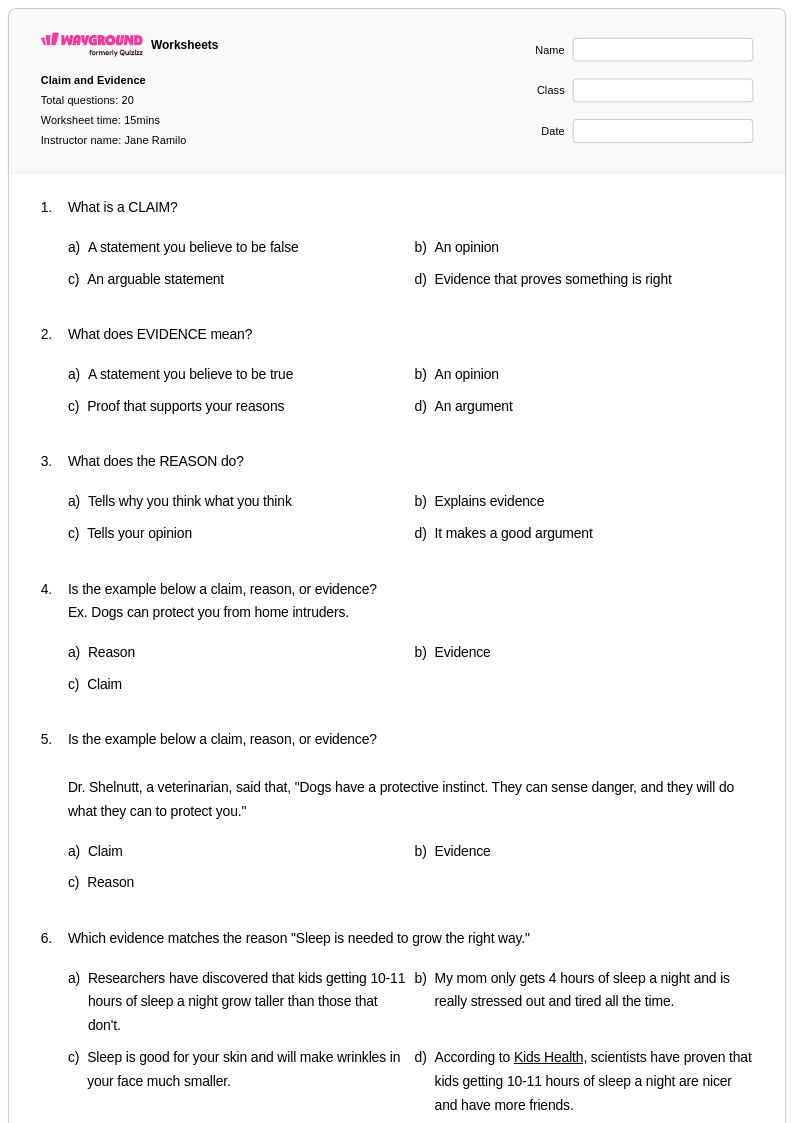
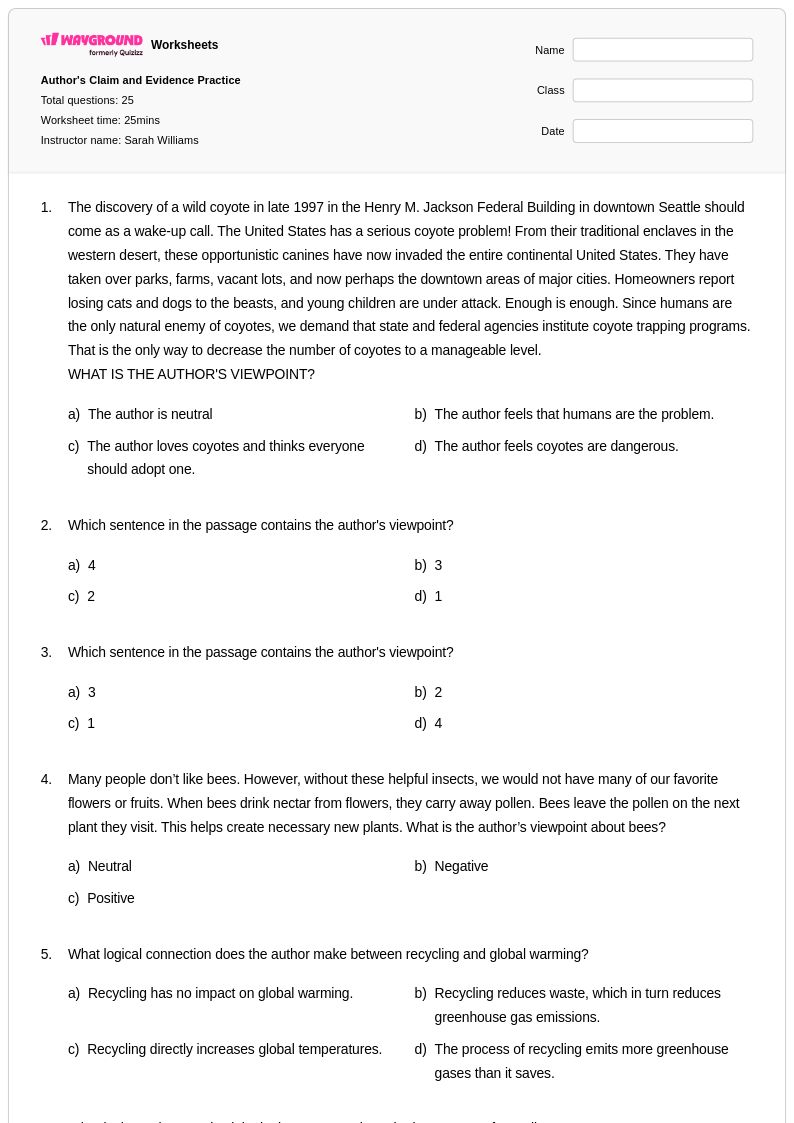
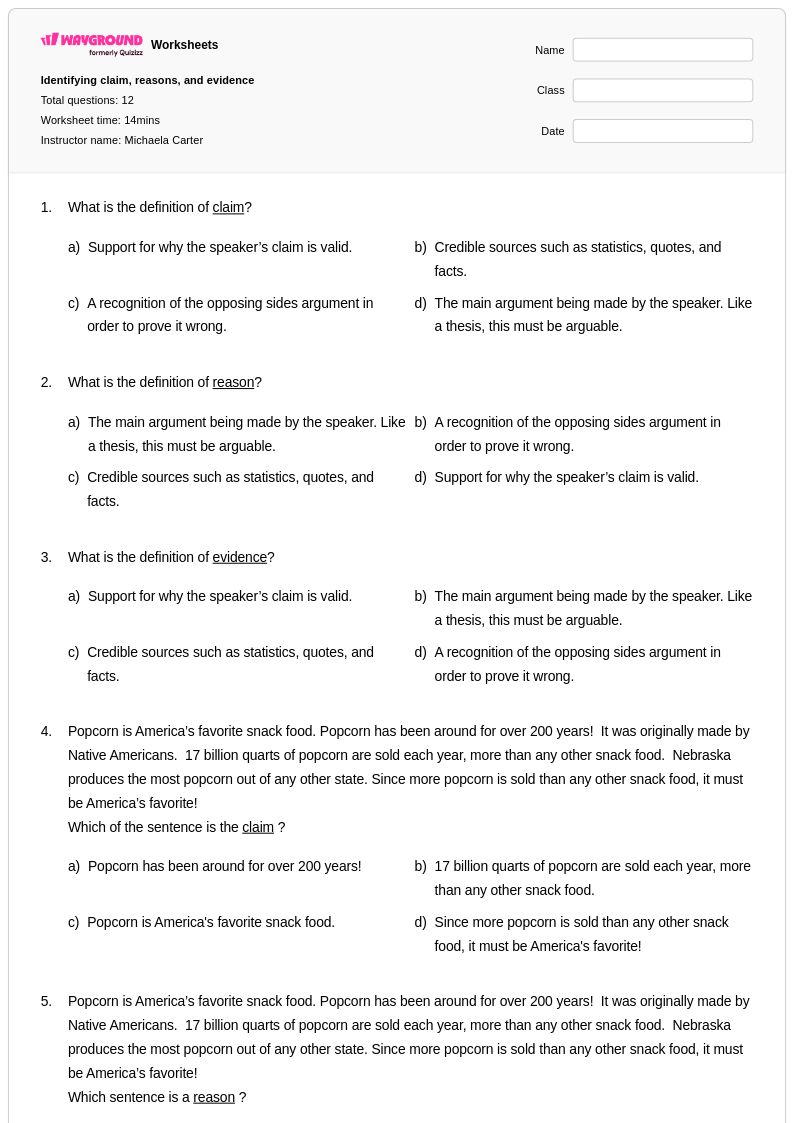
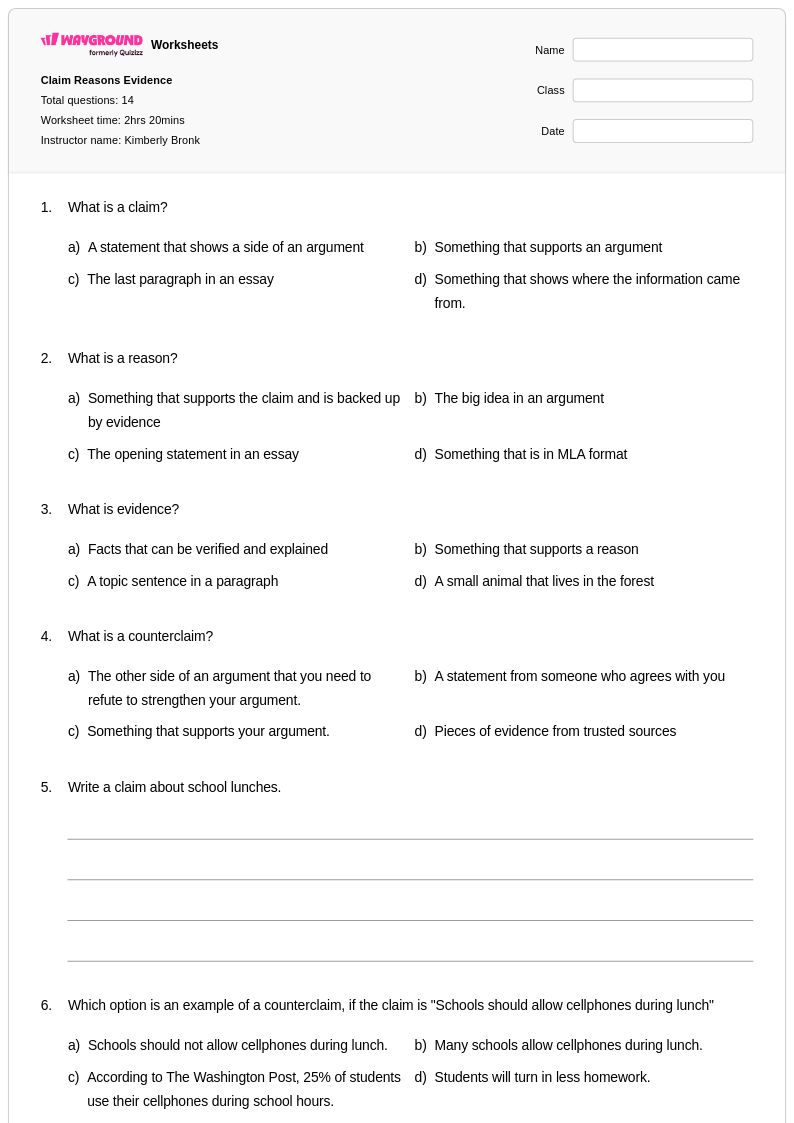
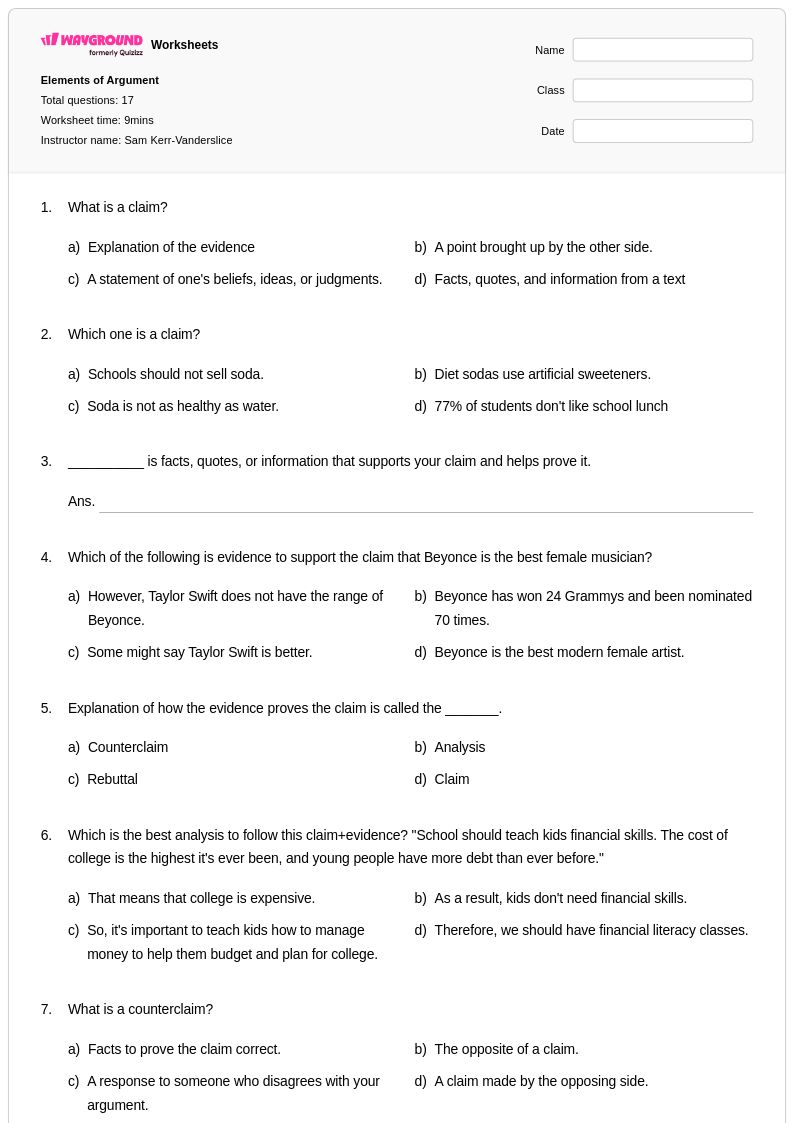
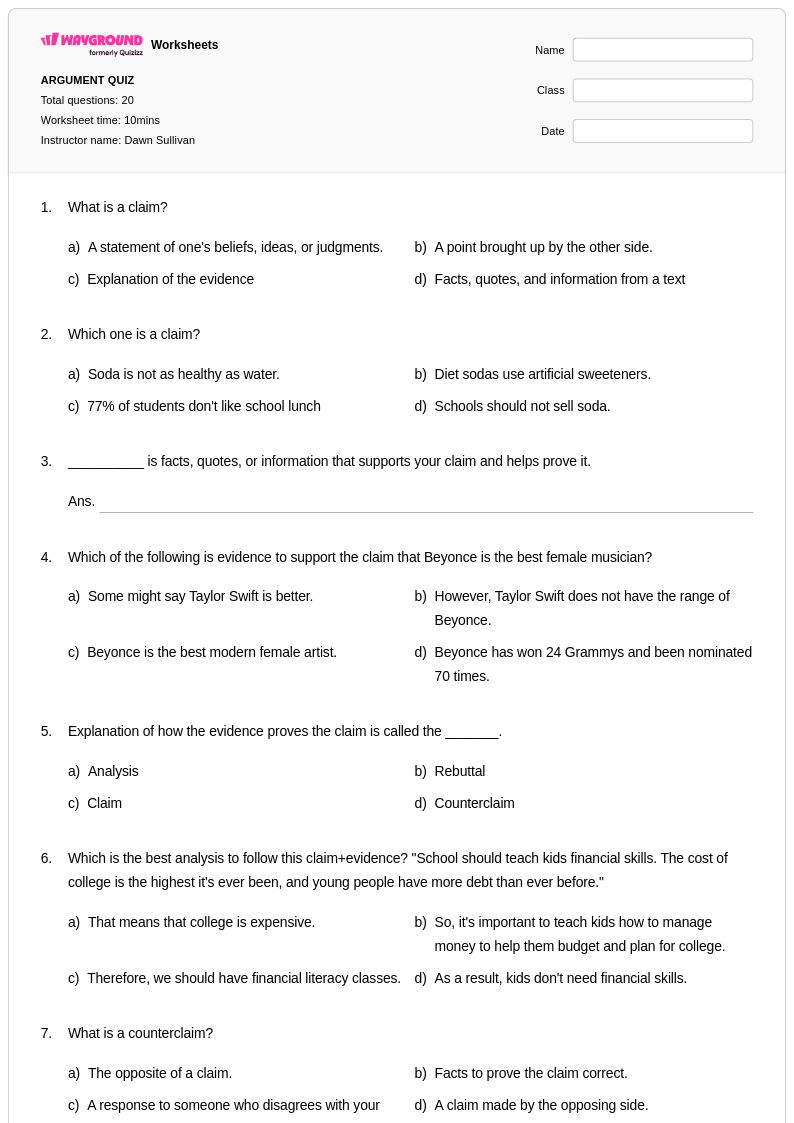
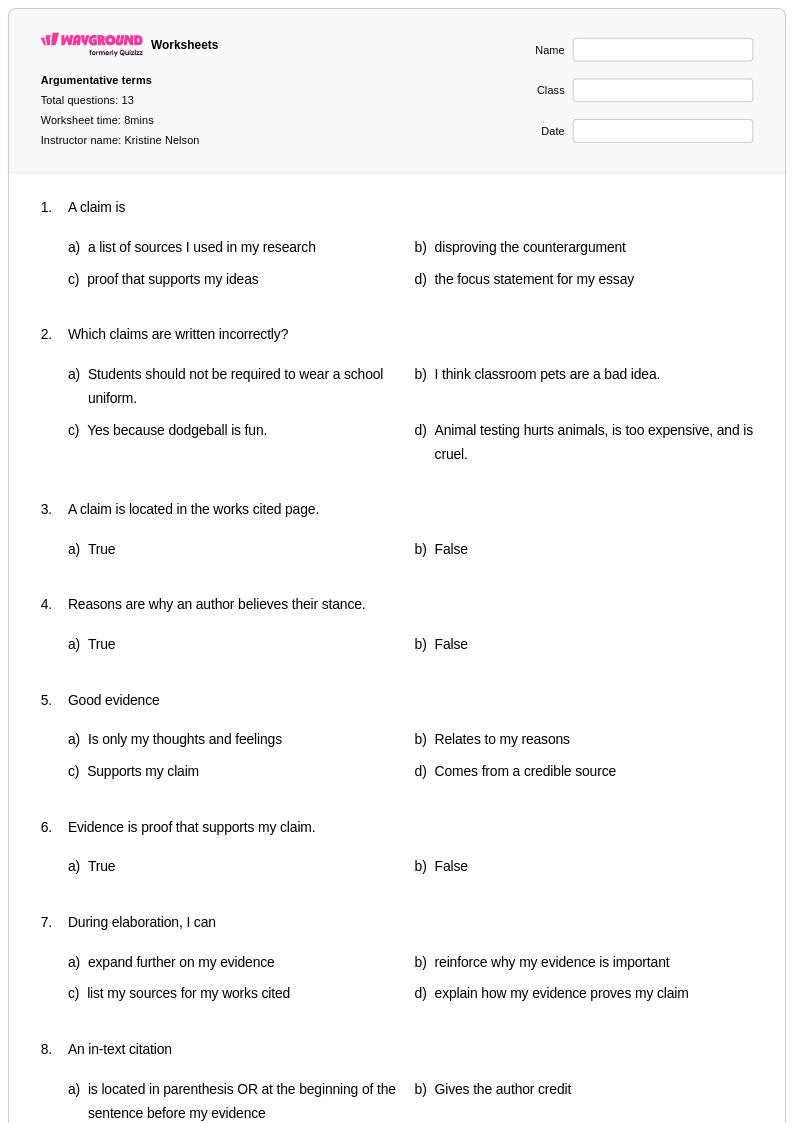
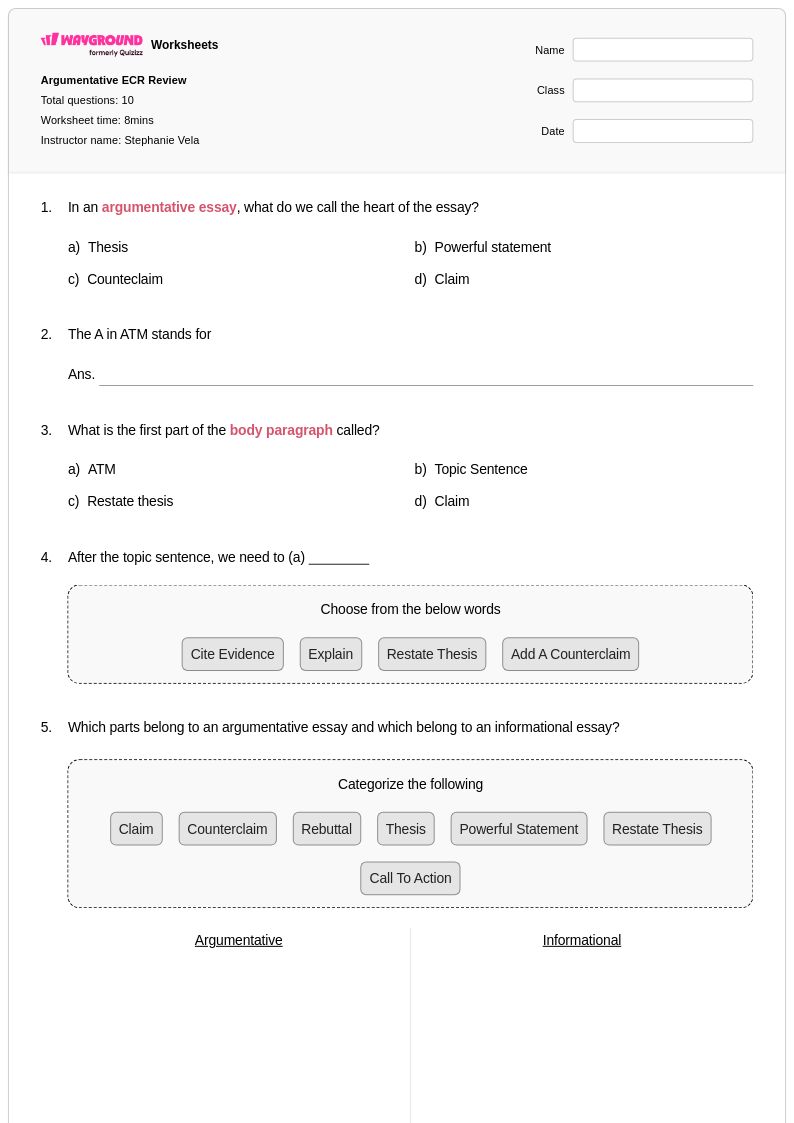
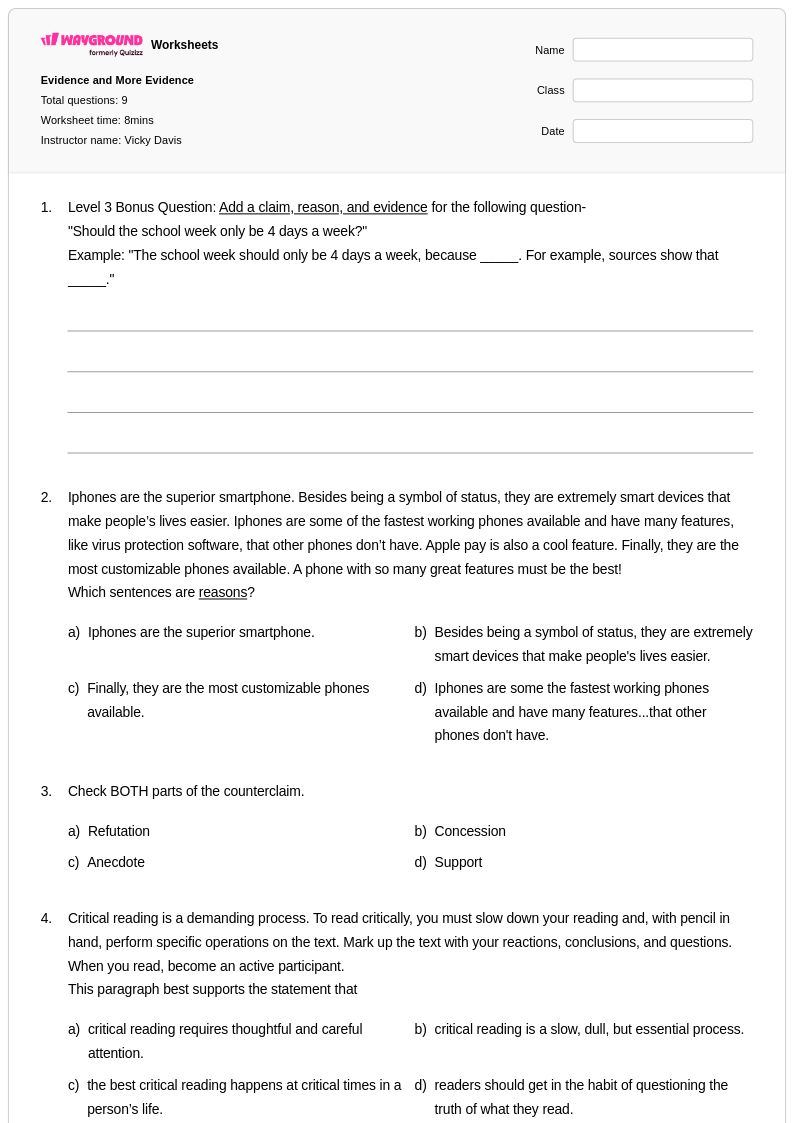
Class 9 claim and evidence worksheets available through Wayground (formerly Quizizz) provide essential practice for students developing critical nonfiction writing skills. These comprehensive resources focus on teaching students how to construct compelling arguments by identifying strong claims and supporting them with relevant, credible evidence from various sources. The worksheets strengthen analytical thinking abilities as students learn to evaluate the quality and relevance of supporting details, distinguish between opinion and factual evidence, and craft clear thesis statements that can be substantiated. Free printables include practice problems that guide students through the process of examining sample texts, extracting key evidence, and connecting supporting details to main arguments, with answer keys provided to facilitate independent learning and self-assessment.
Wayground's extensive collection draws from millions of teacher-created resources specifically designed to support educators in developing students' argumentative writing competencies. The platform's robust search and filtering capabilities allow teachers to quickly locate materials aligned with curriculum standards, while differentiation tools enable customization for varying skill levels within the classroom. These claim and evidence worksheets are available in both printable pdf format and interactive digital versions, making them versatile for in-class instruction, homework assignments, or remote learning scenarios. Teachers can utilize these resources for targeted skill practice, remediation for students struggling with argumentative structure, or enrichment activities that challenge advanced learners to work with more complex source materials and sophisticated reasoning patterns.
FAQs
How do I teach students the difference between a claim and evidence?
Start by contrasting a clear opinion statement with a fact-backed assertion to show students what makes a claim defensible rather than merely personal. Then model how evidence functions as support by walking through a short nonfiction passage together, labeling the claim and each piece of evidence explicitly. From there, students practice identifying and categorizing both elements in new texts before attempting to construct their own. This gradual release approach builds the analytical foundation students need for academic argumentation.
What exercises help students practice supporting a claim with evidence?
Effective practice exercises ask students to match a given claim to a set of evidence options and evaluate which choices are credible and relevant versus weak or off-topic. Sentence-level tasks that require students to revise unsupported opinions into defensible claims also build precision. Claim and evidence worksheets that include diverse nonfiction contexts give students repeated exposure across topics, reinforcing the skill beyond a single genre or subject area.
What mistakes do students commonly make when working with claims and evidence?
The most frequent error is confusing an opinion with a claim, resulting in statements that cannot be supported with factual evidence. Students also tend to select evidence that is thematically related but logically irrelevant, treating proximity to the topic as equivalent to support. A third common mistake is presenting evidence without explaining how it connects back to the claim, leaving the logical link implicit rather than stated. Targeted practice distinguishing credible from weak evidence, and requiring students to write explicit reasoning sentences, directly addresses these patterns.
How do I use claim and evidence worksheets effectively in my classroom?
Claim and evidence worksheets work best when introduced alongside direct instruction on argument structure, then used as guided or independent practice once students understand the core distinction. These worksheets are available as printable PDFs for traditional classroom use and in digital formats for technology-integrated environments, and can also be hosted as a quiz on Wayground to streamline student submission and review. Using the included answer keys during class discussion allows teachers to address misconceptions in real time rather than after individual grading.
How can I differentiate claim and evidence practice for students at different skill levels?
For developing writers, begin with scaffolded worksheets that provide the claim and ask students only to evaluate and select supporting evidence. More advanced students can work with open-ended tasks that require them to both construct the claim and locate or rank their own evidence. On Wayground, teachers can also apply accommodations such as reduced answer choices or read-aloud support for individual students, reducing cognitive load without altering the core learning objective for the rest of the class.
At what grade level should students start practicing claim and evidence writing?
Students typically begin structured claim and evidence work in upper elementary, around grades 4 and 5, when standards begin to require opinion and argumentative writing supported by reasons and evidence. The skill deepens significantly in middle school, where students are expected to evaluate source credibility and construct multi-layered arguments across nonfiction texts. Claim and evidence worksheets can be adapted for this full range by adjusting the complexity of the source texts and the scaffolding provided.