
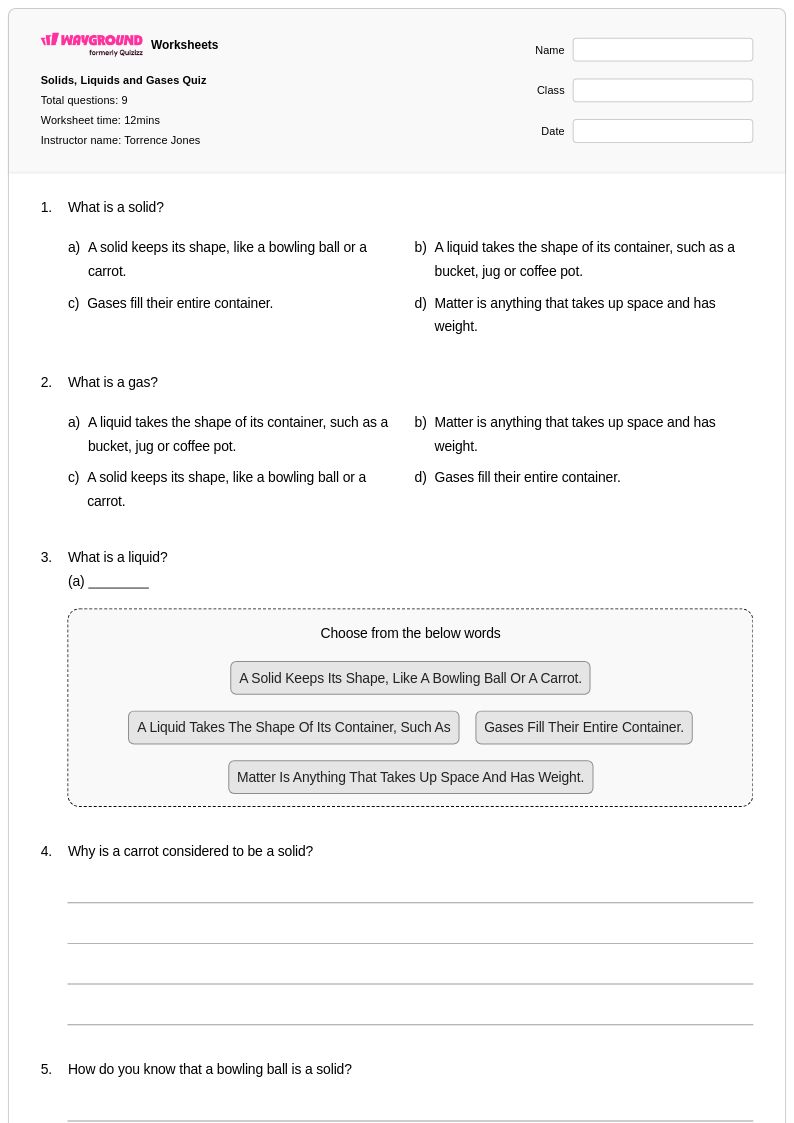
9 Q
2nd
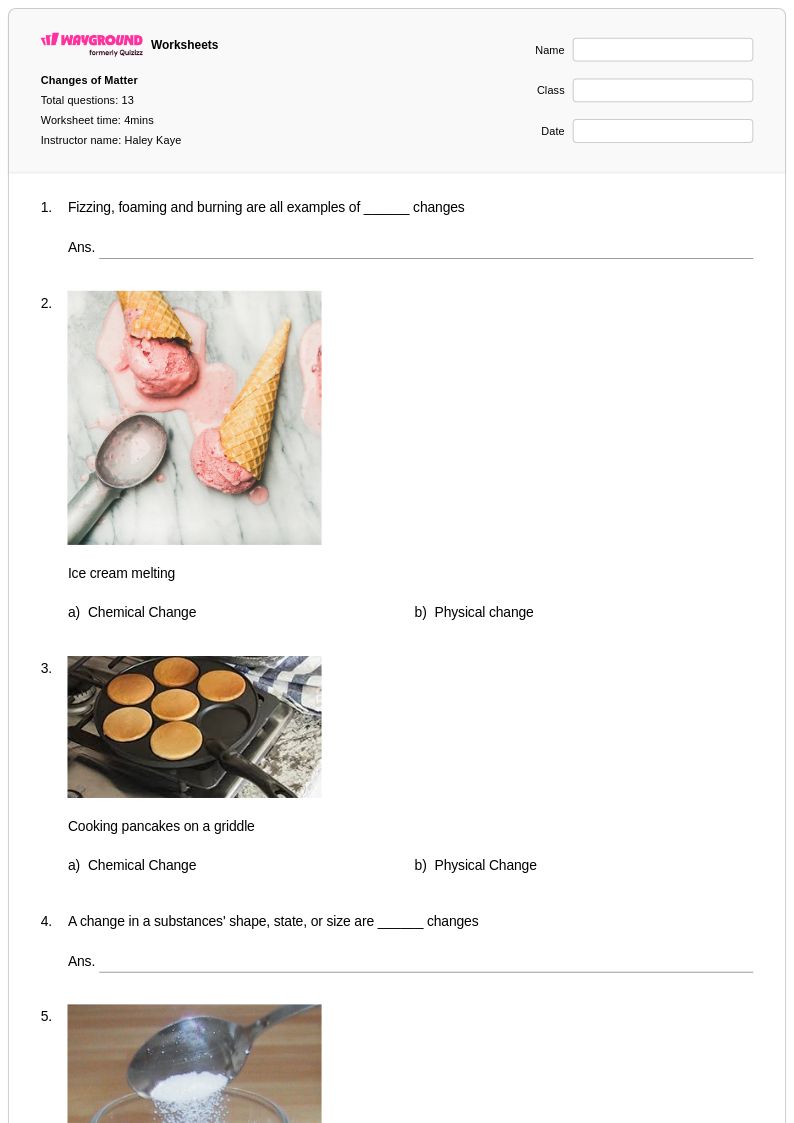
13 Q
2nd - 5th
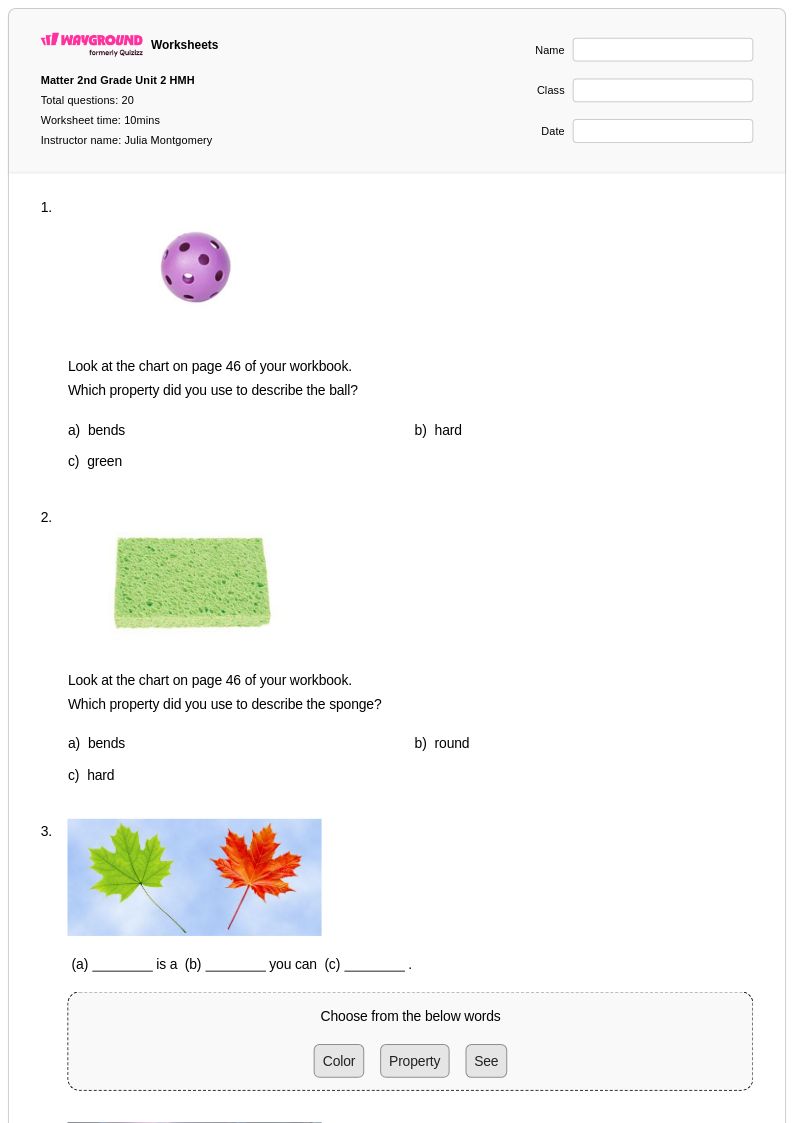
20 Q
2nd
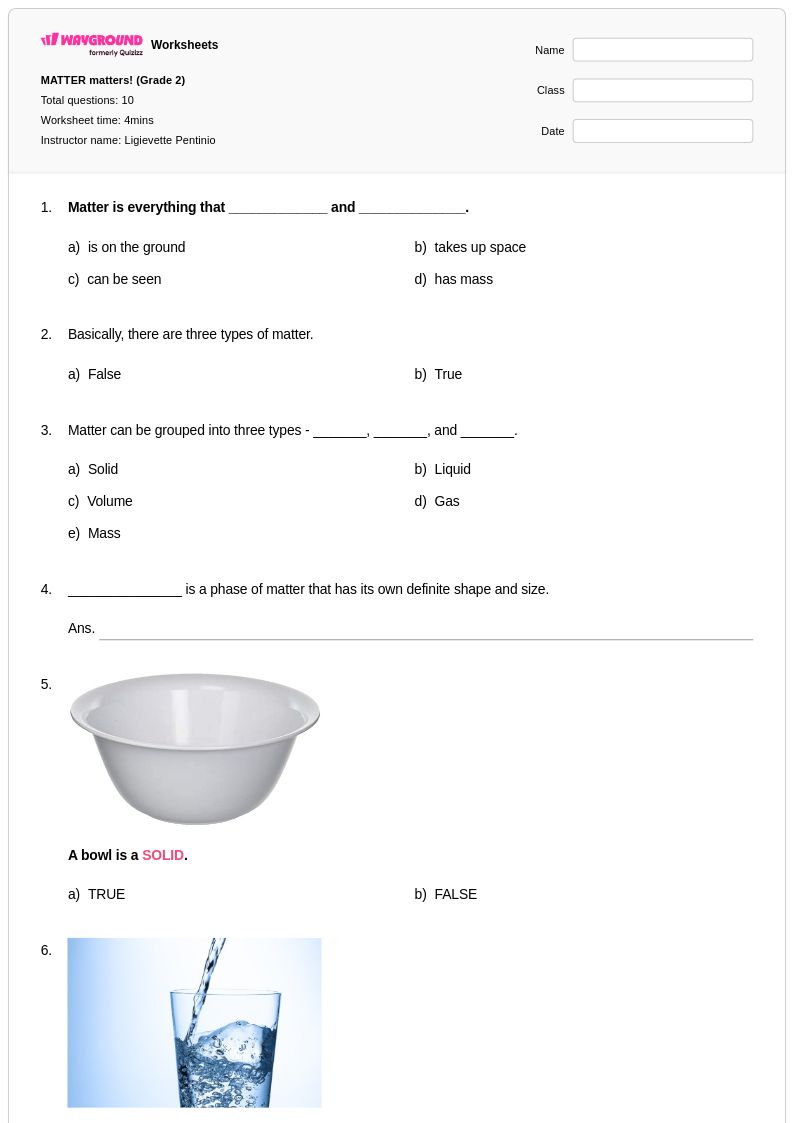
10 Q
2nd
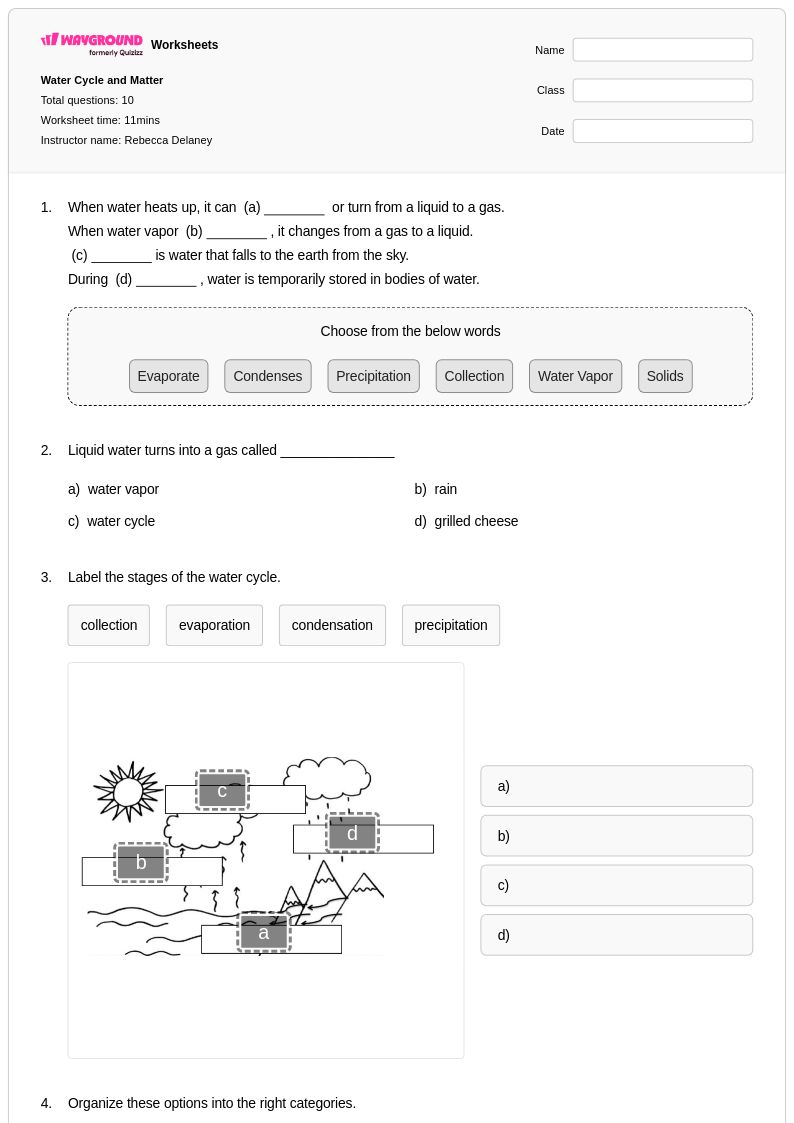
10 Q
2nd
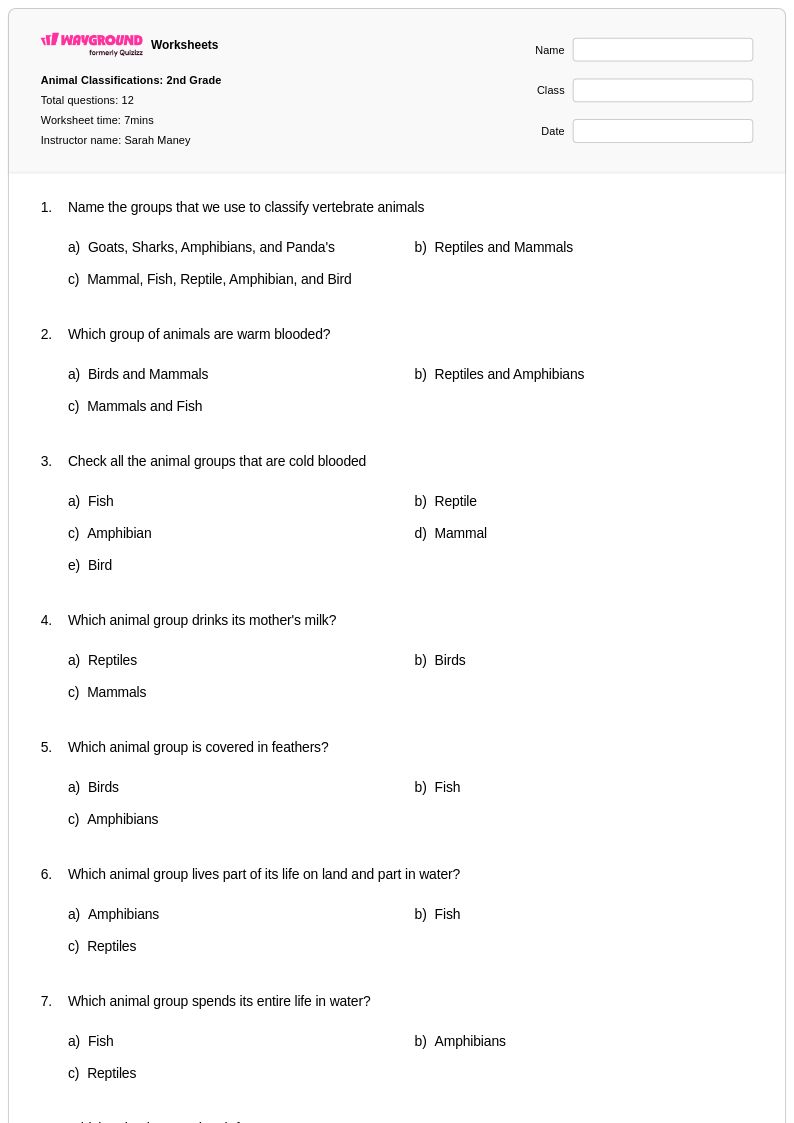
12 Q
2nd - 4th
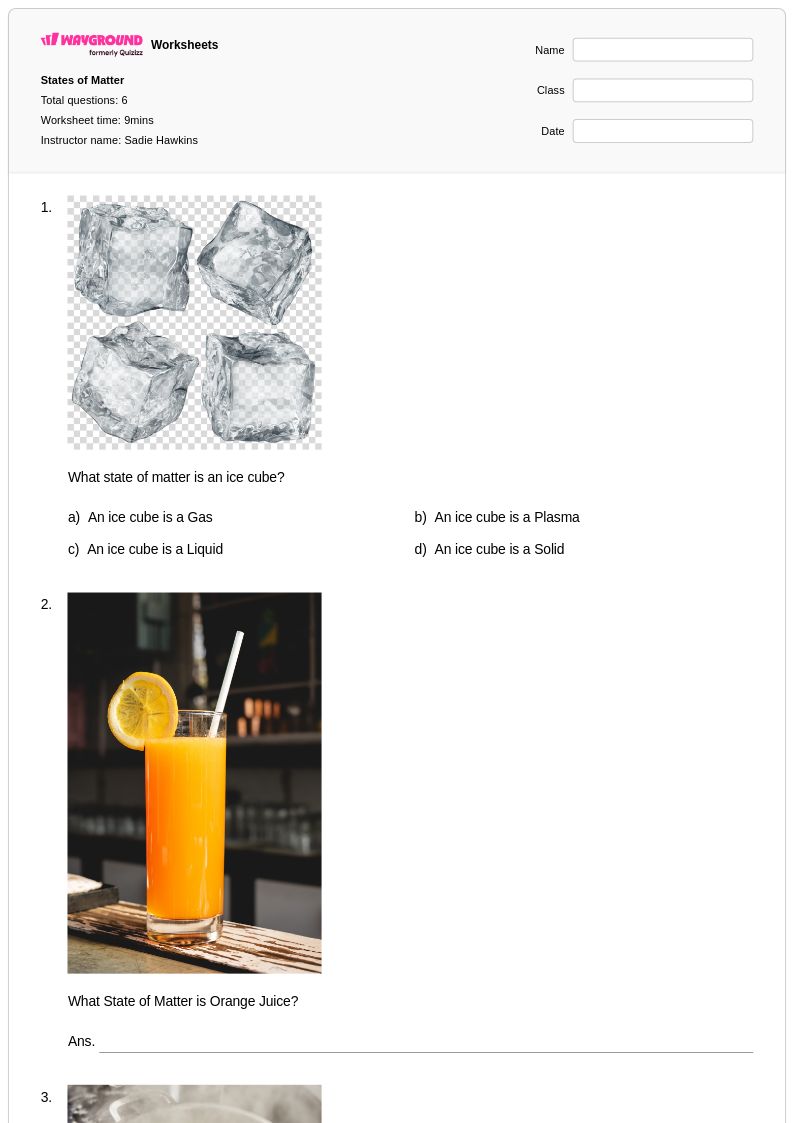
6 Q
2nd
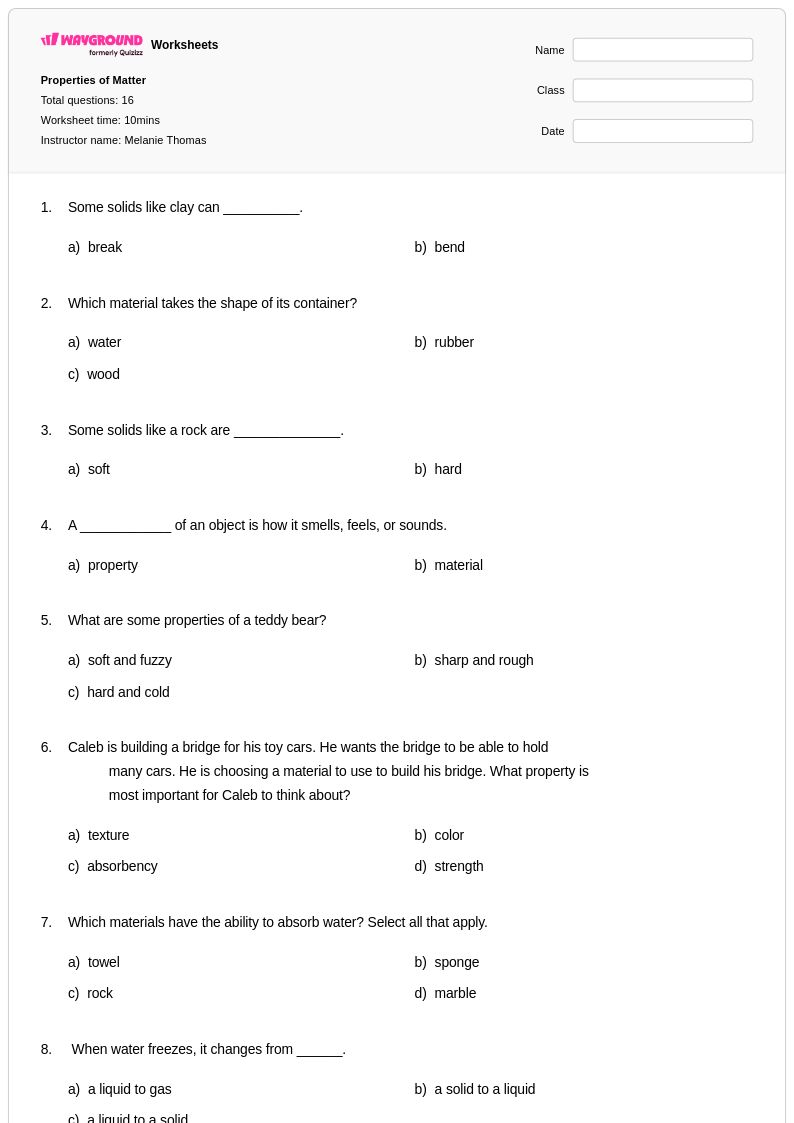
16 Q
2nd
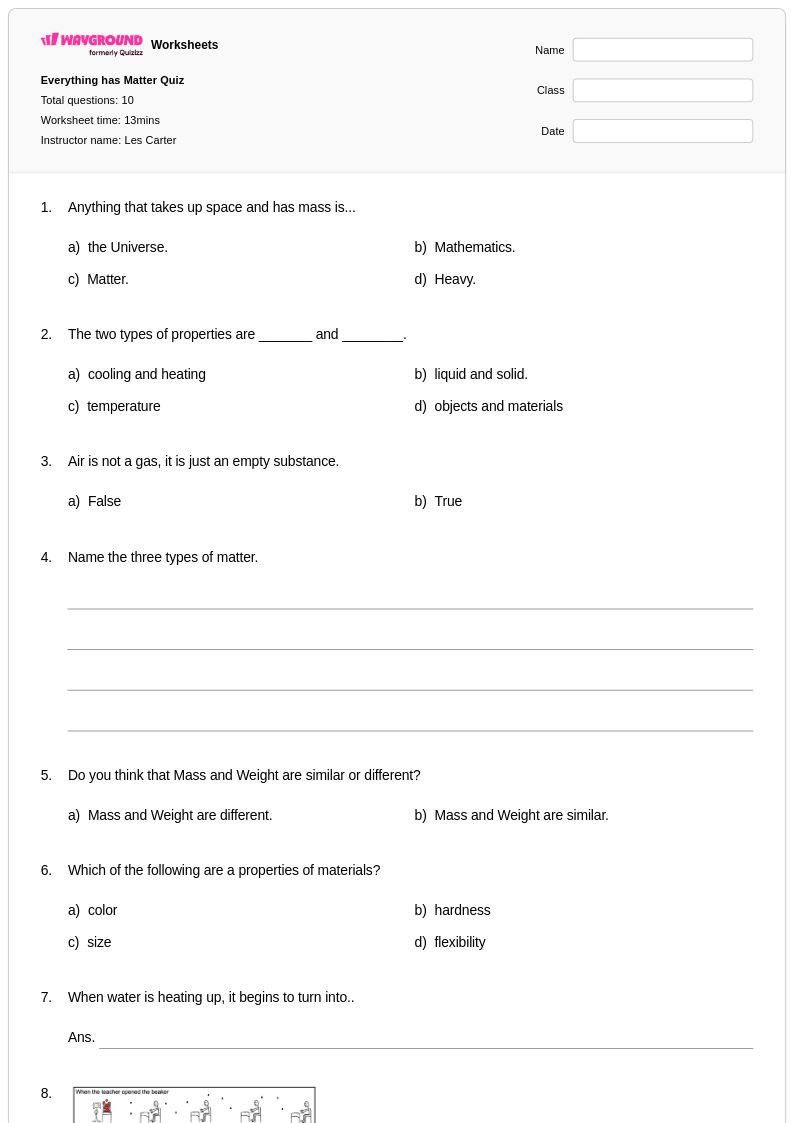
10 Q
1st - 5th
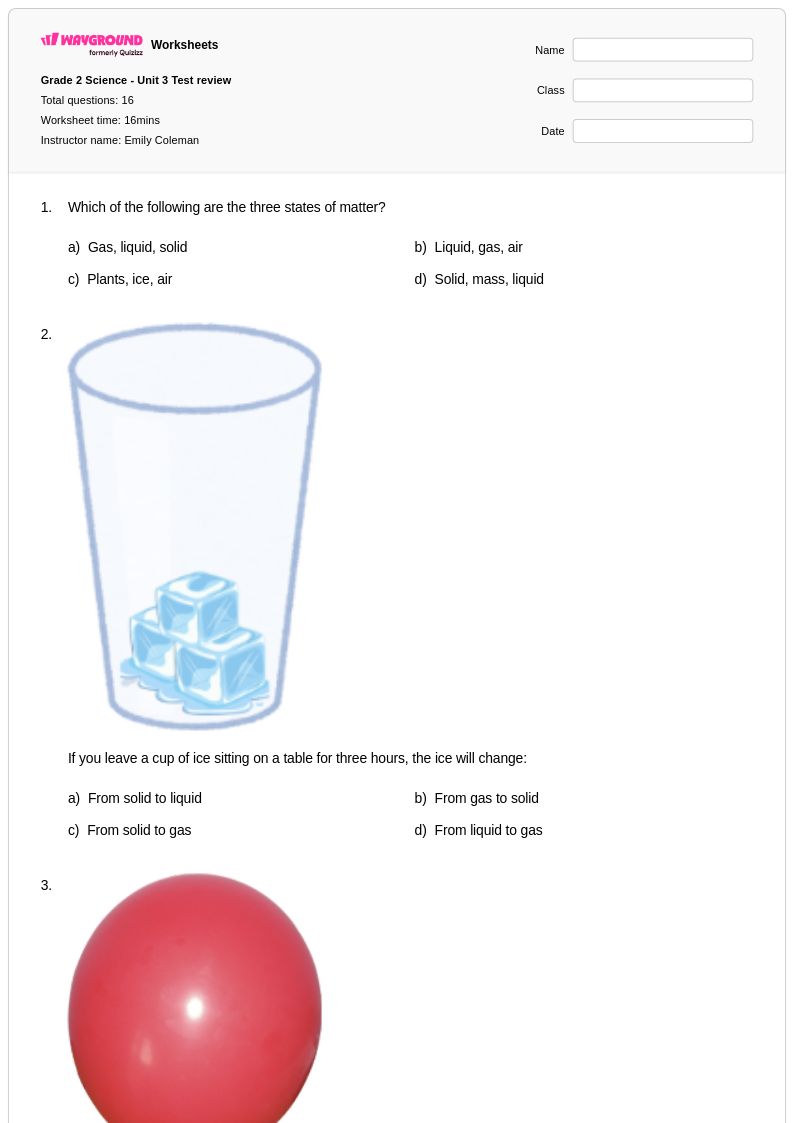
16 Q
2nd
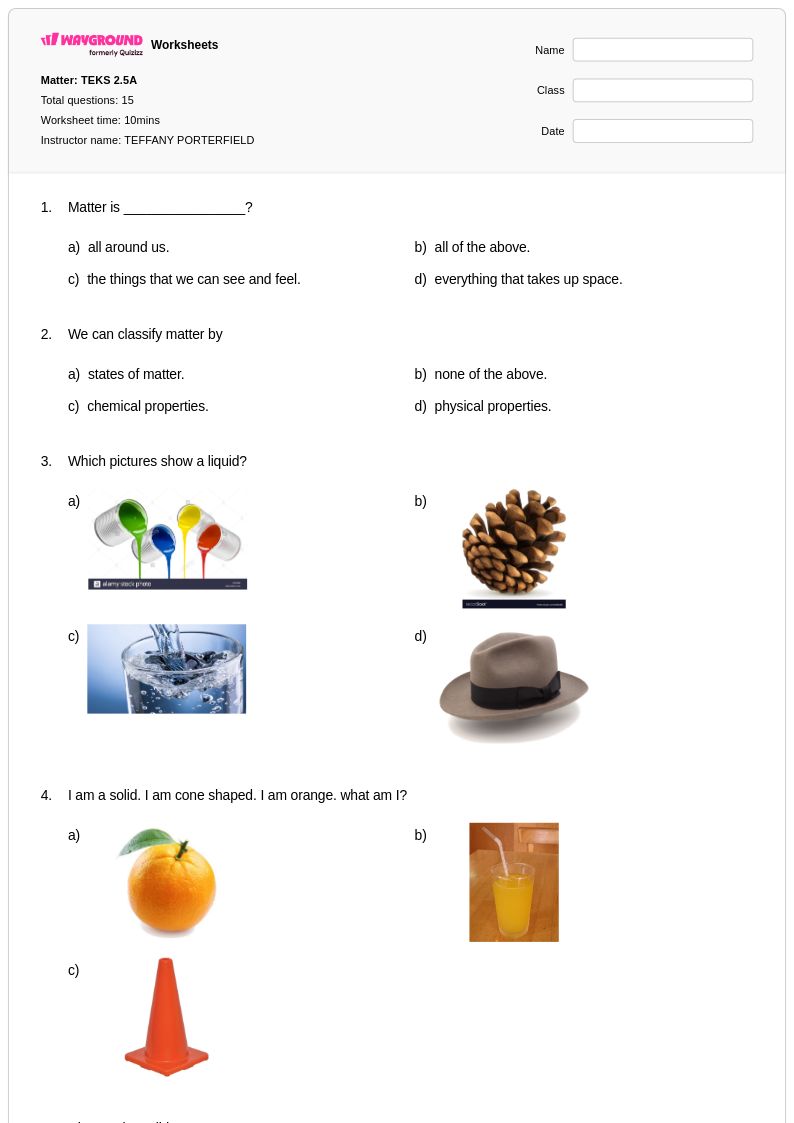
15 Q
2nd
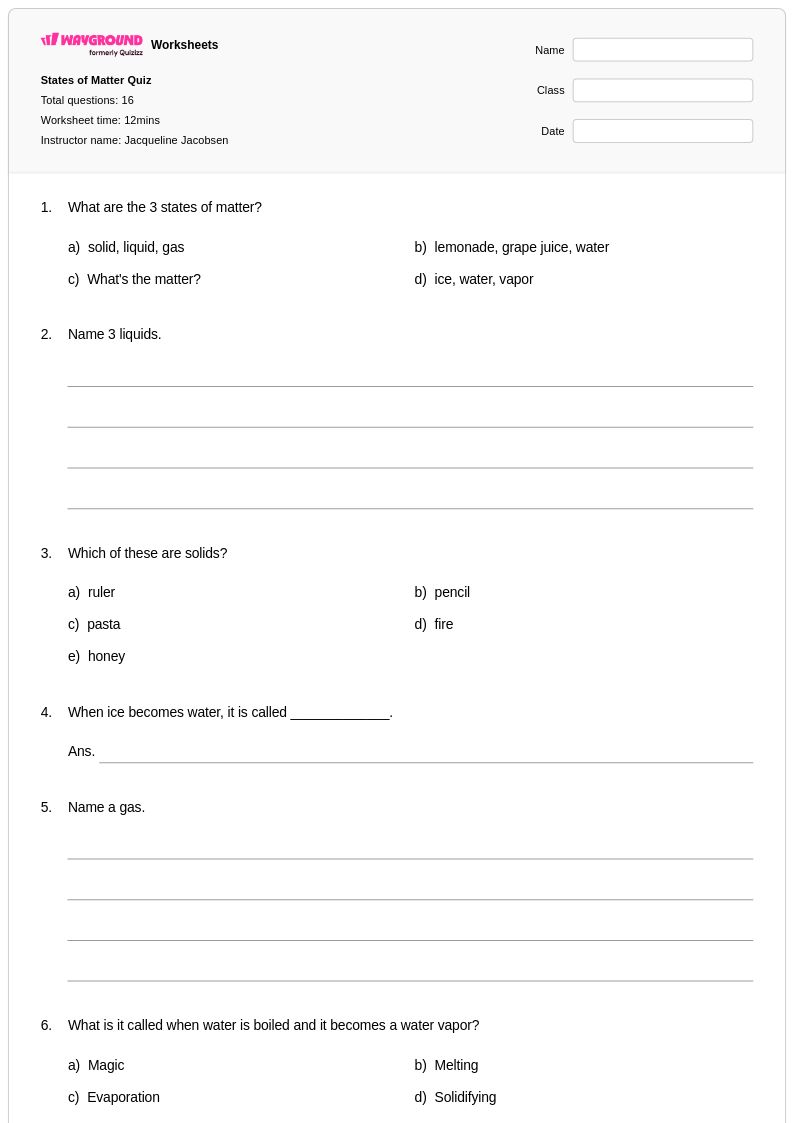
16 Q
2nd
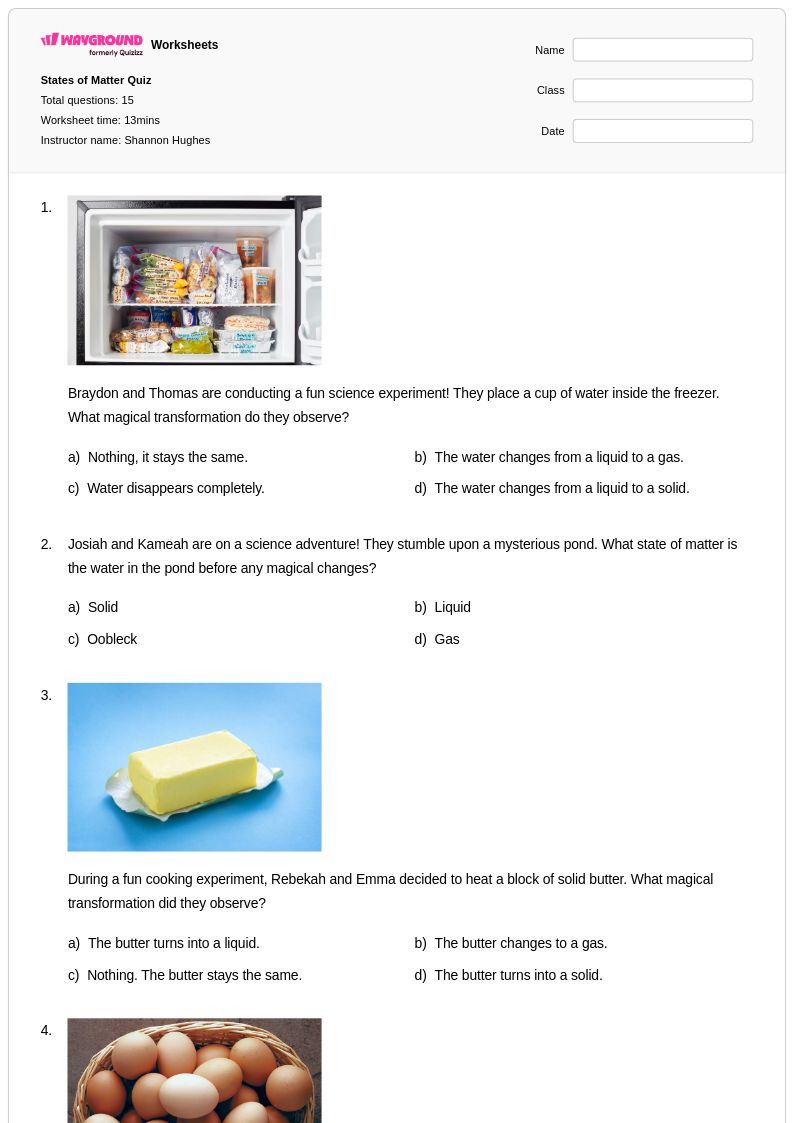
15 Q
2nd
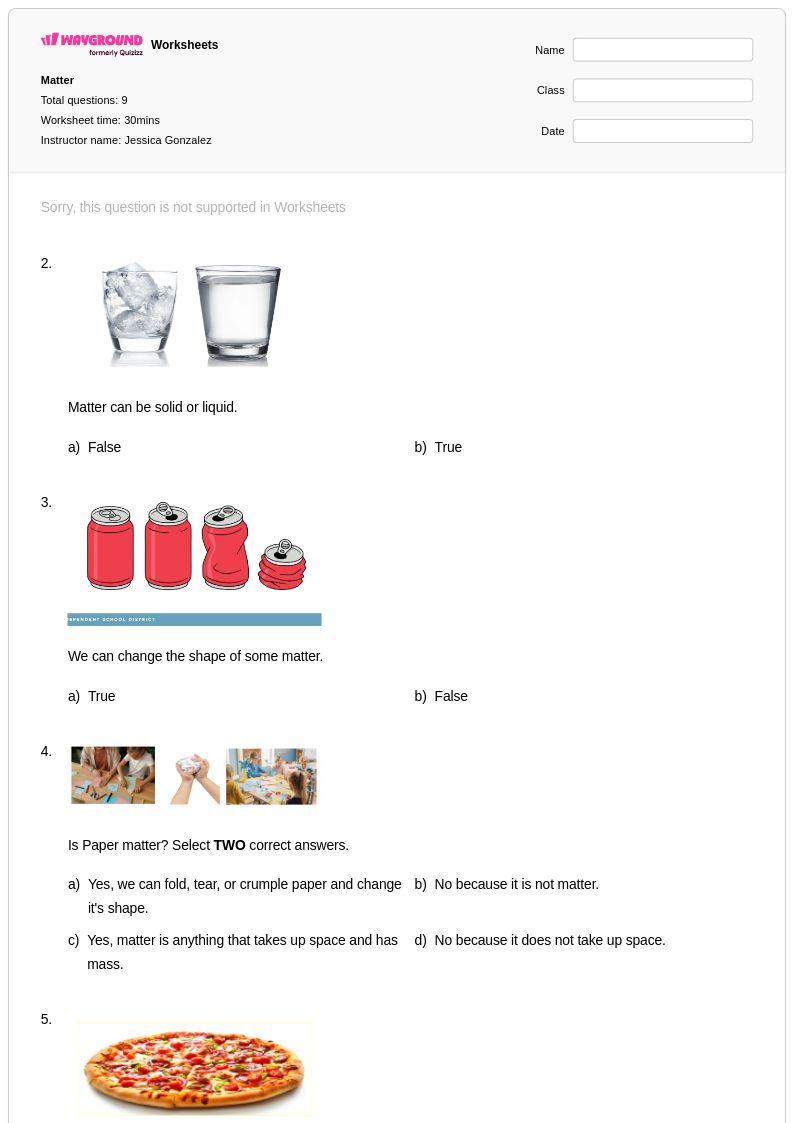
10 Q
2nd
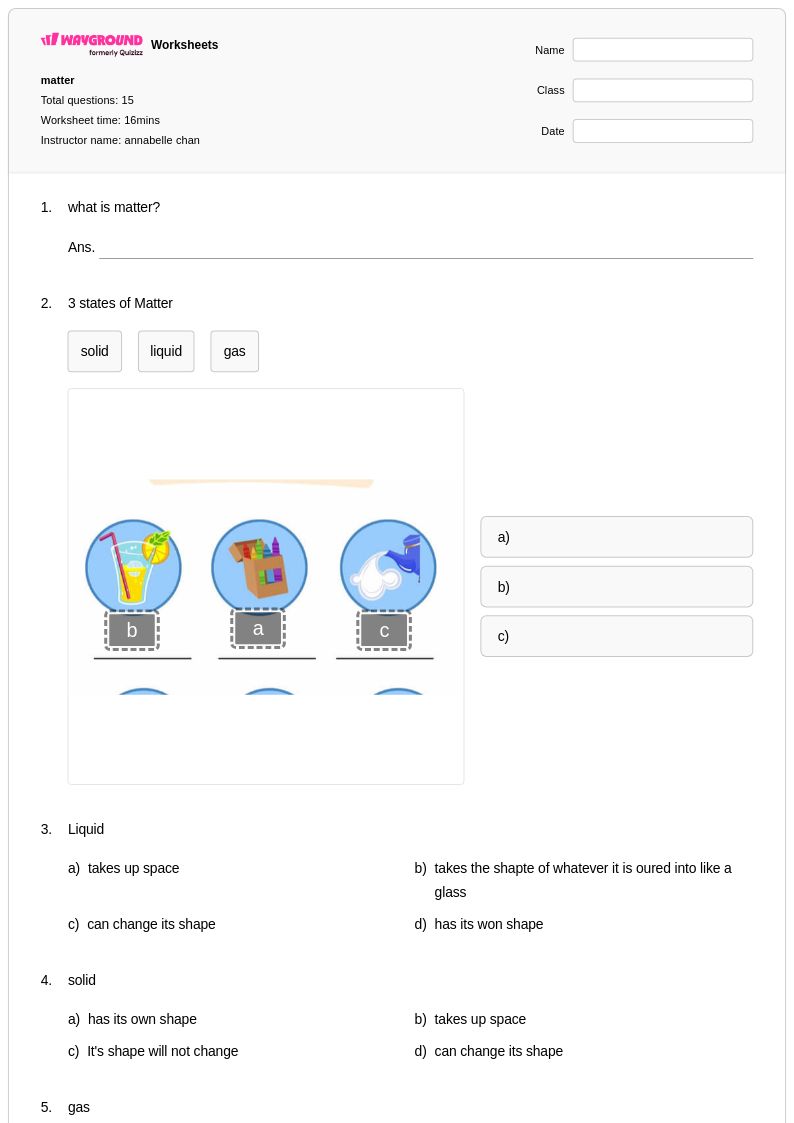
15 Q
2nd
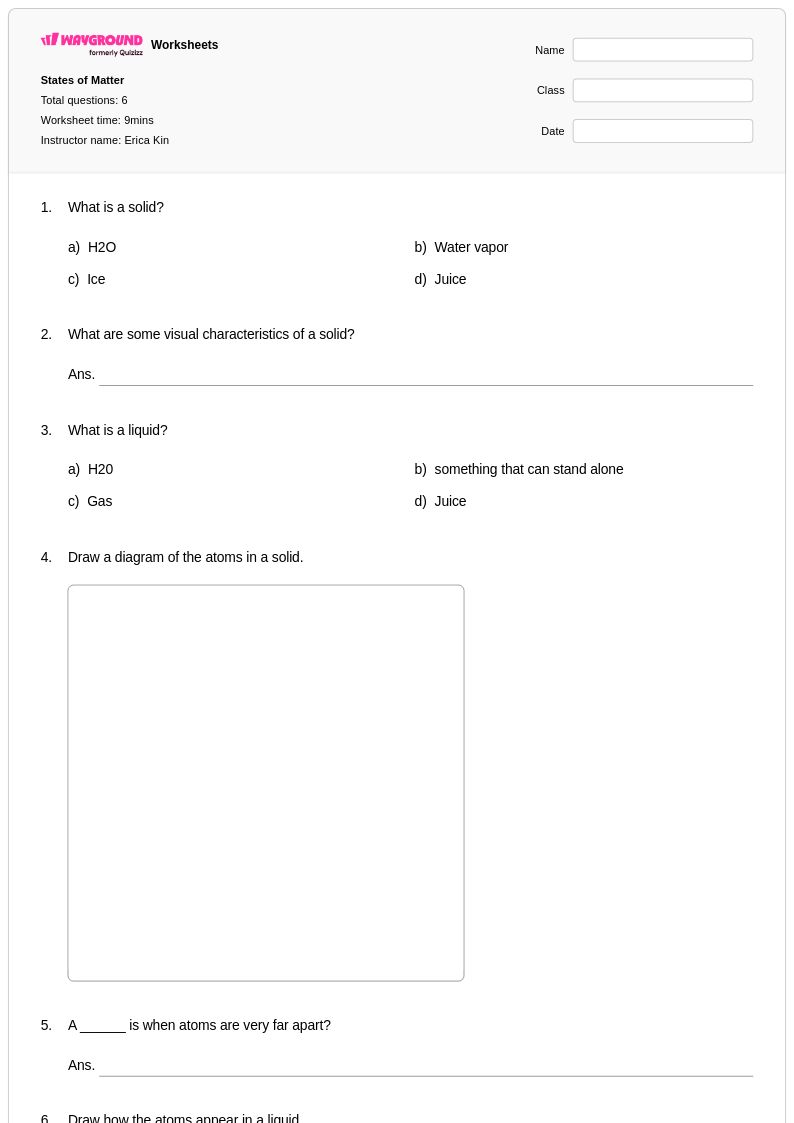
6 Q
2nd
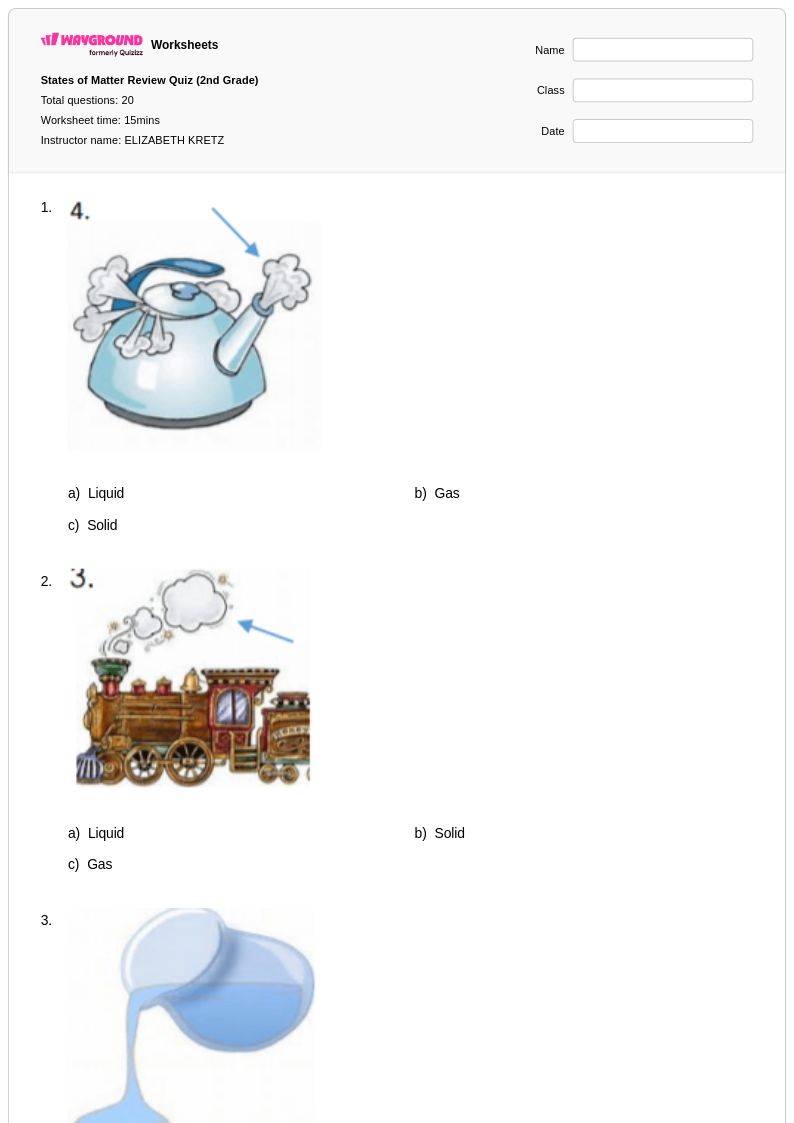
20 Q
2nd
10 Q
2nd - 3rd
14 Q
2nd
21 Q
KG - 4th
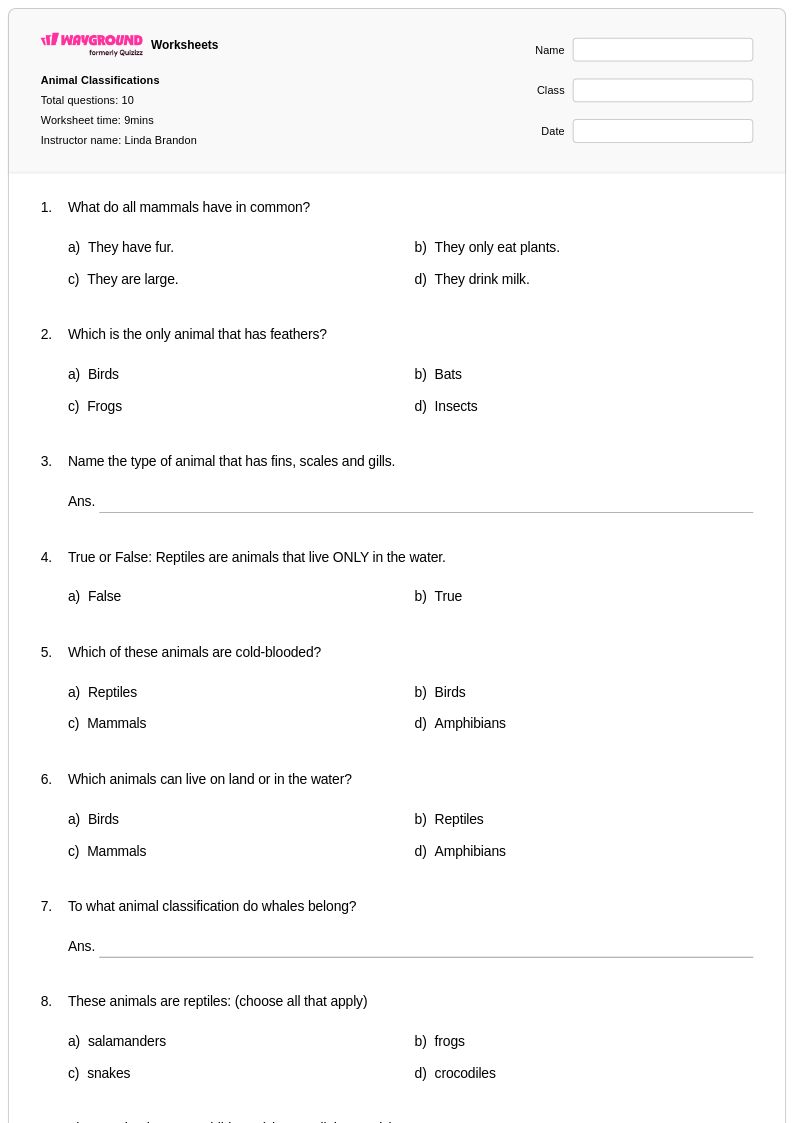
10 Q
1st - 4th
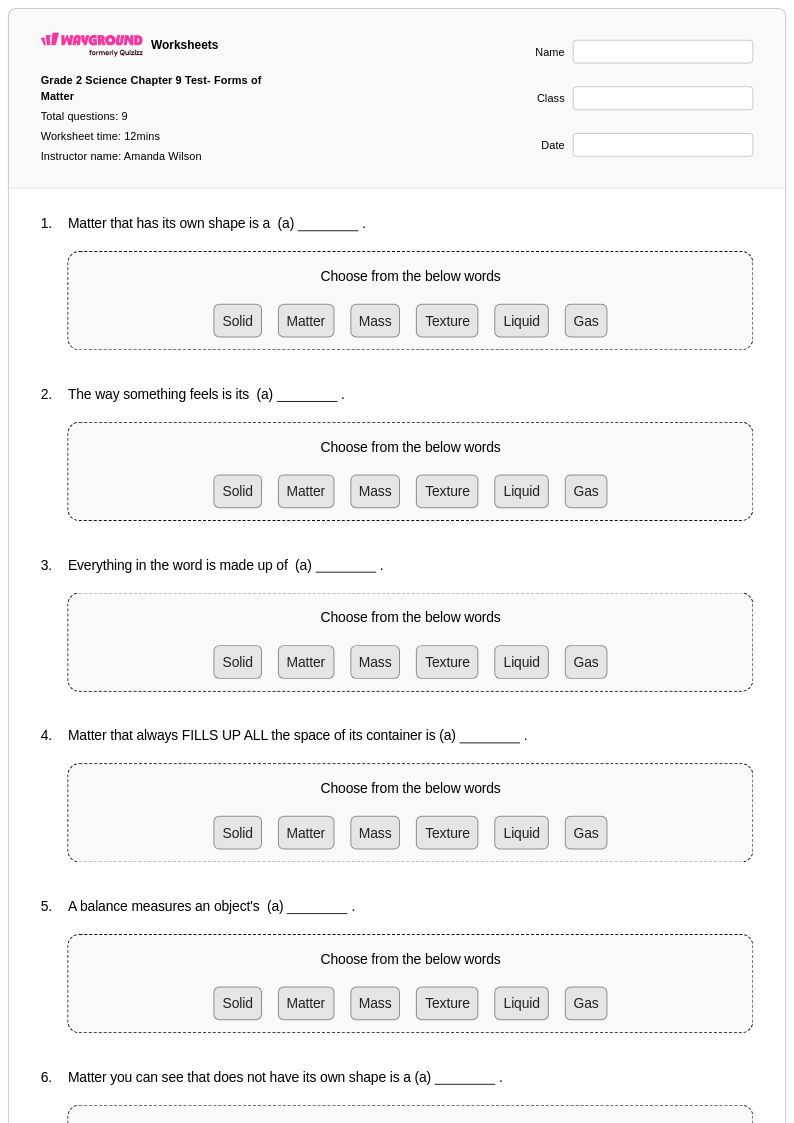
9 Q
2nd
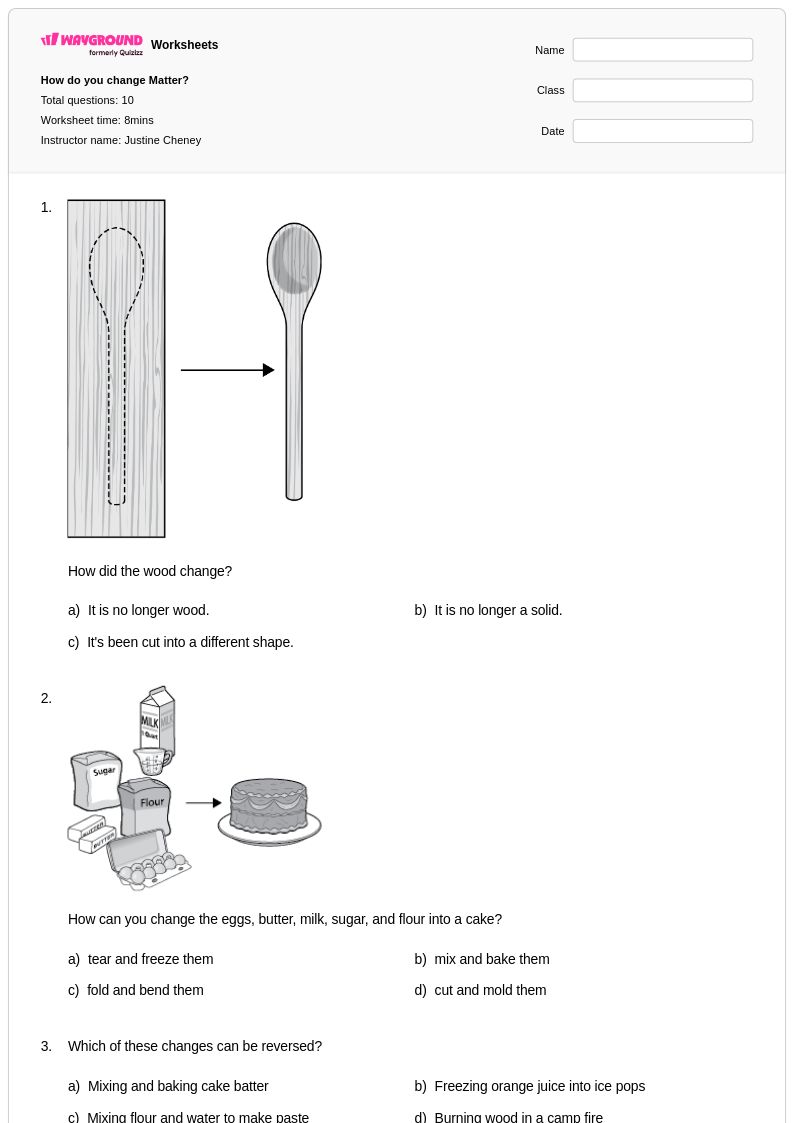
10 Q
2nd
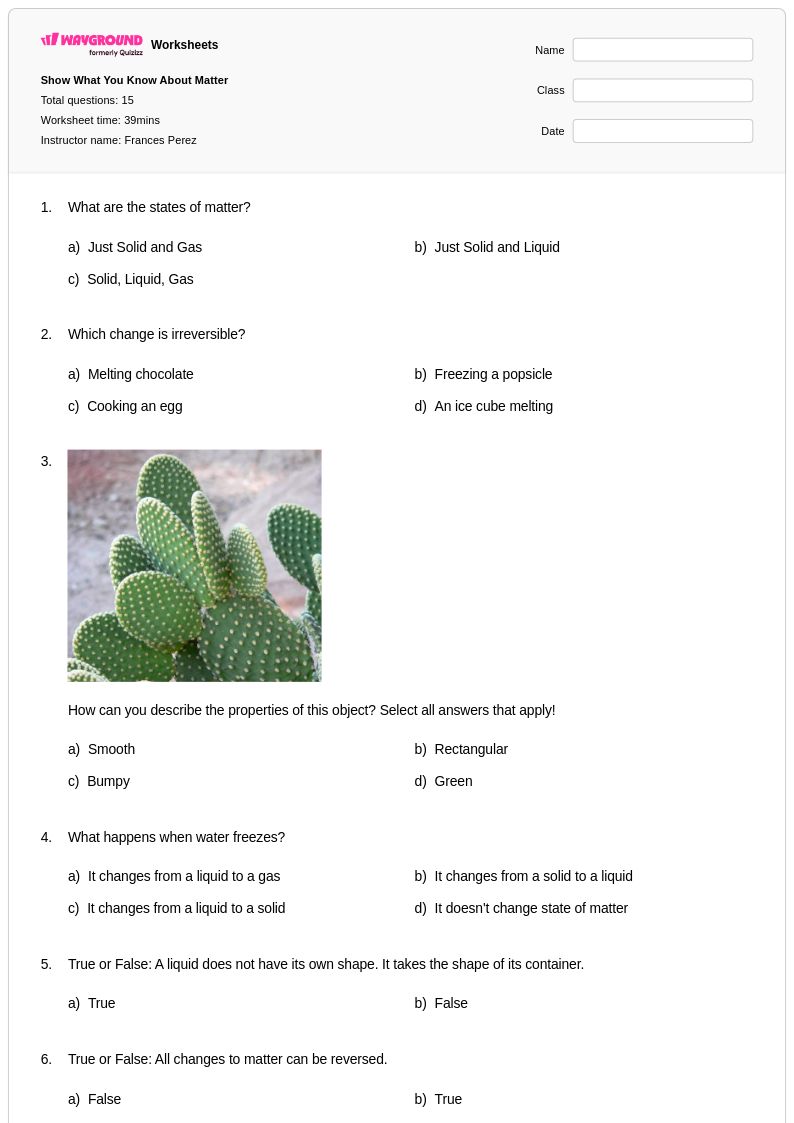
15 Q
2nd
Explore Classification of Matter Worksheets by Grades
Explore Other Subject Worksheets for class 2
Explore printable Classification of Matter worksheets for Class 2
Classification of matter worksheets for Class 2 students available through Wayground (formerly Quizizz) introduce young learners to the fundamental concept of organizing materials based on their observable properties. These carefully designed resources help second graders develop critical thinking skills by examining everyday objects and substances, learning to distinguish between solids, liquids, and gases through hands-on observation activities. The worksheets strengthen scientific vocabulary, observation skills, and logical reasoning as students practice sorting materials into appropriate categories. Teachers can access comprehensive practice problems that guide students through identifying states of matter in their environment, while answer keys provide immediate feedback for both independent work and guided instruction. These free printables offer structured learning experiences that build foundational chemistry concepts through age-appropriate activities and visual representations.
Wayground (formerly Quizizz) empowers educators with an extensive collection of millions of teacher-created classification of matter resources specifically tailored for elementary science instruction. The platform's robust search and filtering capabilities allow teachers to quickly locate materials aligned with curriculum standards and differentiated for various learning levels within the Class 2 classroom. These versatile worksheet collections support comprehensive lesson planning by offering both printable pdf formats for traditional paper-based activities and digital versions for interactive learning environments. Teachers can customize content to meet individual student needs, making these resources invaluable for remediation with struggling learners, enrichment for advanced students, and regular skill practice for the entire class. The platform's organizational tools and quality-assured content streamline preparation time while ensuring students receive consistent, standards-based exposure to essential matter classification concepts.
FAQs
How do I teach classification of matter to my students?
What exercises help students practice classifying matter?
What mistakes do students commonly make when classifying matter?
How can I differentiate classification of matter instruction for students with different learning needs?
How do I use Wayground's classification of matter worksheets in my classroom?