Free Printable Classification of Matter Worksheets for Class 7
Enhance Class 7 students' understanding of classification of matter with Wayground's comprehensive collection of free worksheets, printables, and practice problems that include detailed answer keys and PDF formats for effective chemistry learning.
Explore printable Classification of Matter worksheets for Class 7
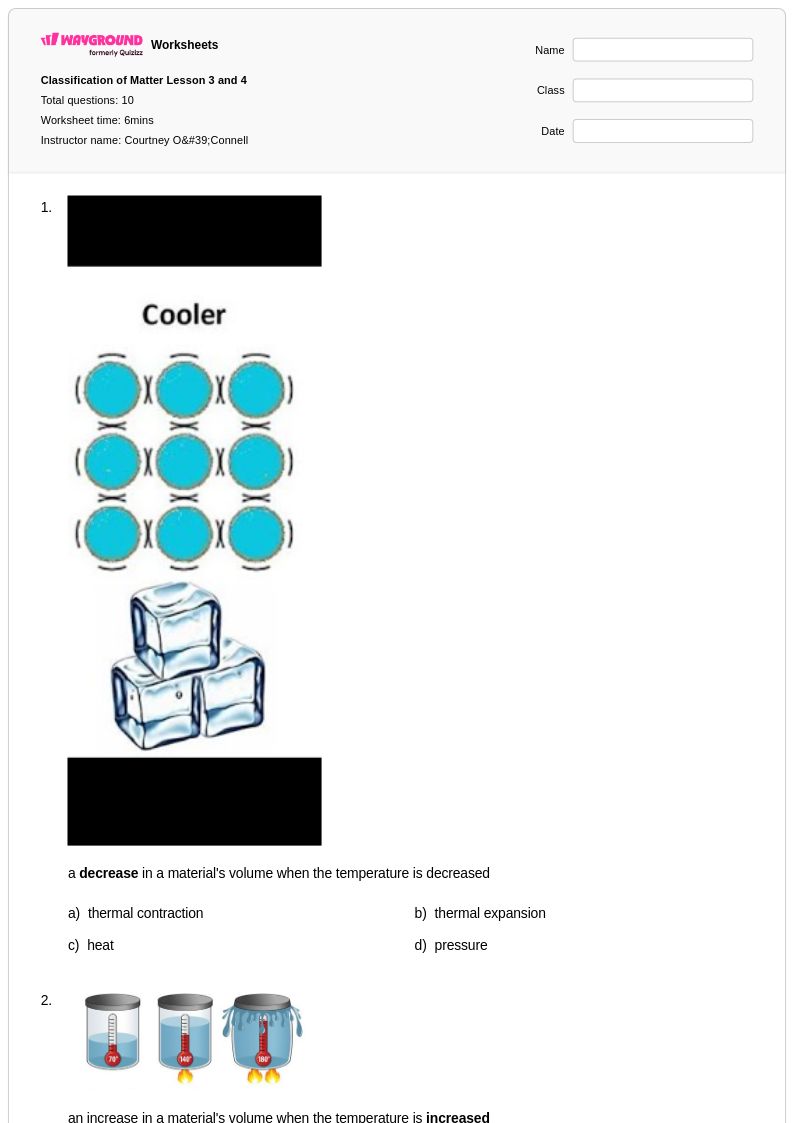
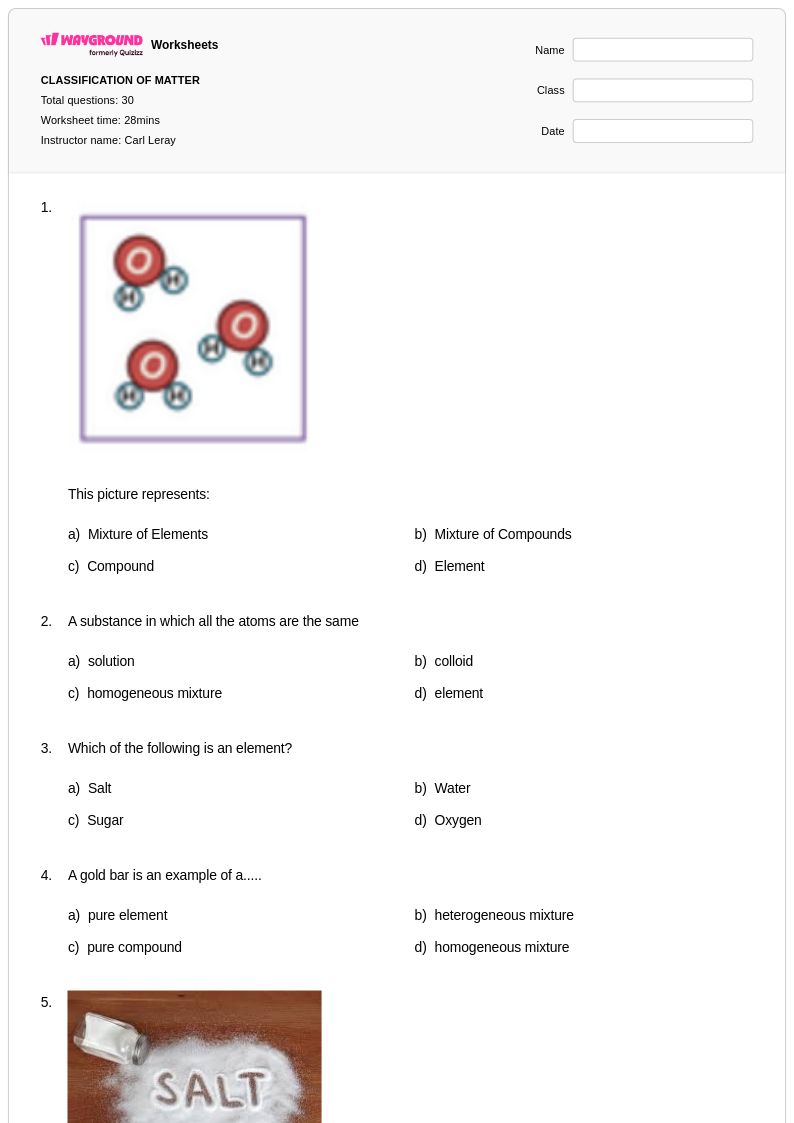
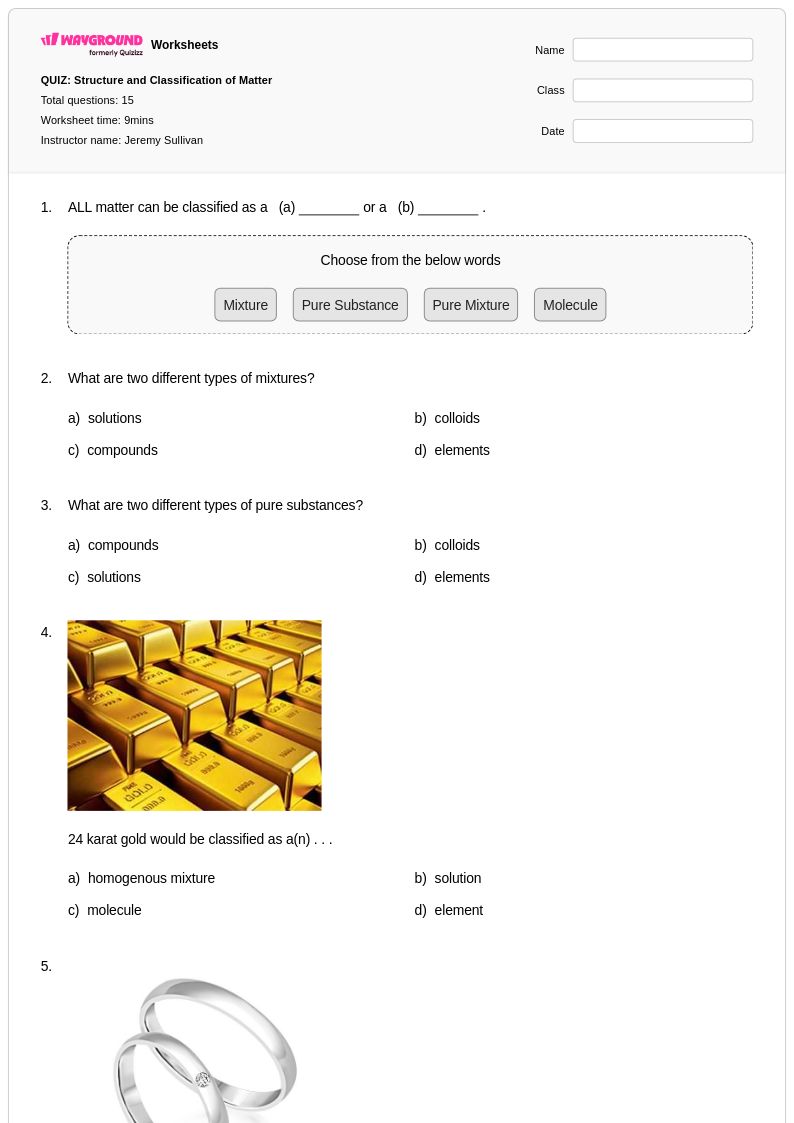
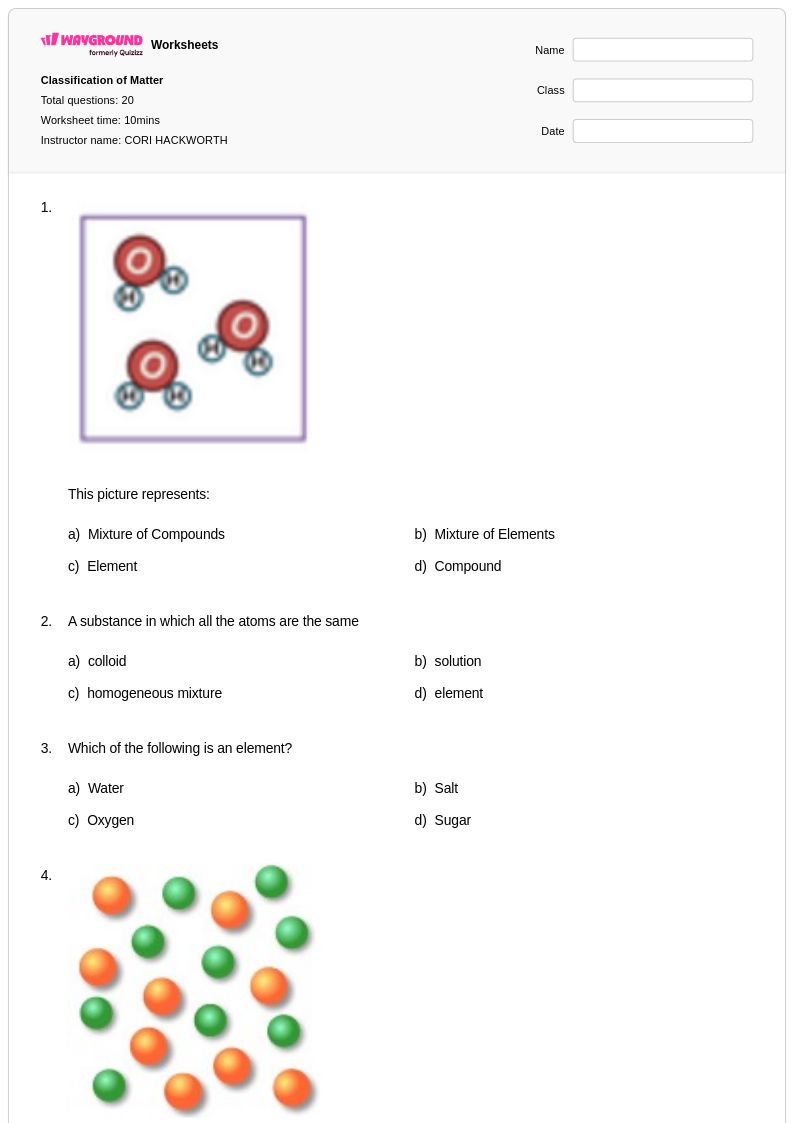
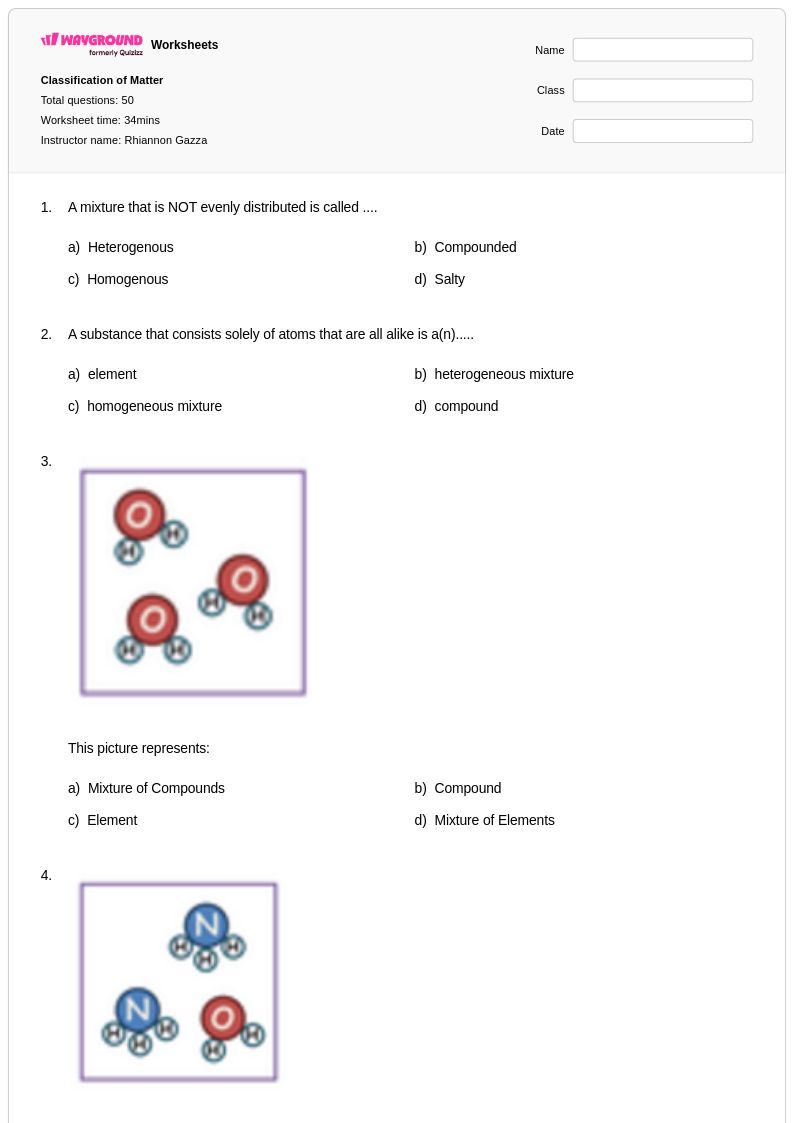
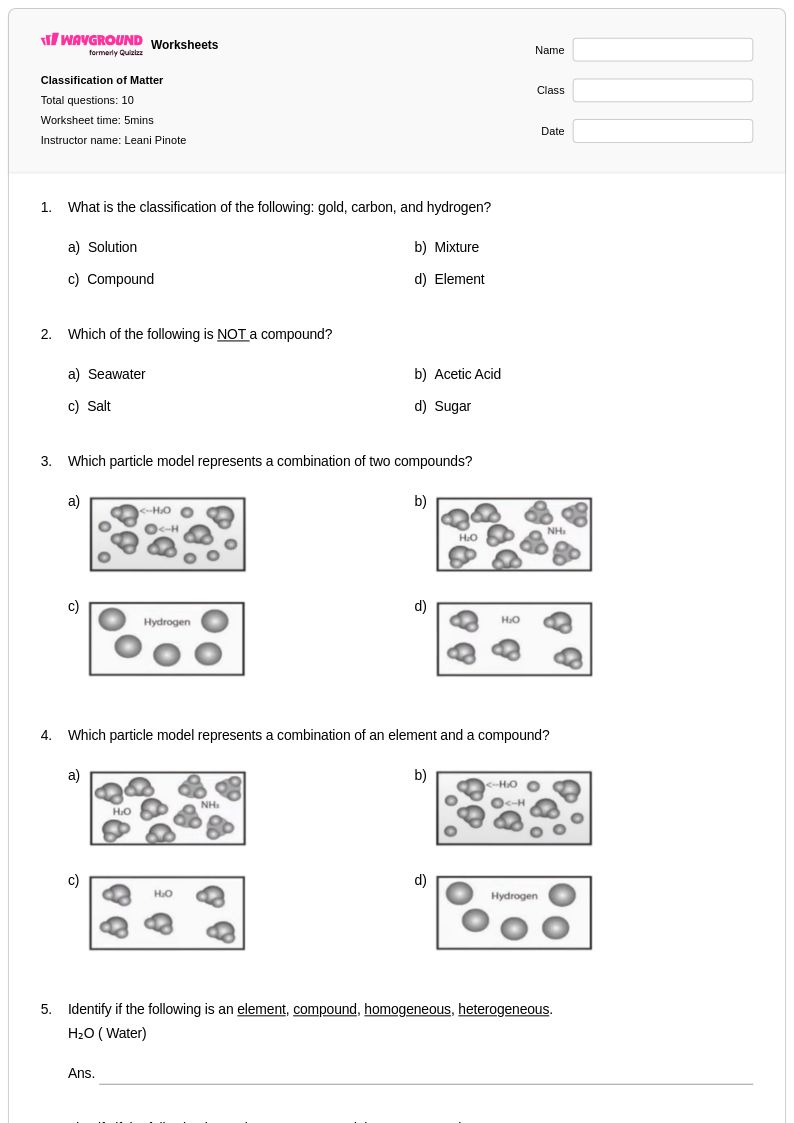
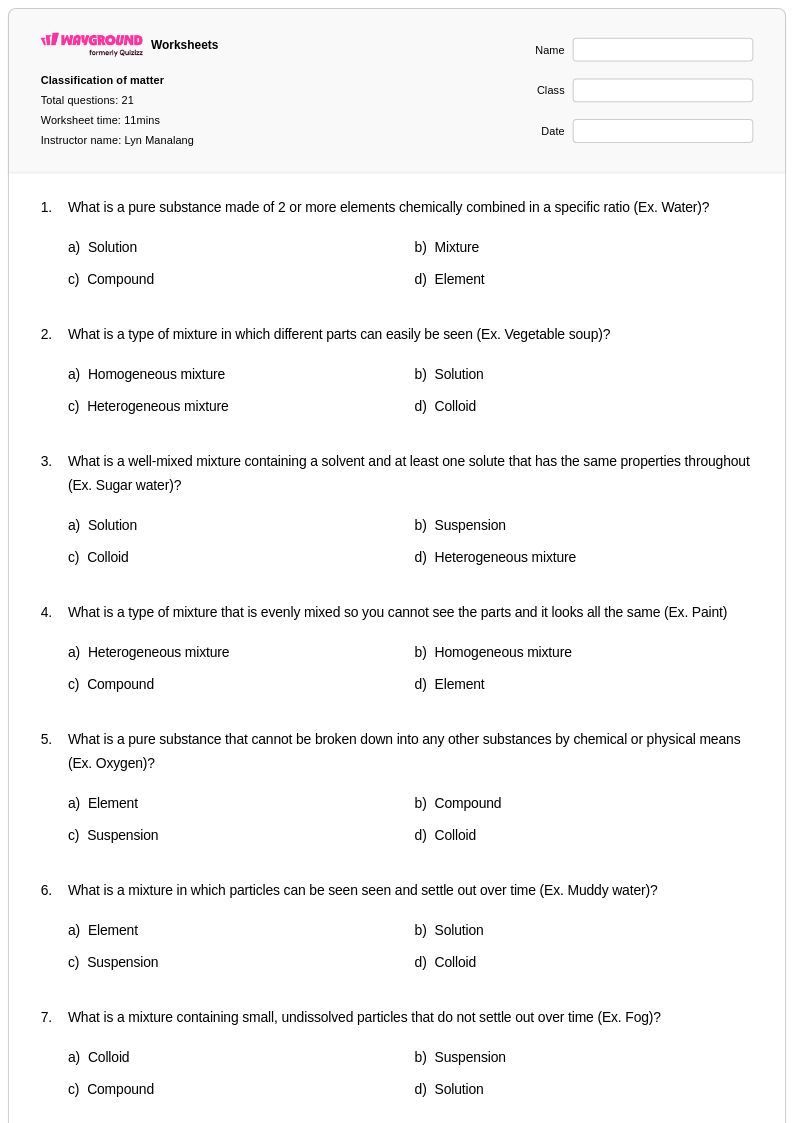
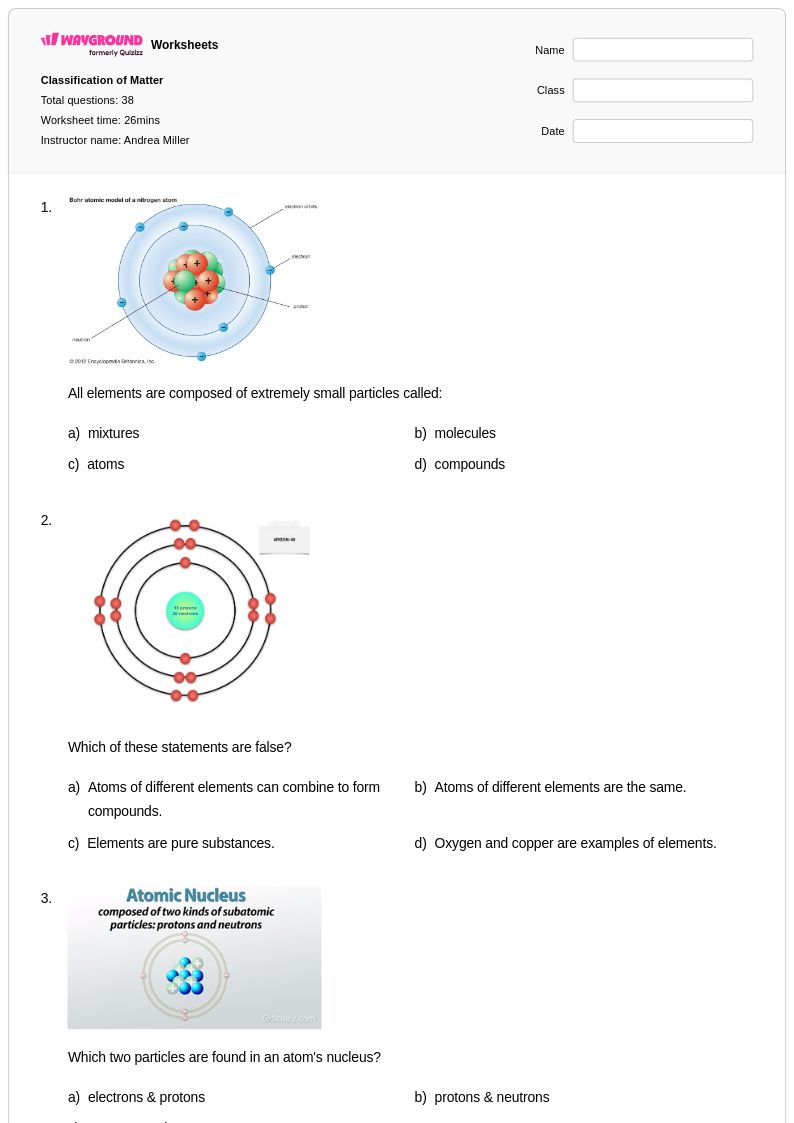
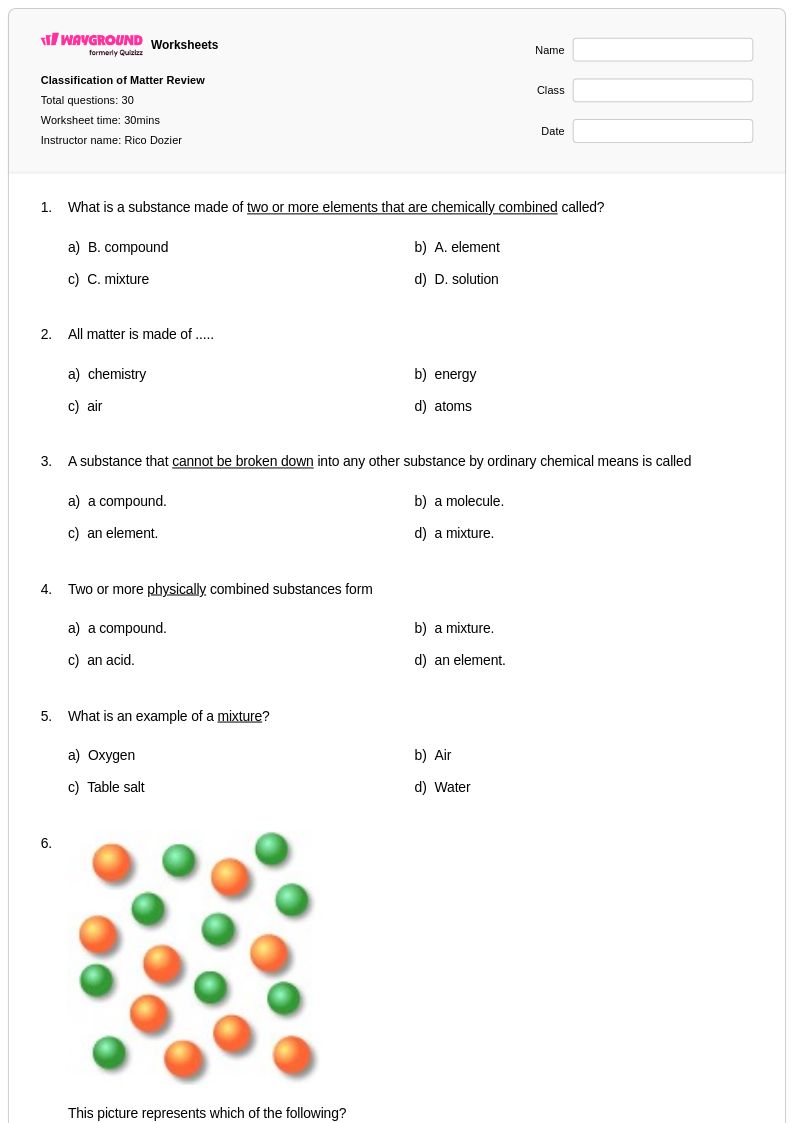
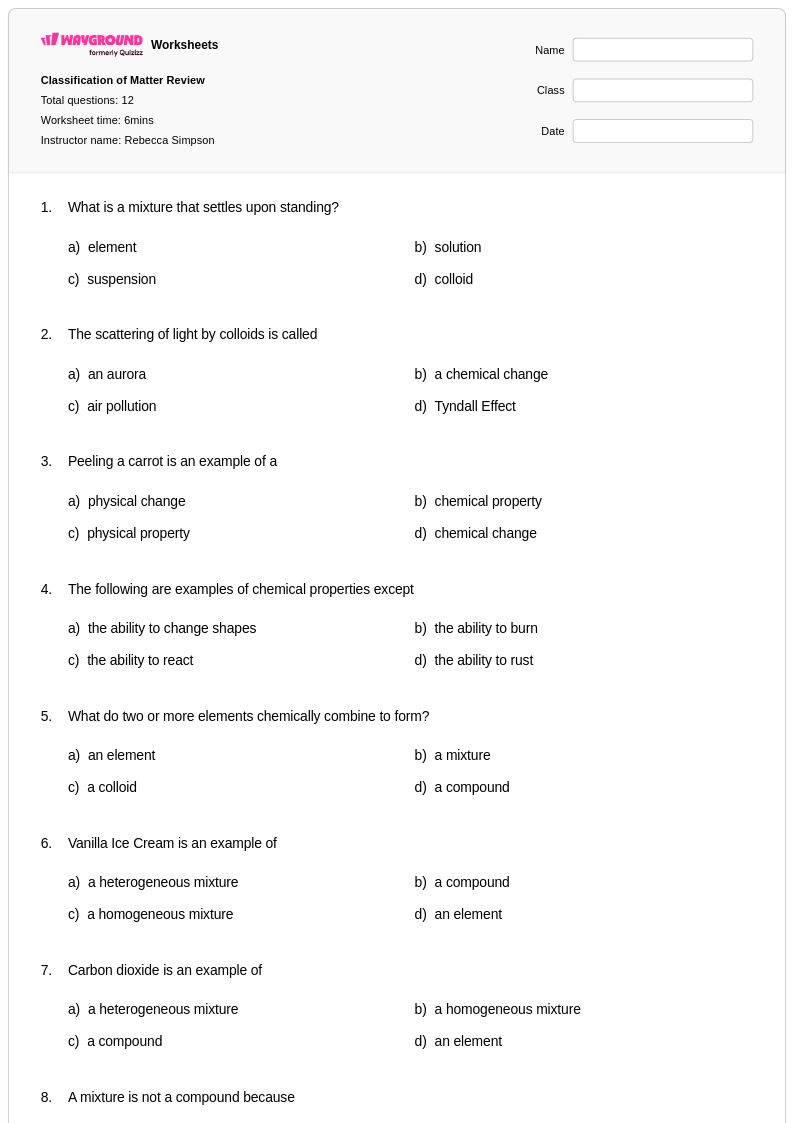
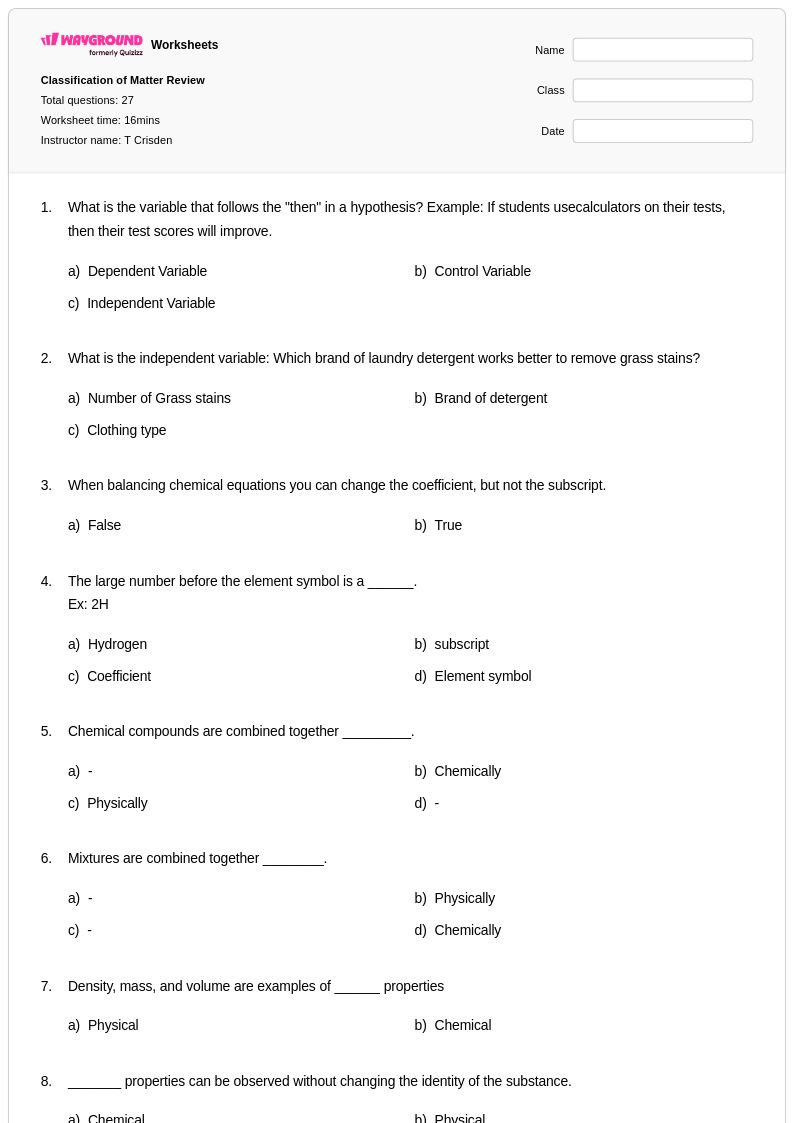
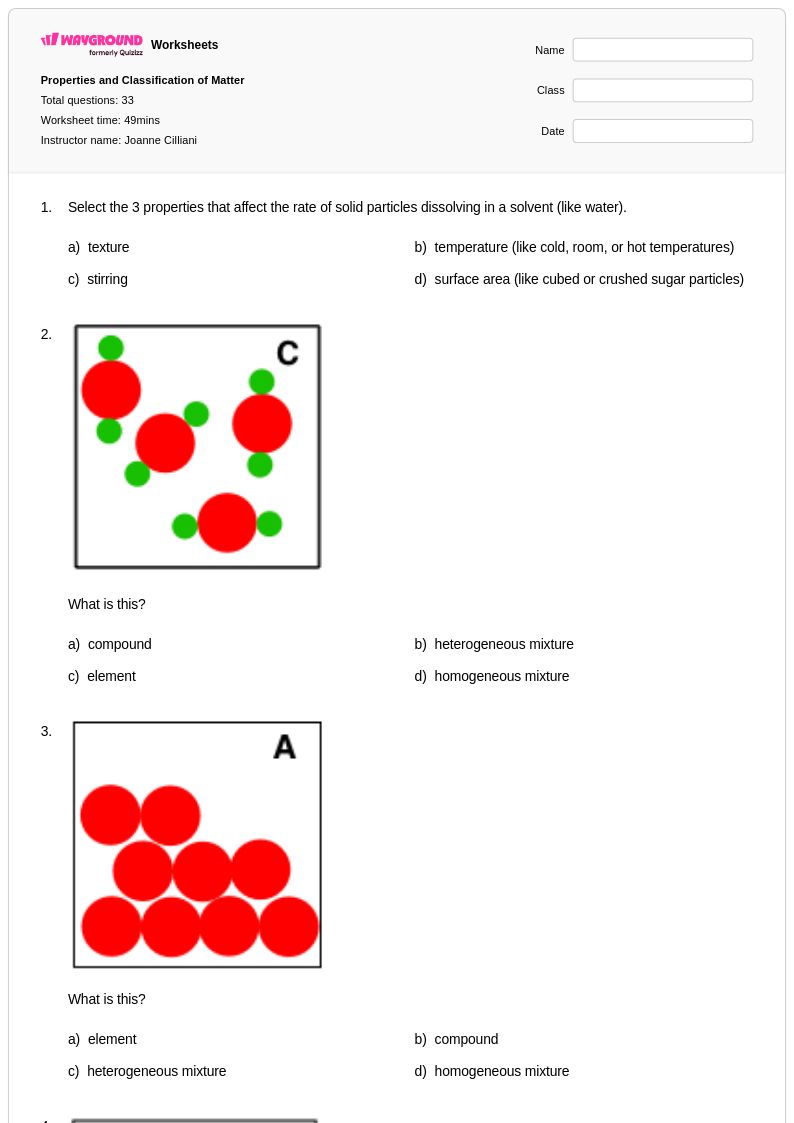
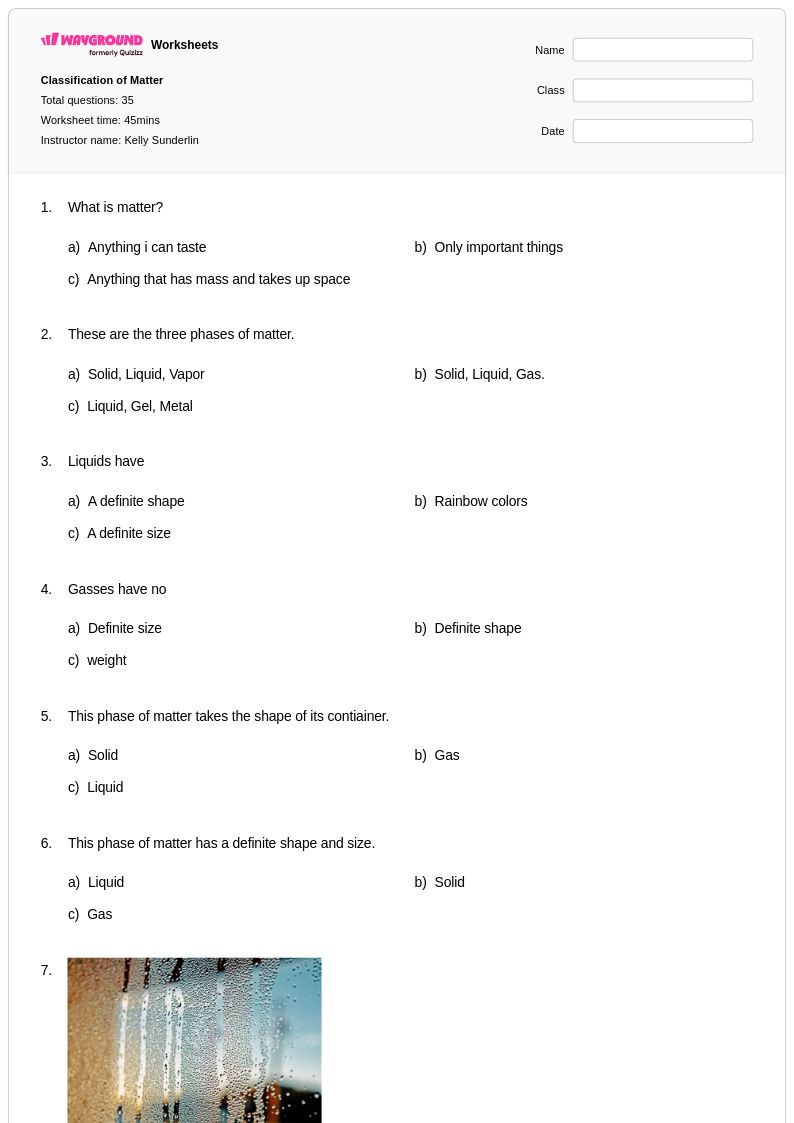
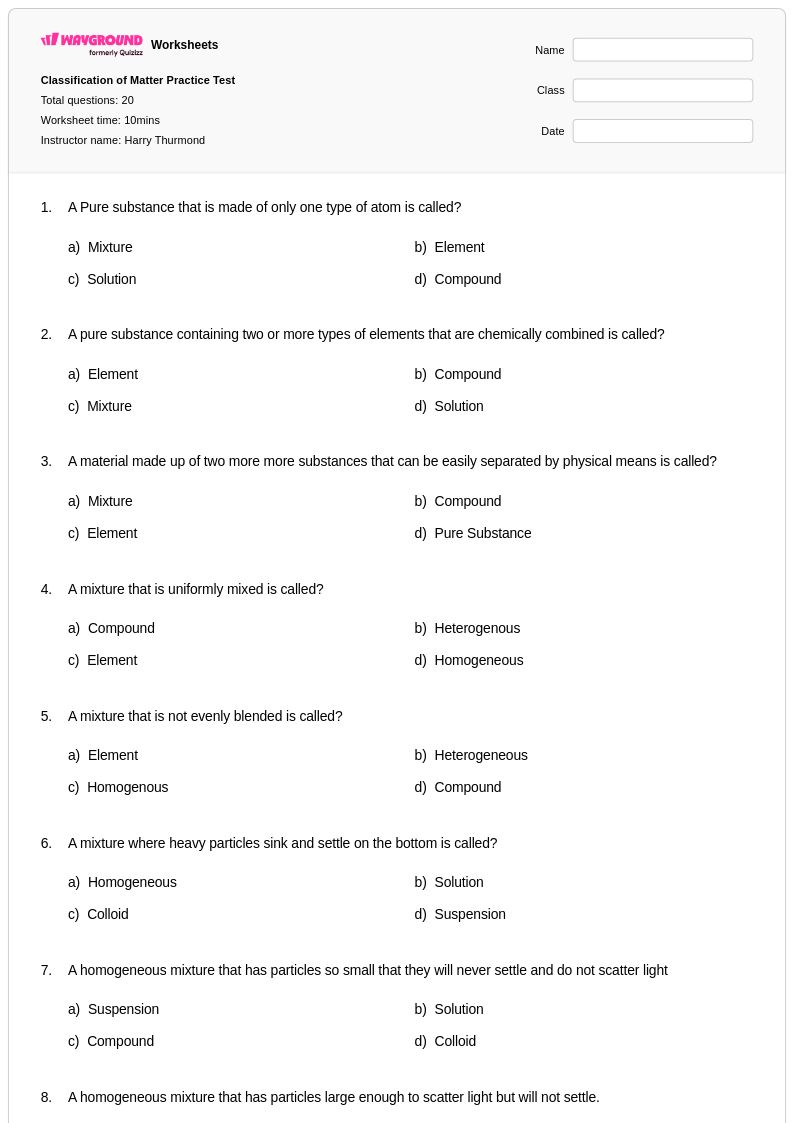
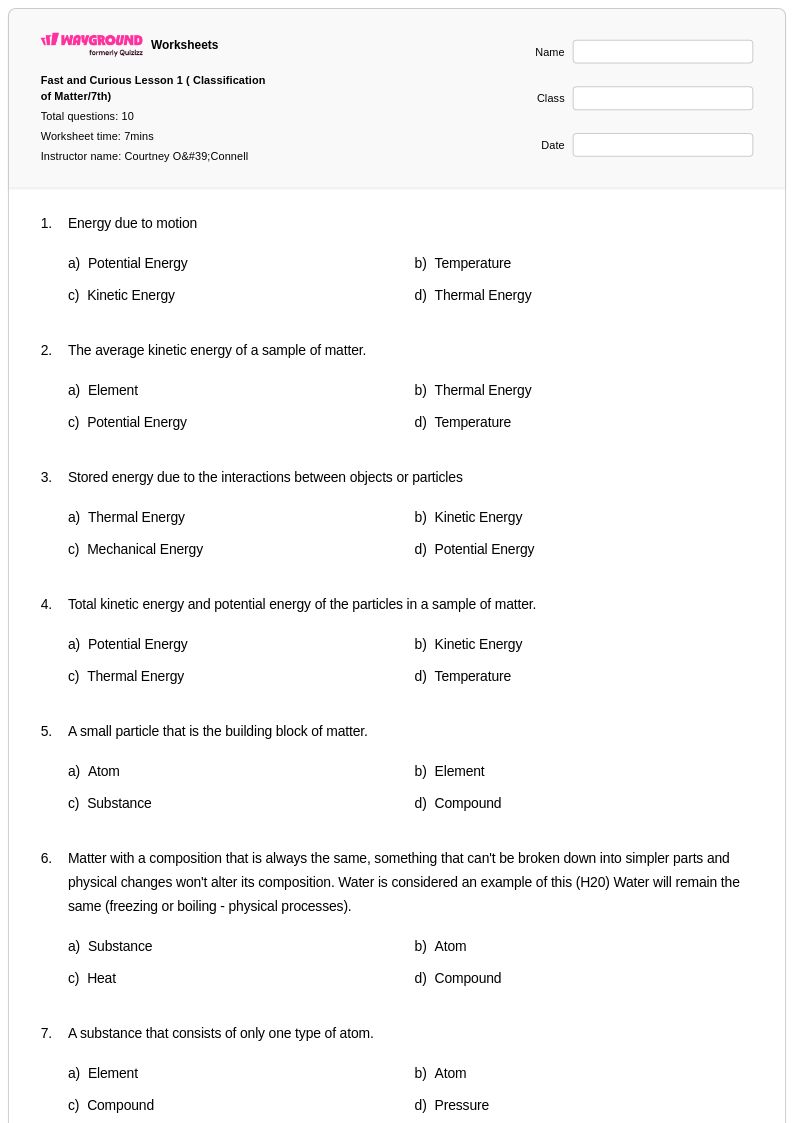
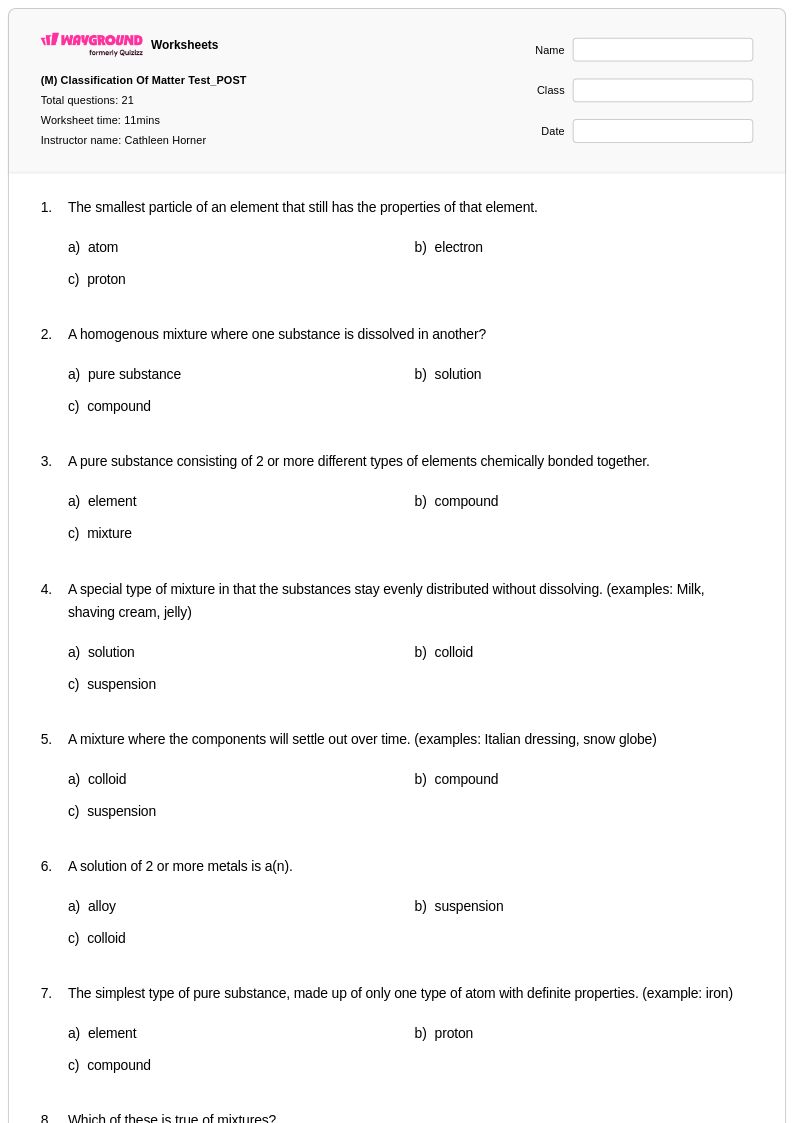
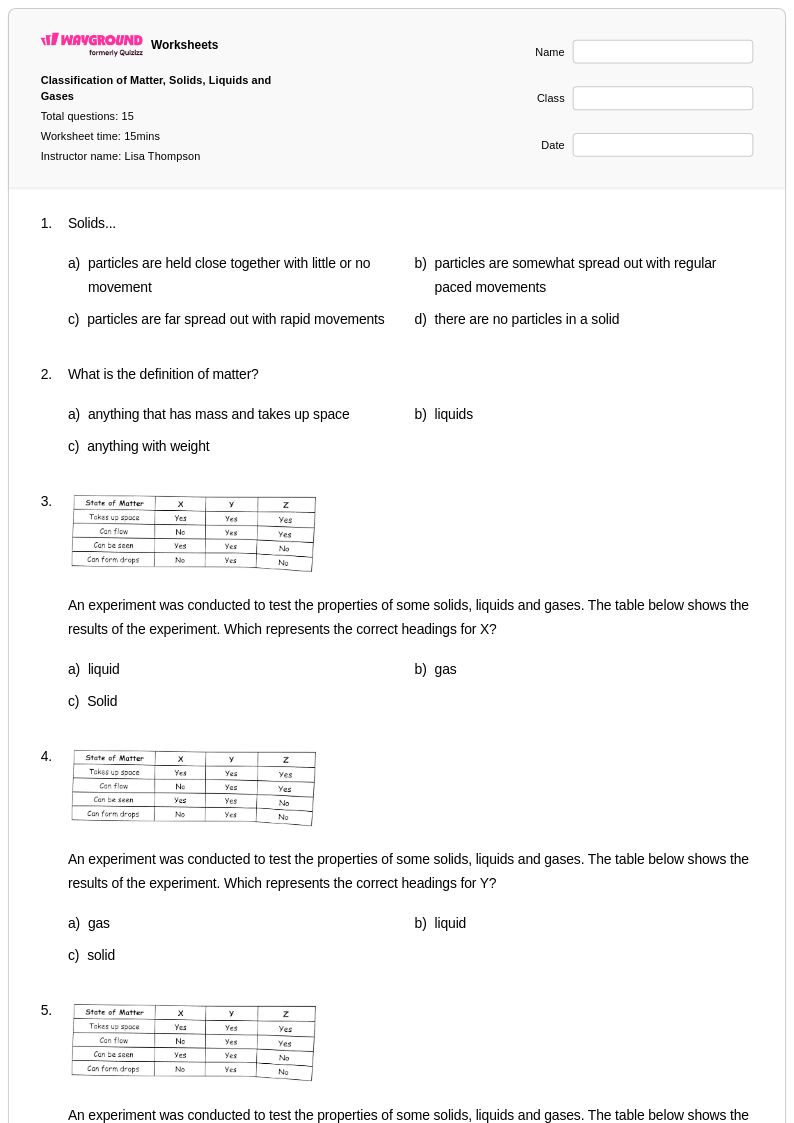
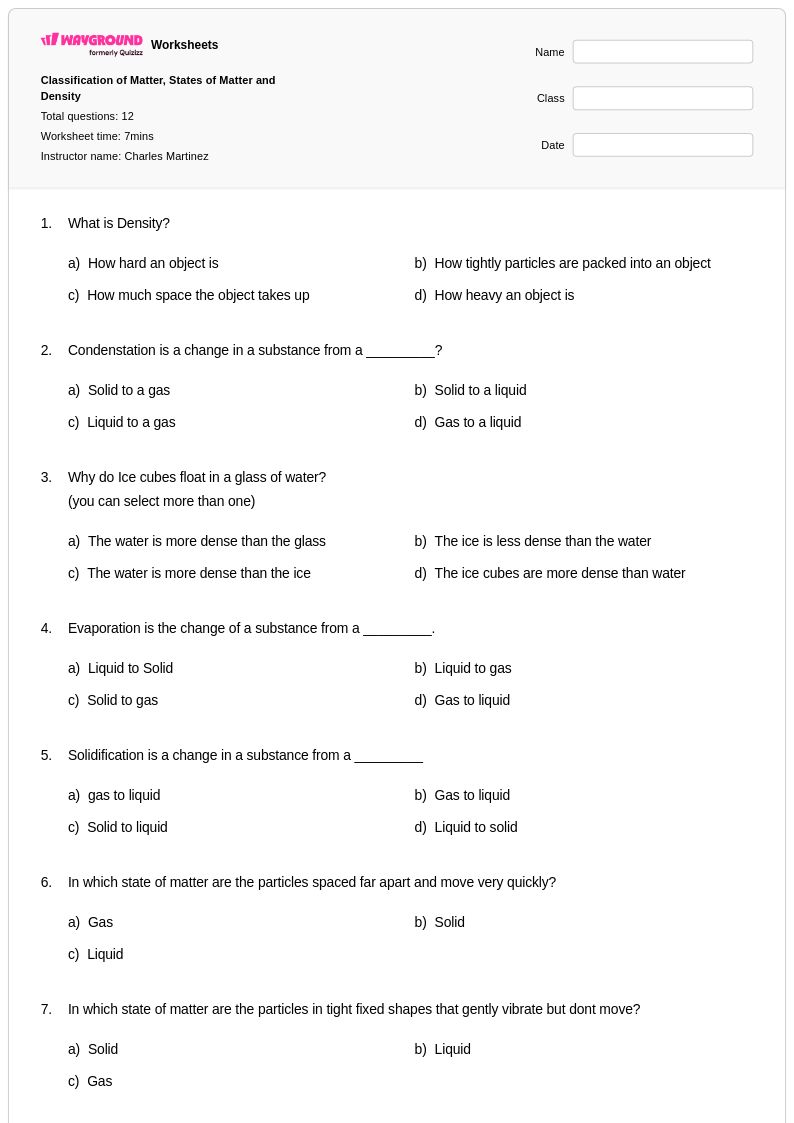
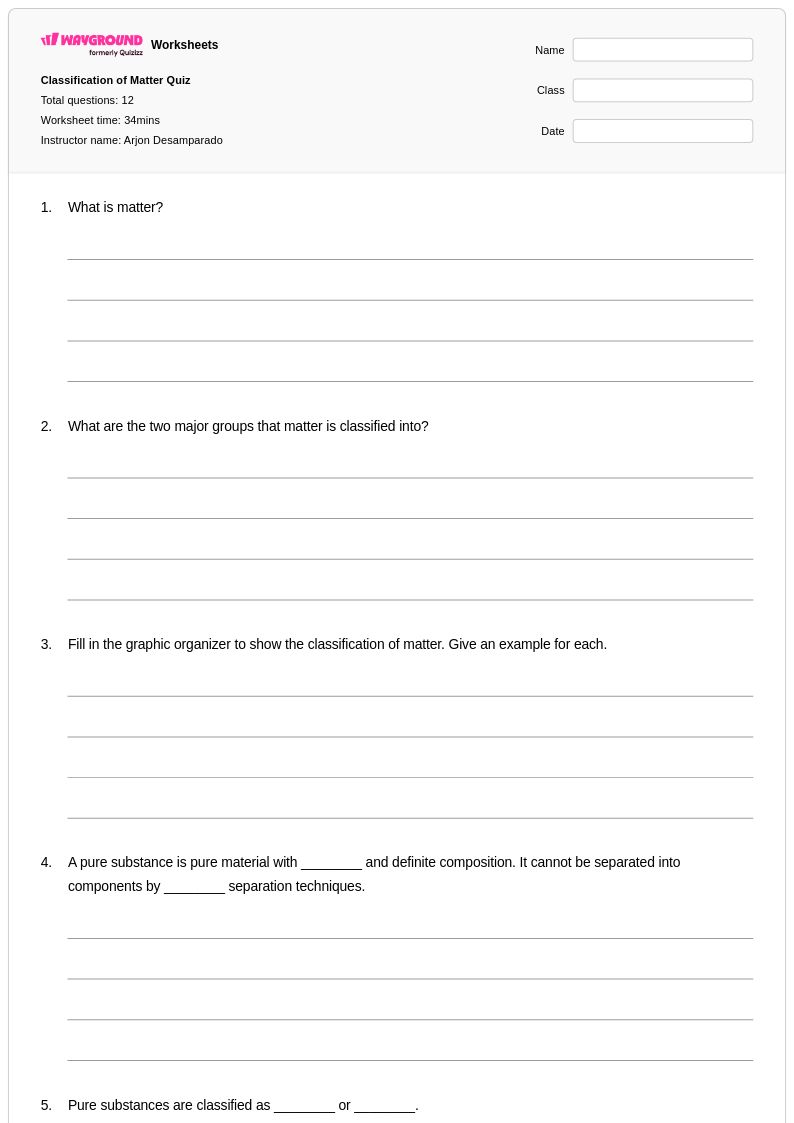
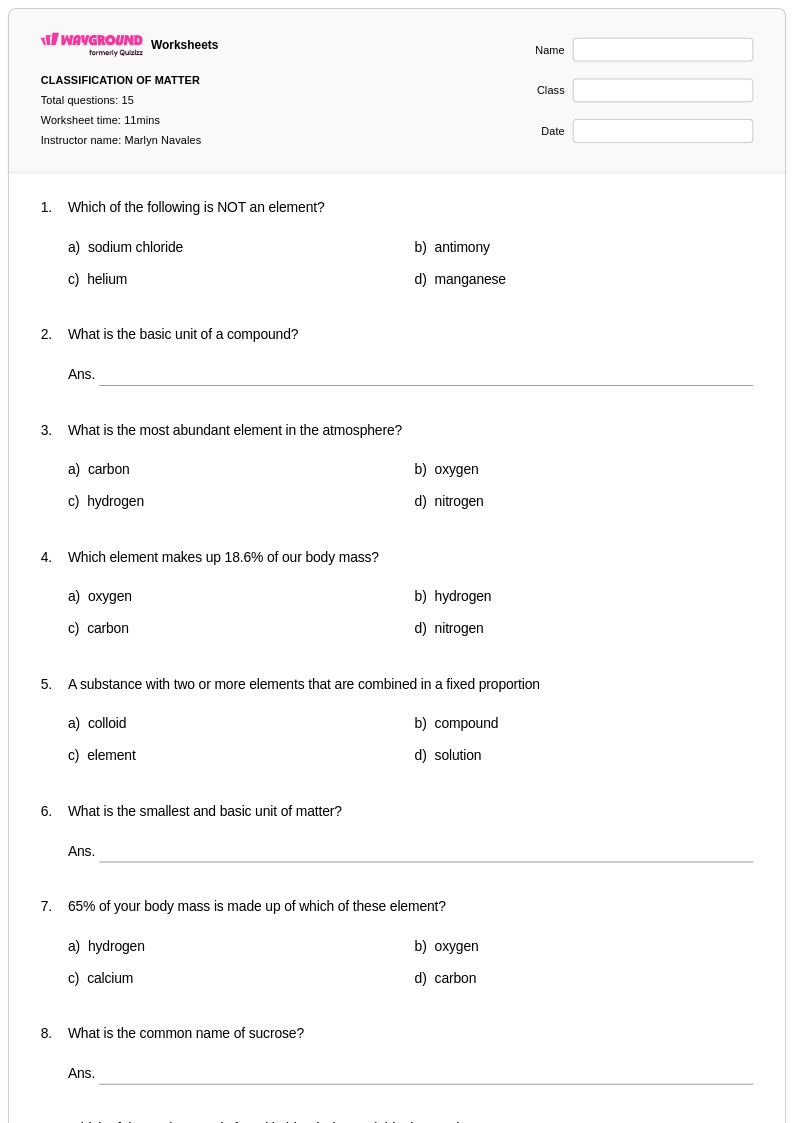
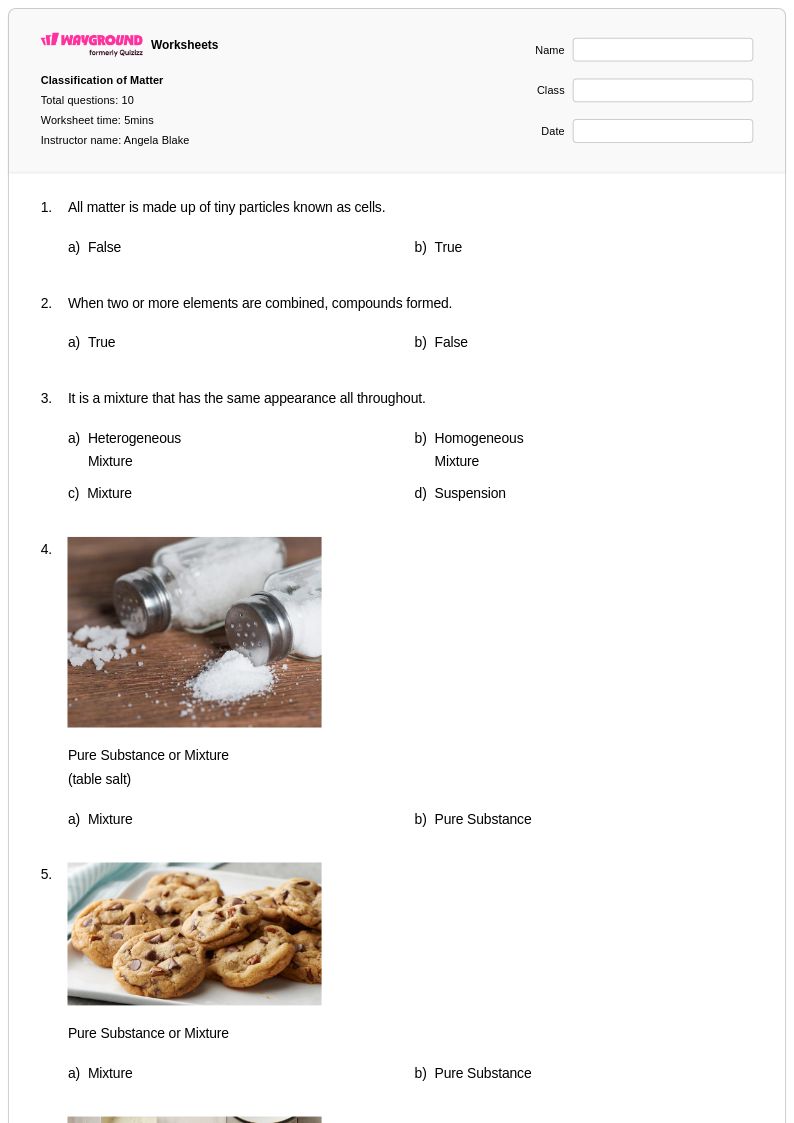
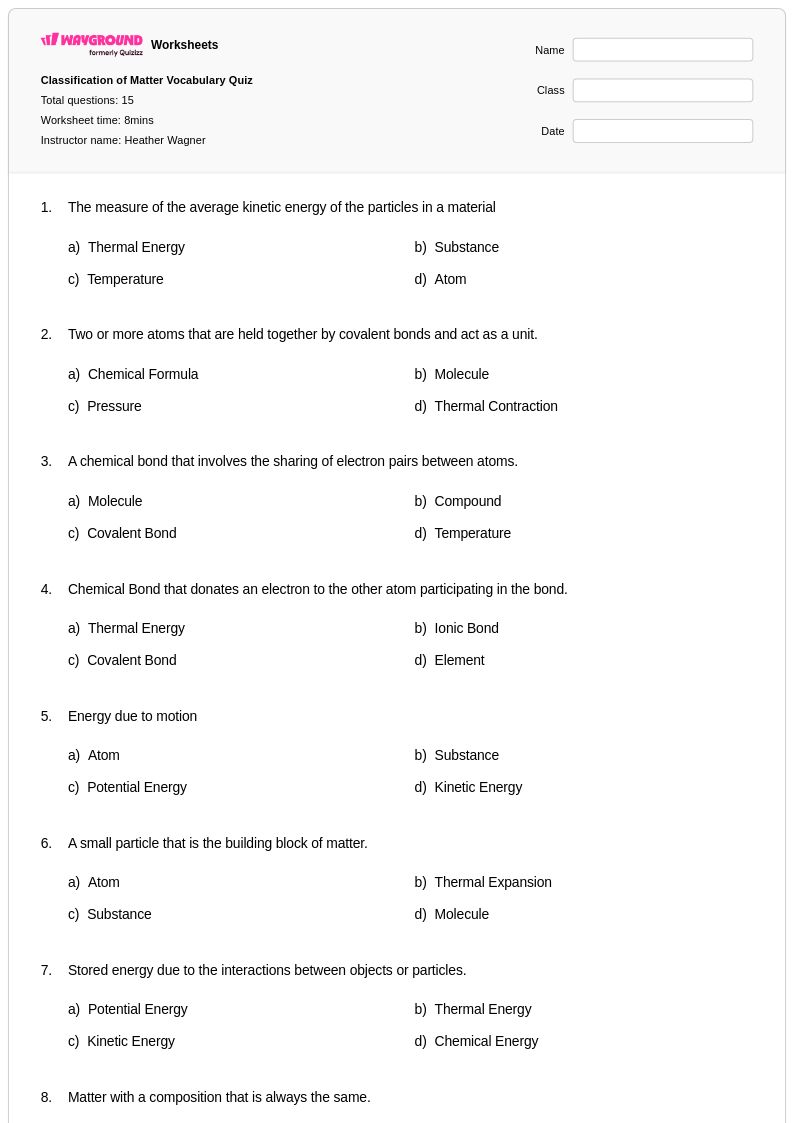
Classification of Matter worksheets for Class 7 provide comprehensive practice opportunities that help students master fundamental chemistry concepts through systematic exploration of pure substances and mixtures. These educational resources strengthen critical thinking skills as students learn to distinguish between elements, compounds, homogeneous mixtures, and heterogeneous mixtures while developing their ability to categorize different types of matter based on observable properties. The worksheets include diverse practice problems that challenge students to identify matter classifications in real-world scenarios, complete data tables, and analyze particle diagrams. Each printable resource comes with a detailed answer key to support independent learning and self-assessment, while the free pdf format ensures easy classroom distribution and home study access.
Wayground, formerly Quizizz, empowers educators with an extensive collection of teacher-created Classification of Matter worksheets that streamline lesson planning and enhance student understanding. The platform's robust search and filtering capabilities allow teachers to quickly locate resources aligned with specific learning standards while accessing millions of high-quality printables designed by experienced educators. Advanced differentiation tools enable instructors to customize worksheets for varying skill levels, supporting both remediation for struggling learners and enrichment activities for advanced students. Available in both digital and printable pdf formats, these versatile resources facilitate flexible classroom implementation, homework assignments, and targeted skill practice sessions that reinforce essential chemistry concepts throughout the academic year.
FAQs
How do I teach classification of matter to my students?
Start by building a clear conceptual hierarchy: matter is first divided into pure substances and mixtures, then pure substances are broken into elements and compounds, and mixtures are separated into homogeneous and heterogeneous types. Using visual diagrams and flowcharts helps students internalize the decision-making process for categorizing matter. Anchor instruction in real-world examples, such as salt water as a homogeneous mixture or trail mix as a heterogeneous one, so students can connect abstract categories to observable materials.
What exercises help students practice classifying matter?
Effective practice includes classification flowchart exercises where students apply a series of yes/no questions to identify an unknown substance, data table activities that compare properties of elements, compounds, and mixtures, and visual diagram tasks where students label particle arrangements. Practice problems that move from simple identification to justification, requiring students to explain why a substance belongs in a given category, build the deeper reasoning skills chemistry demands.
What mistakes do students commonly make when classifying matter?
The most frequent error is confusing homogeneous mixtures with pure substances, since both appear uniform to the naked eye. Students also frequently conflate compounds with mixtures, not recognizing that compounds have fixed ratios and chemically bonded components while mixtures do not. Another common misconception is assuming that all solids are pure substances and all liquids are mixtures, which overlooks the diversity of matter across all three states.
How can I differentiate classification of matter instruction for students with different learning needs?
For students who need additional support, reduce the number of classification categories introduced at once and use color-coded diagrams to reinforce visual distinctions. On Wayground, teachers can enable Read Aloud so question text is read to students who benefit from audio support, and Reduced Answer Choices to lower cognitive load for students working through multiple-choice identification problems. Extended time settings can also be applied individually so that students who need more processing time are not disadvantaged without disrupting the rest of the class.
How do I use Wayground's classification of matter worksheets in my classroom?
Wayground's classification of matter worksheets are available as printable PDFs for traditional classroom use and in digital formats for technology-integrated environments, making them adaptable to in-person, hybrid, and remote settings. Teachers can also host the material as a quiz directly on Wayground, enabling real-time student responses and immediate feedback. Each worksheet includes a detailed answer key, so the resources work equally well for guided instruction, independent practice, or review.