Free Printable Electrolytes Worksheets for Class 7
Class 7 electrolytes worksheets and printables from Wayground help students master ionic solutions, conductivity, and chemical reactions through engaging practice problems with comprehensive answer keys and free PDF resources.
Explore printable Electrolytes worksheets for Class 7
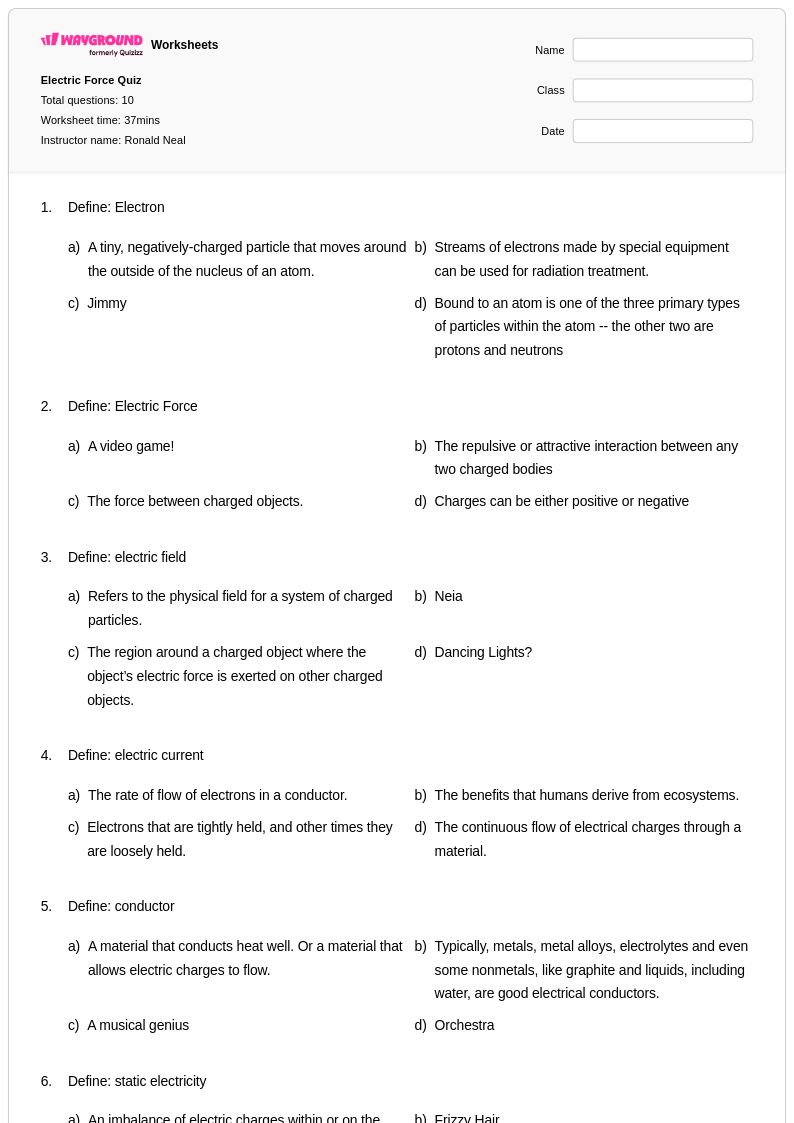
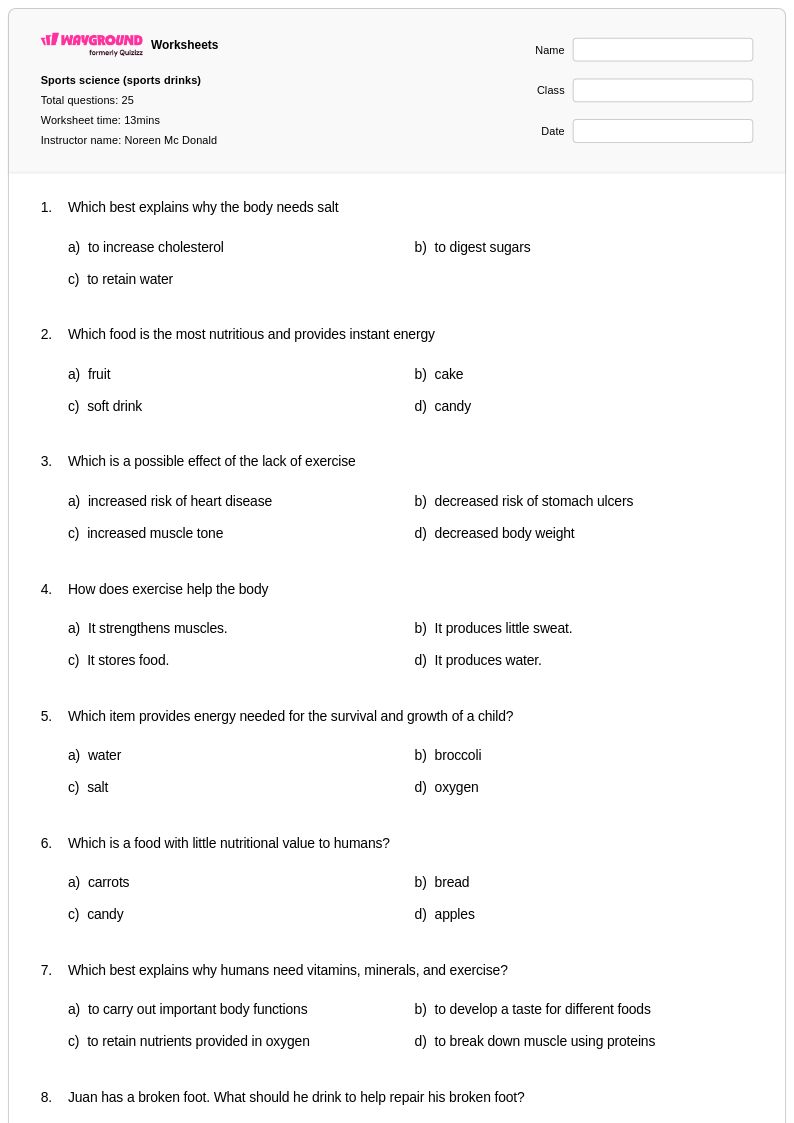
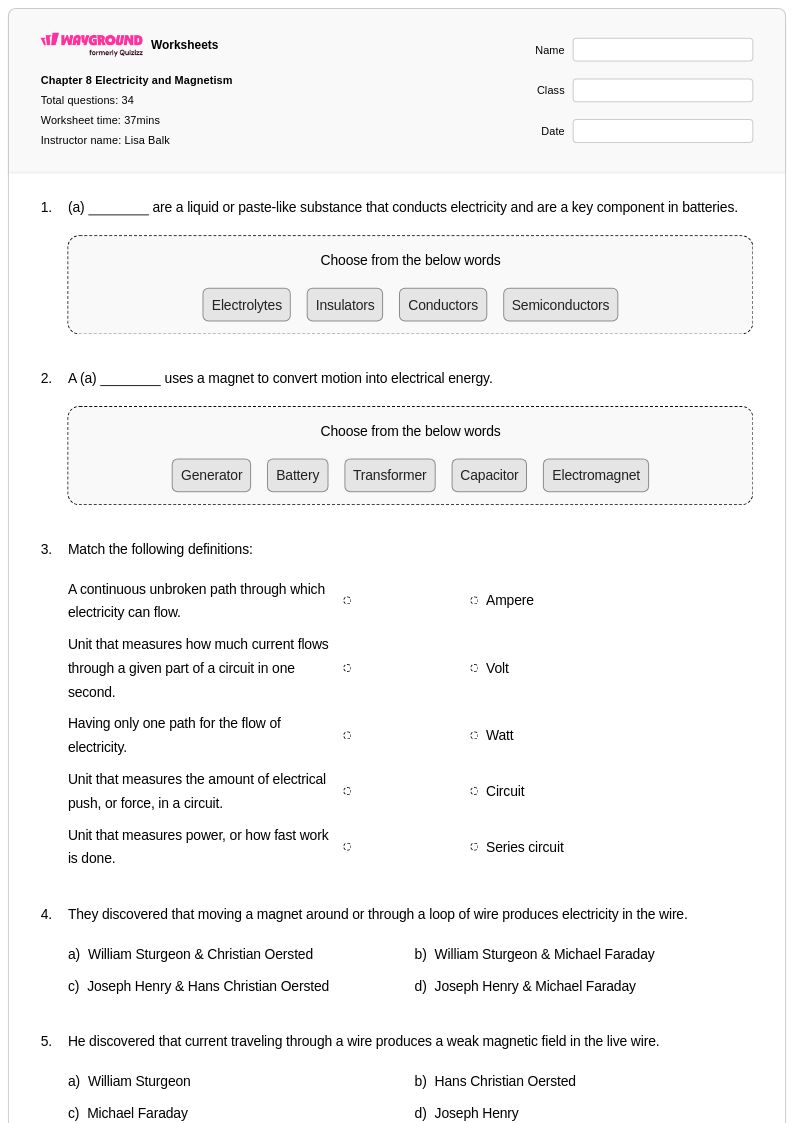
Class 7 electrolytes worksheets available through Wayground (formerly Quizizz) provide comprehensive coverage of this fundamental chemistry concept, helping students understand how ionic compounds conduct electricity when dissolved in water or melted. These educational resources strengthen critical thinking skills as students learn to identify electrolytes versus non-electrolytes, predict the behavior of various substances in solution, and connect molecular structure to electrical conductivity properties. The worksheet collection includes diverse practice problems that challenge students to classify compounds, analyze conductivity data, and explain the relationship between ion mobility and electrical current flow. Teachers can access these materials as free printables with corresponding answer keys, making it simple to implement targeted practice sessions that reinforce laboratory observations and theoretical understanding through pdf downloads and structured exercises.
Wayground (formerly Quizizz) supports chemistry educators with millions of teacher-created electrolytes resources that streamline lesson planning and enhance student learning outcomes. The platform's robust search and filtering capabilities allow teachers to quickly locate worksheets aligned with specific learning standards while providing differentiation tools to accommodate varying skill levels within Class 7 classrooms. These customizable materials are available in both printable and digital formats, enabling seamless integration into traditional classroom instruction, remote learning environments, or hybrid teaching models. The extensive worksheet library facilitates targeted remediation for students struggling with ionic theory concepts while offering enrichment opportunities for advanced learners ready to explore complex electrolyte applications in biological systems and industrial processes.
FAQs
How do I teach the difference between strong and weak electrolytes?
Start by grounding students in dissociation: strong electrolytes (like NaCl and HCl) fully dissociate into ions in aqueous solution, while weak electrolytes (like acetic acid) only partially dissociate and exist in equilibrium. Use conductivity demonstrations with a simple lightbulb circuit to make the difference tangible before moving to symbolic equations. Once students can connect dissociation extent to conductivity, they can begin predicting behavior from molecular structure rather than memorizing lists.
What exercises help students practice identifying strong vs. weak electrolytes?
Effective practice includes classifying compounds as strong electrolytes, weak electrolytes, or nonelectrolytes given their chemical formulas, and writing complete and net ionic equations for dissociation. Students also benefit from problems that ask them to rank solutions by conductivity given concentration and compound type. Worksheets that combine ion identification with dissociation equation writing build both recall and reasoning simultaneously.
What mistakes do students commonly make when working with electrolyte concepts?
A frequent error is confusing solubility with dissociation strength — students often assume that a substance dissolves completely it must also be a strong electrolyte, which conflates two separate properties. Another common mistake is writing incomplete dissociation equations, particularly for polyprotic acids or salts that produce more than two ions. Students also tend to overlook the role of concentration when predicting conductivity, assuming that any electrolyte solution will conduct equally well regardless of dilution.
How can I use electrolyte worksheets to connect chemistry concepts to biology?
Electrolytes are central to biological systems, including nerve signal transmission, muscle contraction, and fluid balance, making them a natural bridge between chemistry and life science units. Worksheets that include context-based problems about sodium, potassium, and calcium ion concentrations in physiological fluids help students see dissociation and conductivity as relevant to real-world health scenarios. Framing electrolyte practice within biological contexts also increases engagement and helps students retain the underlying chemistry more effectively.
How do I use Wayground's electrolytes worksheets in my classroom?
Wayground's electrolytes worksheets are available as printable PDFs for traditional classroom distribution and in digital formats for technology-integrated environments, accommodating a range of teaching setups. Teachers can host the worksheets as a quiz directly on Wayground, enabling real-time student responses and automated scoring. The included answer keys explain the reasoning behind electrolyte classification and behavior, making them equally useful for independent student review and teacher-led correction.
How do I differentiate electrolyte instruction for students at different skill levels?
For students who are still building foundational understanding, start with basic dissociation equations and ion identification before introducing conductivity comparisons. More advanced learners can work through equilibrium calculations involving weak electrolyte dissociation constants and ion concentration predictions. On Wayground, teachers can apply accommodations such as reduced answer choices for students who need additional support, or enable Read Aloud for students who benefit from audio delivery of question content.