Free Printable Commas in a Series Worksheets for Class 5
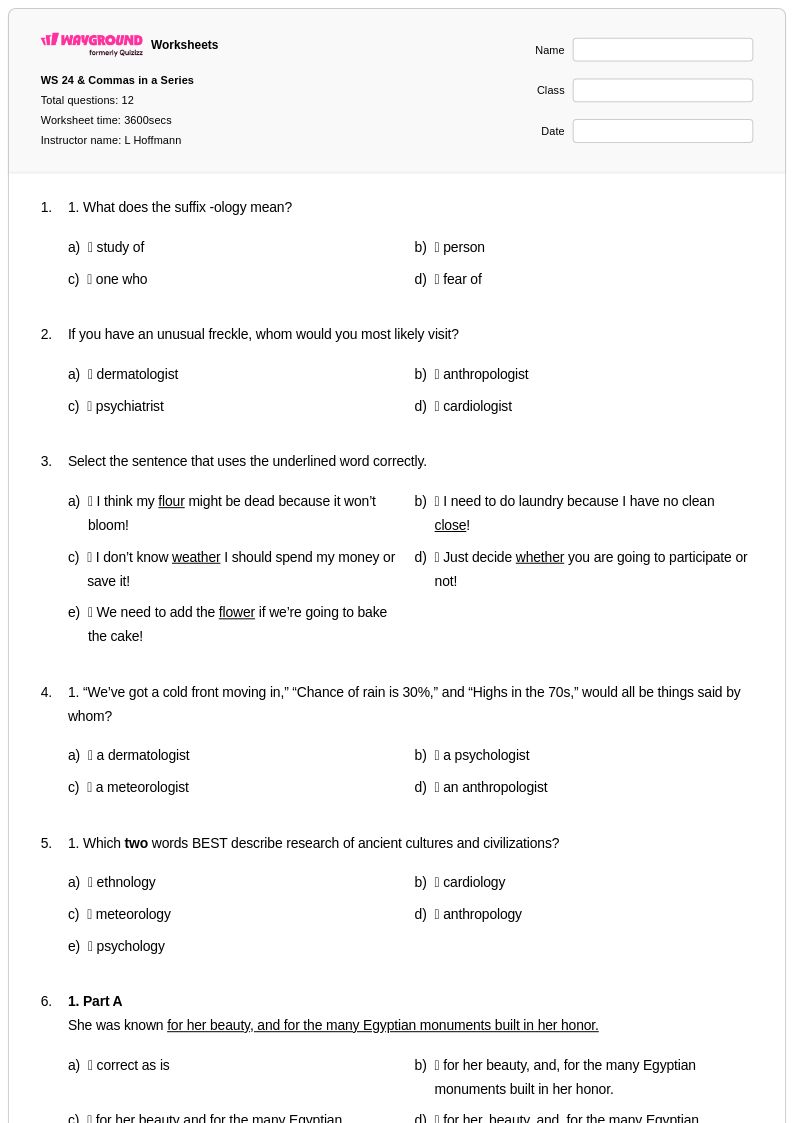
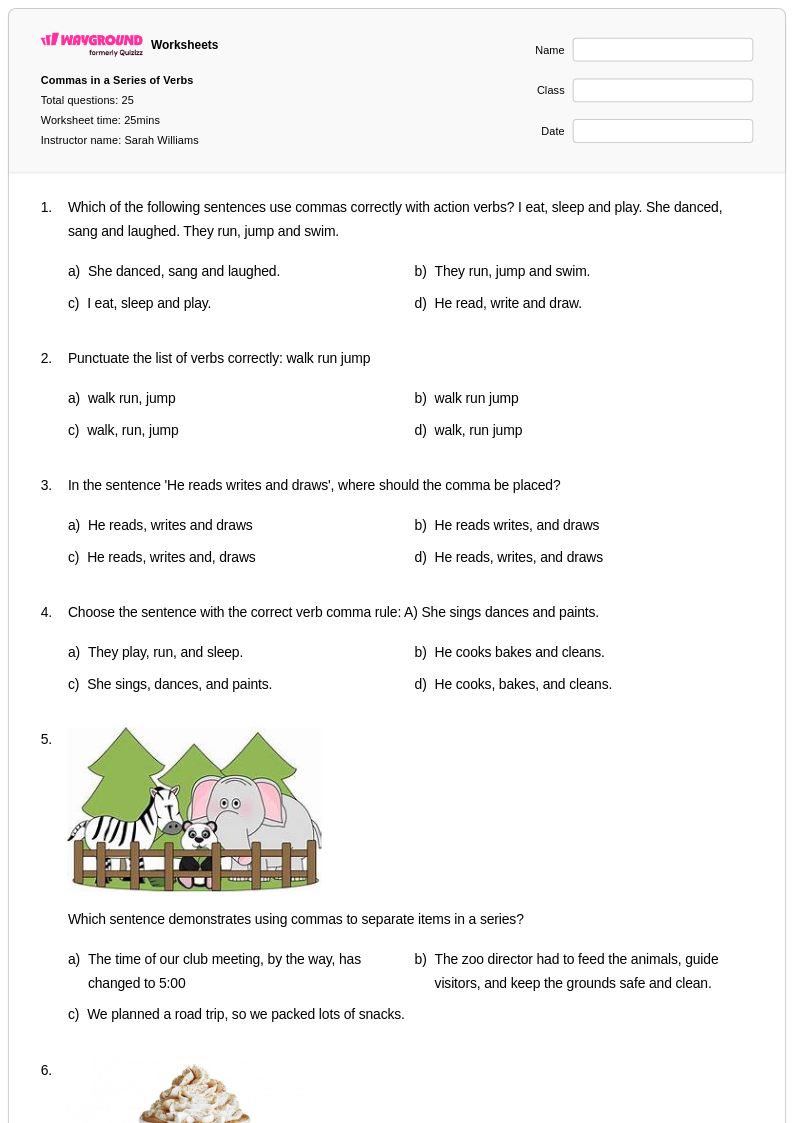
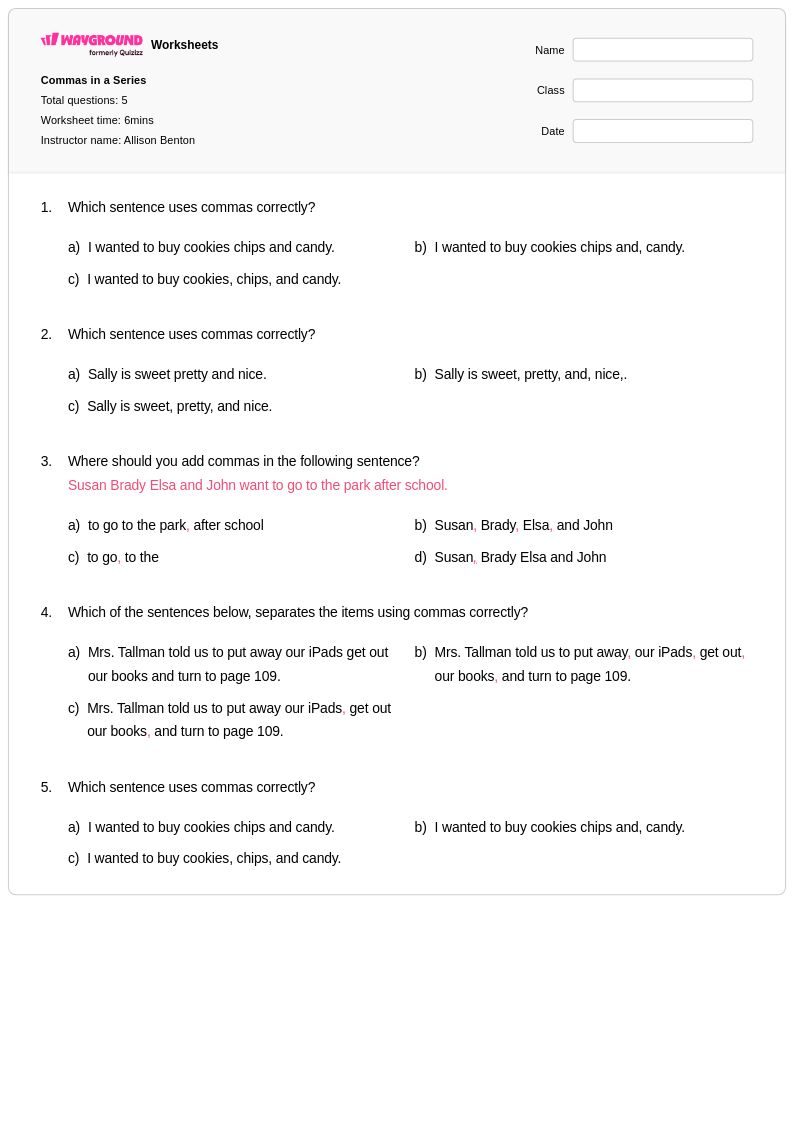
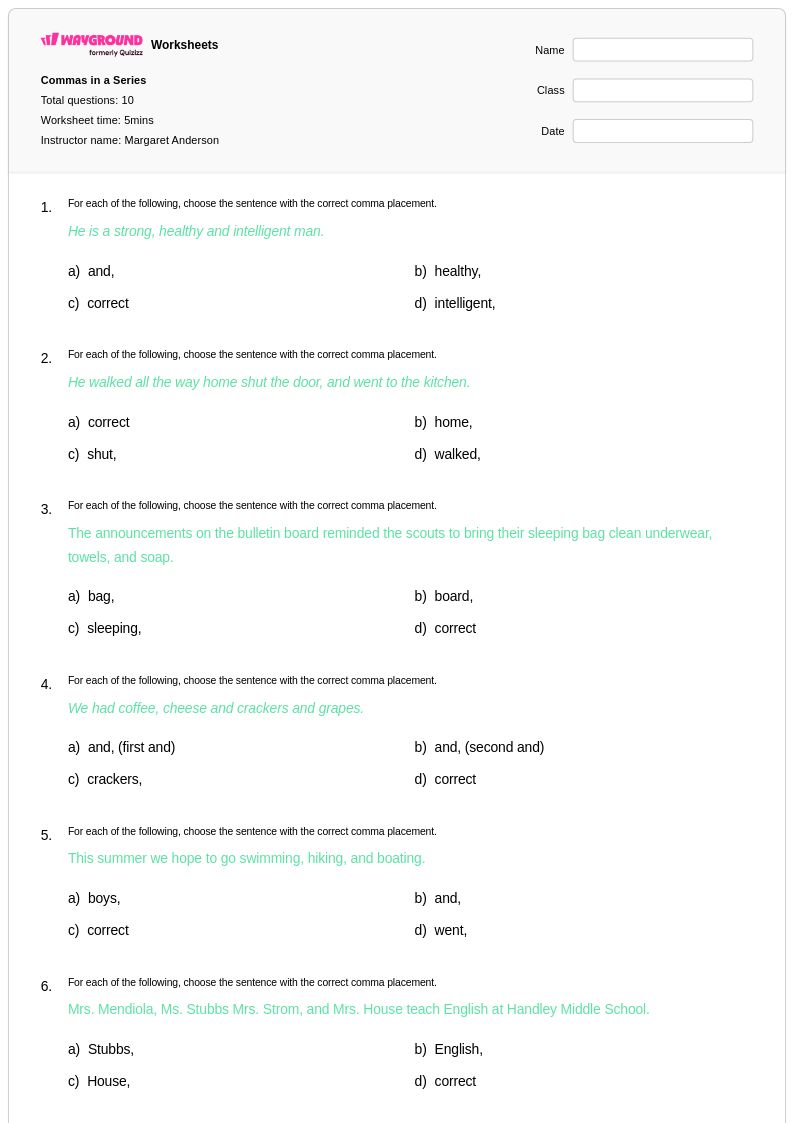
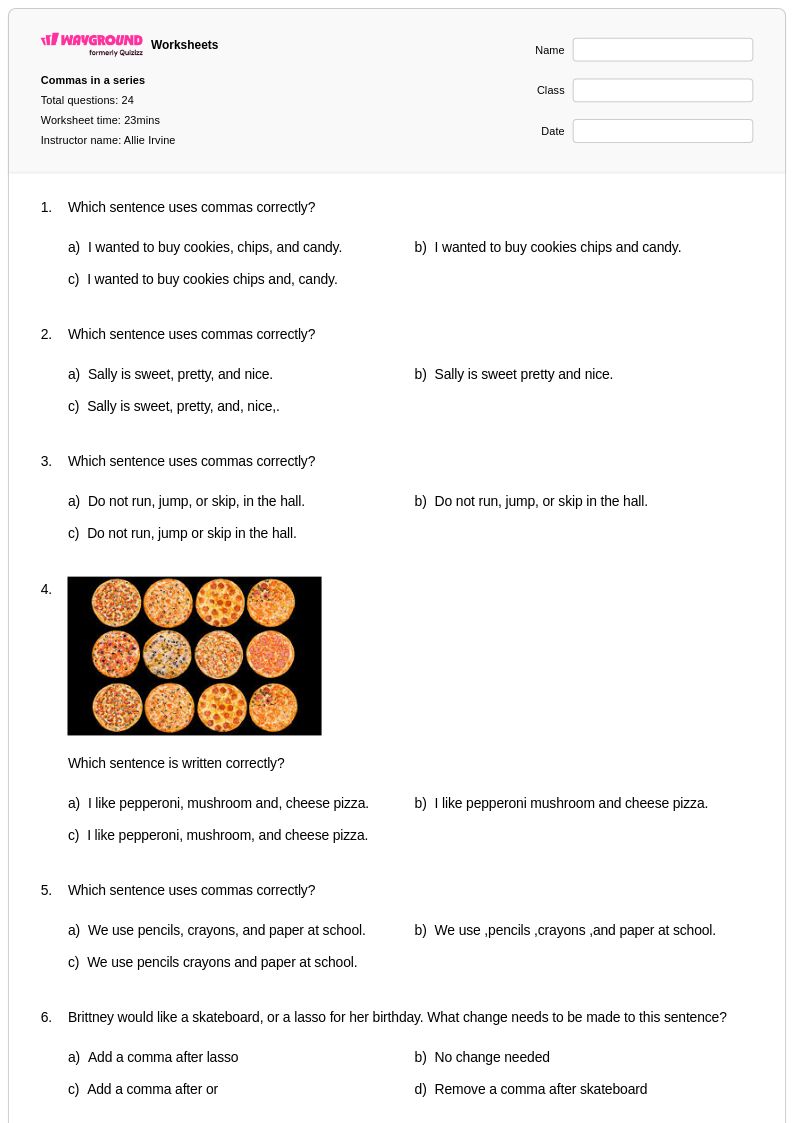
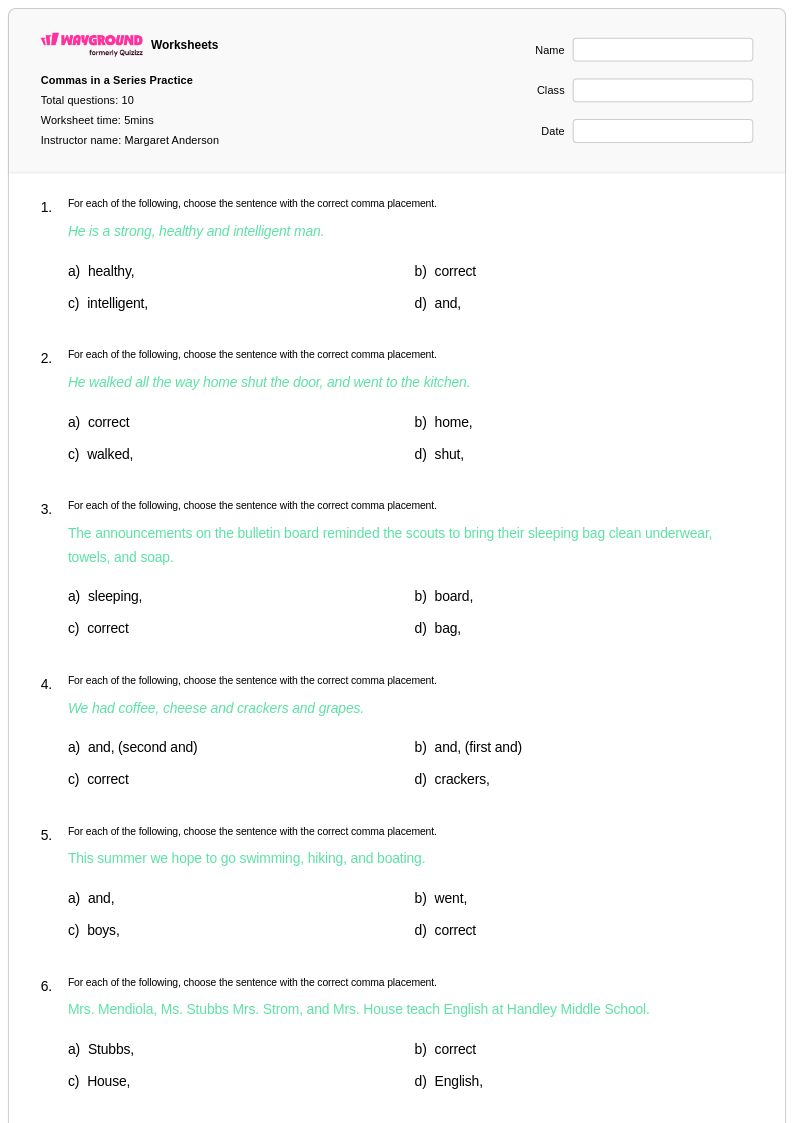
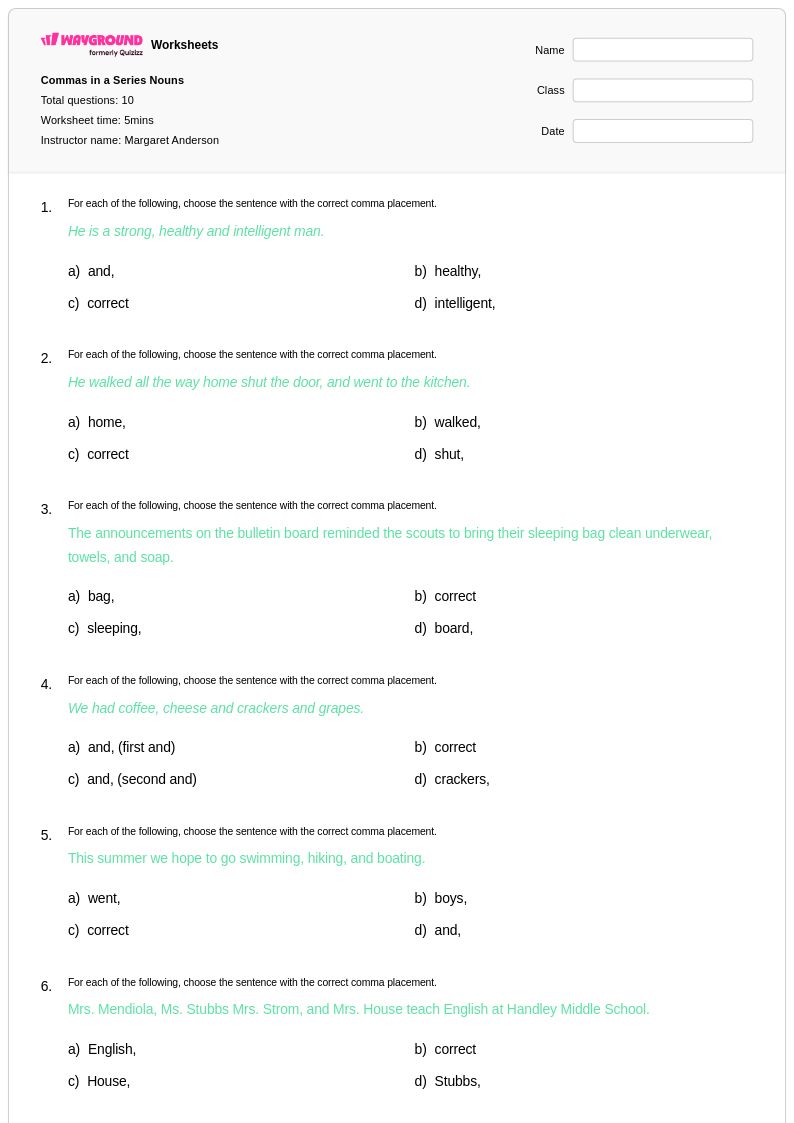
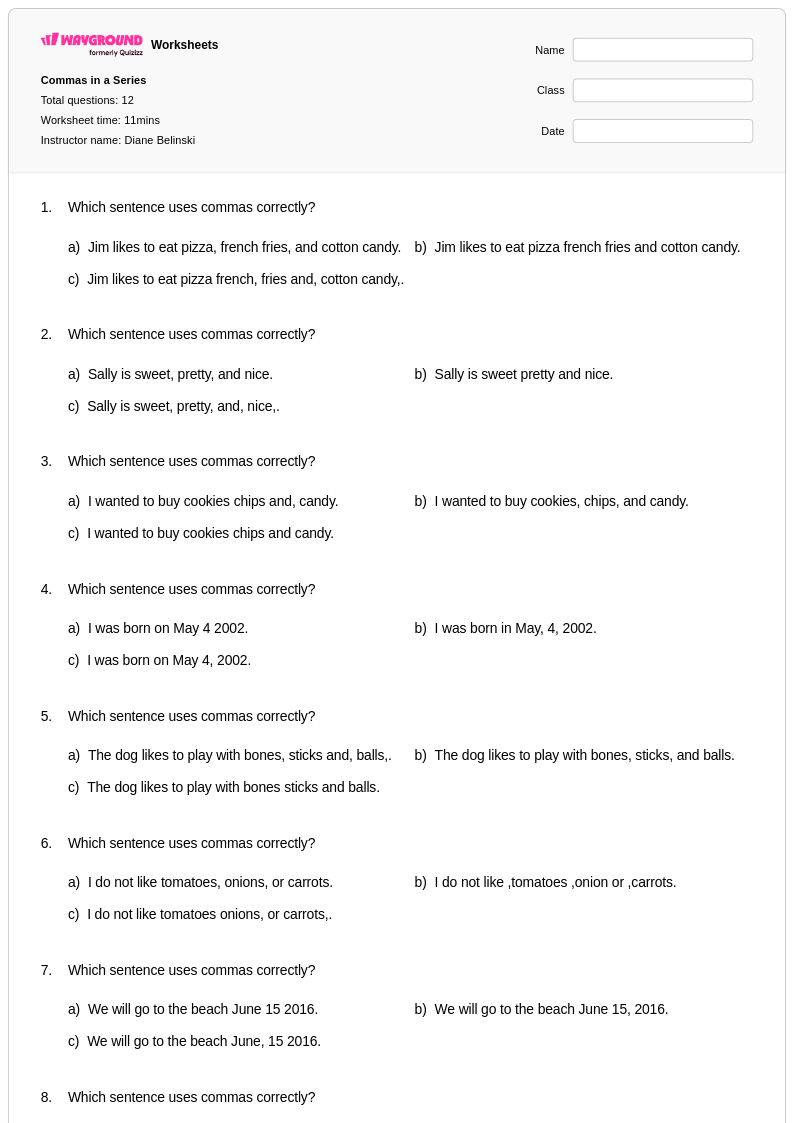
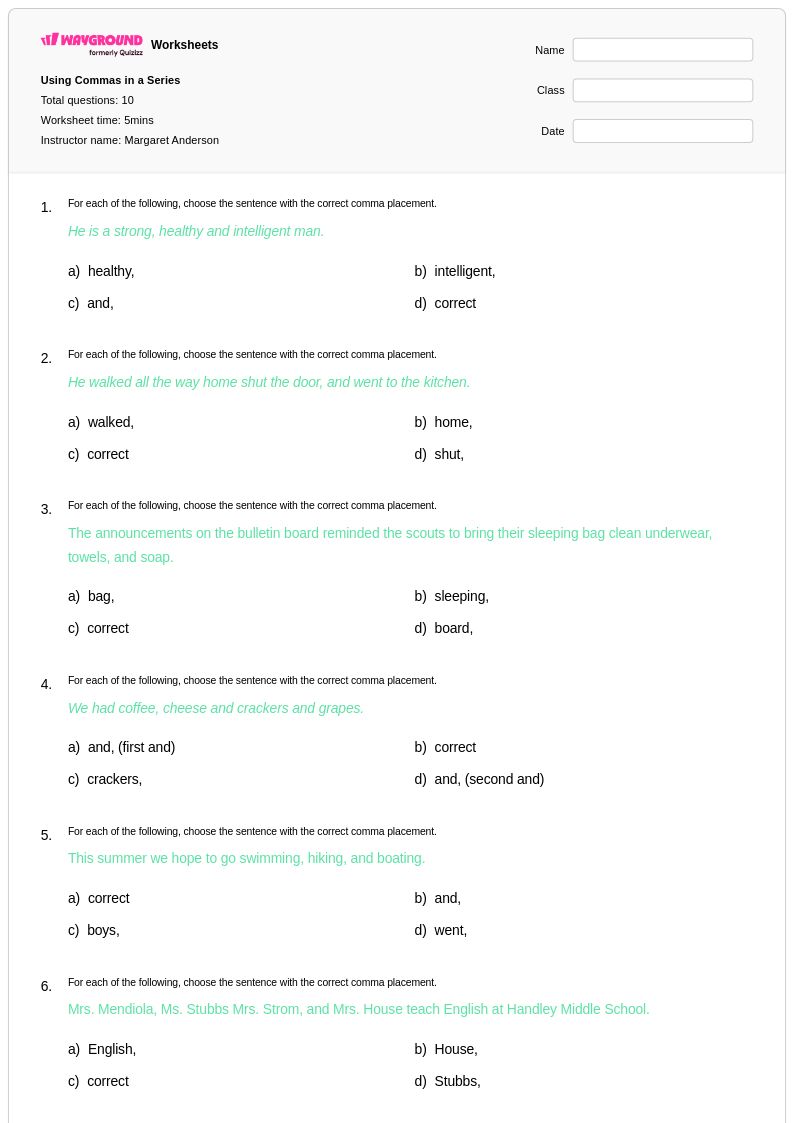
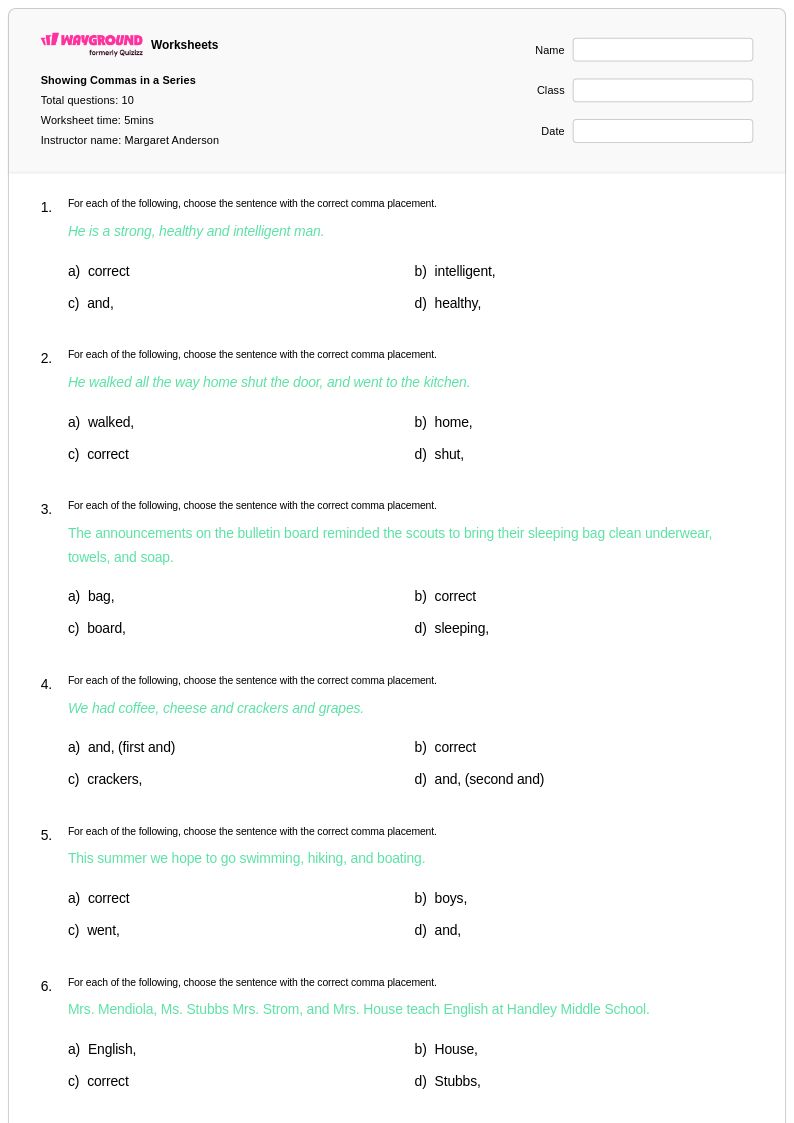
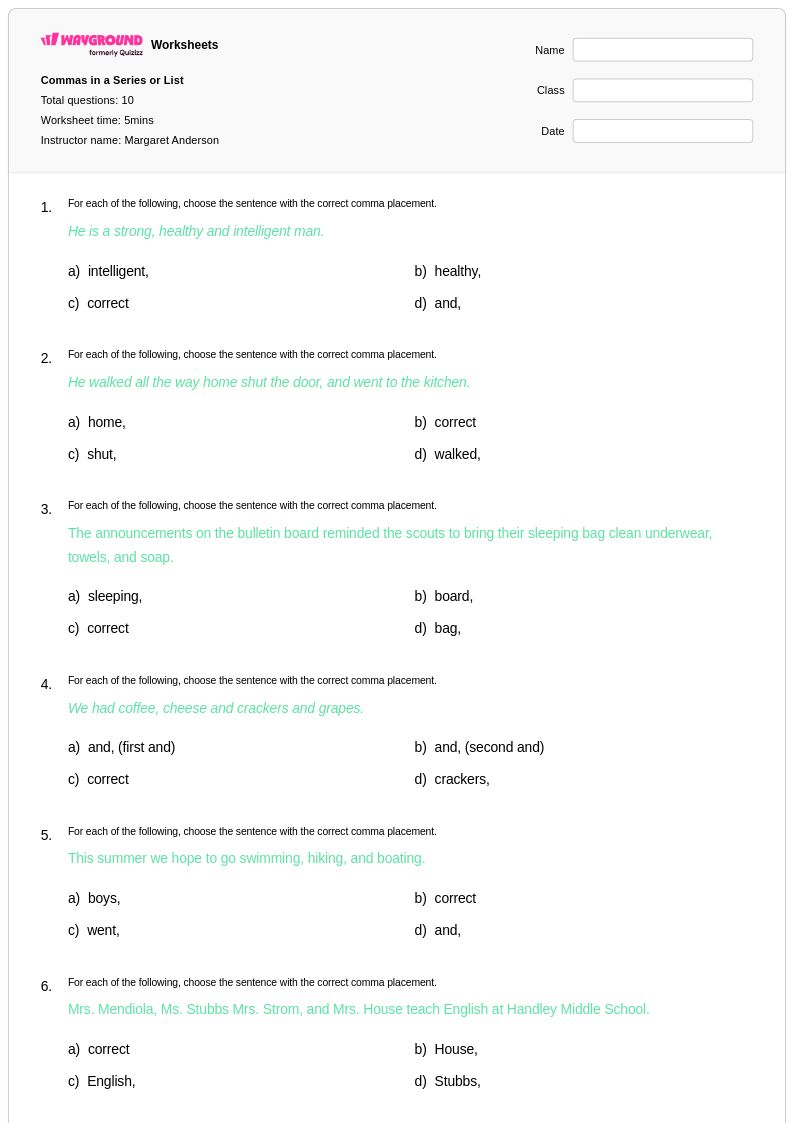
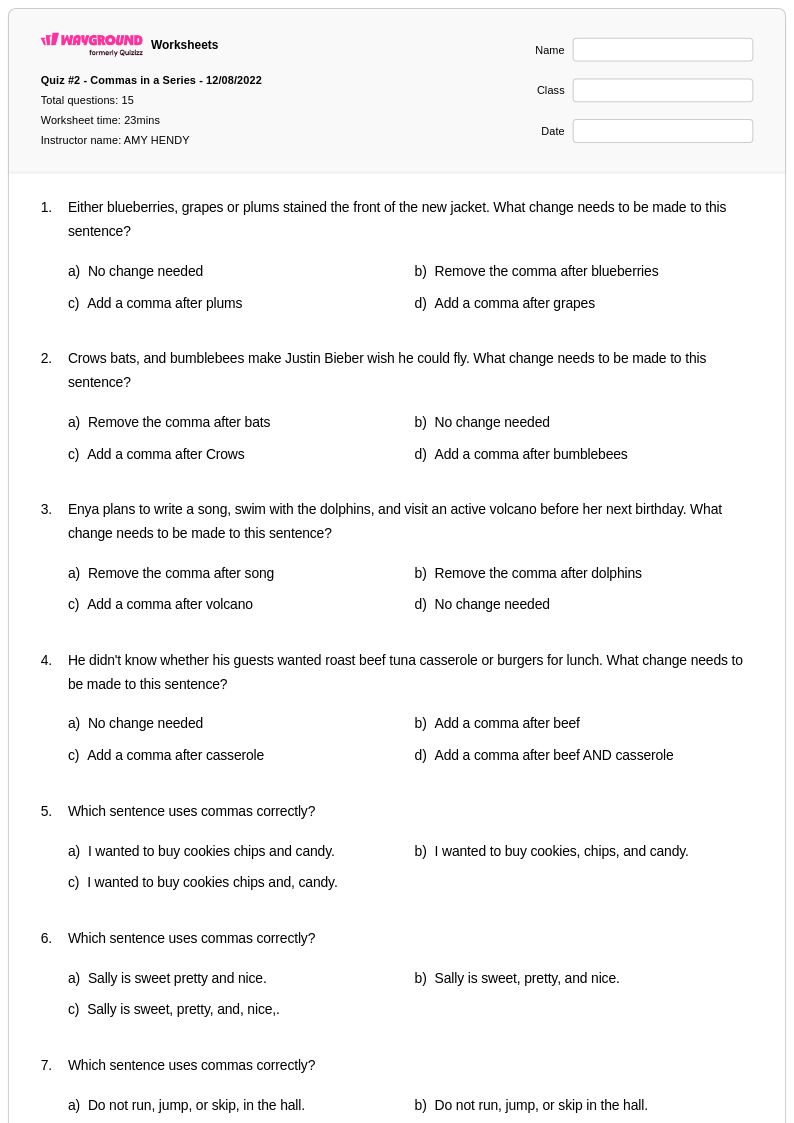
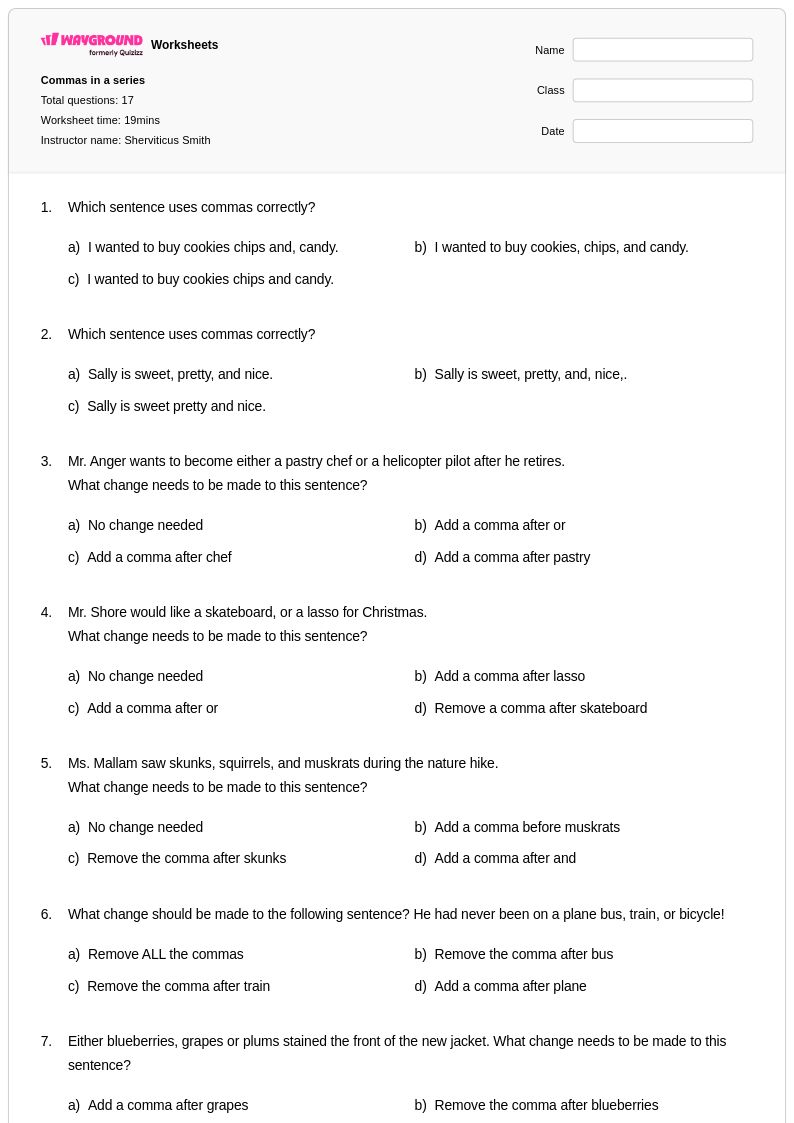
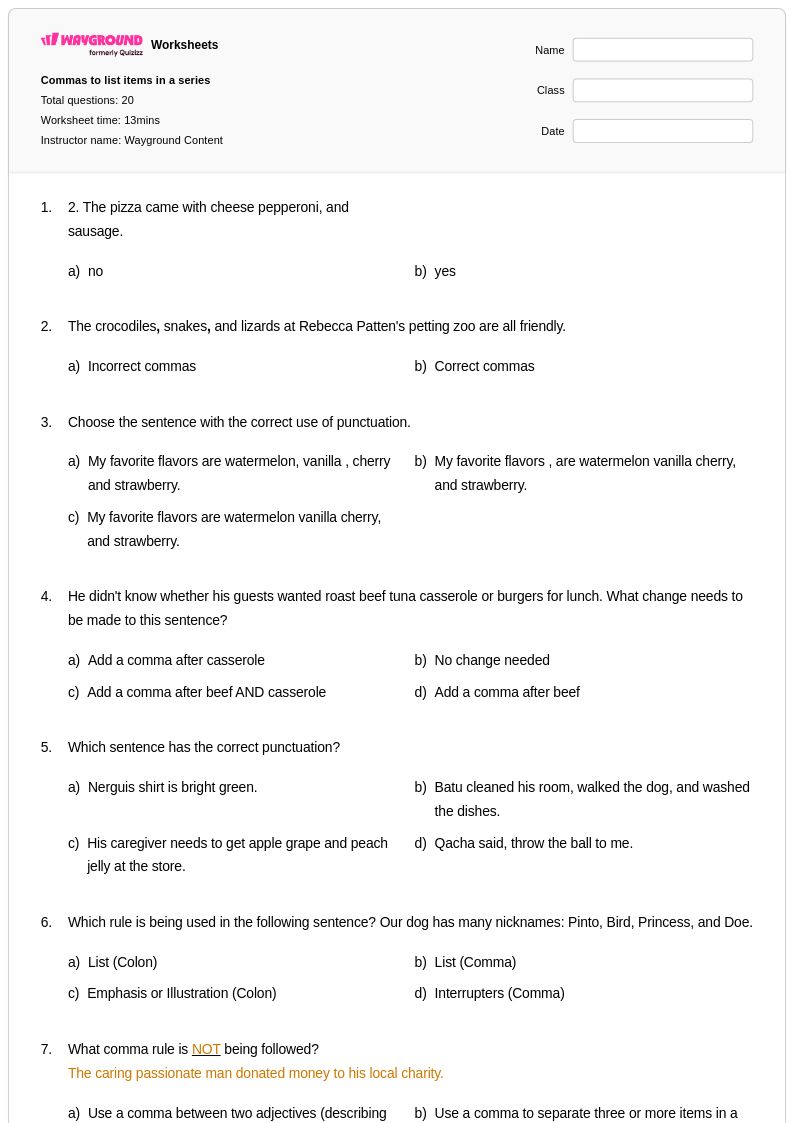
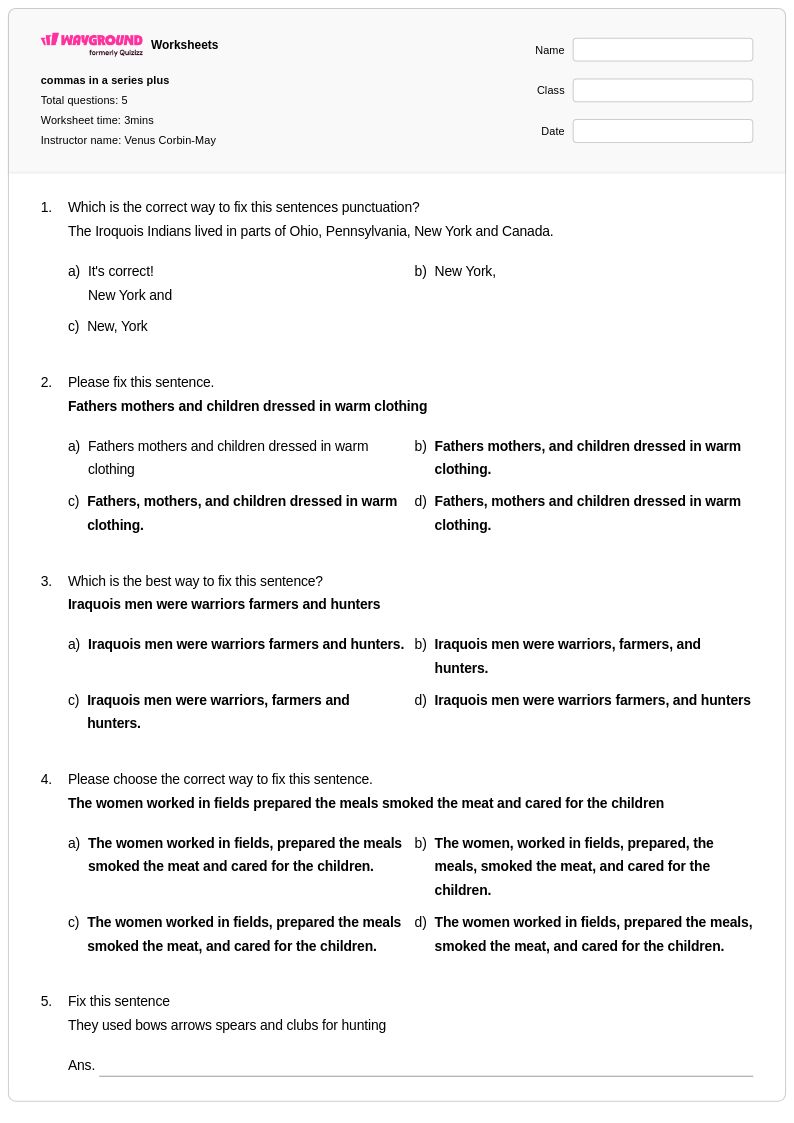
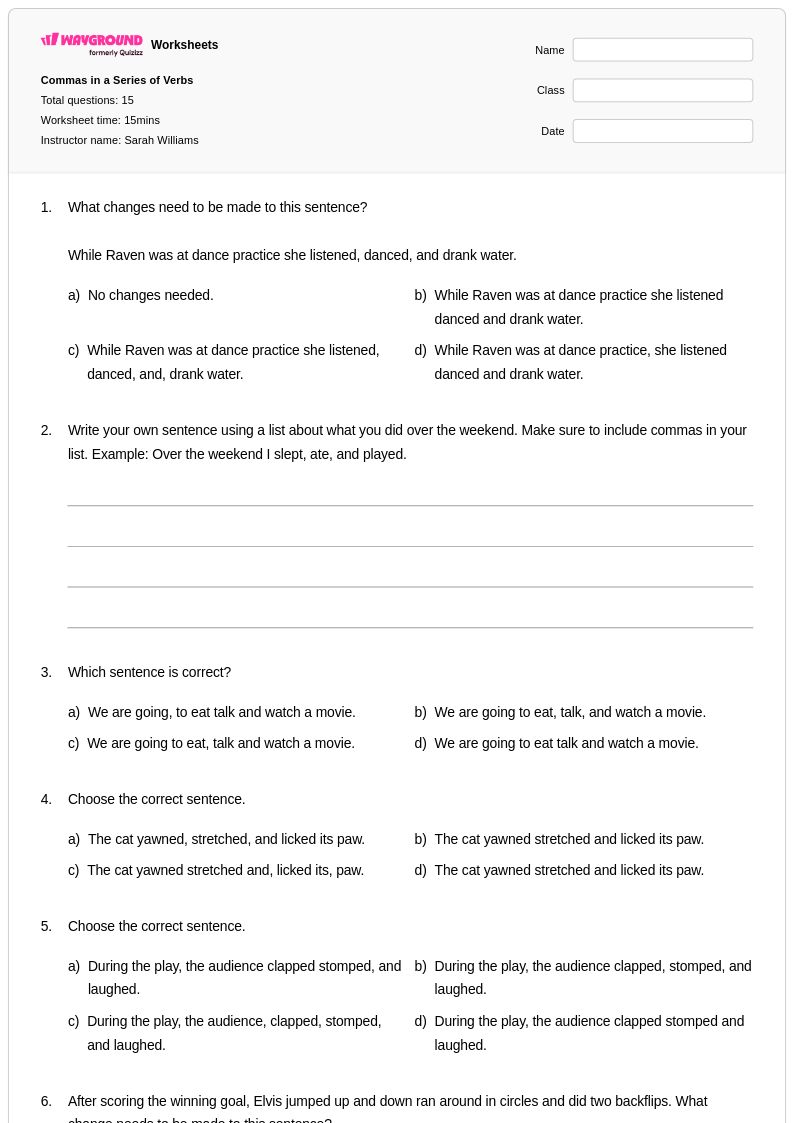
Wayground's free Class 5 commas in a series worksheets and printables help students master proper comma placement in lists through engaging practice problems with complete answer keys.
Explore printable Commas in a Series worksheets for Class 5
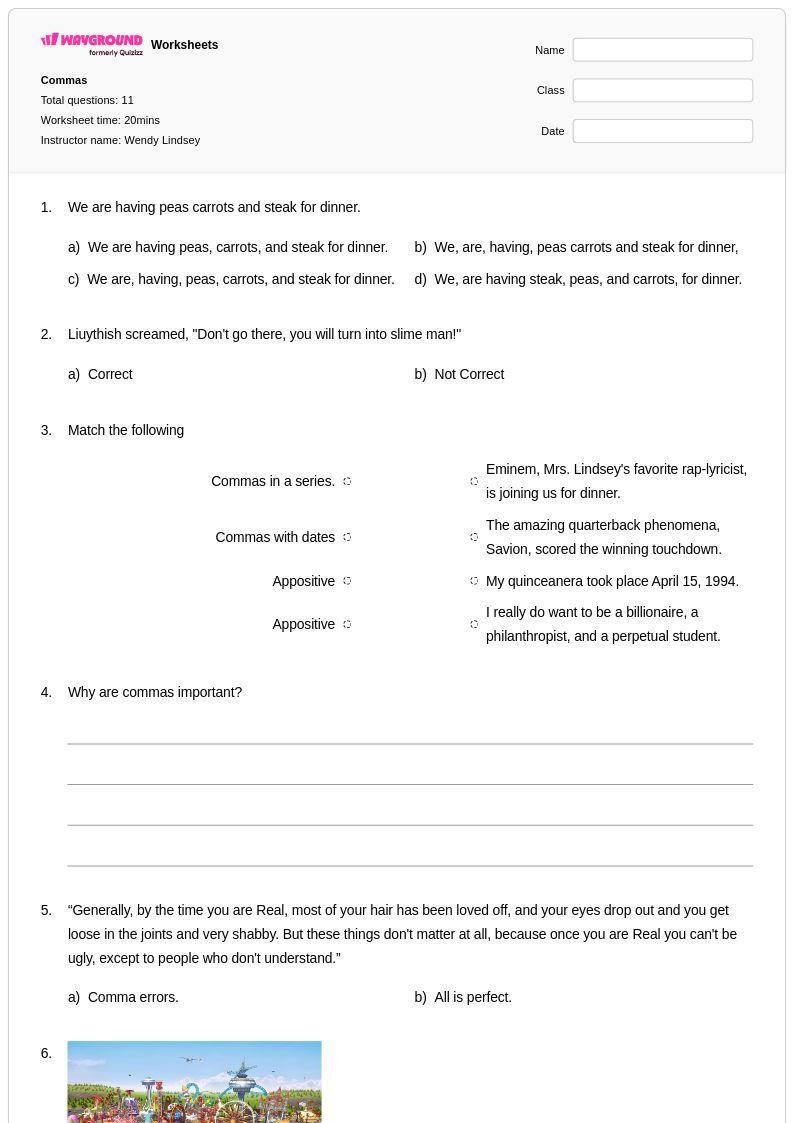
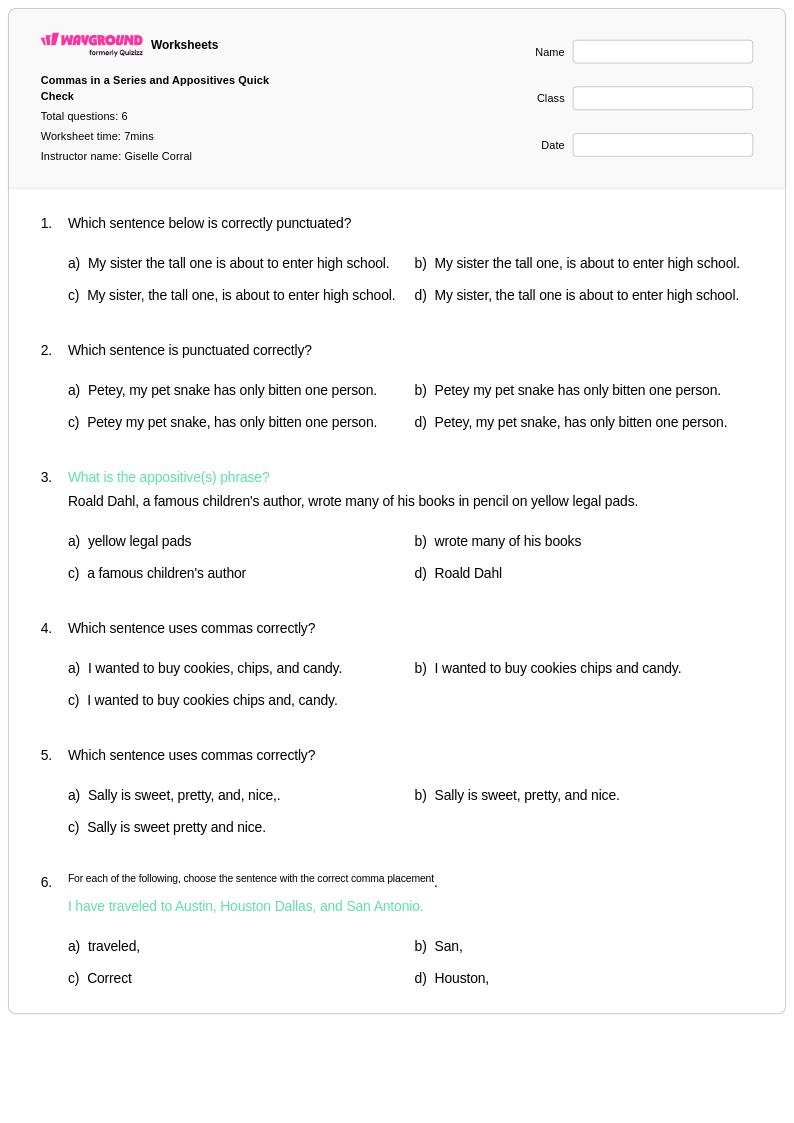
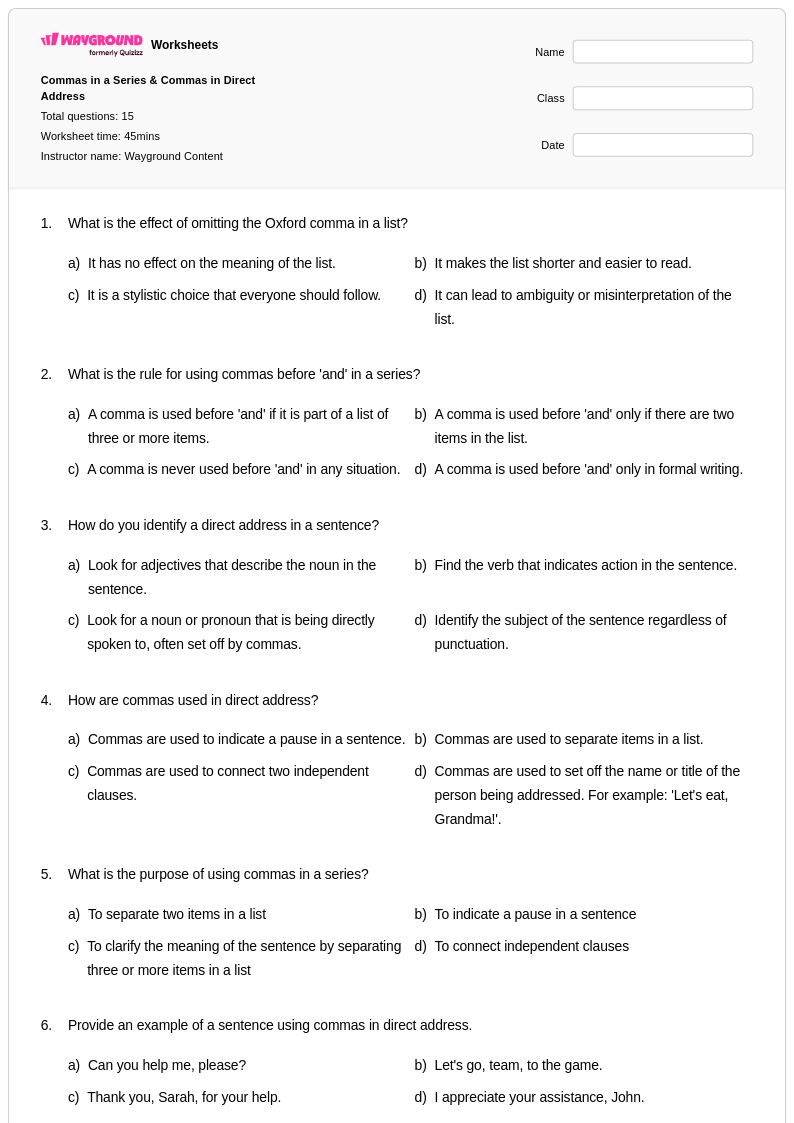
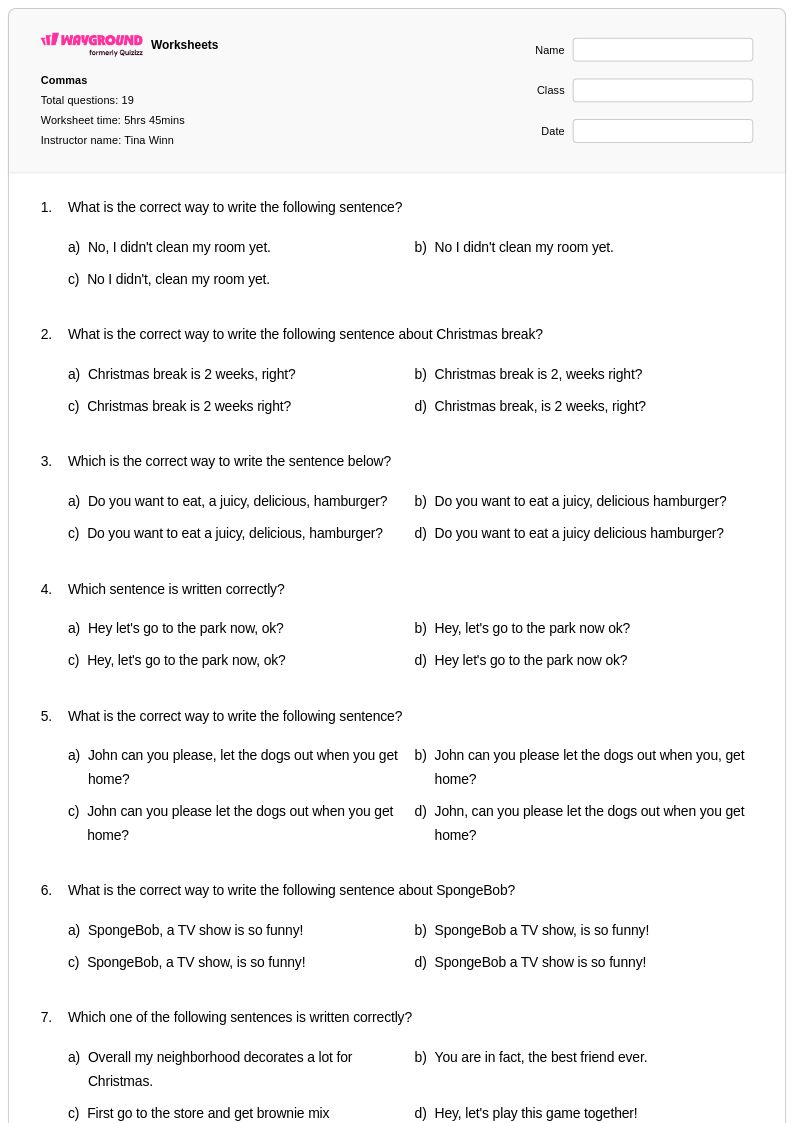
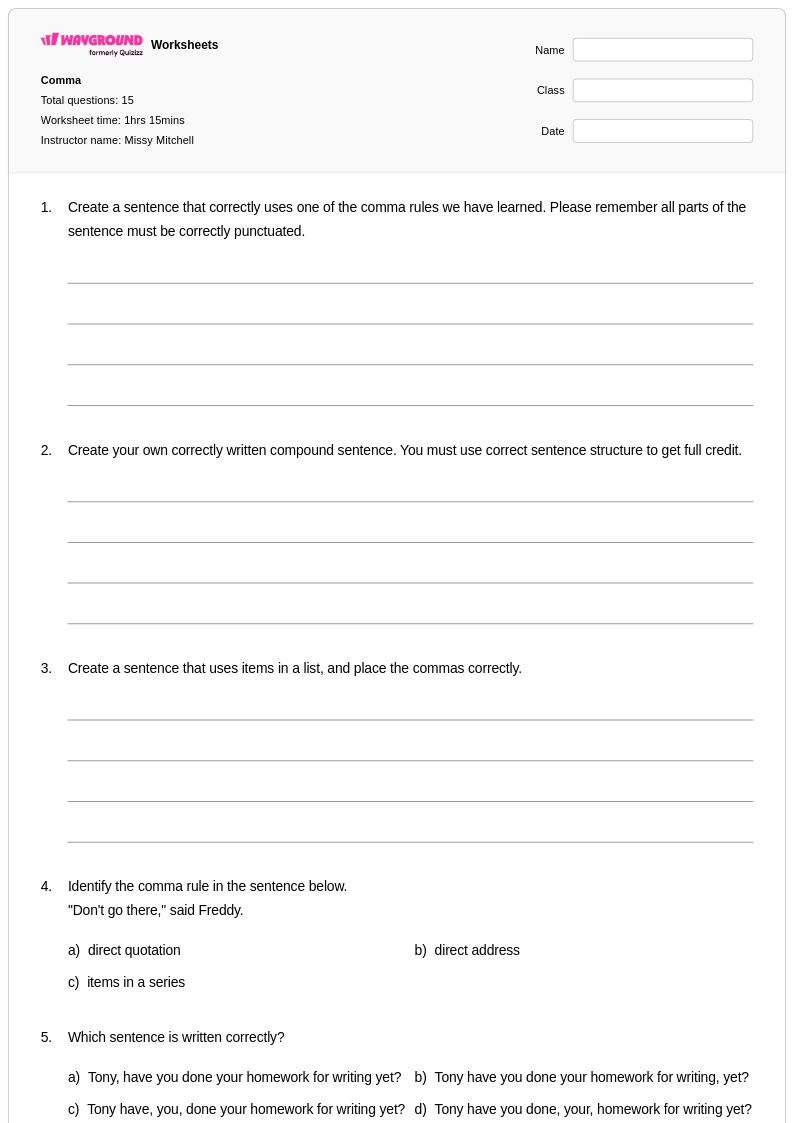
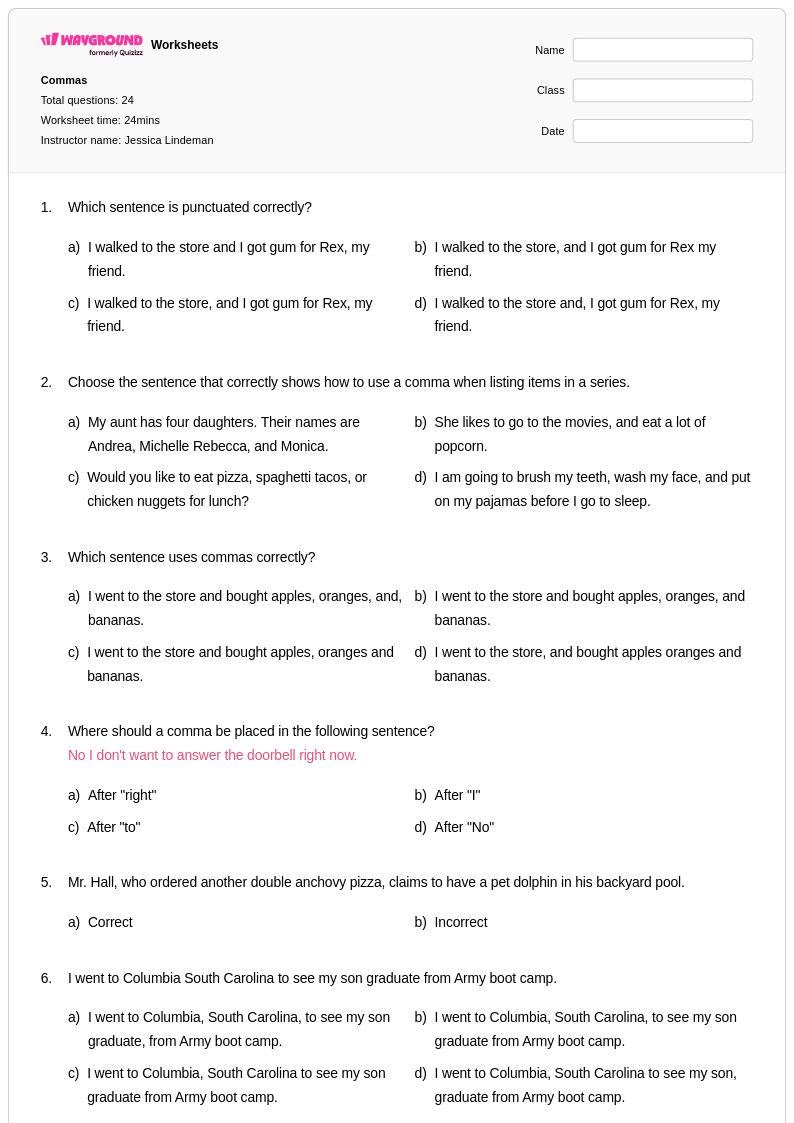
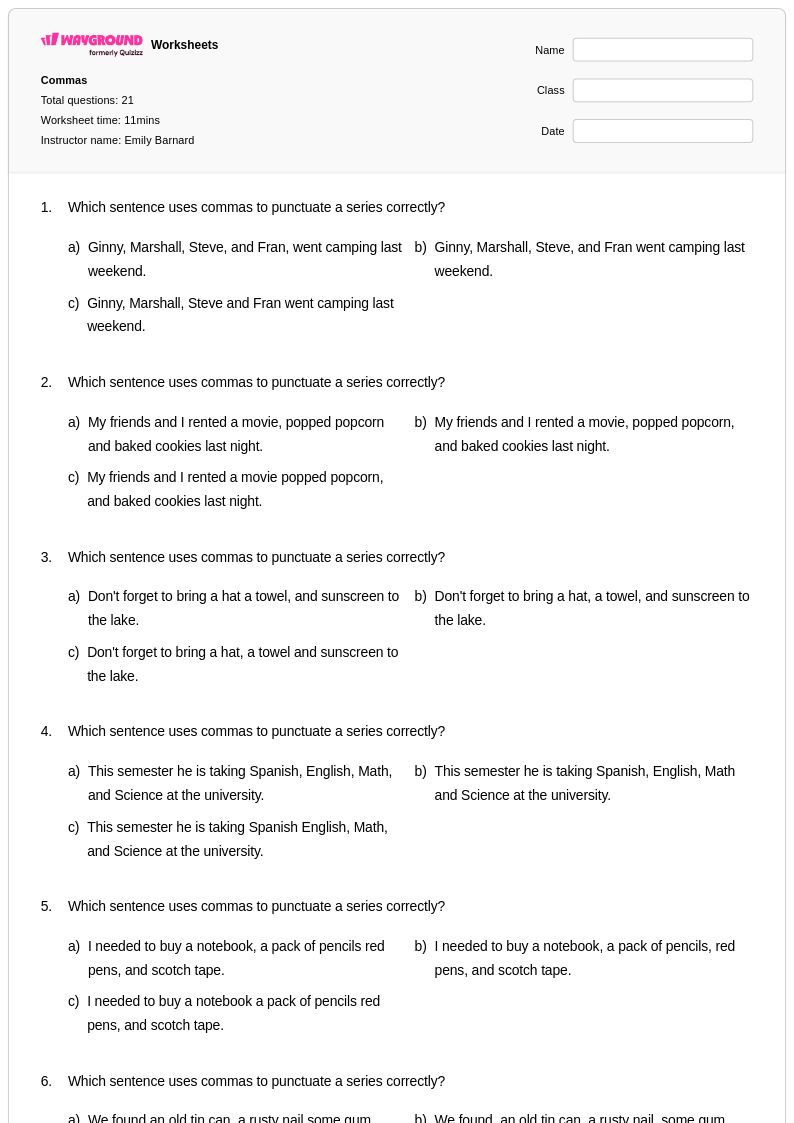
Commas in a series represent a fundamental punctuation skill that Class 5 students must master to write clear, organized sentences. Wayground's comprehensive collection of commas in a series worksheets provides targeted practice for elementary learners developing their understanding of how to properly separate three or more items in a list. These educational resources strengthen students' ability to identify when commas are needed between words, phrases, or clauses in a series, while also teaching the optional use of the Oxford comma before coordinating conjunctions. Each worksheet includes structured practice problems that progress from simple word lists to more complex series involving descriptive phrases, helping students build confidence through repetitive application. Teachers can access these materials as free printables in convenient PDF format, complete with detailed answer keys that facilitate quick assessment and provide immediate feedback for both individual practice and classroom instruction.
Wayground's extensive library draws from millions of teacher-created resources, offering educators an unparalleled selection of commas in a series worksheets specifically designed for Class 5 language arts instruction. The platform's robust search and filtering capabilities enable teachers to quickly locate materials that align with specific curriculum standards and match their students' diverse learning needs. These differentiation tools support seamless lesson planning by providing multiple difficulty levels and varied question formats, from fill-in-the-blank exercises to sentence correction activities. Teachers can customize worksheets to target specific learning objectives, whether for whole-class instruction, small group remediation, or individual enrichment opportunities. The flexible availability of both printable and digital formats ensures that educators can seamlessly integrate these comma practice materials into traditional classroom settings or remote learning environments, making skill-building practice accessible and engaging for all Class 5 students.
FAQs
How do I teach commas in a series to my students?
Start by introducing the rule that three or more items in a list must be separated by commas, then present clear examples with nouns before moving to phrases and clauses. Model the difference between a two-item list (no comma needed) and a three-or-more-item list to prevent overgeneralization. Explicitly address the Oxford comma early, since student confusion about whether to include a comma before 'and' or 'or' is extremely common. Using mentor sentences from texts students already know helps anchor the rule in authentic writing contexts.
What exercises help students practice commas in a series?
Effective practice activities include inserting missing commas into unpunctuated sentences, identifying and correcting comma errors in series, and combining shorter sentences into a single list using correct punctuation. Varying the complexity of the series, from simple noun lists to series of participial phrases, ensures students can apply the rule across different grammatical contexts and not just memorize one pattern.
What mistakes do students commonly make with commas in a series?
The most frequent errors are omitting the Oxford comma before the final item, adding a comma after only the first item in a list rather than between all items, and inserting commas into two-item lists where none are needed. Students also commonly place a comma after the conjunction ('and, or') rather than before it. Targeted error-correction exercises that isolate each of these patterns help students self-monitor more effectively during independent writing.
Should I teach the Oxford comma, and how do I handle disagreement about it?
Teaching the Oxford comma is strongly recommended in K-12 instruction because it eliminates ambiguity in most series constructions and is required by most academic style guides. Present a clear example where omitting it changes meaning (e.g., 'I'd like to thank my parents, Taylor Swift and Kanye West') to show students why the rule exists. Once students understand the purpose, they can make informed choices in contexts where a specific style guide differs.
How do I use Wayground's commas in a series worksheets in my classroom?
Wayground's commas in a series worksheets are available as printable PDFs for traditional classroom use and in digital formats for technology-integrated environments, making them flexible for whole-class instruction, small-group practice, or independent work. Teachers can also host them as a quiz directly on Wayground to assign interactive practice and review student responses. Each worksheet includes a complete answer key, reducing preparation time and supporting both direct instruction and self-paced learning.
How can I differentiate commas in a series practice for students who are struggling?
For struggling students, begin with sentences containing only three-item noun lists before introducing longer or more syntactically complex series. On Wayground, teachers can enable accommodations such as reduced answer choices to lower cognitive load for specific students, or turn on Read Aloud so the question text is read to students who benefit from auditory support. These settings can be assigned to individual students without affecting the experience of the rest of the class.