Free Printable Comparatives and Superlatives Worksheets for Kindergarten
Enhance kindergarten students' understanding of comparatives and superlatives with Wayground's free printable worksheets, featuring engaging practice problems and comprehensive answer keys to build essential language comparison skills.
Explore printable Comparatives and Superlatives worksheets for Kindergarten
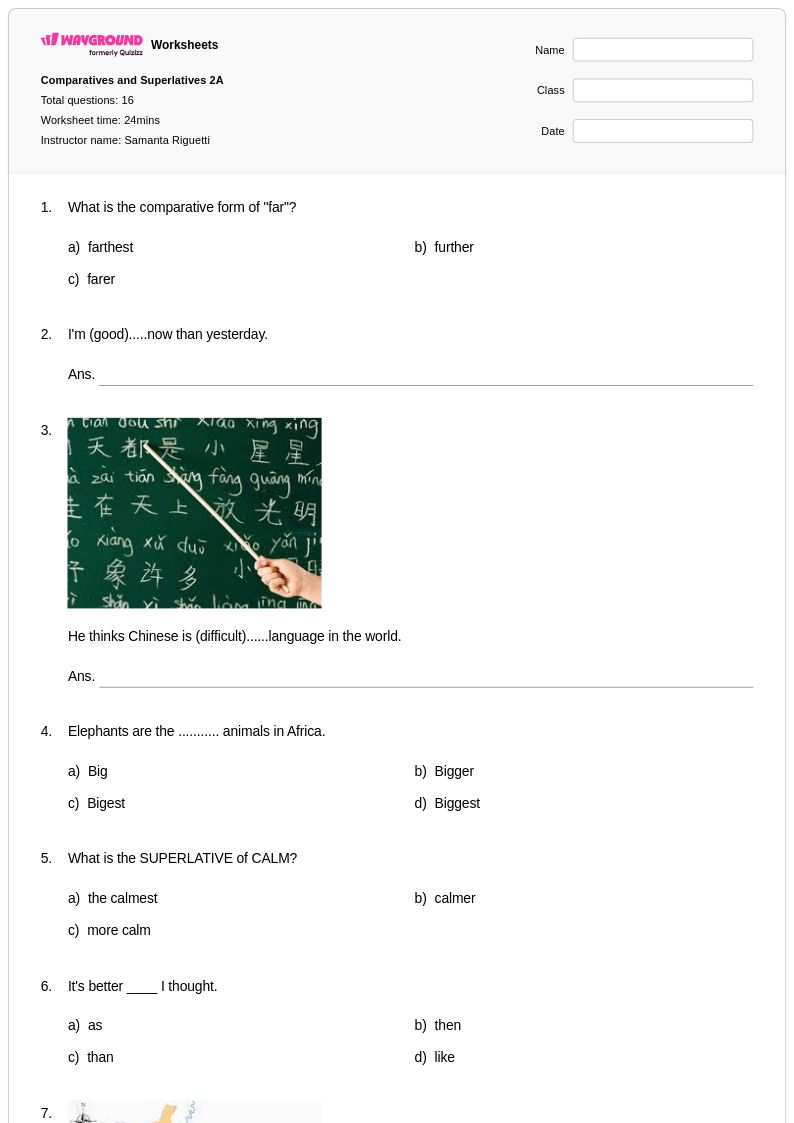
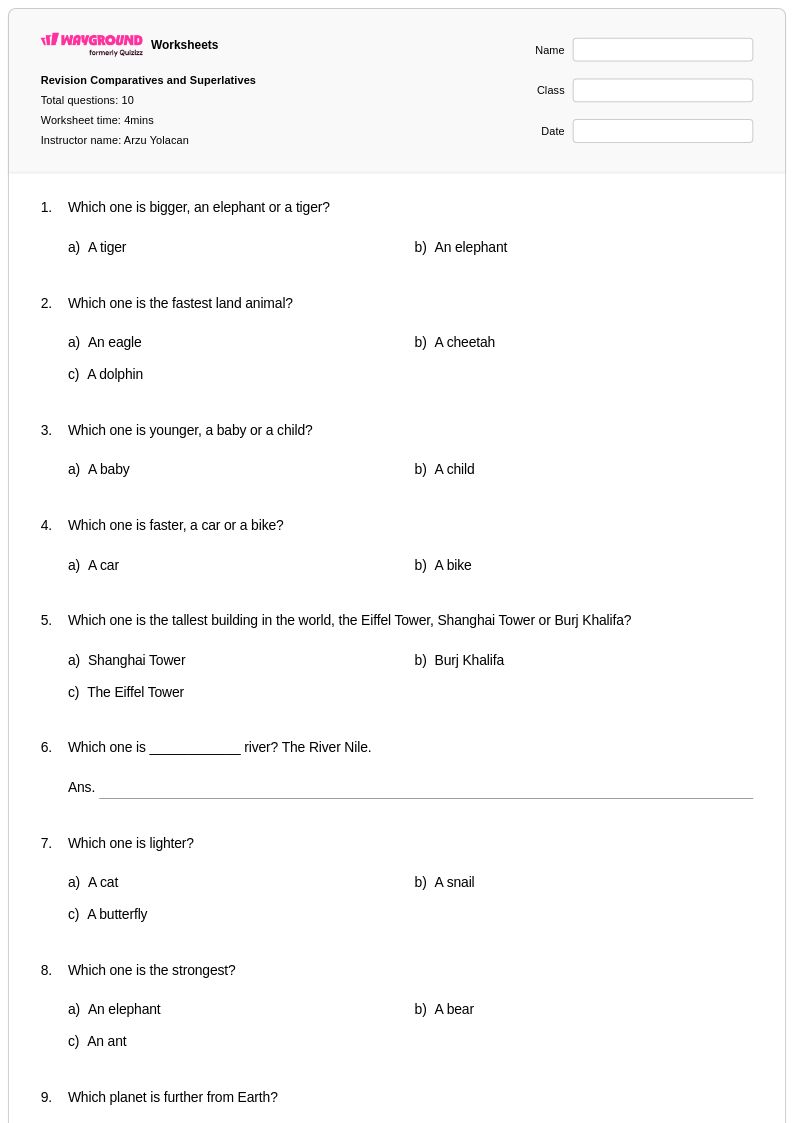
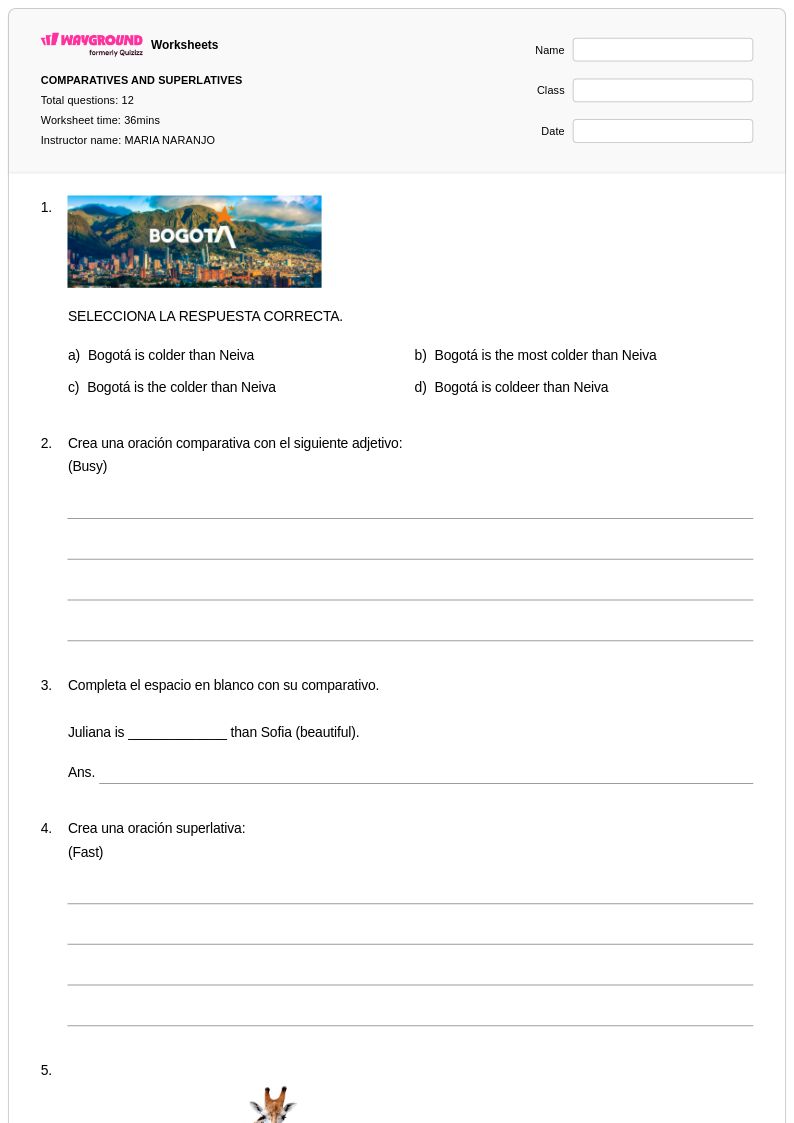
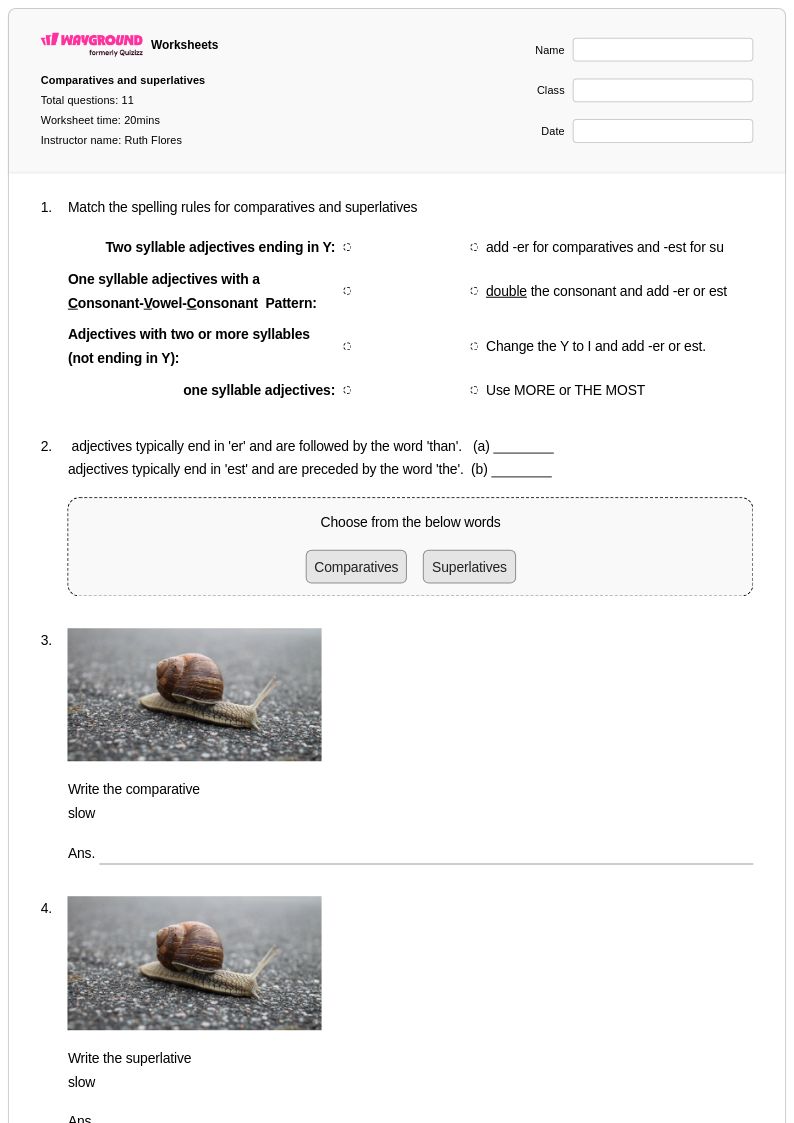
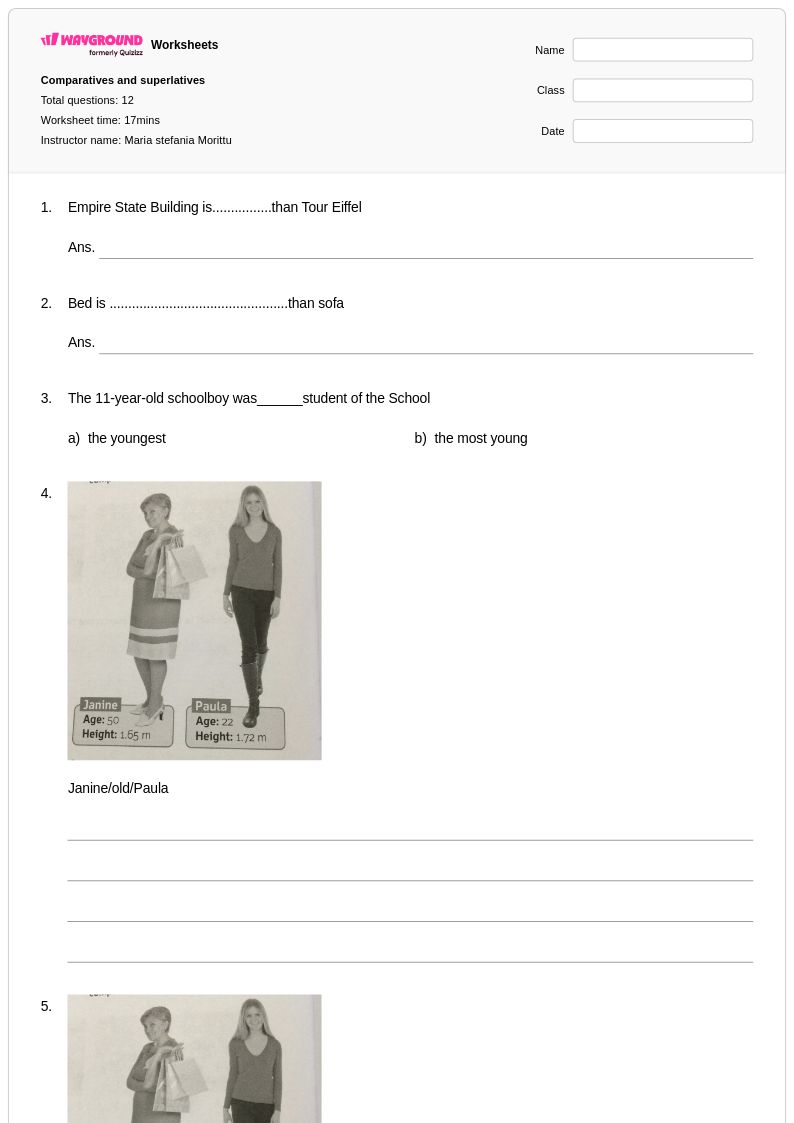
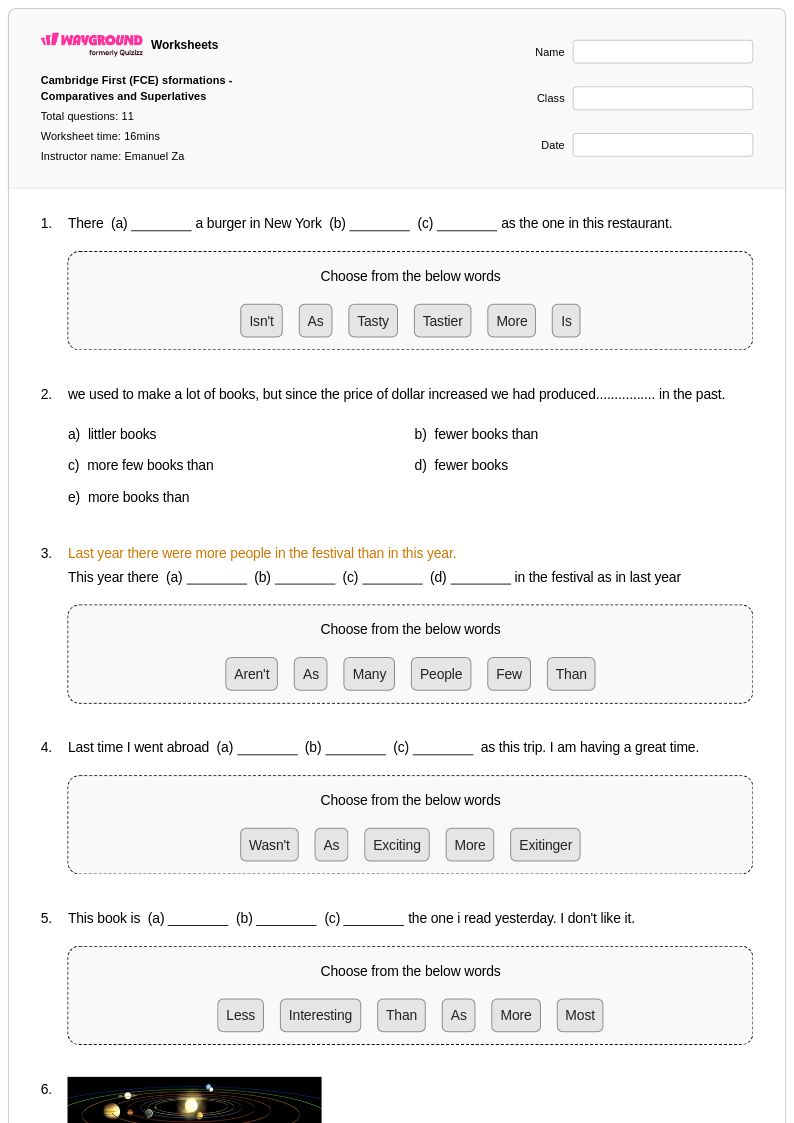
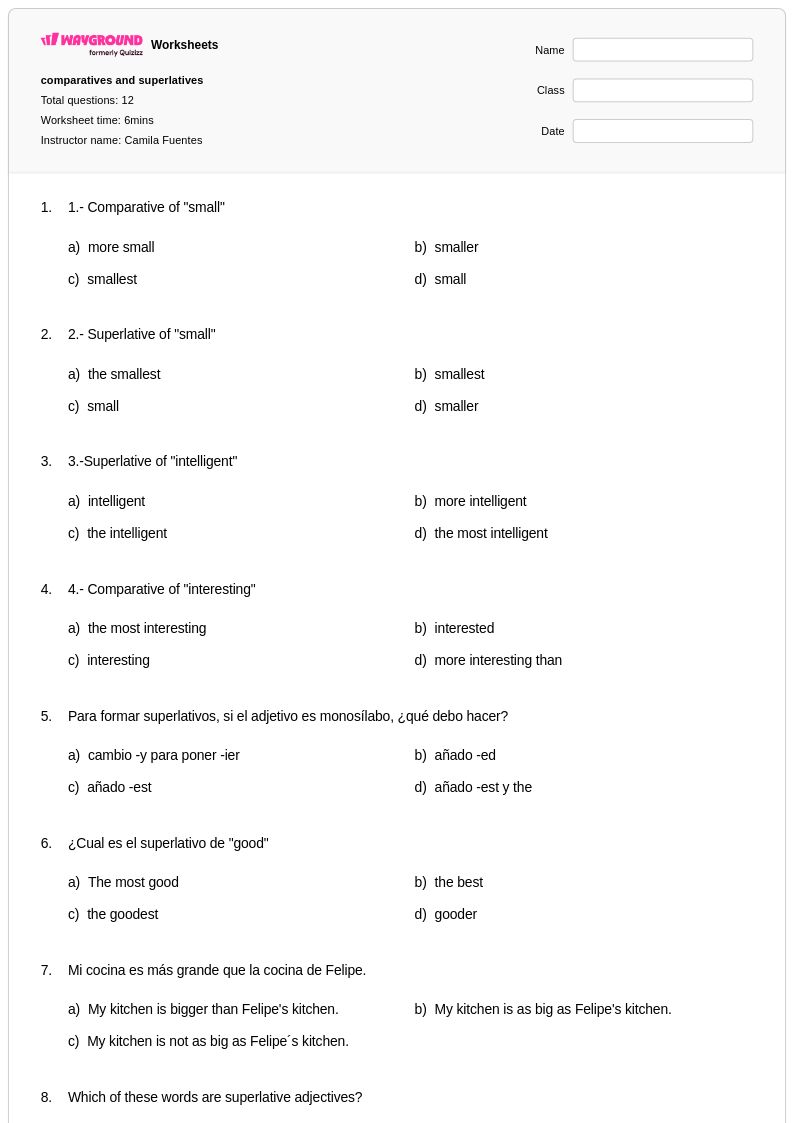
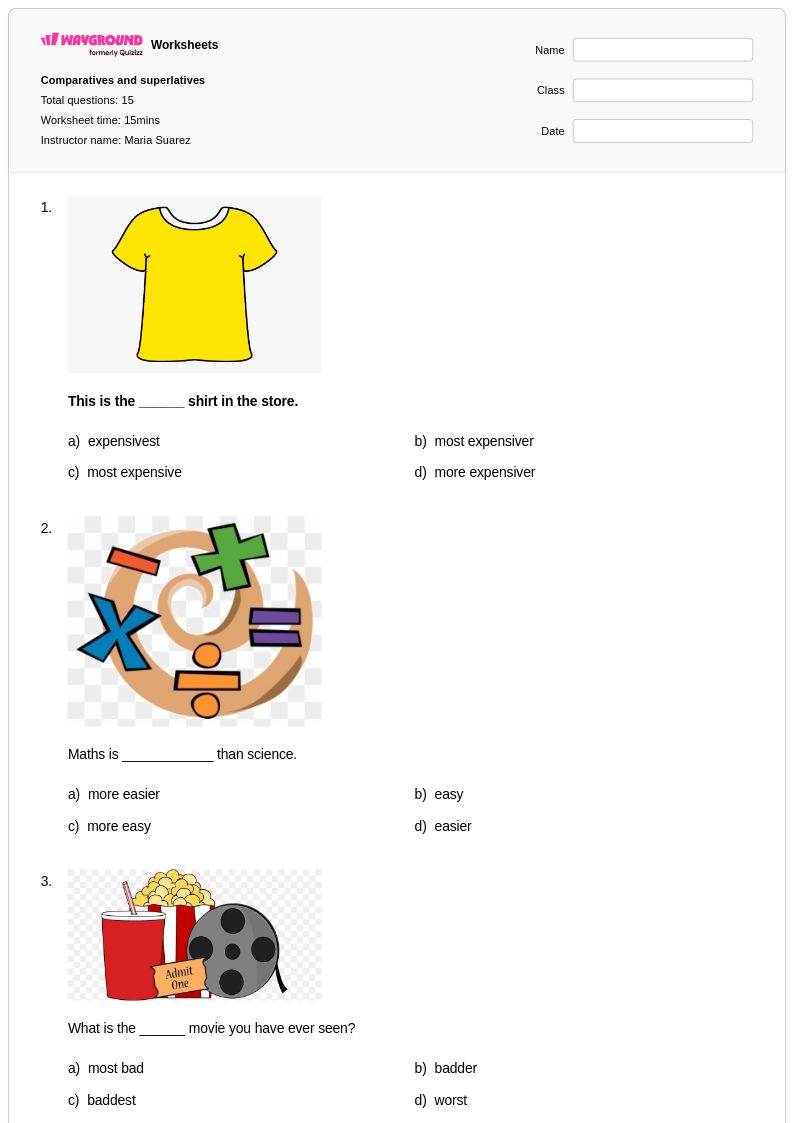
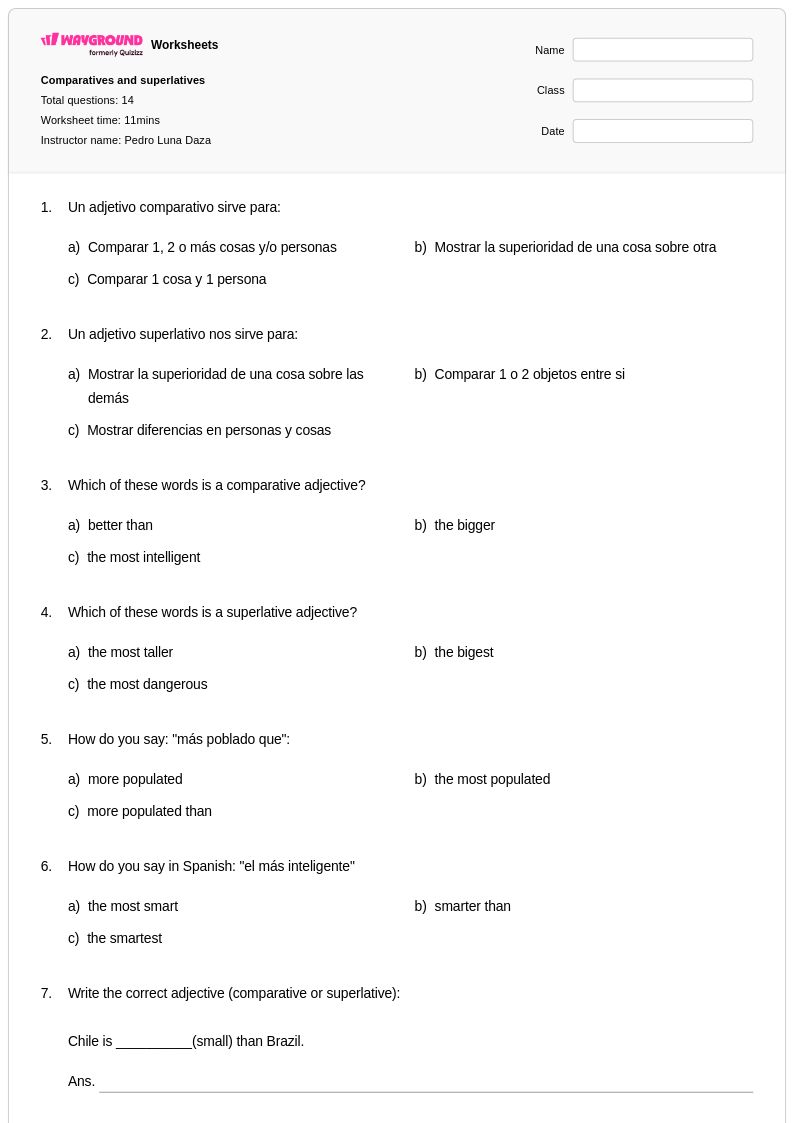
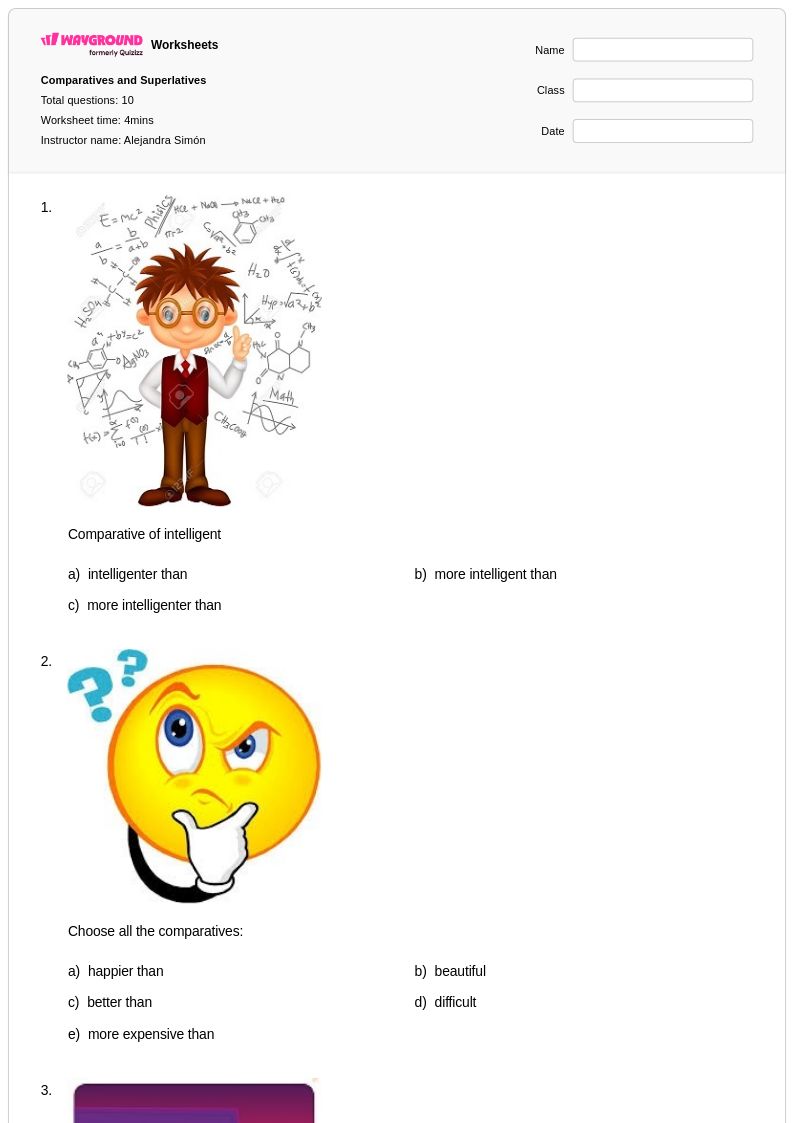
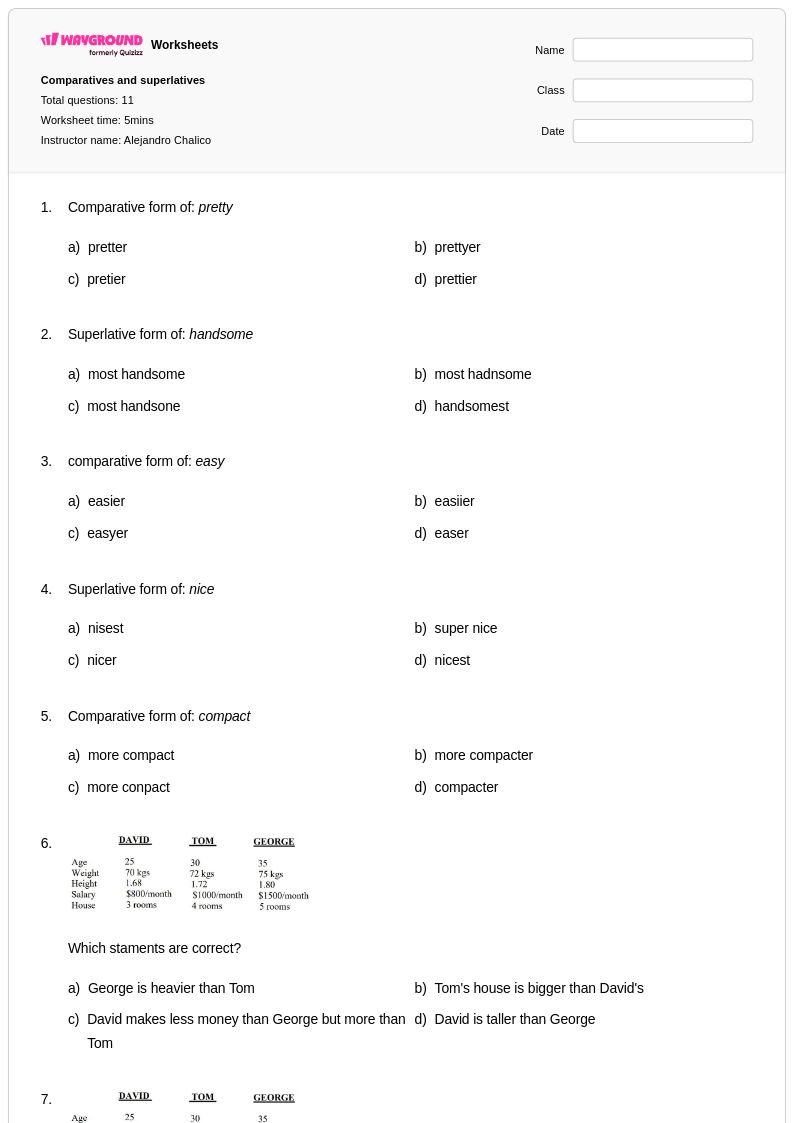
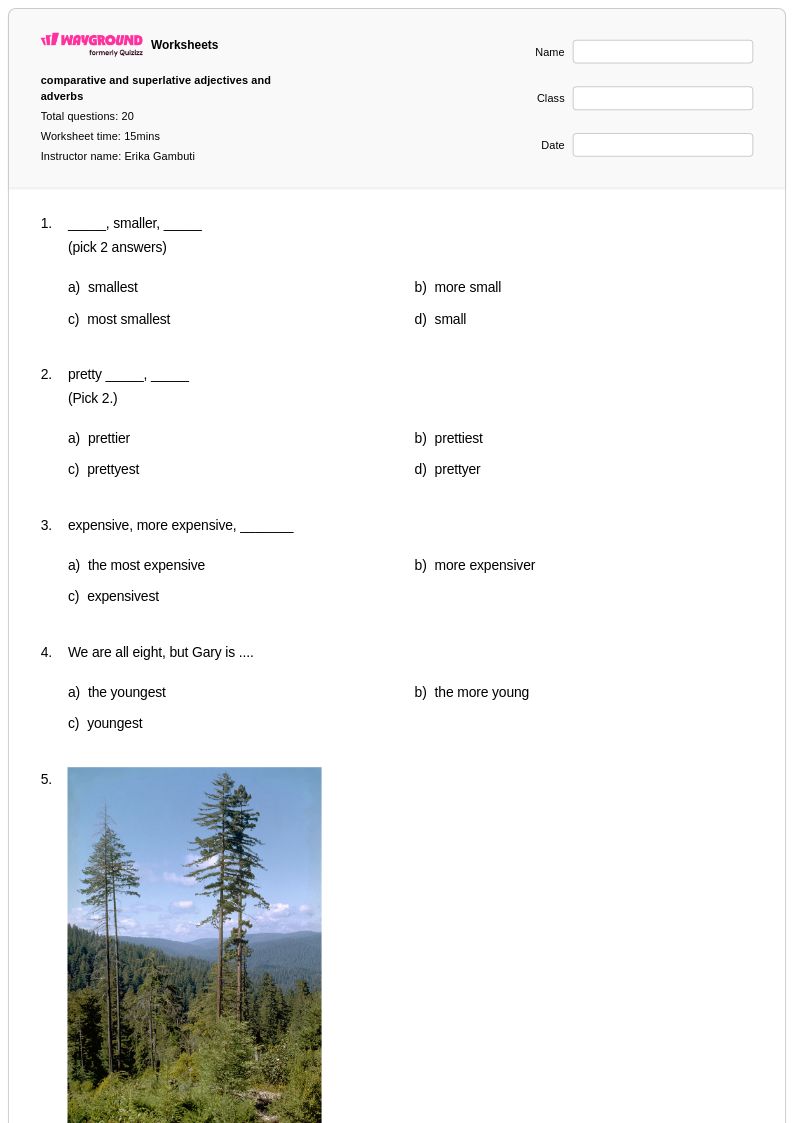
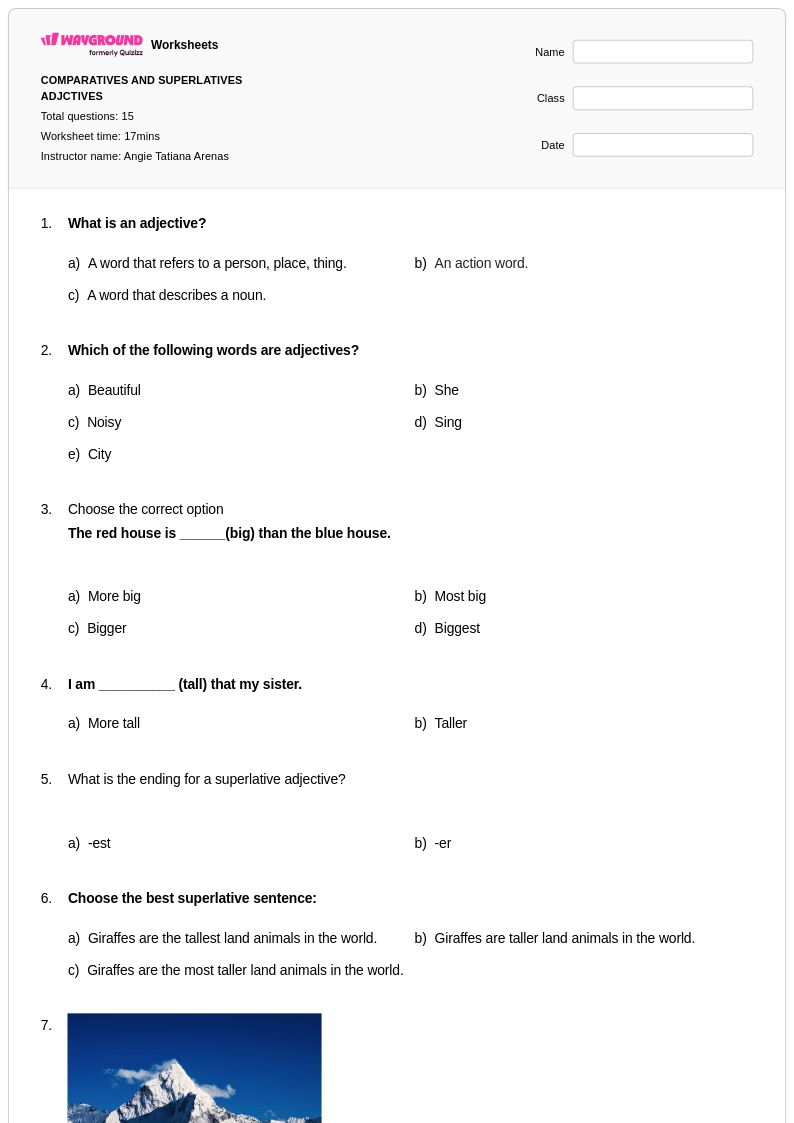
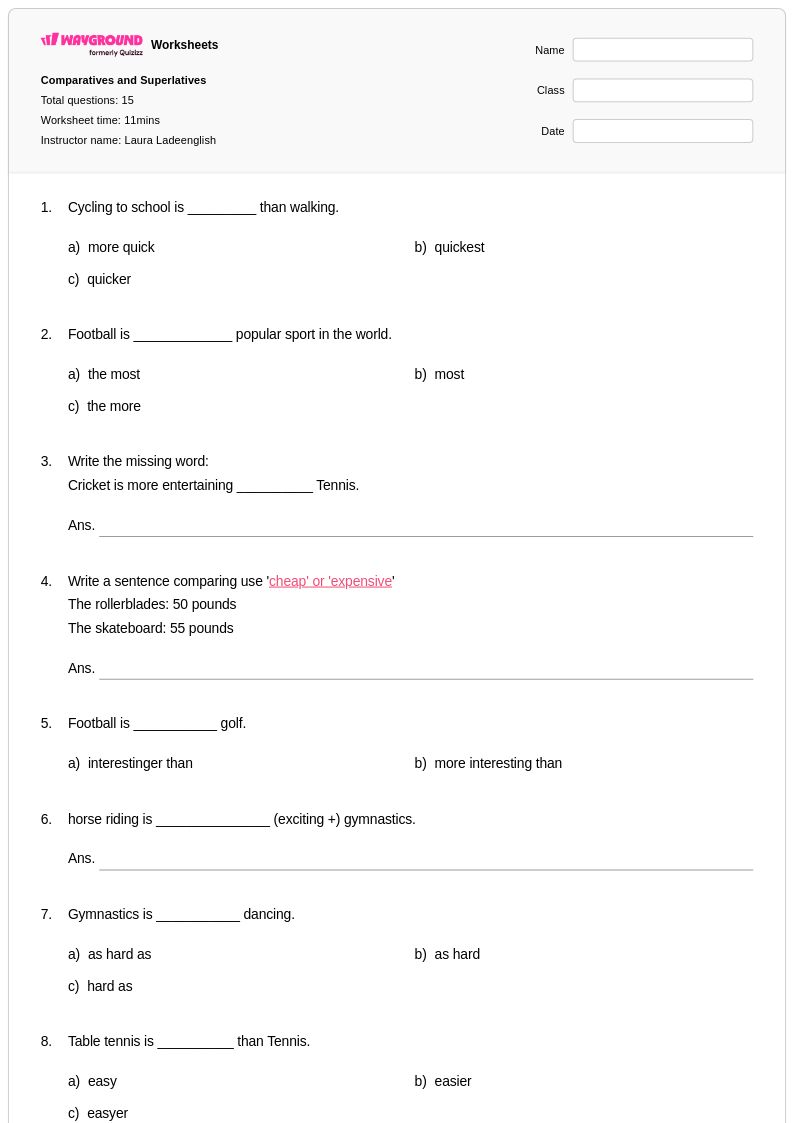
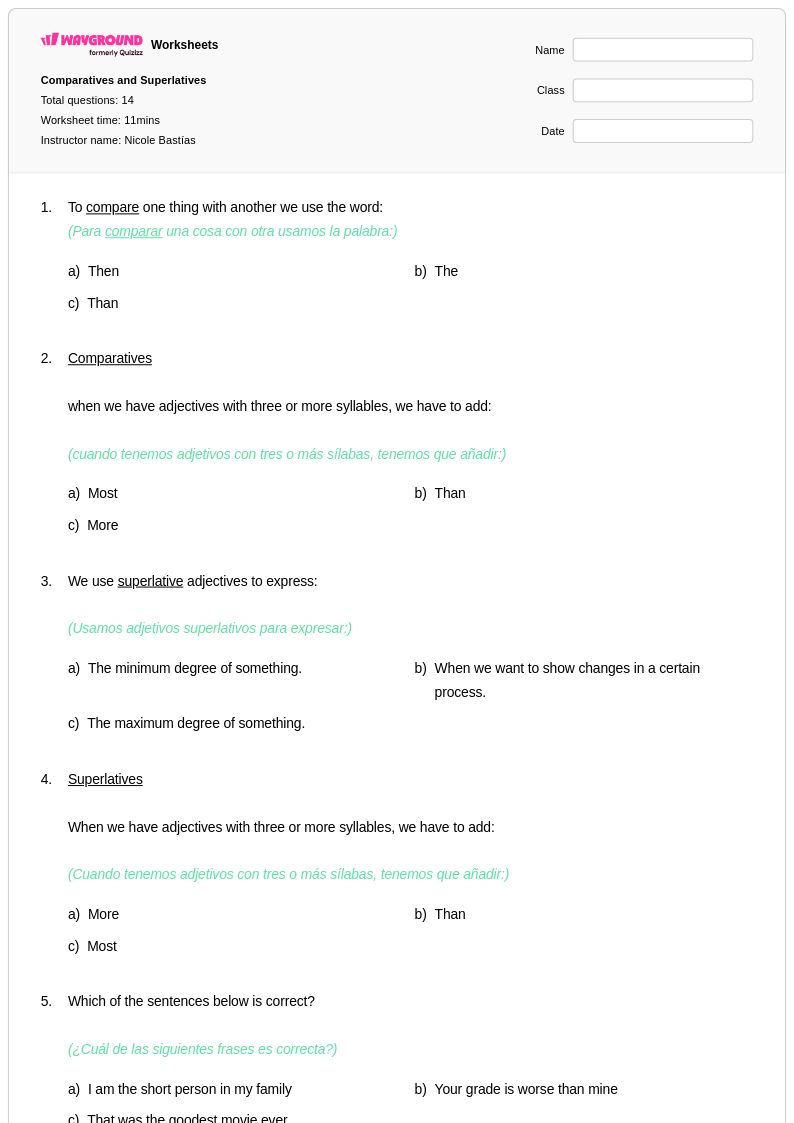
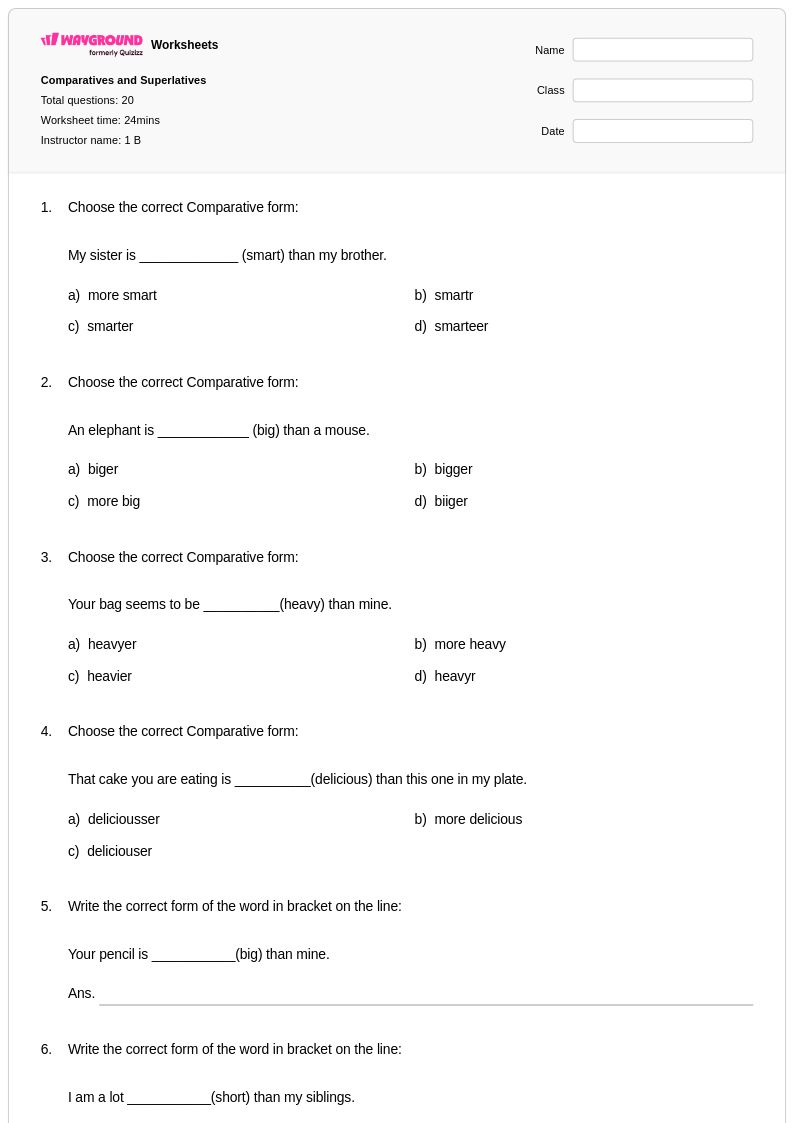
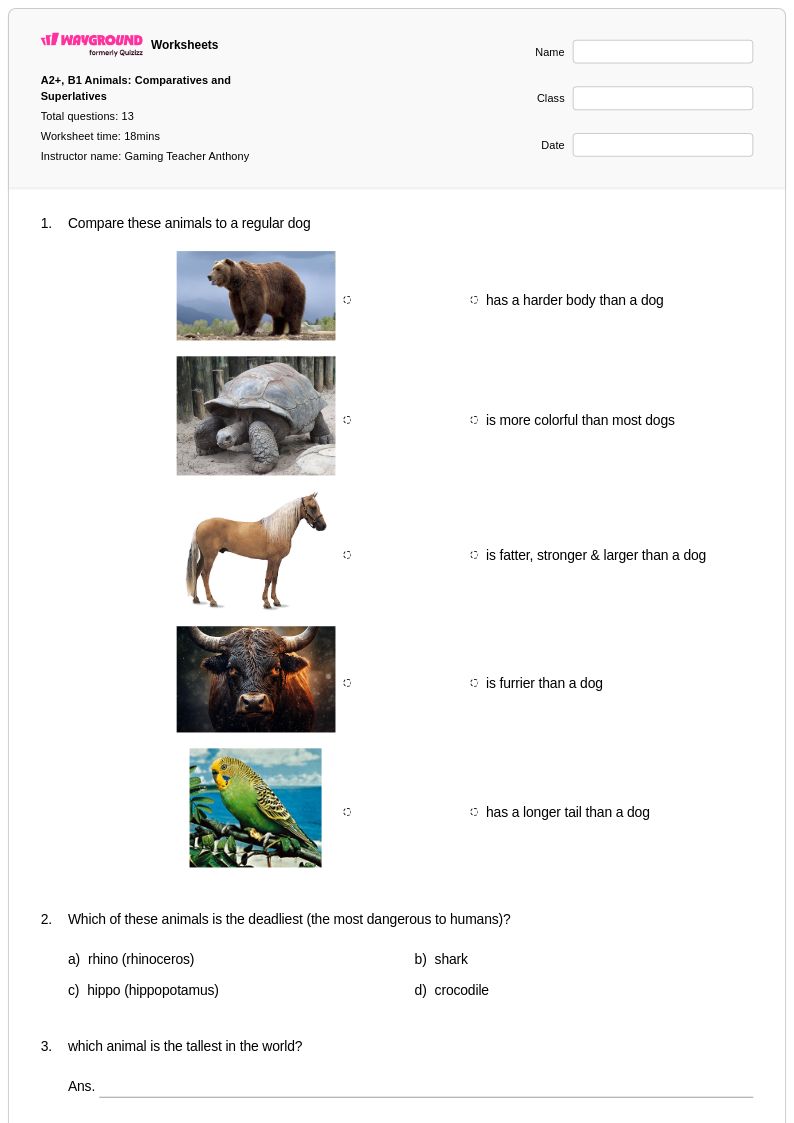
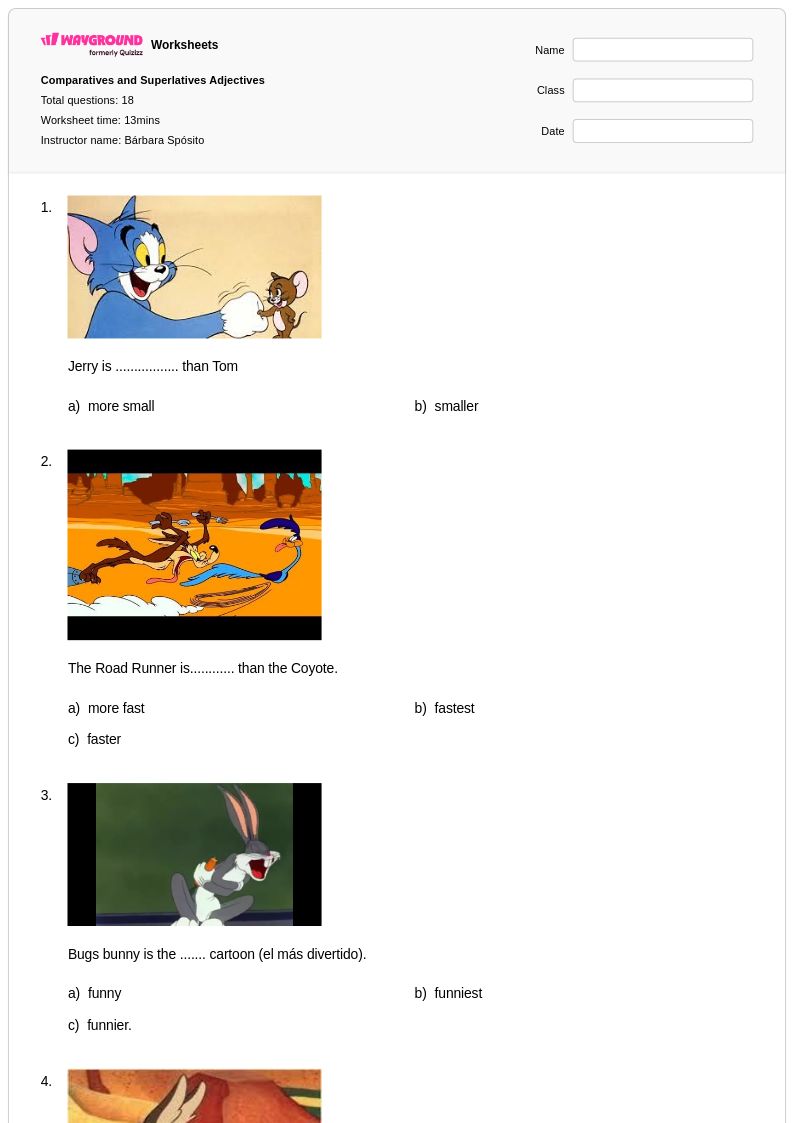
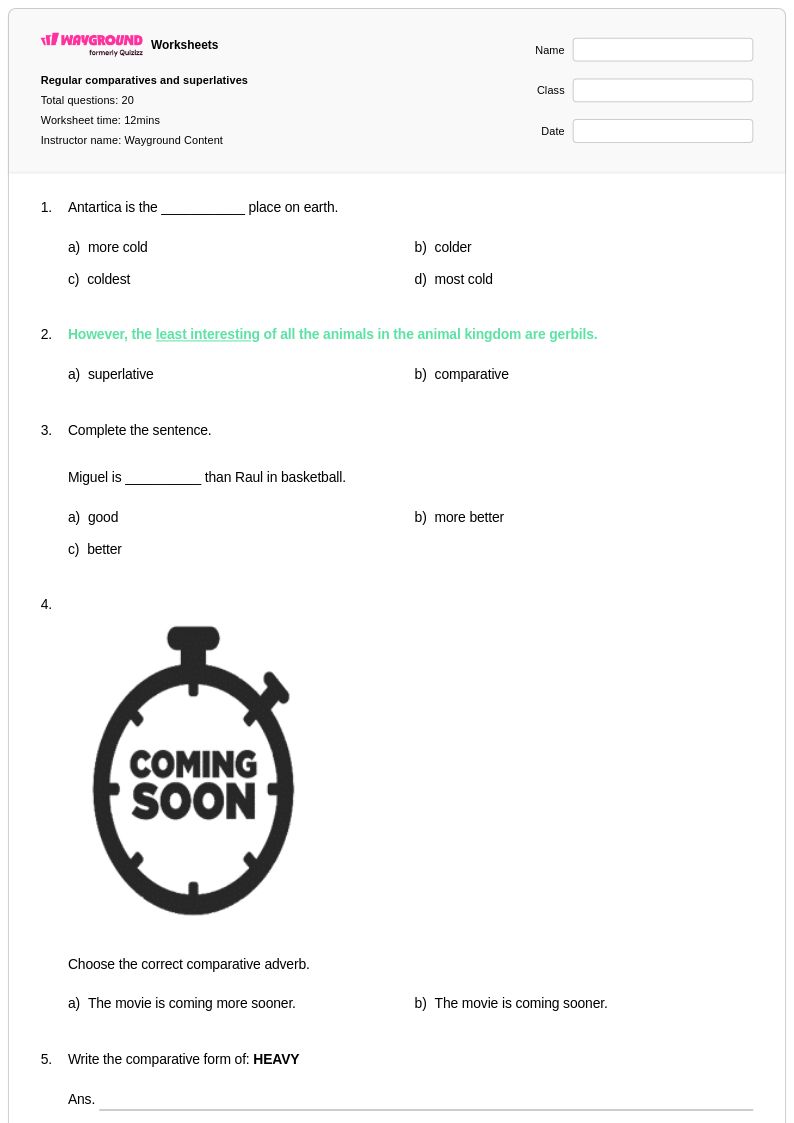
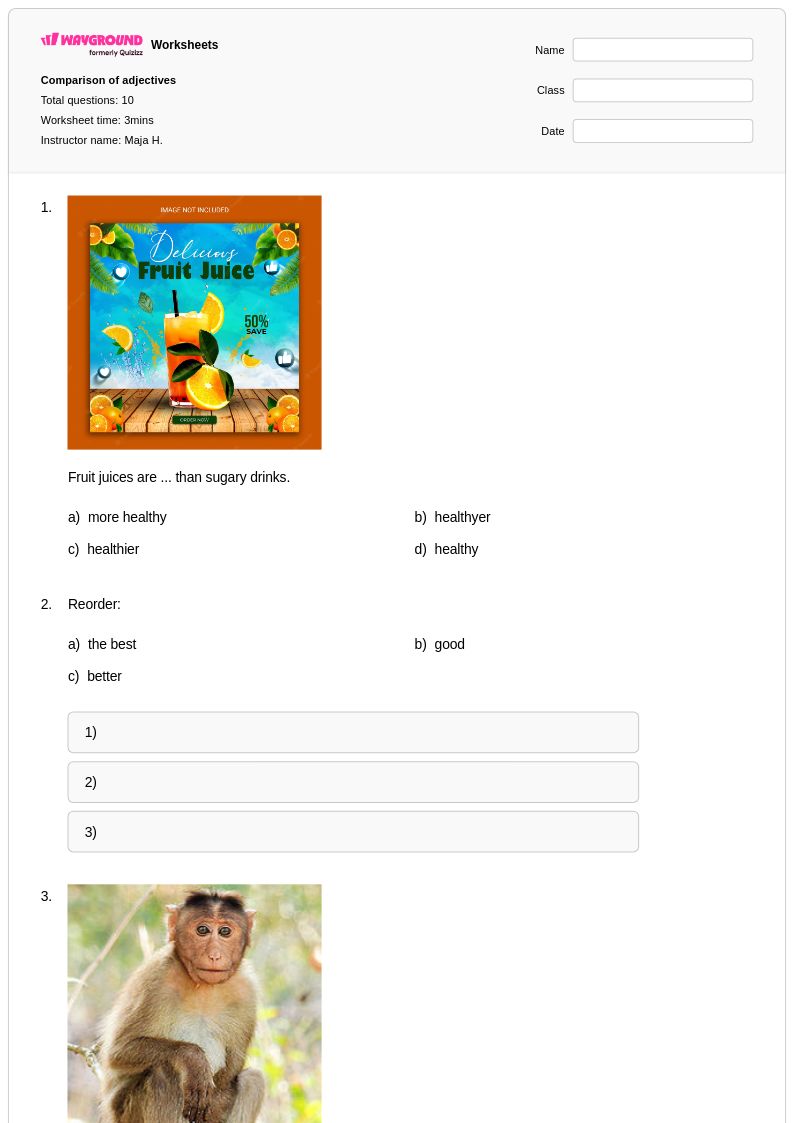
Comparatives and superlatives worksheets for kindergarten students through Wayground (formerly Quizizz) introduce young learners to the fundamental concepts of comparing objects, people, and ideas using descriptive language. These educational resources help kindergarteners understand how to use words like "bigger," "biggest," "smaller," and "smallest" to make meaningful comparisons in their everyday communication. The worksheets strengthen essential language skills including vocabulary development, sentence structure, and critical thinking abilities as students learn to observe differences and similarities between items. Each printable resource includes carefully designed practice problems that allow children to apply comparative and superlative forms in age-appropriate contexts, with comprehensive answer keys provided to support both independent learning and teacher-guided instruction. These free materials offer structured opportunities for kindergarten students to build confidence in using descriptive language while developing foundational grammar concepts.
Wayground (formerly Quizizz) empowers educators with access to millions of teacher-created comparative and superlative worksheets specifically designed for kindergarten language instruction. The platform's robust search and filtering capabilities enable teachers to quickly locate materials that align with curriculum standards and meet diverse classroom needs. These comprehensive worksheet collections support effective lesson planning by offering differentiation tools that accommodate various learning styles and ability levels within the kindergarten classroom. Teachers can customize existing resources or utilize ready-made printables and digital formats, including downloadable pdf versions, to provide targeted skill practice during whole-group instruction, small-group activities, or individual remediation sessions. The flexible format options ensure that educators can seamlessly integrate comparative and superlative practice into daily routines while providing enrichment opportunities for advanced learners and additional support for students requiring extra language development assistance.
FAQs
How do I teach comparatives and superlatives to English learners?
Start by establishing the concept of degrees of comparison using familiar, concrete examples before introducing rules. Teach one-syllable adjectives first (e.g., 'tall → taller → tallest'), then move to multi-syllable adjectives that use 'more' and 'most,' and finally address irregular forms like 'good → better → best.' Visual anchor charts that group adjectives by type help students internalize the patterns rather than memorize rules in isolation.
What exercises help students practice comparative and superlative forms?
Structured fill-in-the-blank exercises are effective for building familiarity with formation rules, while sentence transformation tasks — converting base adjectives into comparative or superlative forms — reinforce application in context. Practice problems that explicitly separate regular and irregular adjective patterns, as well as one-syllable versus multi-syllable word rules, help students develop accurate habits before moving to open-ended writing practice.
What mistakes do students commonly make with comparatives and superlatives?
The most frequent errors include double comparatives ('more bigger'), misapplying the -er/-est suffix to multi-syllable adjectives ('importanter'), and incorrect use of irregular forms ('gooder' instead of 'better'). Students also frequently confuse when to use 'more/most' versus inflectional suffixes, particularly with two-syllable adjectives that can accept either form. Targeted practice isolating irregular adjective patterns and common exceptions is the most direct way to address these persistent errors.
How do I differentiate comparatives and superlatives instruction for mixed-ability classrooms?
For students who need additional support, reduce the scope of practice to one-syllable regular adjectives first and use sentence frames that scaffold comparison language. Advanced students can work with irregular forms and multi-syllable adjectives simultaneously, progressing to open-ended writing tasks. On Wayground, teachers can assign accommodations such as reduced answer choices or read-aloud support to individual students, while the rest of the class receives standard settings without any notification.
How can I use Wayground's comparatives and superlatives worksheets in my classroom?
Wayground's comparatives and superlatives worksheets are available as free printable PDFs for traditional paper-based practice and in digital formats for interactive online learning, making them adaptable to in-person, hybrid, and remote settings. Teachers can also host the worksheets as a quiz directly on Wayground, enabling real-time student responses and automatic grading. Each worksheet includes a complete answer key, supporting both teacher-led correction and student self-assessment.
How do I know which comparatives and superlatives worksheet is right for my students' level?
Wayground's search and filtering tools allow teachers to locate worksheets aligned with specific learning standards and student proficiency levels, so you can find materials suited for remediation, core instruction, or enrichment. For students still learning the basics, look for worksheets focused on regular one-syllable adjectives; for more advanced learners, prioritize materials that address irregular forms and multi-syllable adjective rules, which represent the highest-frequency error areas in comparative grammar.