Free Printable Comparing and Contrasting in Fiction Worksheets for Class 5
Enhance Class 5 students' literary analysis skills with Wayground's free comparing and contrasting in fiction worksheets, featuring engaging printables, practice problems, and comprehensive answer keys in PDF format.
Explore printable Comparing and Contrasting in Fiction worksheets for Class 5
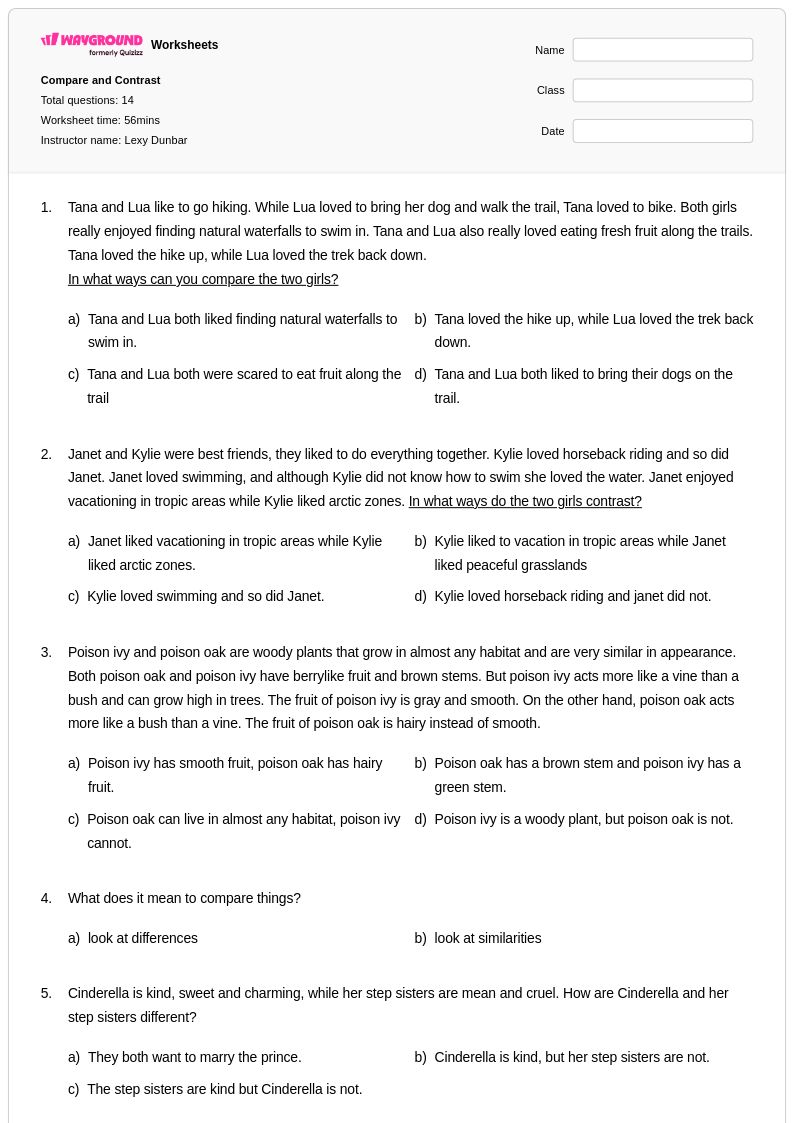
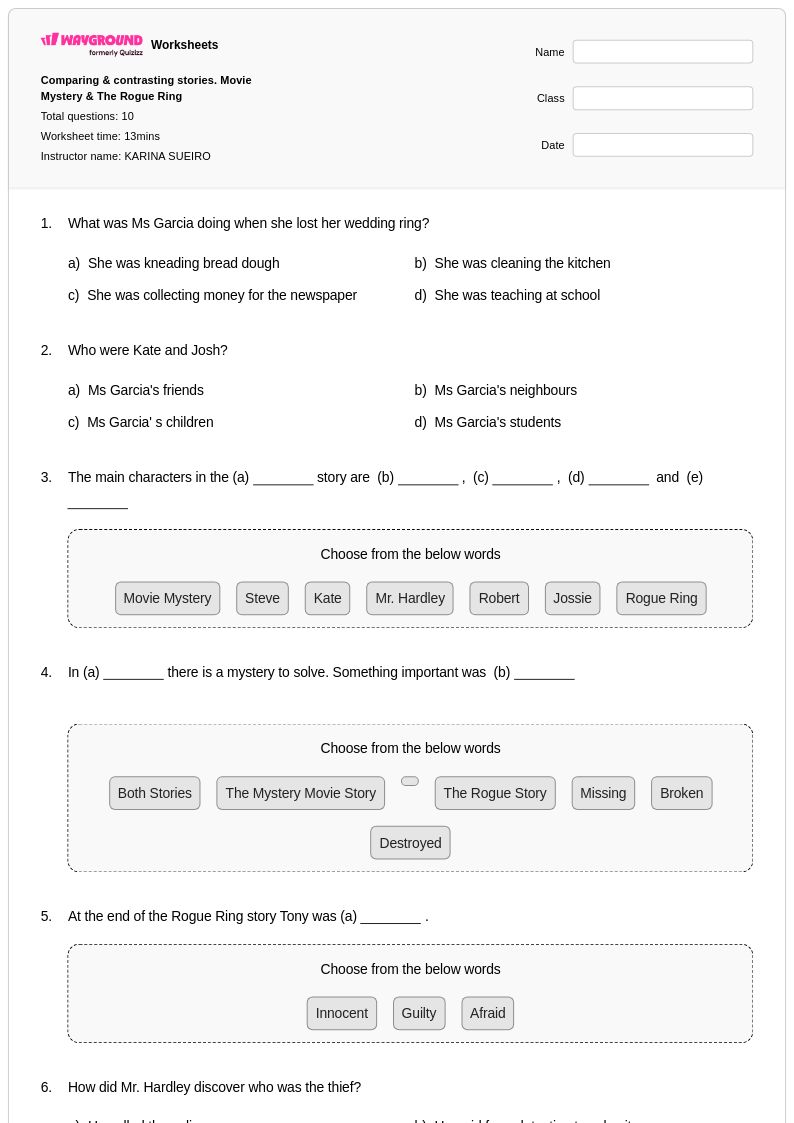
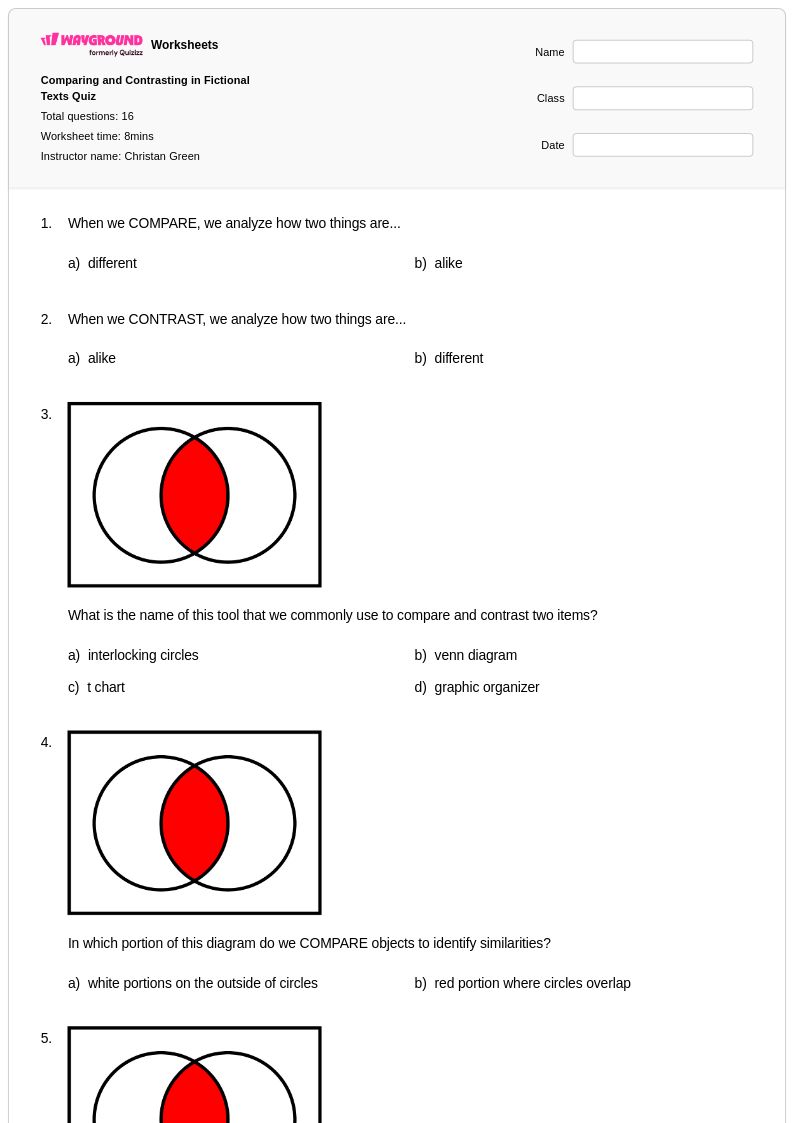
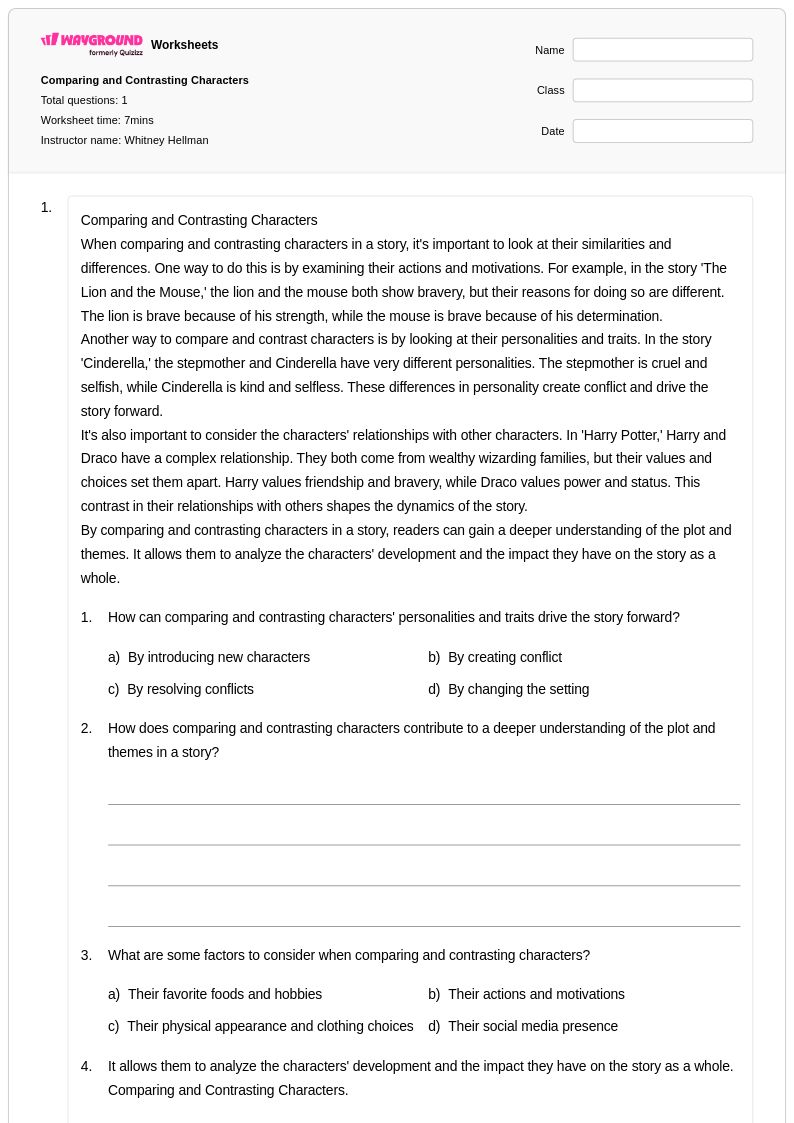
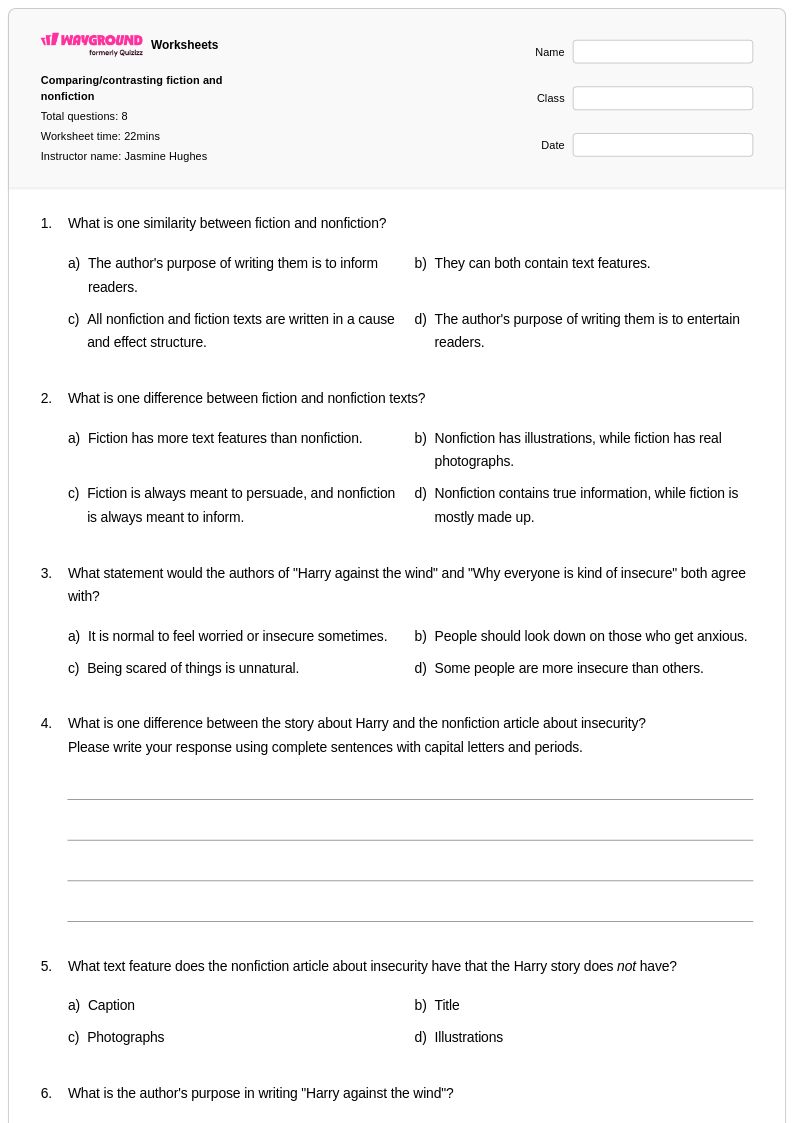
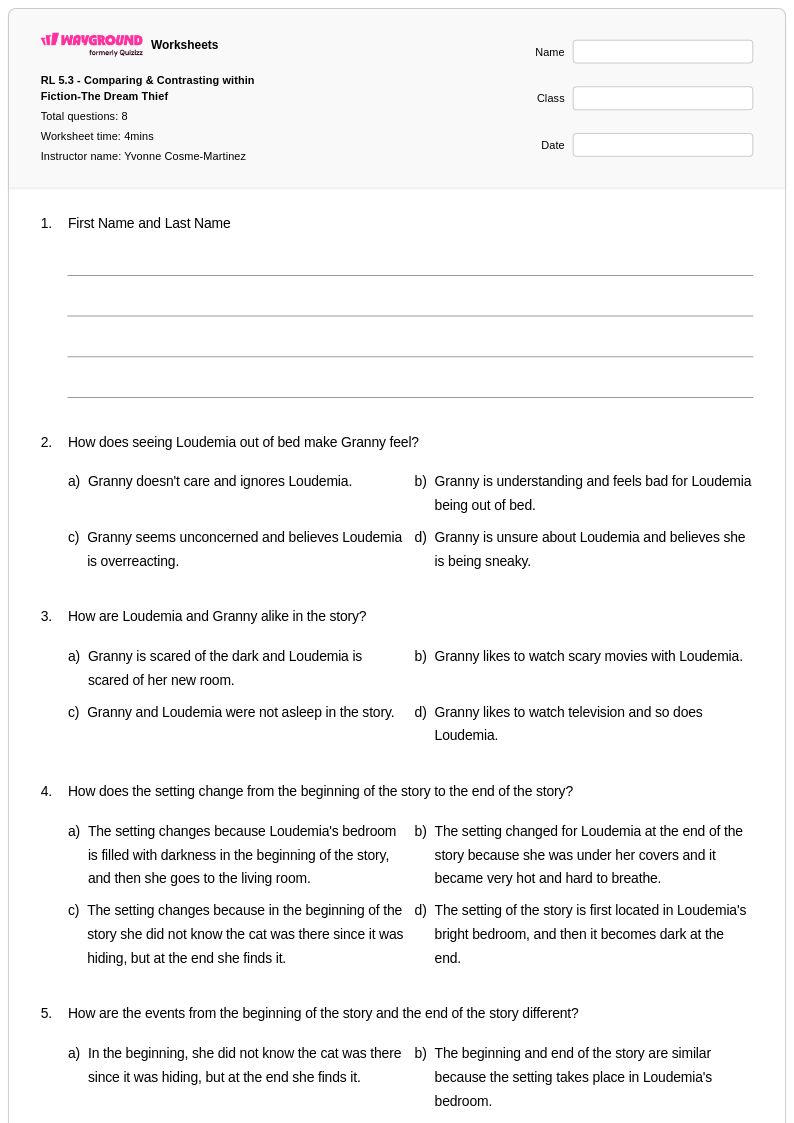
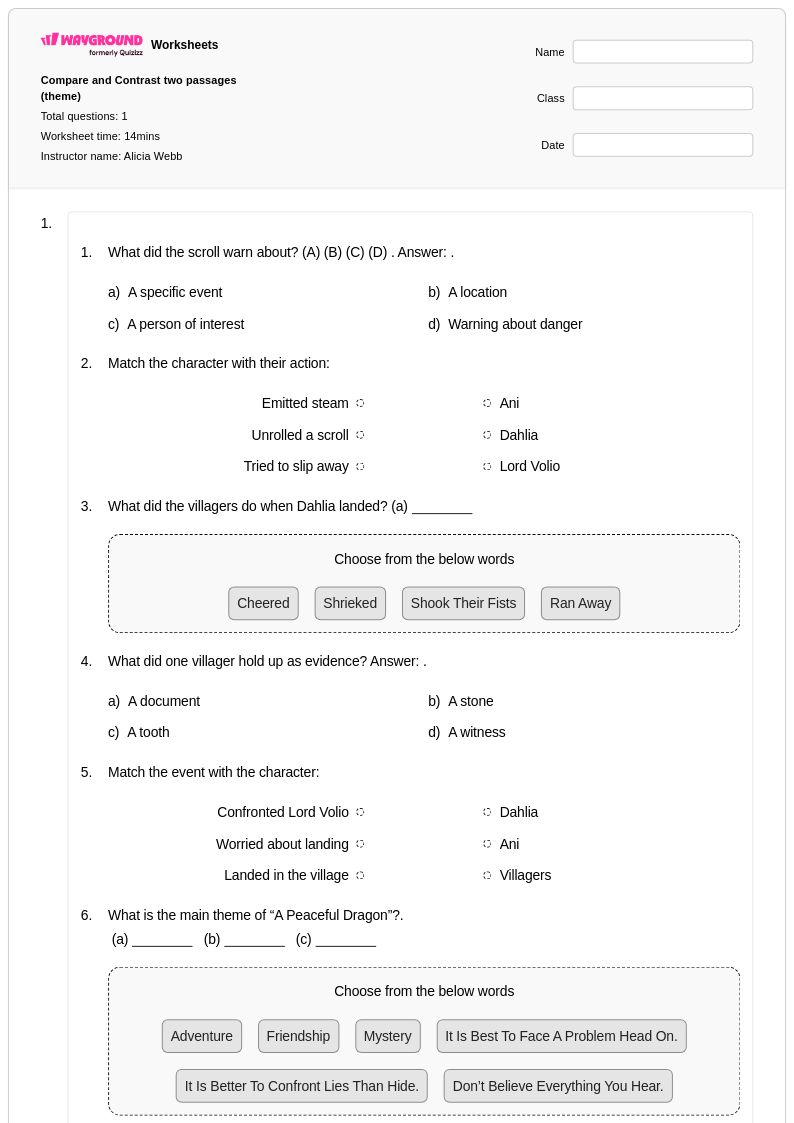
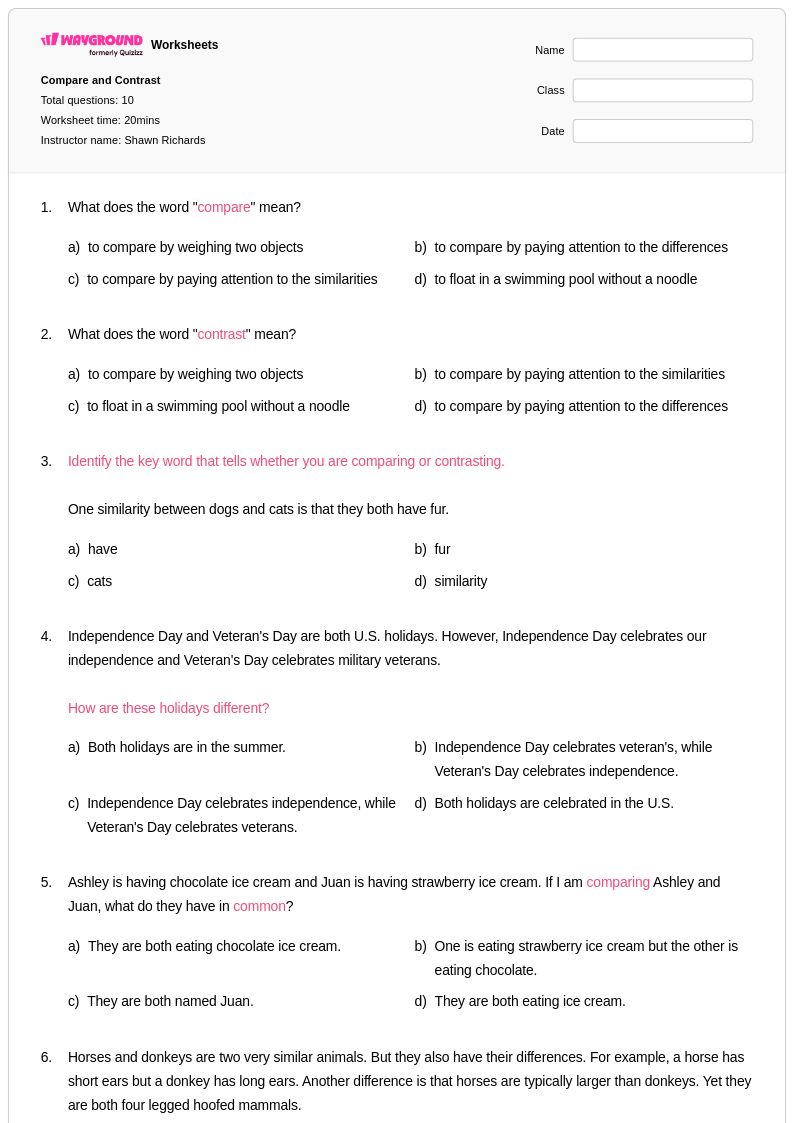
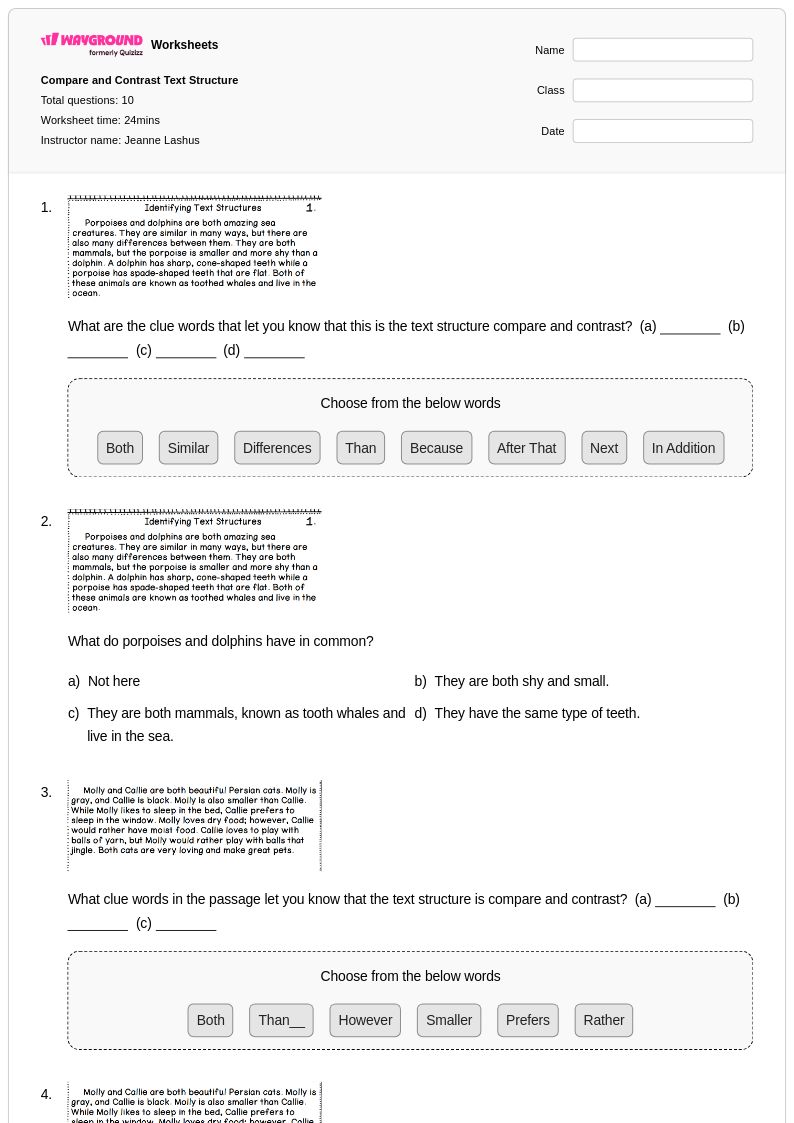
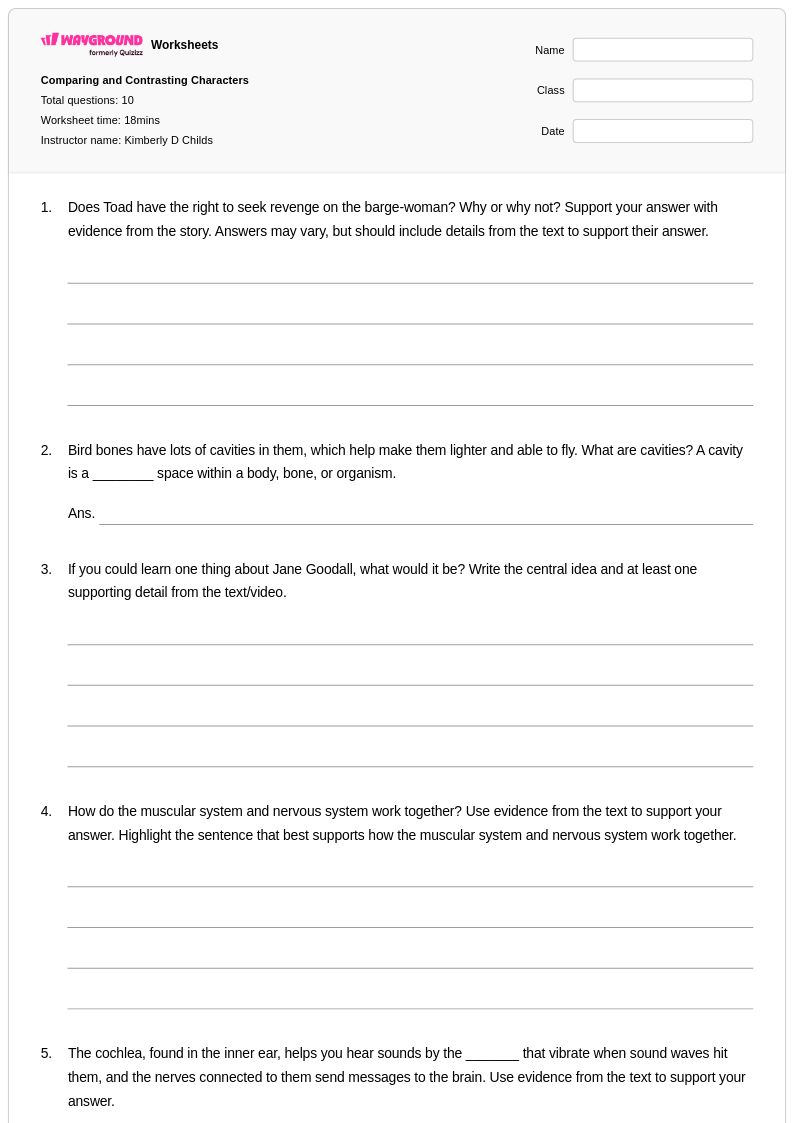
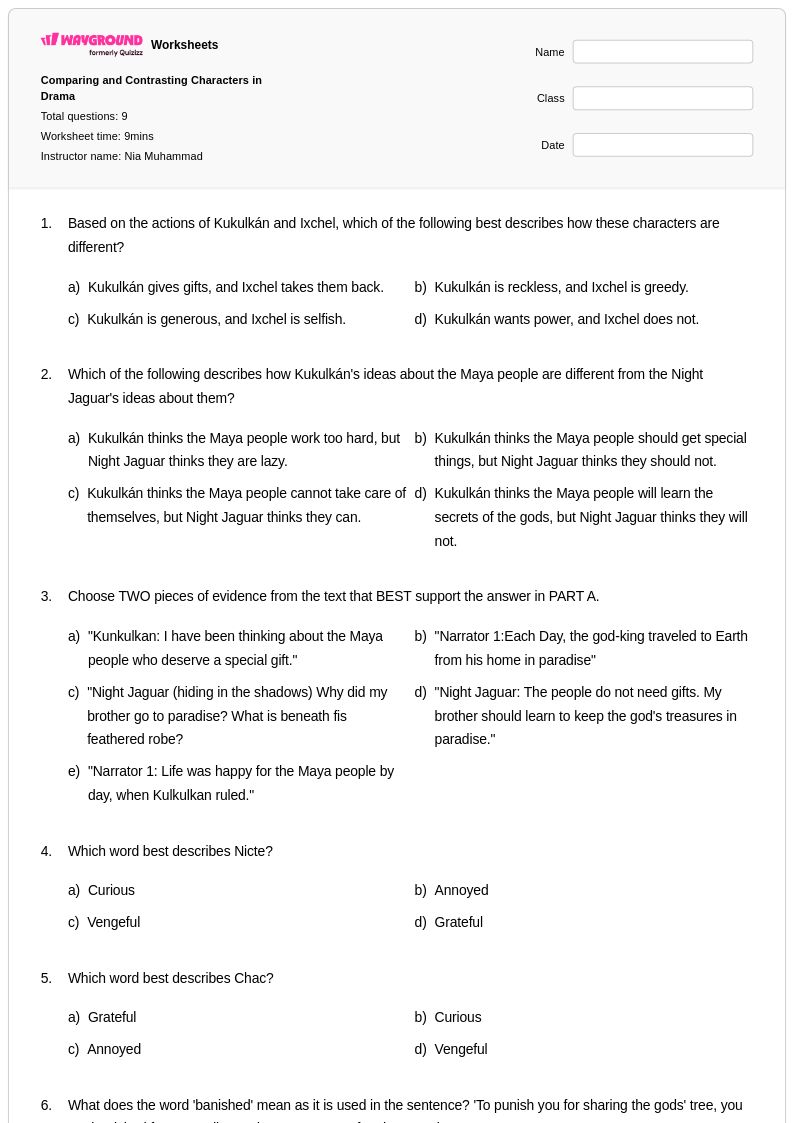
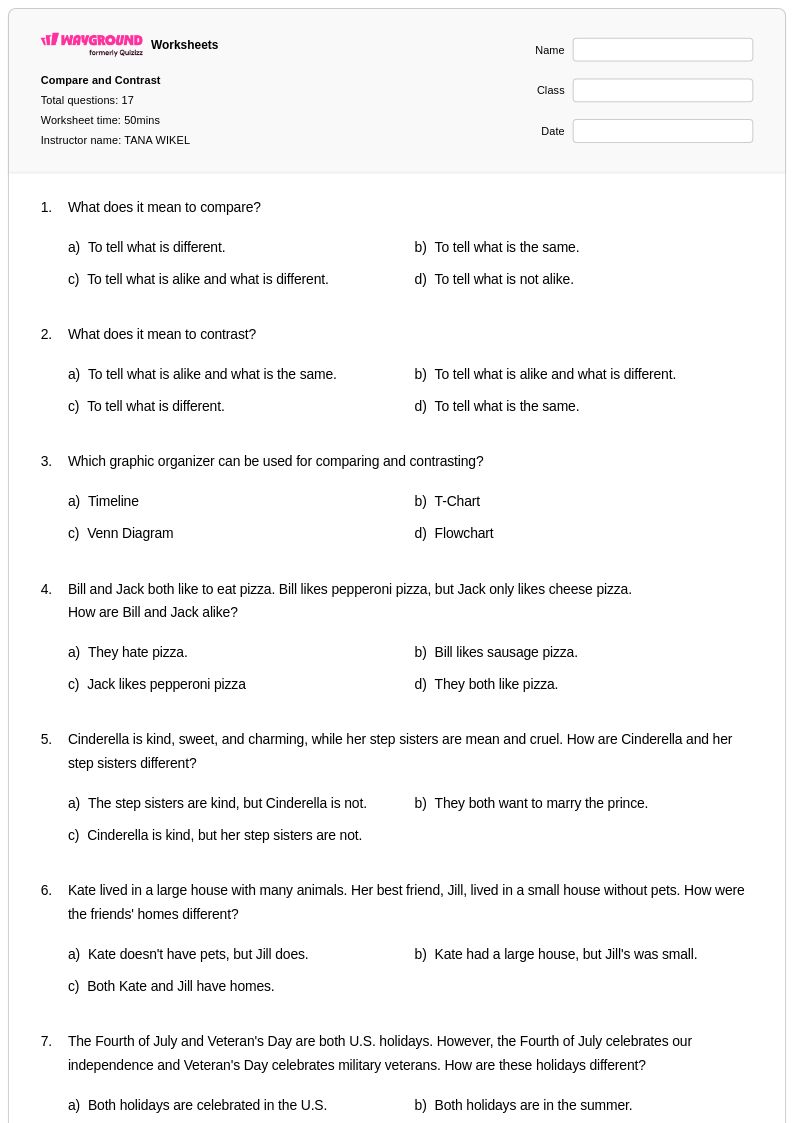
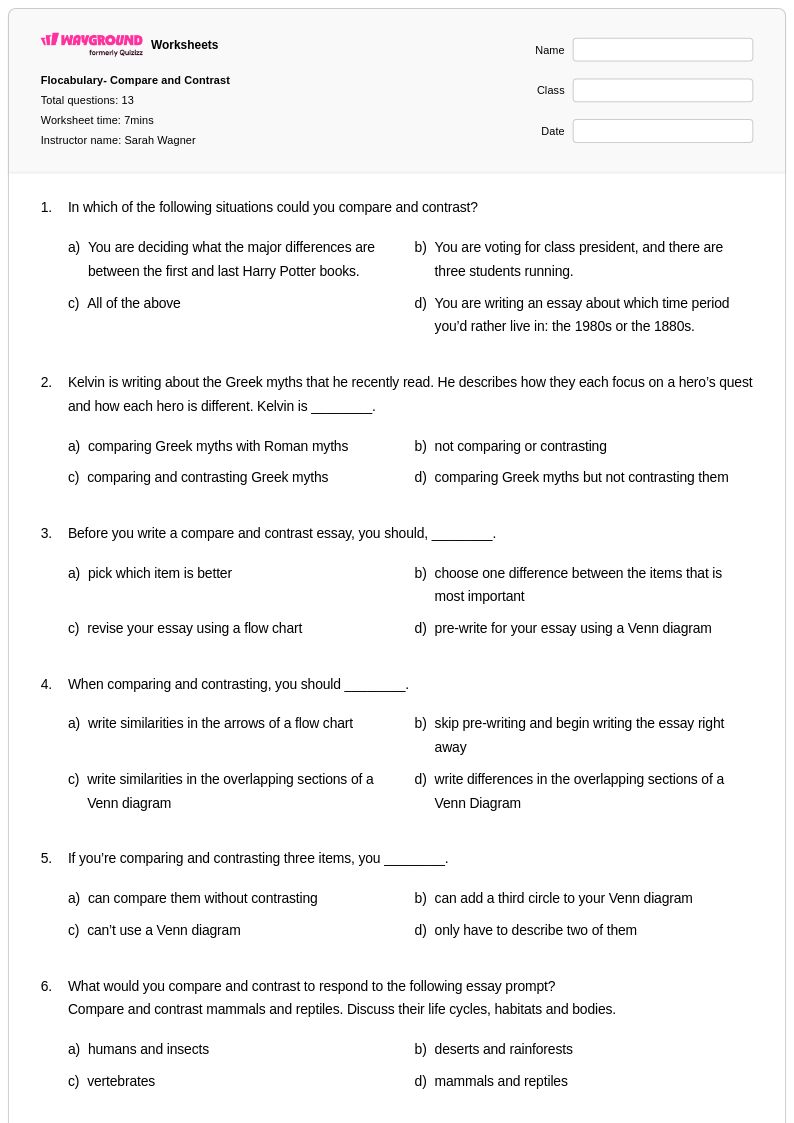
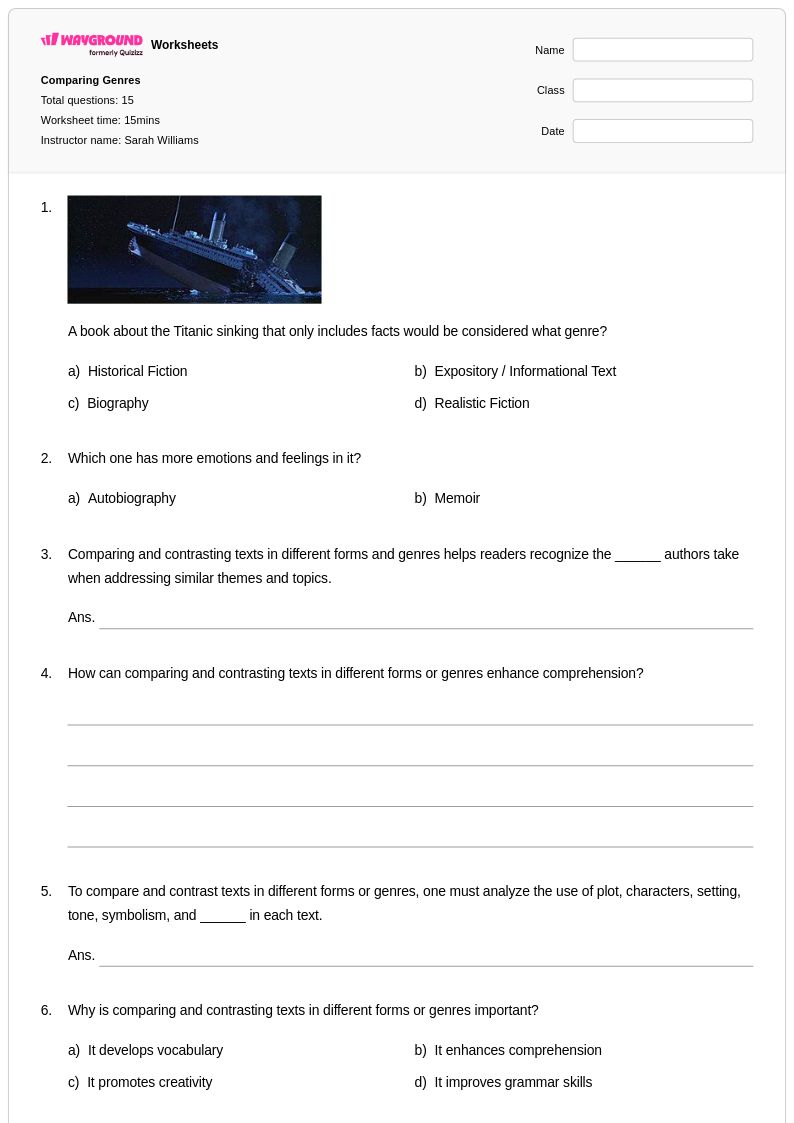
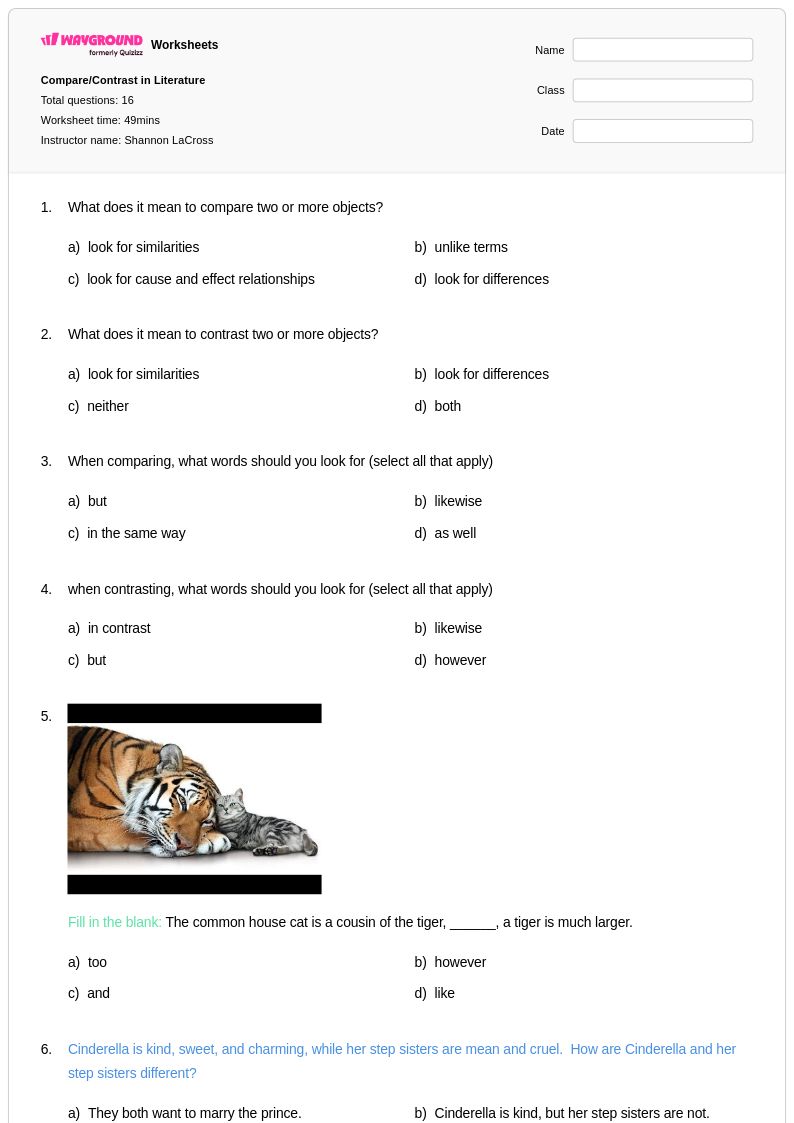
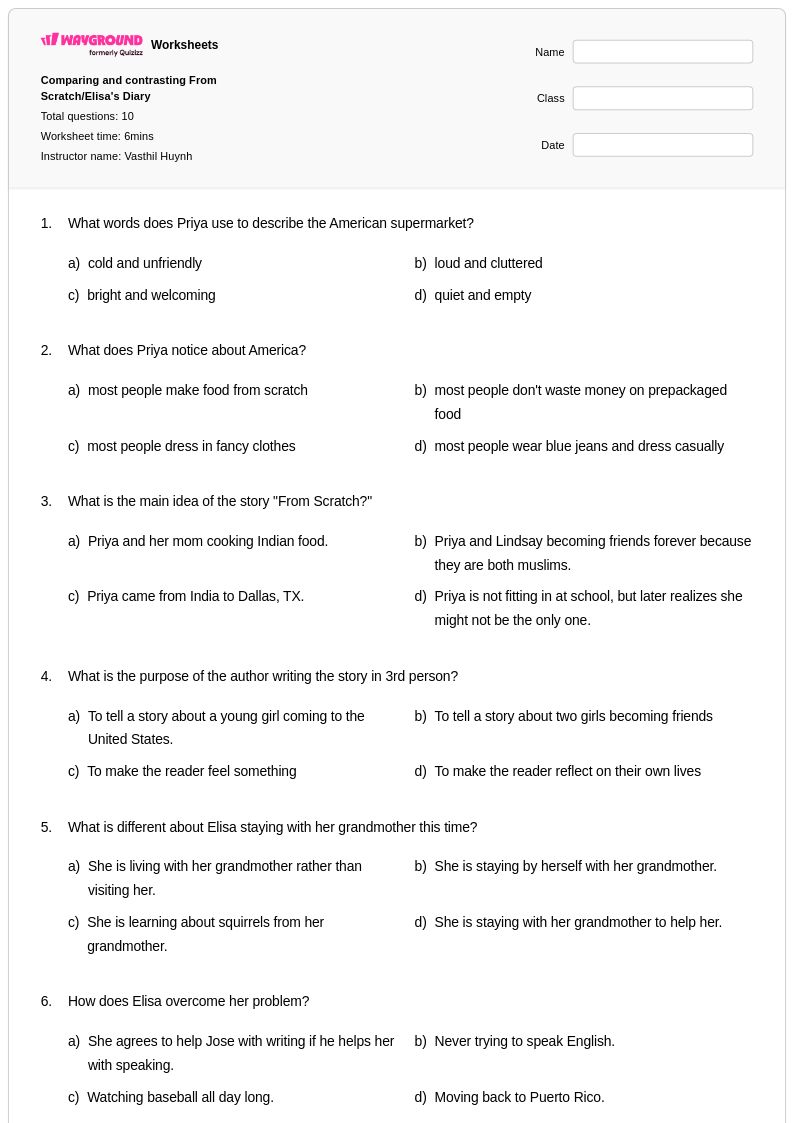
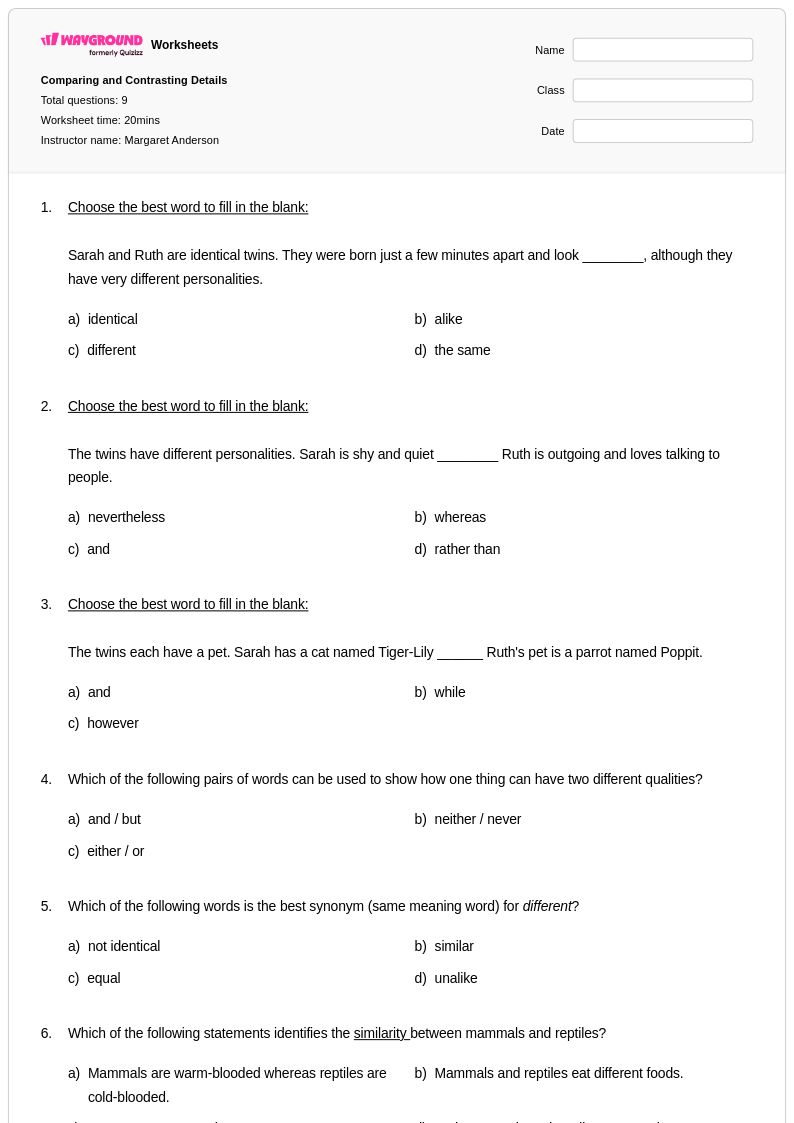
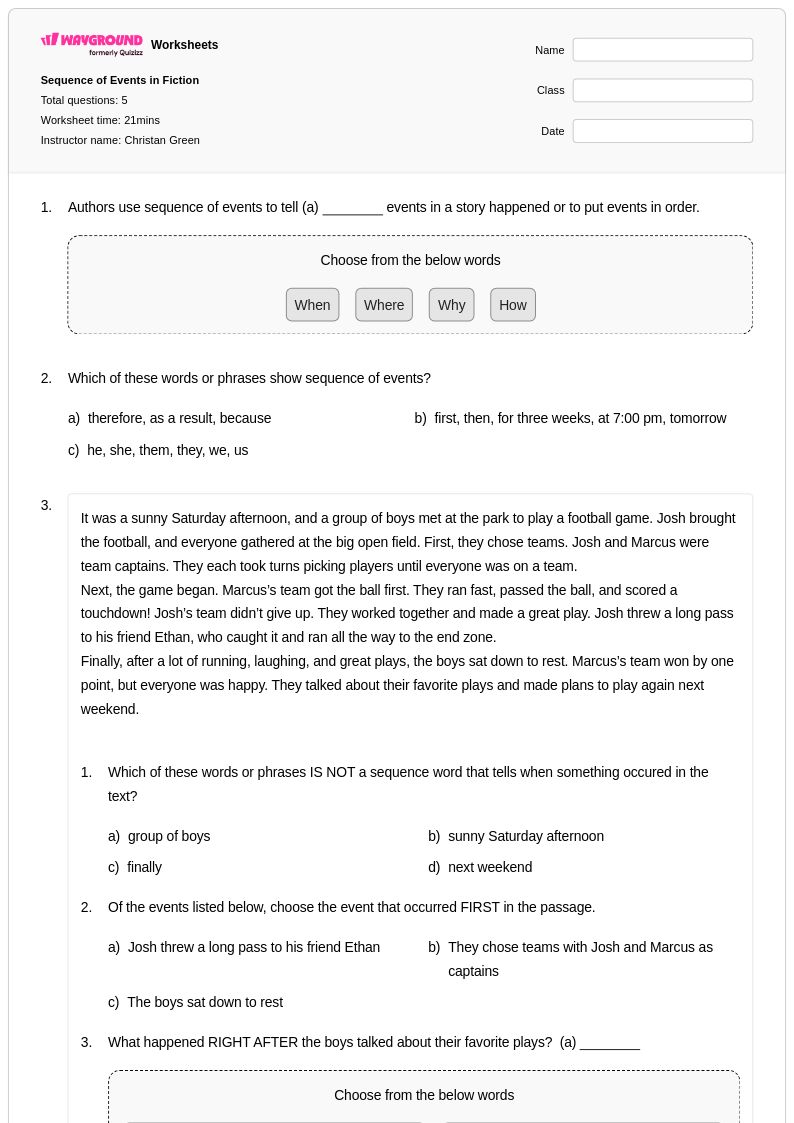
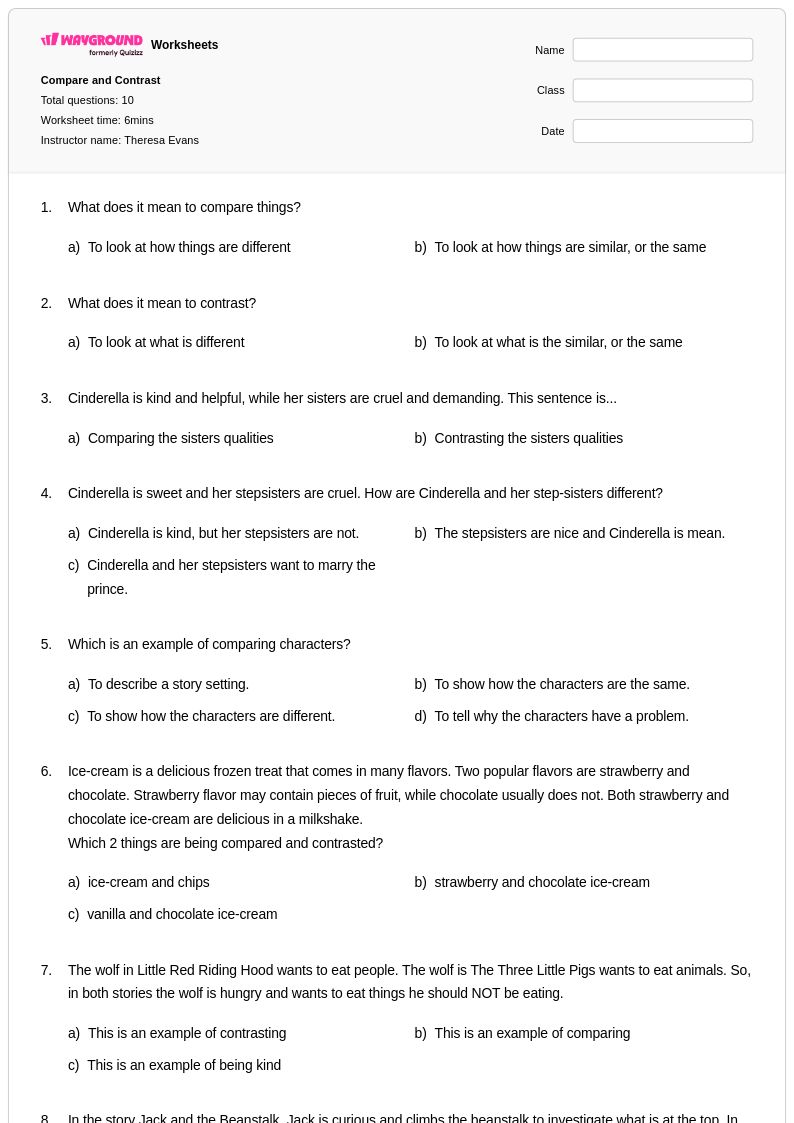
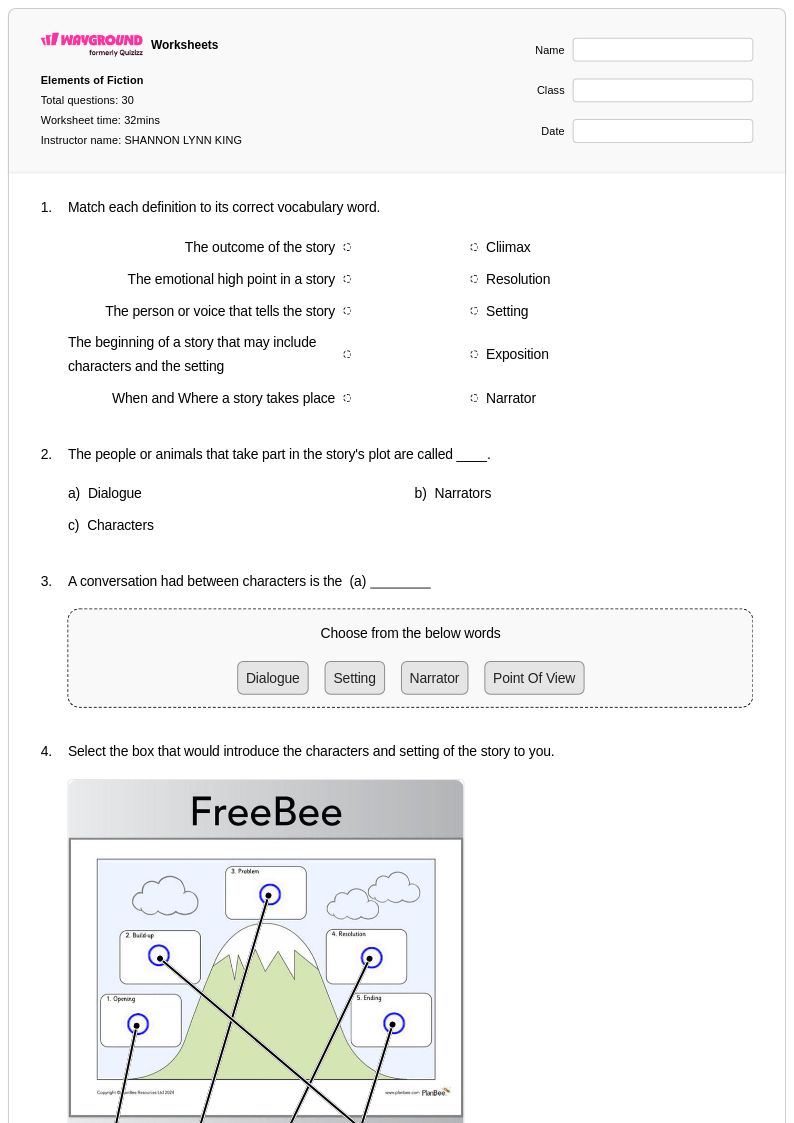
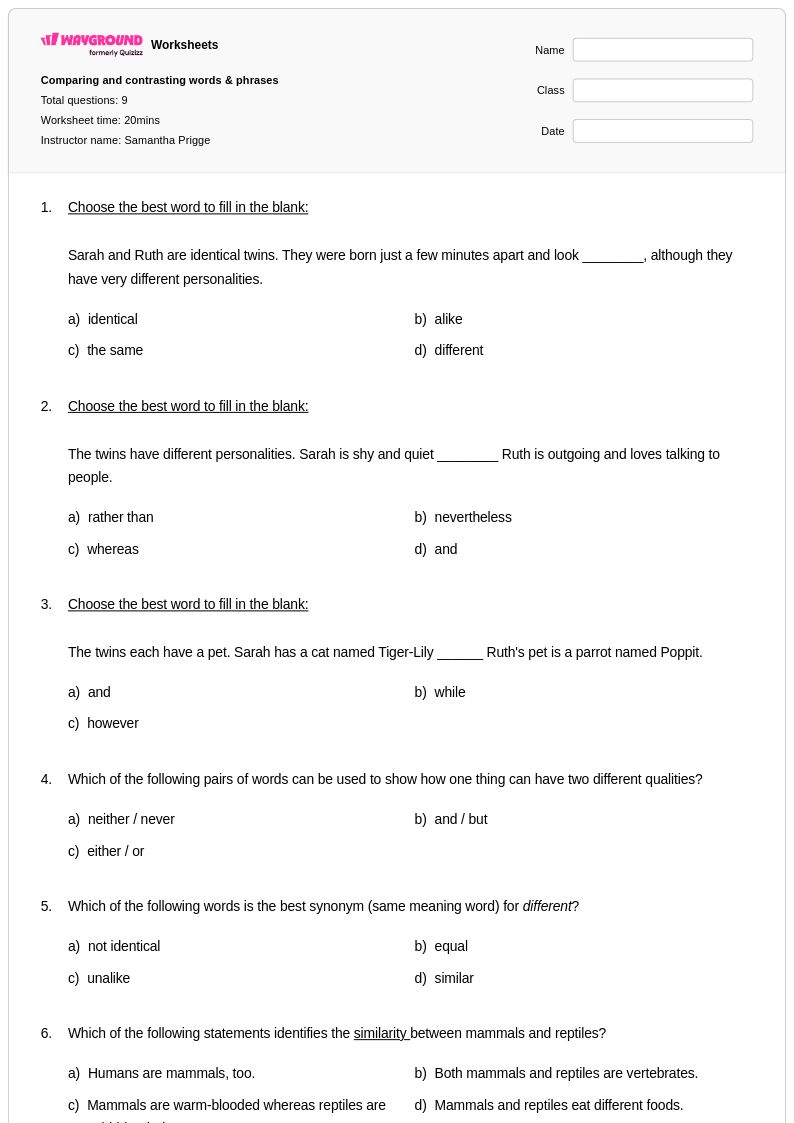
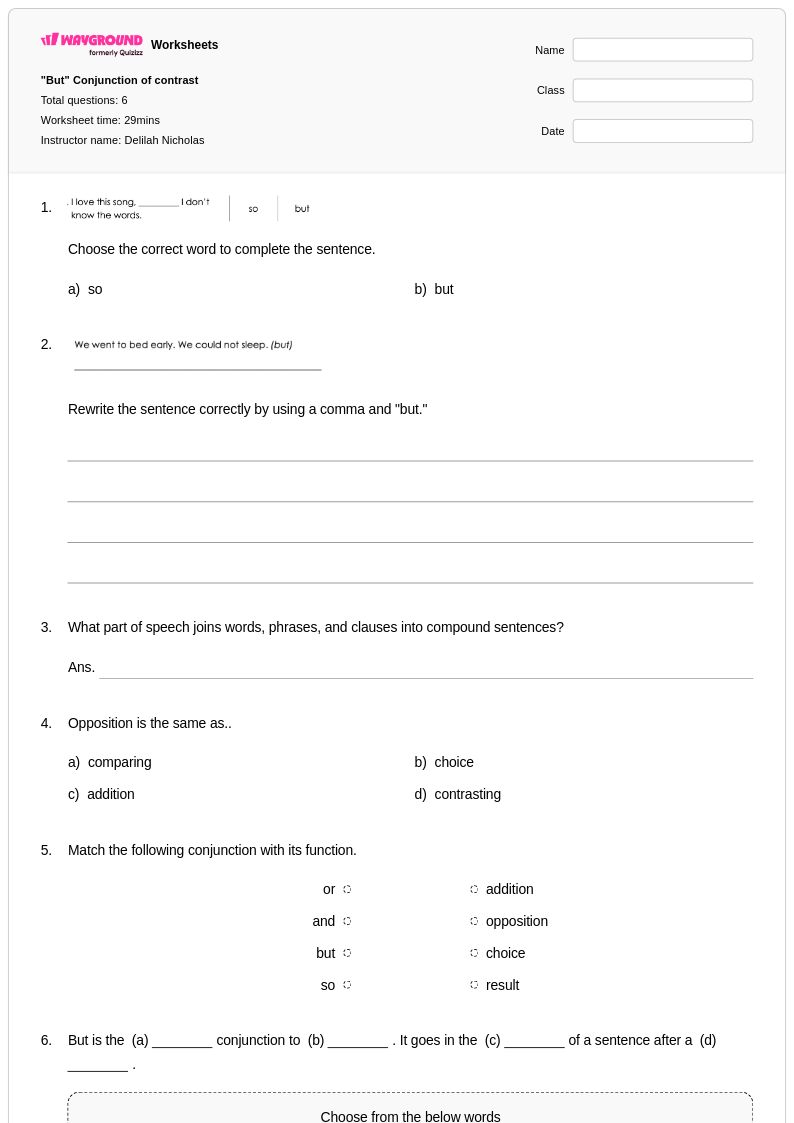
Comparing and contrasting in fiction for Class 5 represents a critical reading comprehension skill that helps students analyze literary elements, characters, settings, and themes across different stories. Wayground's extensive collection of comparing and contrasting worksheets provides fifth-grade students with structured practice opportunities to examine similarities and differences between fictional characters, plot events, story settings, and narrative themes. These comprehensive printables feature engaging passages from various fiction genres, followed by guided questions and graphic organizers that scaffold student thinking. Each worksheet includes a detailed answer key to support independent learning and self-assessment, while the free pdf format ensures easy classroom distribution and home practice. The practice problems progress systematically from basic character comparisons to more complex analyses of literary themes and author techniques.
Wayground, formerly Quizizz, empowers educators with millions of teacher-created resources specifically designed for comparing and contrasting instruction in fiction. The platform's robust search and filtering capabilities allow teachers to quickly locate grade-appropriate materials aligned with reading standards and curriculum objectives. Advanced differentiation tools enable instructors to modify worksheets for diverse learners, while the flexible customization options support personalized instruction for individual student needs. Available in both printable and digital pdf formats, these resources seamlessly integrate into lesson planning for whole-group instruction, small-group remediation, and independent enrichment activities. Teachers can efficiently address varying skill levels within their classrooms, providing targeted practice that strengthens critical thinking abilities and deepens students' understanding of fictional text structures and literary analysis techniques.
FAQs
How do I teach comparing and contrasting in fiction to my students?
Start by modeling the process with a familiar pair of texts, walking students through how to identify specific literary elements such as character motivation, setting, and theme before drawing comparisons. Anchor instruction in textual evidence by requiring students to cite passages that support each point of comparison. Graphic organizers, such as Venn diagrams or T-charts, are especially effective for helping students visualize relationships between two fictional works before transitioning to written analysis.
What exercises help students practice comparing and contrasting in fiction?
Effective practice exercises include side-by-side character analysis tasks, structured paragraph frames that guide students from evidence to inference, and graphic organizers that map similarities and differences across plot, theme, setting, and authorial choices. Worksheets that require students to identify and cite textual evidence are particularly valuable because they reinforce that literary comparison must be grounded in the text, not just general impression.
What common mistakes do students make when comparing and contrasting fiction?
The most frequent error is making surface-level comparisons, such as noting that two characters both face challenges, without analyzing why those challenges matter or how they reveal character. Students also tend to treat comparison and contrast as separate tasks rather than integrated analysis, producing two disconnected summaries instead of a unified argument. Another common issue is failing to cite textual evidence, which weakens the analytical weight of their observations.
How do I help struggling readers participate in comparing and contrasting fiction activities?
Scaffolding is key: provide sentence starters, pre-selected text excerpts, and partially completed graphic organizers so students can focus on the analytical thinking rather than text navigation. On Wayground, teachers can enable Read Aloud so questions and content are read to students who need it, and can reduce answer choices for selected students to lower cognitive load without changing the task for the rest of the class. These accommodations are saved per student and apply automatically in future sessions.
How can I use comparing and contrasting fiction worksheets in my classroom?
Wayground's comparing and contrasting in fiction worksheets are available as printable PDFs for traditional classroom use and in digital formats for technology-integrated environments, including the option to host them as a quiz directly on Wayground. This flexibility makes them practical for independent work, small-group instruction, or homework. Each worksheet includes a complete answer key, supporting both teacher-led review and independent student self-assessment.
How do I align comparing and contrasting fiction activities to specific standards or grade-level objectives?
Wayground's robust search and filtering capabilities allow teachers to locate comparing and contrasting in fiction resources aligned with specific standards and learning objectives. Once a relevant worksheet is identified, the platform's customization options let teachers adapt content complexity, combine multiple resources, or modify existing materials to target remediation or enrichment goals for their specific class.