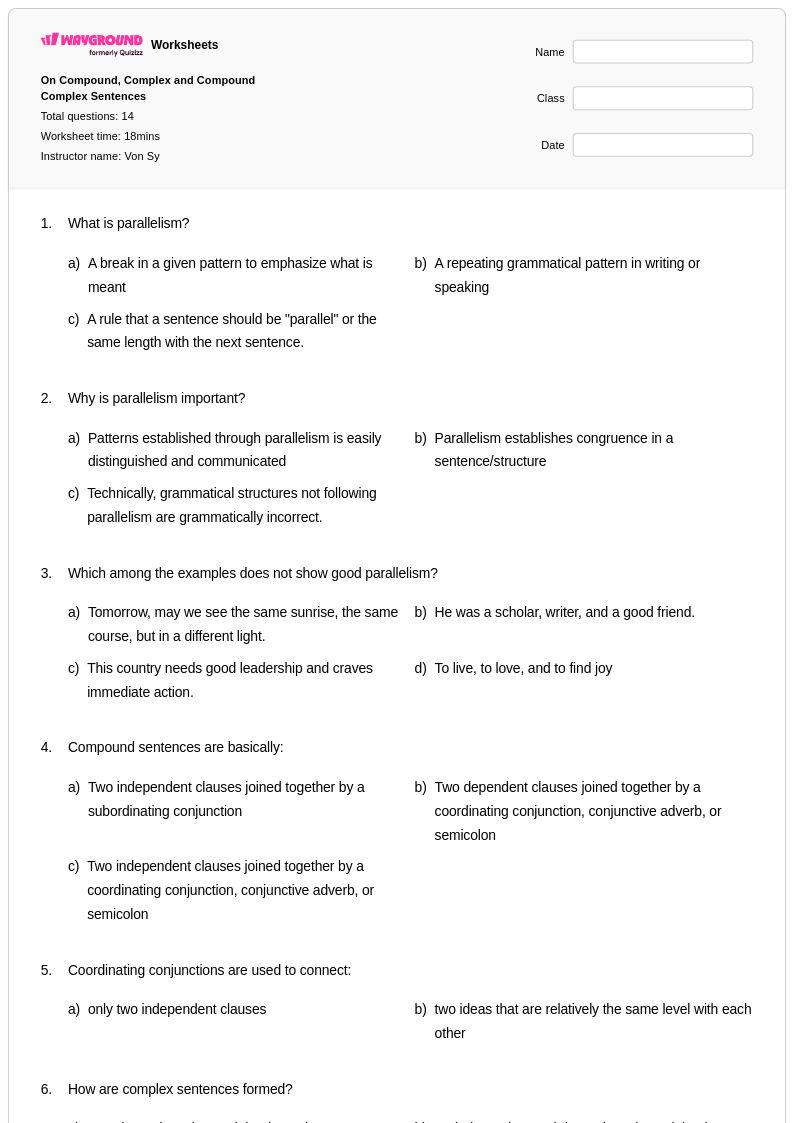
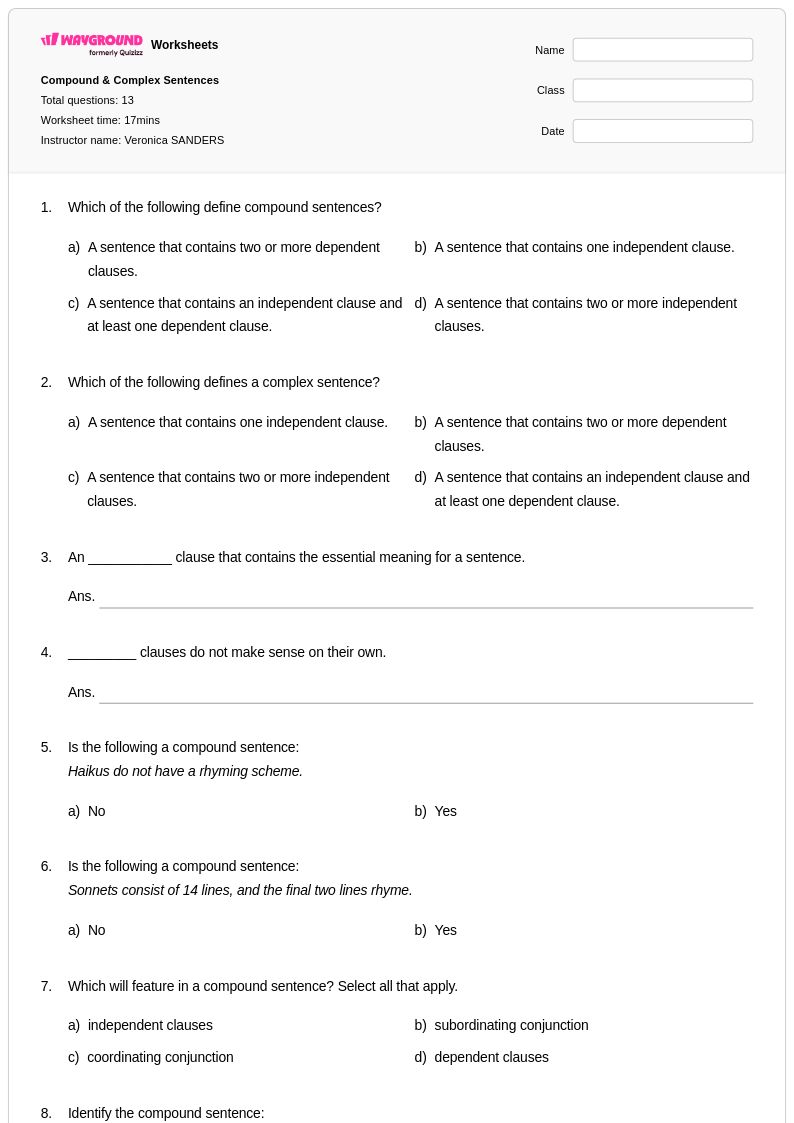
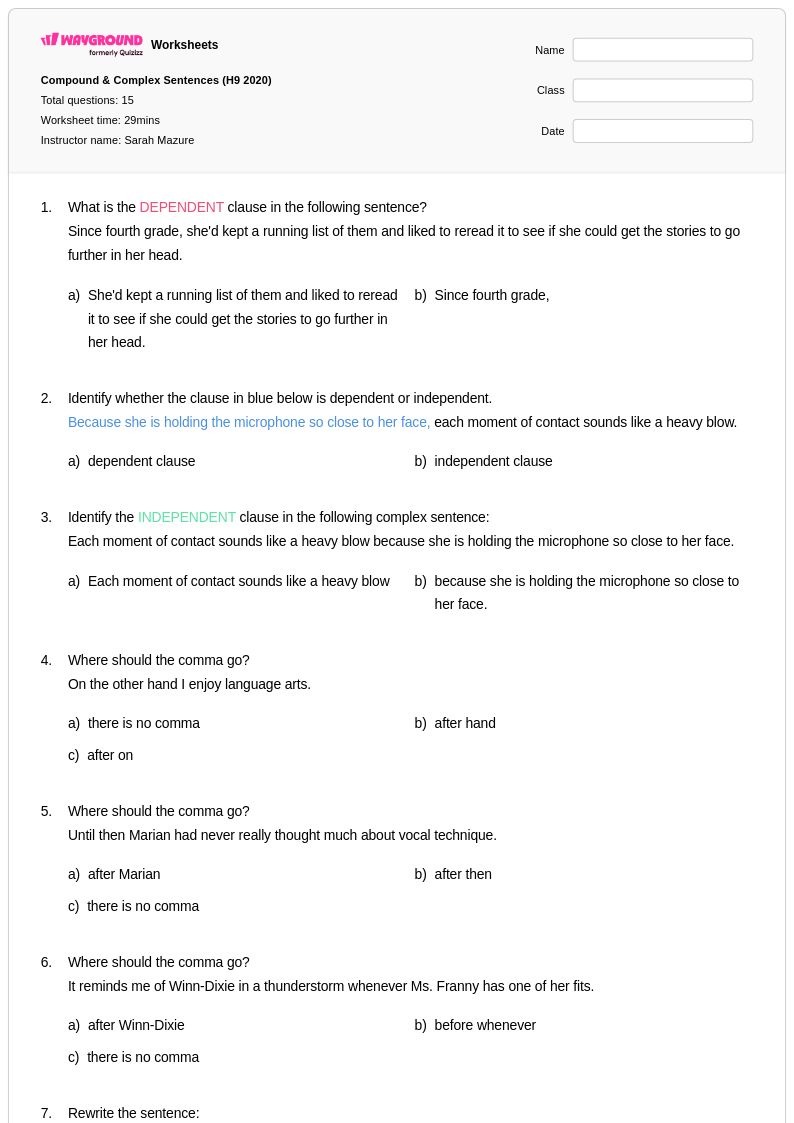
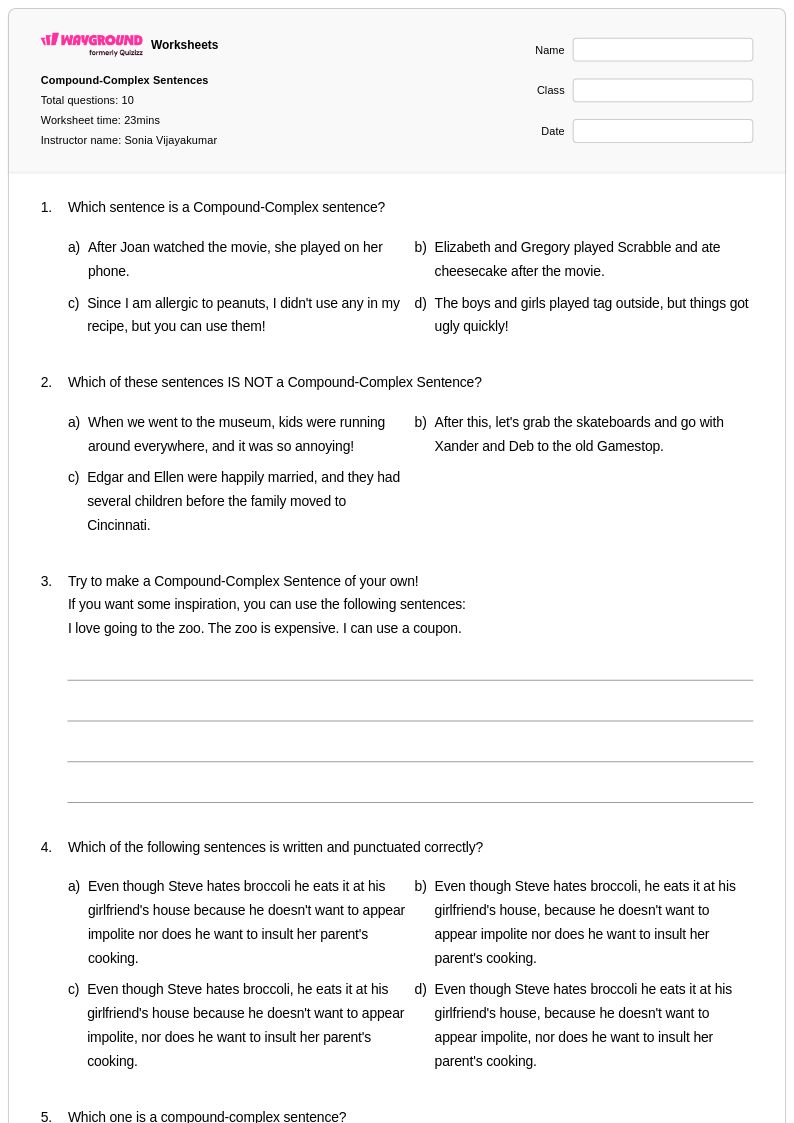
Free Printable Compound-complex Sentences Worksheets for Class 12
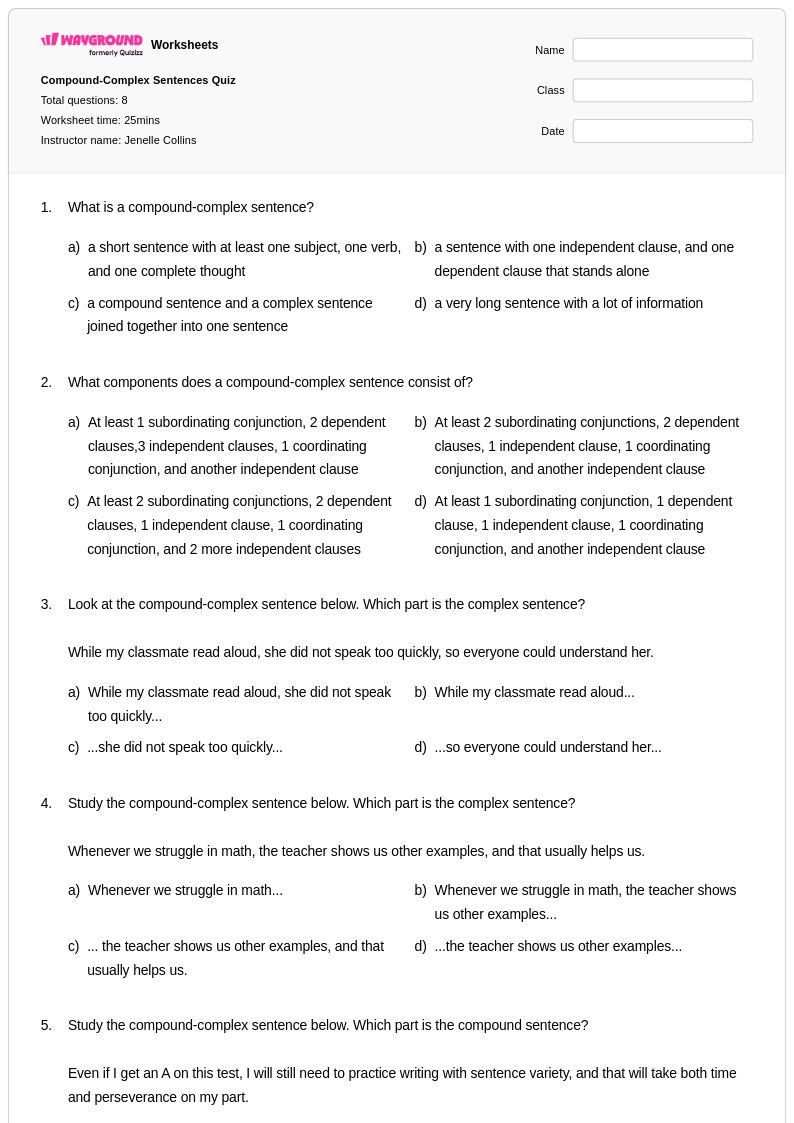
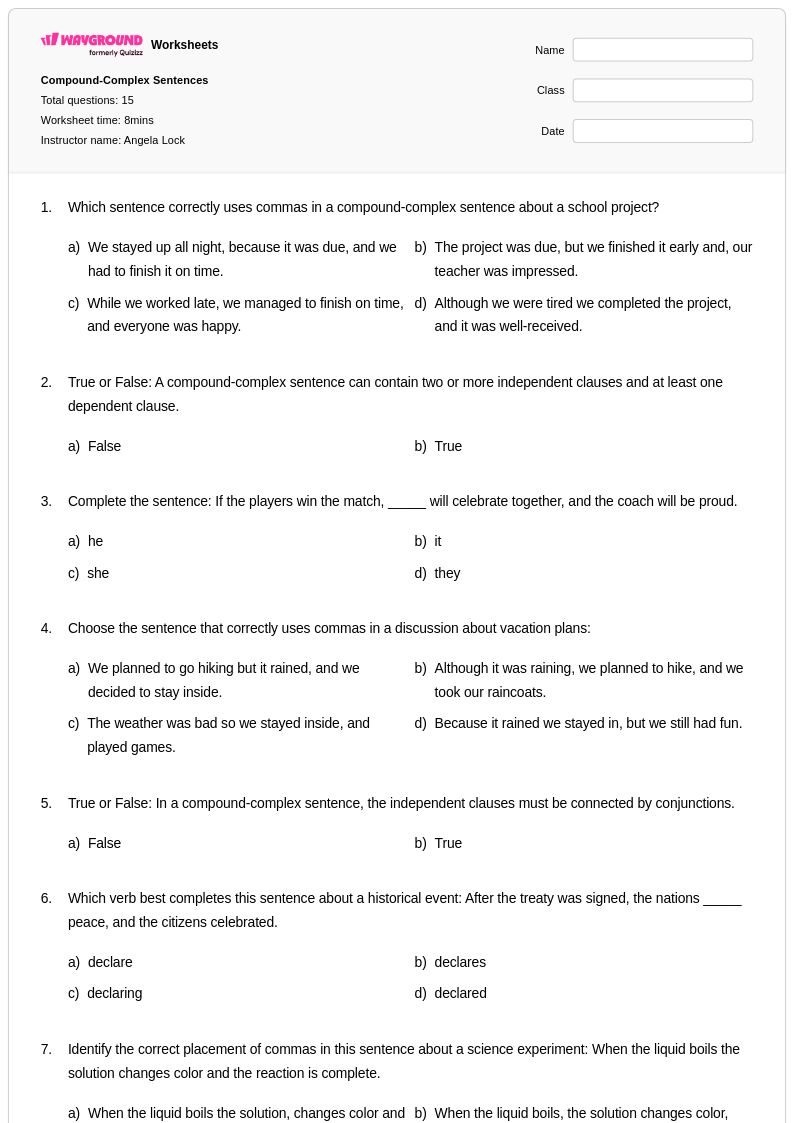
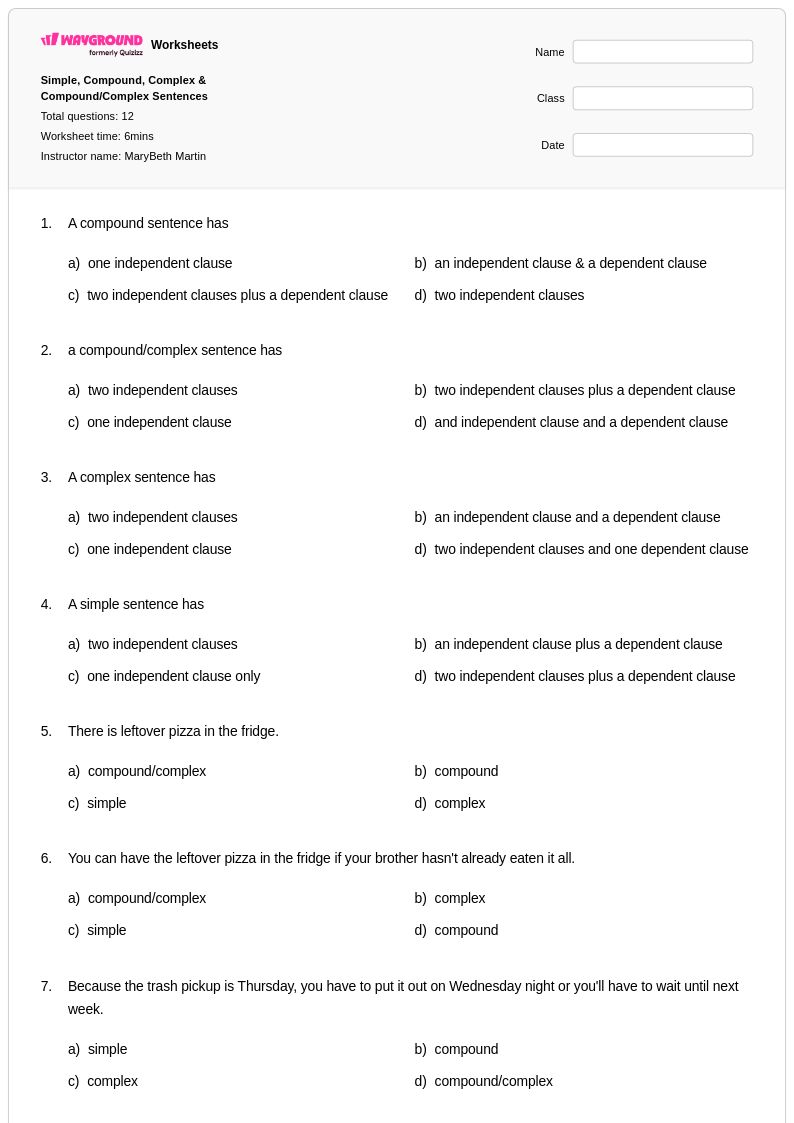
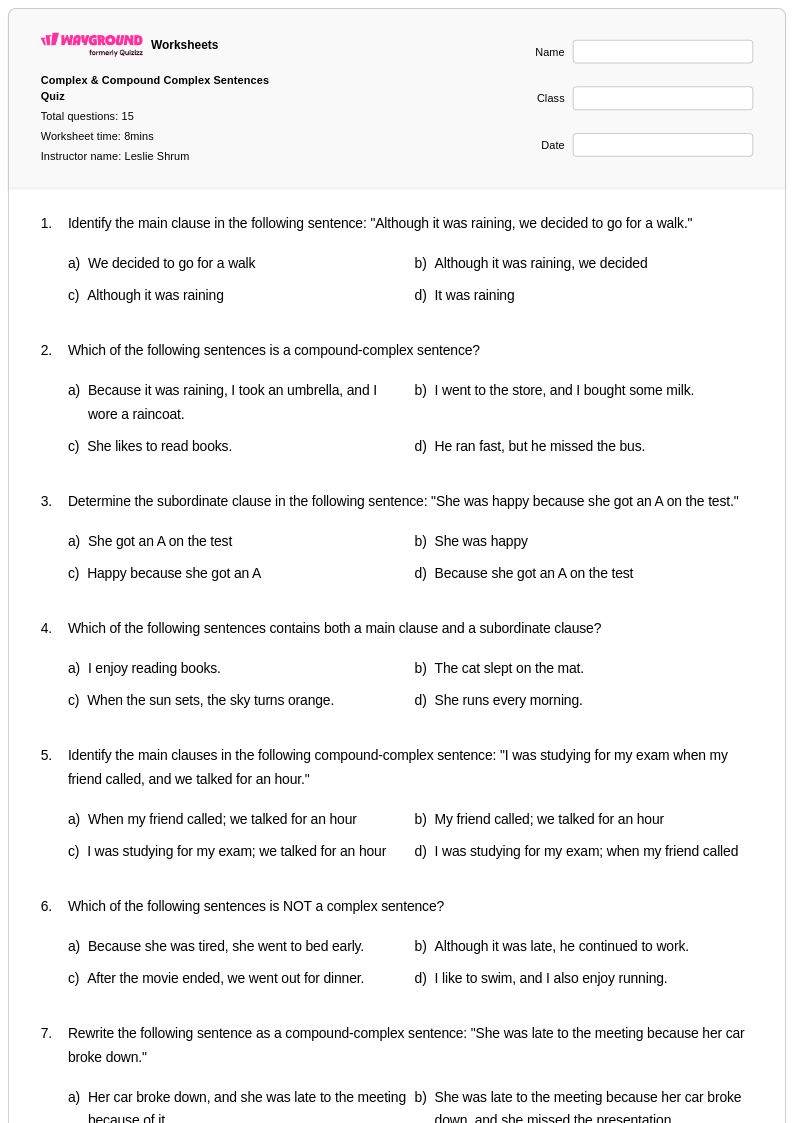
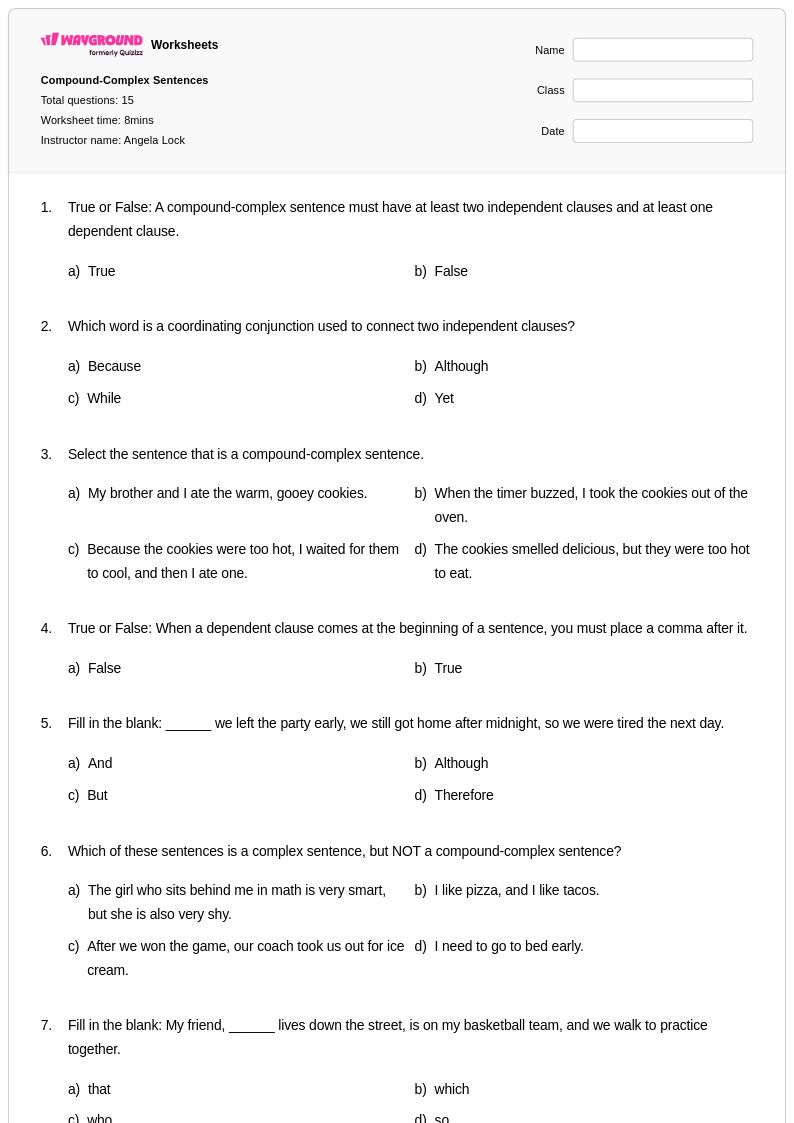
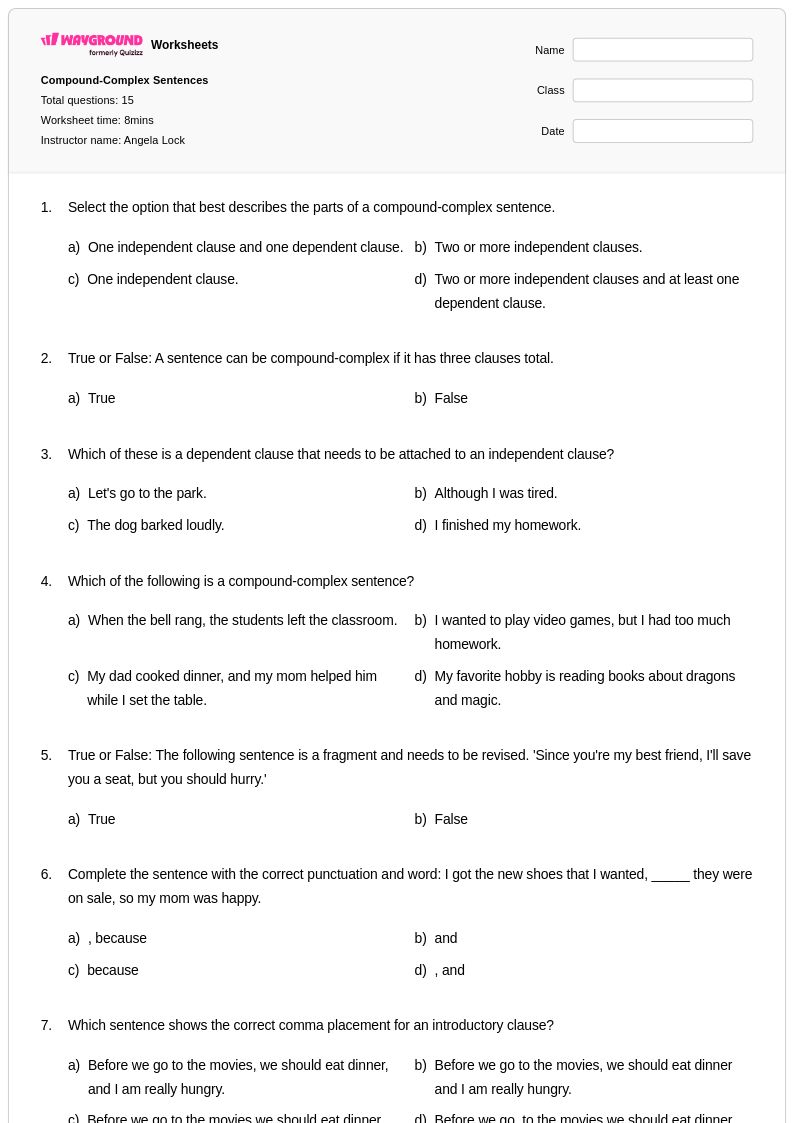
Class 12 compound-complex sentence worksheets from Wayground provide comprehensive printables and practice problems with answer keys to help students master advanced sentence structure through free PDF exercises.
Explore printable Compound-complex Sentences worksheets for Class 12
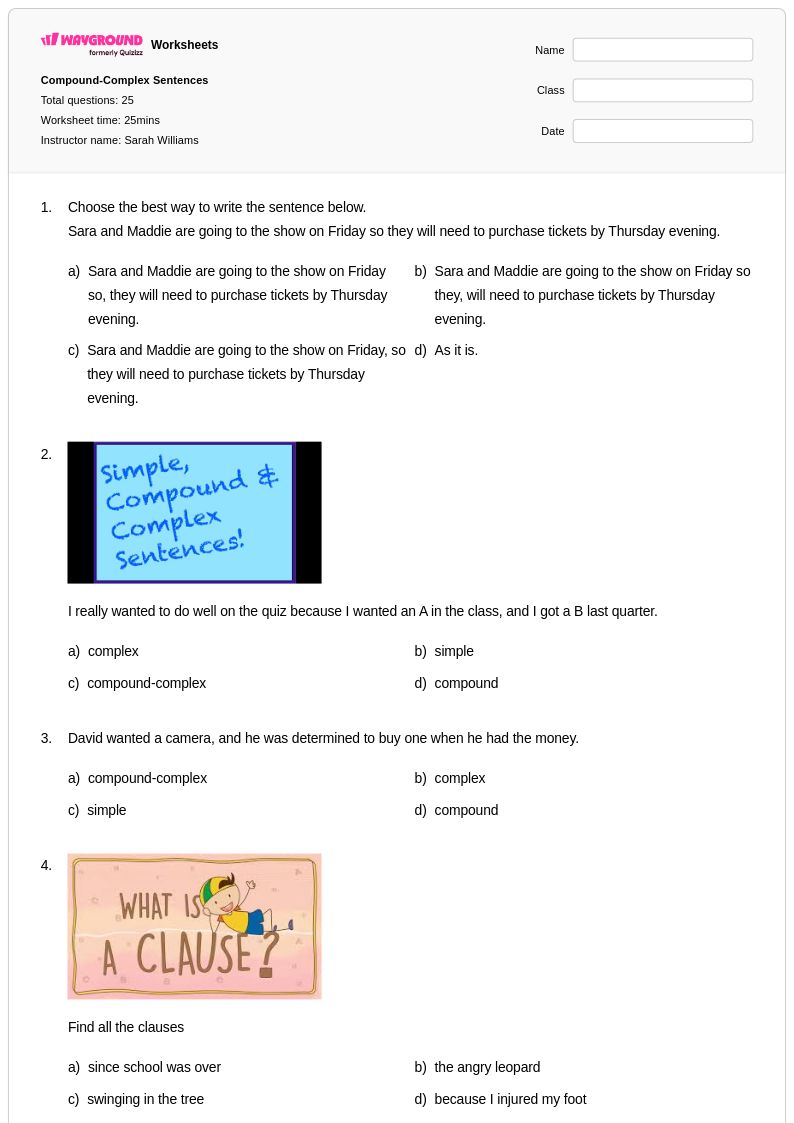
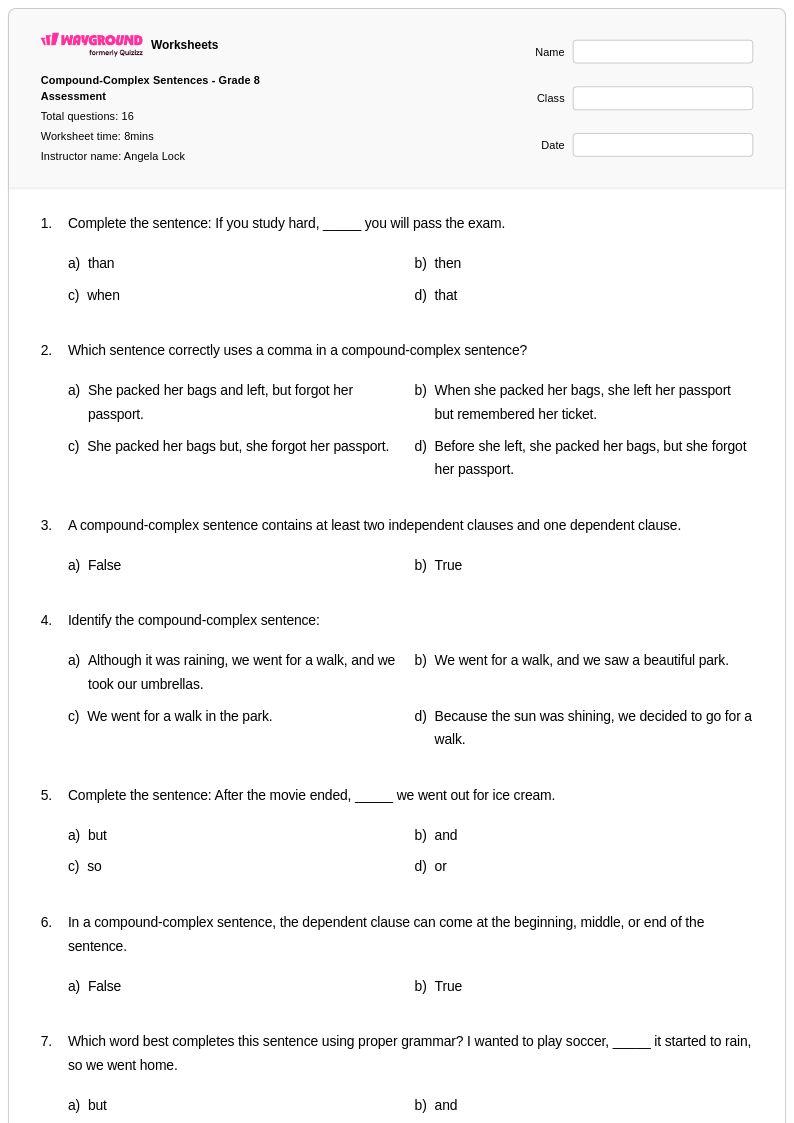
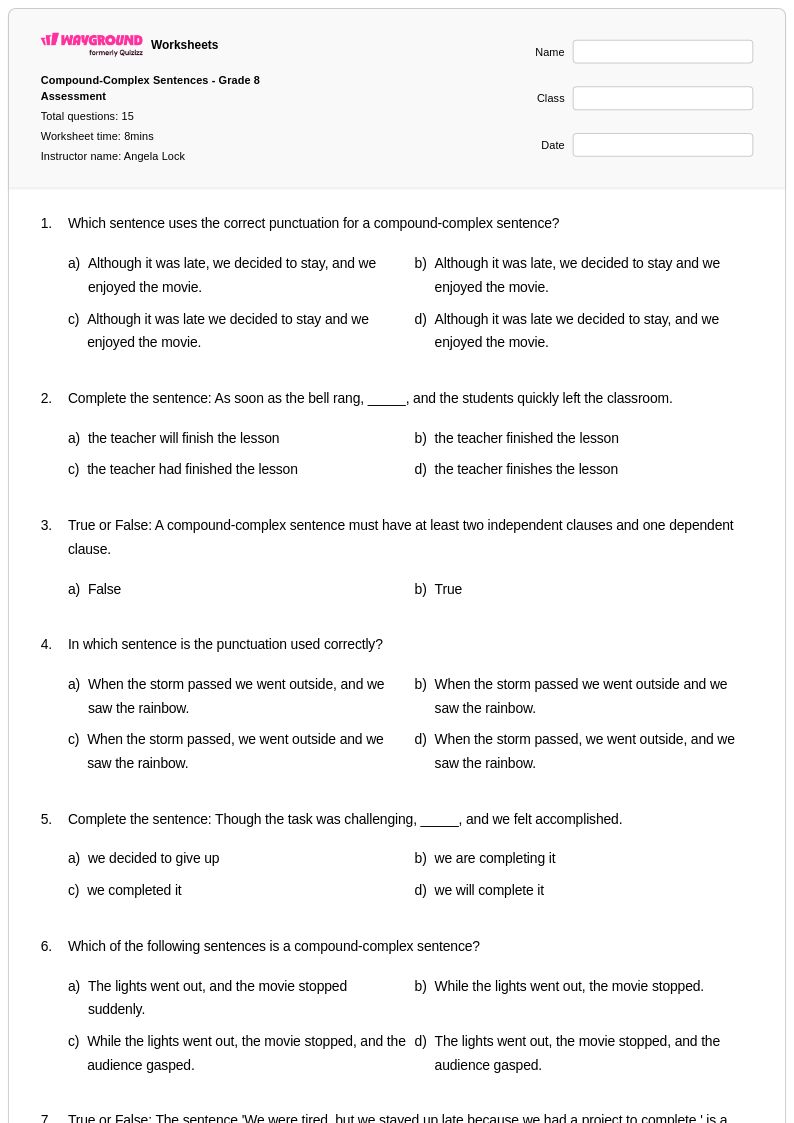
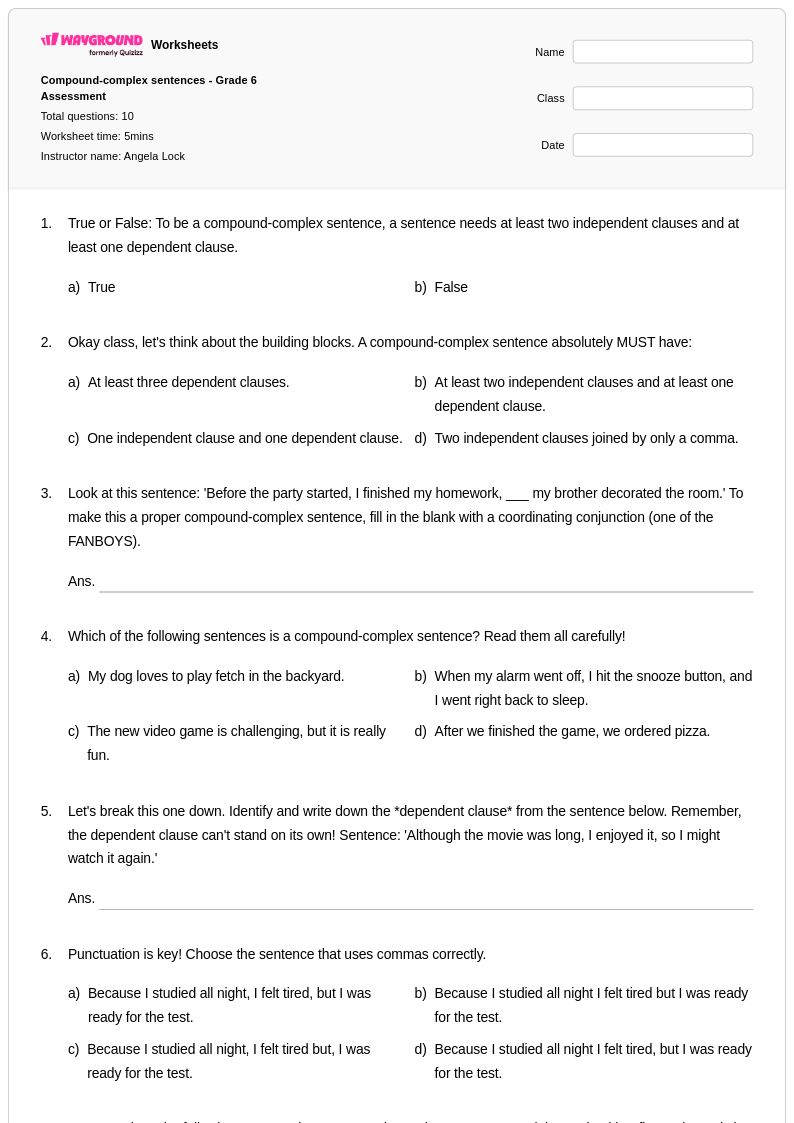
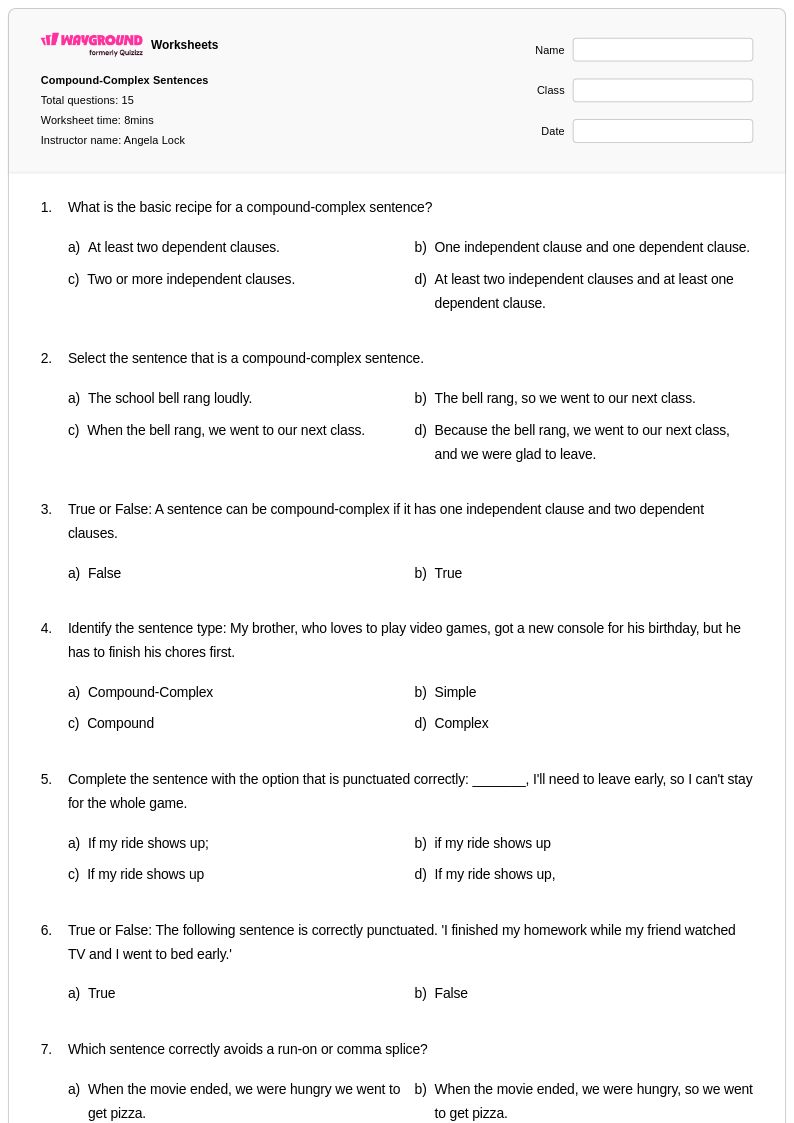
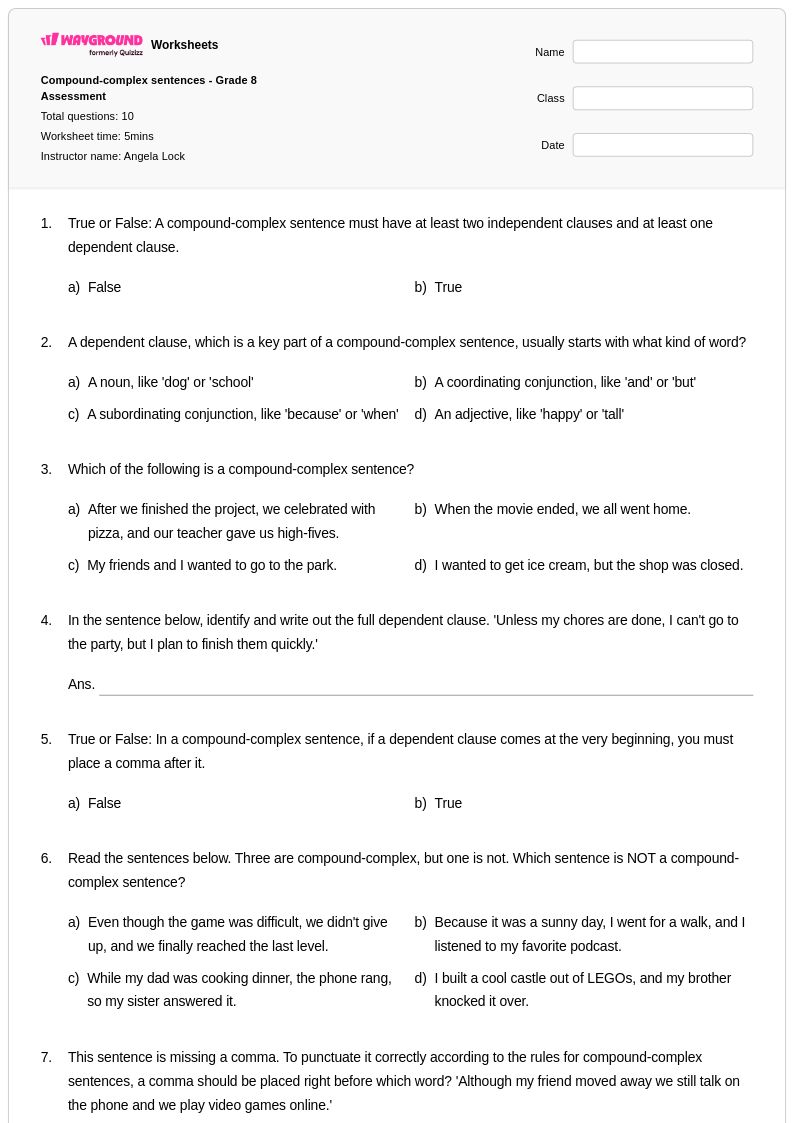
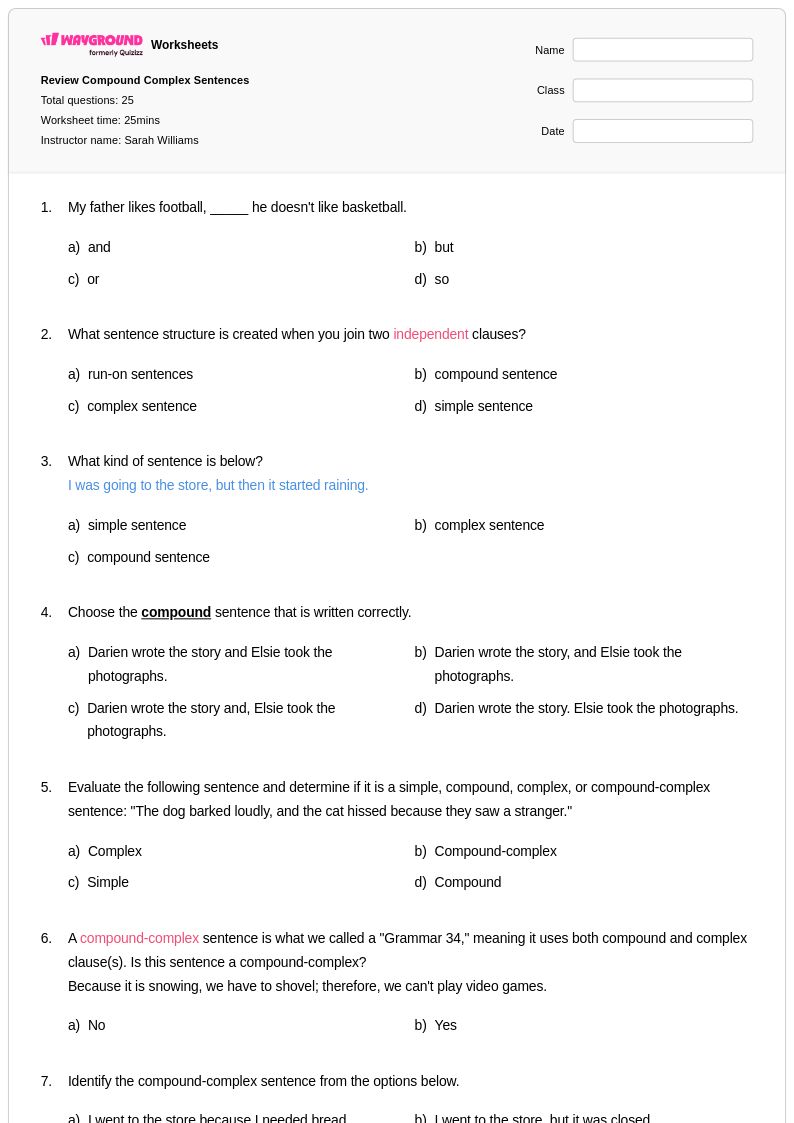
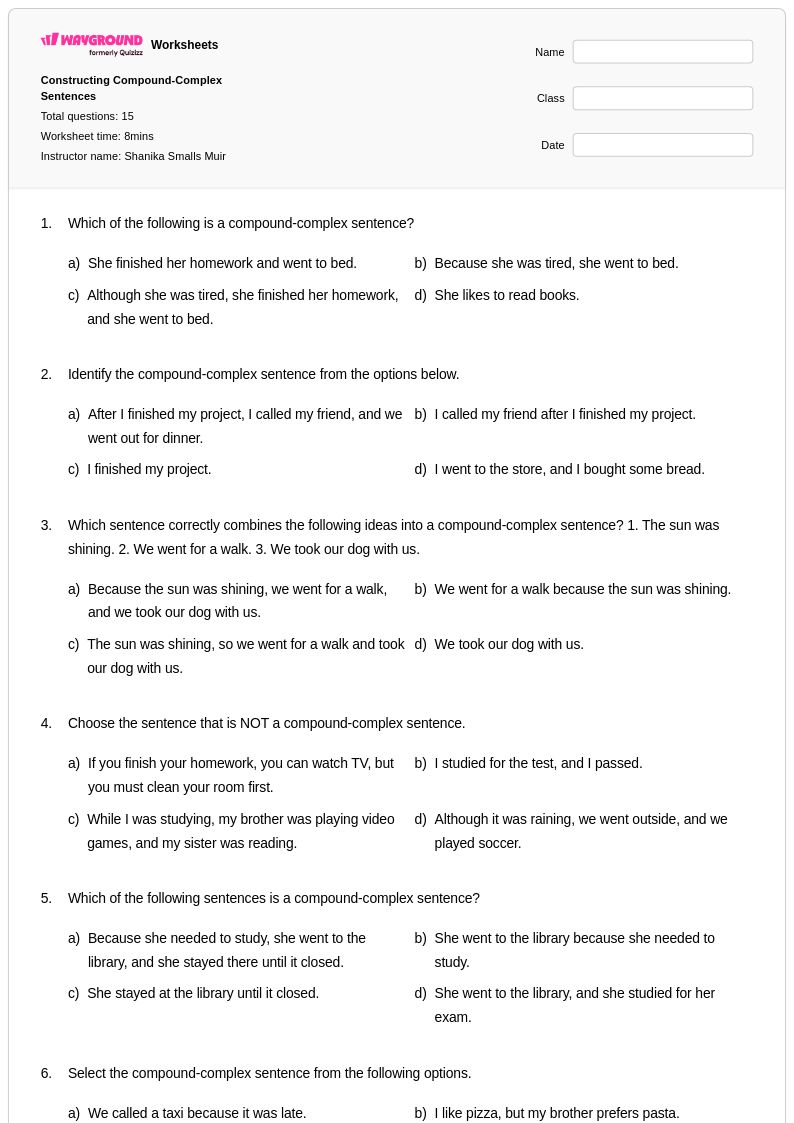
Compound-complex sentences represent one of the most sophisticated grammatical structures that Class 12 students must master to demonstrate advanced writing proficiency and analytical thinking skills. Wayground's comprehensive collection of compound-complex sentence worksheets provides students with targeted practice in identifying, analyzing, and constructing these intricate sentence patterns that combine multiple independent clauses with at least one dependent clause. These expertly designed worksheets strengthen critical skills including clause recognition, proper punctuation placement, coordinating and subordinating conjunction usage, and the ability to vary sentence structure for enhanced writing fluency. Each worksheet comes with a detailed answer key to support independent learning and self-assessment, while the free printable format ensures accessibility for all students seeking to refine their understanding of complex grammatical relationships through structured practice problems.
Wayground's extensive platform, formerly known as Quizizz, empowers educators with millions of teacher-created resources specifically designed to support advanced grammar instruction at the Class 12 level. The robust search and filtering capabilities allow teachers to quickly locate compound-complex sentence worksheets that align with specific curriculum standards and learning objectives, while built-in differentiation tools enable seamless customization to meet diverse student needs and proficiency levels. These versatile resources are available in both printable pdf format for traditional classroom use and digital formats for interactive learning environments, providing maximum flexibility for lesson planning and implementation. Teachers can effectively utilize these comprehensive worksheet collections for targeted remediation with struggling students, enrichment activities for advanced learners, and systematic skill practice that builds confidence in manipulating sophisticated sentence structures essential for college-level writing and communication.
FAQs
How do I teach compound-complex sentences to students?
Start by ensuring students have a solid grasp of both compound sentences (two or more independent clauses joined by a coordinating conjunction) and complex sentences (one independent clause with at least one dependent clause) before combining the two structures. Introduce compound-complex sentences by labeling each clause type visually, color-coding independent and dependent clauses so students can see the architecture before they attempt to write their own. Sentence combining exercises — where students merge shorter sentences into one compound-complex structure — are especially effective for building intuition around coordinating and subordinating conjunctions and their punctuation.
What exercises help students practice identifying compound-complex sentences?
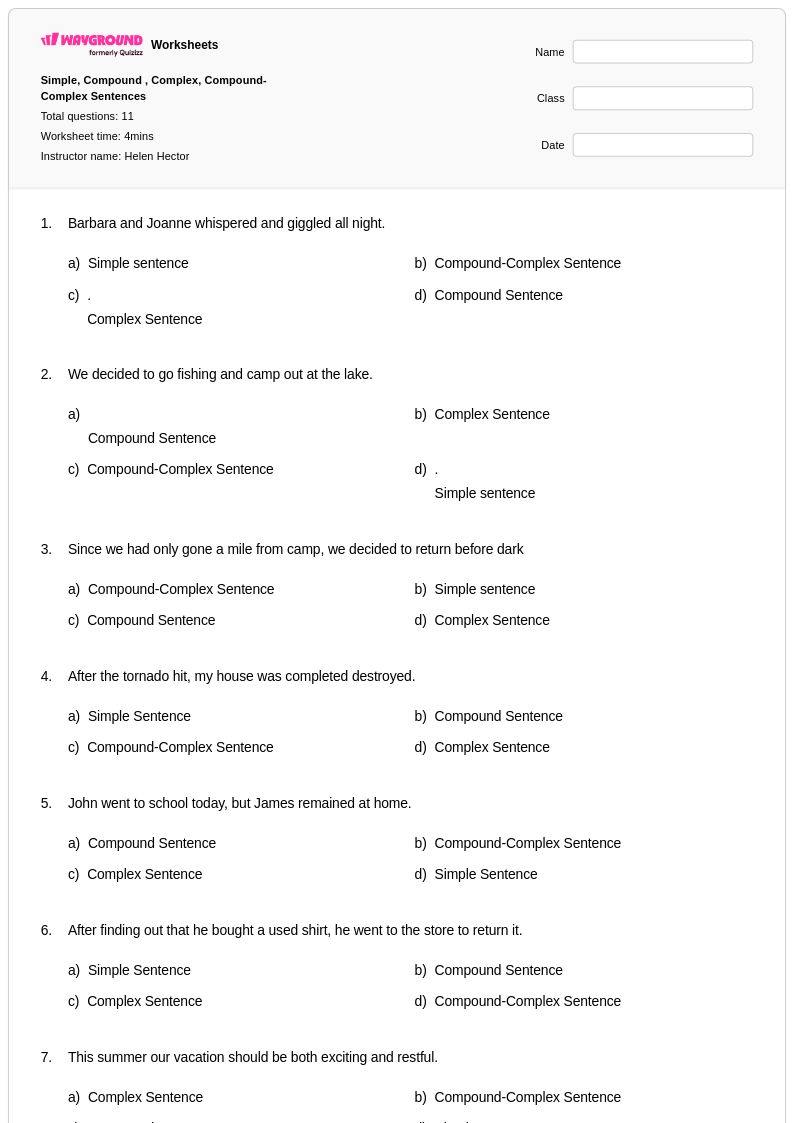
The most effective practice exercises ask students to identify and label each clause within a sentence rather than simply categorizing the sentence type, because this forces them to locate the coordinating conjunction, the subordinating conjunction, and determine which clauses are independent versus dependent. Worksheets that present a mixed set of simple, compound, complex, and compound-complex sentences for classification are particularly useful, as students must apply all four definitions simultaneously. Constructing original compound-complex sentences from a given set of clauses is a strong follow-up activity that moves practice from recognition to production.
What mistakes do students commonly make with compound-complex sentences?
The most frequent error is misidentifying the sentence type entirely by confusing a complex sentence for a compound-complex one, usually because students count clauses incorrectly or fail to distinguish between coordinating and subordinating conjunctions. Students also frequently misplace or omit commas, particularly the comma before the coordinating conjunction joining two independent clauses, or the comma following an introductory dependent clause. A third common problem is writing a dependent clause as if it were an independent one, creating a fragment that students believe completes the compound-complex structure.
How do I use compound-complex sentence worksheets in my classroom?
Compound-complex sentence worksheets on Wayground are available as printable PDFs for traditional classroom use and in digital formats for technology-integrated learning environments, including the option to host them as a quiz directly on Wayground. Printable versions work well for guided practice, small-group instruction, or homework, while digital versions support independent work in one-to-one device settings or remote learning. Each worksheet includes a detailed answer key, so teachers can use them for self-paced practice, peer review, or formative assessment without additional preparation.
How can I differentiate compound-complex sentence instruction for students at different skill levels?
For students who are still building foundational skills, begin with worksheets that focus on identifying just one type of conjunction at a time before asking them to analyze the full sentence structure. More advanced students benefit from exercises involving multiple dependent clauses or complex punctuation scenarios such as semicolons and conjunctive adverbs alongside subordinating conjunctions. On Wayground, teachers can apply individual accommodations such as Read Aloud support for students with decoding challenges or reduced answer choices to lower cognitive load for students who need scaffolded multiple-choice practice.
Why is mastering compound-complex sentences important for academic writing?
Compound-complex sentences allow writers to express relationships between ideas with precision and sophistication, signaling logical connections such as contrast, cause, condition, and concession within a single, well-constructed sentence. Academic writing across content areas, from argumentative essays to lab reports, relies on these structures to demonstrate nuanced reasoning that simpler sentence types cannot convey. Students who can construct compound-complex sentences fluently are better equipped to meet the demands of standardized writing assessments and college-level composition.