Free Printable Computer Science Worksheets for Class 10
Explore Class 10 Computer Science worksheets and printables from Wayground that help students master programming concepts, algorithms, and digital literacy through engaging practice problems with comprehensive answer keys.
Explore printable Computer Science worksheets for Class 10
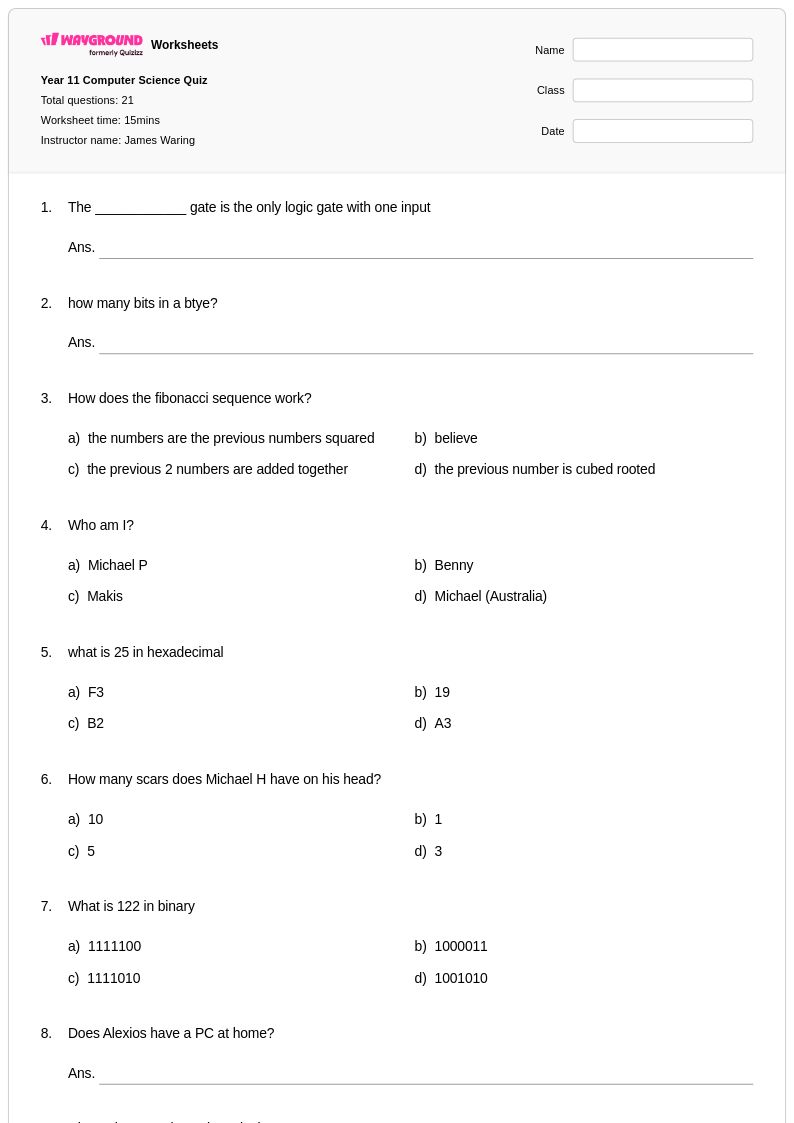
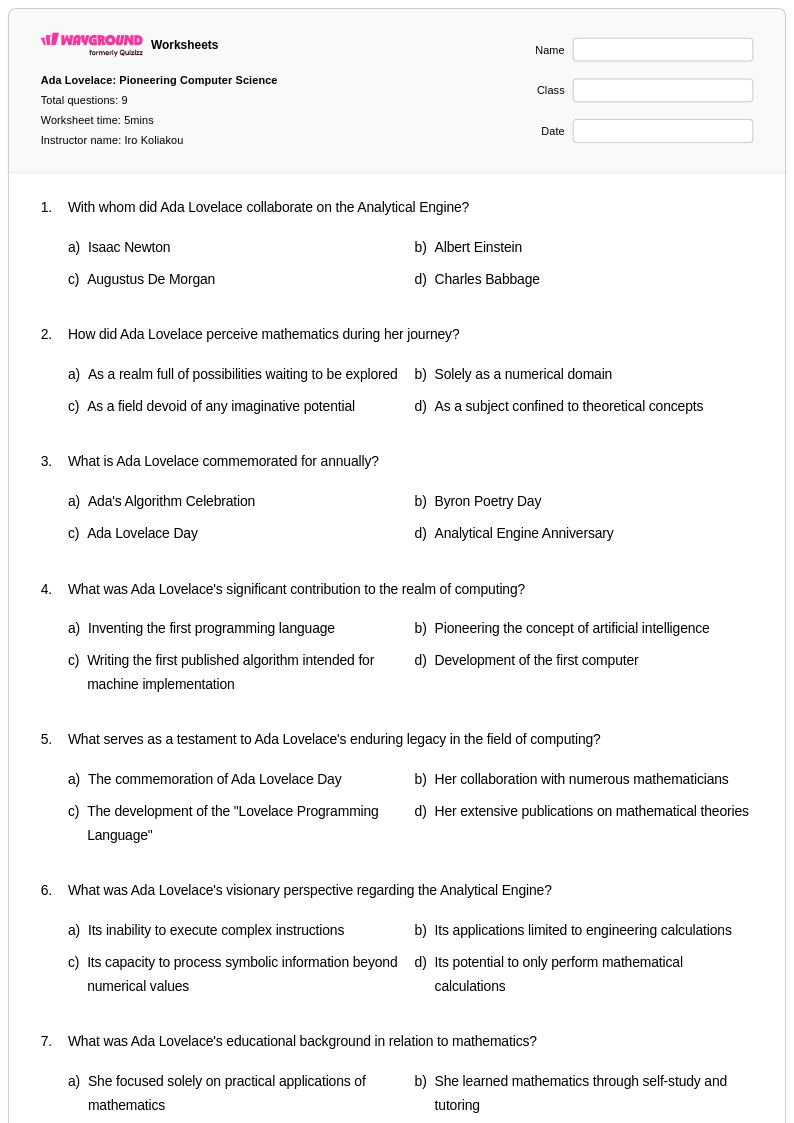
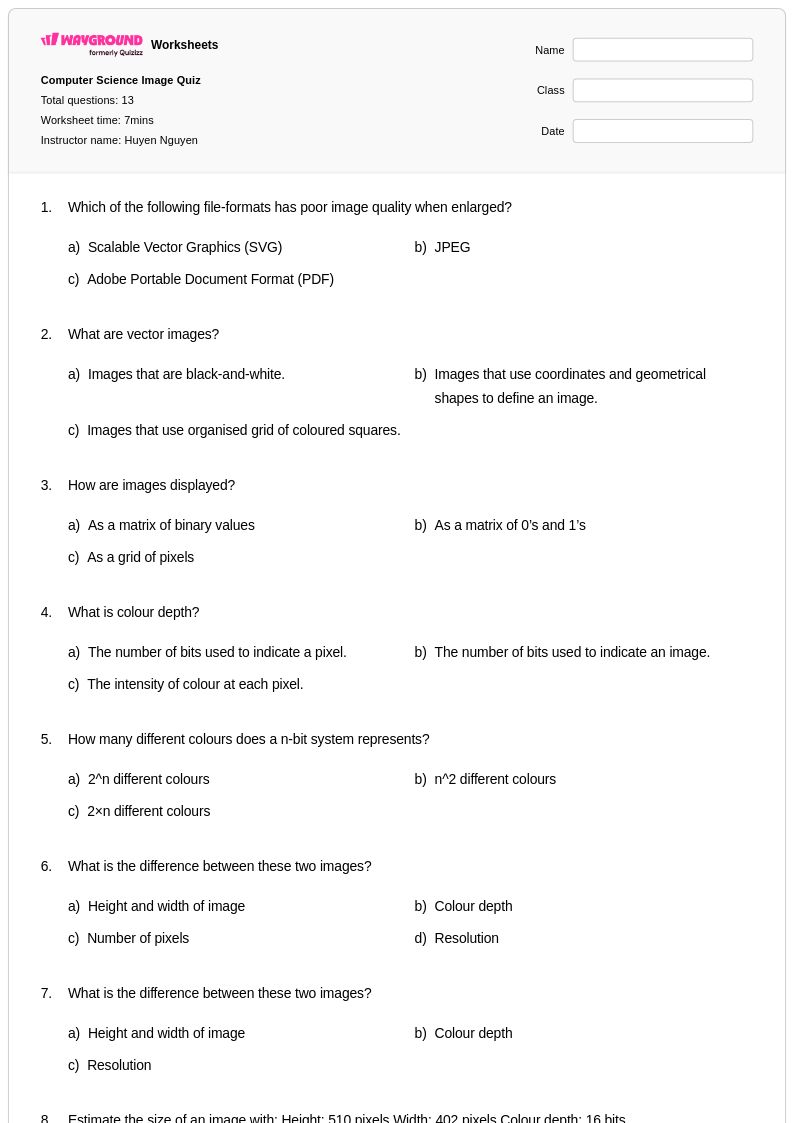
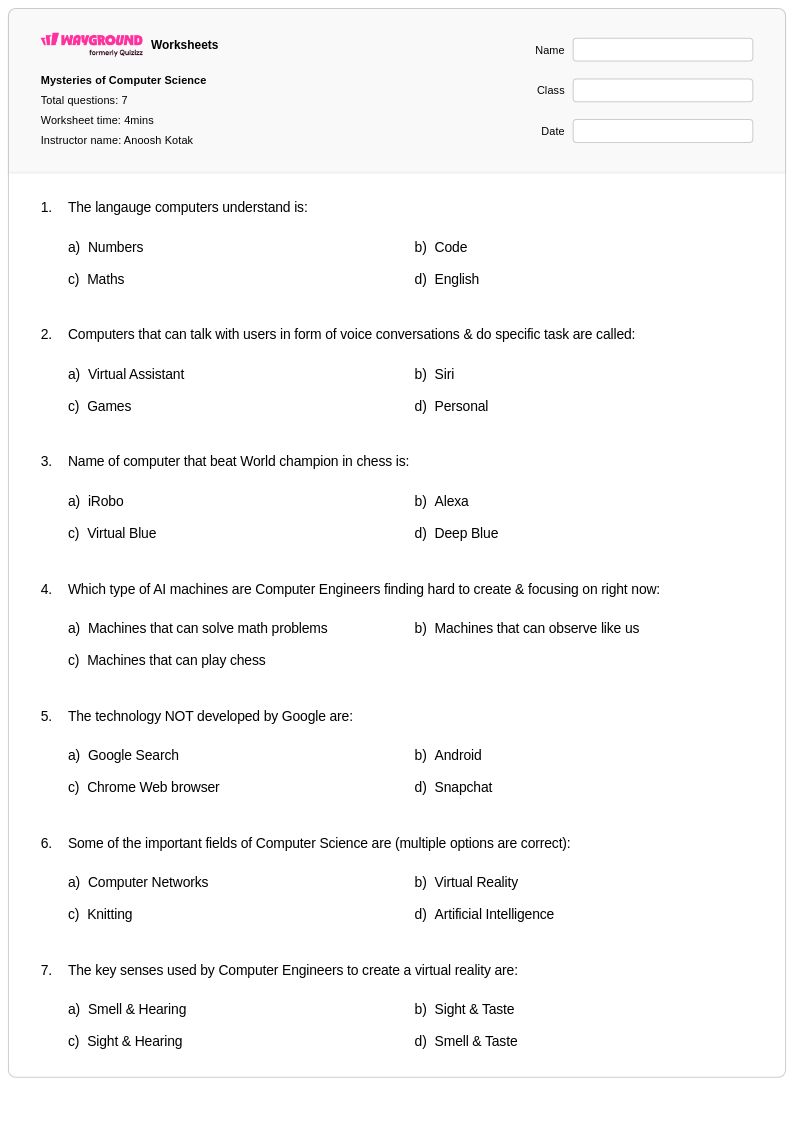
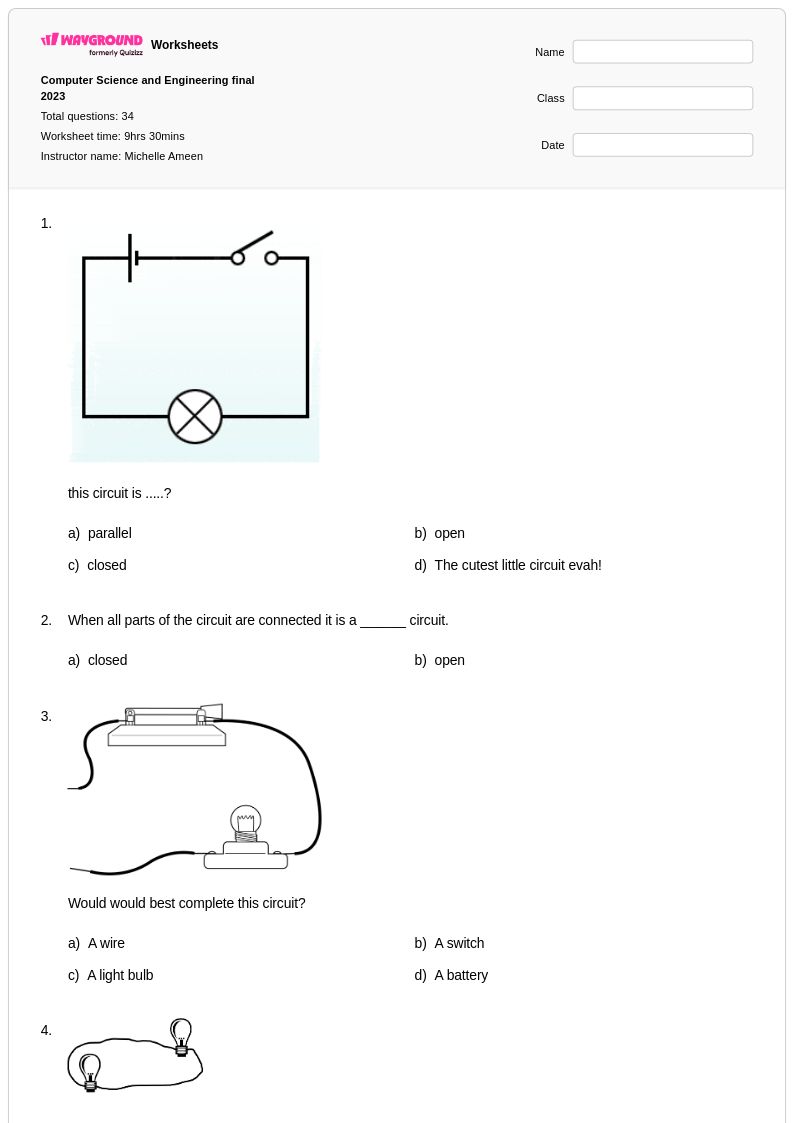
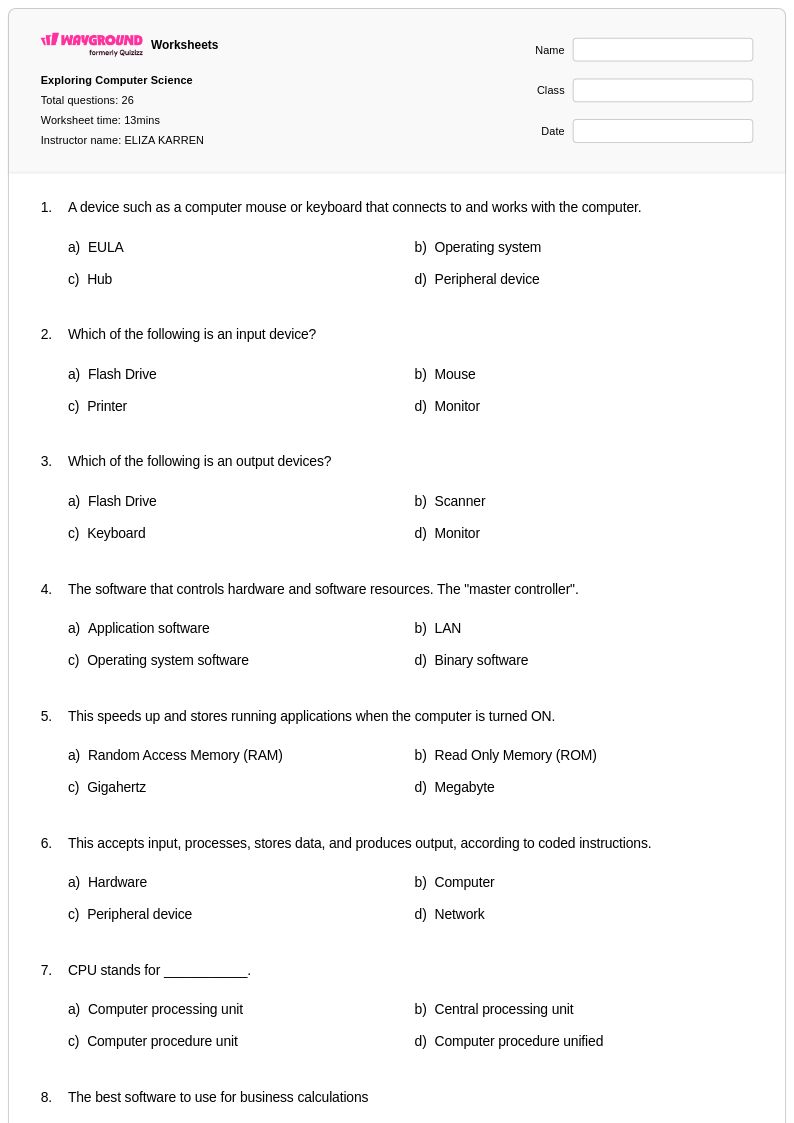
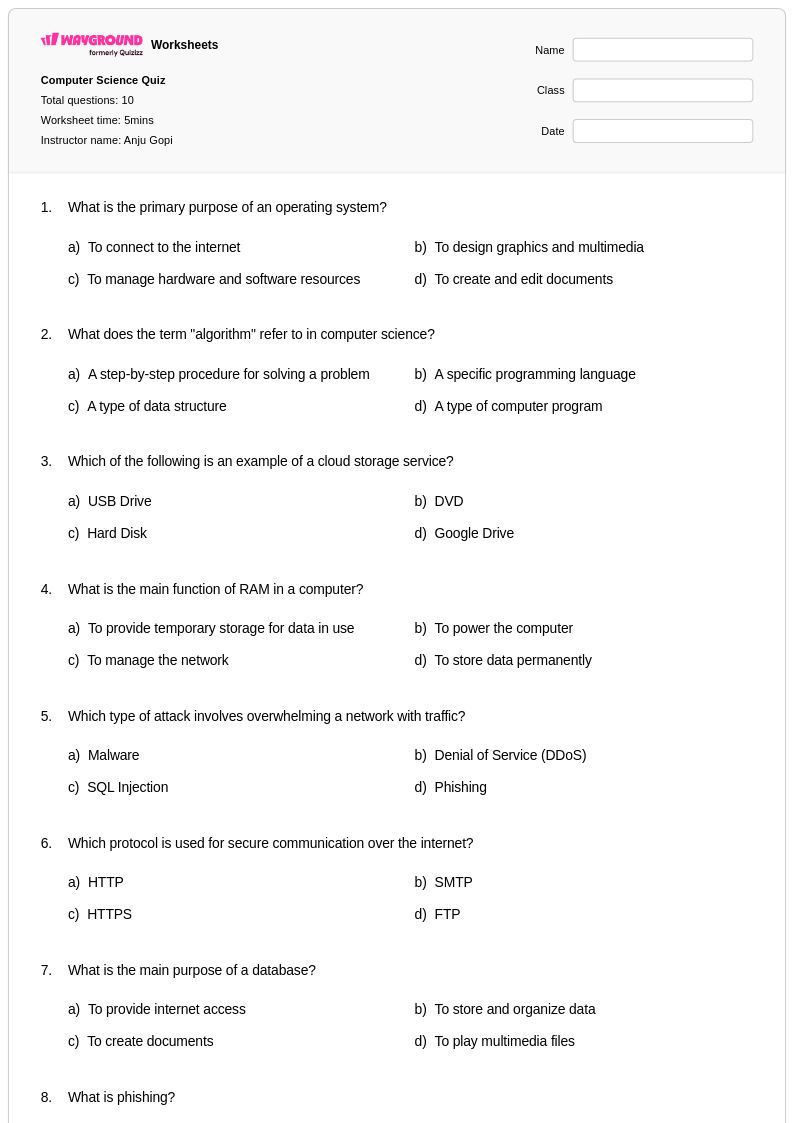
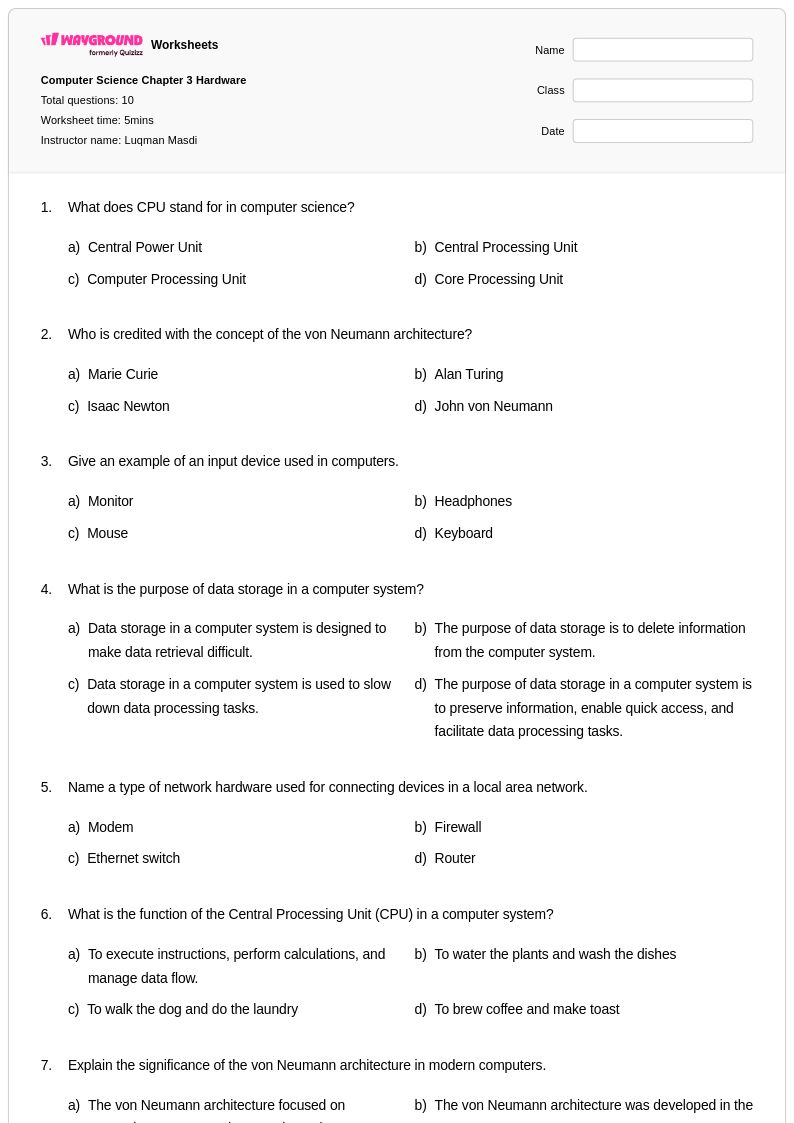
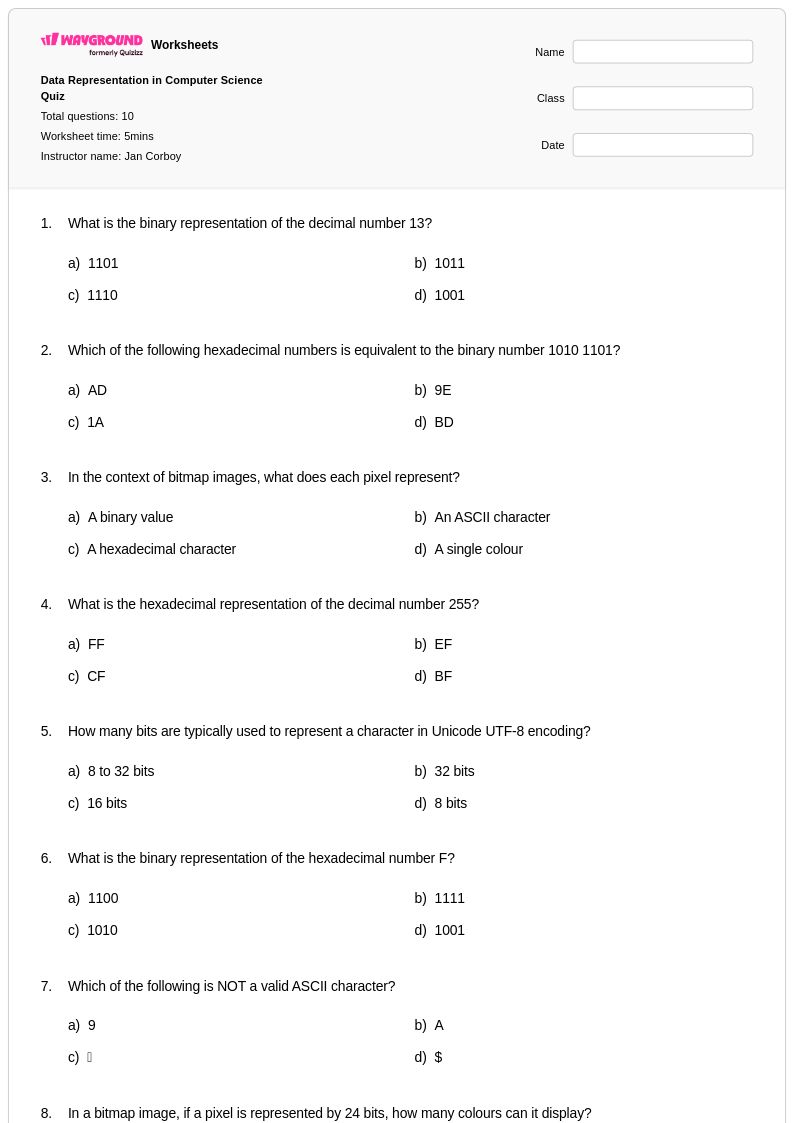
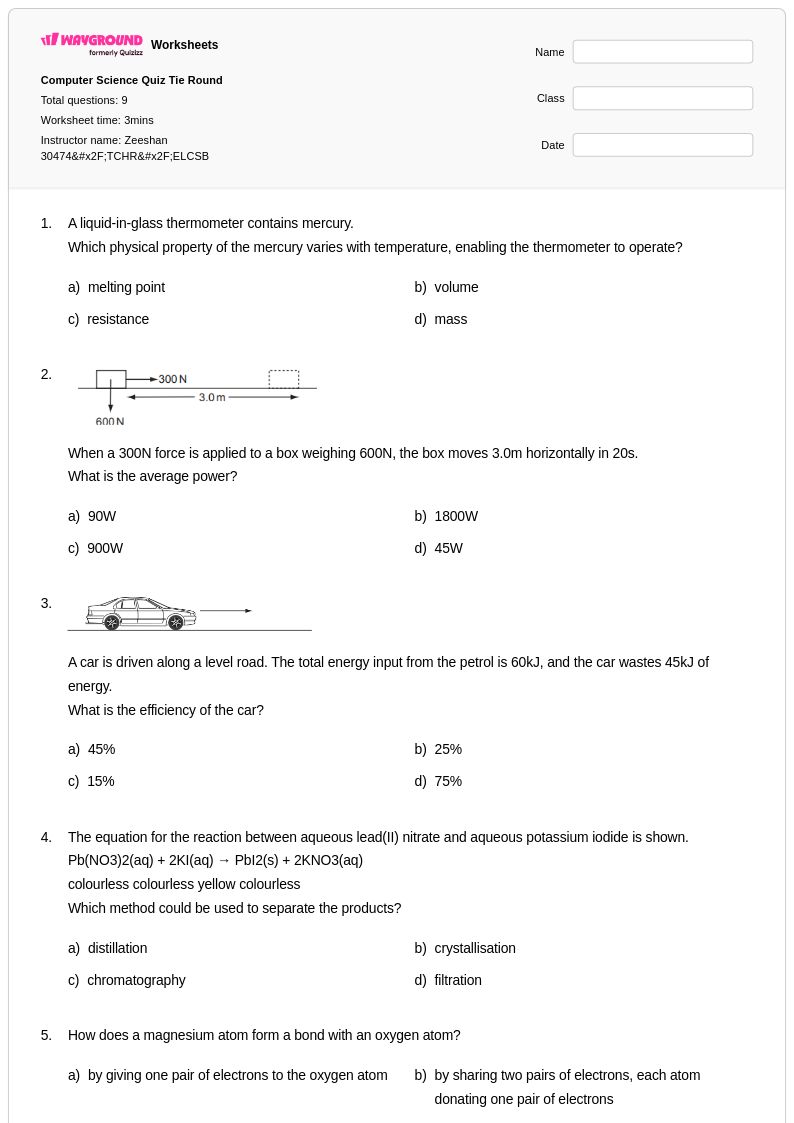
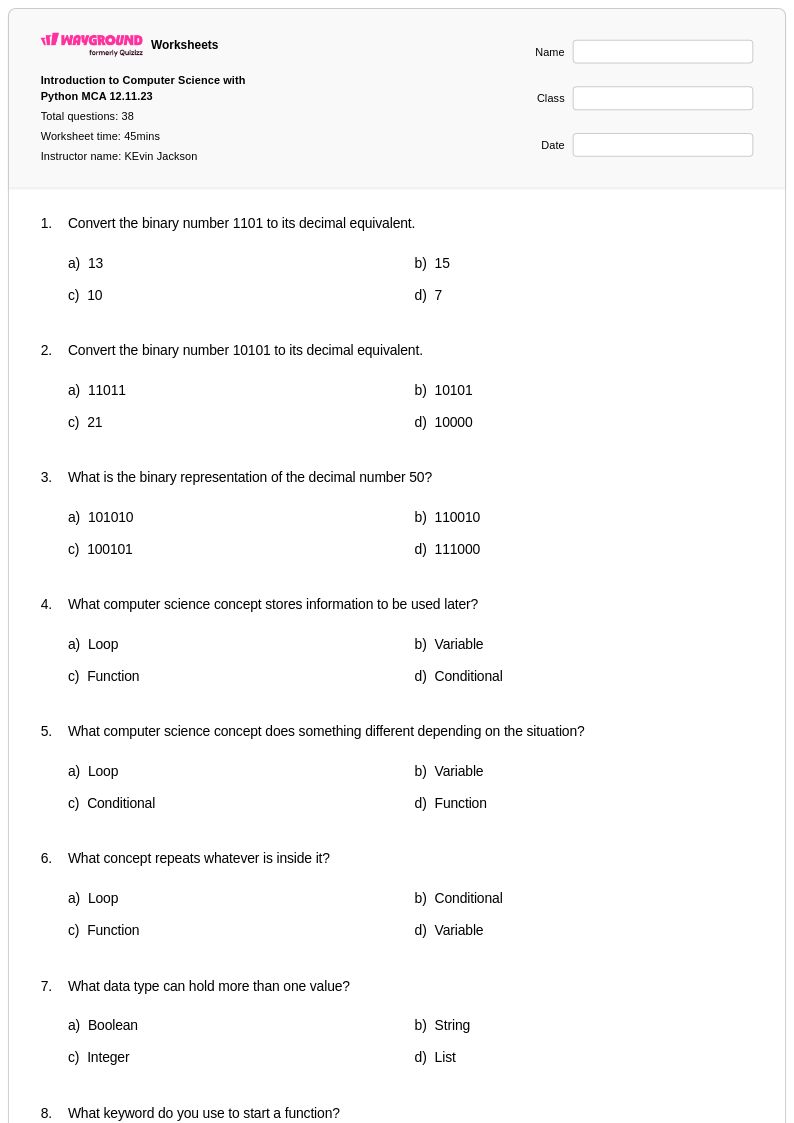
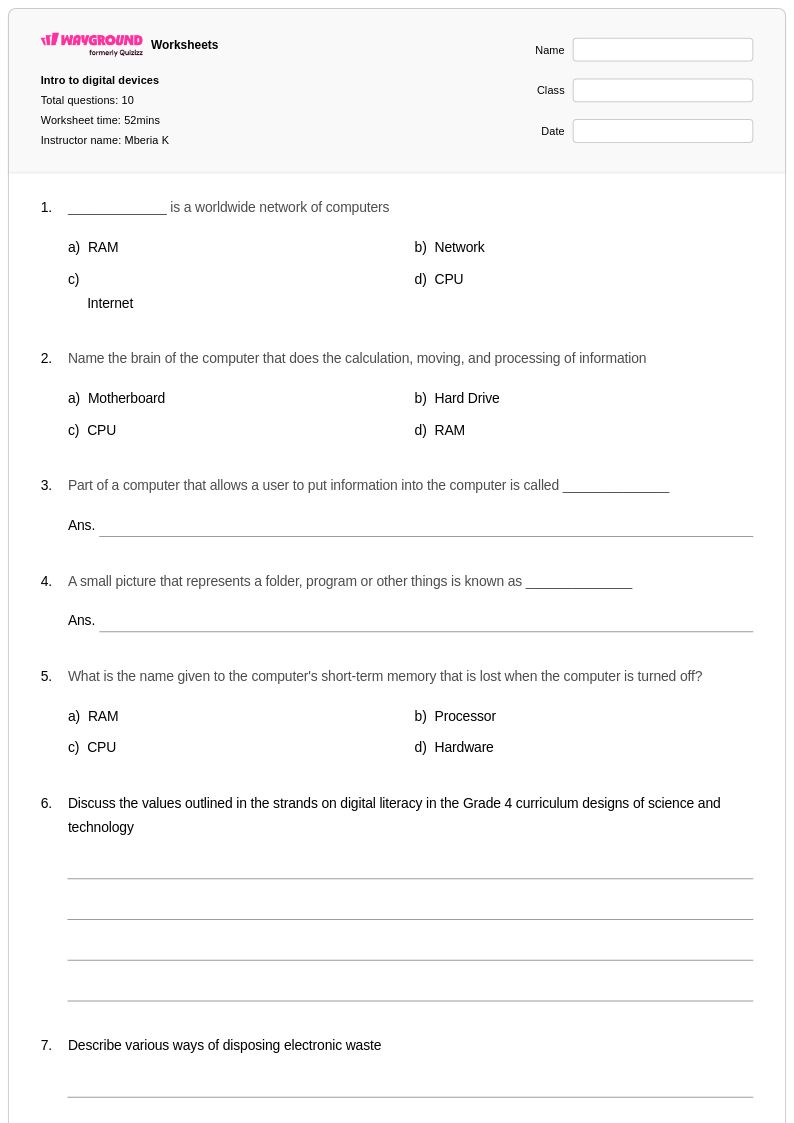
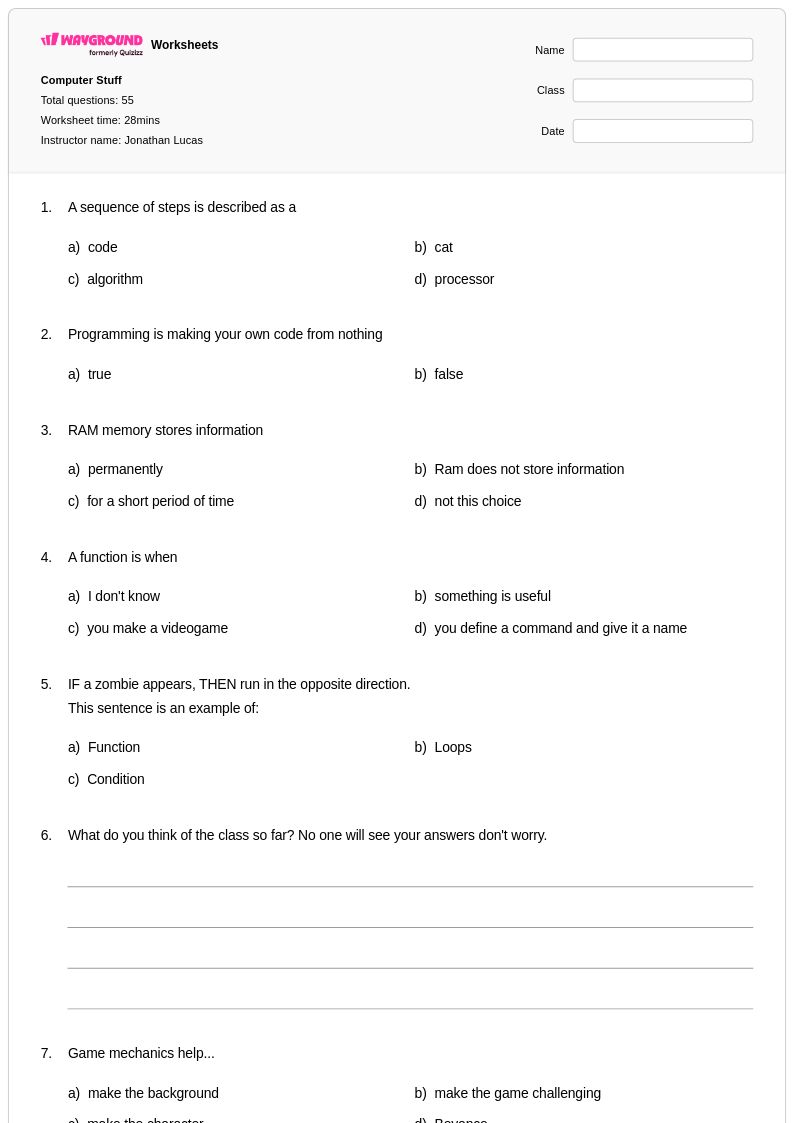
Class 10 Computer Science worksheets available through Wayground (formerly Quizizz) provide comprehensive coverage of fundamental programming concepts, computational thinking skills, and digital literacy essential for students beginning their journey into computer science. These expertly designed worksheets strengthen critical skills including algorithm development, programming logic, data structures, and problem-solving methodologies that form the foundation of computer science education. Students engage with practice problems that cover topics such as coding fundamentals, binary systems, flowcharting, and basic software development principles, with each worksheet including detailed answer keys to support independent learning and self-assessment. The collection features both printable pdf formats and interactive digital versions, ensuring accessibility for diverse learning environments while providing free resources that align with standard Class 10 computer science curricula.
Wayground (formerly Quizizz) supports educators with an extensive library of millions of teacher-created computer science resources, featuring robust search and filtering capabilities that allow instructors to quickly locate worksheets tailored to specific programming languages, computational concepts, or skill levels. The platform's standards alignment ensures that Class 10 Computer Science materials meet educational benchmarks, while differentiation tools enable teachers to customize worksheets for varied student abilities and learning styles. Flexible customization options allow educators to modify existing worksheets or combine multiple resources to create comprehensive lesson supplements, with materials available in both printable and digital formats including downloadable pdfs for seamless classroom integration. These features streamline lesson planning while providing targeted resources for remediation, enrichment, and systematic skill practice that helps students master essential computer science concepts and prepare for advanced coursework.
FAQs
How do I teach computer science concepts to students who have no prior experience?
Start with foundational computational thinking skills before introducing any syntax or code: pattern recognition, decomposition, and algorithmic sequencing can all be taught without a computer. Use unplugged activities and structured worksheets to build mental models of how programs work, then layer in programming logic and debugging practice as students gain confidence. Grounding abstract concepts in real-world examples, such as sorting algorithms modeled on everyday sorting tasks, helps novice learners connect theory to practice.
What exercises help students practice programming logic and algorithms?
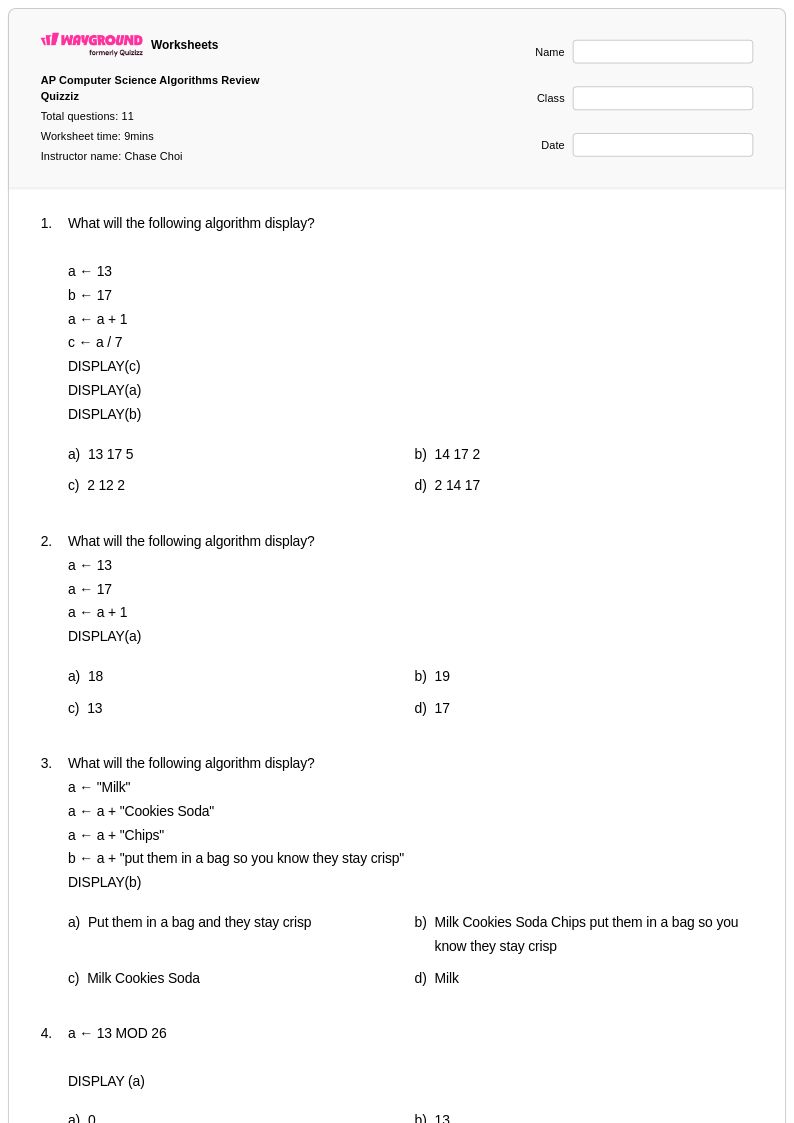
Tracing exercises, where students manually follow a program's logic step by step and predict the output, are among the most effective ways to build algorithmic thinking. Debugging worksheets that present broken code for students to identify and correct reinforce both syntax awareness and logical reasoning. Flowchart and pseudocode activities bridge the gap between abstract problem-solving and actual programming, making them especially useful before students write their first lines of code.
What mistakes do students commonly make when learning programming concepts?
One of the most frequent misconceptions is treating variables as fixed values rather than containers that change during program execution, which leads to persistent errors in tracing and debugging tasks. Students also commonly confuse sequence with logic, assuming that code runs based on their intent rather than its literal instructions. Conflating loops and conditionals is another common stumbling block, particularly when nested structures are introduced. Targeted practice problems that isolate each of these error types help students confront and correct these patterns directly.
How do I differentiate computer science worksheets for students with different skill levels?
For struggling learners, reduce cognitive load by breaking multi-step problems into single-concept tasks and providing sentence starters or partially completed code. Advanced students benefit from open-ended extension problems that require them to design their own algorithms or evaluate trade-offs between solutions. On Wayground, teachers can apply student-level accommodations including reduced answer choices and read-aloud support, which are especially useful during digital practice sessions for students who need additional scaffolding without disrupting the rest of the class.
How can I use Wayground's computer science worksheets in my classroom?
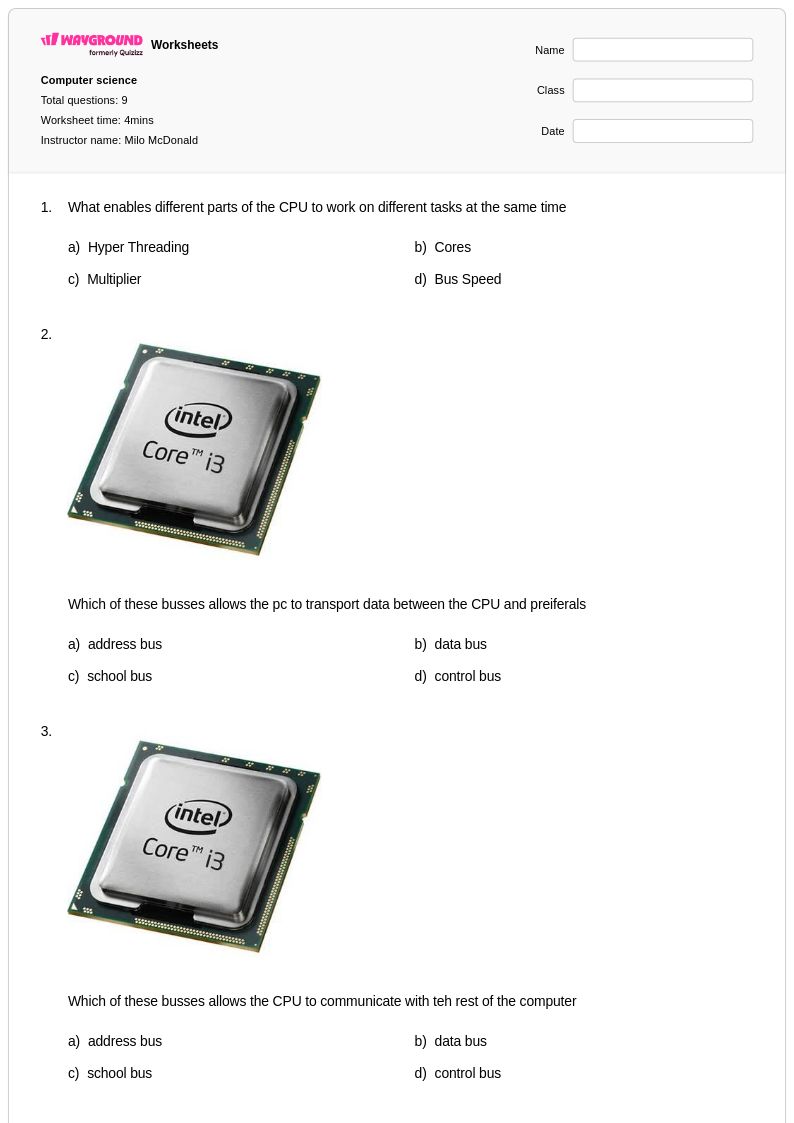
Wayground's computer science worksheets are available as printable PDFs for traditional classroom use and in digital formats for technology-integrated environments, giving teachers flexibility across in-person, hybrid, and remote settings. Teachers can also host worksheets as a quiz directly on Wayground, which enables real-time progress tracking and immediate feedback for students. This makes them well-suited for warm-up activities, formative checks, independent practice, or homework across a range of computer science topics including hardware, programming, and digital citizenship.
How do I assess student understanding of computer science topics like algorithms and data structures?
Formative assessments work best when they require students to demonstrate process, not just answers: asking students to annotate their reasoning on a tracing exercise or explain a debugging decision reveals far more about their understanding than a multiple-choice response. Short written reflection prompts after algorithm or data structure activities help teachers identify gaps in conceptual thinking before they become entrenched. Using answer keys alongside student work allows teachers to pinpoint exactly where logical breakdowns occur rather than simply marking answers right or wrong.