Free Printable Conductors and Insulators Worksheets for Class 2
Class 2 conductors and insulators worksheets from Wayground help young students discover which materials allow electricity to flow through printable activities, practice problems, and free PDF resources with answer keys.
Explore printable Conductors and Insulators worksheets for Class 2
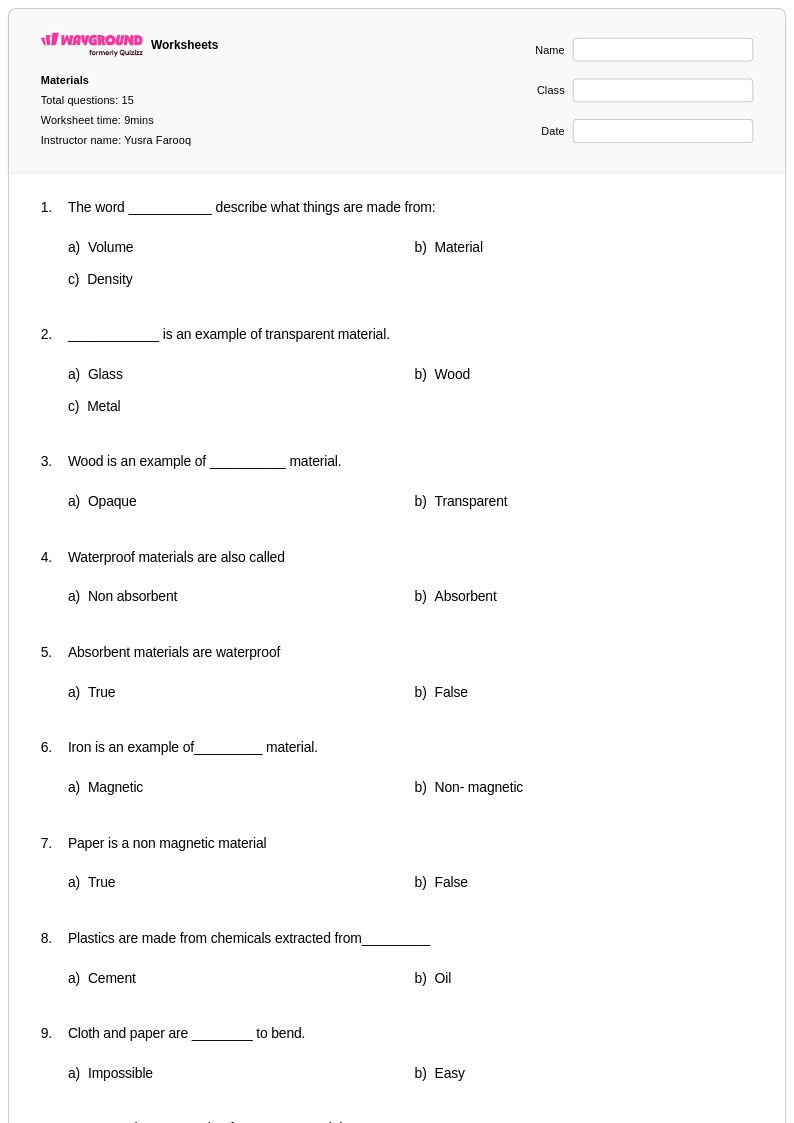
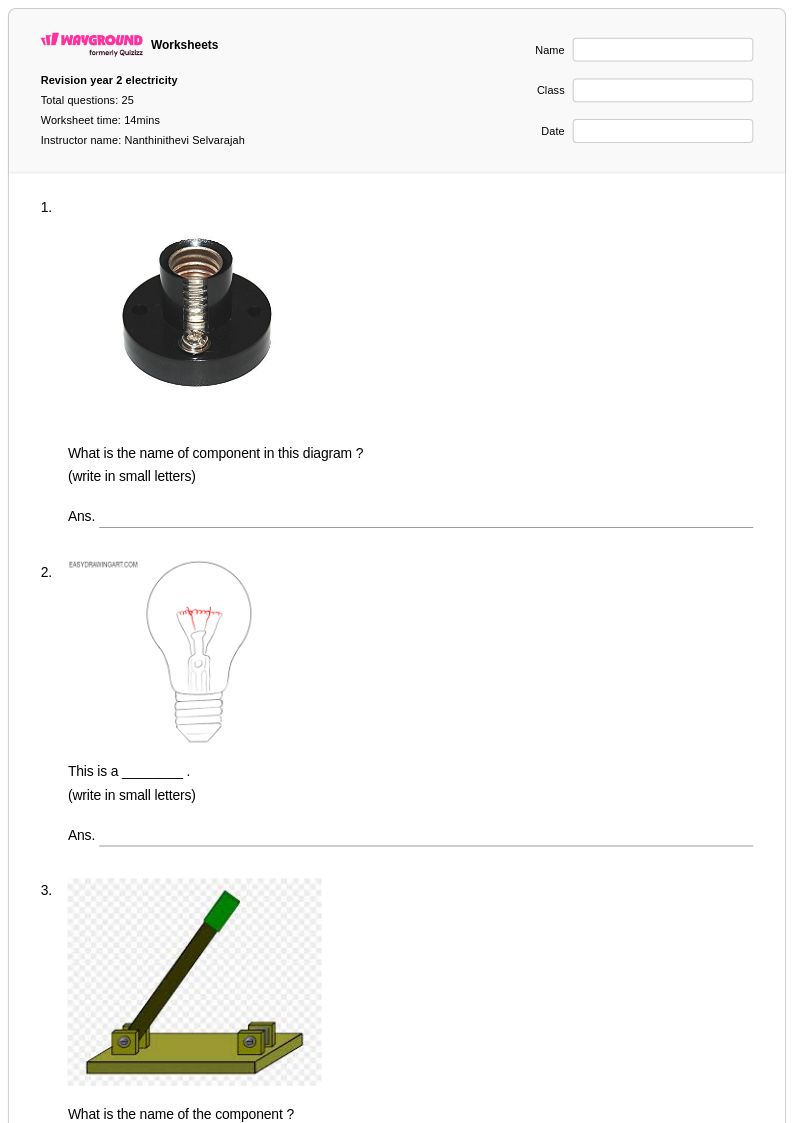
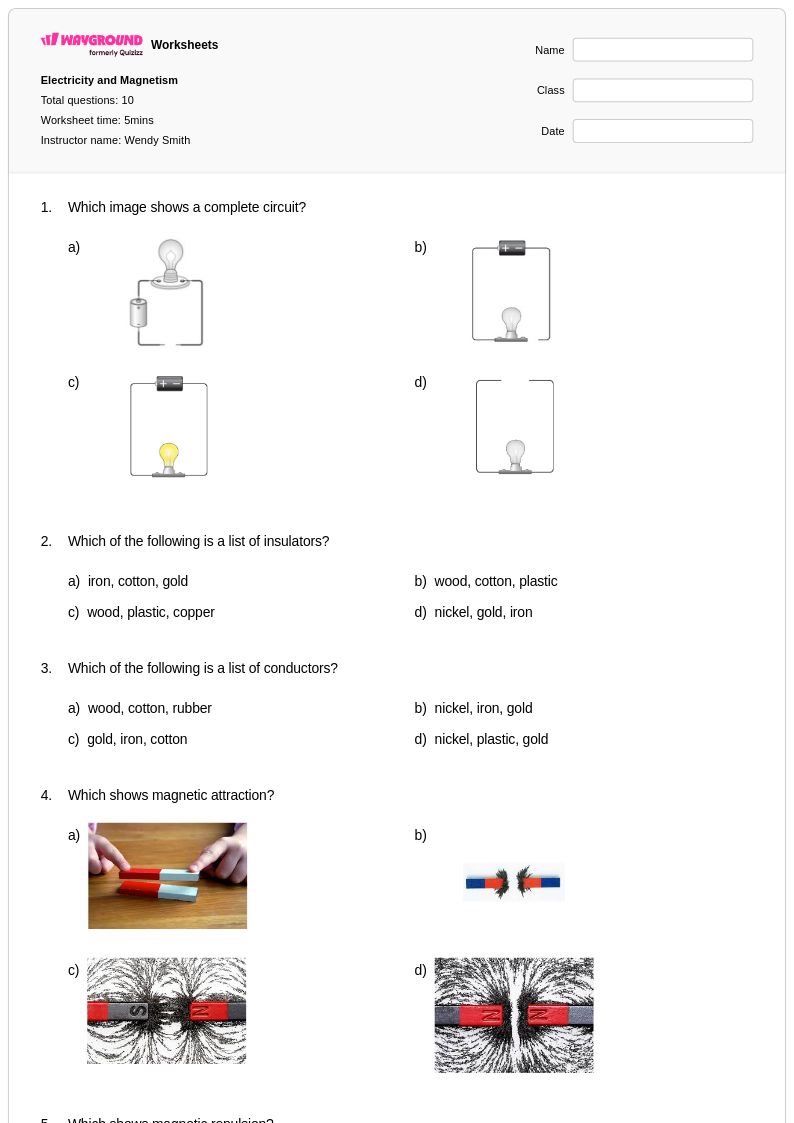
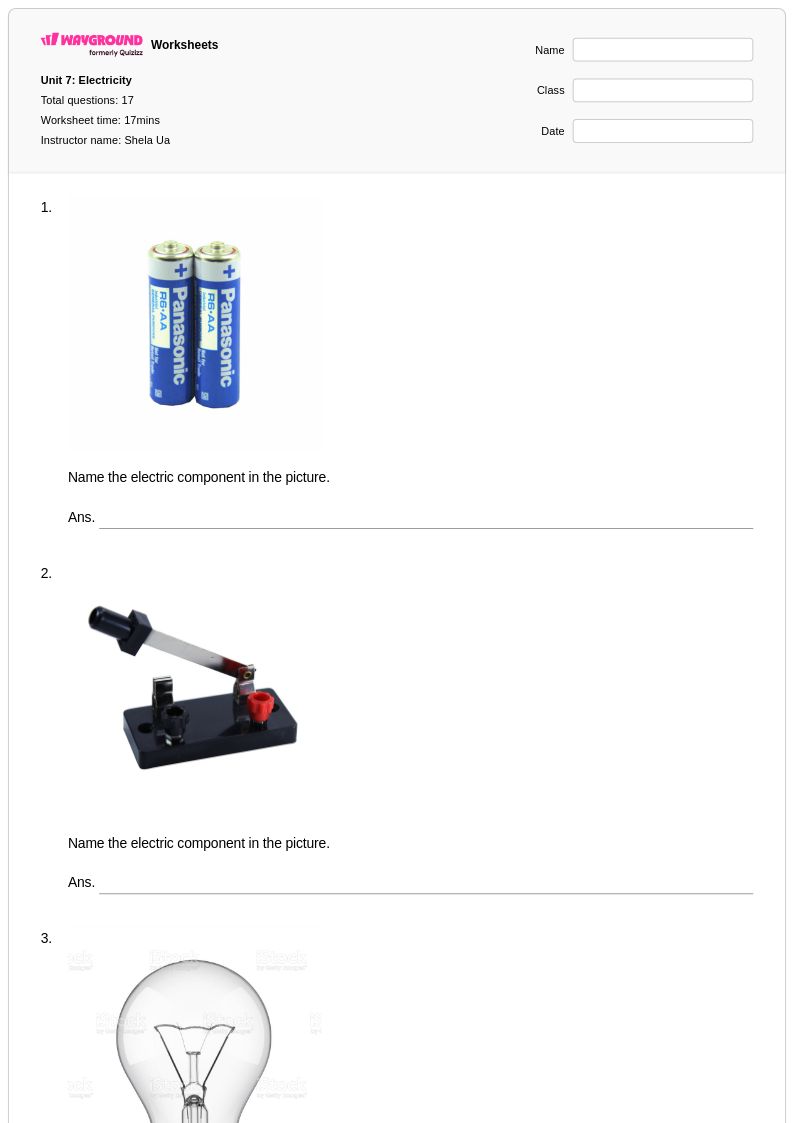
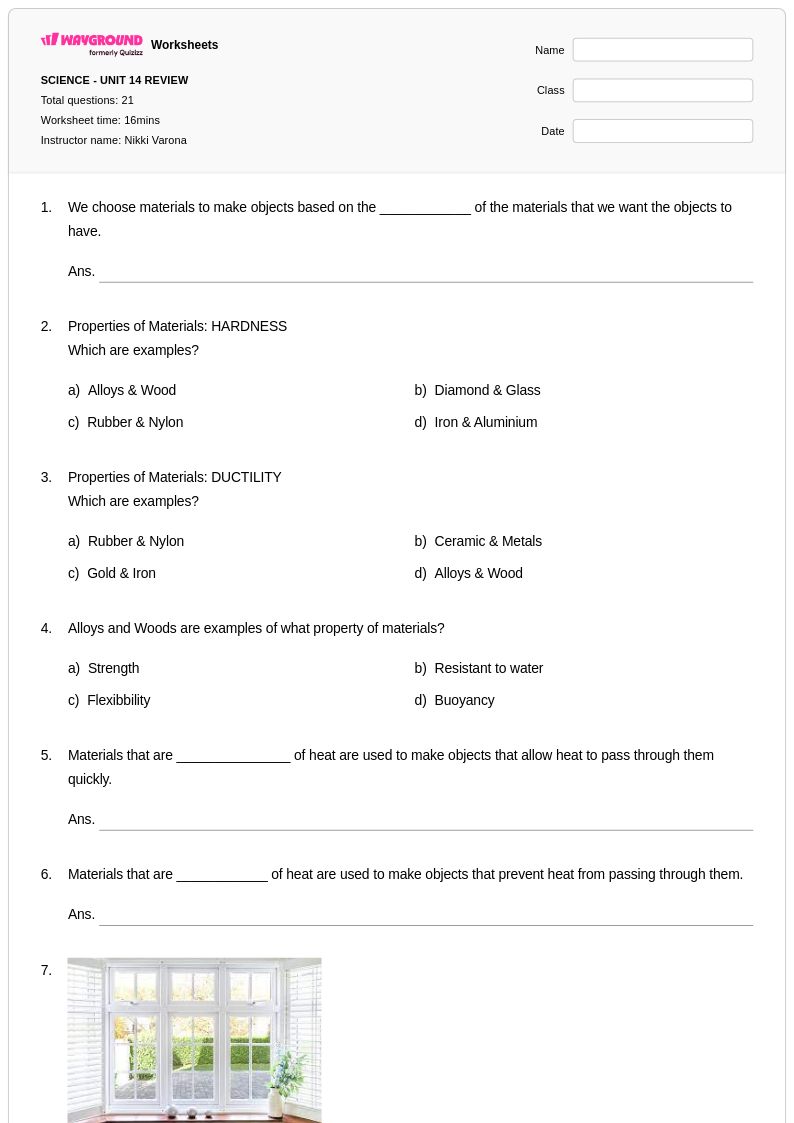
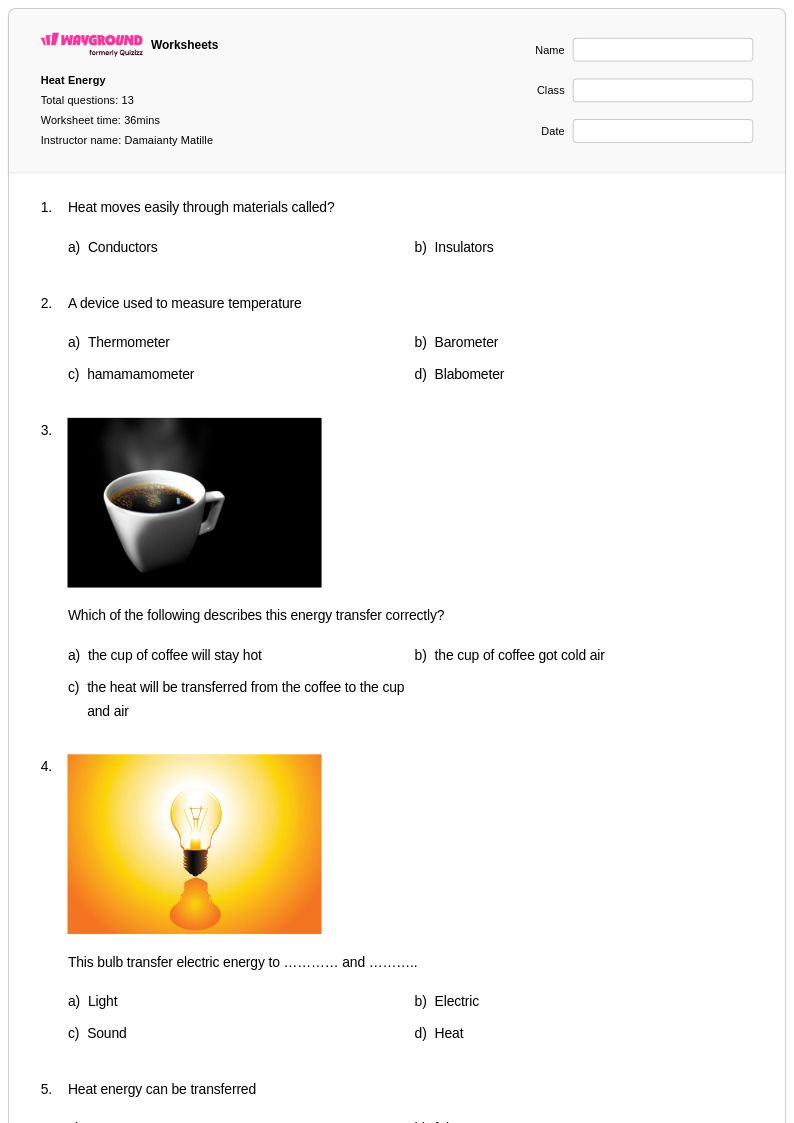
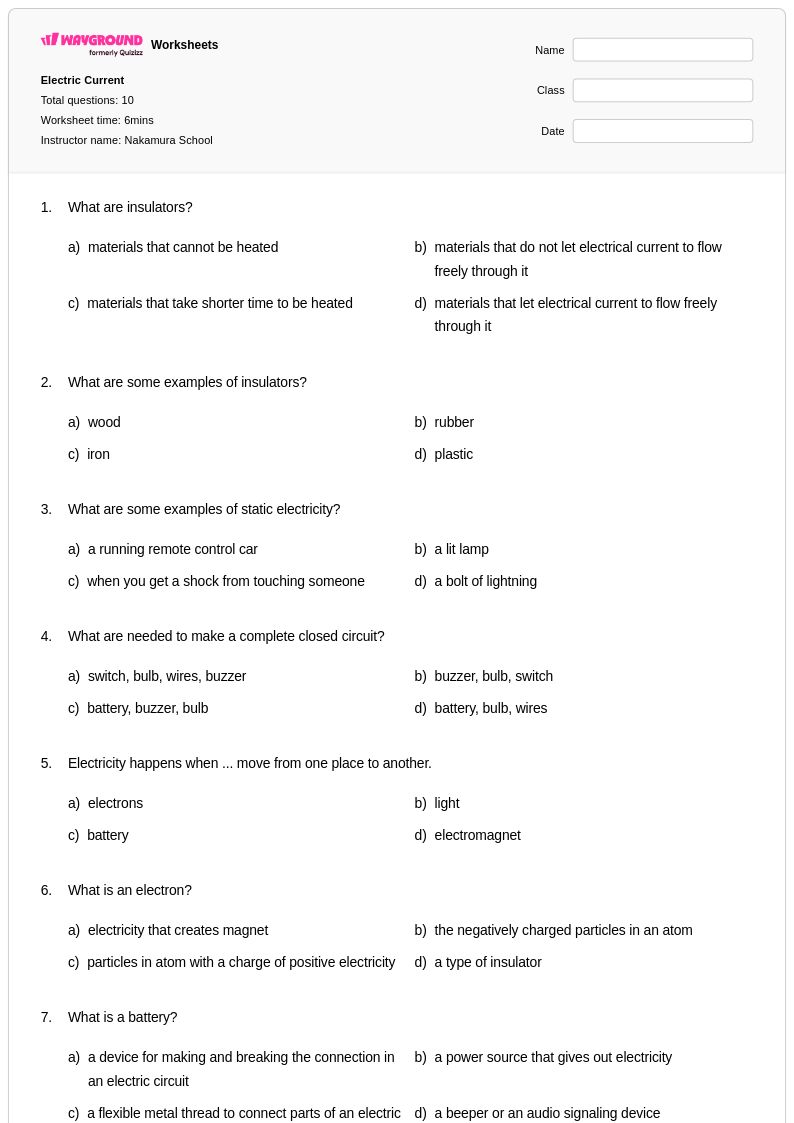
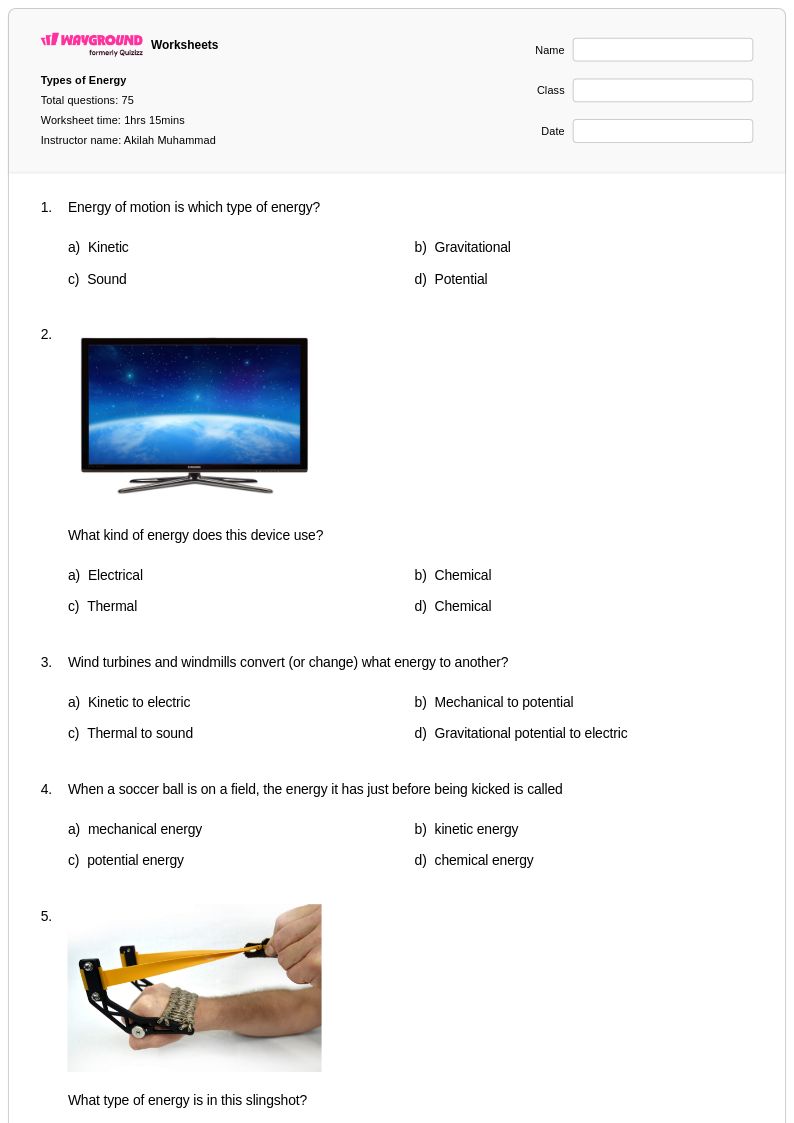
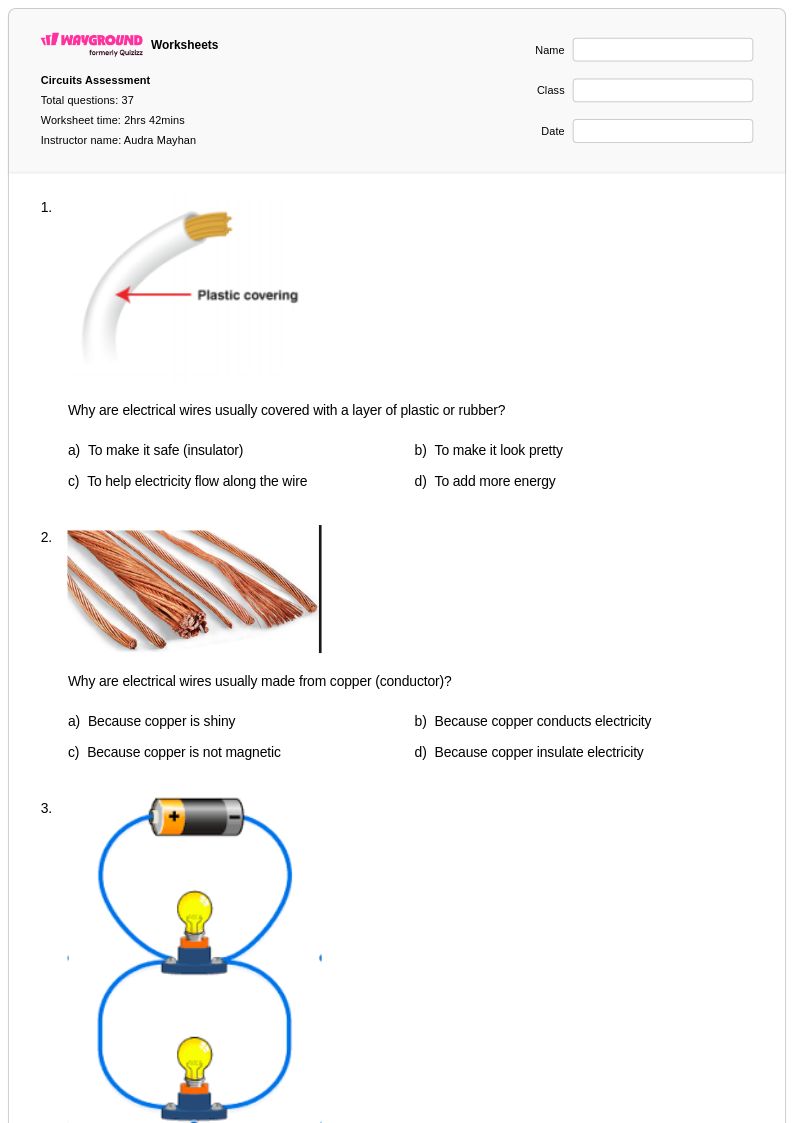
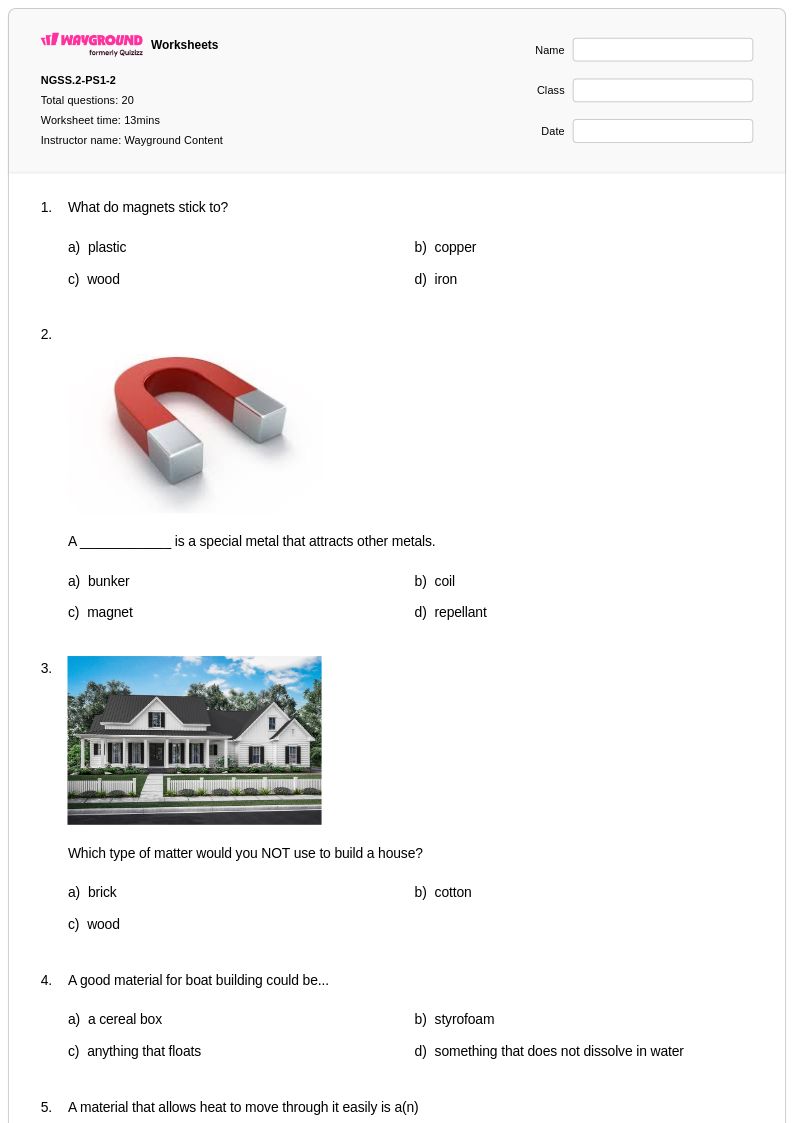
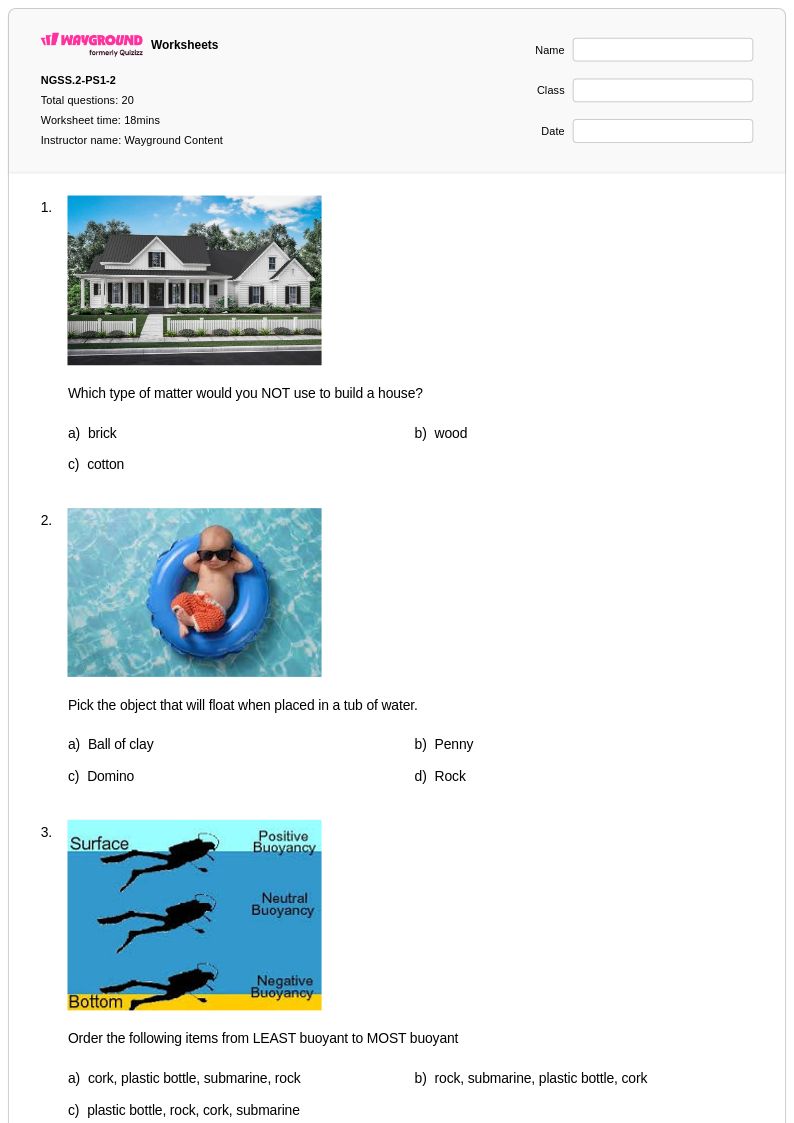
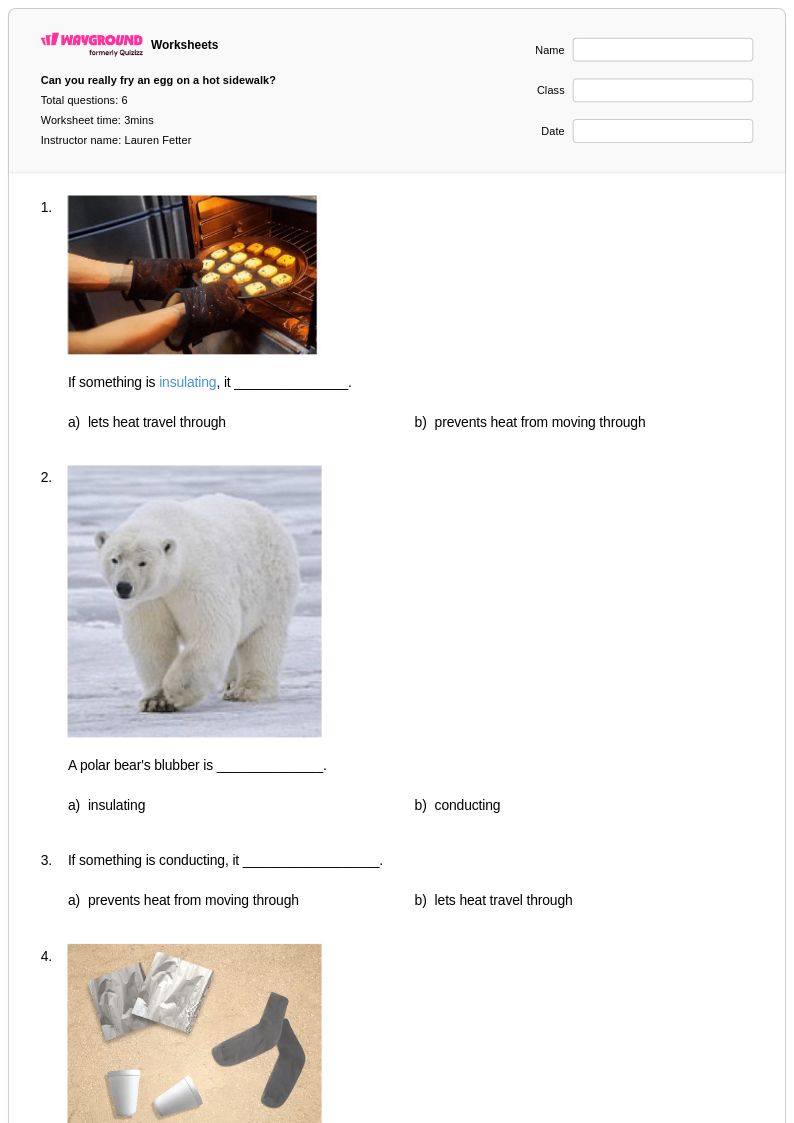
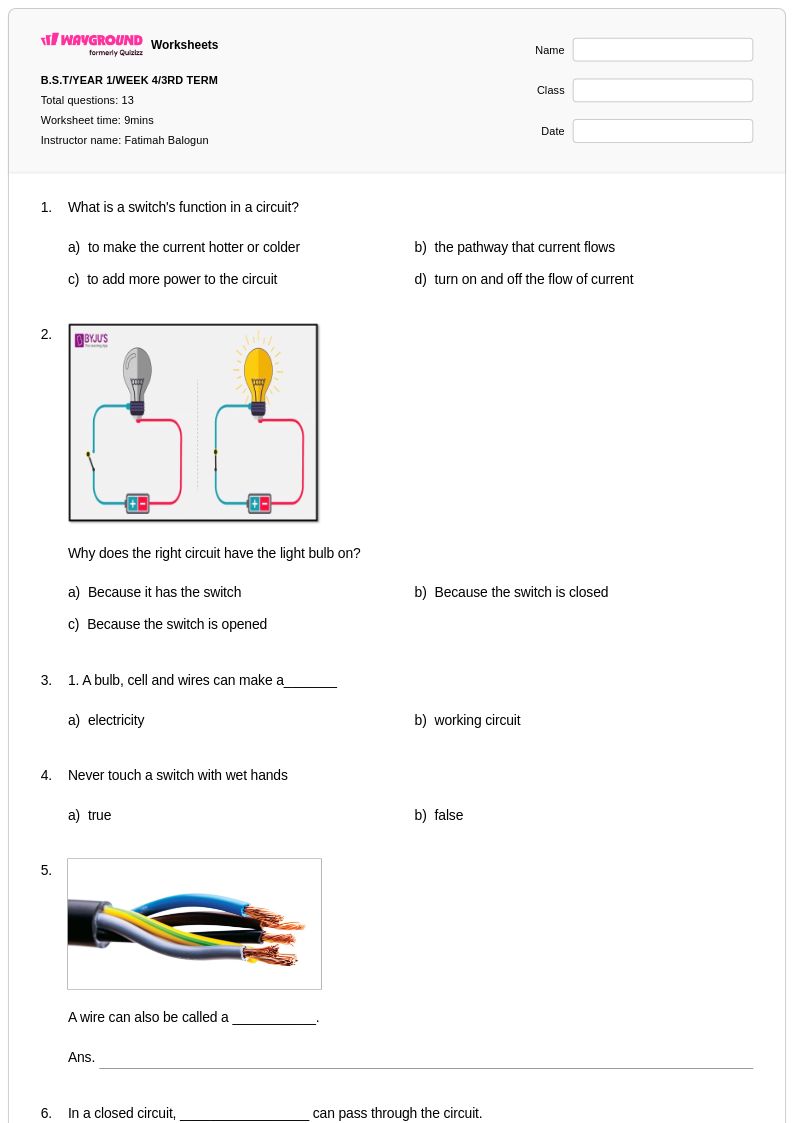
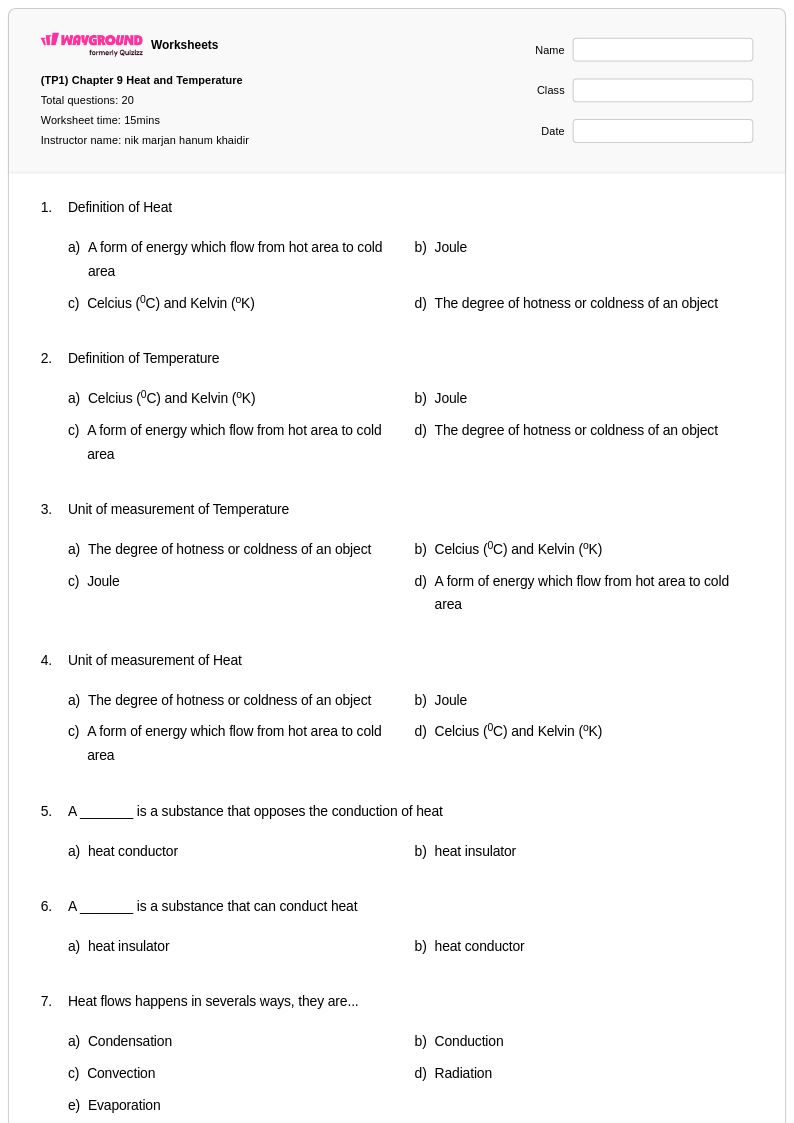
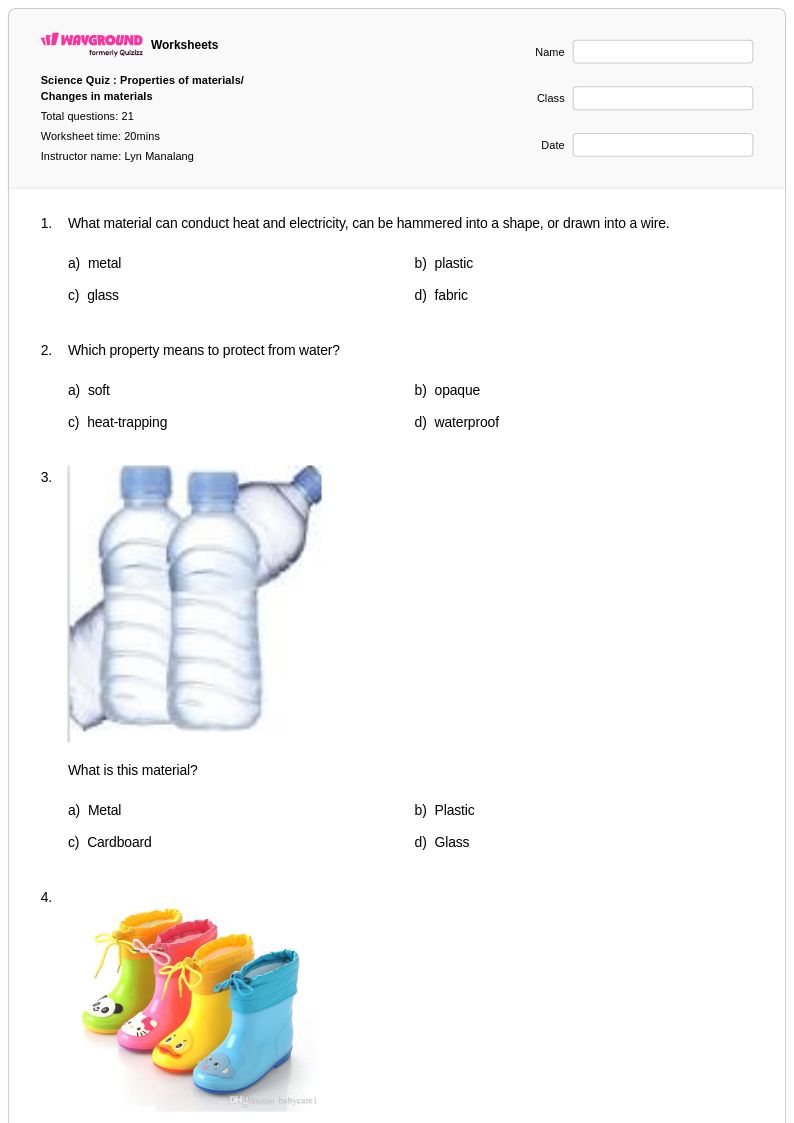
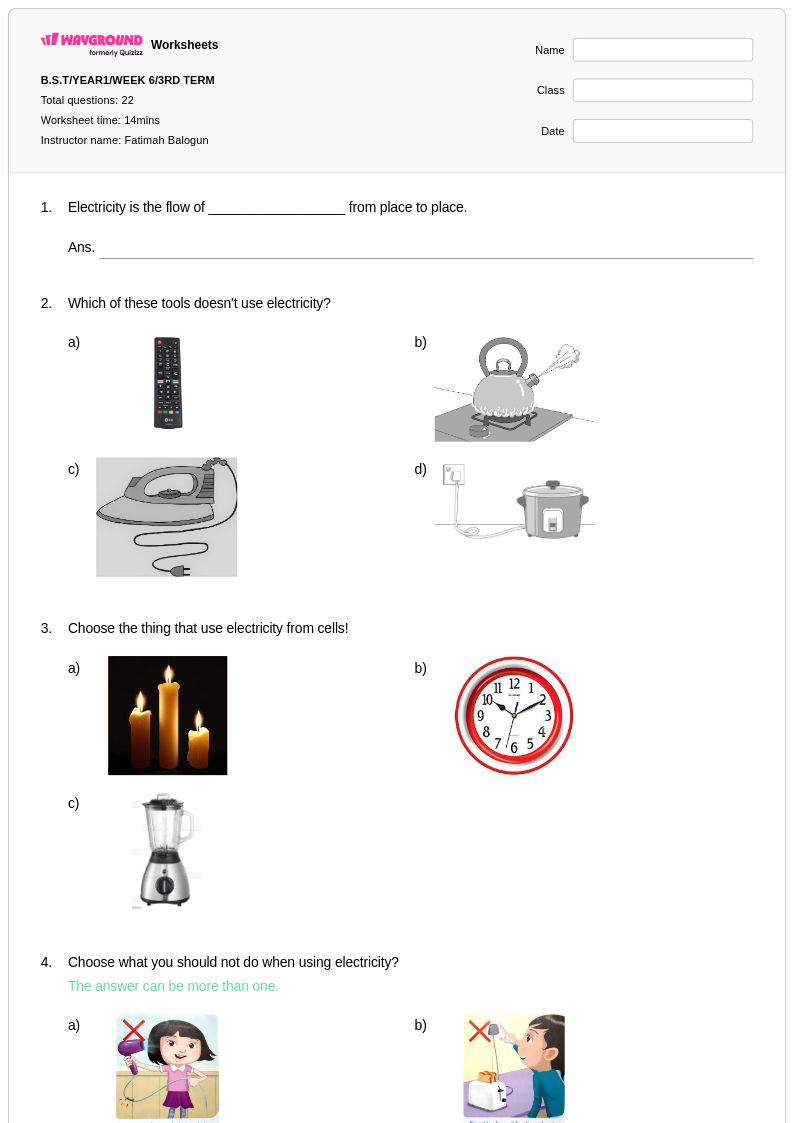
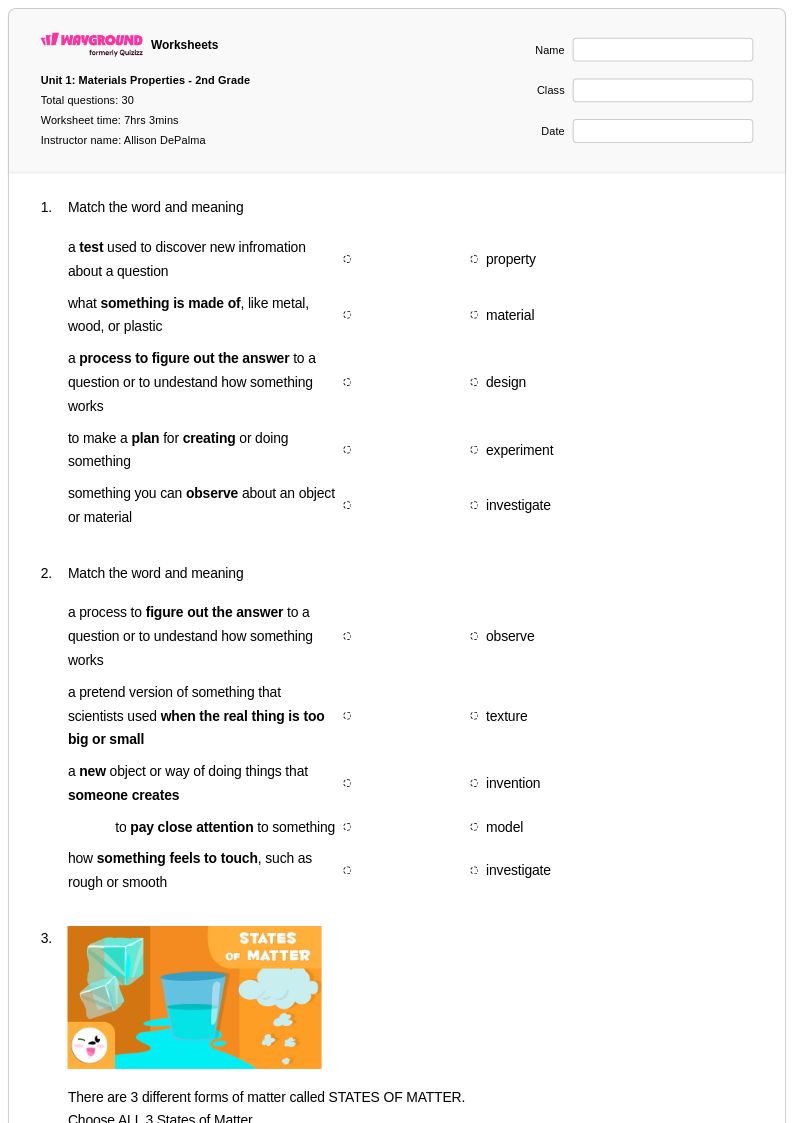
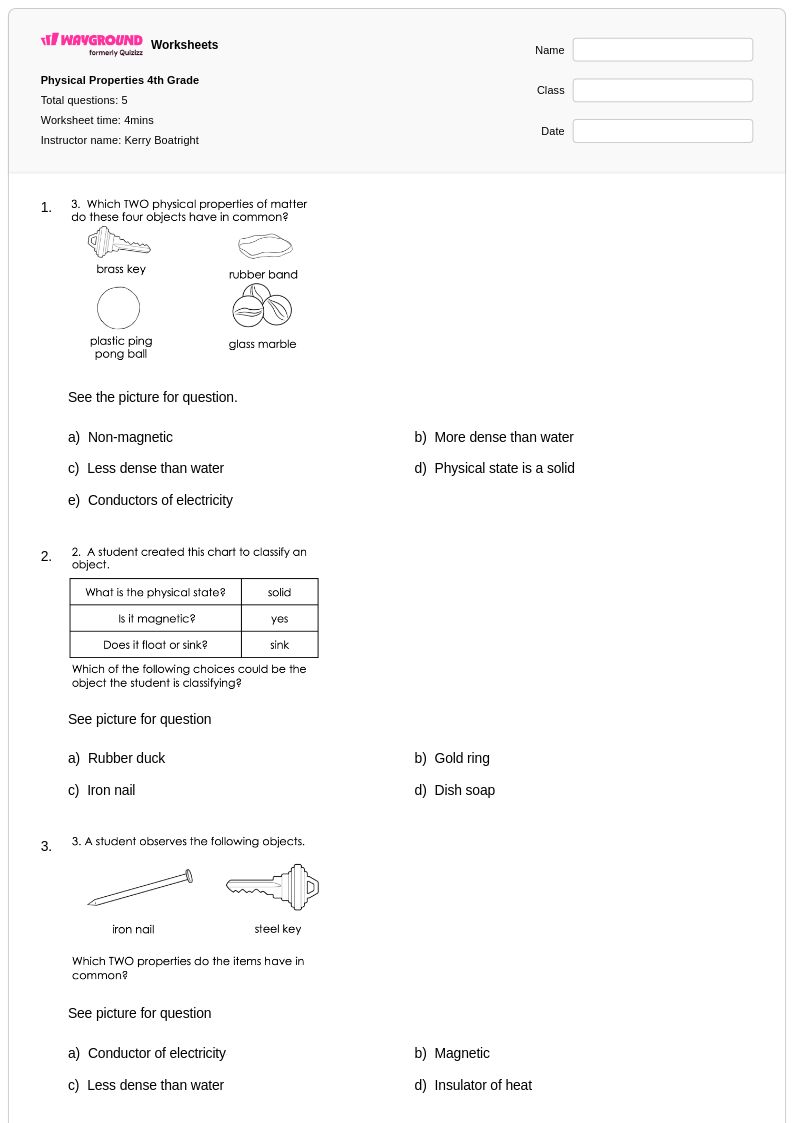
Conductors and insulators worksheets for Class 2 students available through Wayground (formerly Quizizz) provide young learners with essential foundational knowledge about how different materials interact with electricity and heat. These carefully designed printables help second-grade students develop critical thinking skills as they explore which materials allow energy to pass through them and which materials block or resist that flow. The worksheets feature age-appropriate practice problems that encourage students to classify everyday objects like metal spoons, wooden blocks, plastic toys, and rubber gloves into conductor and insulator categories. Each worksheet collection includes comprehensive answer keys that support both independent learning and guided instruction, while the free pdf format ensures easy access for classroom use and home practice.
Wayground's extensive collection of conductor and insulator resources draws from millions of teacher-created materials, providing educators with robust search and filtering capabilities to locate worksheets that perfectly match their Class 2 science curriculum needs. The platform's standards alignment features help teachers ensure their lesson plans meet educational requirements while offering differentiation tools that accommodate diverse learning styles and abilities within the classroom. Teachers can customize these printable and digital worksheets to focus on specific aspects of conductor and insulator concepts, whether for initial skill introduction, targeted remediation, or enrichment activities for advanced learners. The flexible pdf format allows seamless integration into both traditional classroom settings and remote learning environments, supporting comprehensive lesson planning and providing students with multiple opportunities to practice identifying and understanding the fundamental properties that make materials either conductors or insulators.
FAQs
How do I teach conductors and insulators to students?
Start by grounding students in atomic structure: conductors like copper and silver have loosely bound outer electrons that move freely, while insulators like rubber, glass, and plastic hold electrons tightly, resisting current flow. A hands-on sorting activity where students classify common household materials as conductors or insulators builds intuition before moving into circuit-based applications. Following up with worksheet practice that requires students to justify their classifications reinforces the underlying physics rather than rote memorization.
What exercises help students practice identifying conductors and insulators?
Effective practice exercises ask students to classify materials based on their atomic properties, predict which materials would complete a circuit, and explain why certain materials are used in real-world safety devices like wire insulation and circuit breakers. Practice problems that connect material properties to everyday applications, such as why electrical cords are coated in plastic, help students see the relevance of the concept. Worksheets that include both identification tasks and short-answer justification questions develop both recognition and conceptual understanding.
What mistakes do students commonly make when learning about conductors and insulators?
A frequent misconception is that all metals are perfect conductors and all non-metals are perfect insulators, which breaks down when students encounter materials like silicon or graphite. Students also tend to confuse electrical conductivity with thermal conductivity, assuming they always go together. Another common error is defining conductors simply as materials that 'let electricity through' without connecting that property to atomic-level electron mobility, which limits their ability to reason about unfamiliar materials.
How can I use conductors and insulators worksheets in my classroom?
Conductors and insulators worksheets on Wayground are available as printable PDFs for traditional classroom use and in digital formats for technology-integrated learning environments, making them flexible for both in-person and remote instruction. Teachers can also host them as a quiz directly on Wayground, enabling real-time student responses and automatic grading. Wayground's accommodation tools, including read aloud, reduced answer choices, and extended time, allow teachers to differentiate the same worksheet for students with varying needs without disrupting the rest of the class.
How do conductors and insulators relate to real-world applications in circuits and safety?
Understanding the difference between conductors and insulators is foundational to explaining how electrical circuits function safely. Conductive metals like copper carry current through wires, while insulating materials like rubber and plastic prevent unintended current pathways that could cause short circuits or electric shock. This knowledge connects directly to how safety devices such as fuses, circuit breakers, and insulated cables are designed, making it essential context for any unit on electricity.
How do I differentiate conductors and insulators instruction for different skill levels?
For students who are still building foundational understanding, focus practice on classifying familiar materials and connecting that classification to simple circuit outcomes. More advanced students benefit from problems that introduce semiconductors or ask them to evaluate why specific materials are chosen in real electronic systems. Wayground's differentiation tools allow teachers to assign modified versions of the same worksheet, with features like reduced answer choices for students who need additional support, ensuring all learners engage with the concept at an appropriate level.