
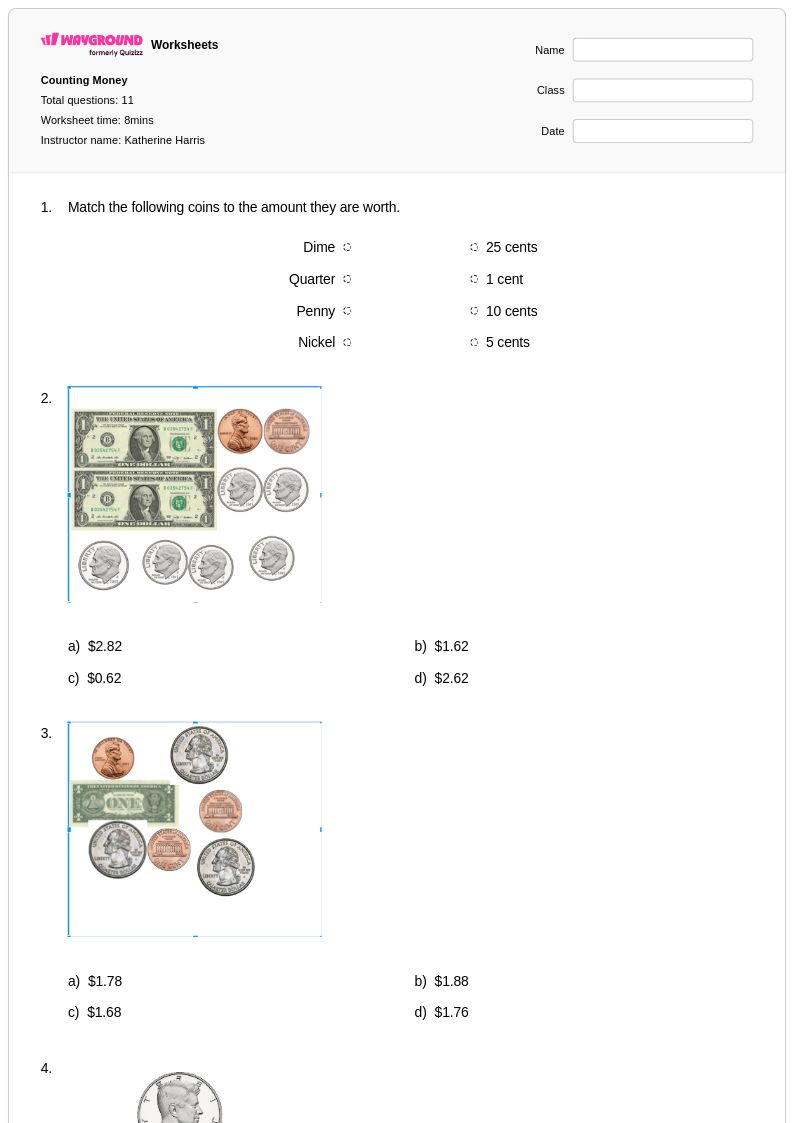
11 Q
3rd
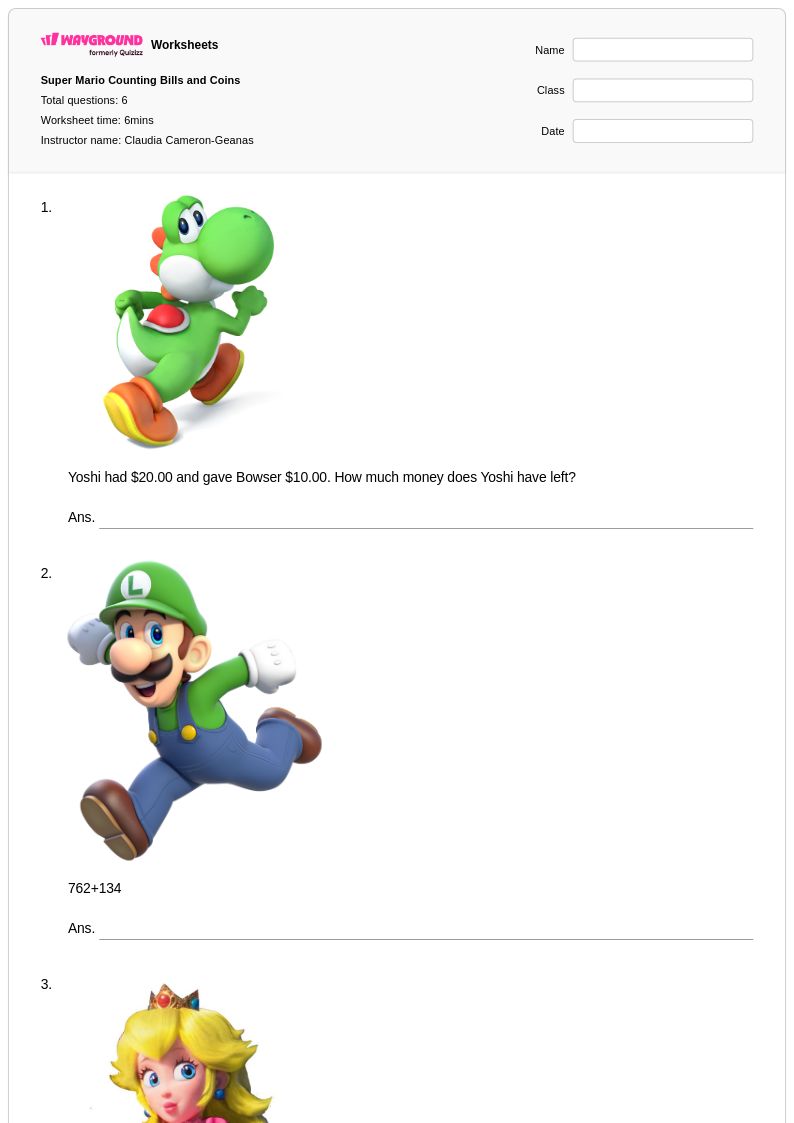
15 Q
9th - 12th
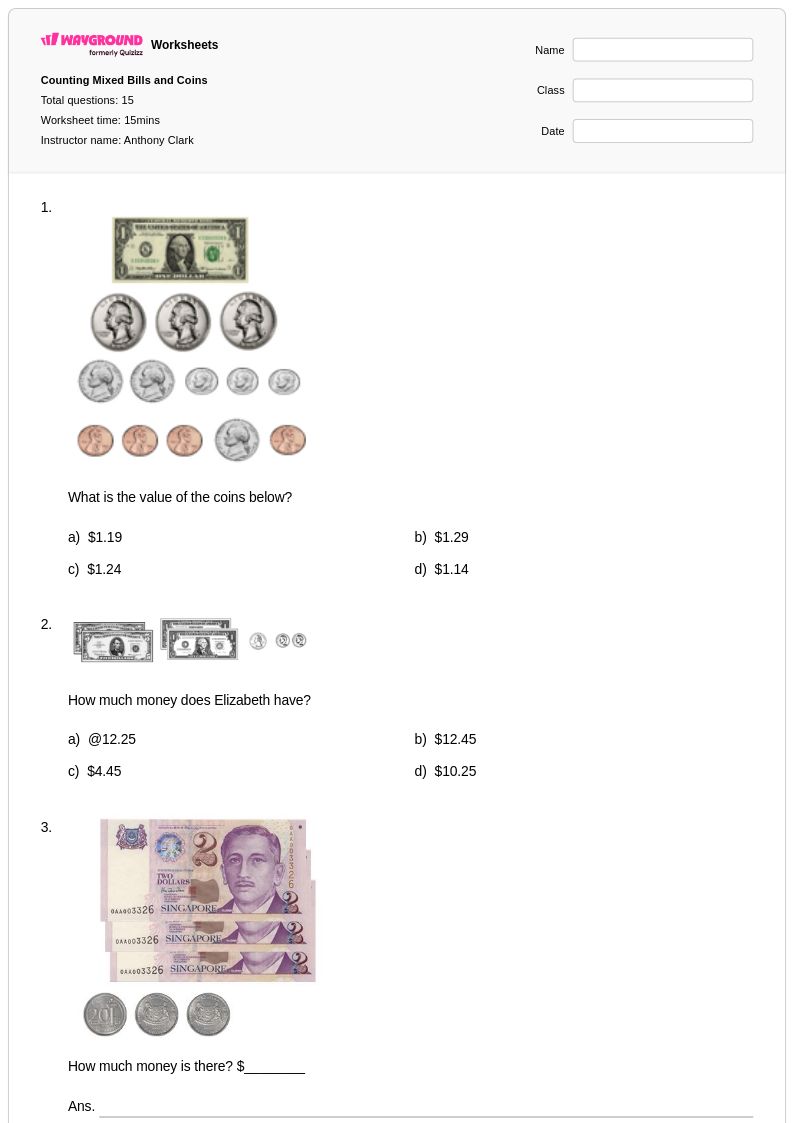
15 Q
3rd - Uni
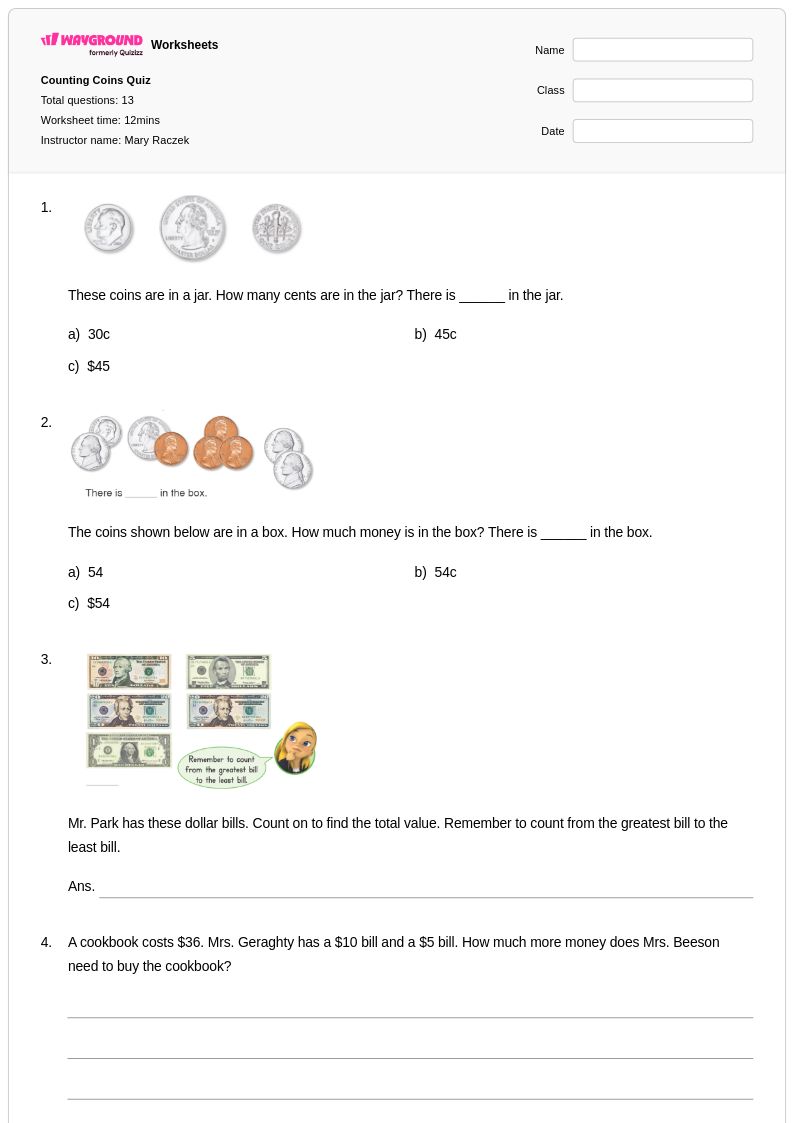
13 Q
2nd
10 Q
3rd
20 Q
3rd - Uni
10 Q
3rd
19 Q
2nd - Uni
25 Q
9th
10 Q
2nd
5 Q
3rd
18 Q
2nd
10 Q
3rd
17 Q
2nd - 3rd
70 Q
3rd
5 Q
KG
20 Q
2nd - 5th
10 Q
3rd
20 Q
2nd
20 Q
2nd
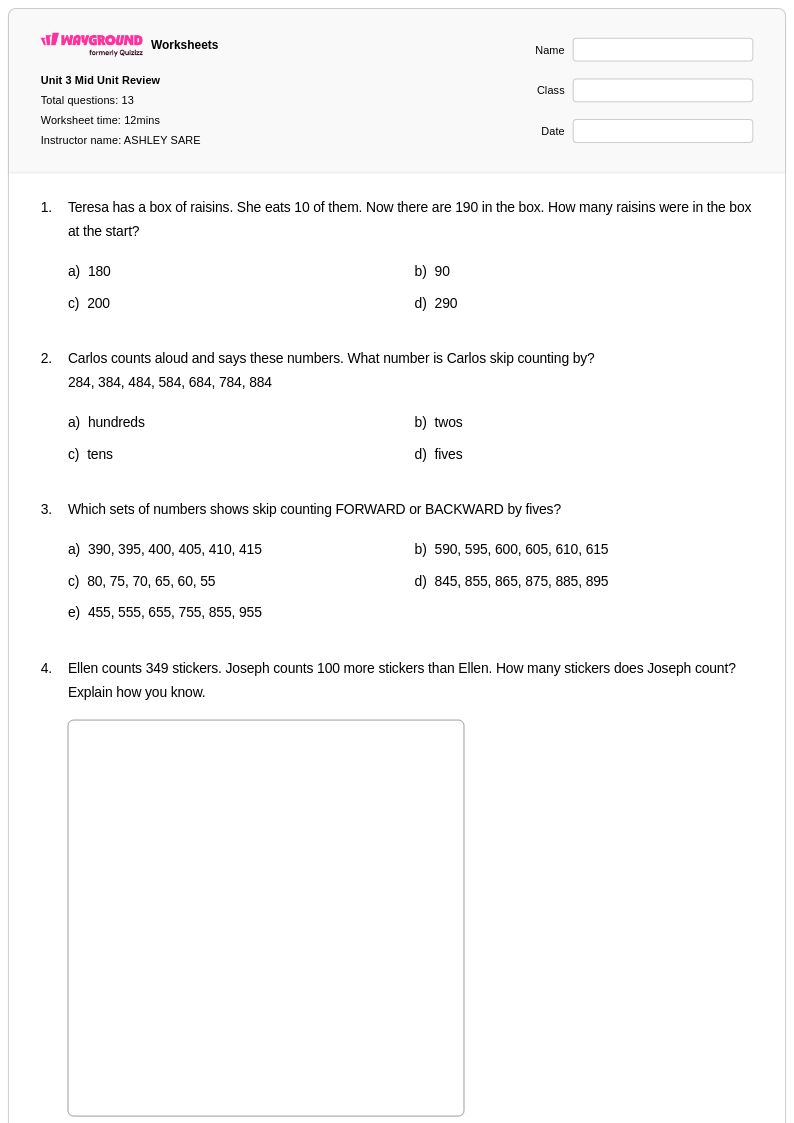
13 Q
2nd
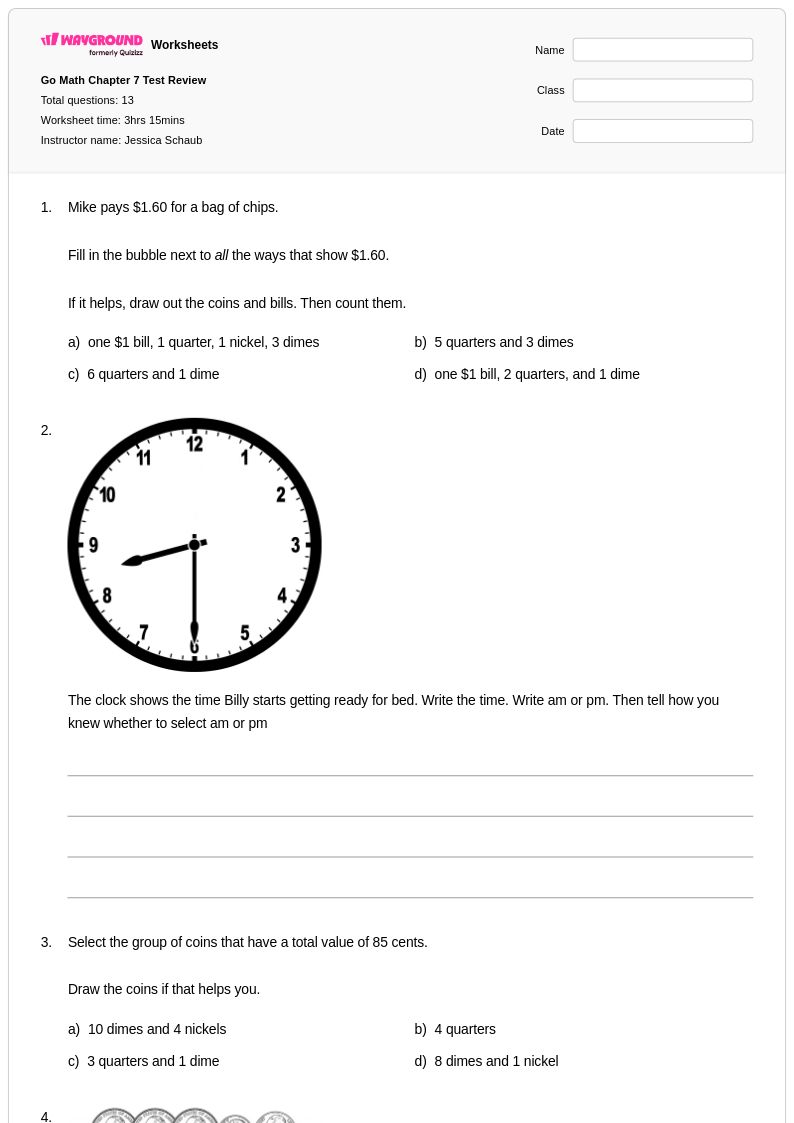
13 Q
2nd
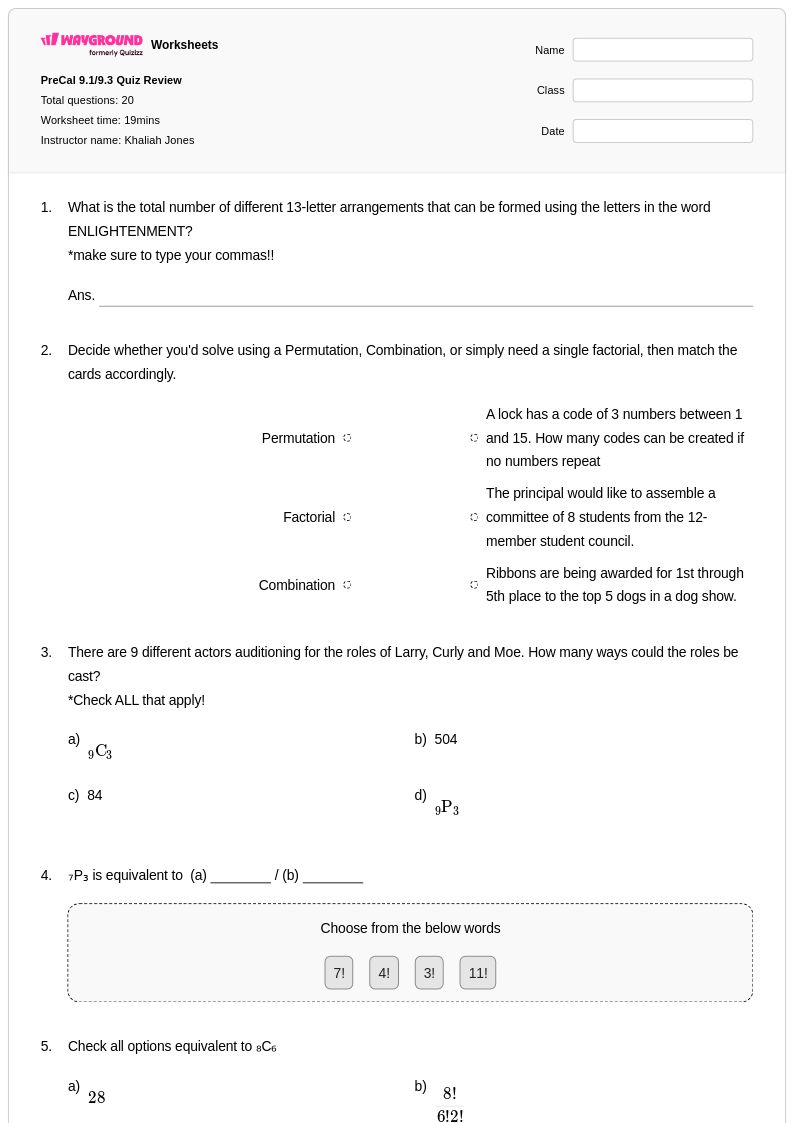
20 Q
12th
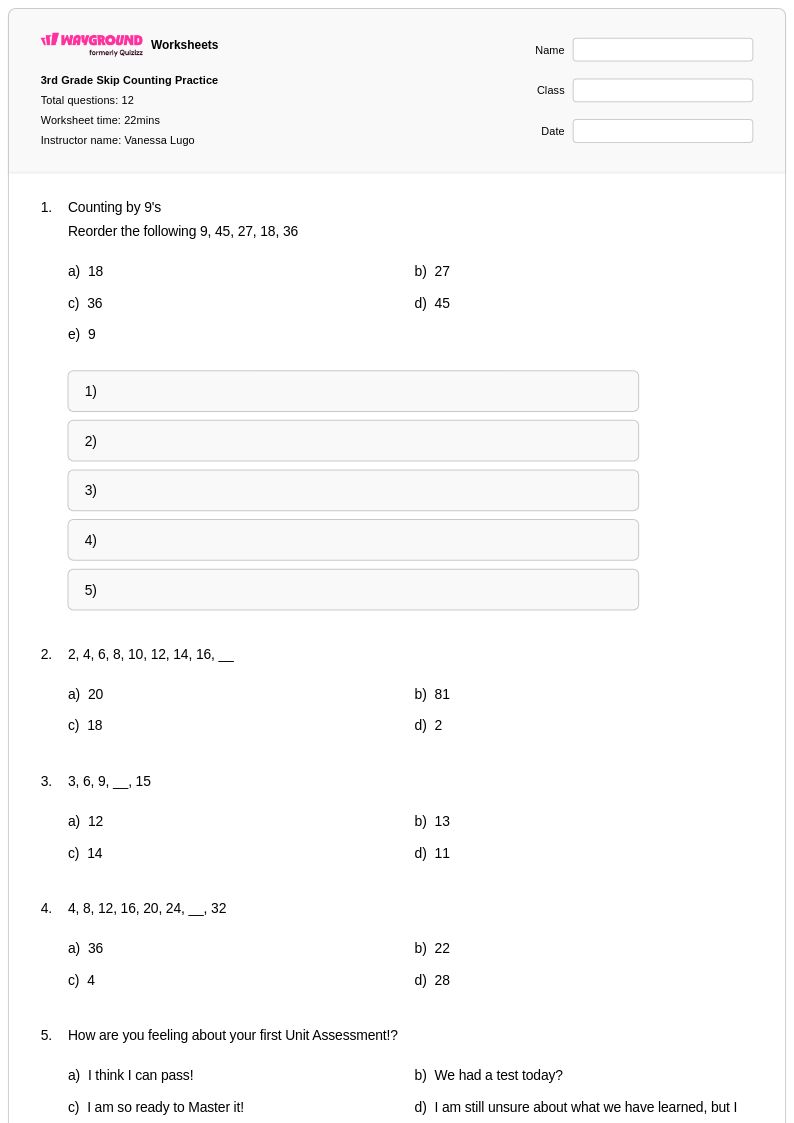
12 Q
3rd
Explore Counting Bills Worksheets by Grades
Explore Other Subject Worksheets for kindergarten
Explore printable Counting Bills worksheets for Kindergarten
Counting bills worksheets for kindergarten students available through Wayground (formerly Quizizz) provide essential foundational experiences with money recognition and basic mathematical concepts. These carefully designed printables introduce young learners to the visual characteristics and values of different paper currency, helping them develop crucial pre-math skills including number recognition, counting sequences, and value comparison. The comprehensive worksheet collection includes practice problems that guide students through identifying bills, arranging them by value, and performing simple counting exercises with answer keys provided for immediate feedback. These free educational resources strengthen fine motor skills through tracing activities while building mathematical vocabulary related to money, creating a solid foundation for future financial literacy and arithmetic development.
Wayground (formerly Quizizz) supports kindergarten educators with an extensive library of millions of teacher-created counting bills worksheets that streamline lesson planning and differentiated instruction. The platform's robust search and filtering capabilities allow teachers to quickly locate age-appropriate materials that align with early childhood mathematics standards, while customization tools enable modification of existing worksheets to meet individual student needs. Available in both printable pdf format and interactive digital versions, these resources facilitate flexible implementation across various learning environments, whether for whole-class instruction, small group practice, or individual remediation. Teachers can efficiently address diverse learning paces by selecting from worksheets with varying difficulty levels, ensuring that all students receive appropriate skill practice while building confidence in money recognition and early mathematical reasoning.
FAQs
How do I introduce counting bills to kindergarten students?
What counting bills activities are appropriate for kindergarten?
What mistakes do kindergarten students make when identifying bills?
How can I use a kindergarten counting bills worksheet from Wayground?
How does kindergarten counting bills practice connect to Common Core math?
What counting bills skills should kindergarten students learn?
How can I differentiate a counting bills worksheet for kindergarten learners?