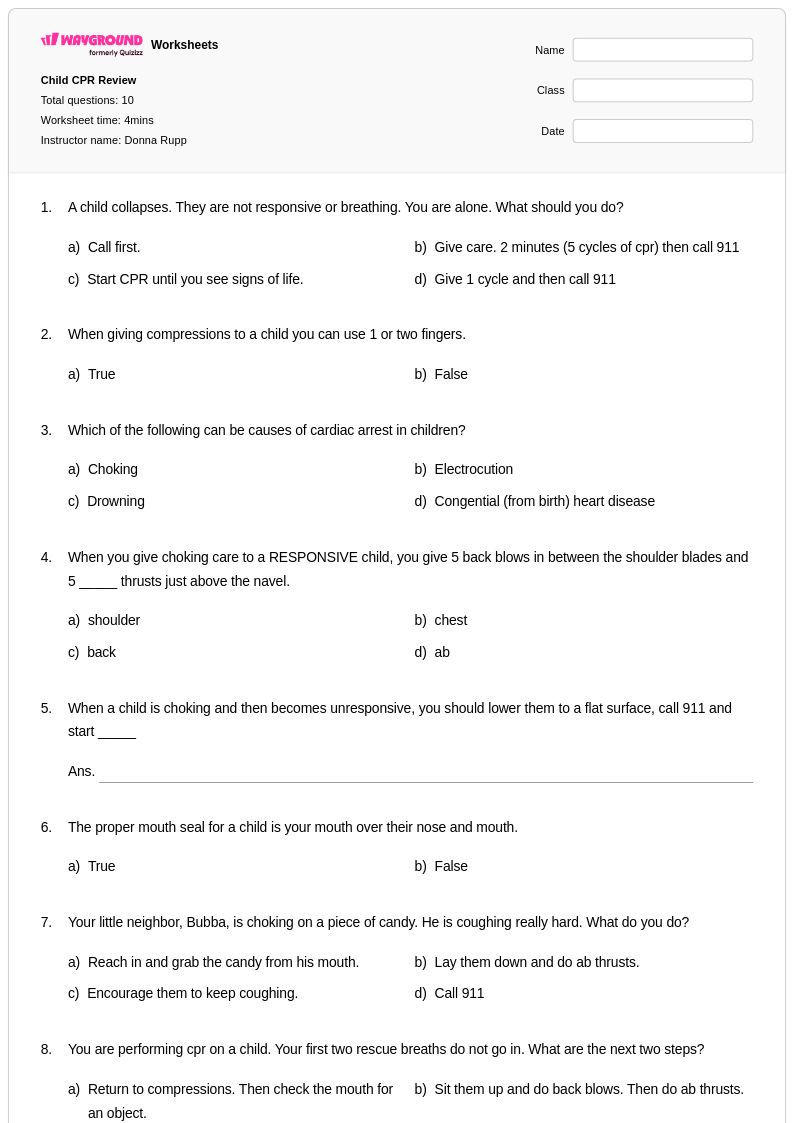
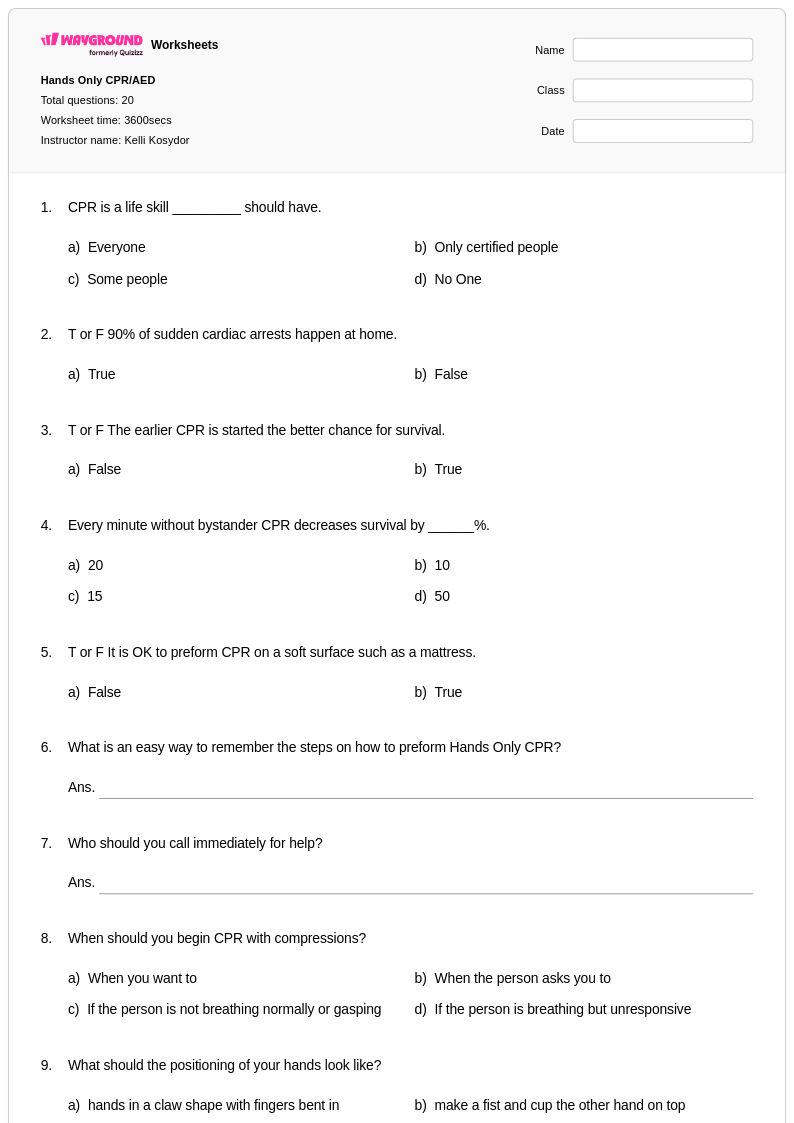
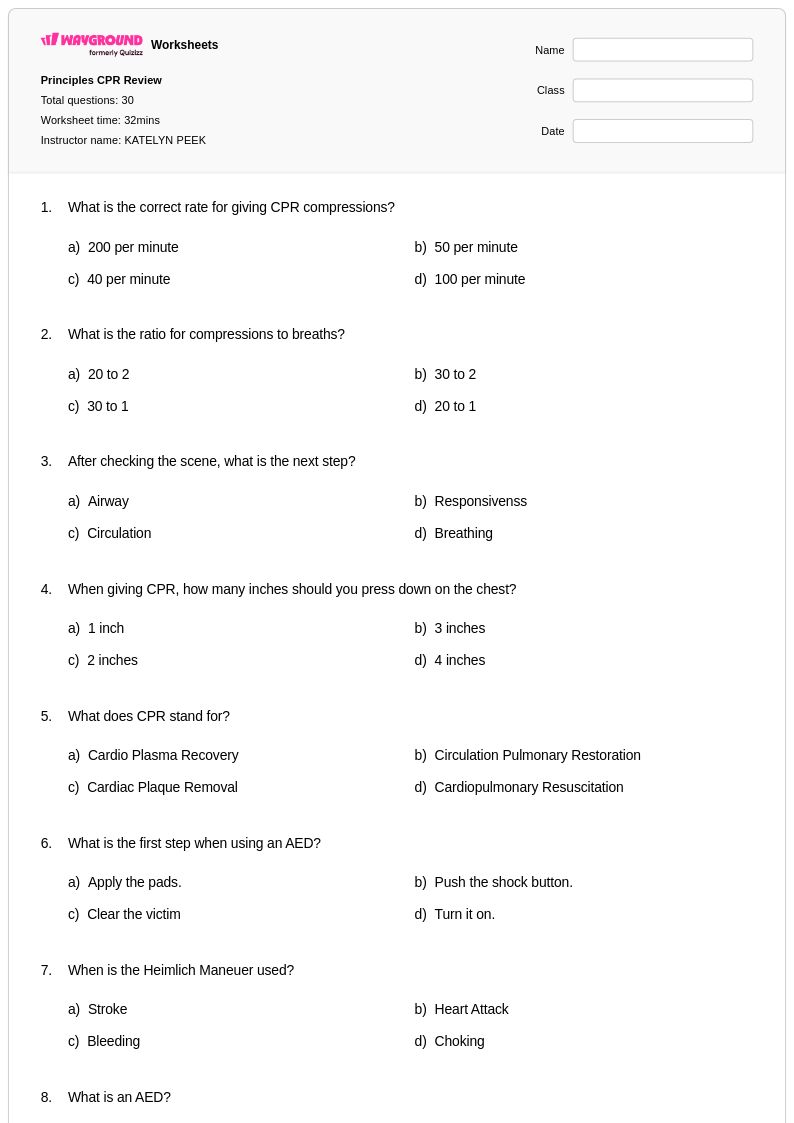
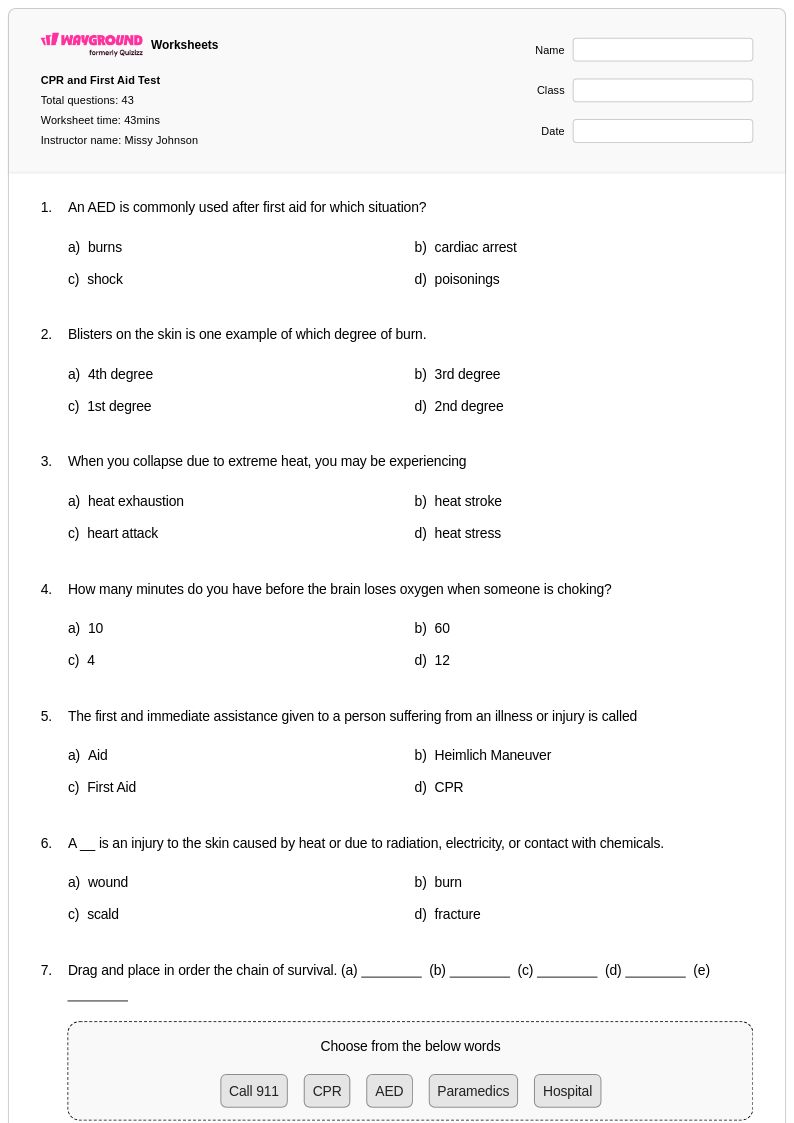
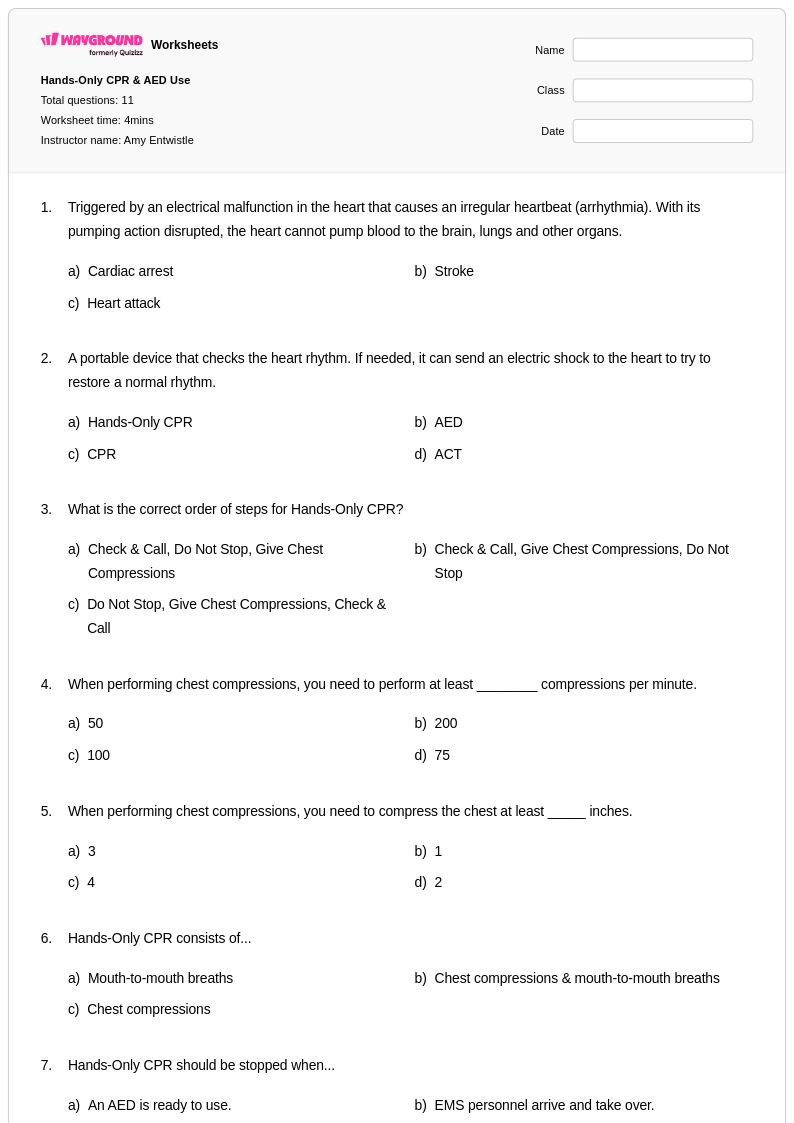
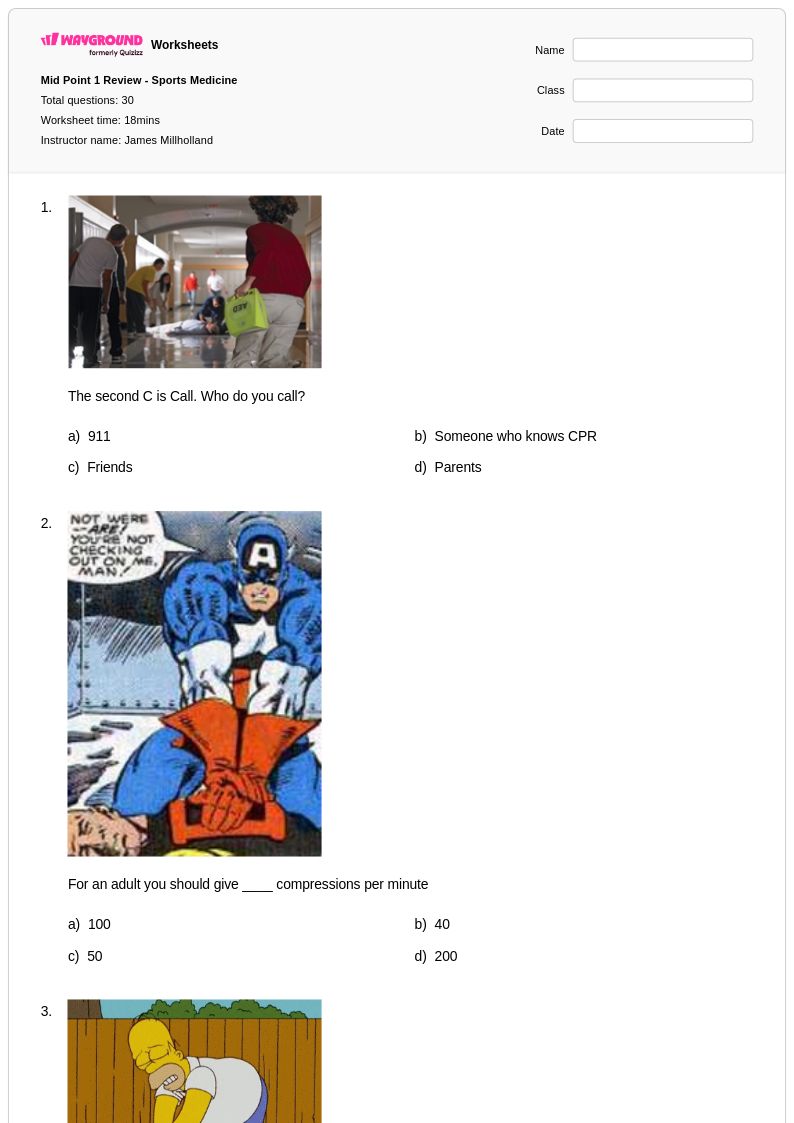
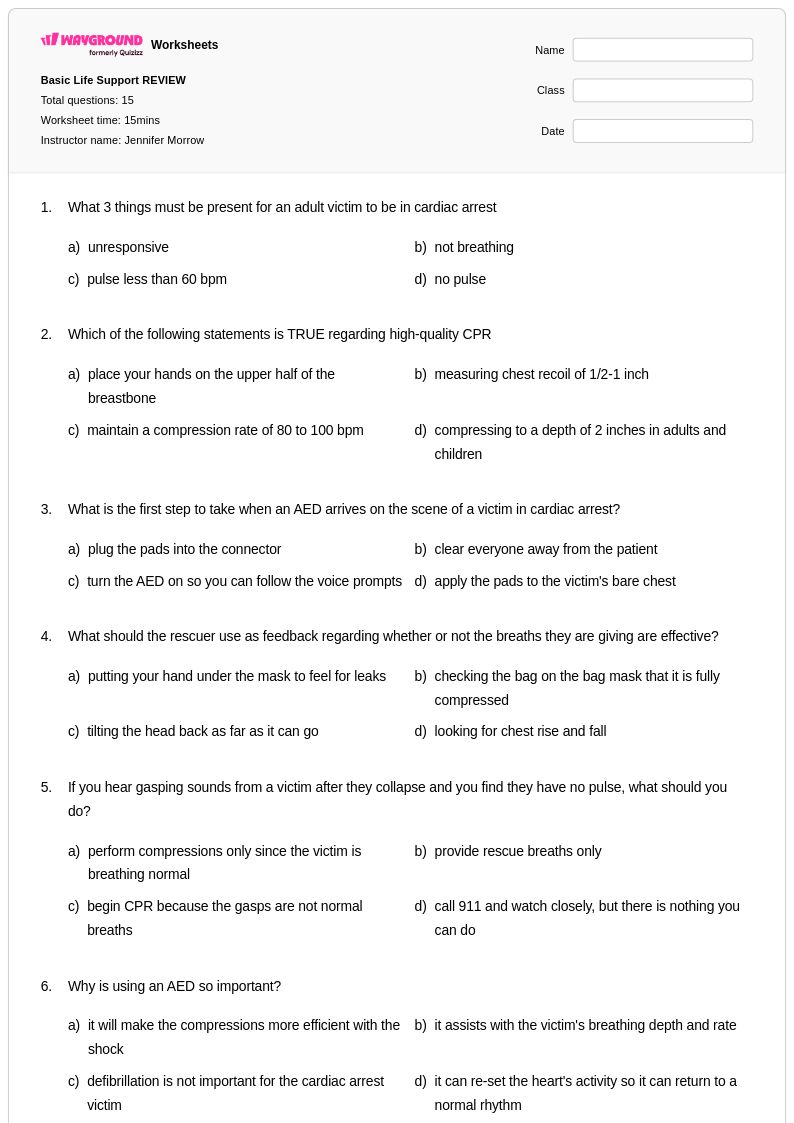
Free Class 12 CPR worksheets and printables help students master life-saving cardiopulmonary resuscitation techniques through hands-on practice problems, step-by-step procedures, and comprehensive answer keys for effective emergency response training.
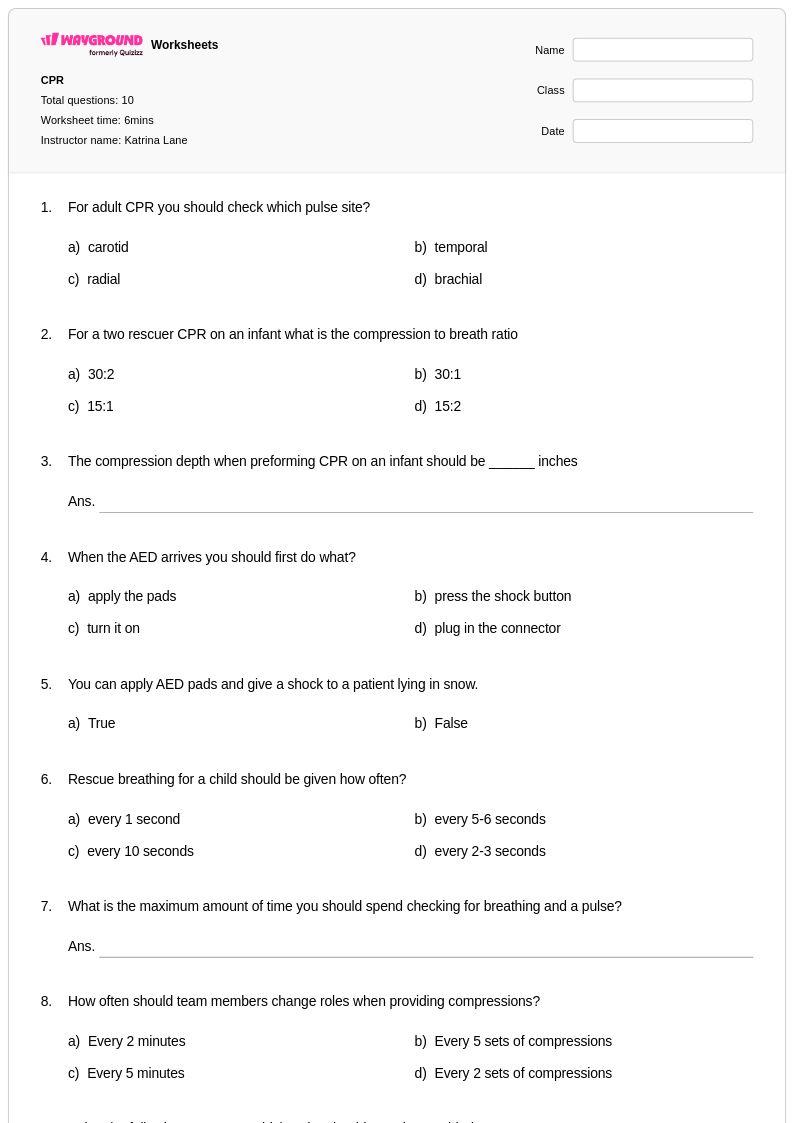
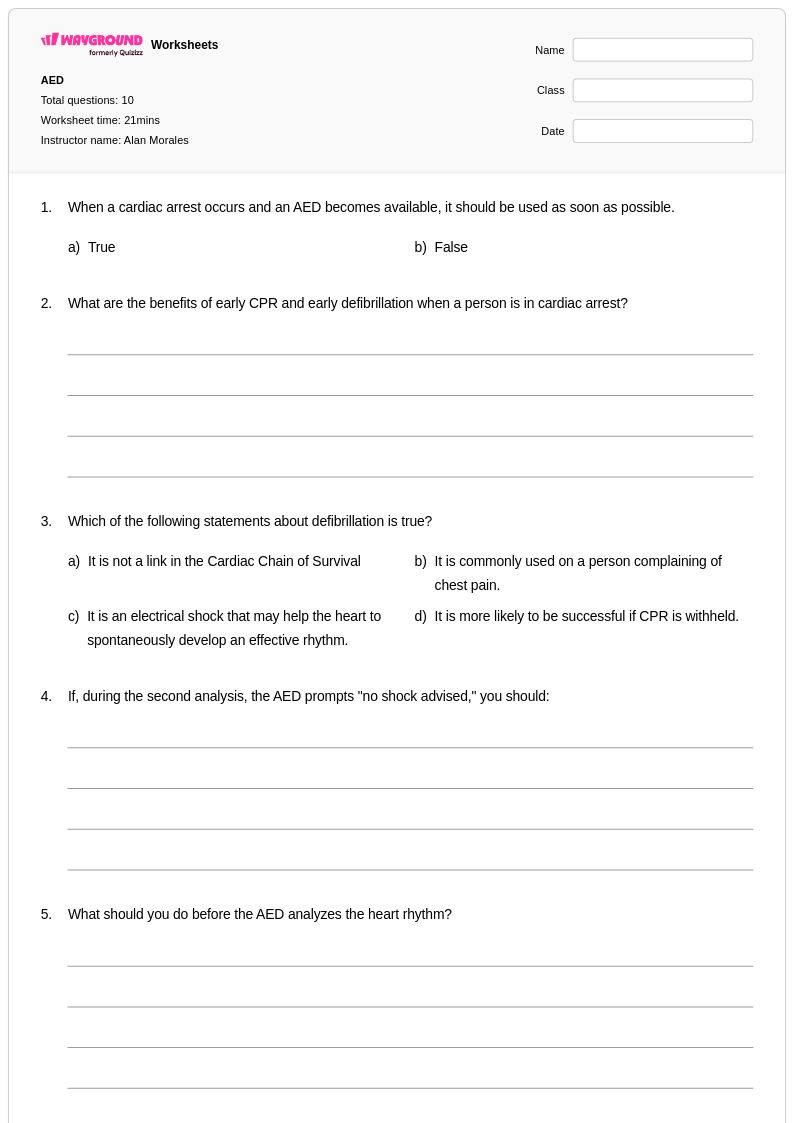
Class 12 CPR worksheets available through Wayground (formerly Quizizz) provide comprehensive educational resources that prepare high school seniors with essential life-saving cardiopulmonary resuscitation skills. These expertly designed worksheets strengthen students' understanding of proper CPR techniques, emergency response protocols, chest compression ratios, rescue breathing procedures, and automated external defibrillator (AED) usage through structured practice problems and scenario-based assessments. Each worksheet collection includes detailed answer keys that enable effective self-assessment and instructor evaluation, while the free printable format ensures accessibility for diverse classroom environments. The pdf resources cover critical competencies including recognizing cardiac emergencies, performing hands-only CPR, understanding Good Samaritan laws, and implementing proper body mechanics during emergency situations.
Wayground (formerly Quizizz) empowers physical education teachers with millions of teacher-created CPR and emergency response worksheets that streamline curriculum planning and enhance student engagement. The platform's robust search and filtering capabilities allow educators to quickly locate grade-appropriate materials aligned with health education standards, while differentiation tools enable customization for varying skill levels and learning needs. Teachers can access these comprehensive worksheet collections in both printable and digital formats, including downloadable pdf versions, making them ideal for traditional classroom instruction, remote learning environments, and hybrid educational models. These flexible resources support targeted remediation for students struggling with CPR concepts, provide enrichment opportunities for advanced learners, and facilitate consistent skill practice through structured activities that reinforce proper emergency response techniques and build confidence in life-saving procedures.
FAQs
How do I teach CPR techniques effectively in a physical education class?
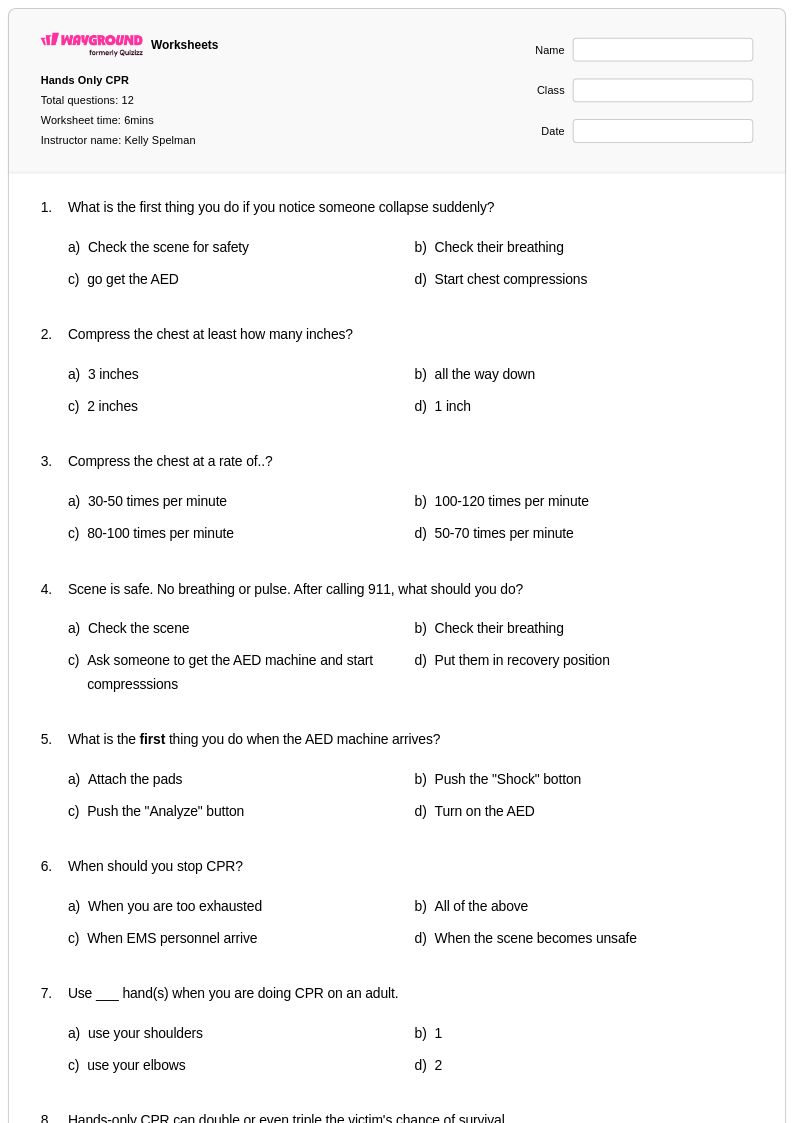
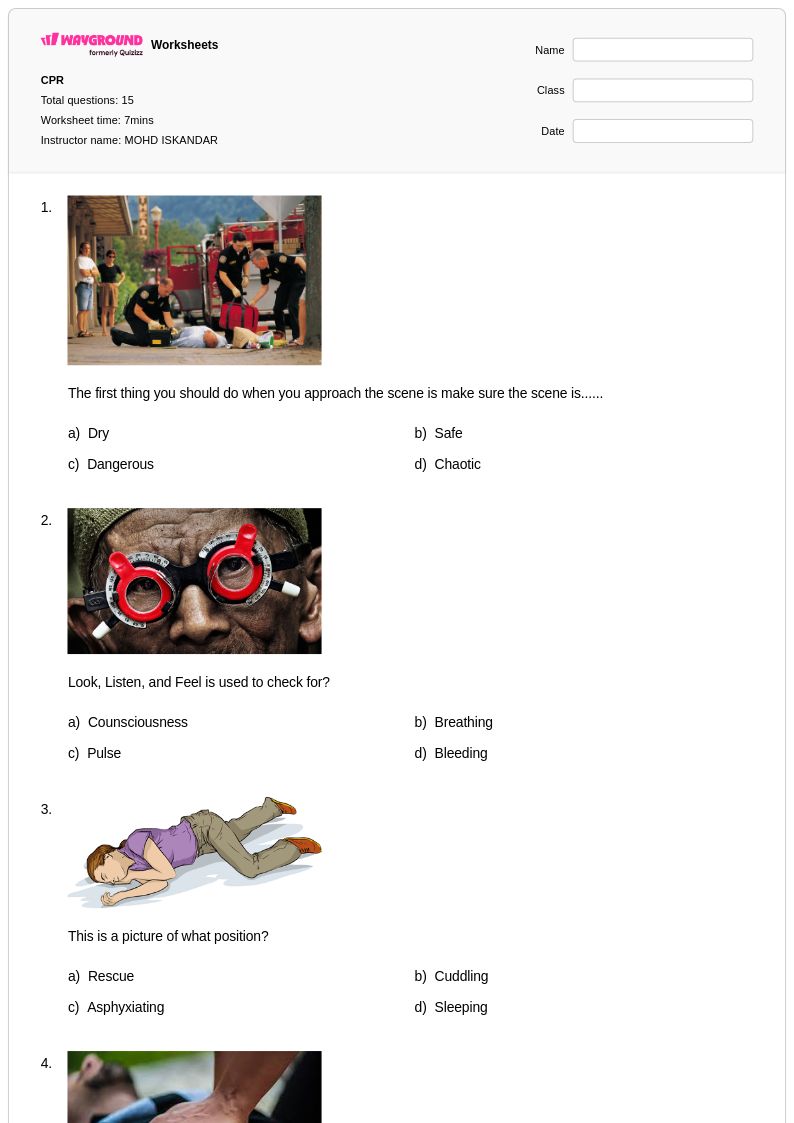
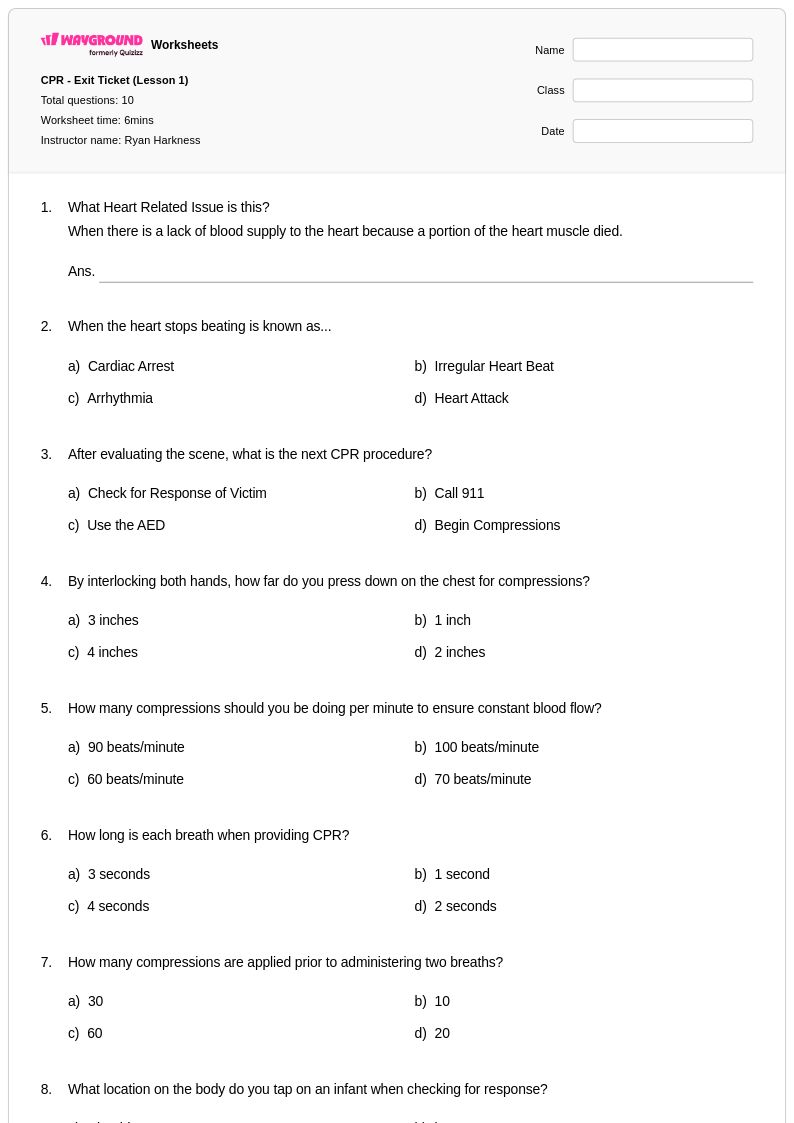
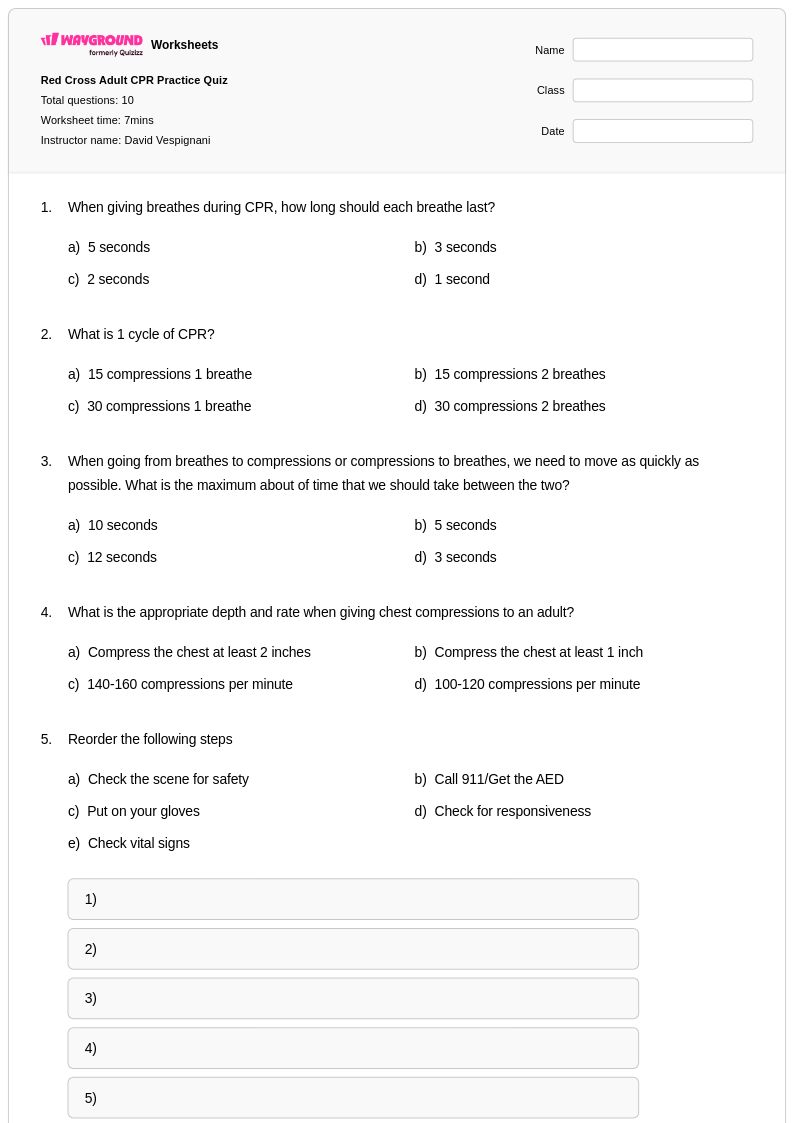
Effective CPR instruction combines direct demonstration with structured student practice. Begin by breaking the sequence into discrete steps: victim assessment, calling for help, chest compressions, and rescue breathing. Use scenario-based exercises that simulate real emergencies so students can rehearse decision-making under realistic conditions, not just memorize steps in isolation. Repeated short practice sessions are more effective than a single extended lesson for building muscle memory and confidence.
What topics should a CPR worksheet cover?
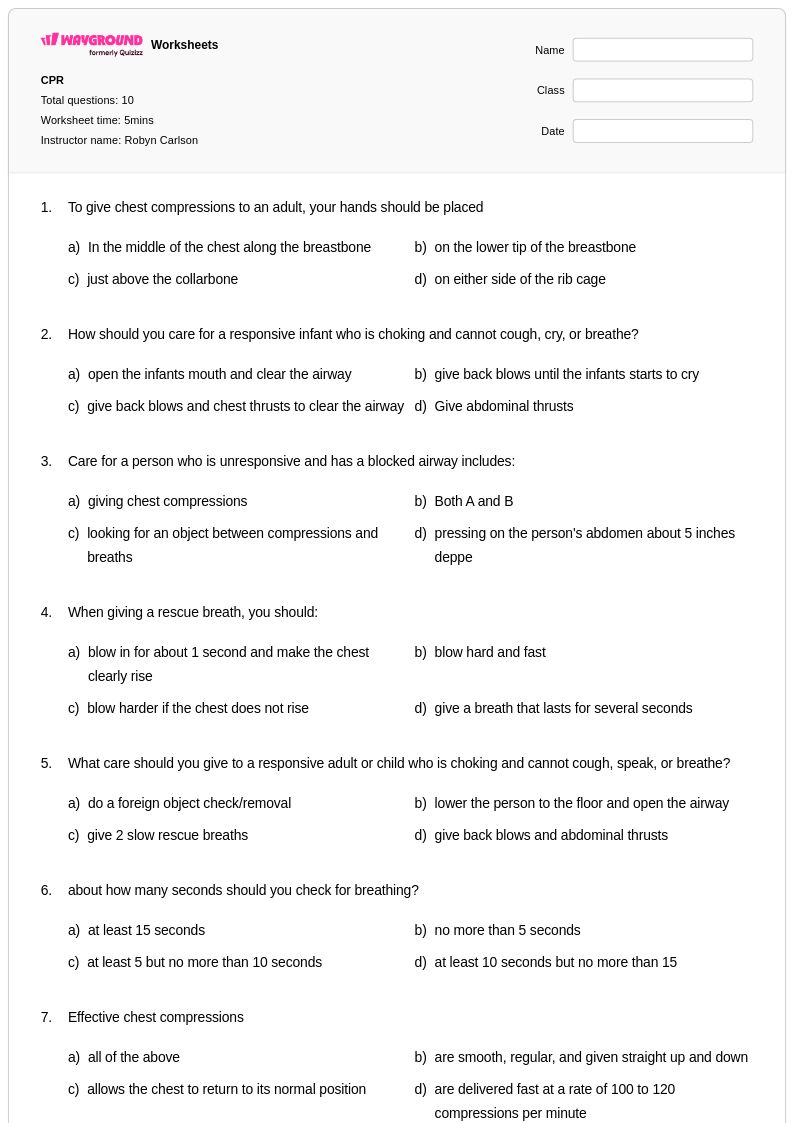
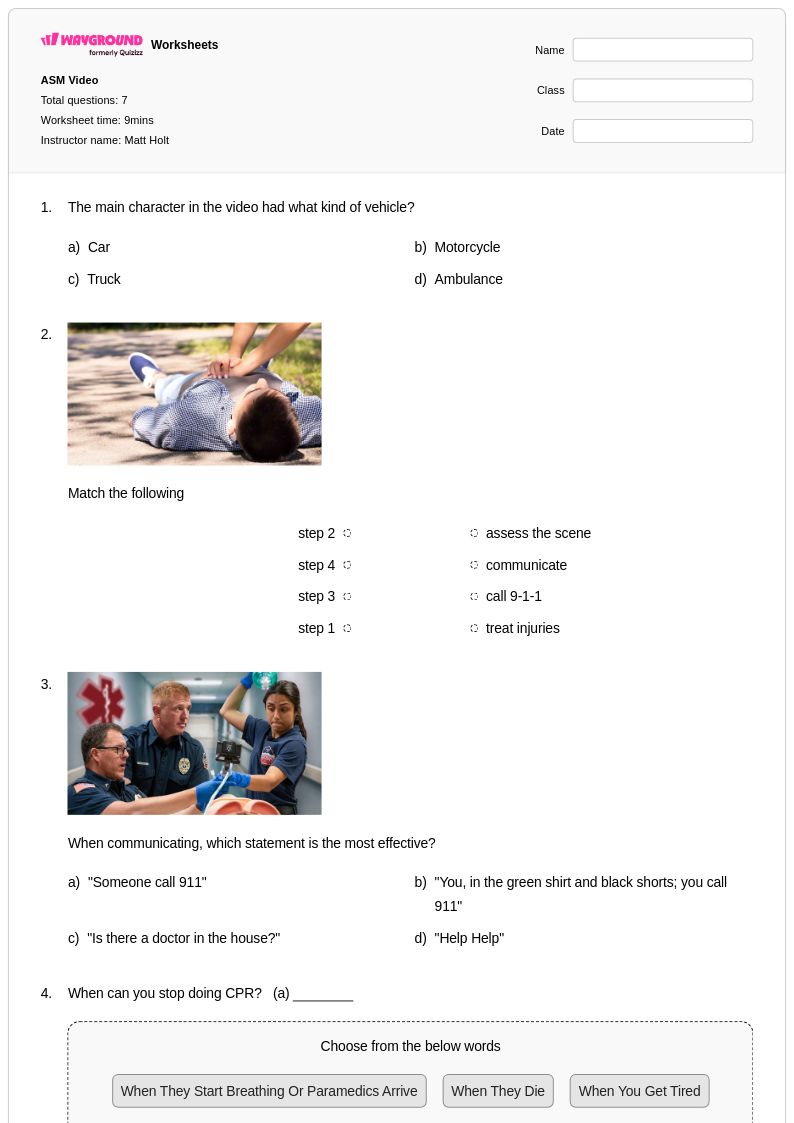
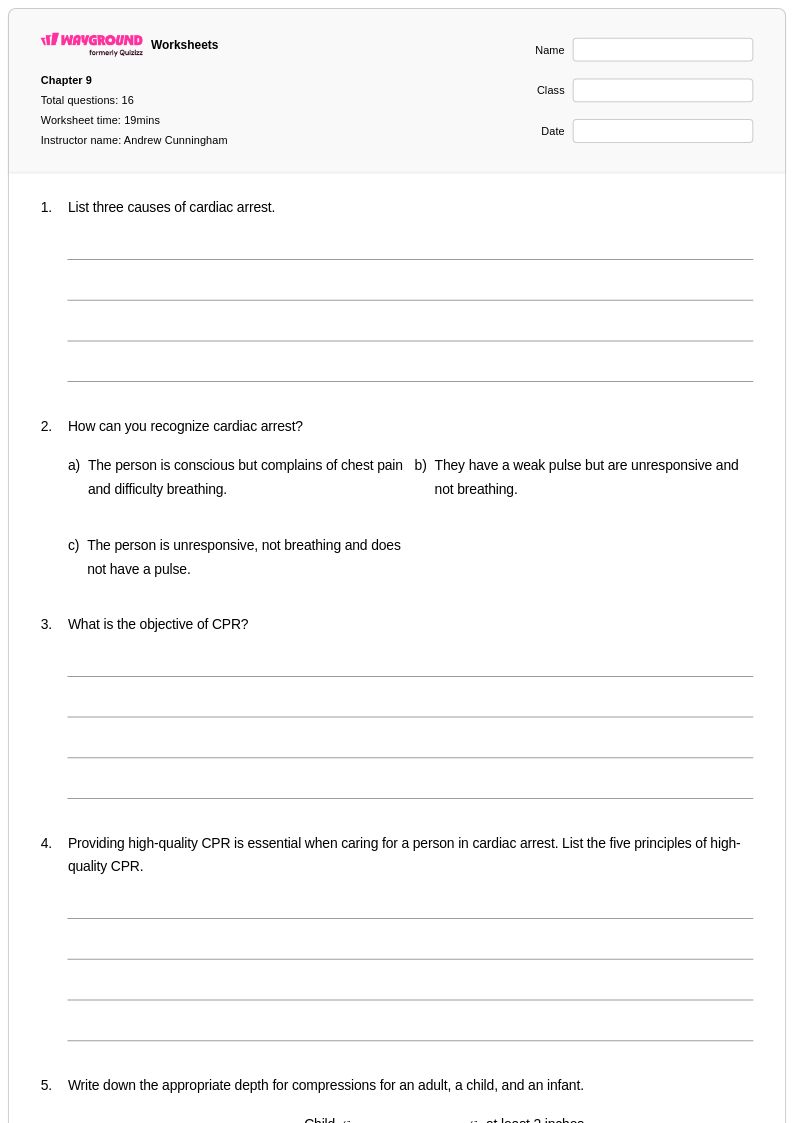
A comprehensive CPR worksheet should cover chest compression technique (correct hand placement, depth of at least 2 inches, and a rate of 100–120 compressions per minute), rescue breathing procedures, AED usage steps, and victim assessment protocols. Scenario-based questions that ask students to choose the correct response in a given emergency situation help reinforce proper sequencing and real-world decision-making beyond rote memorization.
What common mistakes do students make when learning CPR?
The most frequent errors include incorrect compression depth (too shallow), improper hand placement on the chest, failing to allow full chest recoil between compressions, and forgetting to check scene safety before approaching a victim. Students also commonly confuse the compression-to-breath ratio or skip the step of calling emergency services before beginning compressions. Worksheets that present these as scenario-based error-identification exercises are particularly effective for correcting these misconceptions before hands-on practice.
How can I use CPR worksheets to prepare students for certification?
CPR worksheets support certification preparation by reinforcing the procedural knowledge students need before and after hands-on skill assessments. Use step-by-step technique guides to introduce sequences, then follow with scenario-based exercises that require students to apply the correct protocol under varied conditions. Answer keys allow teachers to quickly identify gaps in understanding, such as incorrect compression rates or missed AED steps, so targeted remediation can happen before the certification assessment.
How do Wayground's CPR worksheets work, and what formats are they available in?
Wayground's CPR worksheets are available as printable PDFs for traditional hands-on classroom use and in digital formats for technology-integrated learning environments, including the option to host them as a quiz directly on Wayground. Each worksheet includes a complete answer key, making it straightforward for teachers to assess student understanding of compression sequences, rescue breathing steps, and AED procedures. The platform also allows teachers to customize existing worksheets or combine resources to target specific CPR competencies.
How can I differentiate CPR instruction for students with different learning needs?
Differentiation in CPR instruction can include simplifying scenario complexity for students still building foundational knowledge, while giving advanced students more ambiguous emergency situations that require higher-order decision-making. On Wayground, teachers can apply individual accommodations such as read aloud support for students who need audio delivery of questions, reduced answer choices to lower cognitive load for students who struggle with multiple-option scenarios, and extended time settings for students who need additional processing time. These accommodations can be assigned per student and reused across sessions without other students being notified.