
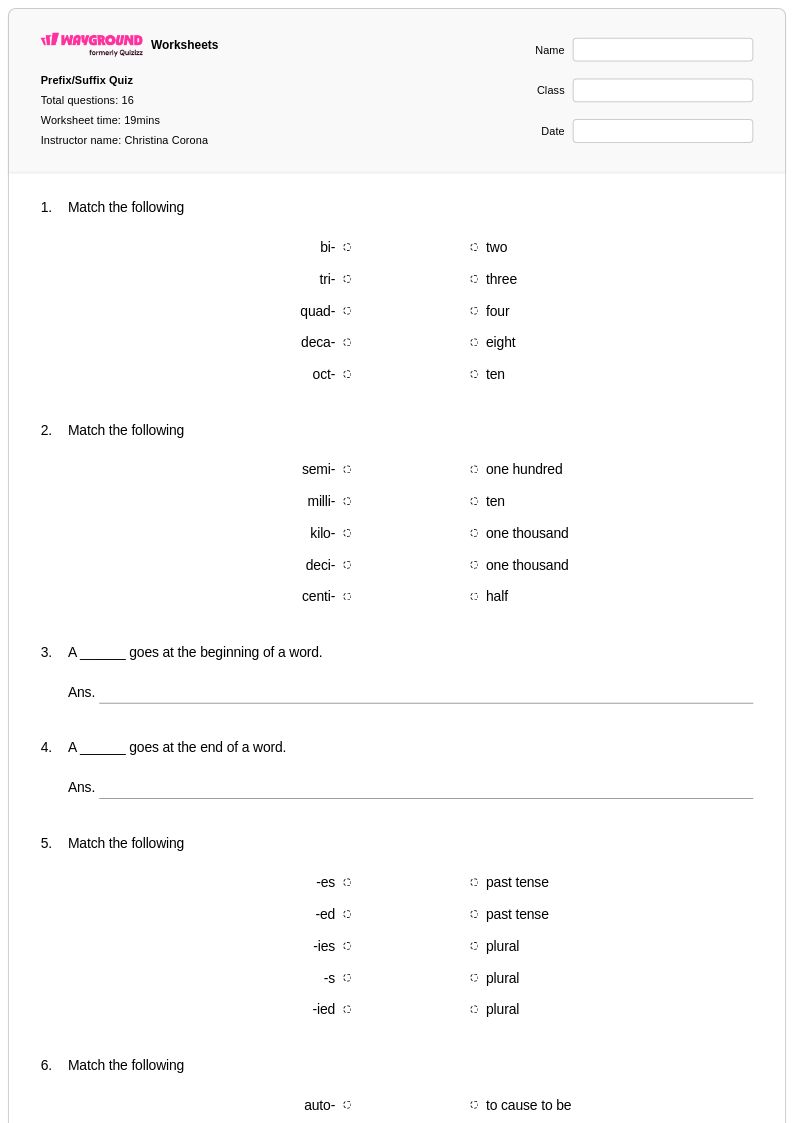
16 Q
7th
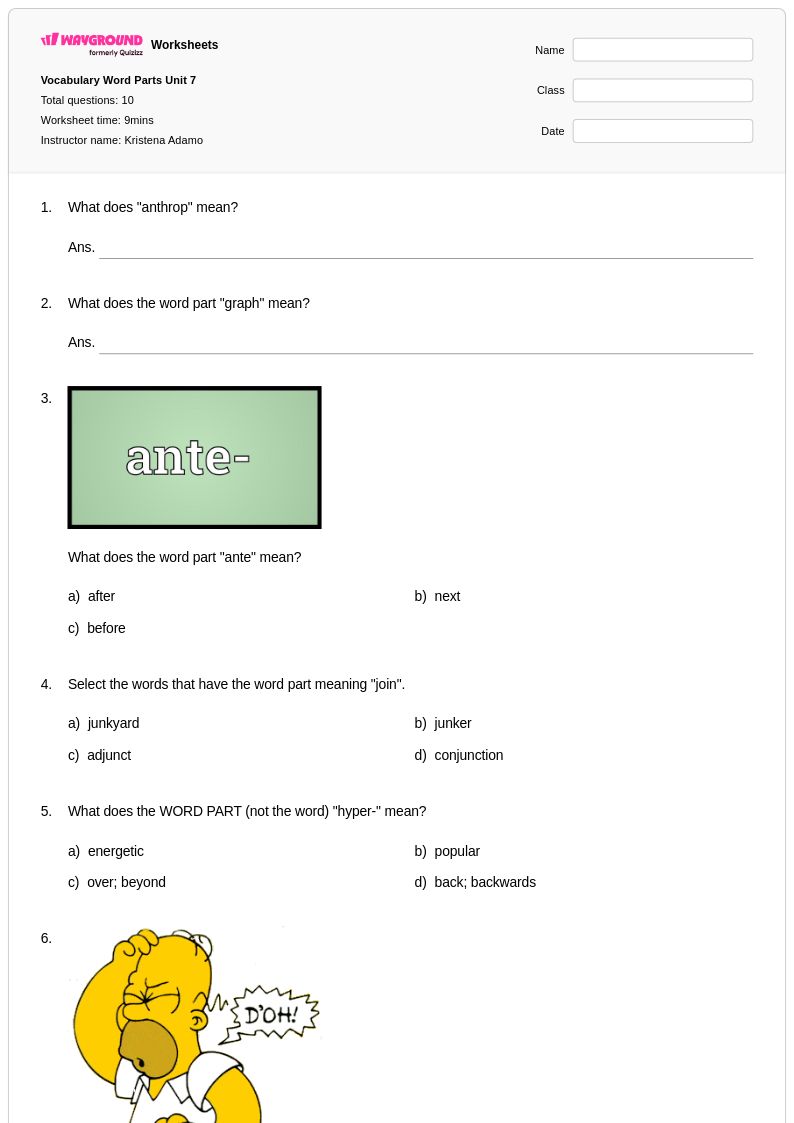
10 Q
6th - 8th
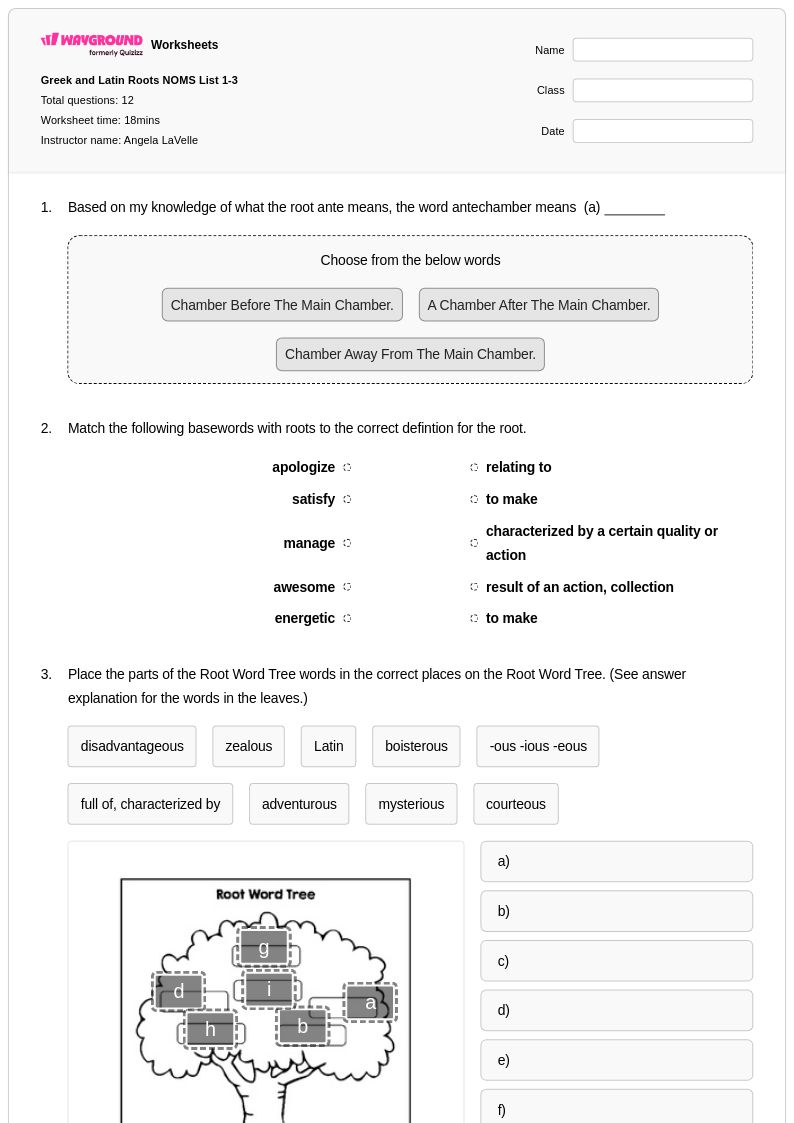
12 Q
6th - 8th
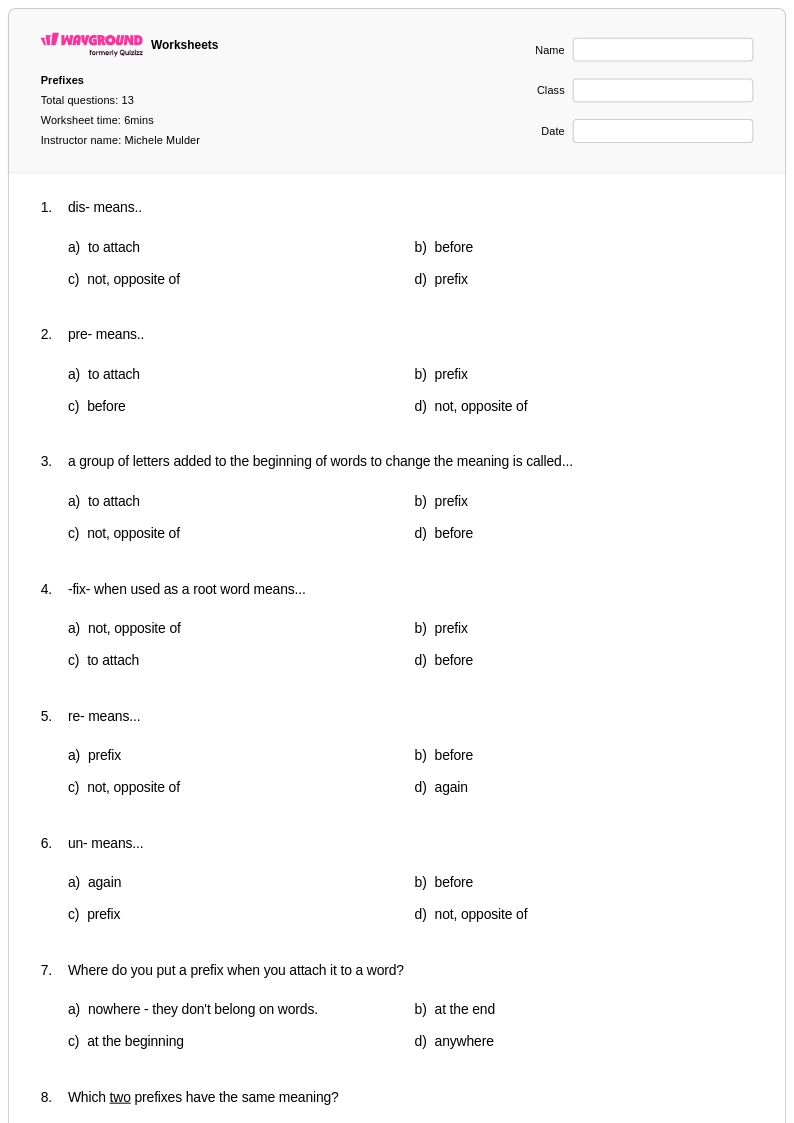
13 Q
5th - 8th
10 Q
7th
13 Q
7th

20 Q
6th - 8th
10 Q
7th
10 Q
6th - 8th
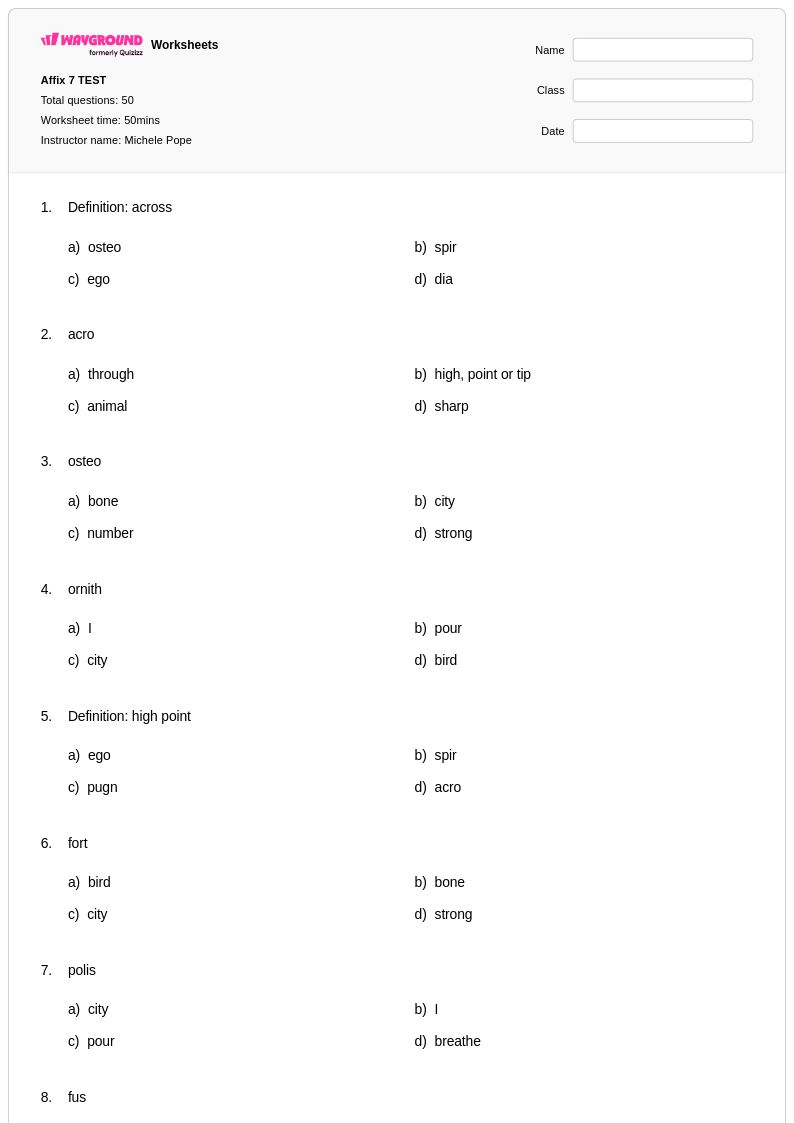
50 Q
6th - 8th
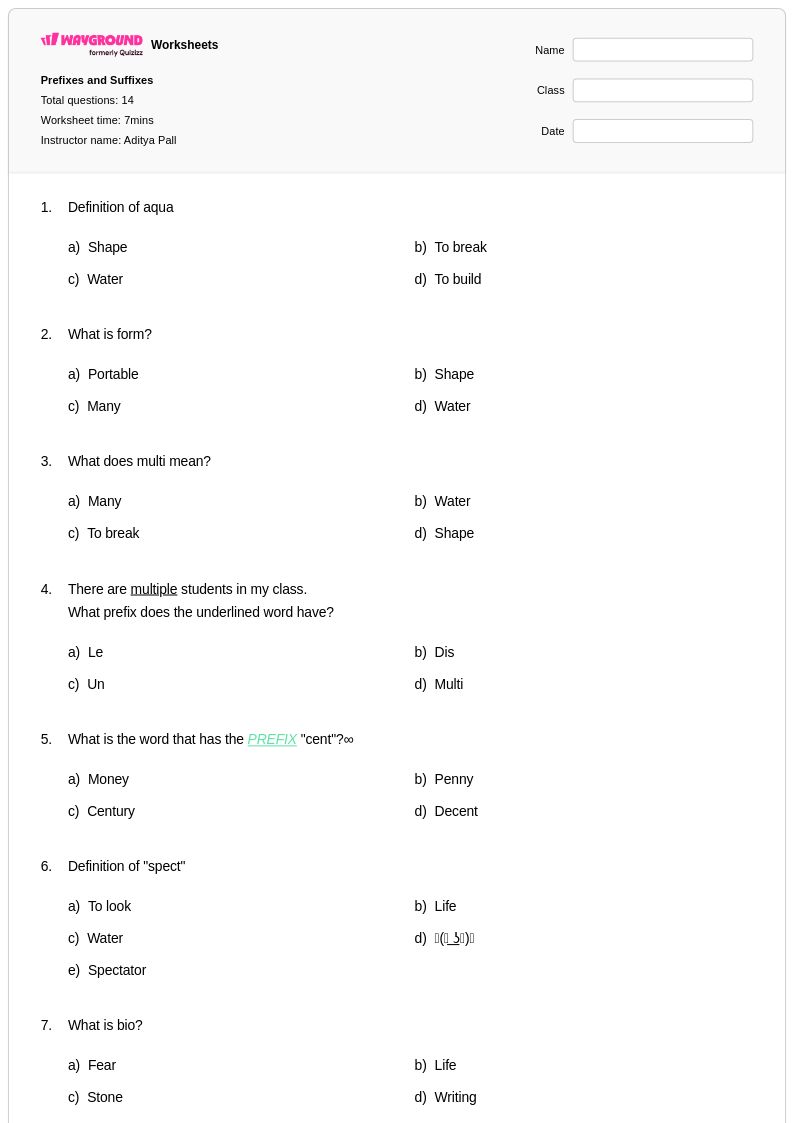
14 Q
6th - 7th
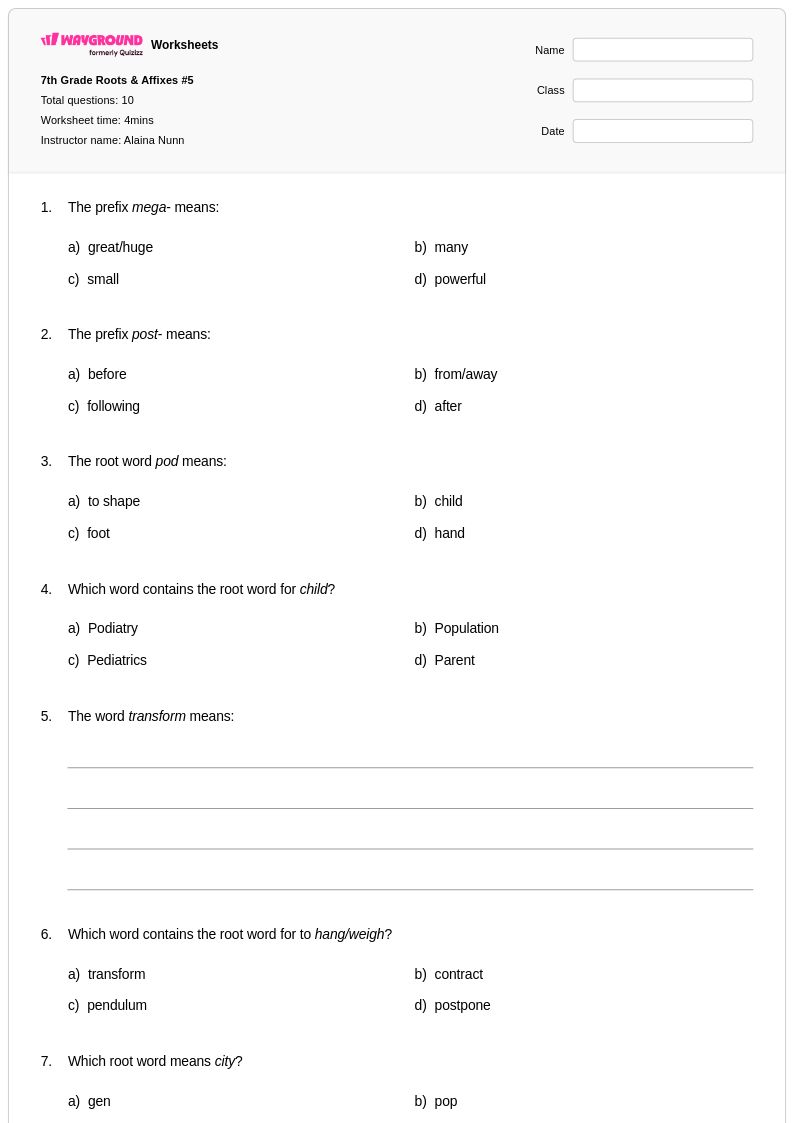
10 Q
6th - 8th
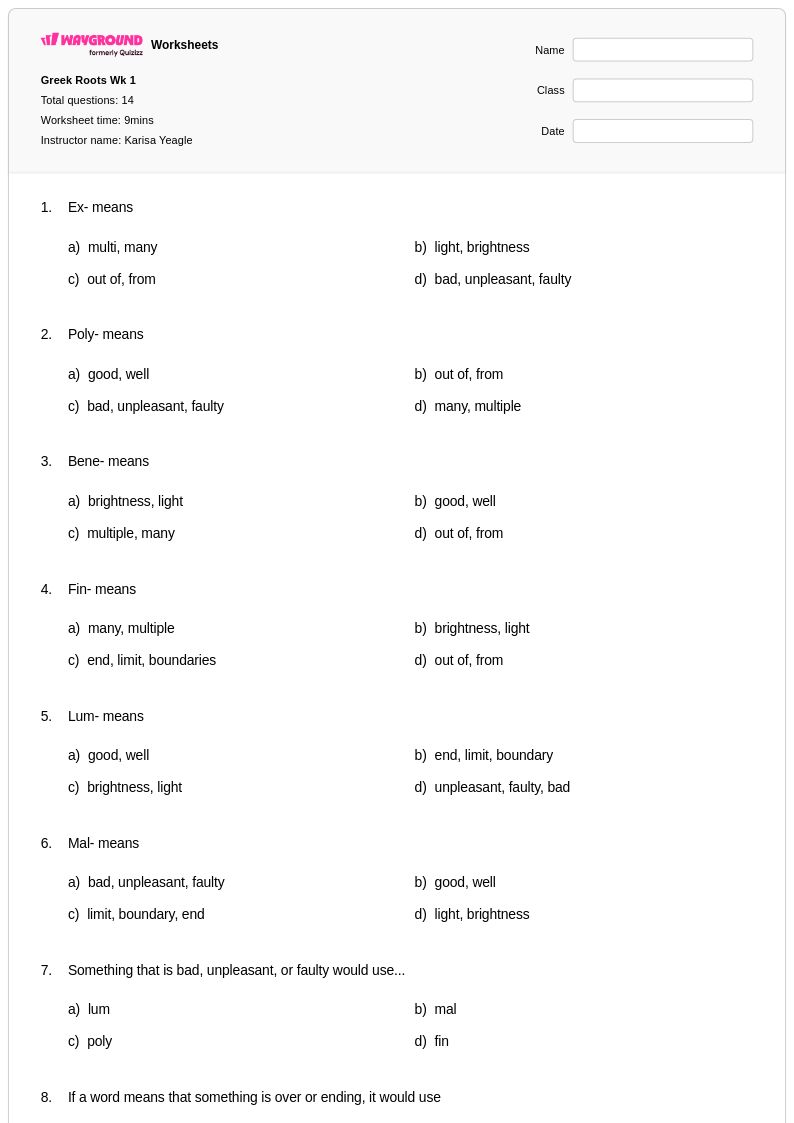
14 Q
7th
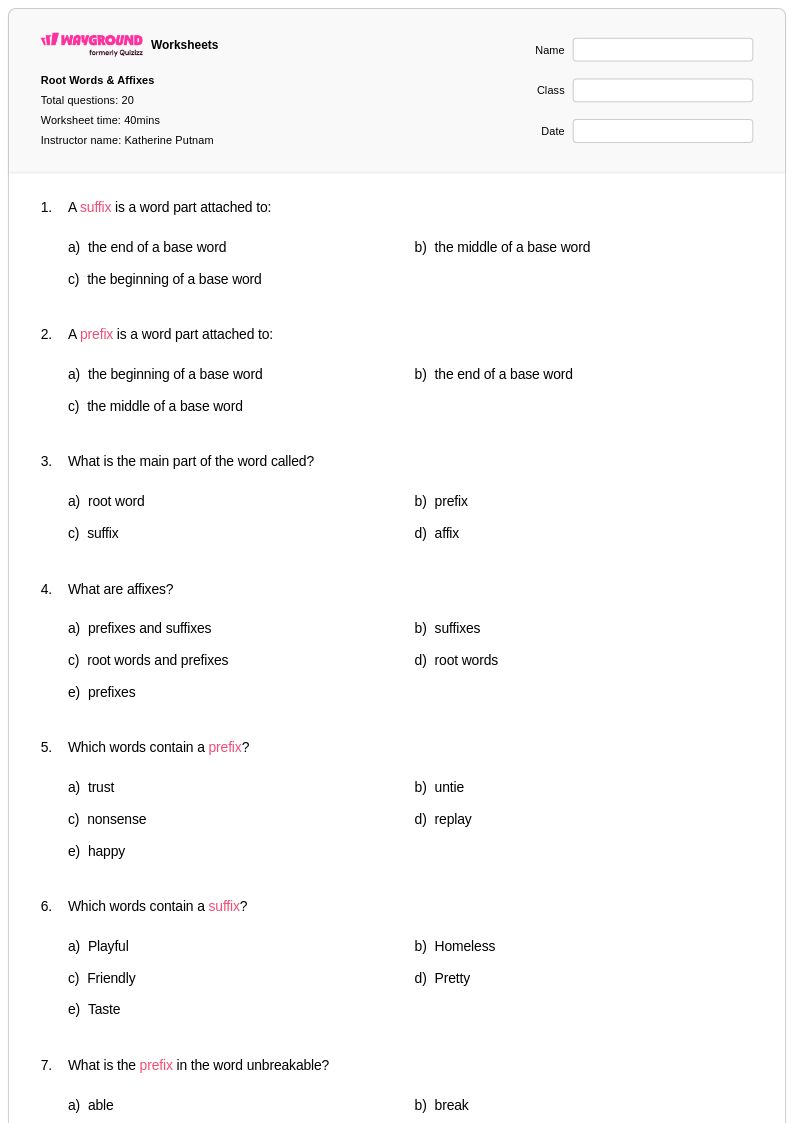
20 Q
4th - 7th
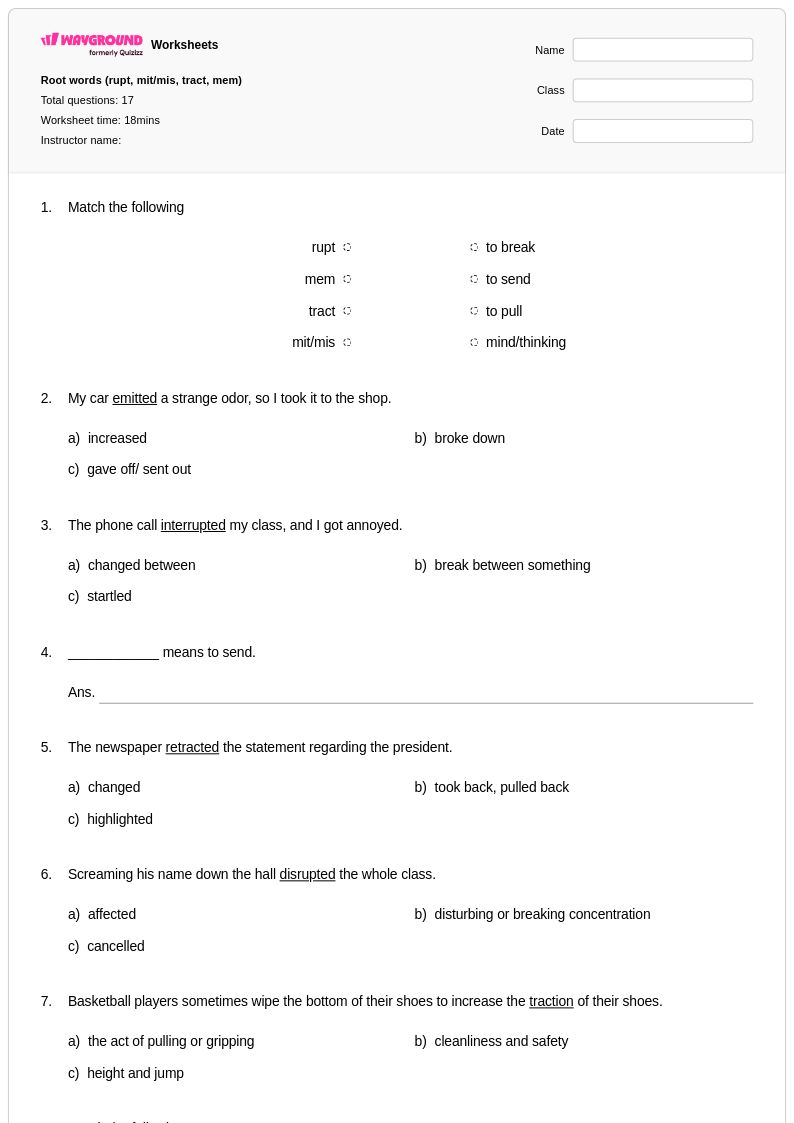
17 Q
6th - 8th
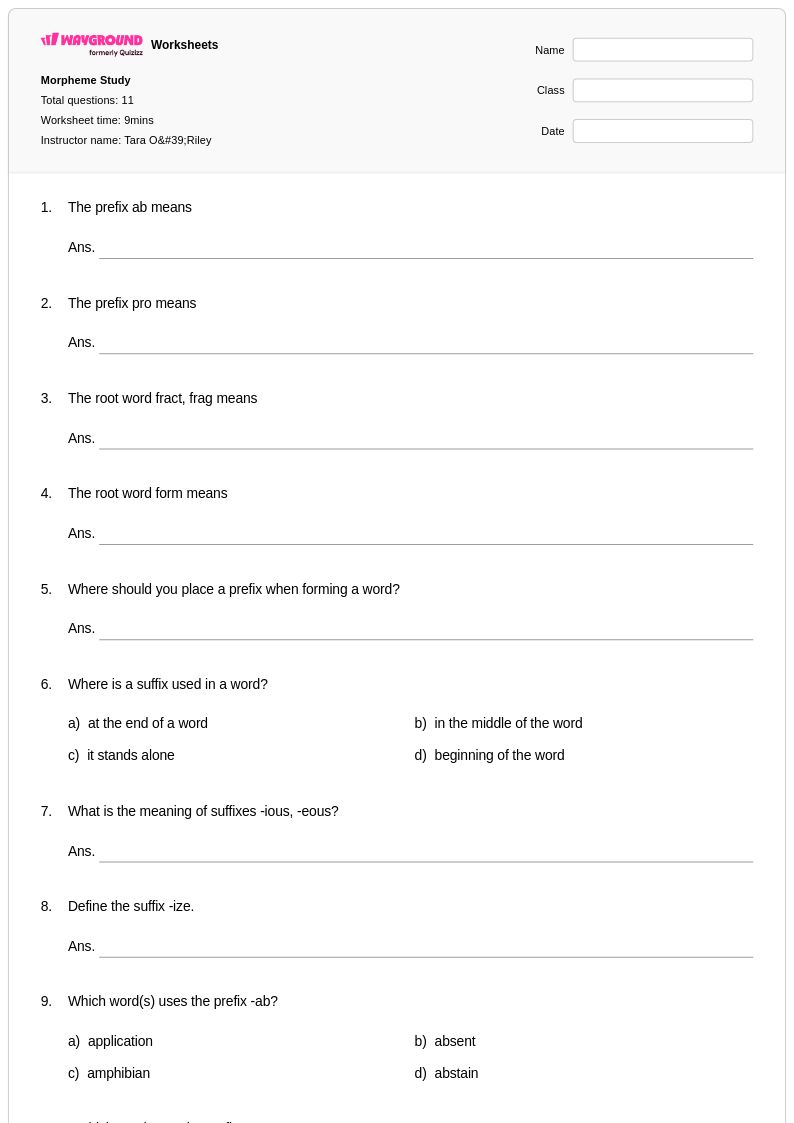
11 Q
7th
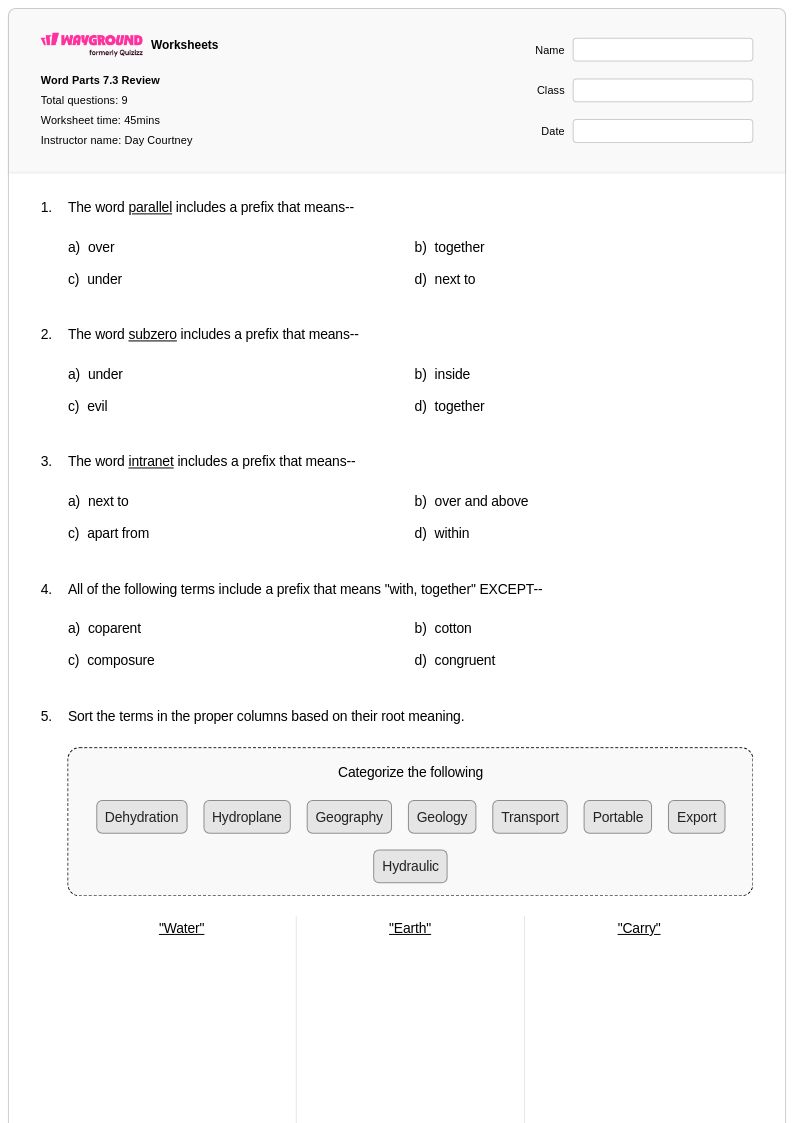
9 Q
7th
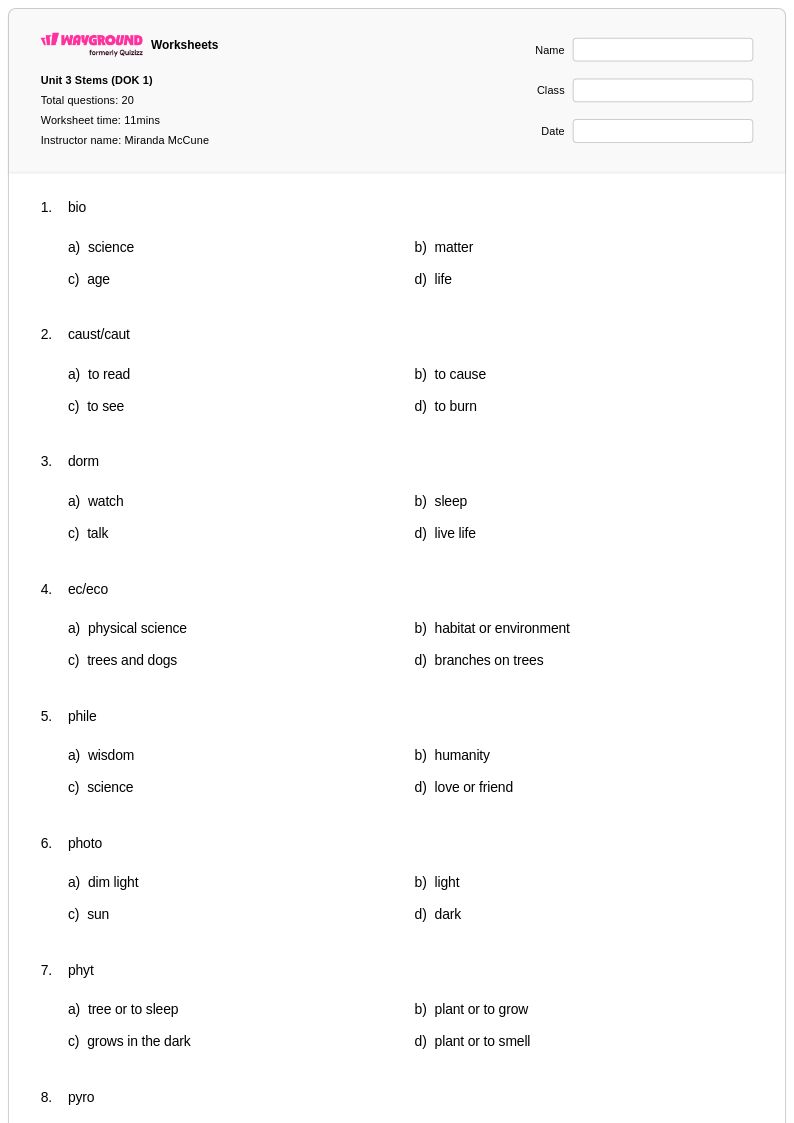
20 Q
7th
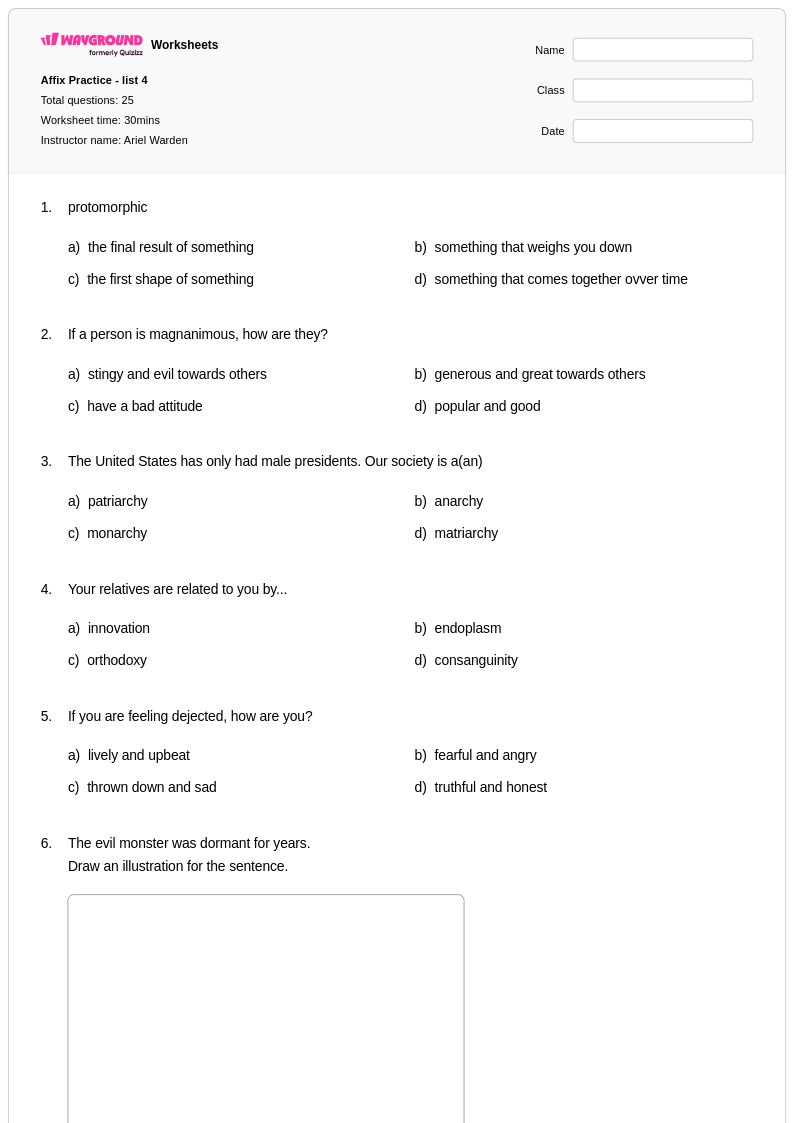
25 Q
7th
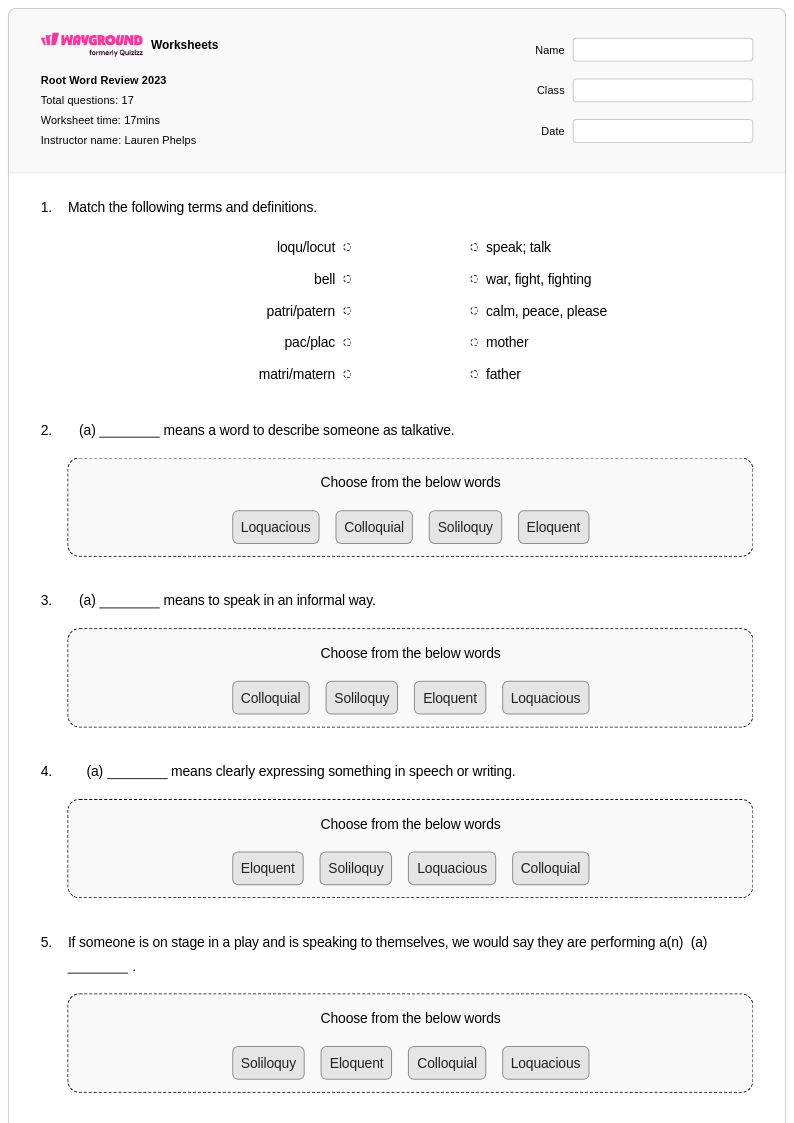
17 Q
6th - 8th
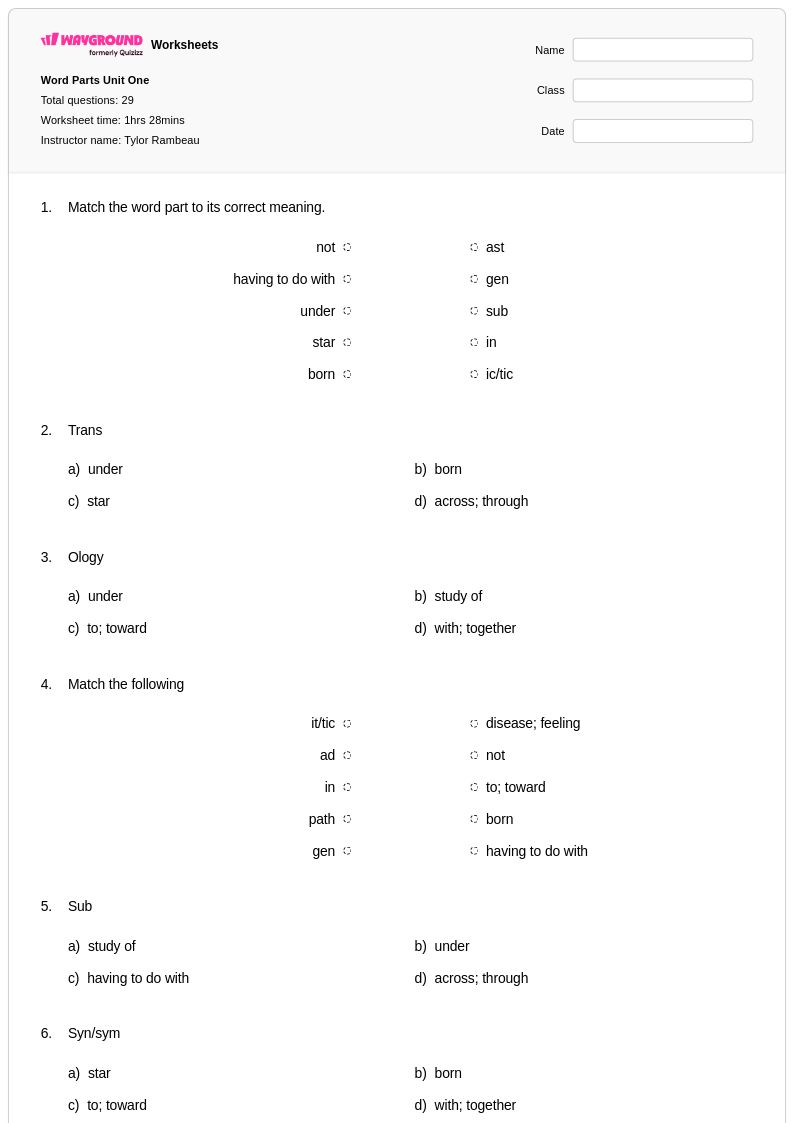
29 Q
7th - 8th
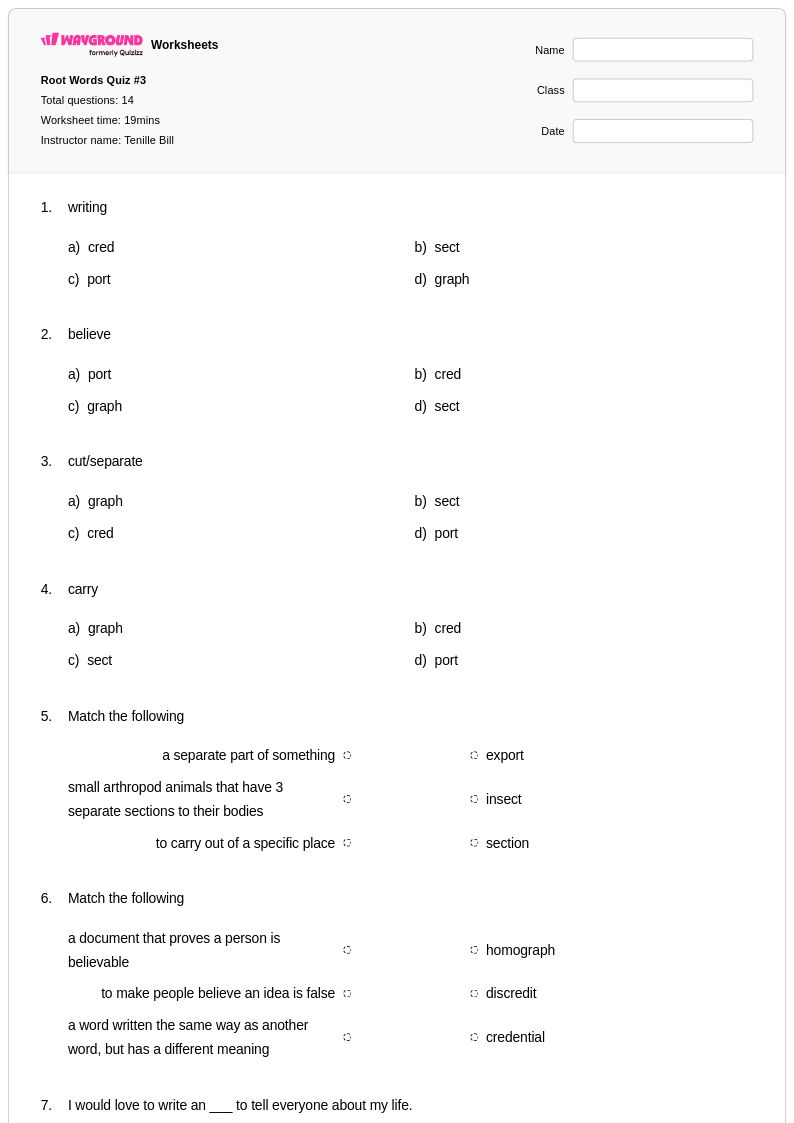
14 Q
6th - 8th
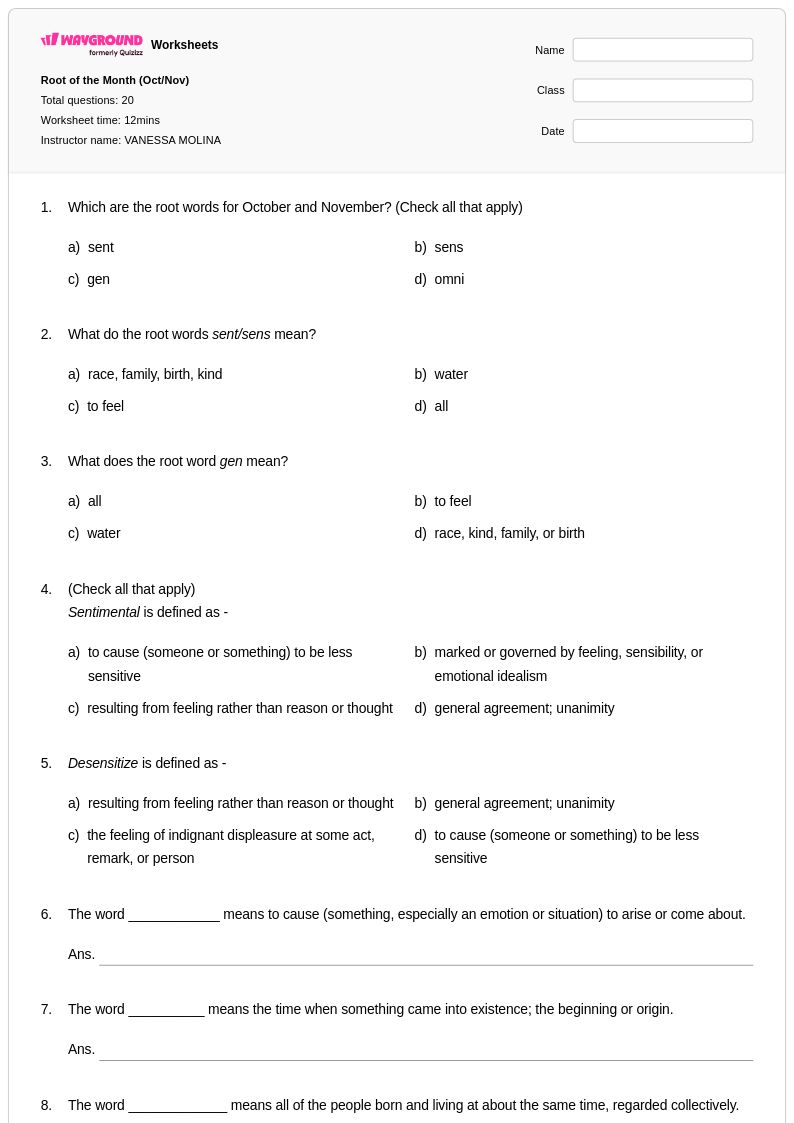
20 Q
7th
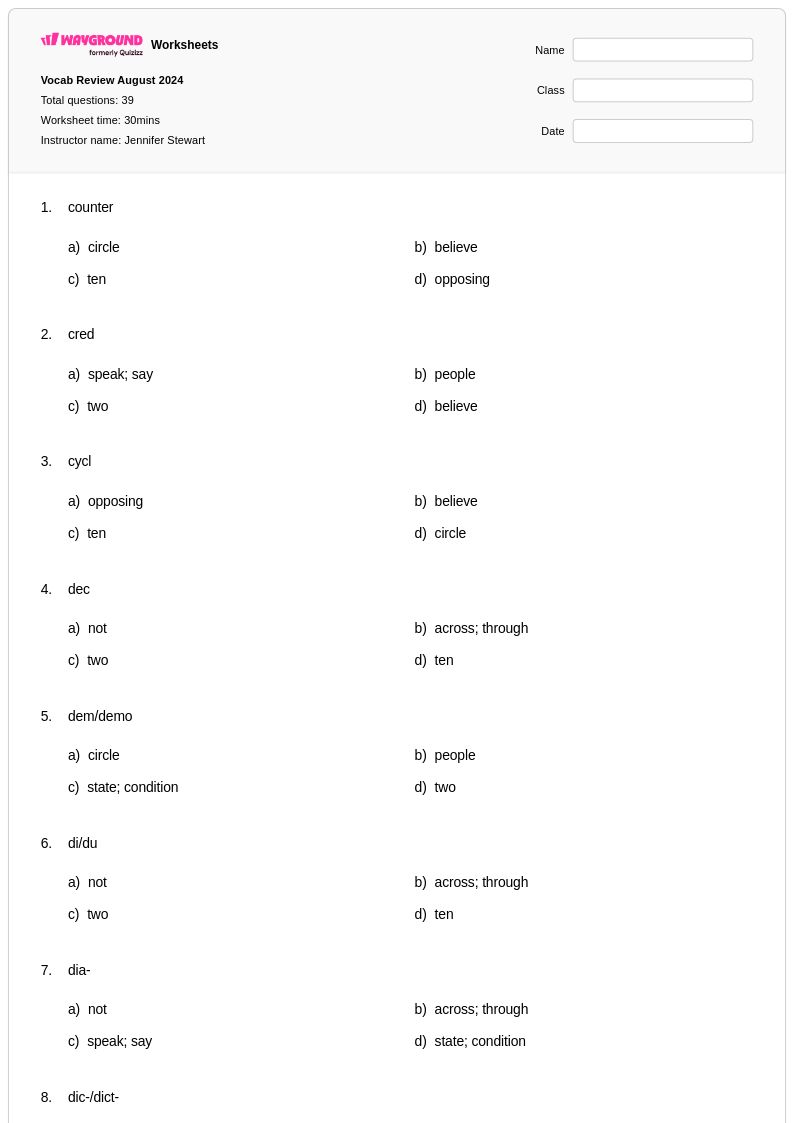
39 Q
6th - 8th
Explore Determining Meaning Using Roots, Prefixes, and Suffixes Worksheets by Grades
Explore Other Subject Worksheets for class 7
Explore printable Determining Meaning Using Roots, Prefixes, and Suffixes worksheets for Class 7
Determining meaning using roots, prefixes, and suffixes worksheets for Class 7 students provide comprehensive practice in morphological analysis, a fundamental vocabulary skill that enables learners to decode unfamiliar words independently. These carefully structured worksheets guide seventh graders through systematic examination of word parts, helping them recognize common Latin and Greek roots like "spect" (to see) and "port" (to carry), along with frequently used prefixes such as "pre-," "anti-," and "sub-," and suffixes including "-tion," "-able," and "-ment." Each worksheet includes varied practice problems that challenge students to break down complex vocabulary into manageable components, determine meanings through structural analysis, and apply these decoding strategies across different contexts. The free printables come complete with detailed answer keys that support both independent study and classroom instruction, making them valuable resources for building etymological awareness and expanding academic vocabulary through understanding of word formation patterns.
Wayground, formerly Quizizz, empowers educators with an extensive collection of teacher-created worksheets focused on morphological analysis, drawing from millions of high-quality resources that have been developed and refined by classroom professionals. The platform's advanced search and filtering capabilities allow teachers to quickly locate materials that align with specific learning standards and match their students' developmental needs in vocabulary acquisition. These determining meaning worksheets are available in both printable PDF formats for traditional classroom use and digital formats for technology-integrated learning environments, providing the flexibility educators need for diverse instructional settings. The robust differentiation tools enable teachers to customize content difficulty levels, making these resources equally effective for remediation with struggling learners, standard skill practice for grade-level students, and enrichment activities for advanced vocabulary development, ultimately streamlining lesson planning while ensuring all seventh graders master this critical word analysis strategy.
FAQs
How do I teach students to use roots, prefixes, and suffixes to determine word meaning?
What exercises help students practice identifying roots, prefixes, and suffixes?
What mistakes do students commonly make when using roots, prefixes, and suffixes to figure out word meaning?
How can I differentiate root, prefix, and suffix instruction for struggling readers?
How do I use Wayground's roots, prefixes, and suffixes worksheets in my classroom?
Why is morphological awareness important for reading comprehension across subjects?