
Recommended Topics for you
15 Q
3rd - Uni
25 Q
2nd - Uni
15 Q
1st - 5th
10 Q
3rd - 8th
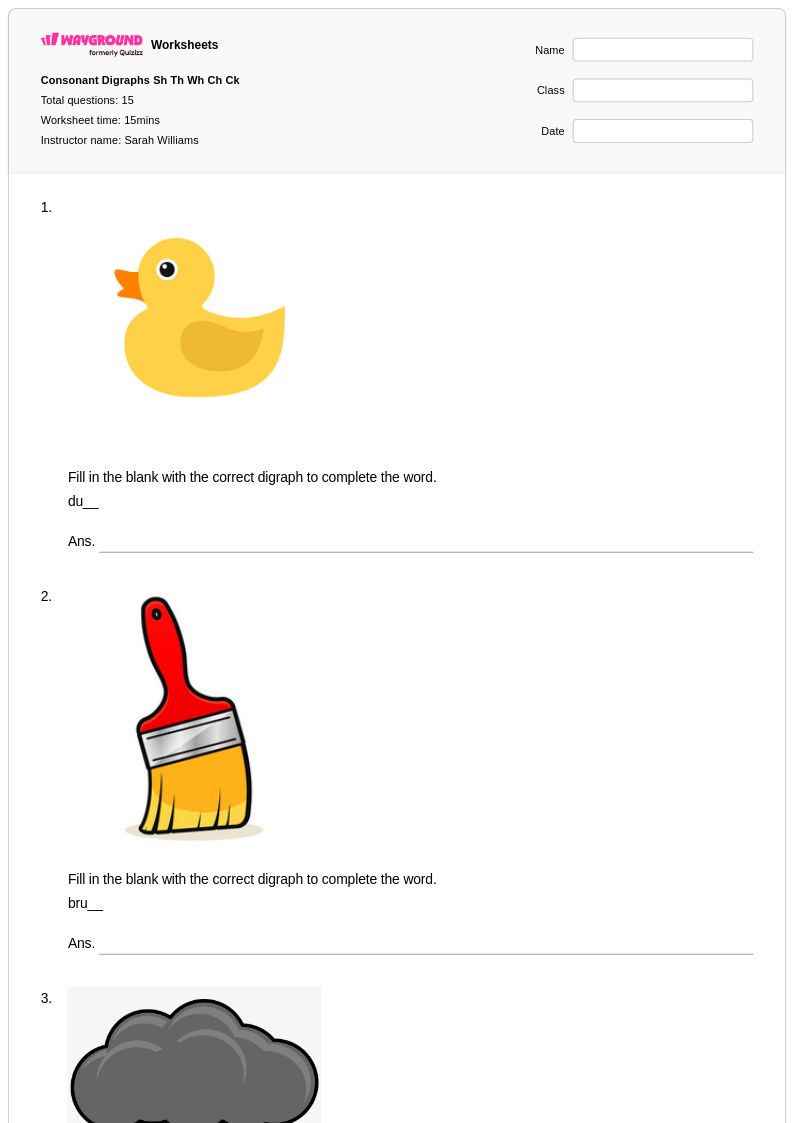
15 Q
3rd - Uni
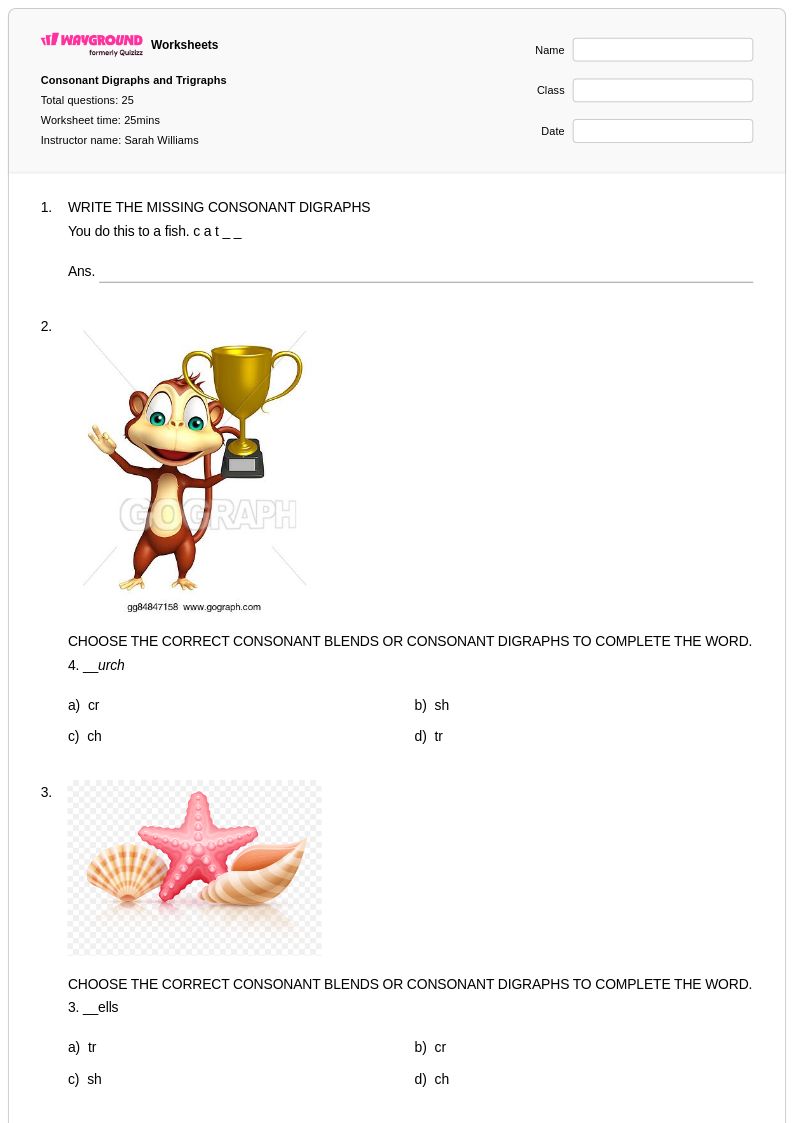
25 Q
3rd - Uni
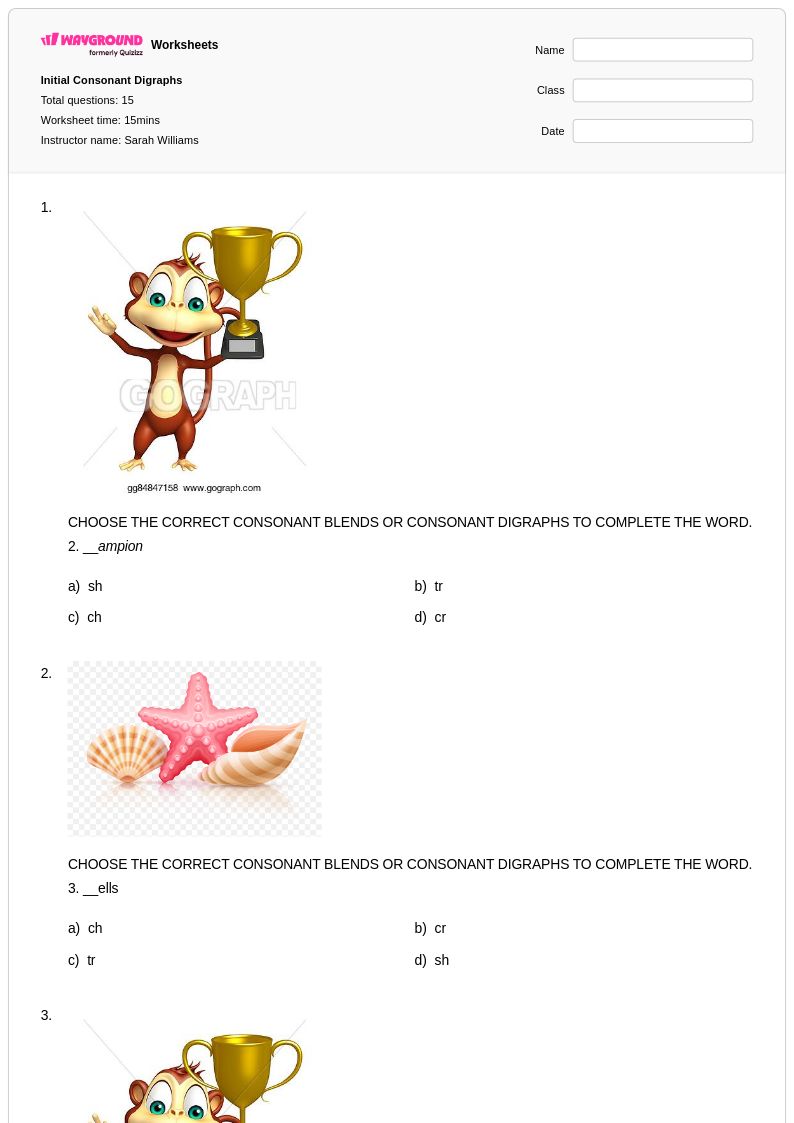
15 Q
3rd - Uni
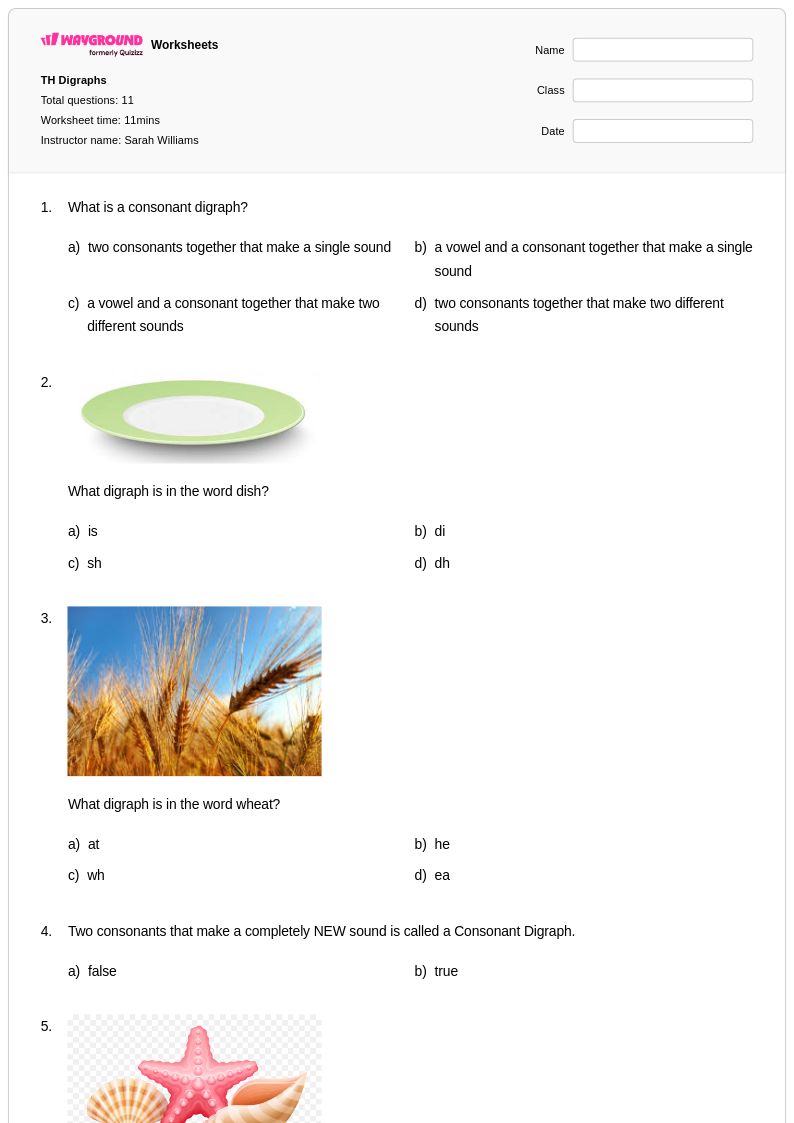
11 Q
1st - Uni

11 Q
1st - 5th
13 Q
1st - 5th
10 Q
2nd - 5th
11 Q
KG - 5th
20 Q
5th
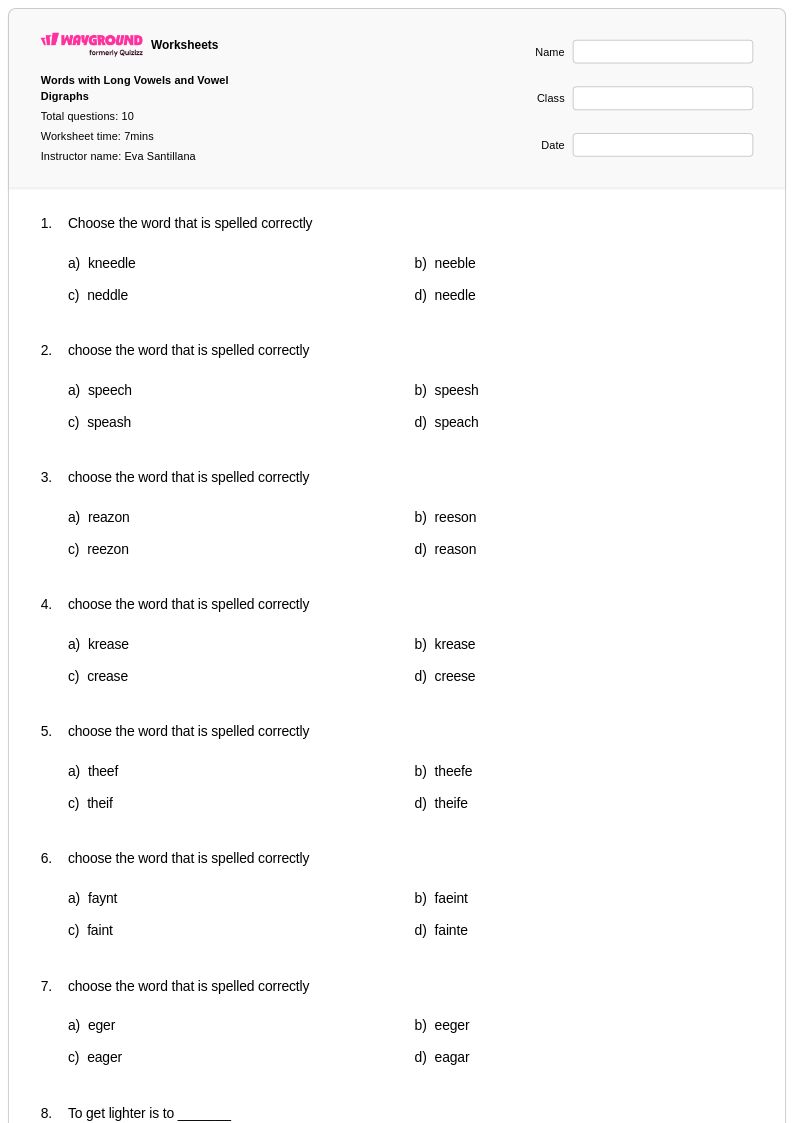
10 Q
5th
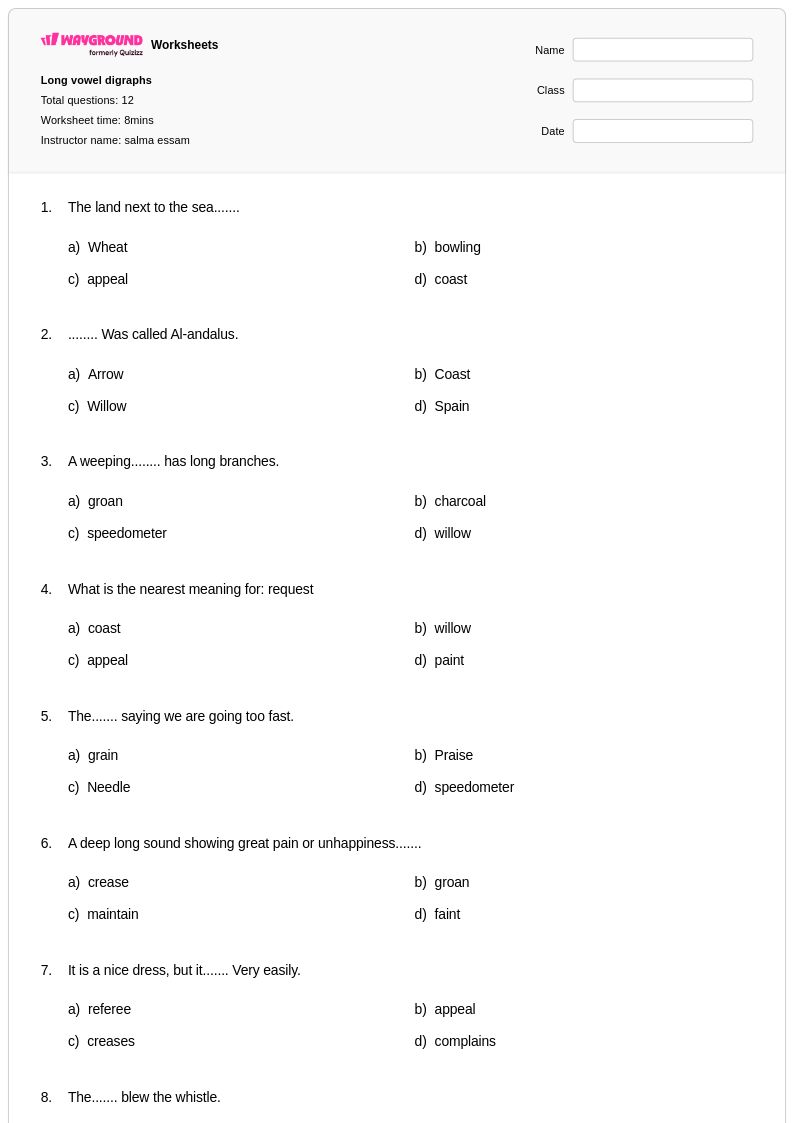
12 Q
5th
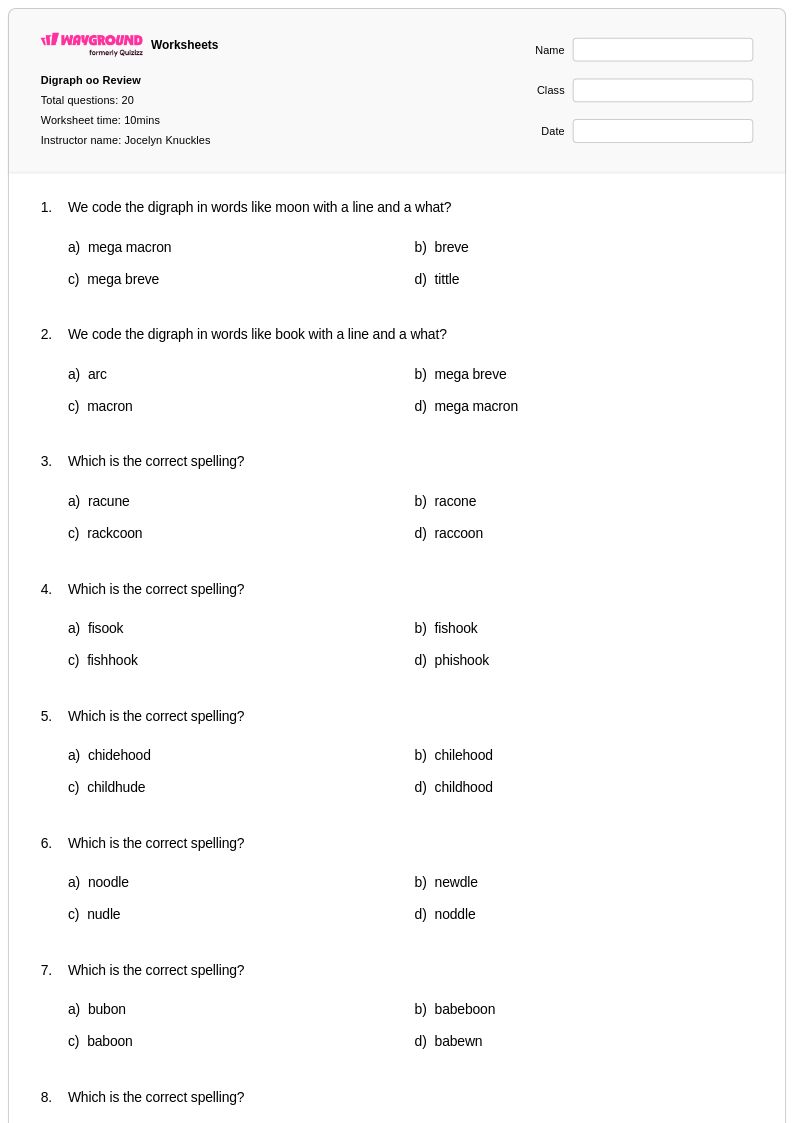
20 Q
5th
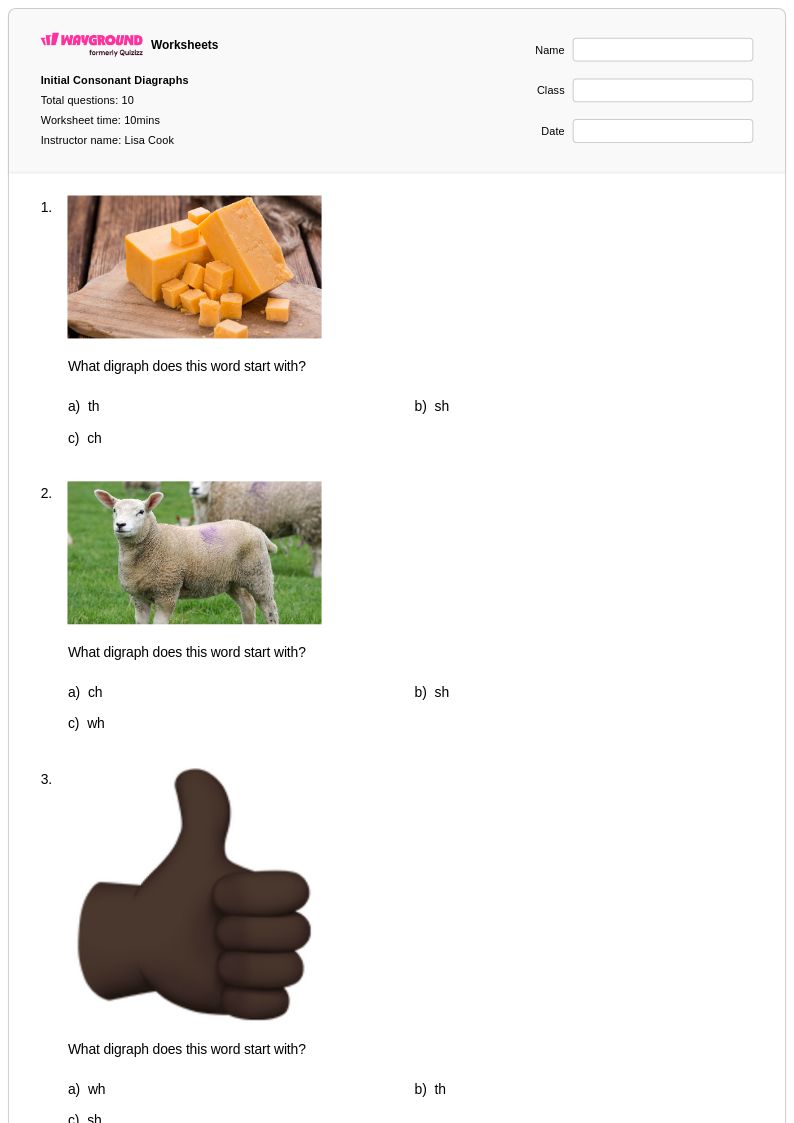
10 Q
KG - 12th
15 Q
1st - 5th
12 Q
1st - 5th
17 Q
5th
10 Q
3rd - 6th
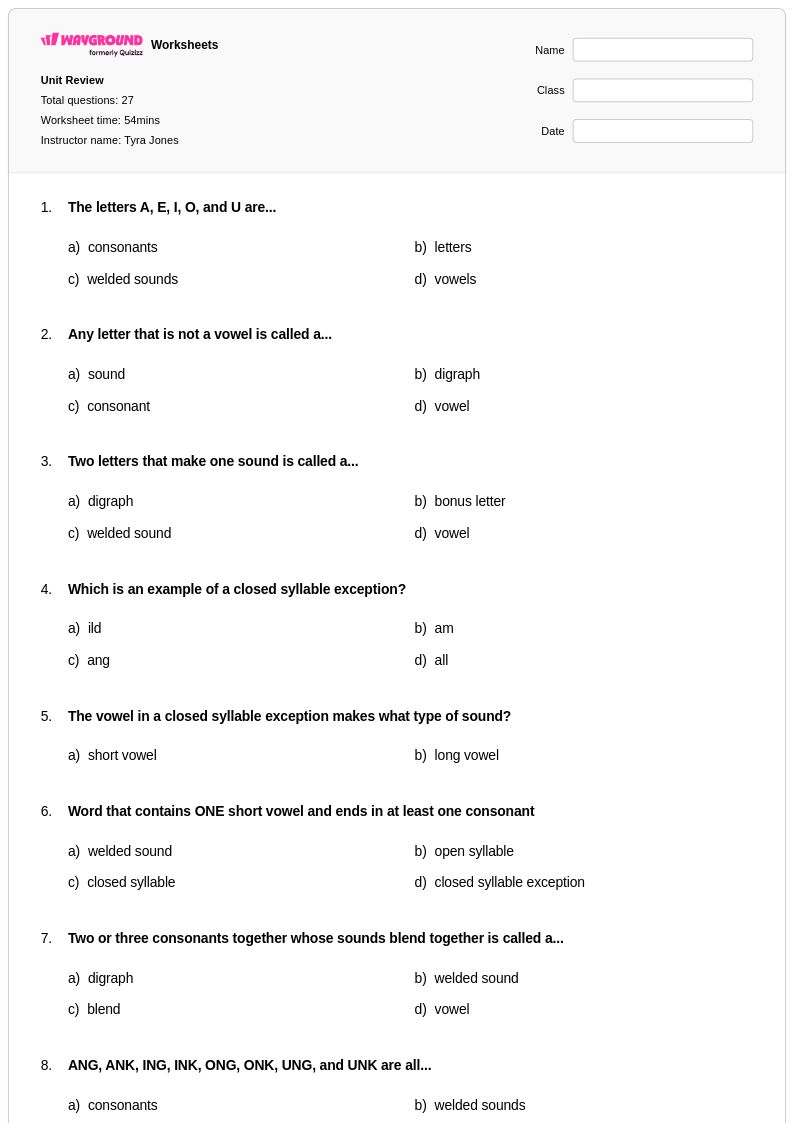
27 Q
4th - 8th
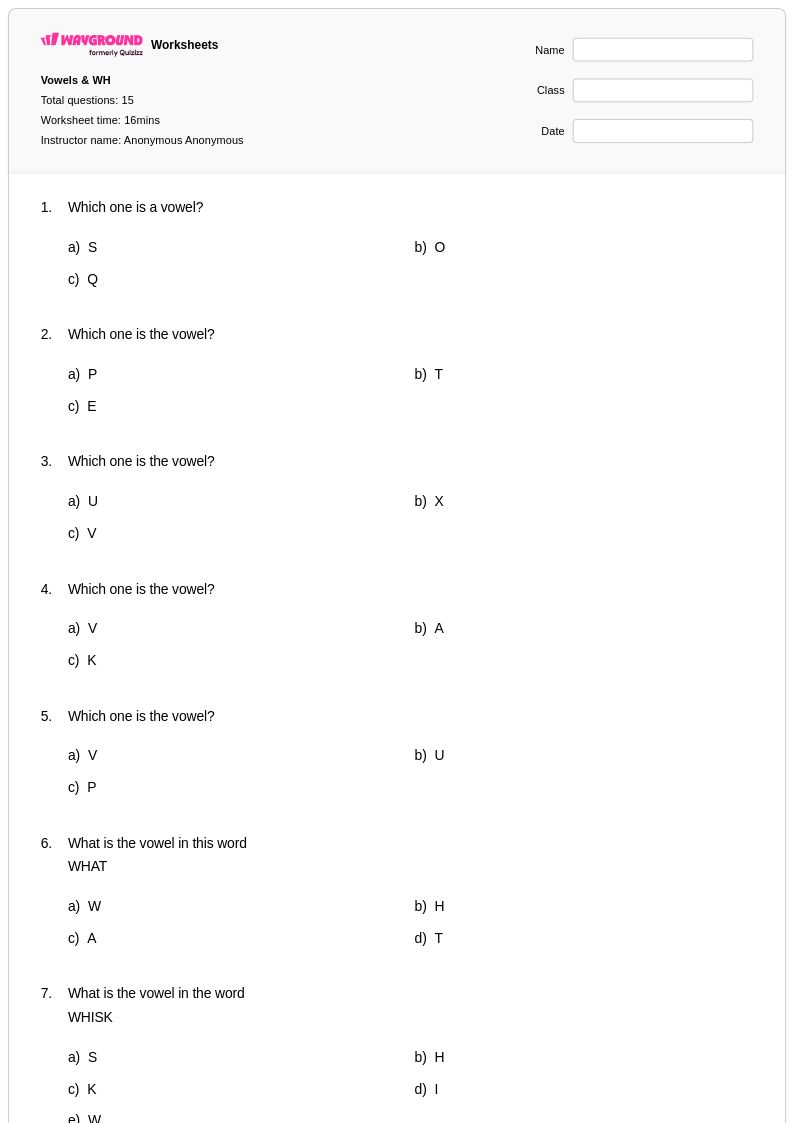
15 Q
1st - 5th
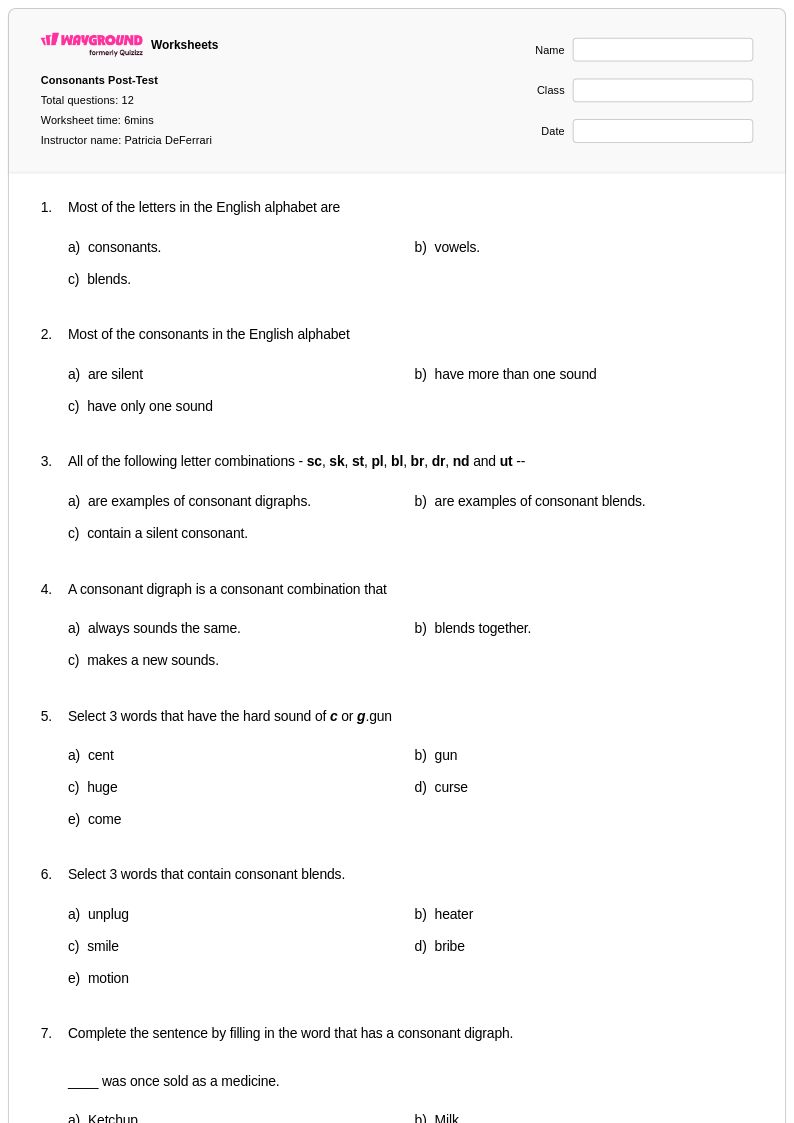
12 Q
4th - 6th
Explore Digraphs Worksheets for class 5 by Topic
Explore Other Subject Worksheets for class 5
Explore printable Digraphs worksheets for Class 5
Digraphs worksheets for Class 5 students available through Wayground (formerly Quizizz) provide comprehensive practice with two-letter combinations that create single sounds, including common patterns like ch, sh, th, wh, ph, and ck. These educational resources strengthen students' phonemic awareness and decoding skills by focusing on how digraphs function within words and syllables, building essential foundations for advanced reading fluency and spelling accuracy. The worksheets feature systematic practice problems that guide fifth graders through identifying digraphs in various word positions, distinguishing between digraphs and letter blends, and applying digraph knowledge to decode unfamiliar words. Each printable resource includes detailed answer keys and is available in convenient pdf format, allowing teachers to implement immediate assessment and provide targeted feedback on student progress with these critical word pattern concepts.
Wayground (formerly Quizizz) supports educators with an extensive collection of teacher-created digraph worksheets that can be easily searched, filtered, and customized to match specific classroom needs and standards alignment requirements. The platform's millions of resources enable teachers to differentiate instruction effectively, providing both remediation materials for students who need additional support with basic digraph recognition and enrichment activities for advanced learners ready to explore complex digraph patterns in multisyllabic words. Teachers can access these materials in both printable and digital formats, facilitating seamless integration into lesson planning whether for whole-class instruction, small group intervention, or independent skill practice. The flexible customization tools allow educators to modify existing worksheets or combine multiple resources to create comprehensive digraph practice sessions that address individual student learning objectives and support ongoing phonics development.
FAQs
How do I teach digraphs to early readers?
What is the difference between consonant digraphs and vowel digraphs?
What exercises help students practice identifying digraphs in words?
What mistakes do students commonly make with digraphs?
How do I use Wayground's digraph worksheets in my classroom?
How can I support students who are struggling with digraphs while keeping the rest of the class on track?