Free Printable Distributive Property of Multiplication Worksheets for Class 3
Help Class 3 students master the distributive property of multiplication with Wayground's free worksheets, featuring engaging practice problems, printable PDFs, and complete answer keys to build foundational math skills.
Explore printable Distributive Property of Multiplication worksheets for Class 3
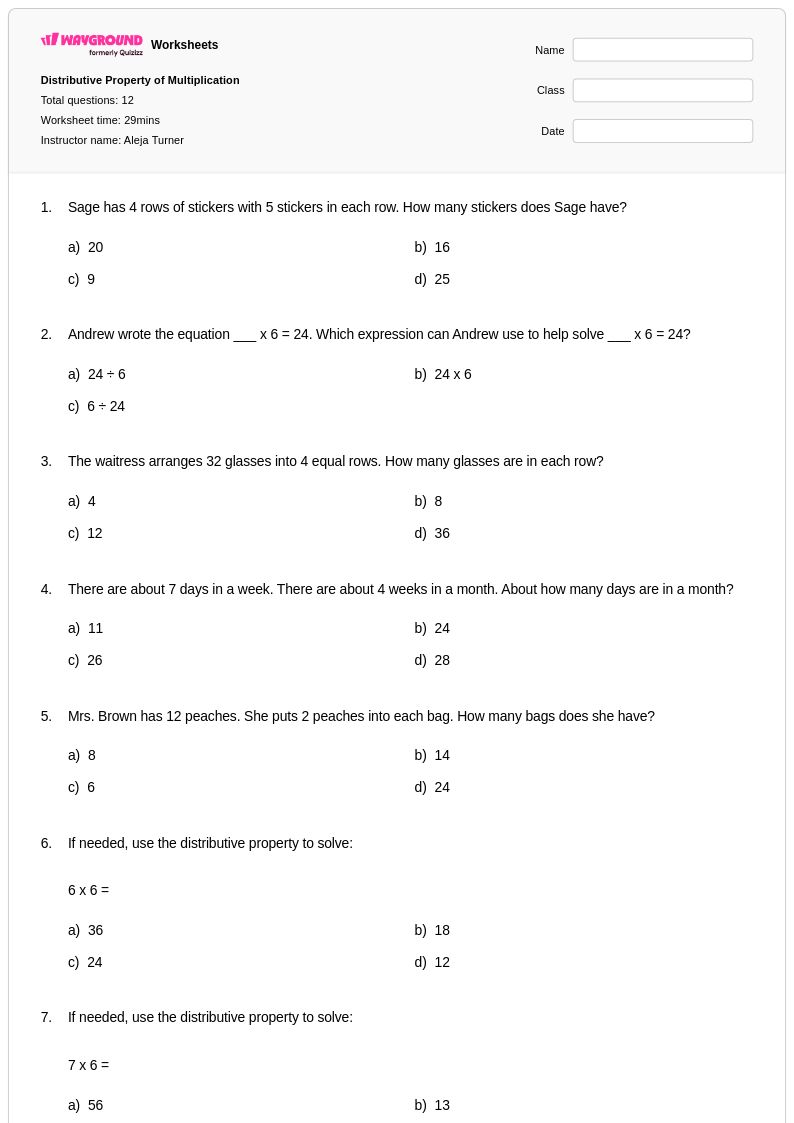
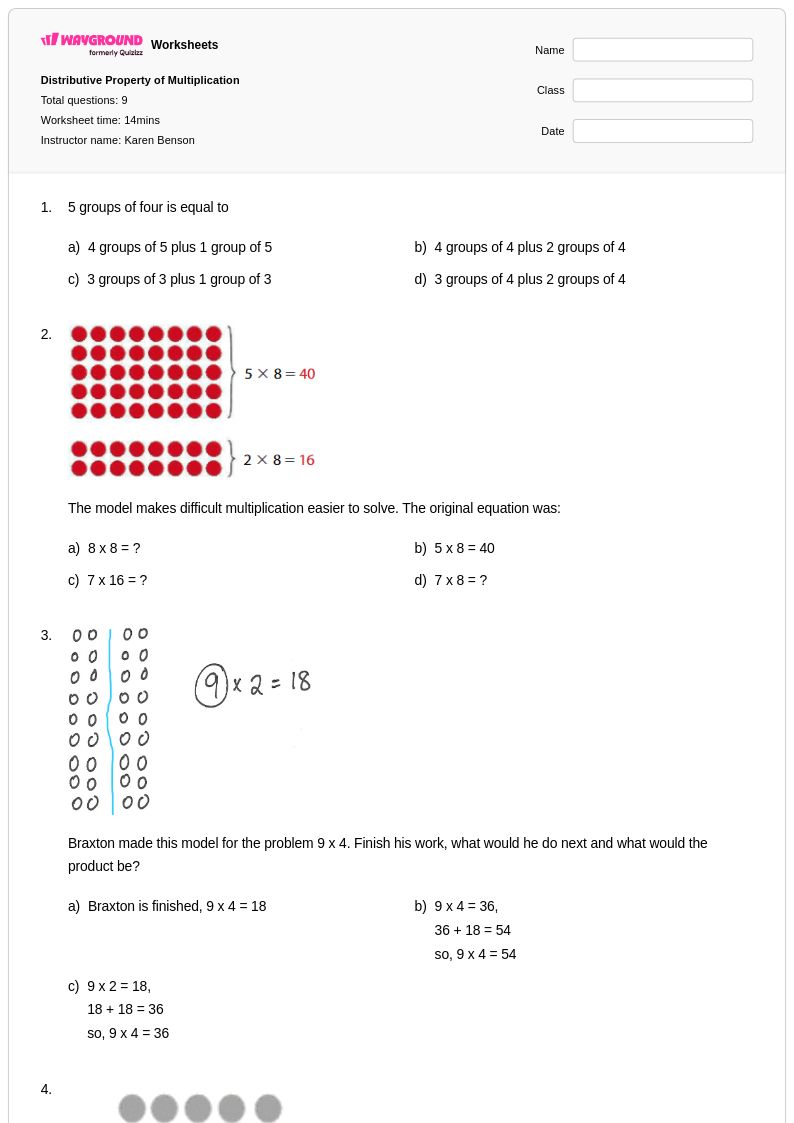
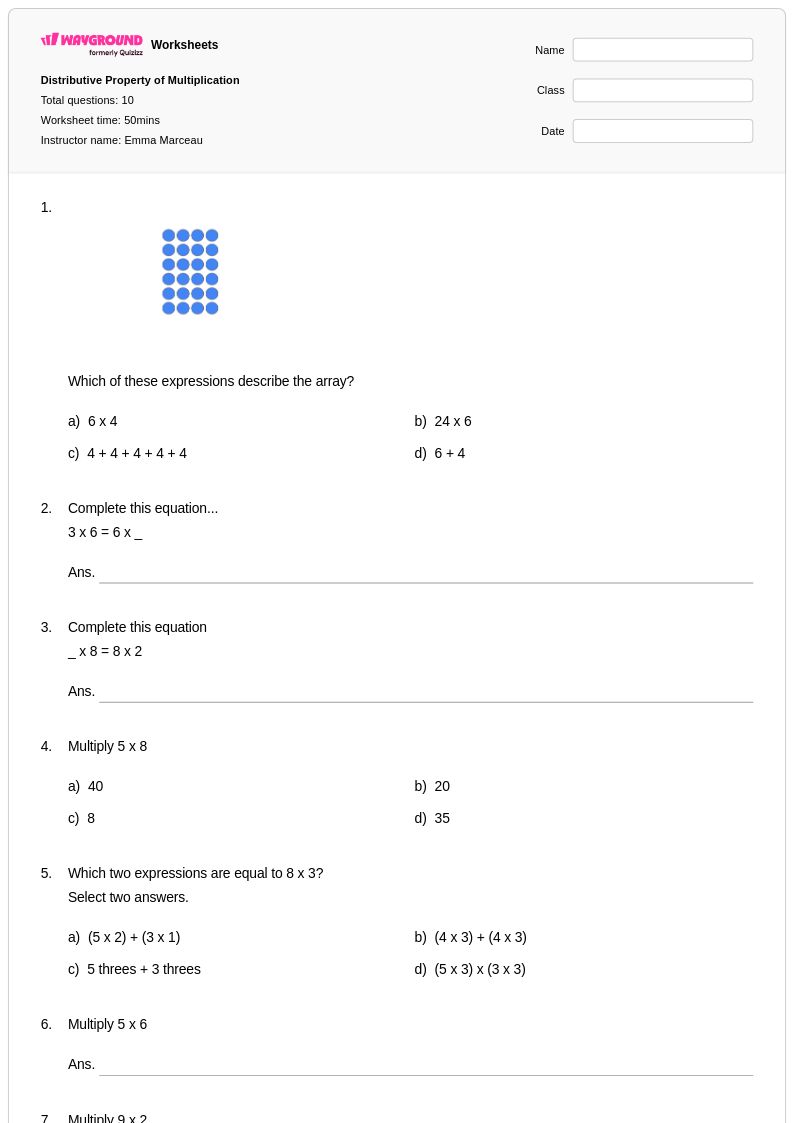
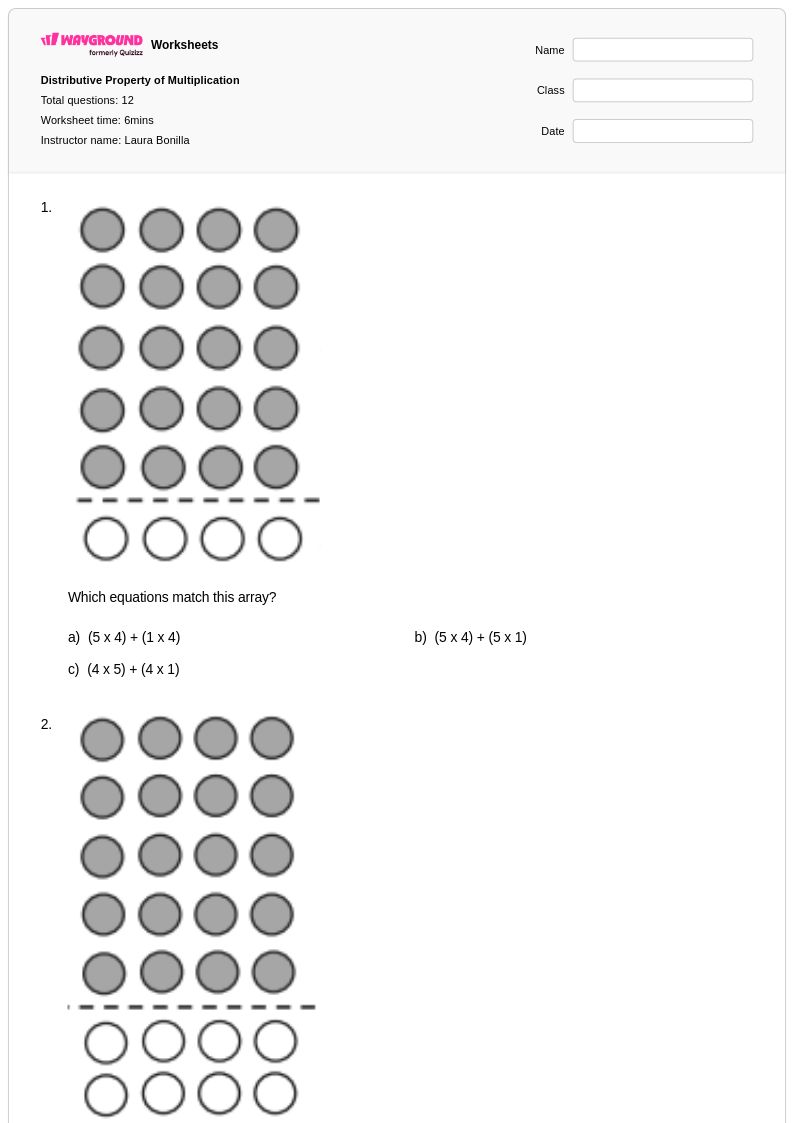
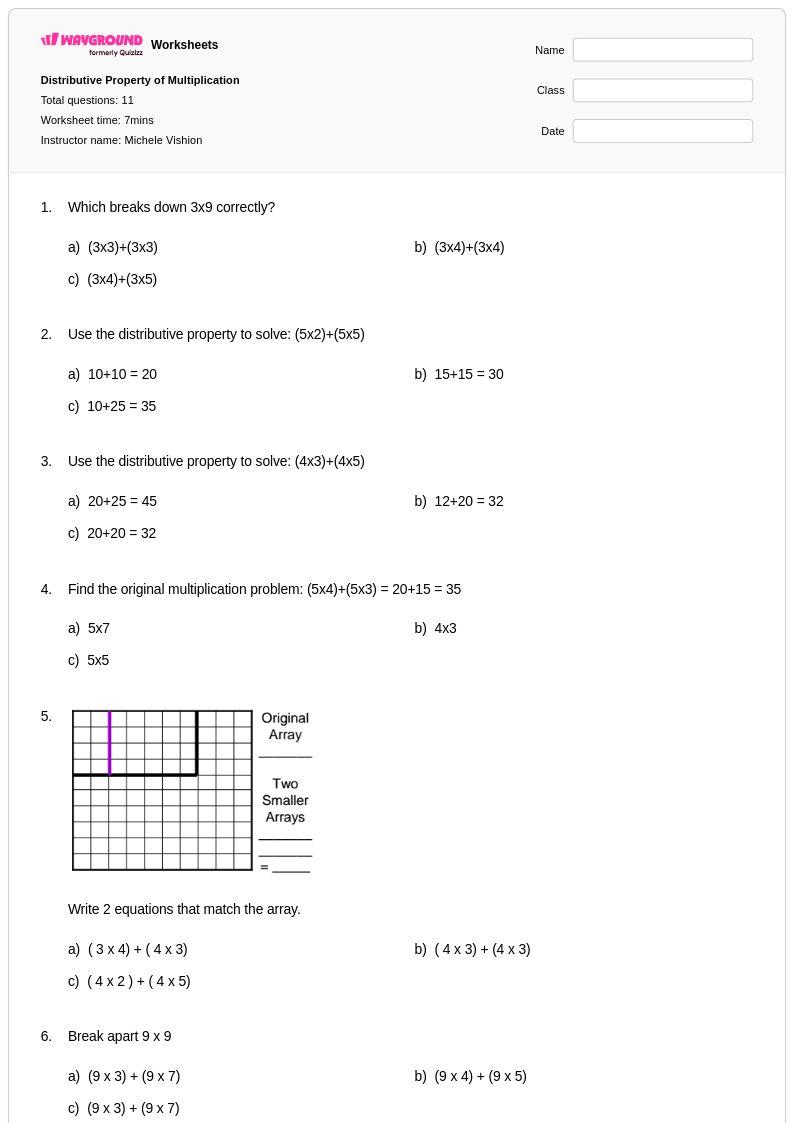
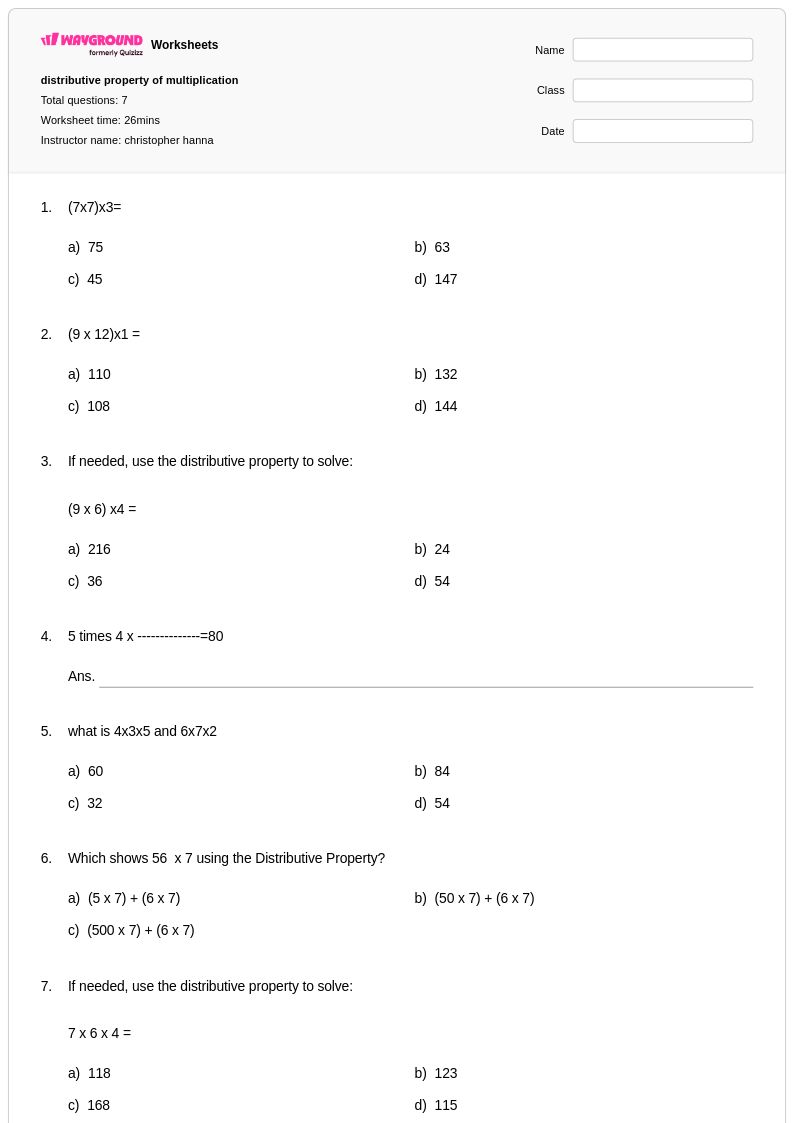
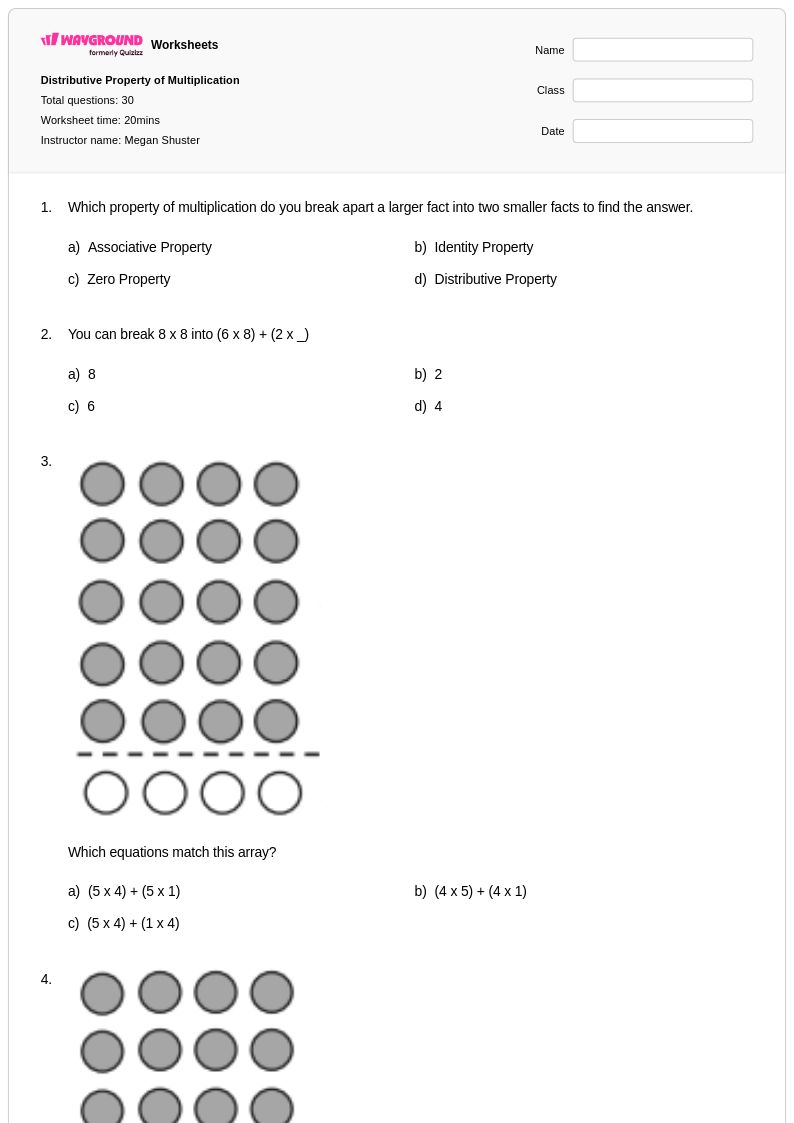
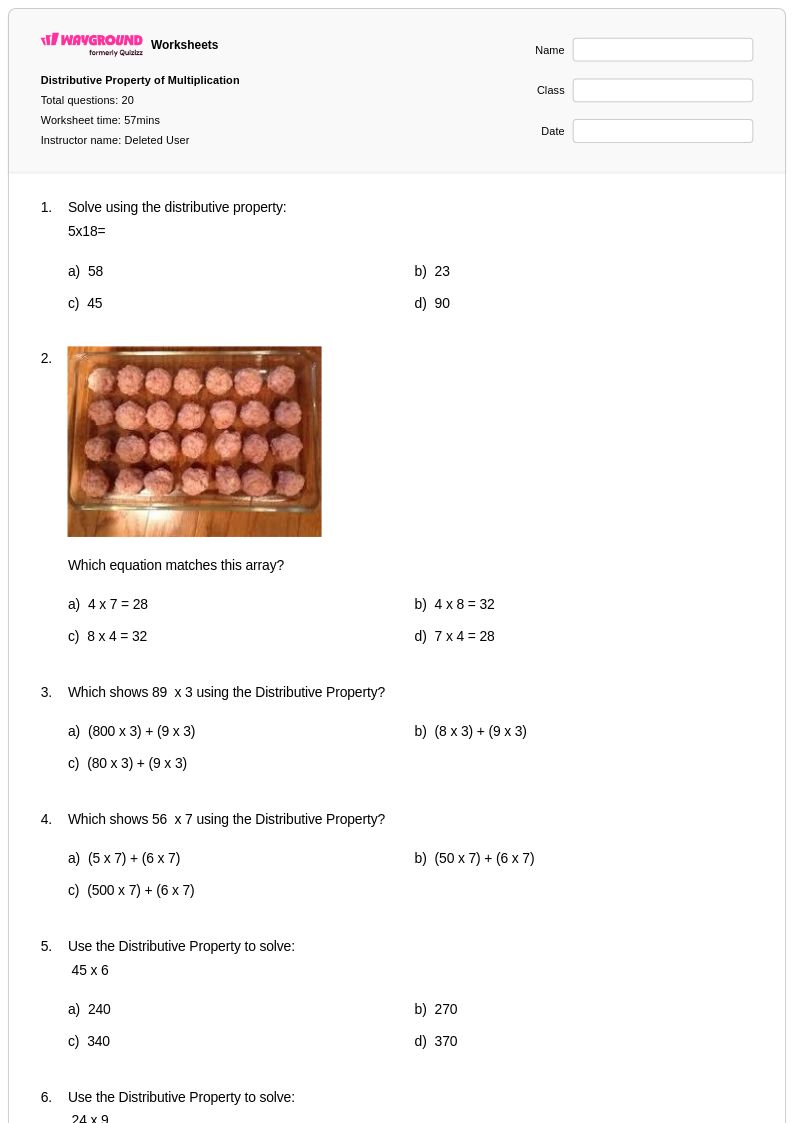
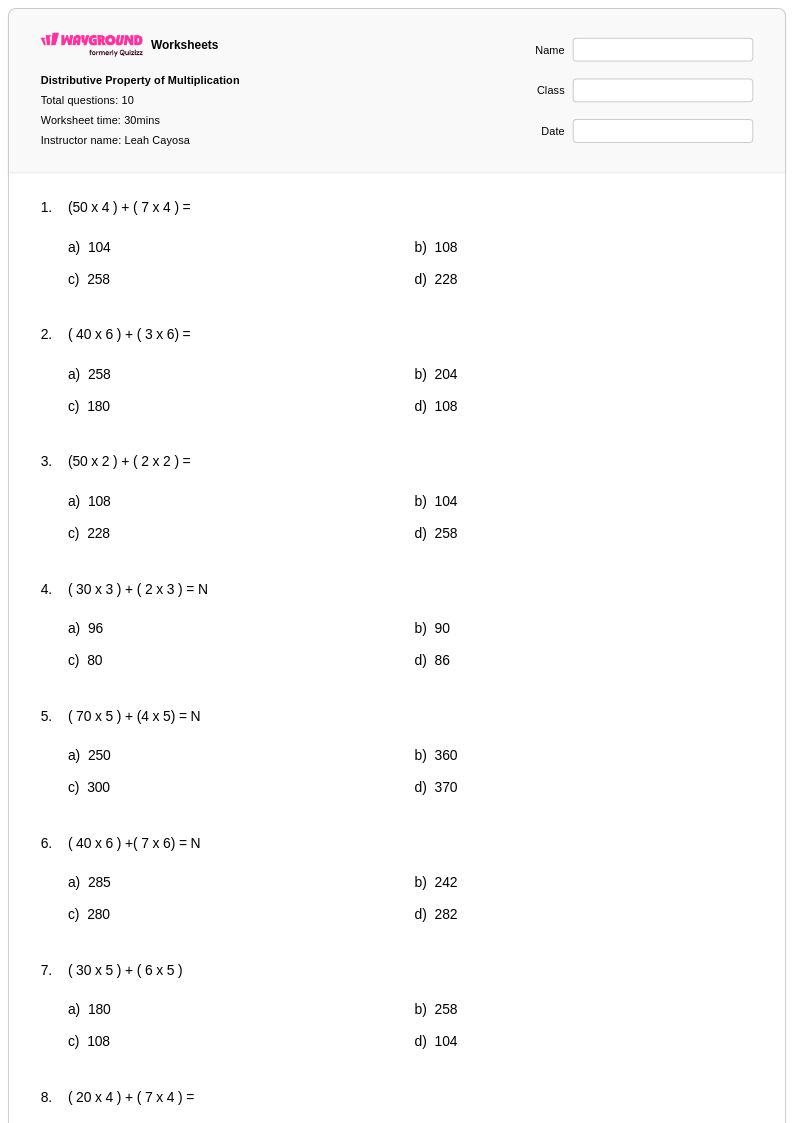
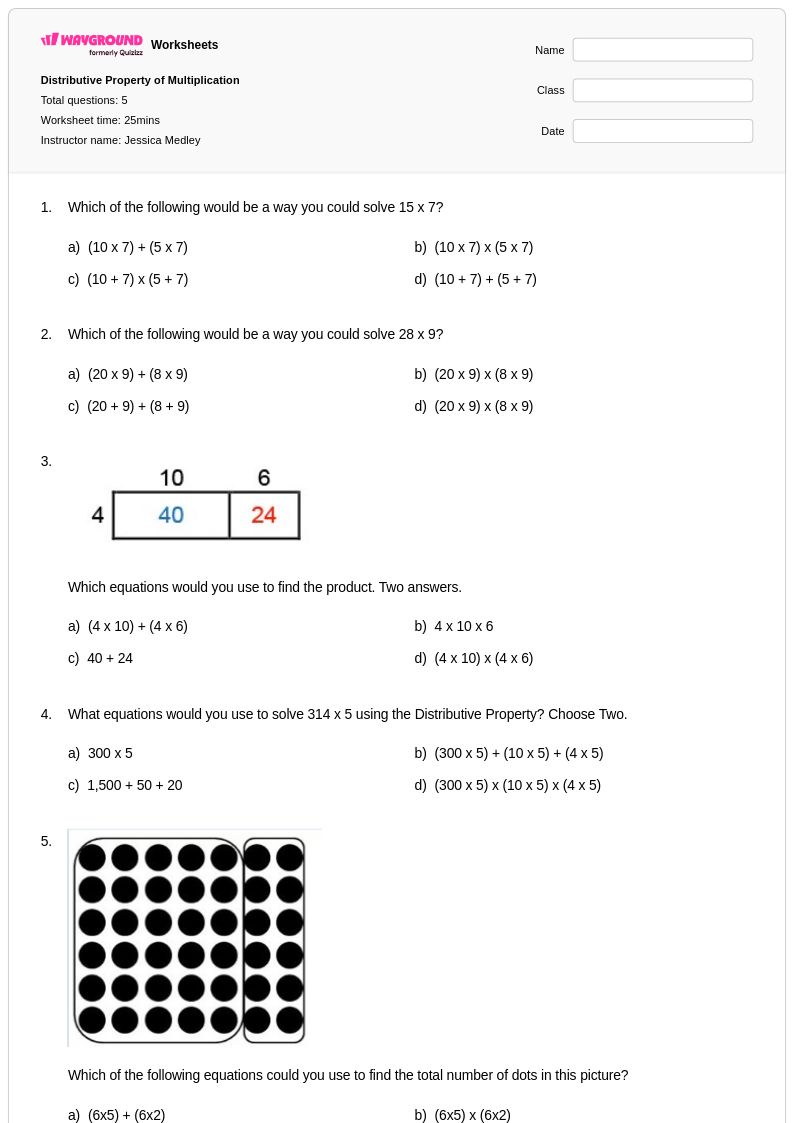
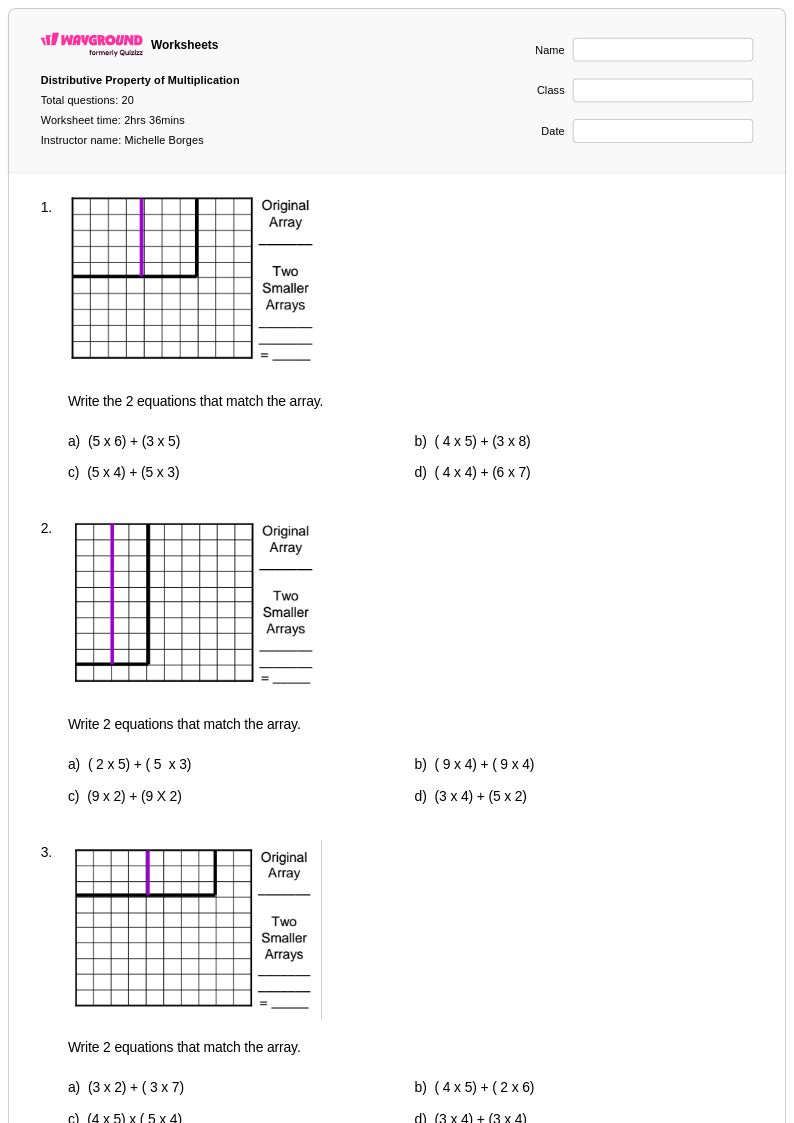
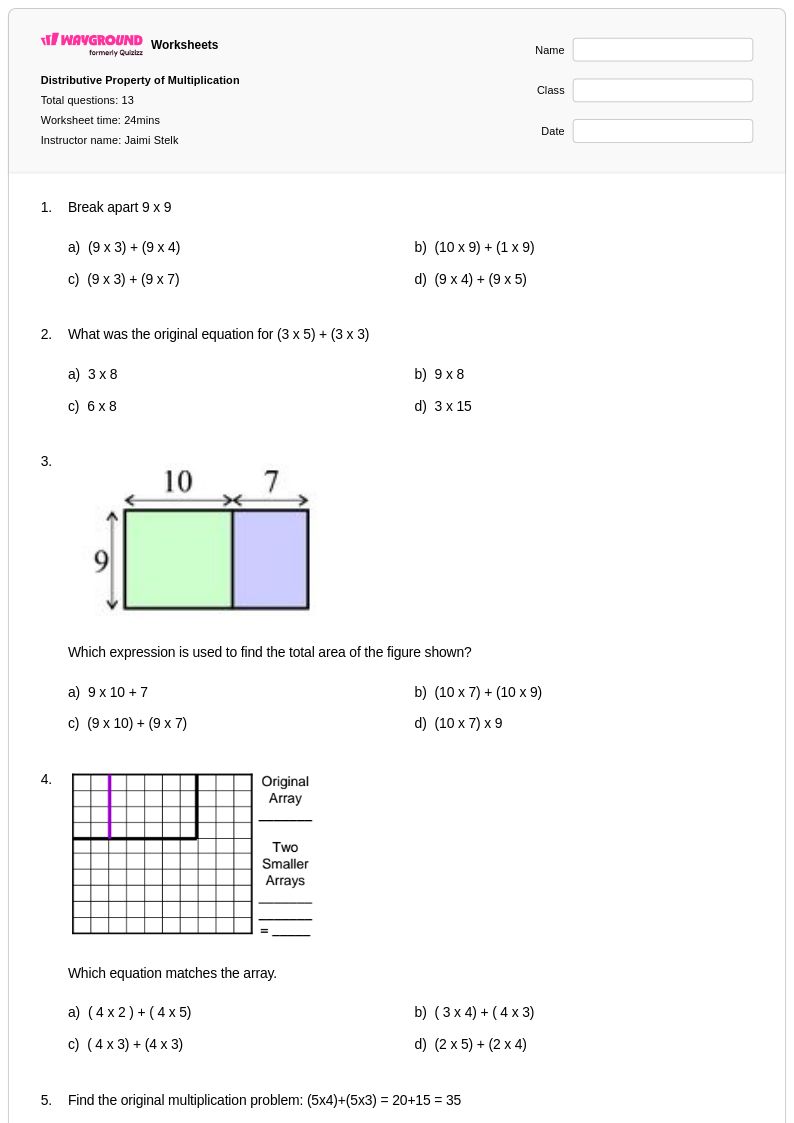
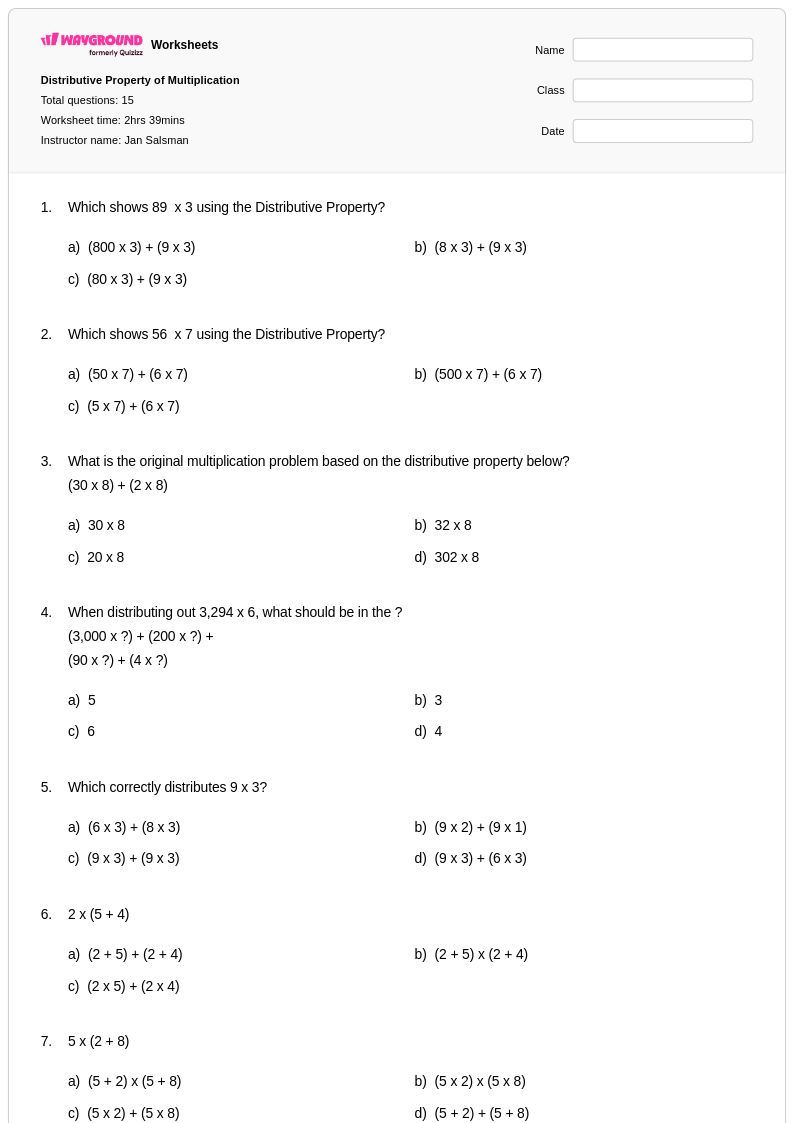
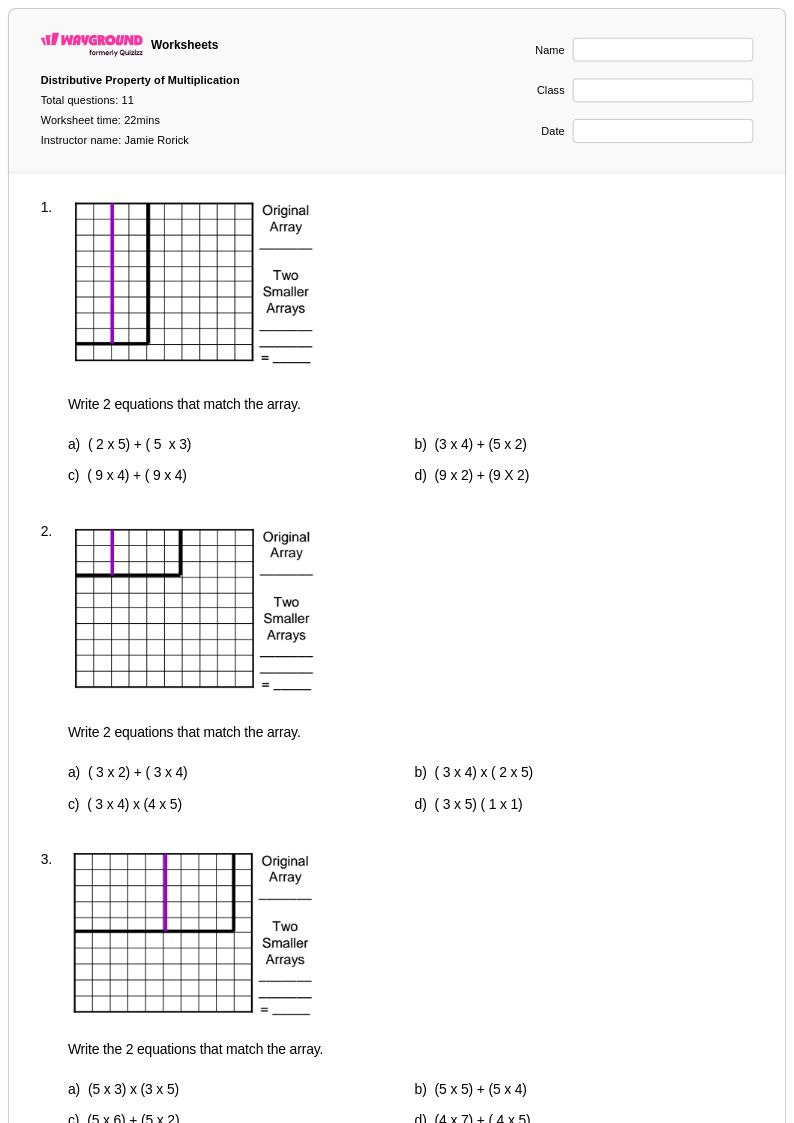
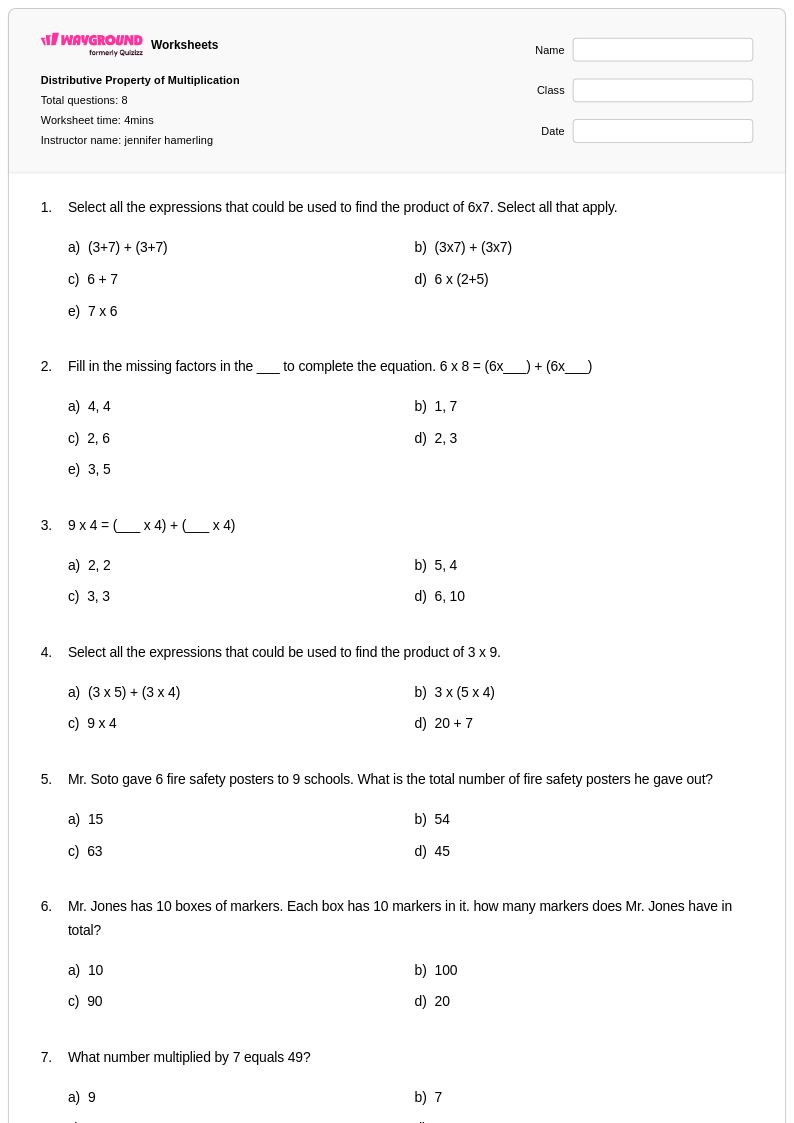
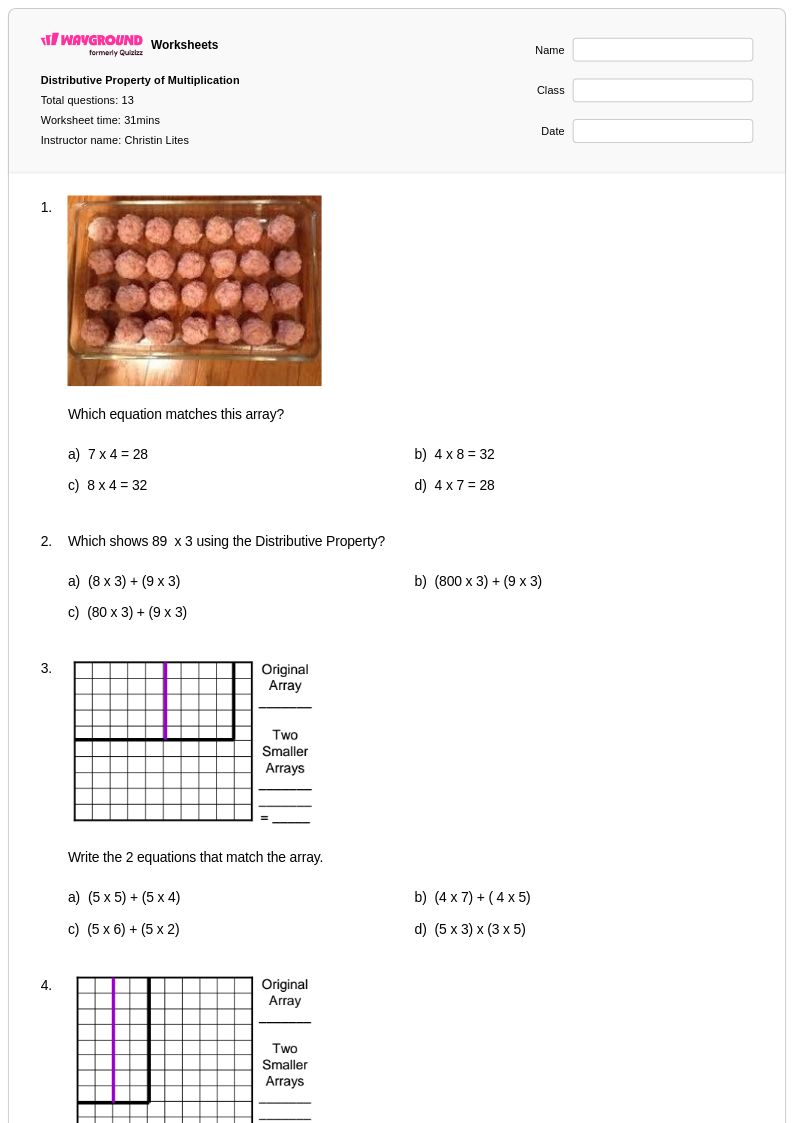
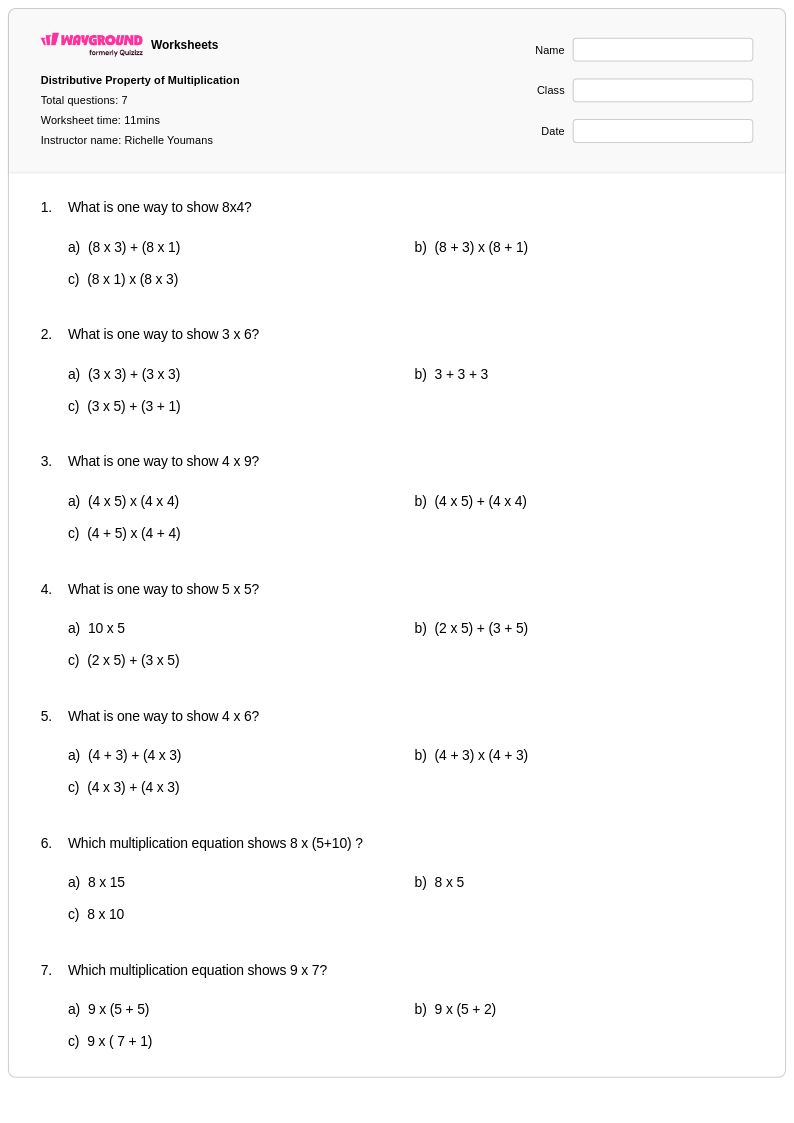
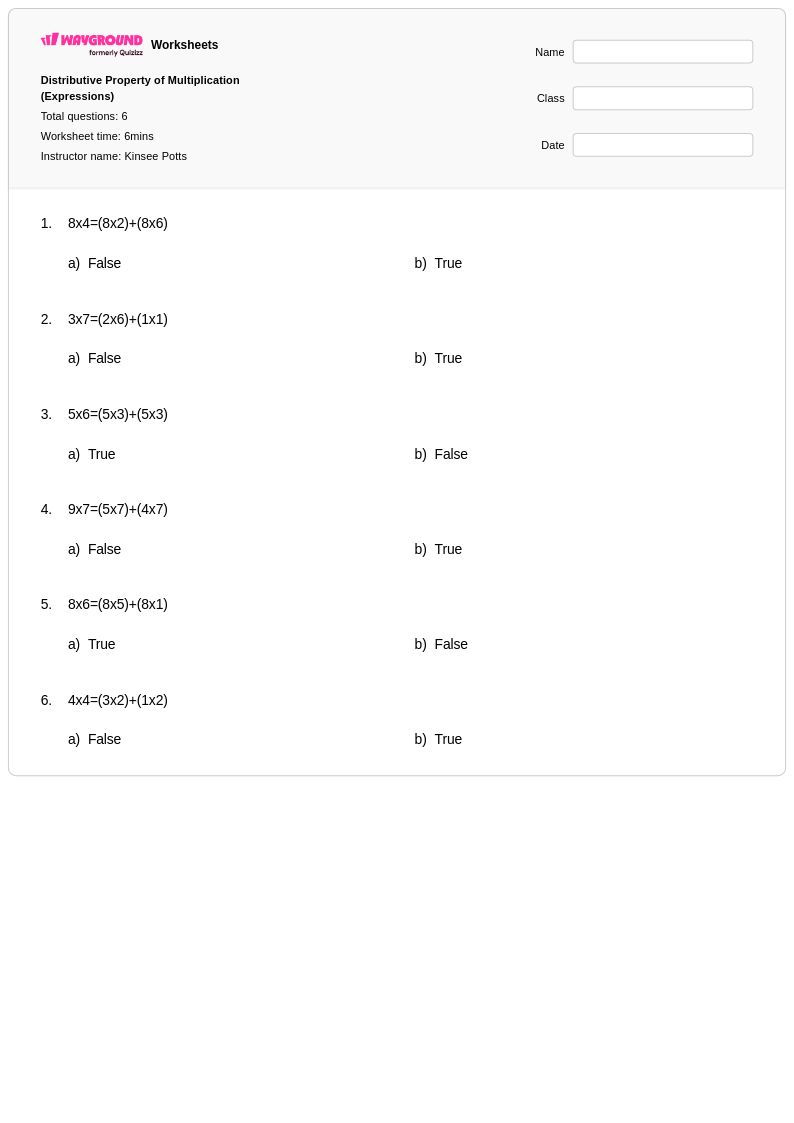
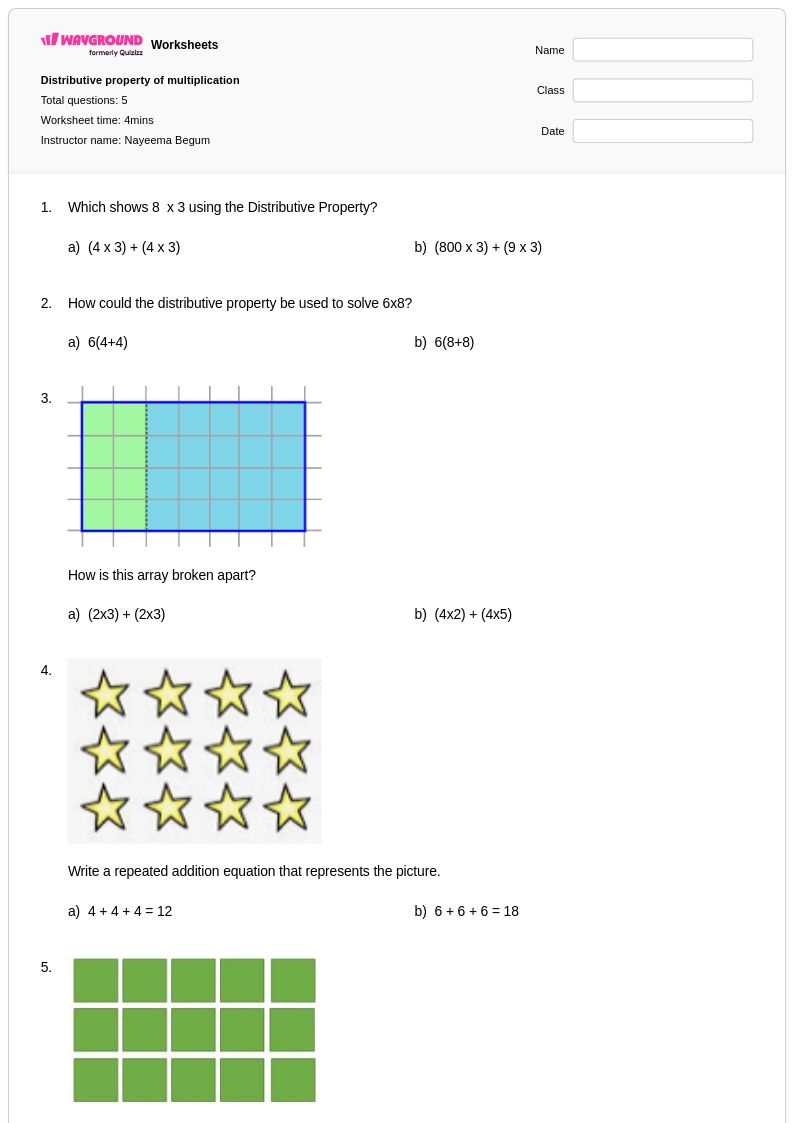
Distributive Property of Multiplication worksheets for Class 3 available through Wayground provide essential practice for students learning to break apart and regroup multiplication problems. These comprehensive printables focus on helping third-grade students understand that multiplying a number by a sum equals the sum of multiplying that number by each addend separately, such as recognizing that 4 × (3 + 2) equals (4 × 3) + (4 × 2). The worksheets strengthen critical mathematical reasoning skills through carefully designed practice problems that guide students from concrete visual representations to abstract number manipulation. Each free pdf resource includes a complete answer key to support immediate feedback and assessment, allowing students to build confidence while mastering this foundational algebraic concept that will serve them throughout their mathematical education.
Wayground supports mathematics educators with millions of teacher-created distributive property resources that streamline lesson planning and differentiated instruction for Class 3 classrooms. The platform's robust search and filtering capabilities enable teachers to quickly locate worksheets aligned with specific state standards and curriculum objectives, while built-in differentiation tools allow for seamless customization based on individual student needs. These flexible resources are available in both printable and digital formats, including downloadable pdfs, making them ideal for traditional classroom use, remote learning environments, or hybrid instruction models. Teachers can efficiently implement these materials for initial skill introduction, targeted remediation for struggling learners, enrichment activities for advanced students, or ongoing practice to reinforce distributive property concepts throughout the academic year.
FAQs
How do I teach the distributive property of multiplication to third graders?
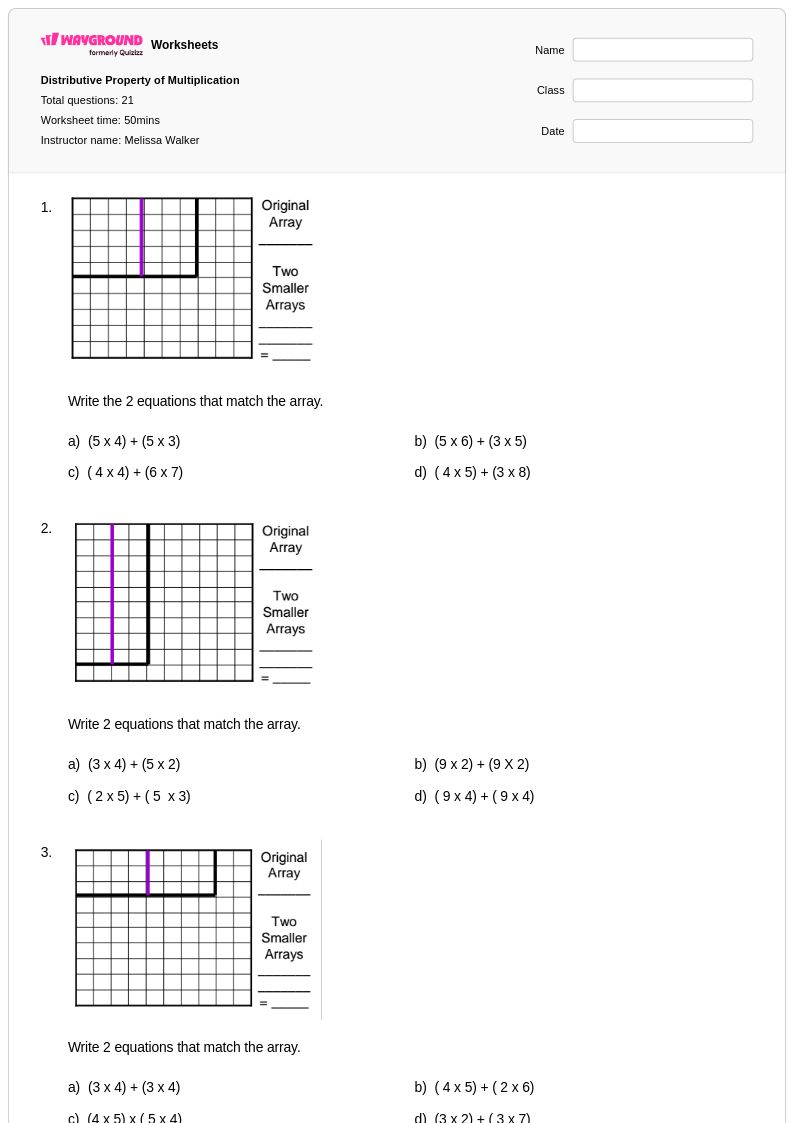
Third graders grasp this best through arrays and area models before touching abstract notation. Show students a 4 × 7 array, then draw a line splitting it into a 4 × 3 and a 4 × 4 section — they can count both parts and see that the total doesn't change. Once that visual clicks, connect it to the notation: 4 × (3 + 4) = (4 × 3) + (4 × 4). The goal at this grade is using the property as a strategy for facts they don't yet know by heart.
What exercises help third graders practice the distributive property?
At Grade 3, the most useful practice problems ask students to break apart one factor in a multiplication fact they find difficult, solve the two smaller facts, and add the results. For example: 6 × 7 → 6 × (5 + 2) → 30 + 12 = 42. Pairing that with a matching area model diagram reinforces why the strategy works, not just how to execute it.
What misconceptions do third graders have about the distributive property?
The most common one: students think they can split either factor arbitrarily and still get the right answer, but then make arithmetic errors because they chose an awkward split. They also sometimes add the two partial products incorrectly, especially when one partial product is a two-digit number. Encouraging students to choose splits that produce facts they already know (like breaking into a ×5 fact) reduces both types of errors.
How do I use these Grade 3 distributive property worksheets?
Print the PDF for traditional paper practice — the included answer key makes grading fast, and you can scan or photograph completed work to grade through the Wayground for Teachers app. If your class works on devices, host the same worksheet as a digital quiz on Wayground so students get immediate feedback as they go. Either way, the problems are designed to move students from visual representations toward abstract number work, so sequencing matters: use the more concrete problems first.
Is the distributive property part of the Common Core Grade 3 math standards?
Yes. Common Core explicitly introduces the distributive property in third grade as one of the core multiplication and division strategies. Students are expected to understand multiplication in terms of equal groups and arrays, and the distributive property is the bridge that lets them decompose an unfamiliar fact into two known ones. It builds directly toward the multi-digit multiplication strategies students will formalize in Grade 4.
What grade do students learn the distributive property of multiplication?
Common Core introduces it formally in Grade 3, where it's taught as a multiplication strategy using arrays and area models. Students continue applying and extending it through Grades 4 and 5 for multi-digit multiplication, and again in Grade 6 when it becomes a core tool for algebraic expressions.