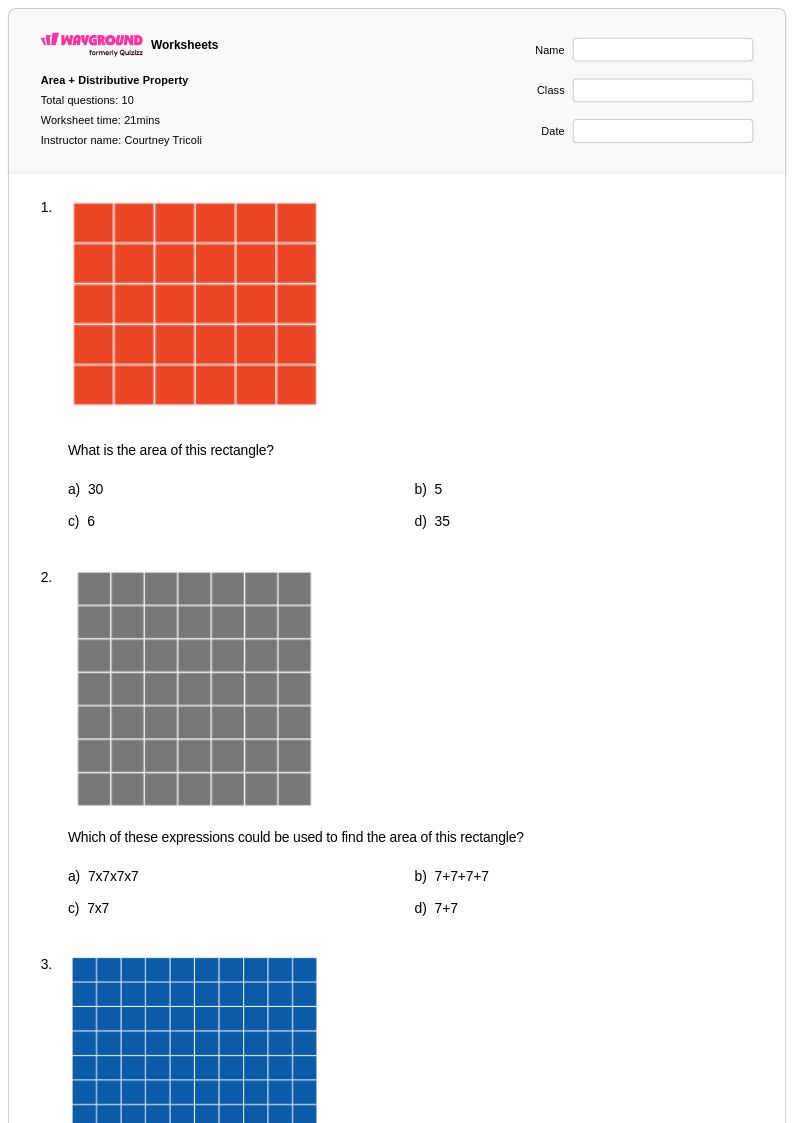
Free Printable Distributive Property Worksheets for Class 3
Class 3 distributive property worksheets from Wayground help students master breaking apart multiplication problems through engaging printables, free practice problems, and comprehensive answer keys in PDF format.
Explore printable Distributive Property worksheets for Class 3
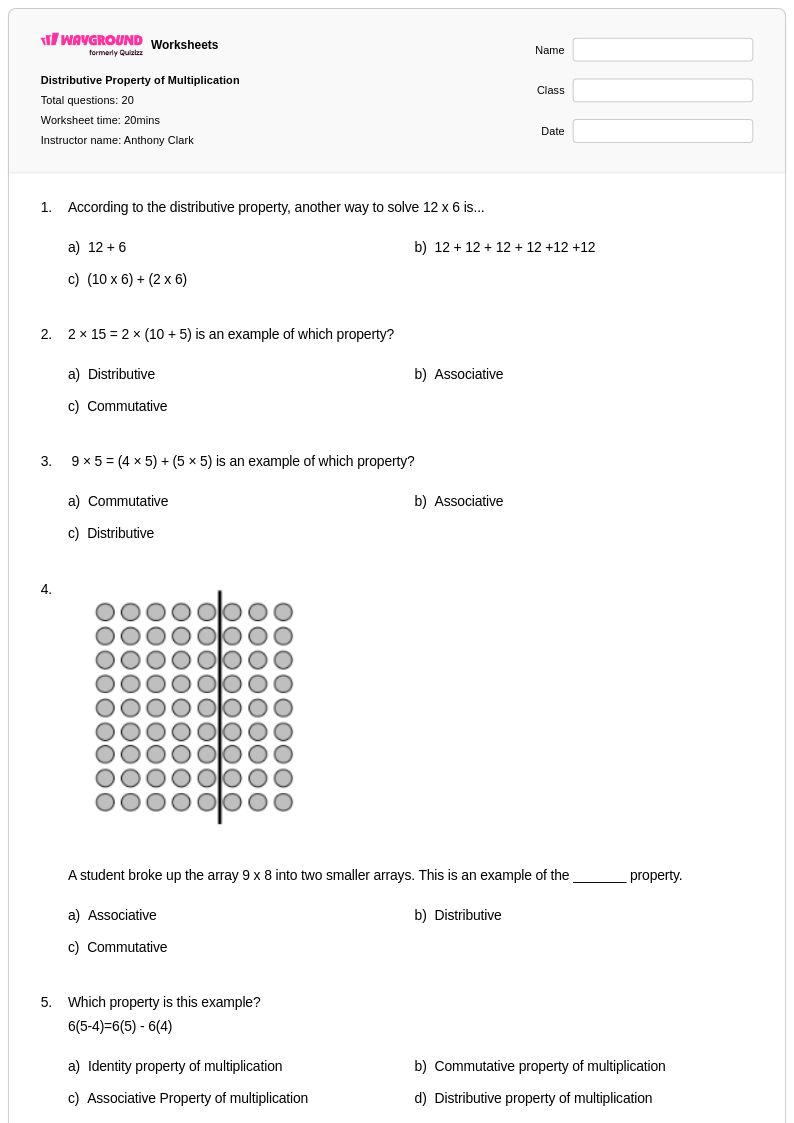
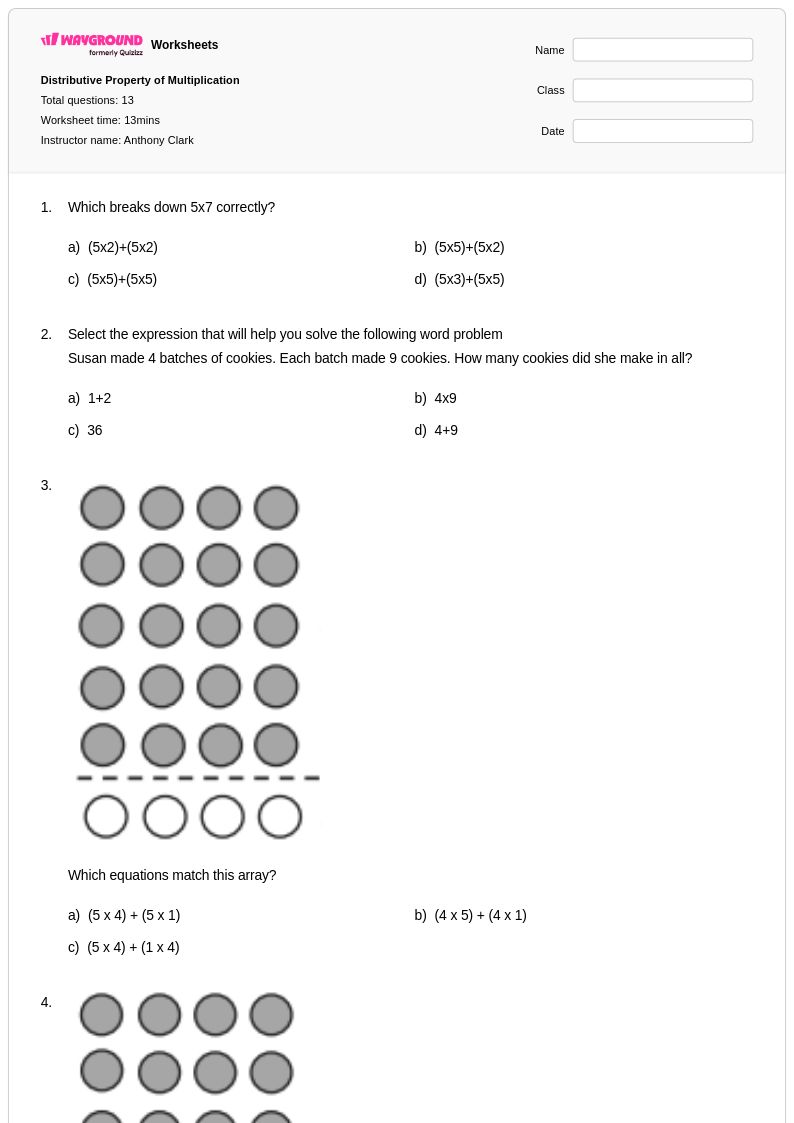
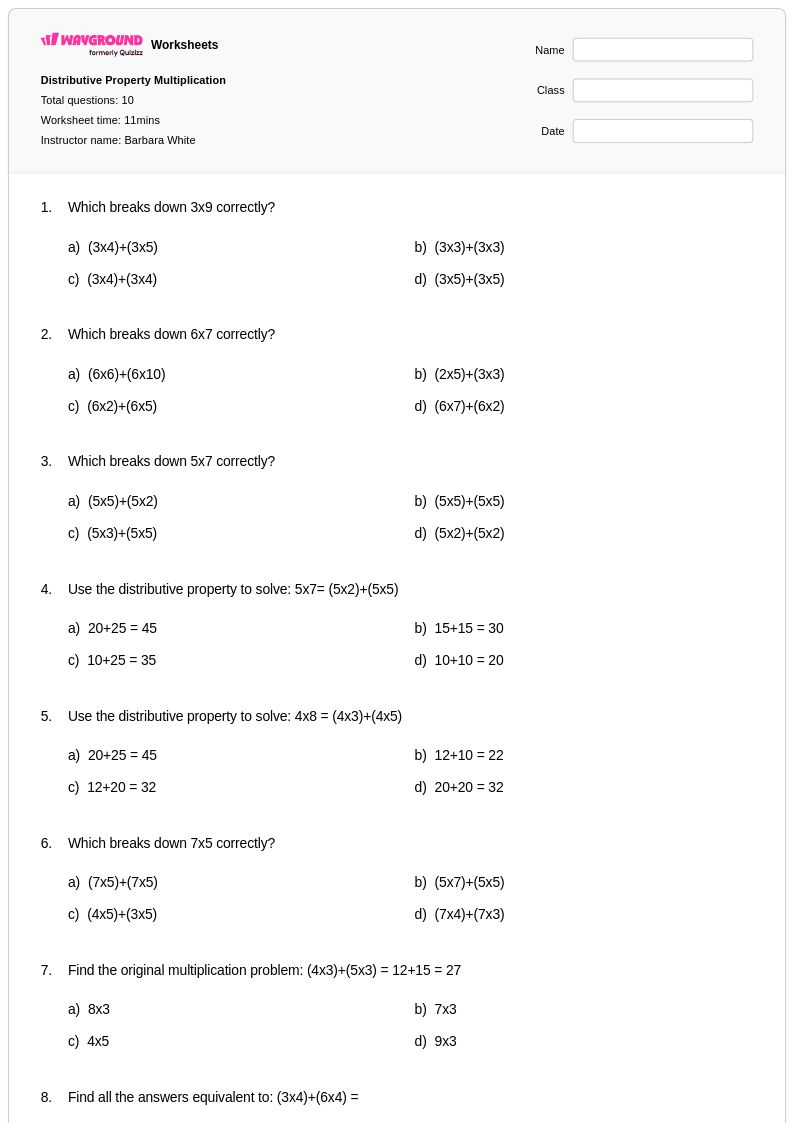
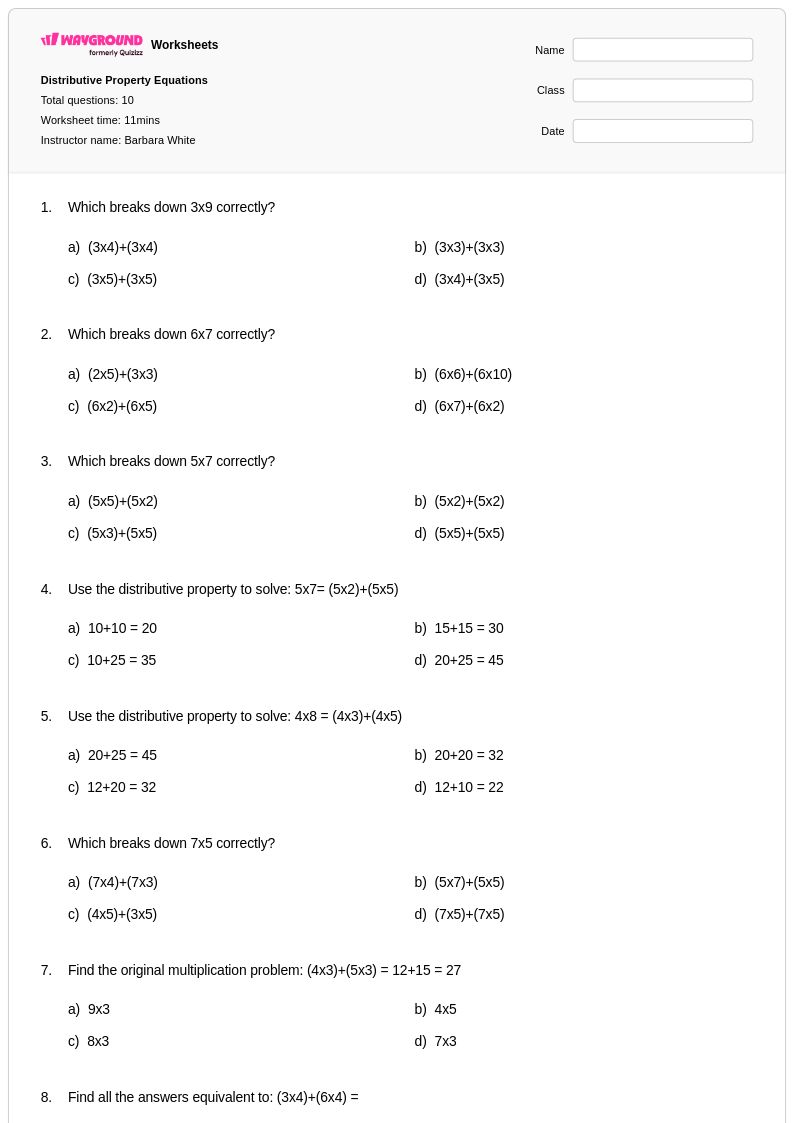
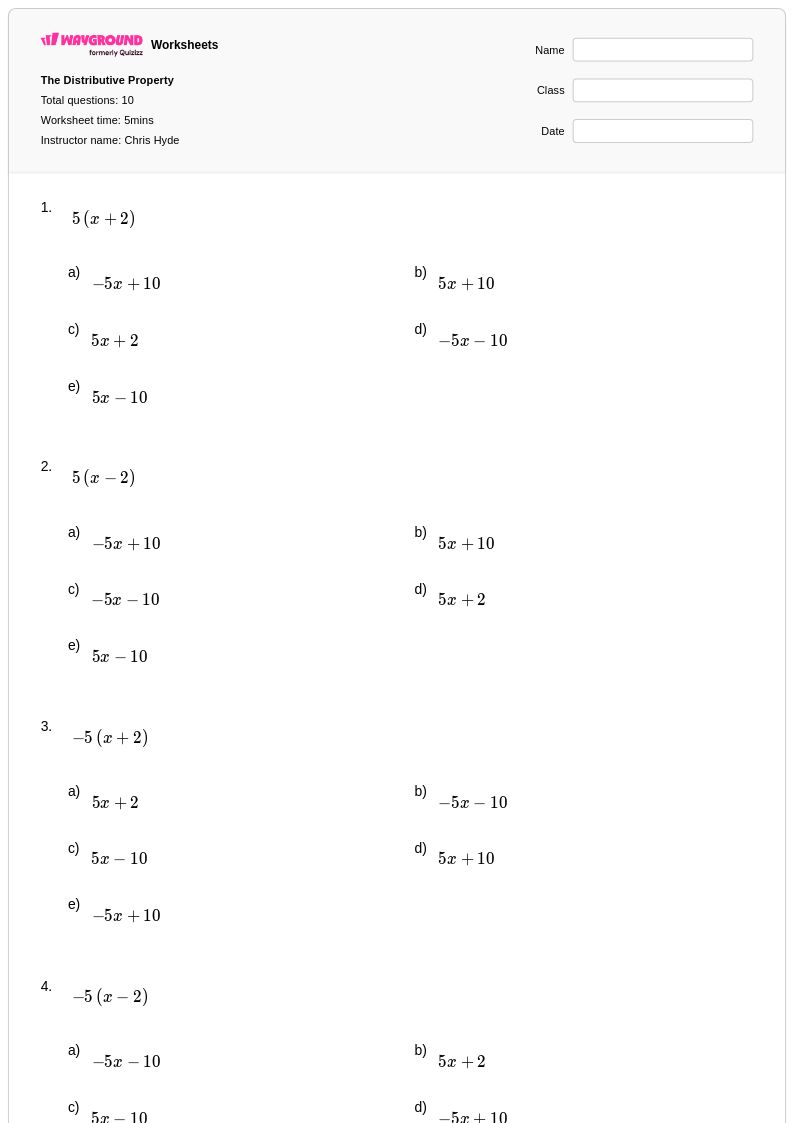
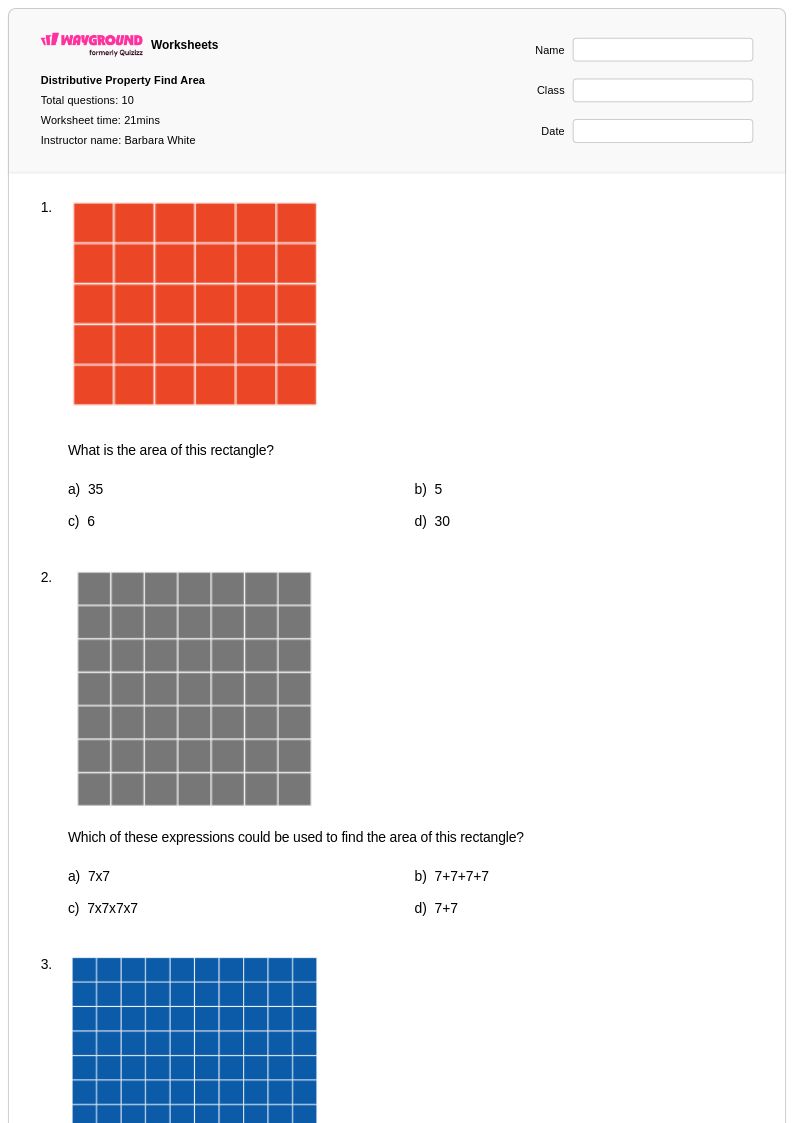
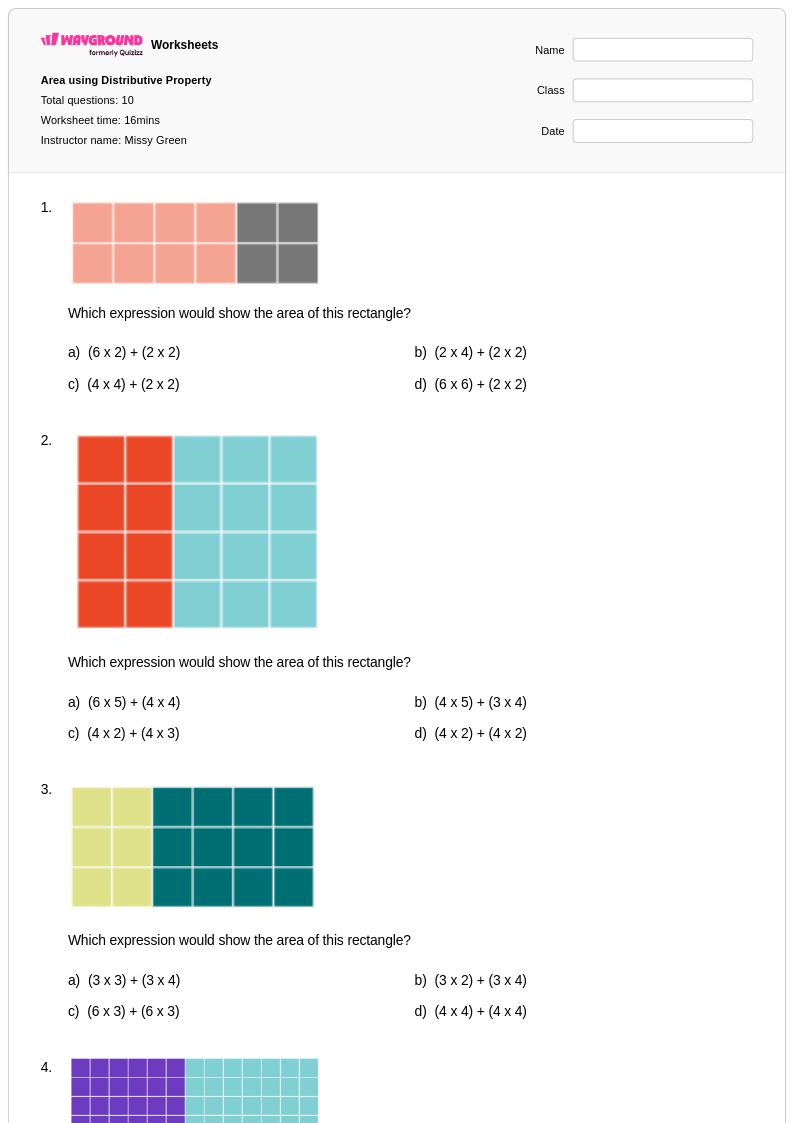
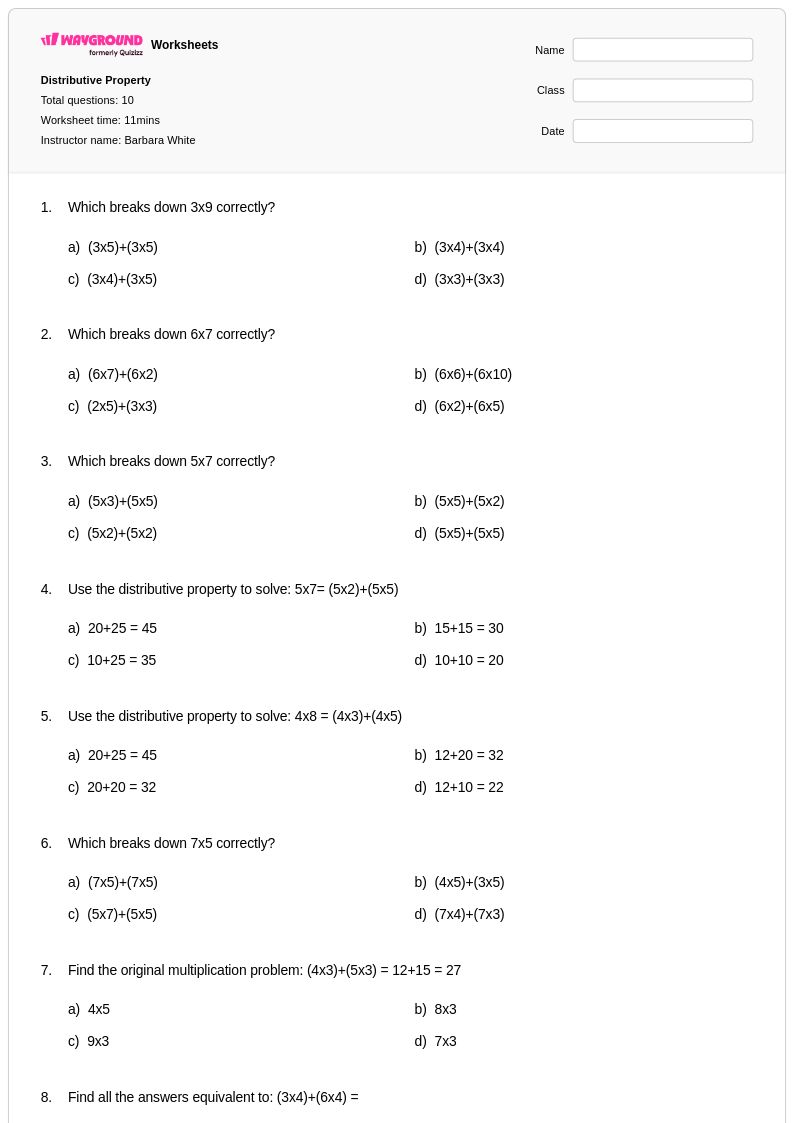
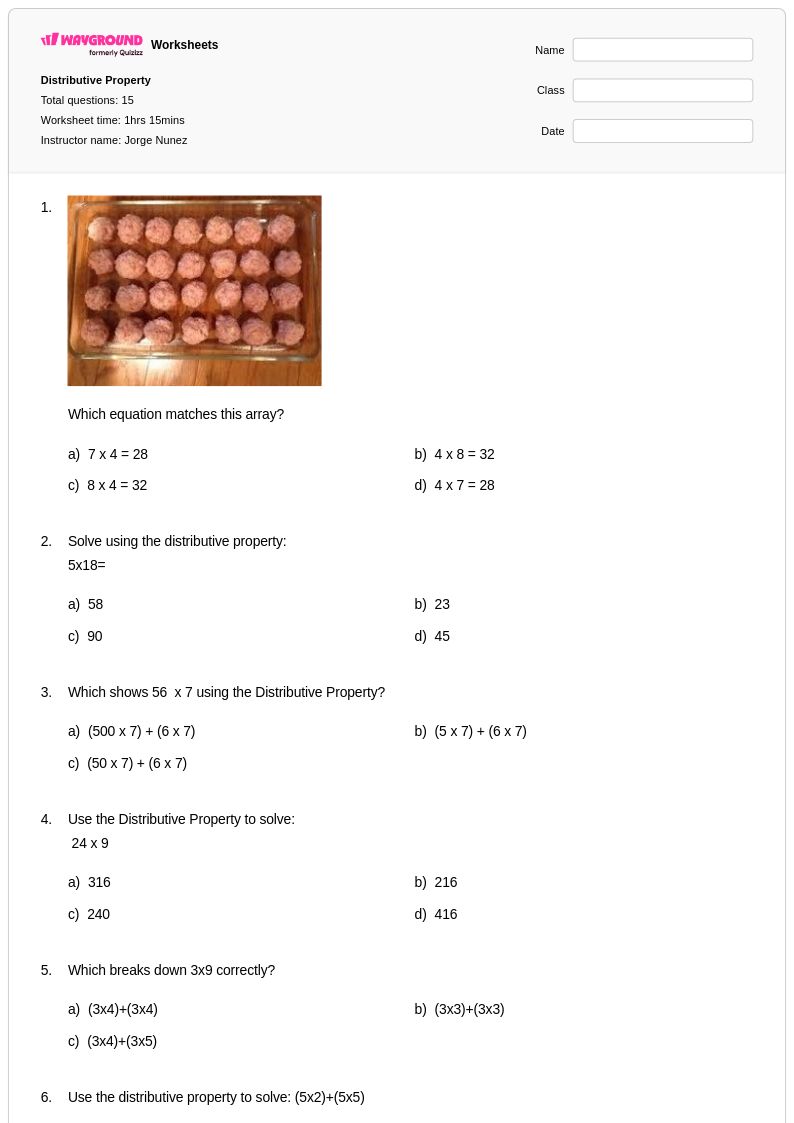
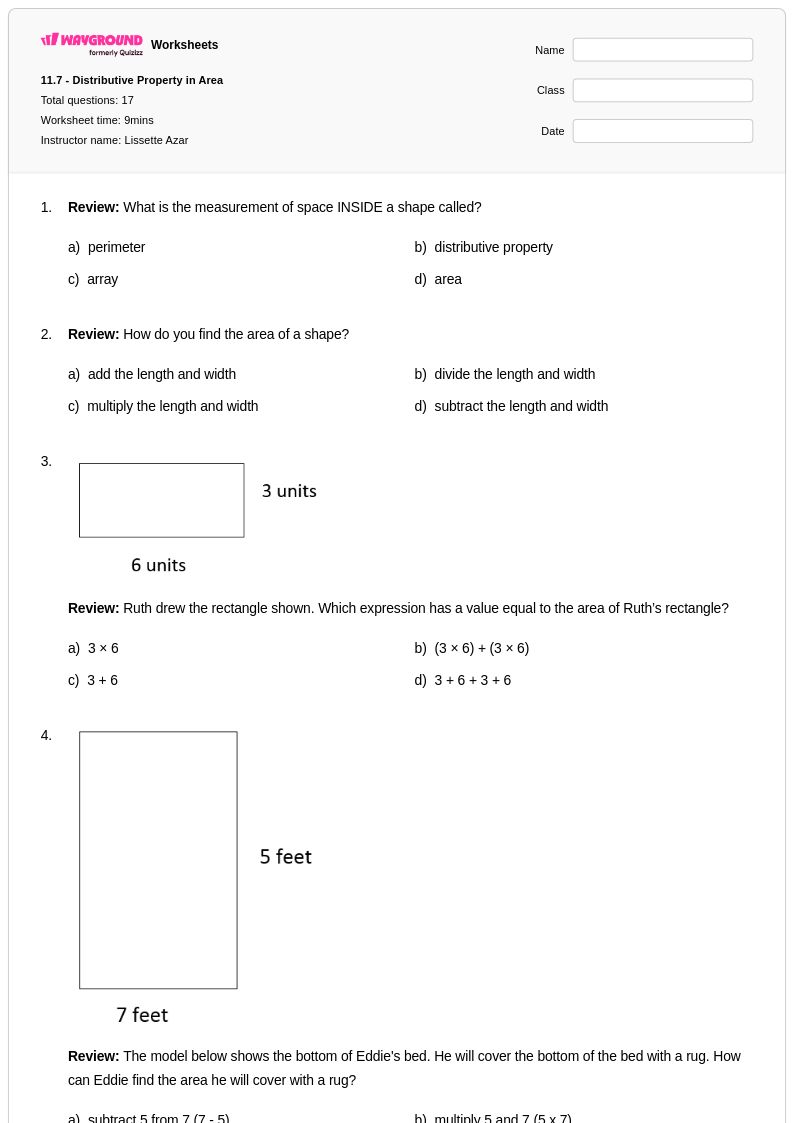
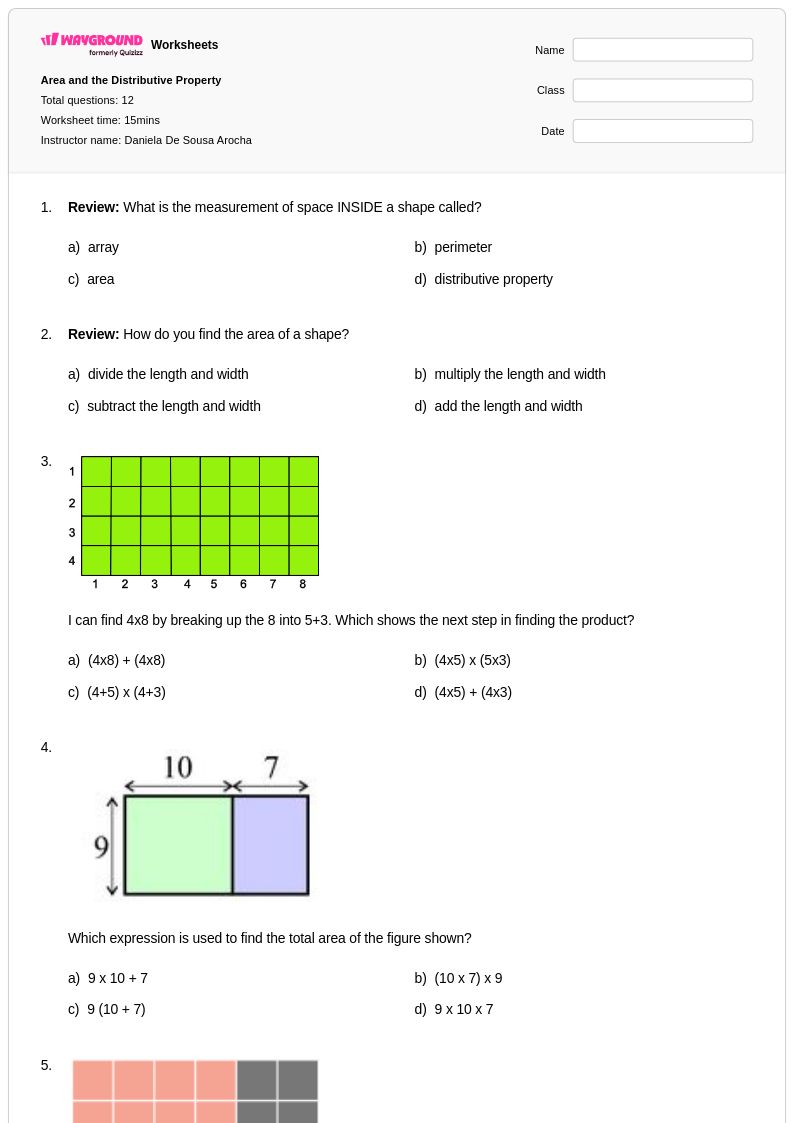
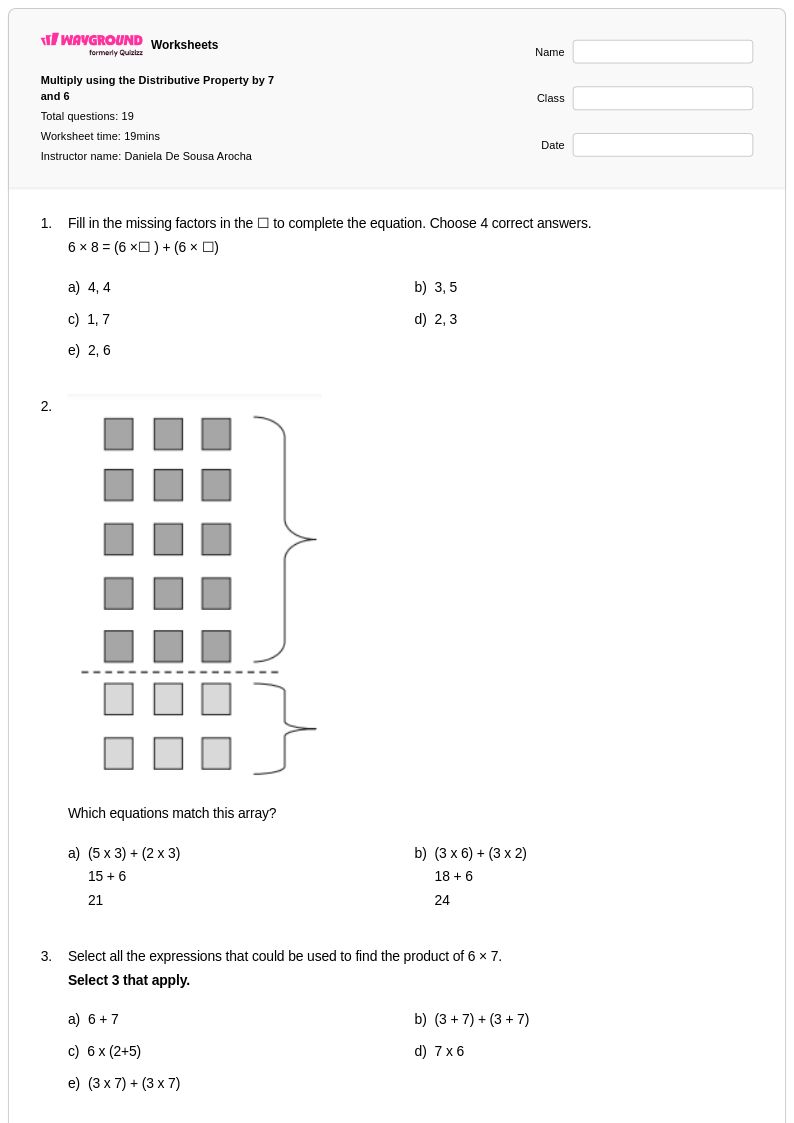
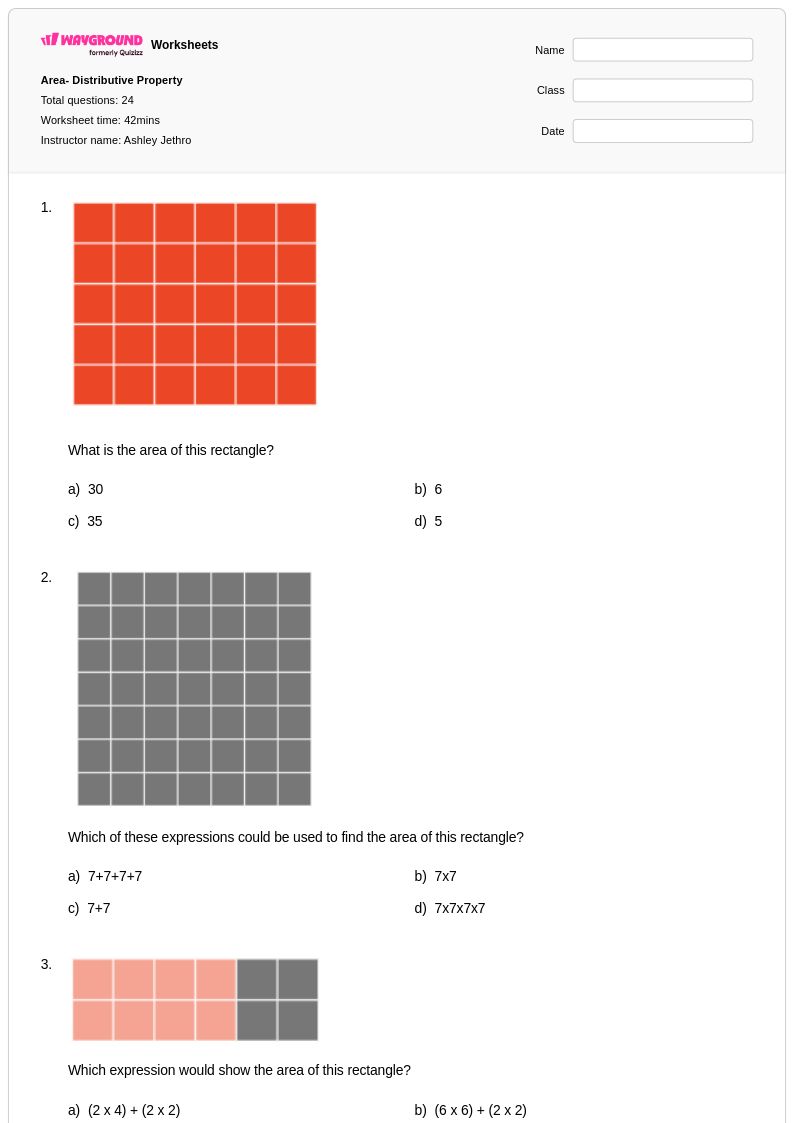
Distributive Property worksheets for Class 3 through Wayground provide essential practice for students learning to break apart multiplication and addition problems into manageable parts. These carefully designed resources help third-graders understand that multiplying a number by a sum equals the sum of multiplying that number by each addend separately, such as recognizing that 3 × (4 + 2) equals (3 × 4) + (3 × 2). The worksheets strengthen foundational algebraic thinking skills while building confidence with mental math strategies and problem-solving approaches. Each printable resource includes comprehensive practice problems that progress from concrete visual models to abstract number expressions, supported by detailed answer keys that enable independent learning and self-assessment. These free pdf materials serve as valuable supplements to classroom instruction, helping students master this critical mathematical property that forms the foundation for more advanced arithmetic concepts.
Wayground's extensive collection of teacher-created Distributive Property resources supports educators with millions of high-quality materials specifically aligned to Class 3 mathematics standards. The platform's robust search and filtering capabilities allow teachers to quickly locate worksheets that match their students' specific learning needs, whether for initial instruction, remediation, or enrichment activities. These versatile materials are available in both printable pdf format and interactive digital versions, providing flexibility for classroom use, homework assignments, or distance learning situations. Teachers can easily customize worksheets to differentiate instruction for diverse learners, adjusting difficulty levels and problem types to ensure every student receives appropriate challenge and support. The comprehensive nature of these resources streamlines lesson planning while providing consistent, standards-based practice that reinforces the Distributive Property concept through varied mathematical contexts and real-world applications.
FAQs
How do I teach the distributive property in Grade 3?
Third grade is where the distributive property becomes an explicit multiplication strategy, not just an implicit pattern. A good entry point is mental math: ask students how they'd solve 7 × 8 without memorizing it. Guide them to break 8 into 5 + 3, multiply each part by 7, then add. Once students see it as a useful tool — not just a rule to follow — they engage with it more readily. Area models and arrays remain helpful for students who need the visual anchor.
What exercises help third graders practice the distributive property?
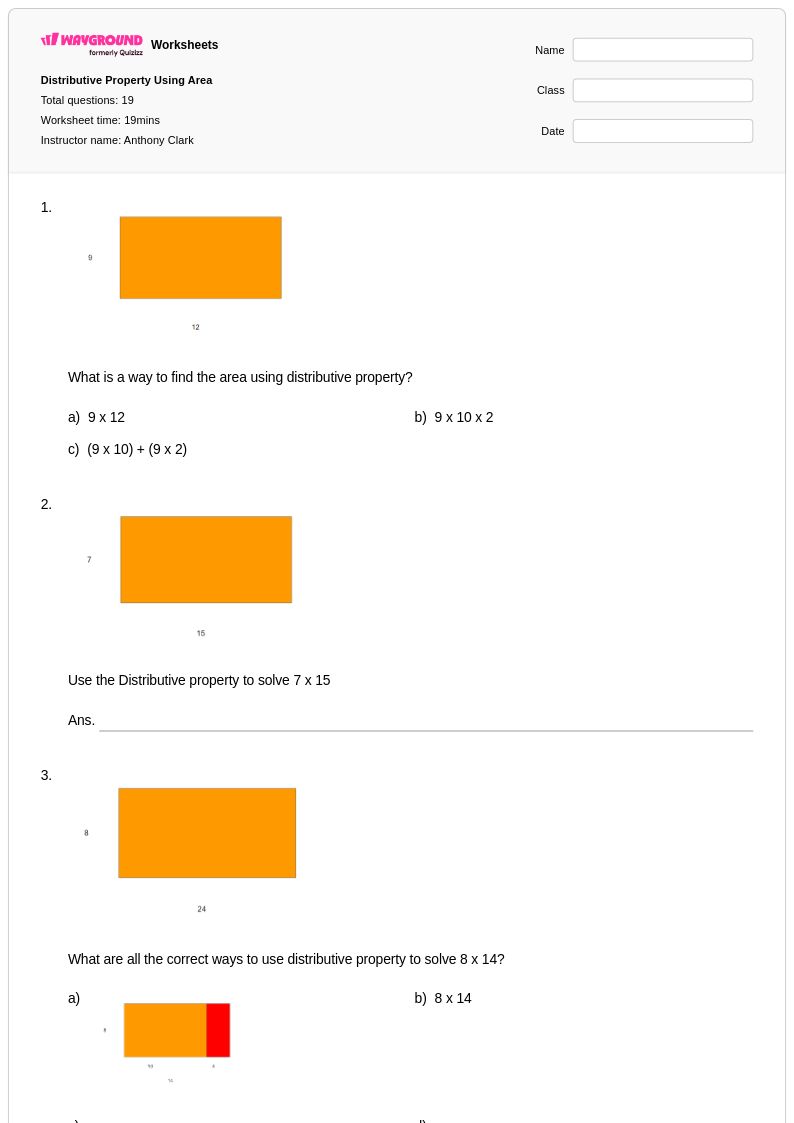
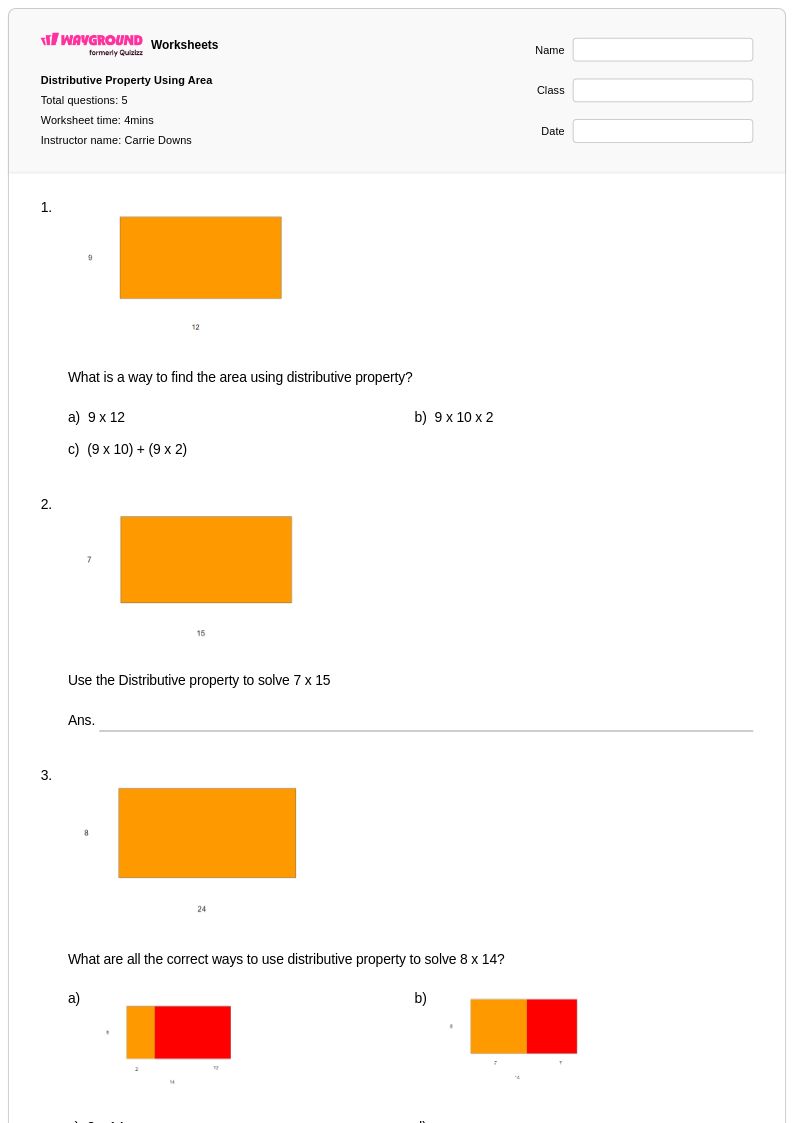
Three problem types cover the skill well at this grade: breaking apart a factor to solve a multiplication problem (7 × 6 = 7 × 4 + 7 × 2), matching equations to area models, and filling in missing numbers in a distribution equation. Wayground's Grade 3 worksheets move from concrete visual models to abstract number expressions, which mirrors how the concept should be taught — not jumping straight to symbols.
What mistakes do third graders make with the distributive property?
The most common error is breaking apart the wrong factor and then losing track of which number multiplies which part. For example, a student solving 6 × 7 might write 6 × (5 + 2) = 5 + 2 × 6, forgetting to distribute the 6 to both addends. A second issue is arithmetic errors inside the partial products — the distribution is set up correctly, but the multiplication of one part is wrong. Checking with an area model catches both types of mistakes.
How do I use Wayground's Grade 3 distributive property worksheets?
You can assign the worksheet as a digital quiz on Wayground — students work on any device and results come back to you automatically — or print the PDF for paper practice. Every worksheet includes a complete answer key. For printed submissions, the Wayground for Teachers app lets you scan student work to grade it, which saves time when you're working through a full class set.
How does the distributive property fit into the Grade 3 Common Core math progression?
Common Core makes the distributive property an explicit part of Grade 3 multiplication. Students are expected to use it as a strategy for multiplying — for example, knowing that 7 × 8 can be solved as (7 × 5) + (7 × 3). This builds directly on the array and equal-groups work from Grades 1–2, and it sets up Grade 4 work with multi-digit multiplication, where students apply the same logic to problems like 4 × 23 = (4 × 20) + (4 × 3).
How can I differentiate distributive property practice for my third-grade class?
For students still relying on visual supports, stay with area model problems longer before moving to purely symbolic equations — Wayground's worksheet settings let you adjust font size and spacing to make those visual models easier to work with. For students who need language support, the worksheet translation tool lets you provide the same problems in a student's home language without creating a separate assignment. Students who have the property down can be challenged with problems that ask them to find two different ways to break apart the same multiplication.