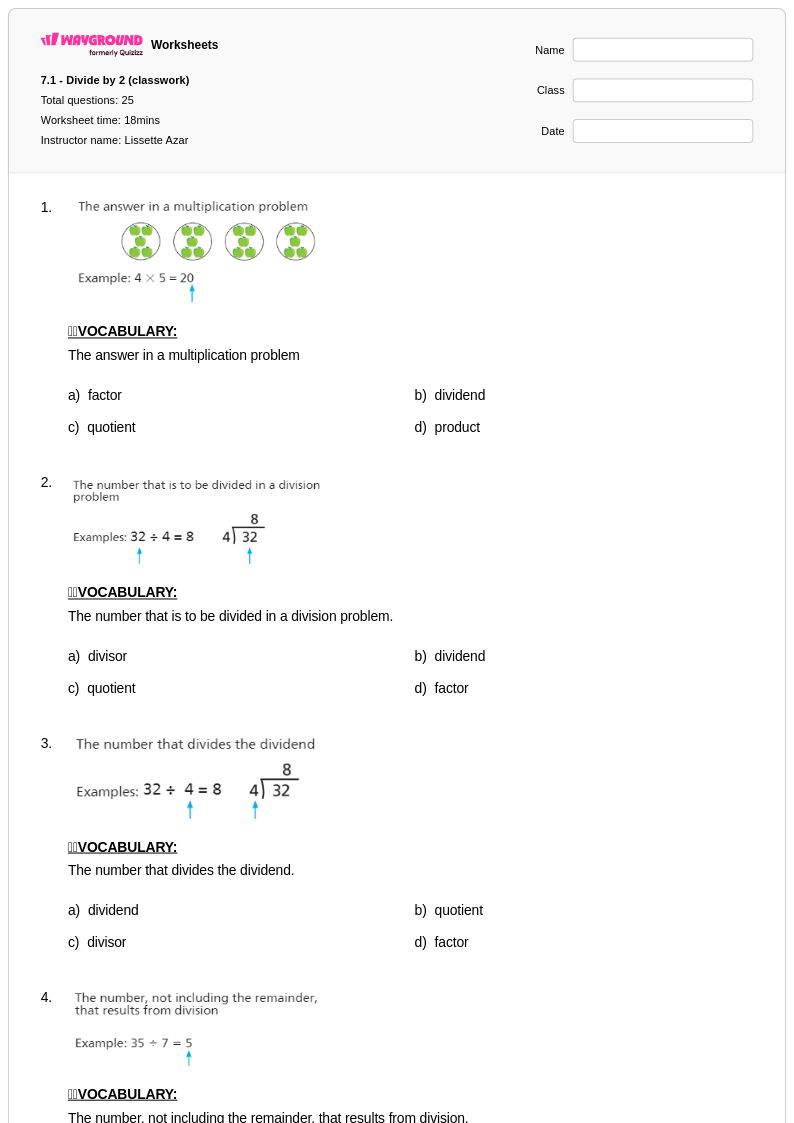
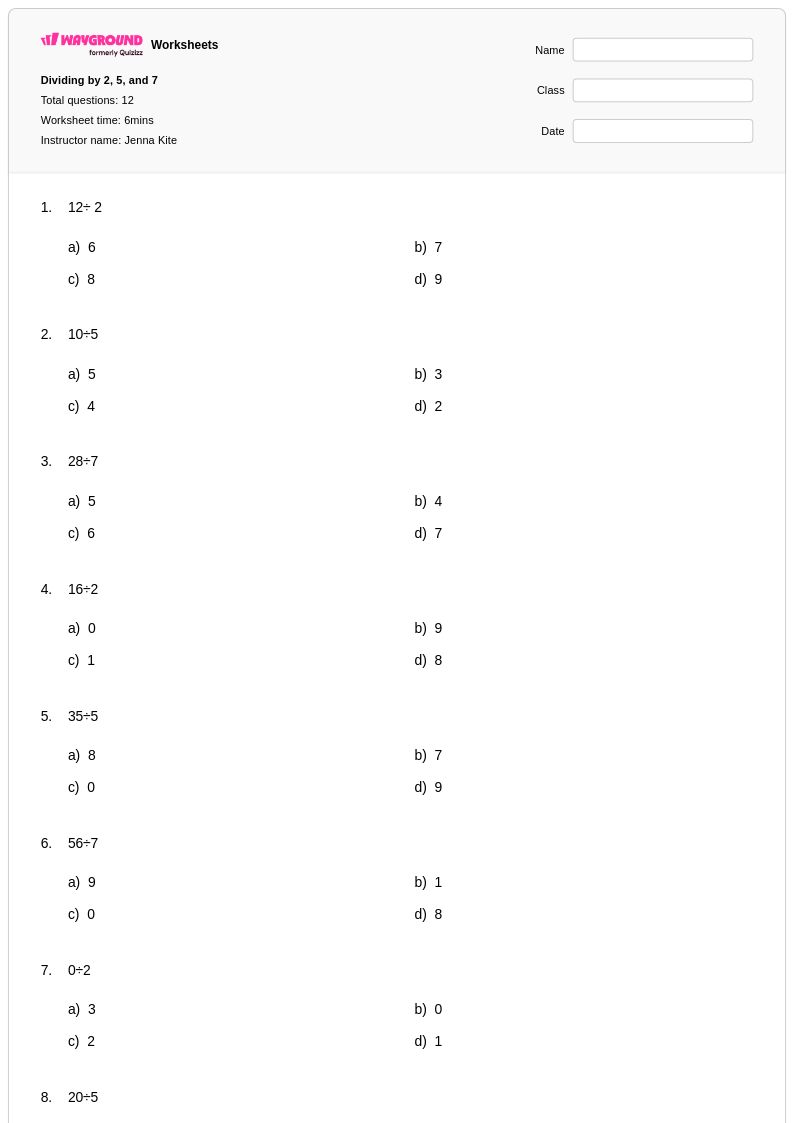
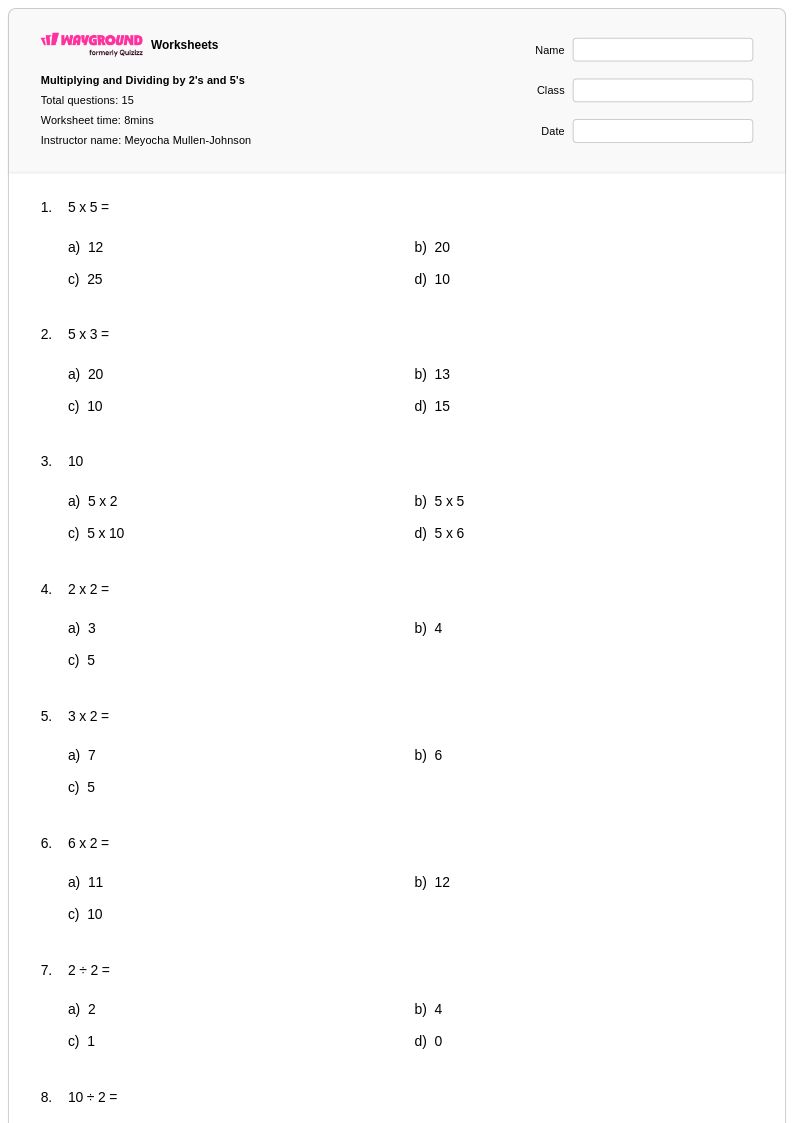
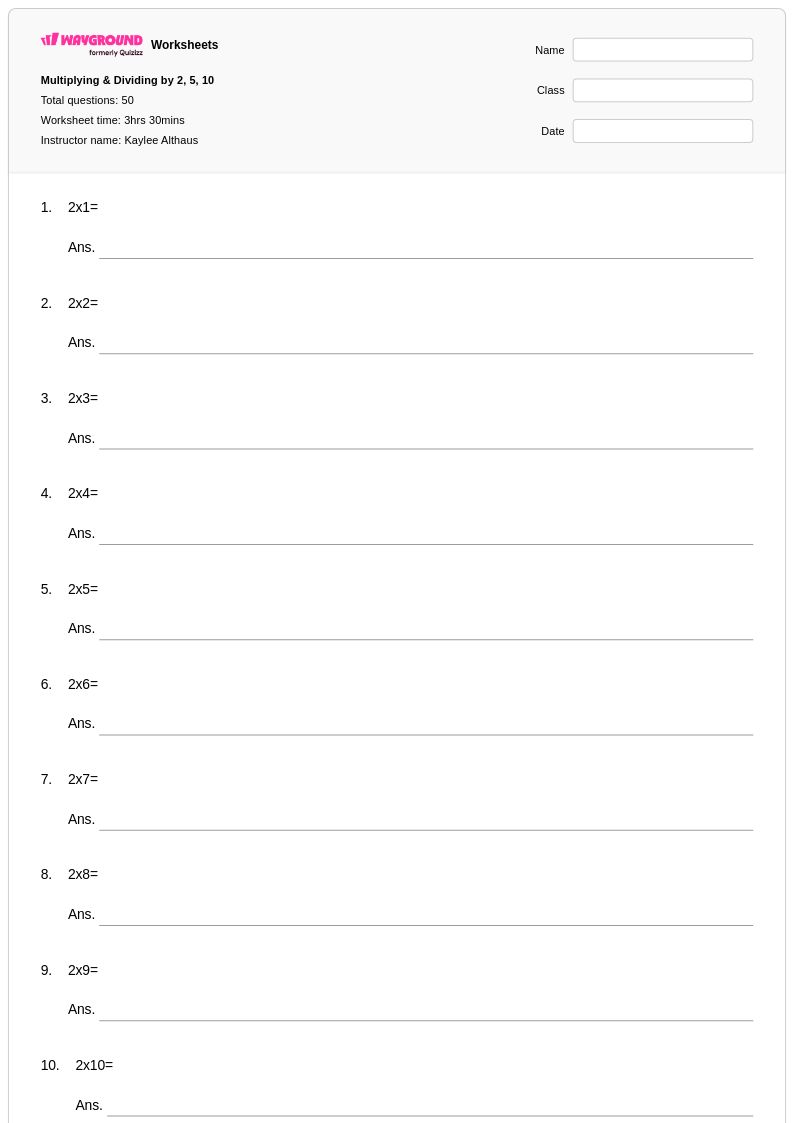
Free Printable Dividing by 2 Worksheets for Class 3
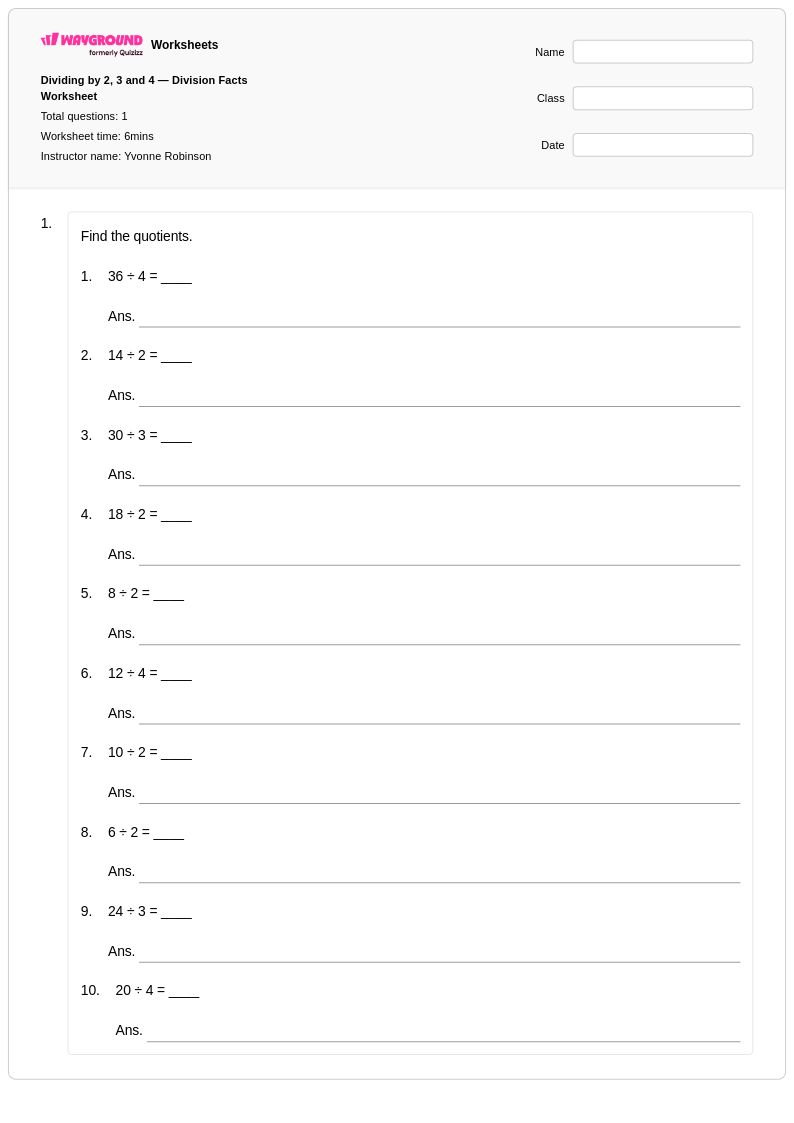
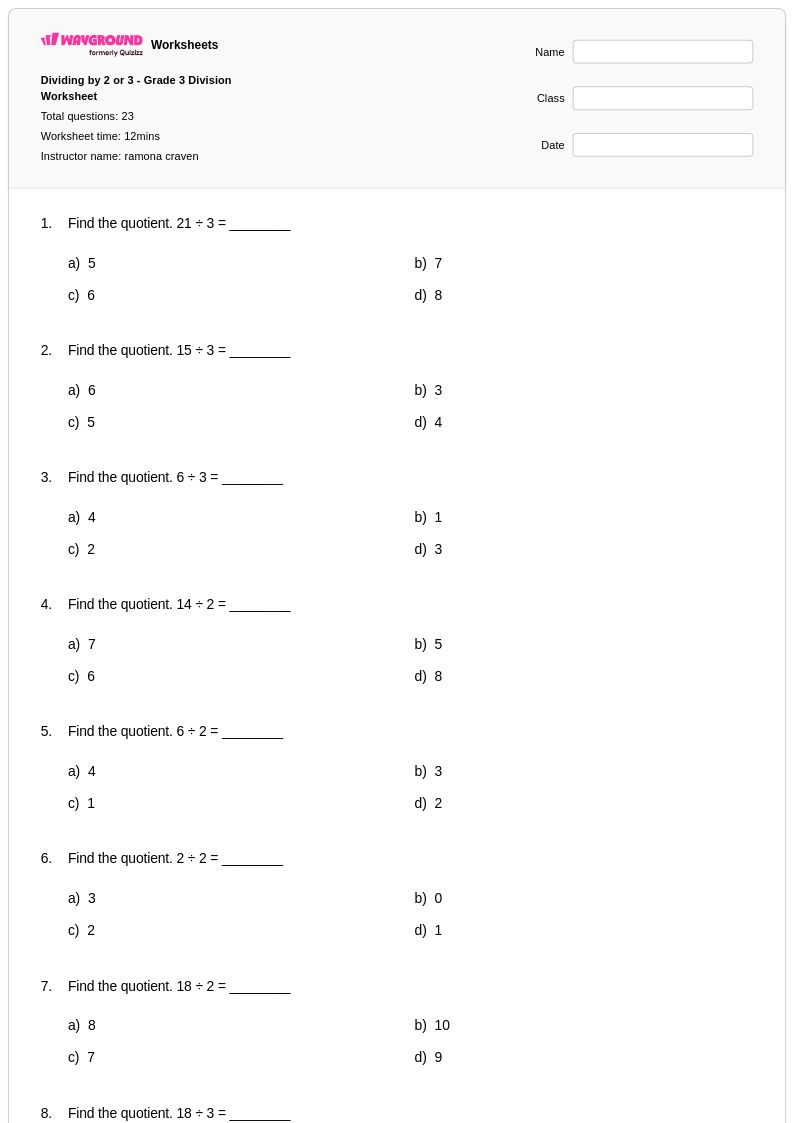
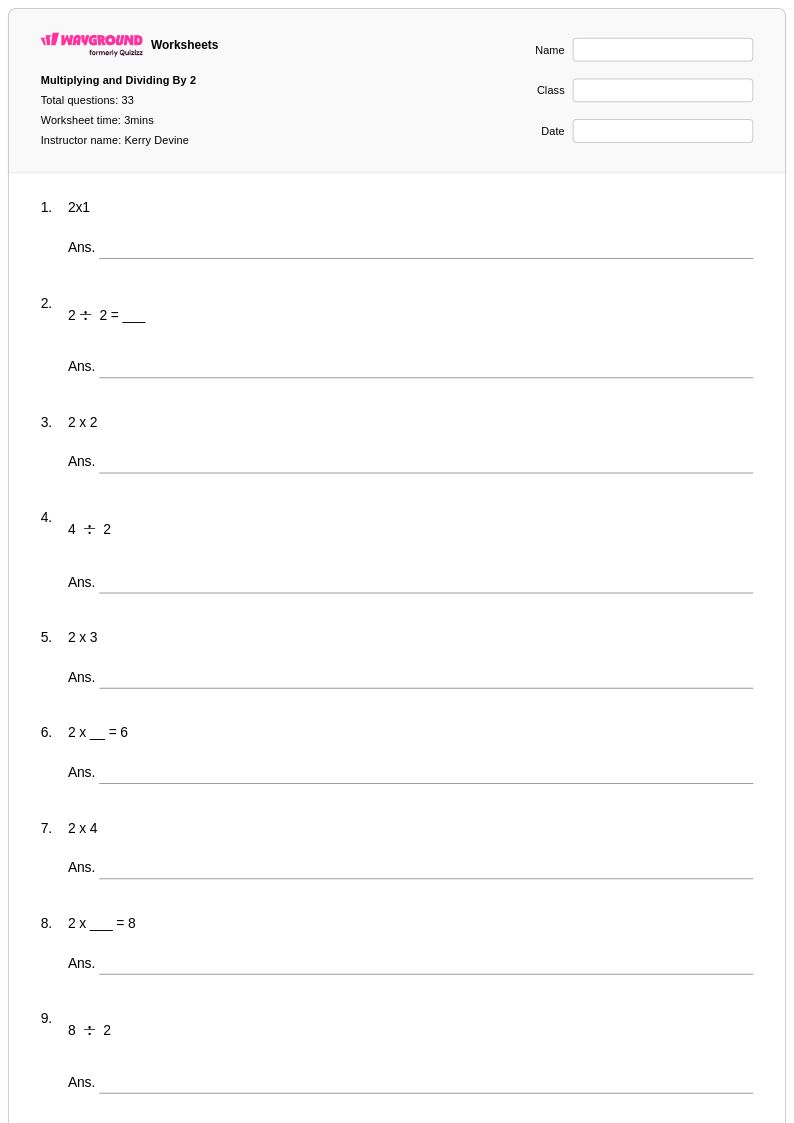
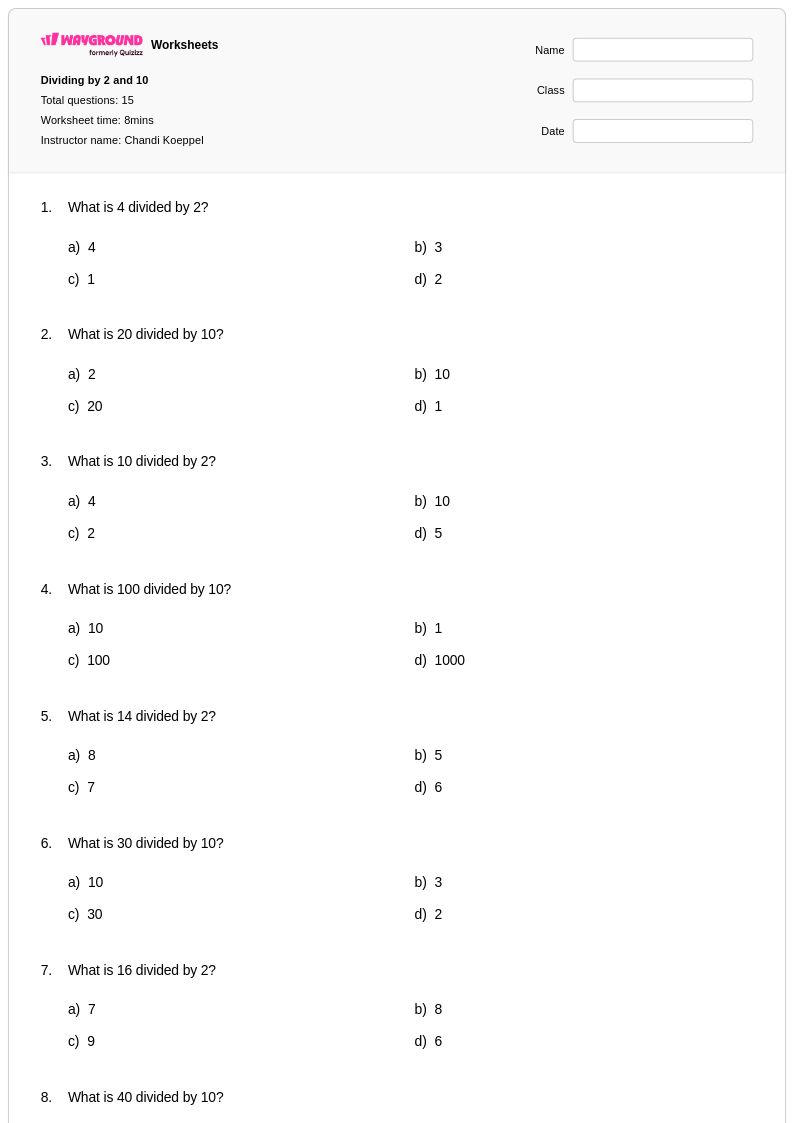
Wayground offers free Class 3 dividing by 2 worksheets as printable PDFs with answer keys to help students master basic division skills through engaging practice problems.
Explore printable Dividing by 2 worksheets for Class 3
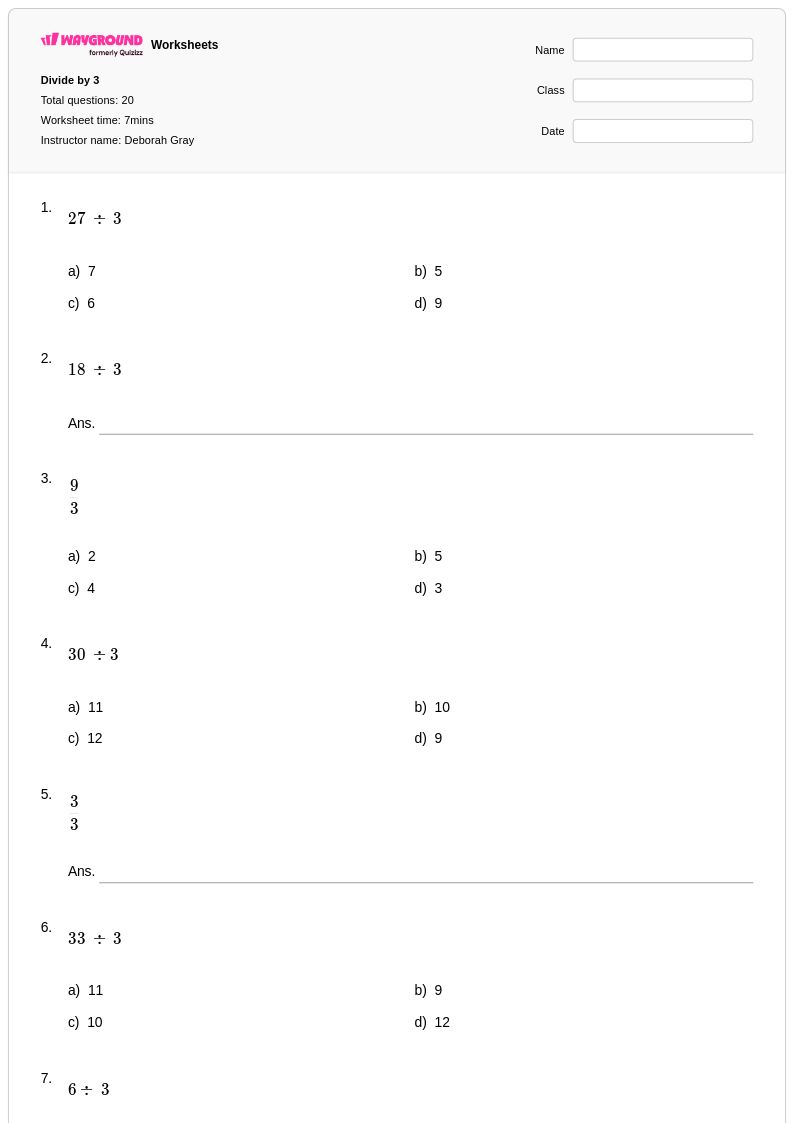
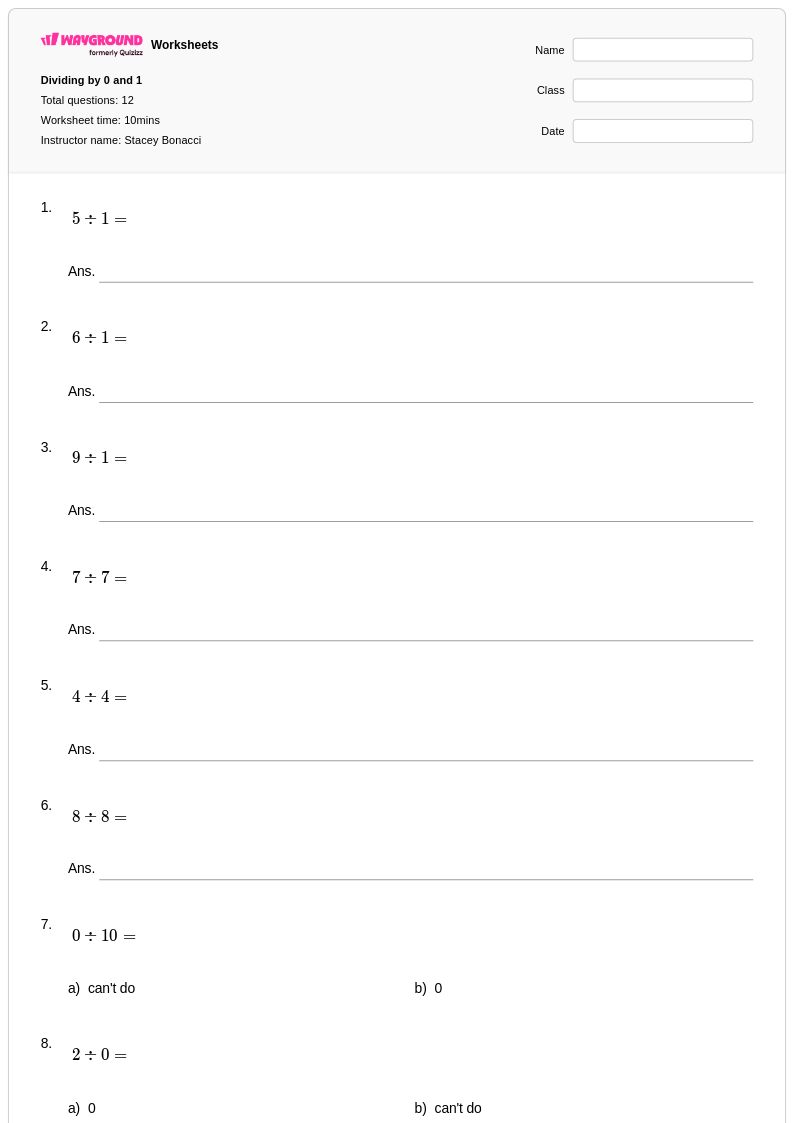
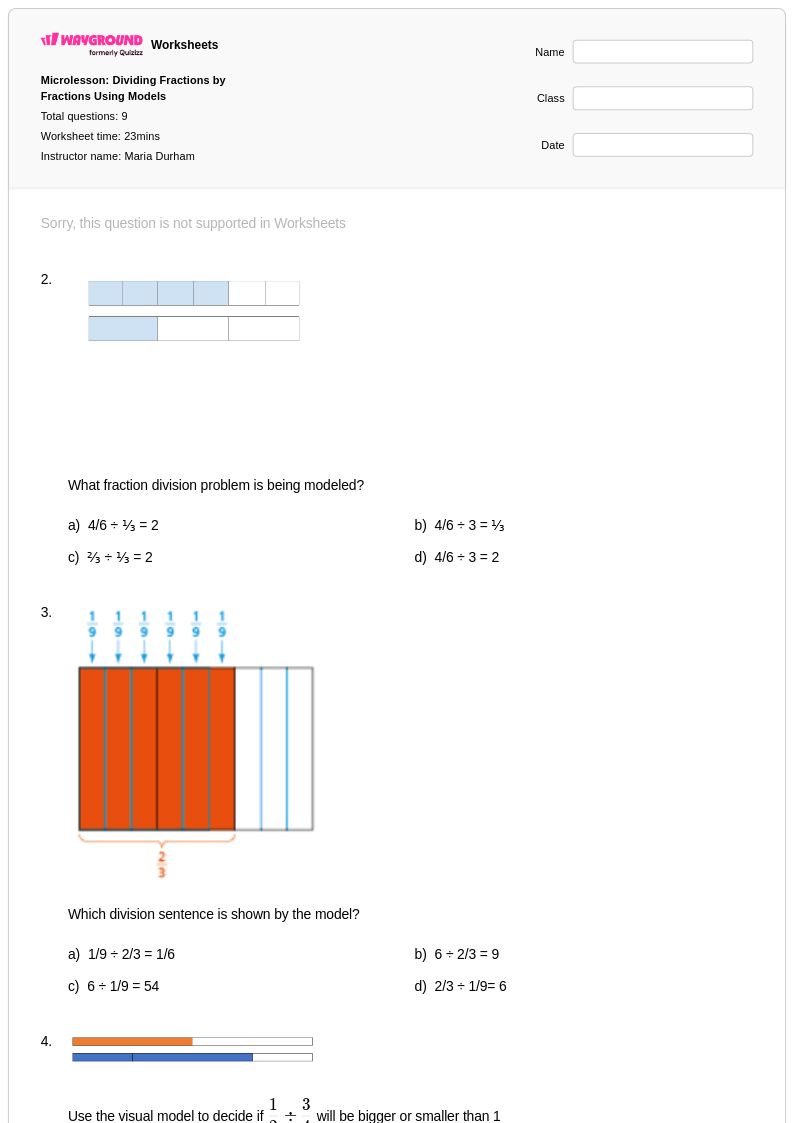
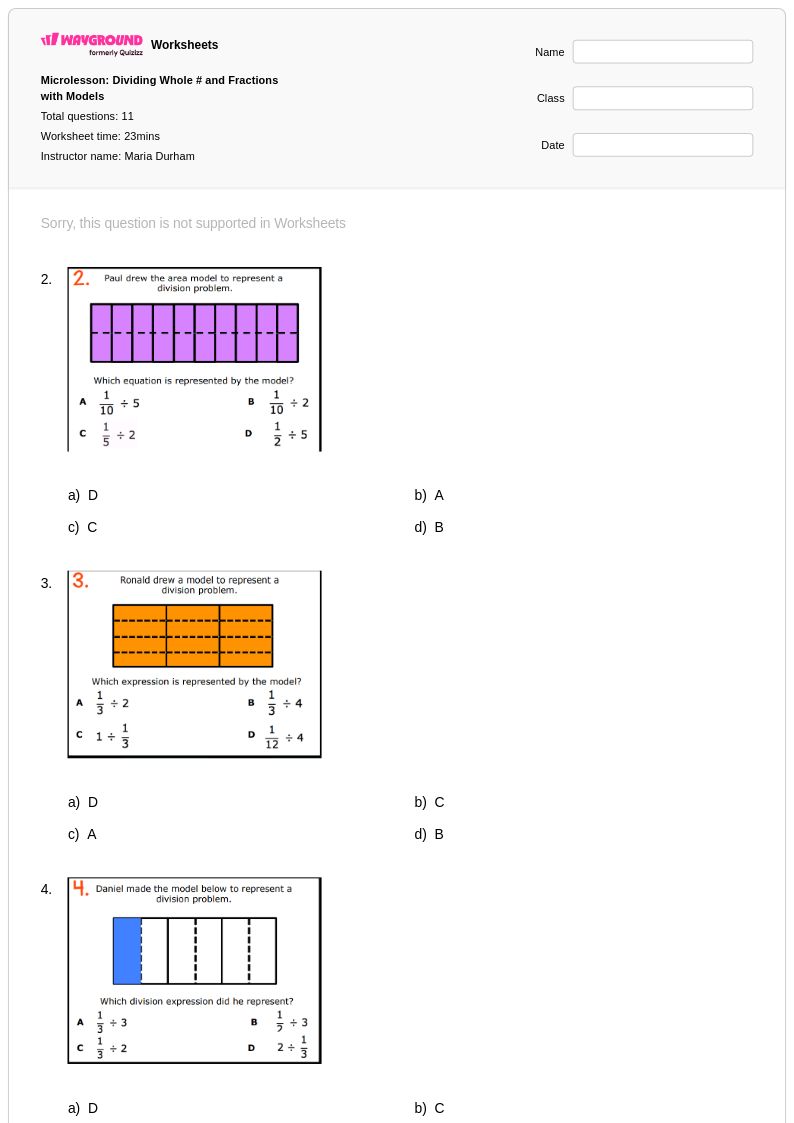
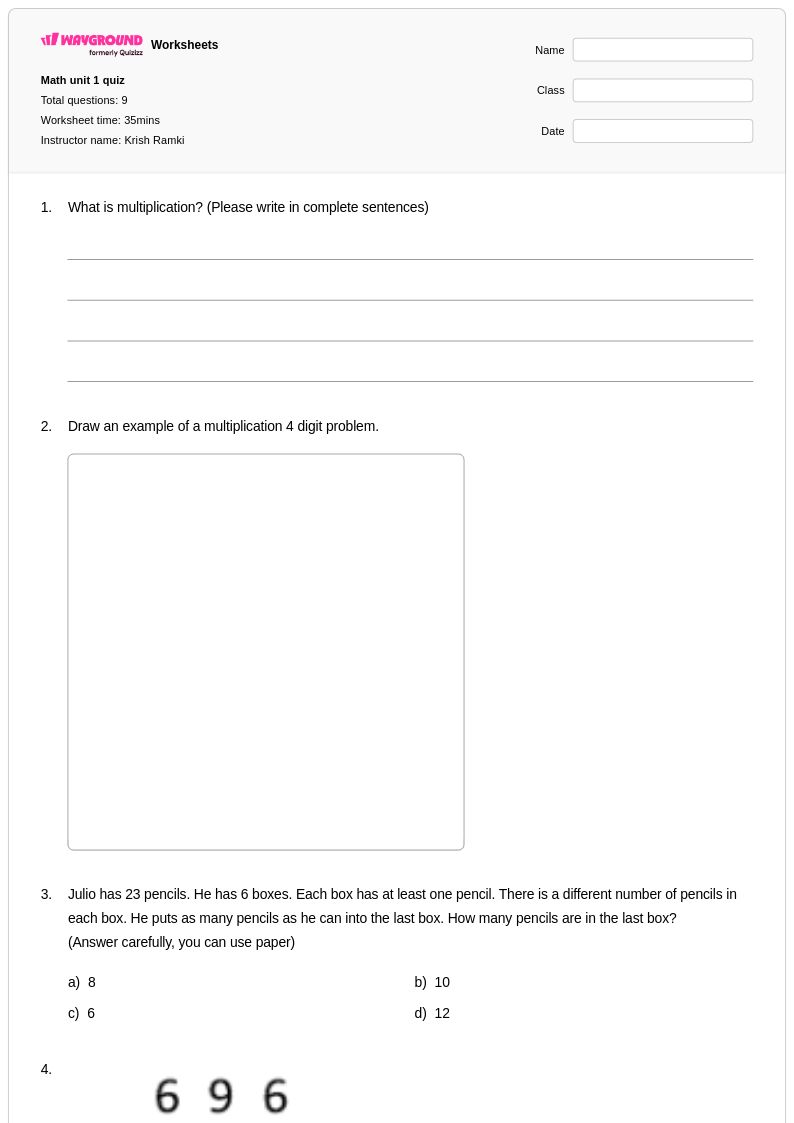
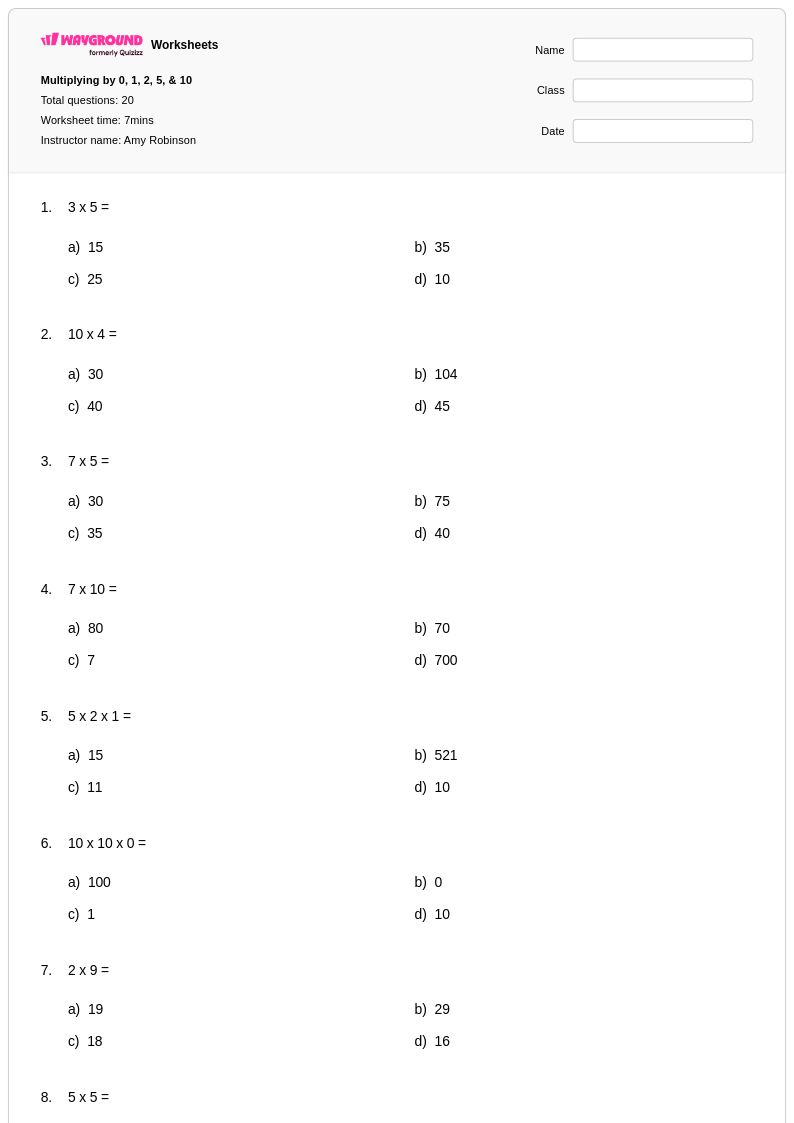
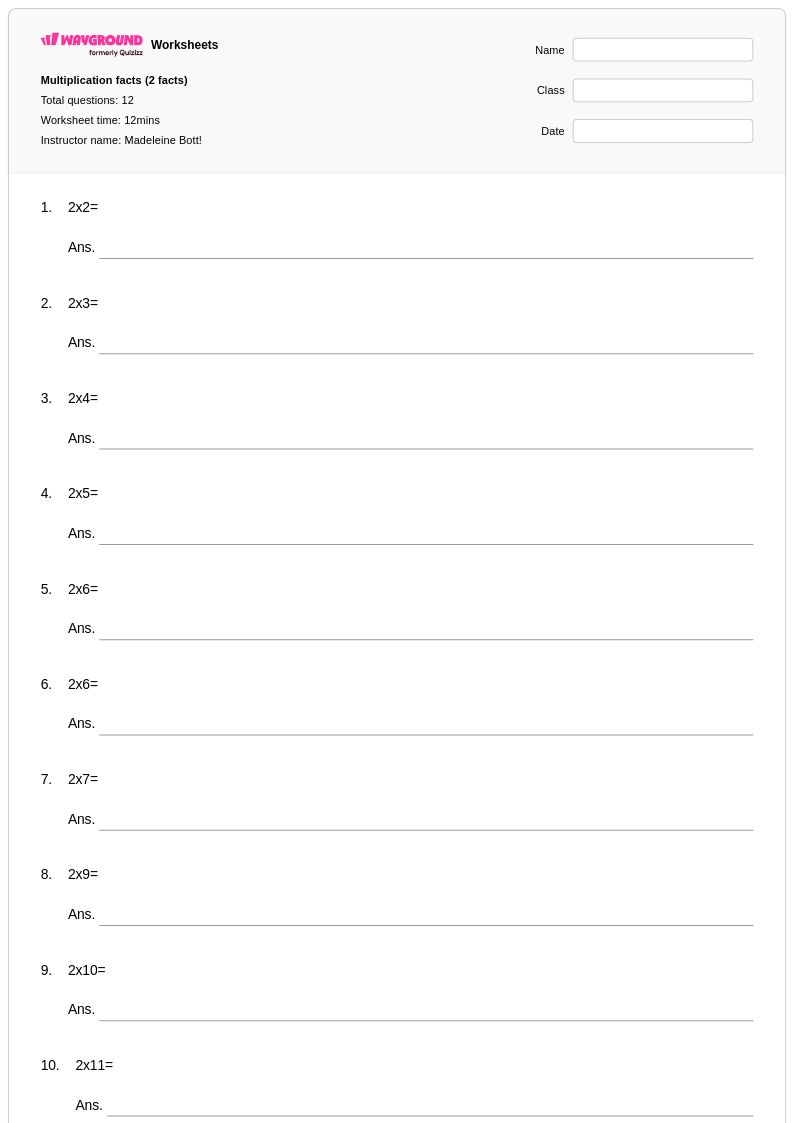
Dividing by 2 worksheets for Class 3 students through Wayground (formerly Quizizz) provide essential practice for mastering one of the fundamental division concepts in elementary mathematics. These carefully designed worksheets help third graders develop fluency with halving numbers and understanding the relationship between multiplication and division through systematic practice problems. Students strengthen their mental math skills, pattern recognition abilities, and number sense as they work through exercises that range from simple single-digit division to more complex problems involving larger numbers. Each worksheet collection includes comprehensive answer keys and is available as free printables in pdf format, making it easy for educators to implement immediate feedback and assessment in their classrooms.
Wayground (formerly Quizizz) empowers teachers with access to millions of educator-created worksheet resources specifically tailored for Class 3 division instruction, featuring robust search and filtering capabilities that help locate materials perfectly aligned with curriculum standards and learning objectives. The platform's differentiation tools enable teachers to customize worksheets based on individual student needs, whether for remediation support or enrichment challenges, while flexible formatting options provide both printable pdf versions and interactive digital alternatives. These comprehensive features streamline lesson planning by offering ready-to-use materials that support systematic skill practice, targeted intervention strategies, and ongoing assessment opportunities, allowing educators to focus more time on instruction and less on resource preparation while ensuring every student receives appropriate mathematical support.
FAQs
How do I teach dividing by 2 in Grade 3?
Third grade is where division becomes formal, so dividing by 2 shifts from an informal sharing concept to a fluency target. Students should be able to recall 2s division facts automatically and apply them to multi-digit problems — for example, using 6 ÷ 2 = 3 to reason through 60 ÷ 2 = 30. If students are still counting or drawing pictures for basic 2s facts, that's the gap to close before moving on to other divisors.
What exercises build dividing by 2 fluency for third graders?
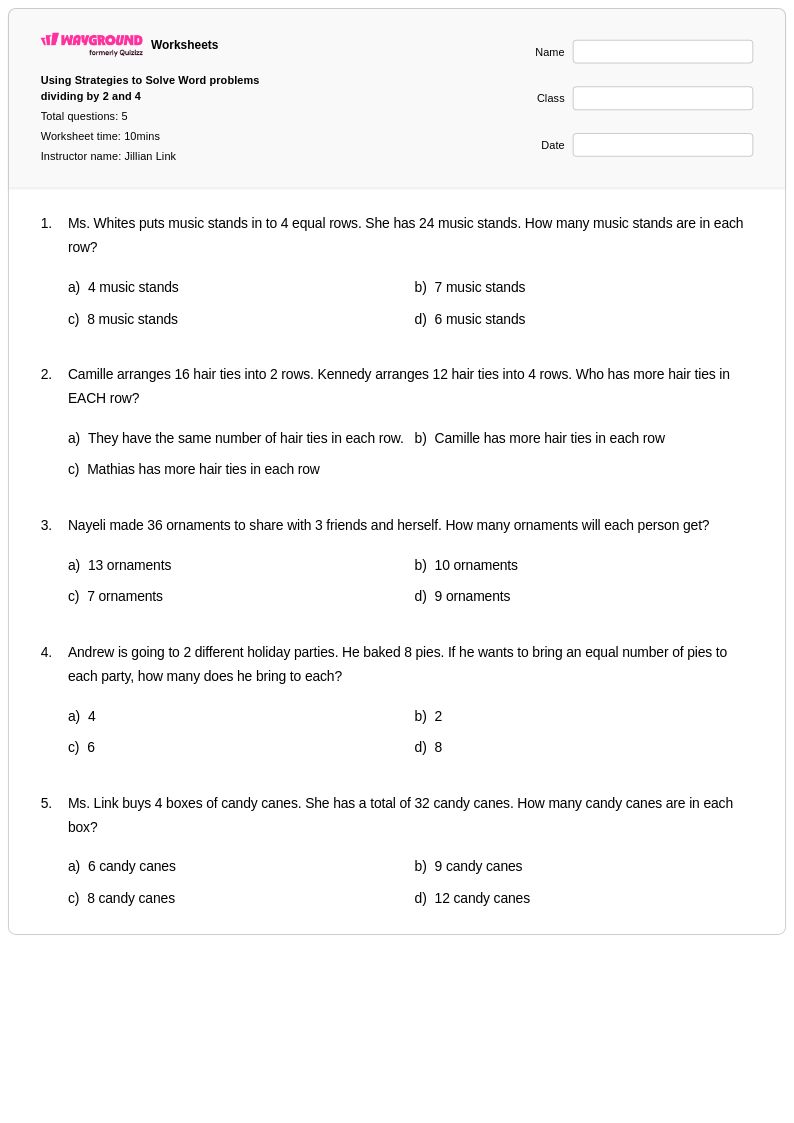
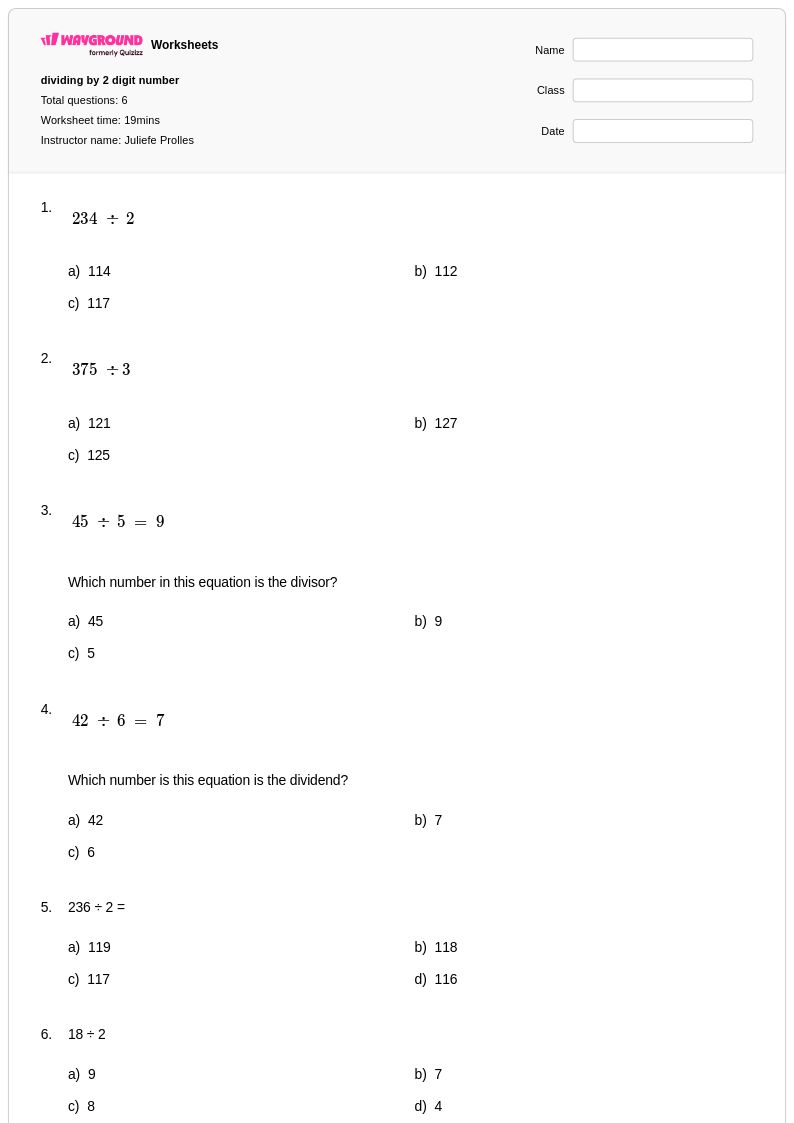
At this grade, practice should include: standard fact recall (quick equations up to 20 ÷ 2), application to larger numbers (48 ÷ 2, 86 ÷ 2), and word problems that require students to identify division as the right operation. The word-problem piece matters — third graders often know the fact but don't recognize when to use it in context.
What mistakes do third graders still make with dividing by 2?
Two issues show up even at this grade. Some students still confuse dividing by 2 with dividing by half, which produces the opposite result. Others can handle single-digit dividends fluently but stall on two-digit ones because they haven't internalized that the halving strategy works the same way regardless of the size of the number. Both are worth a targeted mini-lesson rather than just more drill.
How do I use these Grade 3 dividing by 2 worksheets?
You can print the PDFs and assign them on paper — each worksheet includes a complete answer key, and the Wayground for Teachers app lets you scan student submissions for grading so you're not scoring by hand. If you prefer digital, you can host the same worksheet as a quiz on Wayground and get results automatically. The digital route works especially well for quick formative checks before moving to harder divisors.
Is dividing by 2 part of the Grade 3 Common Core math standards?
Yes. Common Core expects third graders to fluently multiply and divide within 100, and the 2s facts are the starting point for that fluency. The standard specifically frames division as finding an unknown factor — so 14 ÷ 2 = ? is understood as 2 × ? = 14. Mastering the 2s division facts in Grade 3 is the foundation students need before tackling the 3s, 4s, and beyond in the same year.
How can I differentiate dividing by 2 practice for my Grade 3 class?
For students who need more support, the reduced answer choices accommodation is useful on multiple-choice problems — narrowing from four options to two keeps the focus on the math rather than the decision load. For students who are ready to extend, the same worksheet can be a starting point before moving to mixed-divisor practice. Wayground also lets you translate worksheets for English language learners, which matters in Grade 3 when word problems become a bigger part of division practice.