Free Printable Ear Notching Worksheets for Class 7
Class 7 ear notching worksheets and printables help students master livestock identification techniques through hands-on practice problems, featuring free PDF resources with comprehensive answer keys for effective life science learning.
Explore printable Ear Notching worksheets for Class 7
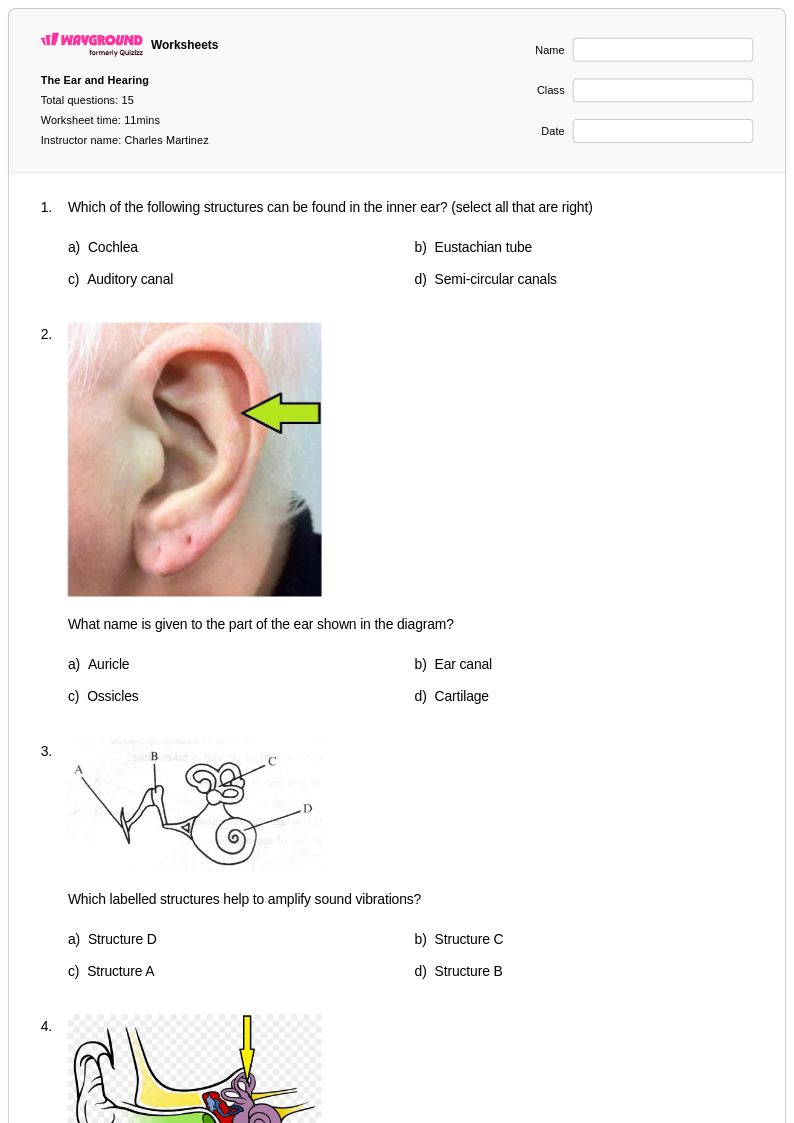
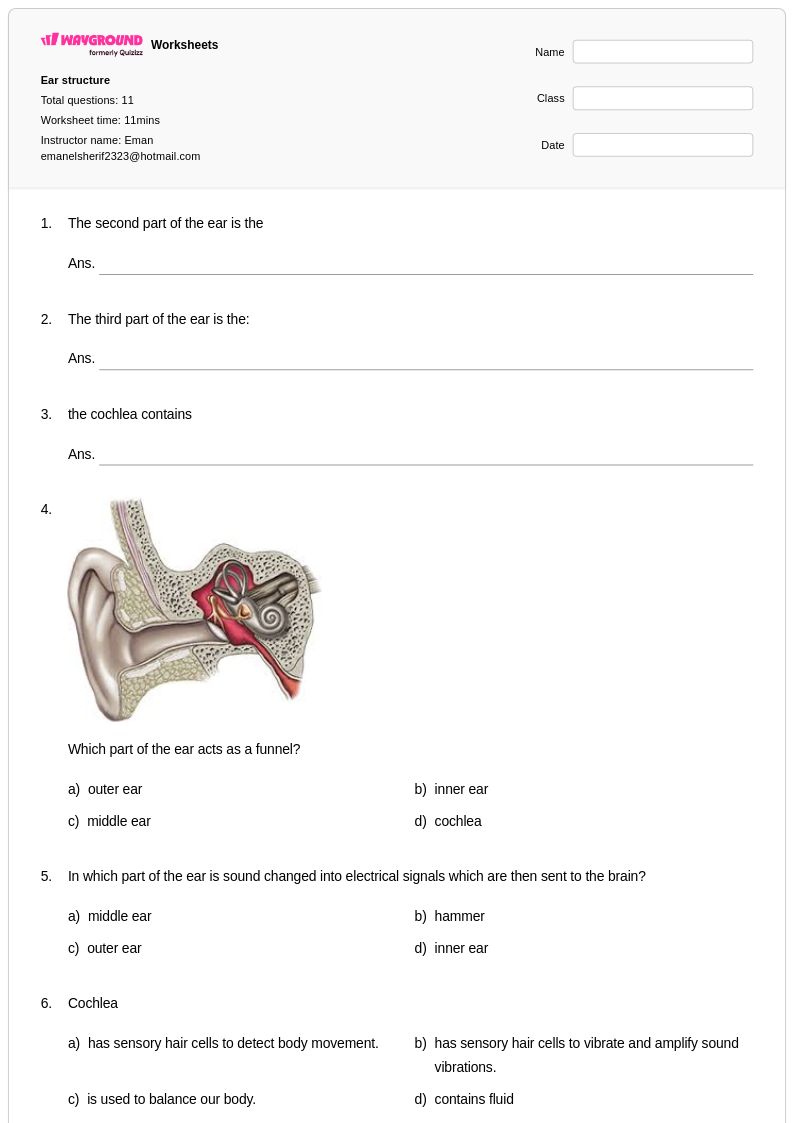
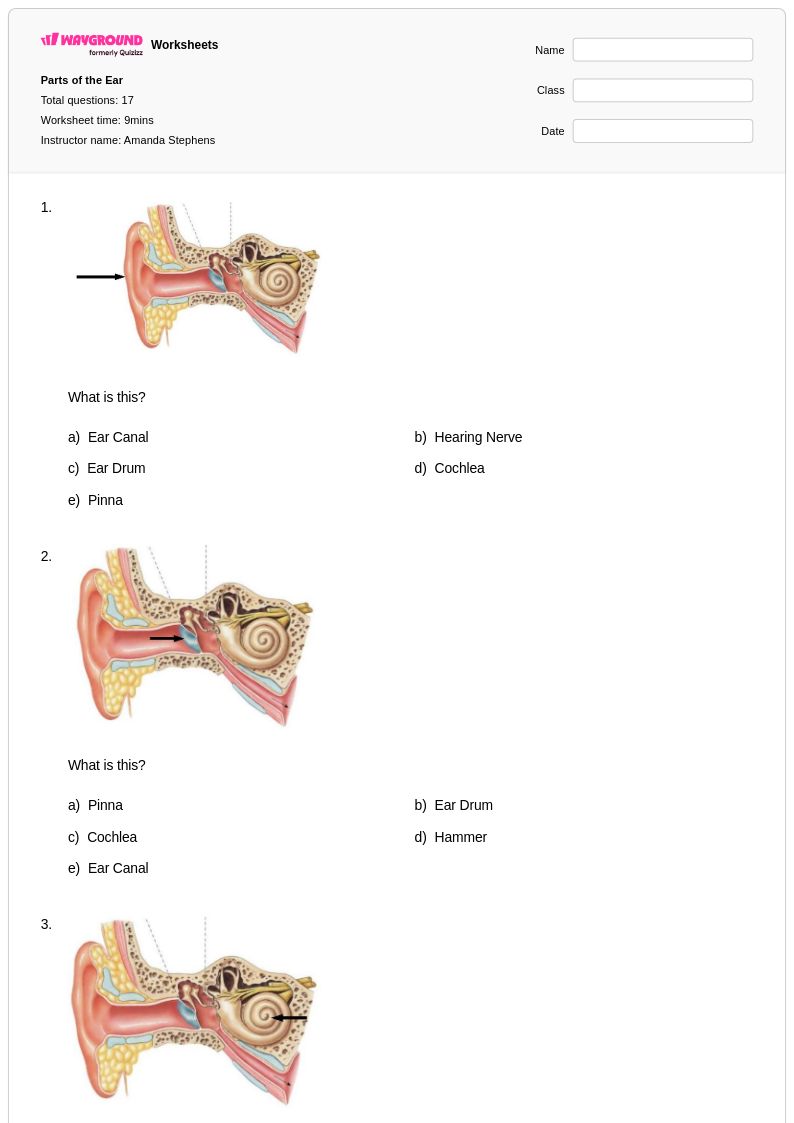
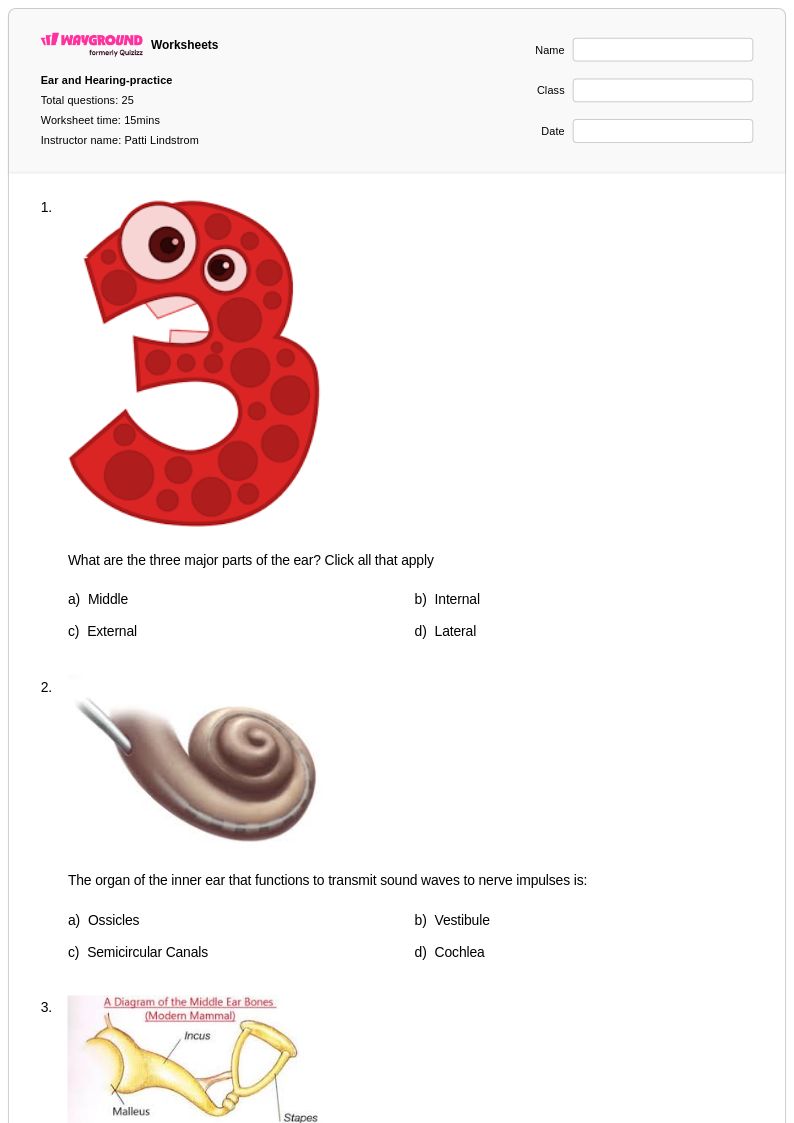
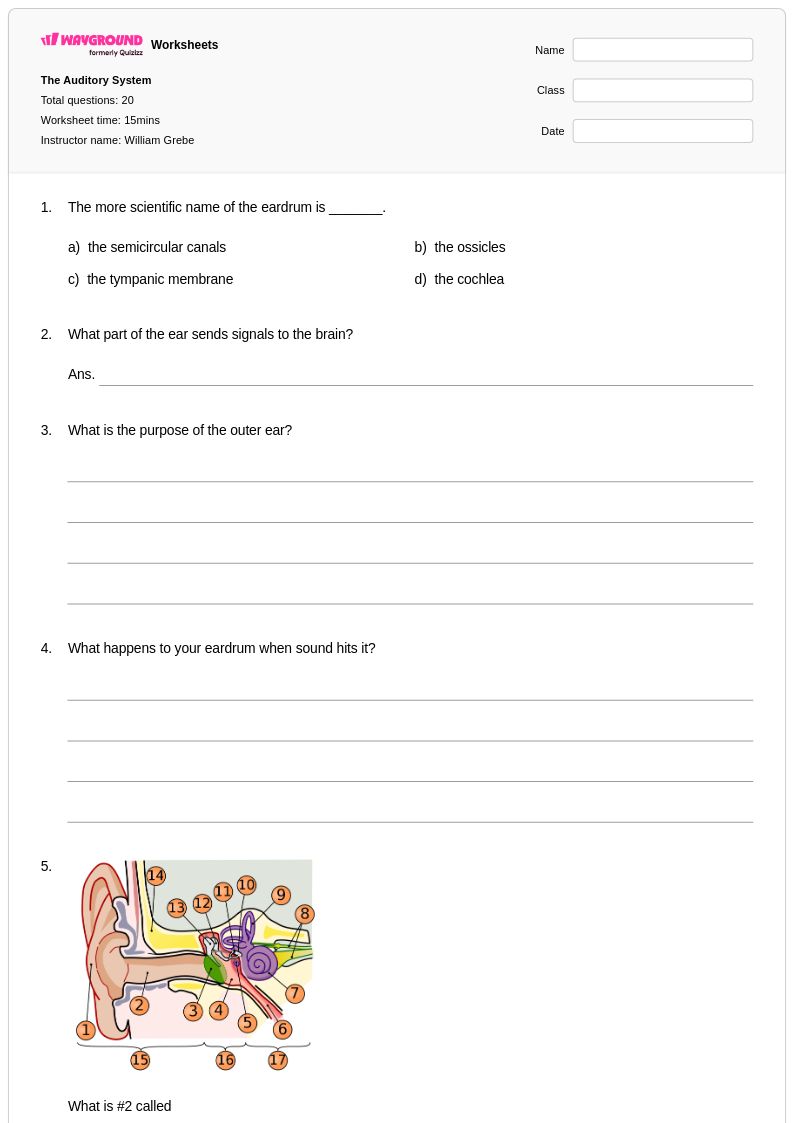
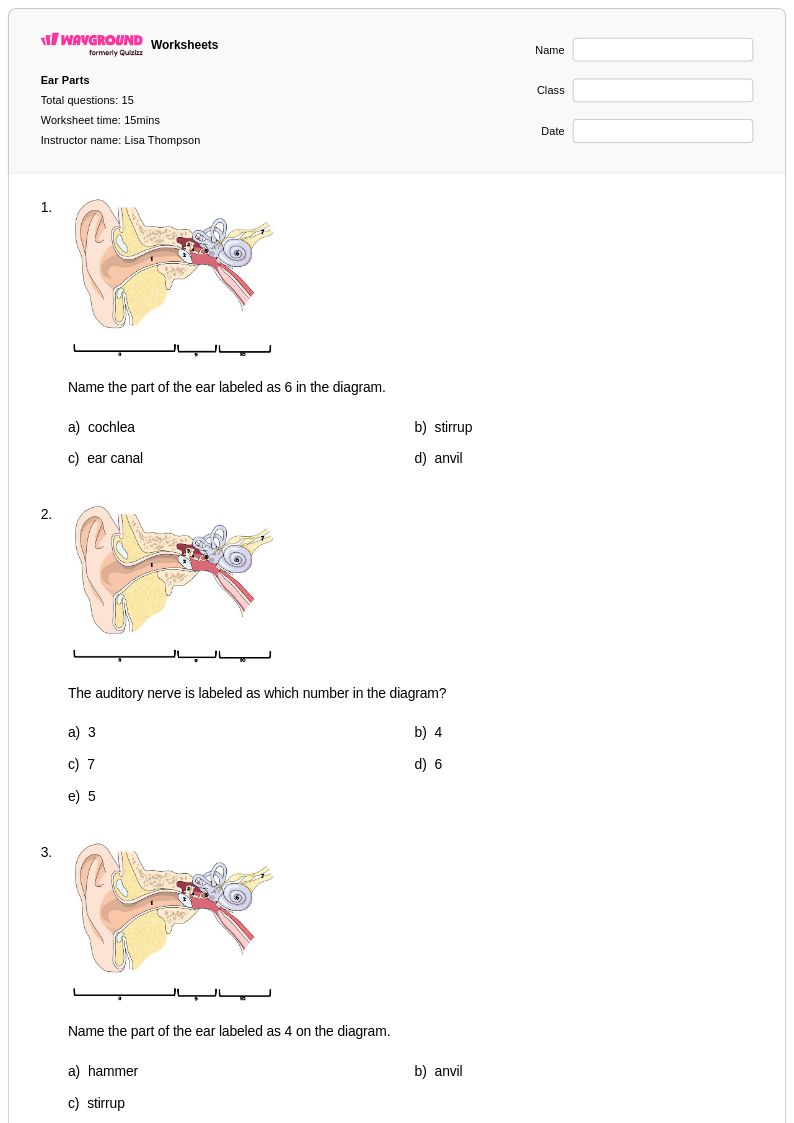
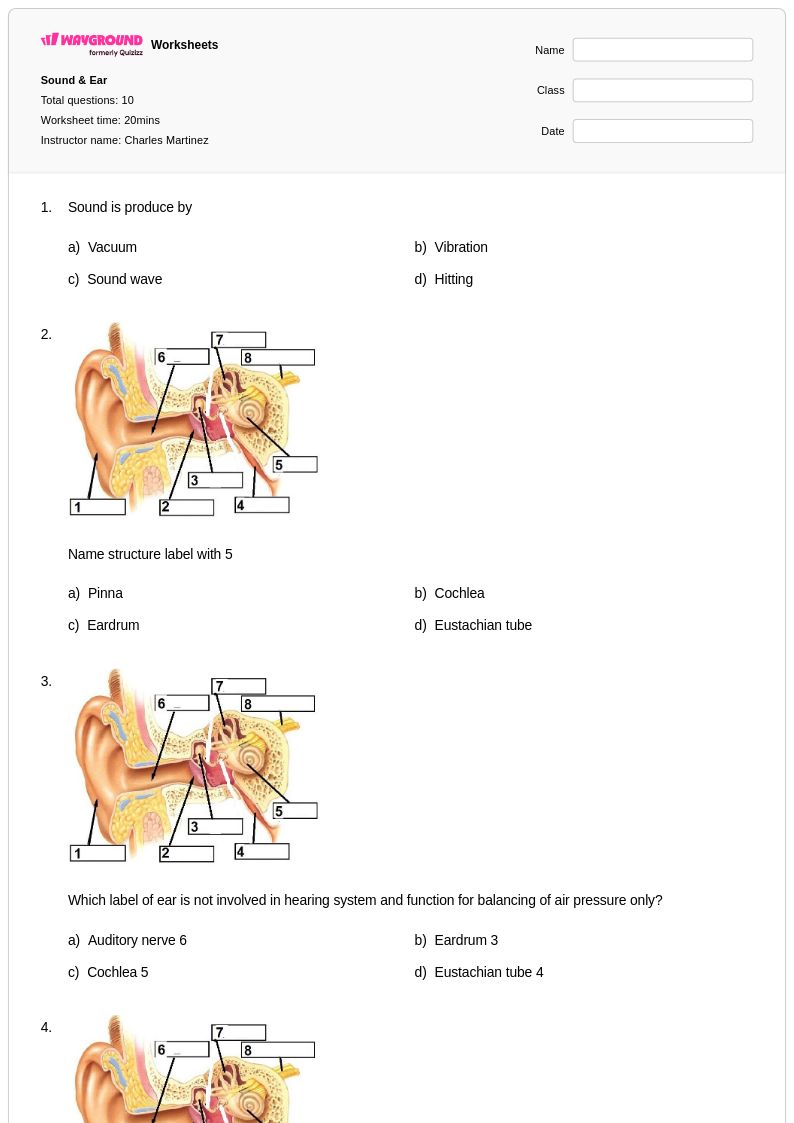
Ear notching worksheets for Class 7 students provide essential practice in understanding this important livestock identification technique used in agricultural and veterinary sciences. These comprehensive resources help seventh-grade learners master the systematic method of creating specific notch patterns in pig ears to establish permanent identification records. Students develop critical thinking skills as they interpret notching charts, calculate numeric values from ear notch combinations, and understand the practical applications of this identification system in modern farming operations. The worksheets include detailed practice problems that guide students through reading existing notch patterns and designing new identification sequences, while answer keys support independent learning and allow educators to efficiently assess student comprehension of this specialized life science topic.
Wayground, formerly Quizizz, empowers educators with an extensive collection of teacher-created ear notching resources that align with Class 7 life science standards and agricultural education curricula. Teachers can access millions of professionally developed worksheets and easily search and filter materials based on specific skill levels, learning objectives, and classroom needs. The platform's robust differentiation tools allow instructors to customize content for diverse learners, providing additional support for struggling students while offering enrichment opportunities for advanced pupils. Available in both printable PDF formats and interactive digital versions, these resources streamline lesson planning and enable teachers to implement targeted remediation strategies, conduct skill-building practice sessions, and create engaging assessments that reinforce students' understanding of livestock identification methods and their role in modern agricultural practices.
FAQs
How do I teach ear notching to agricultural science students?
Teach ear notching by first introducing the standardized positional system, explaining how specific notch locations on the right and left ears correspond to assigned numerical values. Once students understand the positional logic, move to practice problems where they calculate total identification numbers from multiple notches on a diagram. Connecting the system to real farm management scenarios, such as why permanent identification without external tags matters, helps students see the practical purpose behind the math.
What practice problems help students get better at reading ear notch patterns?
Effective practice problems ask students to interpret ear notch diagrams and calculate the total identification number by adding the values of each notch position. Students should also practice the reverse: given a specific ID number, drawing the correct notch pattern on a blank ear diagram. Mixing both directions of the task strengthens fluency with the positional system and reinforces the mathematical relationships between notch locations.
What mistakes do students commonly make when calculating ear notch identification numbers?
The most common error is confusing the right ear with the left ear, since the animal's right and left are the reverse of the observer's perspective. Students also frequently misread notch position values, especially when multiple notches are present in the same ear, leading to incorrect totals. Emphasizing the standardized positional chart and requiring students to label ear diagrams before calculating can reduce both errors.
How can I use ear notching worksheets to support different skill levels in my class?
For students who are new to the system, start with single-ear diagrams featuring one or two notches before progressing to multi-notch problems across both ears. More advanced students can tackle problems that require calculating IDs from written descriptions rather than diagrams, or work backward from a given ID number to produce the correct notch pattern. On Wayground, teachers can apply accommodations such as reduced answer choices or read-aloud support for individual students who need additional scaffolding, without disrupting the rest of the class.
How do I use ear notching worksheets from Wayground in my classroom?
Wayground's ear notching worksheets are available as printable PDFs for hands-on practice in traditional classroom or lab settings, and in digital formats for technology-integrated instruction. Teachers can also host the content as a quiz directly on Wayground, making it easy to assign for formative assessment, remediation, or enrichment. Answer keys are included, which supports independent student practice and self-assessment without requiring constant teacher oversight.
How does ear notching connect to broader agricultural science and life science standards?
Ear notching is a core topic in vocational agriculture and animal husbandry curricula because it introduces students to systematic livestock management practices that have real-world farm applications. It also reinforces applied math skills, specifically positional value and addition, within a life science context. For FFA programs and agricultural education pathways, competency in ear notching is a practical benchmark that connects classroom instruction to industry standards.