Free Printable Earth in Space Worksheets for Class 1
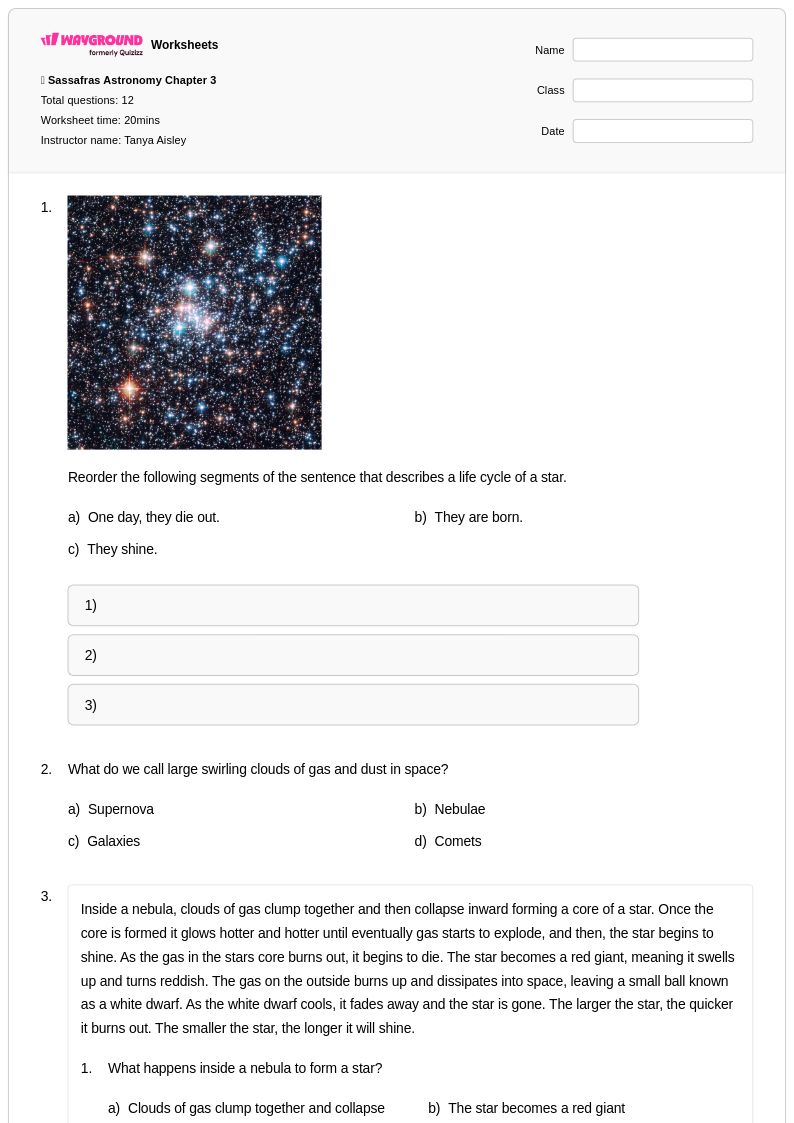
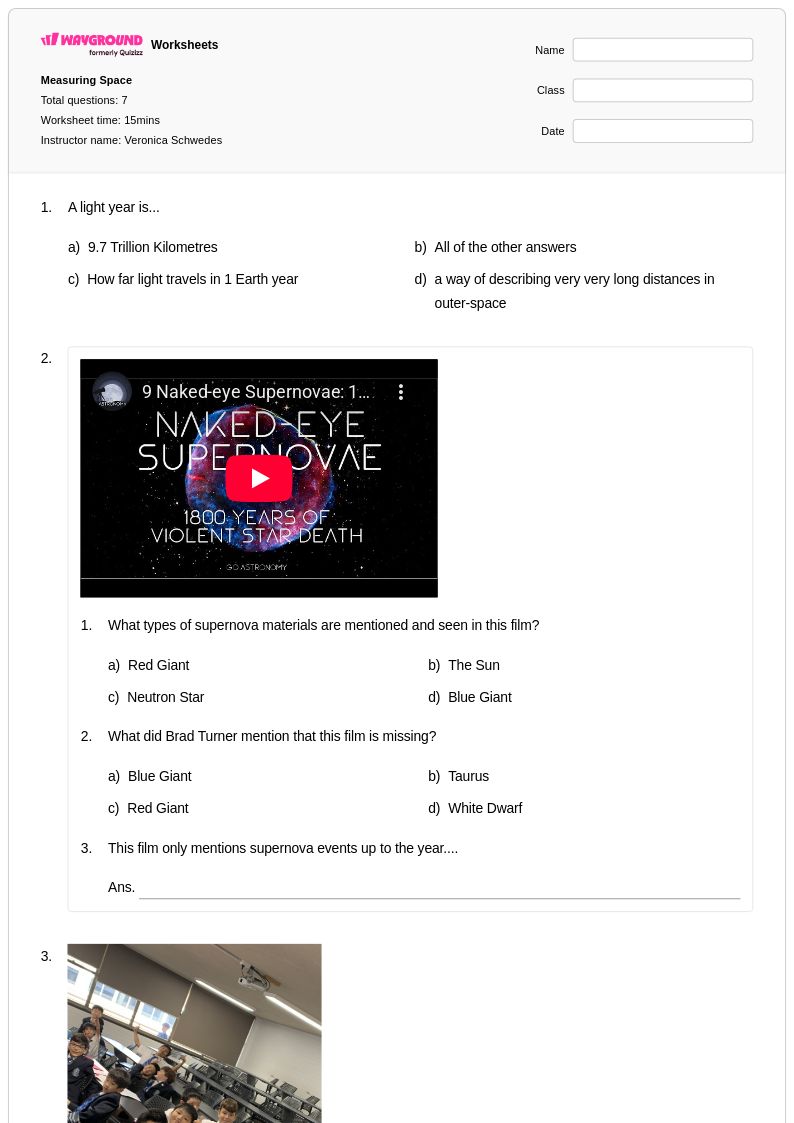
Explore Wayground's free Class 1 Earth in Space worksheets and printables that help young students discover our planet's place in the solar system through engaging practice problems and comprehensive answer keys.
Explore printable Earth in Space worksheets for Class 1
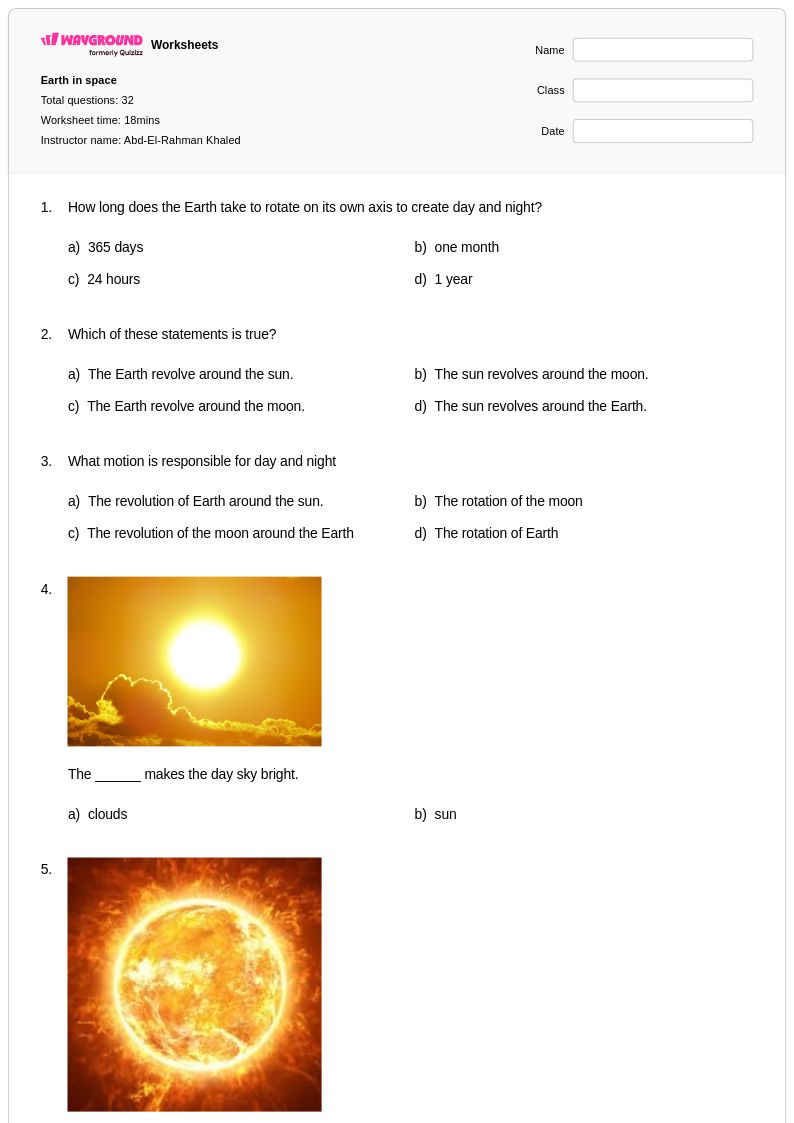
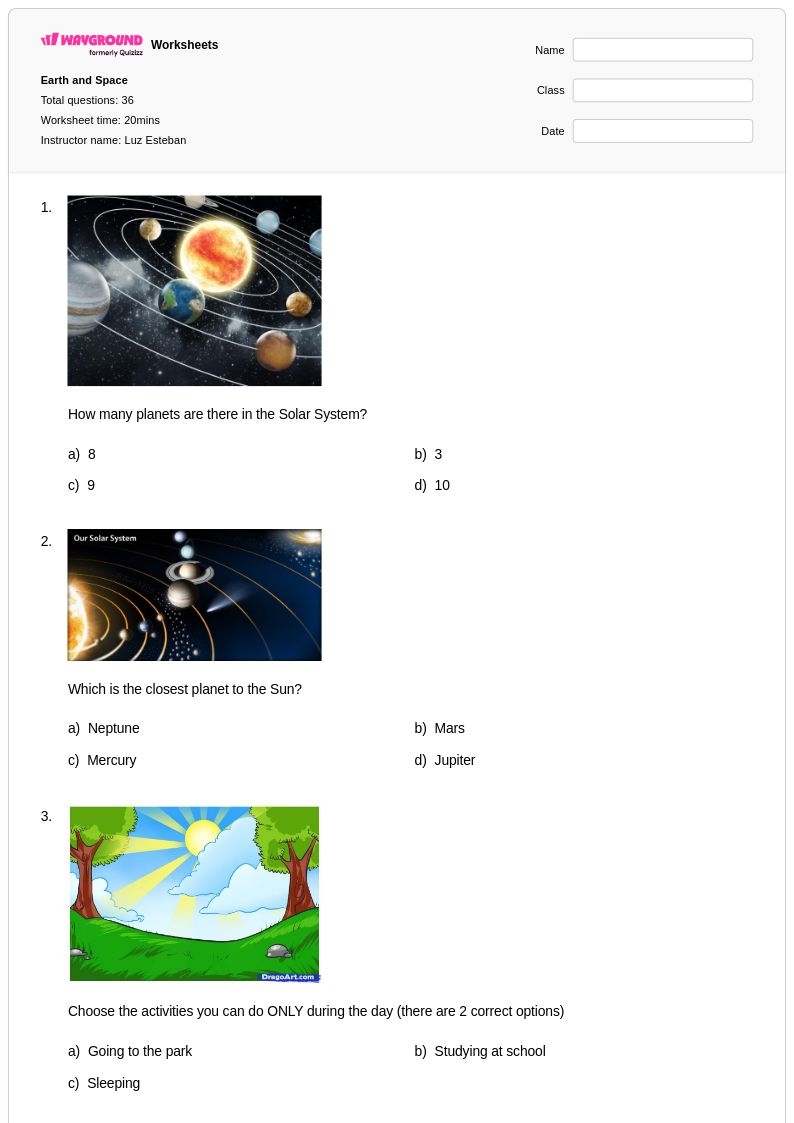
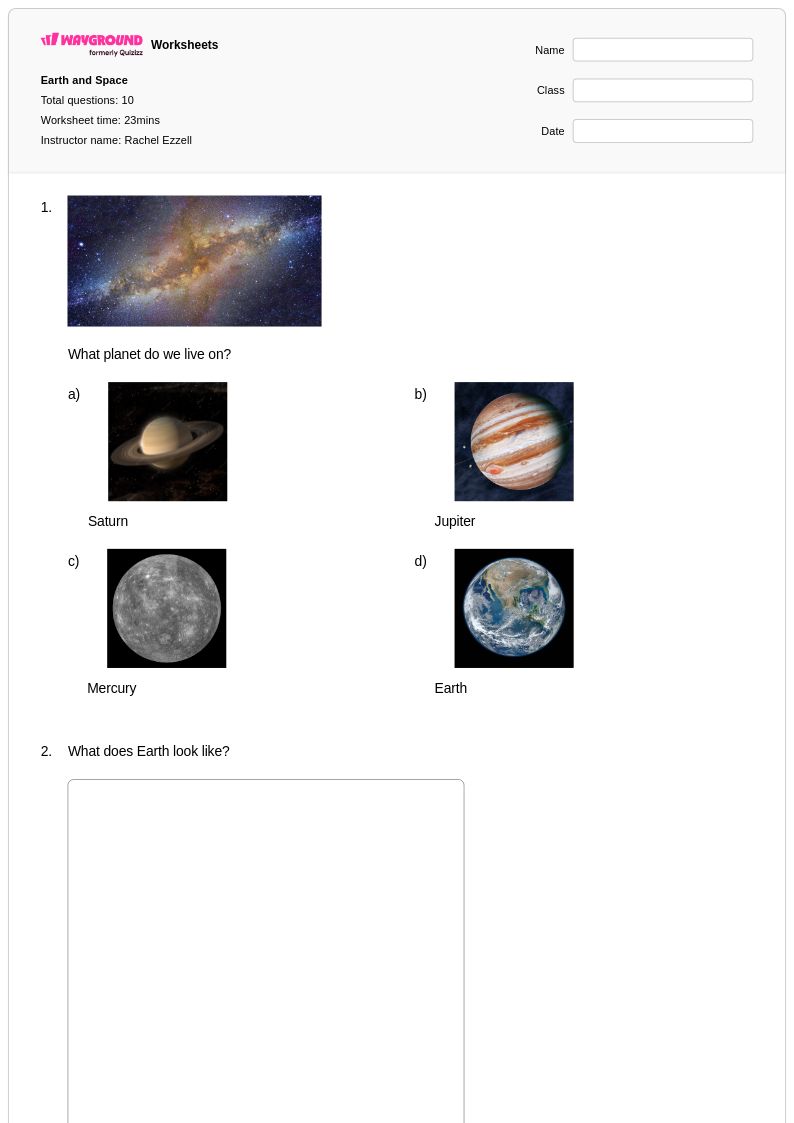
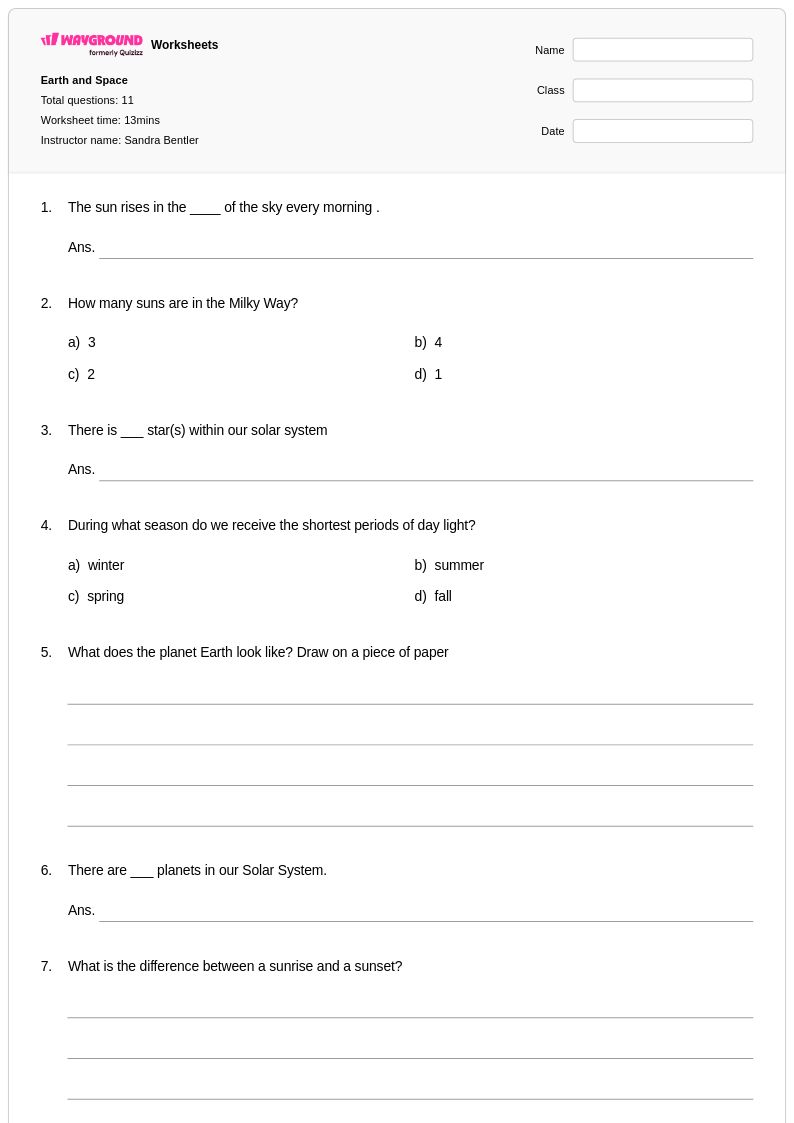
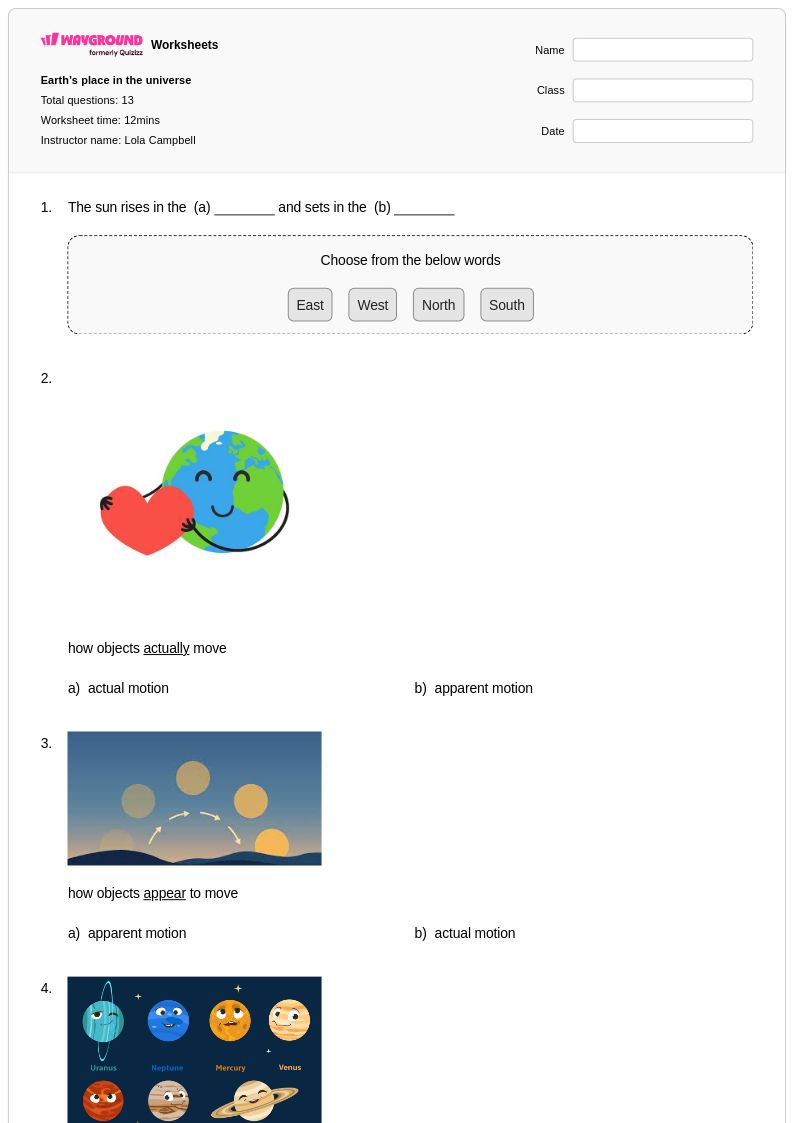
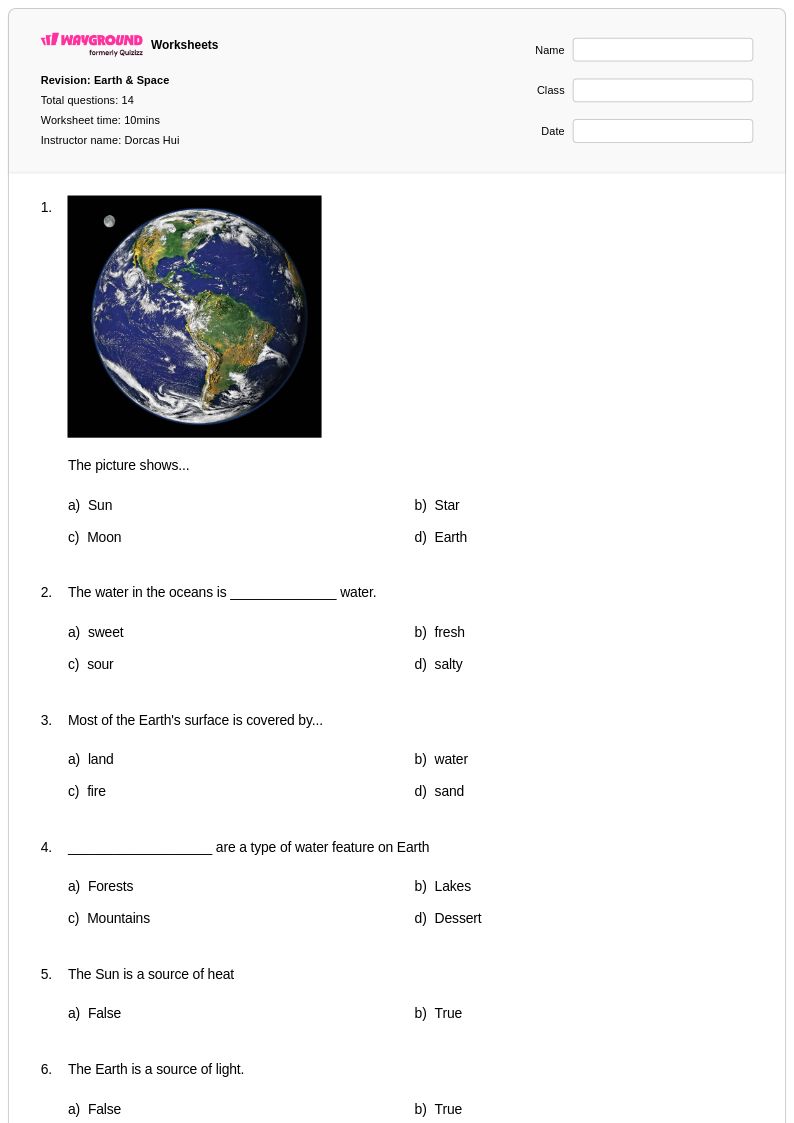
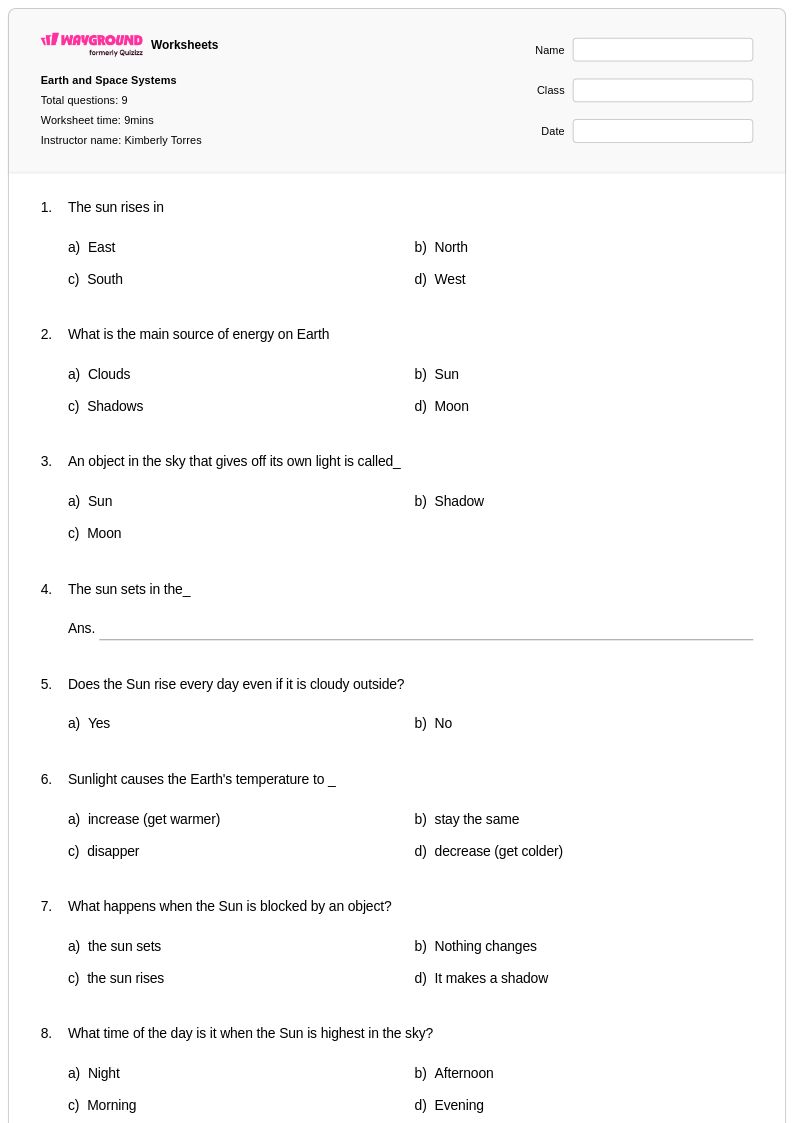
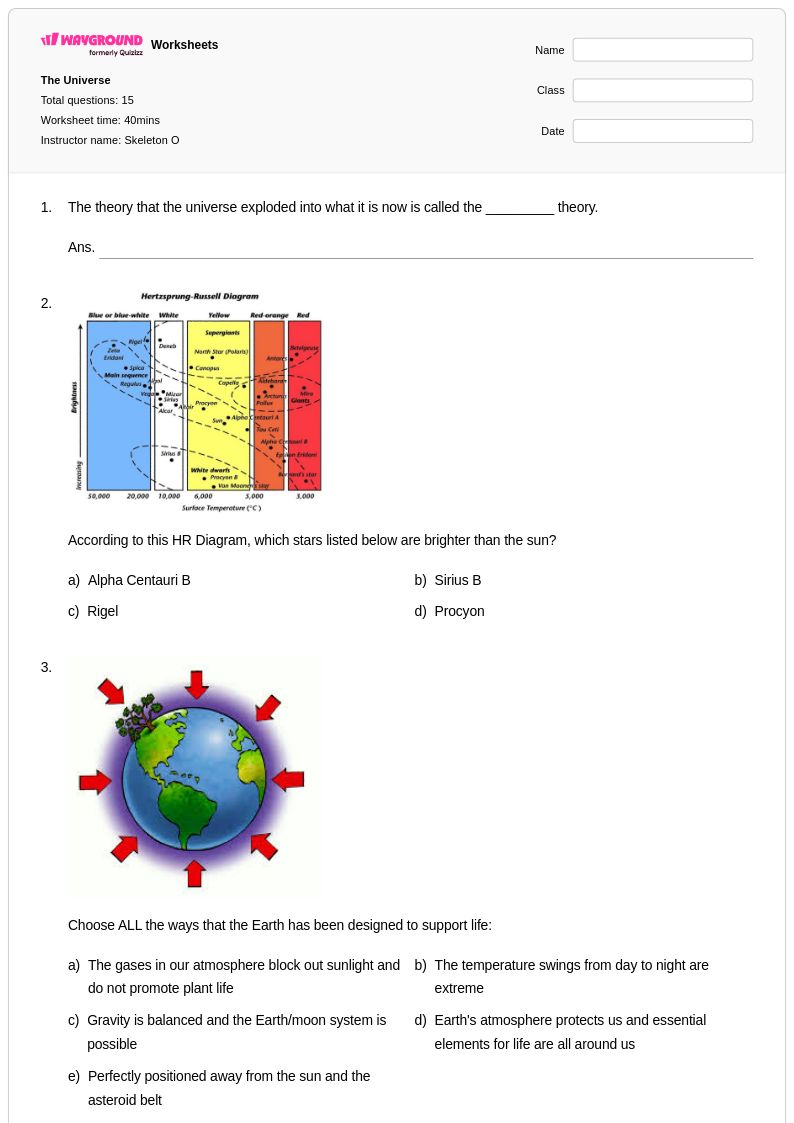
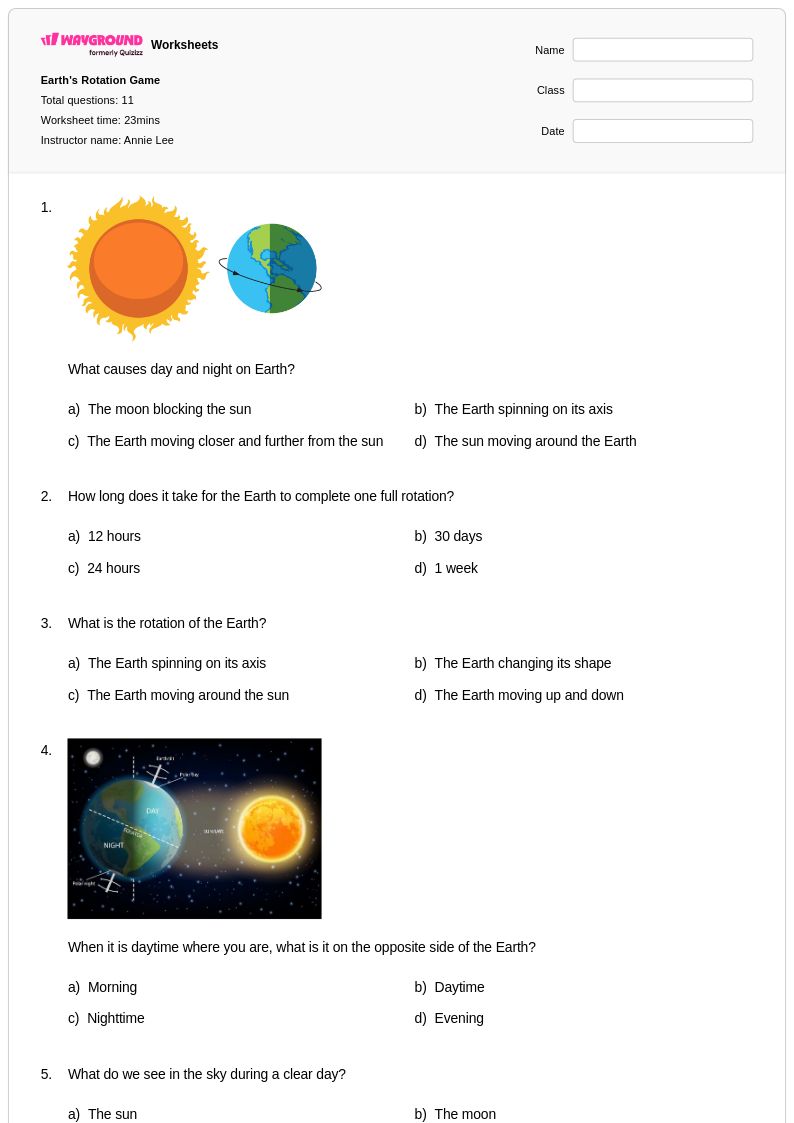
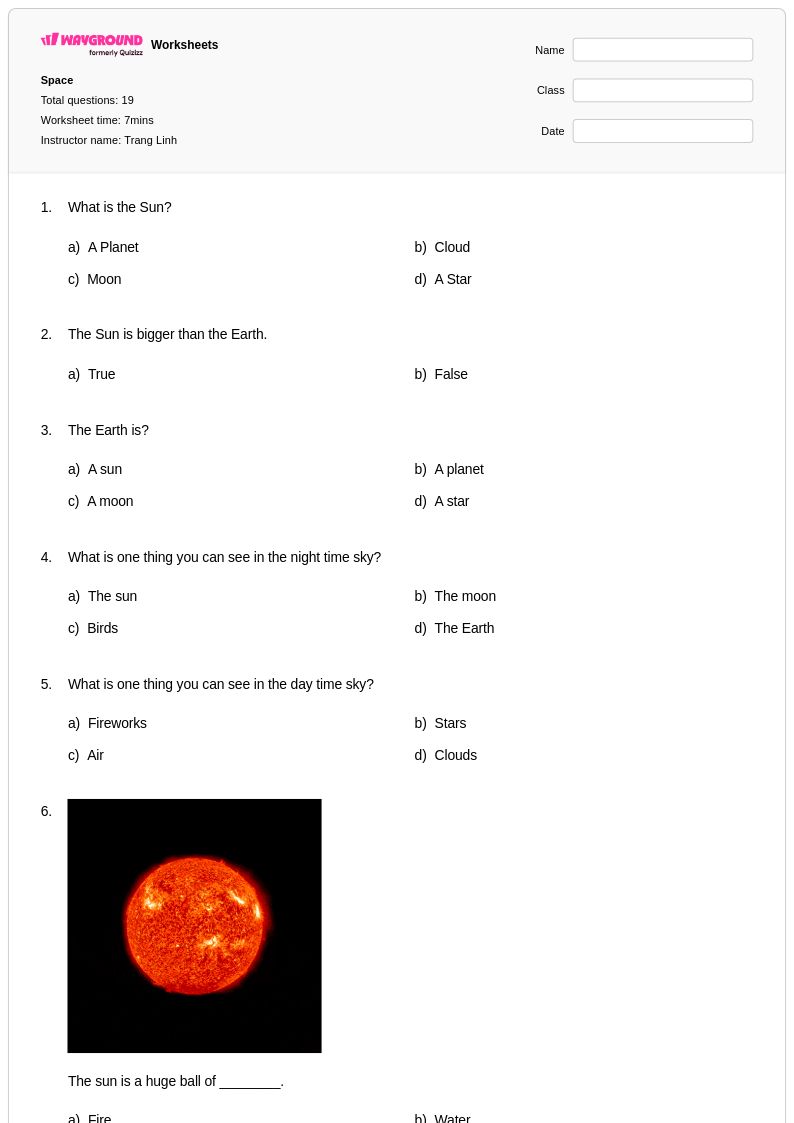
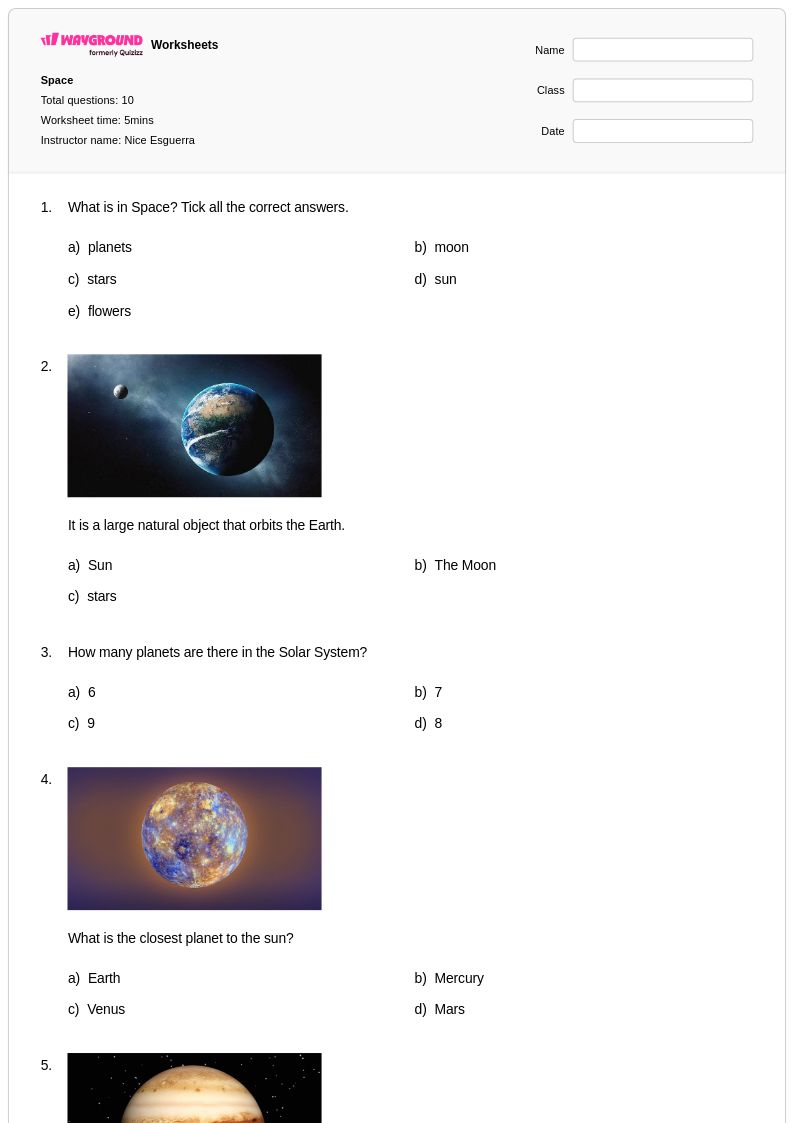
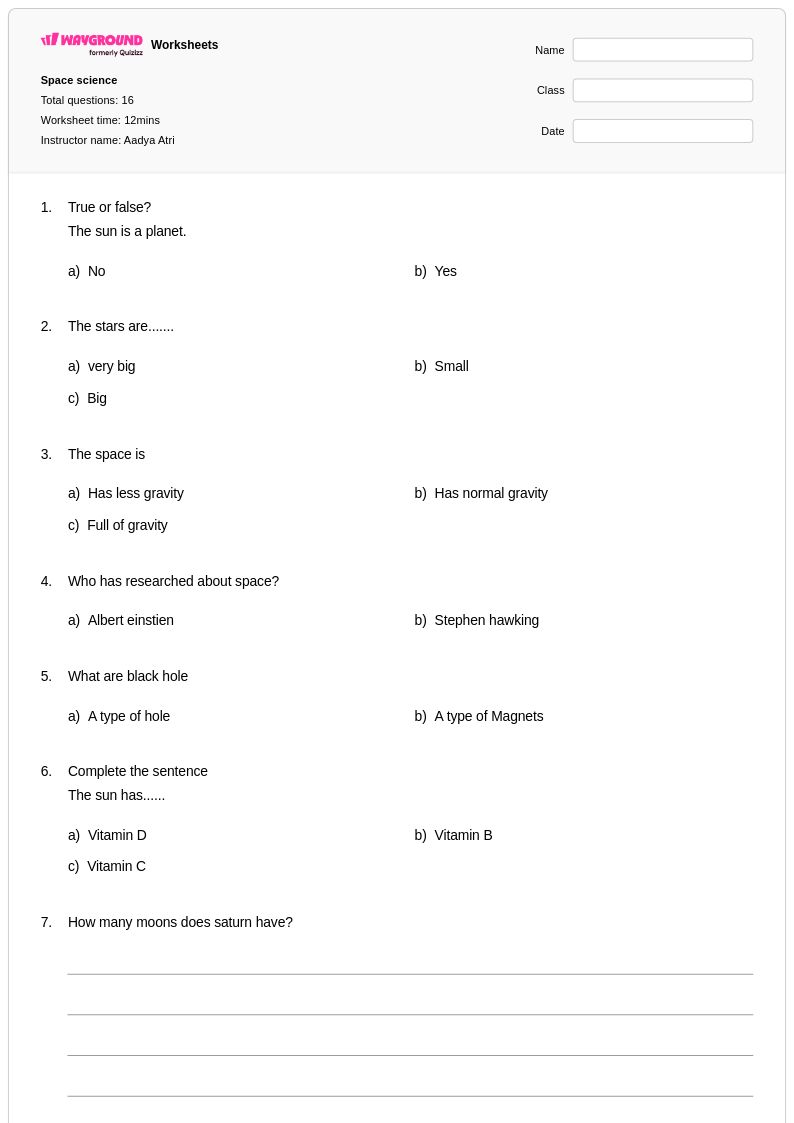
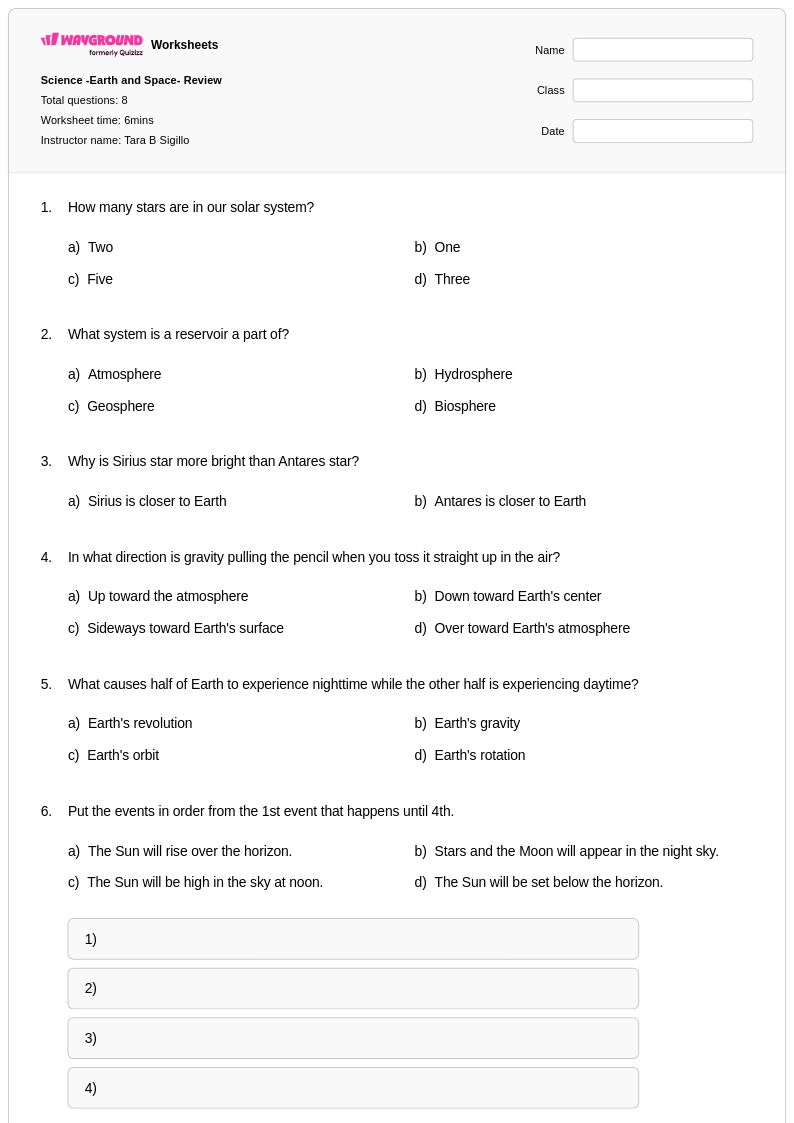
Earth in Space worksheets for Class 1 students available through Wayground (formerly Quizizz) introduce young learners to fundamental concepts about our planet's relationship with the solar system and universe. These carefully designed practice problems help first-grade students develop essential observational skills while exploring topics such as day and night cycles, the sun's role in providing light and warmth, seasonal patterns, and the moon's changing appearance in the sky. Each worksheet includes comprehensive answer keys that enable teachers to quickly assess student understanding, while the free printable format ensures accessibility for diverse classroom needs. These educational resources strengthen critical thinking abilities as students begin to recognize patterns in nature and develop foundational scientific vocabulary related to Earth's position and movement in space.
Wayground's extensive collection of teacher-created Earth in Space materials provides educators with millions of high-quality resources specifically designed to support Class 1 instruction. The platform's robust search and filtering capabilities allow teachers to quickly locate worksheets that align with specific learning standards and curriculum requirements, while built-in differentiation tools help customize content for varying skill levels within the classroom. These materials are available in both printable pdf format and interactive digital versions, offering flexibility for traditional paper-based activities or technology-enhanced learning environments. Teachers can efficiently plan comprehensive lesson sequences, provide targeted remediation for struggling students, offer enrichment opportunities for advanced learners, and create meaningful skill practice sessions that reinforce key Earth and Space Science concepts appropriate for first-grade developmental levels.
FAQs
How do I teach Earth in space to my students?
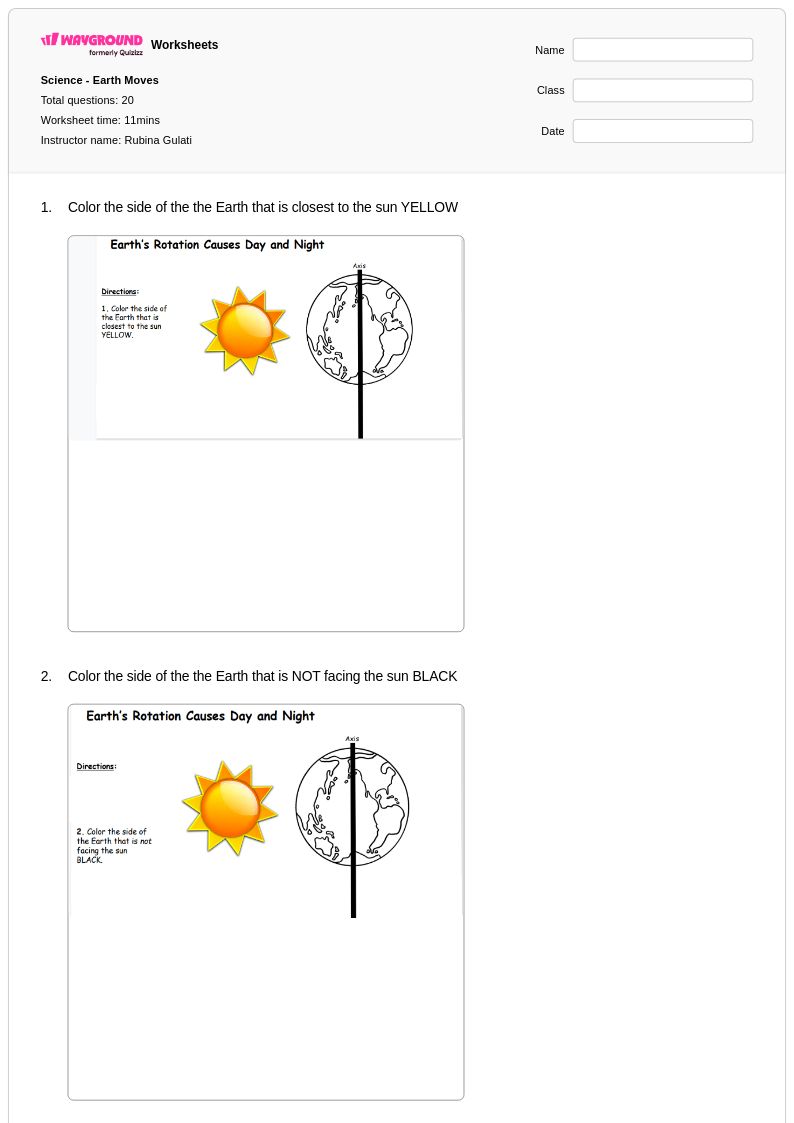
Start by grounding students in Earth's two primary motions: rotation (spinning on its axis, causing day and night) and revolution (orbiting the sun, driving seasonal change). Use diagrams showing Earth's axial tilt relative to the sun to explain why seasons occur, then build outward to lunar phases and Earth's place in the solar system. Connecting these astronomical concepts to observable daily phenomena, like sunrise direction or shadow length, helps students see relevance and retain the material.
What exercises help students practice Earth in space concepts?
Effective practice includes diagram-labeling tasks where students identify Earth's position during each season, calculation problems involving orbital periods, and sequencing activities for lunar phases. Interpreting models that show the Earth-sun-moon relationship challenges students to apply conceptual understanding rather than just recall facts. These exercises build the spatial reasoning skills essential for mastering celestial mechanics.
What common mistakes do students make when learning about Earth in space?
The most persistent misconception is that seasons are caused by Earth's changing distance from the sun rather than its axial tilt. Students also frequently confuse Earth's rotation with its revolution, mixing up the time scales and effects of each. Another common error is misunderstanding lunar phases, with many students believing the moon's shadow, rather than its orbital position relative to Earth and the sun, causes the phases we see.
How do I explain the difference between Earth's rotation and revolution?
Rotation refers to Earth spinning on its own axis, completing one full turn approximately every 24 hours, which produces the cycle of day and night. Revolution describes Earth's orbit around the sun, which takes approximately 365.25 days and, combined with axial tilt, produces the seasons. A simple classroom anchor: rotation = one day, revolution = one year.
How can I use Earth in space worksheets to support students at different skill levels?
Wayground's Earth in Space worksheets can be assigned digitally, allowing teachers to apply individualized accommodations such as read aloud for students who need audio support, reduced answer choices to lower cognitive load, and extended time for students who need additional processing time. These settings can be configured per student without notifying others in the class, making differentiation seamless. For advanced students, practice problems that require calculating orbital periods or interpreting celestial diagrams provide meaningful enrichment beyond basic recall.
How do I use Wayground's Earth in space worksheets in my classroom?
Wayground's Earth in Space worksheets are available as printable PDFs for traditional classroom use and in digital formats for technology-integrated environments, including the option to host them as an interactive quiz directly on Wayground. Each worksheet includes a complete answer key, supporting both teacher-led instruction and independent student practice. Teachers can use them for direct instruction support, homework, or assessment preparation across a range of Earth science units.