Free Printable Earth & Space Science Worksheets for Kindergarten
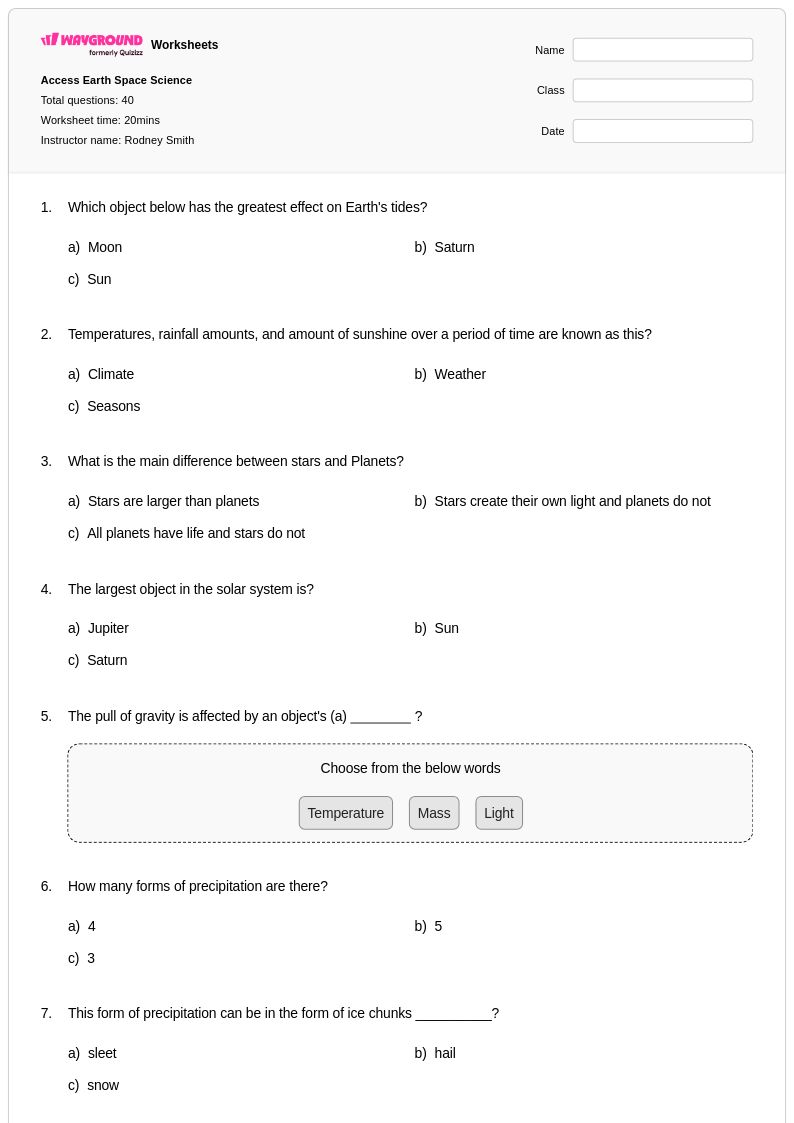
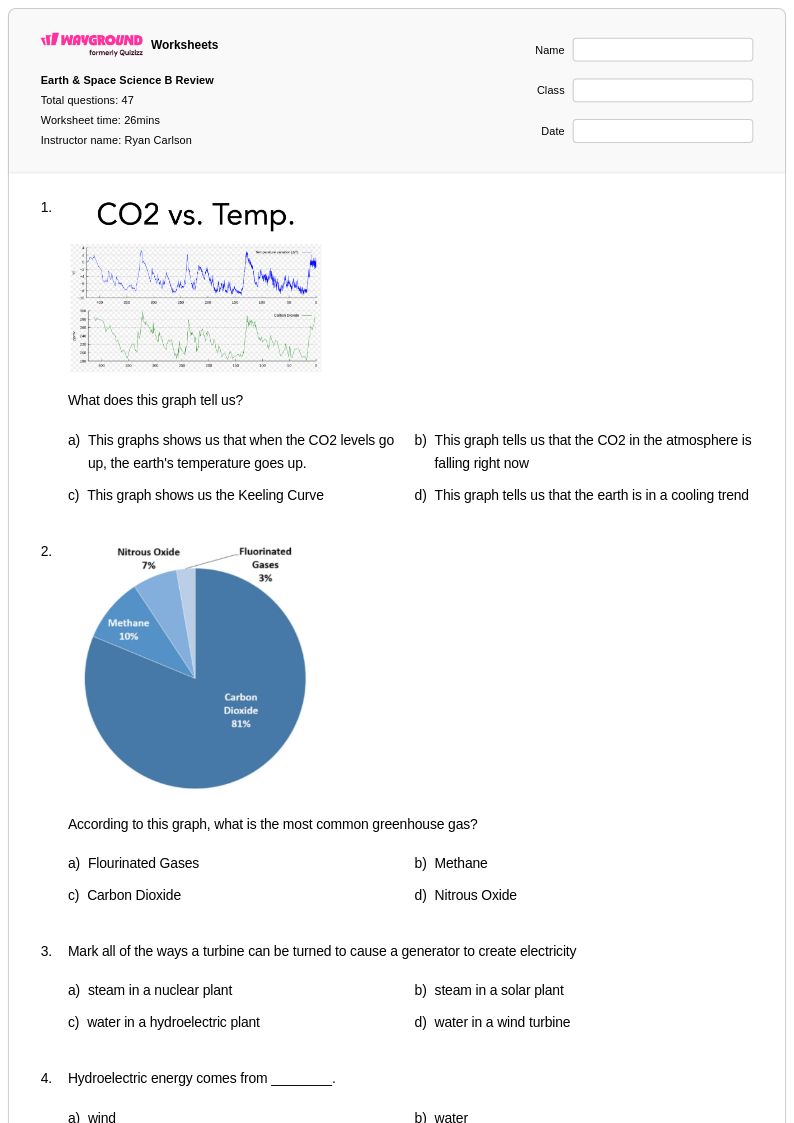
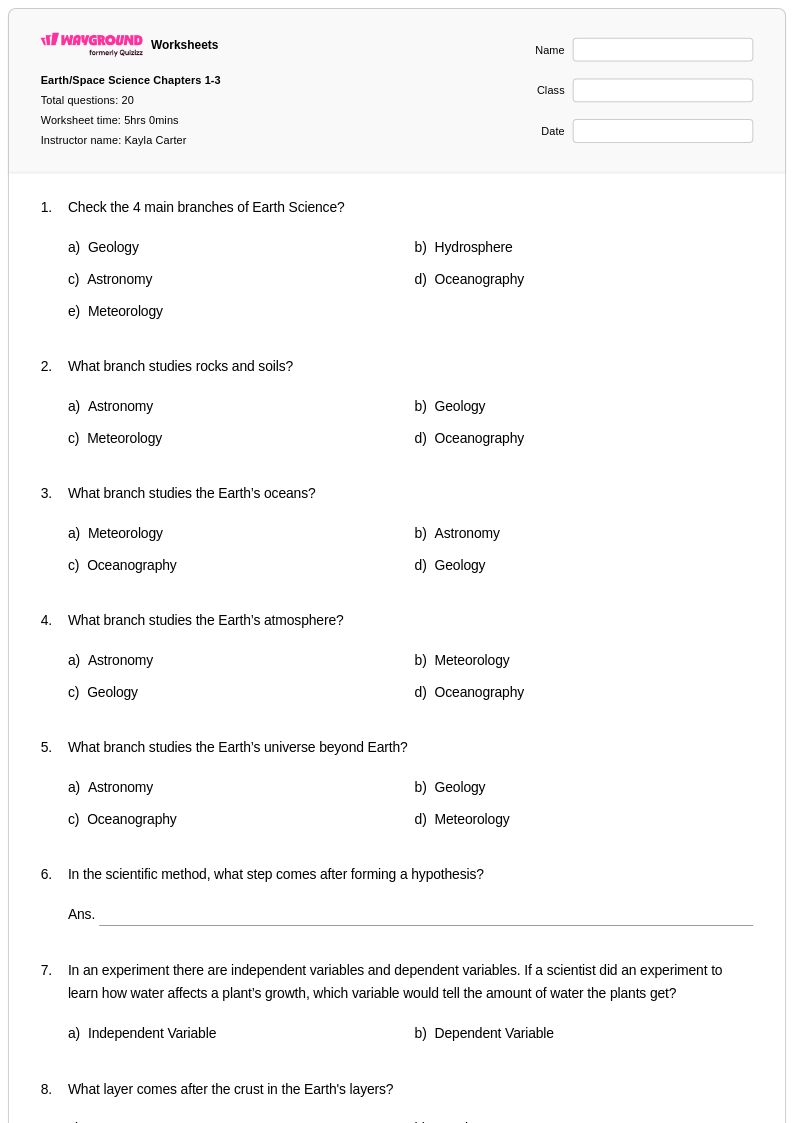
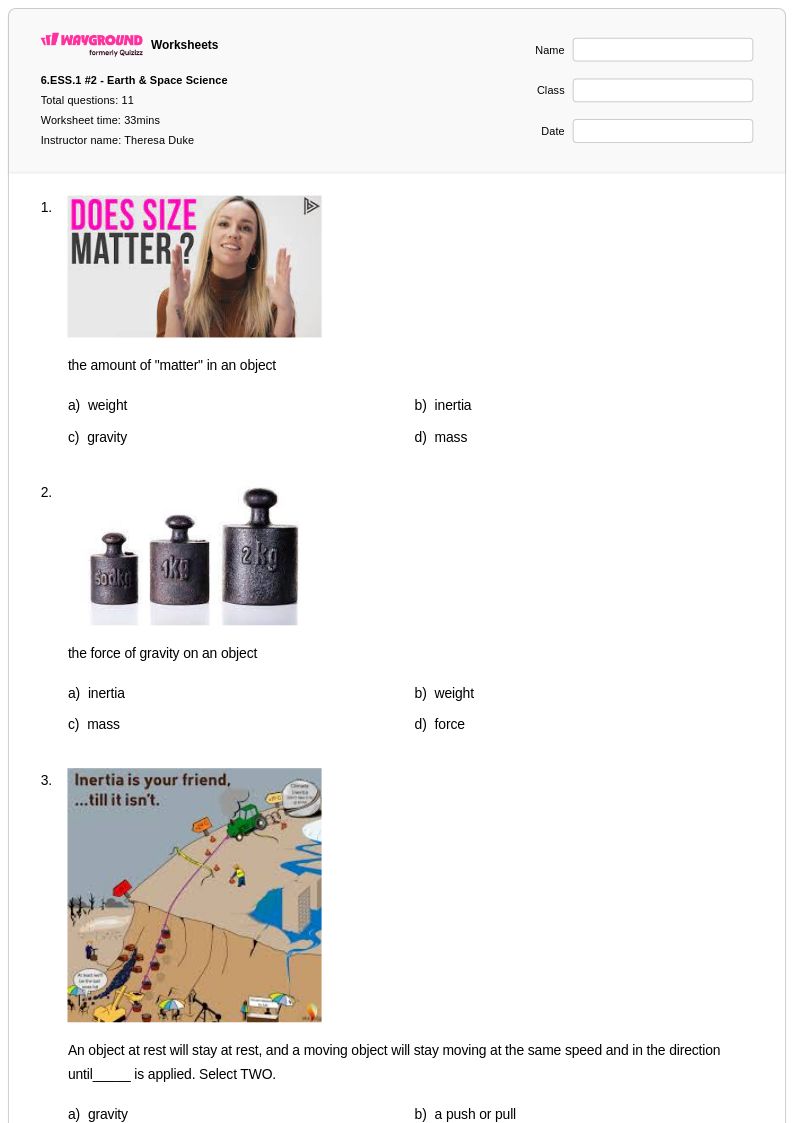
Explore our free kindergarten Earth & Space Science worksheets and printables that help young learners discover planets, weather, and natural phenomena through engaging practice problems with complete answer keys.
Explore printable Earth & Space Science worksheets for Kindergarten
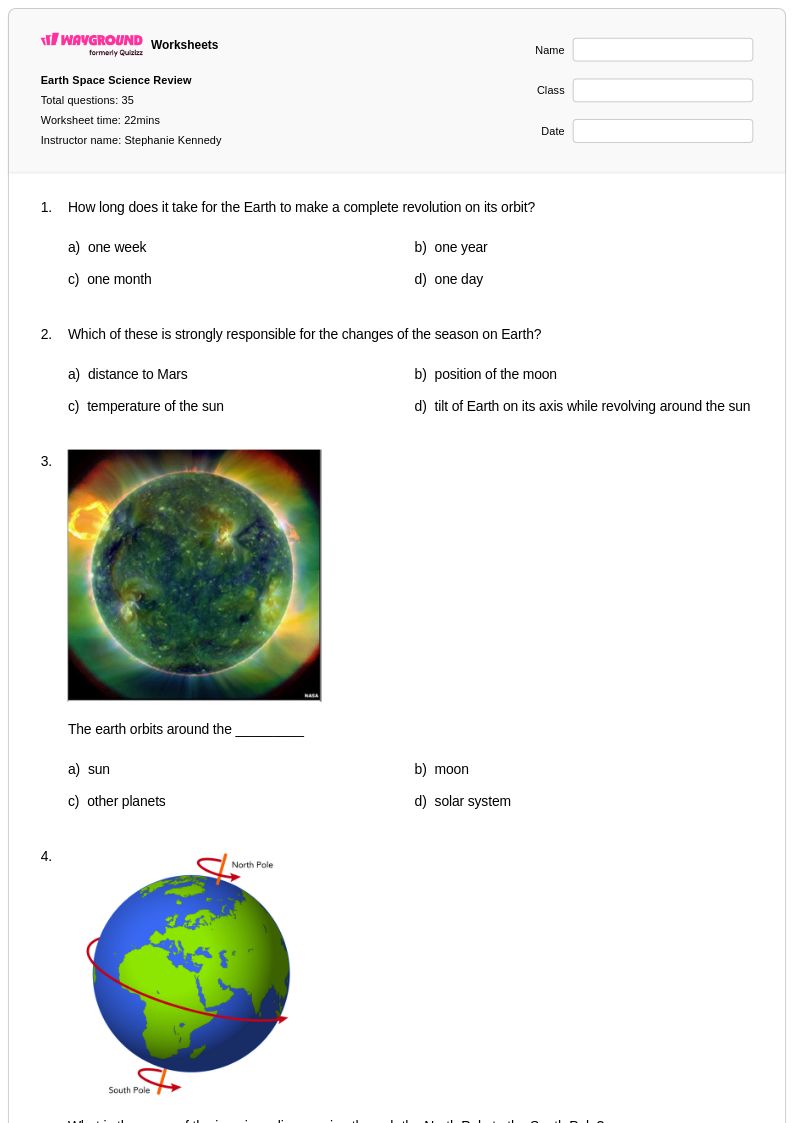
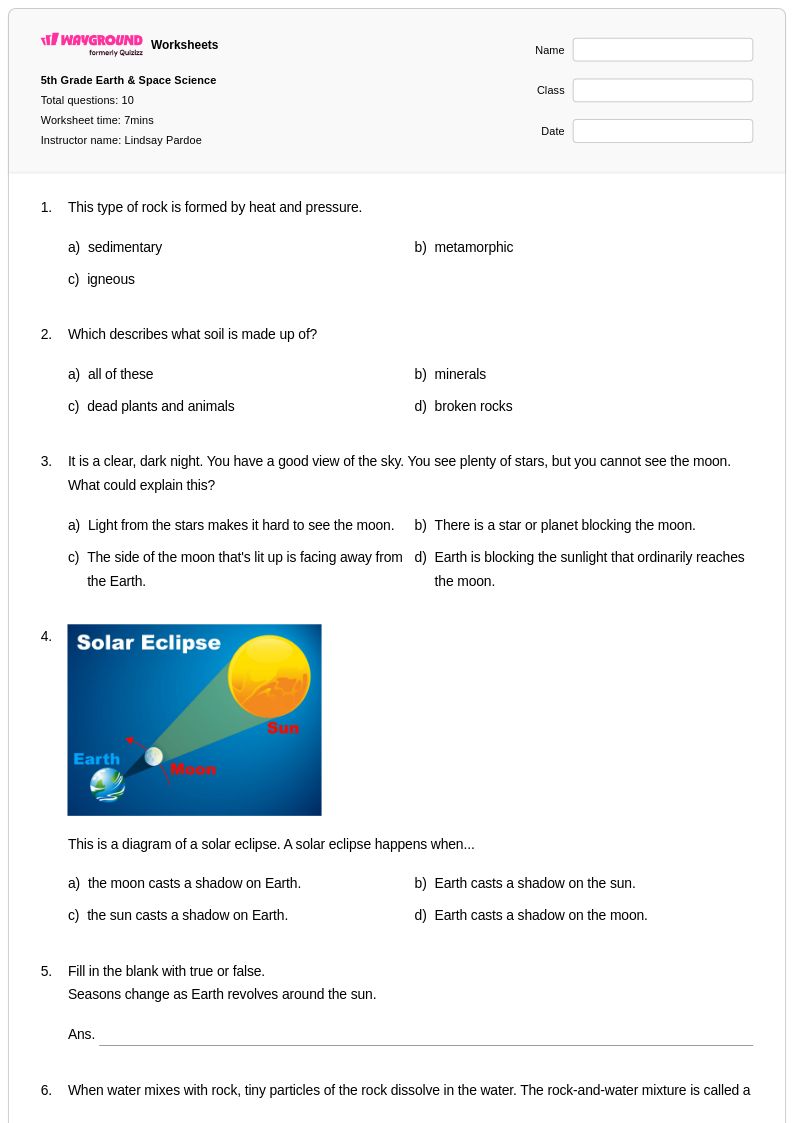
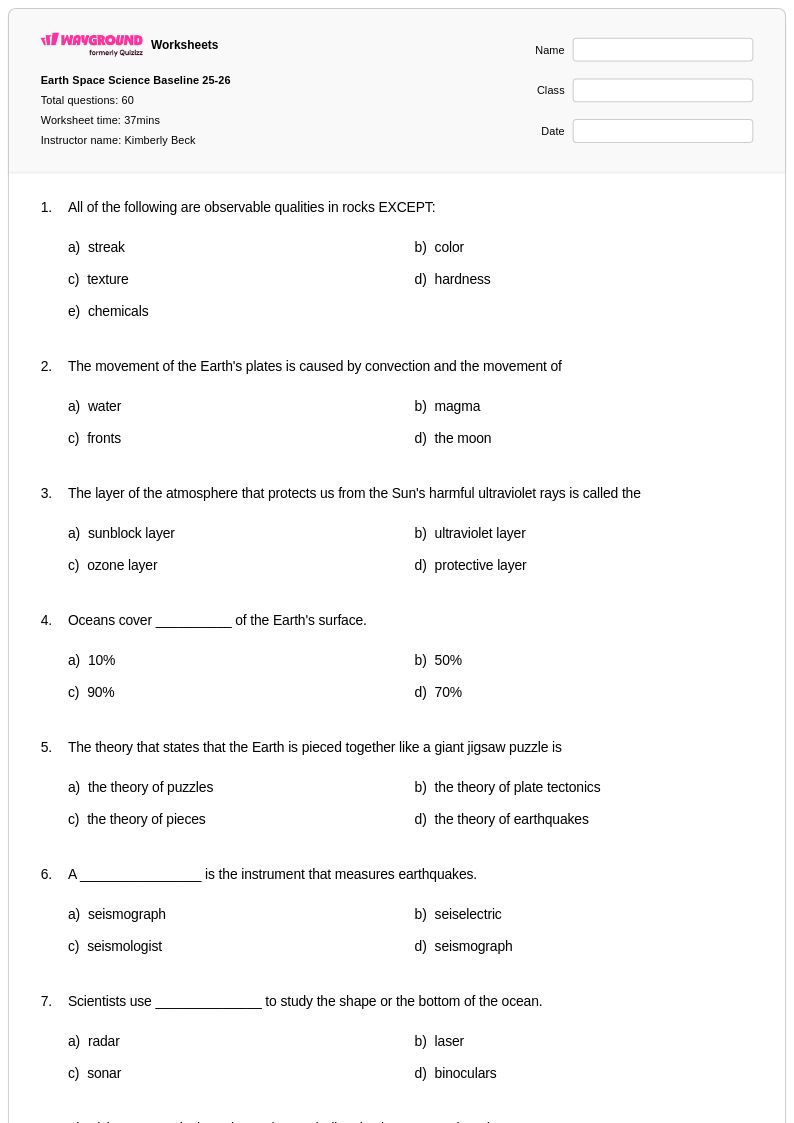
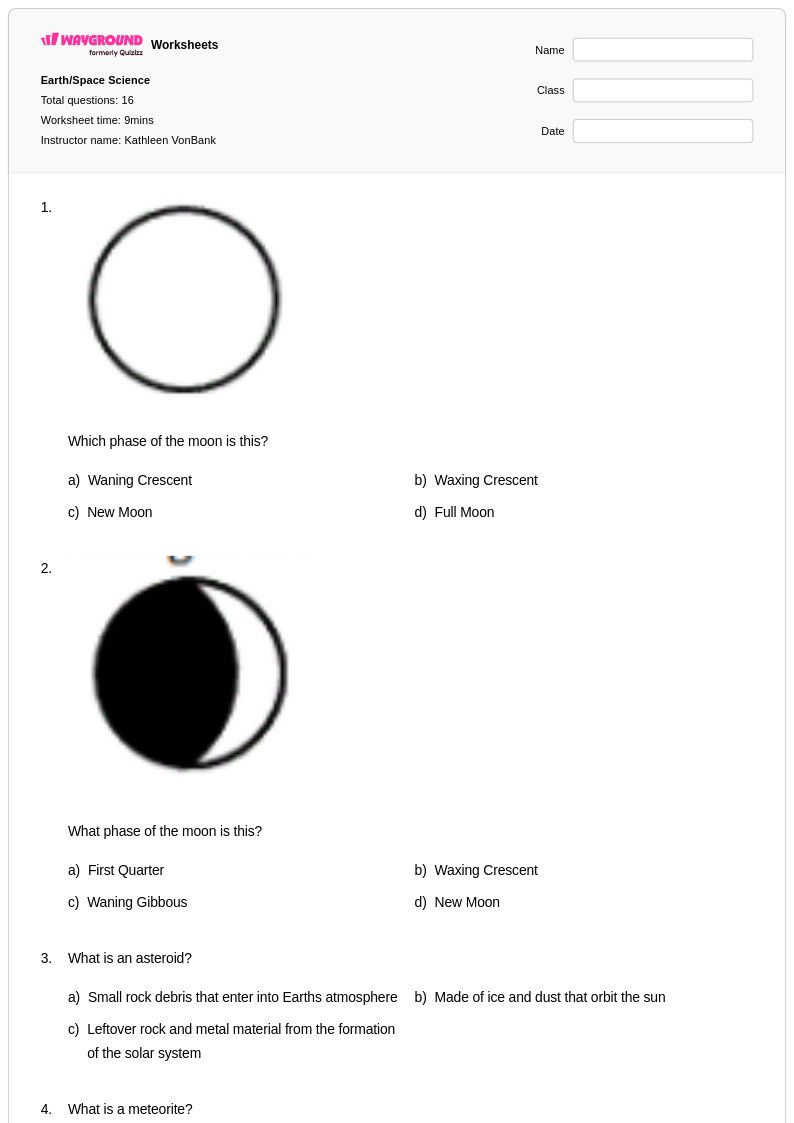
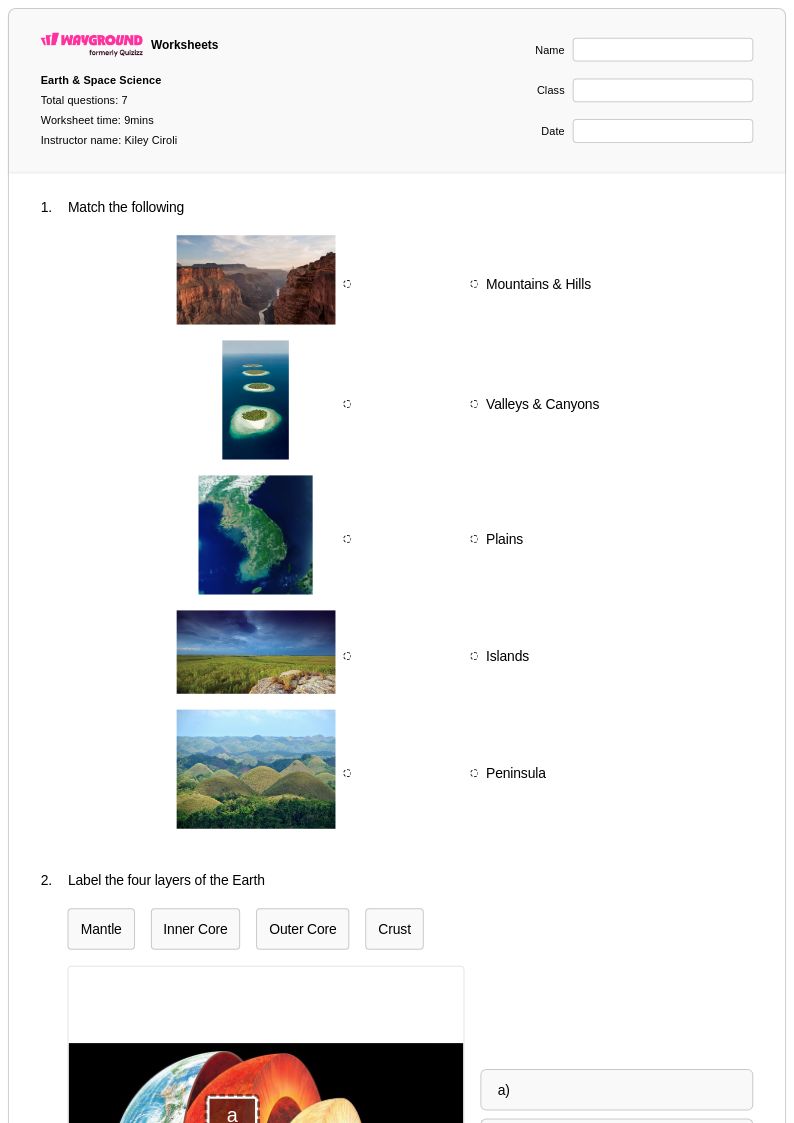
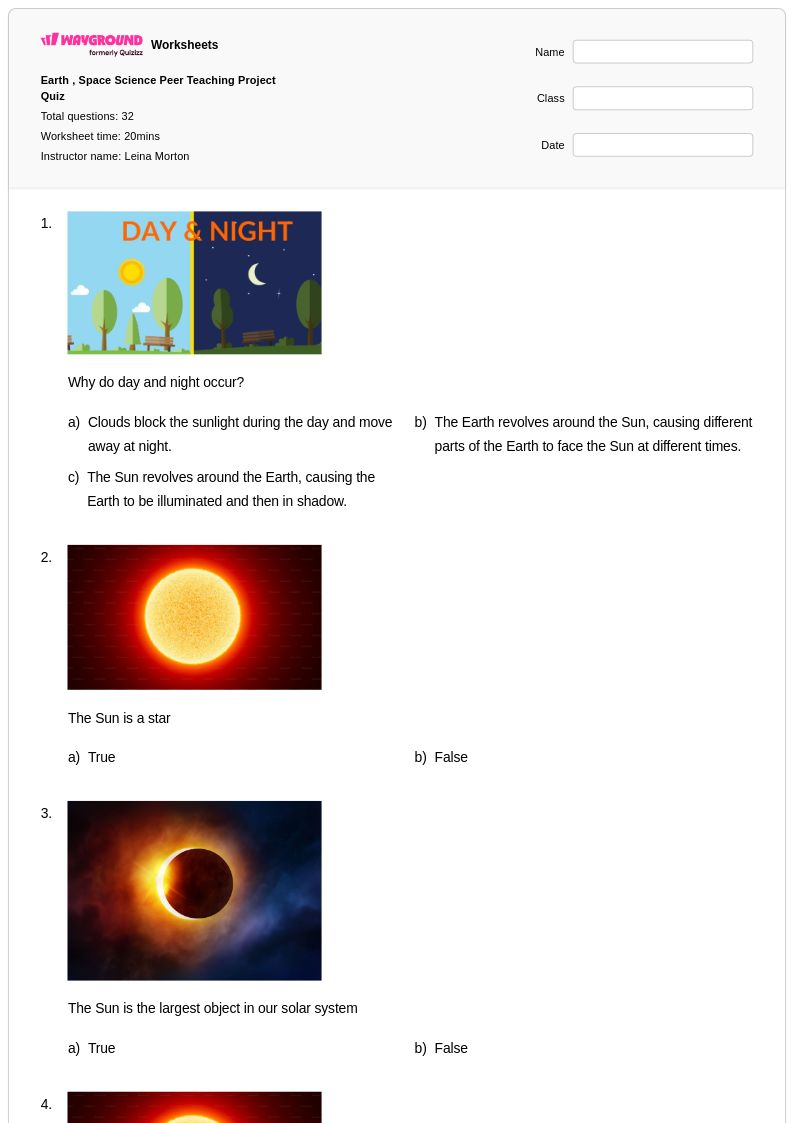
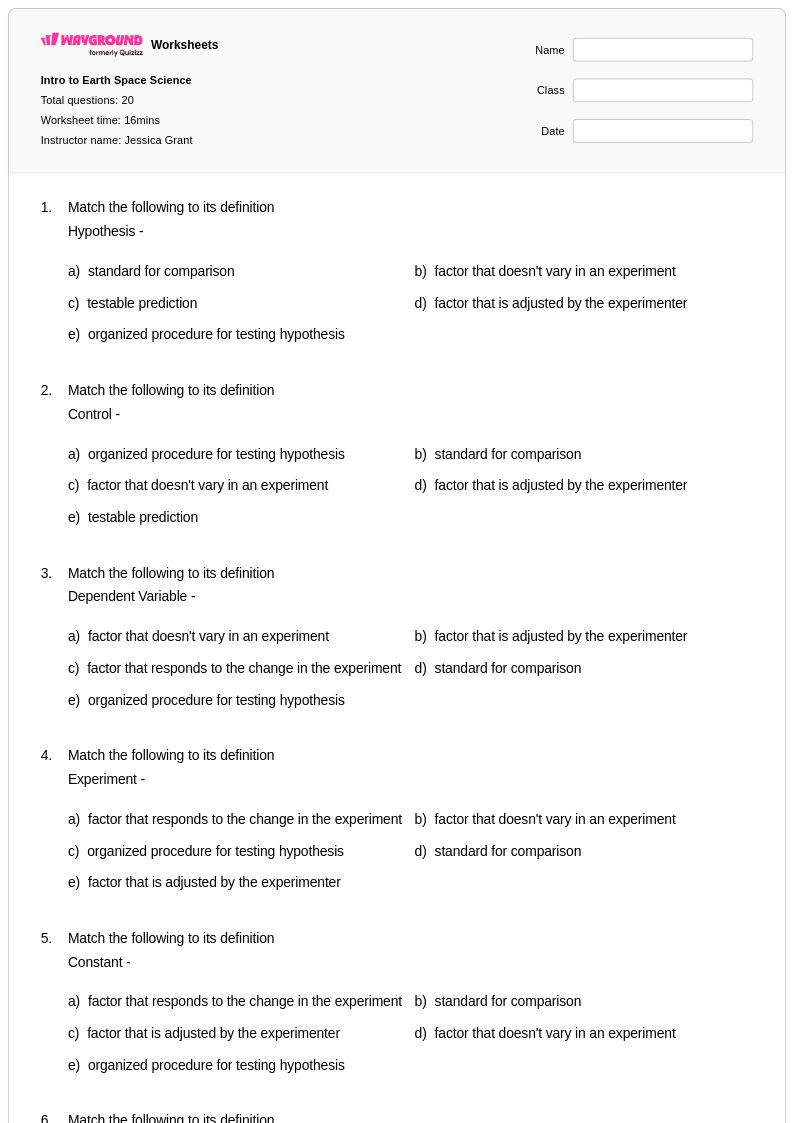
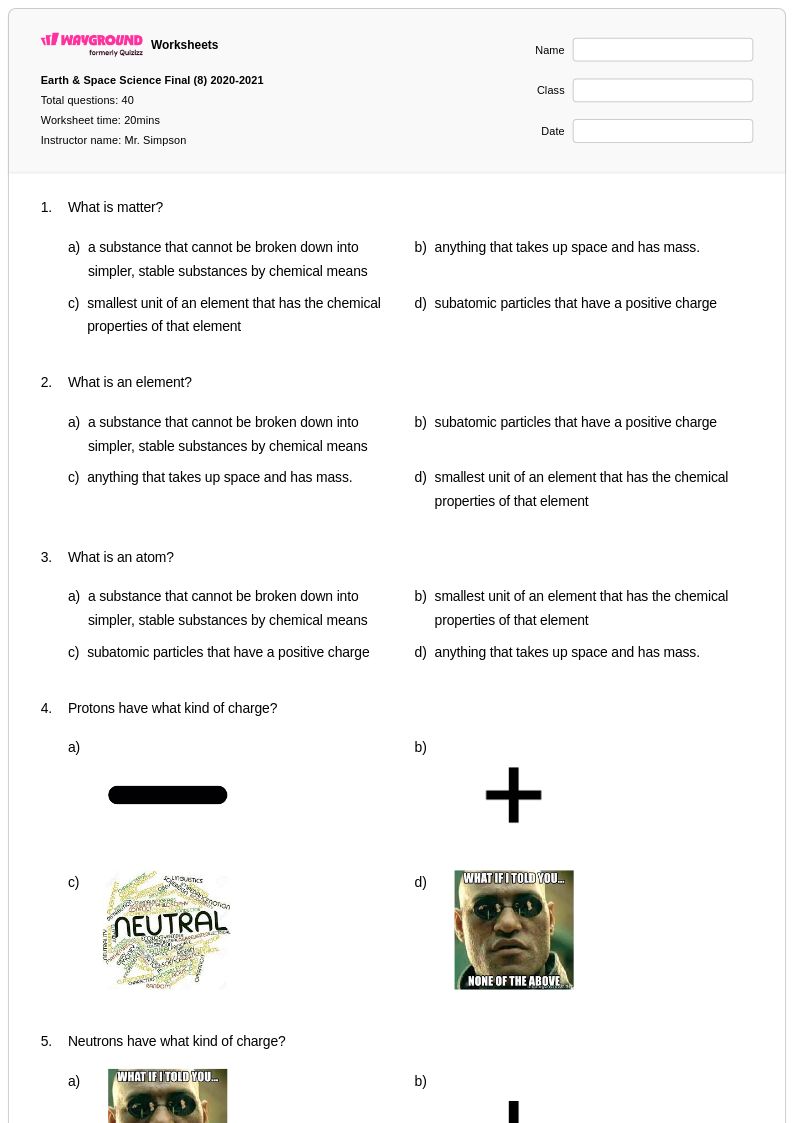
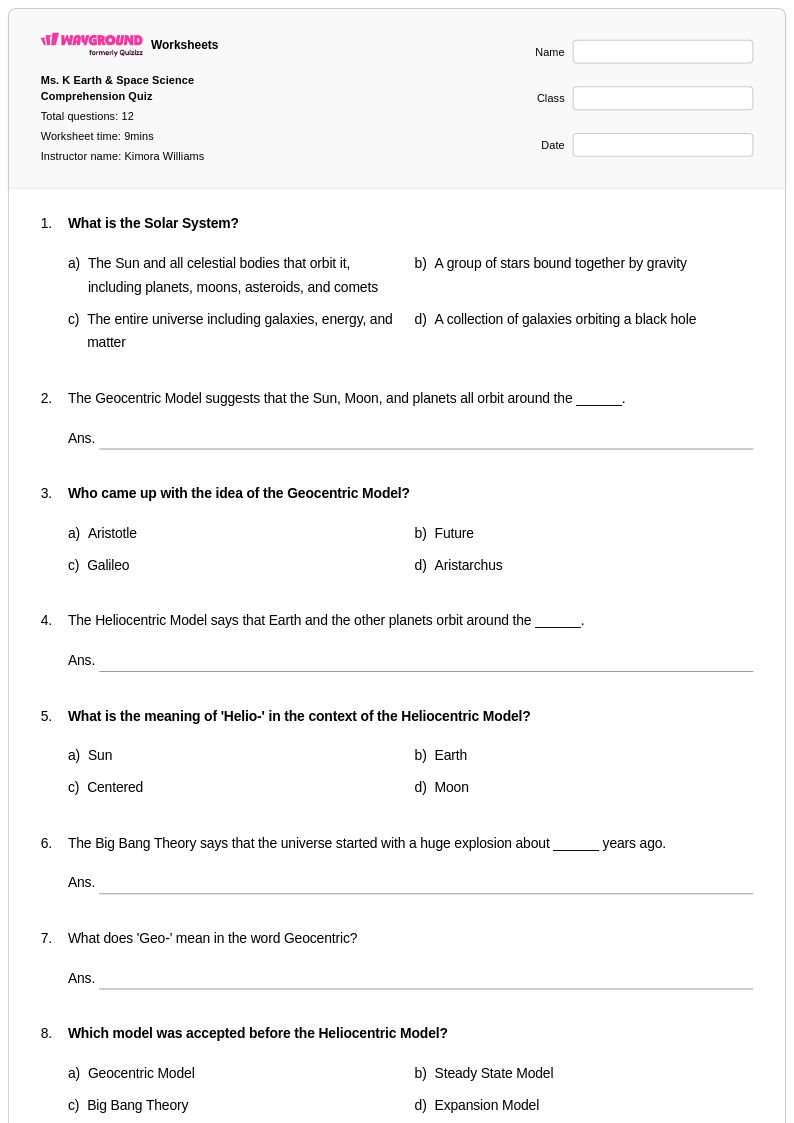
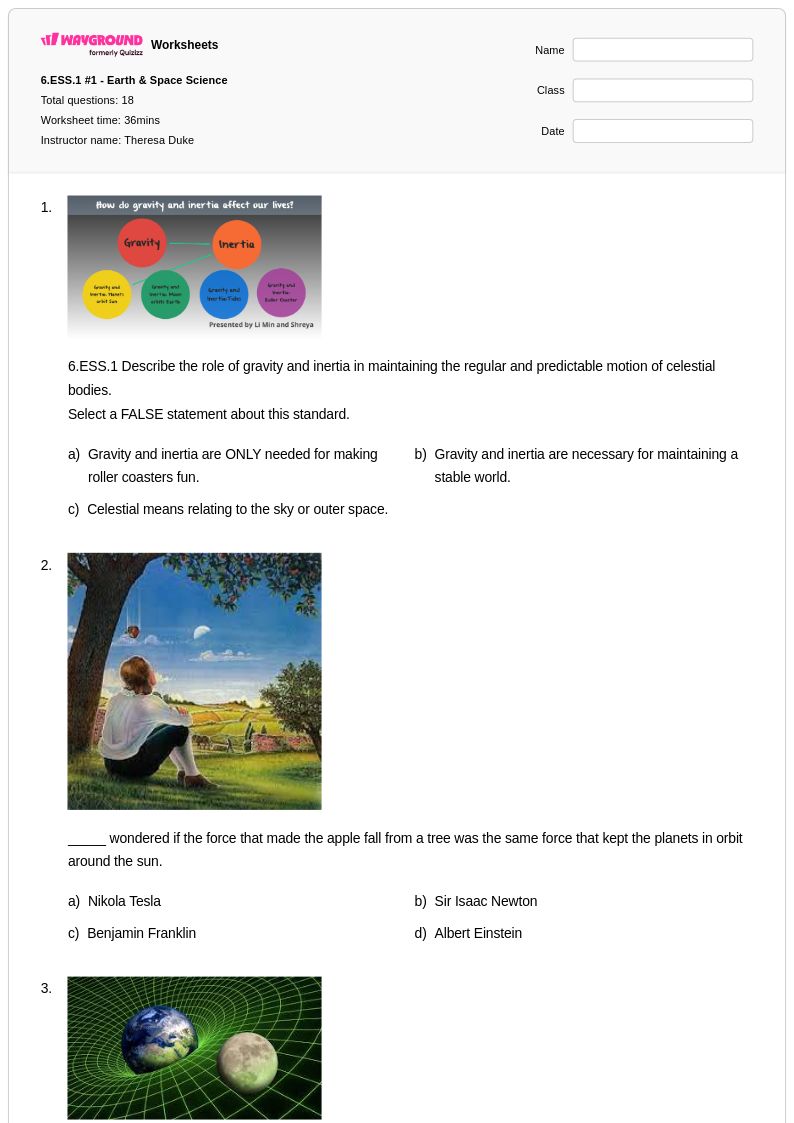
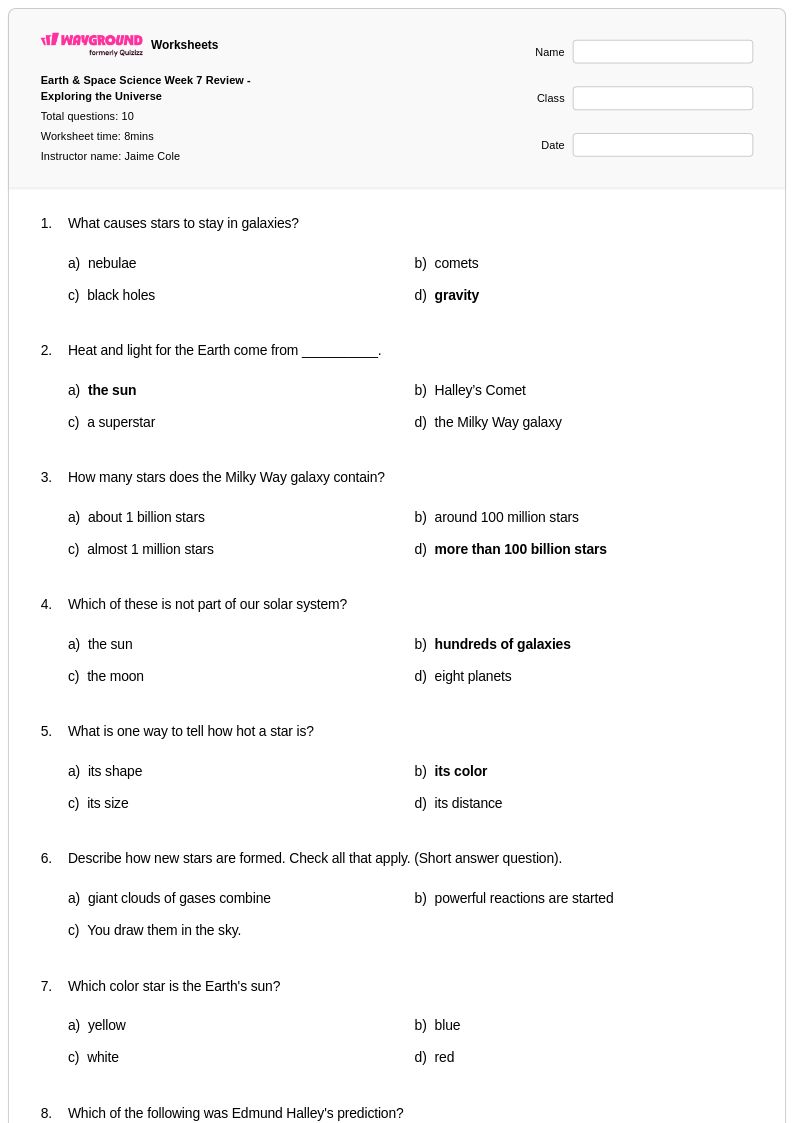
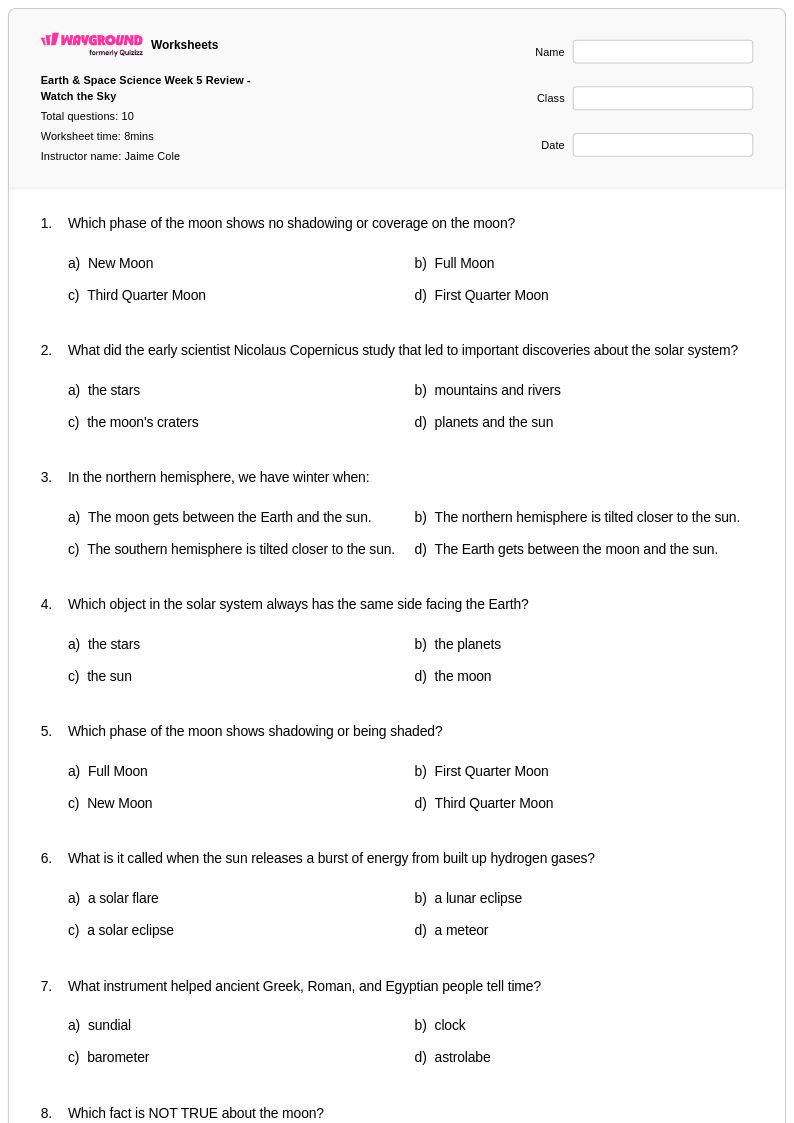
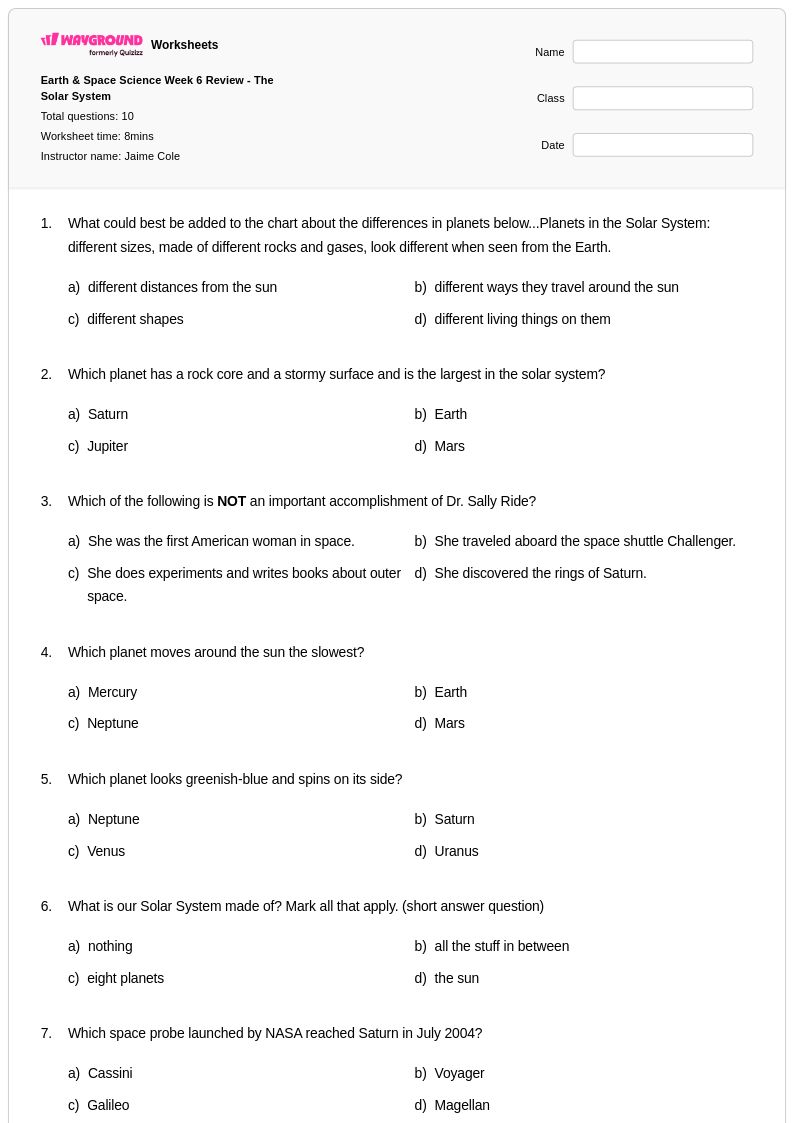
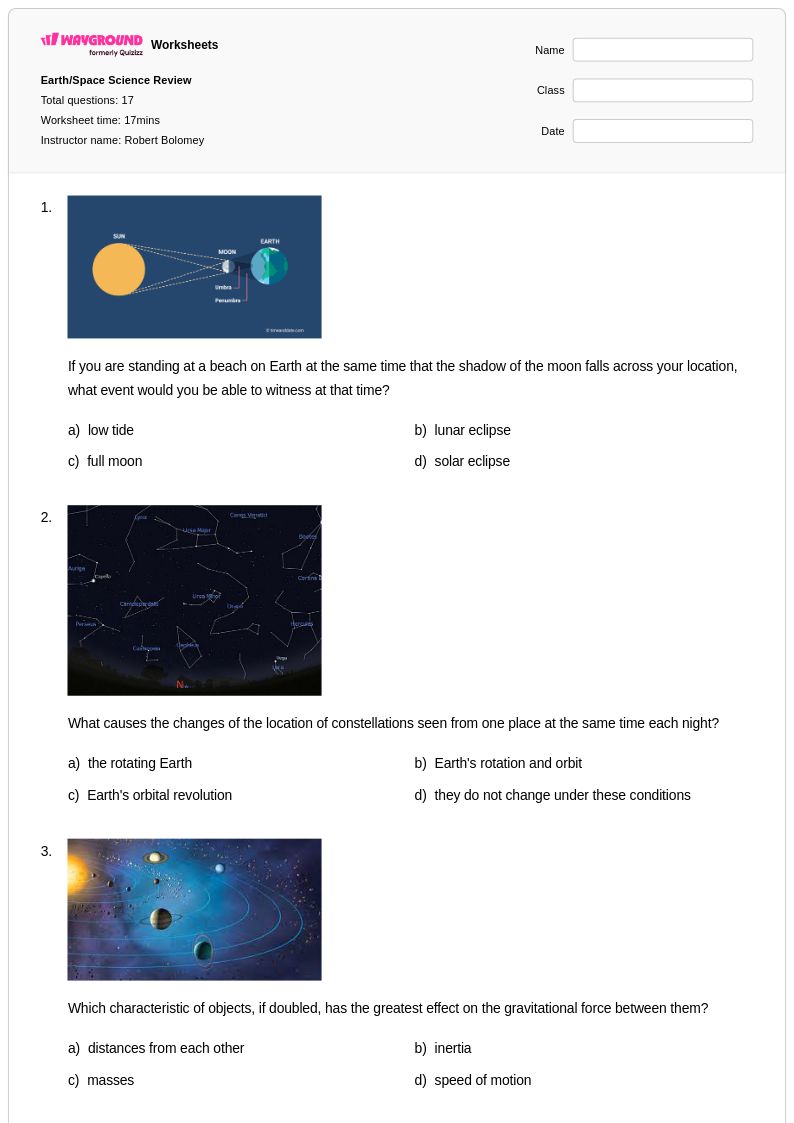
Earth and Space Science worksheets for Kindergarten students available through Wayground (formerly Quizizz) introduce young learners to fundamental concepts about our planet and the universe around us. These carefully designed educational materials help students develop observational skills while exploring topics such as weather patterns, day and night cycles, the sun and moon, seasonal changes, and basic properties of Earth's materials like rocks, soil, and water. The worksheets strengthen critical thinking abilities through age-appropriate activities that encourage students to notice, describe, and compare natural phenomena in their environment. Each printable resource includes comprehensive answer keys and practice problems that support both independent learning and guided instruction, with free pdf formats making distribution and implementation seamless for classroom use.
Wayground's extensive collection draws from millions of teacher-created resources specifically designed to support Kindergarten Earth and Space Science instruction across diverse learning environments. The platform's robust search and filtering capabilities enable educators to quickly locate worksheets aligned with specific learning standards while offering differentiation tools that accommodate varying skill levels within the classroom. Teachers can customize these printable and digital materials to match their instructional goals, whether focusing on remediation for struggling learners or providing enrichment opportunities for advanced students. The flexible pdf format ensures accessibility across different devices and classroom setups, while the comprehensive organization system streamlines lesson planning and helps educators efficiently integrate targeted skill practice into their Earth and Space Science curriculum.
FAQs
How do I teach Earth and space science concepts effectively in middle or high school?
Effective Earth and space science instruction connects abstract concepts to observable phenomena students can investigate directly. Start with Earth's systems (geosphere, hydrosphere, atmosphere, biosphere) as an organizing framework before moving into subtopics like plate tectonics, weather, or the solar system. Incorporating data analysis tasks, such as reading seismograph outputs, interpreting climatographs, or mapping plate boundaries, builds scientific reasoning alongside content knowledge. Cycling back to real-world events like earthquakes, tsunamis, or eclipses helps students apply what they've learned in meaningful contexts.
What are good practice exercises for Earth and space science topics like plate tectonics, the rock cycle, or the water cycle?
Strong practice exercises for Earth and space science require students to sequence processes, label diagrams, and interpret scientific models rather than simply recall facts. For plate tectonics, tasks that ask students to match boundary types to their geological outcomes (such as subduction zones producing volcanoes) build causal reasoning. Rock cycle and water cycle worksheets that ask students to trace the path of a particle or water molecule through each stage are particularly effective because they require understanding of process flow, not just terminology. Graph analysis exercises using real climate or seismic data add an additional layer of scientific literacy practice.
What misconceptions do students commonly have in Earth and space science?
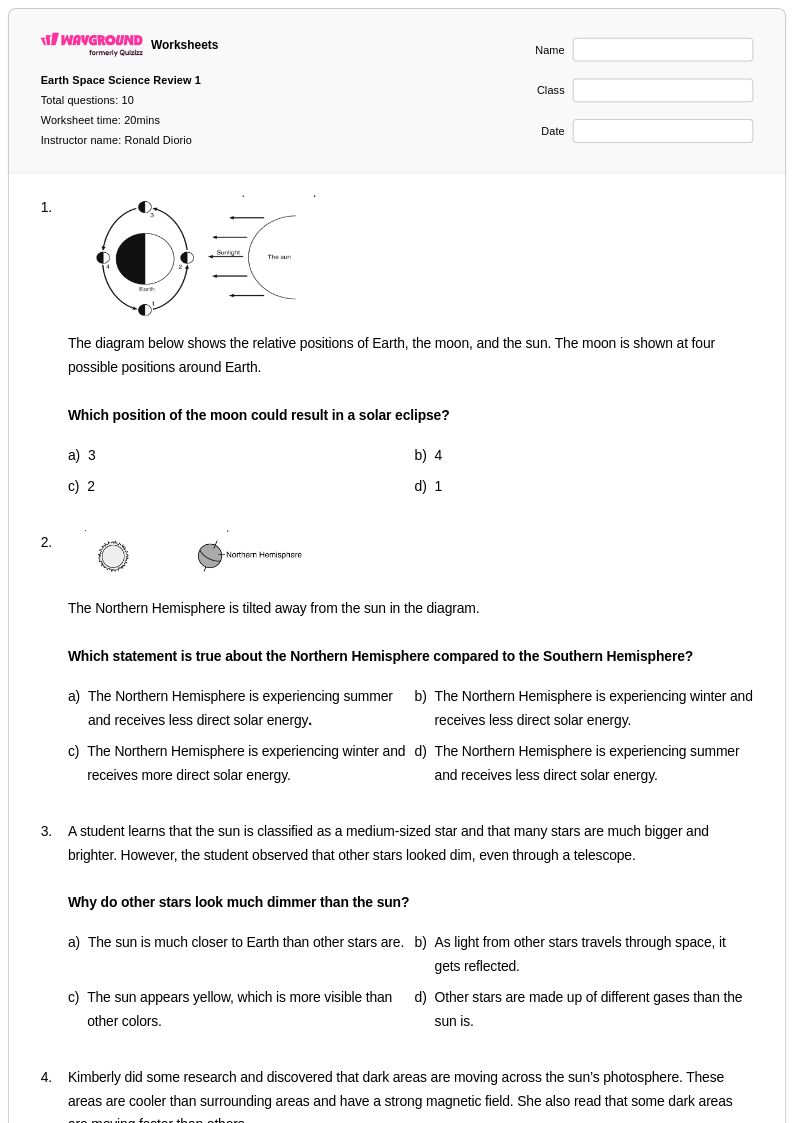
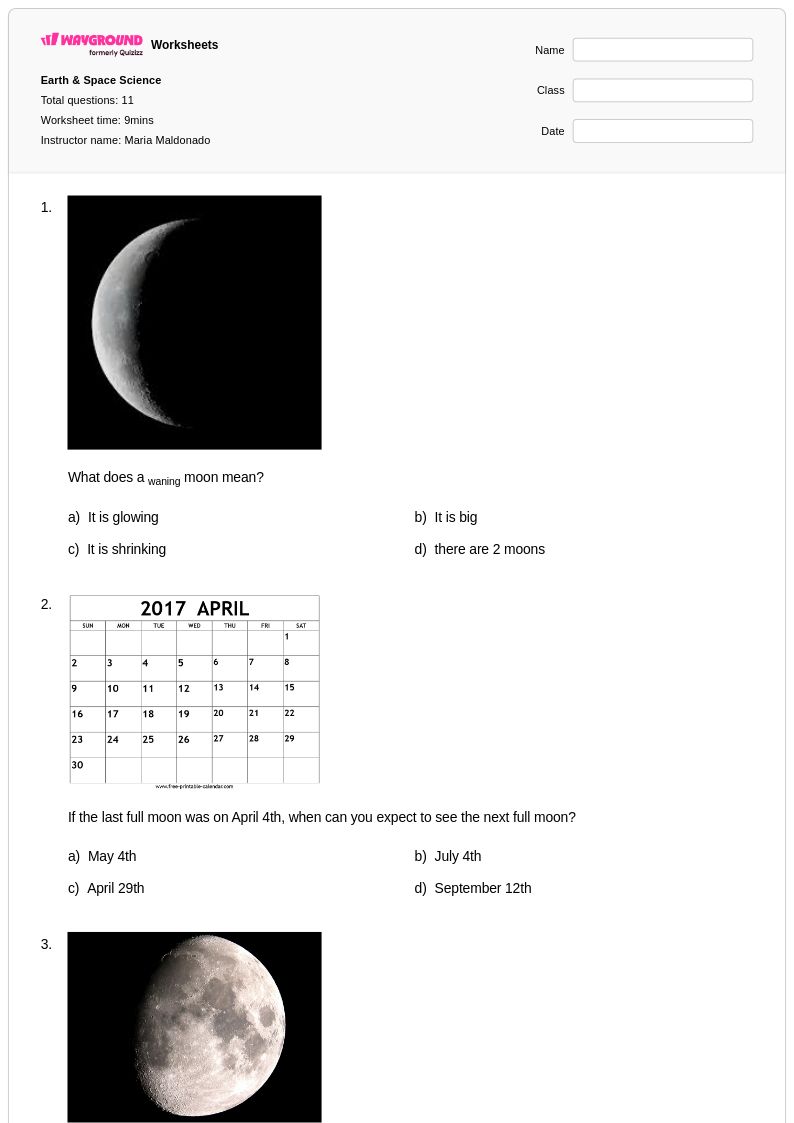
One of the most persistent misconceptions is that Earth's seasons are caused by the planet's distance from the Sun rather than the tilt of Earth's axis. Students also frequently confuse rotation (Earth spinning on its axis, causing day and night) with revolution (Earth orbiting the Sun, causing the year). In geology, students often believe rock and sediment layers always remain horizontal and undisturbed, which makes interpreting folded or faulted strata difficult. For space topics, many students believe the Moon produces its own light and do not understand that Moon phases result from the changing geometry of Sun, Earth, and Moon positions.
How can I use Earth and space science worksheets to support students who struggle with scientific vocabulary and reading?
For students who struggle with scientific vocabulary, worksheets that combine labeled diagrams with short-answer or fill-in tasks provide scaffolding by giving visual context alongside text. On Wayground, teachers can enable the Read Aloud accommodation so that question text and content are read to students who need audio support, and font sizes and display themes can be adjusted through Reading Mode to improve accessibility. Reducing answer choices is another option for students who need lower cognitive load during multiple-choice practice. These accommodations can be assigned to individual students without affecting the experience of the rest of the class.
How do I use Wayground's Earth and space science worksheets in my classroom?
Wayground's Earth and space science worksheets are available as printable PDFs for traditional classroom distribution and in digital formats for technology-integrated or remote learning environments, giving teachers flexibility across instructional settings. Teachers can also host worksheets directly as a quiz on Wayground, enabling real-time student responses and instant feedback. Each worksheet includes a complete answer key, which supports both self-directed student review and efficient teacher grading. The platform's filtering tools allow teachers to narrow resources by specific subtopic, making it straightforward to locate materials for targeted units like rock layers, moon phases, or climate systems.
How do I assess student understanding of Earth and space science without relying solely on multiple-choice tests?
Effective formative assessment in Earth and space science often involves asking students to explain processes rather than just identify answers. Tasks like sequencing the steps of the rock cycle, drawing and labeling Earth's layers with correct relative depths, or interpreting a geologic time scale for relative age dating reveal whether students understand process and relationship, not just vocabulary. Error analysis activities, where students are shown a common misconception and asked to correct and explain it, are particularly diagnostic for topics like seasons, moon phases, and plate boundary types. These approaches surface the depth of conceptual understanding that multiple-choice formats often miss.