Free Printable Economics Worksheets for Kindergarten
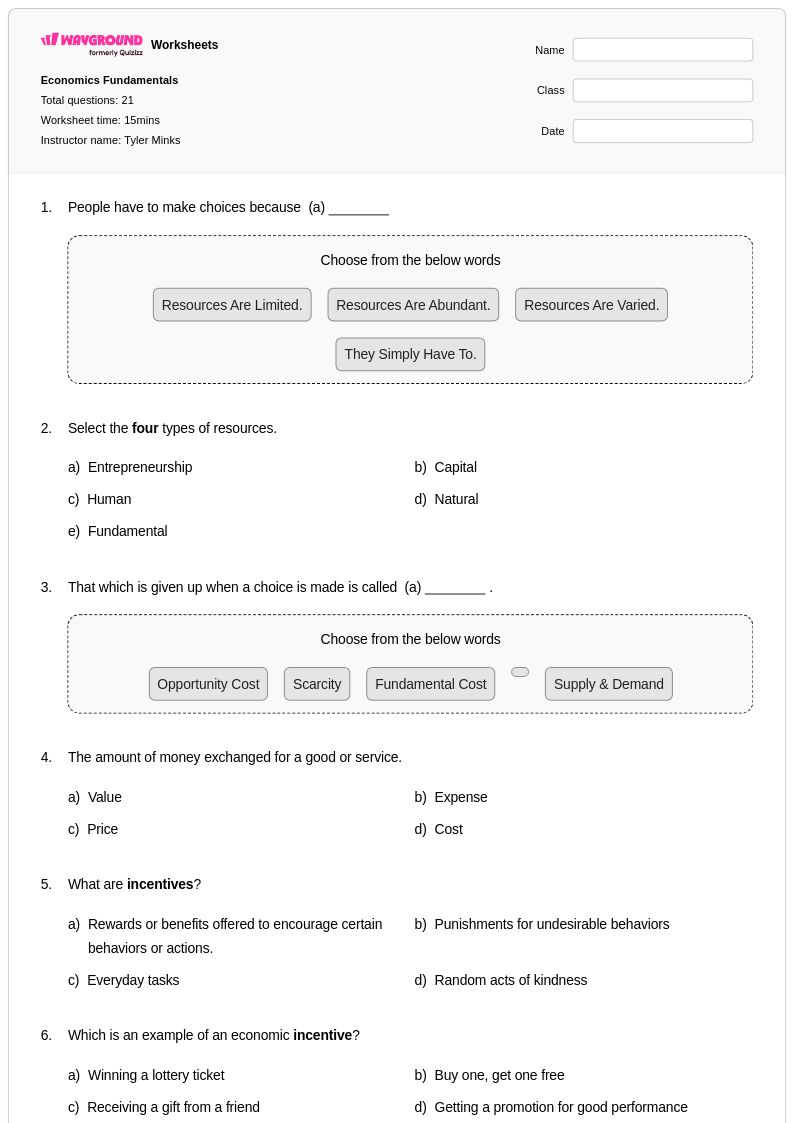
Explore free kindergarten economics worksheets and printables that help young learners understand basic money concepts, needs versus wants, and simple trade through engaging practice problems with answer keys.
Explore printable Economics worksheets for Kindergarten
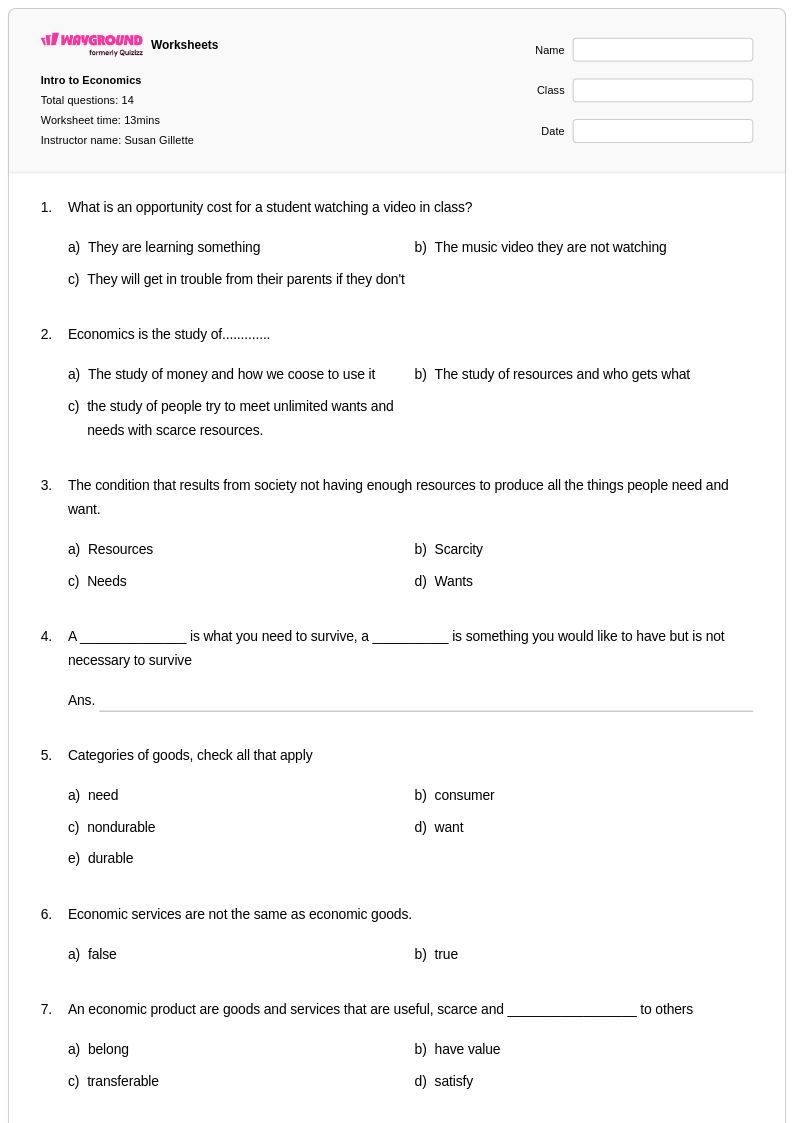
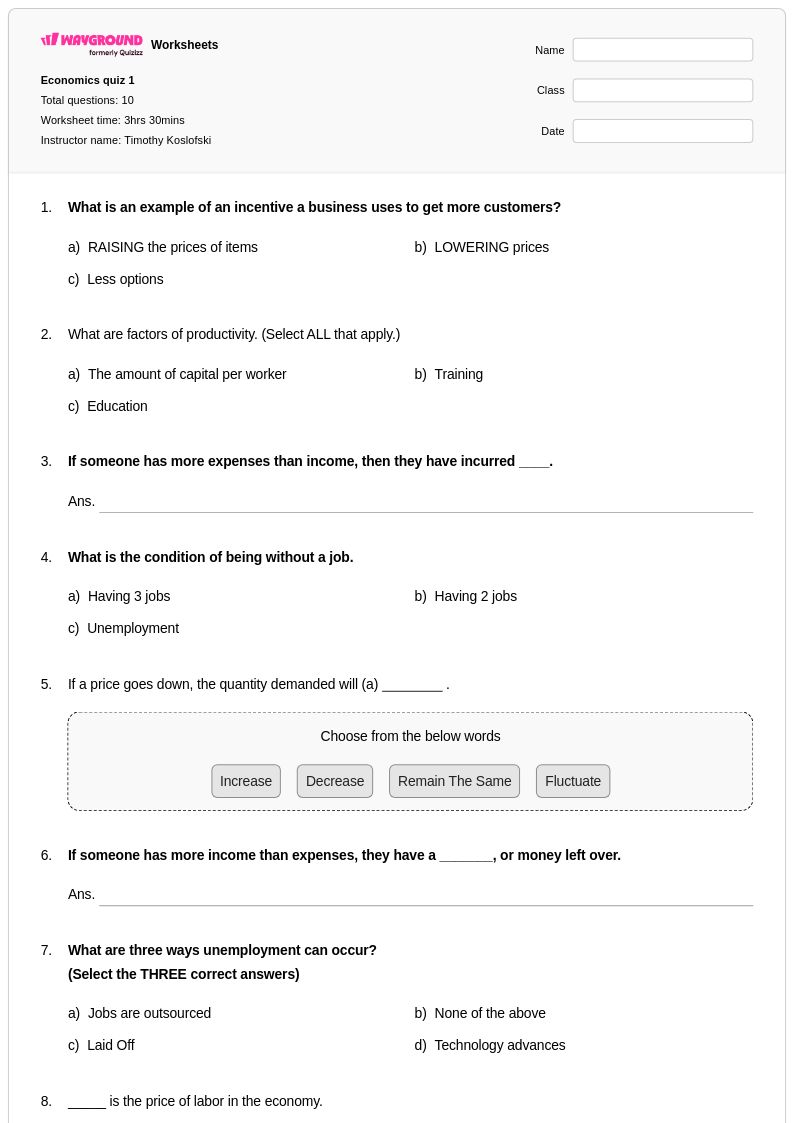
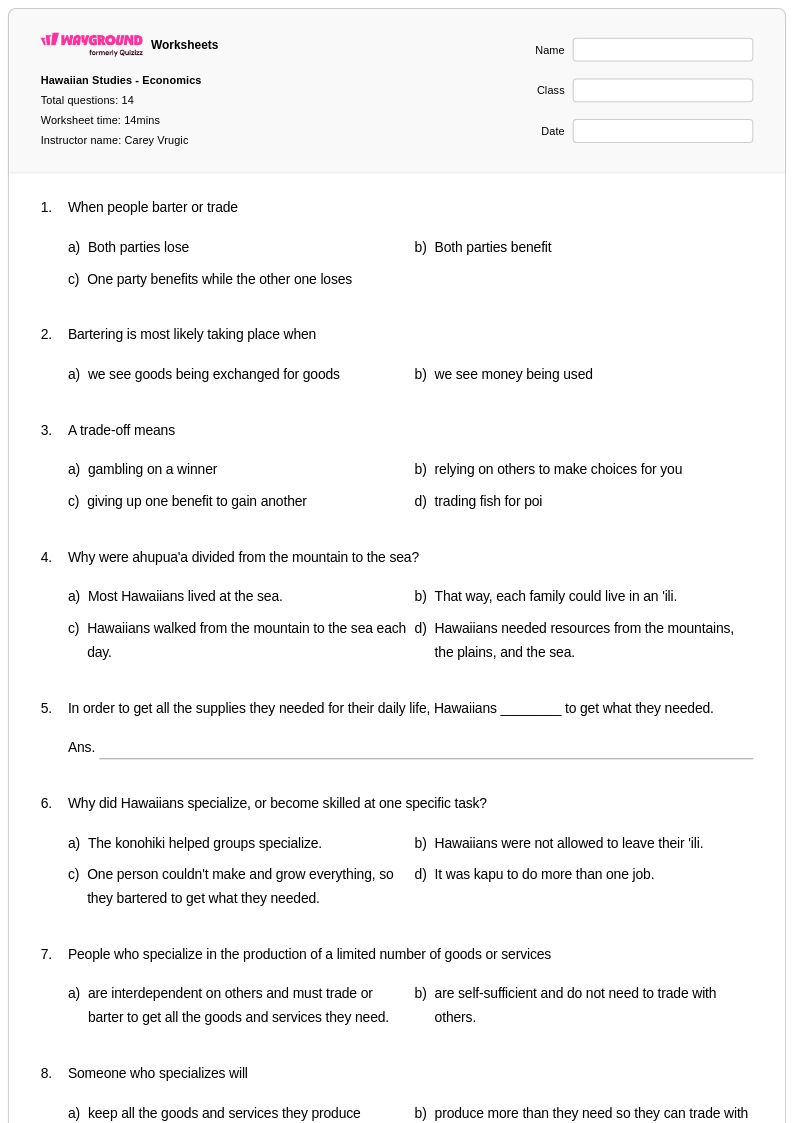
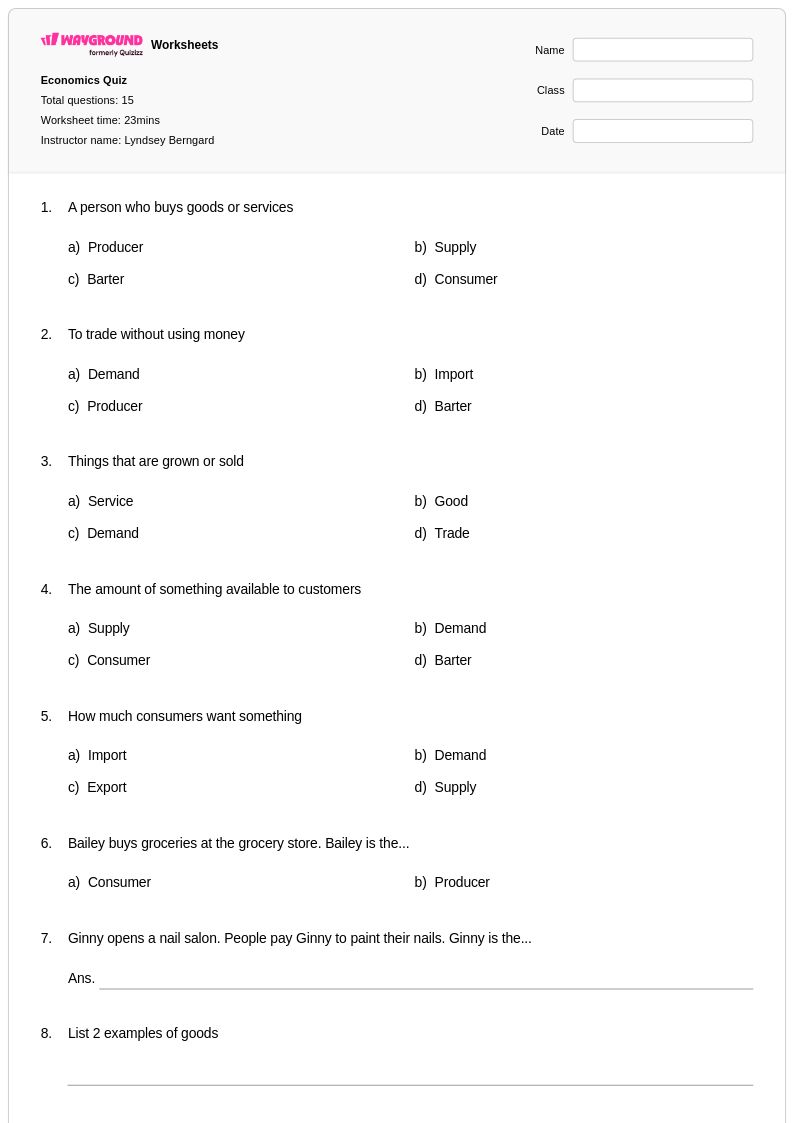
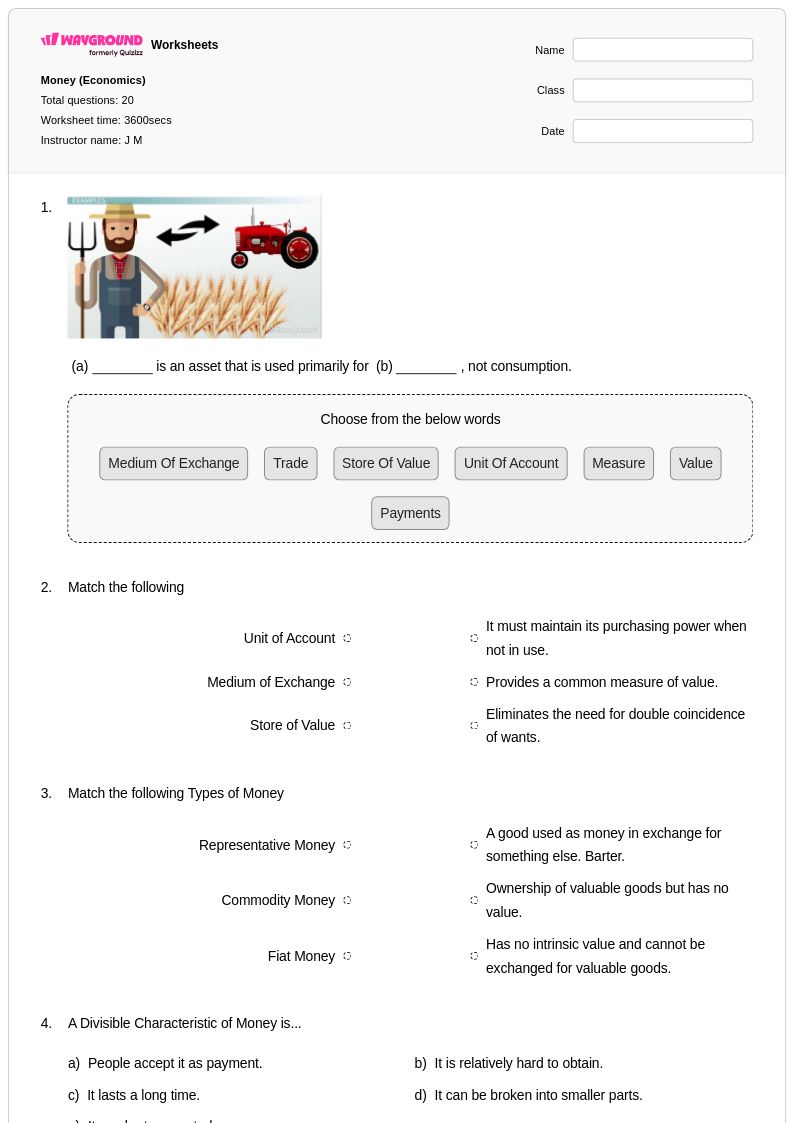
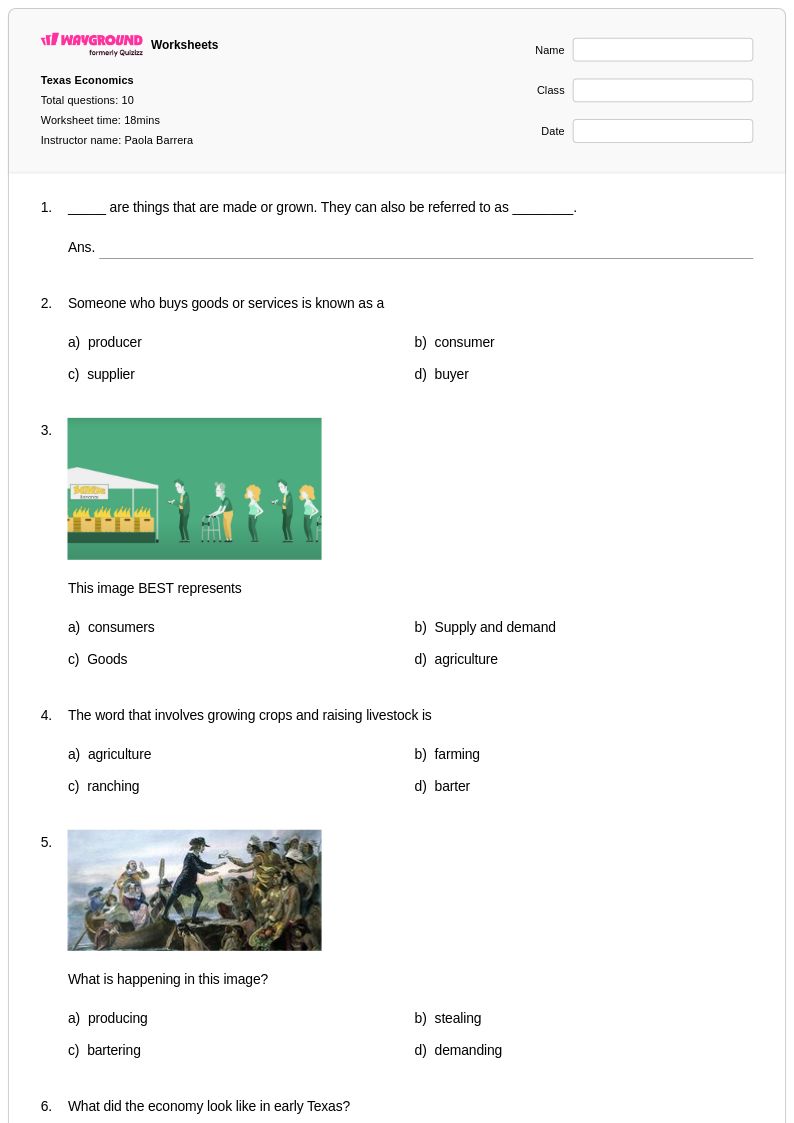
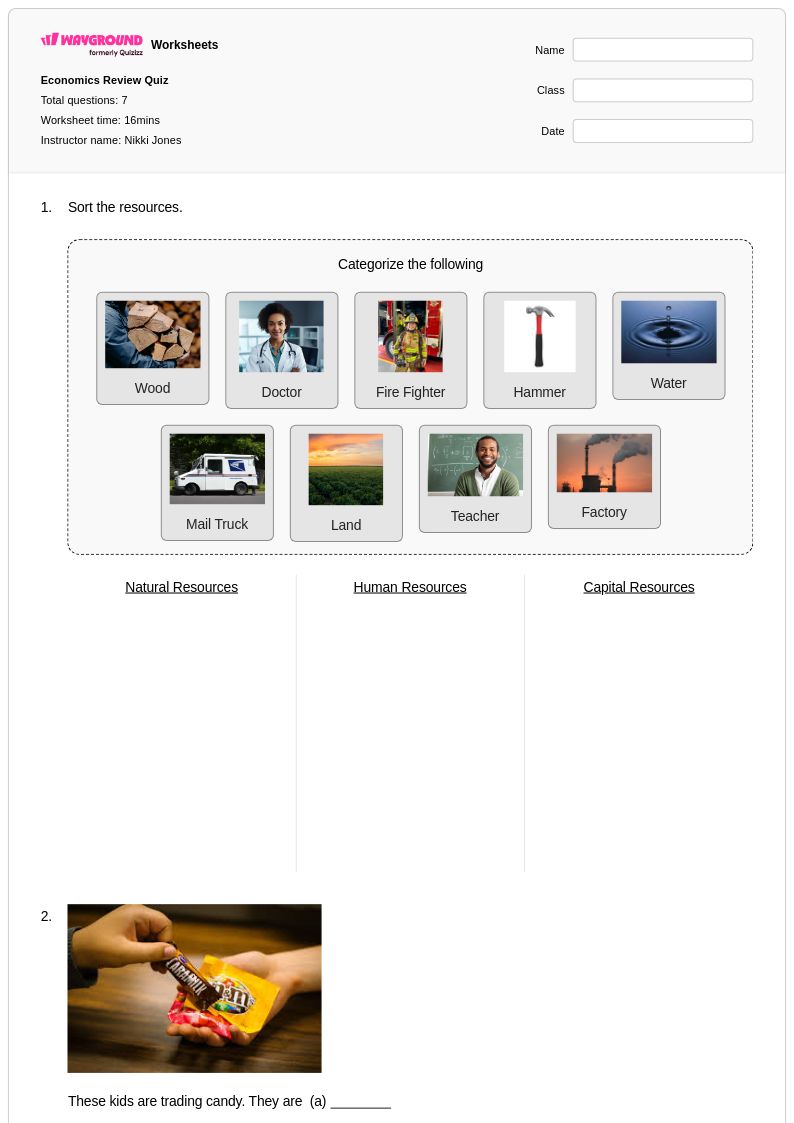
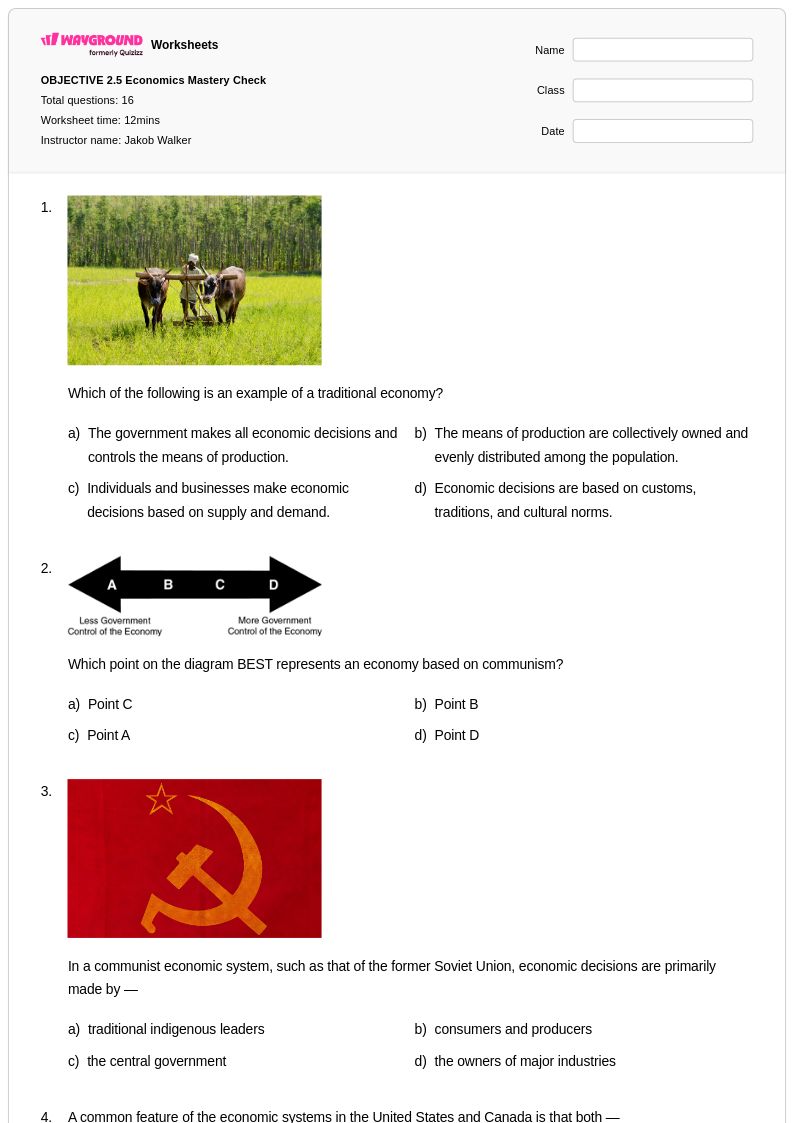
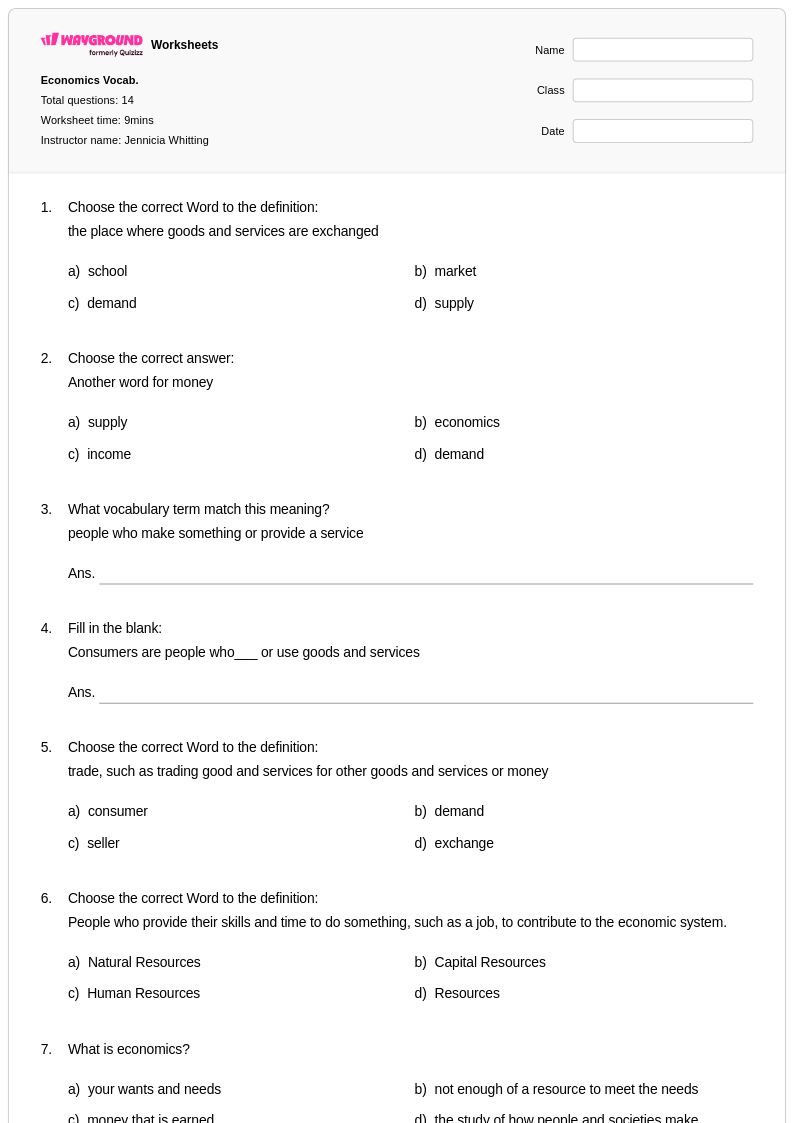
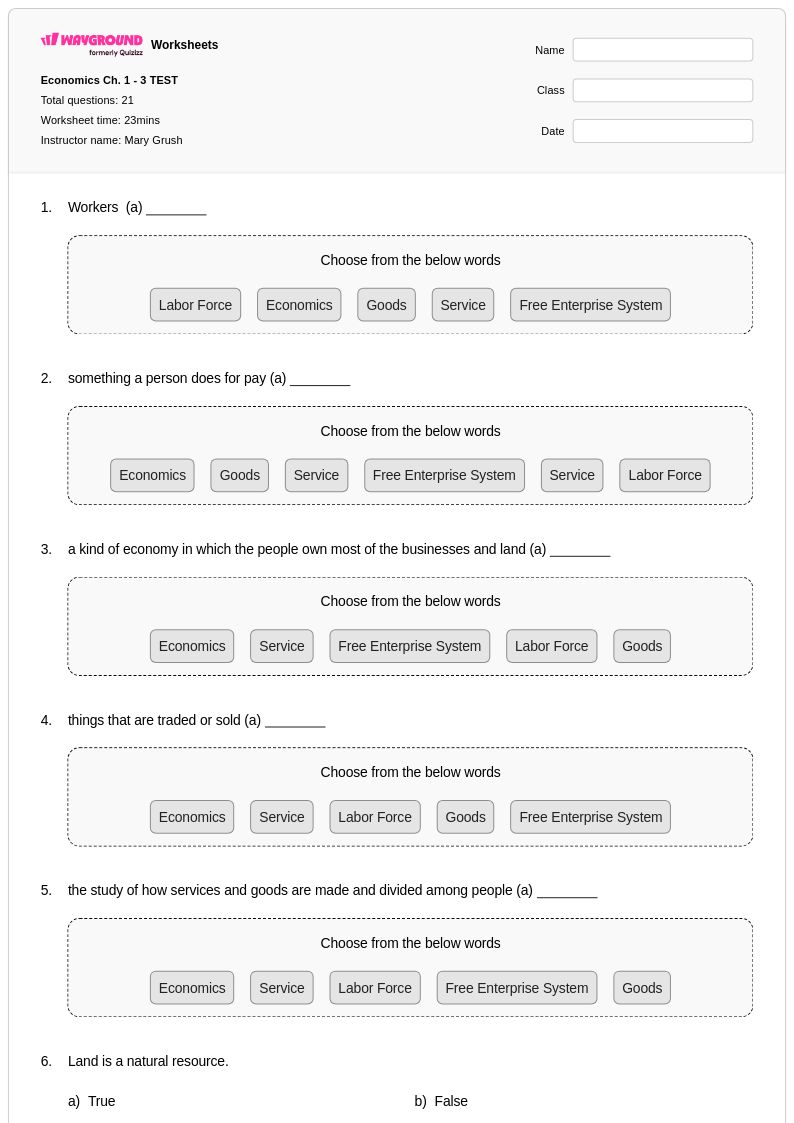
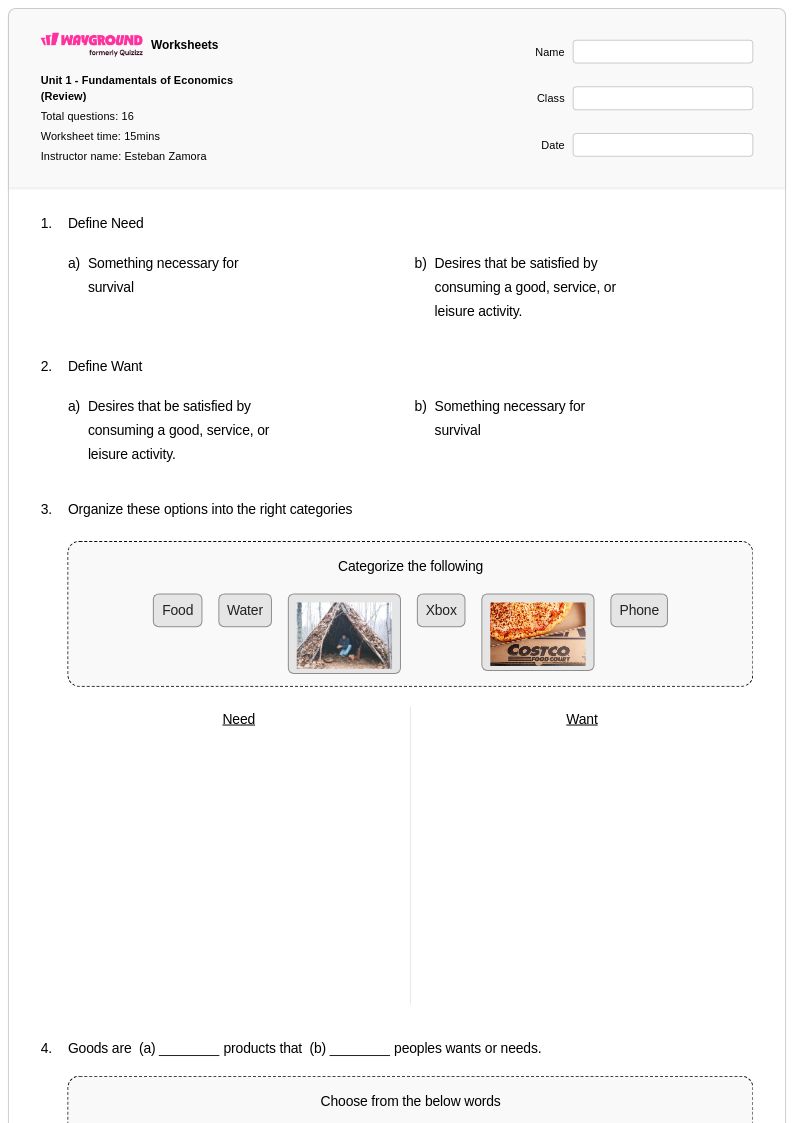
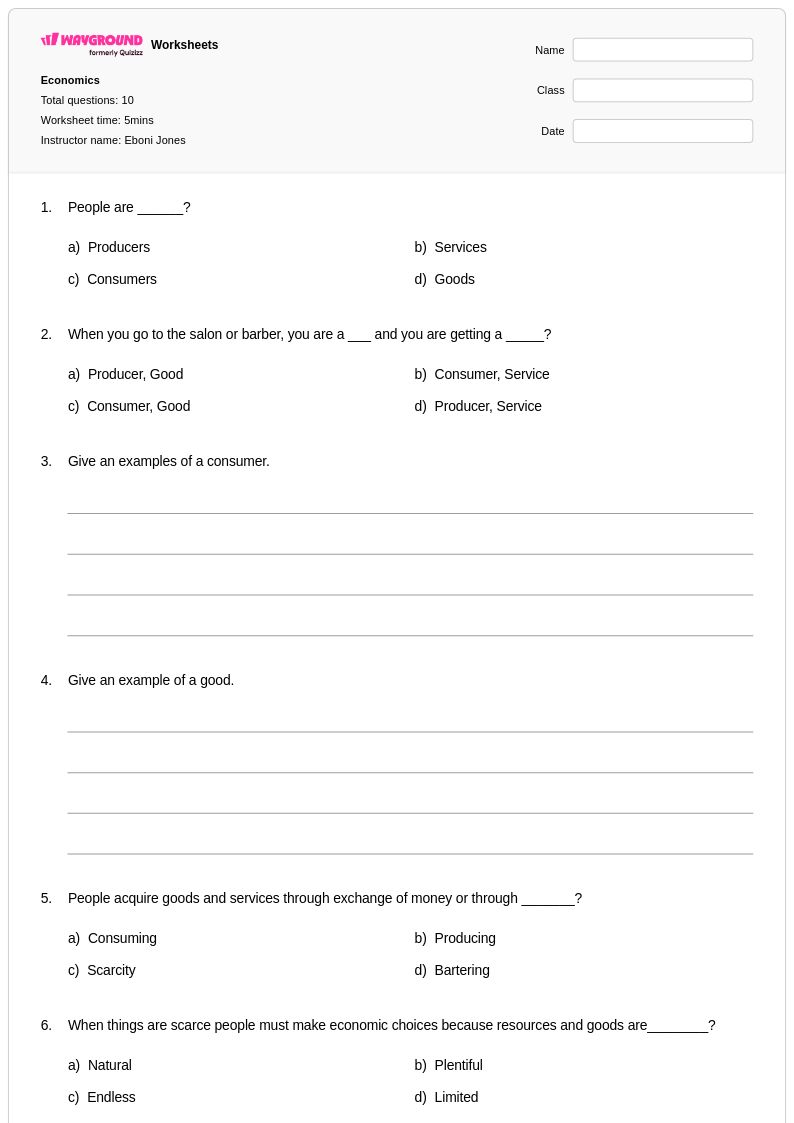
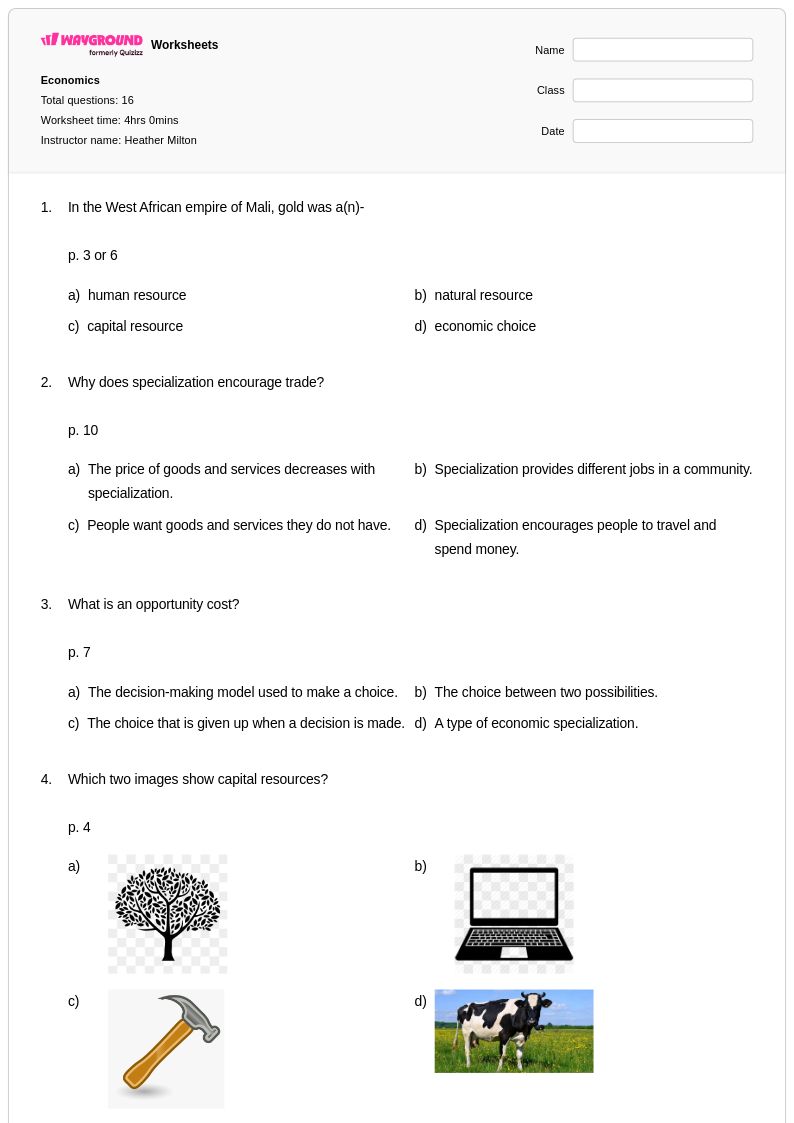
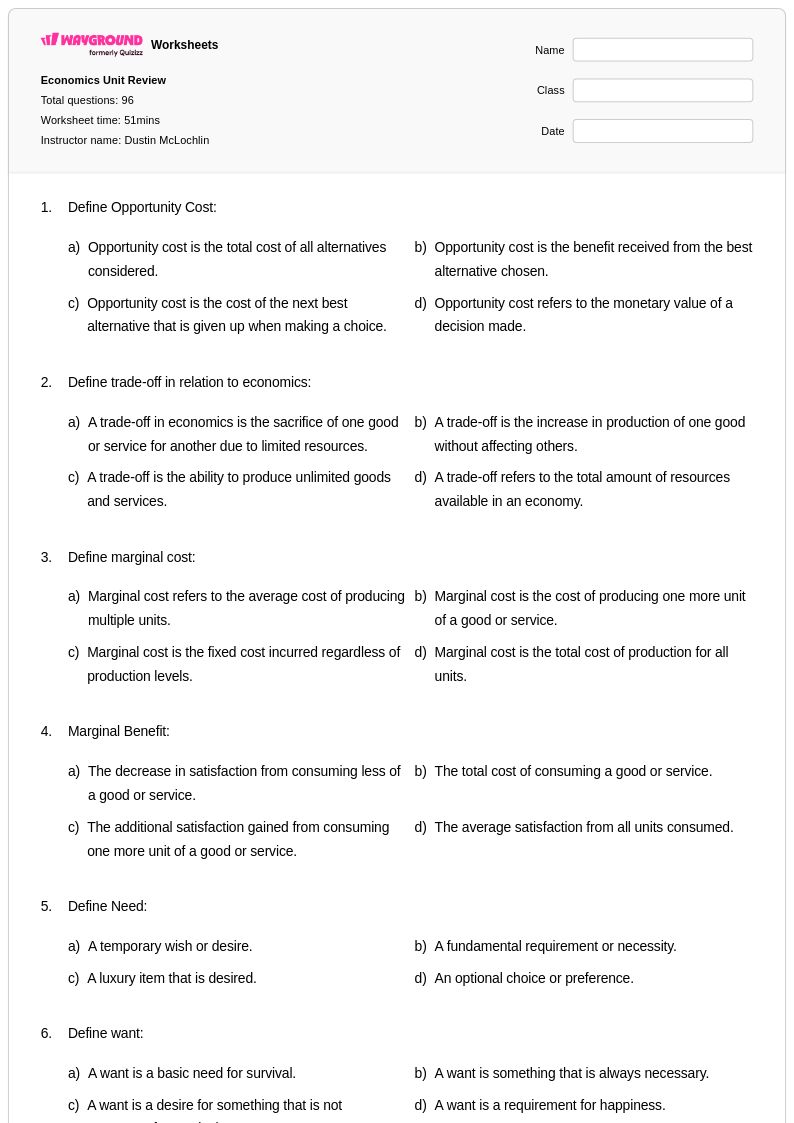
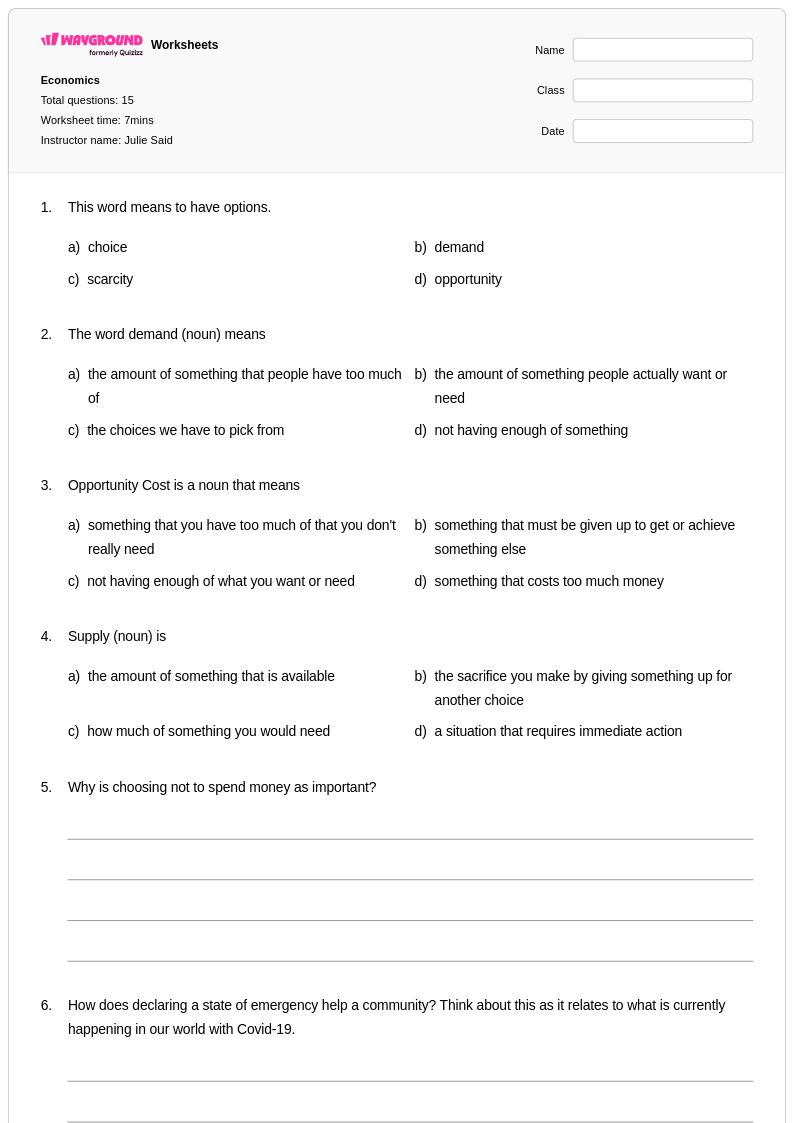
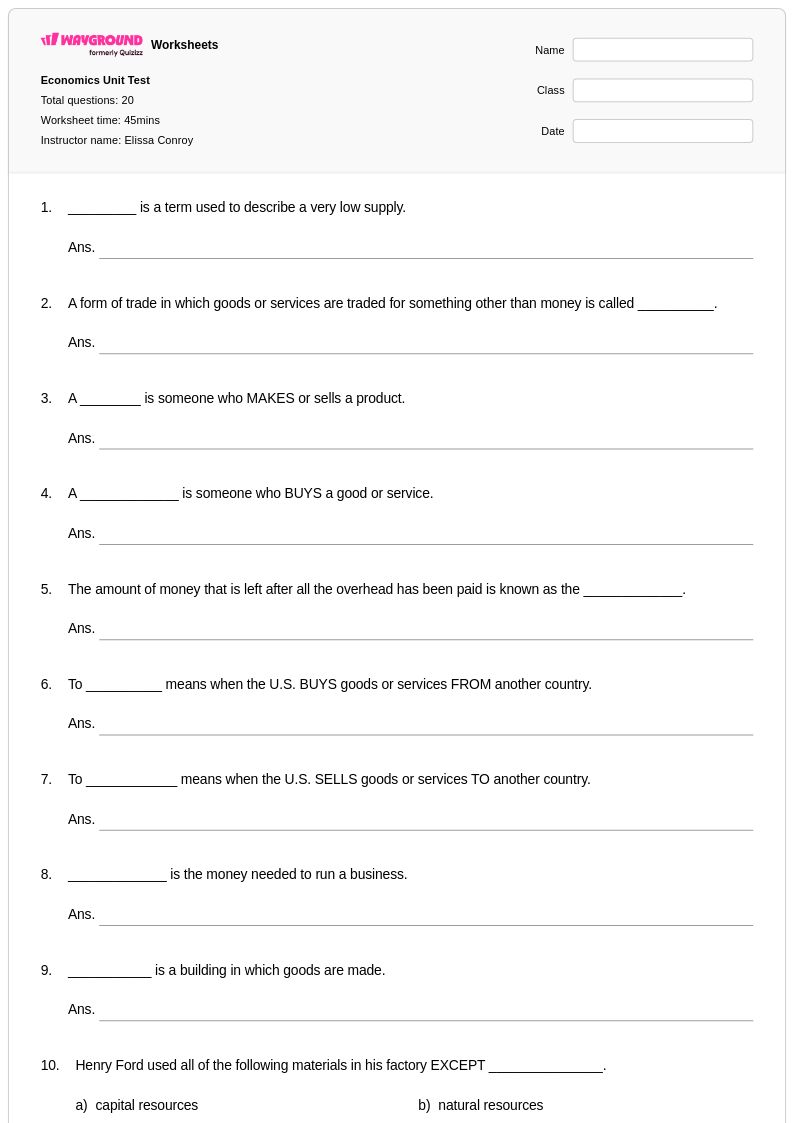
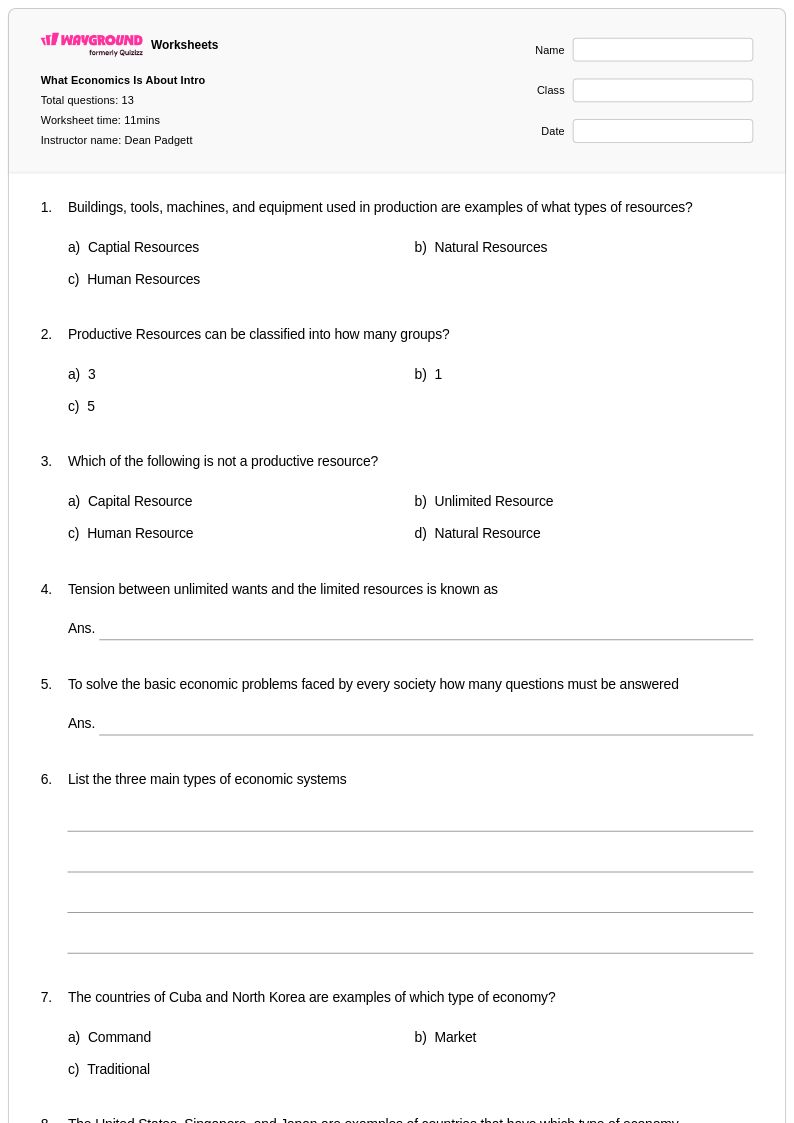
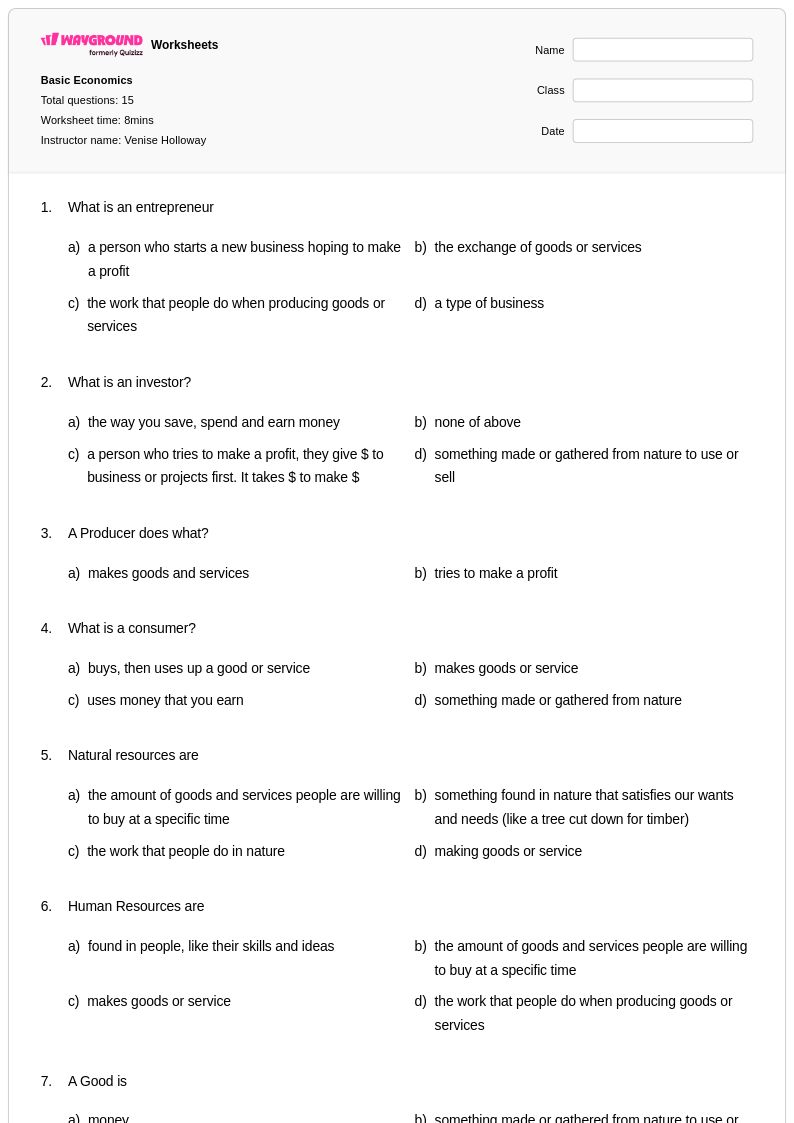
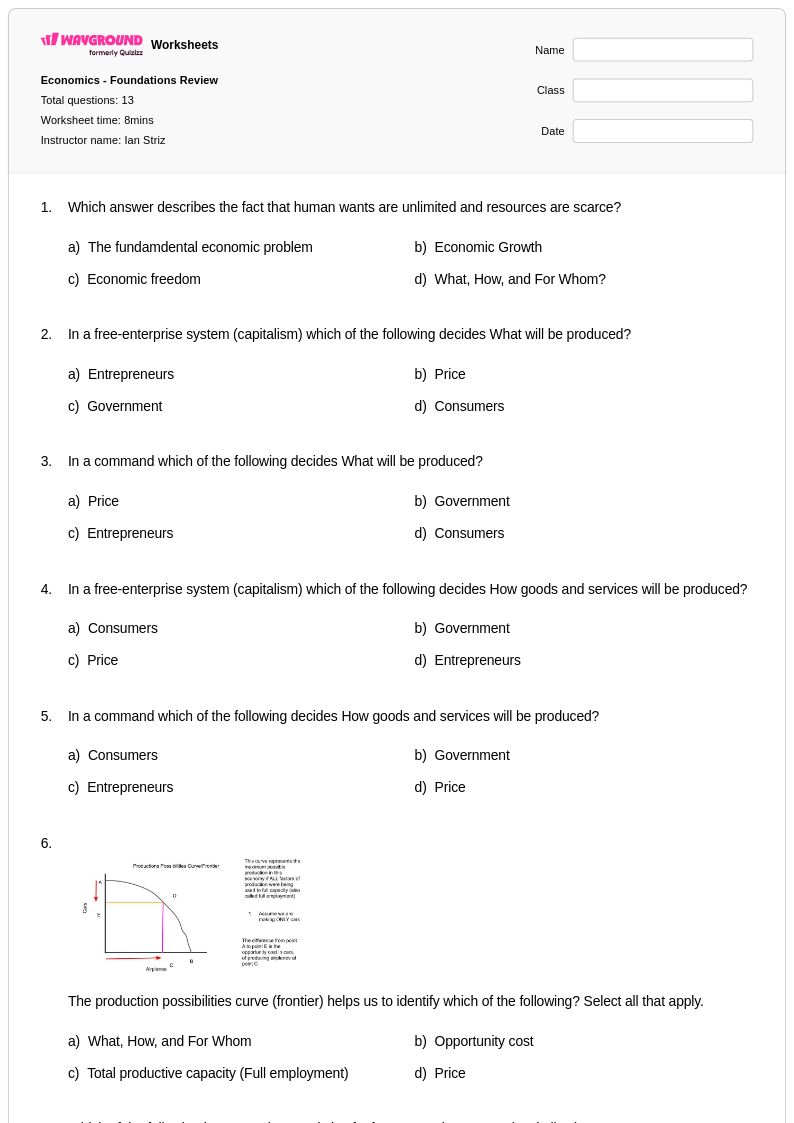
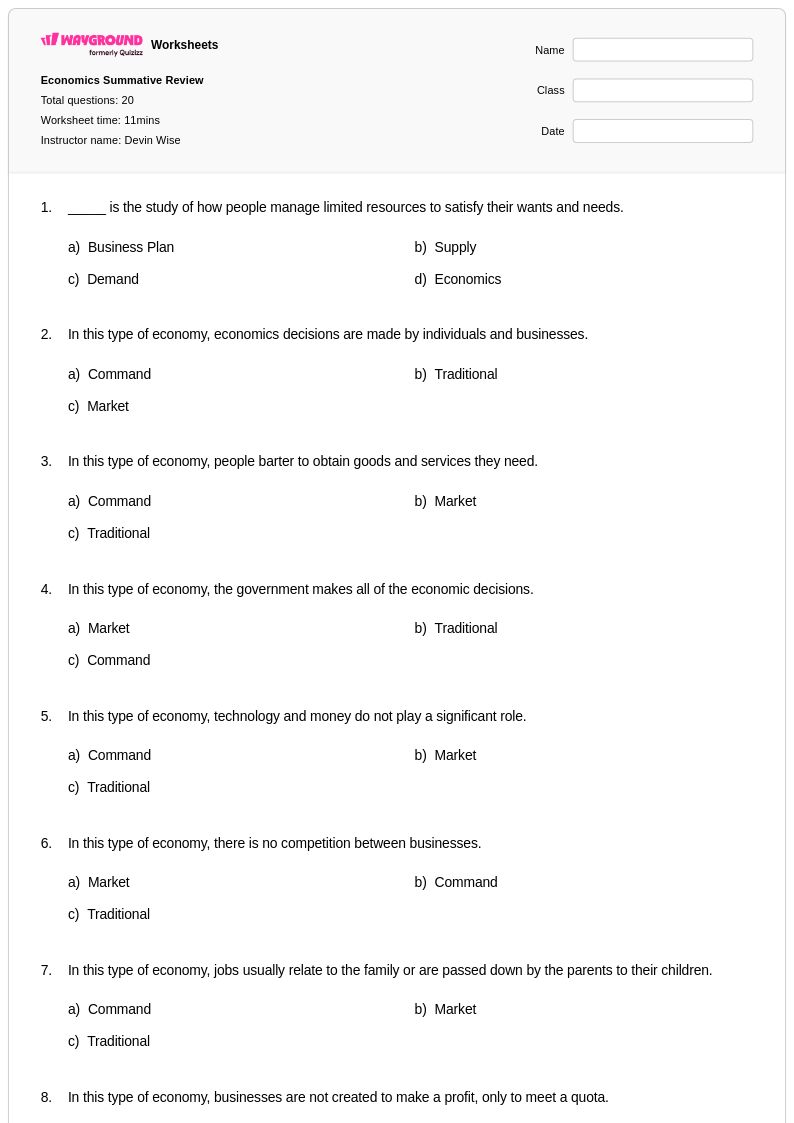
Economics worksheets for kindergarten students available through Wayground (formerly Quizizz) introduce young learners to fundamental economic concepts through age-appropriate activities and visual exercises. These carefully crafted printables help kindergarteners develop essential skills in recognizing needs versus wants, understanding the concept of jobs and community helpers, and exploring basic ideas about money and trading. The worksheet collection strengthens critical thinking abilities as students practice identifying goods and services in their daily lives, while building vocabulary related to economic concepts through engaging practice problems. Each worksheet comes with a comprehensive answer key, making it simple for educators to assess student understanding and provide targeted feedback on these foundational economic principles.
Wayground (formerly Quizizz) empowers teachers with access to millions of teacher-created economics resources specifically designed for kindergarten learners, featuring robust search and filtering capabilities that allow educators to quickly locate materials aligned with their curriculum standards. The platform's differentiation tools enable teachers to customize worksheets based on individual student needs, while flexible formatting options provide both printable pdf versions for traditional classroom use and digital formats for interactive learning experiences. These comprehensive features support effective lesson planning by offering educators reliable resources for skill practice, targeted remediation for students who need additional support, and enrichment activities for advanced learners, ensuring that all kindergarten students can build a strong foundation in economic understanding through developmentally appropriate worksheet activities.
FAQs
How do I teach economics concepts like supply and demand to high school students?
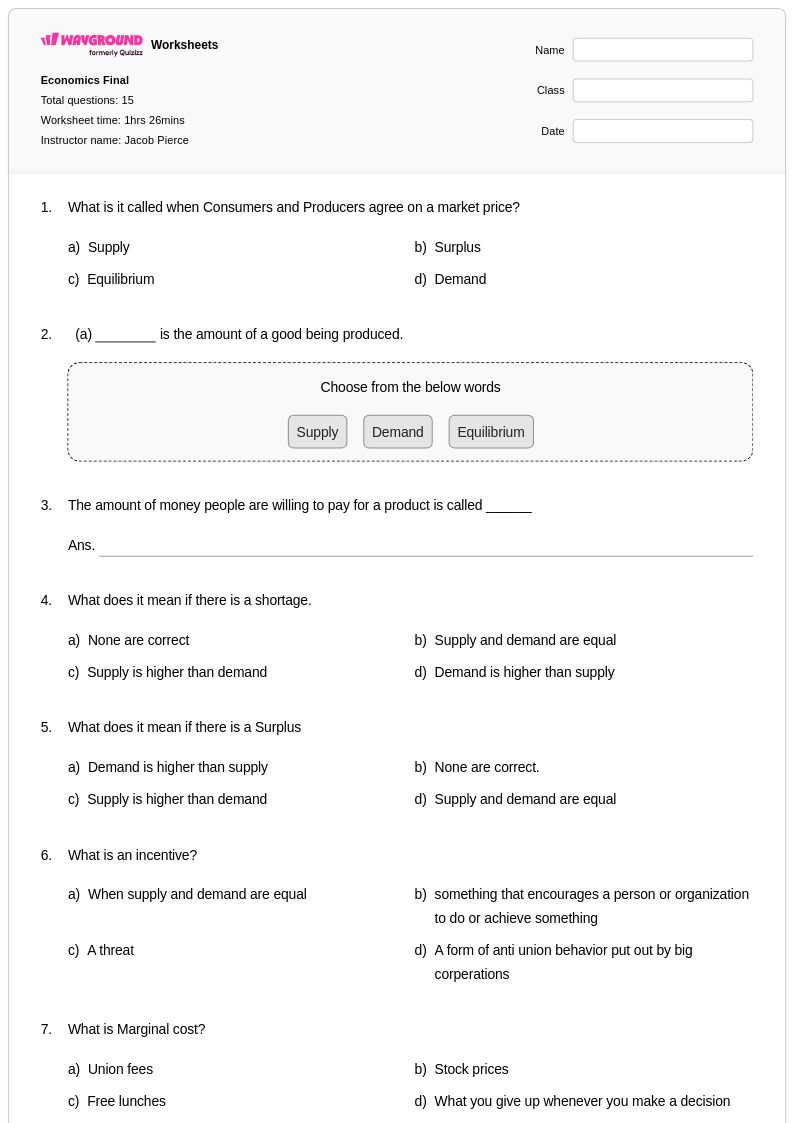
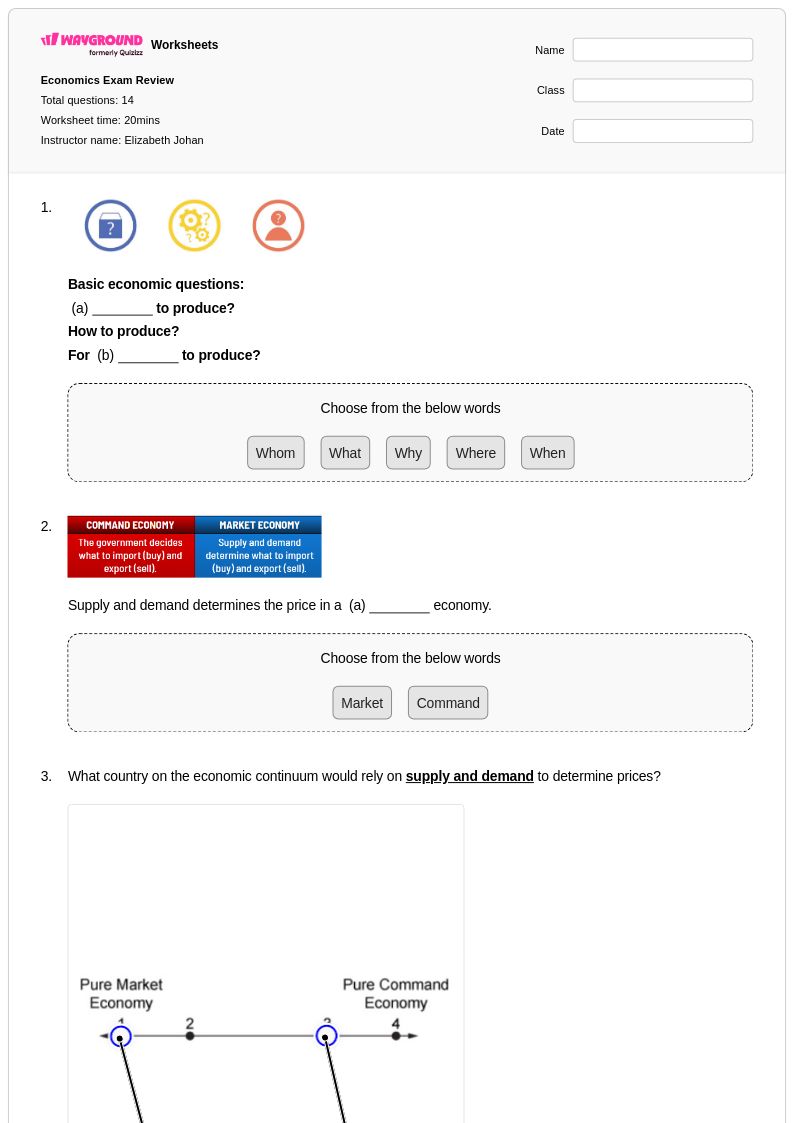
Start with concrete, real-world examples students already encounter, such as ticket prices for concerts or gas prices, before introducing formal supply and demand curves. Use graphing exercises to show how shifts in supply or demand change equilibrium price and quantity. Once students can interpret graphs accurately, introduce abstract concepts like elasticity, comparative advantage, and market structures. Grounding theory in familiar scenarios significantly improves retention and analytical thinking.
What worksheets are best for practicing personal finance and financial literacy skills?
Worksheets focused on reading paycheck stubs, budgeting, debt-to-income ratios, and checking account management give students hands-on practice with skills they will use in daily life. Cost-benefit analysis and financial goal-setting exercises extend this practice into longer-term planning. These types of activities work well as independent practice or as the basis for class discussion about real financial decisions.
What common mistakes do students make when learning about supply and demand?
The most frequent error is confusing a change in quantity demanded with a shift in the demand curve itself. Students often move the entire curve when they should only move along it, and vice versa. A related misconception is assuming that price is the only factor that shifts demand, overlooking income changes, consumer preferences, and the prices of related goods. Targeted graphing practice that isolates each variable helps students distinguish these concepts clearly.
How do I help students understand macroeconomics concepts like GDP, inflation, and fiscal policy?
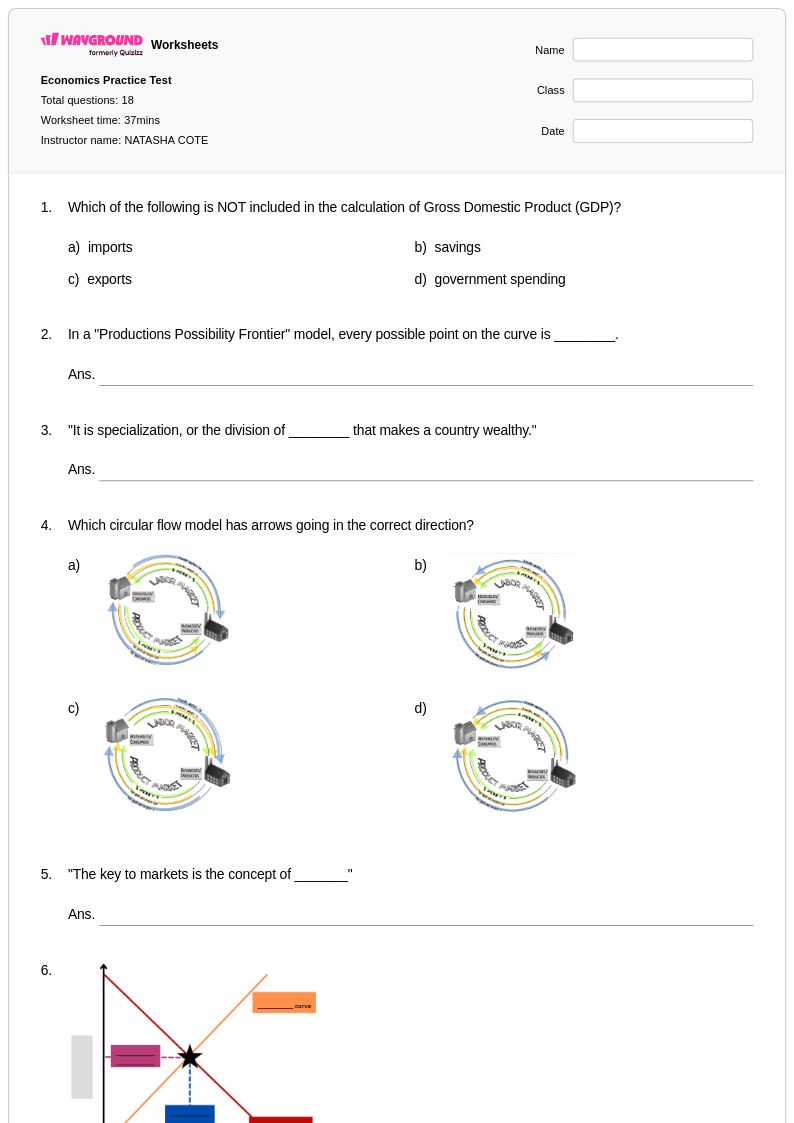
Teach macroeconomics by connecting indicators like GDP and inflation to events students have heard about, such as economic recessions or stimulus packages. Use data interpretation exercises where students read economic charts and identify trends rather than just memorizing definitions. Pairing fiscal policy worksheets with monetary policy worksheets helps students compare the two levers of economic management and understand when each is typically applied.
How can I use economics worksheets on Wayground in my classroom?
Wayground economics worksheets are available as printable PDFs for traditional classroom use and in digital formats for technology-integrated or remote learning environments, so they fit a wide range of instructional settings. Teachers can also host worksheets directly as a quiz on Wayground, allowing for real-time student response tracking. All worksheets include detailed answer keys, supporting both teacher-led instruction and independent student practice.
How do I differentiate economics instruction for students at different skill levels?
For struggling students, simplify tasks by focusing on one variable at a time, such as isolating price changes before introducing shifts in supply or demand. Wayground supports individual student accommodations including reduced answer choices to lower cognitive load, read-aloud functionality for students who need audio support, and extended time settings that can be configured per student. These accommodations are saved and reusable across sessions, so differentiation does not require rebuilding settings each class.
What exercises help students practice understanding scarcity and opportunity cost?
Production possibilities curve exercises are among the most effective tools for teaching both scarcity and opportunity cost simultaneously, because they require students to visualize trade-offs graphically. Scenario-based cost-benefit analysis worksheets extend this by asking students to weigh explicit and implicit costs of real decisions. Needs and wants sorting activities work well as an entry point for younger or introductory-level students before moving to more formal economic modeling.