Free Printable Election Vocabulary Worksheets for Class 8
Enhance Class 8 students' understanding of election vocabulary with Wayground's comprehensive collection of free civics worksheets, featuring printable PDFs, practice problems, and complete answer keys for effective classroom learning.
Explore printable Election Vocabulary worksheets for Class 8
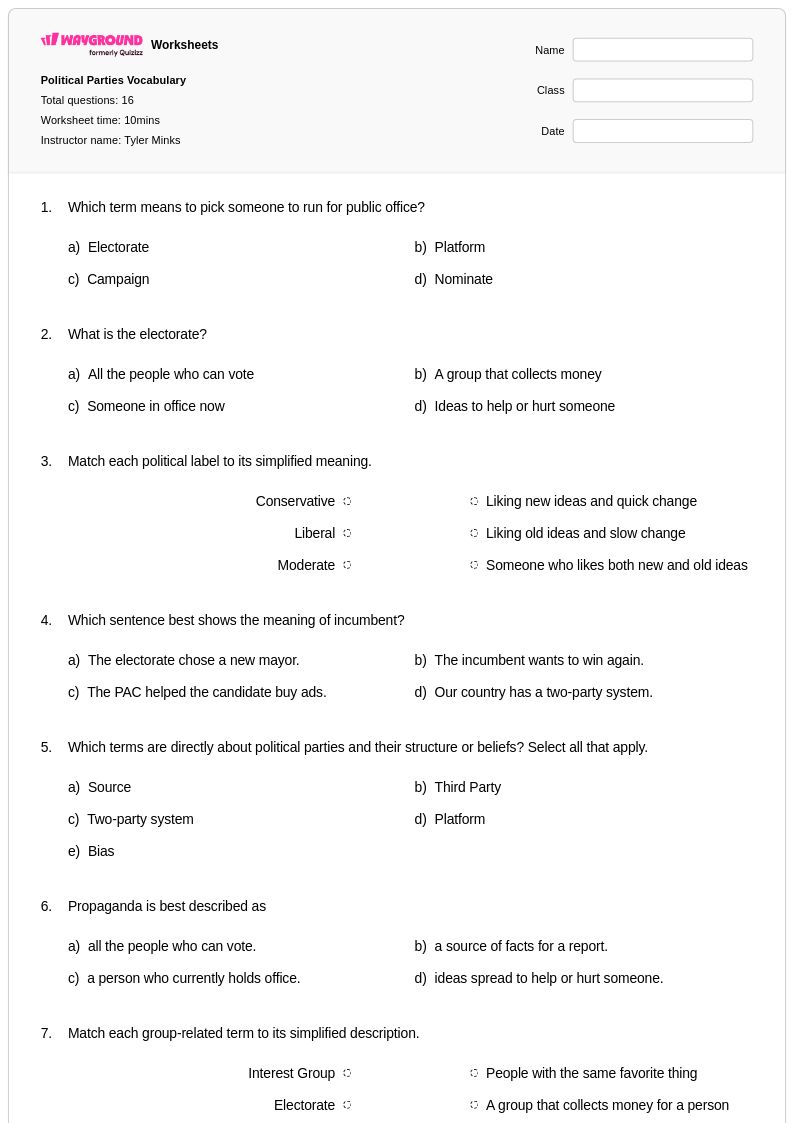
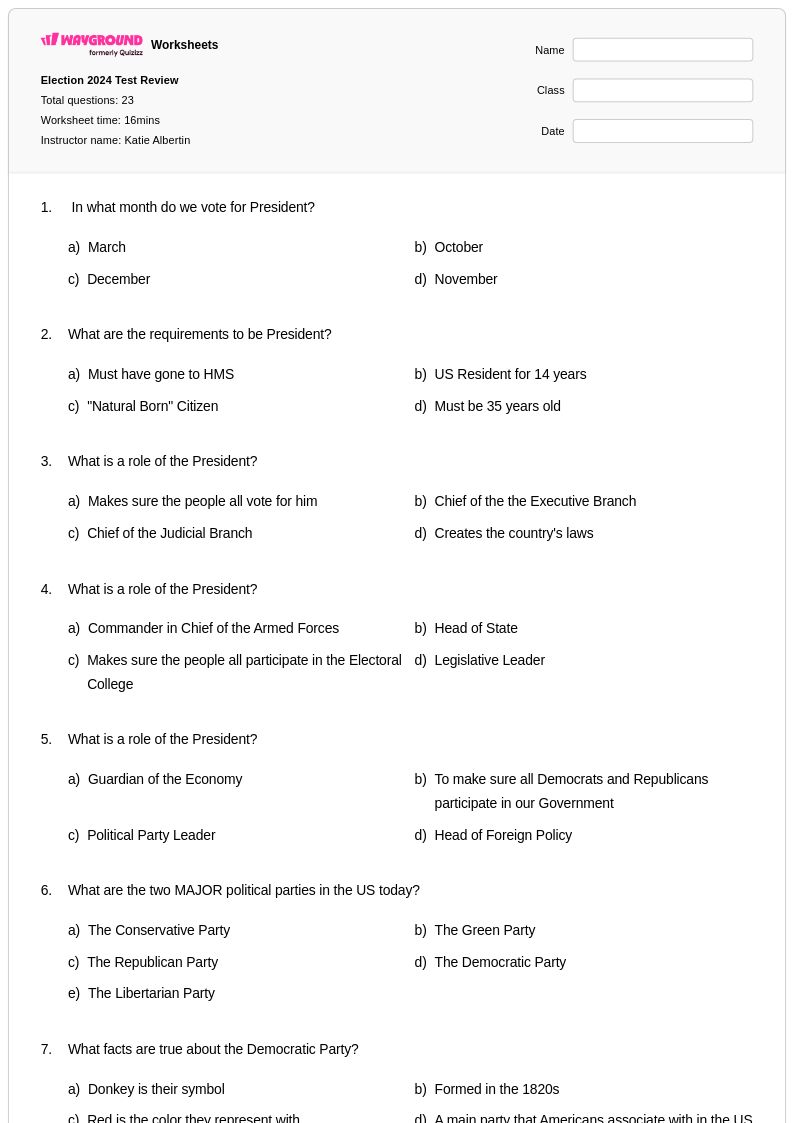
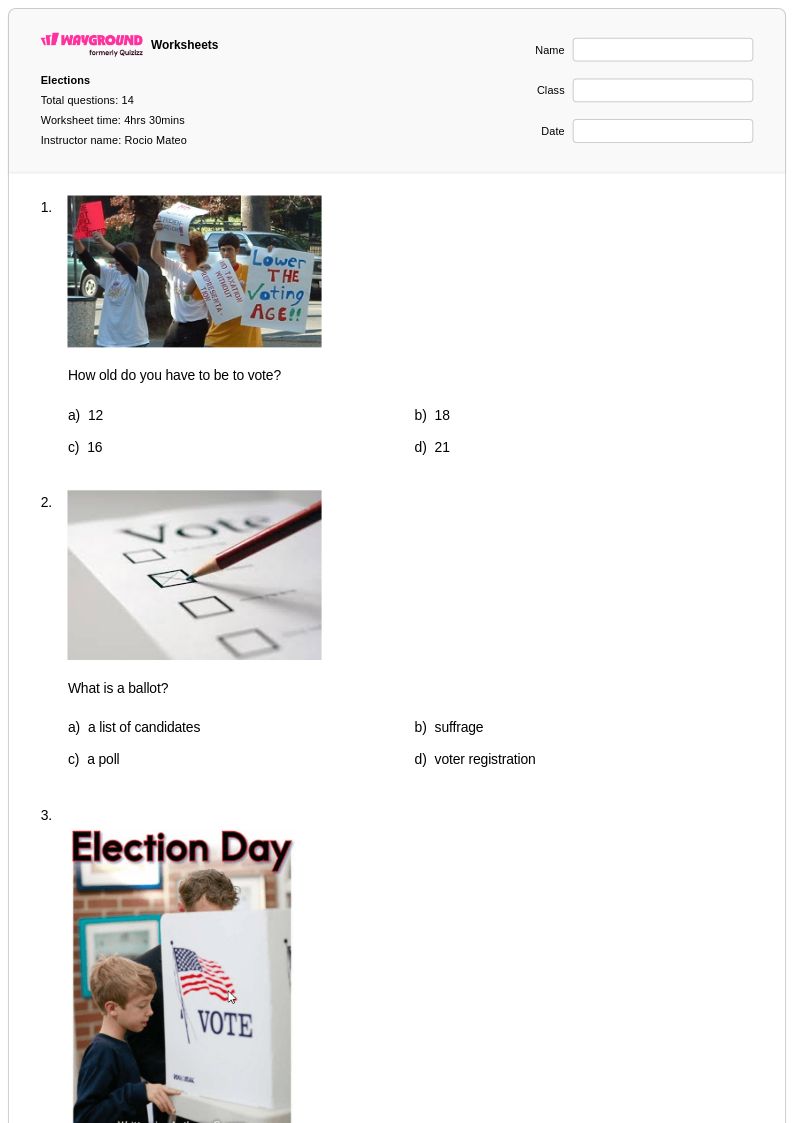
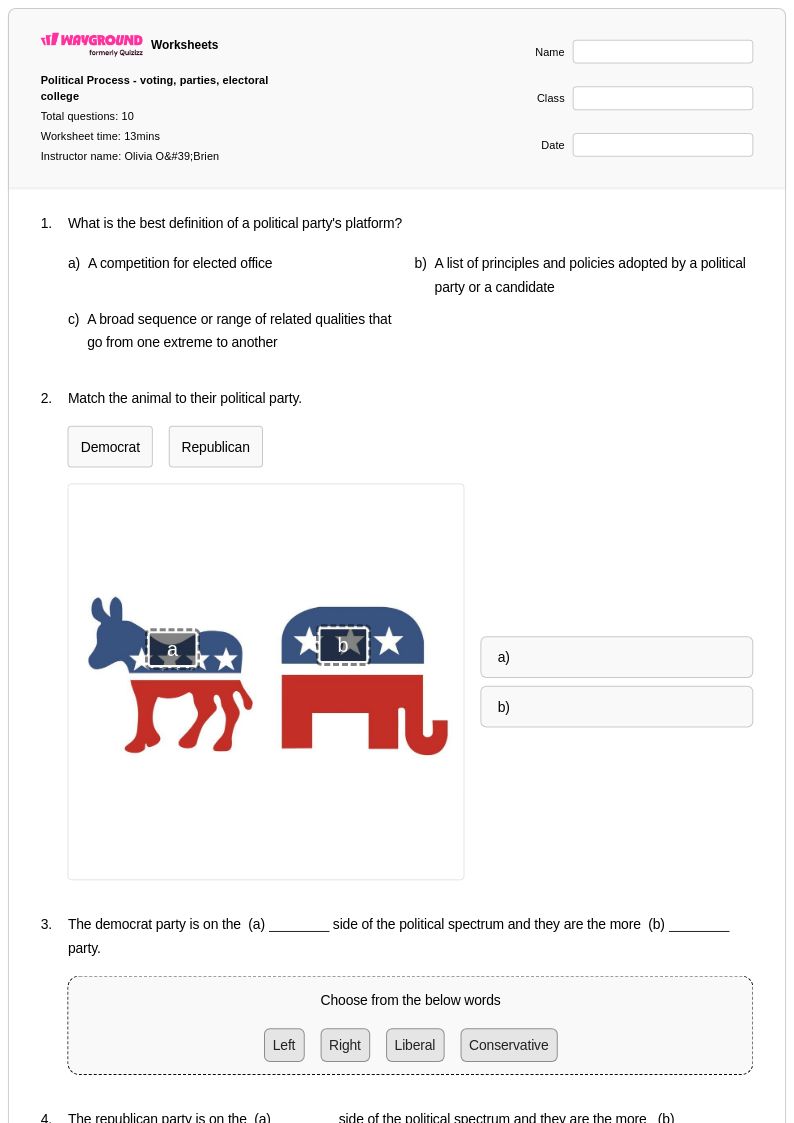
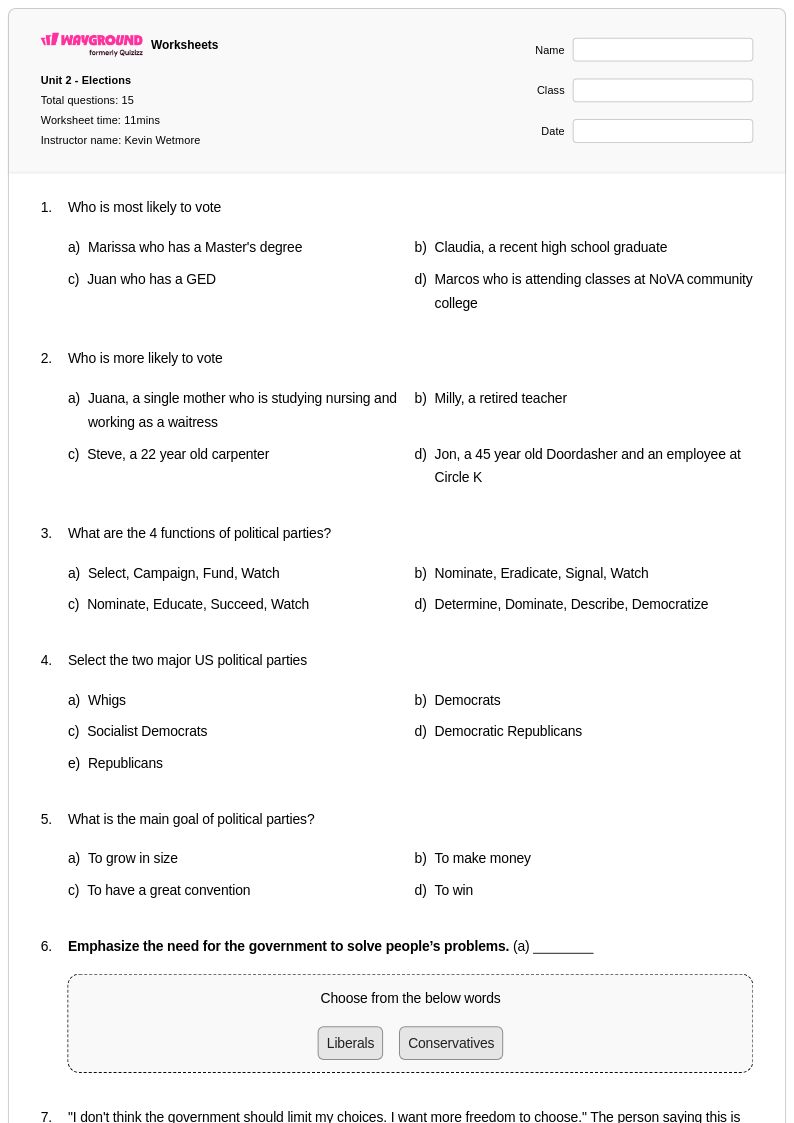
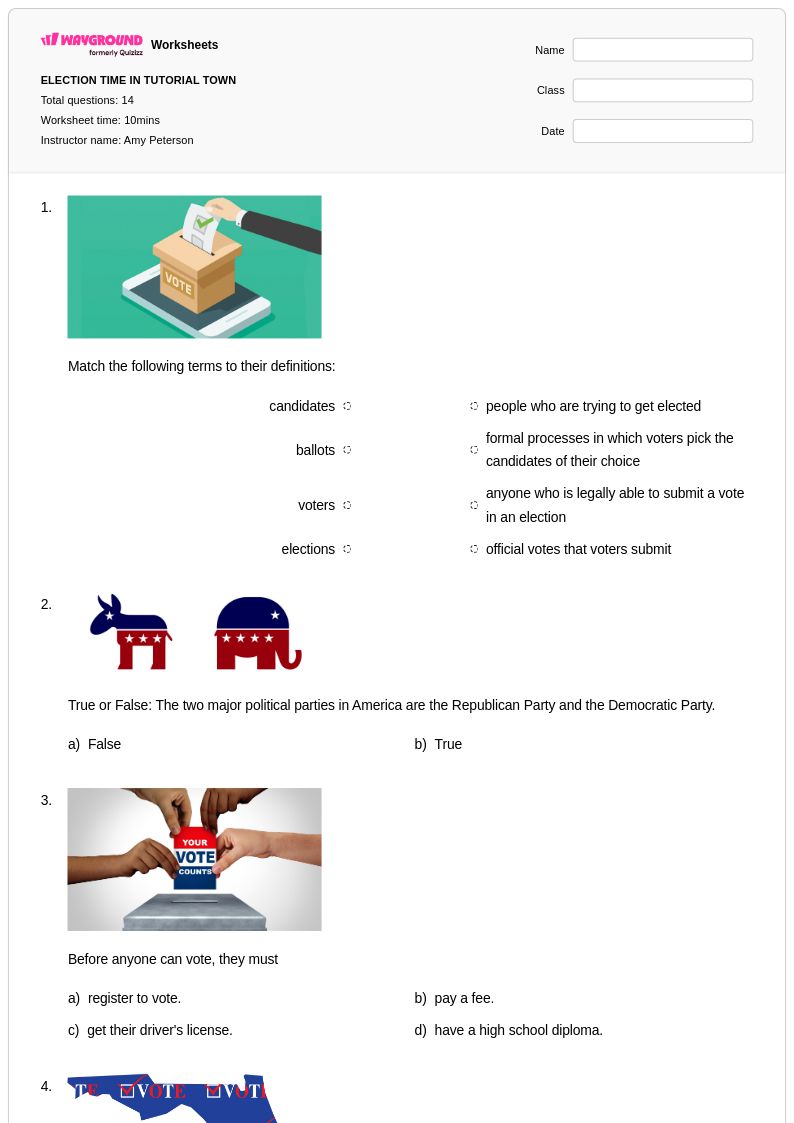
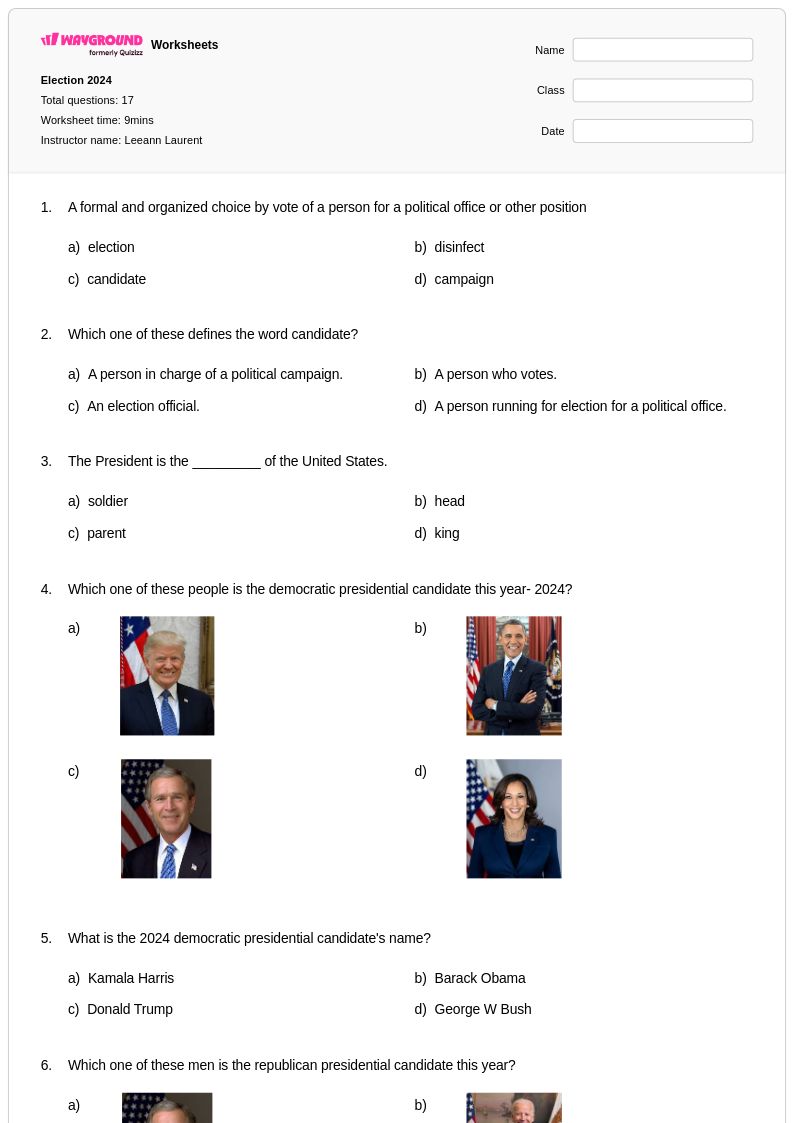
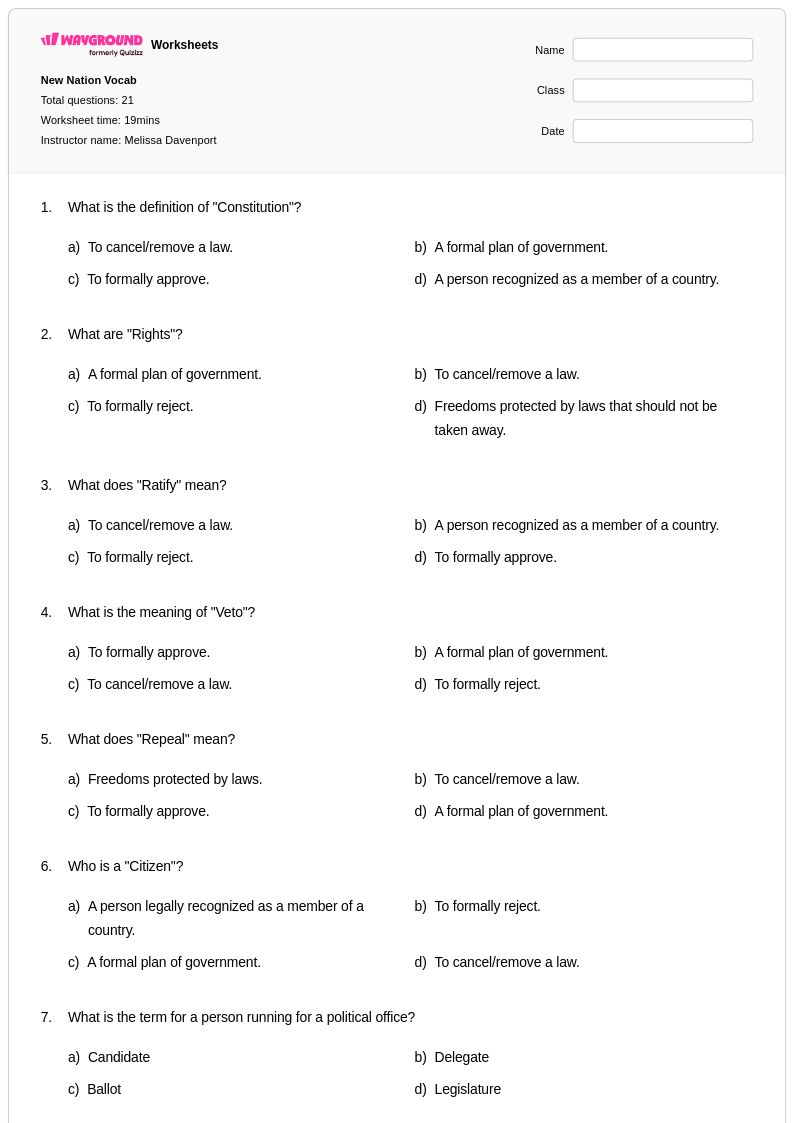
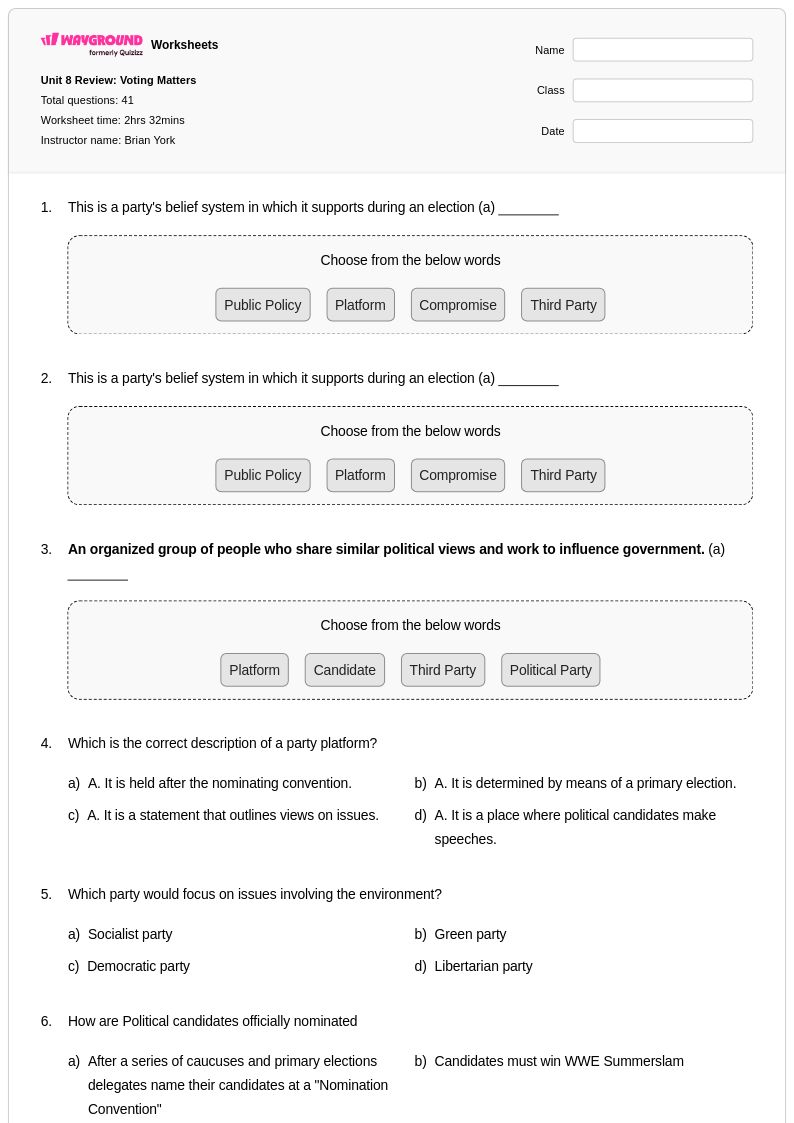
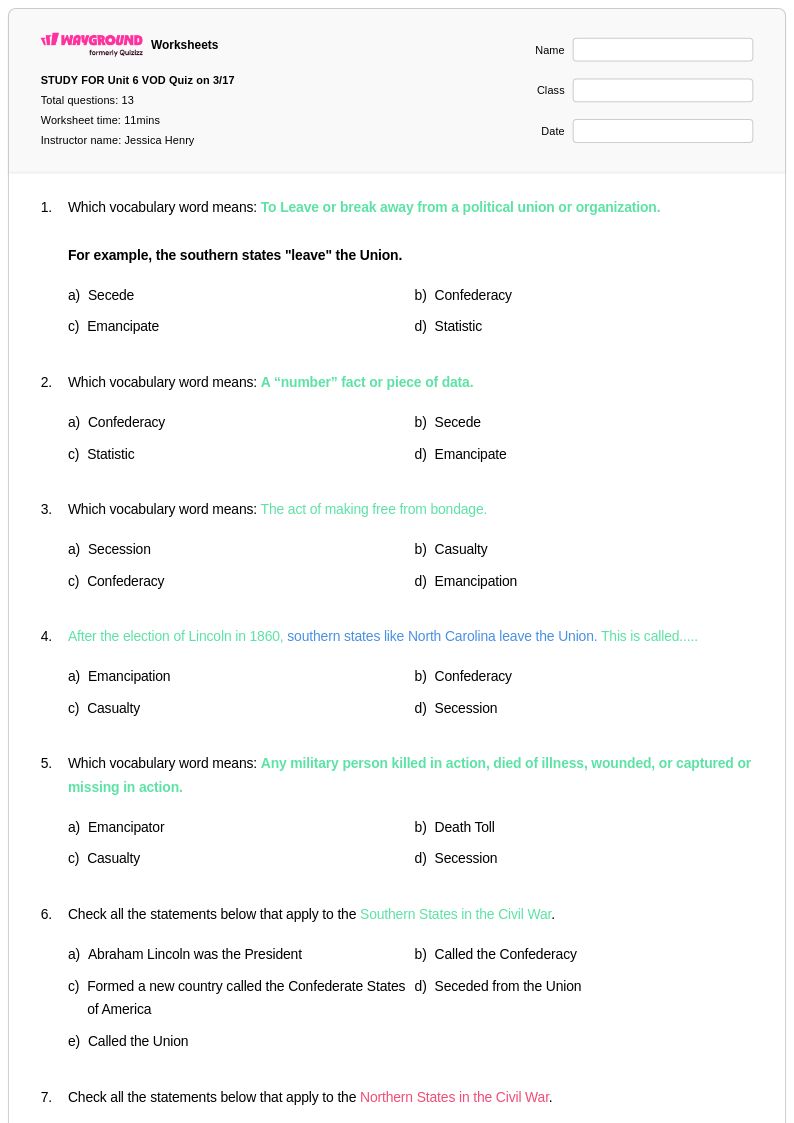
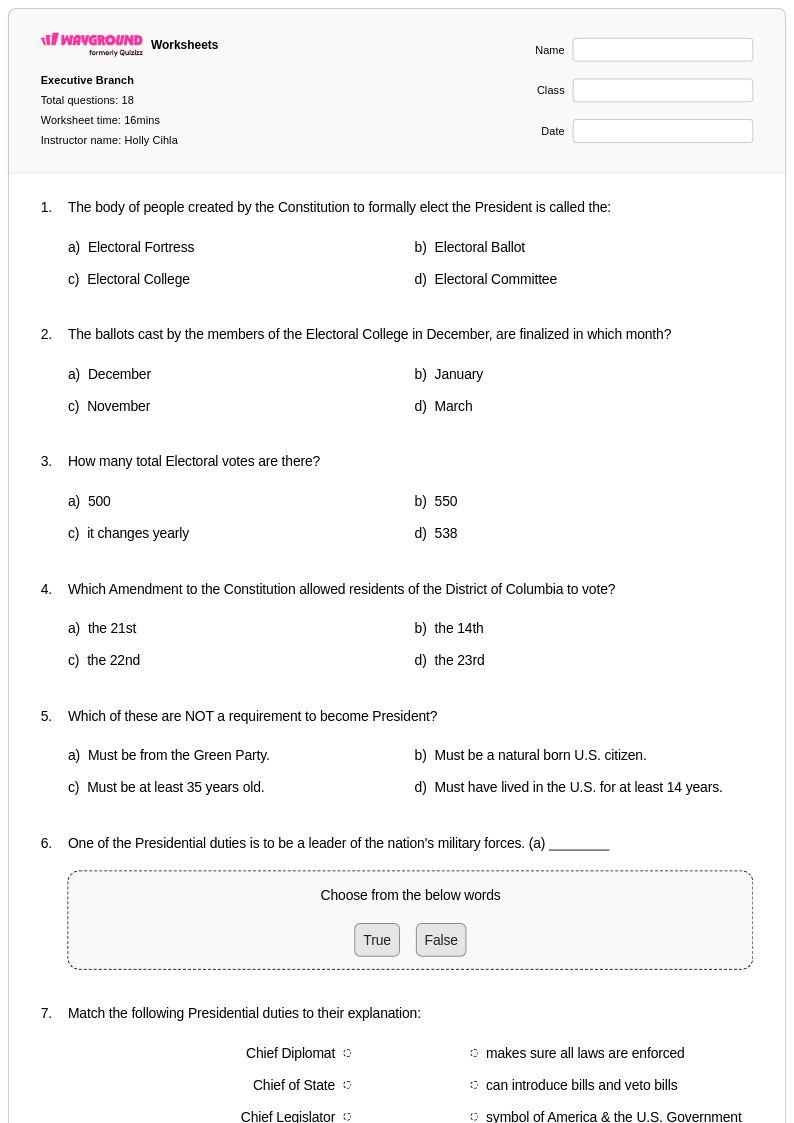
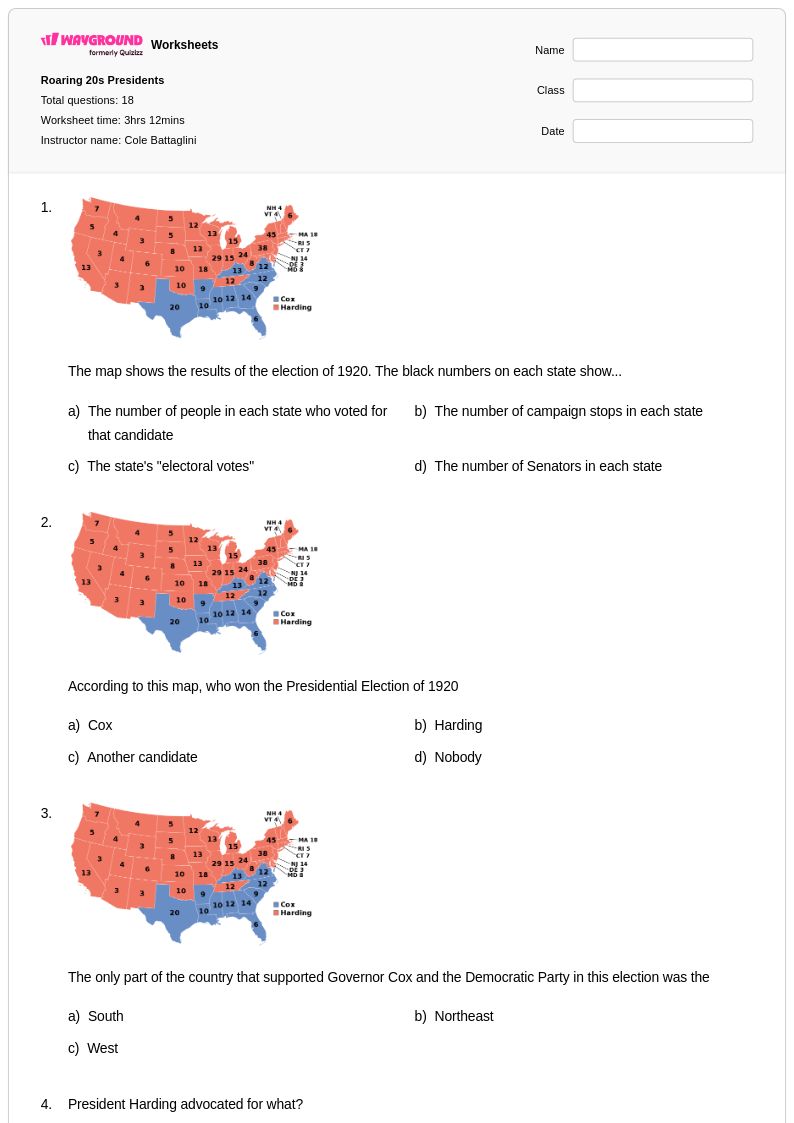
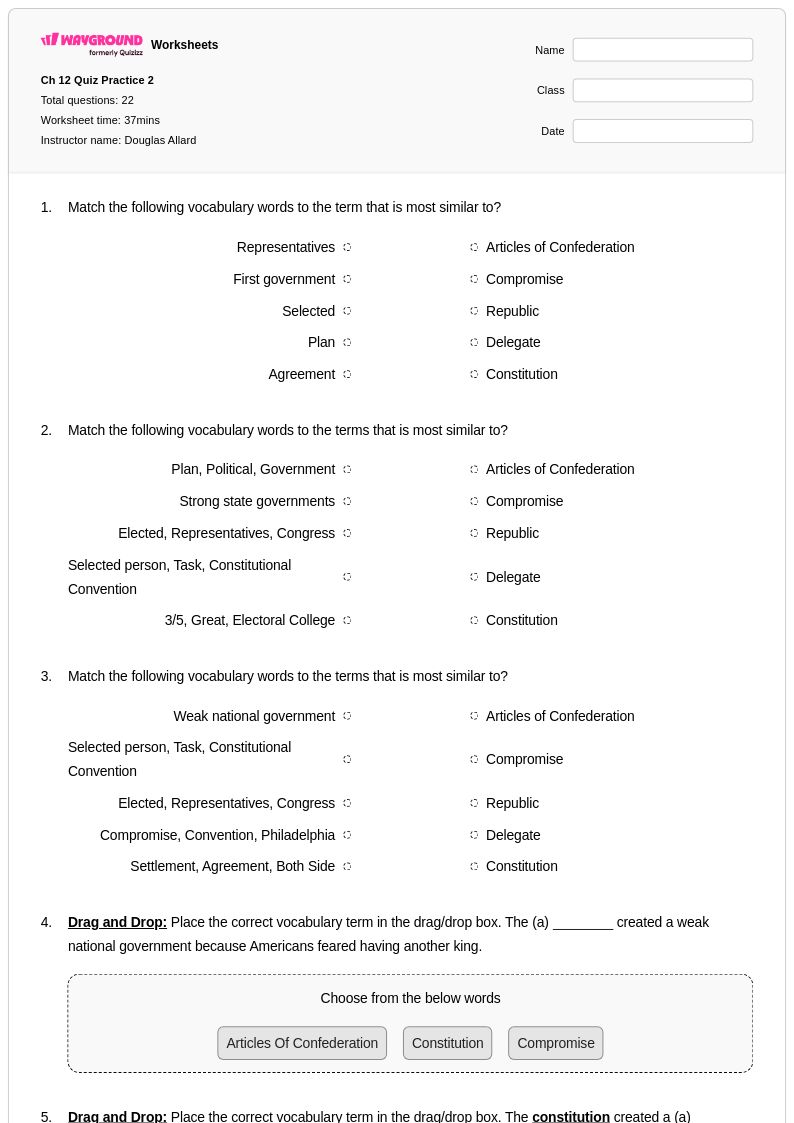
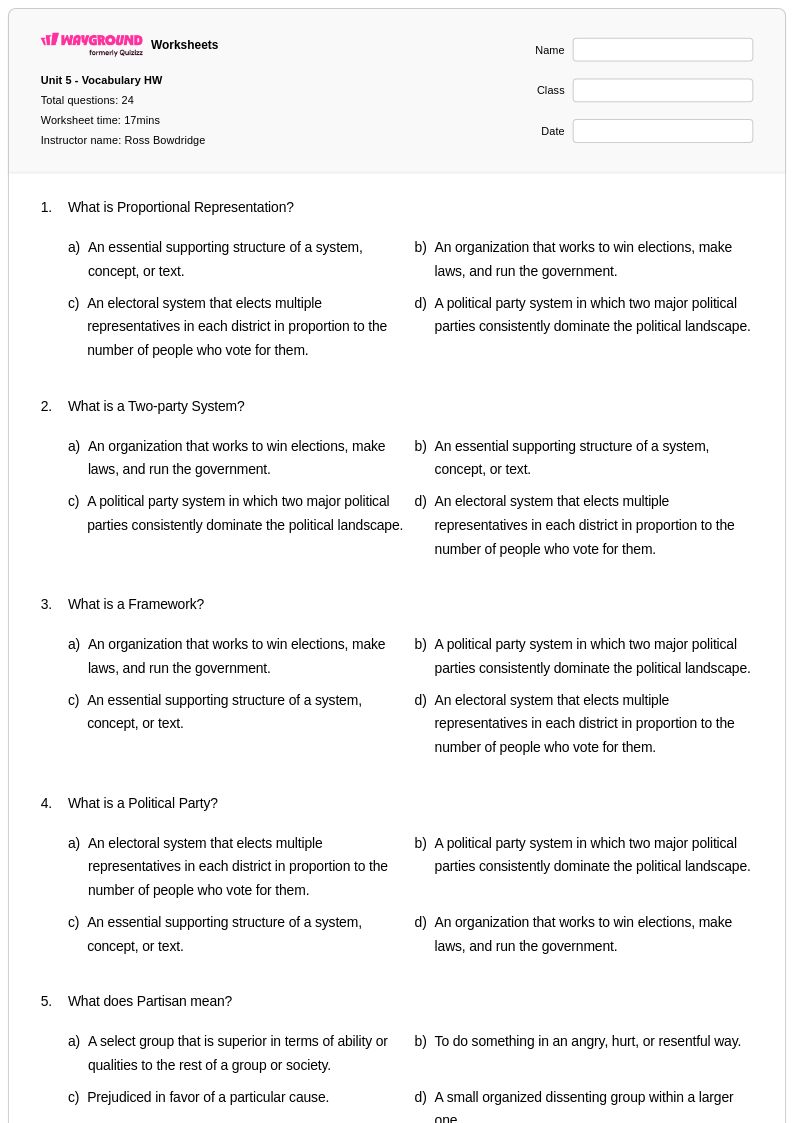
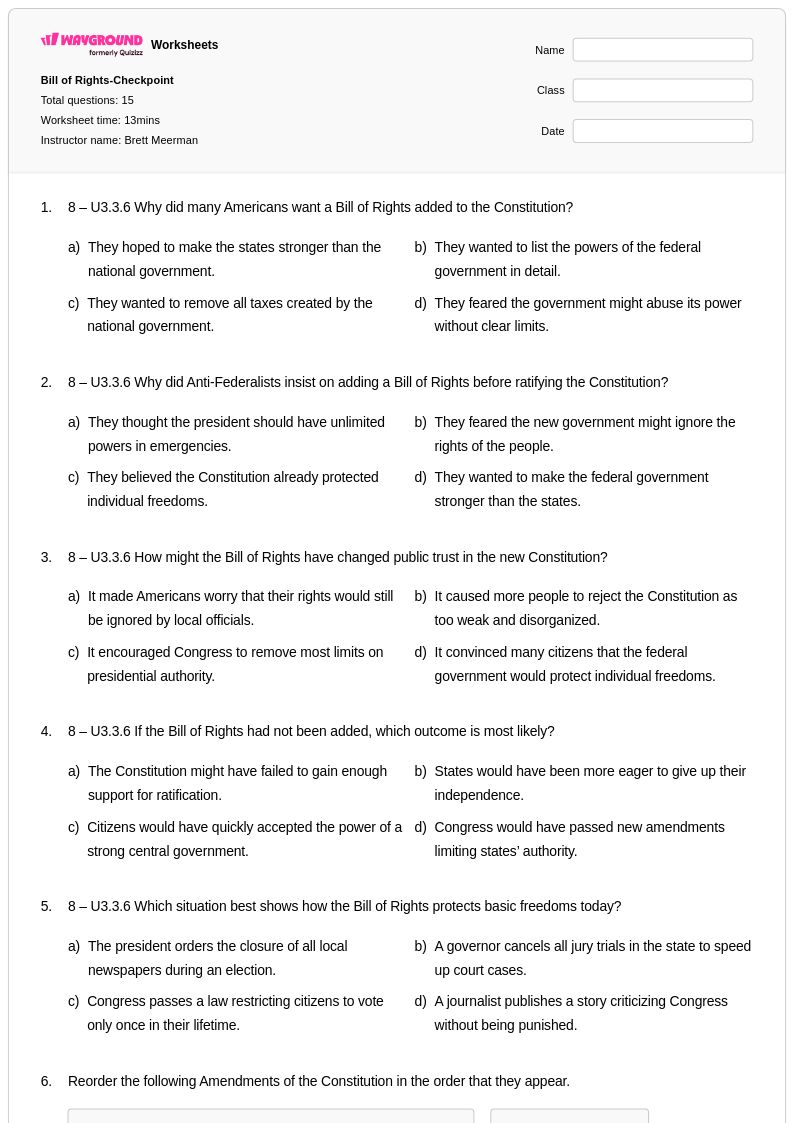
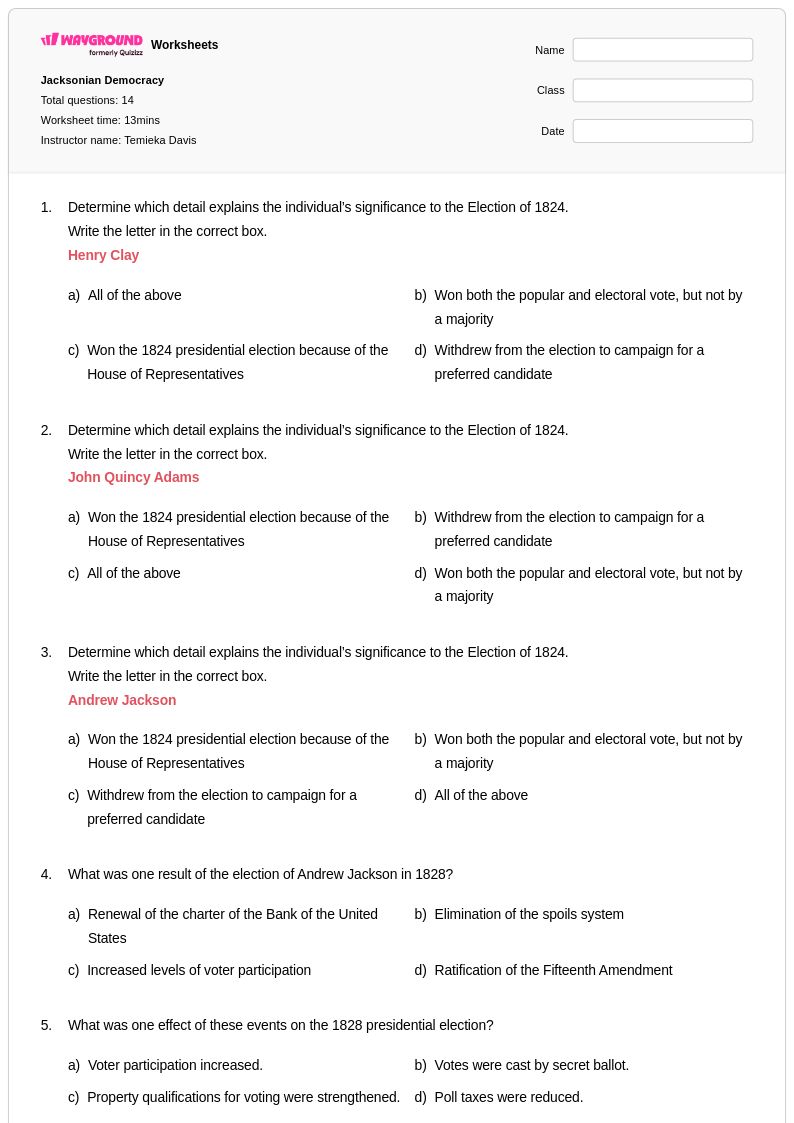
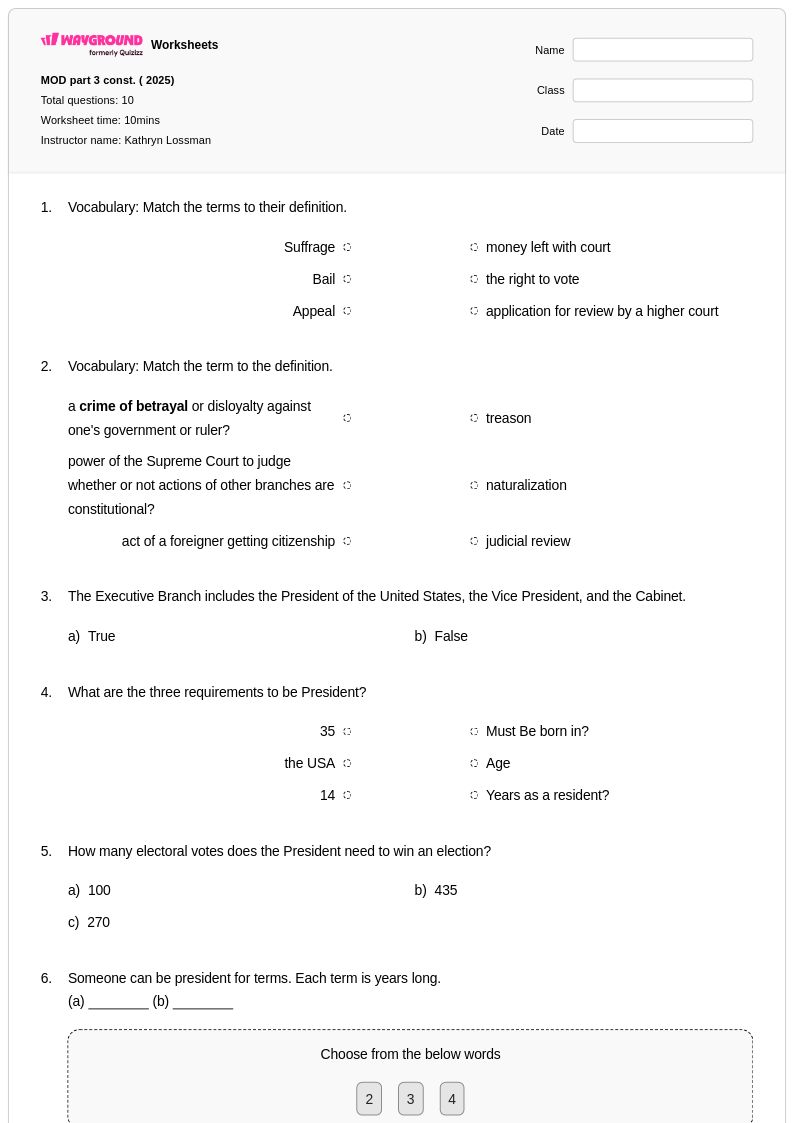
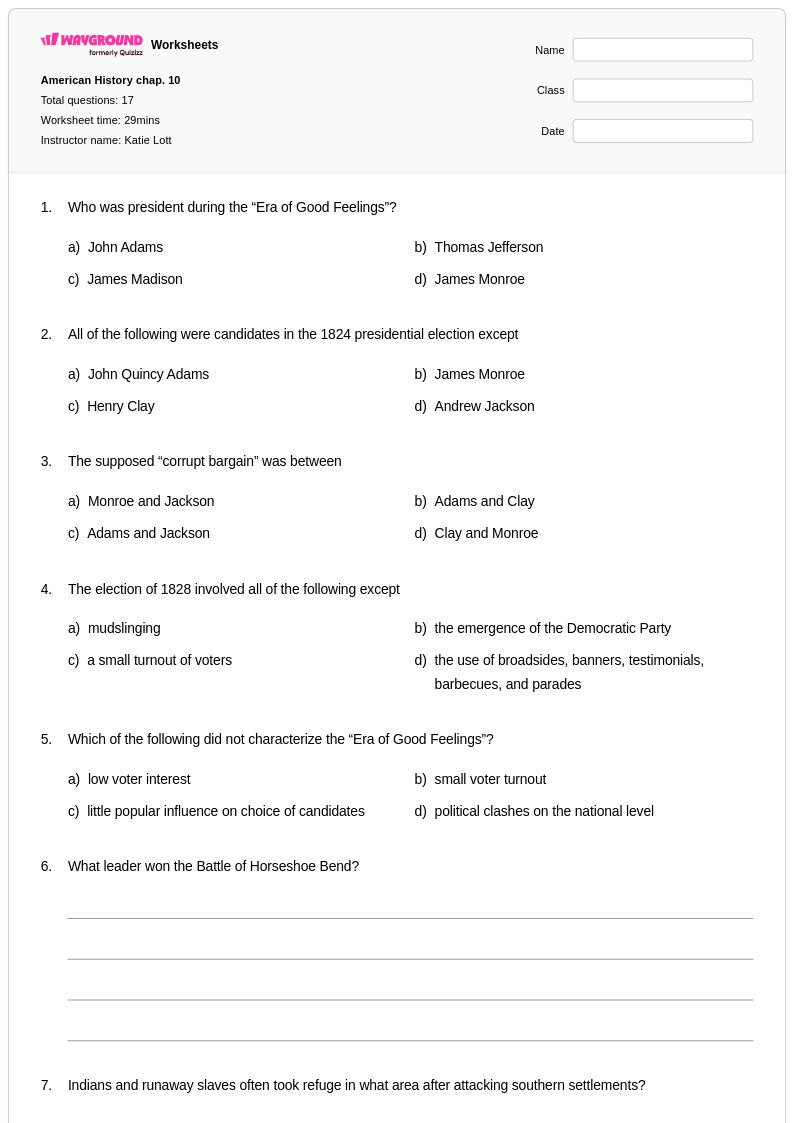
Election vocabulary forms the cornerstone of Class 8 civics education, and Wayground's comprehensive worksheet collection provides students with essential practice mastering the terminology that defines democratic participation. These carefully crafted worksheets guide eighth-grade learners through fundamental concepts including ballot, candidate, constituency, electoral process, suffrage, and campaign finance, building the academic vocabulary necessary for informed citizenship. Each worksheet strengthens critical thinking skills through engaging practice problems that require students to analyze election scenarios, interpret voting data, and apply civic terminology in real-world contexts. The collection includes detailed answer keys and free printable resources that support both independent study and classroom instruction, ensuring students develop fluency with the specialized language of democratic governance and electoral systems.
Wayground's robust platform, formerly known as Quizizz, empowers educators with access to millions of teacher-created election vocabulary resources specifically designed for middle school civics instruction. The platform's advanced search and filtering capabilities allow teachers to quickly locate standards-aligned materials that match their specific curriculum requirements and student needs. These differentiation tools enable seamless customization of worksheets to support diverse learning styles and academic levels, while the flexible format options provide both printable pdf versions for traditional classroom use and digital alternatives for technology-enhanced learning environments. This comprehensive resource library streamlines lesson planning while offering targeted materials for remediation, enrichment, and ongoing skill practice, ensuring that all Class 8 students can master the essential vocabulary needed to engage meaningfully with democratic processes and civic responsibilities.
FAQs
How do I teach election vocabulary to students?
Start by anchoring each term to a concrete, real-world context — show students an actual ballot or walk through a mock voting scenario before introducing written definitions. Group related terms together, such as pairing 'primary election' with 'general election' or 'candidate' with 'campaign', so students build conceptual clusters rather than isolated definitions. Repeated exposure through multiple activity types, including matching, fill-in-the-blank, and short-answer application, helps students retain and transfer election vocabulary to broader civics discussions.
What exercises help students practice election vocabulary?
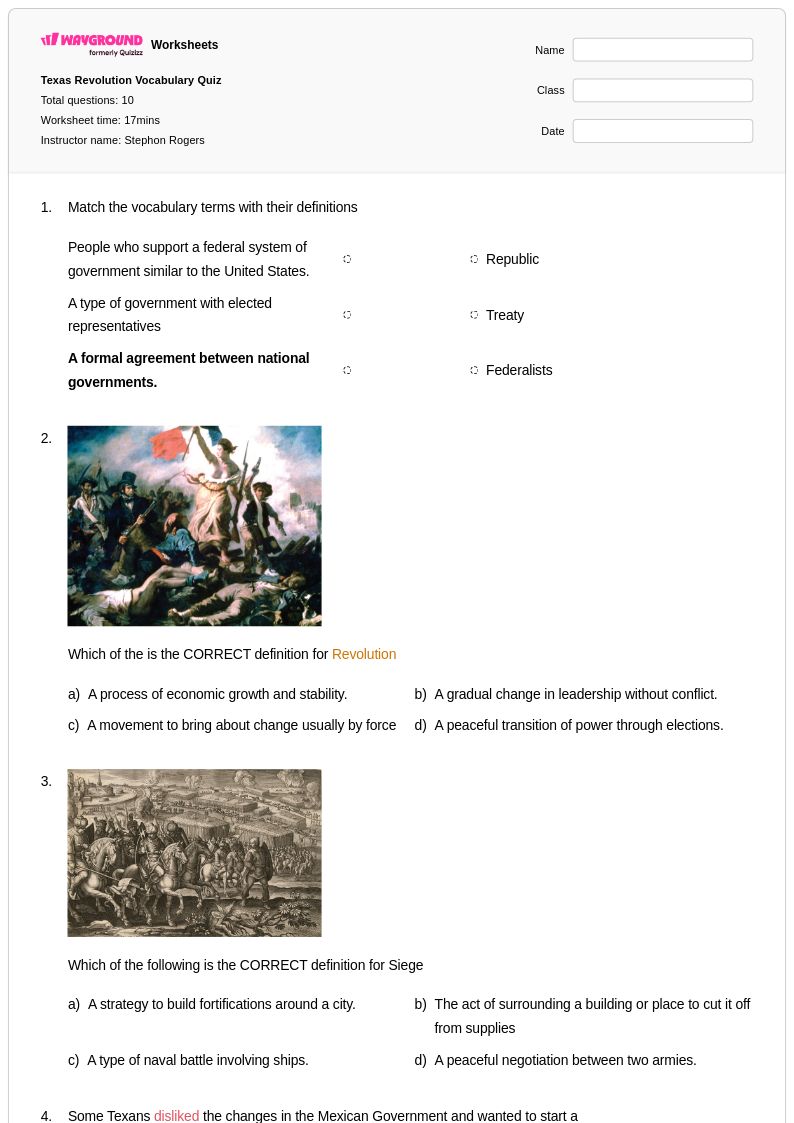
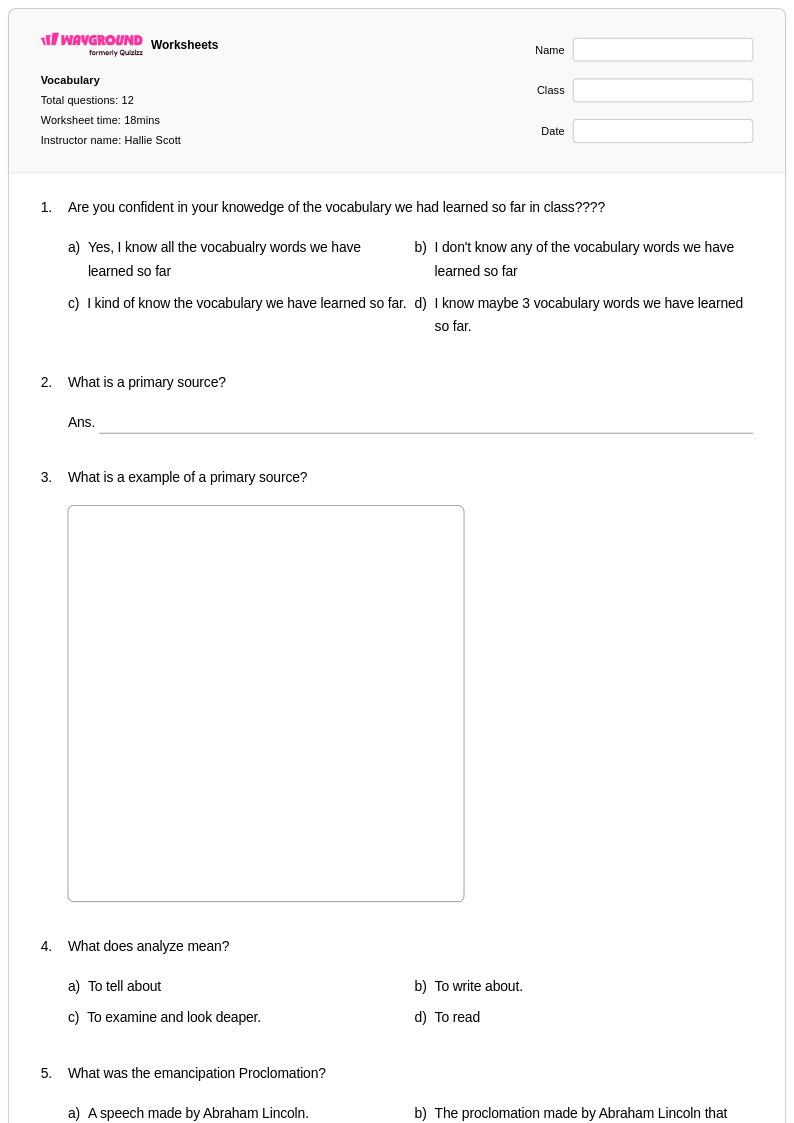
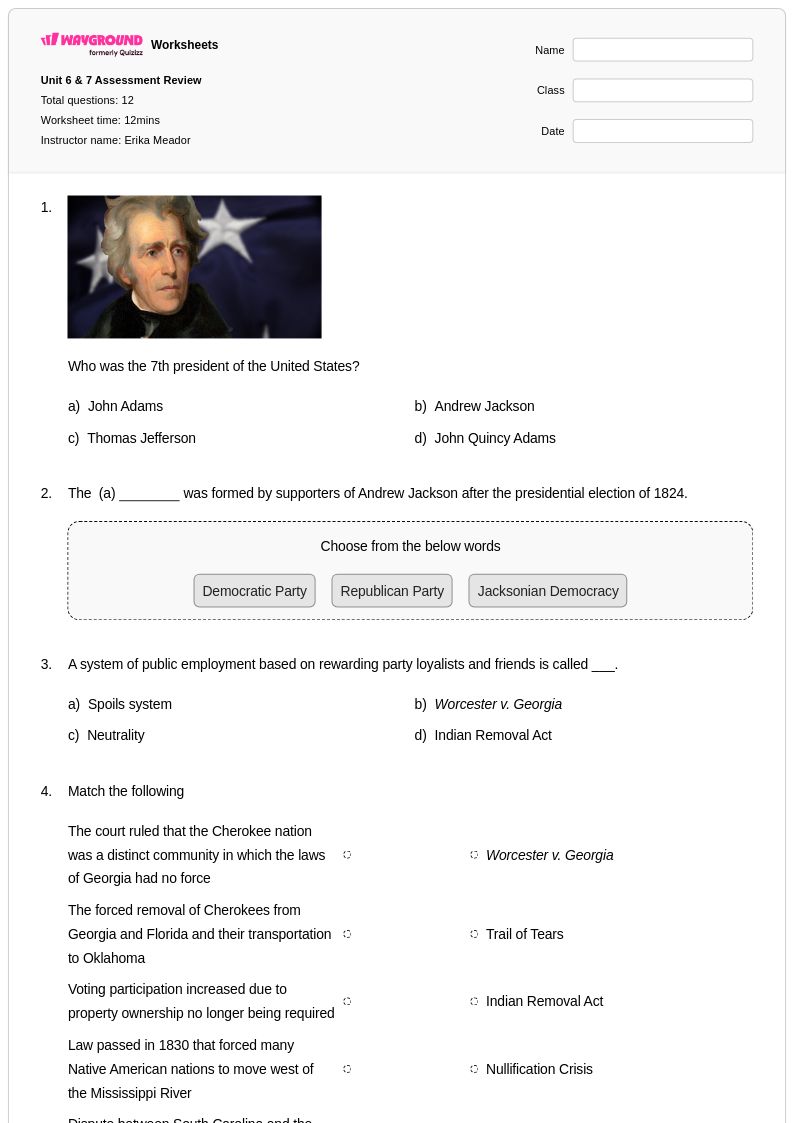
Effective practice exercises for election vocabulary include matching terms to definitions, using words in context-based sentences, and applying terms to short reading passages about real elections. Activities that ask students to categorize terms — for example, separating voting process terms from government structure terms — build deeper conceptual understanding. Wayground's election vocabulary worksheets include matching activities, definition exercises, and contextual application tasks designed to reinforce the specialized language of American elections and democratic processes.
What election vocabulary words should students know?
Core election vocabulary students should know includes ballot, candidate, polling place, electoral college, primary election, and general election. Students should also understand terms related to voter registration, campaign, incumbent, and constituents, as these appear frequently in civics texts and news coverage of elections. Mastery of this vocabulary is foundational for understanding how democratic systems function and for engaging meaningfully with current events.
What mistakes do students commonly make when learning election vocabulary?
One of the most common misconceptions is confusing 'primary election' with 'general election' — students often do not understand that a primary narrows candidates within a party before the broader public vote occurs. Students also frequently misunderstand the Electoral College, often assuming the President is elected purely by popular vote. Worksheets that use contextual application tasks, rather than simple memorization drills, are especially effective at surfacing and correcting these conceptual errors.
How do I use Wayground's election vocabulary worksheets in my classroom?
Wayground's election vocabulary worksheets are available as printable PDFs for traditional classroom use and in digital formats for technology-integrated or hybrid learning environments, including the option to host them as a quiz directly on Wayground. Teachers can use them for direct instruction support, independent practice, or formative assessment during a civics or social studies unit. Each worksheet includes a complete answer key, so they are ready for immediate implementation without additional preparation.
How can I support struggling students when teaching election vocabulary?
For students who need additional support, Wayground offers built-in accommodation tools that can be applied individually or to the whole class, including Read Aloud for audio delivery of questions, reduced answer choices to lower cognitive load, and extended time per question. These settings are saved and reusable across future sessions, so you only need to configure them once per student. Pairing these accommodations with contextual practice tasks — rather than rote definition recall — gives struggling learners more entry points into the material.