Free Printable Emotional Eating Worksheets for Class 11
Explore Class 11 emotional eating worksheets and printables that help students understand triggers, develop healthy coping strategies, and build mindful eating habits through engaging practice problems and comprehensive answer keys.
Explore printable Emotional Eating worksheets for Class 11
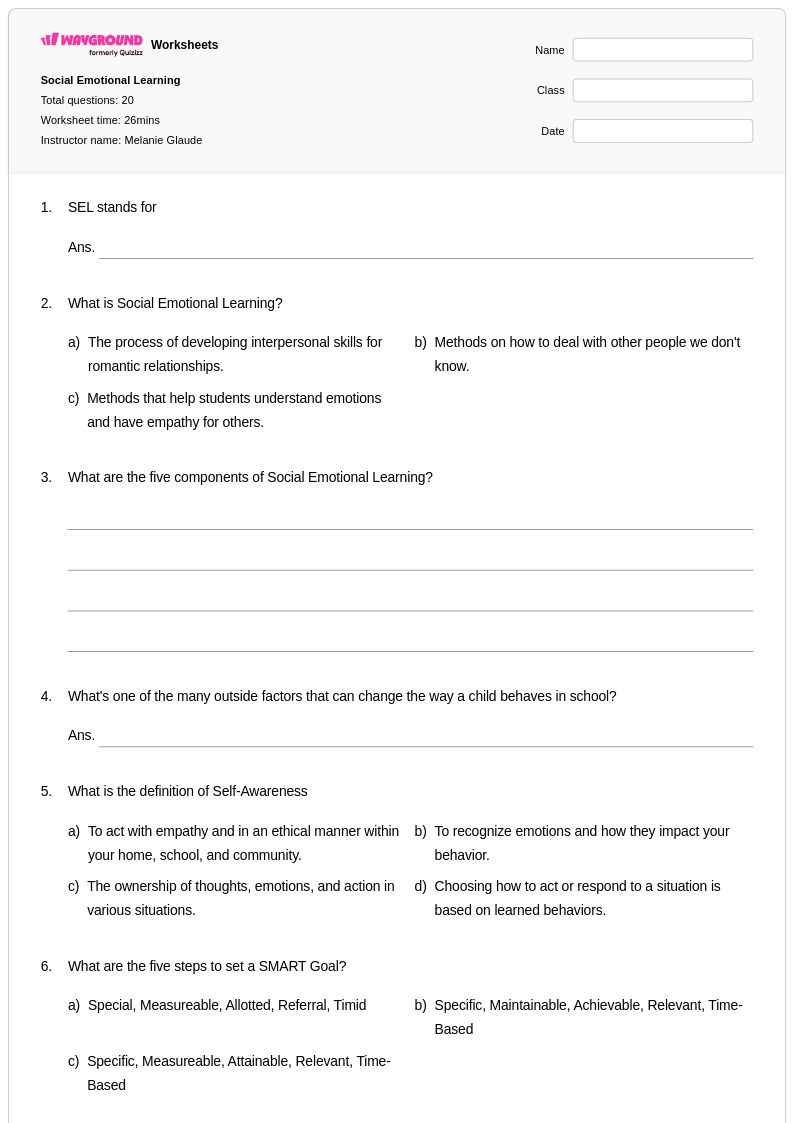
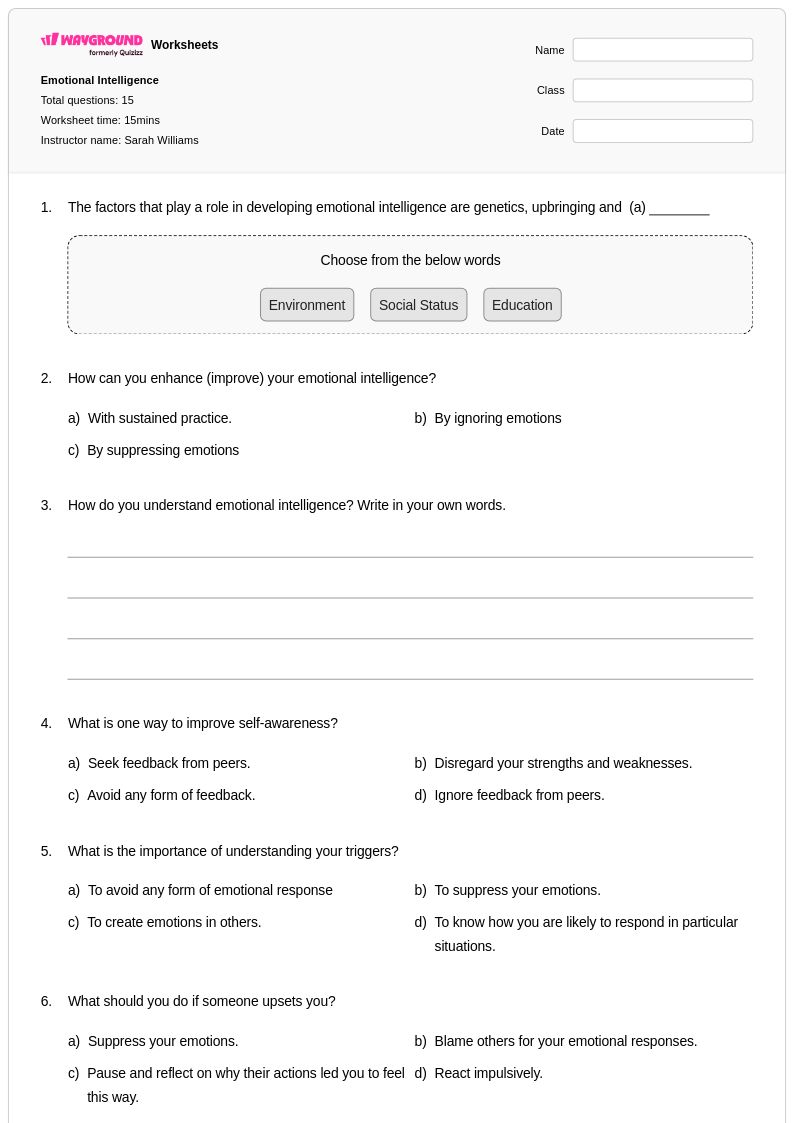
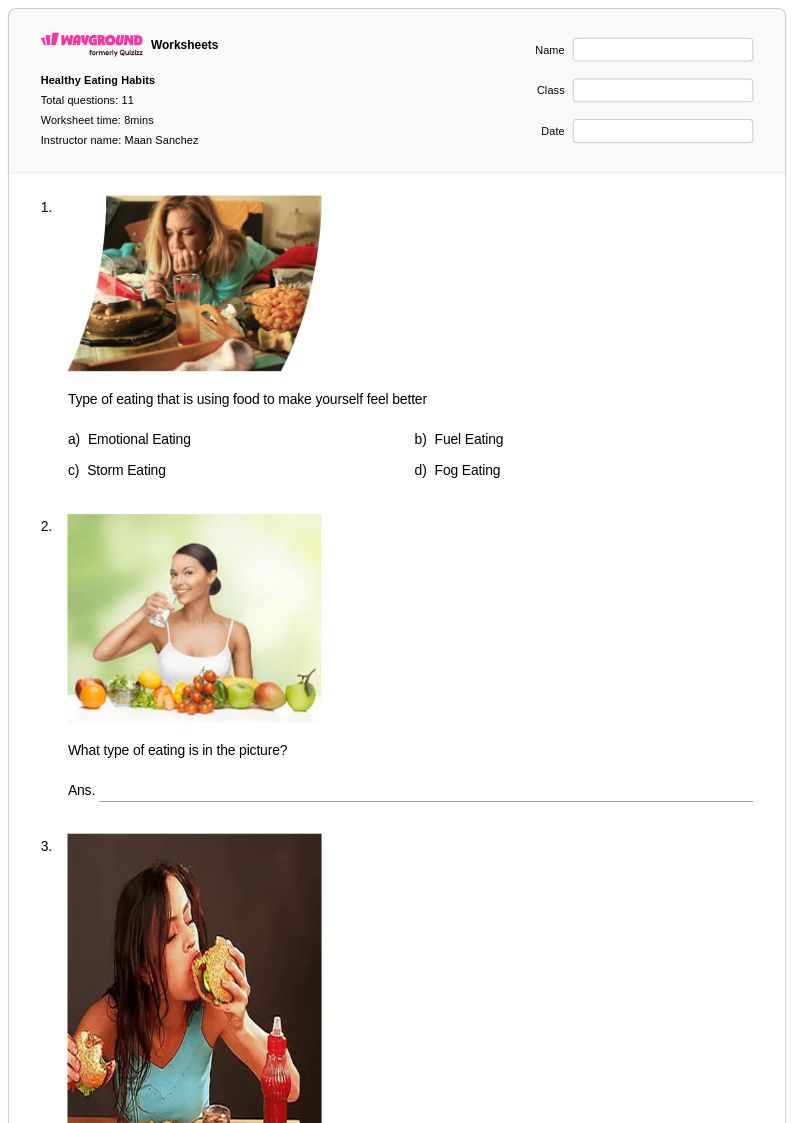
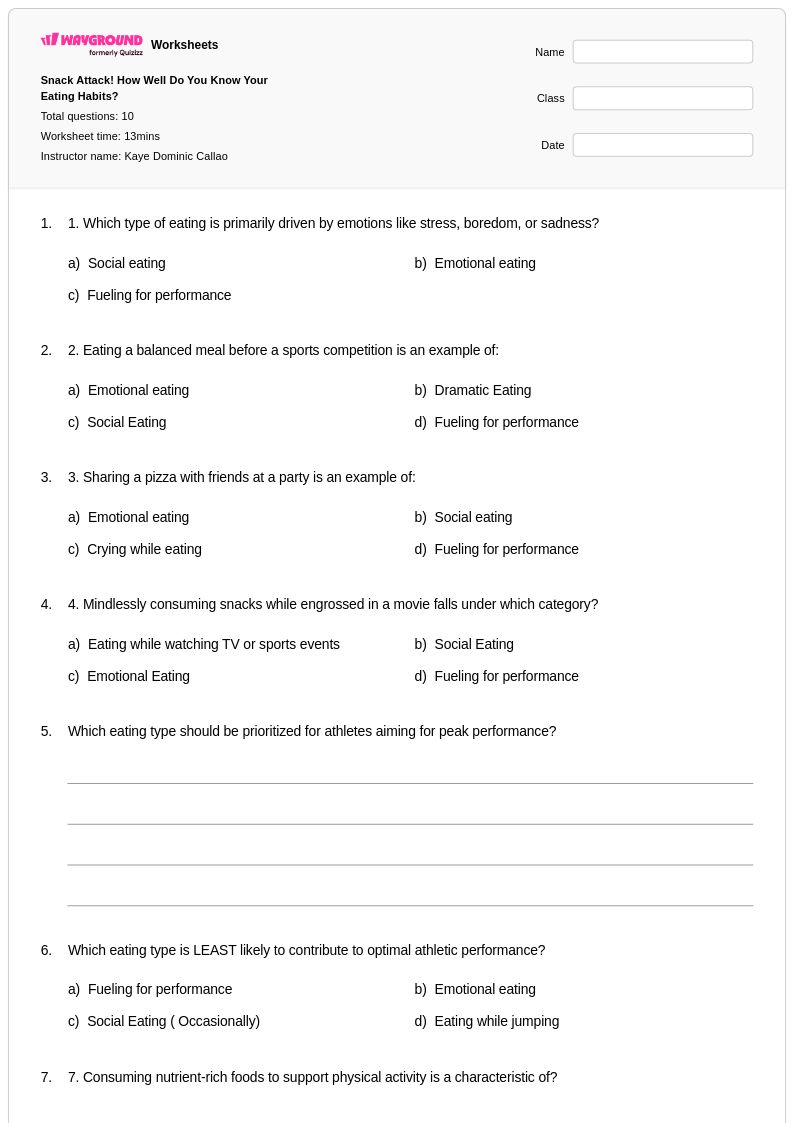
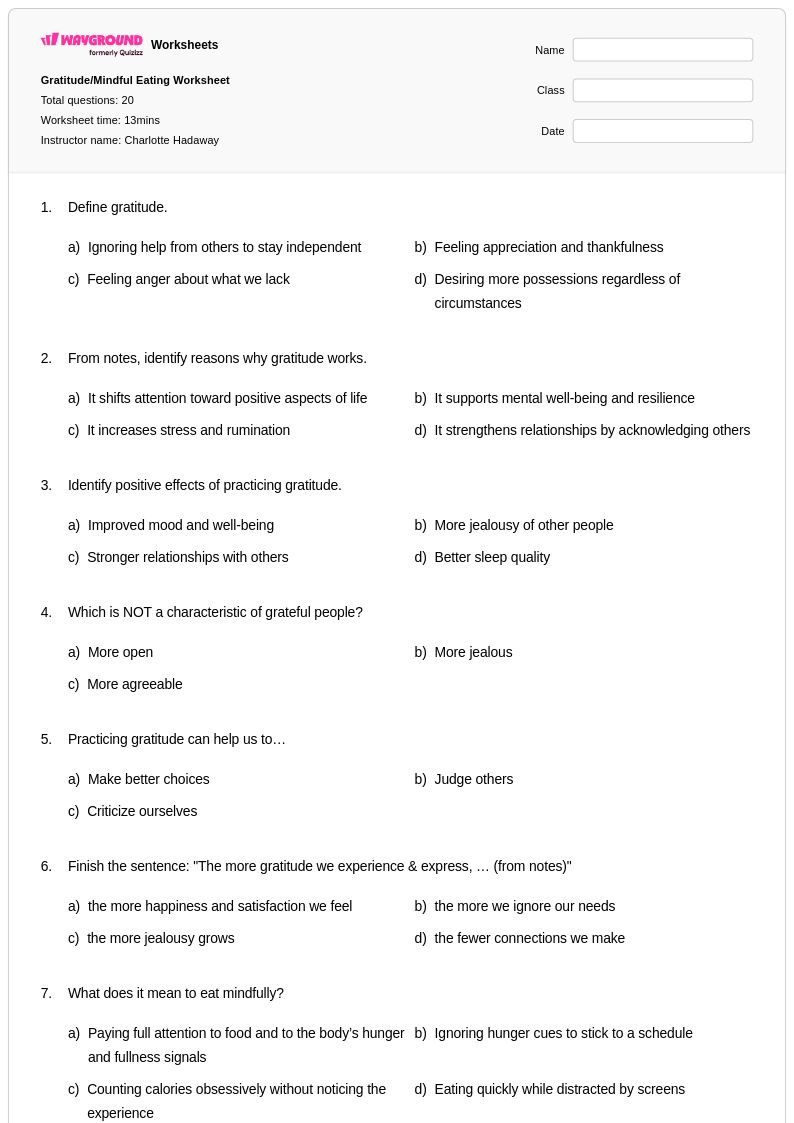
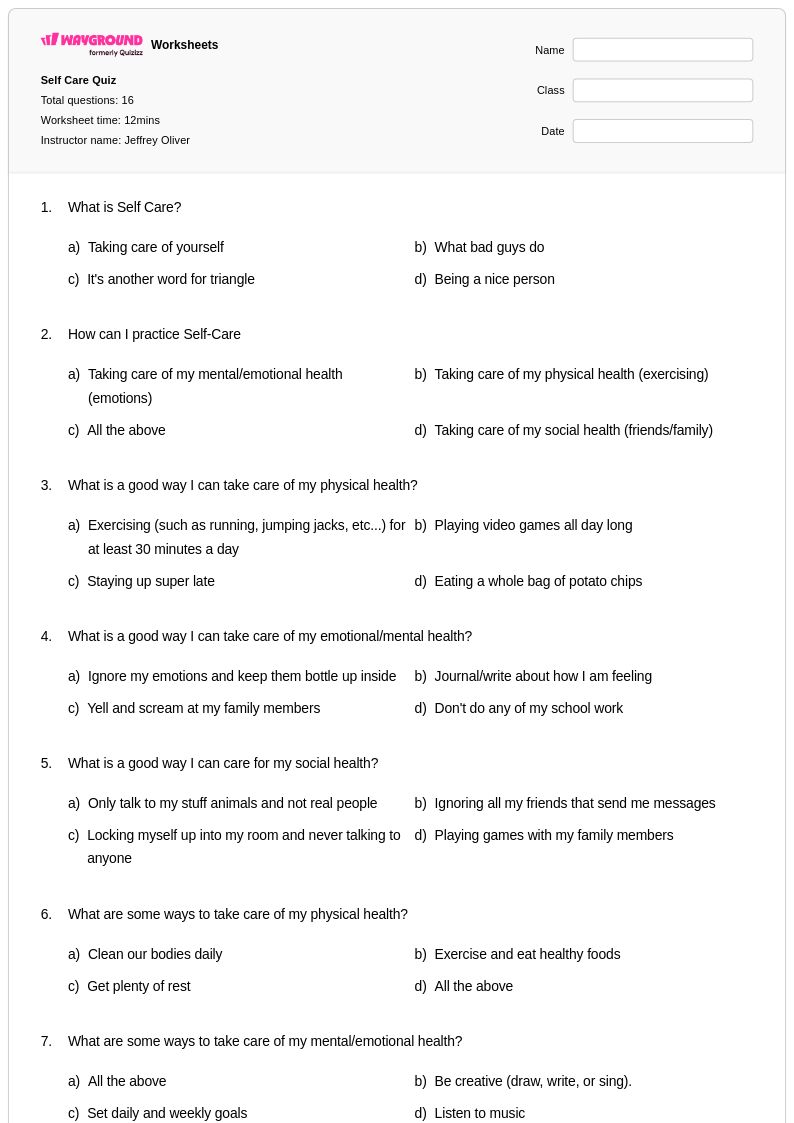
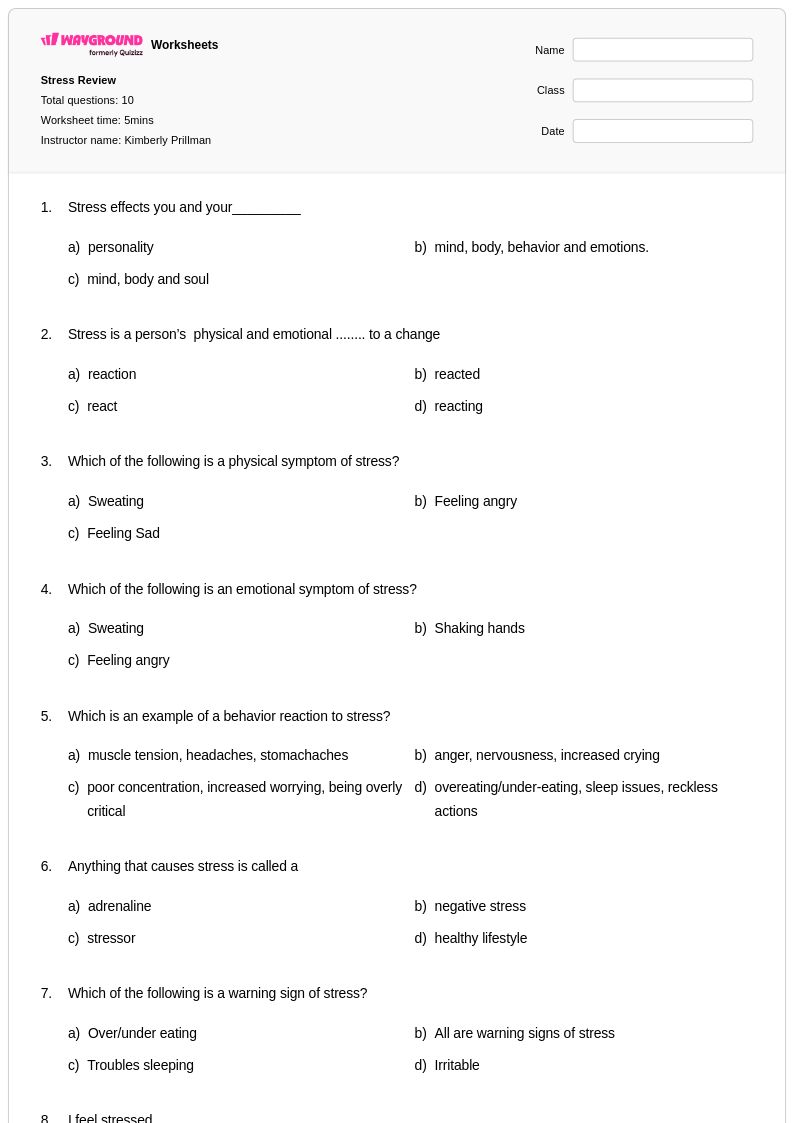
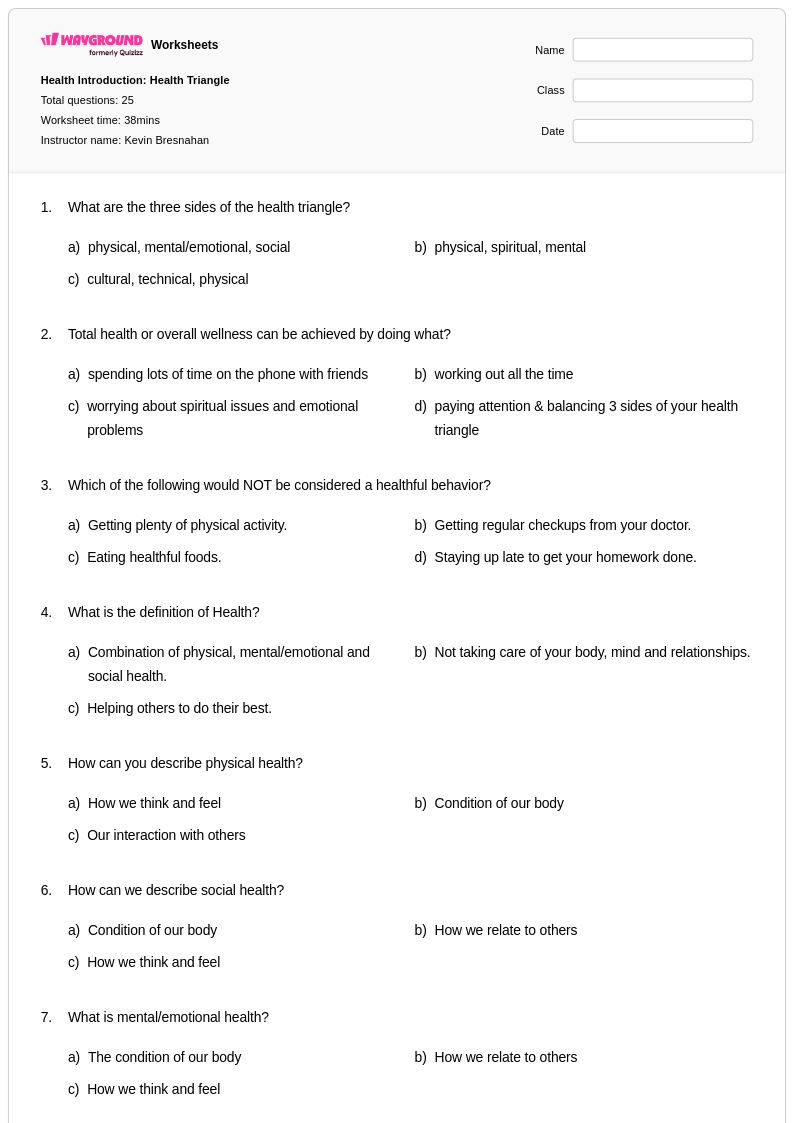
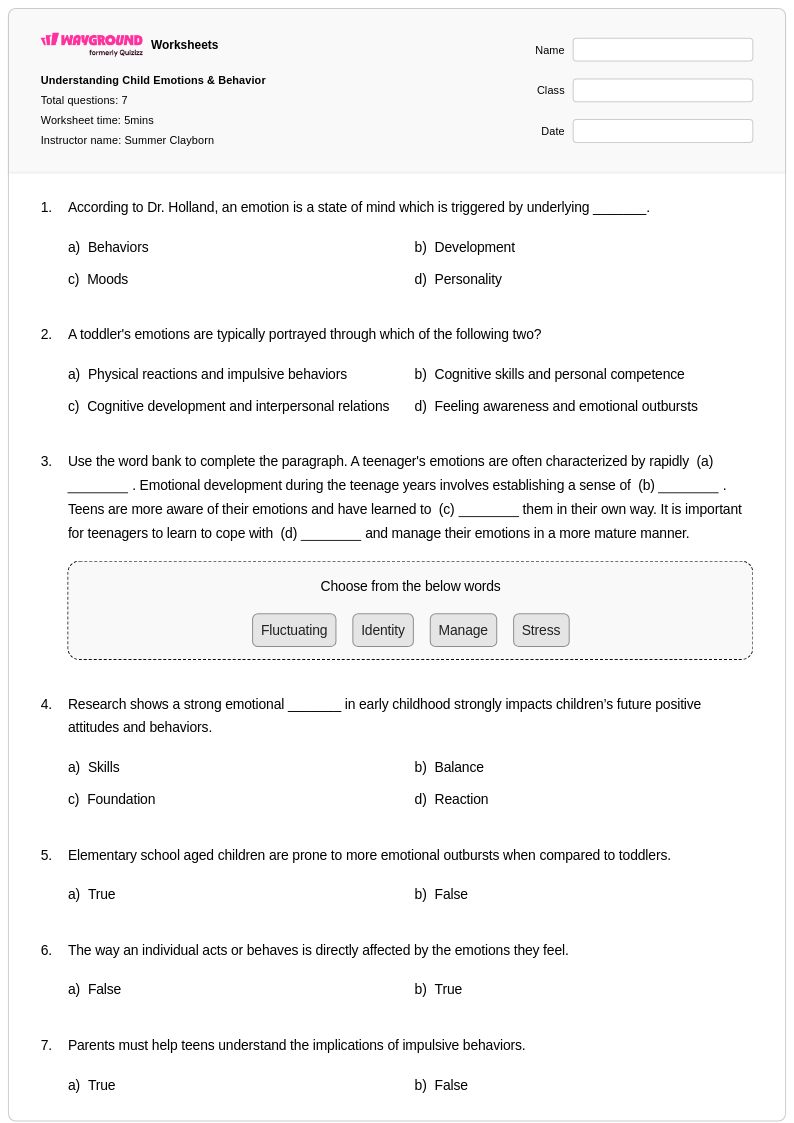
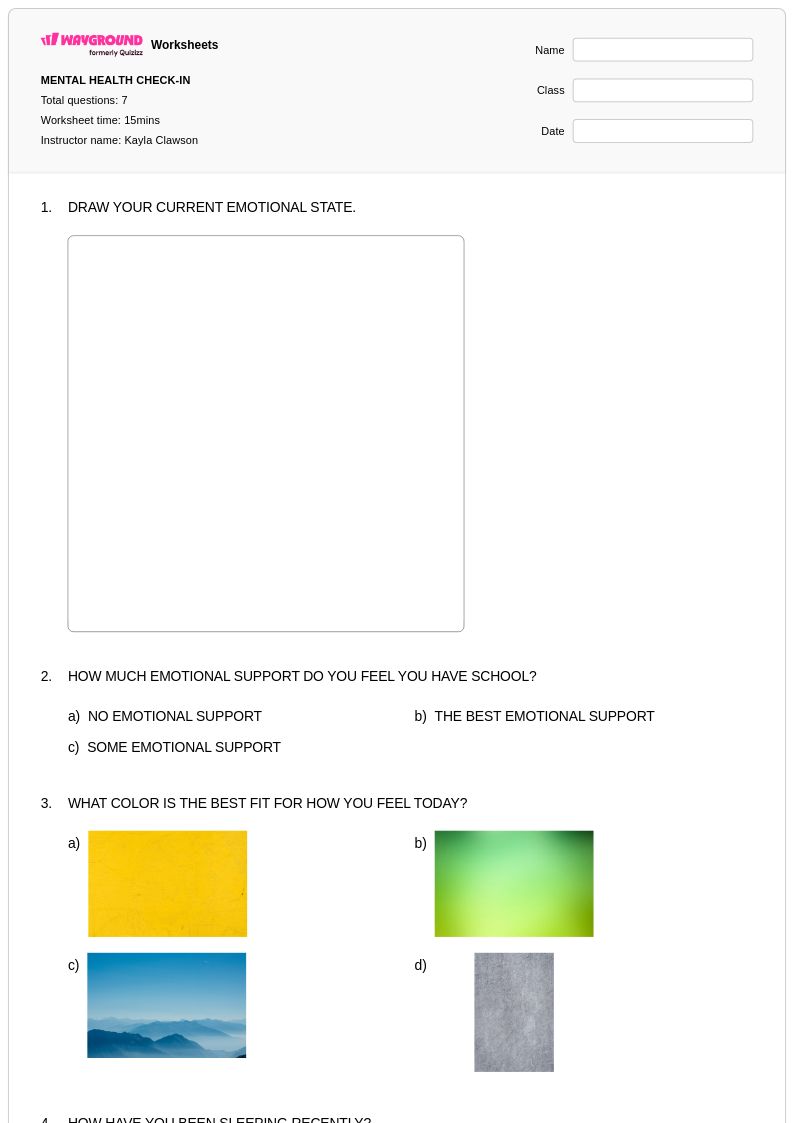
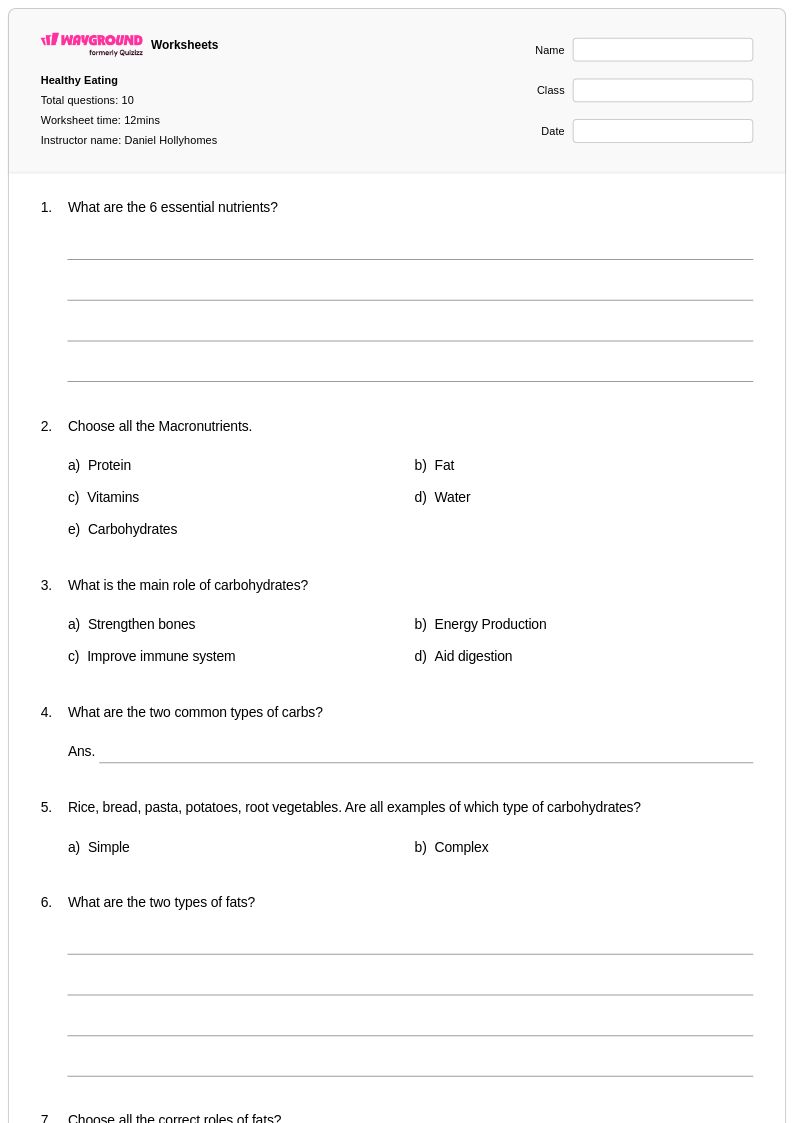
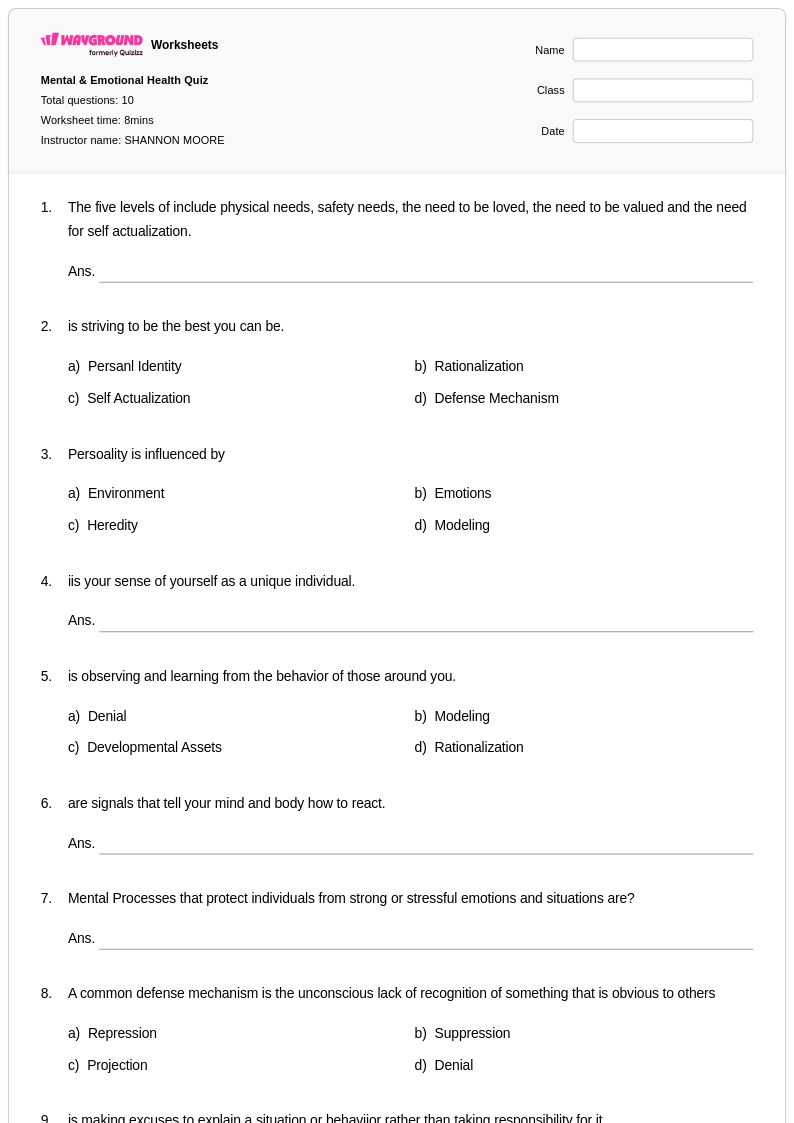
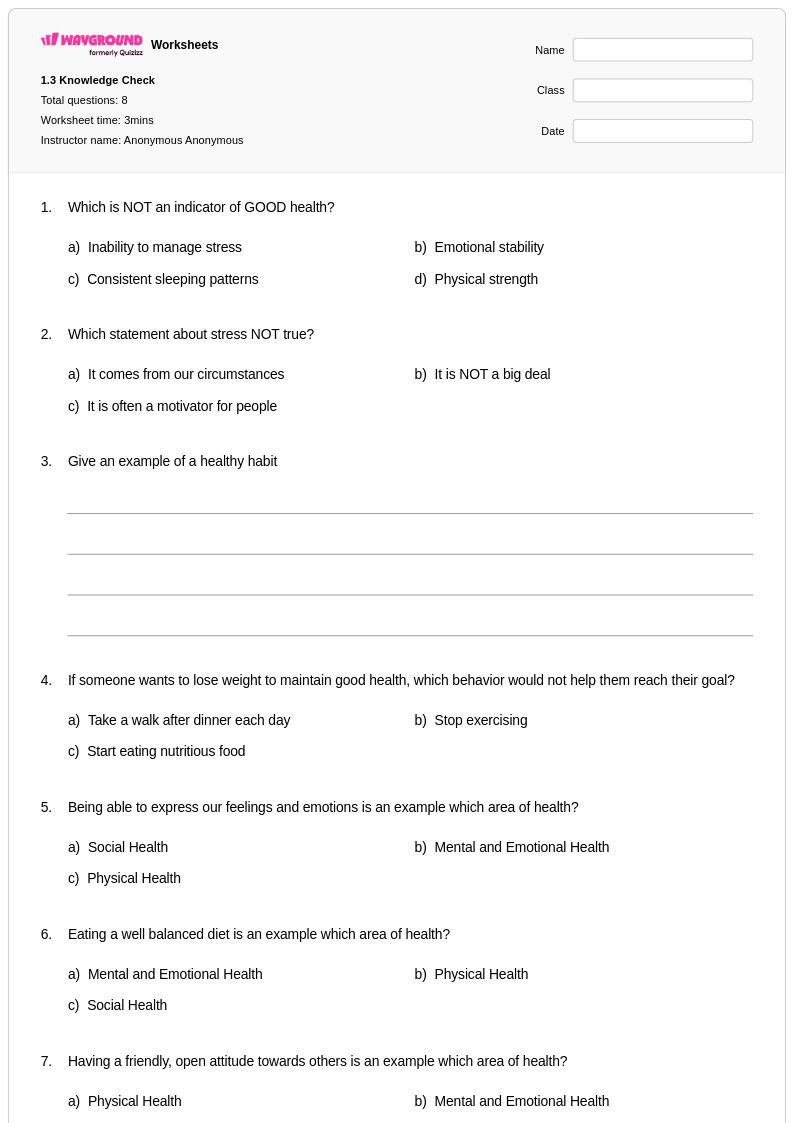
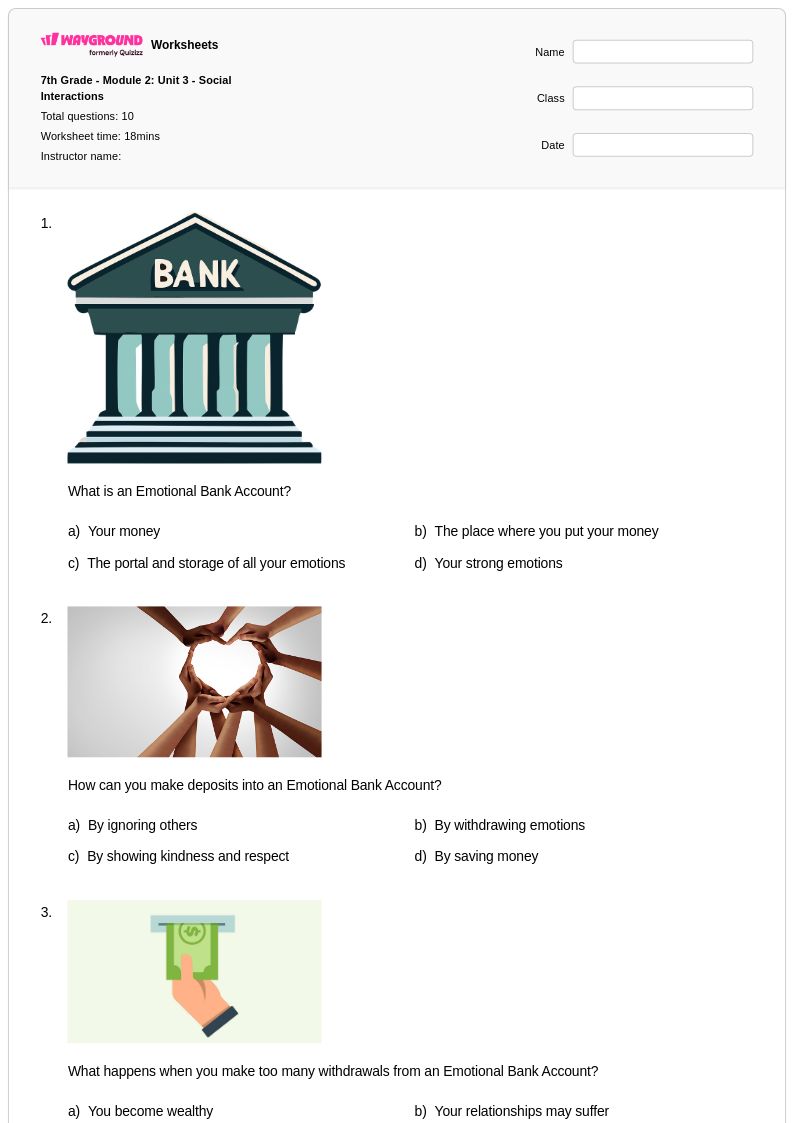
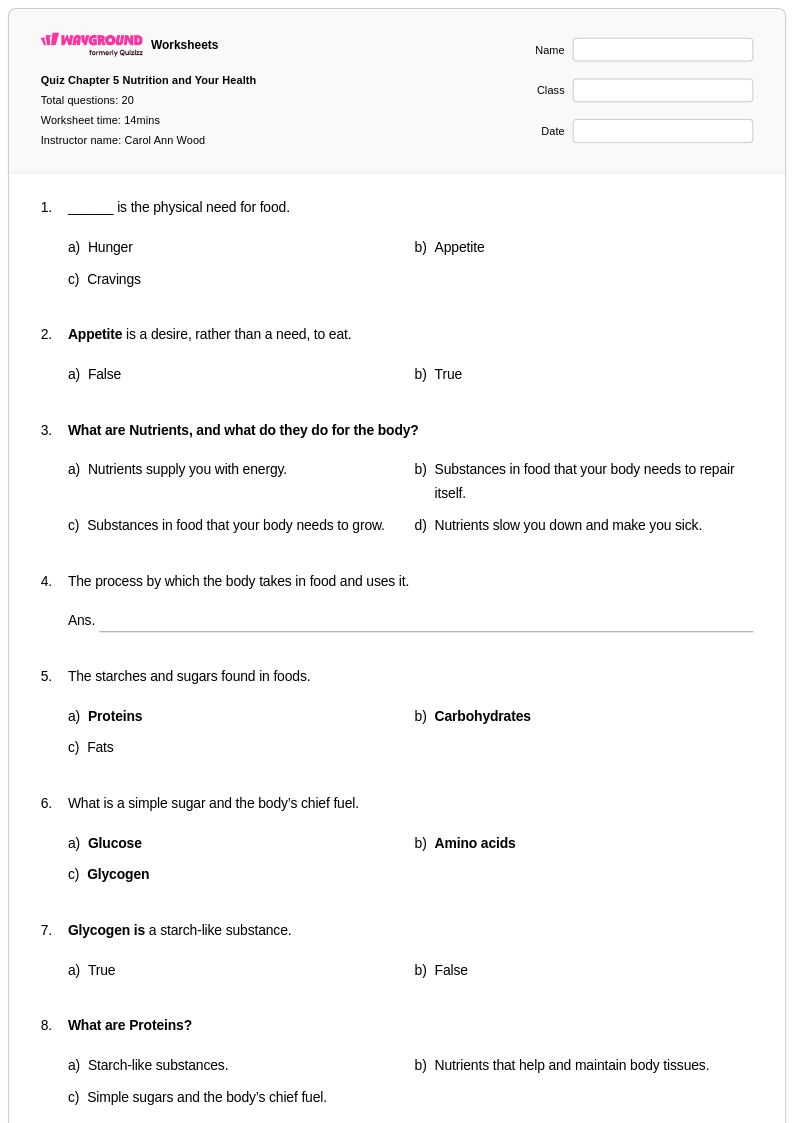
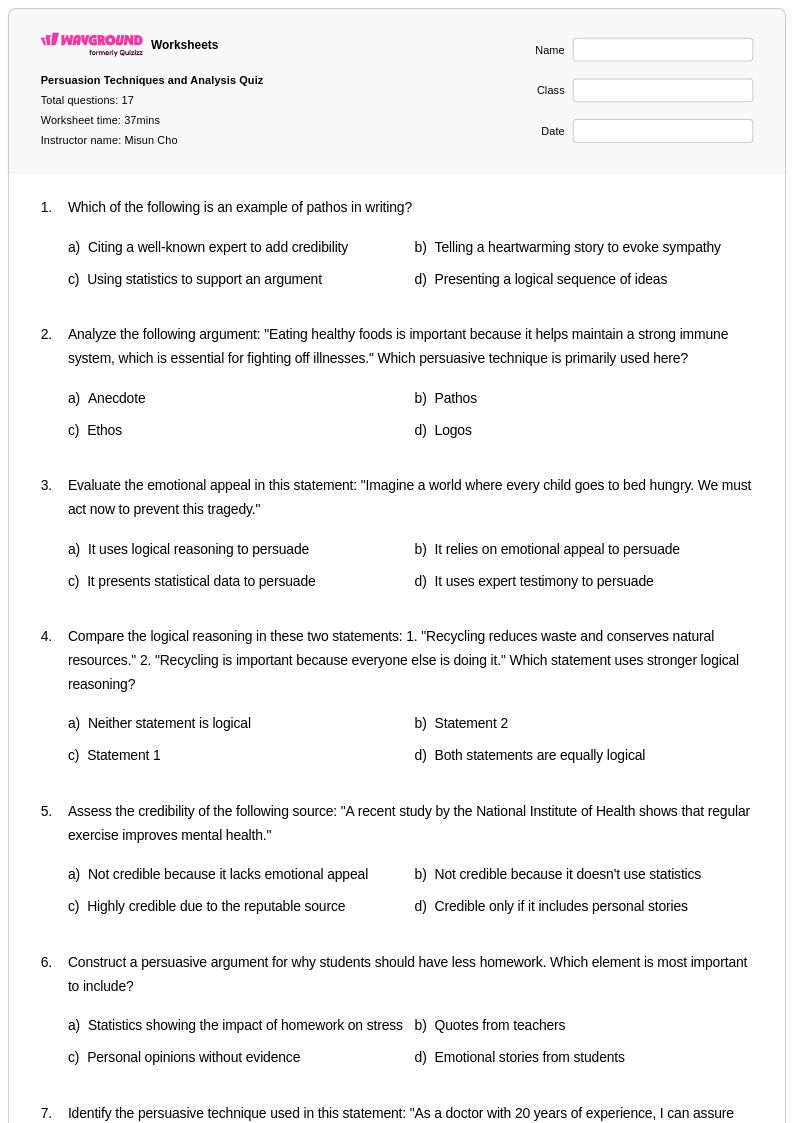
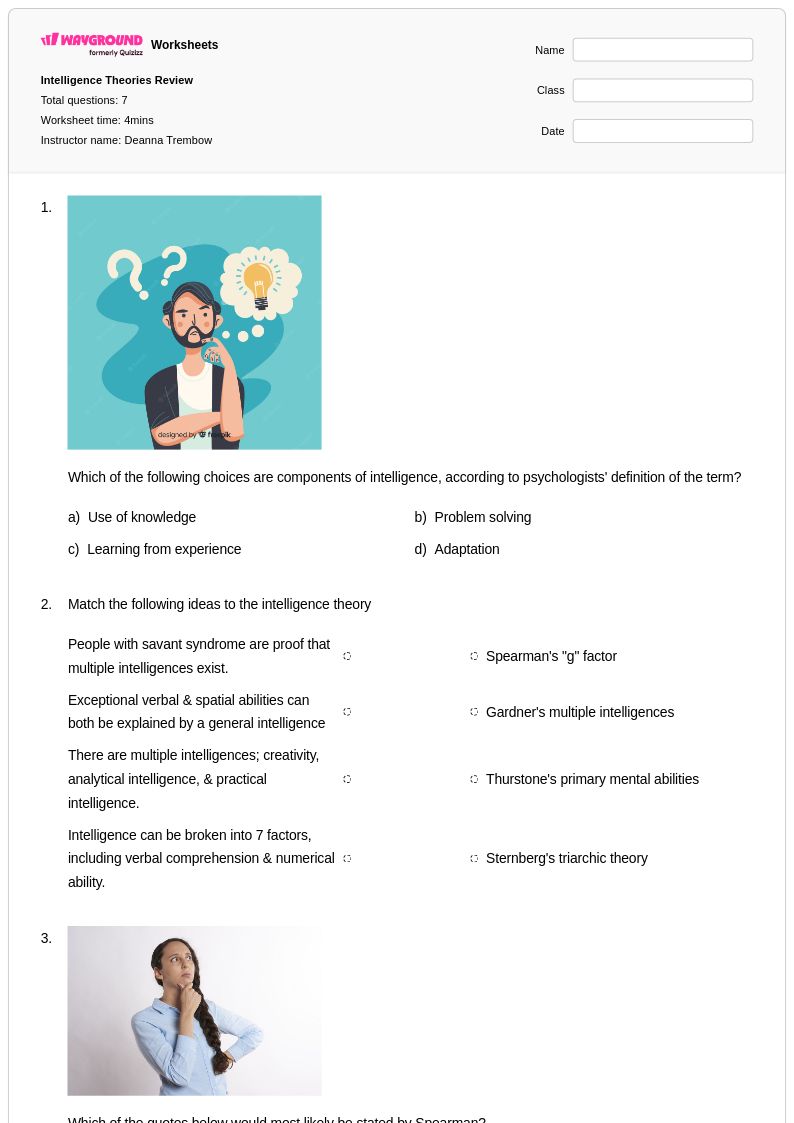
Emotional eating worksheets for Class 11 students available through Wayground (formerly Quizizz) provide comprehensive resources that address the complex relationship between emotions and food choices during the critical adolescent years. These expertly designed materials help students develop essential self-awareness skills by exploring triggers that lead to emotional eating, identifying the difference between physical hunger and emotional hunger, and learning healthy coping strategies for managing stress, anxiety, and other emotions without turning to food. The worksheets include practice problems that guide students through real-world scenarios, reflective exercises that promote introspection, and assessment tools complete with answer keys to support both independent learning and classroom instruction. These free printable resources strengthen students' ability to recognize emotional eating patterns, understand the psychological factors that influence their relationship with food, and develop sustainable wellness habits that will serve them throughout their lives.
Wayground (formerly Quizizz) empowers Physical Education teachers with access to millions of teacher-created emotional eating resources specifically designed for Class 11 wellness curricula, featuring robust search and filtering capabilities that allow educators to quickly locate materials aligned with health and wellness standards. The platform's differentiation tools enable teachers to customize worksheets based on individual student needs, supporting both remediation for students who need additional support in understanding emotional triggers and enrichment opportunities for advanced learners ready to explore more complex psychological concepts. These versatile resources are available in both printable pdf formats for traditional classroom use and digital formats for technology-integrated learning environments, making lesson planning more efficient while providing teachers with flexible options for skill practice, formative assessment, and ongoing student support. The comprehensive collection supports educators in addressing this crucial wellness topic through evidence-based approaches that help students develop lifelong emotional intelligence and healthy relationships with food.
FAQs
How do I teach emotional eating to students in a health or wellness class?
Teaching emotional eating begins with helping students distinguish between physical hunger and emotional hunger by examining physical cues like stomach growling versus emotional triggers like stress, boredom, or anxiety. From there, lessons should guide students through identifying their personal triggers and exploring evidence-based coping strategies such as mindful eating, journaling, and stress management techniques. Using real-world scenarios and reflective exercises makes the content relatable and encourages honest self-examination, which is essential for behavior change.
What activities help students practice recognizing emotional eating patterns?
Reflective exercises such as hunger-mood journals, trigger identification charts, and scenario-based worksheets are highly effective for helping students recognize emotional eating patterns. These activities ask students to track what they eat alongside how they feel, which builds the self-awareness needed to interrupt automatic emotional eating responses. Guided worksheets that walk students through real-world situations allow them to practice identifying emotional triggers and selecting healthy coping alternatives in a low-stakes setting.
What misconceptions do students commonly have about emotional eating?
A common misconception is that emotional eating is simply a lack of willpower or self-control, when in fact it is a learned behavioral response to emotional distress that requires intentional skill-building to address. Students also frequently confuse emotional hunger with physical hunger, not recognizing that emotional hunger tends to come on suddenly, craves specific comfort foods, and is not satisfied even after eating. Correcting these misconceptions early is critical because students who misidentify the root cause of their eating behavior are less likely to adopt effective coping strategies.
How can I use emotional eating worksheets to support students who struggle with stress-related behaviors?
Emotional eating worksheets can be used as both instructional tools and reflective check-ins for students who display stress-related eating behaviors. Worksheets that include trigger identification, coping strategy menus, and mindfulness prompts give struggling students structured language and frameworks for understanding their own responses. On Wayground, teachers can also enable Read Aloud and extended time accommodations for students who need additional support, ensuring that accessibility barriers do not prevent engagement with sensitive wellness content.
How do I use Wayground's emotional eating worksheets in my classroom?
Wayground's emotional eating worksheets are available as printable PDFs for traditional classroom use and in digital formats for technology-integrated learning environments, so teachers can assign them regardless of their instructional setup. Teachers can also host worksheets as a quiz directly on Wayground, which allows for easy tracking of student responses and engagement. Complete answer keys are included with every worksheet, reducing prep time and making it straightforward to integrate these materials into physical education or wellness lesson plans.
How can I differentiate emotional eating lessons for students at different readiness levels?
Differentiation for emotional eating lessons can include adjusting the complexity of scenario-based prompts, providing sentence starters for reflective writing, or offering graphic organizers that scaffold the connection between emotions and food choices. On Wayground, teachers can apply student-level accommodations such as reduced answer choices to lower cognitive load for students who need it, or enable Read Aloud so that text-heavy wellness content is accessible to struggling readers. These settings can be assigned to individual students without alerting the rest of the class, maintaining a comfortable and non-stigmatizing environment.