Free Printable Energy Transformation Worksheets for Class 5
Explore free Class 5 energy transformation worksheets and printables from Wayground that help students master how energy changes forms through engaging practice problems and comprehensive answer keys.
Explore printable Energy Transformation worksheets for Class 5
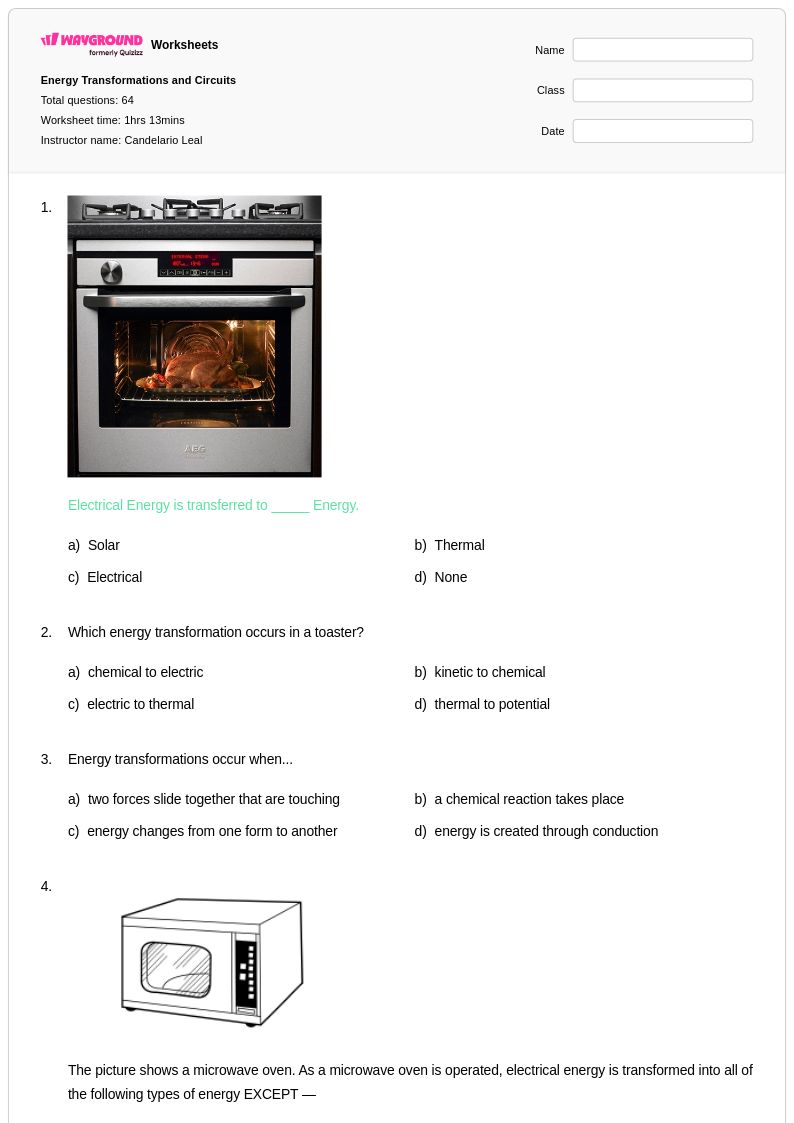
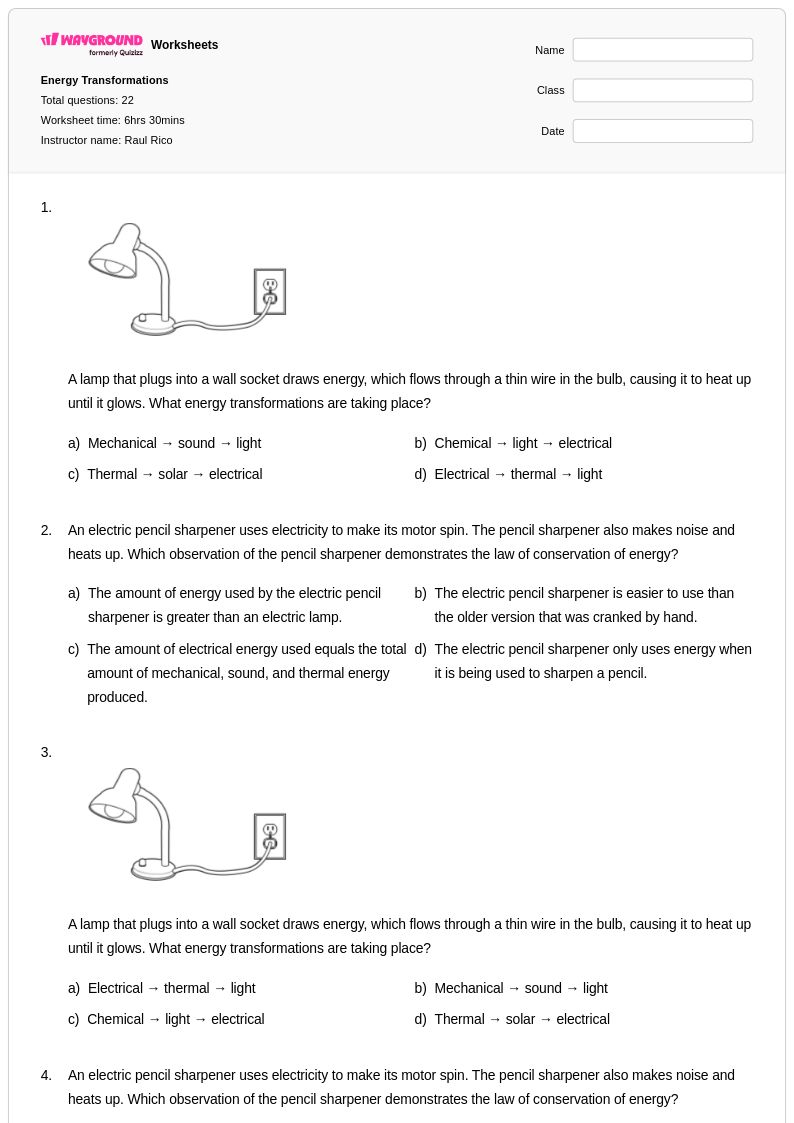
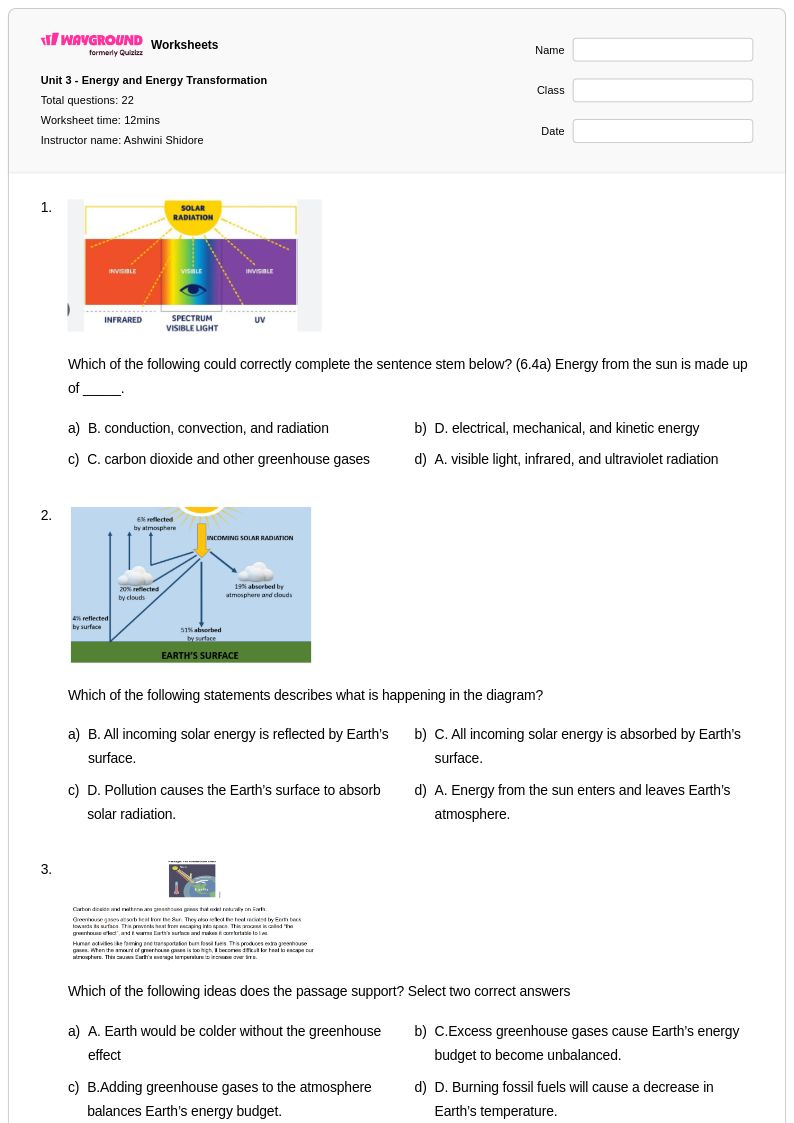
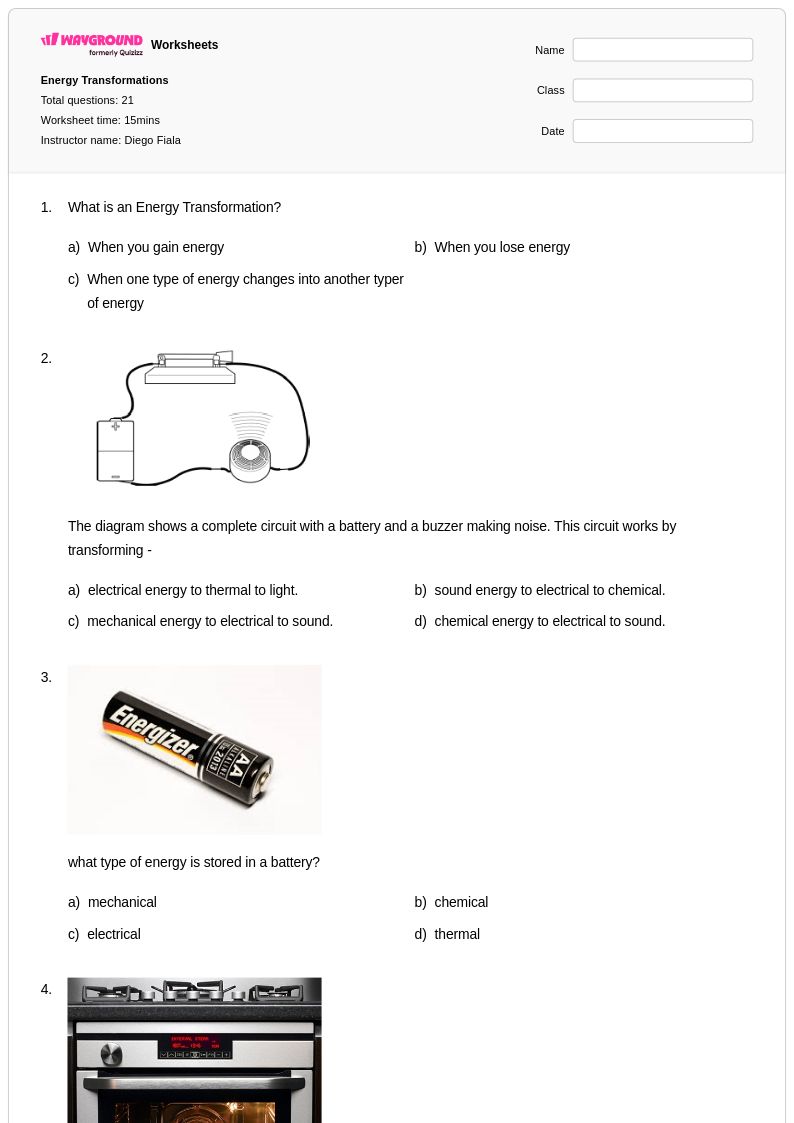
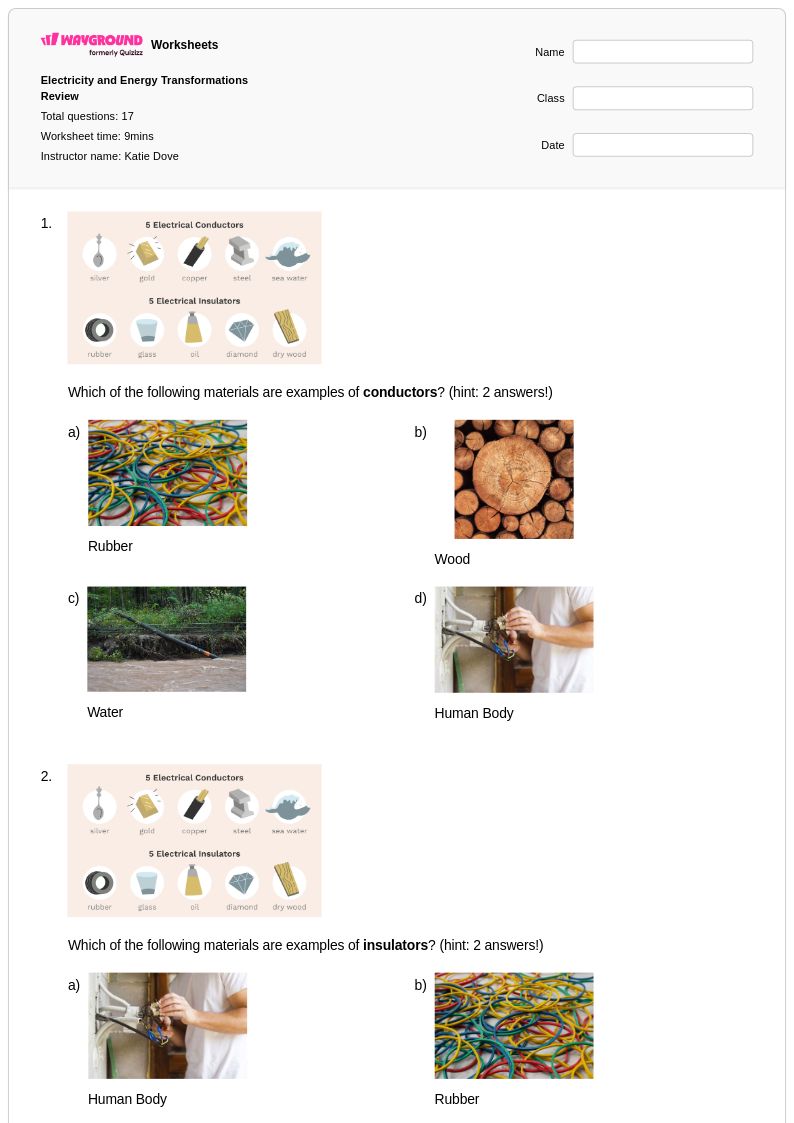
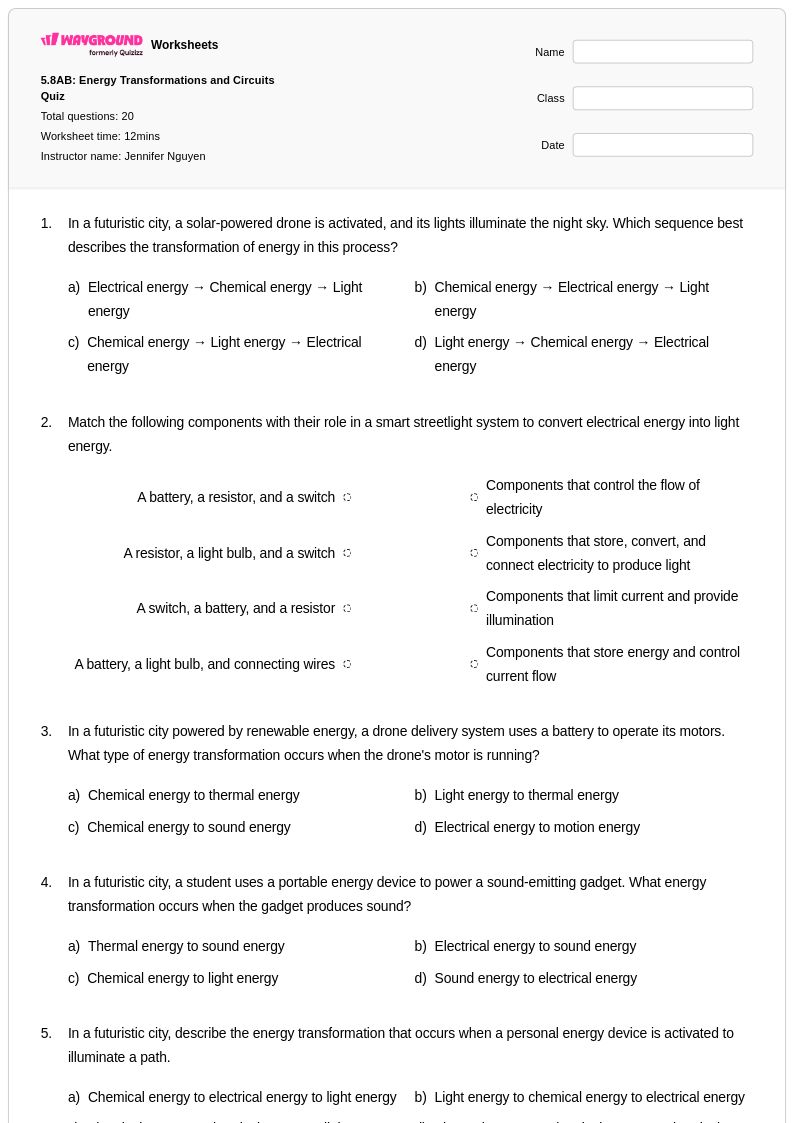
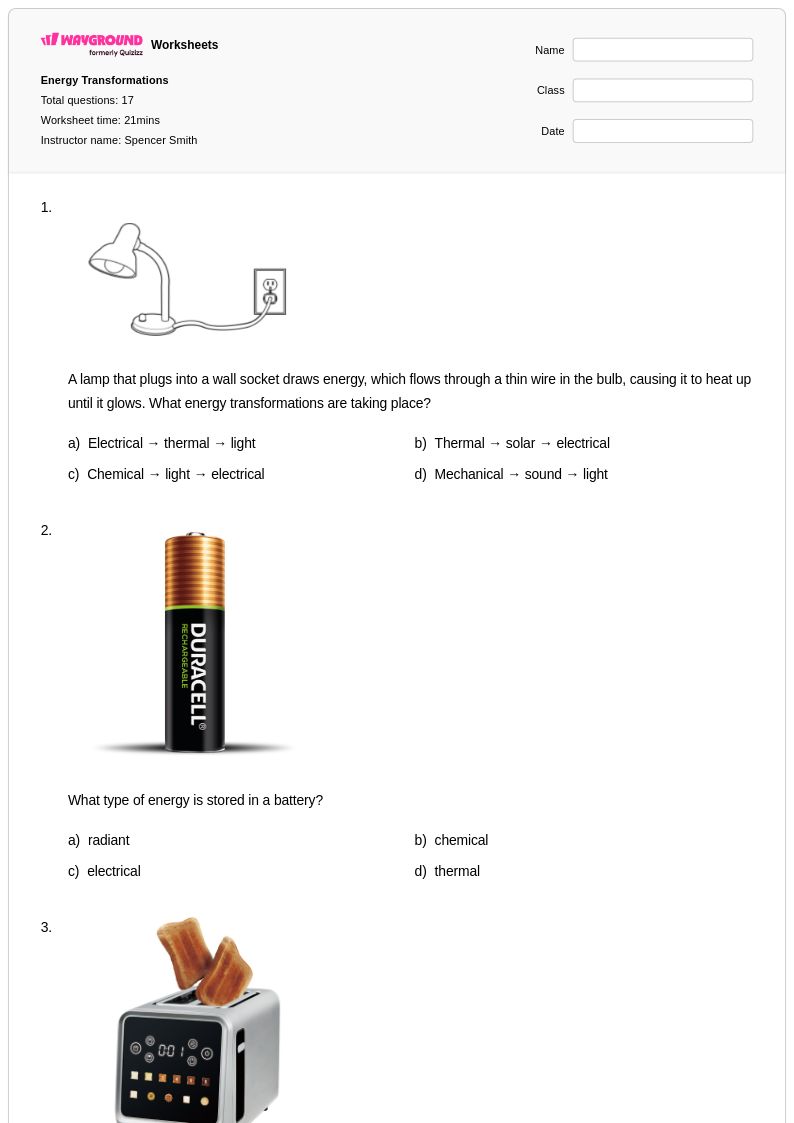
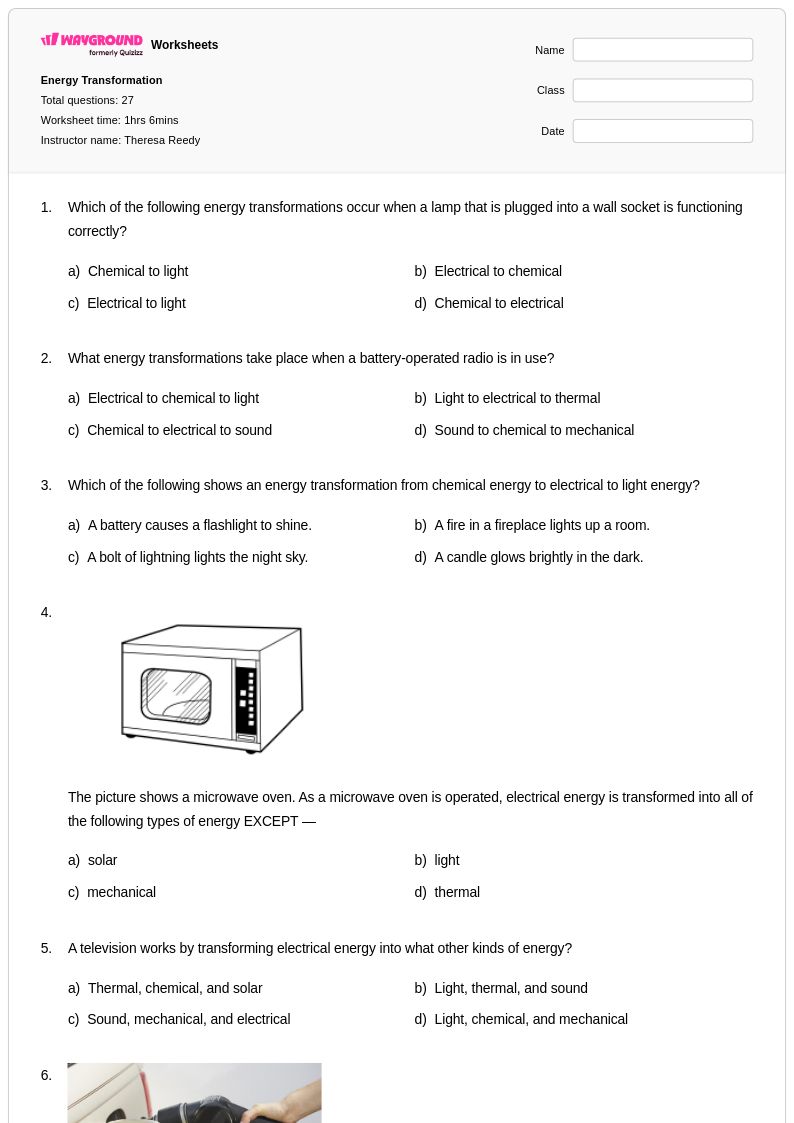
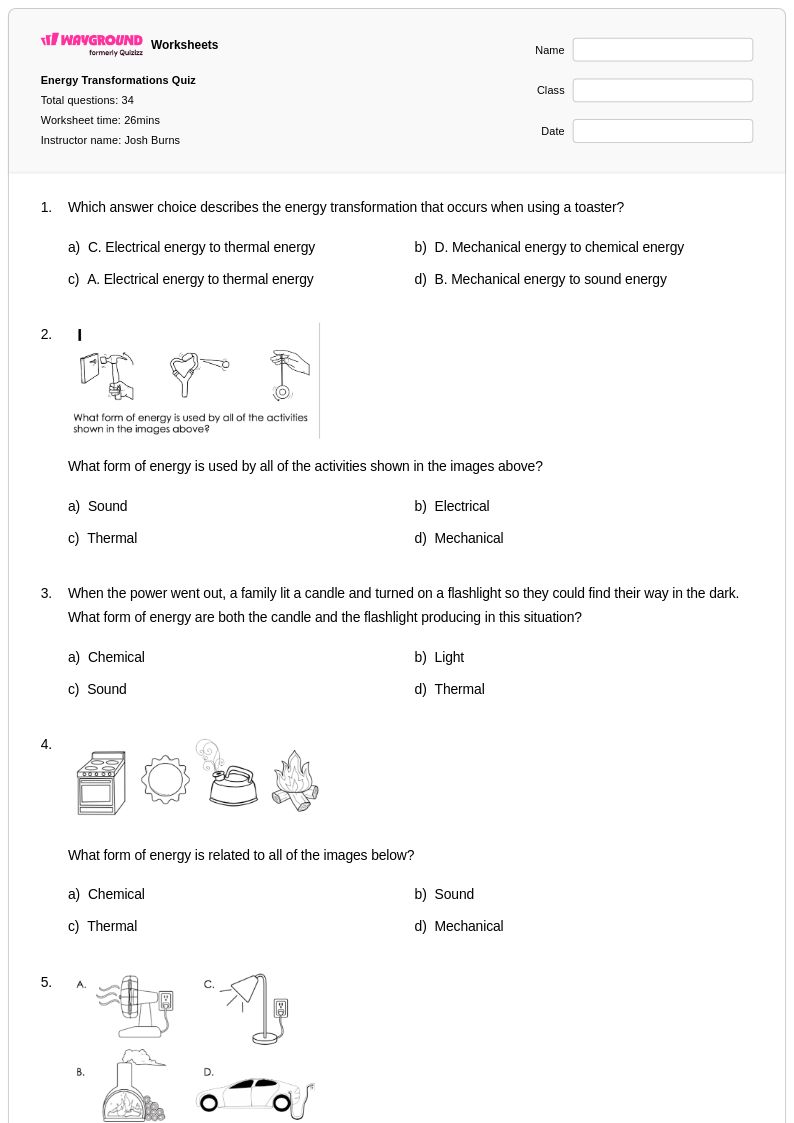
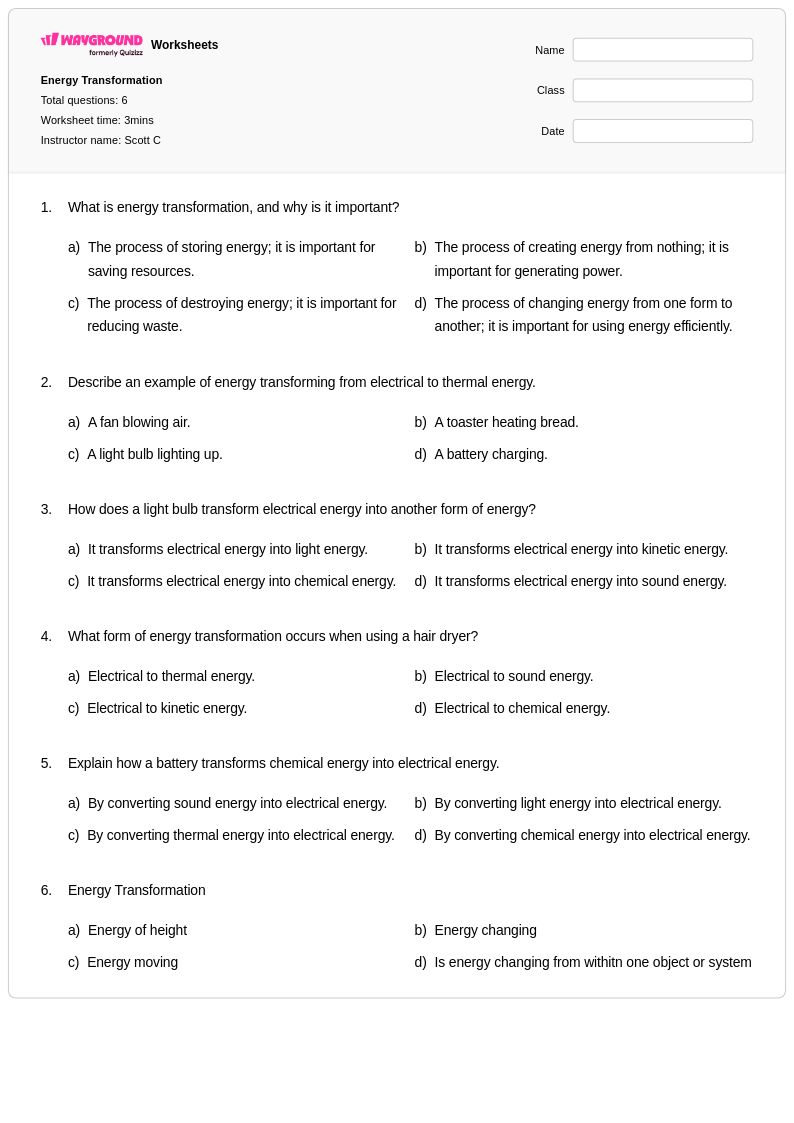
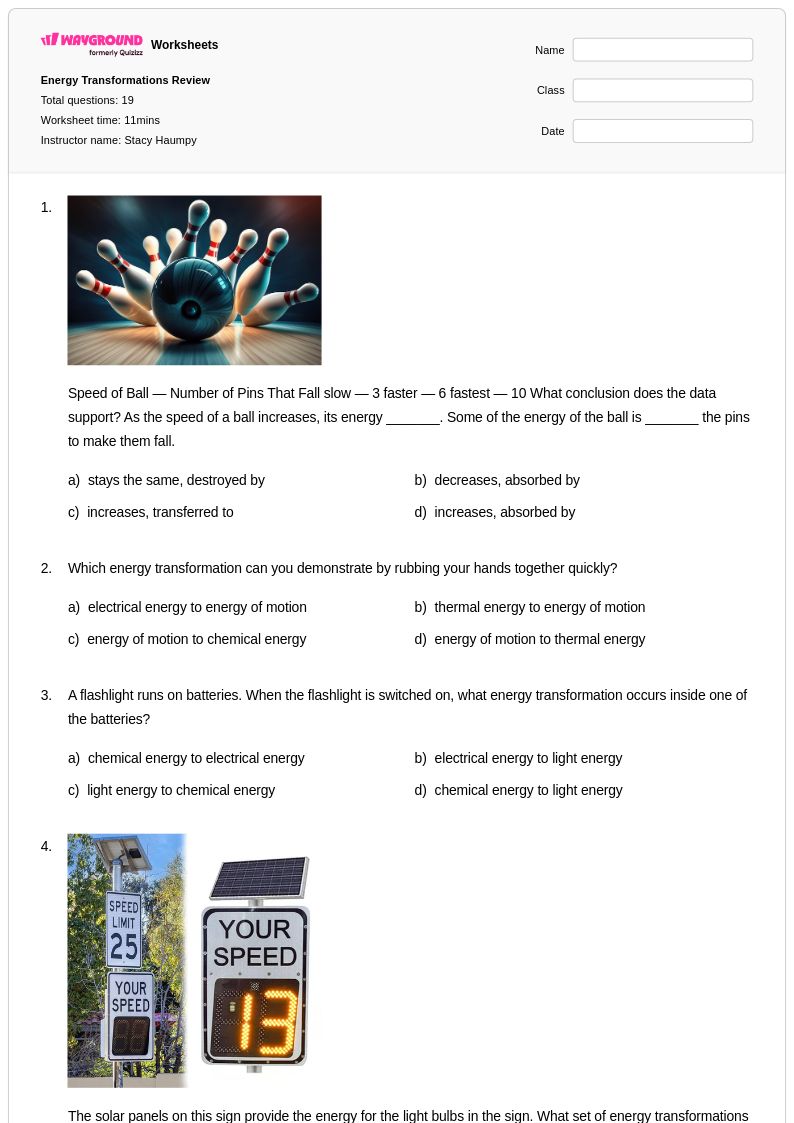
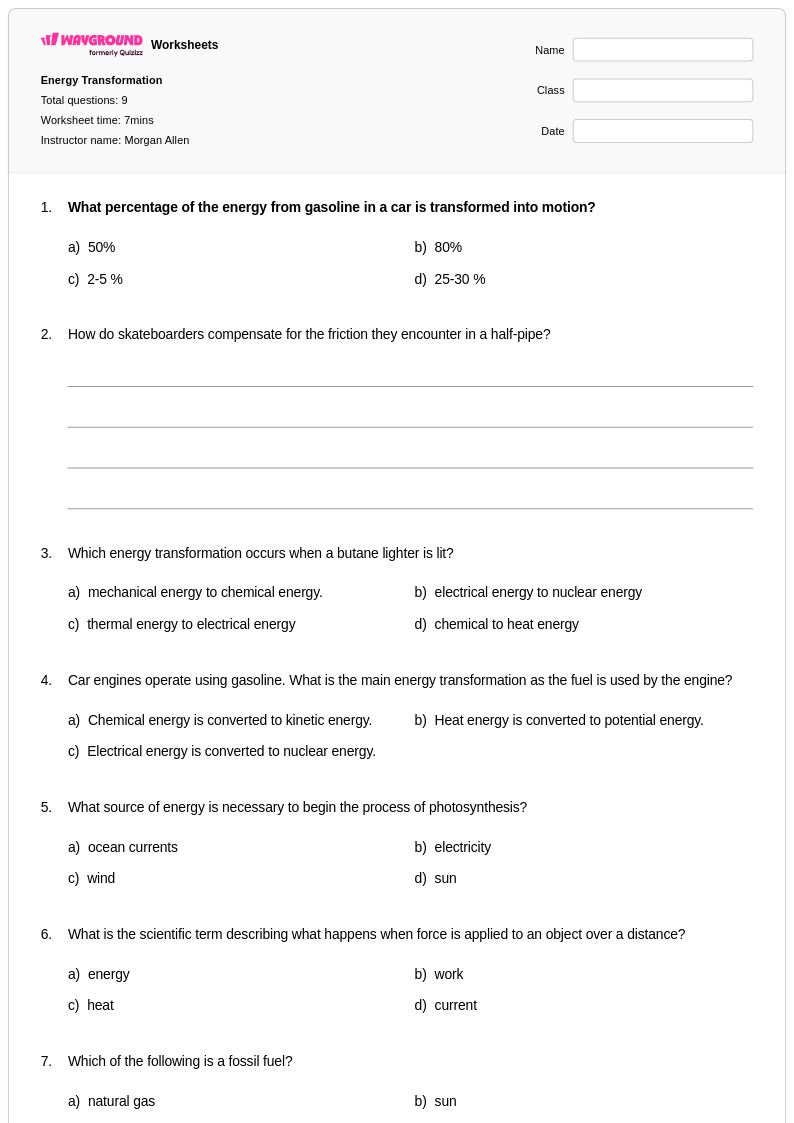
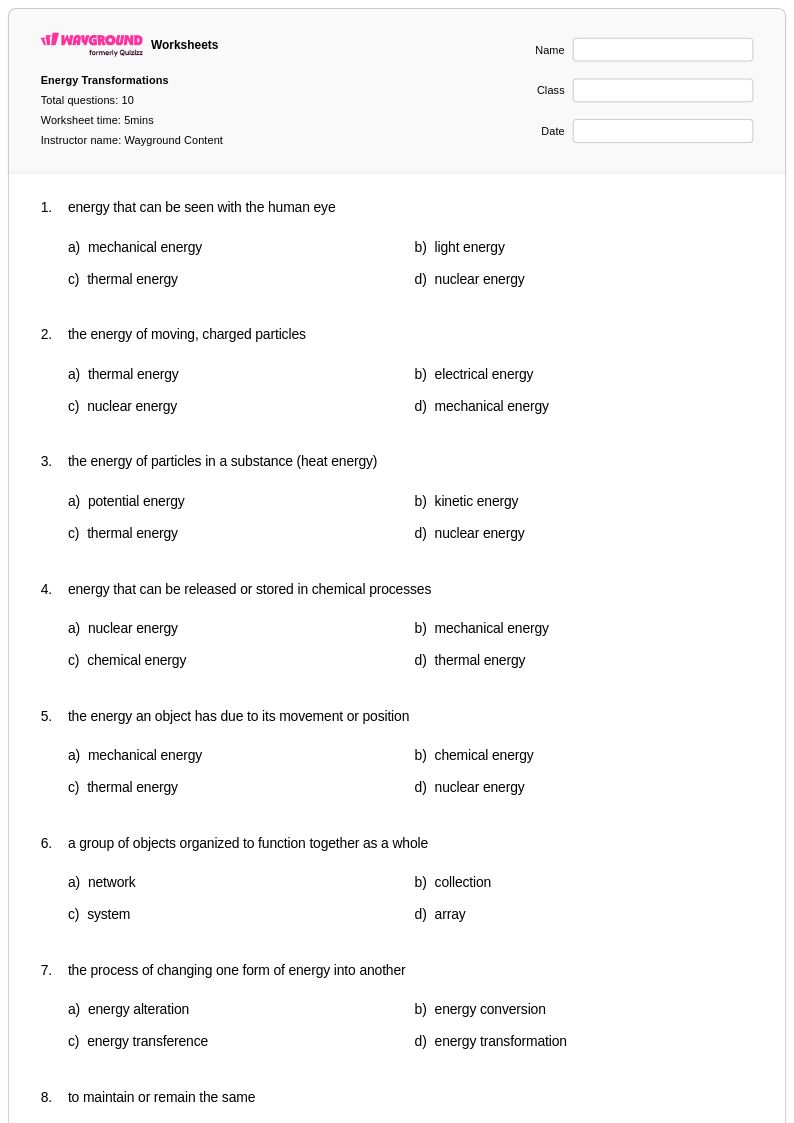
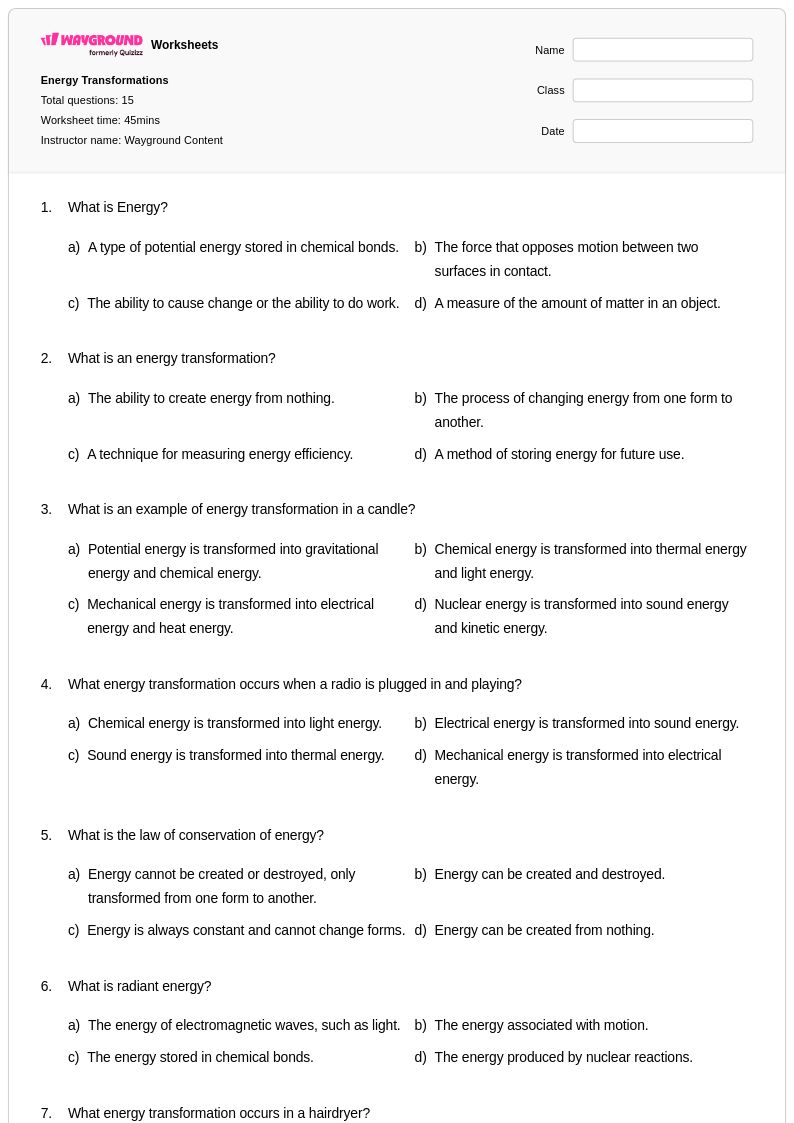
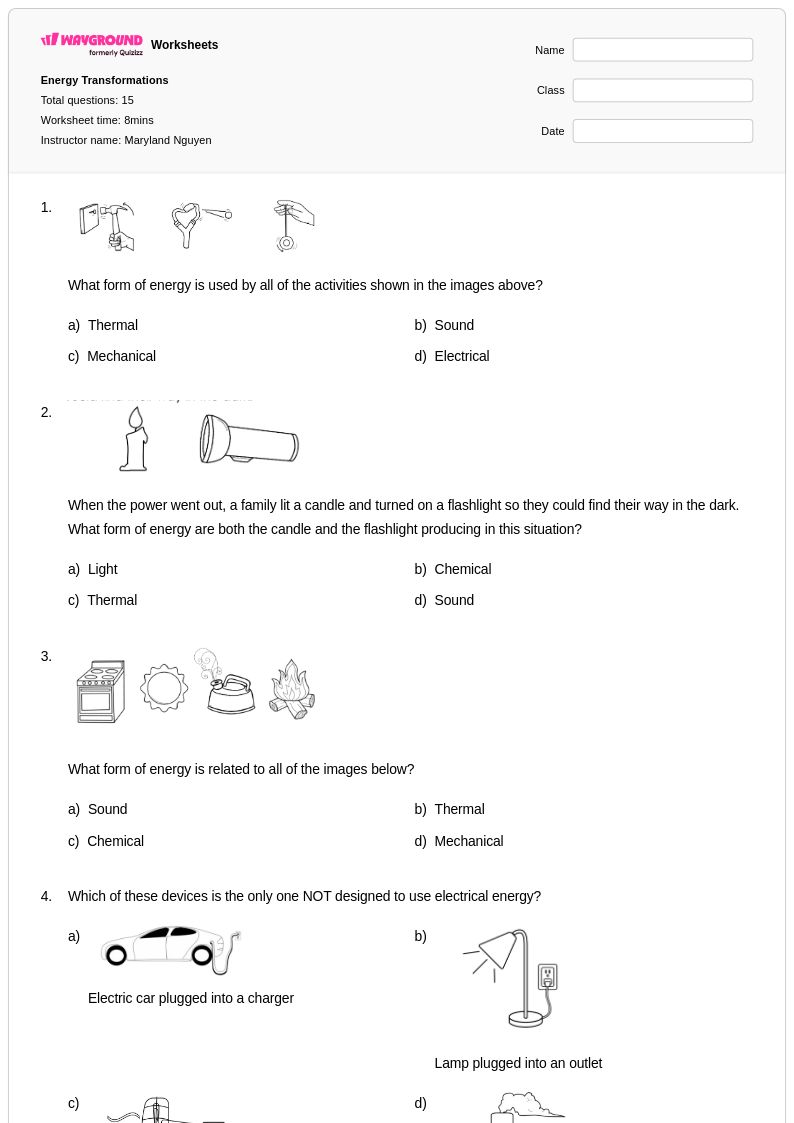
Energy transformation worksheets for Class 5 students available through Wayground (formerly Quizizz) provide comprehensive coverage of how energy changes from one form to another in everyday situations and scientific contexts. These educational resources strengthen students' understanding of kinetic and potential energy conversions, thermal energy transfer, and the transformation of electrical energy into light, sound, and motion. The worksheets feature practice problems that challenge fifth-grade learners to identify energy transformations in real-world scenarios, from swinging pendulums to toasters converting electrical energy to heat. Each worksheet collection includes detailed answer keys that support both independent study and classroom instruction, with free printables available in convenient pdf format for immediate classroom use.
Wayground's extensive library draws from millions of teacher-created resources specifically designed to support energy transformation instruction at the Class 5 level. The platform's advanced search and filtering capabilities enable educators to quickly locate worksheets that align with state science standards and match their students' specific learning needs. Teachers benefit from robust differentiation tools that allow customization of content difficulty and problem complexity, ensuring appropriate challenges for diverse learners within the same classroom. These energy transformation resources are available in both printable and digital formats, providing flexibility for various instructional settings while supporting targeted skill practice, remediation for struggling students, and enrichment opportunities for advanced learners ready to explore more complex energy conversion concepts.
FAQs
How do I teach energy transformation to my physics students?
Start by grounding students in the law of conservation of energy — that energy is never created or destroyed, only converted from one form to another. Use concrete, familiar examples like a roller coaster (potential to kinetic), a toaster (electrical to thermal), or a campfire (chemical to light and thermal) before moving to abstract problems. Building a progression from identification to analysis to calculation ensures students develop both conceptual understanding and procedural fluency.
What types of practice exercises help students get better at identifying energy transformations?
Effective practice moves students through three stages: first identifying the energy type present in a described scenario, then tracing the sequence of conversions in a multi-step system, and finally calculating values using energy equations. Exercises that pair real-world scenarios with energy diagrams are especially effective because they connect abstract forms — kinetic, potential, thermal, electrical, chemical — to contexts students already recognize.
What common mistakes do students make when working with energy transformation problems?
The most frequent error is treating energy transformation as energy loss — students often write that energy 'disappears' rather than converts to a less useful form like heat or sound. A second common mistake is misidentifying energy types, particularly confusing thermal energy with temperature or conflating elastic potential energy with gravitational potential energy. Targeted practice problems that require students to explicitly label each form of energy at each stage of a transformation help correct both patterns.
How can I differentiate energy transformation worksheets for students at different skill levels?
For struggling learners, begin with single-step transformations using labeled diagrams before introducing word problems or calculations. Advanced students benefit from multi-step scenarios involving energy losses to heat and sound, requiring them to apply conservation of energy quantitatively. On Wayground, teachers can also enable accommodations like read aloud for questions, reduced answer choices, and extended time — set per student — so the same worksheet resource can serve a mixed-ability classroom without requiring separate materials.
How do I use Wayground's energy transformation worksheets in my classroom?
Wayground's energy transformation worksheets are available as printable PDFs for traditional classroom use and in digital formats for technology-integrated environments, including the ability to host them as a live quiz on Wayground. Each worksheet includes a complete answer key, supporting both independent student practice and efficient teacher assessment. The digital format is particularly useful for assigning homework or conducting formative checks without additional grading workload.
How do I assess whether students truly understand energy transformation versus just memorizing terms?
Genuine understanding shows when students can explain why a transformation occurs — not just name it. Assess this by giving students an unfamiliar scenario and asking them to trace every energy conversion step with reasoning, rather than selecting from a list. Common signs of surface-level memorization include correctly labeling isolated examples but failing when energy conversions are embedded in multi-step or real-world contexts.