Free Printable European Colonization of the Americas Worksheets for Class 8
Explore free Class 8 European Colonization of the Americas worksheets and printables from Wayground that help students practice analyzing colonial impacts, settlement patterns, and cultural exchanges through engaging PDF activities with comprehensive answer keys.
Explore printable European Colonization of the Americas worksheets for Class 8
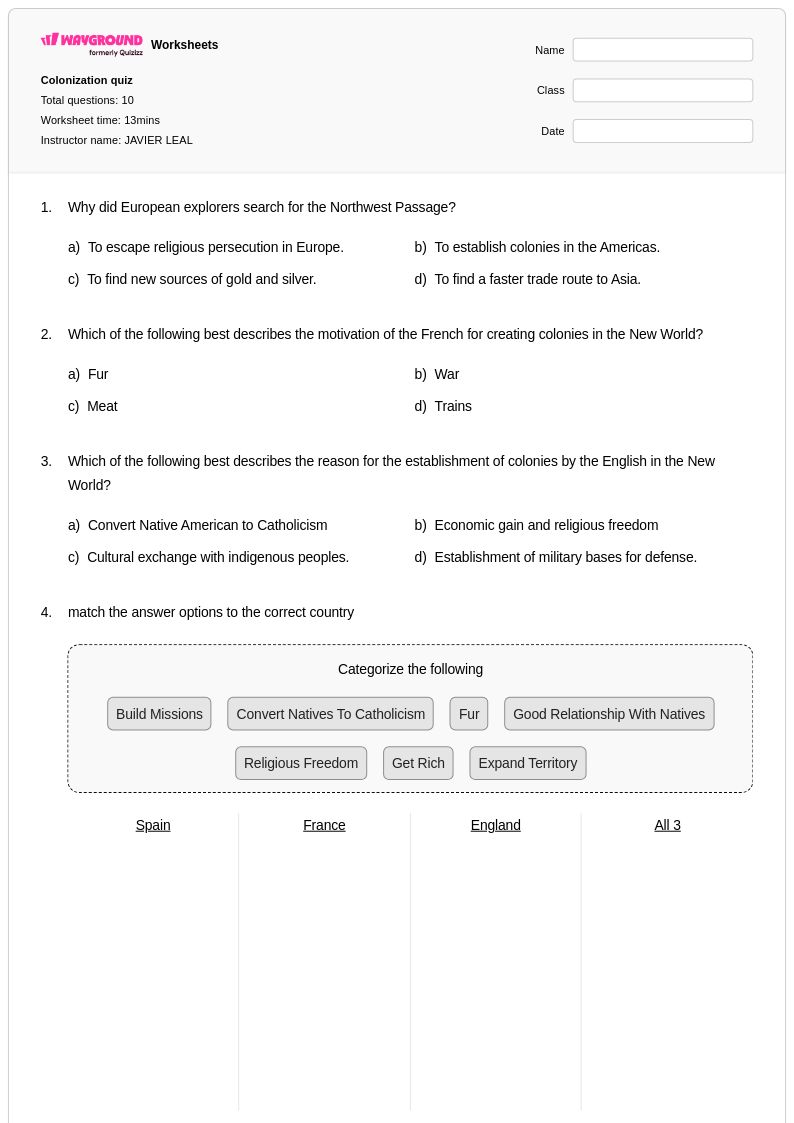
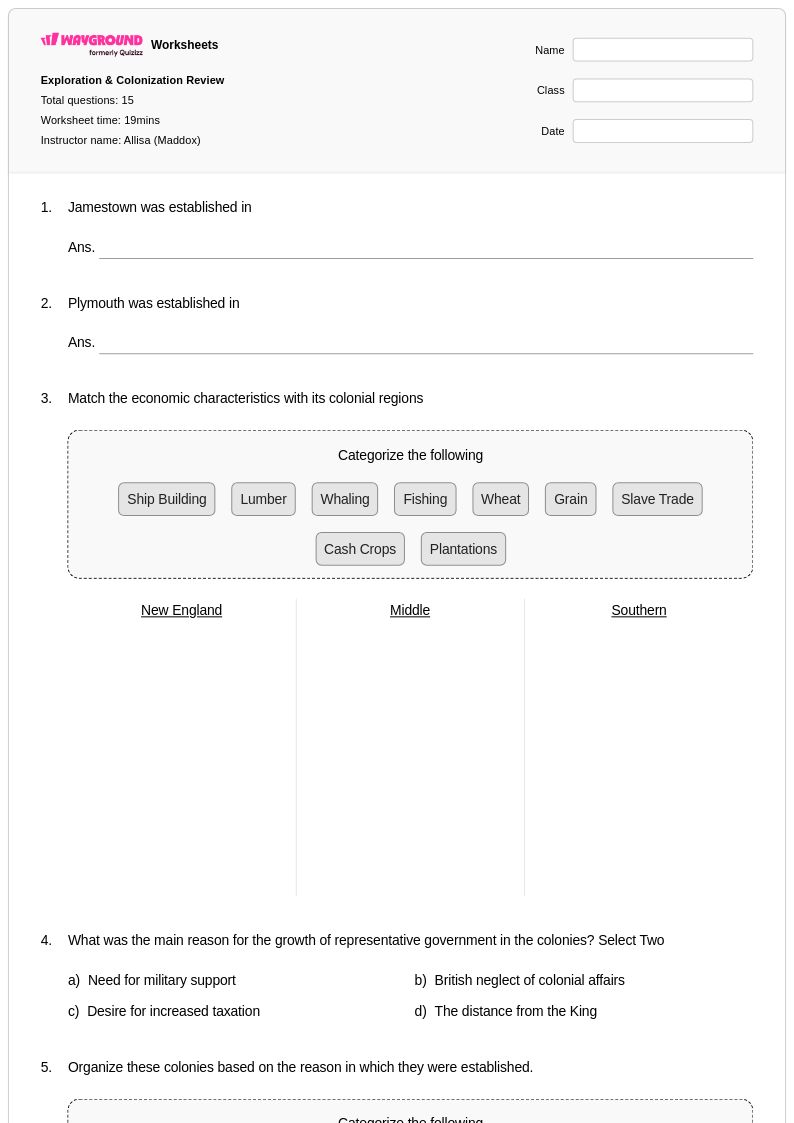
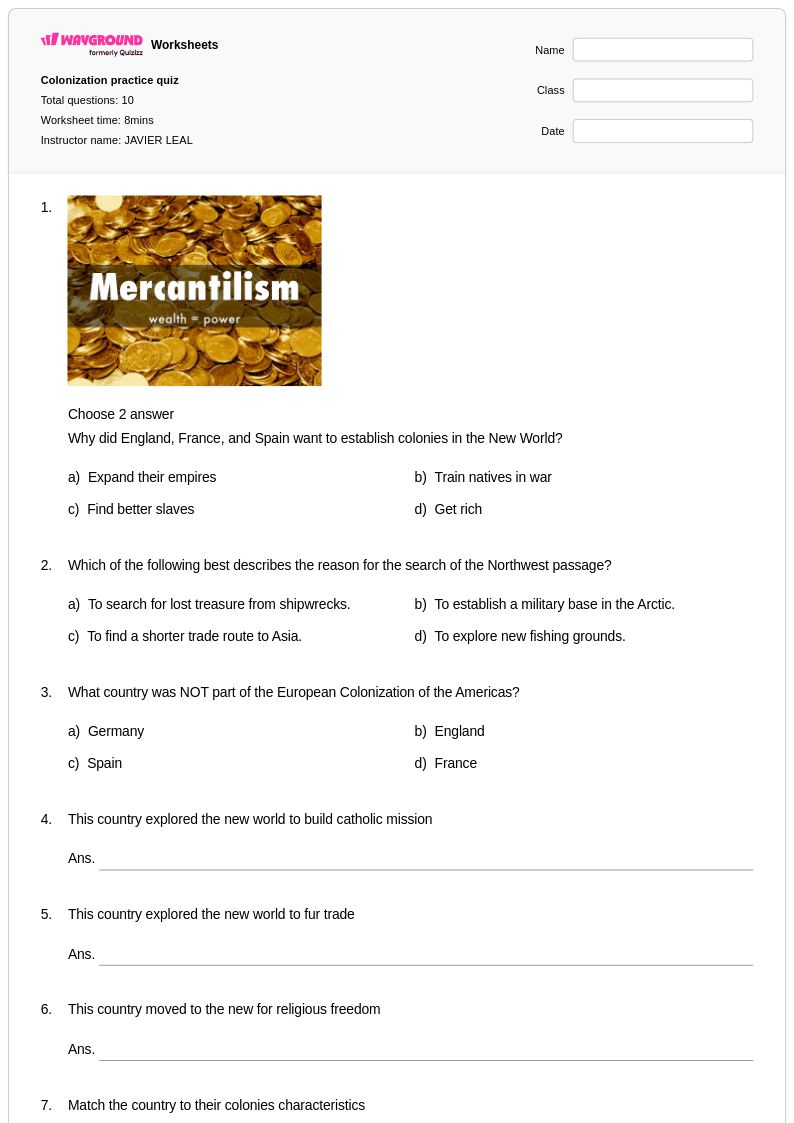
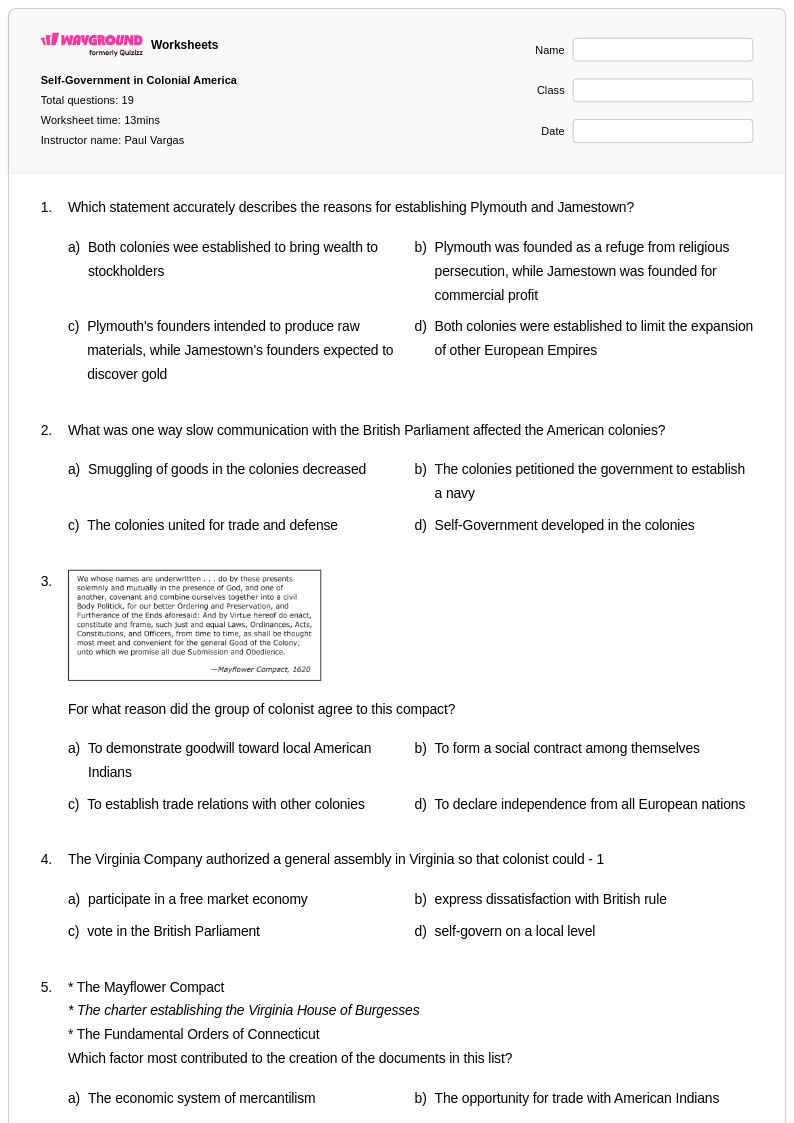
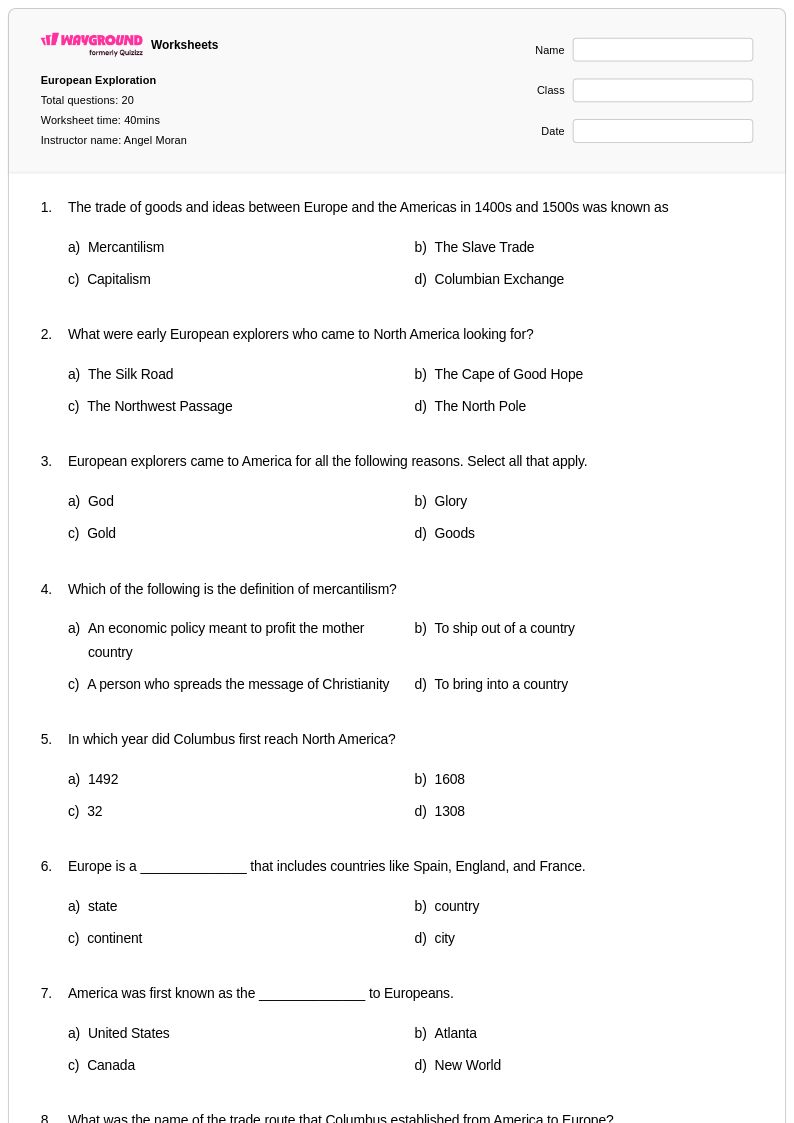
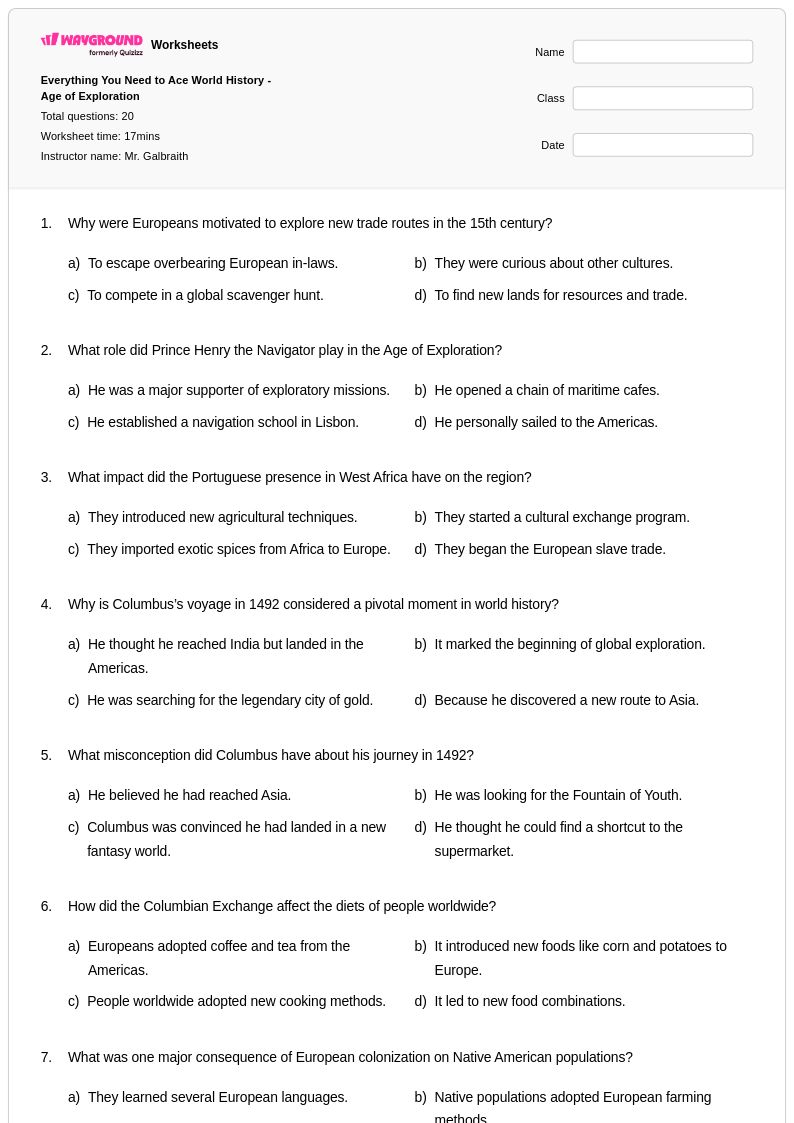
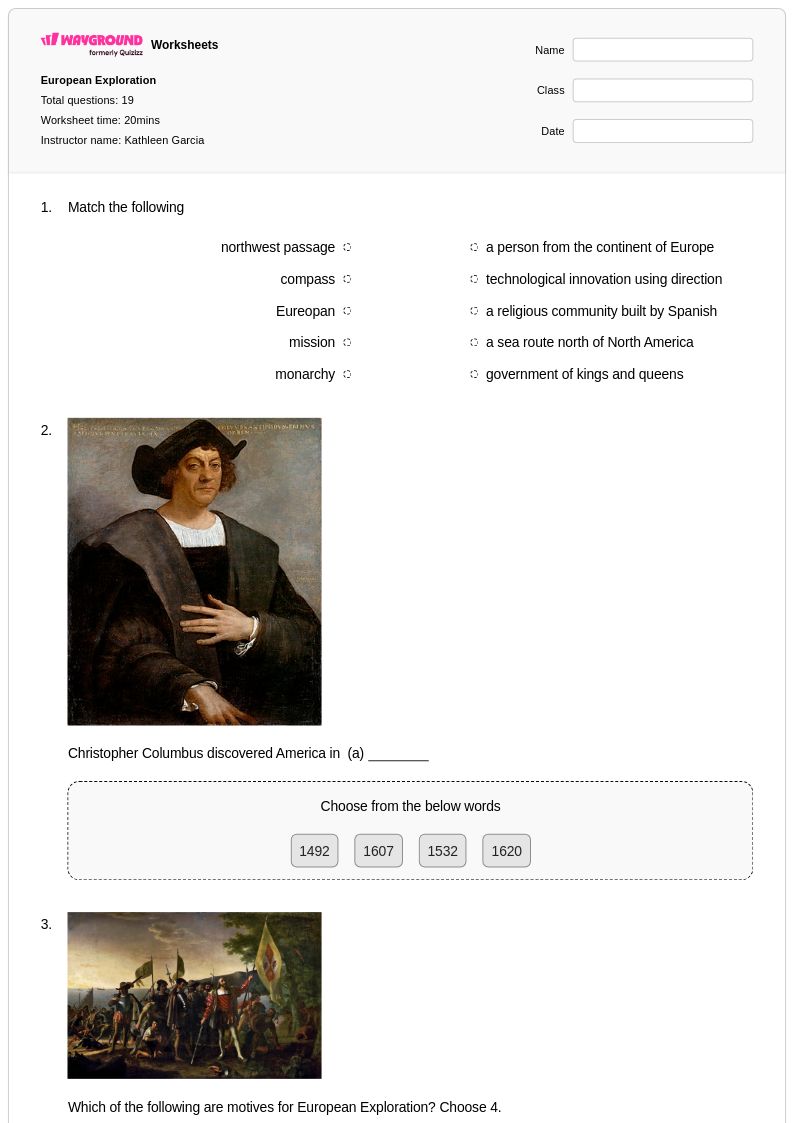
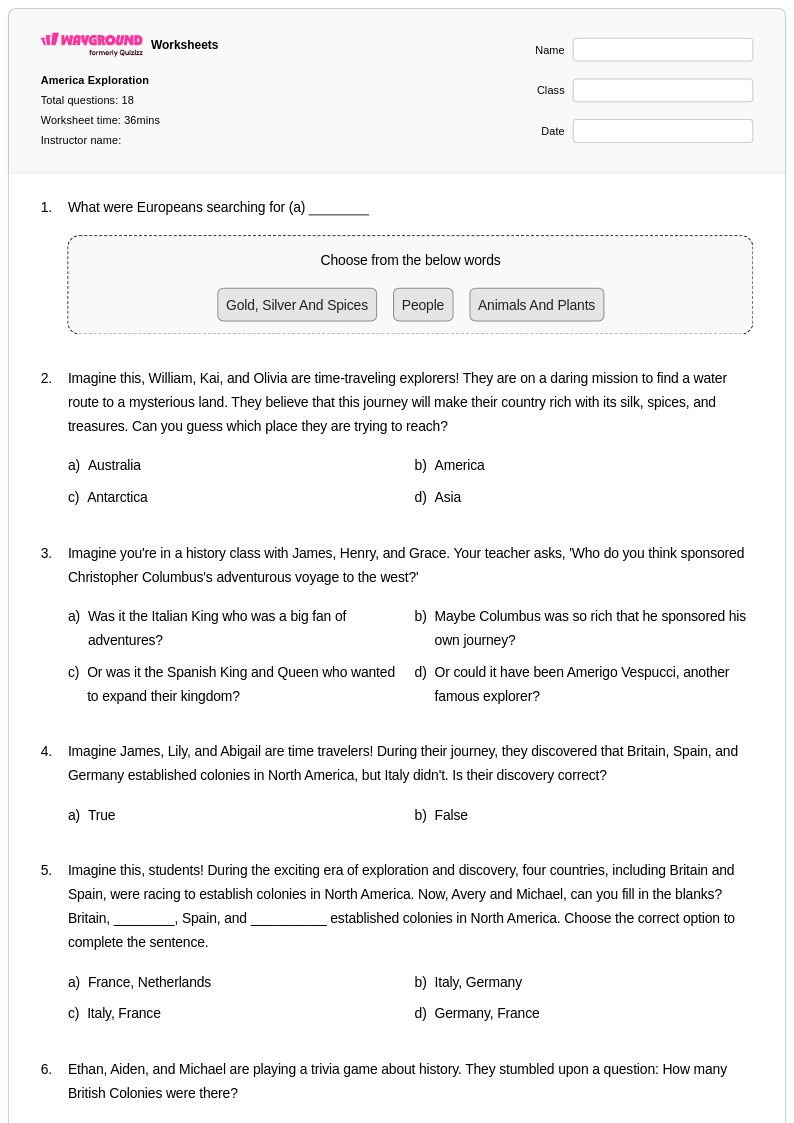
European Colonization of the Americas worksheets for Class 8 students through Wayground (formerly Quizizz) provide comprehensive coverage of this pivotal period in world history when European powers established colonies across North and South America from the late 15th through 18th centuries. These educational resources strengthen critical thinking skills by engaging students with primary source analysis, cause-and-effect relationships, and comparative studies of Spanish, French, English, and Portuguese colonial systems. Students develop historical reasoning abilities through practice problems that examine the motivations behind European expansion, the impact of the Columbian Exchange, and the consequences for indigenous populations. Each worksheet includes detailed answer keys that support both independent study and classroom instruction, with free printables available in convenient pdf format for immediate classroom implementation.
Wayground's extensive collection of teacher-created resources supports educators with millions of carefully curated worksheets that address European Colonization of the Americas from multiple pedagogical approaches. The platform's robust search and filtering capabilities enable teachers to locate materials aligned with specific curriculum standards while offering differentiation tools that accommodate diverse learning needs within Class 8 classrooms. Flexible customization options allow educators to modify existing worksheets or combine multiple resources to create targeted lesson plans, whether for initial skill practice, remediation of struggling learners, or enrichment activities for advanced students. Available in both printable and digital formats including pdf downloads, these resources streamline lesson planning while providing the adaptability necessary for effective social studies instruction across various classroom environments and learning modalities.
FAQs
How do I teach European colonization of the Americas in a way that covers multiple perspectives?
Effective instruction on European colonization requires presenting the experiences of at least three groups: European colonizers, indigenous populations, and enslaved Africans. Organize your unit around cause-and-effect relationships — why European powers expanded, how colonial systems were structured, and what the consequences were for each group. Using primary source documents alongside structured analysis prompts helps students move beyond a single narrative and develop genuine historical thinking skills.
What topics should a European colonization of the Americas worksheet cover?
A well-designed worksheet on this topic should address the motivations behind European expansion, the roles of Spain, France, England, Portugal, and the Netherlands, the Columbian Exchange, mercantilism, and colonial governance structures. It should also include content on resistance movements and the lasting impact on indigenous peoples and enslaved Africans. Covering these interconnected themes builds the analytical foundation students need for more advanced study of early American and world history.
What common misconceptions do students have about European colonization of the Americas?
A frequent misconception is that European colonization was a single, uniform process rather than a series of distinct efforts by competing powers with different economic and political goals. Students also tend to view indigenous peoples as passive recipients of colonization rather than active agents who resisted, negotiated, and adapted. Another common error is conflating the Columbian Exchange with purely beneficial outcomes, overlooking the devastating demographic collapse of indigenous populations and the expansion of the transatlantic slave trade.
How can I help students understand the Columbian Exchange within a colonization unit?
The Columbian Exchange is best taught as a consequence of colonization rather than an isolated event, so anchor it within the broader context of European expansion and its effects on all parties involved. Have students analyze the transfer of crops, animals, and diseases in terms of who benefited and who was harmed, which reinforces cause-and-effect reasoning. Mapping activities that show the movement of goods and populations across the Atlantic are particularly effective for making this concept concrete and memorable.
How do I use European colonization of the Americas worksheets from Wayground in my classroom?
Wayground's European colonization worksheets are available as printable PDFs for traditional classroom use and in digital formats for technology-integrated or hybrid learning environments, and teachers can also host them as a quiz directly on Wayground. The platform allows teachers to modify existing worksheets to match specific curriculum goals, differentiate for various skill levels, and apply student-level accommodations such as read aloud, extended time, or reduced answer choices for learners who need additional support. All worksheets include answer keys, making them practical for independent practice, small group work, or assessment preparation within a colonial history unit.
How do I compare the colonial systems of different European powers in my lesson?
Structured comparison activities work best here — have students use graphic organizers to examine how Spain, England, France, Portugal, and the Netherlands each organized labor, governance, and trade in their respective colonies. Key variables to compare include the encomienda system versus plantation economies, the degree of settler versus extractive colonialism, and the relationship each power maintained with indigenous peoples. This kind of comparative analysis directly supports historical thinking standards and prepares students to evaluate why colonial legacies differ across regions of the Americas today.