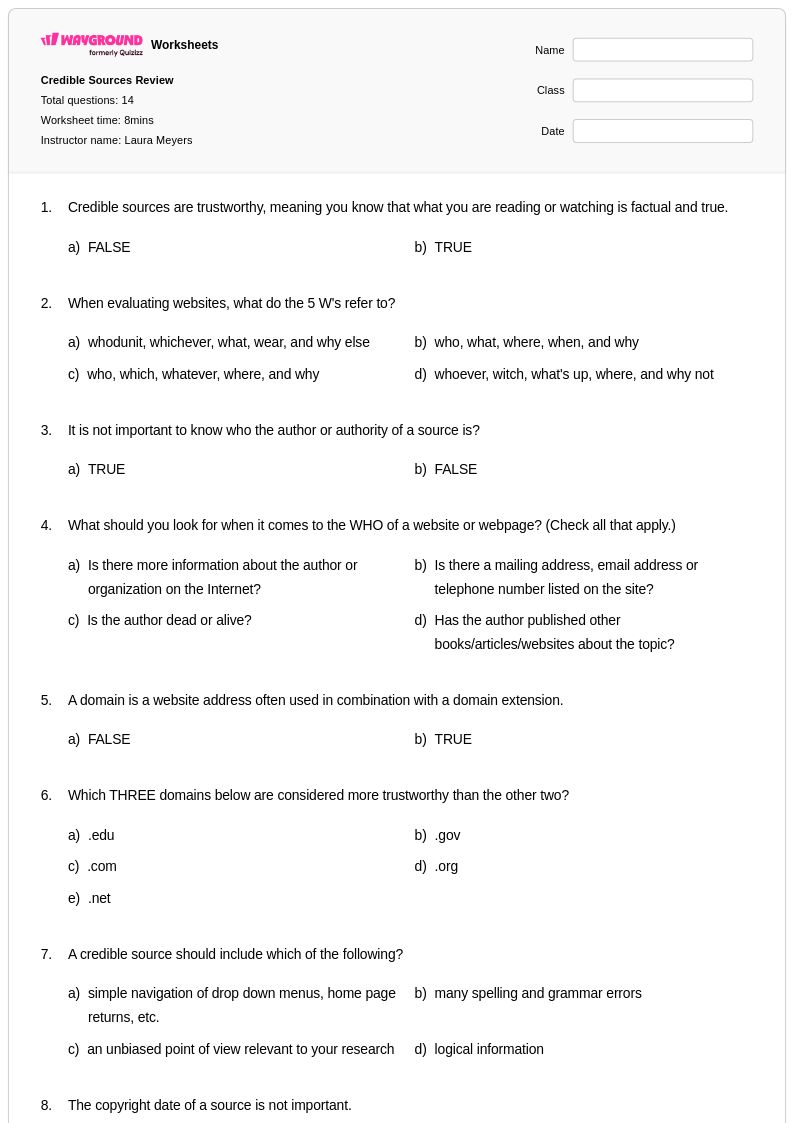
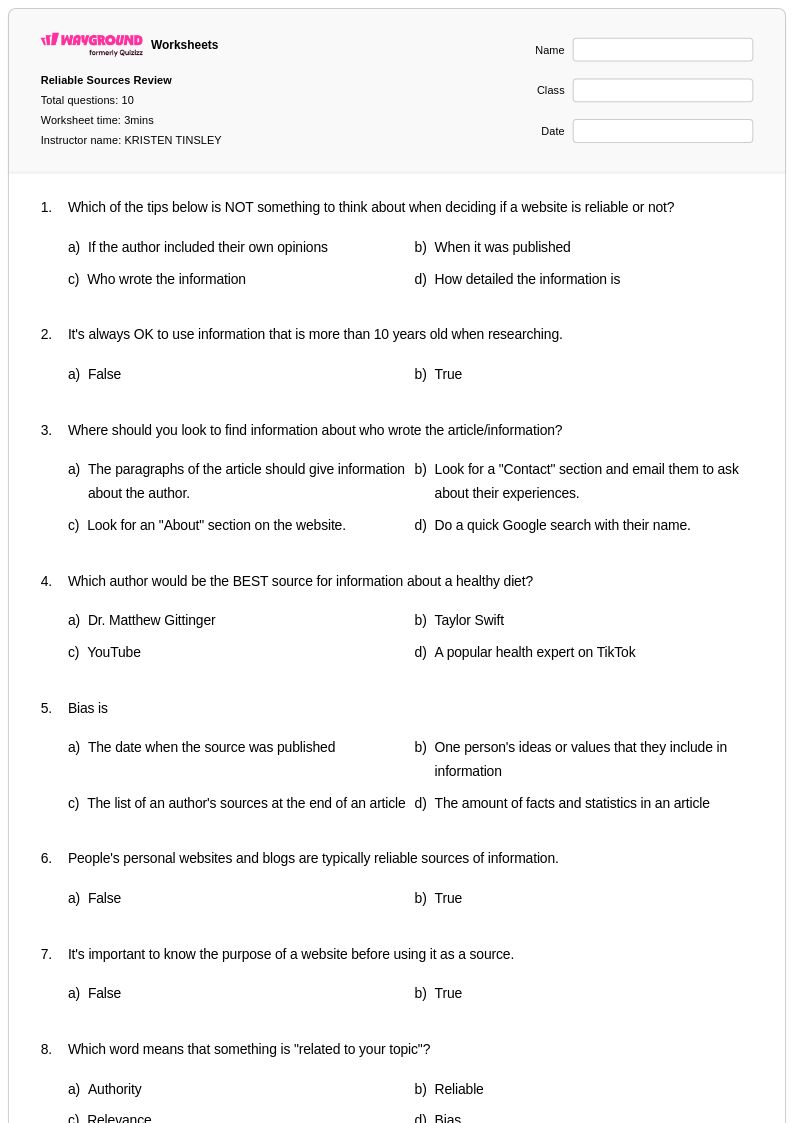
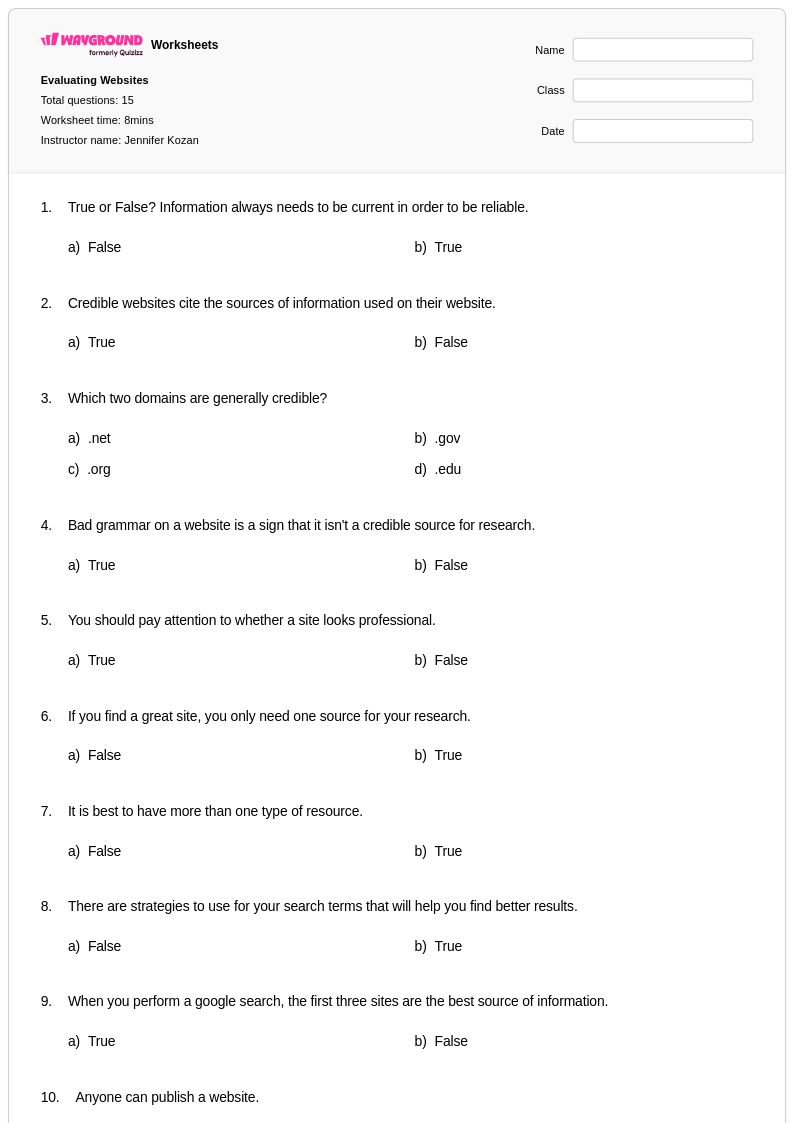
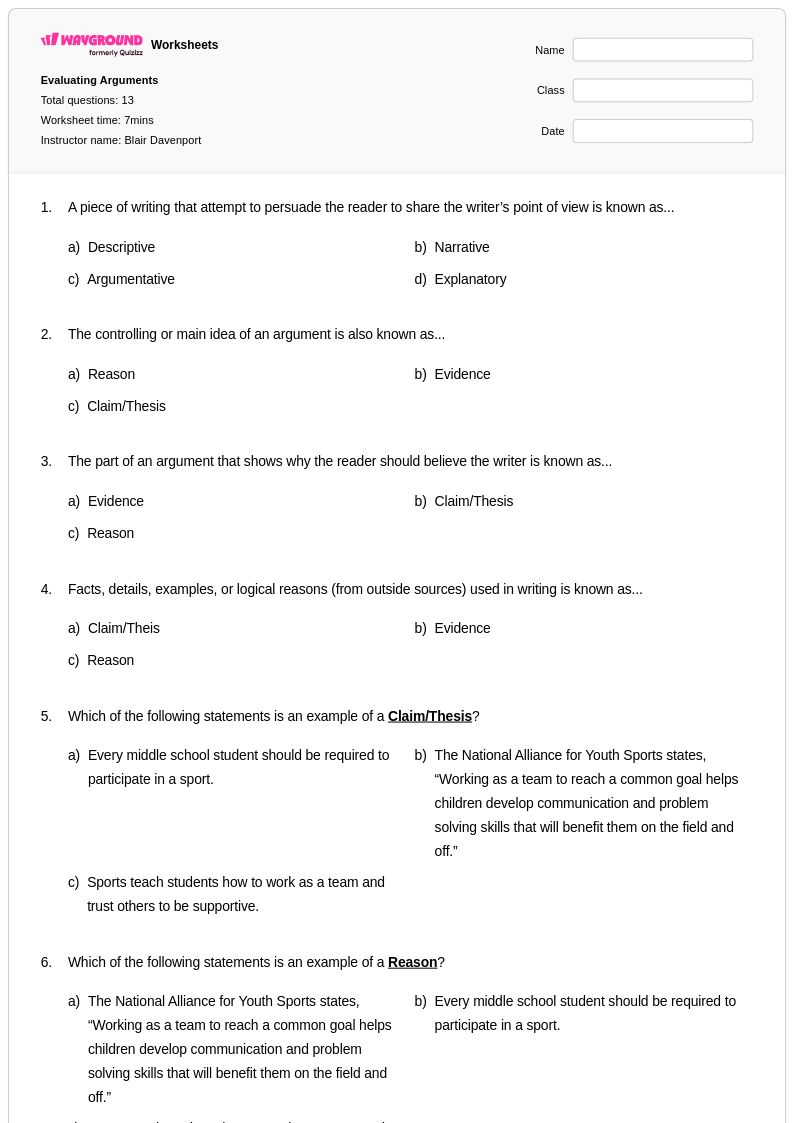
Free Printable Evaluating Sources Worksheets for Class 7
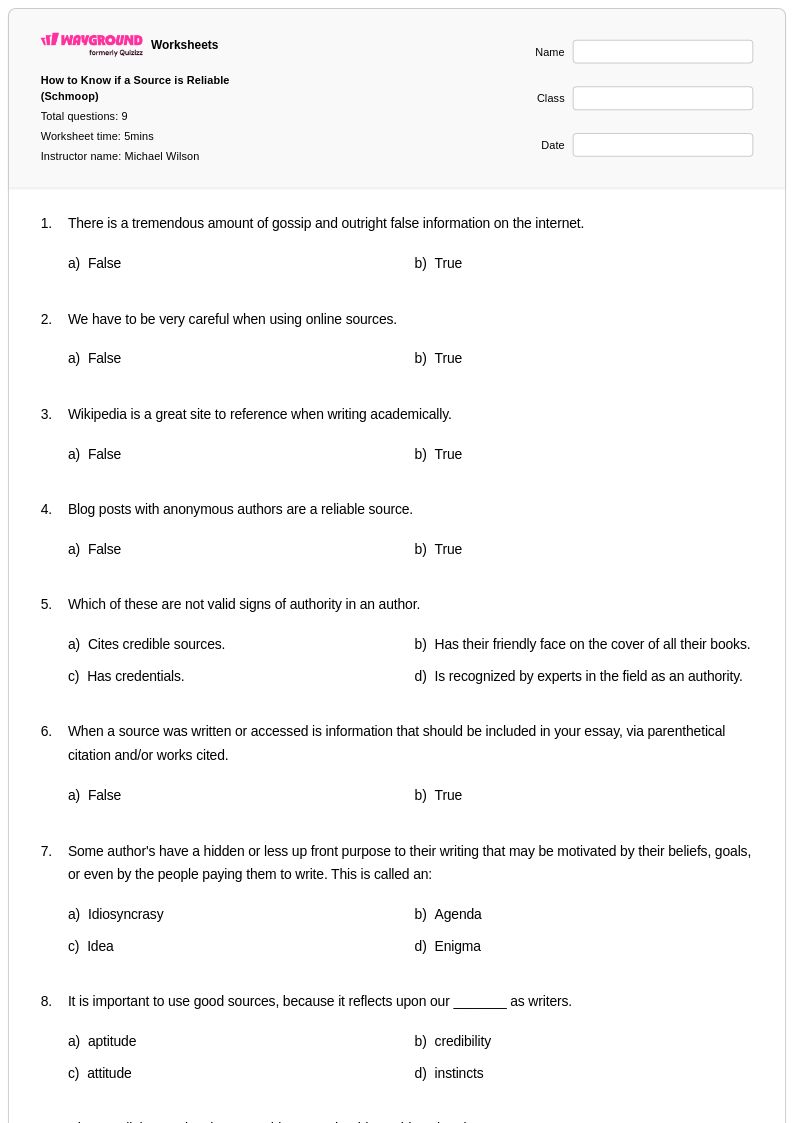
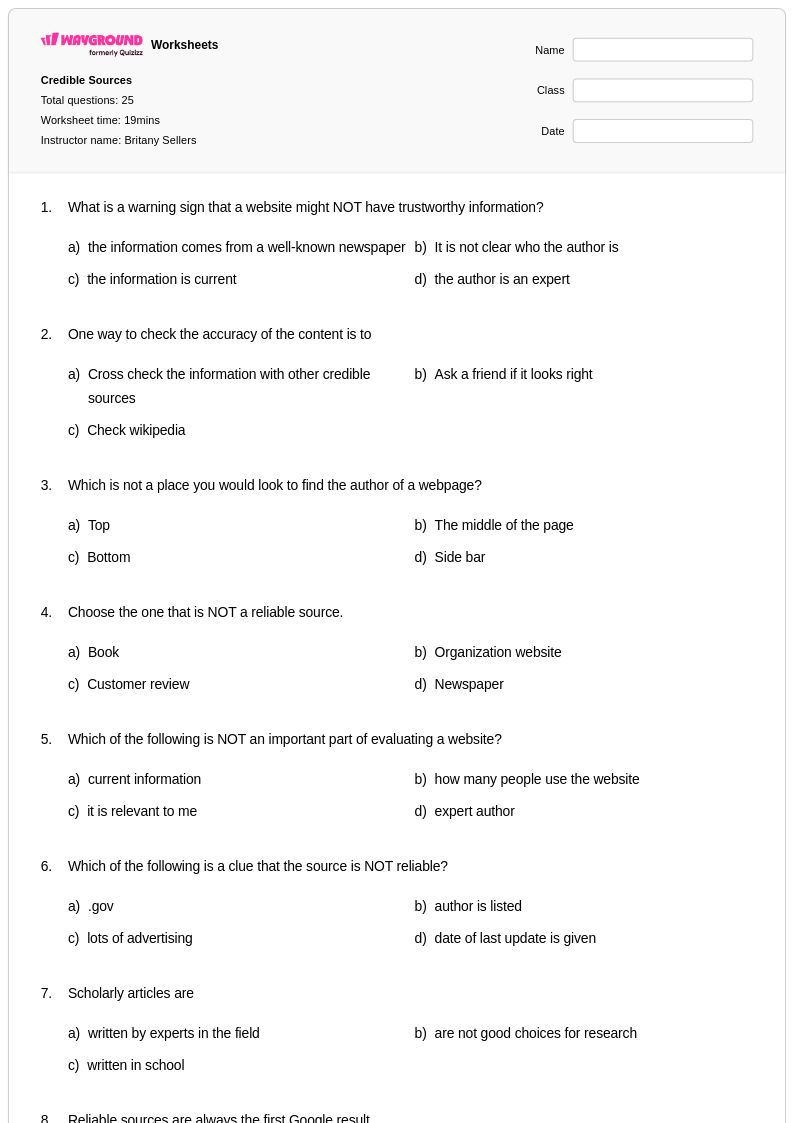
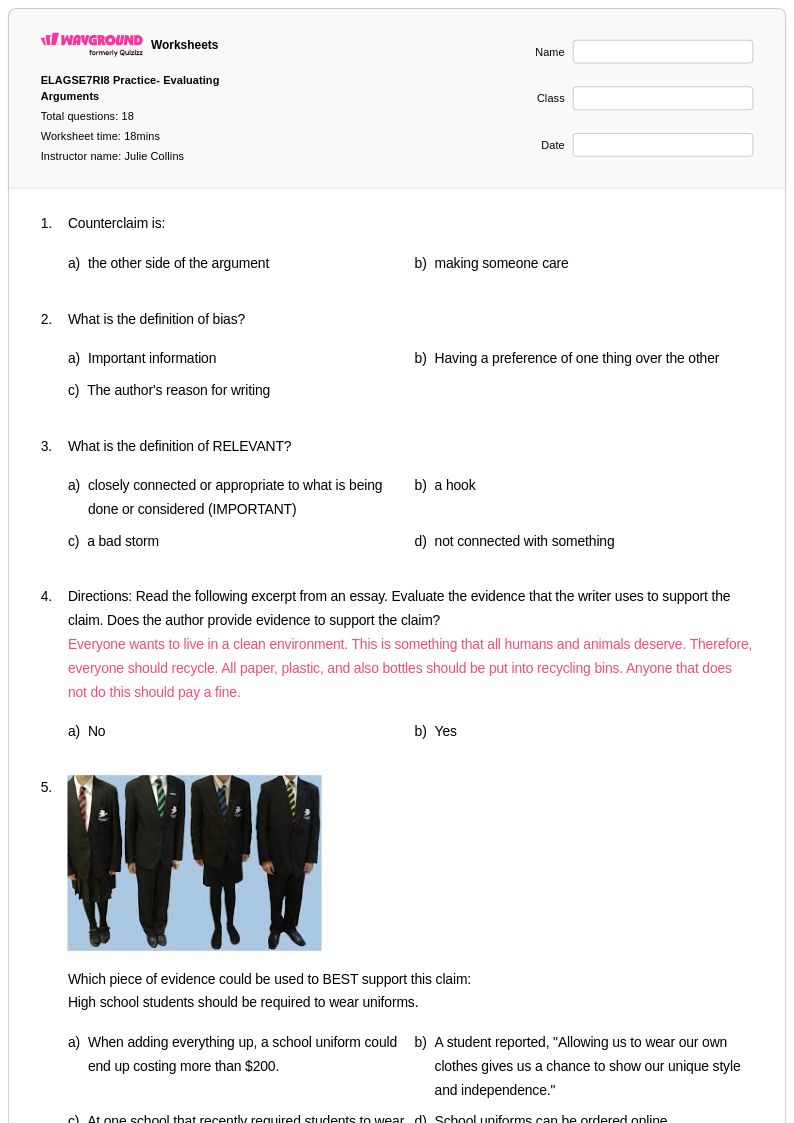
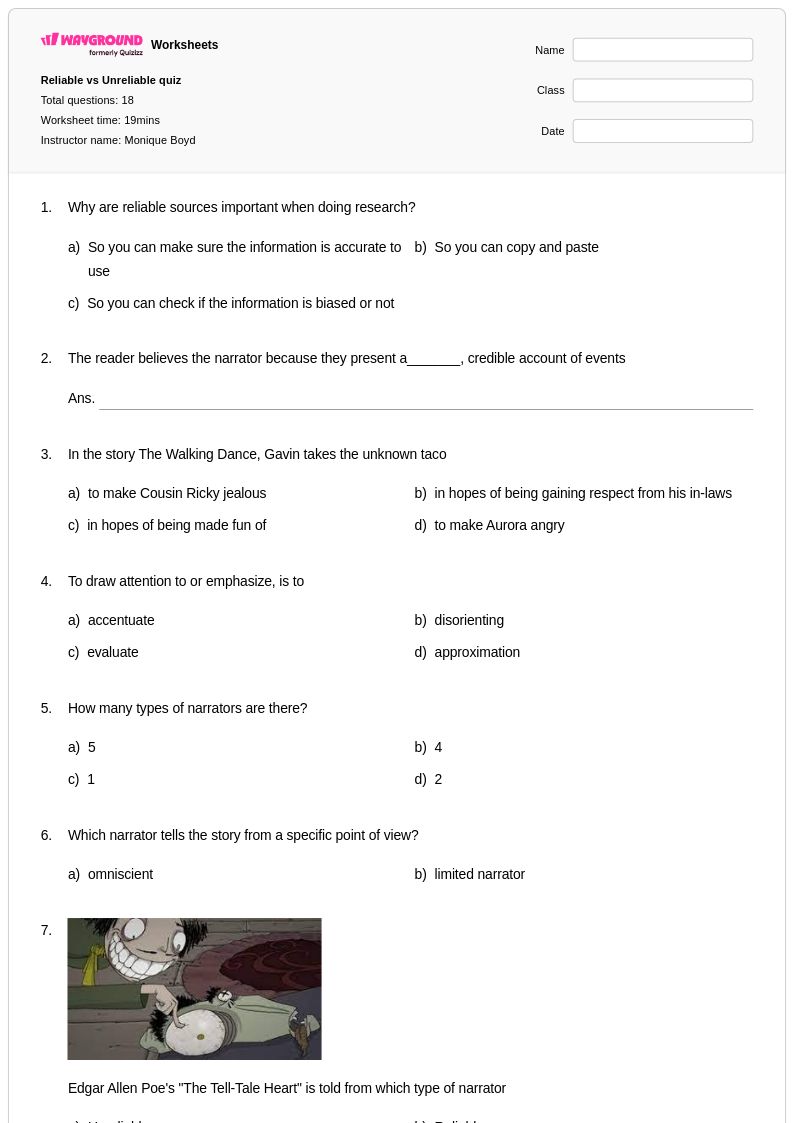
Class 7 evaluating sources worksheets help students master critical research skills through comprehensive printables that teach how to assess source credibility, reliability, and bias with engaging practice problems and answer keys.
Explore printable Evaluating Sources worksheets for Class 7
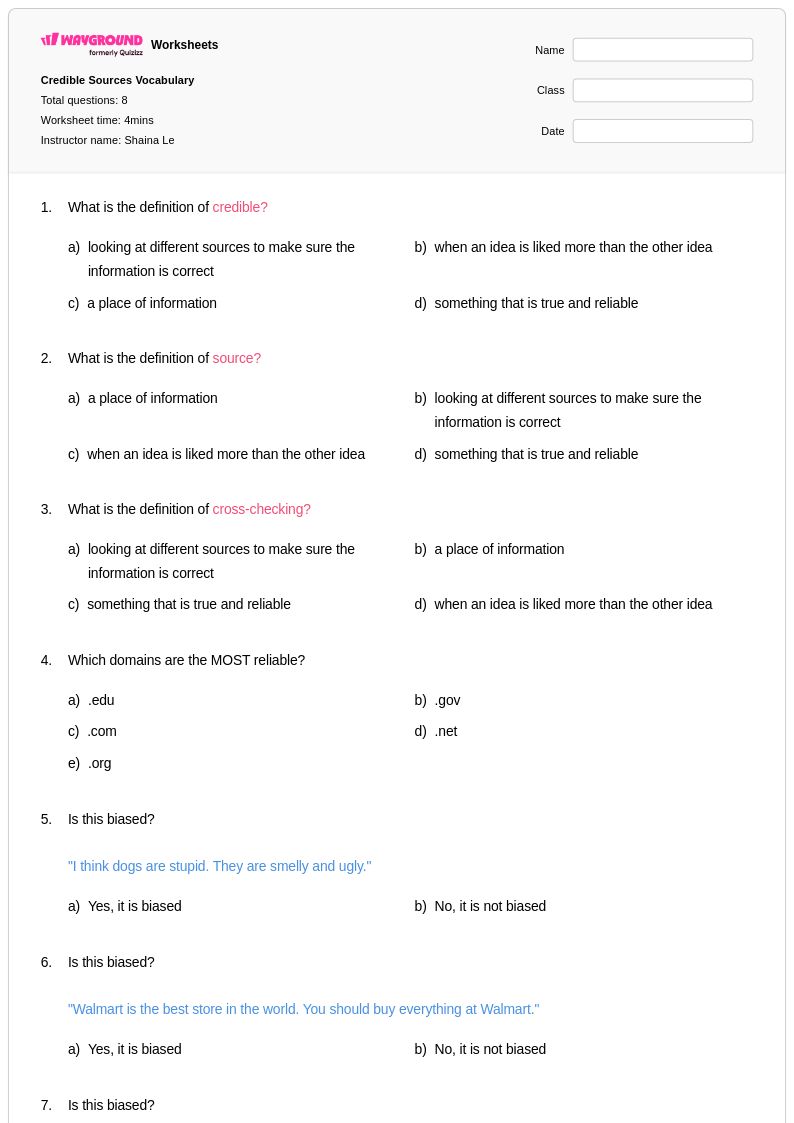
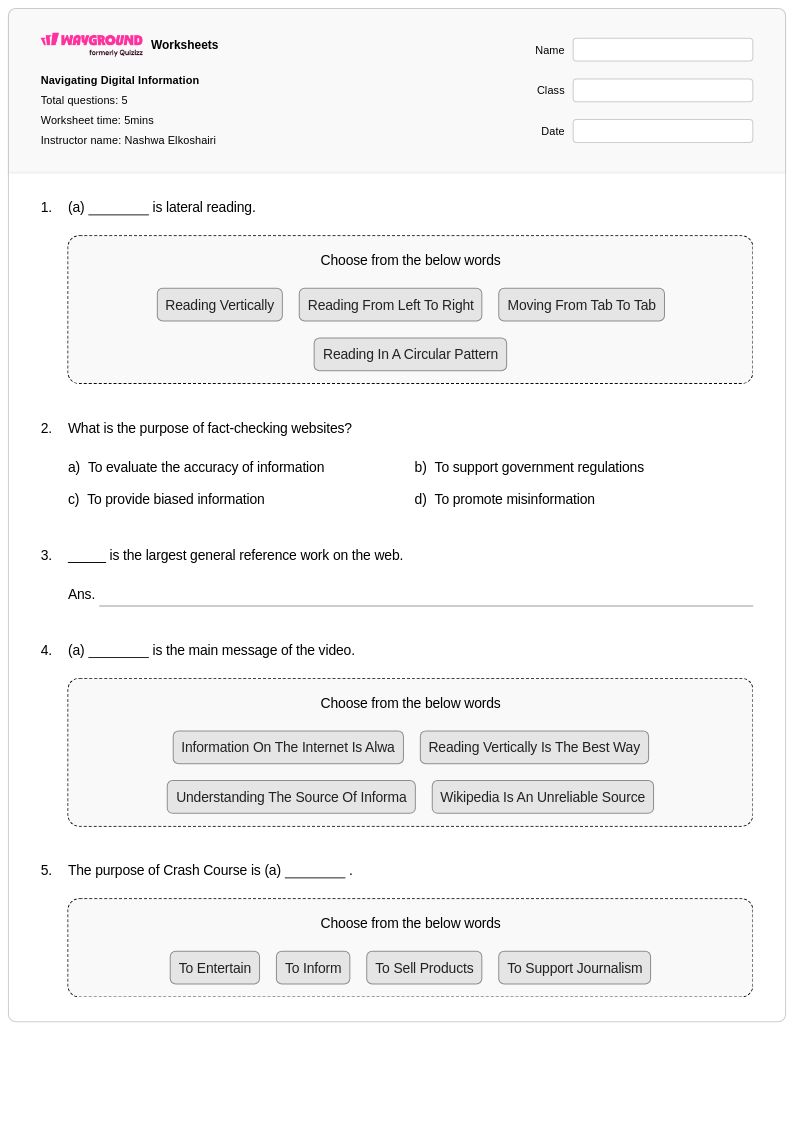
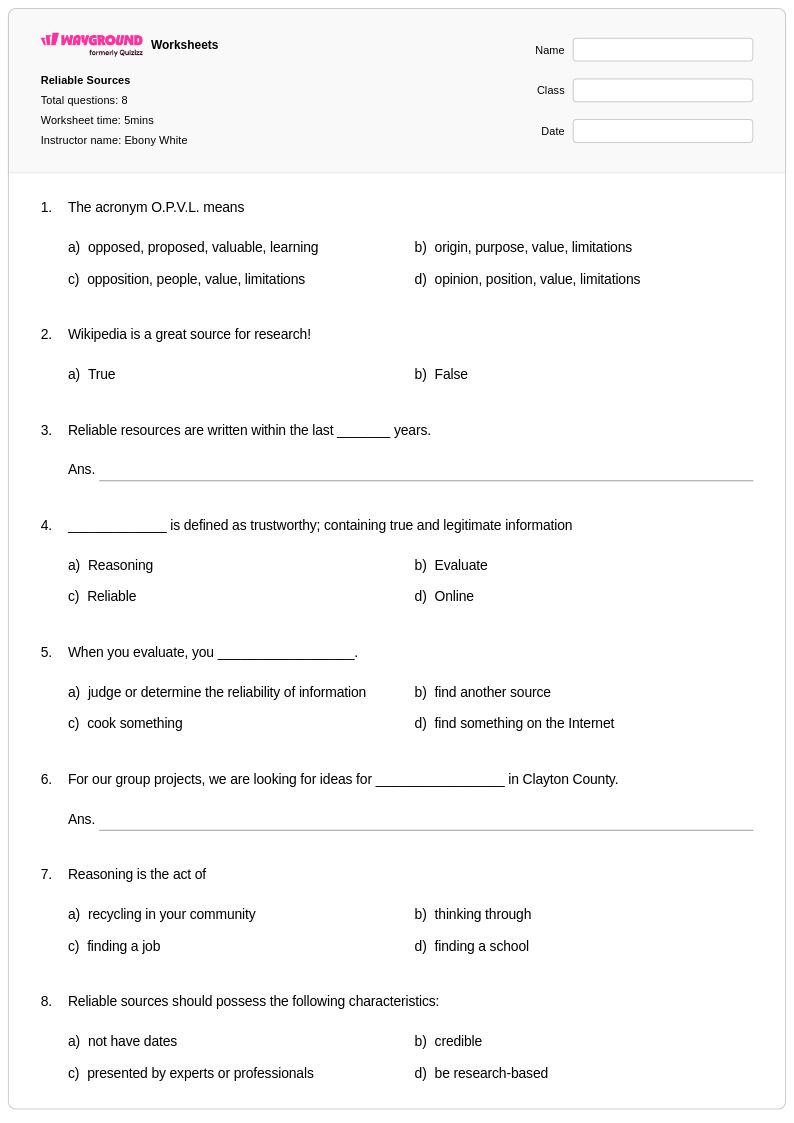
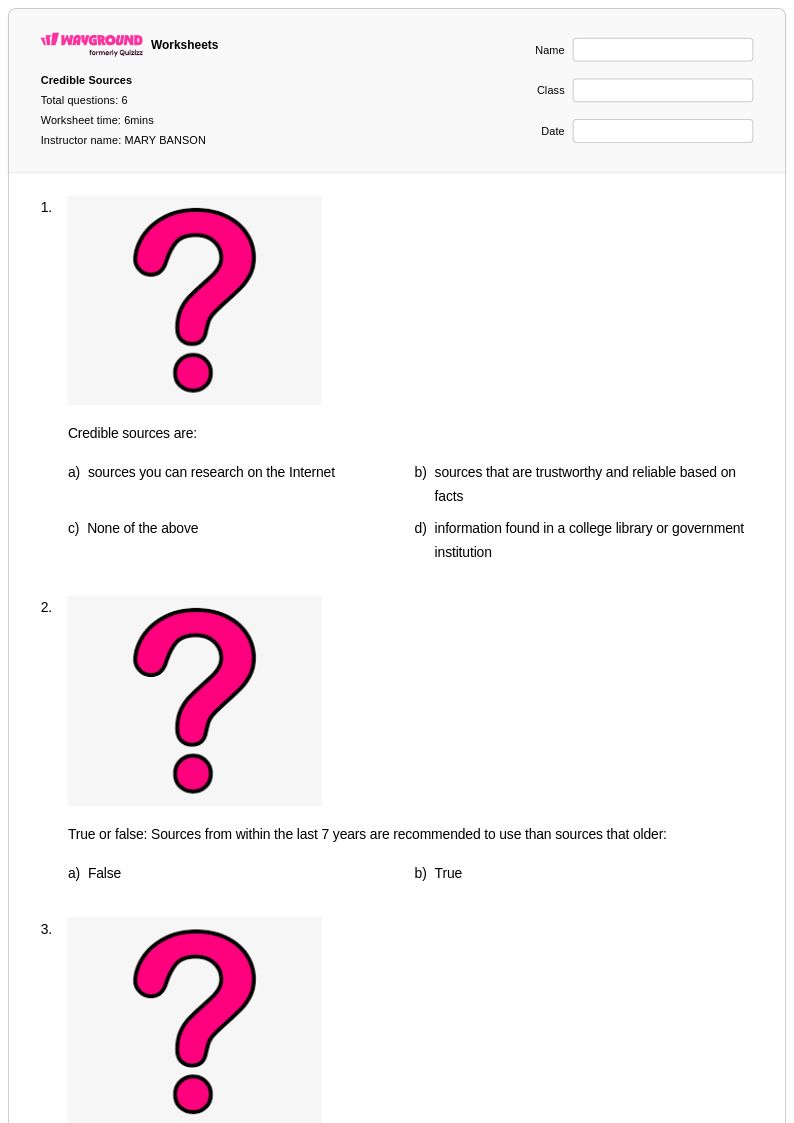
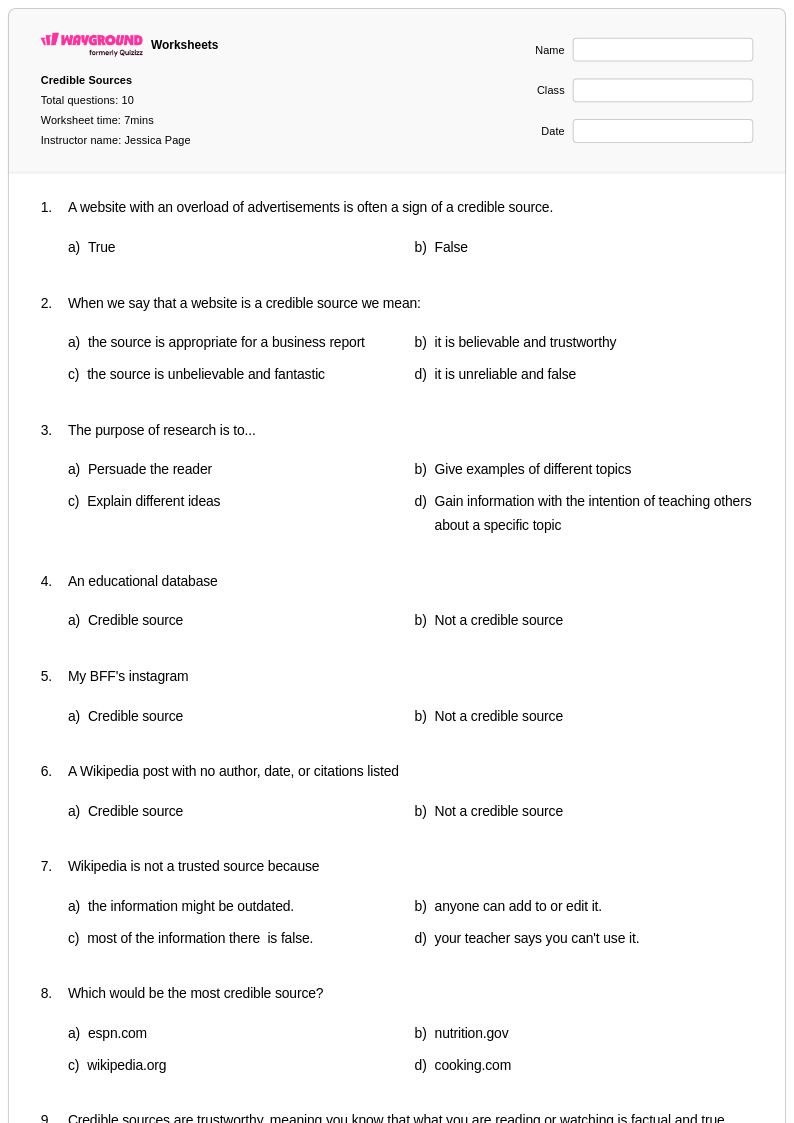
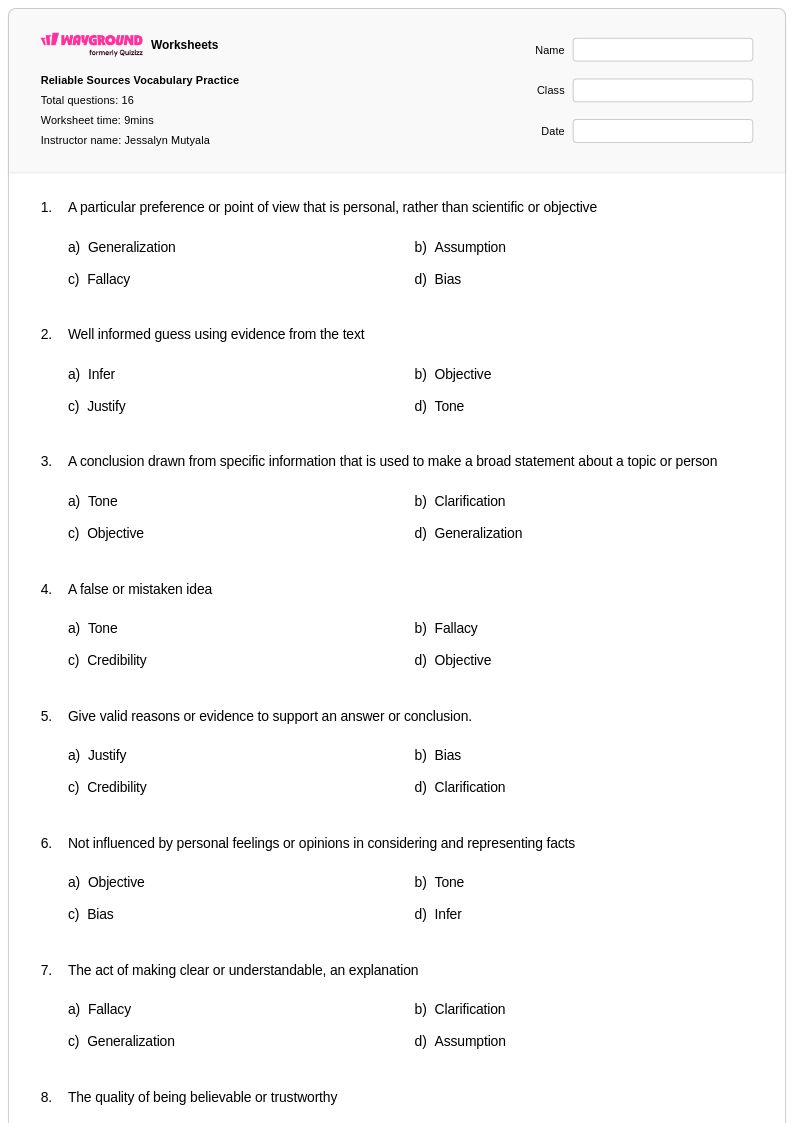
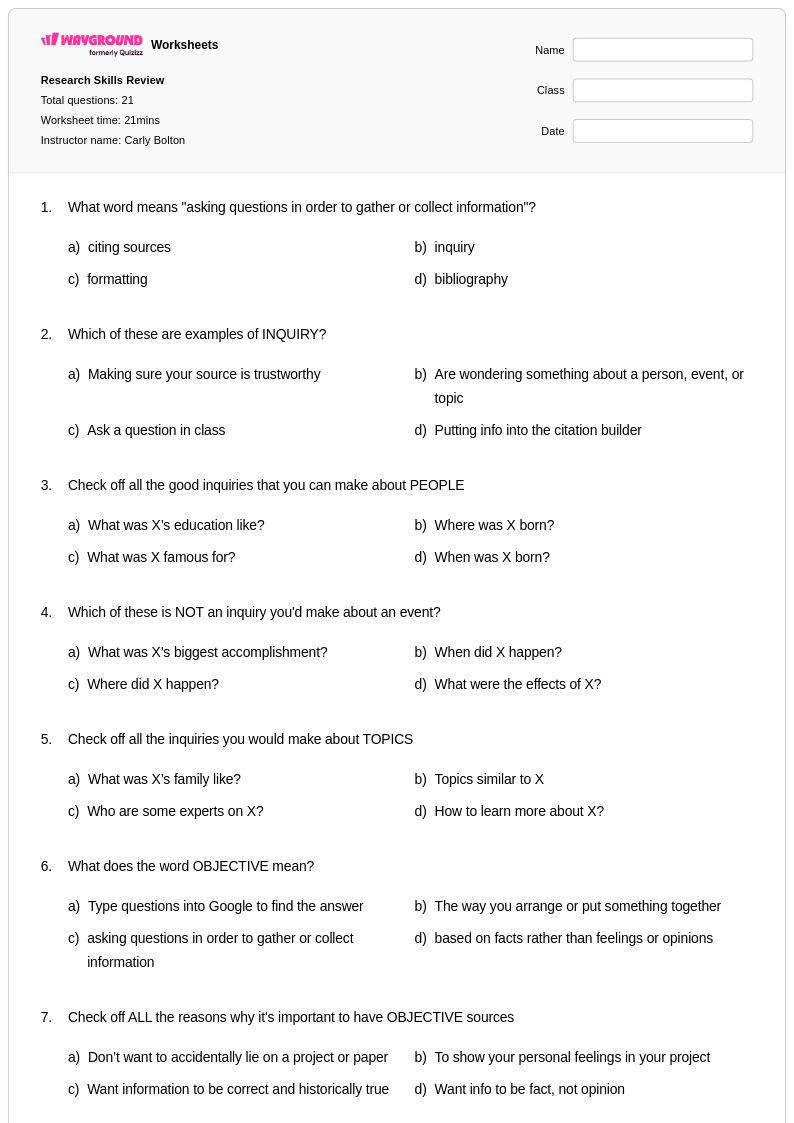
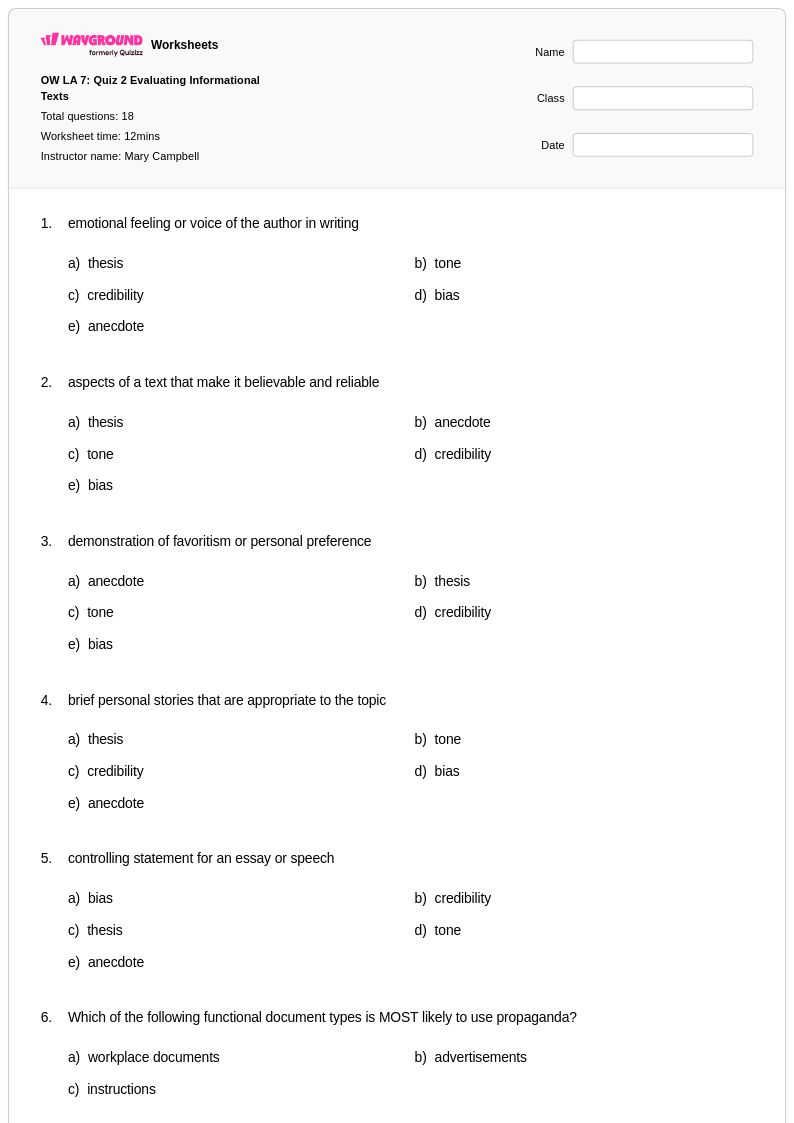
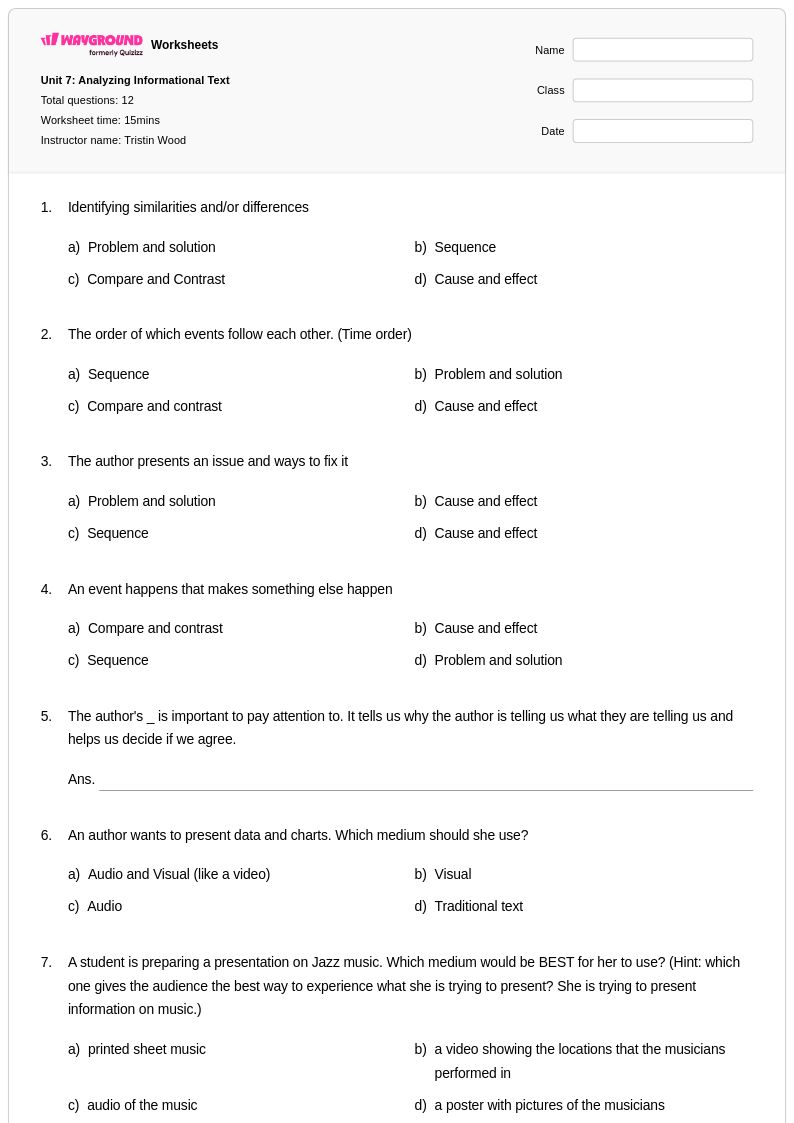
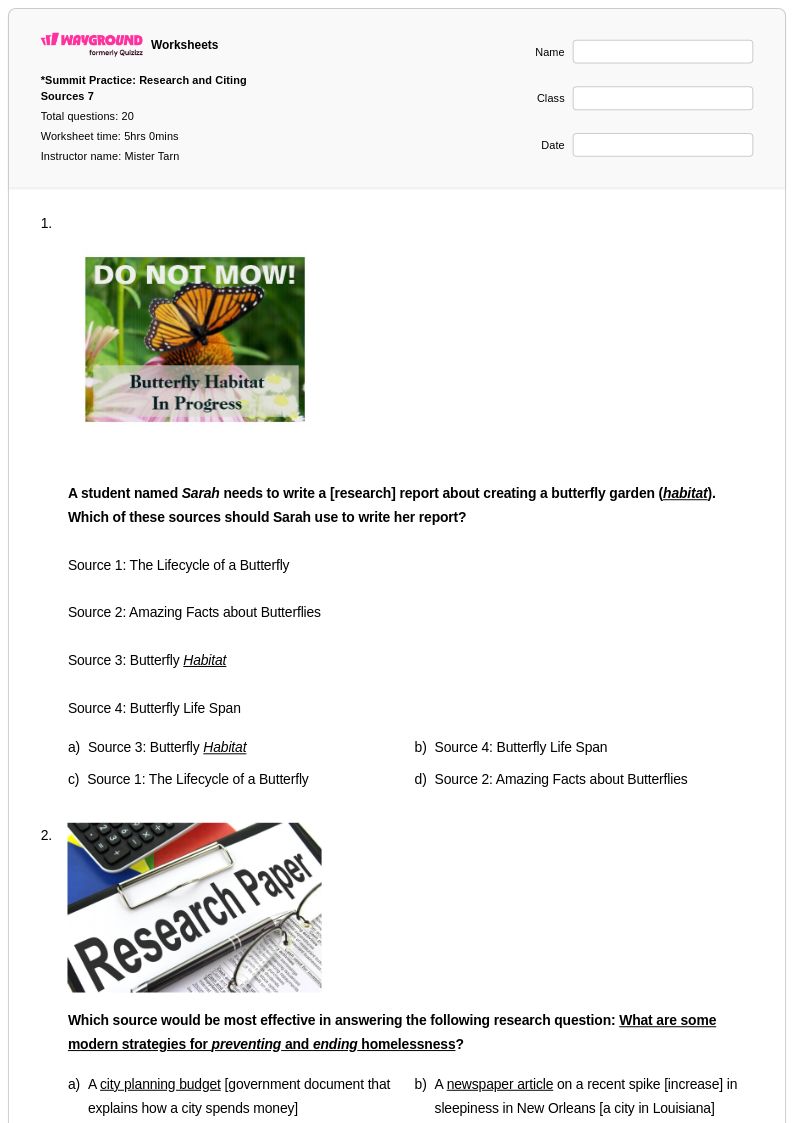
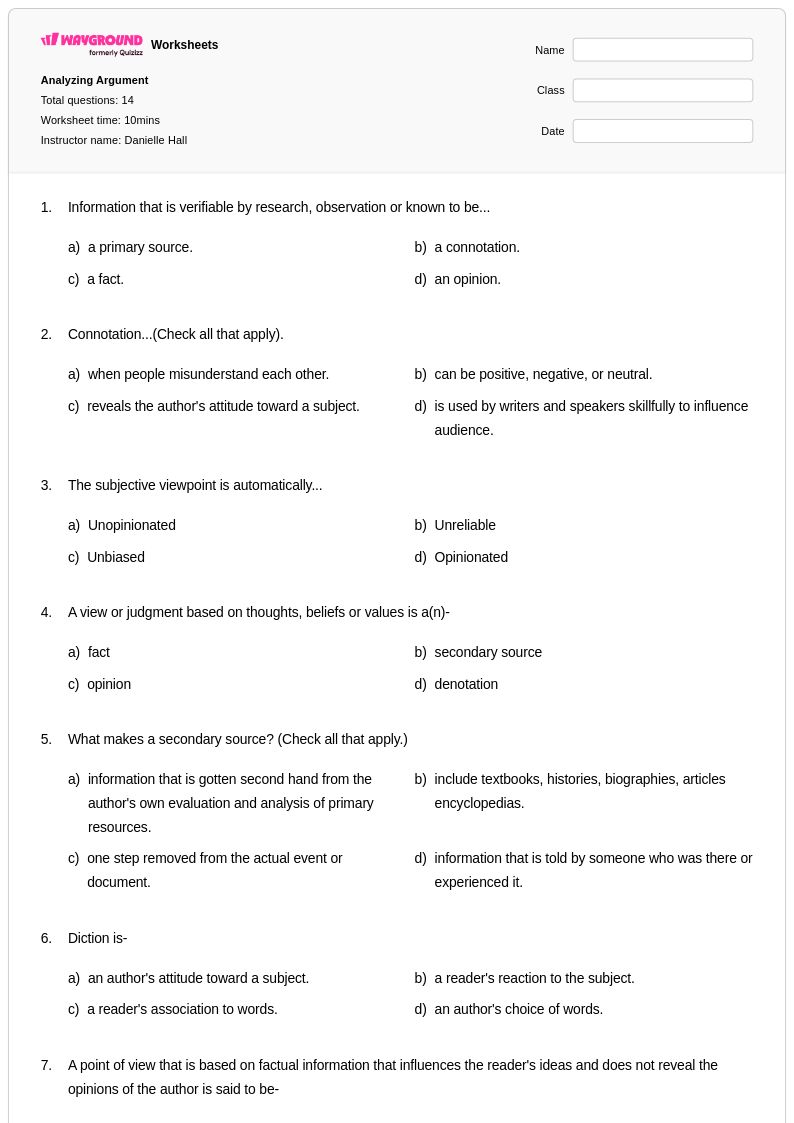
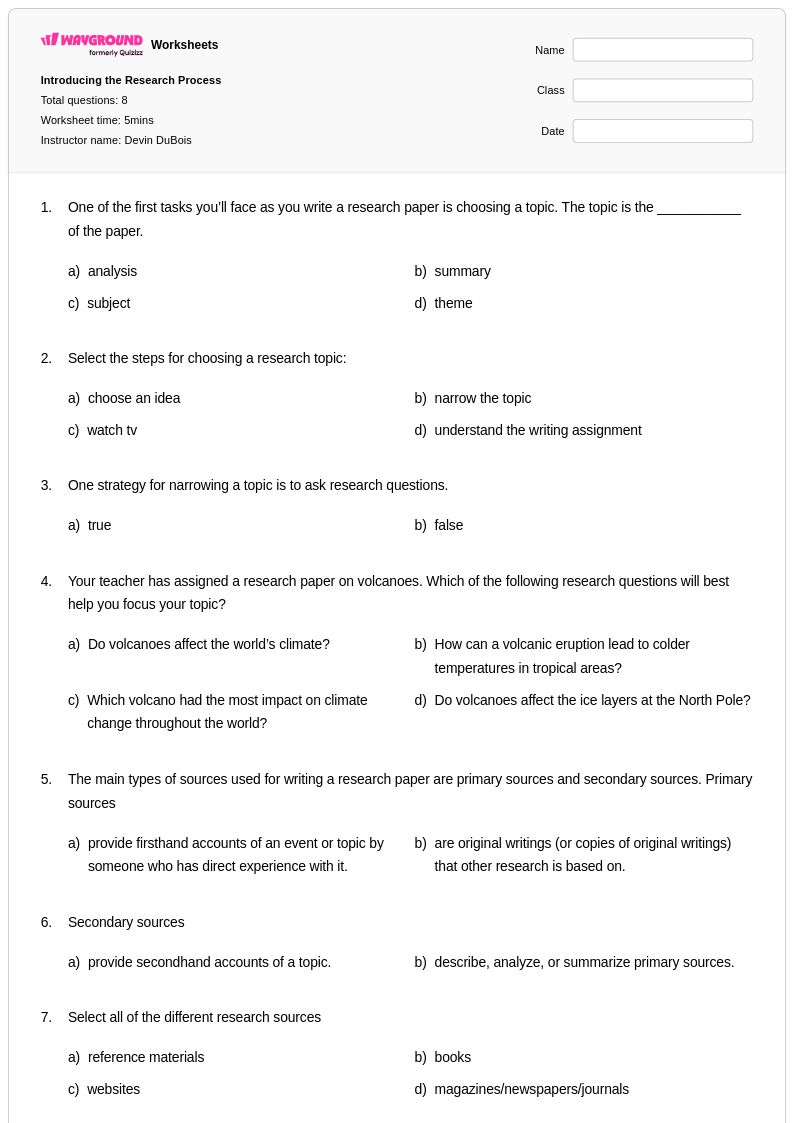
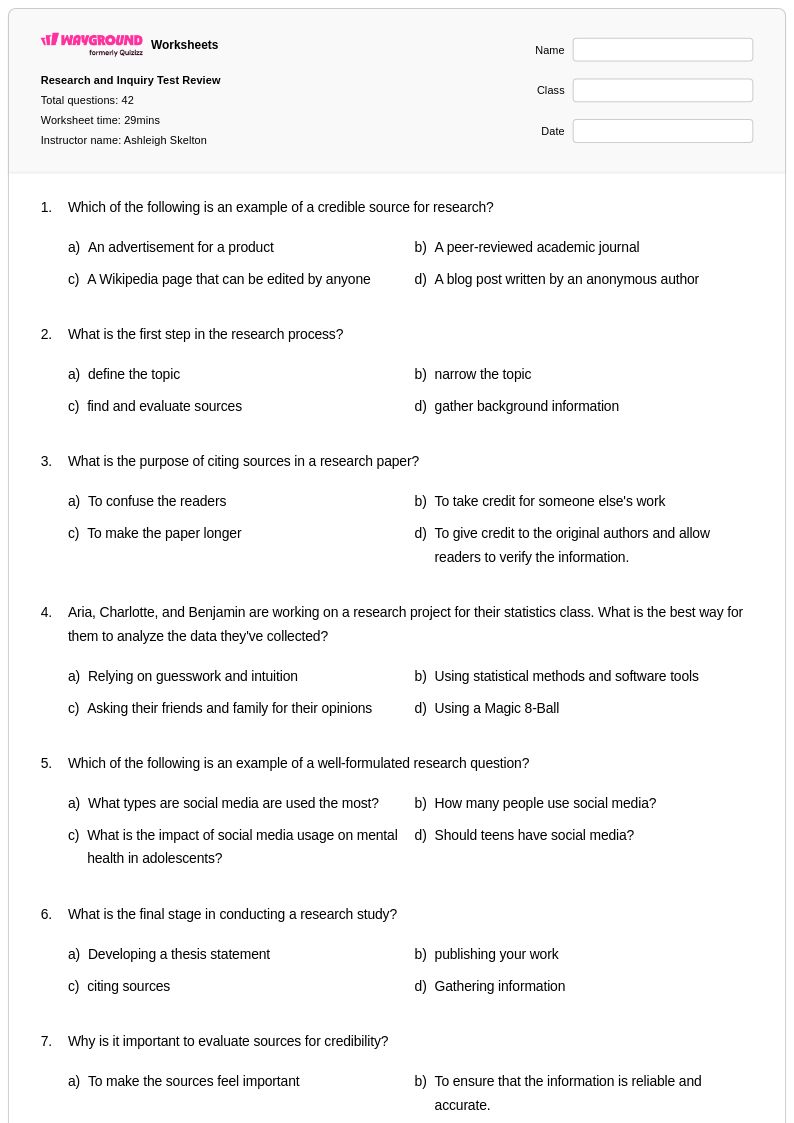
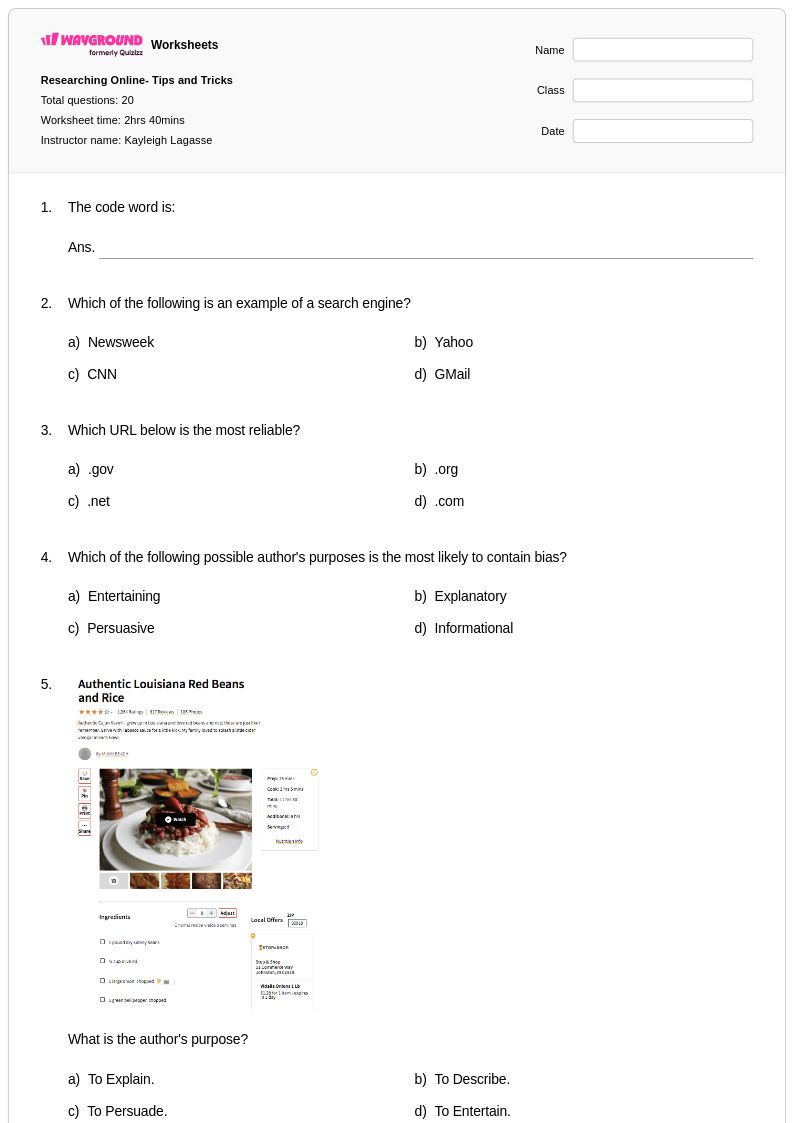
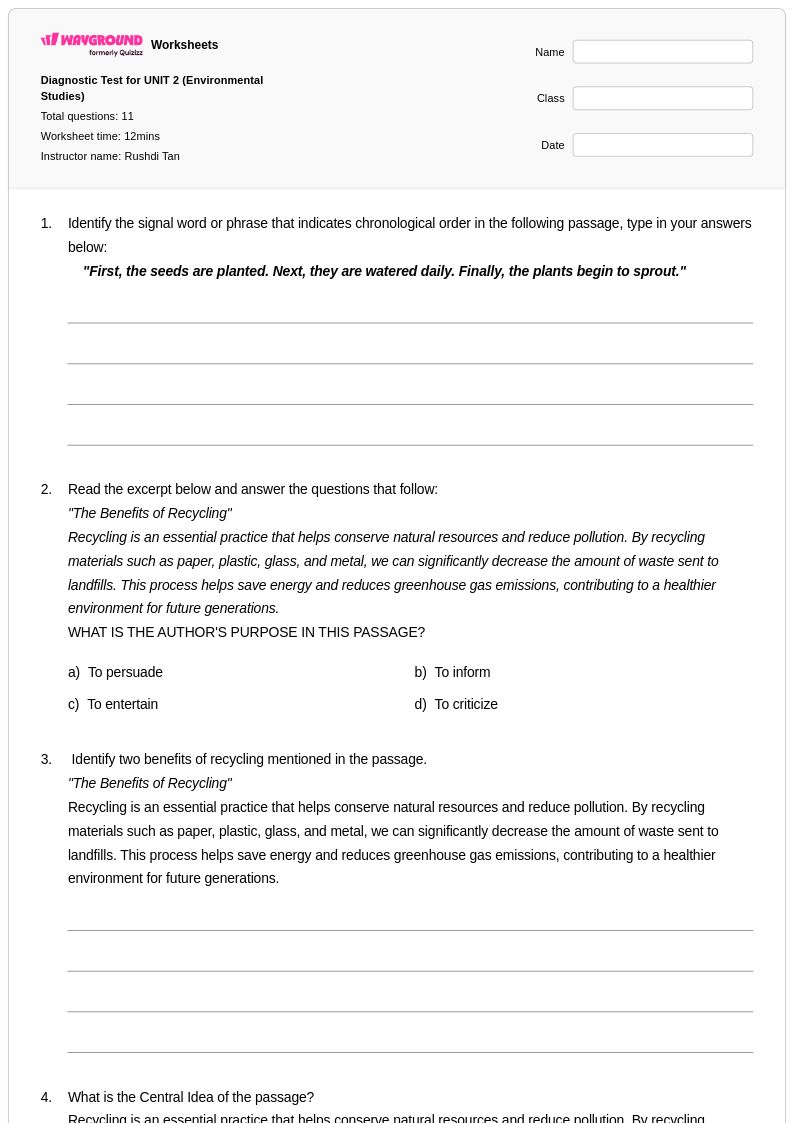
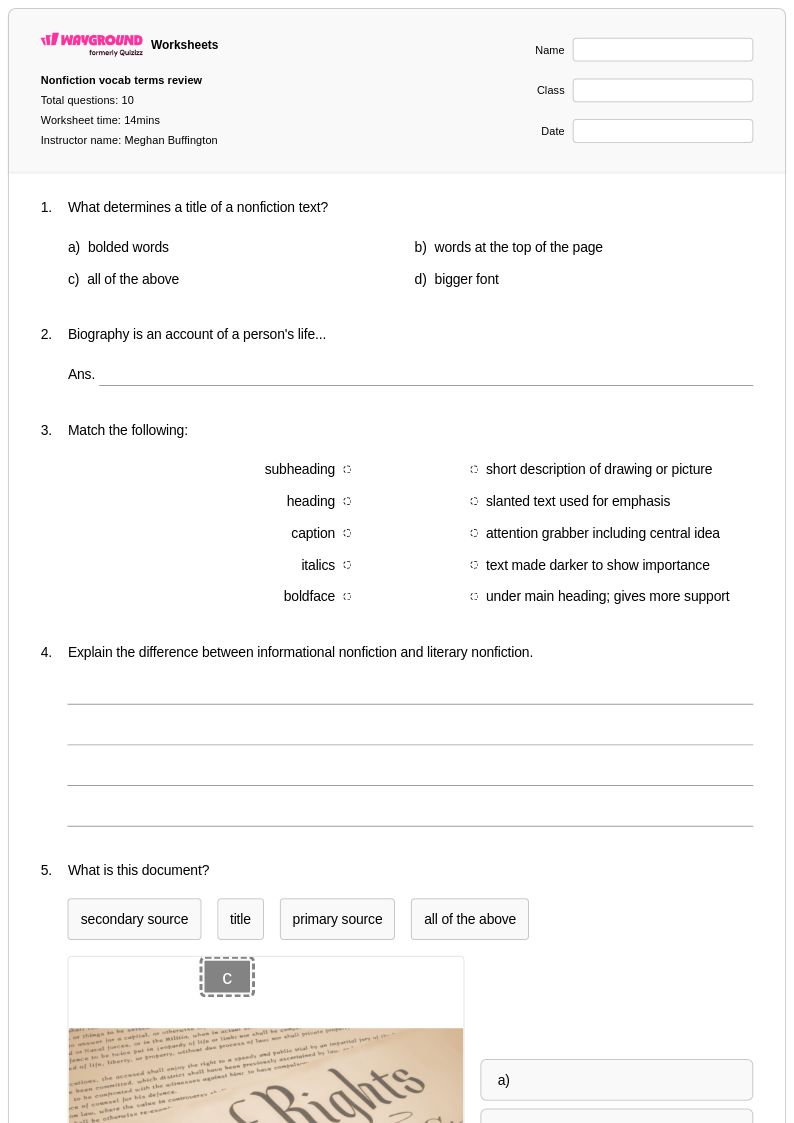
Evaluating sources represents a critical literacy skill for Class 7 students as they navigate an increasingly complex information landscape and develop sophisticated research capabilities. Wayground's comprehensive collection of evaluating sources worksheets provides middle school educators with expertly designed materials that teach students how to assess credibility, identify bias, distinguish between primary and secondary sources, and verify information accuracy across various media formats. These practice problems challenge seventh graders to analyze website domains, examine author credentials, cross-reference facts, and recognize persuasive techniques that might compromise source reliability. Each printable worksheet includes detailed answer keys that help teachers guide students through the evaluation process, while free pdf resources ensure accessibility for diverse classroom needs and support independent learning opportunities.
Wayground's platform, formerly Quizizz, empowers teachers with millions of educator-created resources specifically focused on source evaluation skills, featuring robust search and filtering capabilities that align with state literacy standards and research competency frameworks. The extensive worksheet collection supports differentiated instruction through customizable difficulty levels, allowing teachers to address varying student abilities while maintaining rigorous academic expectations for critical thinking development. These versatile materials are available in both printable and digital pdf formats, enabling seamless integration into traditional classroom instruction, remote learning environments, and hybrid educational models. Teachers leverage these comprehensive resources for targeted skill practice, remediation sessions for struggling learners, and enrichment activities for advanced students, while the platform's organizational tools streamline lesson planning and progress monitoring throughout the research strategy curriculum.
FAQs
How do I teach students to evaluate sources in the classroom?
Start by introducing a consistent evaluation framework such as SIFT (Stop, Investigate the source, Find better coverage, Trace claims) or the CRAAP test, which covers Currency, Relevance, Authority, Accuracy, and Purpose. Apply this framework across varied source types — websites, academic articles, news outlets, and social media — so students can see how the same criteria function differently depending on the medium. Modeling the evaluation process with a think-aloud using a real source before students work independently helps anchor the abstract criteria to concrete judgment calls.
What exercises help students practice evaluating sources?
Side-by-side source comparison activities are particularly effective — students analyze two sources covering the same topic and use an evaluation checklist to identify differences in author expertise, publication date, evidence quality, and potential bias. Scenario-based worksheets that ask students to select the best source for a specific research task also build practical judgment. Guided exercises that walk through each evaluation criterion step by step are especially useful for building consistency before students evaluate sources independently.
What common mistakes do students make when evaluating sources?
The most frequent error is conflating professional-looking design with credibility — students often assume a polished website is trustworthy without checking author credentials or publication context. Students also tend to overlook publication date, accepting outdated information as current, and struggle to identify bias when a source aligns with their existing beliefs. Another common misconception is treating all peer-reviewed sources as equally authoritative without considering whether the specific study's methodology or sample size is appropriate for the claim being made.
How do I help struggling students understand bias in sources?
Begin with explicit instruction on the difference between factual reporting and opinion, using clearly contrasting examples before asking students to identify bias independently. Worksheets that present the same event covered by sources with opposing perspectives help students see how word choice, framing, and selective detail signal a point of view. Breaking bias identification into smaller steps — first identifying the author's purpose, then examining loaded language, then checking what information is omitted — reduces cognitive load for students who find the concept abstract.
How do I use Wayground's evaluating sources worksheets in my classroom?
Wayground's evaluating sources worksheets are available as printable PDFs for traditional classroom use and in digital formats for technology-integrated learning environments, making them flexible for both in-person and remote instruction. Teachers can also host worksheets as a quiz directly on Wayground, enabling real-time student response tracking. Each worksheet includes a complete answer key, which supports independent practice, small group work, and formative assessment without additional teacher preparation.
How can I differentiate evaluating sources instruction for students at different skill levels?
For foundational learners, start with structured worksheets that provide the evaluation criteria as a checklist and limit the source types to two — such as a reliable website versus a personal blog. More advanced students benefit from open-ended analysis tasks that require them to locate and justify their own source selections for a research scenario. On Wayground, teachers can apply accommodations such as Read Aloud for students who need audio support or reduced answer choices to lower cognitive load for students who need additional scaffolding during digital practice.