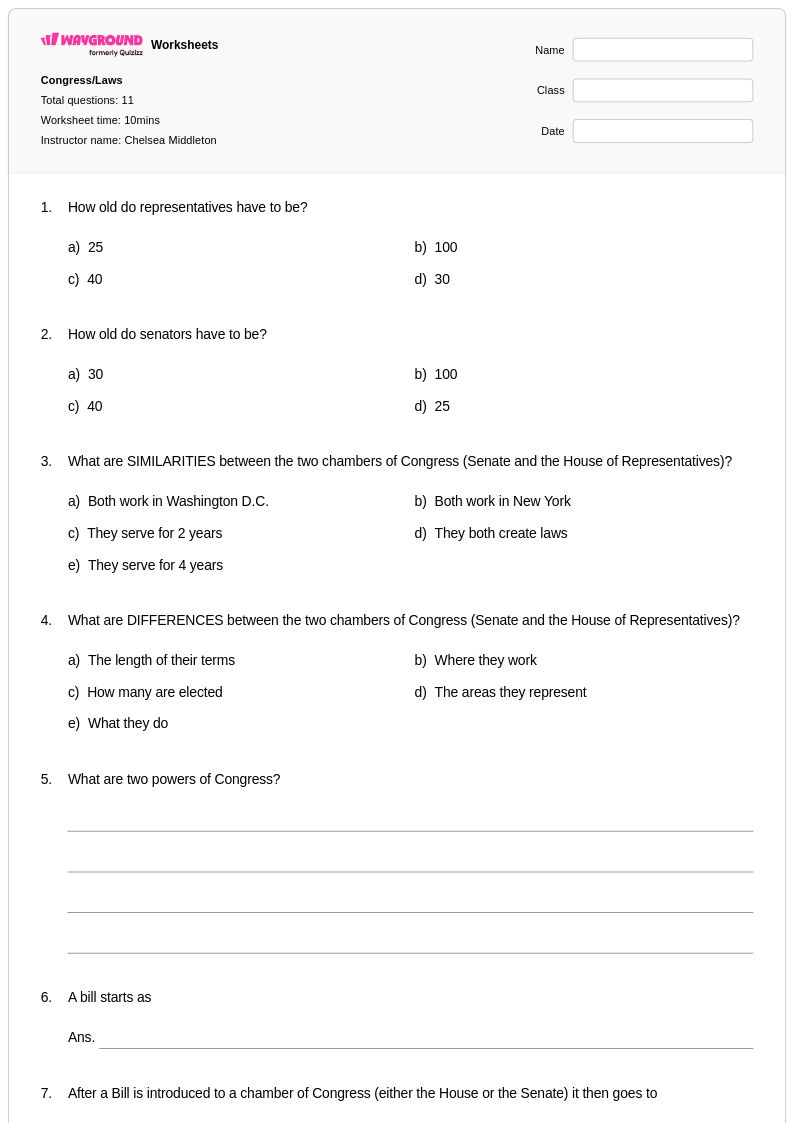
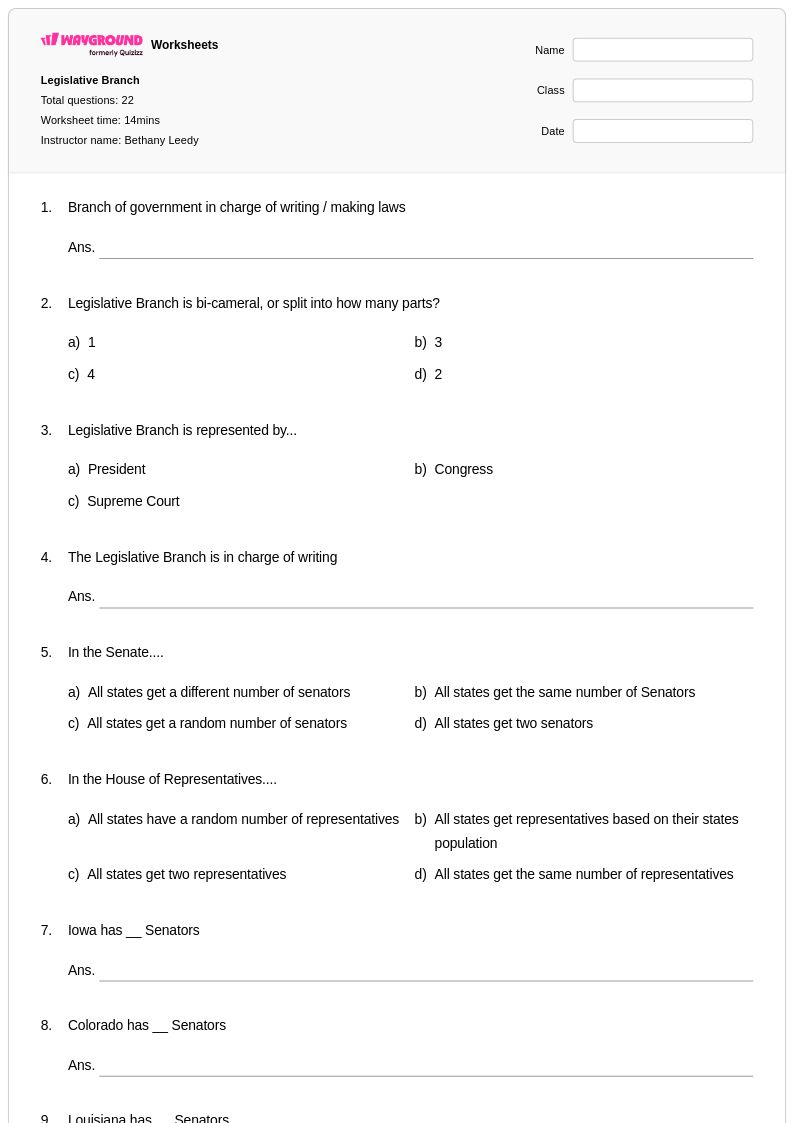
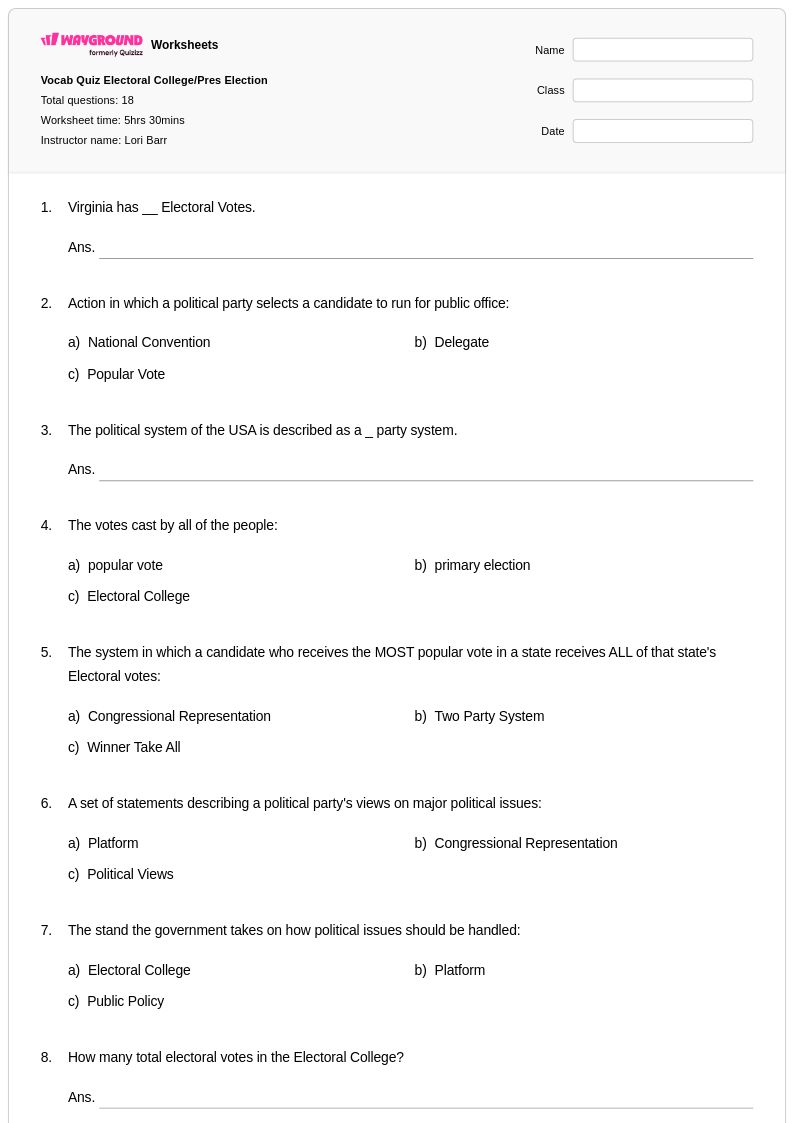
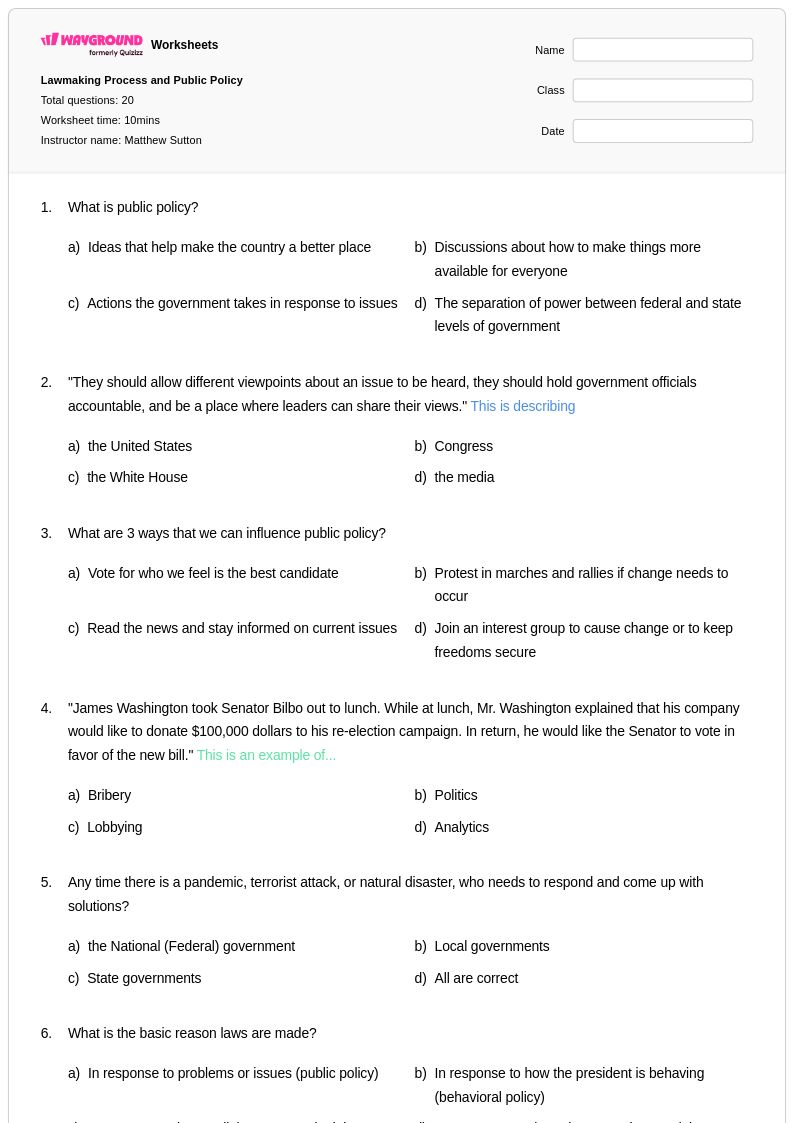
Free Printable Eviction Process Worksheets for Class 8
Explore Wayground's free Class 8 eviction process worksheets and printables that help students understand tenant rights, legal procedures, and housing law through engaging practice problems with comprehensive answer keys.
Explore printable Eviction Process worksheets for Class 8
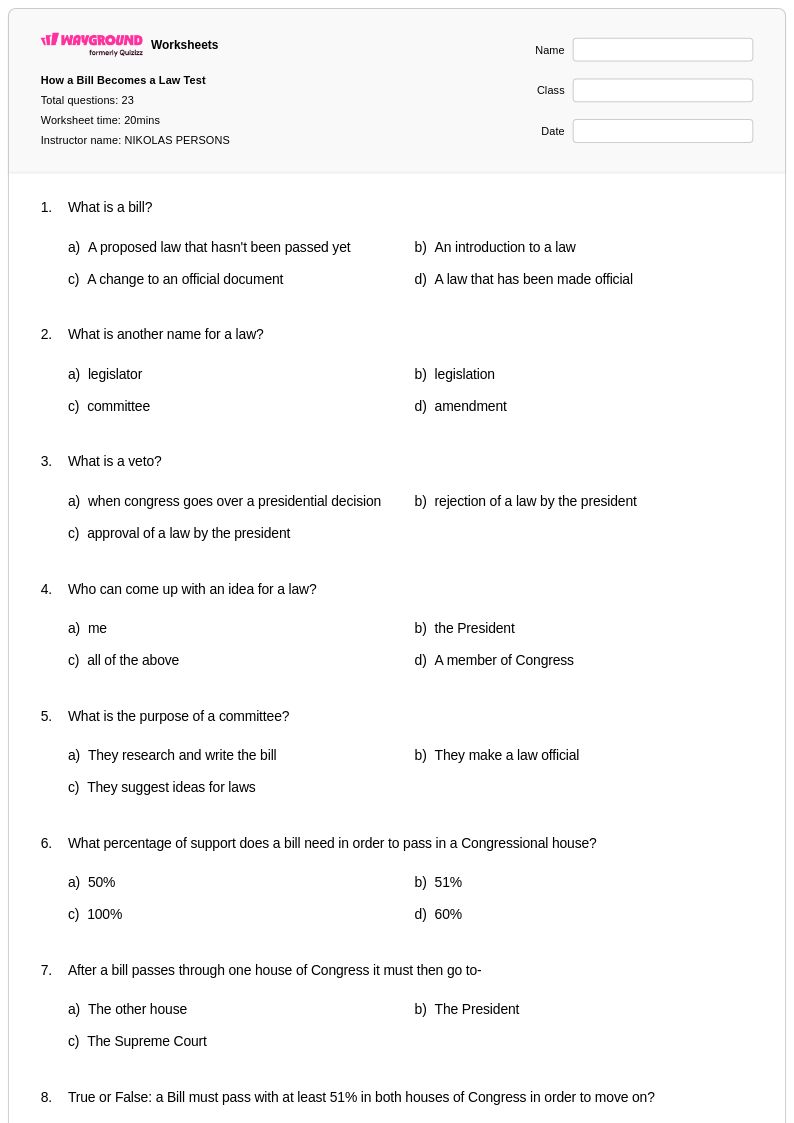
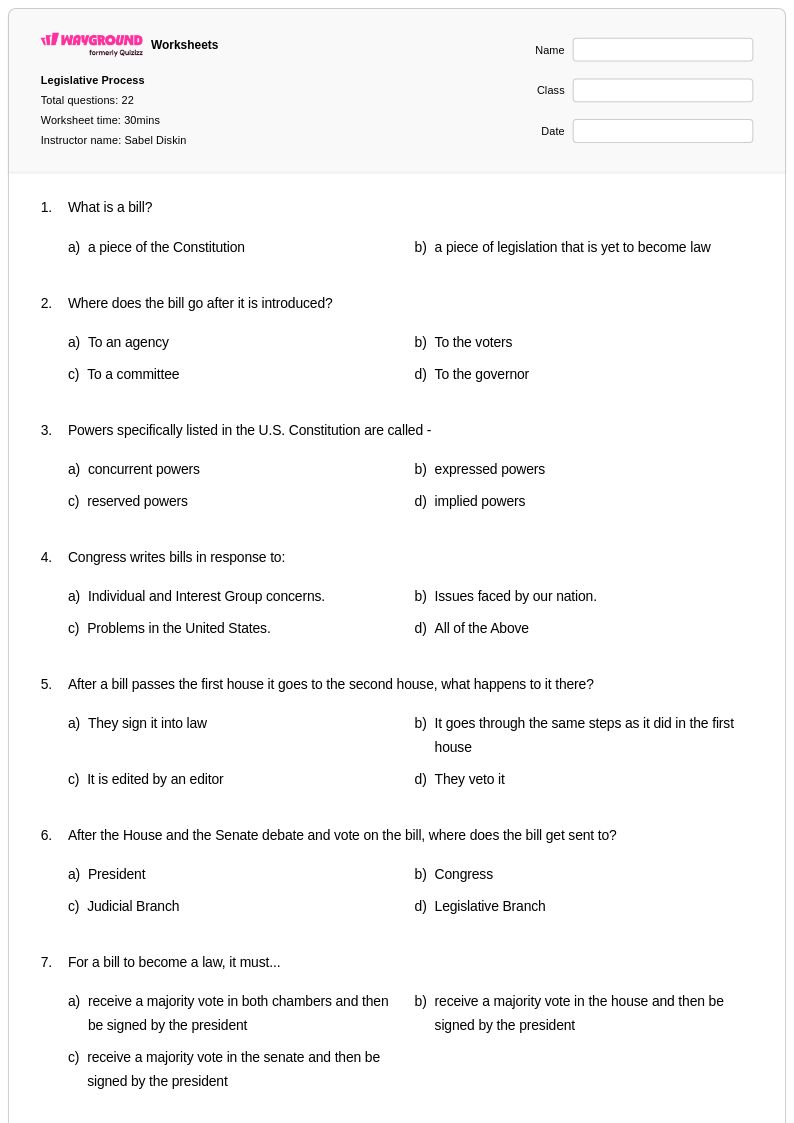
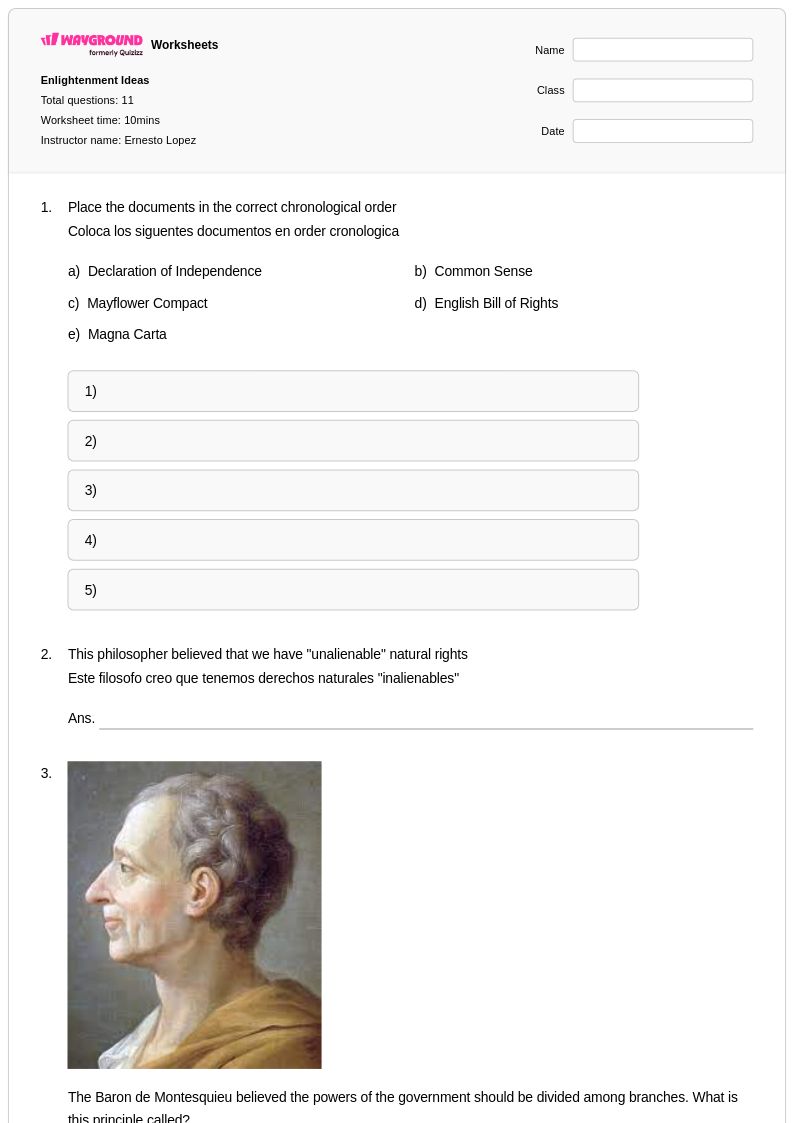
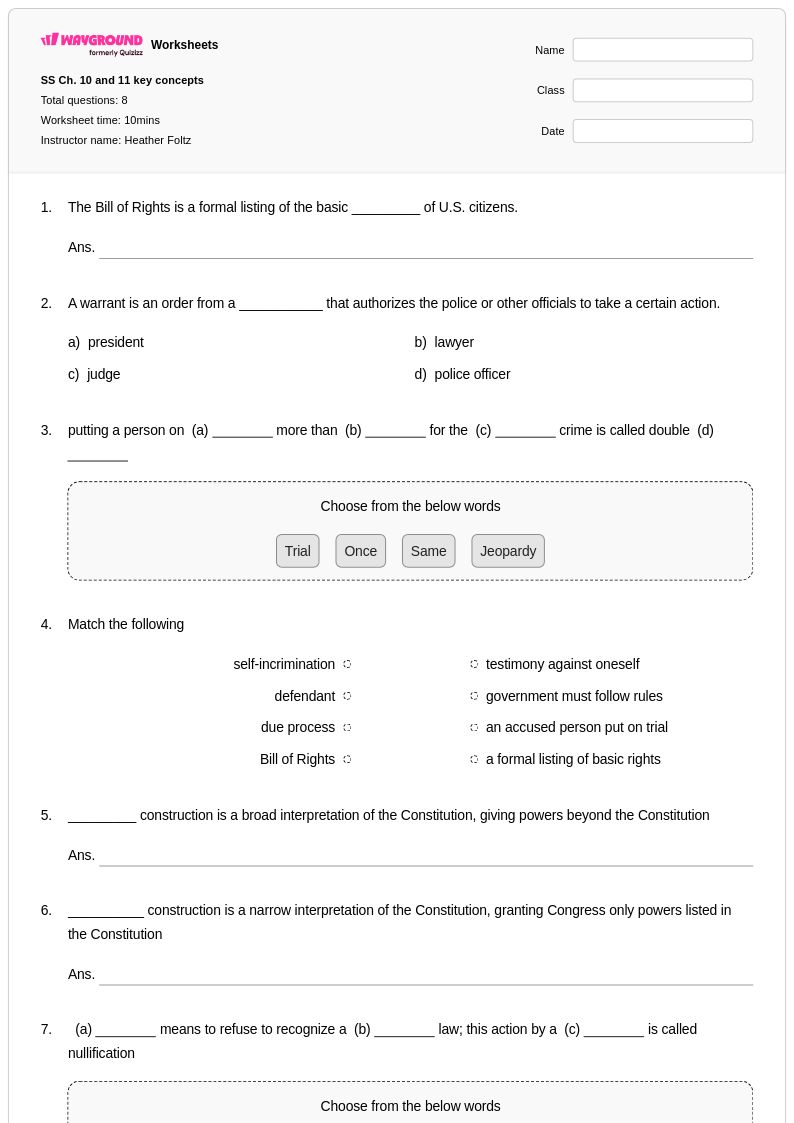
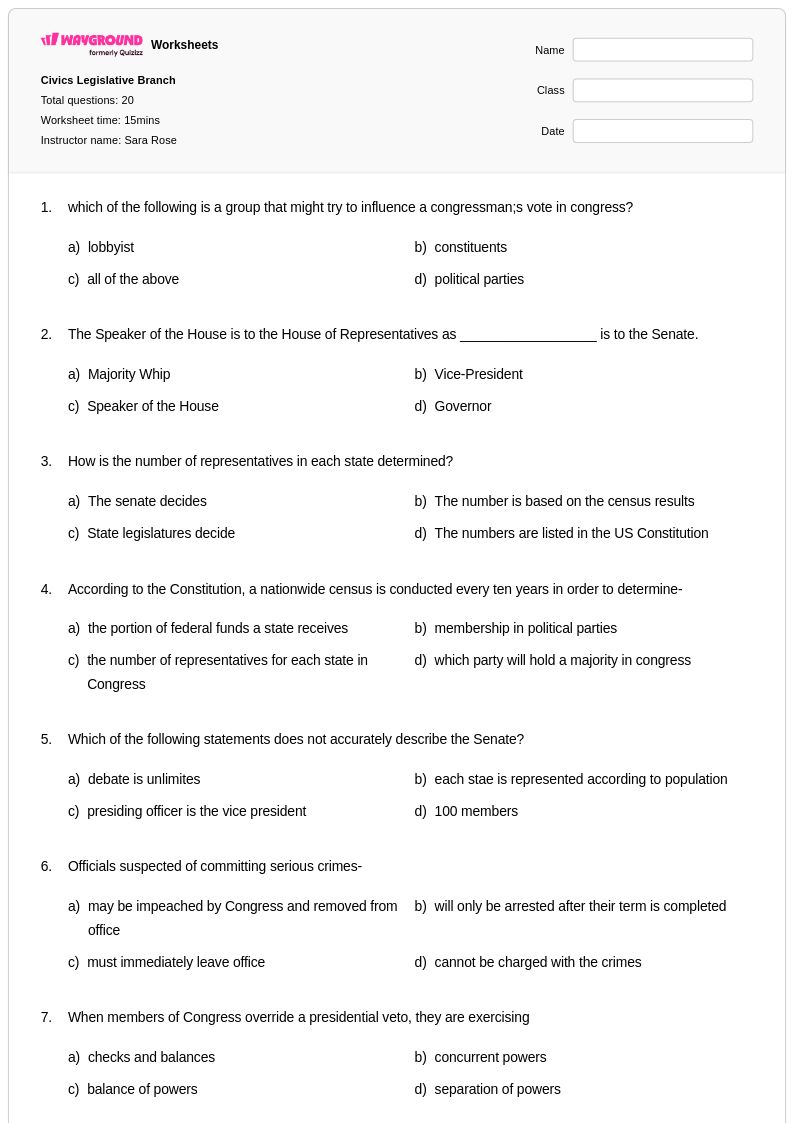
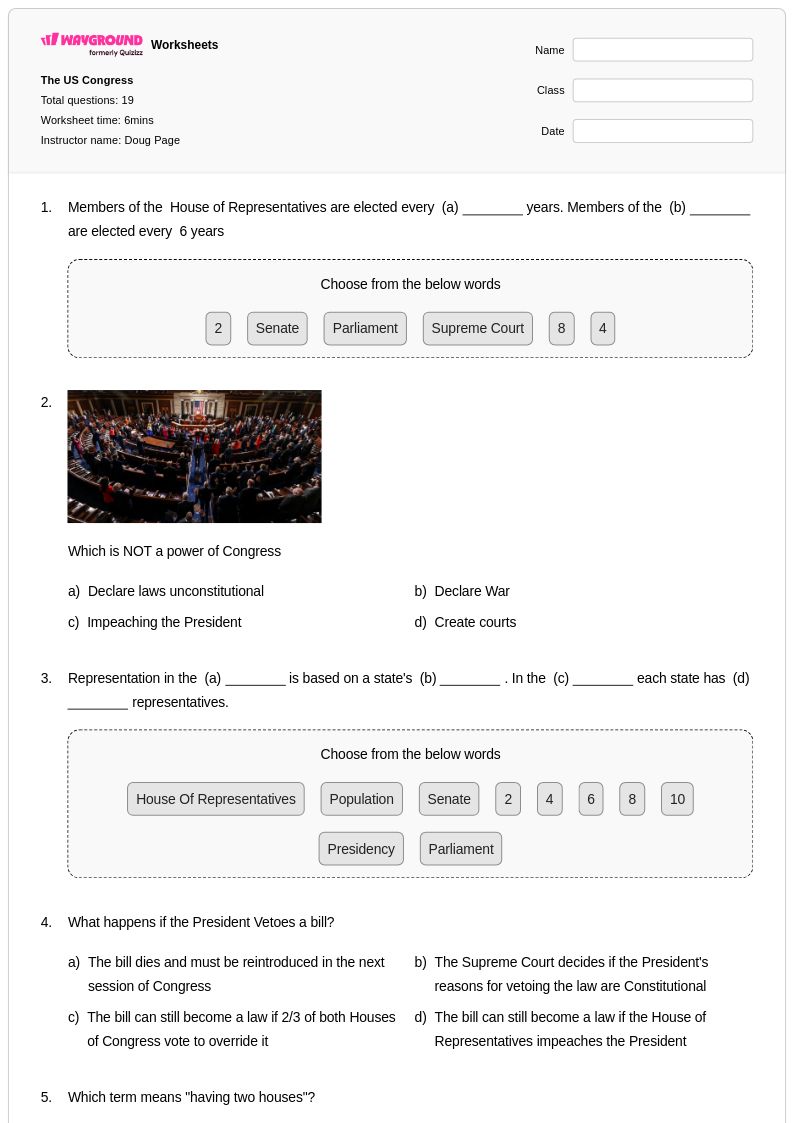
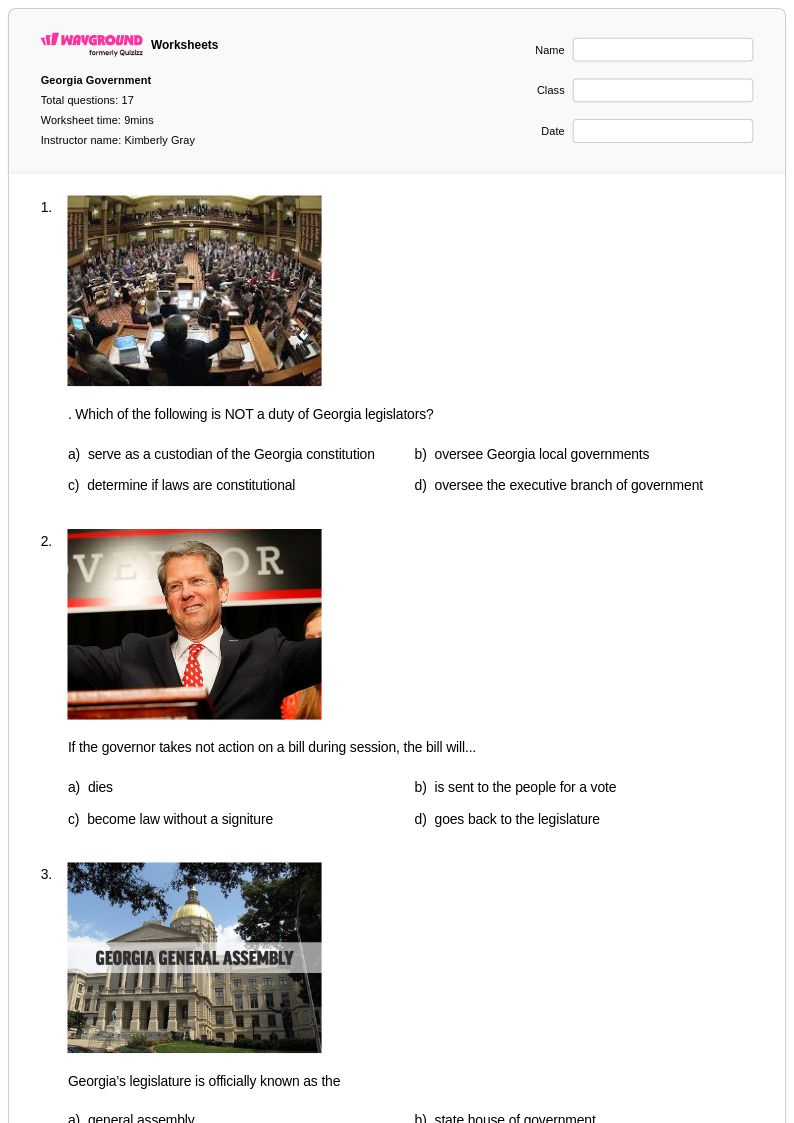
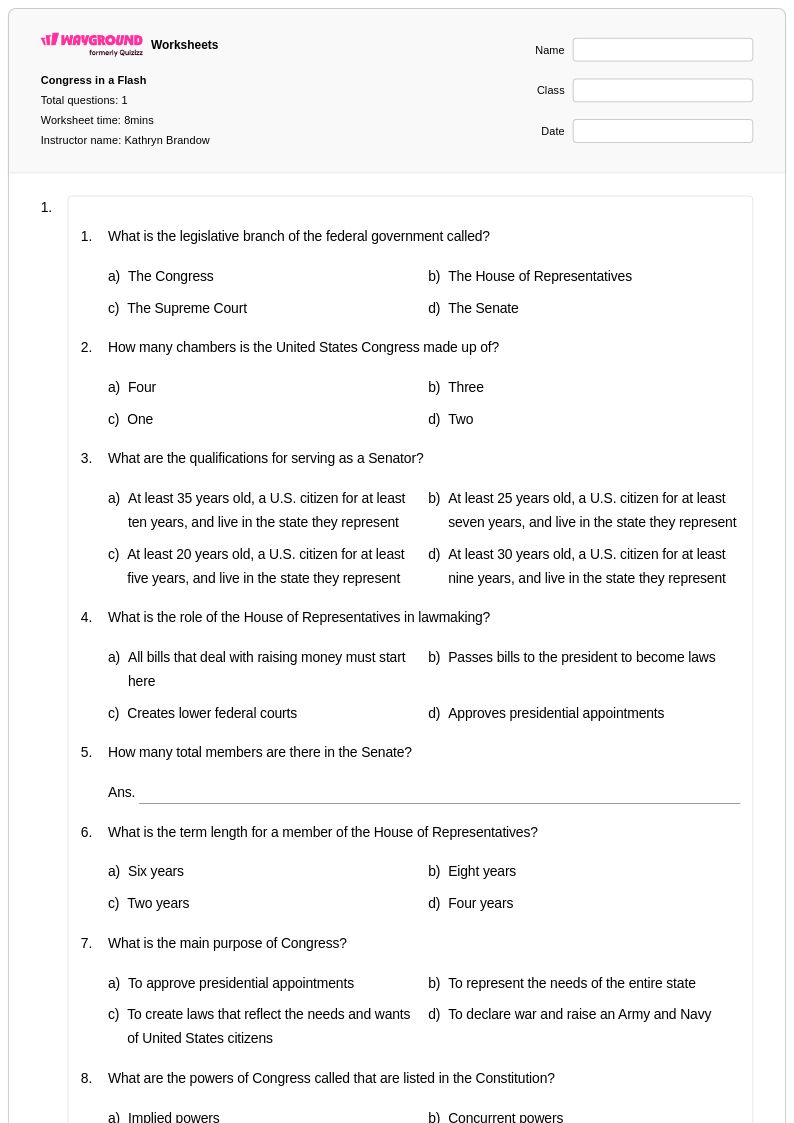
Class 8 eviction process worksheets available through Wayground (formerly Quizizz) provide students with essential knowledge about tenant rights, landlord obligations, and the legal procedures governing housing disputes. These comprehensive educational resources strengthen critical civic literacy skills by teaching students how eviction notices work, the timeline requirements for legal proceedings, tenant protections under federal and state laws, and the role of housing courts in resolving disputes. The practice problems within these worksheets guide students through real-world scenarios involving lease violations, non-payment situations, and wrongful eviction cases, while accompanying answer keys enable independent learning and self-assessment. These free printables serve as valuable tools for developing students' understanding of property rights, due process protections, and the intersection of civil law with everyday housing situations that affect millions of American families.
Wayground's extensive collection of teacher-created eviction process worksheets draws from millions of educational resources specifically designed to support Class 8 social studies instruction in civics and government. The platform's robust search and filtering capabilities allow educators to quickly locate materials aligned with state civics standards and differentiate instruction based on individual student needs and reading levels. Teachers can customize these worksheets to emphasize local housing laws, incorporate current events about housing policy, or adapt content for remediation and enrichment activities. Available in both printable pdf formats and interactive digital versions, these resources facilitate flexible lesson planning whether for in-person instruction, remote learning, or hybrid classroom environments, ensuring students develop a solid foundation in understanding their rights and responsibilities as future tenants and community members.
FAQs
How do I teach the eviction process to students in a civics or government class?
Teaching the eviction process works best when grounded in real legal sequences: notice requirements, unlawful detainer filings, hearings, and appeals. Start with a concrete case scenario so students can trace each procedural step before analyzing the underlying rights at stake. Connecting due process protections to both landlord and tenant interests helps students see eviction law as a balance of competing constitutional principles rather than a one-sided outcome.
What exercises help students practice understanding eviction procedures and tenant rights?
Case-based practice problems are the most effective format for this topic because they require students to apply procedural knowledge to realistic landlord-tenant disputes rather than just recall definitions. Exercises that ask students to identify whether proper notice was given, whether due process was followed, or whether an eviction can be legally challenged build the kind of analytical thinking civics standards require. Eviction process worksheets on Wayground include practice problems structured around these scenarios, with answer keys to support both independent review and classroom discussion.
What common mistakes do students make when learning about the eviction process?
The most frequent misconception is that a landlord can immediately remove a tenant after a missed payment or lease violation. Students often underestimate the procedural requirements, including mandatory notice periods and the tenant's right to a court hearing before any removal can occur. Another common error is conflating civil eviction proceedings with criminal law, which leads students to misread the role of the court and the protections available to tenants under civil procedure.
How do I explain due process rights in the context of eviction law?
Due process in eviction law means that a landlord must follow legally defined steps before a tenant can be removed, and the tenant must have a meaningful opportunity to contest the eviction in court. Students often find this abstract until it is mapped onto a specific sequence: written notice, a waiting period, filing with the court, a scheduled hearing, and a judge's ruling. Framing due process as a procedural checklist that protects both parties makes the constitutional principle concrete and testable.
How can I use eviction process worksheets to support students with different learning needs?
Eviction process worksheets on Wayground are available as printable PDFs for traditional classroom use and in digital formats for technology-integrated environments, including the option to host them as a quiz on Wayground. When running digital sessions, teachers can enable accommodations for individual students such as extended time, read aloud support for complex legal text, and reduced answer choices to lower cognitive load, while the rest of the class receives default settings without disruption. These settings are reusable across sessions, making differentiated instruction on dense legal content sustainable over time.
How does studying the eviction process help students understand the broader American legal system?
The eviction process is one of the most accessible entry points into civil law because it involves rights, procedures, courts, and appeals in a context students can relate to or will encounter as adults. Analyzing eviction cases teaches students how civil law balances property rights against housing security, how courts enforce contractual obligations, and how due process functions outside of criminal proceedings. These transferable concepts directly support broader civics learning goals around constitutional protections and the judicial system.