Free Printable Expected Value Worksheets for Class 11
Enhance Class 11 students' understanding of expected value through Wayground's comprehensive collection of free worksheets, featuring printable PDFs with practice problems and detailed answer keys to master this essential probability concept.
Explore printable Expected Value worksheets for Class 11
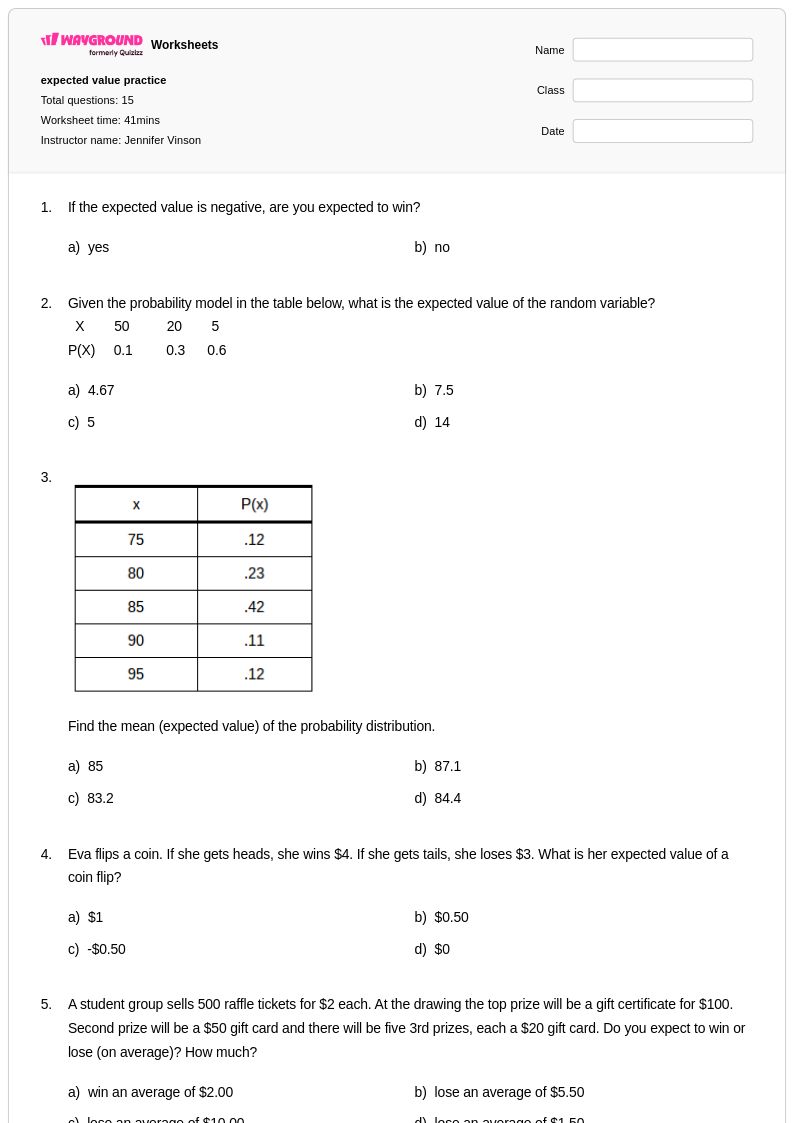
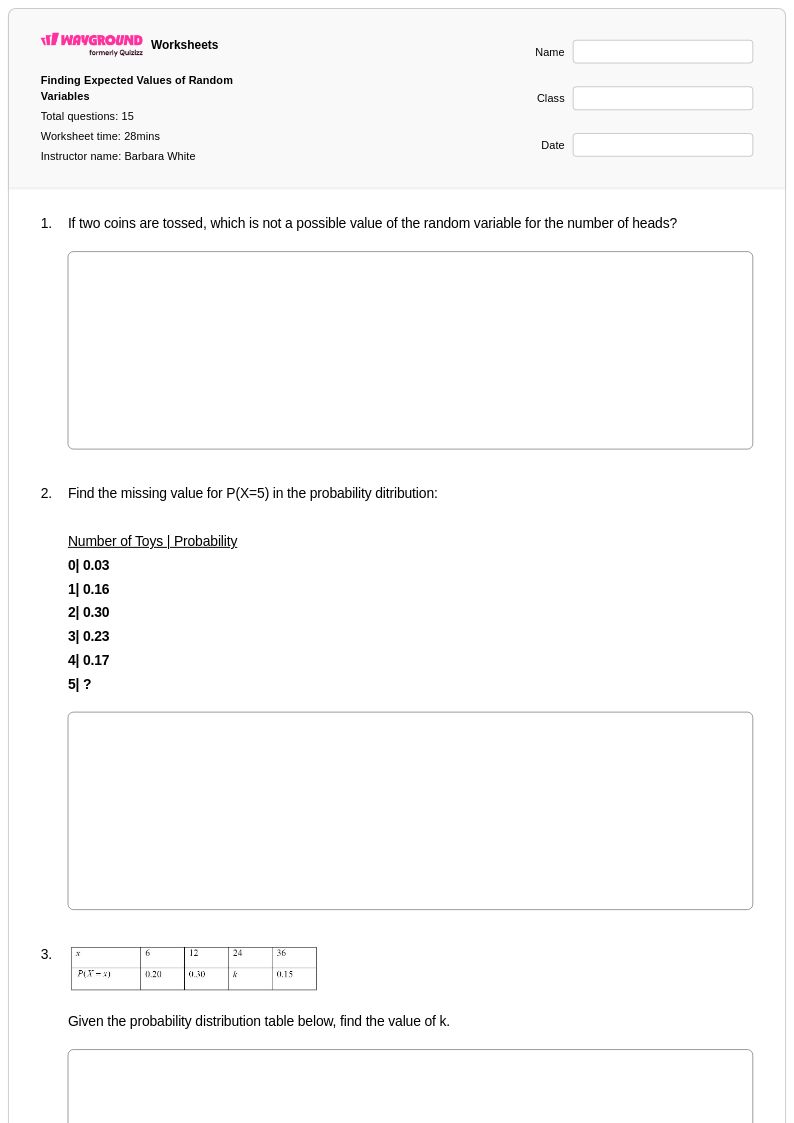
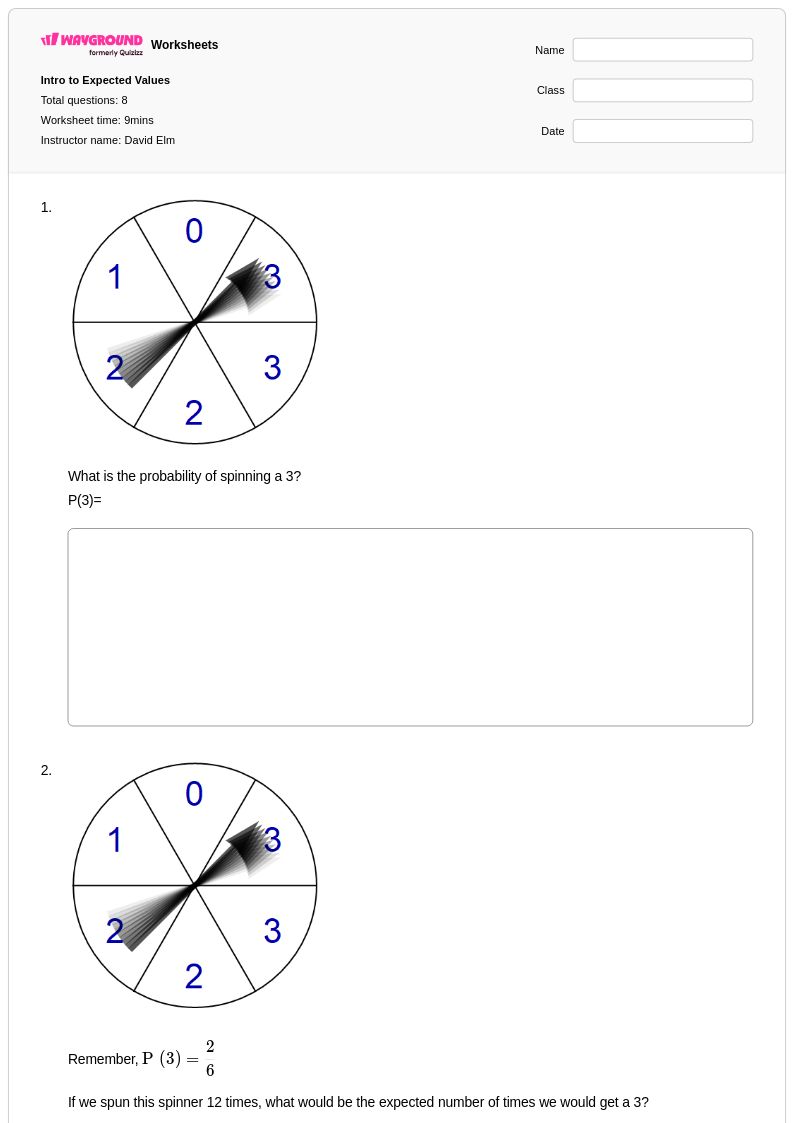
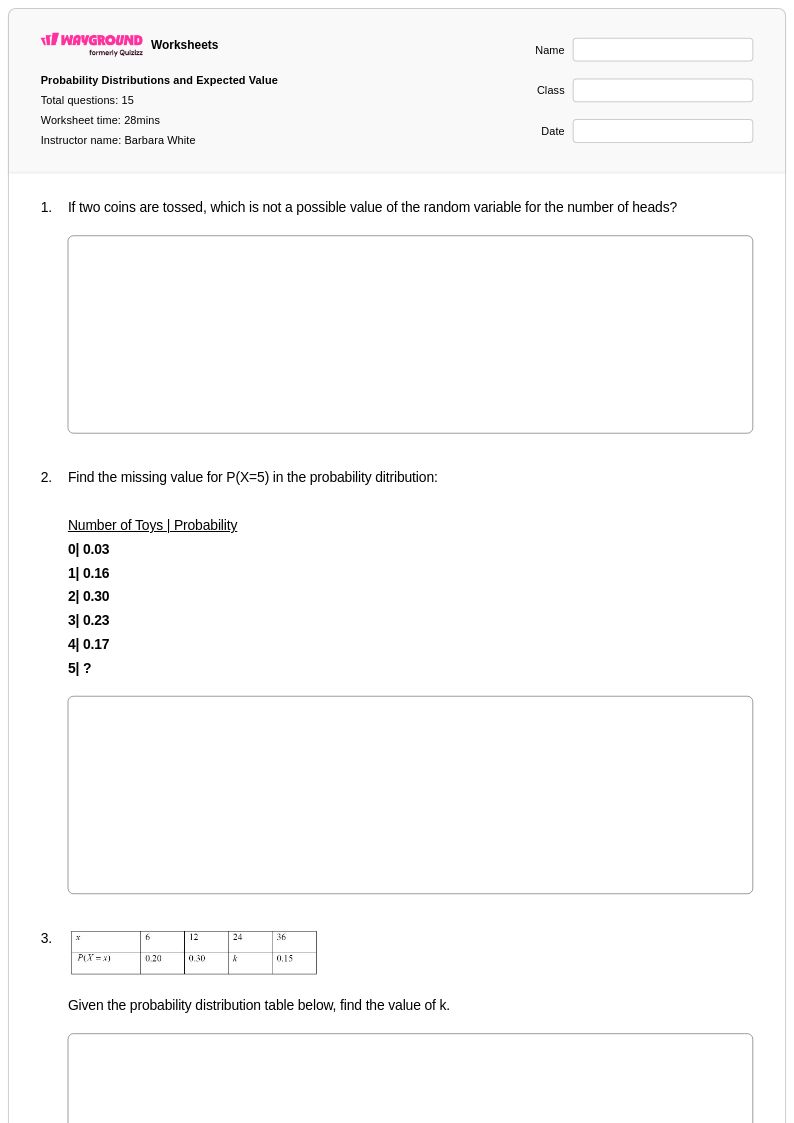
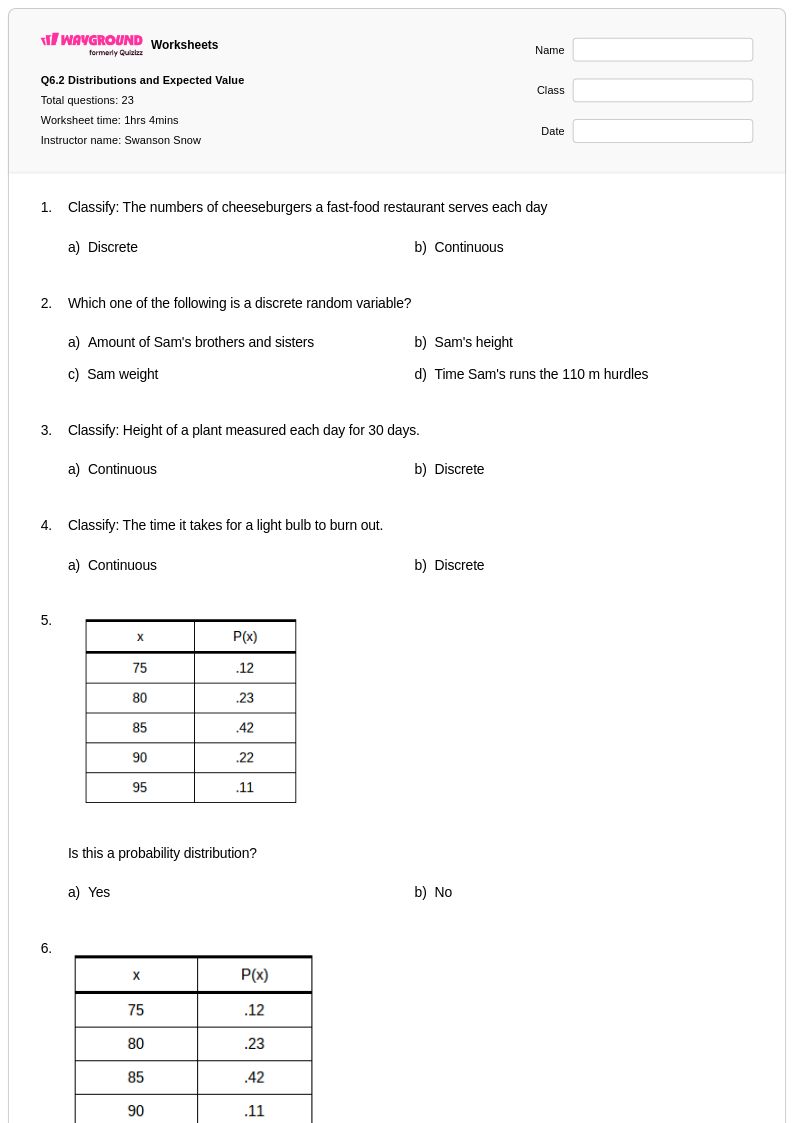
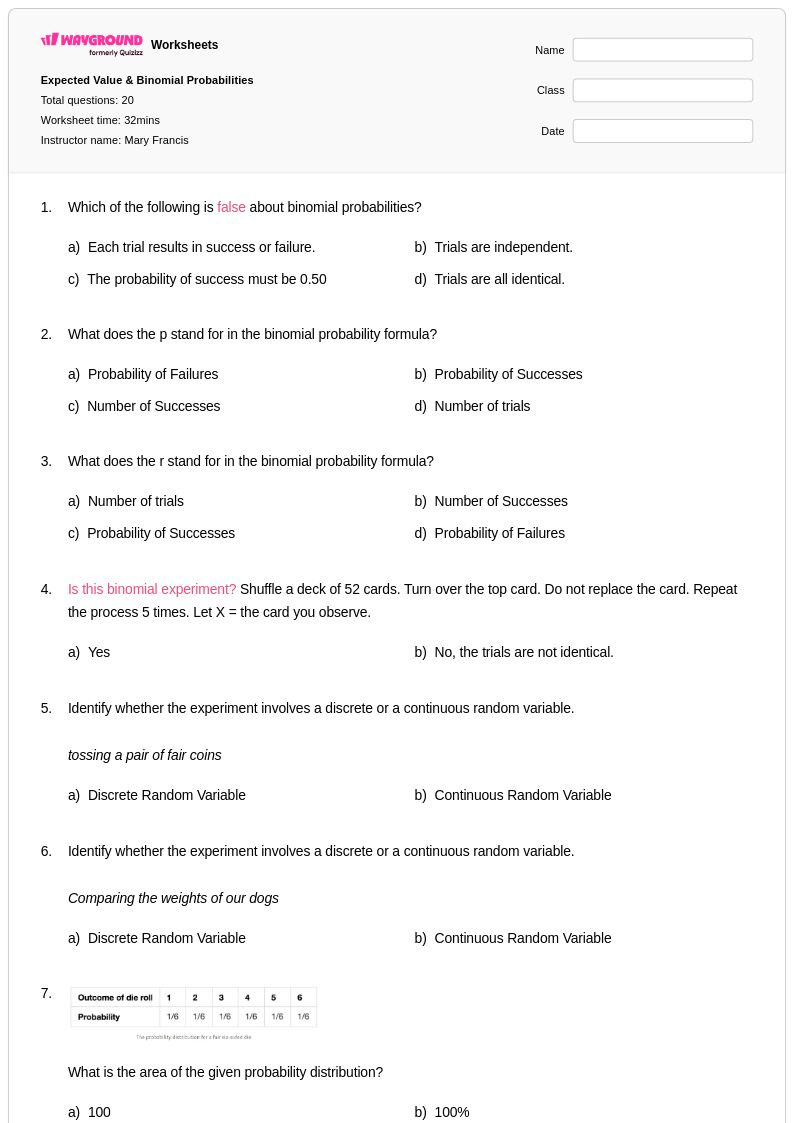
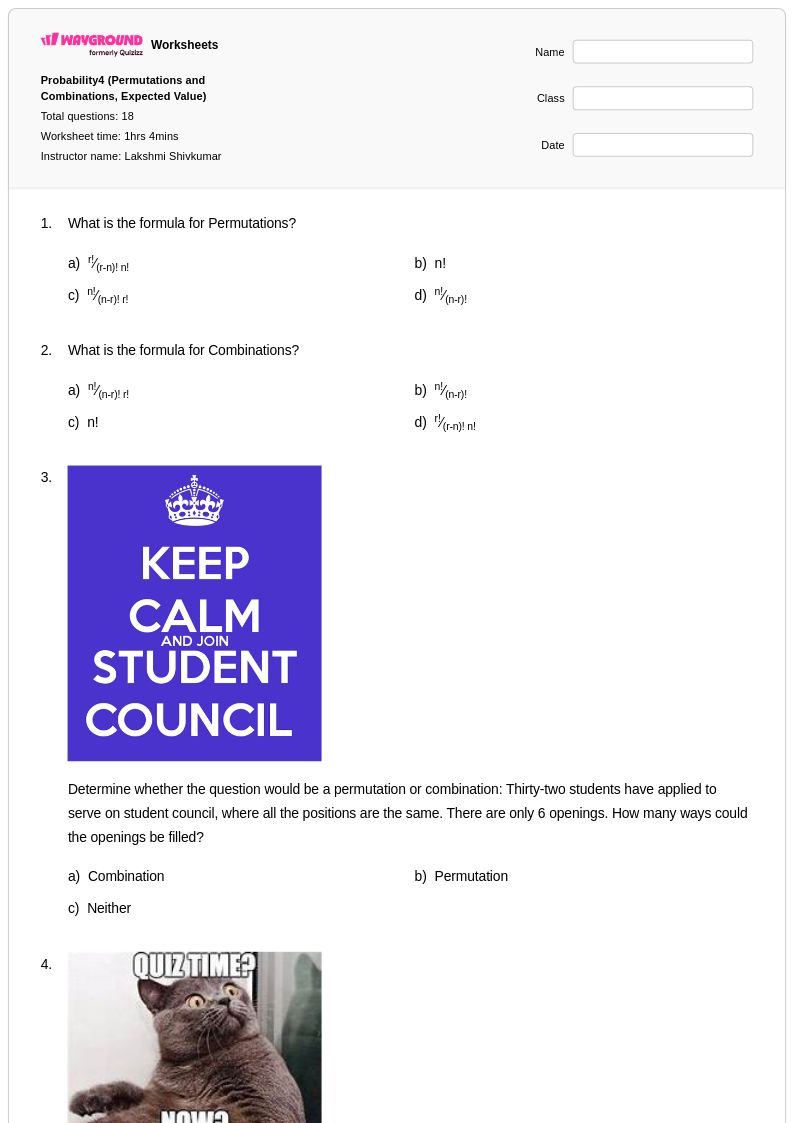
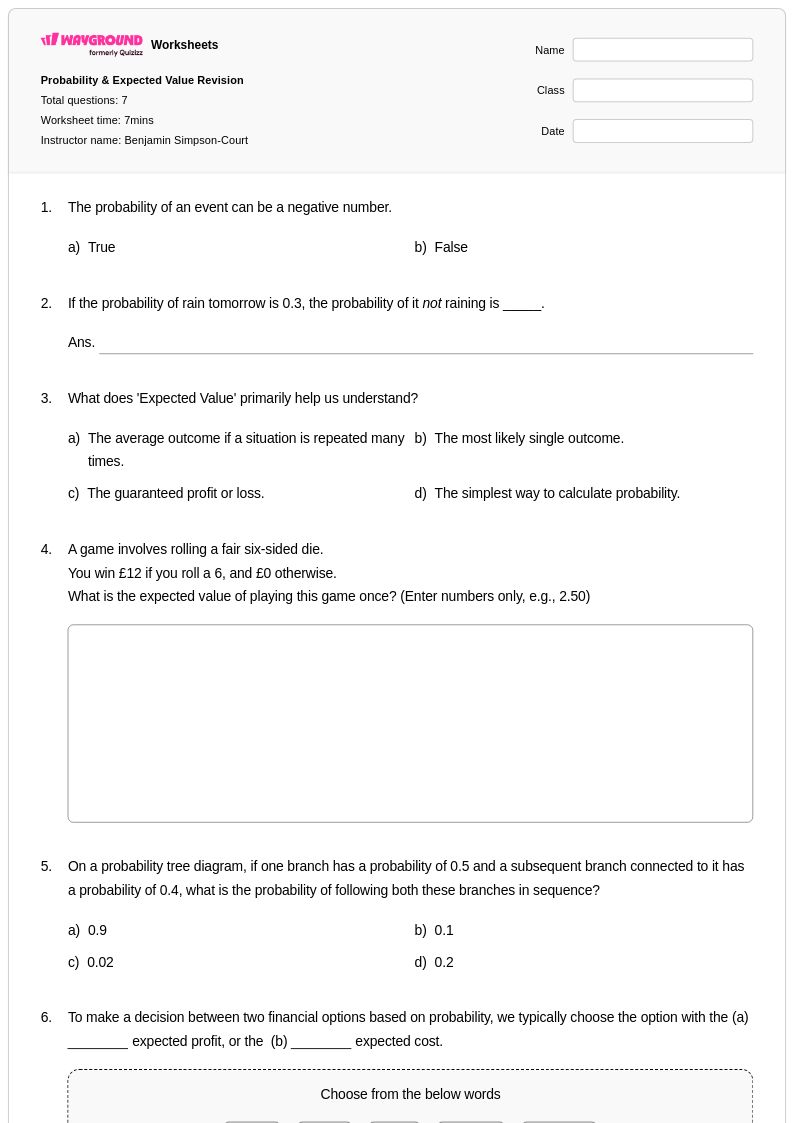
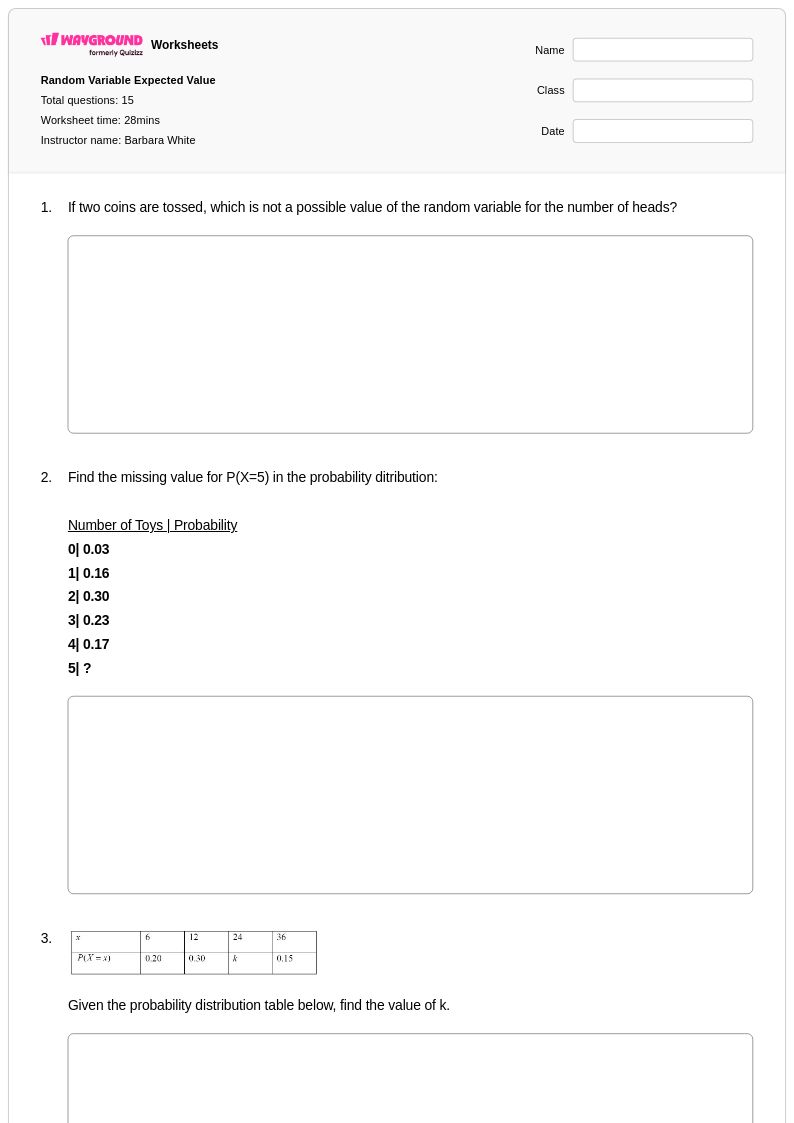
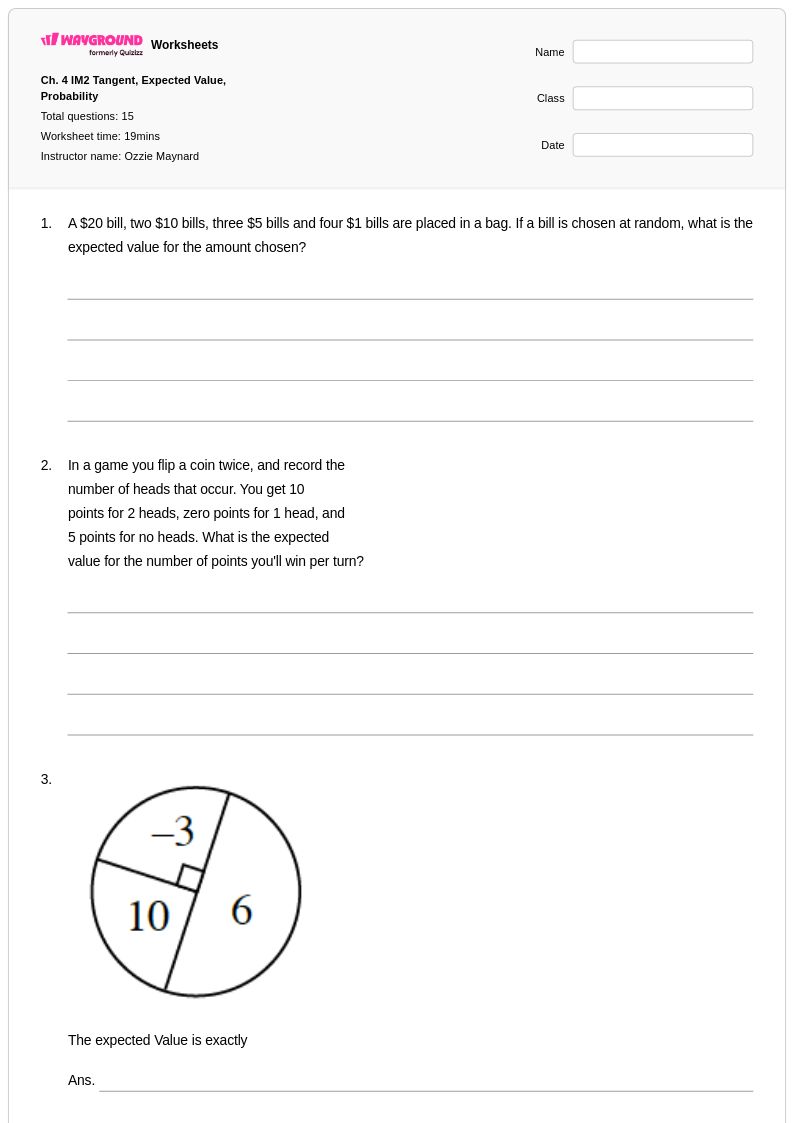
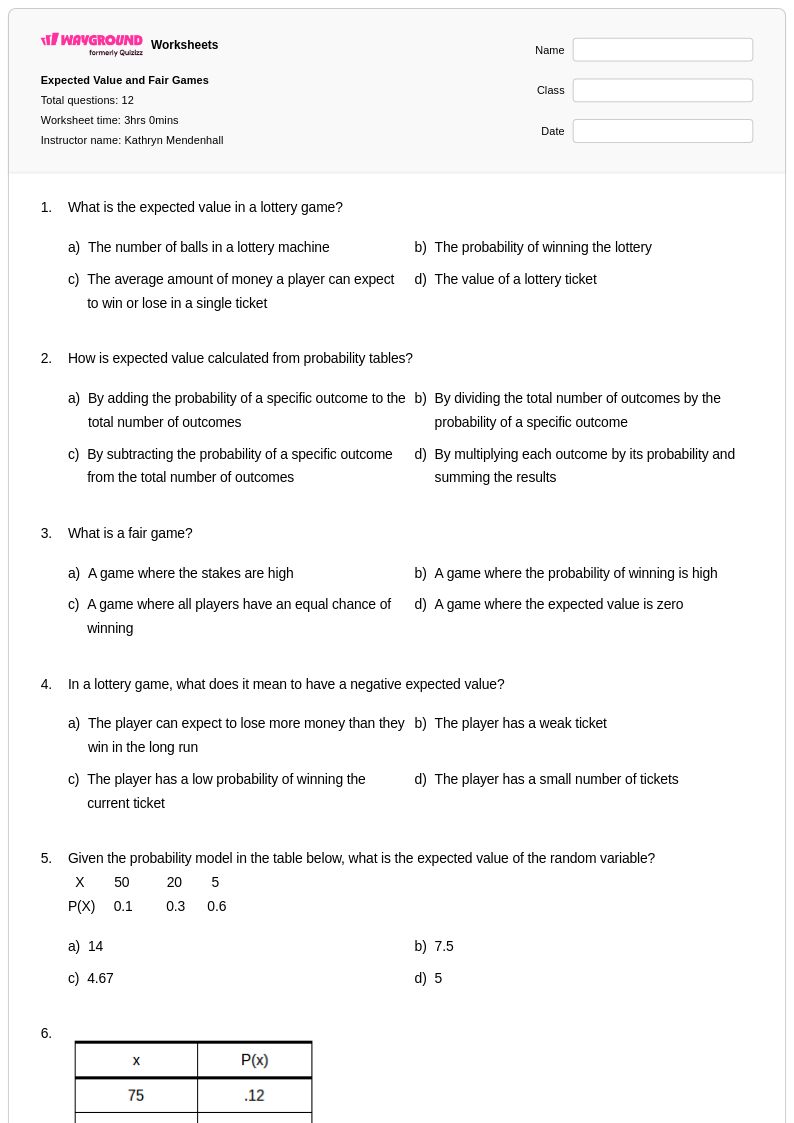
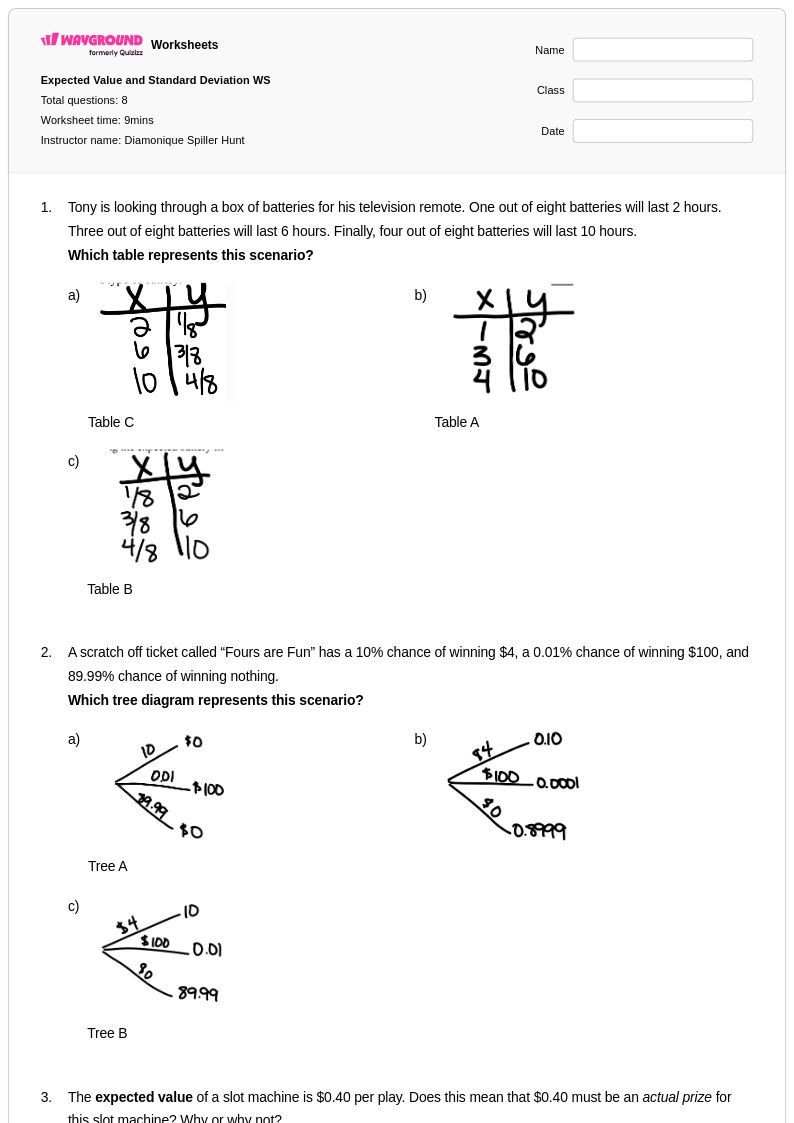
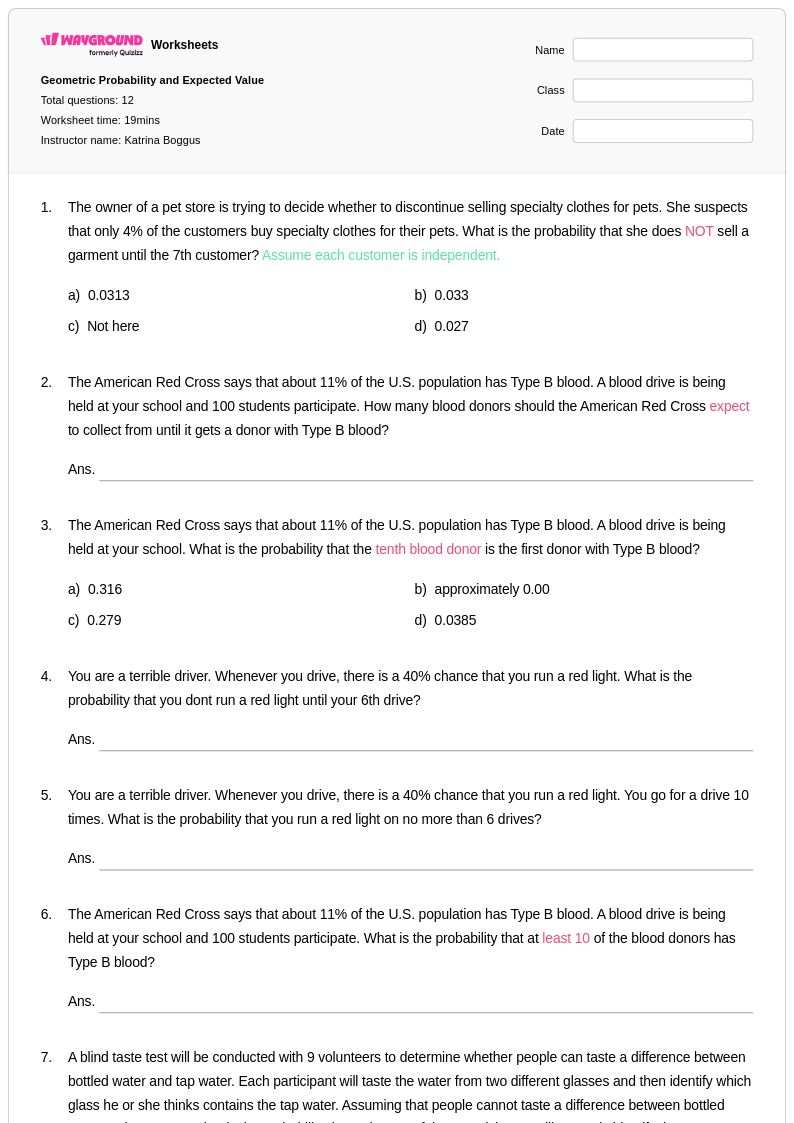
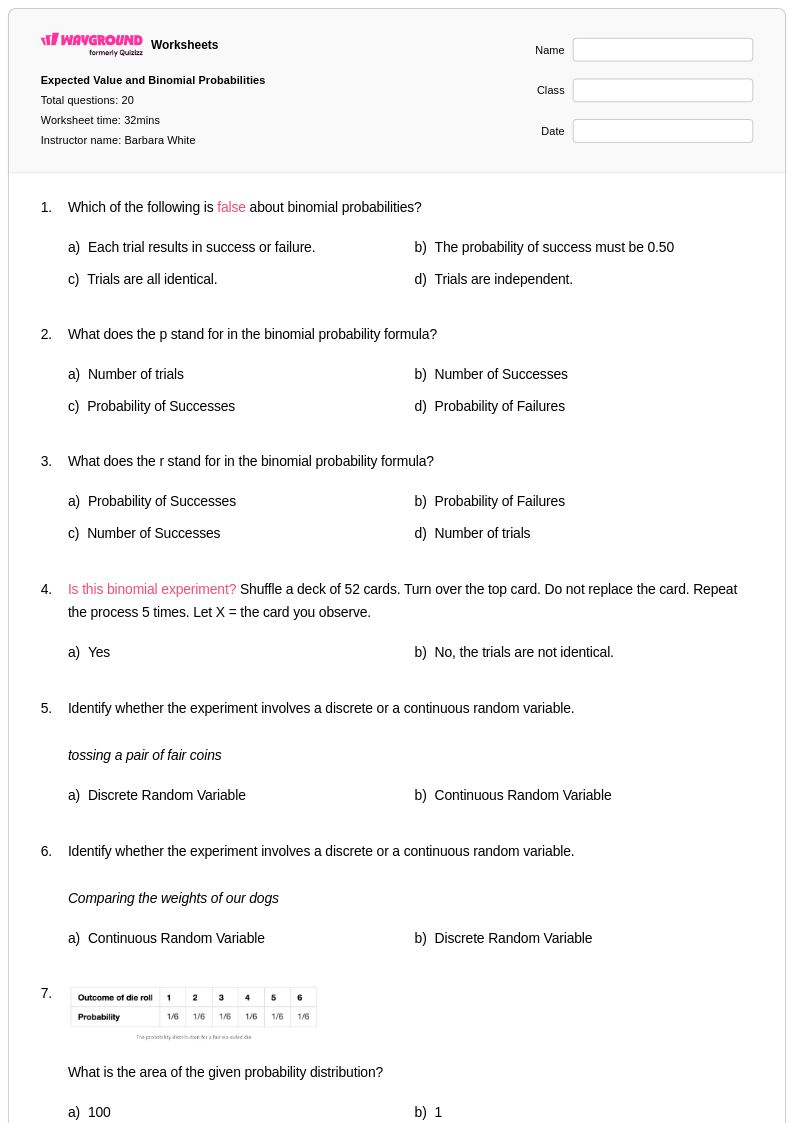
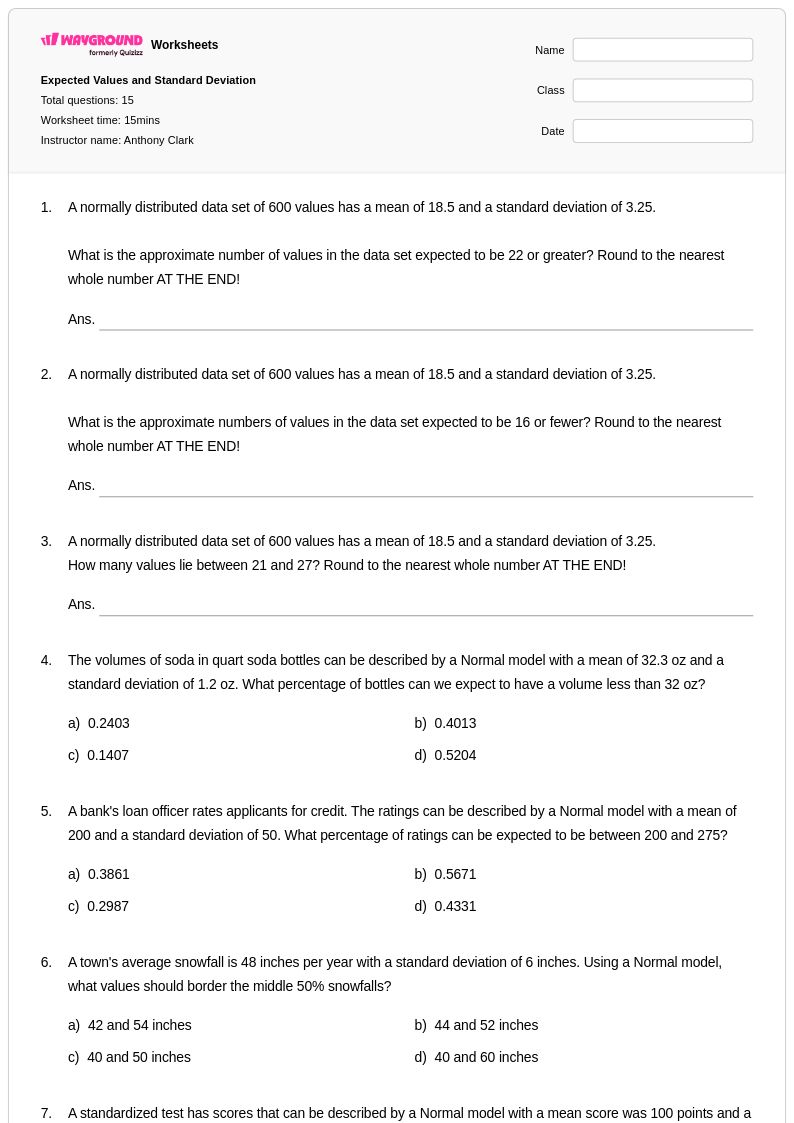
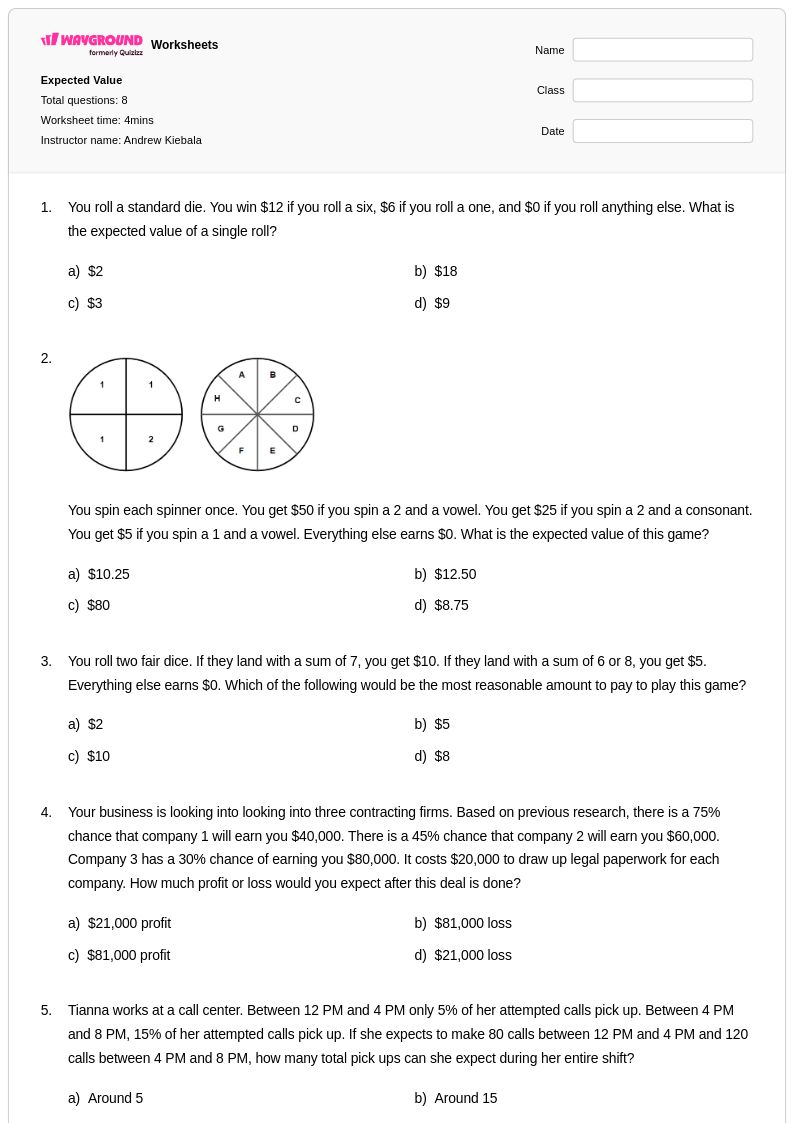
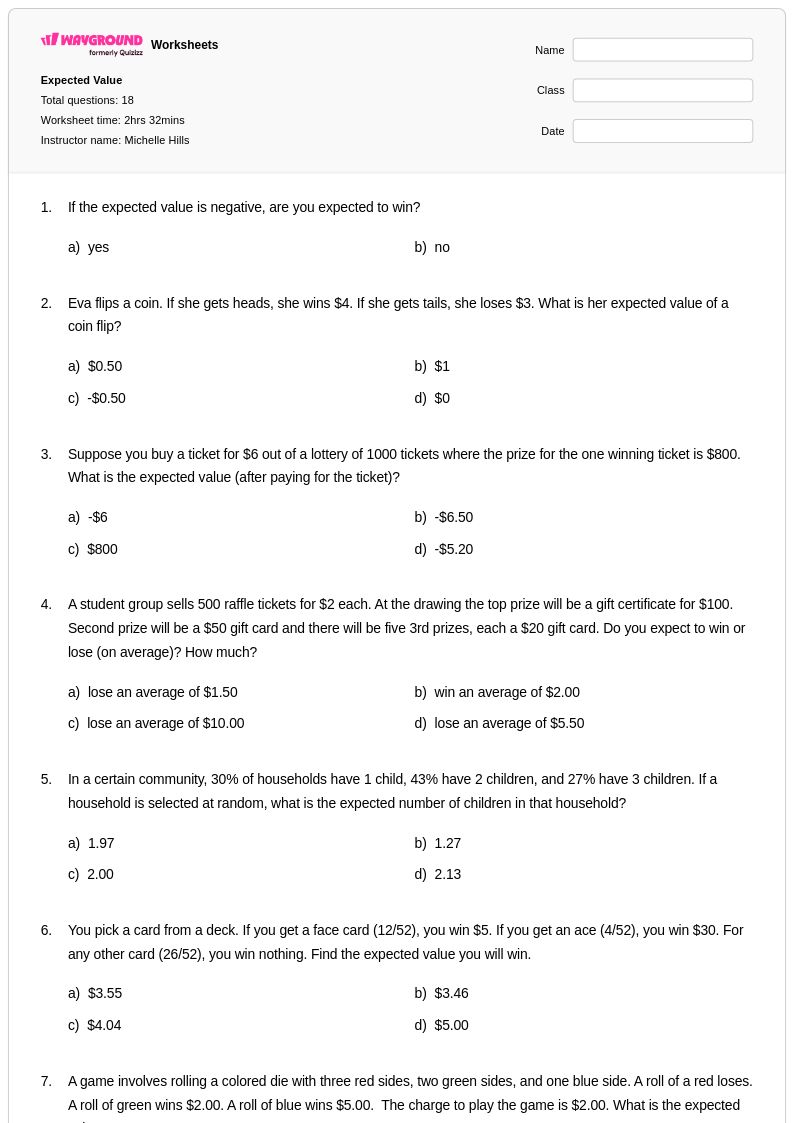
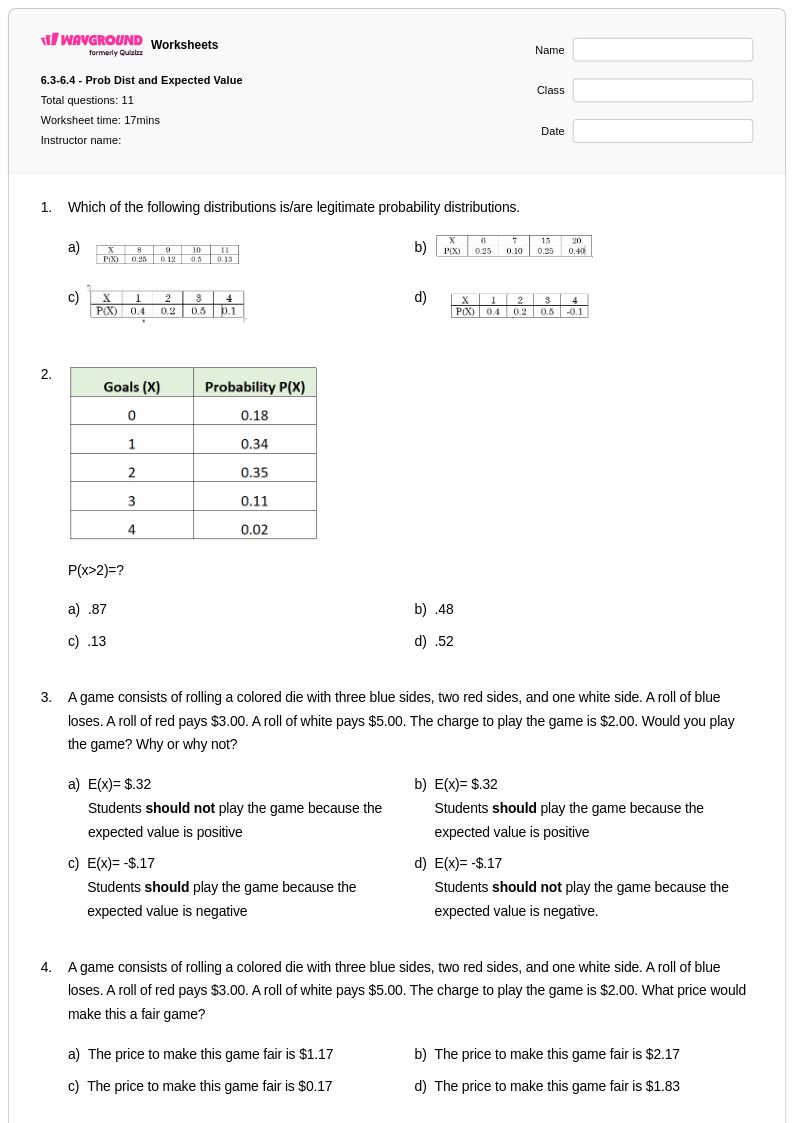
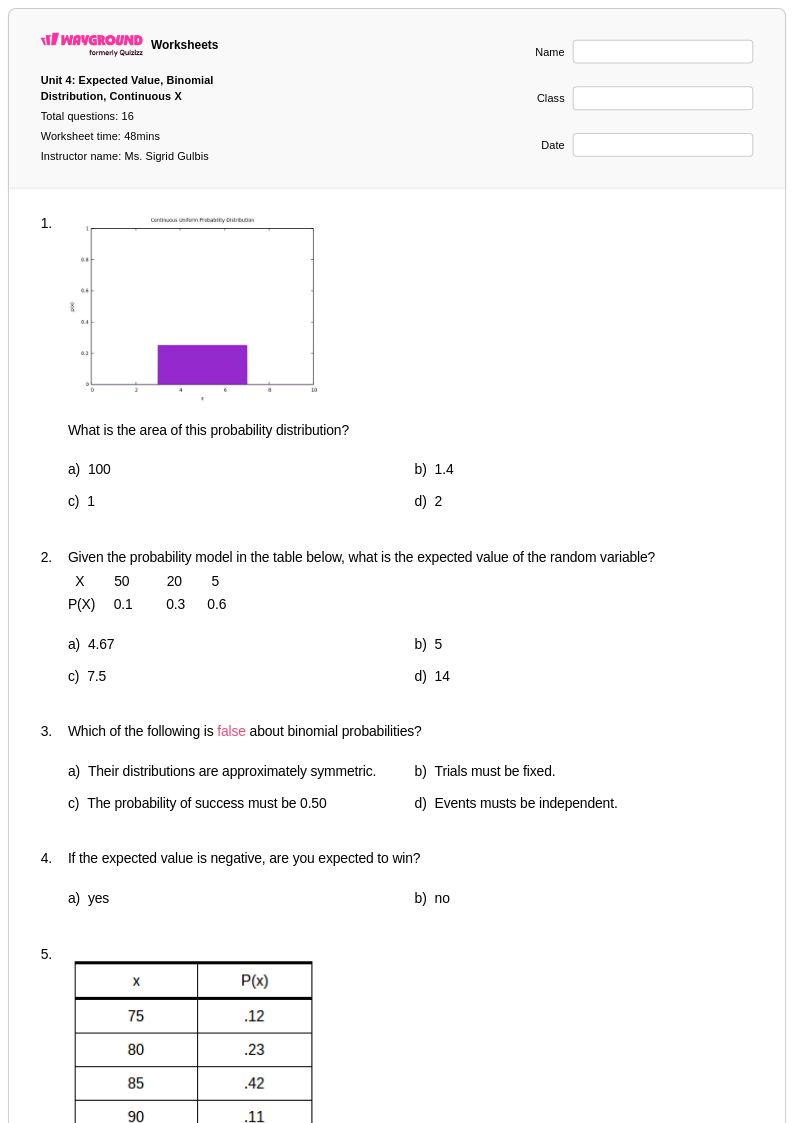
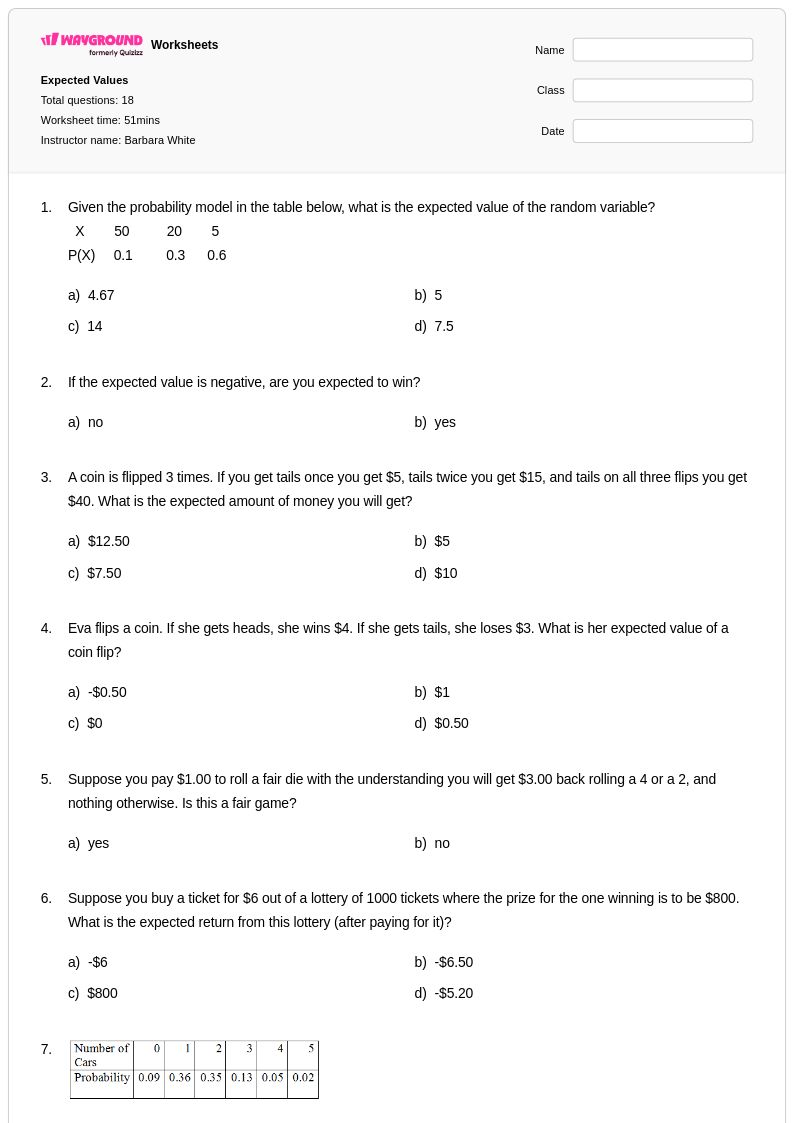
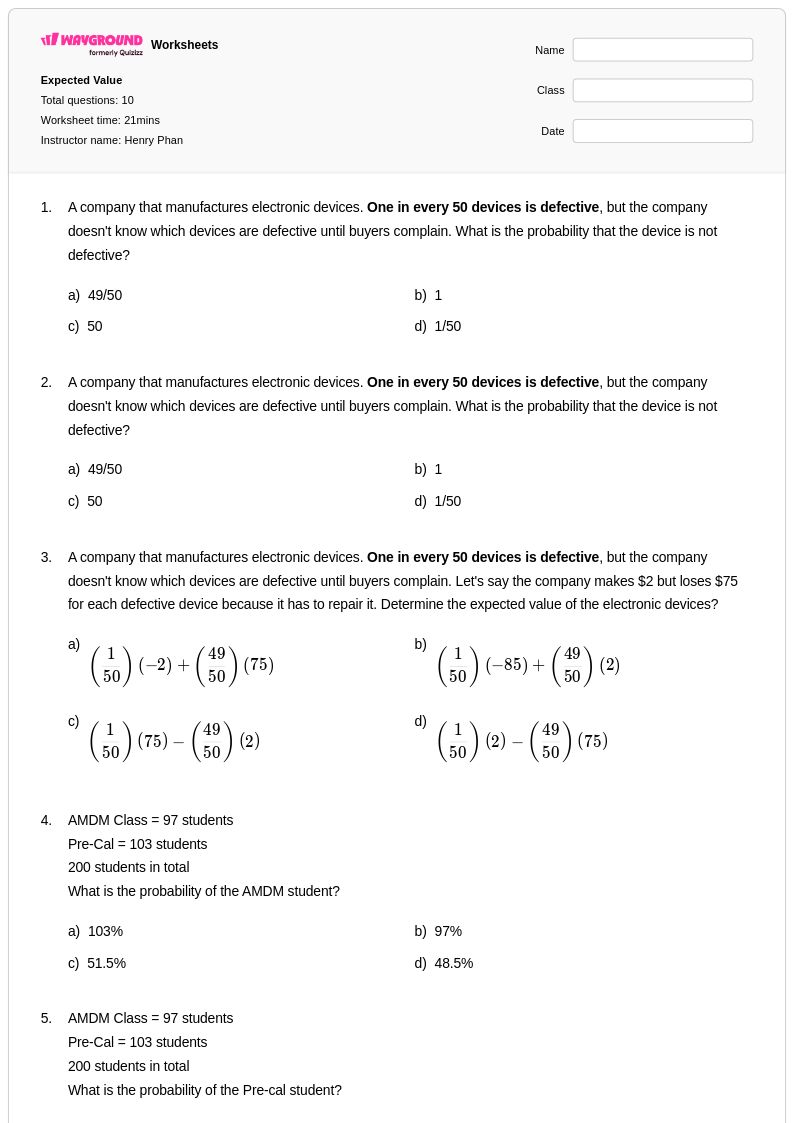
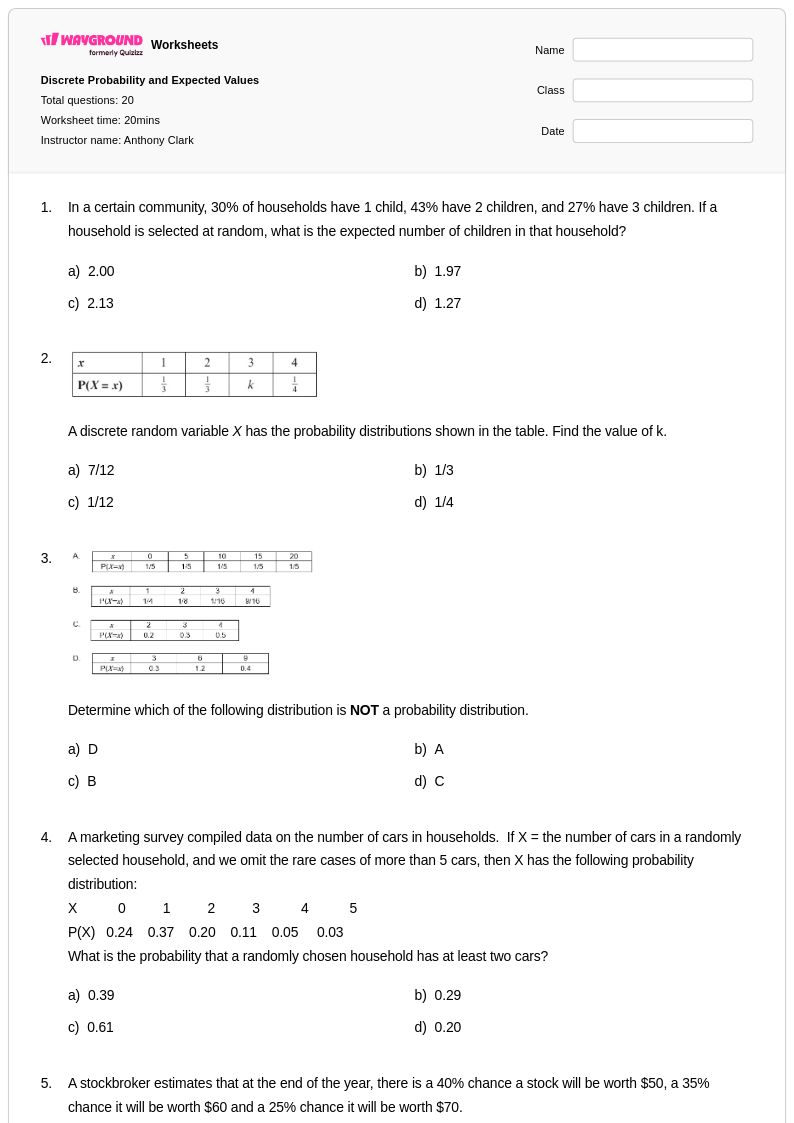
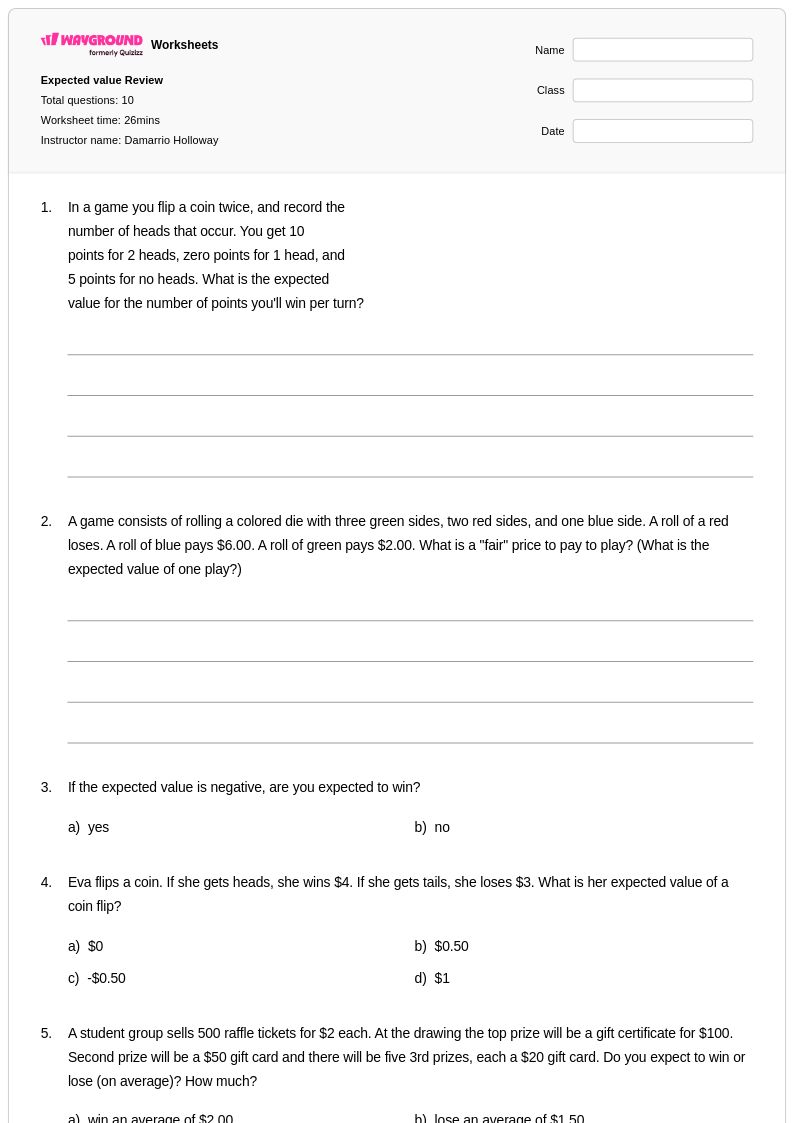
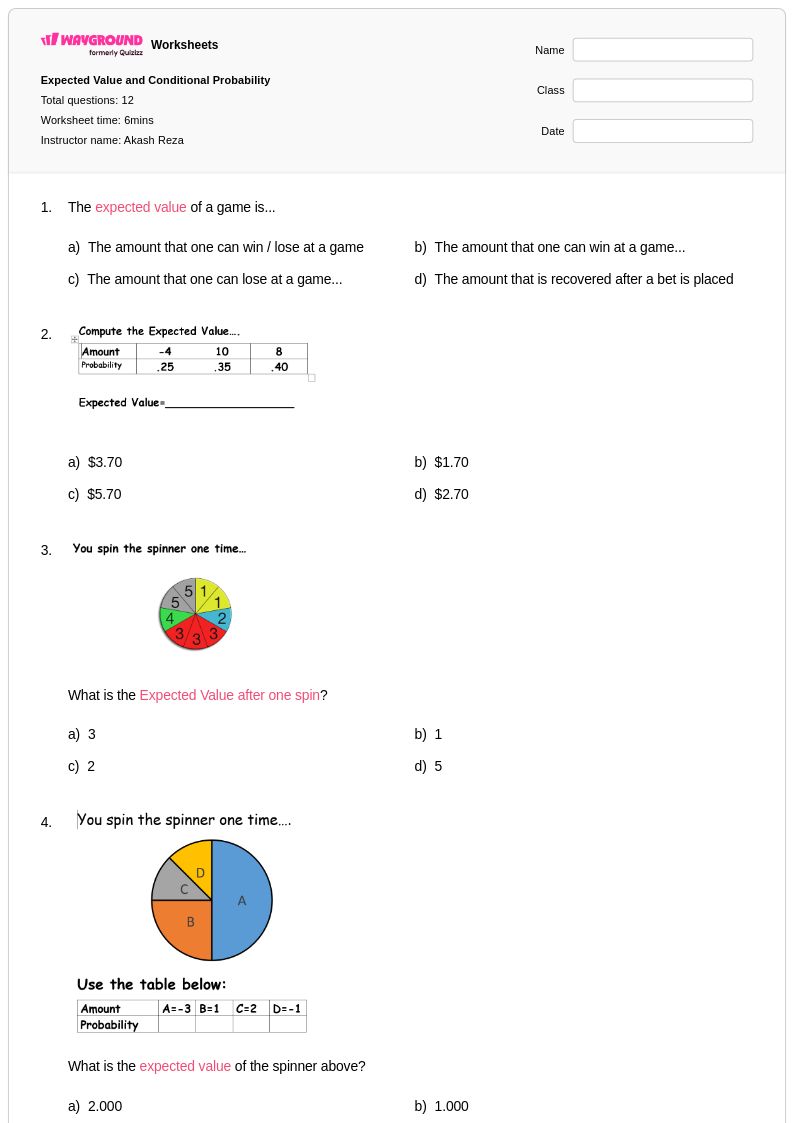
Expected value worksheets for Class 11 students available through Wayground (formerly Quizizz) provide comprehensive practice in calculating and interpreting the mathematical expectation of discrete and continuous random variables. These expertly designed resources strengthen students' understanding of probability distributions, weighted averages, and the theoretical mean of random experiments through systematic practice problems that progress from basic calculations to complex real-world applications. Each worksheet collection includes detailed answer keys and step-by-step solutions, enabling students to verify their work and identify areas needing additional focus. Available as free printable pdf resources, these materials cover essential concepts including expected value formulas, variance calculations, and applications in decision theory and risk assessment that align with advanced high school mathematics curricula.
Wayground (formerly Quizizz) empowers educators with an extensive library of millions of teacher-created expected value worksheets specifically curated for Class 11 mathematics instruction. The platform's sophisticated search and filtering capabilities allow teachers to quickly locate resources that match their specific curriculum standards and student needs, while built-in differentiation tools enable customization for various skill levels within the same classroom. These versatile materials are available in both printable and digital formats, including downloadable pdf versions, making them ideal for traditional classroom instruction, homework assignments, test preparation, and remote learning environments. Teachers can seamlessly integrate these worksheets into lesson planning for initial concept introduction, targeted skill remediation, advanced student enrichment, or comprehensive review sessions, ensuring that all students master the critical statistical reasoning skills required for success in advanced mathematics and real-world problem solving.
FAQs
How do I teach expected value at the 11th grade level?
By Grade 11, expected value should connect to the broader framework of probability distributions — not just 'multiply and sum' but 'what does the distribution tell us about long-run behavior?' Push students to work with variance alongside expected value: once they can compute E(X), ask what E(X²) gives them and why spread matters as much as center. Decision theory applications — comparing risky vs. certain outcomes — are also appropriate here and give the concept real analytical weight.
What practice problems are right for 11th grade expected value?
Grade 11 students should be working with: expected value and variance of discrete random variables, applications in risk assessment and decision-making, and problems that require interpreting E(X) in context rather than just computing it. If your course covers continuous distributions, problems involving the expected value of a simple continuous random variable are appropriate. The emphasis should shift from computation to interpretation and application.
What mistakes do 11th graders still make with expected value?
The persistent error at this level is conflating expected value with the most likely outcome. Students will correctly compute E(X) = 3.2 and then describe it as 'the outcome you'd expect to get' — which is wrong when 3.2 isn't even a possible value. A second issue: when variance enters the picture, students sometimes compute E(X²) and stop, forgetting to subtract [E(X)]² to get the variance. Building that two-step structure into worksheet problems explicitly helps.
How do I use these Grade 11 expected value worksheets?
Download the printable PDF for paper-based practice — every worksheet includes a complete answer key and step-by-step solutions so students can work through errors independently. You can also host the same content as a digital quiz on Wayground, which is useful for test-prep sessions where you want immediate visibility into which problems are tripping students up before an exam.
How does expected value fit into the Common Core statistics progression at Grade 11?
Common Core's high school probability standards culminate in students being able to define a random variable, construct its probability distribution, and calculate its expected value and variance. At Grade 11, this typically means moving from discrete distributions covered in earlier courses to a more formal treatment of E(X) as the theoretical mean — and connecting it to variance as a measure of risk or spread. Students who master this are positioned to handle binomial and geometric distributions, where expected value formulas can be derived rather than just applied.
How can I accommodate diverse learners in an 11th grade expected value unit?
For students who find the notation-heavy presentation of probability distributions difficult to parse, Wayground's Read Aloud feature can reduce the reading barrier so the cognitive load stays on the mathematics. For ELL students or those in bilingual programs, worksheets can be translated directly within the platform — useful when the word problems involve financial or insurance contexts with specialized vocabulary. These accommodations can be set per student without affecting the rest of the class.