Free Printable Family Dynamics Worksheets for Class 4
Explore Wayground's free Class 4 family dynamics worksheets and printables that help students understand different family structures, roles, and relationships through engaging practice problems with complete answer keys.
Explore printable Family Dynamics worksheets for Class 4
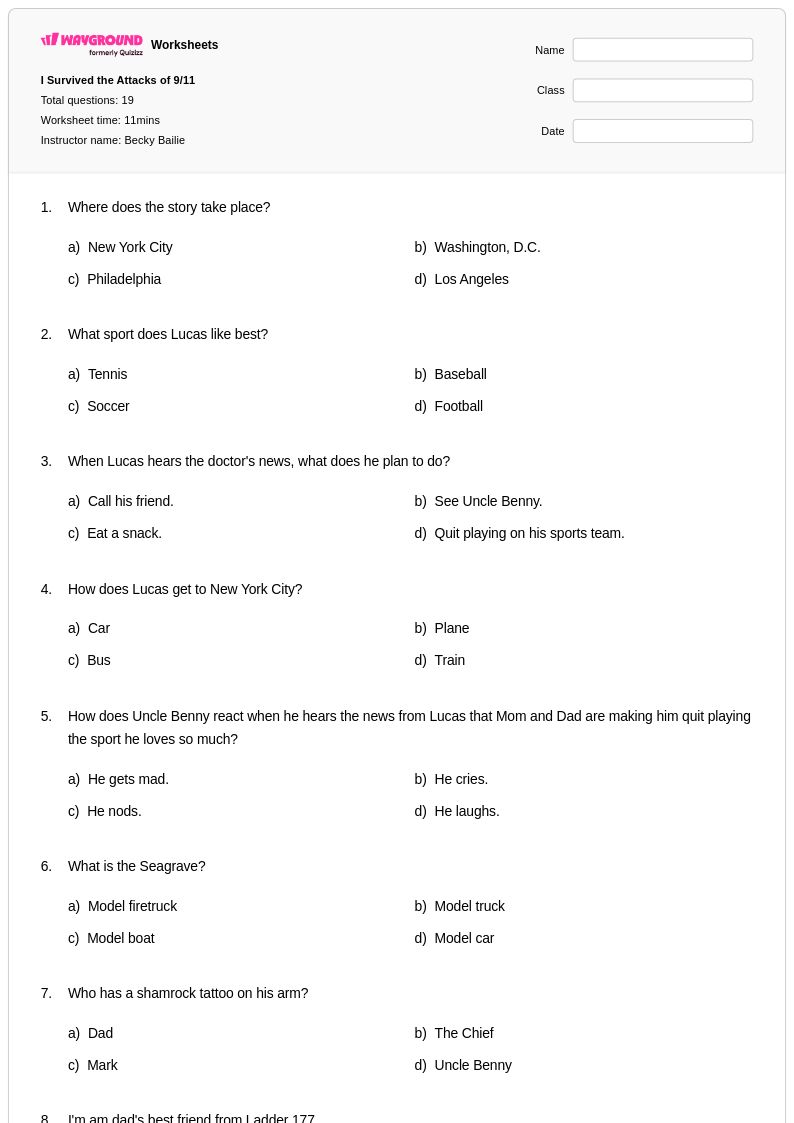
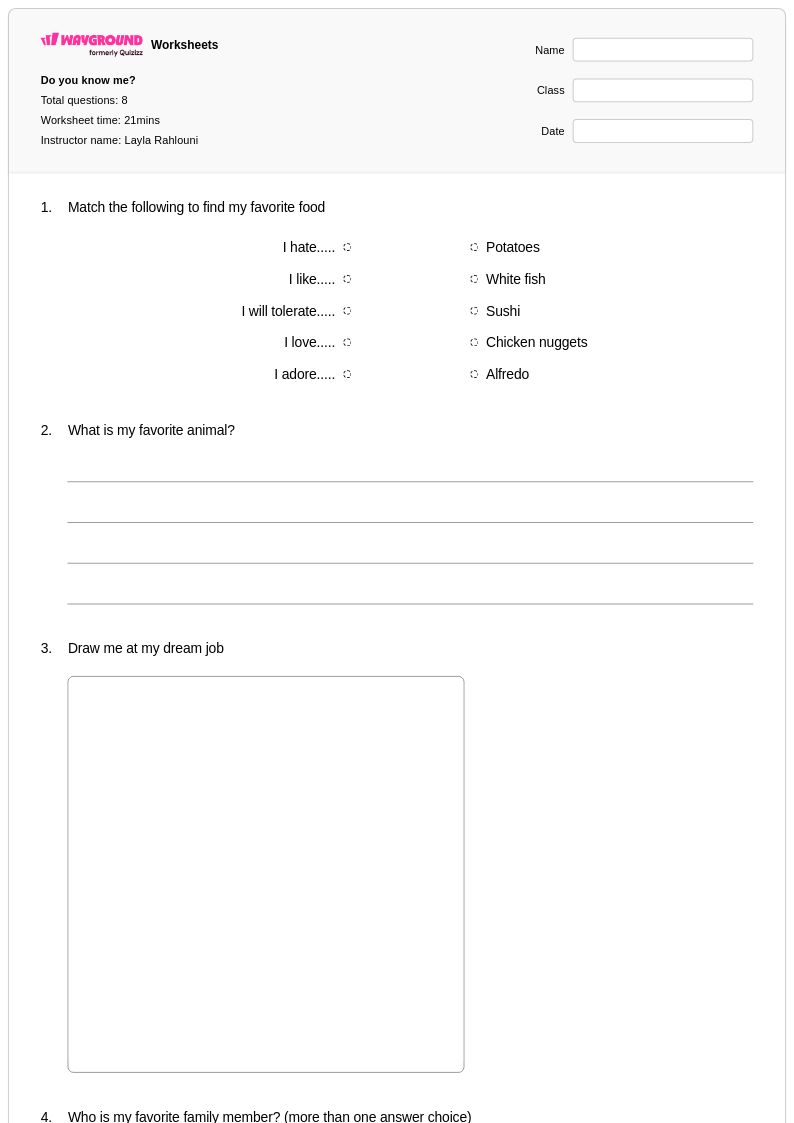
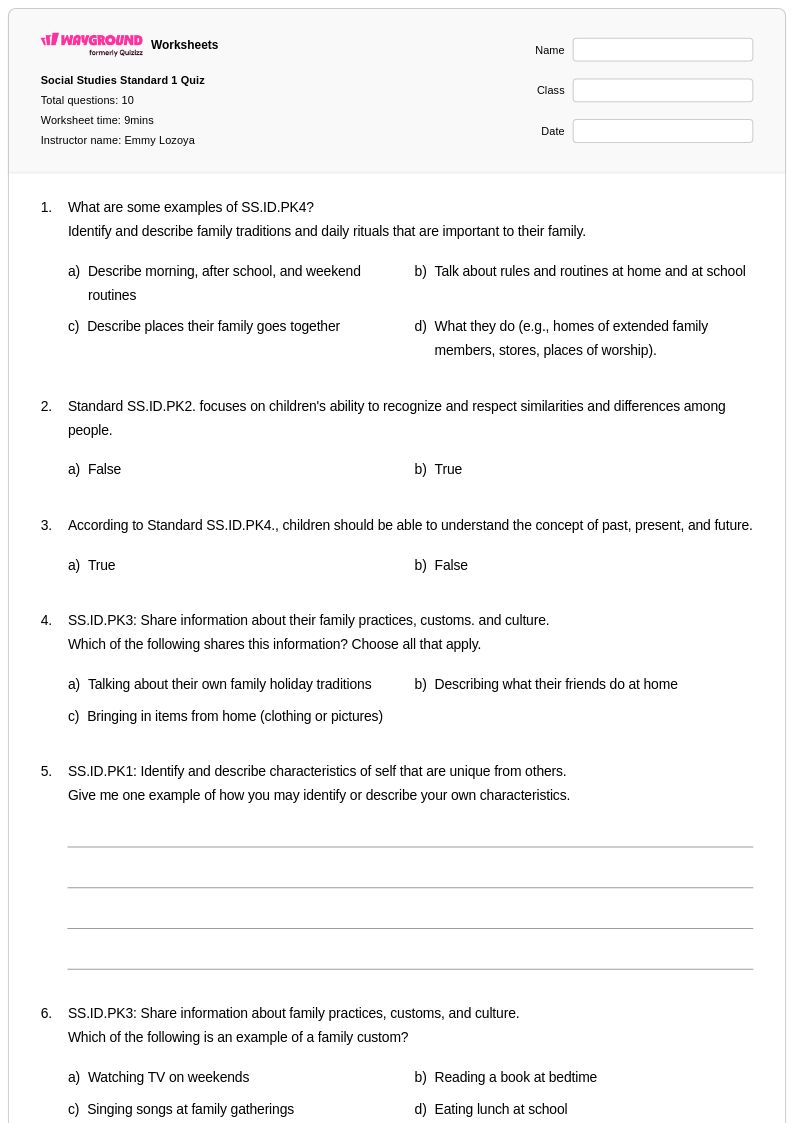
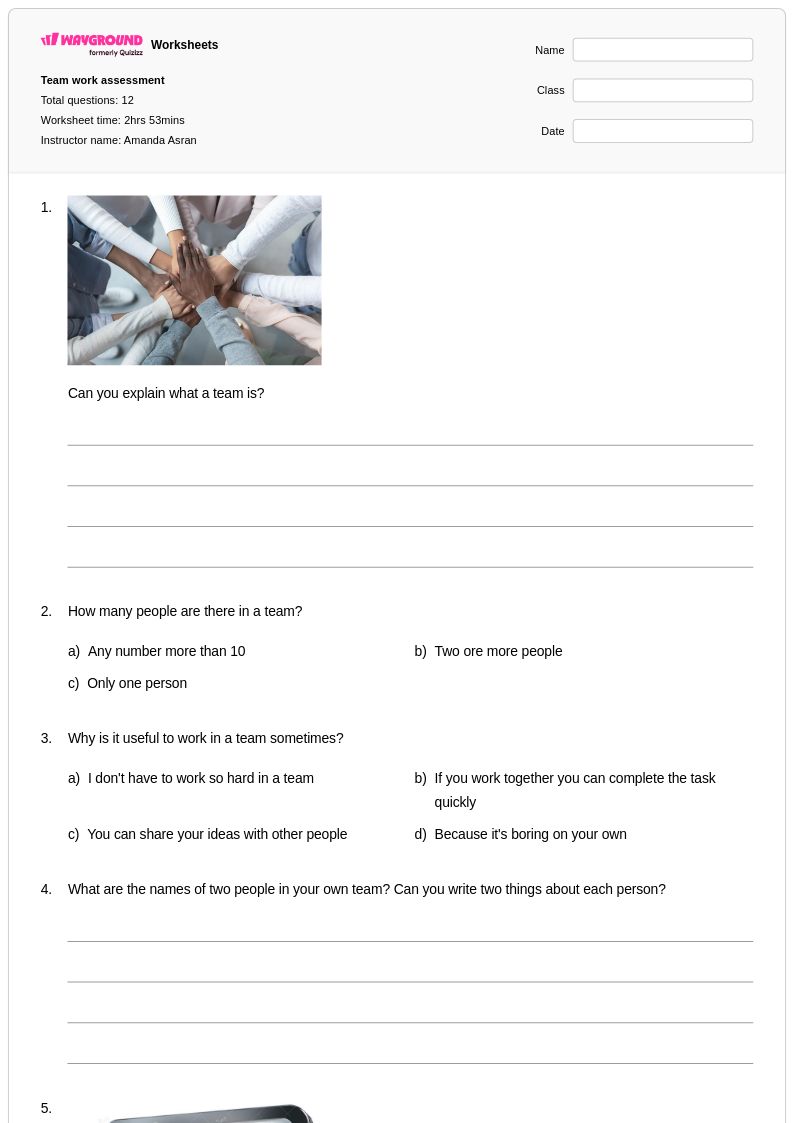
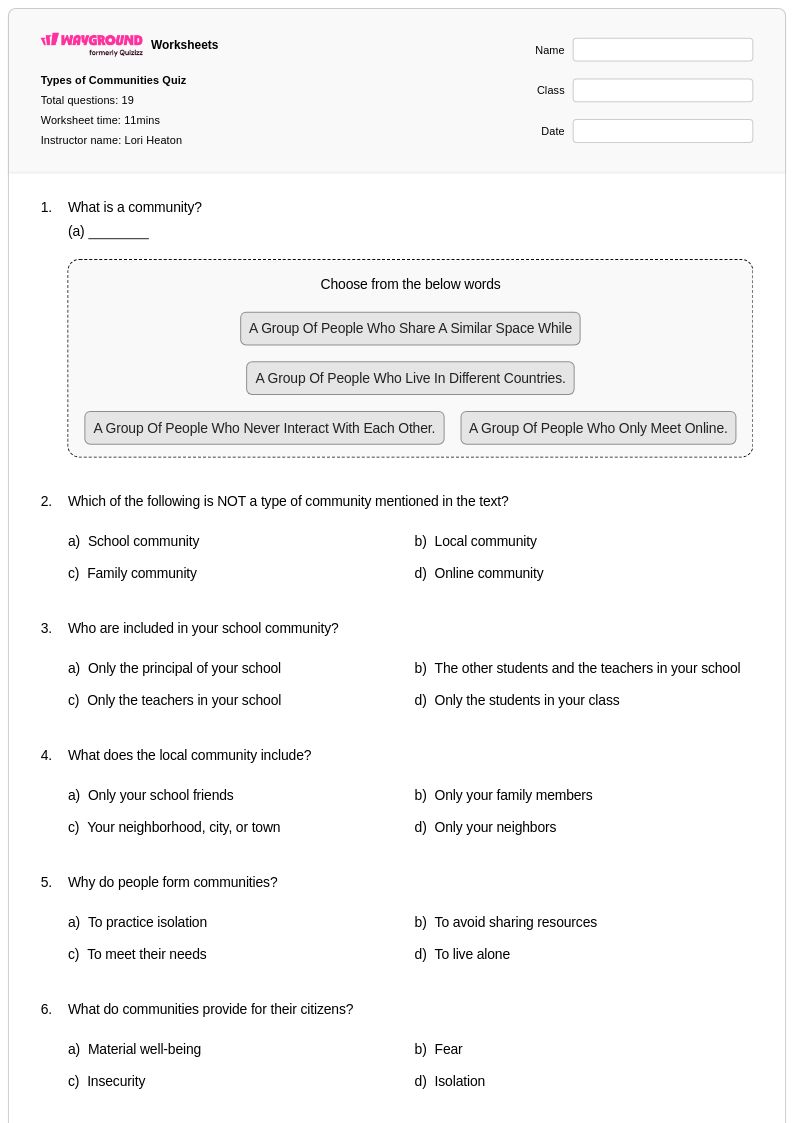
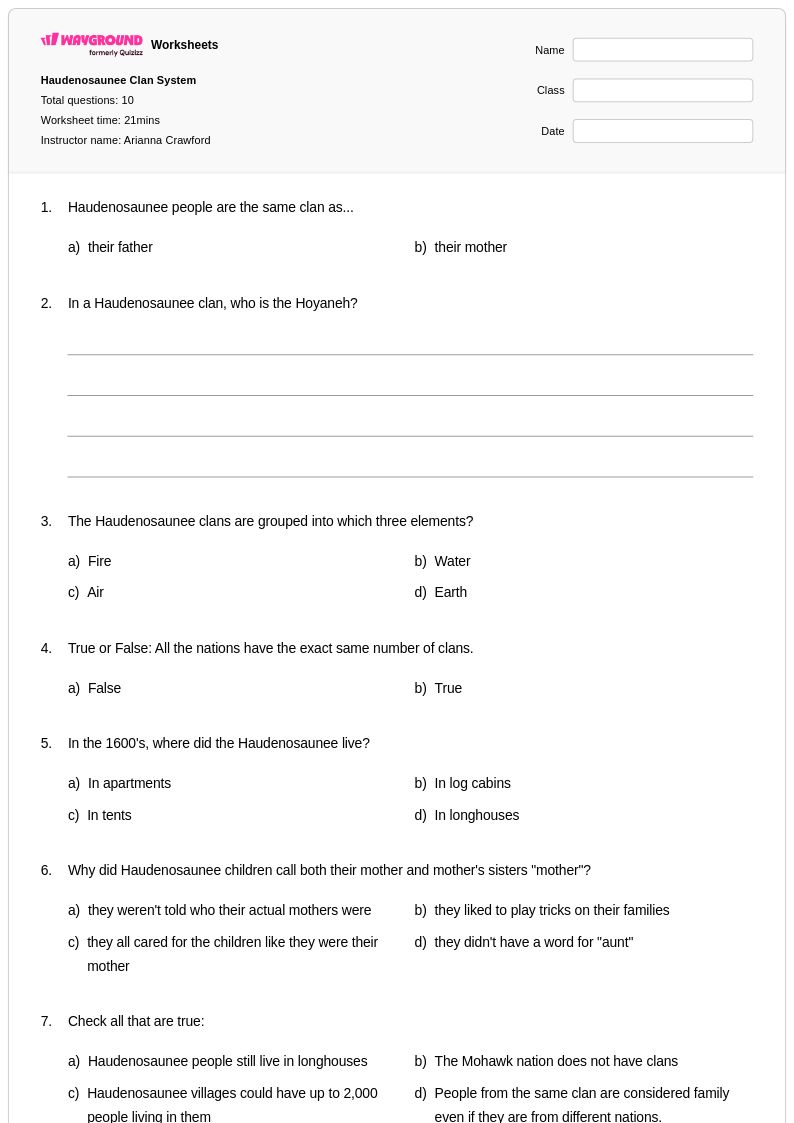
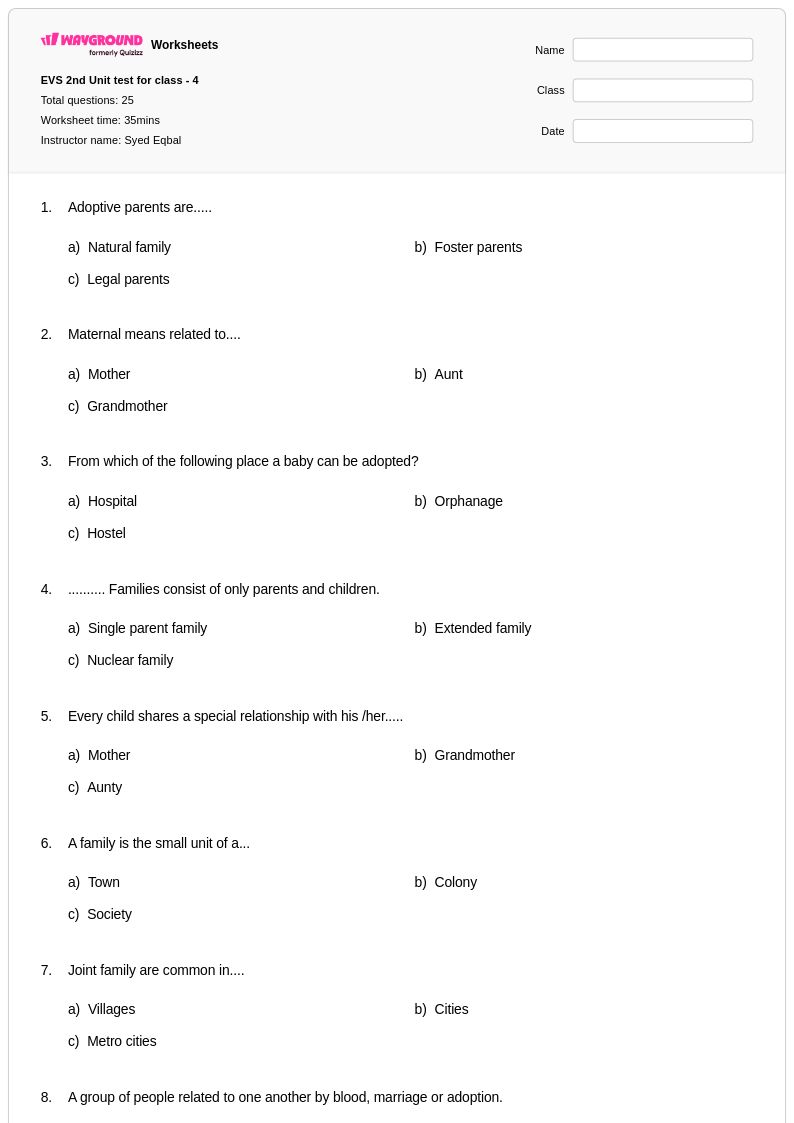
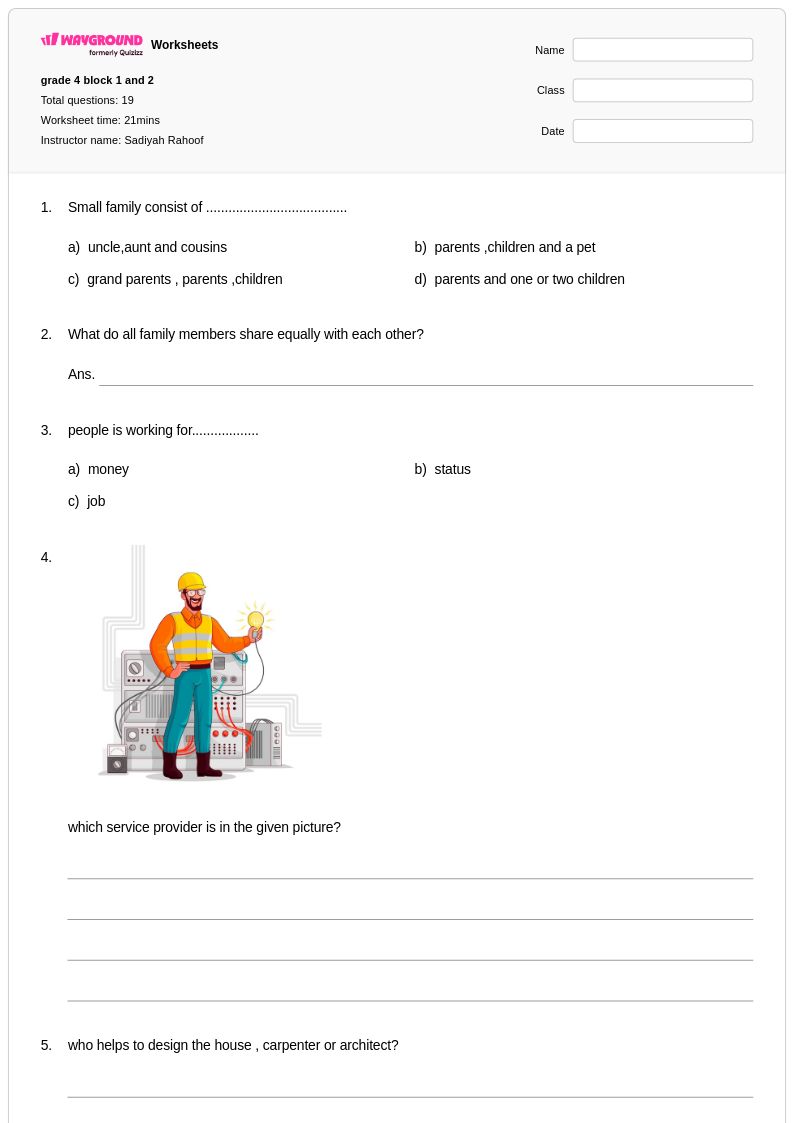
Family dynamics worksheets for Class 4 students through Wayground (formerly Quizizz) provide comprehensive exploration of how families function, communicate, and support one another within diverse communities. These educational resources strengthen students' understanding of family structures, roles, responsibilities, and traditions while developing critical thinking skills about relationships and social connections. The collection includes practice problems that examine different family compositions, cultural celebrations, and decision-making processes, helping fourth graders recognize both similarities and differences across various family systems. Each worksheet comes with detailed answer keys and is available as free printables in convenient pdf format, enabling educators to seamlessly integrate family dynamics concepts into their social studies curriculum while fostering empathy and cultural awareness.
Wayground (formerly Quizizz) empowers teachers with millions of educator-created resources specifically designed to support comprehensive instruction on family dynamics and community cultures. The platform's robust search and filtering capabilities allow instructors to quickly locate worksheets that align with specific learning standards and accommodate diverse student needs through built-in differentiation tools. Teachers can customize content to match their classroom requirements and access materials in both printable pdf formats and interactive digital versions, providing flexibility for various learning environments. These extensive resources prove invaluable for lesson planning, targeted skill practice, remediation support for struggling learners, and enrichment opportunities for advanced students, ensuring that all Class 4 learners develop a nuanced understanding of family relationships and their role within broader community structures.
FAQs
How do I teach family dynamics in a way that's inclusive of all students' home situations?
Start by establishing a classroom norm that all family structures are valid and worthy of study, including nuclear families, single-parent households, blended families, extended family systems, and non-traditional arrangements. Use comparative analysis activities that ask students to examine how roles, communication patterns, and responsibilities function across different structures rather than positioning any one model as the default. This approach builds cultural competency while ensuring no student feels their home life is othered or absent from the curriculum.
What exercises help students practice analyzing family dynamics?
Effective practice exercises include case study comparisons where students analyze how decision-making and household responsibilities differ across family types, as well as reflection prompts that connect sociological concepts to students' own observations. Worksheets that ask students to map communication patterns or evaluate how economic and geographic factors shape family organization help move practice beyond surface-level definition recall toward genuine analytical thinking.
What misconceptions do students commonly have about family structures?
One of the most common misconceptions is that the nuclear family is the universal norm, which can cause students to misread cultural variations as deficiencies rather than adaptations. Students also frequently conflate family structure with family function, assuming that non-traditional households are less stable or less capable of fulfilling key social roles. Addressing these errors directly through comparative cultural studies helps students develop more accurate and equitable frameworks for understanding family dynamics.
How do I use family dynamics worksheets in a culturally sensitive way?
Select materials that represent a genuinely diverse range of family structures and cultural contexts, and frame activities around comparison and analysis rather than judgment. Preview worksheets before distributing them to ensure prompts do not assume a particular household composition, and consider offering students the option to reflect on families in their community rather than their own home if the topic feels too personal. Grounding discussion in sociological and cultural frameworks keeps the work analytical rather than confessional.
How can I use Wayground's family dynamics worksheets in my classroom?
Wayground's family dynamics worksheets are available as printable PDFs for traditional classroom use and in digital formats for technology-integrated learning environments, giving you flexibility based on your setup. You can also host them directly as a quiz on Wayground, which allows for built-in interactivity and immediate student feedback. Each worksheet includes an answer key, making them practical for independent study, guided discussion, or homework assignments without additional prep.
How can I differentiate family dynamics instruction for students with different learning needs?
For students who need additional support, simplify the comparative task by reducing the number of family structures being analyzed at once and providing sentence starters for written responses. Wayground supports built-in accommodations including Read Aloud for students who benefit from audio delivery of text, reduced answer choices to lower cognitive load, and extended time settings that can be configured per student. These accommodations can be assigned individually so that the rest of the class works under standard conditions without disruption.